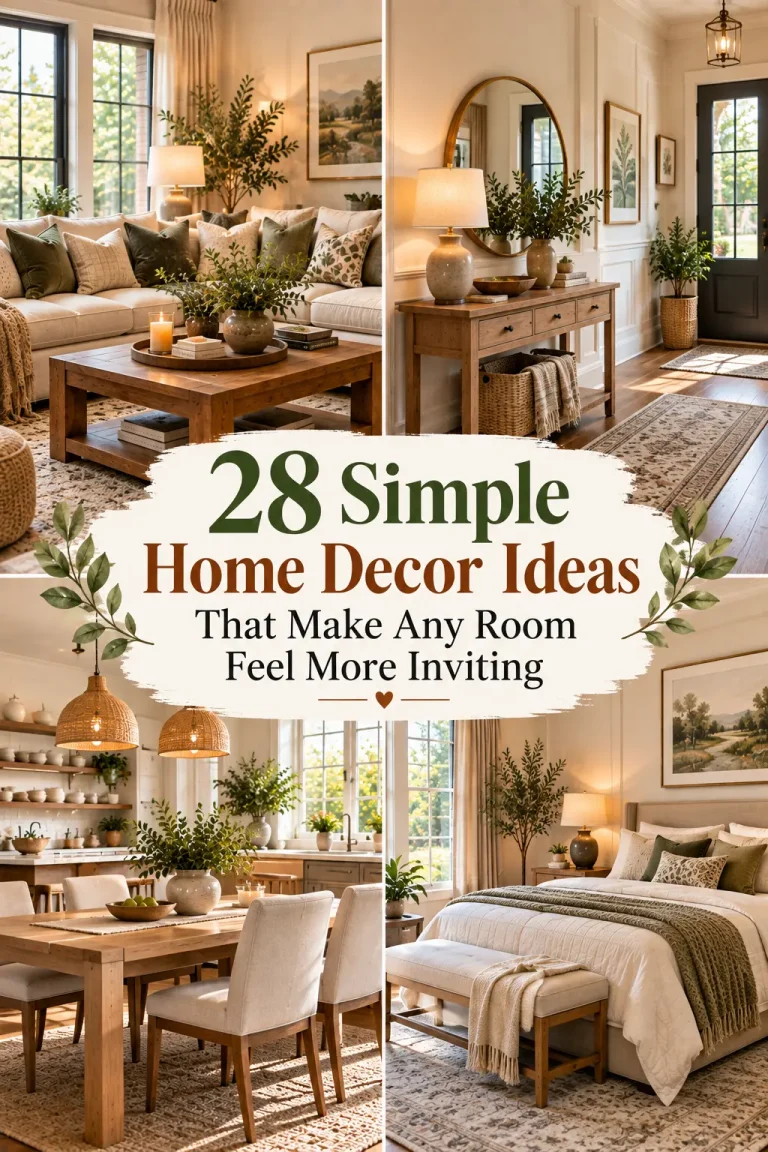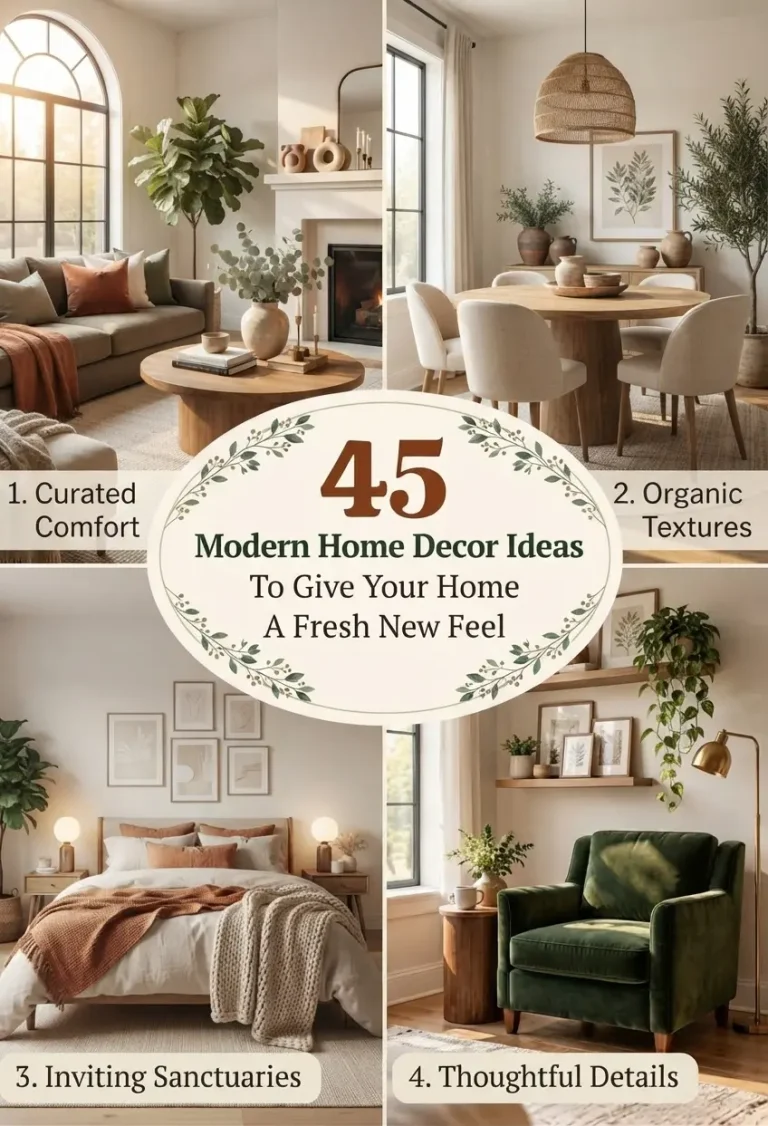

28 Beautiful Small Living Room Ideas for a Stylish and Functional Home
A small living room can feel just as inviting and well-designed as a much larger space. The secret is choosing furniture that fits comfortably, using colors and textures that work together, and making every corner serve a purpose. From cozy apartment layouts and space-saving seating to built-in storage and layered lighting, the right design choices can make a compact room feel more open without sacrificing personality.
These small living room ideas combine attractive interiors with practical solutions for everyday life. You’ll find options for modern homes, rentals, older houses, and apartments, including simple decorating updates and more substantial design investments. Whether you’re working with a narrow room, an awkward corner, or a living area that doubles as a workspace, these ideas can help you create a comfortable, functional space that feels thoughtfully put together.
1. Choose a Compact Sofa With Clean Lines
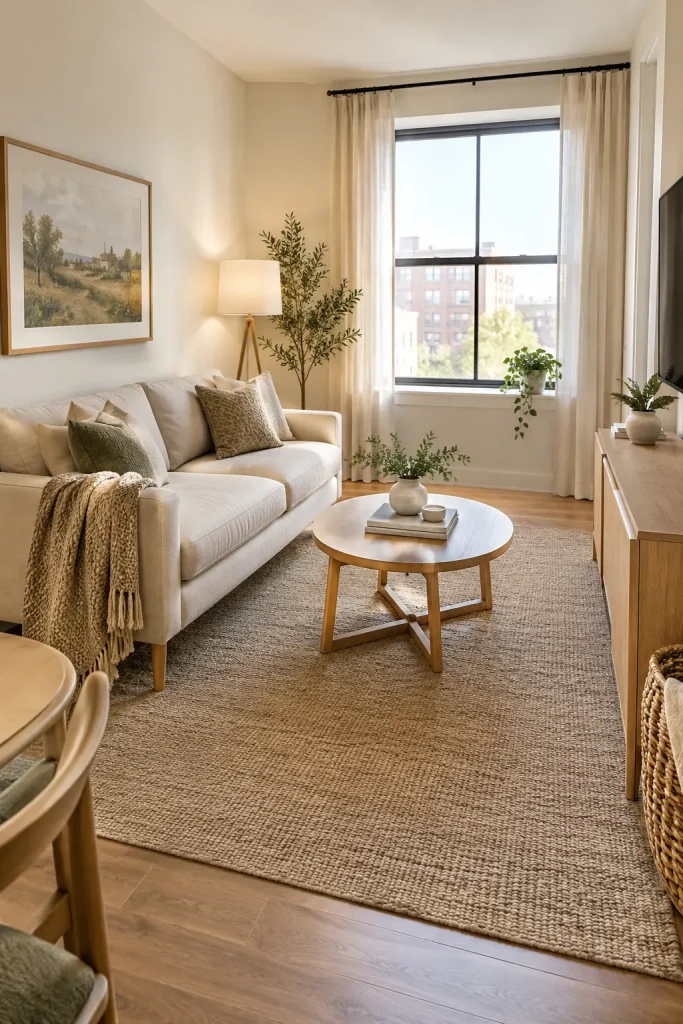
A compact sofa with narrow arms and a streamlined silhouette creates comfortable seating without overwhelming a small living room. Look for a two-seat or apartment-size sofa with raised legs, which allows more of the floor to remain visible and gives the room a lighter appearance.
Warm ivory, oatmeal, light gray, and soft beige upholstery work beautifully with natural wood furniture and textured neutral accessories. Add one or two accent pillows and a lightweight throw rather than covering every seat with decorative cushions.
Practical tip: Measure the sofa’s overall width and depth, including the arms, before buying. A sofa that looks compact online may still occupy too much of your available floor space.
2. Use a Light and Airy Neutral Color Palette
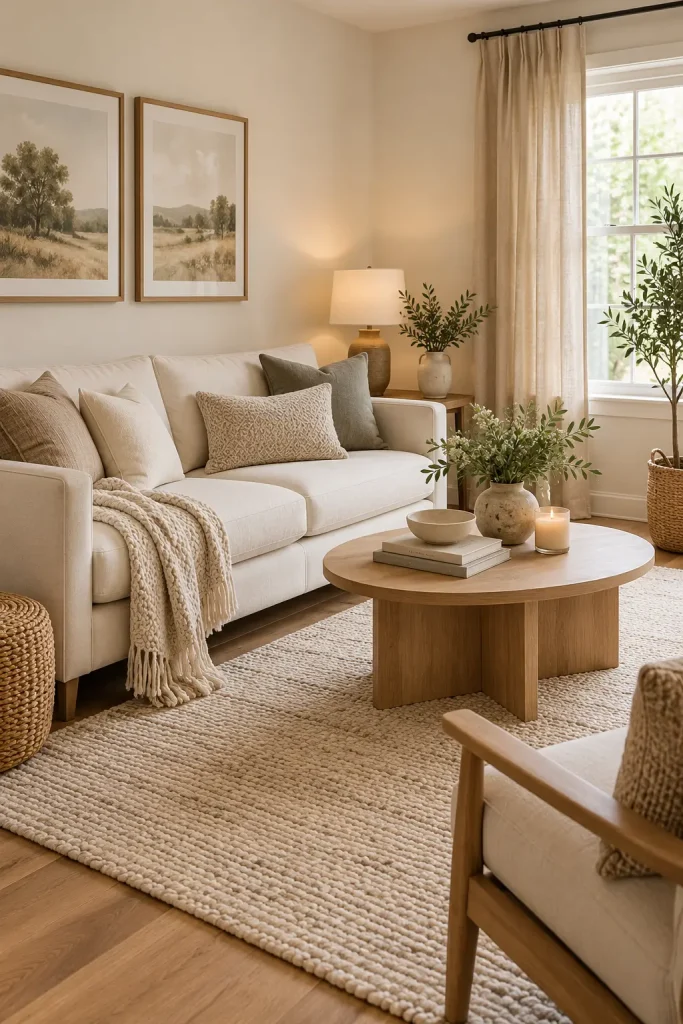
A palette of warm white, cream, pale beige, and natural oak creates a calm backdrop for a small living room. Similar tones help walls, upholstery, and larger furniture pieces feel visually connected rather than divided into competing blocks of color.
To prevent the room from looking flat, combine different textures. Linen curtains, a wool-blend rug, a woven basket, and a matte ceramic vase introduce subtle variation without adding visual clutter.
You don’t need to make every surface white. A slightly deeper beige sofa or a muted taupe accent chair can provide definition while preserving the airy feeling.
3. Add a Round Coffee Table to Improve Flow
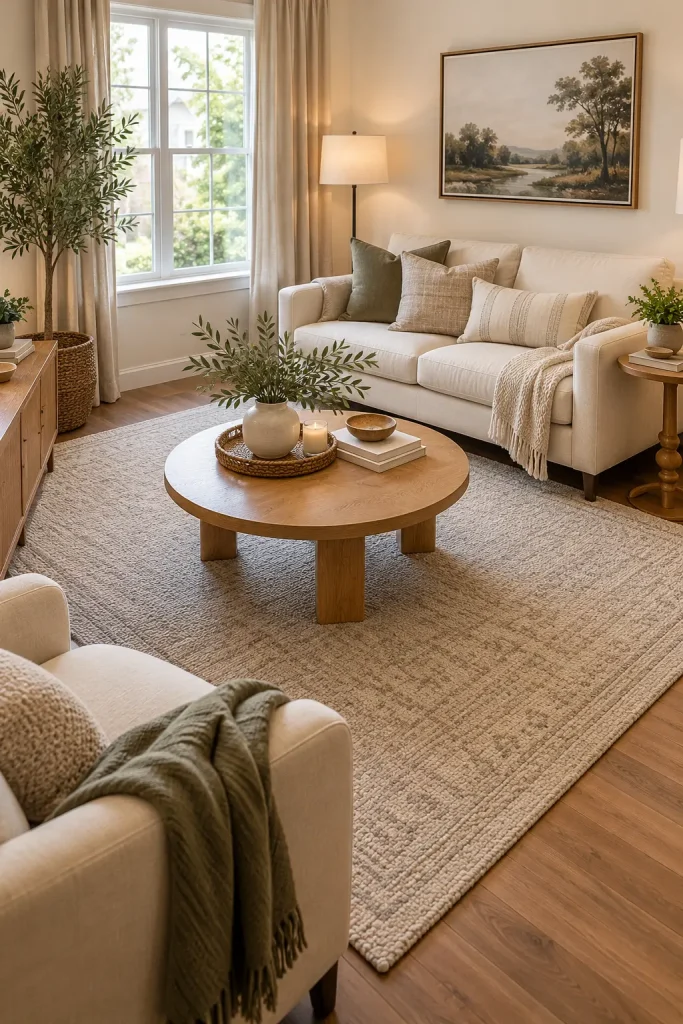
A round coffee table can make it easier to move around a compact seating arrangement because it has no sharp corners protruding into the walking path. Its curved shape also contrasts nicely with the straight lines of a sofa, window, or media console.
Choose a table scaled to the sofa rather than selecting the largest one that fits. A small pedestal table or a lightweight wooden design can provide a useful surface without visually dominating the center of the room.
For a particularly tight layout, consider a nesting-table set. The smaller tables can be pulled out when guests arrive and tucked away when they’re no longer needed.
4. Make the Most of a Corner Sectional
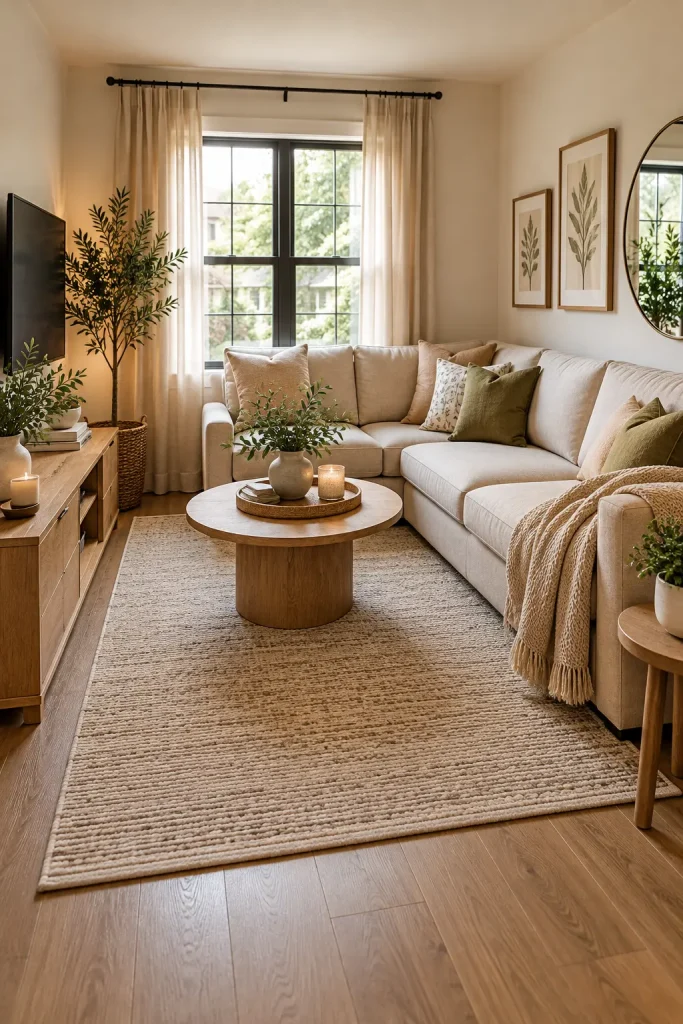
A small L-shaped sectional can be a smart choice when a living room has a natural corner for seating. It provides room for several people while keeping the furniture grouped along two walls instead of spreading individual chairs throughout the space.
Choose a model with modest dimensions and an orientation that suits your room. A reversible chaise can offer flexibility if you move or change the layout later.
Keep the opposite side of the room relatively open, using a narrow media console or wall-mounted shelving where appropriate. Avoid pairing a bulky sectional with an oversized recliner unless the room has enough clearance for both.
Before buying: Check the chaise depth and the distance needed to open nearby doors, drawers, or cabinets.
5. Mount the Television and Use a Slim Media Console
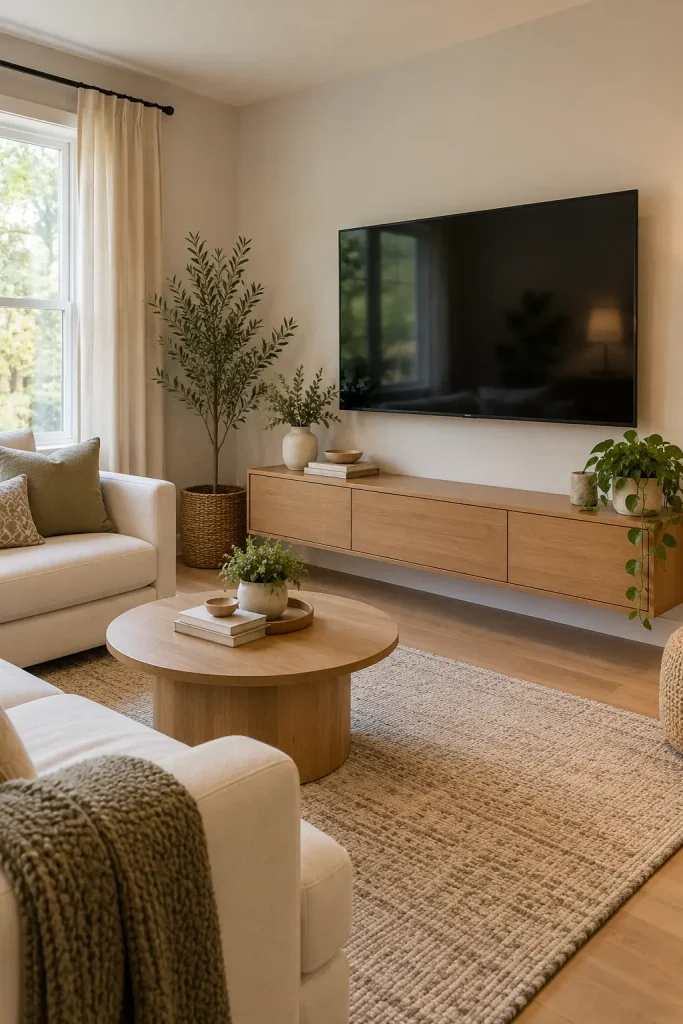
A wall-mounted television can free up the surface area otherwise occupied by a bulky TV stand. Pair it with a shallow media console to keep remotes, electronics, and everyday items organized without taking up unnecessary floor space.
A floating console creates a particularly streamlined look, while a narrow freestanding unit may be more practical for renters or anyone who prefers not to drill into the wall.
Keep the styling simple: one small lamp, a few books, or a ceramic accessory is often enough. Conceal loose cables with an appropriate cable-management solution, following the television and mount manufacturers’ instructions.
6. Install Floor-to-Ceiling Curtains
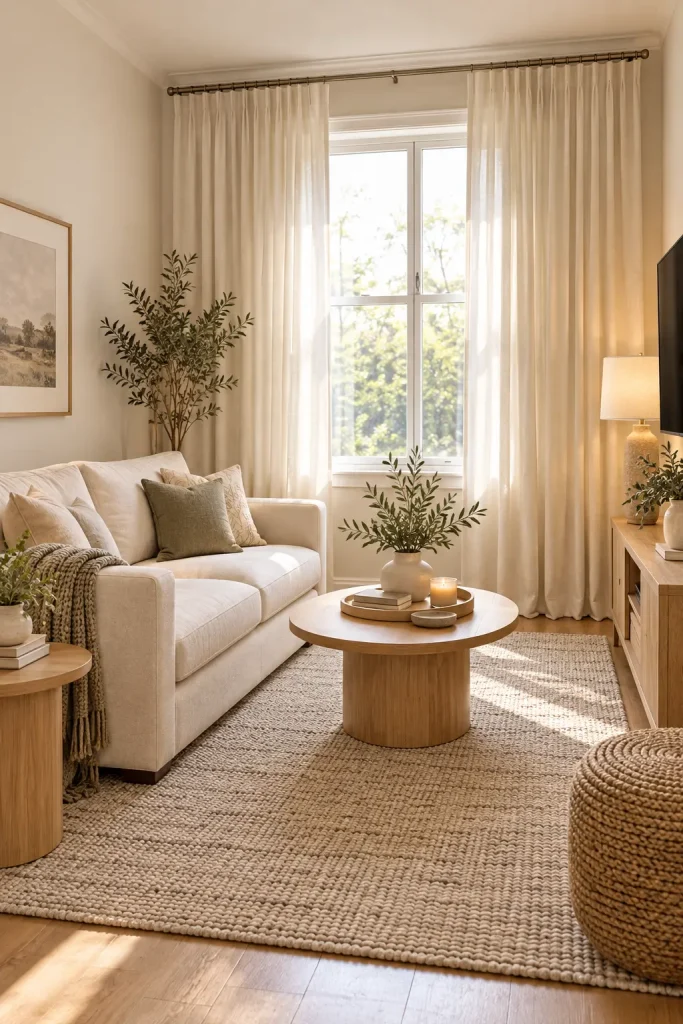
Curtains hung close to the ceiling can draw the eye upward, making a small living room feel taller. Extending the curtain rod beyond the window frame can also help the window appear wider when the curtains are open.
Choose a fabric that suits your light and privacy needs. Sheer linen-look panels filter daylight, while lined curtains provide greater privacy and light control.
For a cohesive result, select curtain colors that relate to the walls instead of introducing a strong horizontal band of contrast. Make sure the panels clear radiators, doors, or other obstacles.
Quick tip: Measure the finished curtain length carefully. Panels that stop awkwardly above the floor can make an otherwise polished room look unfinished.
7. Choose Furniture With Exposed Legs
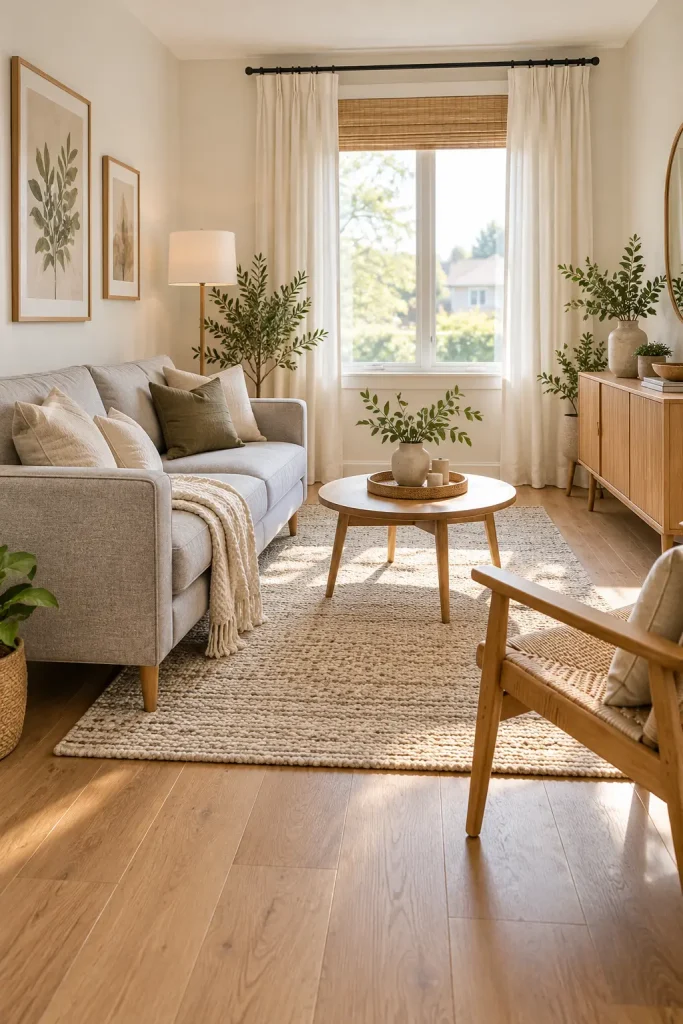
Furniture raised on visible legs lets more of the floor show beneath sofas, chairs, and cabinets. This can make a compact room feel less crowded than a collection of heavy pieces resting directly on the floor.
Look for a sofa with tapered wooden legs, a slender accent chair, or a sideboard with an open base. These pieces create small gaps that visually connect the furniture to the surrounding room.
The style works particularly well in Scandinavian, mid-century modern, and relaxed contemporary interiors. Pair it with a simple rug and restrained accessories to maintain the sense of openness.
Exposed legs aren’t essential for every piece. A closed storage cabinet can still be useful if it solves a genuine organizational problem.
8. Add a Large Mirror to Reflect Light
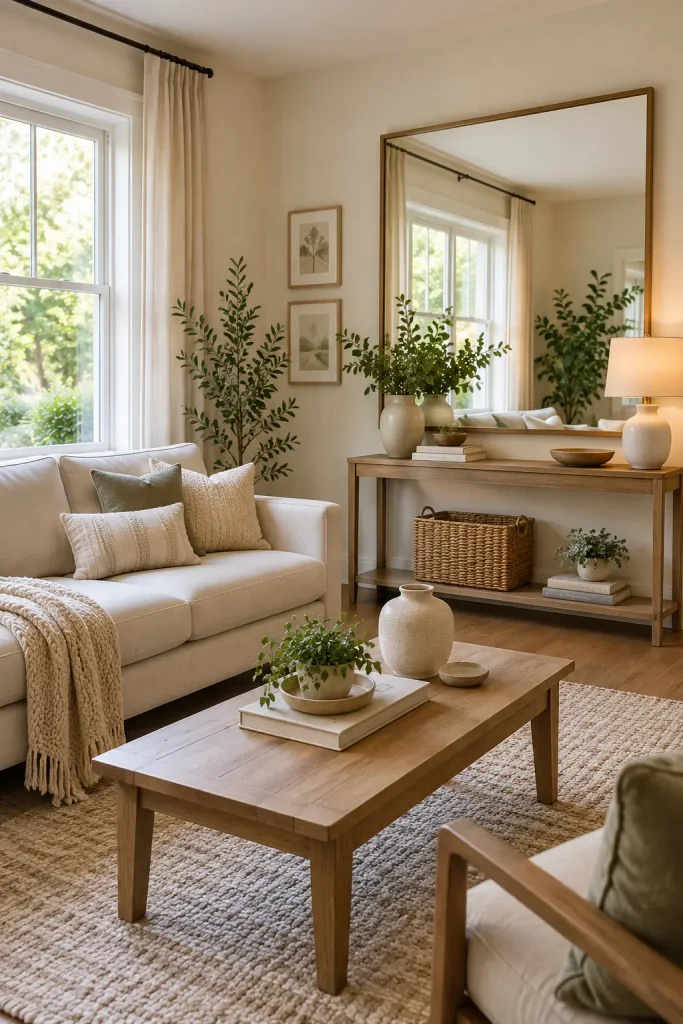
A large mirror can make a small living room feel brighter by reflecting available light and giving the eye another view into the space. Position it opposite or adjacent to a window where it can capture daylight or an attractive part of the room.
A generously sized rectangular mirror suits a clean, modern interior, while a rounded frame can soften a room filled with straight furniture lines.
The frame matters, too. Light oak creates a subtle natural look, black adds contrast, and antique brass introduces warmth.
A mirror isn’t a substitute for good lighting or adequate floor space, but it can be an effective finishing touch in a darker living room.
9. Use a Storage Ottoman Instead of a Traditional Coffee Table
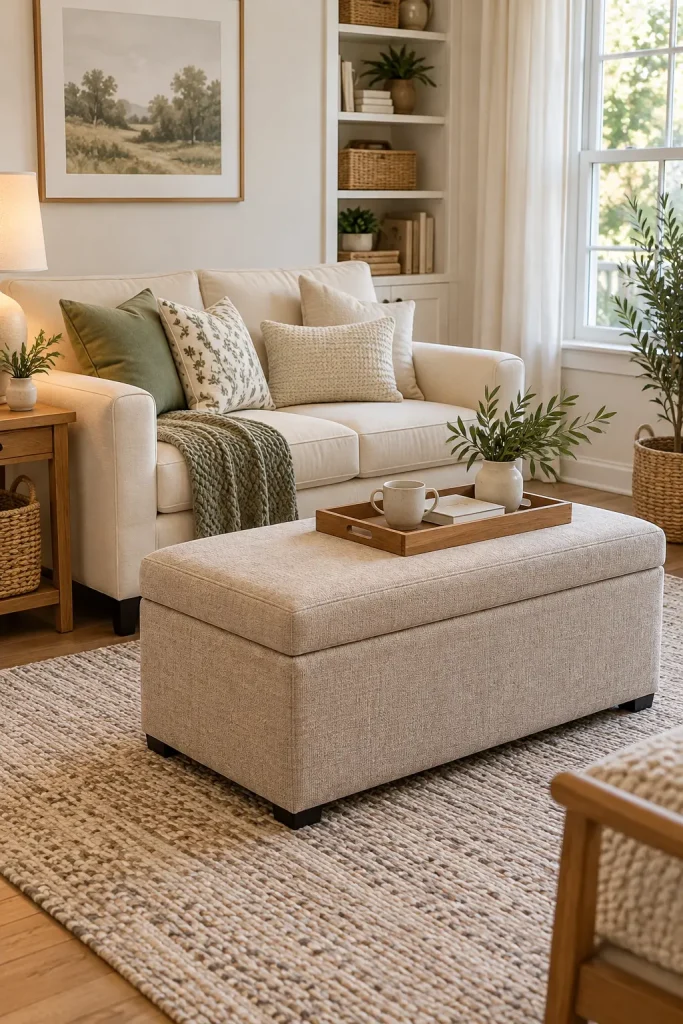
A storage ottoman can serve several purposes in one compact footprint. It provides a place to put your feet up, extra seating when guests arrive, and hidden storage for blankets, magazines, or small accessories.
Choose a firm, flat-topped design if you want to use it regularly as a coffee table. A decorative tray creates a stable surface for a mug or a few carefully chosen accessories.
Upholstery is another opportunity to introduce texture. Bouclé, woven fabric, and durable performance upholstery can each create a different look.
Common mistake: Selecting an ottoman that’s too large for the sofa. Measure the available space and preserve a comfortable route through the seating area.
10. Create a Cozy Reading Nook in an Unused Corner
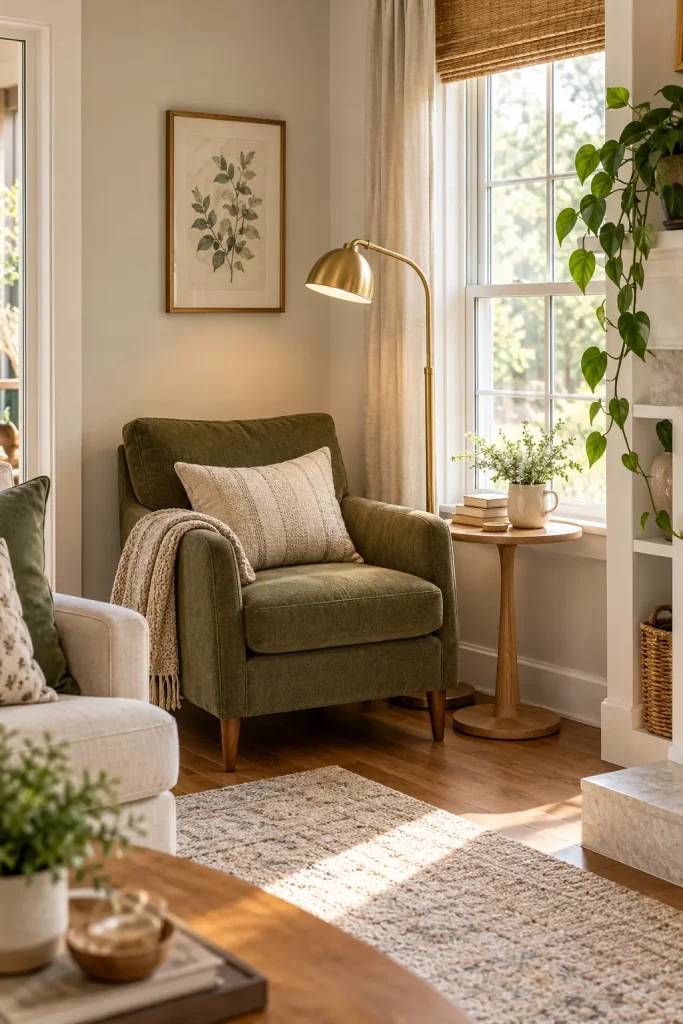
An unused corner can become a comfortable reading nook without requiring a separate room. A compact armchair, a small side table, and a floor lamp are often enough to establish a distinct little retreat.
Choose an accent chair with a relatively narrow profile and a seat depth that feels comfortable for reading. A muted olive, rust, or deep blue fabric can add personality without requiring a full-room color change.
If the corner sits near a window, make use of natural light during the day. In darker corners, choose a reading lamp that provides focused illumination while contributing to the room’s overall lighting scheme.
Avoid adding a large bookshelf if it obstructs the chair or narrows the main walking path. A small wall shelf can hold a few favorite books instead.
11. Use a Narrow Console Behind the Sofa
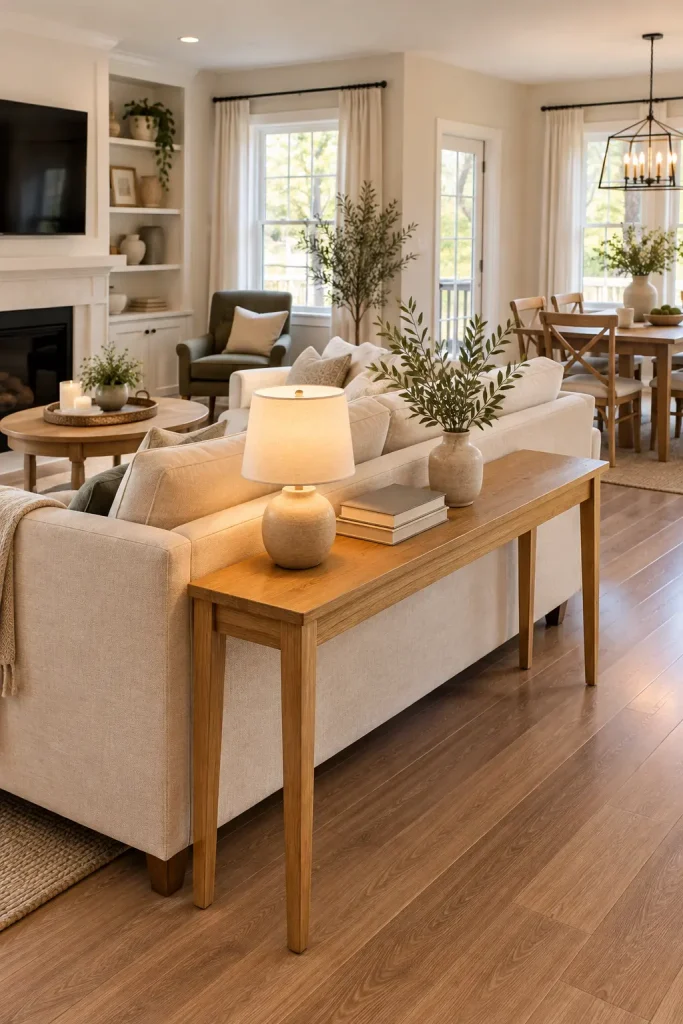
When a sofa floats away from the wall, the space behind it can feel unfinished. A narrow console table adds a useful surface for lighting, books, and a few decorative objects while making the furniture arrangement look intentional.
This solution works particularly well in open-plan apartments where the living area shares space with a dining table or kitchen. The console helps define the seating zone without introducing a tall divider.
Choose a shallow table and leave enough clearance behind the sofa for comfortable movement. If the room is exceptionally tight, a wall-mounted shelf may provide a similar visual effect with less depth.
Keep the objects on top relatively low and limited in number so they don’t interfere with conversation or obstruct sightlines.
12. Build Vertical Storage With Wall Shelves
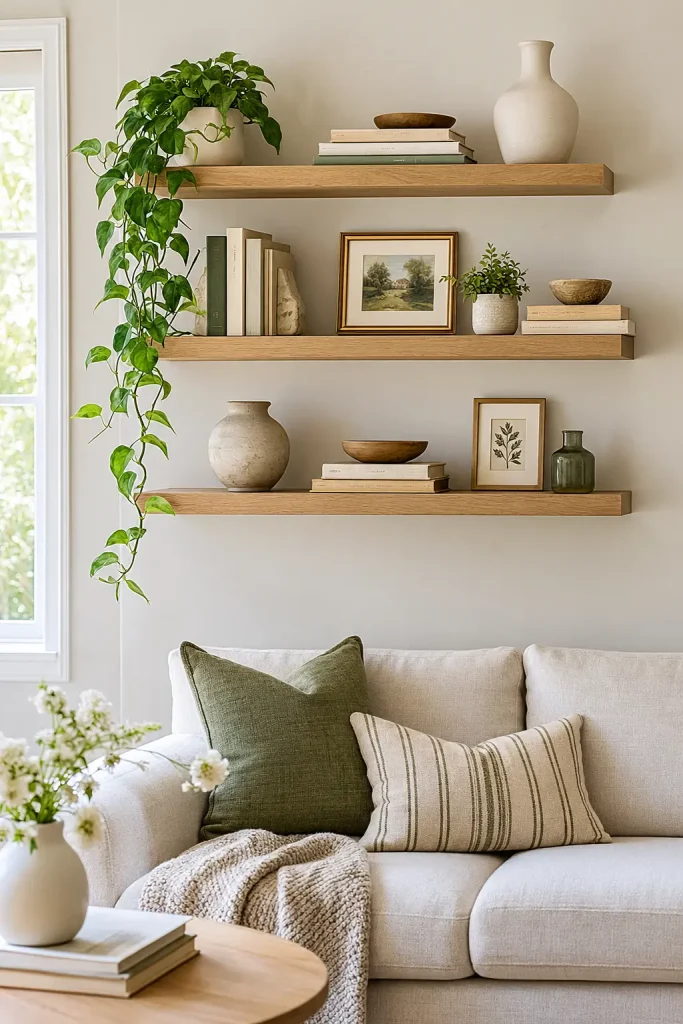
When floor space is limited, the walls can take on more of the storage work. Floating shelves provide a place for books, framed artwork, small plants, and treasured objects without requiring a wide bookcase.
Arrange shelves vertically to draw attention upward, but don’t fill every inch with belongings. Leaving some open space helps the display look deliberate rather than crowded.
For a cohesive arrangement, combine a few books with ceramics, small framed prints, and one or two plants suited to the available light. Keep heavier items within easy reach and follow the correct mounting requirements for your wall type.
Renters can consider freestanding tall shelving or approved removable display systems where appropriate.
Quick tip: Repeat two or three materials, such as oak, white ceramic, and muted green, to connect the shelves with the rest of the room.
13. Choose a Glass or Acrylic Accent Table
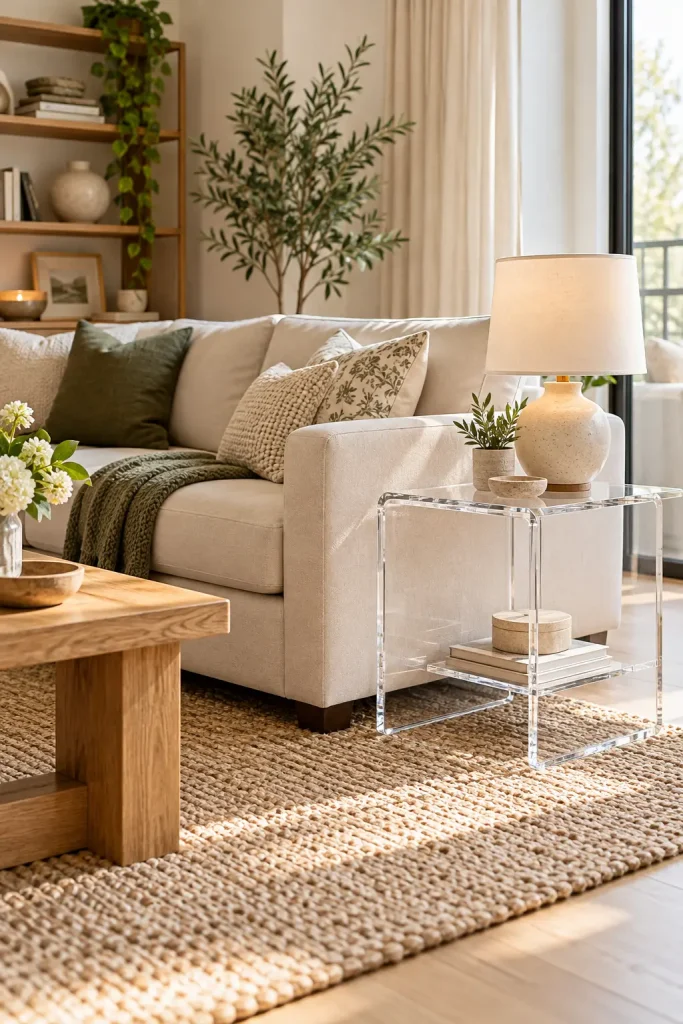
Transparent furniture can reduce visual heaviness in a crowded room. A glass or clear acrylic side table offers a practical surface while allowing more of the floor, rug, and surrounding furniture to remain visible.
This is especially useful beside a compact sofa or in a narrow gap where a solid wooden table might appear bulky. Pair the transparent piece with warmer materials, such as a fabric sofa, wool rug, or wooden floor, to prevent the room from feeling overly stark.
Consider the practical differences between materials. Glass can show fingerprints and requires careful handling, while acrylic can scratch more easily than some other furniture finishes.
A transparent table is best treated as a supporting piece, not a replacement for all the warmth and texture in the room.
14. Paint One Wall a Deep, Moody Color
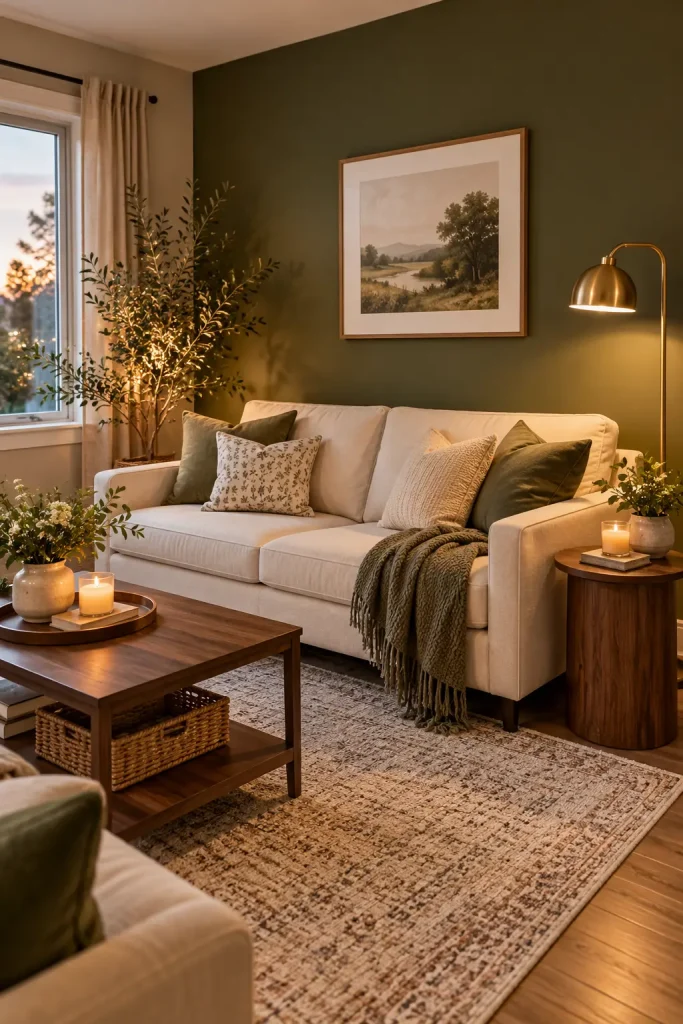
A small living room doesn’t have to be entirely pale to feel well designed. A deep olive, muted navy, or warm charcoal accent wall can provide a strong backdrop for lighter furniture and carefully chosen artwork.
The key is contrast and balance. A dark wall behind a cream sofa can give the seating area definition, while warm wood and soft lighting keep the room from feeling cold.
Consider the amount of daylight the room receives before choosing a shade. In a darker space, a warm mid-tone green may feel more comfortable than an almost-black color.
If you rent, removable wallpaper or a freestanding screen can introduce a similar accent without permanently changing the walls.
15. Layer Several Sources of Lighting
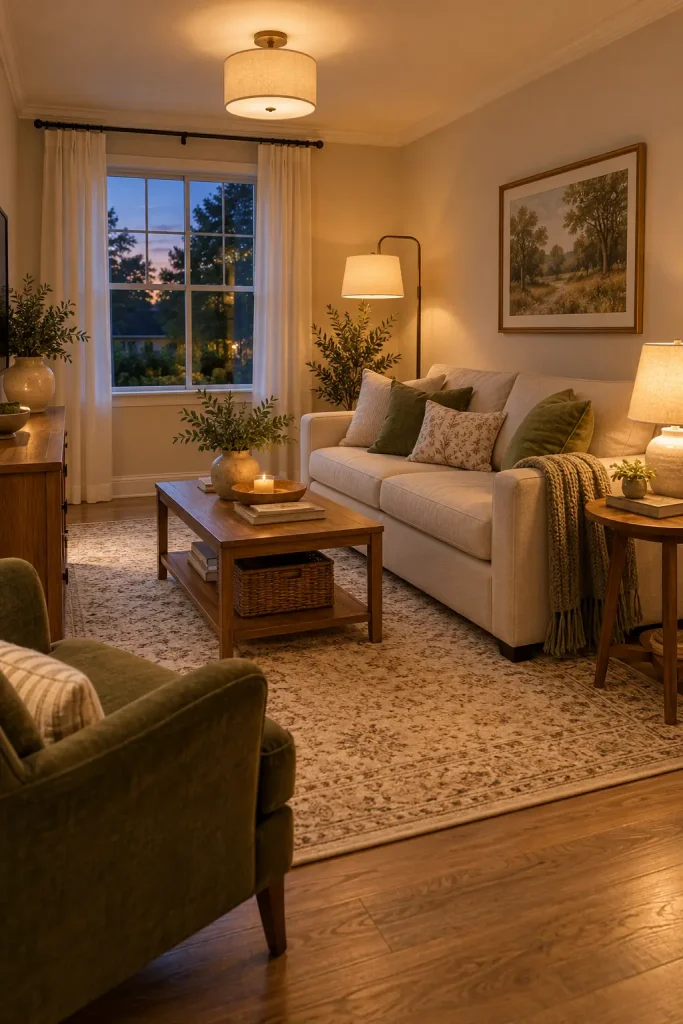
A single ceiling light rarely provides all the atmosphere and functionality a living room needs. Combining ambient, task, and accent lighting creates a more flexible space for relaxing, reading, entertaining, and working.
A floor lamp beside the sofa provides useful reading light, while a table lamp can make a dark corner feel more inviting. Wall sconces can save surface space when suitable wiring or approved plug-in options are available.
Use warm-toned bulbs for a comfortable evening atmosphere, and consider dimmable fixtures when practical. Keep light sources at different heights so the room feels layered rather than uniformly bright.
Try this combination:
- Ceiling fixture for general illumination.
- Floor lamp beside the main seating.
- Table lamp on a side table or console.
- Small accent light to highlight artwork or shelving.
You don’t need all four. Start with the areas that feel darkest or least functional.
16. Use a Striped Rug to Emphasize Room Length
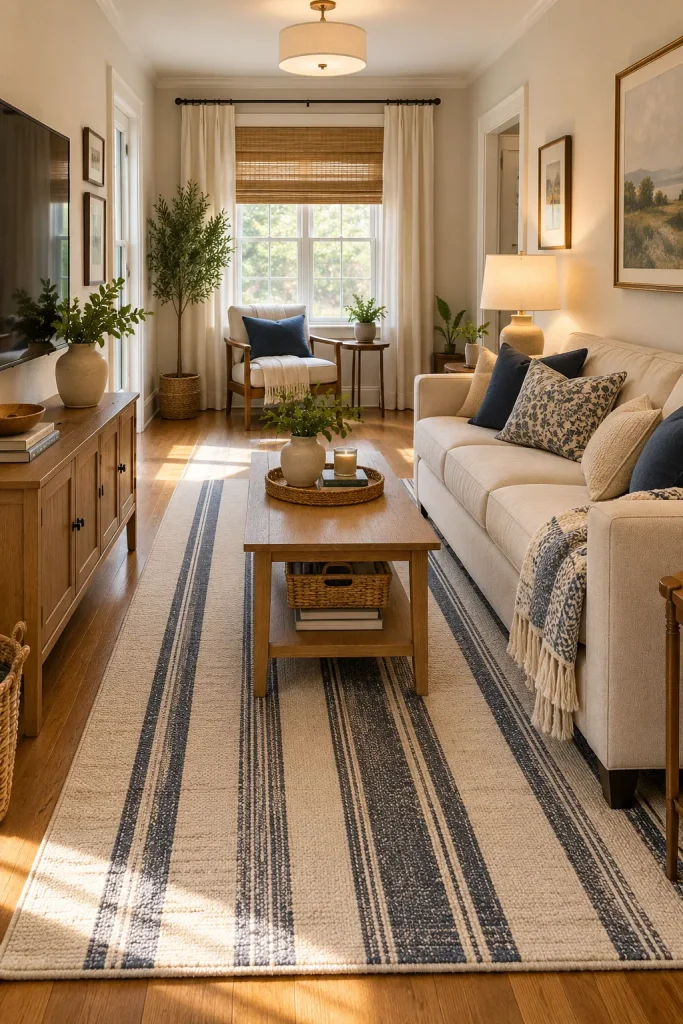
A striped rug can influence how the proportions of a narrow living room are perceived. Lines running along the room’s longest dimension can reinforce its length, while the right rug size helps connect the sofa, chairs, and coffee table into one cohesive seating area.
Choose a pattern that complements rather than competes with your furniture. Soft beige stripes offer subtle definition, while navy or charcoal stripes create a stronger graphic effect.
Avoid choosing a rug so small that it appears disconnected from the seating. Ideally, the front legs of the sofa and any adjacent chairs should sit on the rug, provided the room dimensions allow it.
17. Add a Built-In Bench Beneath a Window
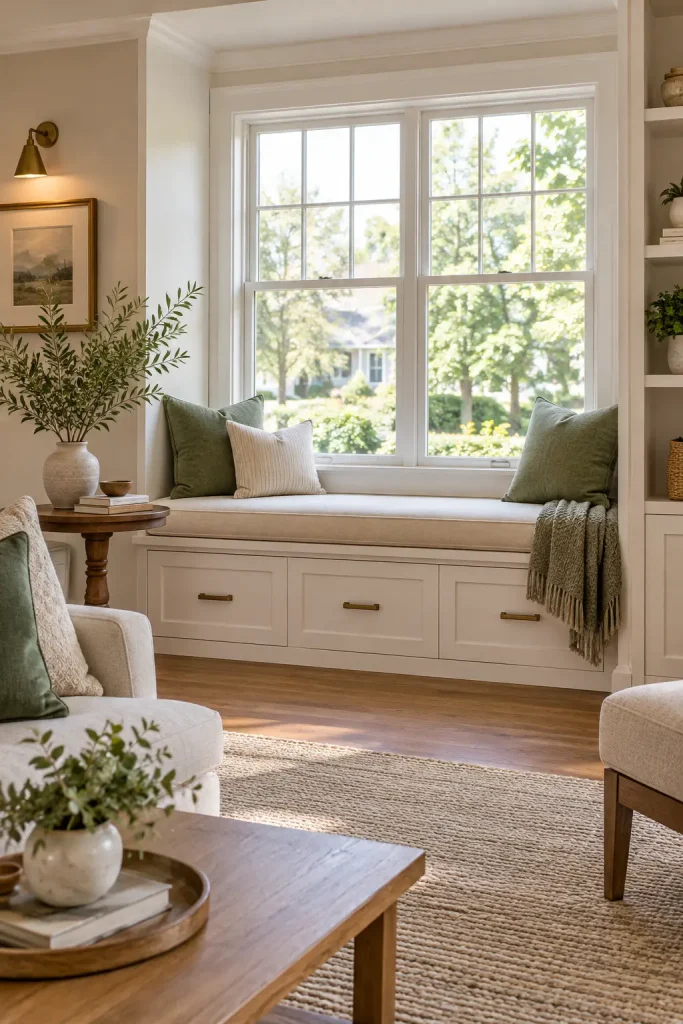
A window bench can combine seating, storage, and a charming architectural feature in one location. In a room with a suitable window recess, a fitted bench can provide a place to read, relax, or accommodate an extra guest without adding another freestanding chair.
Drawers or lift-up compartments beneath the seat can store blankets, games, and other household items. Cushions in washable or durable fabric make the bench more comfortable for everyday use.
This option requires more planning than simply rearranging furniture. Check the window’s construction, nearby heating equipment, and any ventilation requirements before installing a built-in feature.
For a less permanent alternative, use a low storage bench with cushions and baskets underneath.
18. Make a Gallery Wall That Feels Organized
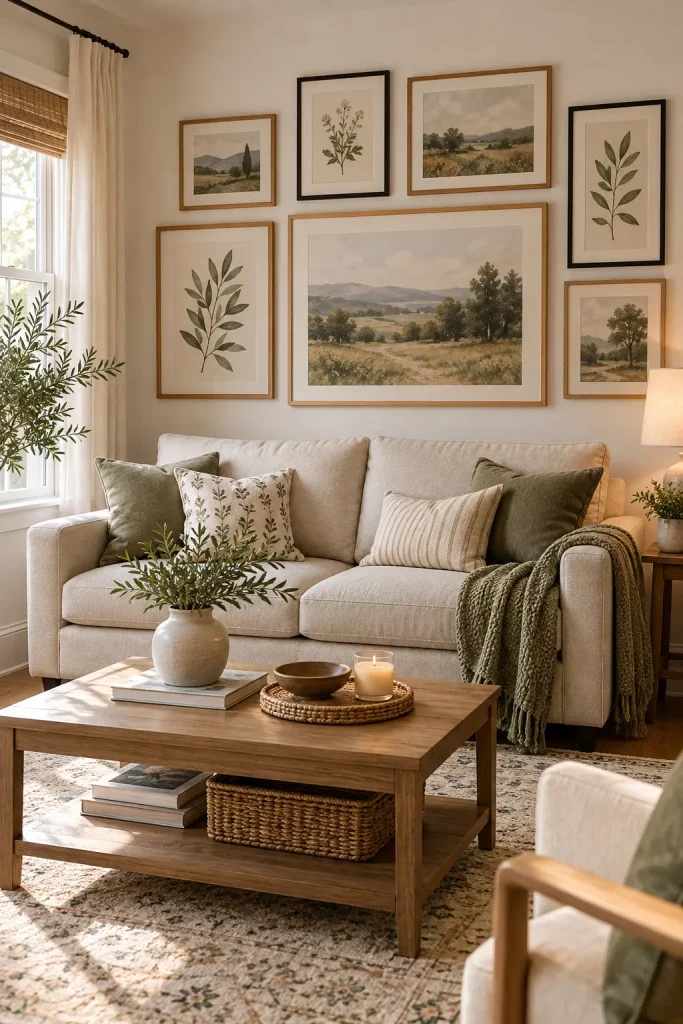
Artwork gives a small living room personality without taking up floor space. A gallery wall can make the area above a sofa feel complete, provided the arrangement has a clear visual structure.
Choose a consistent frame finish, a coordinated color palette, or a shared subject such as botanical illustrations or landscape photography. The artwork doesn’t need to be identical; the common thread is what makes the display feel connected.
Before hanging anything, arrange paper templates on the wall or lay the frames on the floor to test the composition. Keep the grouping proportionate to the sofa and avoid placing it so high that the furniture and artwork appear disconnected.
For renters, lightweight frames and wall-safe hanging solutions may be suitable depending on the wall surface and product instructions.
19. Try a Monochromatic Gray Living Room
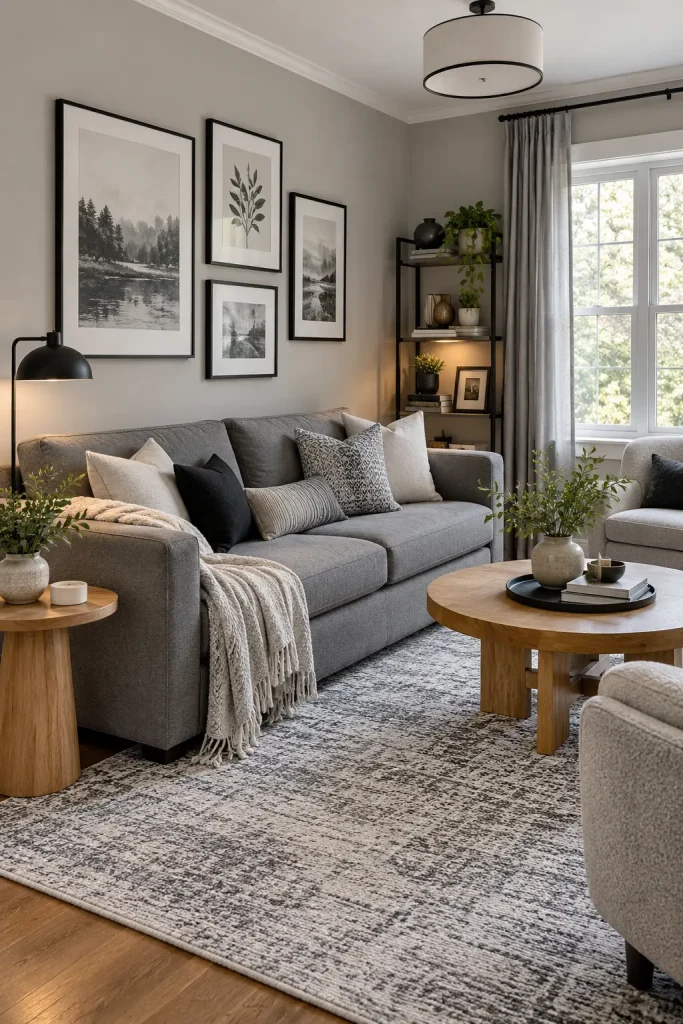
A monochromatic scheme can make a small living room feel unified without relying on beige or cream. Layering different shades of gray creates subtle contrast while allowing furniture, artwork, and architectural details to remain visually connected.
Combine pale gray walls with a medium-gray sofa and a textured rug in a deeper shade. Add black picture frames, brushed-metal details, or natural wood to give the palette definition.
The important distinction is between using one color family and using one flat finish. Linen, wool, wood, metal, and ceramics all reflect light differently, giving a restrained palette depth.
If the room receives limited daylight, test the gray tones carefully. Some cool grays can appear bluish in shadow, while warmer grays may feel more comfortable.
20. Use a Folding Desk for a Dual-Purpose Living Room
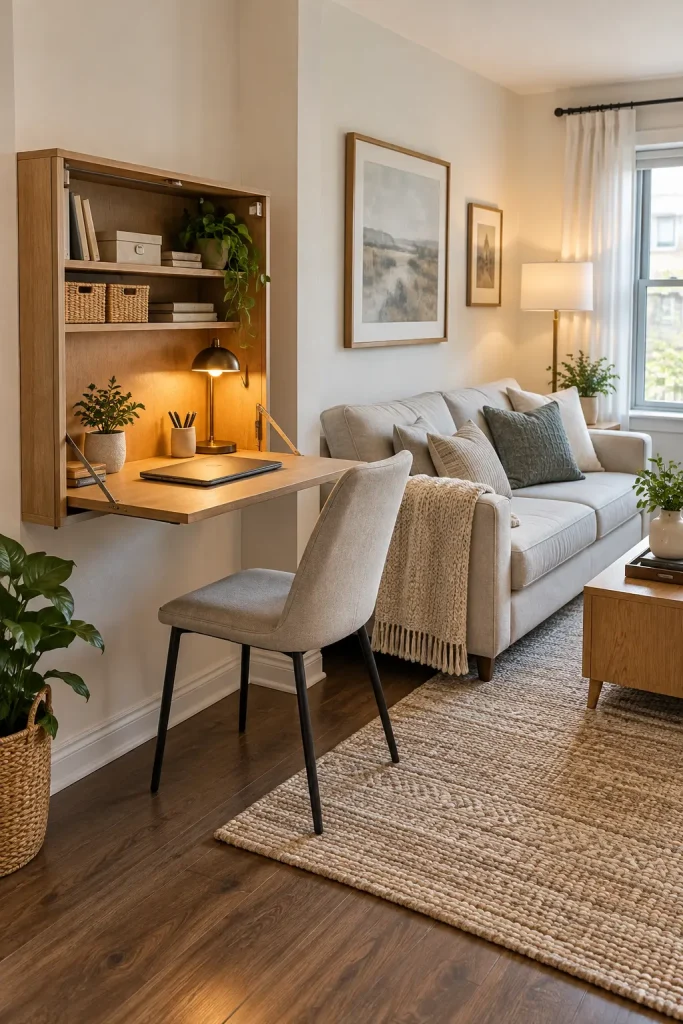
When your living room also serves as a home office, a folding desk can create a practical workspace without permanently claiming a large section of the room.
A wall-mounted fold-down desk is useful for occasional laptop work, while a compact console desk may suit someone who works from home more regularly. Choose a location with adequate lighting and enough clearance for the chair when the desk is open.
Keep work supplies in a small drawer, box, or nearby cabinet so the living room can return to its main purpose at the end of the day.
If you choose a wall-mounted model, confirm that the wall and mounting hardware can safely support the desk and its intended load.
21. Introduce Warm Wood for a Natural Look
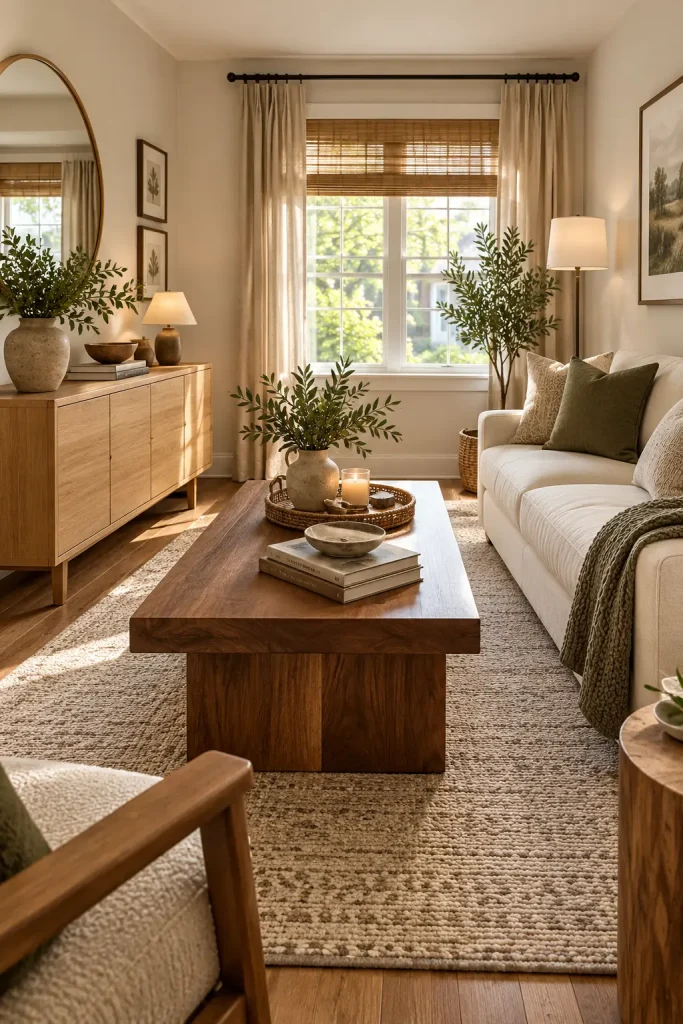
Natural wood brings warmth and character to a small living room without requiring elaborate decoration. A walnut coffee table, an oak sideboard, or a simple wooden accent chair can give the space a grounded, welcoming feel.
You can mix wood tones successfully when they share a compatible undertone or finish. For example, pale oak works well with warm beige textiles, while walnut creates richer contrast against cream upholstery and light walls.
Rather than buying an entirely matching furniture set, choose a few complementary pieces and connect them through textiles and accessories.
Quick tip: If the room already has prominent wood flooring, bring a similar tone into one or two furniture pieces to create continuity.
22. Add a Slim Accent Chair Instead of a Bulky Recliner
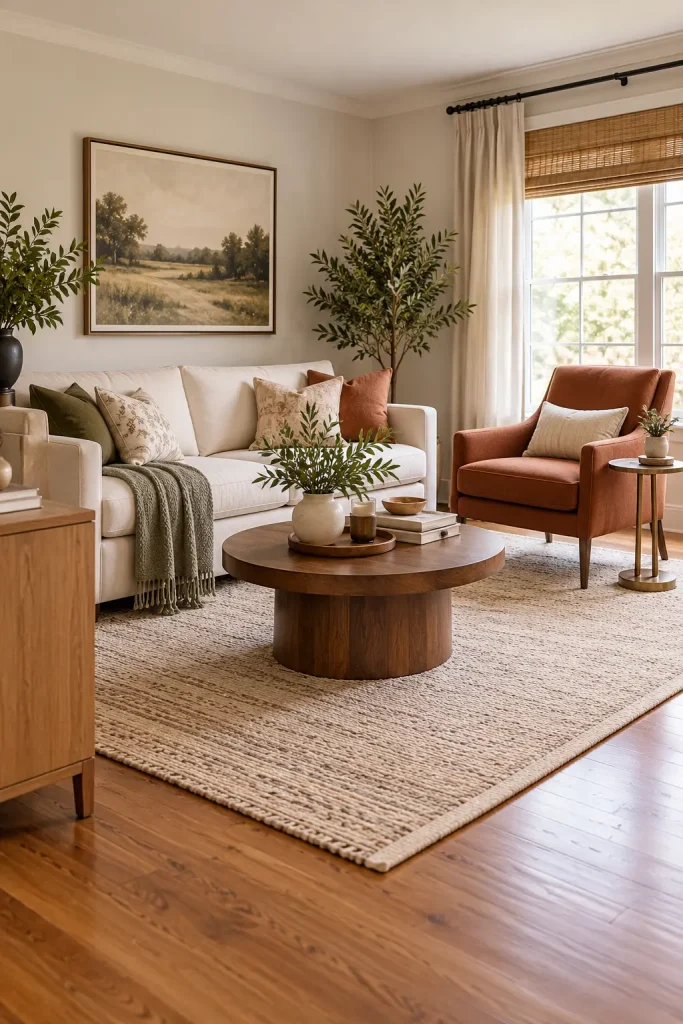
An accent chair can provide extra seating and introduce a different color or texture without making the room feel crowded. The key is choosing a chair that complements the sofa’s scale.
Look for slim arms, a relatively open base, and a footprint that leaves enough room to move around the seating arrangement. A curved-back chair can soften a room filled with rectangular furniture, while a simple wooden-frame chair may suit a more minimalist interior.
Place the chair at a slight angle toward the sofa to encourage conversation. If space is limited, choose a lightweight design that can be moved when you need additional floor area.
A bulky recliner may be comfortable, but its extended footprint can be difficult to accommodate in a narrow room.
23. Decorate With Plants at Different Heights
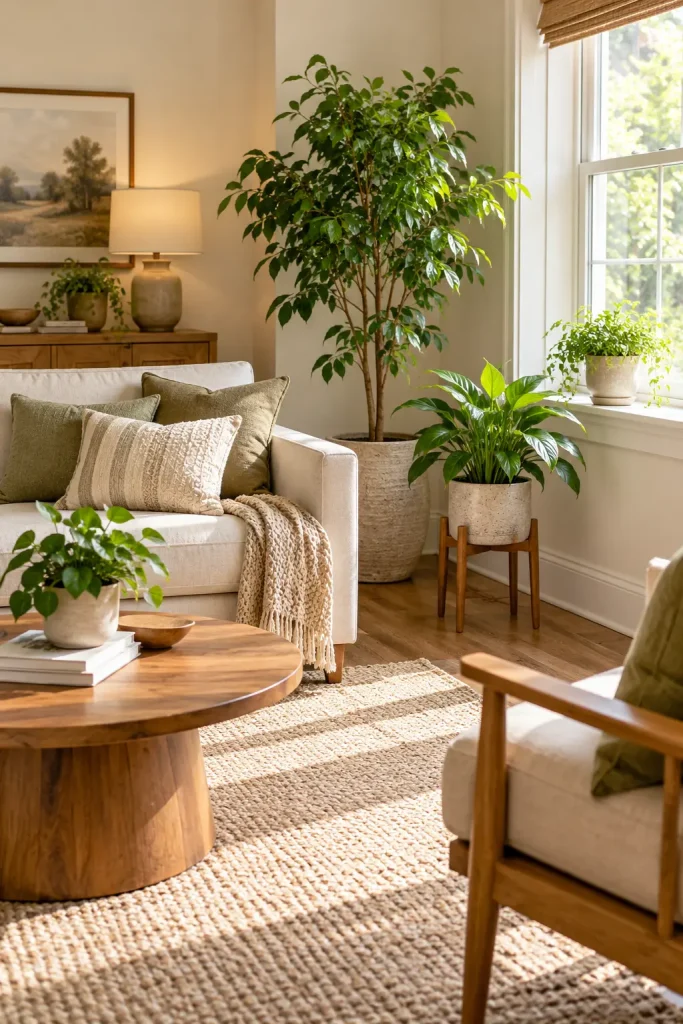
Plants introduce natural color and variation into a small living room. Instead of filling every available surface with greenery, arrange a few plants at different heights to create a more intentional display.
A taller floor plant can occupy an empty corner, a smaller plant can sit on a side table, and a compact pot can add detail to a shelf. This approach creates visual movement while preserving useful surfaces and walking space.
Choose plants according to the actual light conditions in your room. A sunny window and a dim interior corner may require very different varieties.
If you have pets or young children, check the suitability of each plant for your household and position pots securely.
24. Use a Built-In Bookcase Around the Television
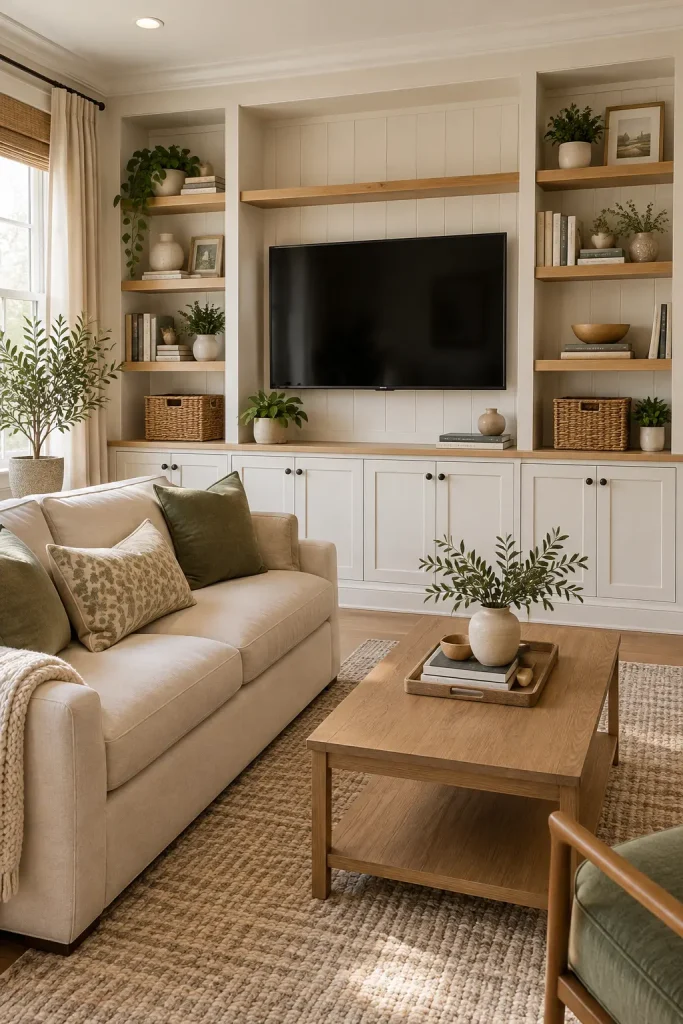
A built-in bookcase around the television can make an awkward wall feel like a purposeful architectural feature. Shelving creates space for books, baskets, artwork, and a limited number of decorative objects while integrating the entertainment area into the room.
For a cohesive design, repeat the same finish across the cabinetry and use open shelves selectively. Closed cupboards below can conceal electronics and everyday clutter, while open shelves above keep the wall from appearing too solid.
This is a more substantial investment than simply mounting a television, but a simplified version can be achieved with carefully arranged freestanding bookcases.
Leave appropriate ventilation around electronics and follow the mounting and clearance requirements for your equipment.
25. Try a Modern Boho Living Room With Layered Textures
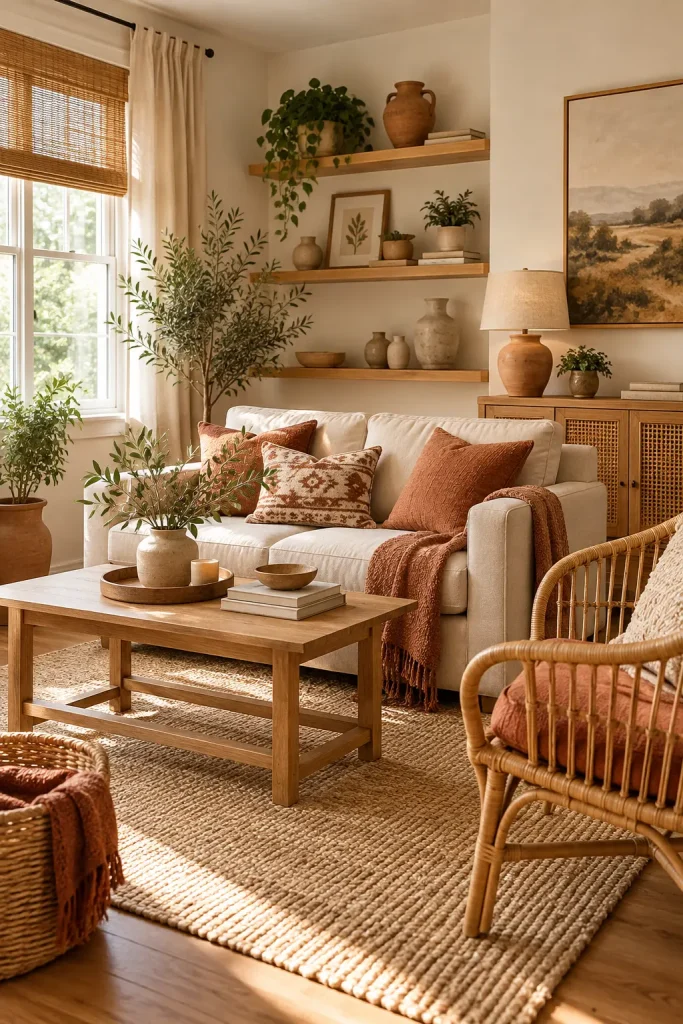
A modern boho living room can feel warm and personal without becoming cluttered. The trick is to combine a restrained color palette with a few distinctive natural materials rather than filling the room with decorative objects.
Start with a compact neutral sofa and a natural-fiber rug. Introduce terracotta cushions, a woven basket, a wooden coffee table, and one or two handmade-looking ceramic accessories.
Texture becomes the main source of visual interest, so you can keep the number of objects relatively small. A single rattan chair or woven pendant may provide enough character without requiring several matching statement pieces.
For a more contemporary result, leave some surfaces clear and avoid using too many competing patterns.
26. Create a Minimalist Living Room With Fewer, Better Pieces
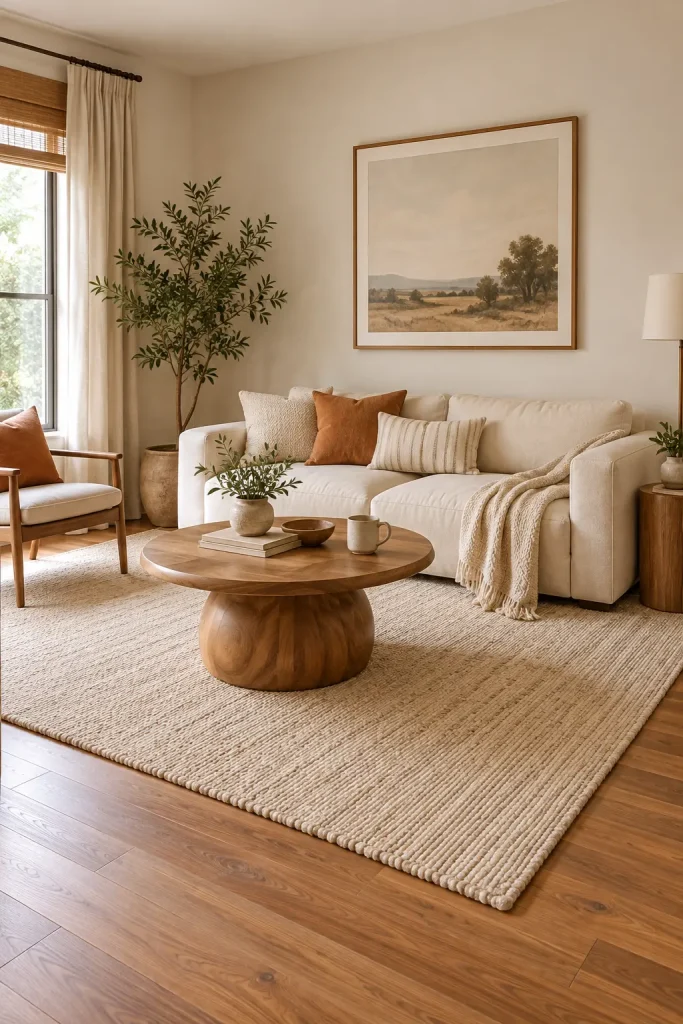
Minimalist decorating is especially useful when a small living room feels visually busy. Instead of adding more storage baskets and accessories, begin by deciding which furniture and objects genuinely improve the room.
A low-profile sofa, a simple coffee table, and one carefully selected artwork can create a complete seating area without overwhelming the available space. A limited palette of warm white, pale wood, and soft gray keeps the elements visually connected.
Minimalism doesn’t mean removing everything that makes a home personal. A favorite book collection, a meaningful artwork, or a distinctive lamp can provide character without creating clutter.
Do: Give important objects room to stand out.
Don’t: Remove so many functional items that everyday living becomes inconvenient.
27. Use a Compact Extendable or Nesting Table for Flexible Living
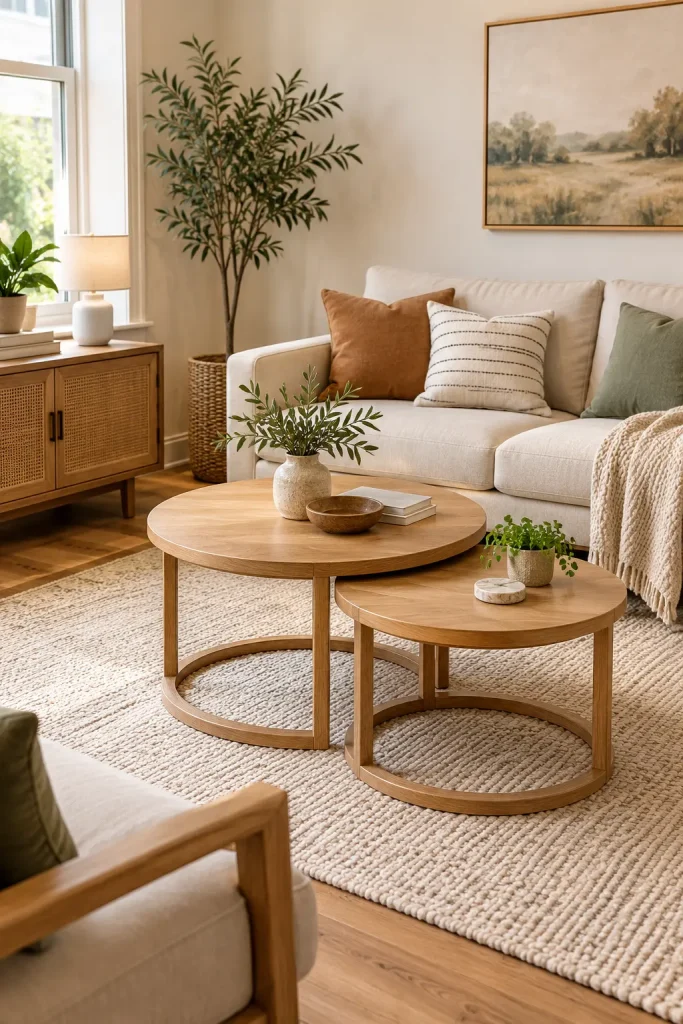
A flexible coffee-table arrangement is useful when your living room serves different purposes throughout the day. Nesting tables can be separated for entertaining and pushed together when you want more open floor space.
An extendable or lift-top table can be another practical choice, particularly if you occasionally eat, read, or work from the sofa. Select a mechanism that feels stable and is easy to operate, and check the table’s dimensions in both its compact and expanded positions.
The best choice depends on how you use the room.
| Table type | Main advantage | Best use |
|---|---|---|
| Nesting tables | Separate surfaces when needed | Entertaining and flexible layouts |
| Lift-top table | Raised surface for working or eating | Dual-purpose living rooms |
| Small fixed table | Simple, stable everyday surface | Rooms with a consistent layout |
Don’t overlook the space required to pull out a nested table or raise a tabletop. Flexibility is only helpful when the expanded furniture still leaves comfortable clearance.
28. Add a Statement Light Fixture Without Overcrowding the Room
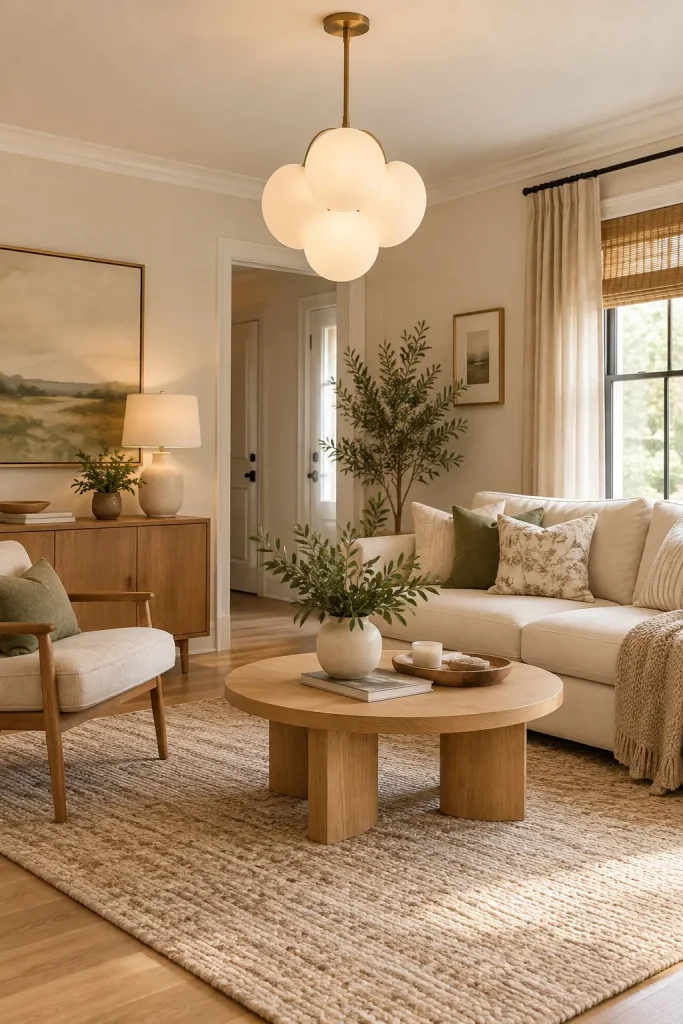
A carefully chosen ceiling fixture can give a small living room a distinctive focal point without using any additional floor space. Consider a sculptural opal-glass pendant, a compact modern chandelier, or a simple fixture with an interesting silhouette.
Scale is important. A very large fixture can dominate a low ceiling, while an undersized fitting may disappear into the room. Choose a design that relates to the room’s dimensions, furniture, and ceiling height.
A statement fixture works best when the rest of the decor gives it room to stand out. Keep nearby accessories relatively restrained and use table or floor lamps to supplement the light where necessary.
For rental homes or rooms where rewiring isn’t practical, a distinctive plug-in lamp or portable lighting piece can provide a similar focal point.