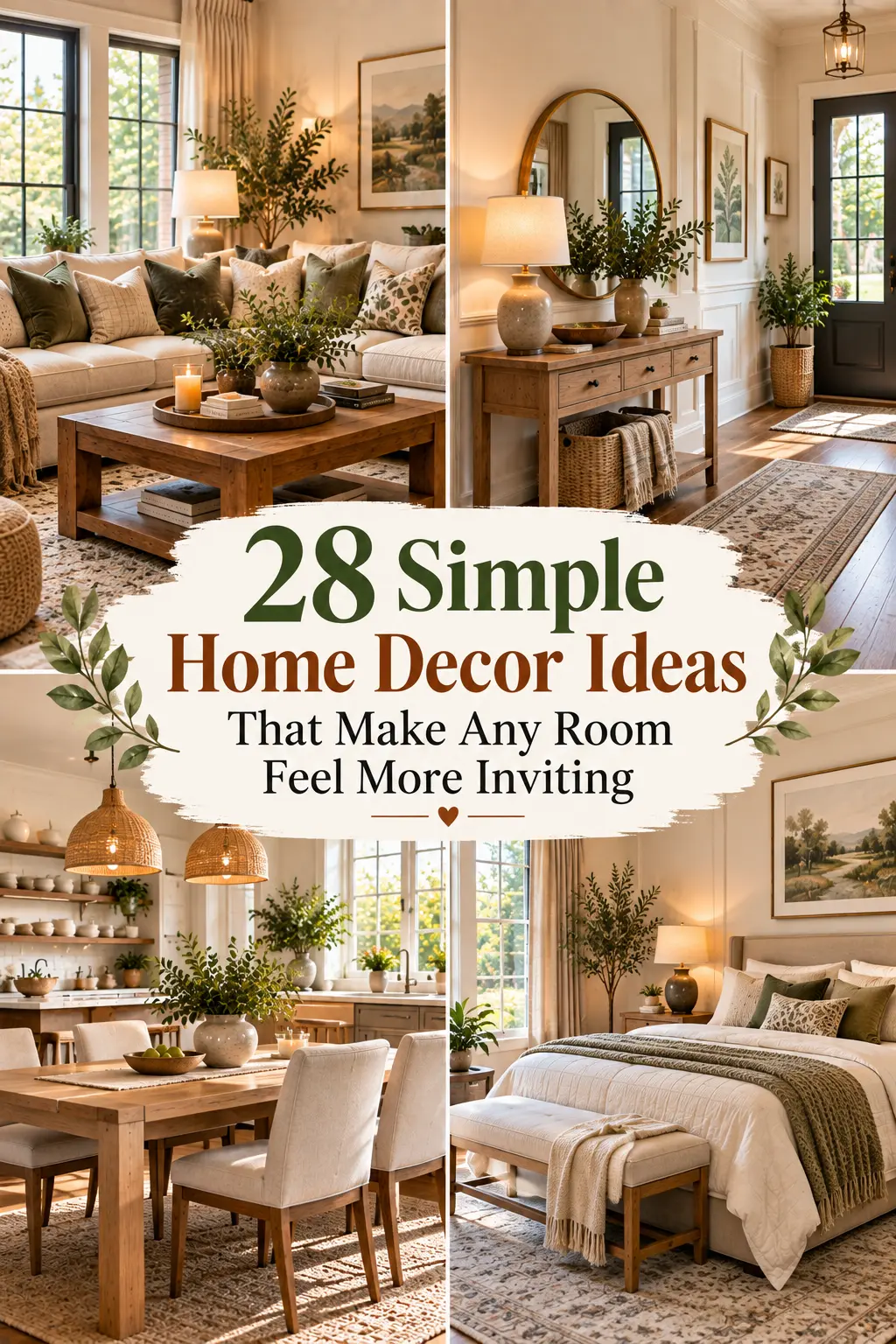
28 Simple Home Decor Ideas That Make Any Room Feel More Inviting
An inviting home doesn’t have to come from an expensive renovation or a complete furniture makeover. Sometimes, a few thoughtful decorating changes can make an ordinary room feel noticeably warmer, more comfortable, and more personal. Simple details such as layered textiles, warm lighting, natural wood, greenery, and meaningful accessories can change the atmosphere without overwhelming the space. The goal is to create rooms that look attractive while still feeling comfortable enough for everyday life. These ideas can work in living rooms, bedrooms, dining spaces, entryways, bathrooms, and home offices. Some are easy styling changes using things you may already own, while others are small upgrades worth considering over time. The key is to focus on comfort, balance, texture, and personality rather than filling every available surface. Use these ideas as flexible inspiration and adapt them to your home’s size, layout, and existing style.
1. Layer Soft Textures Throughout the Room
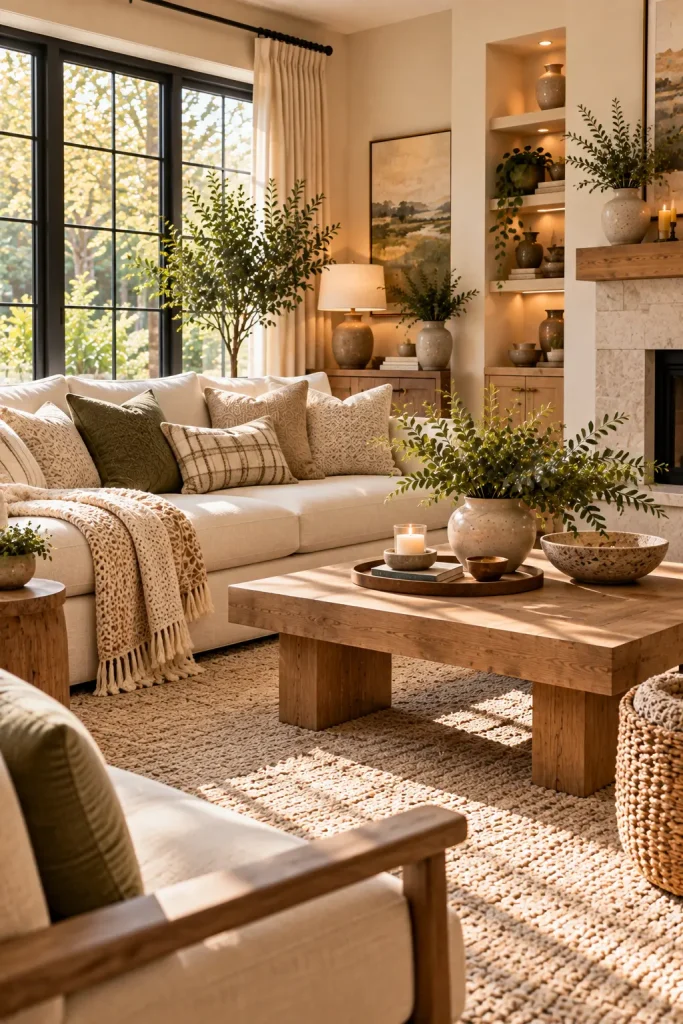
Soft textures are one of the easiest ways to make a room feel warmer and more inviting without changing its basic layout. Start with comfortable materials such as linen, cotton, wool, boucle, knitted fabrics, or woven fibers to create visual and tactile variety. A textured throw casually placed over a sofa can make the seating area feel more relaxed and lived-in. Add a few cushions in different fabrics rather than choosing several pillows that all have the same finish. Woven baskets, textured rugs, and fabric lampshades can add another layer without making the room feel overly decorated. Try keeping most of the textures within a related color palette so the space still feels cohesive. Smooth furniture can look especially welcoming when balanced with rougher or softer materials nearby. The result should feel comfortable and collected rather than perfectly matched. This approach works especially well in neutral rooms that need more depth without introducing many new colors.
2. Warm Up the Room With Better Lighting
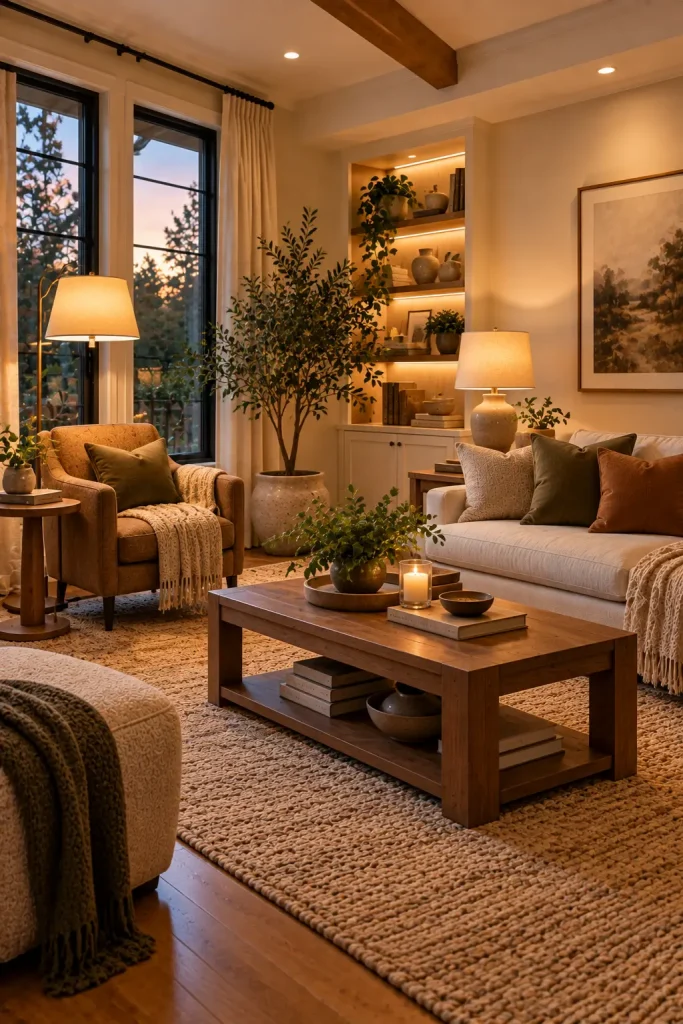
Lighting has a major influence on whether a room feels energetic, calm, cozy, or cold. Instead of depending entirely on one bright ceiling fixture, use several smaller light sources at different heights. A table lamp beside a sofa can create a comfortable reading area, while a floor lamp can brighten a darker corner. A small lamp on a console or bookshelf can provide another soft pool of light in the evening. Choose warm-toned lighting where appropriate if you want the room to feel relaxed and residential. Lampshades can also soften the appearance of a bulb and spread light more gently across nearby surfaces. Try positioning lights so that they highlight useful areas rather than simply illuminating the entire room equally. Combining overhead, mid-level, and lower lighting creates more visual depth and makes the room feel layered. This simple change can make familiar furniture look completely different after sunset.
3. Add a Large Area Rug
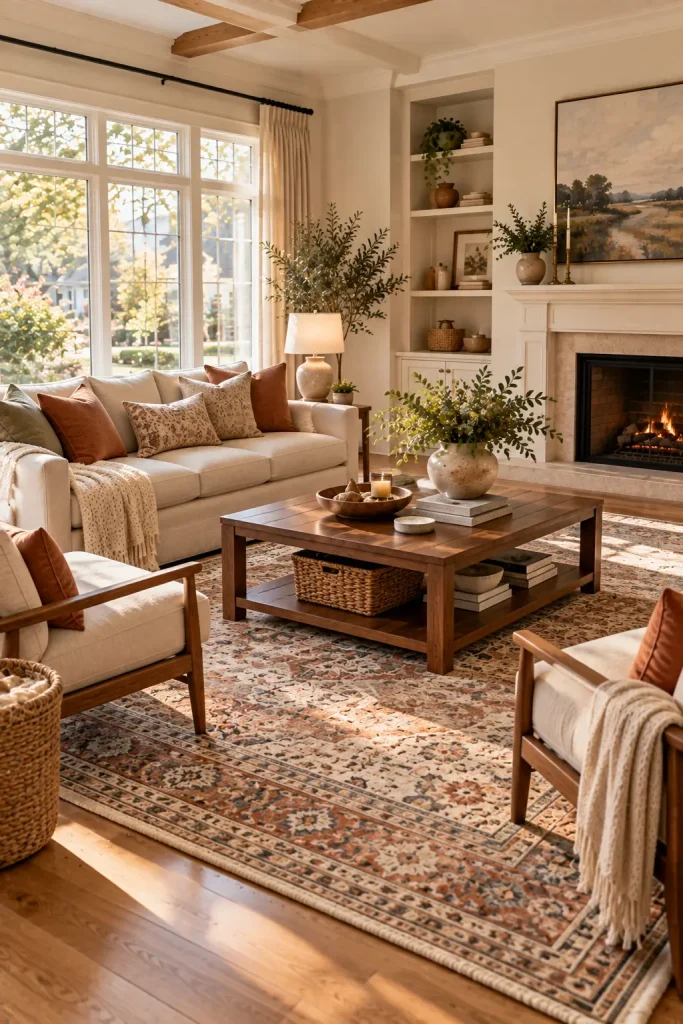
A large area rug can visually connect furniture and make a room feel more settled and comfortable. Instead of choosing a small rug that sits by itself in the middle of the room, consider how the rug relates to the surrounding seating or furniture. In a living room, allowing at least the front legs of larger seating pieces to sit on the rug can create a stronger connection between them. In a bedroom, a rug extending beyond the sides or foot of the bed can provide warmth and softness underfoot. Patterned rugs can introduce personality while subtle designs can work as a calm foundation for stronger furniture. Consider the room’s existing colors before choosing the rug so it supports rather than competes with the rest of the decor. Texture is also important because a plush or woven surface can make a room feel more comfortable visually. A properly sized rug often has more impact than several small decorative accessories. It can also help define a specific area within an open-plan room.
4. Bring in Natural Wood
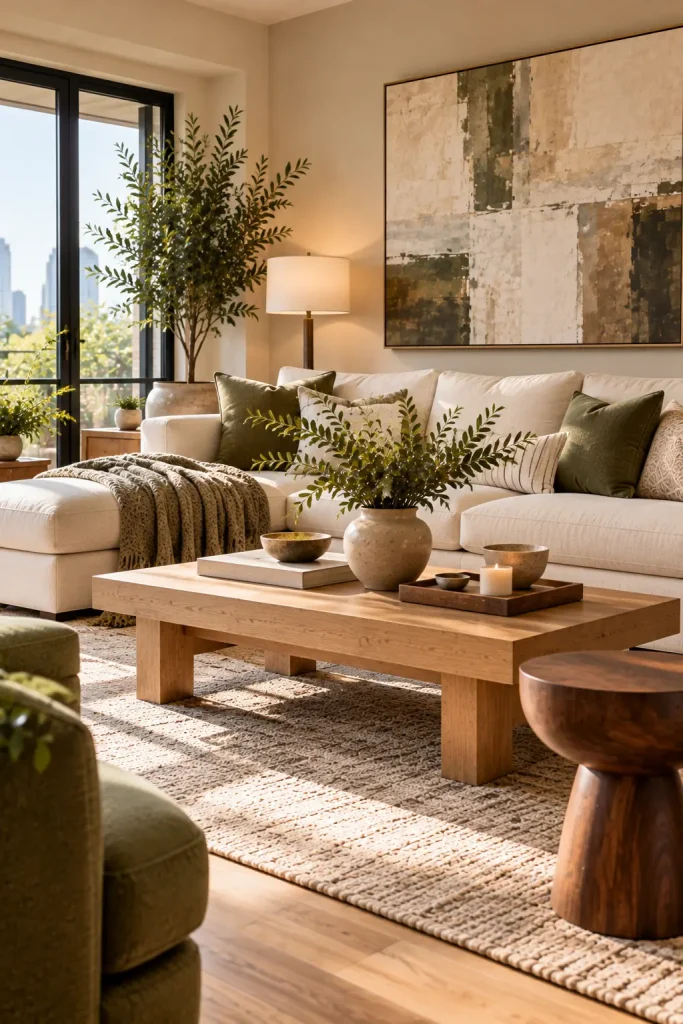
Natural wood can instantly add warmth to interiors that otherwise feel too cool, polished, or uniform. You don’t need to replace all your furniture with wooden pieces to achieve this effect. A simple oak coffee table, walnut side table, wooden tray, stool, bench, or picture frame can introduce organic warmth. Visible grain adds subtle visual variation that painted surfaces often don’t provide. Try combining different wood pieces without requiring every finish to match exactly. Slight differences in tone can make the room feel more naturally collected and less like a coordinated furniture set. Wood also pairs easily with linen, cotton, ceramics, woven materials, and greenery. In a neutral room, warm oak can add softness, while darker walnut can create a richer and more grounded appearance. Choose pieces according to the room’s existing scale so the wood adds character without making the space feel heavy.
5. Create a Welcoming Entryway Moment
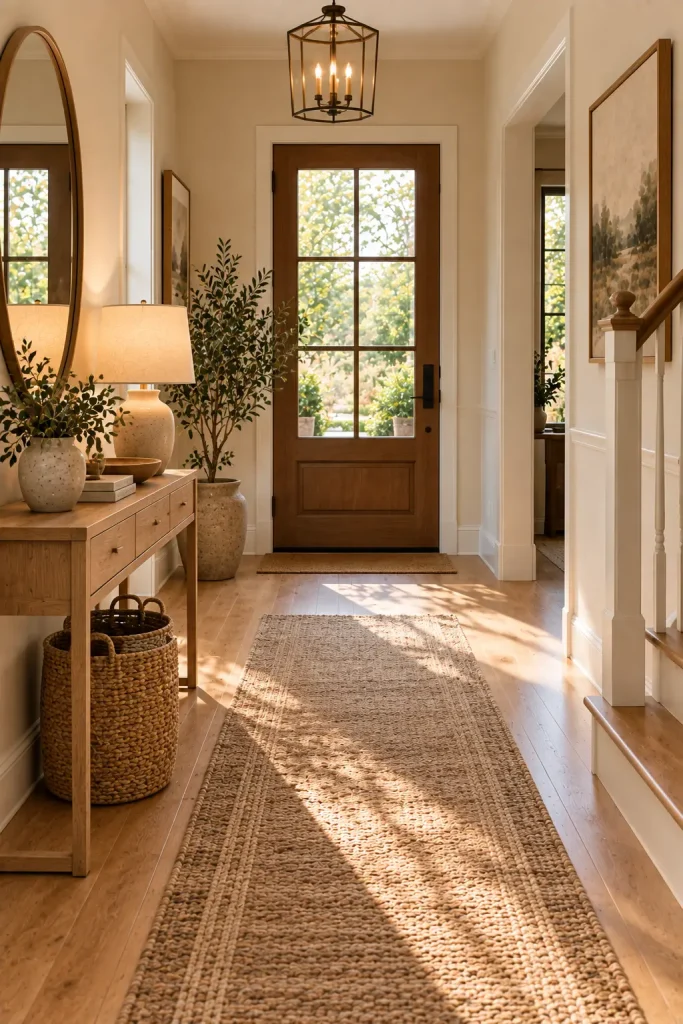
The entryway is the first part of the home visitors usually experience, so even a small amount of thoughtful styling can make a difference. A narrow console can provide a practical surface without taking up too much walking space. Add a mirror above it to create a focal point and reflect available light around the entrance. A small lamp can provide softer illumination in the evening, while a basket can hold shoes, scarves, or everyday accessories. If the entry is very narrow, a slim shelf or wall-mounted hooks may work better than a traditional console. A runner can also introduce texture and help visually define the entrance. Keep the arrangement edited so the area remains easy to walk through and doesn’t become a drop zone for clutter. A welcoming entryway should combine practical storage with a few decorative details that reflect the rest of the home. Even one thoughtfully arranged wall can make the entrance feel intentional.
6. Use Curtains to Soften Hard Lines
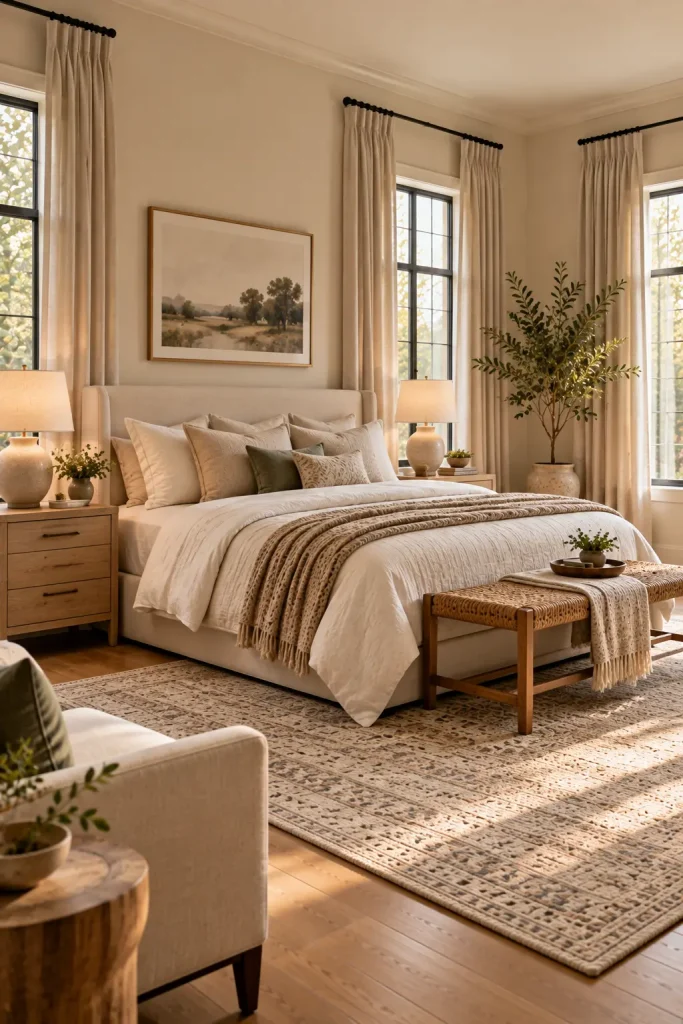
Curtains can make windows feel more finished while adding softness to rooms dominated by hard architectural surfaces. Full-length panels often create a more substantial appearance than short curtains, especially when they extend visually toward the floor. Mounting the curtain hardware high can help draw the eye upward and emphasize the room’s height. Linen-look or cotton fabrics can provide an easy, relaxed appearance without looking overly formal. If the rest of the room contains many patterns, choose simple curtains in a related neutral shade. In a quieter room, subtle stripes or gentle colors can add visual interest without becoming the main focal point. Consider how much natural light the fabric allows through because this can affect the atmosphere throughout the day. Curtains can also soften the transition between windows, walls, and furniture. The finished effect is especially useful in bedrooms and living rooms where comfort is an important part of the design.
7. Display Books as Part of the Decor
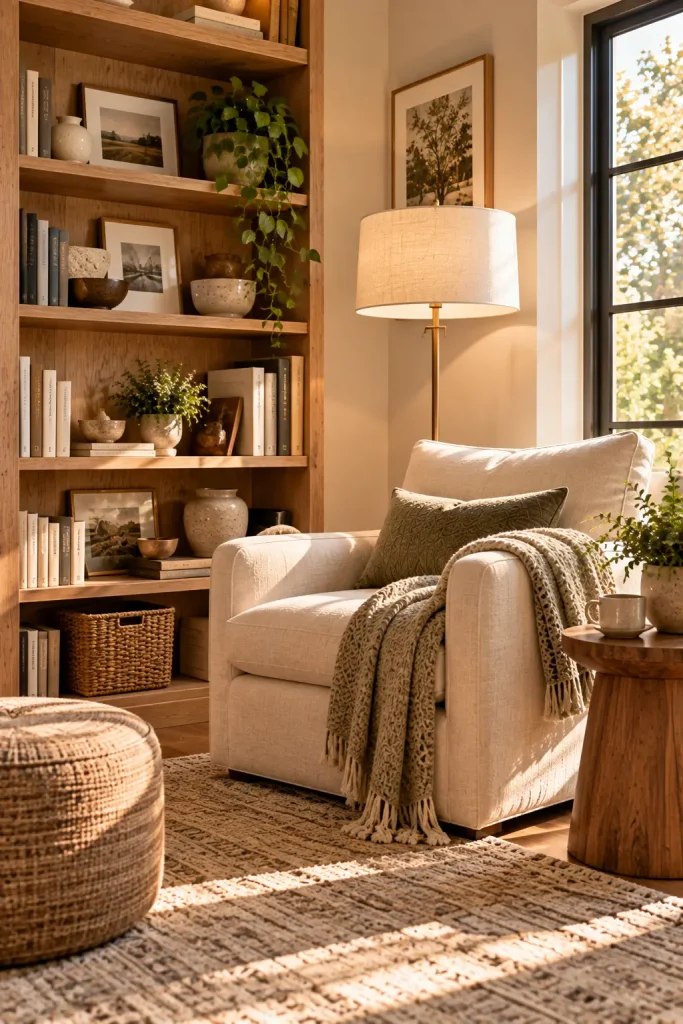
Books can add personality and warmth to a room while still serving a practical purpose. Instead of hiding every book inside closed storage, use selected volumes on shelves, coffee tables, consoles, or bedside tables. A small stack on a coffee table can create height beneath a ceramic bowl or decorative object. On open shelving, combine vertical rows of books with a few horizontal stacks to create a more relaxed composition. Don’t feel pressured to organize books entirely by color because a naturally collected arrangement often feels more authentic. Mix books with framed photographs, ceramics, small plants, or objects that have personal meaning. The different shapes and sizes help prevent shelves from looking flat or overly uniform. Books also make rooms feel lived in because they suggest that the space is meant to be used rather than simply photographed. Choose titles that genuinely interest you so the decor feels personal instead of staged.
8. Bring in Greenery for a Fresher Feeling
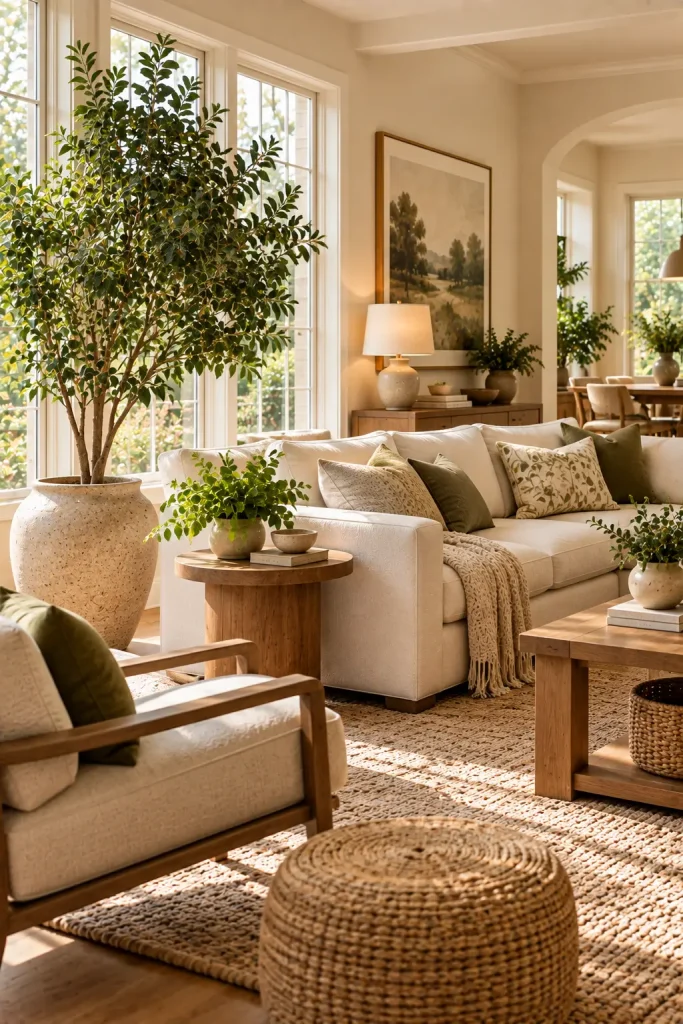
Greenery can make a room feel more alive by introducing organic shapes and natural color. A tall plant can fill an otherwise empty corner and add height beside low furniture. Smaller plants can soften bookshelves, windowsills, consoles, and side tables without taking up much room. Choose plants according to the light available in the specific location rather than selecting them only for appearance. The planter itself can become part of the decor, with ceramic, terracotta, woven, or stone finishes supporting different interior styles. If maintaining live plants isn’t practical, branches or dried botanicals can provide a similar decorative effect. Avoid placing too many plants together if the room is already visually busy. One large plant can sometimes create more impact than several small ones scattered around the space. Greenery works particularly well with wood, linen, stone, and neutral colors because these materials reinforce a natural visual connection.
9. Give the Coffee Table a Simple Focal Point
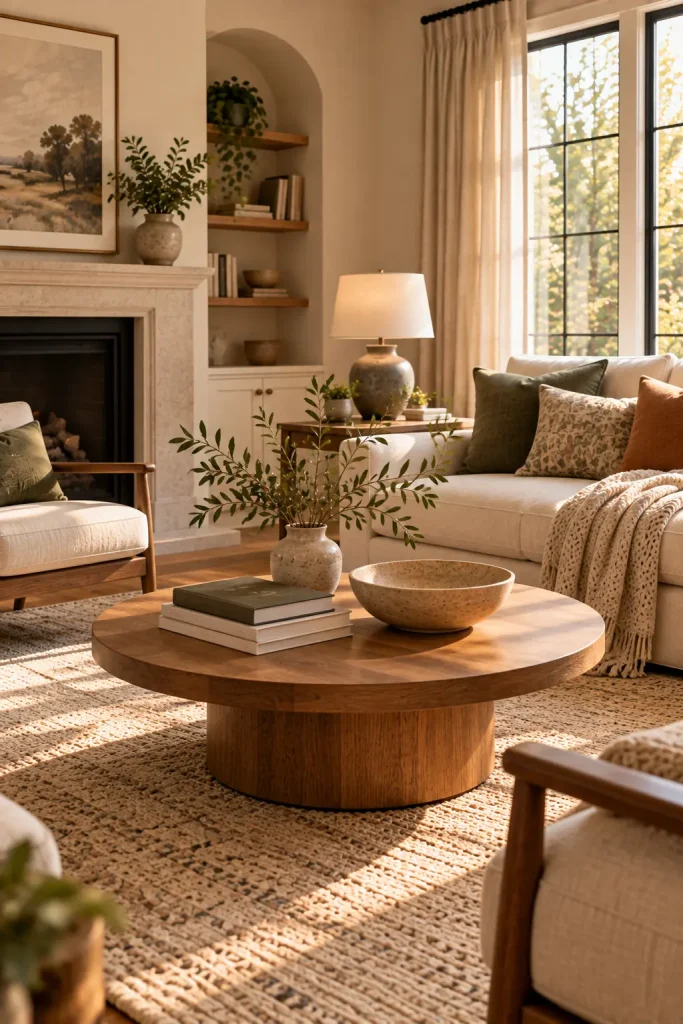
A coffee table looks more intentional when its decorative objects are arranged as one connected grouping rather than scattered randomly across the surface. Start with one larger element such as a shallow bowl, tray, vase, or stack of books. Add one or two smaller pieces around it to create variation in height and shape. Keep enough empty surface available for cups, books, remotes, or everyday use. A low arrangement is often practical because it doesn’t obstruct views across the seating area. Natural materials such as stoneware, wood, glass, and linen can make the display feel understated. If the coffee table already has a strong shape or finish, keep the decorative arrangement simpler. A small amount of negative space around the grouping helps the objects look deliberate. The finished arrangement should make the table feel styled without making it seem like nobody is allowed to use it.
10. Mix Old and New Pieces
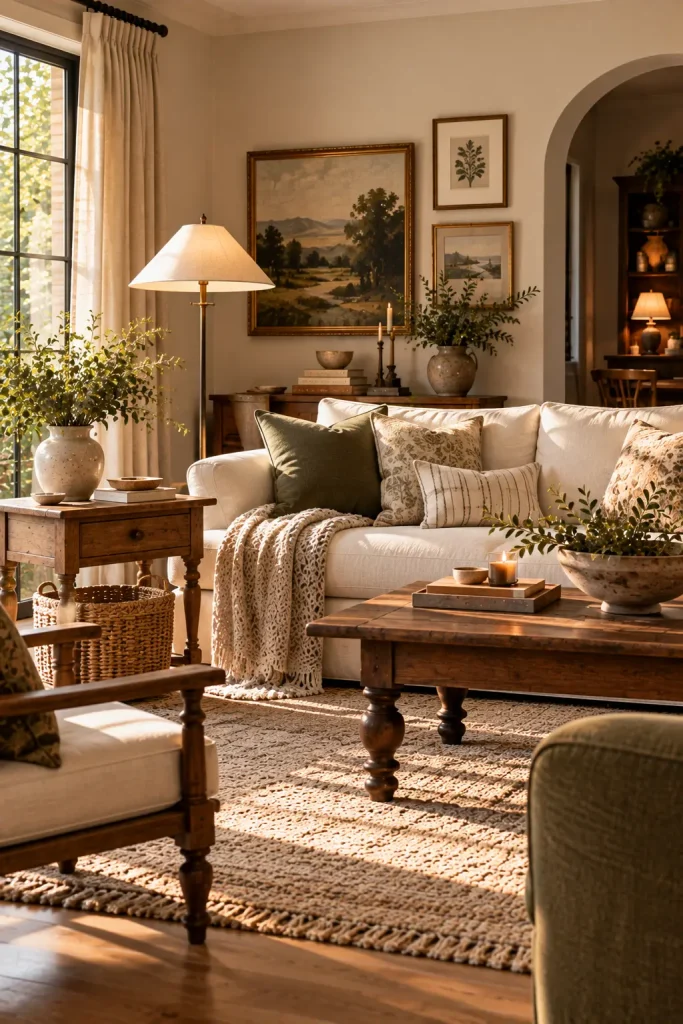
Combining old and new furnishings can give a room more personality than using pieces from one matching collection. A contemporary sofa can work beautifully with an older wooden side table or vintage-inspired cabinet. Modern lighting can highlight artwork or accessories with more traditional character. The contrast creates a collected feeling and helps prevent the room from looking like a showroom. You don’t need expensive antiques to achieve this effect because secondhand furniture, inherited pieces, and vintage-style accessories can all contribute character. Look for common threads such as similar wood tones, repeated colors, or complementary shapes to connect different periods. Avoid making every piece dramatically different because too much contrast can make the room feel disconnected. One or two character-filled pieces may be enough to change the atmosphere. The result should feel as though the room developed over time rather than being purchased in a single afternoon.
11. Use a Mirror to Reflect Light
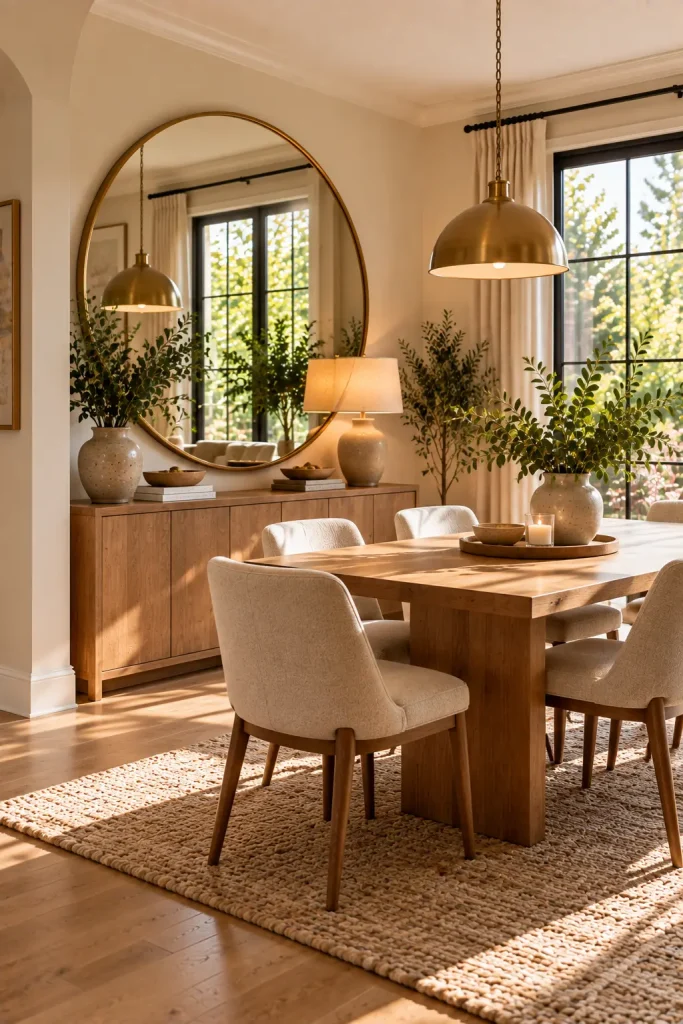
A well-placed mirror can add brightness and visual depth while also becoming an attractive decorative feature. Position it where it can reflect something worth seeing, such as a window, artwork, greenery, or an interesting architectural detail. A large mirror above a console can create a strong focal point in an entryway or dining room. In smaller spaces, a mirror can help prevent the walls from feeling visually heavy. Round mirrors can soften rooms dominated by straight lines, while rectangular mirrors often reinforce a more structured appearance. Choose the frame according to the room’s existing materials, whether that means wood, brass, black metal, or a simpler frameless finish. Avoid positioning mirrors where they reflect clutter or an unattractive view. The goal is not simply to add reflection but to use reflection strategically. When placed thoughtfully, a mirror can make a room feel brighter and more layered.
12. Style an Empty Corner With Purpose
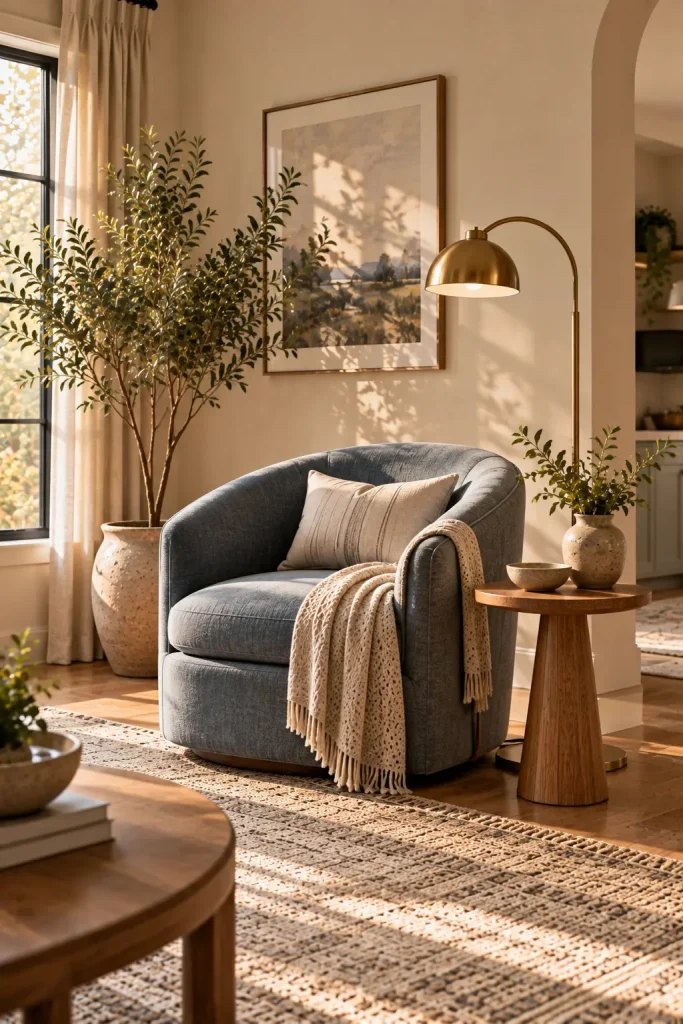
An empty corner can be useful visual space, but if it makes the room feel unfinished, give it a clear purpose. A comfortable chair and floor lamp can turn one corner into a reading area without requiring a complete room redesign. A tall plant can provide height and soften a blank wall without adding much furniture. A small pedestal, stool, or narrow cabinet can also work when storage or display is needed. Before adding anything, consider the traffic flow so the new arrangement doesn’t create an obstacle. In smaller rooms, one substantial object can often work better than several small pieces. Choose colors and materials that already appear elsewhere in the room to create continuity. The corner should feel connected to the rest of the space rather than looking like a separate decorative scene. Purposeful styling is especially valuable because it improves both appearance and everyday usability.
13. Hang Artwork at a Comfortable Visual Height
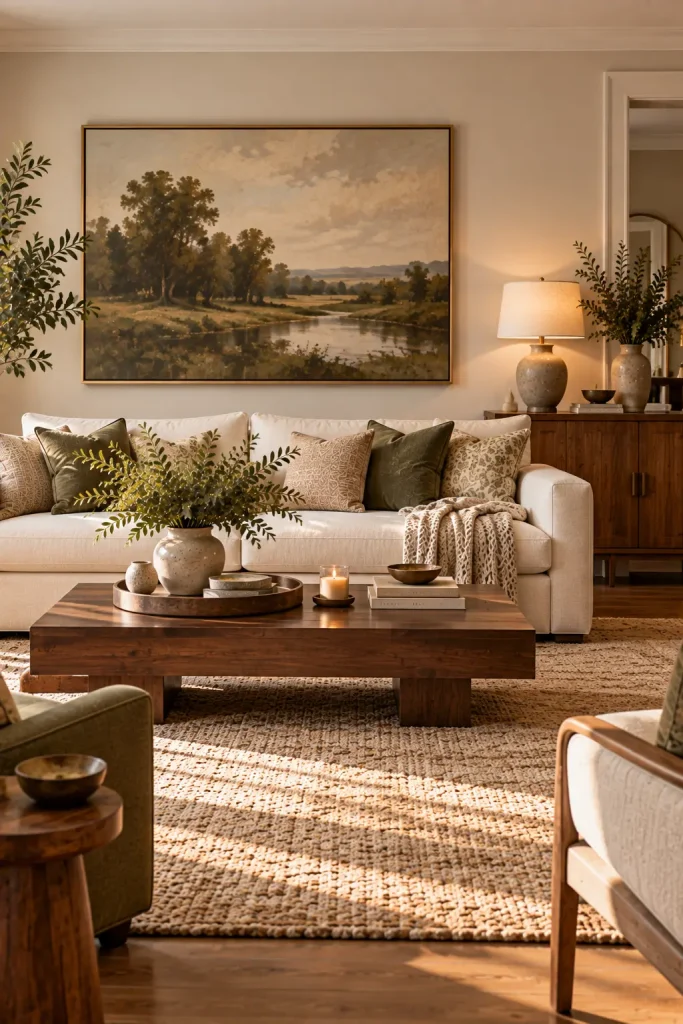
Artwork can give a room personality, but even beautiful pieces can look awkward when they’re positioned without considering nearby furniture. Large artwork above a sofa, console, or bed should feel visually connected to the furniture beneath it rather than floating too far above. A single oversized piece can create a calm focal point, while several smaller pieces can provide a more collected appearance. When creating a gallery wall, vary the frame sizes while repeating a color, finish, or spacing approach to keep everything connected. Consider the surrounding wall color because artwork often looks different against bright white, warm beige, or darker paint. Avoid overcrowding a small wall simply because you have several pieces to display. Sometimes one well-chosen artwork creates a stronger result than an entire collection. The best placement makes the artwork feel like part of the architecture and furniture arrangement rather than an afterthought.
14. Introduce One Deeper Accent Color
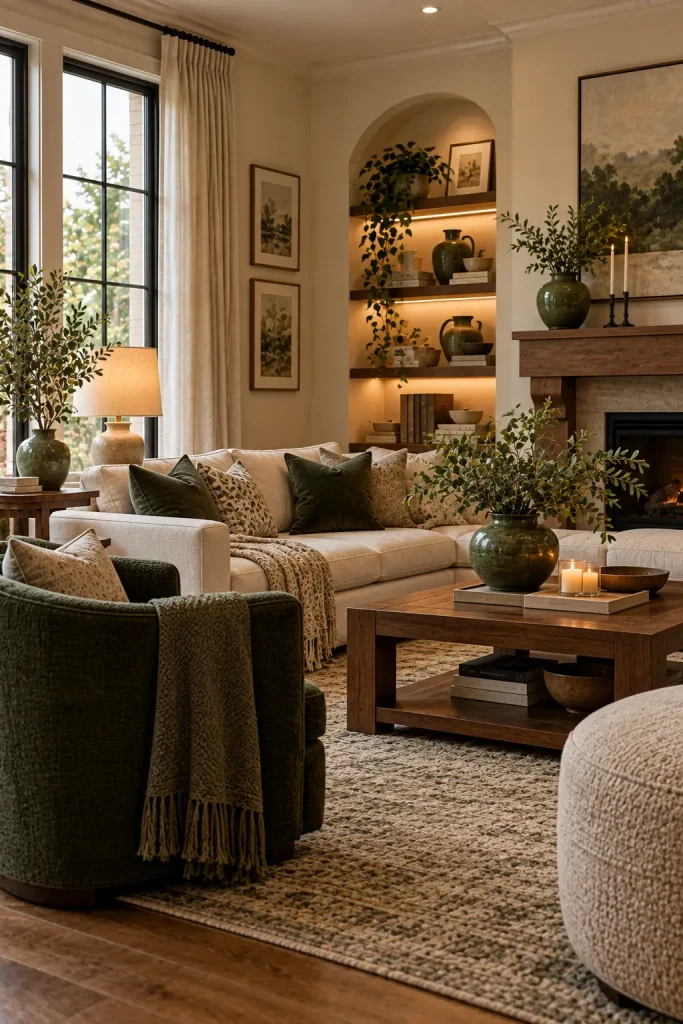
A neutral room can feel much more interesting when one deeper color is repeated in a few carefully chosen places. Consider shades such as forest green, muted navy, terracotta, chocolate brown, charcoal, or another color that complements the existing palette. Instead of adding the color to one oversized piece, repeat it through smaller objects, cushions, artwork, ceramics, or an accent chair. Repetition helps the color feel intentional rather than random. Keep the surrounding colors relatively calm so the deeper shade has room to stand out. You can also vary the material of the accent color to create more depth, such as using green in velvet, ceramic, and artwork. This approach is particularly useful when you want more personality without repainting the entire room. The goal is a controlled contrast that gives the eye something interesting to notice. A few repeated accents can make an otherwise simple room feel considerably more finished.
15. Make the Sofa Feel More Relaxed
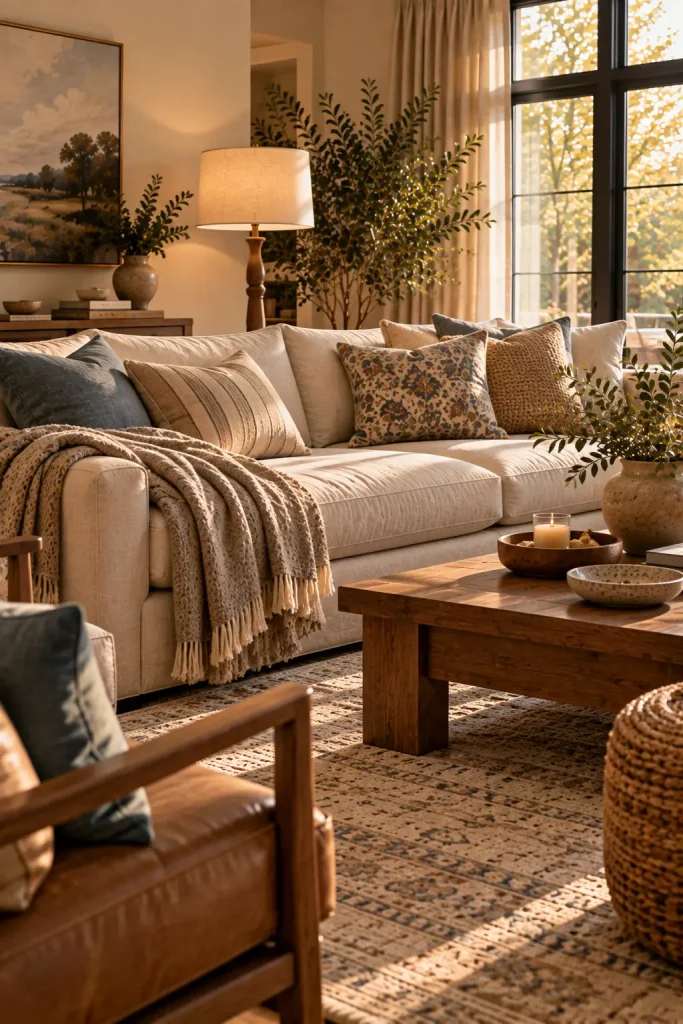
The sofa is usually one of the largest pieces in a living room, so its styling can strongly influence the overall atmosphere. Add a few cushions in different shapes and textures rather than using identical pillows throughout. A linen cushion beside a knitted or woven one can create subtle variation without making the sofa look overly styled. A soft throw placed casually over one arm can add warmth and suggest everyday comfort. Try not to arrange every cushion with perfectly equal spacing because a slightly relaxed arrangement often feels more natural. Keep enough seating space available so the sofa remains practical rather than becoming a decorative display. Repeat one or two colors from the rest of the room in the cushions to maintain visual connection. If the sofa is already patterned, use simpler textiles around it to avoid visual competition. The finished look should make someone want to sit down rather than simply admire the arrangement.
16. Use Baskets for Attractive Everyday Storage
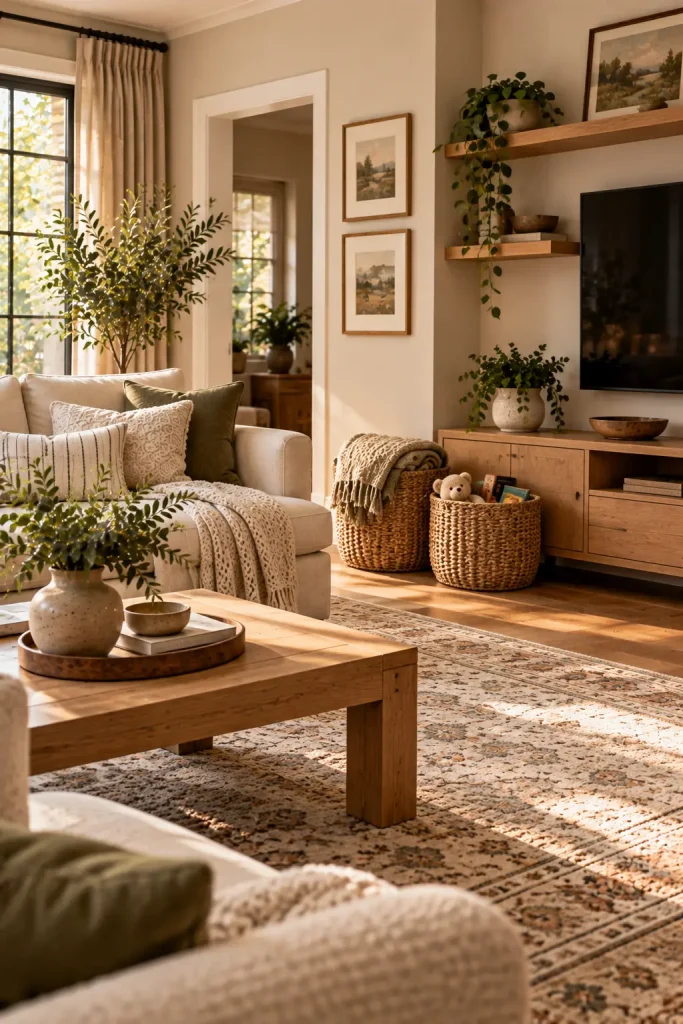
Storage doesn’t have to look purely functional when you choose containers that complement the room. Woven baskets can hold blankets, magazines, toys, accessories, or other everyday items while keeping them visually contained. A large basket beside a sofa can make a convenient home for throws that would otherwise be left across the furniture. Smaller baskets can work inside open shelving or beneath consoles. Natural fibers pair particularly well with wood, linen, cotton, and neutral colors, creating a warm and relaxed atmosphere. Darker woven baskets can also work in rooms with deeper wood finishes or moodier palettes. Choose sizes that actually fit the items you want to store rather than buying baskets based only on appearance. Leave enough room around baskets so they don’t make the area feel crowded. Attractive storage works best when it makes everyday routines easier as well as improving the room’s appearance.
17. Create a Small Conversation Area
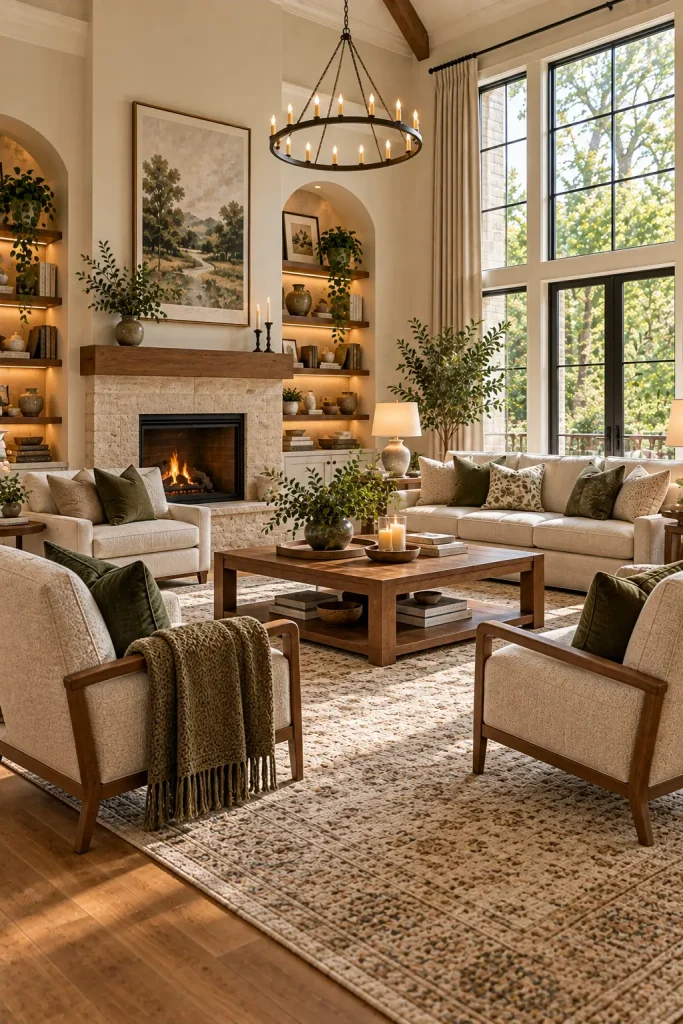
Furniture arrangement can have a greater effect on comfort than adding more decorative objects. Instead of automatically pushing every sofa and chair against the walls, consider bringing seating closer together to create a defined conversation area. A coffee table or rug can act as the center of the arrangement and visually connect the pieces. In larger rooms, two chairs can be angled toward a sofa to make the space feel more social. Make sure there is still enough room to walk comfortably around the furniture. Avoid placing seating so close together that people feel crowded when using the room. In open-plan homes, a conversation arrangement can also help separate the living area from dining or kitchen zones. The best layout makes the room’s purpose obvious while preserving comfortable movement. Sometimes simply moving existing furniture is enough to make a room feel noticeably more welcoming.
18. Add a Small Scent and Candle Moment
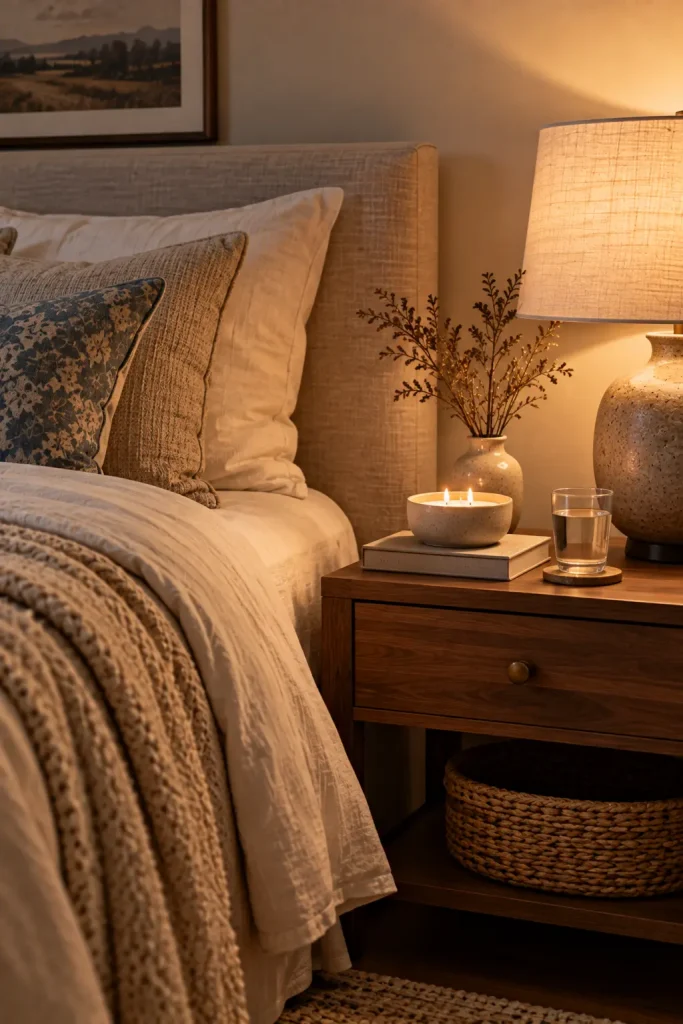
Small sensory details can contribute to how comfortable a room feels, and candles can also function as simple decorative accents. Place a candle on a tray, bedside table, bathroom counter, console, or dining surface where it fits naturally with the room. Ceramic, glass, stone, or metal candle vessels can introduce another material without requiring a major decorating change. Pair a candle with a small vase, books, or another object rather than scattering multiple candles across every surface. Keep the arrangement restrained so it feels intentional instead of overly decorative. Choose scents according to the atmosphere you want, such as fresh, woody, herbal, or softly floral notes. Always keep burning candles away from curtains, bedding, paper, and other flammable materials, and follow safe candle-use practices. For rooms where open flames aren’t practical, decorative or flameless alternatives can provide a similar visual effect. The idea is to create a small moment of warmth rather than turn the entire room into a display.
19. Repeat One Material Across the Room
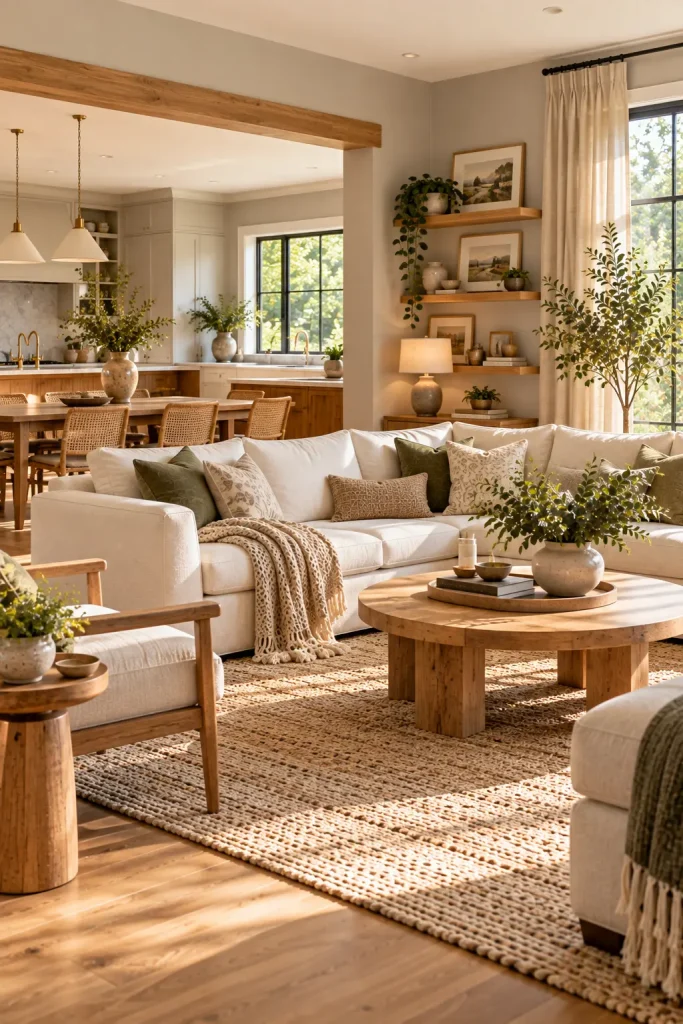
Repeating one material in several areas can make a room feel connected without requiring everything to match. Natural oak, walnut, rattan, brass, stone, or blackened metal can each act as a visual thread. For example, an oak coffee table can relate to a small wooden tray, picture frame, and shelving detail elsewhere in the room. The pieces don’t have to come from the same collection or have identical finishes. Slight differences can actually make the room feel more natural and collected. Use the repeated material in several small doses rather than allowing it to dominate every surface. Consider both color and texture because two materials with the same basic tone can still look very different. Repetition is especially useful in open-plan homes where several functional areas need to feel connected. The result is a subtle sense of consistency that makes the decorating choices appear more intentional.
20. Add a Bench Where You Need Flexible Seating
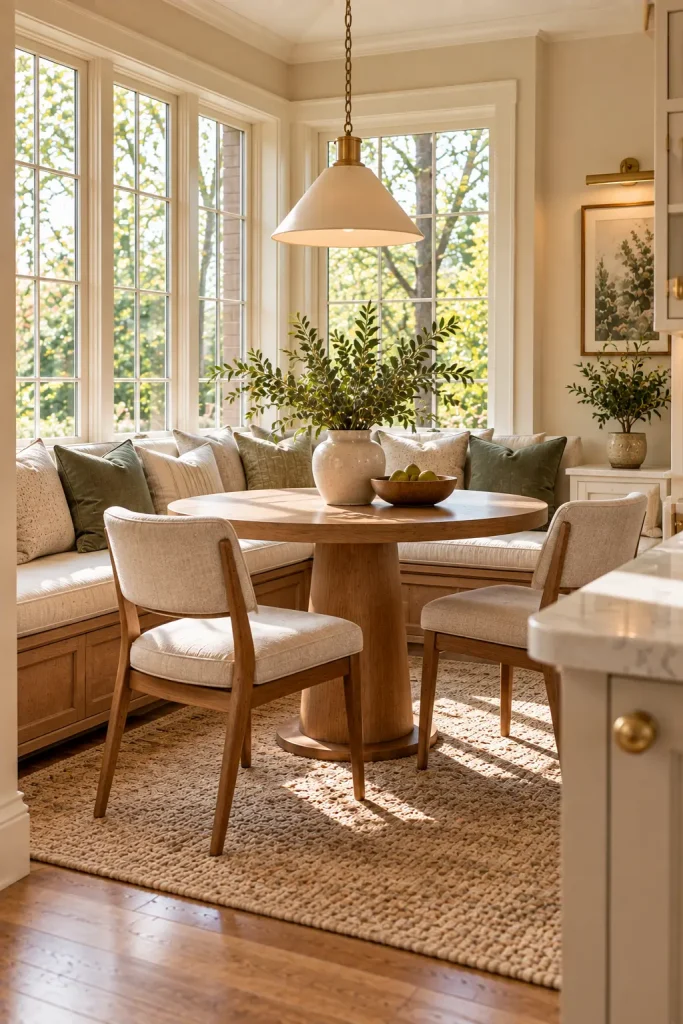
A bench can be a practical alternative to another chair when you need flexible seating without adding too much visual weight. Place one beneath a window, at the foot of a bed, along an entry wall, or beside a dining table depending on the room. A simple wooden bench can provide a lighter and more casual appearance, while an upholstered bench can add extra comfort. In a narrow entry, a compact bench can also provide a convenient place to sit while putting on shoes. At the dining table, a bench can make it easier to accommodate different numbers of people. Choose a size that leaves enough room for movement around it and doesn’t overwhelm nearby furniture. Cushions can add softness, but they aren’t always necessary if the bench has a comfortable finish. A well-placed bench combines function and decoration in a way that works particularly well in smaller homes.
21. Style Open Shelves With Breathing Room
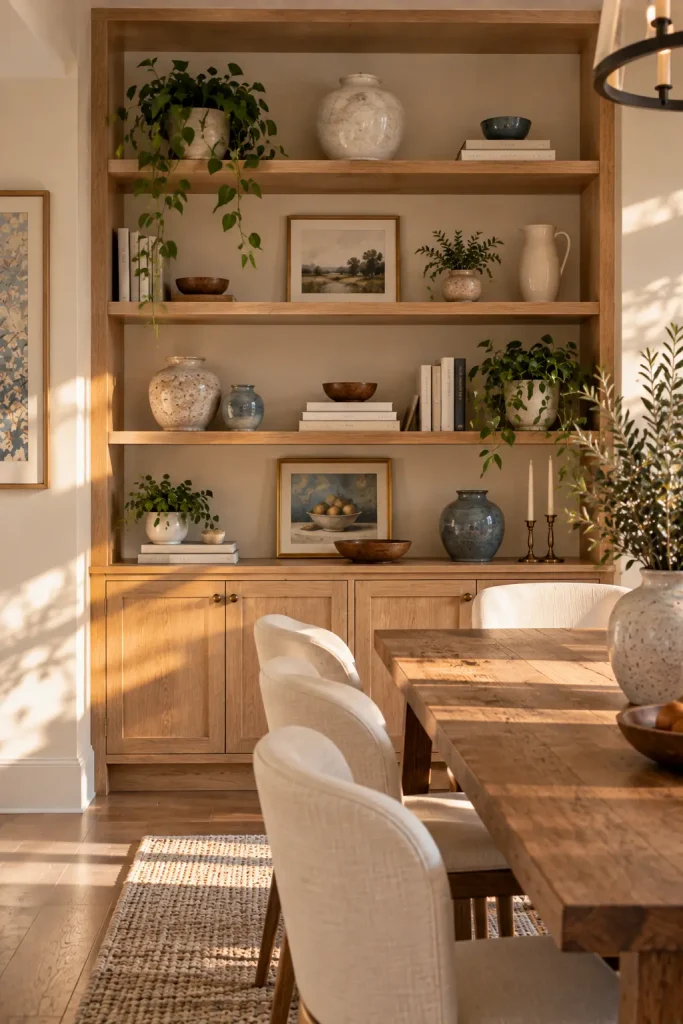
Open shelving looks more attractive when objects have enough space around them to remain visually distinct. Begin with a few larger pieces such as baskets, artwork, ceramics, or stacks of books, then build smaller groupings around them. Leave some shelf areas intentionally empty so the arrangement doesn’t feel crowded. Mixing useful objects with decorative ones can make the shelves feel more natural and connected to everyday life. Repeat one or two colors or materials to create cohesion without making everything identical. Vary the height of objects so the eye moves naturally across the shelves. If every item is the same size, the display can feel flat and repetitive. Remember that the purpose of open shelving is not to use every inch of available space. Leaving breathing room allows the objects you actually like to become the focus.
22. Use a Tray to Organize Small Objects
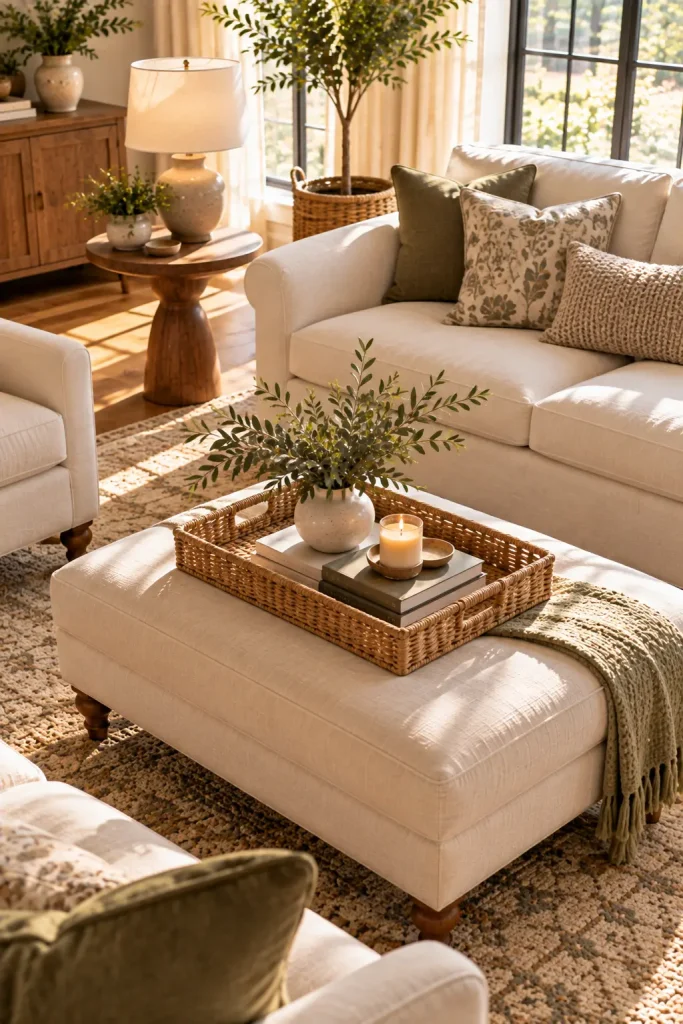
A decorative tray is an easy way to gather several small objects into one intentional arrangement. Use one on a coffee table, ottoman, dresser, console, kitchen counter, or bathroom vanity depending on your needs. The tray creates a visual boundary that makes individual objects look connected rather than scattered. A wooden tray can add warmth, while stone or metal can provide a more substantial or polished appearance. Woven trays are useful when you want a softer and more casual look. Keep the number of objects limited so the tray doesn’t simply become another place where clutter accumulates. Try combining objects with different heights, such as a small vase beside a candle and a short stack of books. The arrangement should remain easy to move when you need the surface for everyday activities. Used thoughtfully, a tray can make a simple surface look organized without requiring complicated styling.
23. Soften the Bedroom With Layered Bedding
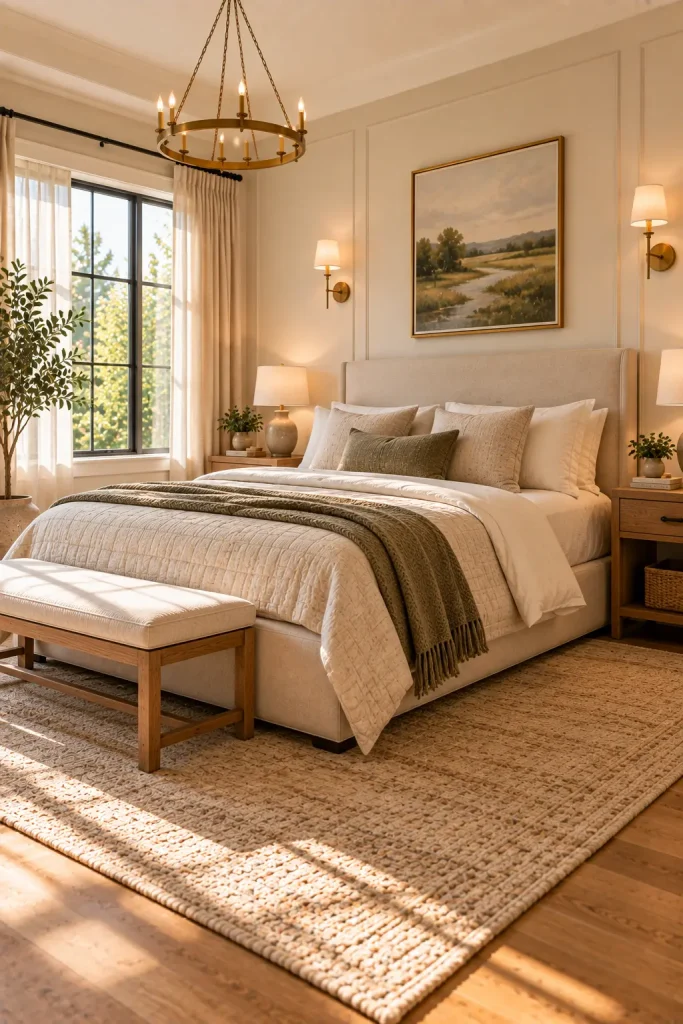
Layered bedding can make a bedroom look comfortable and inviting without requiring expensive furniture changes. Start with simple sheets, then add a quilt, coverlet, duvet, or lightweight blanket depending on the season and desired appearance. A folded throw at the foot of the bed introduces another texture while keeping the arrangement practical. Use several related neutral shades rather than making every layer exactly the same color. Linen, cotton, quilted fabrics, and knitted materials can create subtle differences that make the bed look richer. Avoid adding so many decorative pillows that preparing the bed becomes inconvenient every morning. The bedding should still feel easy to use rather than functioning only as a decorative display. A calm color palette can also help the bedroom feel visually restful. Small details such as natural wood nightstands and soft bedside lighting can complete the comfortable atmosphere.
24. Add Personal Objects With Meaning
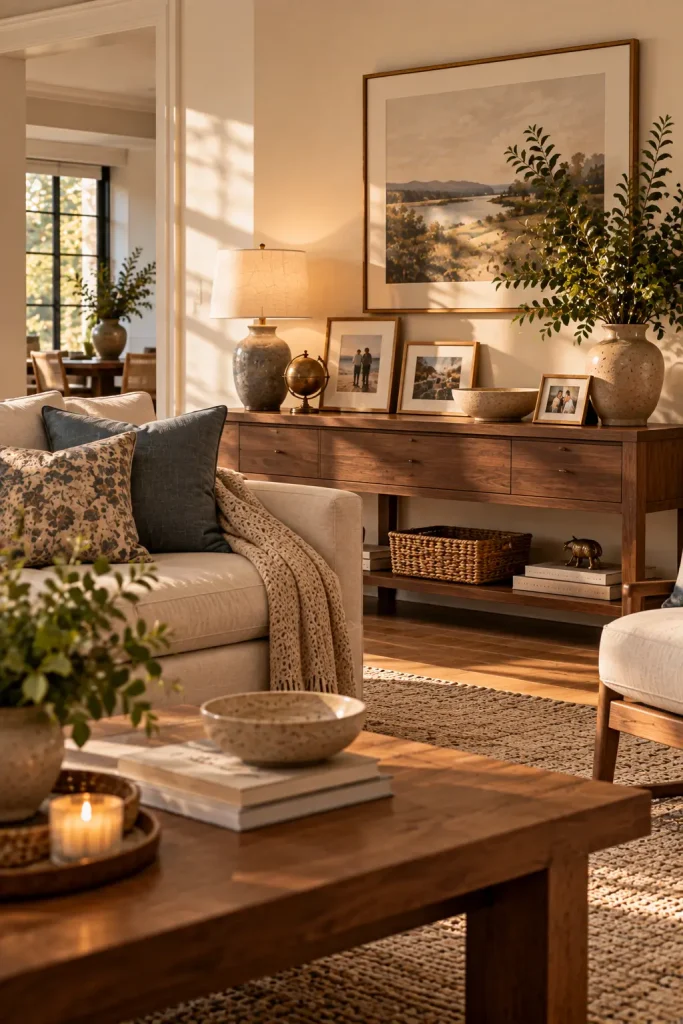
Personal objects are often what make a home feel different from a professionally staged room. Display family photographs, travel finds, handmade ceramics, inherited pieces, artwork, or small objects connected to memories. You don’t need dozens of sentimental items to create personality. One framed photograph on a console or a small collection on an open shelf can be enough. Mix meaningful objects with everyday decor so they feel naturally integrated rather than separated into one display area. Consider scale carefully because small objects can disappear when placed beside very large furniture. A tray, shelf, or cabinet can provide a defined place for smaller collections. Avoid displaying everything you own simply because it has sentimental value; rotating pieces can keep the room feeling fresh. The most inviting rooms usually reveal something about the people who live there without feeling visually overwhelmed by personal belongings.
25. Choose a Soft, Cohesive Color Palette
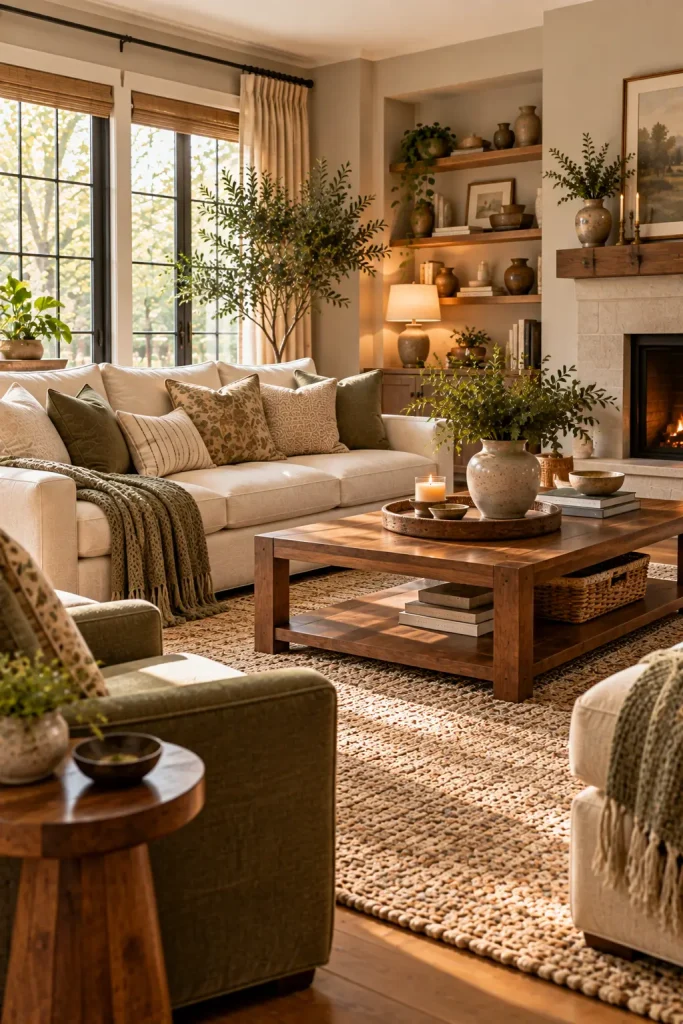
A cohesive color palette can make a room feel calmer and more connected even when the furniture comes from different sources. Begin with two or three foundational colors that already appear in the room, then build additional accents around them. Warm ivory, taupe, muted sage, dusty blue, earthy brown, and soft terracotta can all create comfortable combinations. The colors don’t need to match exactly; similar undertones can create a more natural relationship. Repeat selected shades in different materials so the room doesn’t look overly coordinated. For example, a muted green might appear in a cushion, ceramic vase, artwork, and plant. This repetition helps the eye move around the room without making every object look identical. A controlled palette is particularly useful when you have several furniture styles that need to work together. The result is a room that feels intentional while still leaving room for personality.
26. Make the Dining Table Feel Ready to Use
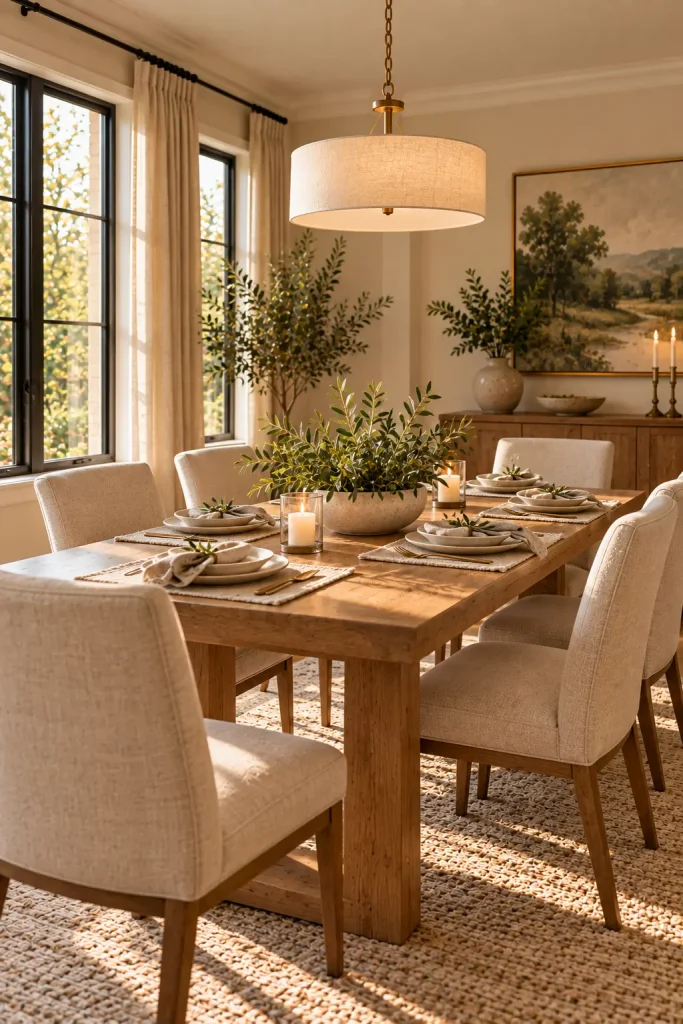
A dining table can make the room feel more welcoming when it looks prepared for an ordinary meal rather than completely empty. Keep the styling simple enough that it doesn’t interfere with everyday use. Linen placemats, cloth napkins, ceramic dishes, or a small bowl can create a relaxed sense of occasion. A low centerpiece is especially practical because it allows people sitting across the table to see one another comfortably. Natural branches or seasonal greenery can provide color without requiring an elaborate floral arrangement. Choose materials that complement the dining furniture, such as stoneware with oak or linen with upholstered chairs. Avoid filling the entire table with decorative objects that need to be moved before every meal. A useful dining table should feel ready for both casual breakfasts and longer gatherings. Simple styling can make the dining area feel more connected to everyday family life.
27. Give the Bathroom One Warm Decorative Layer
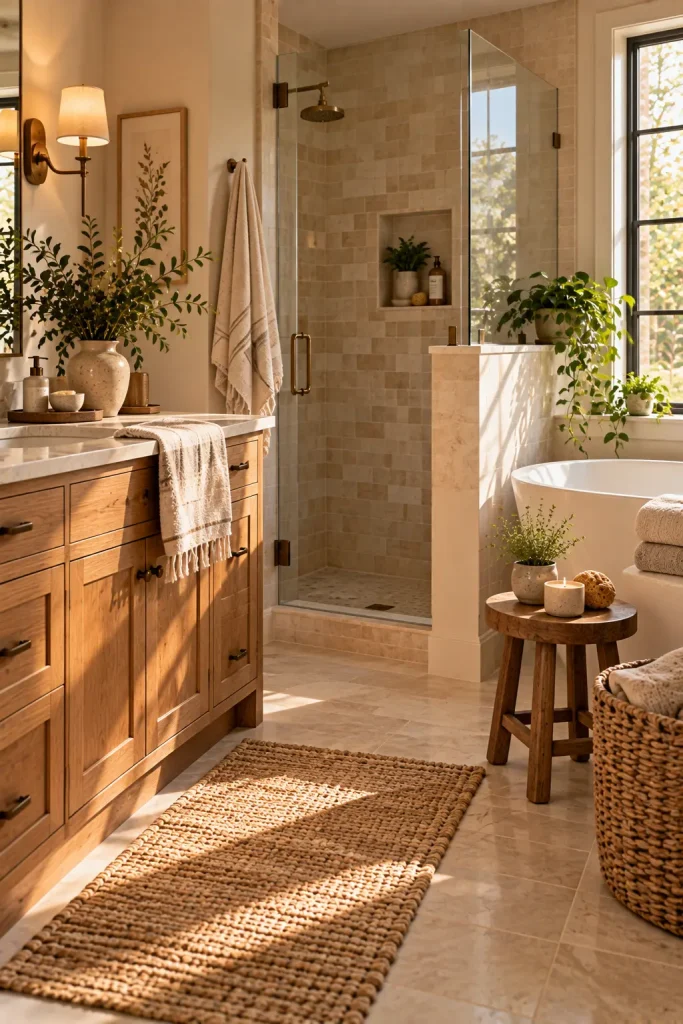
Bathrooms can sometimes feel visually cold because they contain so many hard surfaces such as tile, glass, porcelain, and metal. Introducing one or two warmer materials can soften that effect without interfering with the room’s practical purpose. A woven bath mat can add texture underfoot, while a small wooden stool can introduce natural warmth. Linen hand towels can soften the appearance of a vanity or towel rail. A ceramic container can replace a plastic-looking storage item while still keeping essentials organized. A small plant can also introduce an organic shape if the room provides suitable conditions. Keep decorative pieces away from areas where excessive moisture or splashing could damage them. In a small bathroom, one strong material contrast may be enough to change the atmosphere. The goal is to make the room feel comfortable and considered while preserving easy cleaning and everyday functionality.
28. Leave Some Space Unfilled
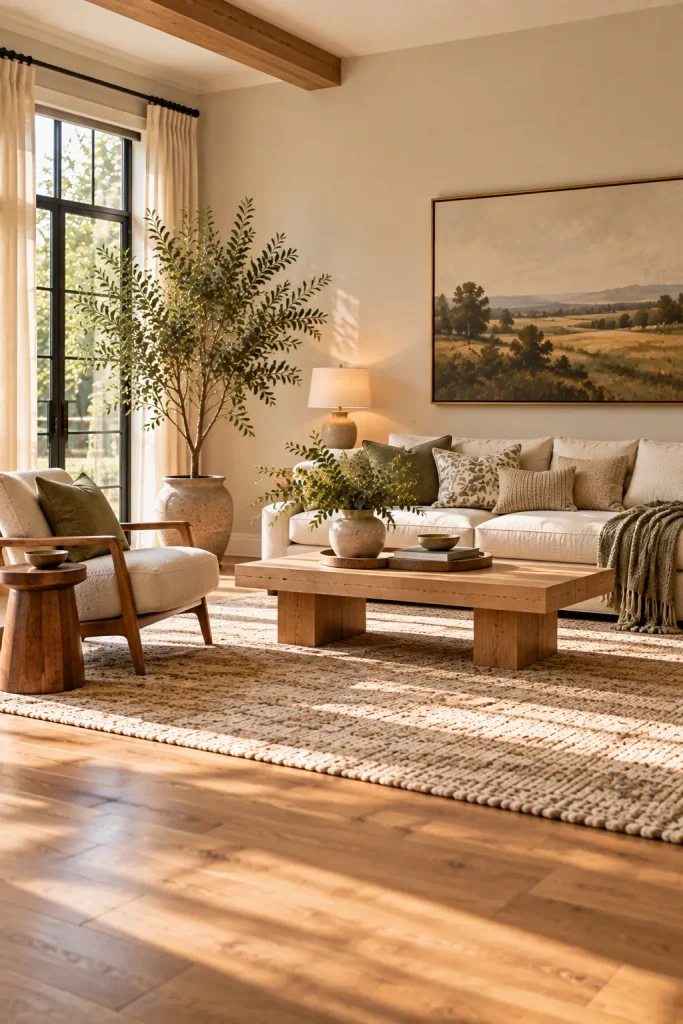
One of the most effective decorating choices can be knowing when not to add another object. Empty space gives furniture, artwork, lighting, and architectural details room to stand out. If every shelf, tabletop, wall, and corner is decorated, the room can begin to feel visually crowded even when everything is attractive individually. After styling a room, step back and look for objects that repeat the same purpose or visual shape. Removing one or two pieces can sometimes create more impact than adding something new. Empty space also makes practical areas easier to clean and use every day. This doesn’t mean every room needs to become minimalist or sparse. Instead, aim for a balance between personality and breathing room. Keep the pieces that contribute meaning, function, texture, or visual interest and allow the rest of the room to remain calm. An inviting home should feel intentionally decorated, not filled simply because there was space available.