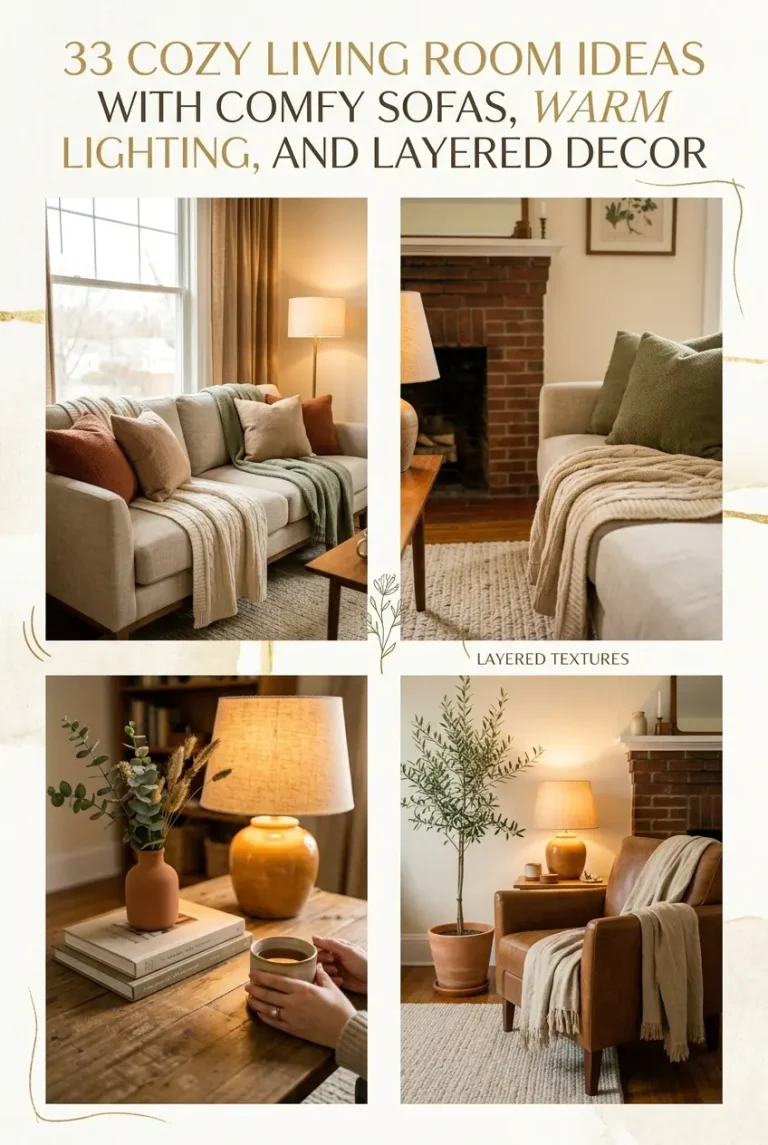

25 Beautiful Winter Decor Ideas for a Cozy and Stylish Home
Winter is the perfect time to make your home feel warmer, softer, and more inviting. As temperatures drop and daylight becomes shorter, thoughtful decorating can turn everyday rooms into comfortable retreats without requiring a complete makeover. The best winter decor ideas focus on layers, natural materials, gentle lighting, and seasonal details that feel beautiful long after the holidays have passed.
From chunky knit blankets and glowing candles to evergreen arrangements and elegant winter tablescapes, there are plenty of ways to refresh your home for the season. You can create a cozy atmosphere in a small apartment, bring understated elegance to a spacious living room, or add welcoming touches to your bedroom and entryway.
These 25 winter decorating ideas combine practical styling with timeless seasonal inspiration, helping you create a home that feels warm, relaxed, and effortlessly put together.
1. Layer Chunky Knit Blankets on the Sofa
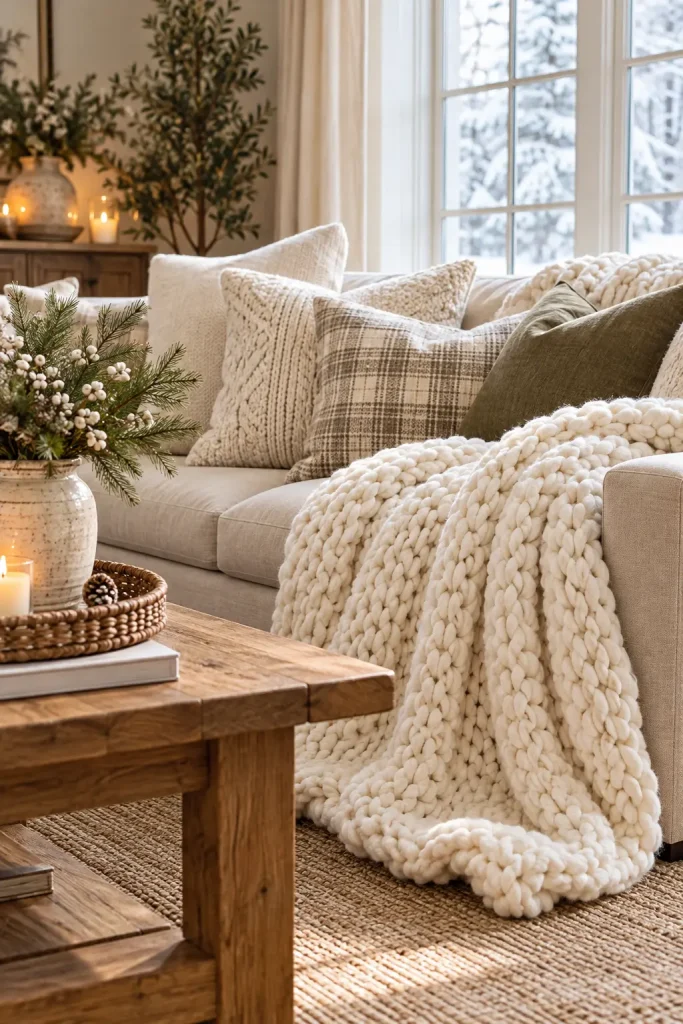
Few things make a living room feel ready for winter quite like a thick knitted blanket draped across the sofa. Choose ivory, oatmeal, warm gray, or muted taupe to create a soft foundation that works with a wide range of interiors.
Combine different textures rather than introducing too many colors. A chunky cable-knit throw, a smooth linen cushion, and a nubby boucle pillow create visual interest while keeping the overall palette calm.
How to style it:
- Drape one blanket loosely over the sofa arm.
- Fold a second throw into a woven basket beside the seating area.
- Pair textured blankets with cushions in complementary shades.
- Leave enough clear seating space for everyday comfort.
2. Decorate With Warm White String Lights
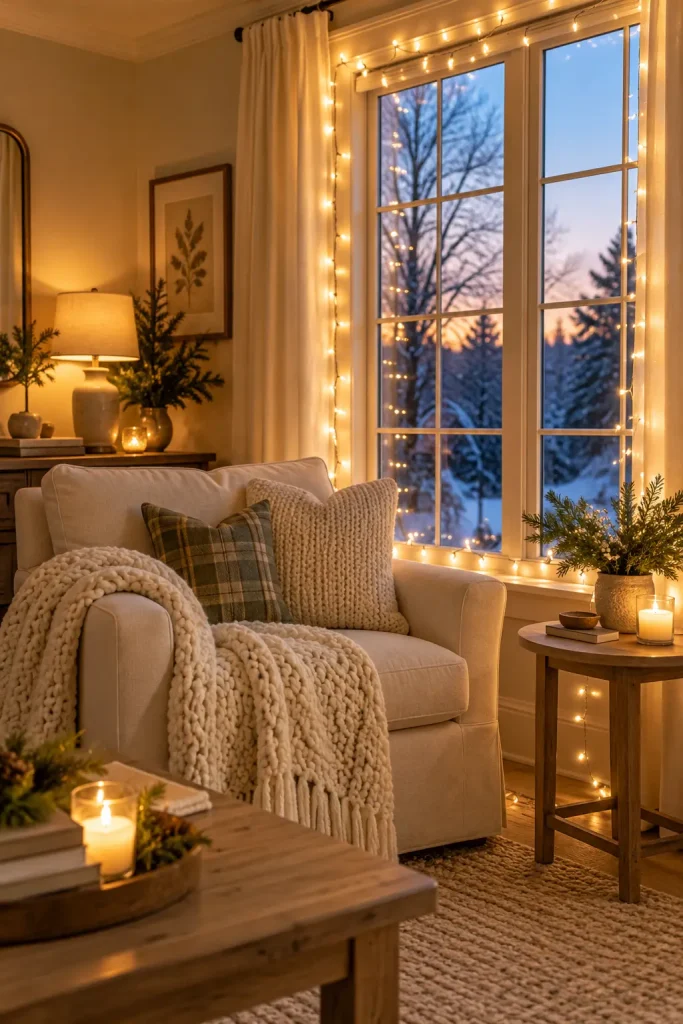
String lights can add a gentle glow to dark winter evenings without making a room feel overly festive. Choose warm-white lights and use them selectively around a window frame, along a mantel, or inside a clear glass vessel.
For a polished result, keep the wiring discreet and avoid scattering lights across every surface. One thoughtfully illuminated corner often feels more inviting than an entire room filled with competing points of light.
Battery-operated lights can be especially useful for shelves and decorative arrangements where a nearby outlet isn’t available. Keep electrical connections and light strands away from moisture, damaged materials, and anything that could create a fire hazard.
3. Style a Winter-Inspired Coffee Table
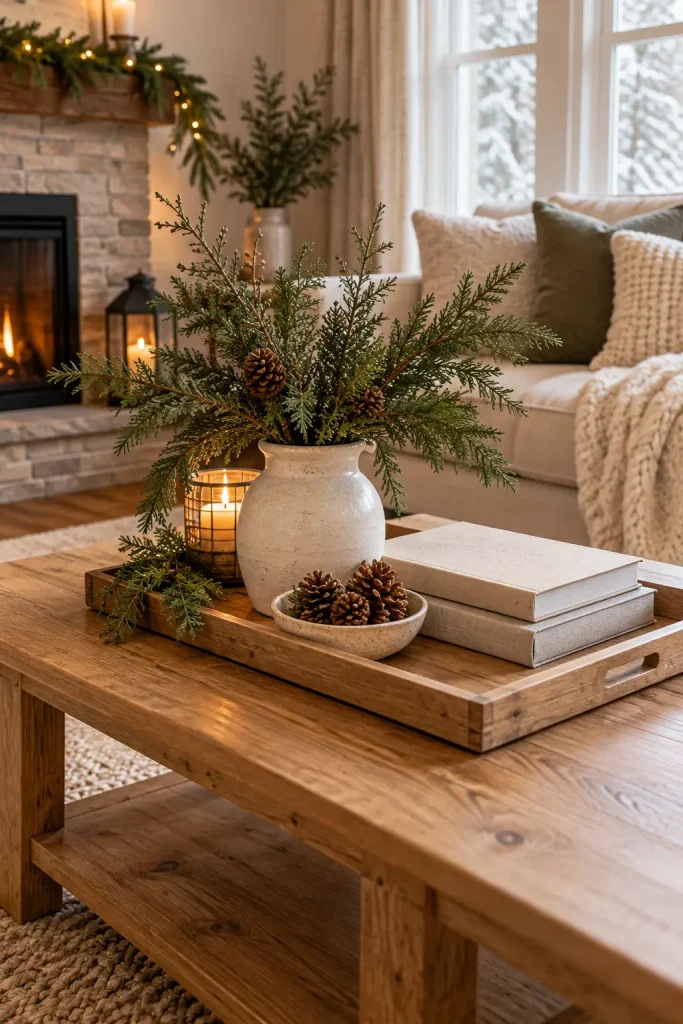
A coffee table is an easy place to introduce seasonal character without changing the whole room. Start with a shallow wooden tray to keep smaller objects organized, then add a ceramic vase, a few favorite books, and a natural winter accent.
Evergreen clippings, bare branches, pinecones, or a bowl of wooden decorative beads can all work beautifully. Keep the arrangement low enough that people can see across the table and comfortably set down drinks.
For a small living room, use just three elements: one vase, one book stack, and one small decorative object. A little open space helps the arrangement feel intentional instead of cluttered.
4. Add Evergreen Branches to Simple Vases
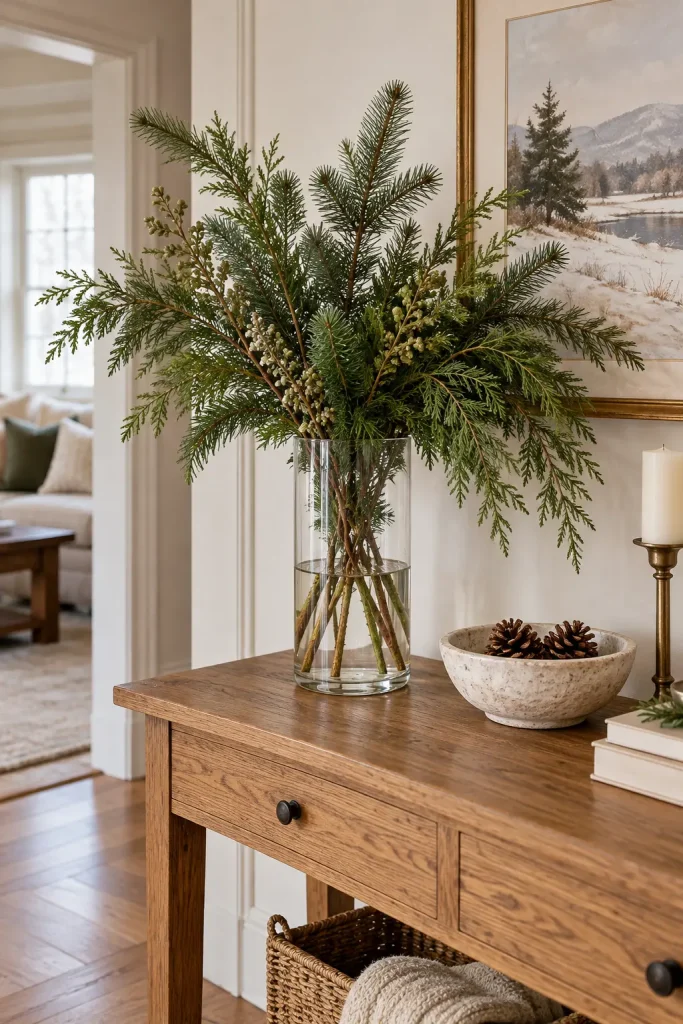
Fresh-looking greenery brings life to a winter interior when colorful flowers are less central to the season. Place evergreen branches in a tall glass vase, a stoneware pitcher, or a sculptural ceramic vessel for a simple arrangement that works in living rooms, dining rooms, and entryways.
Let the branches spread naturally instead of trimming them into a perfectly symmetrical shape. A few irregular lines create a relaxed, organic appearance.
- For a modern room: Choose a clear glass cylinder or matte-white vase.
- For a rustic interior: Use an aged ceramic pitcher or textured stoneware.
- For a traditional home: Try a substantial vase on a console or mantel.
Use appropriately sourced greenery and keep arrangements away from flames, heaters, and other heat sources. Replace fresh cuttings when they dry out.
5. Create a Cozy Winter Reading Corner
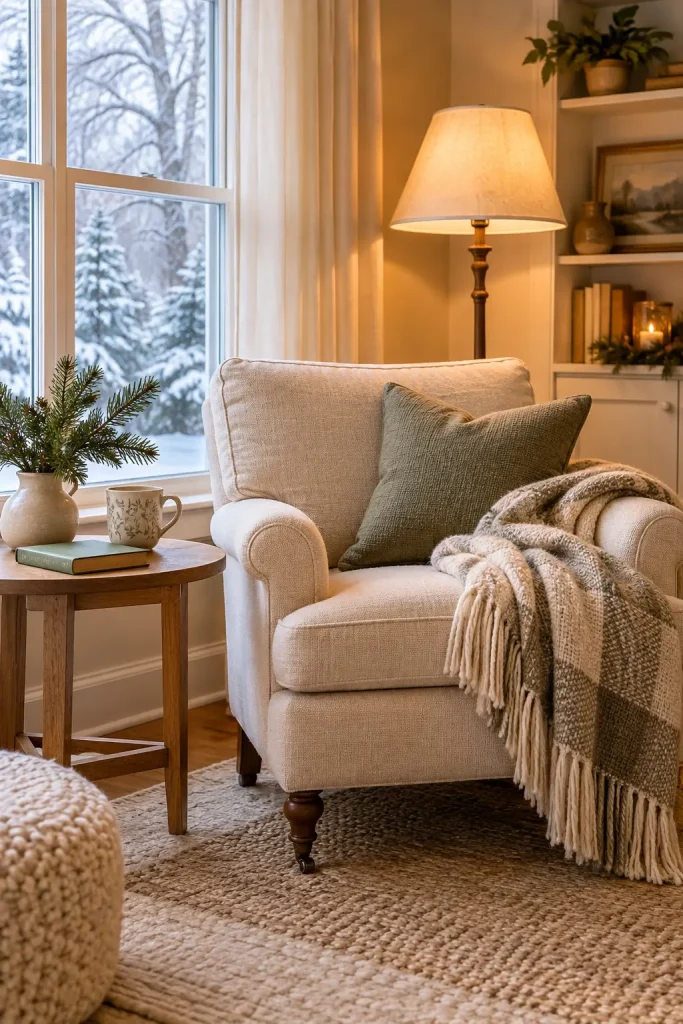
A quiet reading corner gives your home a dedicated place to slow down during the colder months. You don’t need a separate room; an unused corner beside a window can work just as well.
Begin with a comfortable armchair and a lamp that provides enough light for reading. Add a small side table, a soft throw, and a cushion with an interesting texture. If space permits, a compact footstool makes the arrangement more comfortable.
The lighting deserves special attention. A shaded floor lamp creates a different atmosphere from bright overhead lighting, particularly in the evening. In a small apartment, choose a narrow side table and a lamp with a compact base to preserve walking space.
6. Dress the Mantel With Natural Winter Greenery
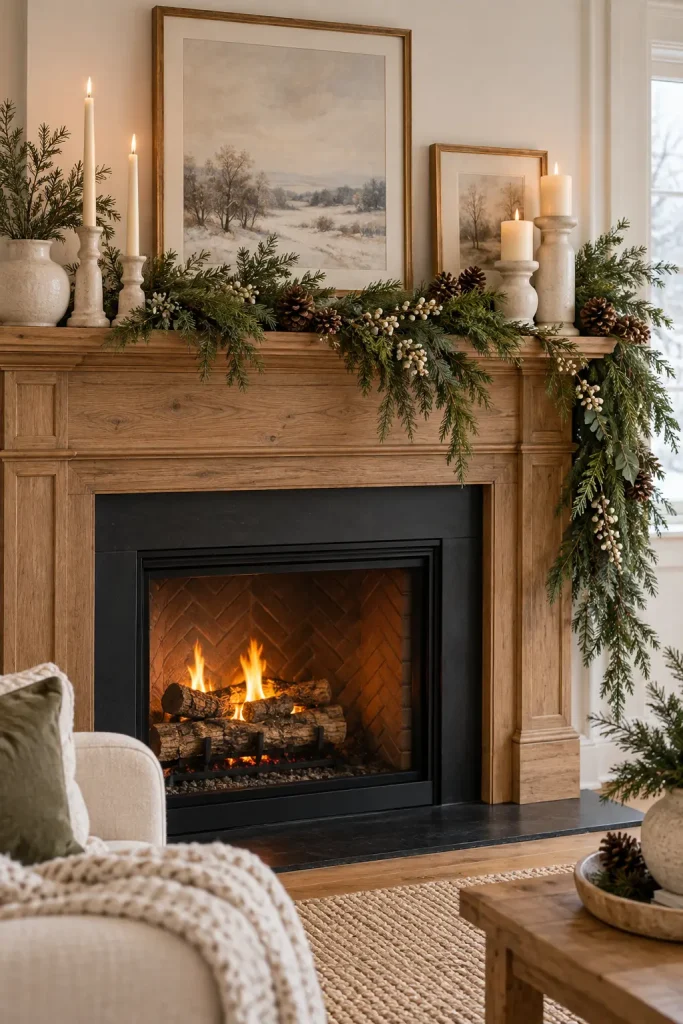
A fireplace mantel offers a natural focal point for winter decorating. Instead of using overtly holiday-themed ornaments, create a relaxed arrangement with evergreen garland, a few candleholders, and simple ceramic objects.
An asymmetrical layout feels especially appealing: allow greenery to extend farther along one side, then balance it with a taller vase or framed artwork on the opposite end. This creates movement without making the mantel look crowded.
For a home without a fireplace, the same concept works on a console table or floating shelf. Use battery-operated candles when an open flame would be unsuitable, and keep greenery away from heat sources.
7. Introduce Soft Faux Fur Accents
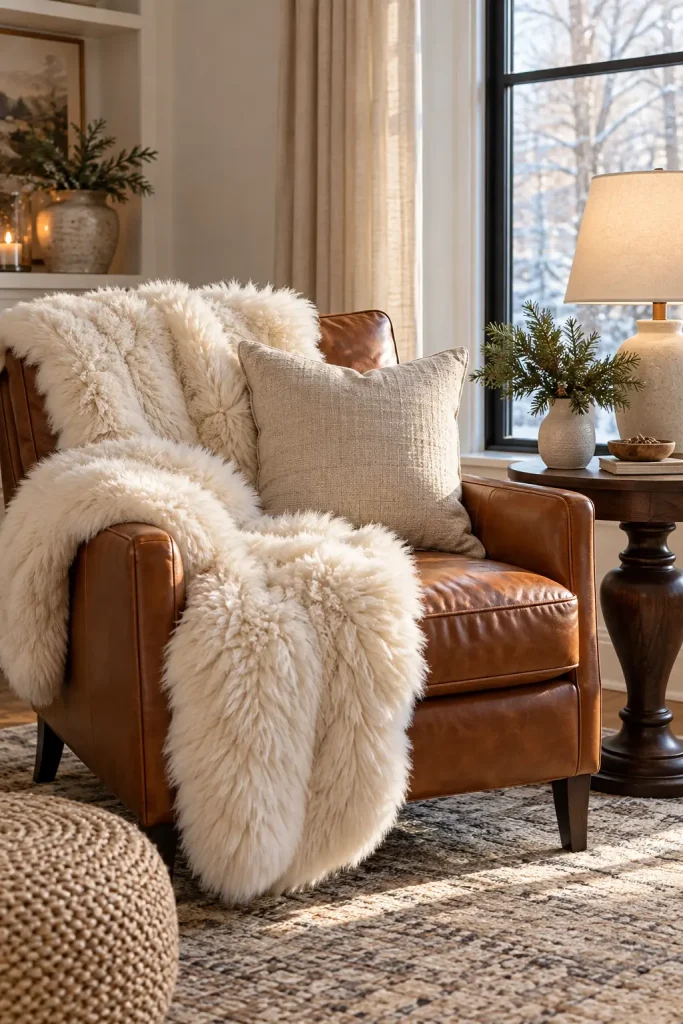
Faux fur adds a plush layer that makes a room feel warmer, particularly when paired with smooth wood, linen, or leather. A single faux fur throw on an accent chair can provide enough contrast without overwhelming the space.
Choose a natural-looking ivory, mushroom, or soft gray finish for understated winter decor. In a darker room, a lighter throw can create a pleasing contrast against charcoal upholstery or walnut furniture.
Keep the rest of the styling relatively simple. Combining faux fur with several other heavy, high-pile fabrics can make a small room feel visually crowded.
8. Create a Neutral Winter Bedroom
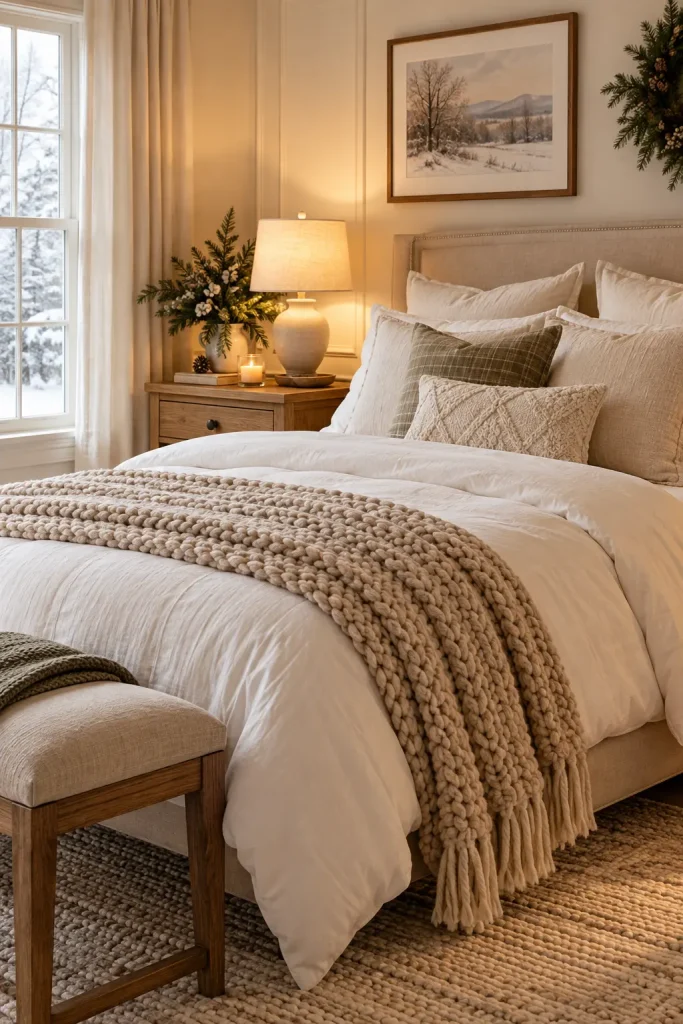
Winter bedroom decor works best when it supports comfort and restful surroundings. Start with crisp bedding, then add warmth through a quilted coverlet, a heavier blanket, and pillows in complementary neutral shades.
A palette of warm white, oatmeal, muted taupe, and natural wood feels calm without appearing flat. Vary the materials instead of adding more colors: washed cotton, linen, knitted wool, and a softly upholstered headboard each bring a different texture.
For a simple seasonal refresh, you can keep your existing furniture and change only the bedding and bedside accessories. Matching lamps on either side of the bed can also create a balanced appearance.
9. Arrange Pinecones and Winter Botanicals
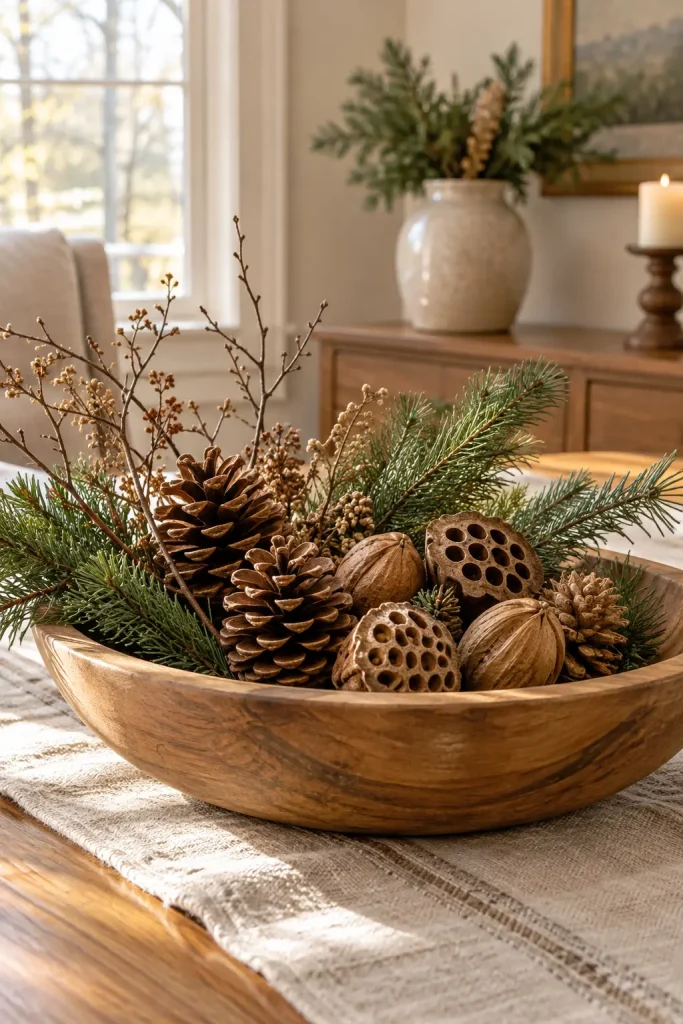
Pinecones, dried seed pods, bare twigs, and evergreen sprigs offer an inexpensive way to bring natural seasonal details indoors. Arrange them in a shallow wooden bowl or a wide ceramic dish on a dining table, coffee table, or entry console.
The key is to let the natural forms provide the decoration. Choose a few different shapes and sizes, then leave enough negative space for each element to remain visible.
This arrangement also works well in rustic, Scandinavian-inspired, and traditional interiors. If collecting materials outdoors, use clean, dry items and check for insects before bringing them inside.
10. Hang a Minimal Winter Wreath

A wreath can make an entryway feel seasonal without committing to traditional holiday colors. Look for a design made with eucalyptus, evergreen stems, dried grasses, or a combination of natural foliage.
A partially covered grapevine base creates an airy, organic appearance, while a full evergreen wreath offers a richer look. A simple linen ribbon can finish the arrangement without adding unnecessary decoration.
For an interior door, bedroom wall, or kitchen cabinet, a smaller wreath can provide a subtle seasonal detail. Always choose a secure hanging method suited to the surface, particularly in a rental.
11. Use Candlelight to Warm Up Dark Corners
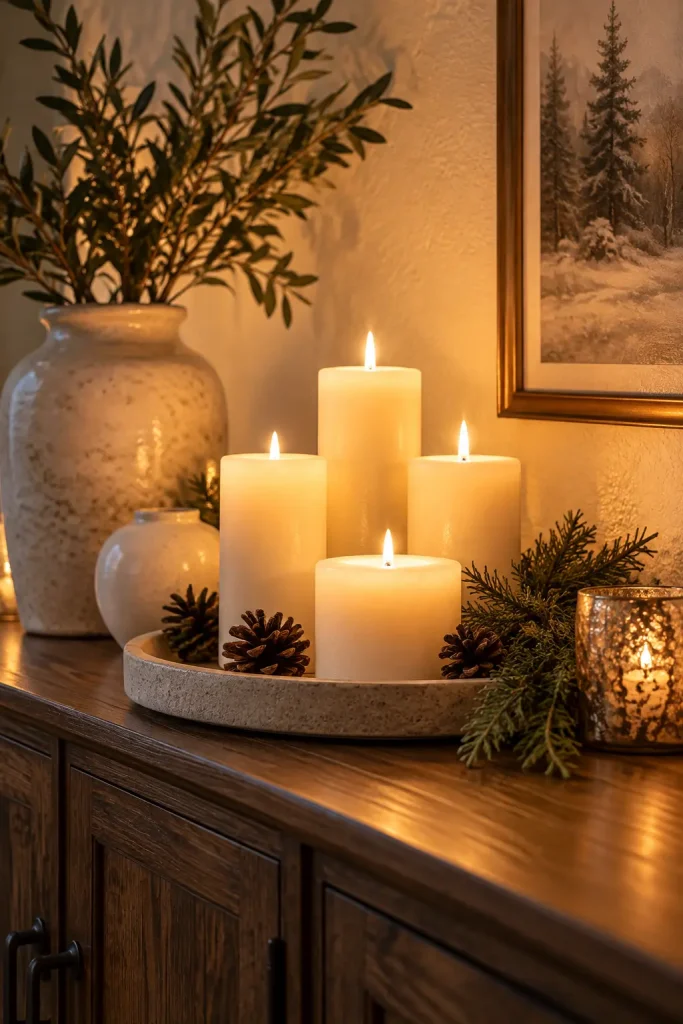
Winter evenings often benefit from layered lighting rather than a single bright overhead fixture. A small grouping of candles can add a gentle glow to a sideboard, dining table, or quiet corner of the living room.
Use candleholders of varying heights but keep their shapes and finishes related. For example, ivory pillar candles look cohesive with stone, brushed metal, or dark wood accessories.
For a practical alternative: Flameless candles can provide a similar visual effect in homes with pets, children, or limited suitable surfaces for open flames. With real candles, follow the manufacturer’s safety instructions and keep flames well away from fabrics, branches, and other combustible materials.
12. Style the Dining Table With Linen and Greenery
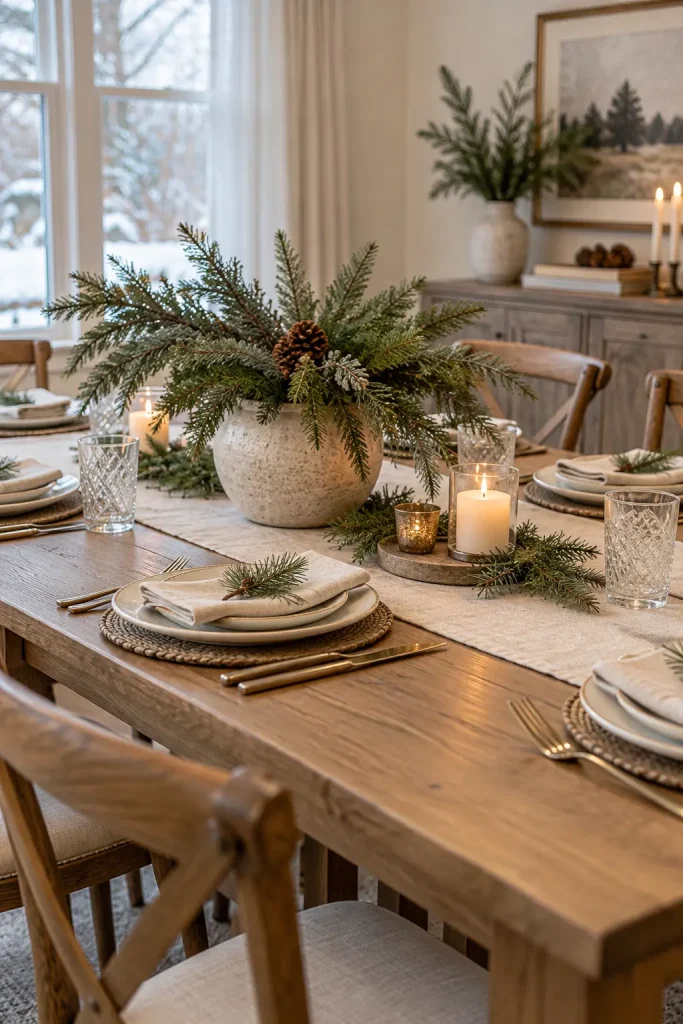
A winter tablescape doesn’t have to be reserved for a special occasion. A linen runner, simple ceramic dinnerware, and a few green branches can make an everyday dining table feel more considered.
Choose a runner in natural flax, ivory, or muted gray. Place a low botanical arrangement in the center, then add a few understated candleholders if they won’t interfere with serving food or conversation.
For a family dining table, leave generous space between place settings and keep the centerpiece low. A beautiful table should remain practical enough for breakfast, homework, and ordinary weeknight dinners.
13. Add a Woven Basket for Blankets
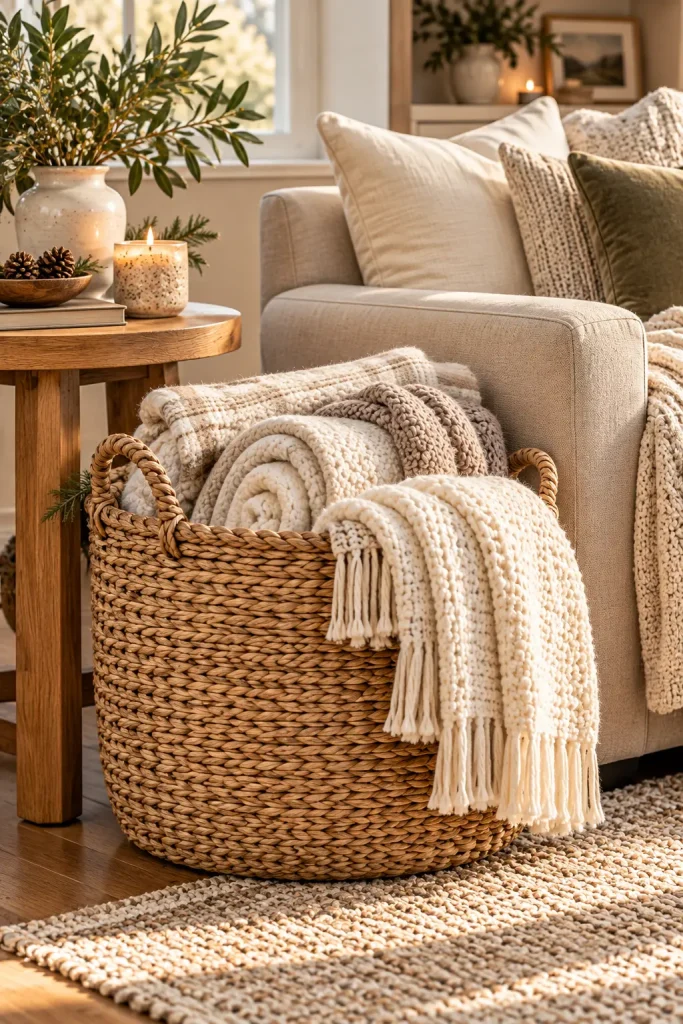
A woven basket combines useful storage with natural texture. Place one beside the sofa or near an armchair and fill it with folded blankets that can be reached easily on cold evenings.
Choose a basket with enough depth to hold your throws without crushing them into an untidy pile. Natural seagrass, rattan, and other woven finishes work especially well with wool, cotton, and linen textiles.
In smaller rooms, a basket with a narrow footprint can keep the arrangement compact. In a family living room, choose a sturdy design that can handle everyday use rather than a delicate decorative container.
14. Decorate With Rustic Wood Accents
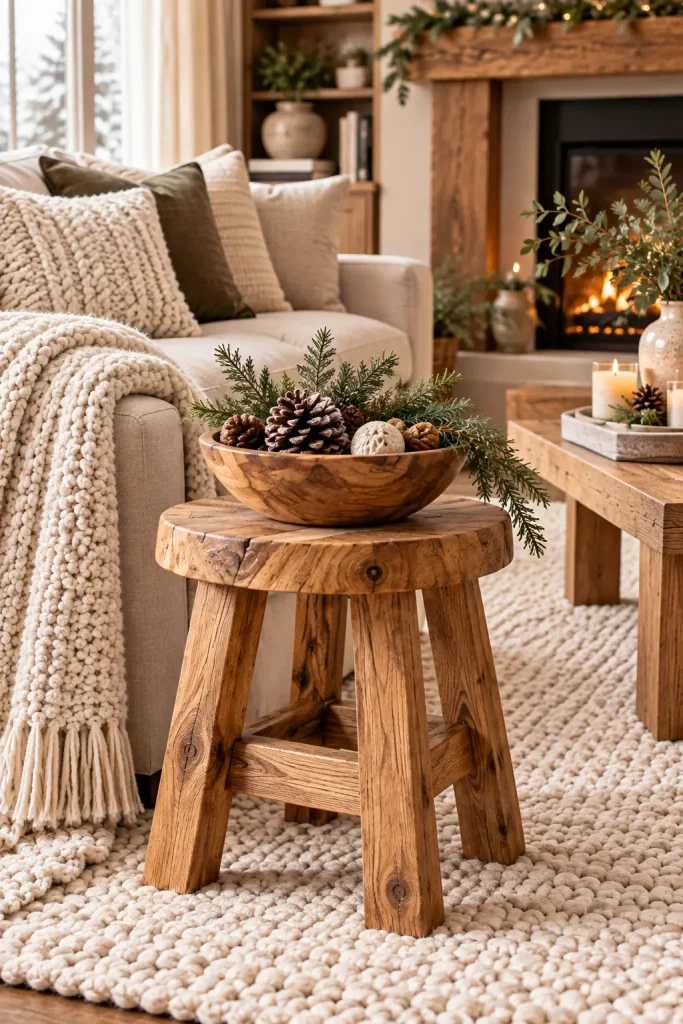
Wood introduces a visual warmth that balances the cooler light and muted colors often associated with winter interiors. Small wooden accents are an easy starting point if you don’t want to replace furniture or repaint walls.
Try a sculptural oak bowl, a wooden stool beside an armchair, or a natural wood picture frame on a console. Choose finishes that complement the existing floor and furniture rather than mixing too many competing wood tones.
For a modern interior, smooth light oak can keep the room feeling fresh. In a farmhouse or traditional setting, darker walnut or weathered wood may provide more depth.
15. Bring Winter Texture Into the Bathroom
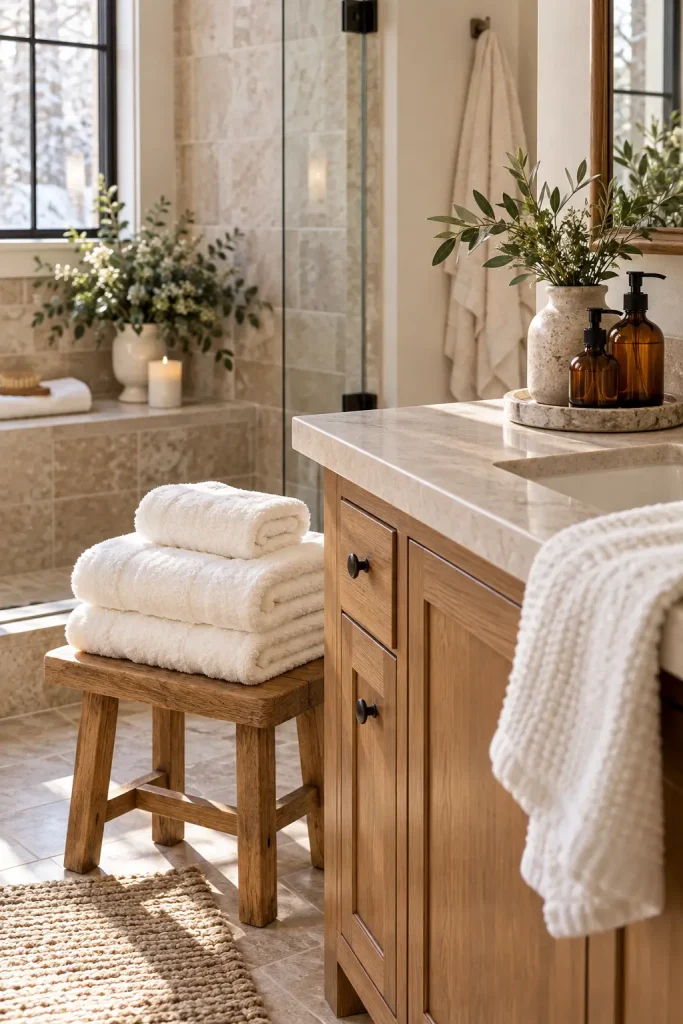
Bathrooms can feel just as welcoming as living spaces with a few carefully selected seasonal touches. Replace lightweight decorative towels with plush cotton versions, add a wooden stool if space allows, and use a small tray to organize everyday essentials.
Warm white, stone, taupe, and natural wood work well together. If your bathroom already has cool gray tile, introduce warmth through wood accessories and softer textiles rather than adding several competing accent colors.
Keep the room easy to clean and avoid placing fabric decorations where they will remain damp. The goal is a comfortable, spa-like atmosphere that still functions as an everyday bathroom.
16. Create a Winter Entryway With Practical Layers
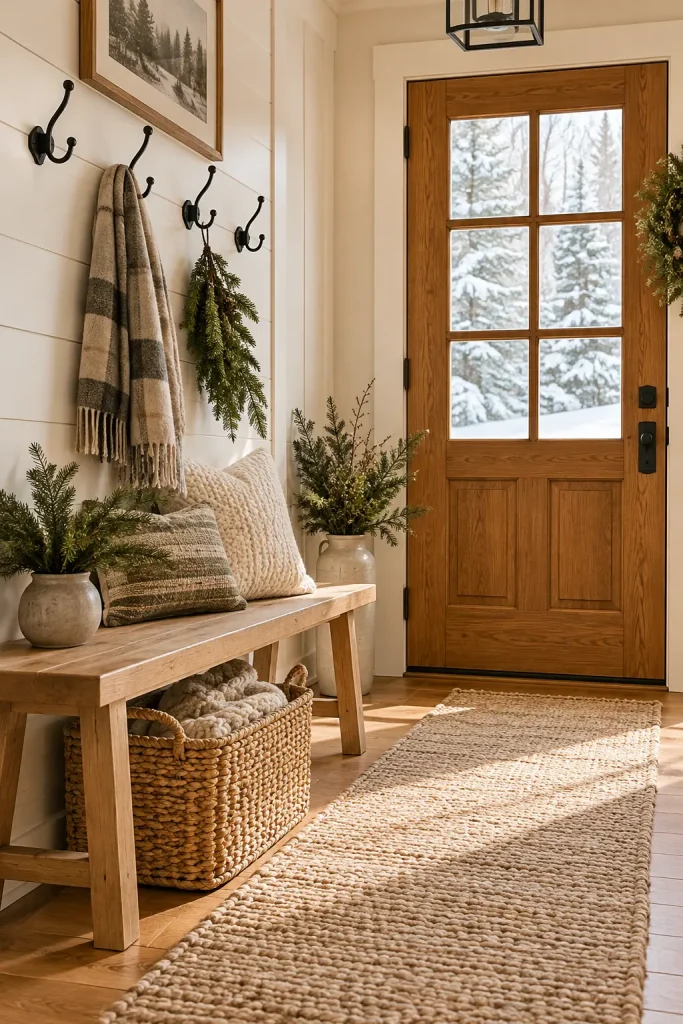
Your entryway sets the tone for the rest of the home, and winter offers an opportunity to make it more welcoming and functional. A narrow bench, a washable runner, and a basket for gloves or scarves can help control everyday clutter.
If the entry is small, use vertical space with wall hooks and a compact shelf. In a larger foyer, a wooden bench with a cushion and a small framed print can create a more substantial focal point.
Choose a rug suited to wet shoes and winter weather, and make sure it lies flat to reduce tripping risks. Seasonal decor looks best when it doesn’t obstruct the door or walking path.
17. Display Bare Branches in a Sculptural Vase
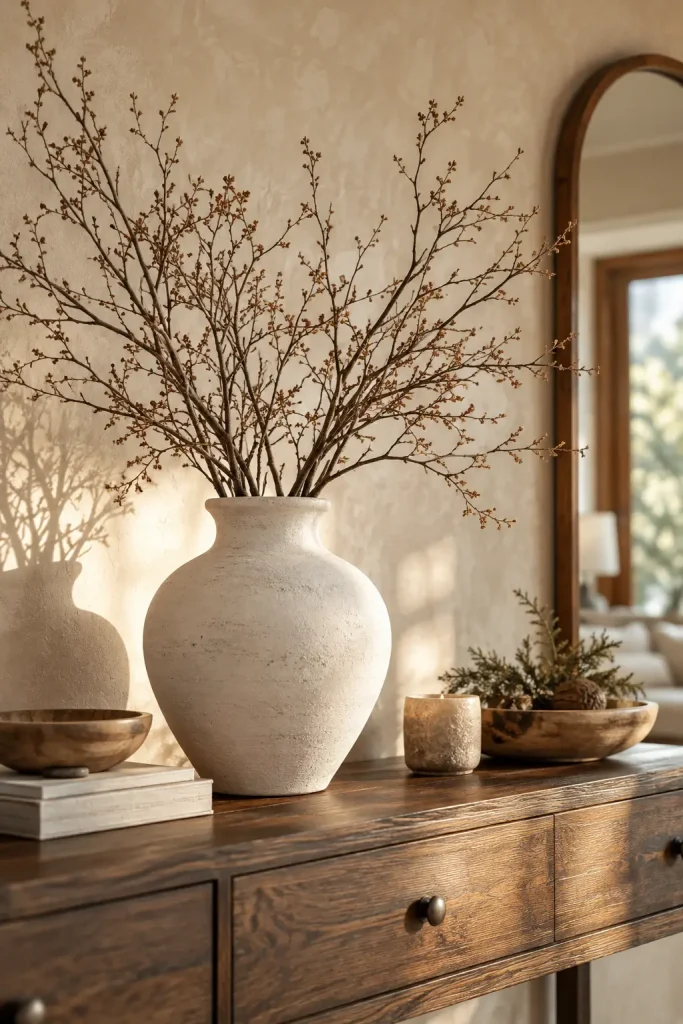
Bare branches create a striking winter arrangement through shape rather than color. Their fine lines contrast beautifully with solid furniture, plain walls, and soft upholstered pieces.
Choose a tall vase with a weighted base so the arrangement remains stable. A matte ceramic vessel in chalk white, charcoal, or earthy brown can make the branches feel like a deliberate decorative feature.
This look is especially effective in a corner that needs height but not more furniture. Keep the branches proportionate to the room, and avoid placing them where they interfere with doors, walkways, or frequently used seating.
18. Refresh Shelves With a Winter Color Palette
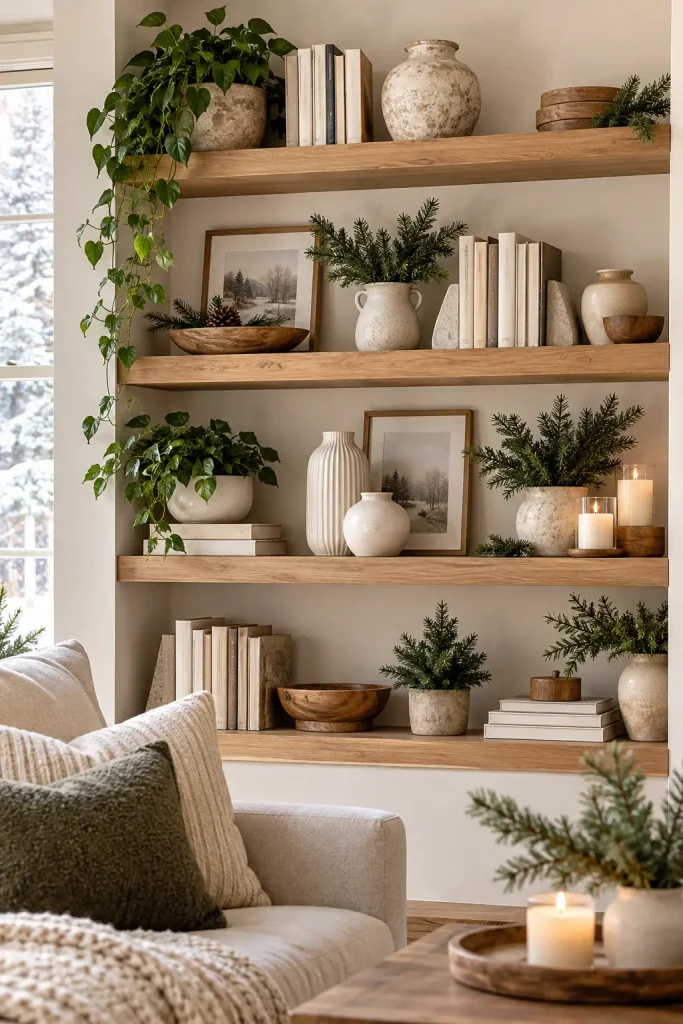
Open shelves can look seasonal without becoming crowded. Start by removing a few decorative objects, then rearrange the remaining pieces around a winter palette of cream, natural wood, muted green, and charcoal.
Mix horizontal book stacks with upright books, small ceramic vessels, and a few natural elements. Leave some shelves partly open so the display has room to breathe.
For a quick refresh, shop your own home first. Moving a vase from the bedroom or exchanging a colorful accessory for a neutral object can create a different atmosphere without purchasing new decor.
19. Introduce Deep Green and Burgundy Accents
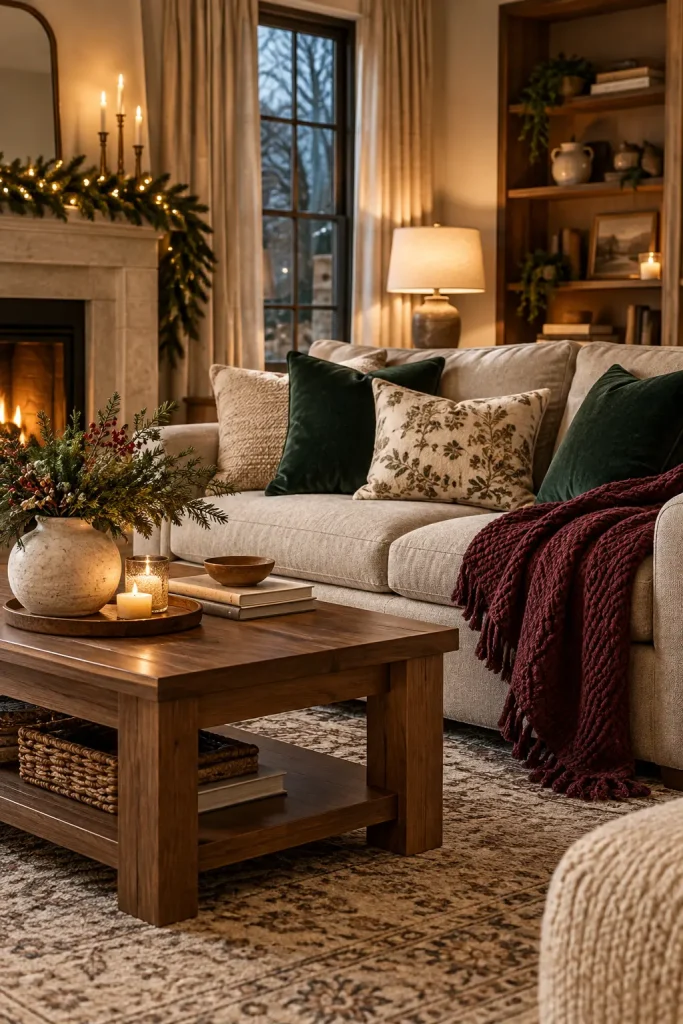
Winter decorating doesn’t have to rely entirely on pale neutrals. Deep forest green, burgundy, and muted plum can bring richness to a room while still feeling appropriate for the season.
Introduce these colors through a pair of velvet cushions, a folded throw, or a small upholstered accent chair. Against cream walls and natural wood, darker shades provide contrast without requiring a major change to the room.
A useful rule of thumb is to choose one dominant accent color and use the others sparingly. Too many saturated colors competing for attention can make the space feel less cohesive.
20. Style a Cozy Window Seat
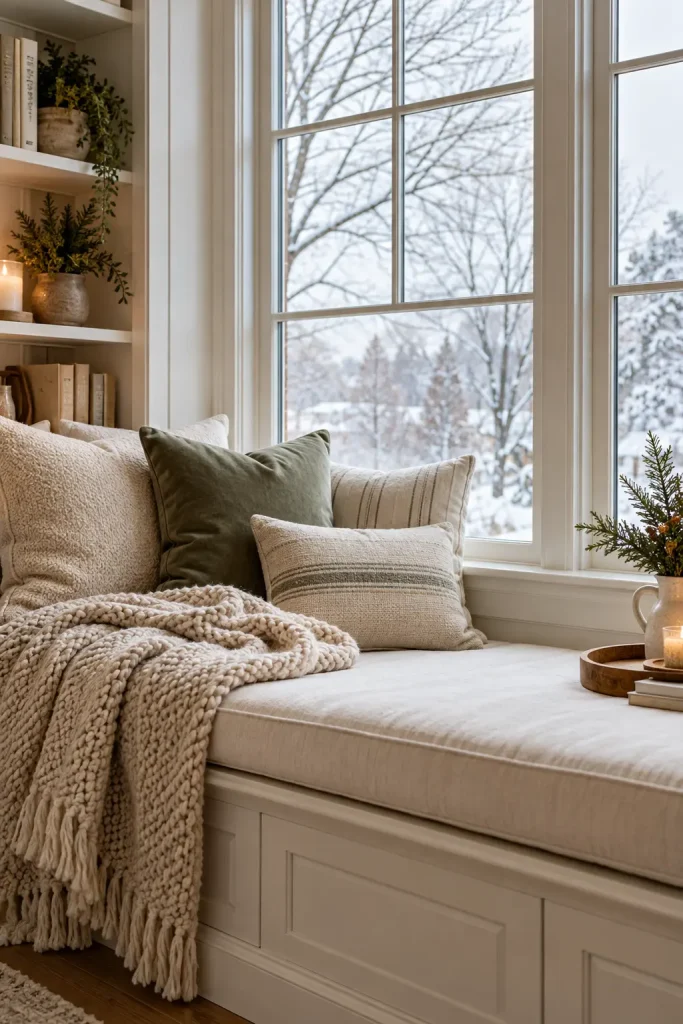
A window seat can become one of the most inviting places in your home during winter. Layer a fitted cushion with two or three pillows, then add a soft blanket that can be folded away when the seat is needed for something else.
Keep the palette light if the window already provides a strong view. Warm ivory, oatmeal, and muted sage can complement the outdoor scenery without competing with it.
If you’re creating a window seat in a small space, a sturdy storage bench placed beneath the window can provide a similar effect without built-in cabinetry. Check that the window remains accessible and that curtains or blinds operate freely.
21. Add a Textured Area Rug
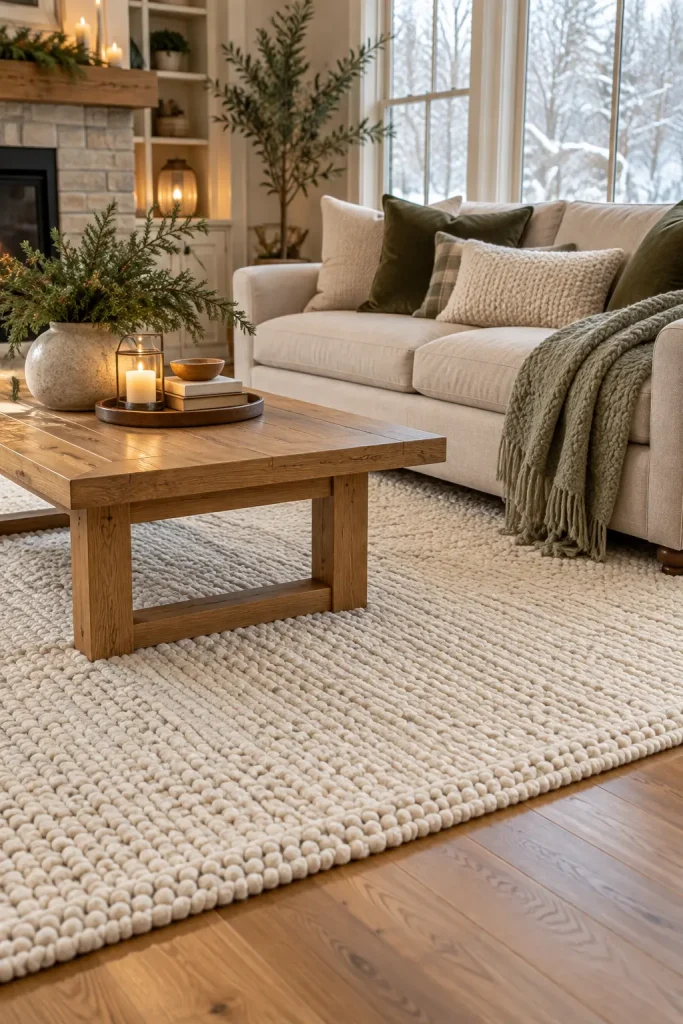
An area rug can visually anchor a seating arrangement and add a softer layer underfoot. For winter, consider a wool rug, a textured flatweave, or a plush design suited to the room’s traffic and cleaning needs.
Scale matters more than pattern alone. In a living room, a rug that extends beneath at least the front legs of the main seating pieces often makes the arrangement feel more connected than a very small rug floating in the middle.
Choose a subtle pattern if the room already contains patterned curtains or cushions. If your furniture and textiles are mostly solid, a restrained geometric or vintage-inspired rug can add interest.
22. Create a Simple Winter Kitchen Counter Display
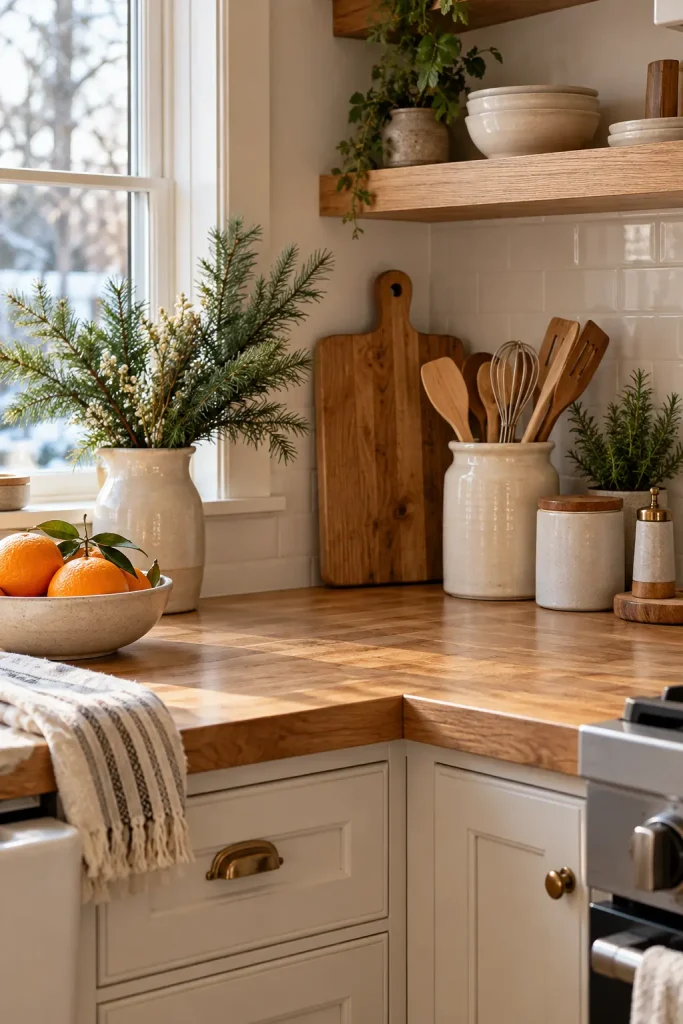
A winter kitchen refresh should leave enough room for cooking, preparing drinks, and handling everyday tasks. Instead of decorating every counter, create one compact arrangement in an unused corner.
A wooden cutting board leaned securely against the backsplash, a ceramic utensil crock, and a small vase of evergreen stems can provide seasonal character. Cream canisters and natural wood accessories help tie the arrangement together.
Do / Don’t
- Do: Keep frequently used appliances and work surfaces accessible.
- Do: Use a small, easy-to-clean arrangement.
- Don’t: Place greenery or decorative objects close to a stove or other heat source.
- Don’t: Use a large centerpiece where food preparation normally happens.
A little seasonal styling goes a long way in a functional kitchen.
23. Layer Soft Lighting in the Living Room
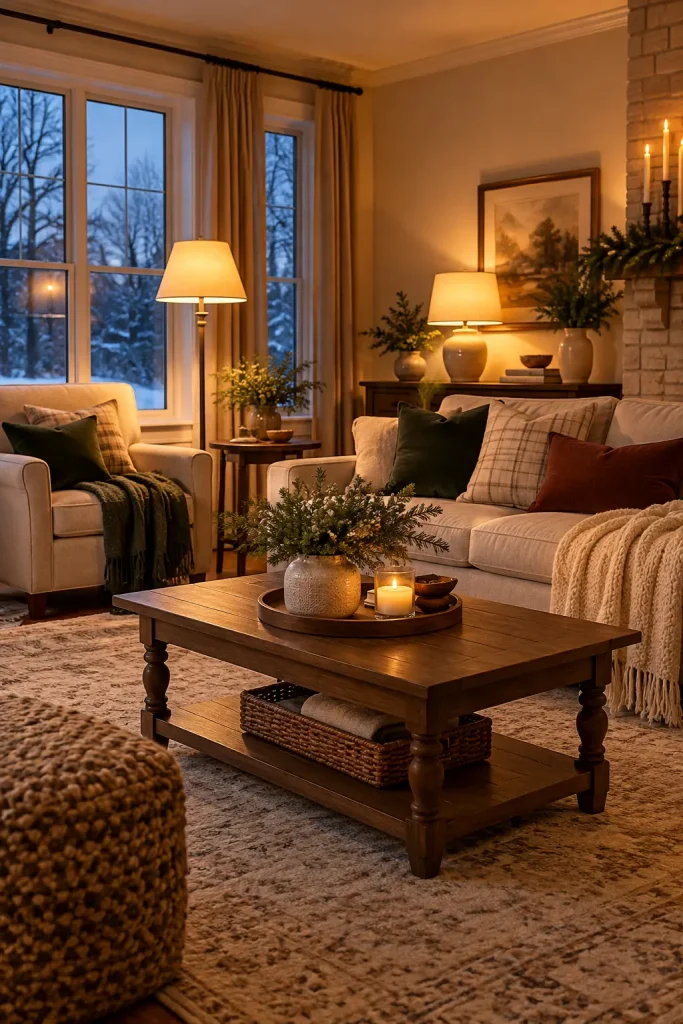
A room can feel cold even when its colors and furniture are warm. Lighting helps solve that problem by adding depth and creating different moods throughout the day.
Rather than depending on one overhead fixture, combine a table lamp near the sofa with a floor lamp in a darker corner. If your ceiling lighting is dimmable, adjust it to suit the activity instead of keeping every light at full brightness.
For a cohesive appearance, choose bulbs and fixtures that produce a comfortable, consistent light. Lamps with fabric shades can soften the light visually, while directional reading lamps provide more focused illumination where it’s needed.
24. Use Stoneware and Handmade Ceramics
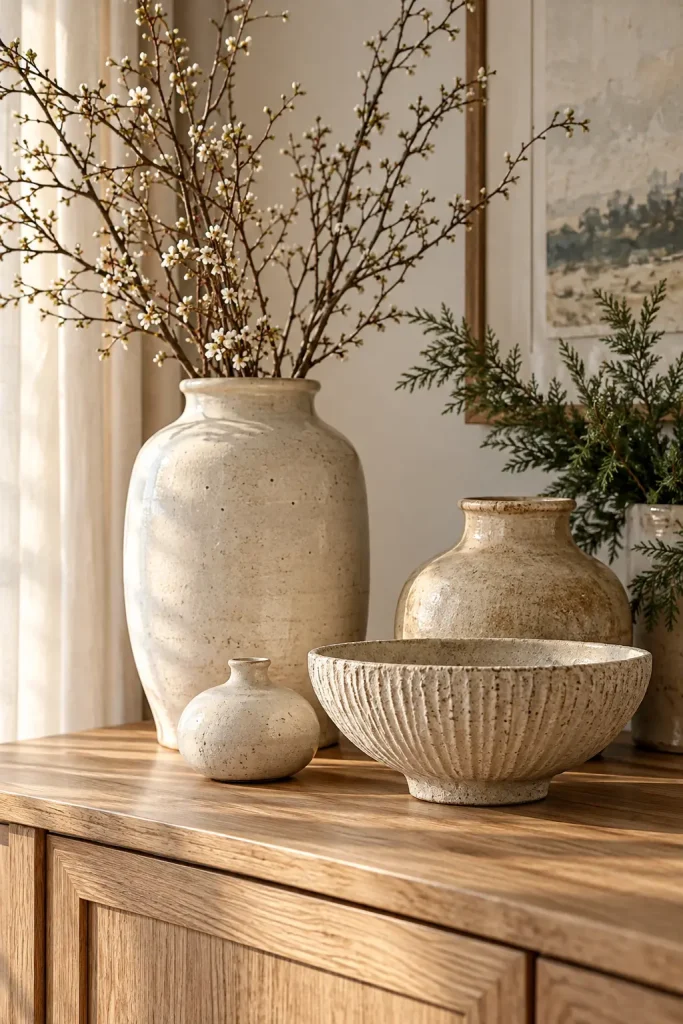
Handmade-looking ceramics introduce subtle texture and irregularity that balance smooth furniture and carefully arranged interiors. Stoneware vases, shallow bowls, and sculptural vessels can work on a console, coffee table, or open shelf.
Choose pieces that vary in height and silhouette but share a related palette. For example, a tall ivory vase paired with a low sand-colored bowl creates contrast without making the arrangement feel disconnected.
You don’t need a large collection. Two or three thoughtfully chosen pieces are often enough, especially in a small room where decorative objects compete with everyday essentials for space.
25. Create a Natural Winter Centerpiece
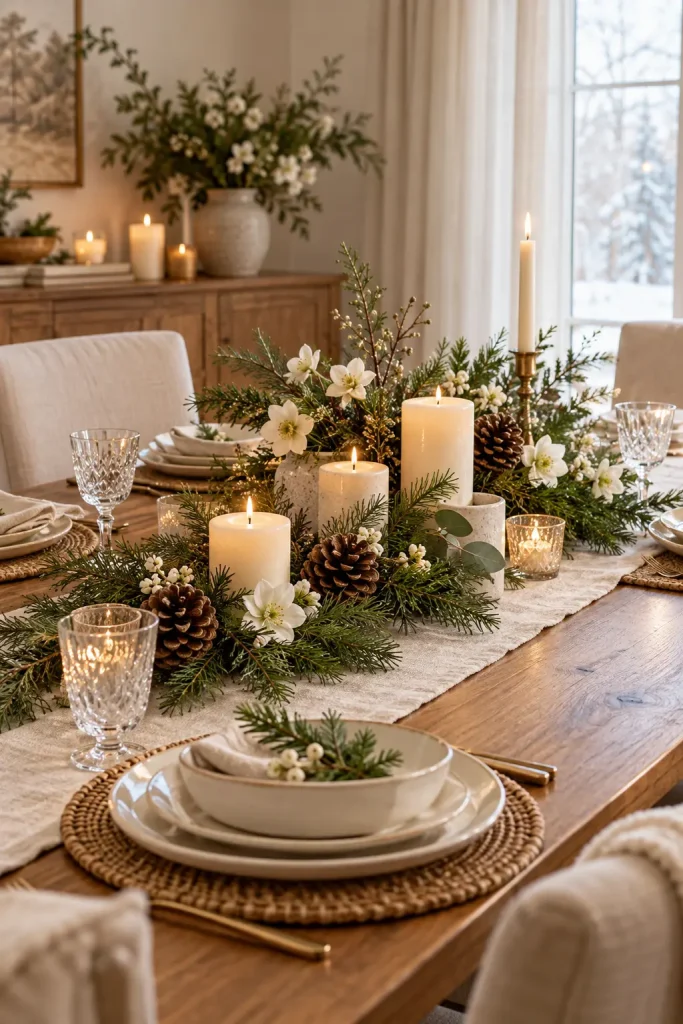
A natural centerpiece brings several winter decorating elements together in one arrangement. Combine evergreen branches, pinecones, a few pale seasonal flowers, and candleholders on a dining table or kitchen island.
For a relaxed everyday display, place the greenery in a shallow ceramic vessel and keep the branches low. For a more formal dinner, arrange the elements along a linen runner with evenly spaced candleholders and simple place settings.
The most important consideration is proportion. A centerpiece should complement the table rather than take over the entire surface, and diners should be able to see one another comfortably.