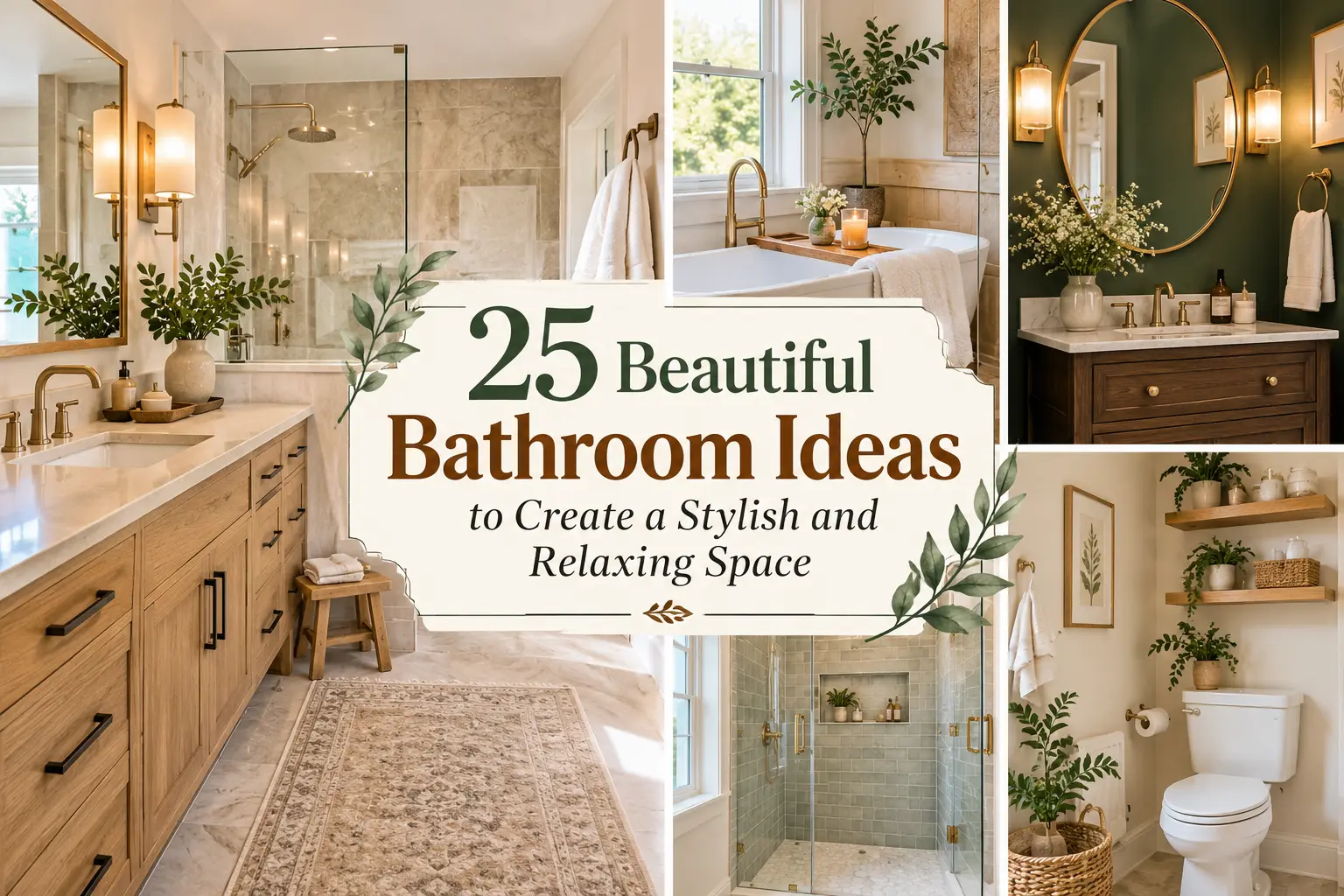
25 Beautiful Bathroom Ideas to Create a Stylish and Relaxing Space
A beautiful bathroom should feel comfortable, functional, and inviting, whether you’re starting your morning or winding down at the end of a long day. The right combination of colors, lighting, tile, storage, and natural materials can make even a small bathroom feel more polished without requiring a complete renovation.
These bathroom ideas cover a range of styles, from warm modern spaces and classic white bathrooms to spa-inspired retreats and practical designs for compact homes. Some updates are as simple as replacing a mirror or adding softer towels, while others involve a new vanity, upgraded shower, or carefully chosen tile.
The key is to create a bathroom that looks cohesive and works for your daily routine. Use these ideas as inspiration, then adapt the finishes, layout, and accessories to suit your space and budget.
1. Create a Warm White Bathroom With Natural Wood
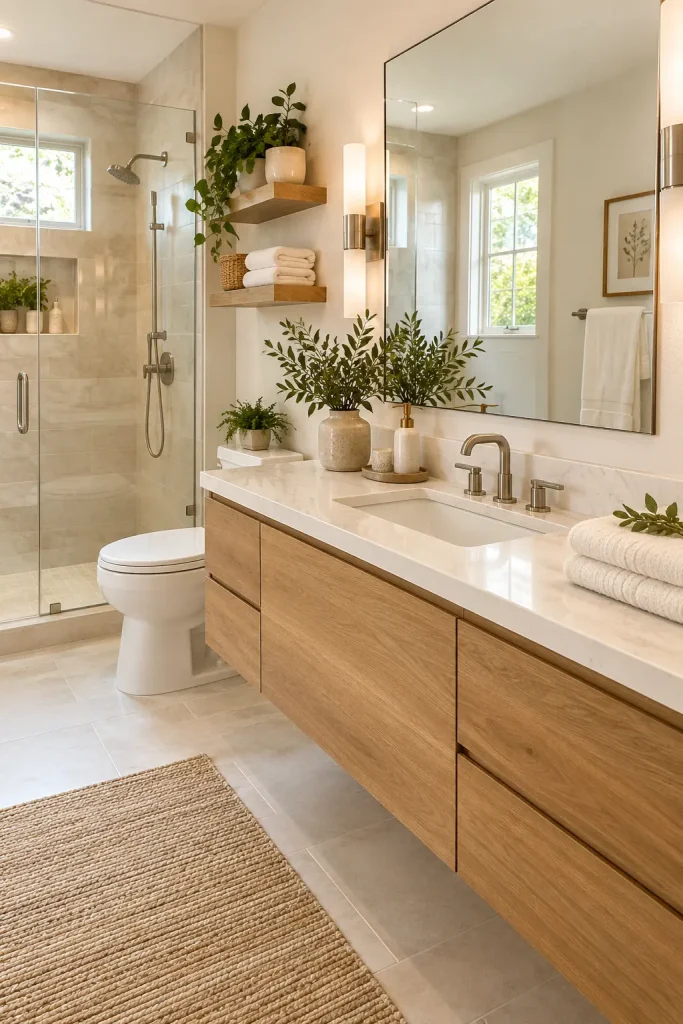
A warm white bathroom is an excellent starting point if you want a clean, airy look without making the space feel cold. Instead of relying entirely on bright white surfaces, combine creamy walls, pale stone, and natural oak cabinetry for a softer finish.
A floating wood vanity creates visual breathing room beneath the cabinet, while a simple white countertop keeps the overall design light. Add brushed-nickel faucets, a rounded ceramic vase, and fluffy ivory towels to complete the look.
Styling tip: Choose whites with similar warm undertones. Mixing creamy finishes with stark, blue-toned white can make the palette feel less cohesive.
2. Design a Spa-Inspired Bathroom With Soft Neutrals
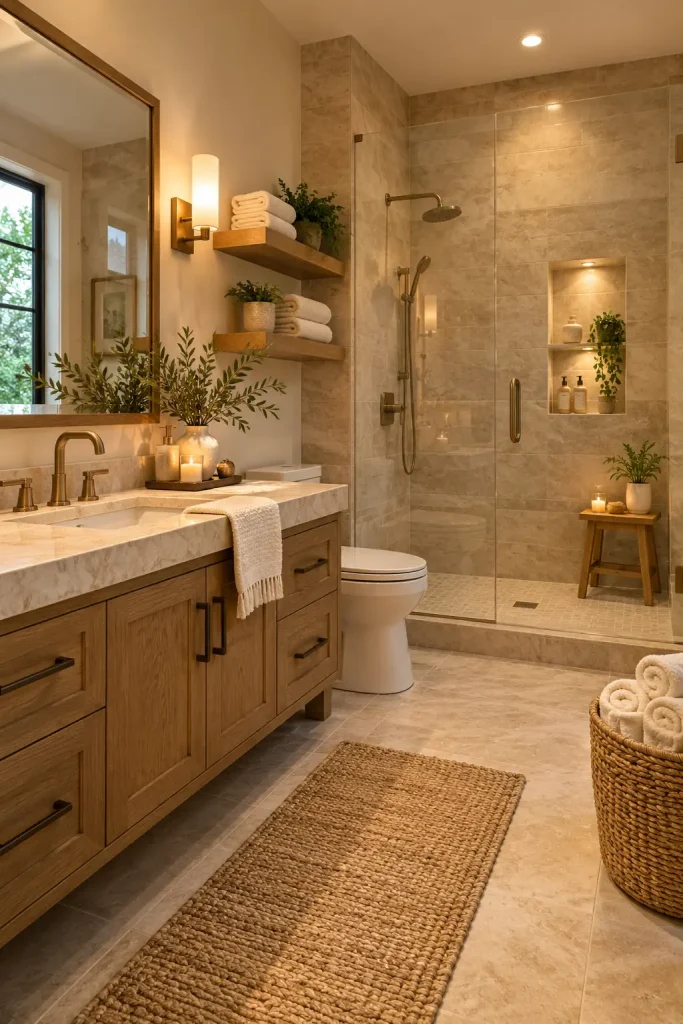
For a bathroom that feels like a personal retreat, build the design around a restrained palette of sand, beige, warm gray, and creamy white. Natural stone-look tile, a frameless glass shower, and soft indirect lighting create a peaceful atmosphere without making the room look overly decorated.
Keep accessories minimal and purposeful. A wooden bath stool, neatly rolled towels, and a small tray for everyday essentials provide enough detail without cluttering the countertop.
Consider dimmable lighting if you enjoy softer illumination in the evening. For daily grooming, combine it with well-positioned task lighting near the mirror.
3. Add a Statement Vanity for Character
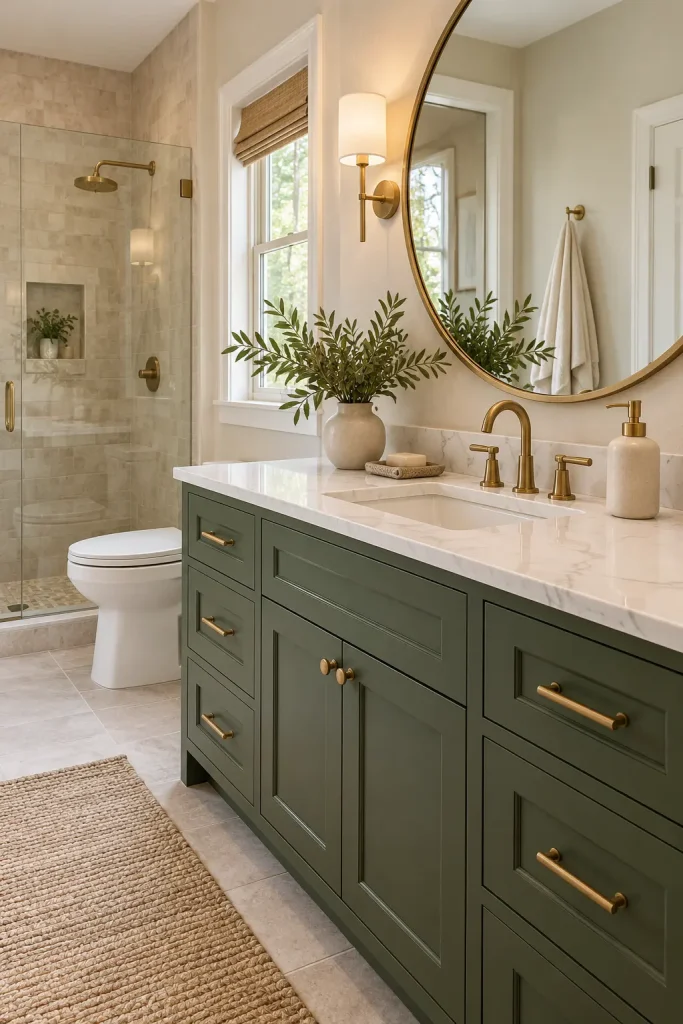
The vanity often becomes the visual anchor of a bathroom, so choosing one with character can change the entire room. A deep sage-green cabinet, rich walnut finish, or muted navy vanity adds personality while leaving the surrounding surfaces relatively simple.
Pair a colored vanity with a pale countertop and a mirror that complements its proportions. Brass hardware can introduce warmth, while brushed-nickel fixtures offer a quieter, more contemporary appearance.
For a compact bathroom, prioritize drawer organization and practical counter space over an oversized cabinet. A beautiful vanity should make everyday routines easier, not simply look attractive in photographs.
Quick tip: Before ordering a vanity, measure the door swing, plumbing location, and clearance around the toilet and shower.
4. Use Large-Format Tiles for a Seamless Look
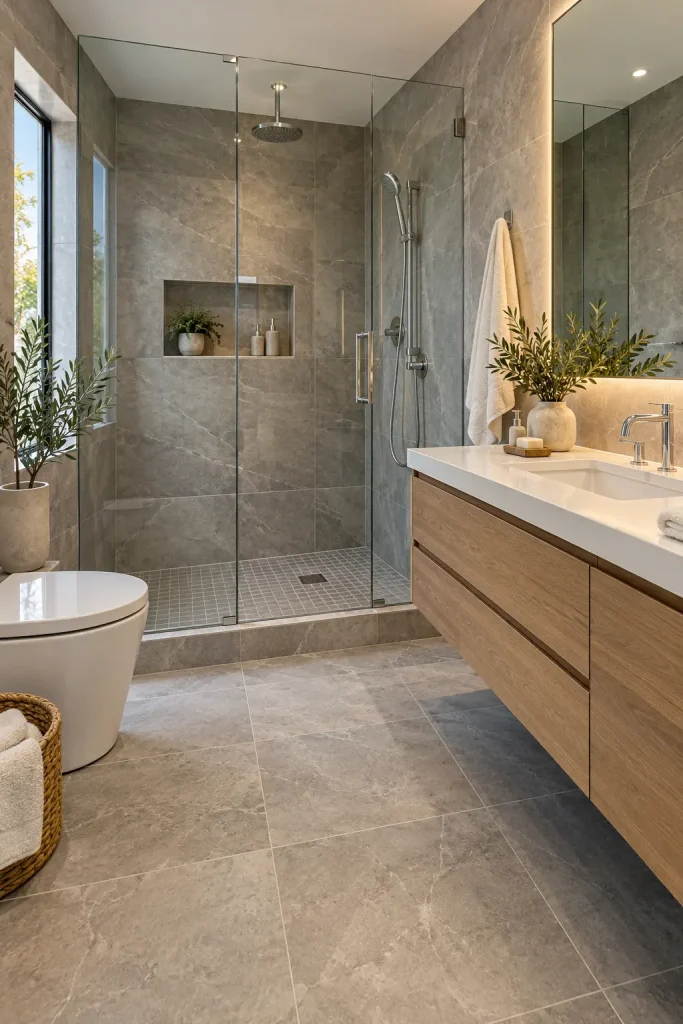
Large-format porcelain tiles create a streamlined appearance because fewer grout lines interrupt the surfaces. They’re especially effective in contemporary bathrooms where the goal is to make walls and floors feel visually continuous.
Choose pale limestone-look porcelain for a light, understated room or warm gray tiles for a more architectural feel. Using coordinating tiles on the shower walls and main floor can strengthen the sense of continuity, although the floor finish must still be appropriate for wet areas.
Remember that tile size alone doesn’t guarantee a spacious appearance. Lighting, color, grout contrast, and the room’s layout also affect the result.
5. Bring Nature Indoors With Green Accents
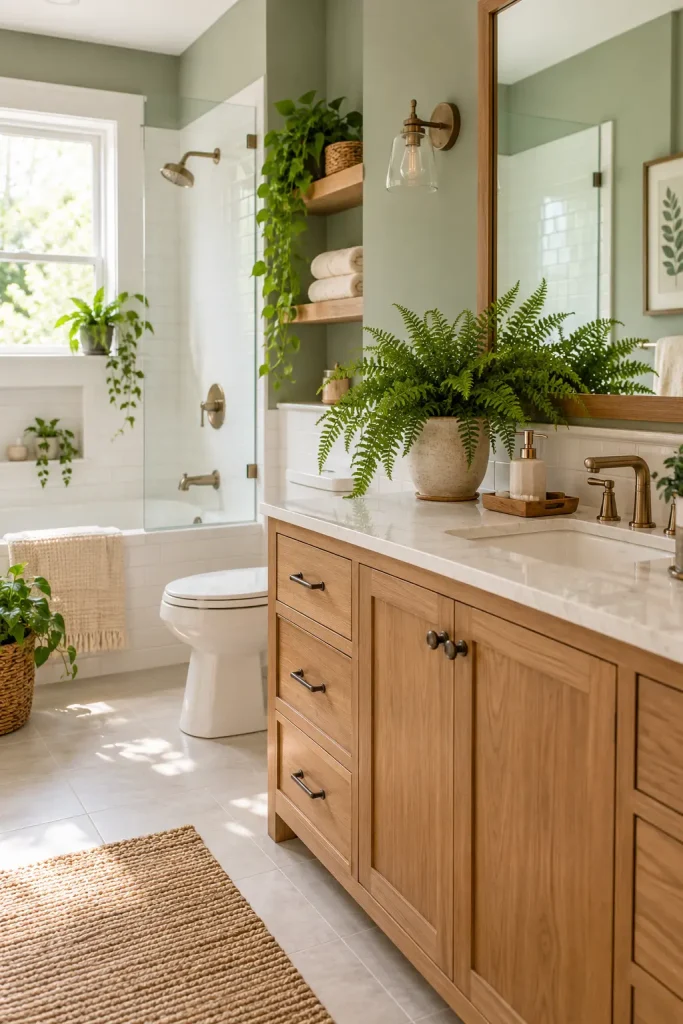
Green is an appealing choice for a bathroom because it connects the room with natural materials and outdoor scenery. You can introduce it through painted walls, green ceramic accessories, leafy plants, or a muted green vanity.
For a subtle approach, keep the main surfaces white or cream and use sage-green towels and a small plant near the window. If you prefer a stronger design, consider deeper olive walls balanced by pale stone and natural wood.
Choose plants according to the actual light and humidity conditions in your bathroom. A room without a window may be better suited to a good-quality artificial plant or a simple botanical print.
6. Install a Frameless Walk-In Shower
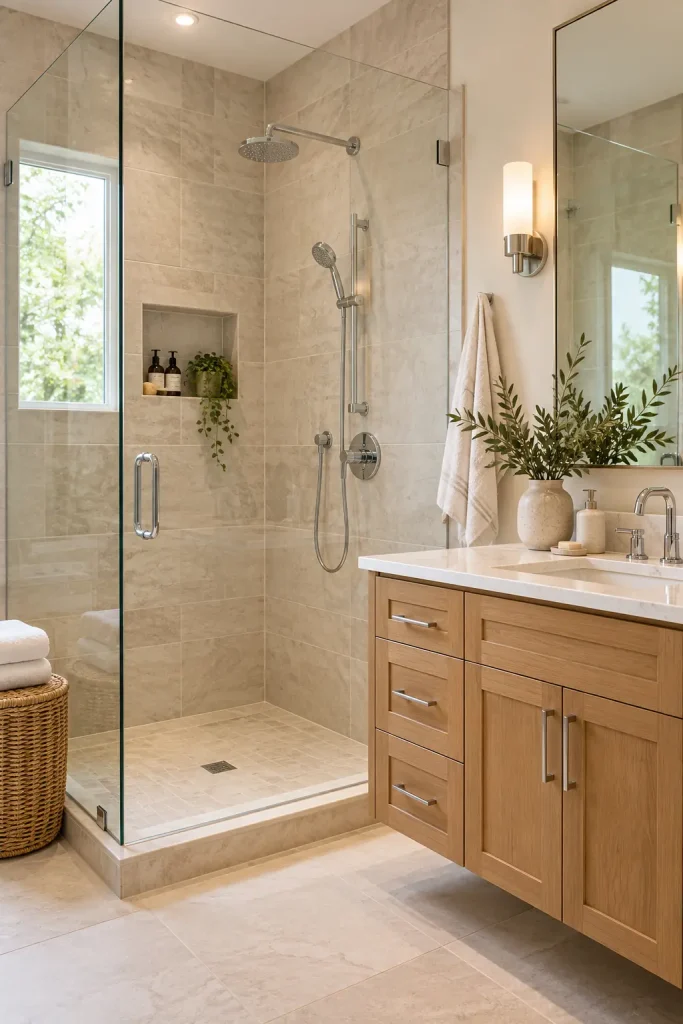
A frameless walk-in shower creates a more open appearance by reducing the visual interruption of heavy frames and opaque shower curtains. Clear glass lets the tile continue across the room, making the shower feel connected to the rest of the bathroom.
A recessed shower niche provides a practical place for shampoo and soap without adding bulky shelves. Choose coordinating tile inside the niche for a seamless effect or a contrasting mosaic for a small decorative detail.
The practical planning matters just as much as the appearance. Proper waterproofing, drainage, ventilation, and slip-resistant flooring are essential parts of a successful shower installation.
7. Make a Small Bathroom Feel Bigger With a Large Mirror
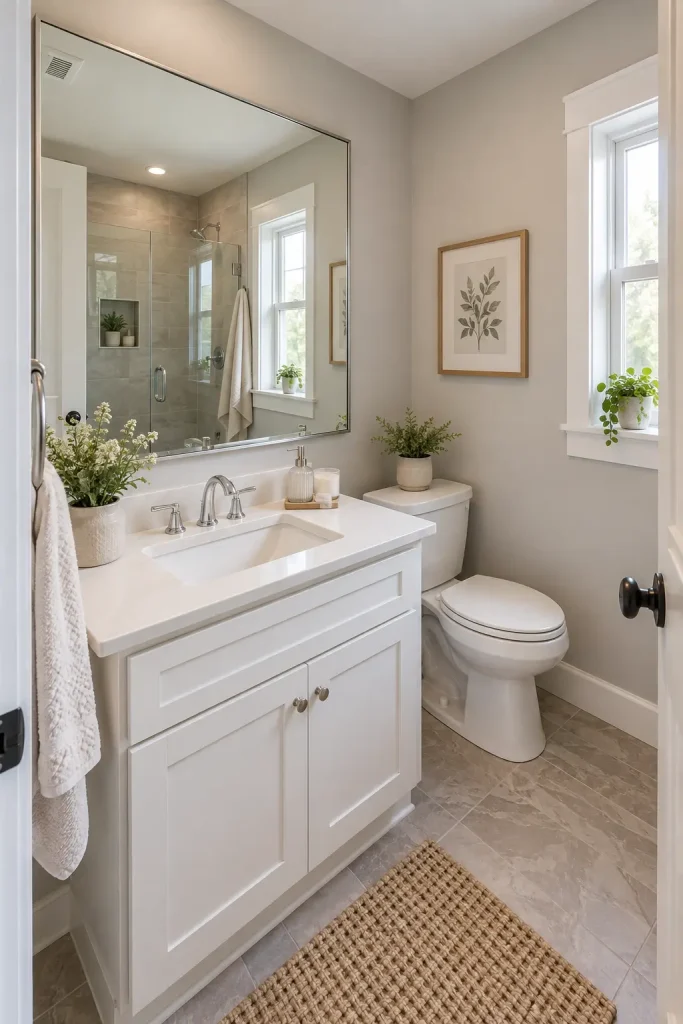
In a small bathroom, a generously sized mirror can reflect available light and create the impression of more depth. A mirror that extends across much of the vanity wall can also make the design feel more unified.
Keep the surrounding palette light, but don’t feel restricted to plain white. Pale greige, warm ivory, and soft gray can all work well with a large mirror.
Avoid crowding the reflection with too many countertop accessories. A simple soap dispenser, one small tray, and neatly stored toiletries keep the vanity looking intentional.
Common mistake: Choosing a mirror that’s too narrow for the vanity. A better-proportioned mirror generally makes the entire arrangement feel more balanced.
8. Choose a Floating Vanity for an Airy Appearance
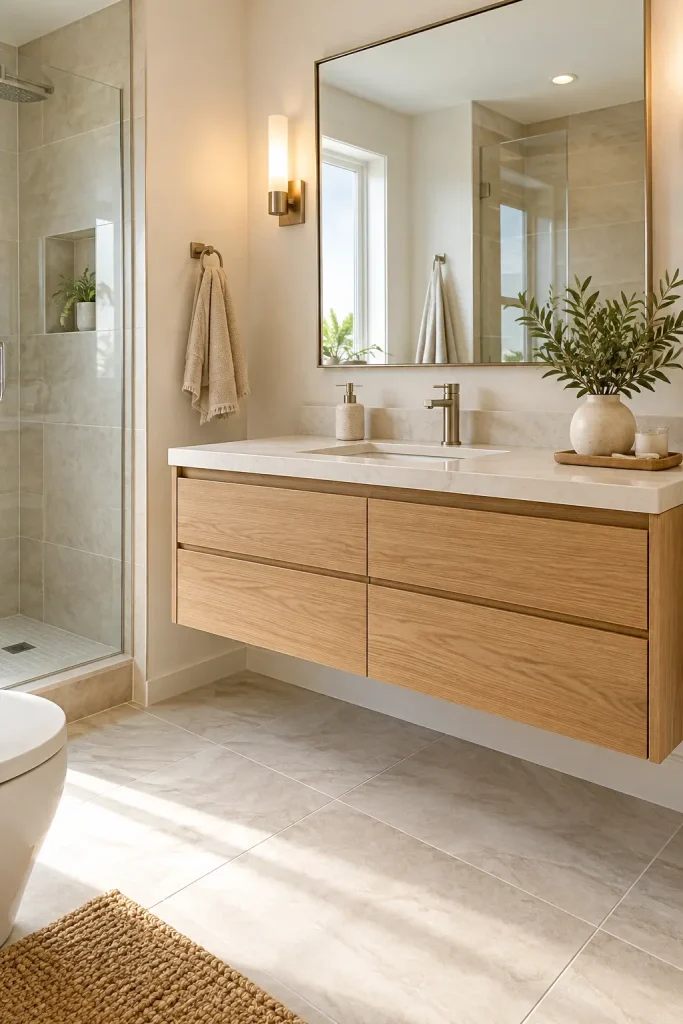
A wall-mounted vanity leaves part of the floor visible beneath the cabinet, which can make a bathroom feel less crowded. The open space also gives the room a contemporary look and can simplify floor cleaning.
Light oak is ideal for a warm, natural palette, while painted white cabinetry suits a crisp minimalist interior. Dark wood can also work beautifully when paired with light walls and adequate illumination.
Before installing a floating vanity, confirm that the wall structure can support its weight and that the plumbing can be accommodated. Storage capacity should be considered carefully, especially in bathrooms shared by several people.
9. Make a Feature Wall With Decorative Tile
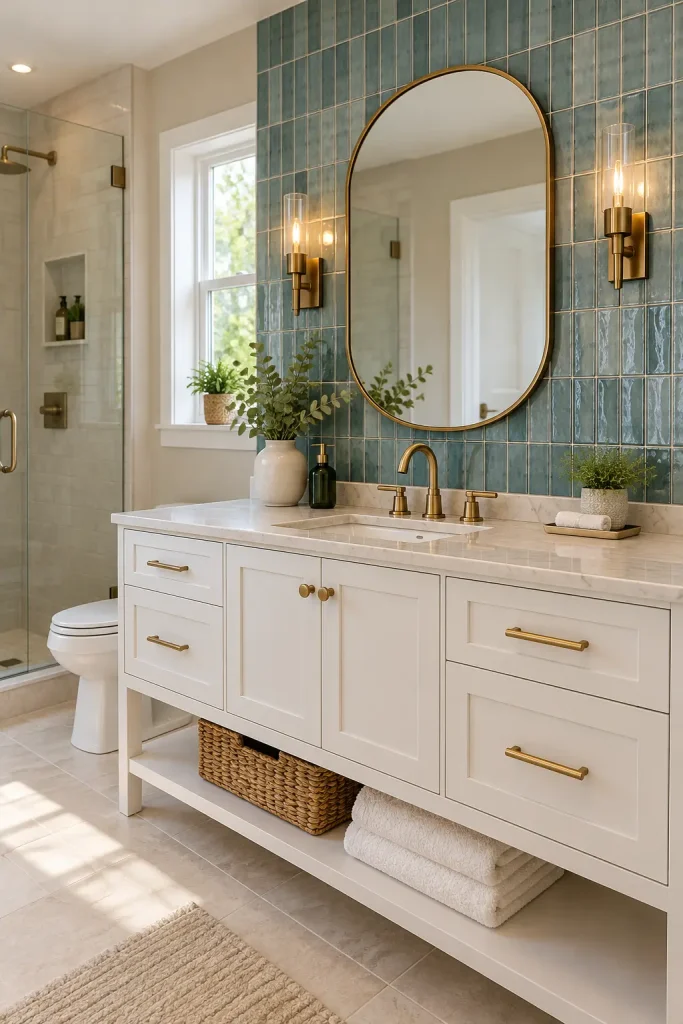
A decorative tile wall adds personality without requiring every surface in the bathroom to compete for attention. Place the feature behind the vanity or use a distinctive tile inside the shower to establish a clear focal point.
Handmade-look tiles in muted blue, green, or warm white introduce subtle variation. Geometric porcelain tiles create a more structured, modern appearance, while small-format mosaics can bring detail to a compact wall.
Keep the other finishes relatively quiet. If the tile has a strong pattern or glossy surface, simple cabinetry and restrained accessories help the feature stand out.
10. Add Warmth With Wood-Look Flooring
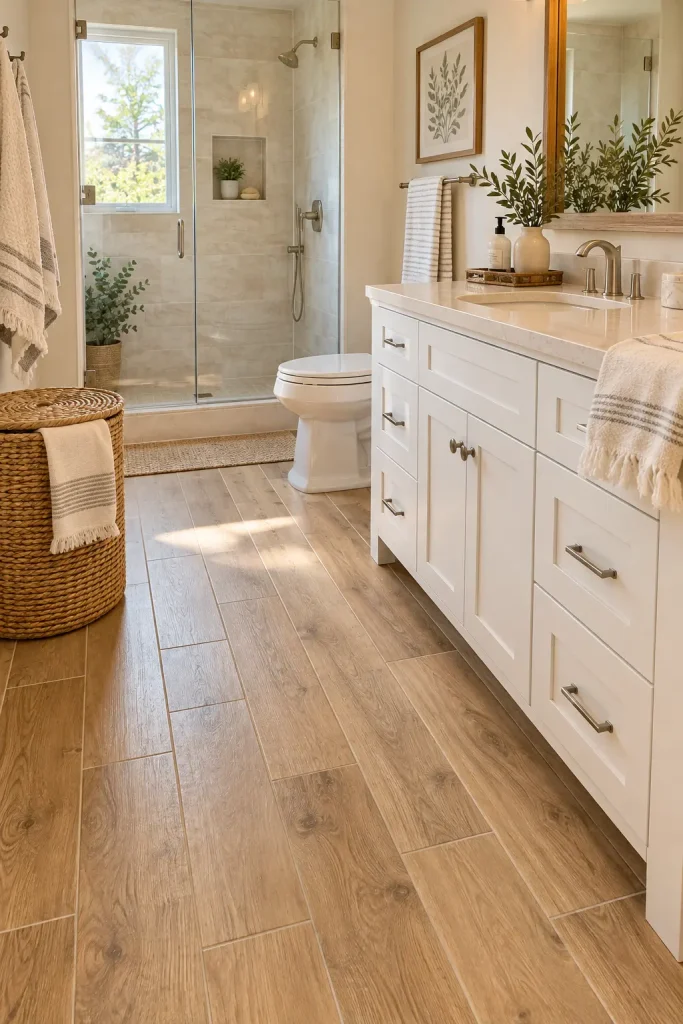
Wood-look porcelain tile offers the visual warmth of timber with a surface designed for appropriate bathroom use. It works especially well with white cabinetry, beige walls, and natural woven accessories.
Choose planks in a tone that complements the vanity rather than matching every wood element exactly. A little variation in color can make the space feel more natural and less like a coordinated showroom set.
Bathroom flooring must be suitable for wet conditions, and the finish should provide appropriate slip resistance. Porcelain can be a practical option, but installation quality and the particular tile specification still matter.
11. Style a Classic Bathroom With Black-and-White Details
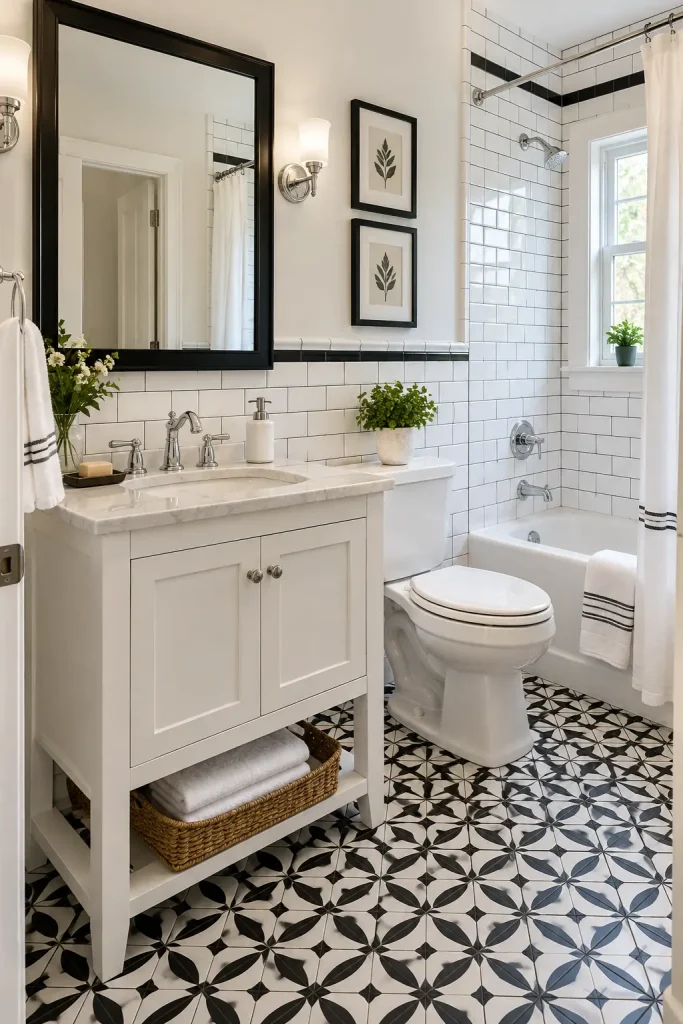
Black-and-white bathroom decor creates contrast without relying on a complicated color scheme. White wall tile, a black-framed mirror, and a patterned floor establish a classic foundation that works in both older homes and updated interiors.
For a traditional look, consider small hexagonal floor tiles and simple chrome fixtures. For a more contemporary direction, use larger white tiles, a streamlined vanity, and matte-black accents.
The trick is to distribute black thoughtfully rather than use it everywhere. A few repeated dark details create a stronger visual connection than numerous unrelated accessories.
Do: Repeat the black finish in two or three places, such as the mirror frame, cabinet pulls, and light fixture.
Don’t: Mix too many competing patterns when the floor is already visually prominent.
12. Introduce a Freestanding Bathtub as the Focal Point
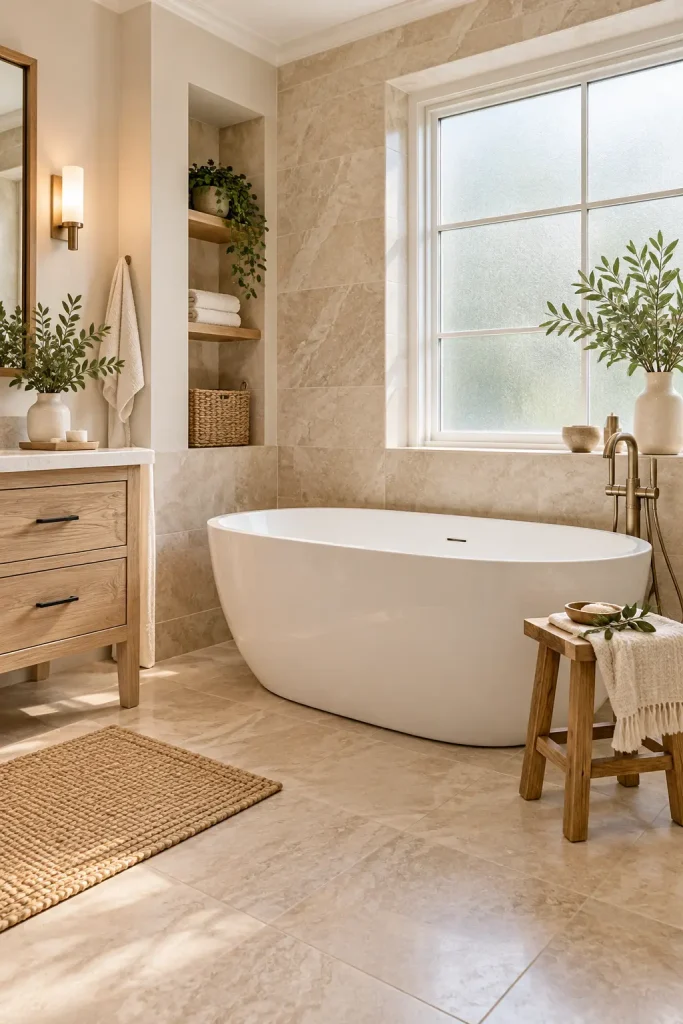
A freestanding bathtub can give a larger bathroom the relaxed atmosphere of a private retreat. Its sculptural shape creates a natural focal point, particularly when positioned against a simple tiled wall or near a window.
Keep the surrounding decor restrained. A small bath tray, a wooden stool, and a neatly folded towel provide practical details without crowding the tub.
Before committing to a freestanding model, consider the available floor area, plumbing requirements, and cleaning access around the tub. In a smaller bathroom, a well-designed alcove bathtub may offer a more practical use of space.
13. Use Wallpaper to Add Pattern and Personality
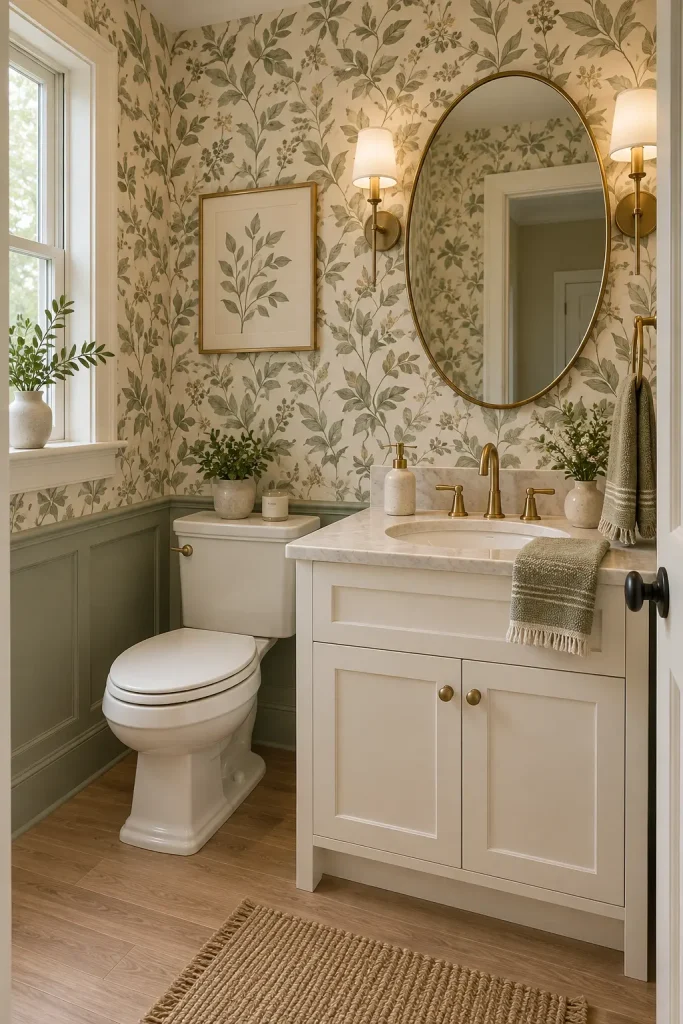
Wallpaper can introduce a layer of character that tile and paint alone sometimes lack. Botanical prints, delicate stripes, and small-scale geometric patterns work particularly well in powder rooms, where a little decoration can make a memorable impression.
Balance patterned walls with a simple mirror, understated hardware, and a restrained vanity color. If the wallpaper is the main attraction, there is usually no need for a busy floor pattern as well.
For bathrooms with showers or frequent splashing, choose a product specifically suitable for the moisture conditions and follow the manufacturer’s installation requirements. A powder room without a shower may offer more flexibility.
14. Make the Bathroom Moody With Deep, Rich Colors
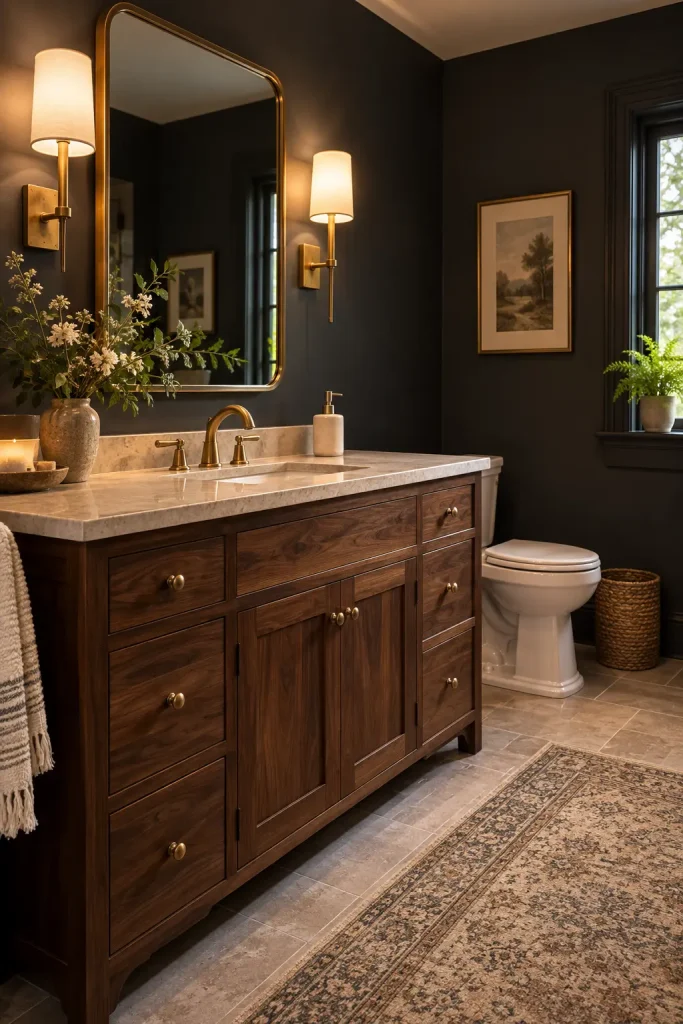
Dark bathrooms can feel intimate and dramatic when their finishes are carefully balanced. Charcoal, deep olive, midnight blue, and chocolate brown all provide alternatives to the usual pale palette.
A walnut vanity and warm metal hardware soften the darker surfaces, while mirrors and layered lighting help maintain usability. This look is particularly effective in powder rooms and bathrooms with sufficient lighting.
For a more accessible update, paint the walls a deep color and retain the existing vanity and floor. For a more involved renovation, coordinate the wall finish with darker tile and a complementary stone countertop.
Quick tip: Test dark paint under both daylight and your actual bathroom lighting. The same color can look noticeably different throughout the day.
15. Install a Double Vanity for a Shared Bathroom
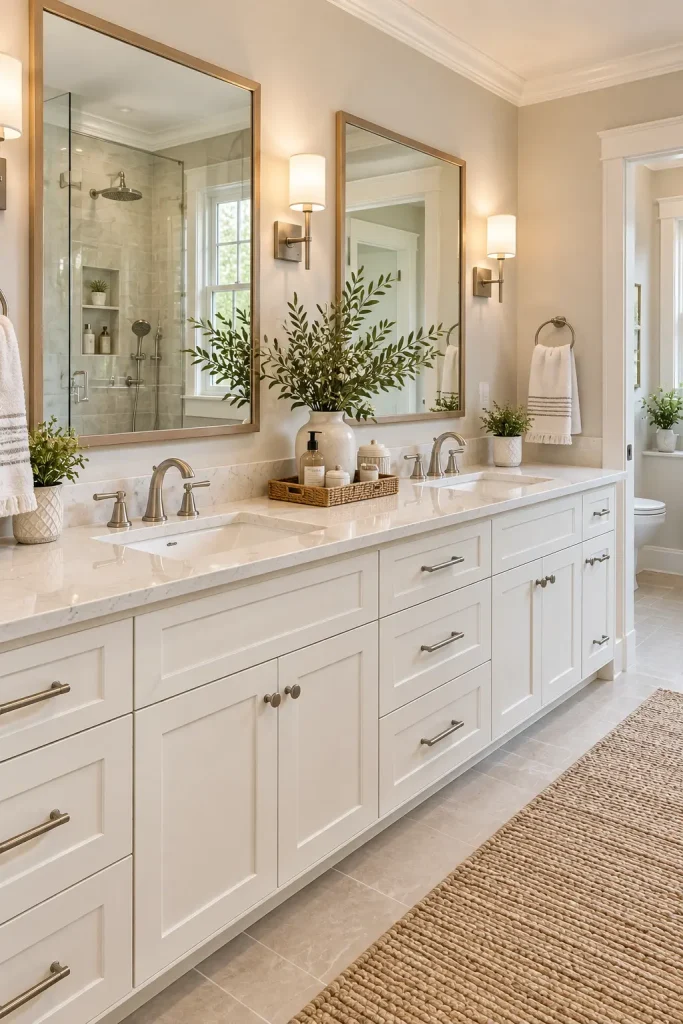
A double vanity can make busy mornings easier when two people share a bathroom. Separate sinks provide individual grooming areas, while drawers beneath each basin help keep personal items organized.
For a cohesive appearance, use matching mirrors and fixtures, then add small differences through towels or countertop accessories. A long countertop creates a continuous surface, but it is important to leave enough usable space around each sink.
A double vanity isn’t automatically the best choice for every bathroom. In a narrow room, a single sink with generous counter space and better storage may be more comfortable than squeezing in two basins.
16. Use Vertical Tile to Draw the Eye Upward
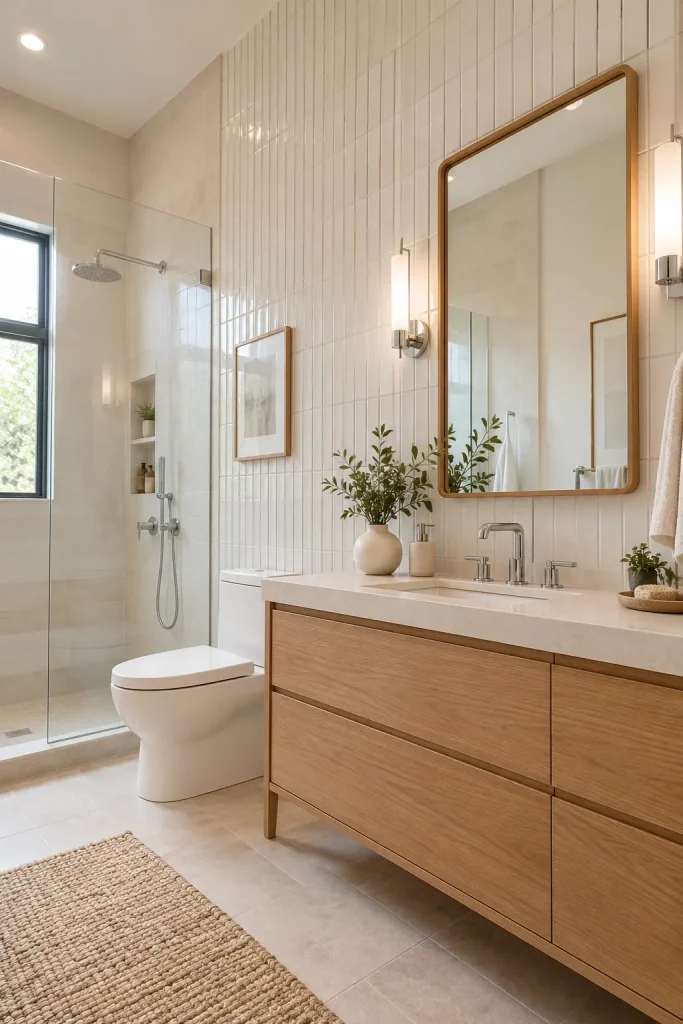
Vertical tile layouts can emphasize height and give a bathroom a more contemporary character. Tall rectangular tiles installed in a vertical stack create a distinct rhythm, particularly on a shower wall or behind the vanity.
Choose a simple tile color if you want the layout itself to stand out. Warm white, pale gray, and muted green are versatile choices that pair easily with wood and stone.
The effect depends on the tile proportions and installation. Vertical placement can draw attention upward, but it doesn’t physically increase the ceiling height or replace good lighting and sensible storage.
17. Create a Timeless Bathroom With Marble-Look Finishes
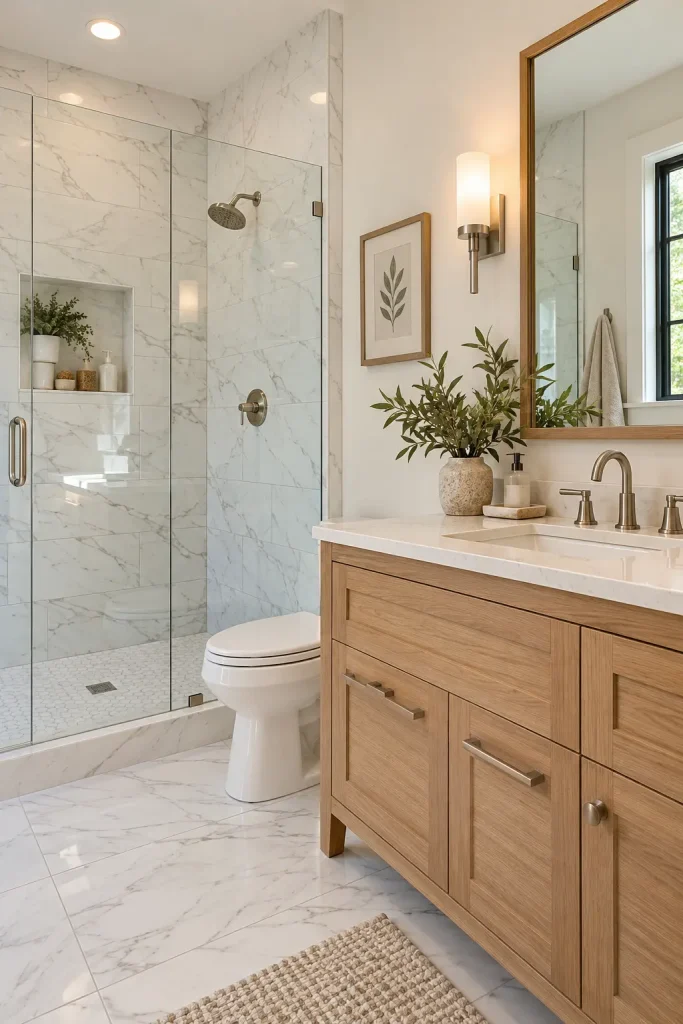
Marble brings natural variation and a refined appearance to bathroom interiors. If natural stone isn’t the right choice for your budget or maintenance preferences, marble-look porcelain can offer a related visual effect with different care requirements.
Use veined tile on the shower walls or around the vanity, then balance it with plain surfaces so the pattern doesn’t overwhelm the room. Light oak cabinetry introduces warmth, while brushed-nickel fixtures keep the palette understated.
If you select natural marble, research the care requirements of the specific stone and finish. Porcelain and natural stone are not interchangeable in durability, maintenance, or surface character.
18. Add Open Shelving for Attractive Everyday Storage
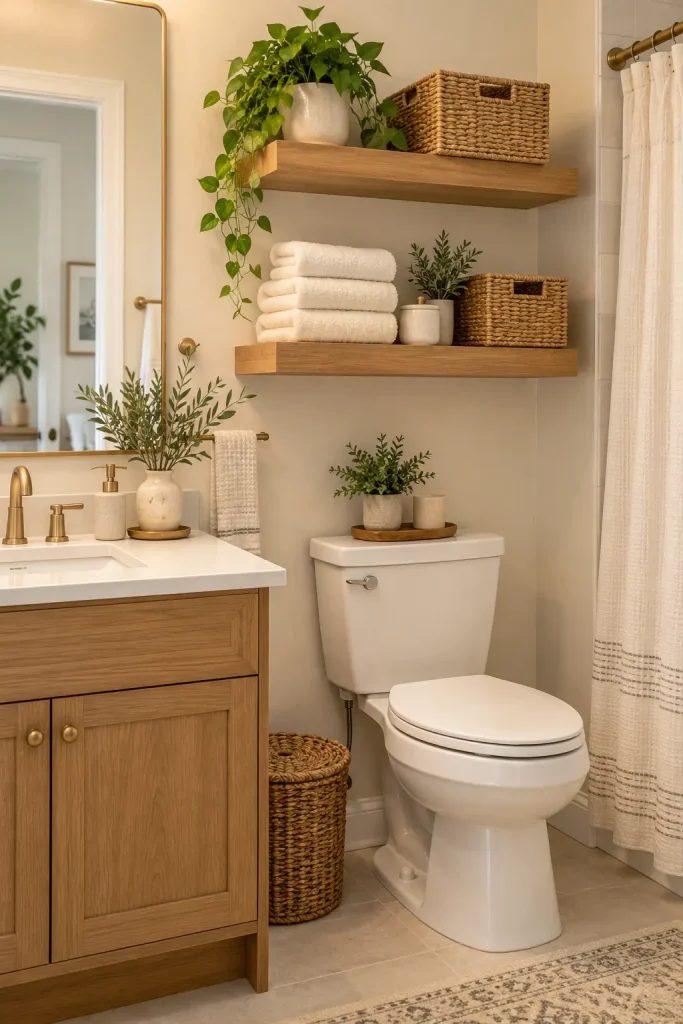
Open shelves can provide extra storage when a bathroom has limited cabinet space. A pair of oak shelves above the toilet or beside the vanity creates a place for folded towels, small baskets, and everyday essentials.
Keep frequently used items accessible and group smaller products in containers. The arrangement should look tidy, but it must also be practical enough to maintain during a busy week.
Open shelving works best for items that tolerate the room’s moisture conditions. Store sensitive products appropriately, and avoid positioning shelves where they obstruct movement or interfere with fixtures.
Simple styling formula:
- One stack of folded towels.
- One or two woven baskets for small essentials.
- A small decorative object or plant, where suitable.
19. Upgrade the Lighting Around the Mirror
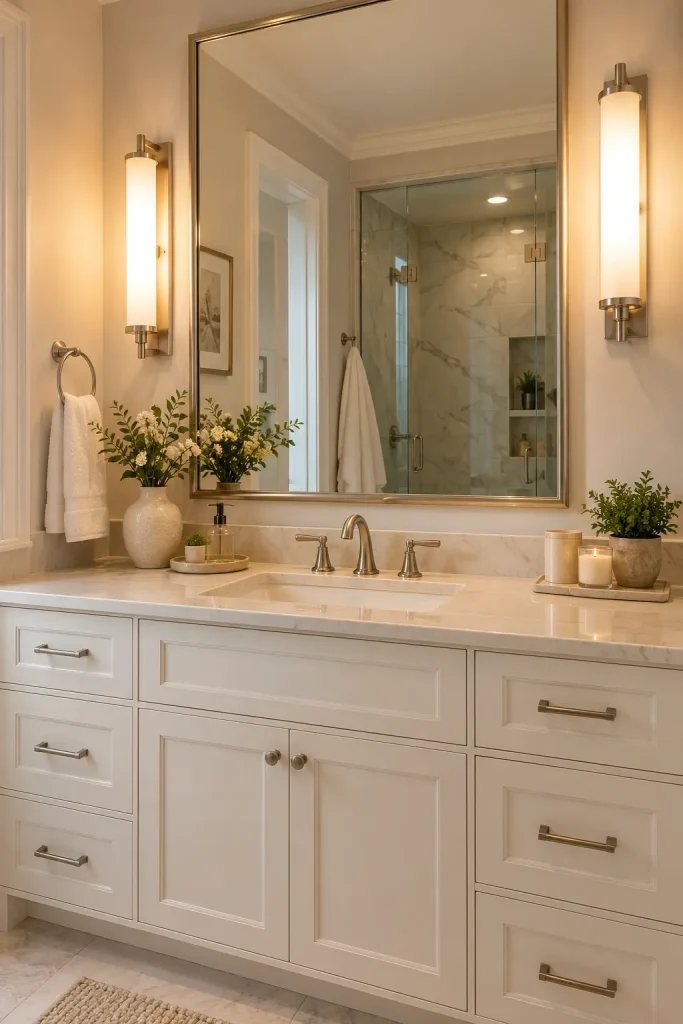
Good bathroom lighting needs to do more than illuminate the ceiling. Properly positioned lights near the mirror help reduce harsh shadows during shaving, makeup application, and other grooming routines.
Vertical sconces on either side of the mirror can provide balanced facial lighting, while an overhead fixture supplies general illumination. In a compact bathroom, a well-chosen illuminated mirror may be a space-saving alternative.
Choose fixtures rated for the bathroom location and have electrical work completed according to applicable local requirements. Warm, flattering light can create a relaxing mood, but task lighting should still provide enough clarity for daily use.
20. Make a Narrow Bathroom More Functional
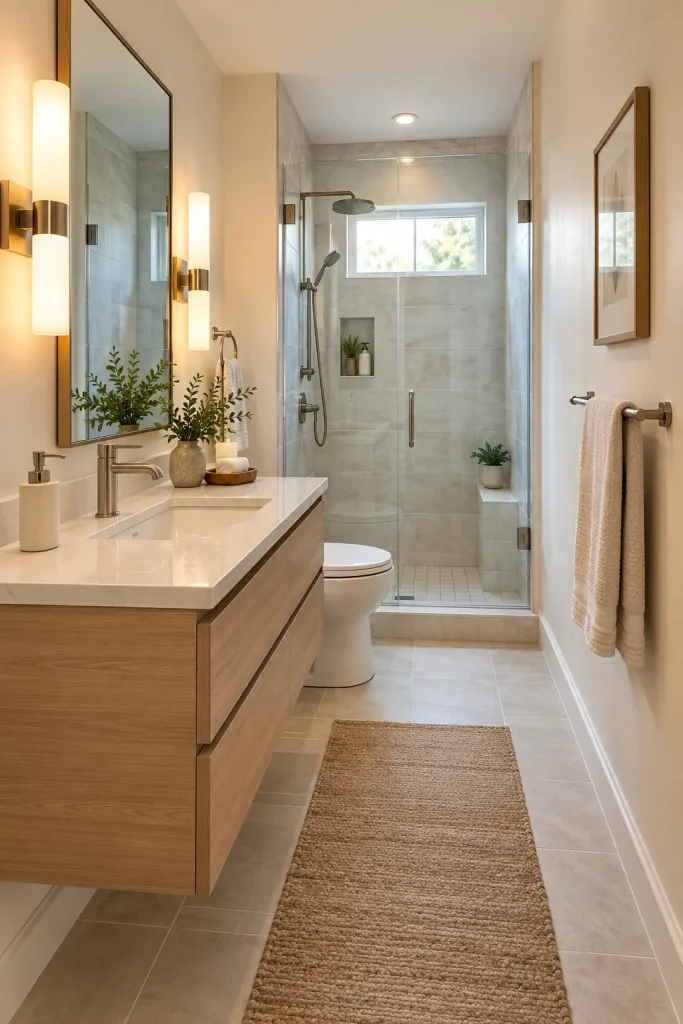
A narrow bathroom benefits from a layout that protects the walking path and keeps bulky elements to a minimum. A slim vanity, a large mirror, and a clear glass shower enclosure help reduce visual interruptions.
Choose storage that uses wall space rather than projecting too far into the room. Recessed medicine cabinets and shallow shelves can hold everyday essentials without creating unnecessary obstacles.
Before changing fixtures, map the door swing, toilet clearance, shower entrance, and plumbing locations. A beautiful arrangement should allow people to move comfortably through the space.
Common mistake: Choosing a deep vanity that leaves too little room to pass. A shallower cabinet may provide a better balance between storage and circulation.
21. Add a Natural Stone Countertop for Subtle Elegance
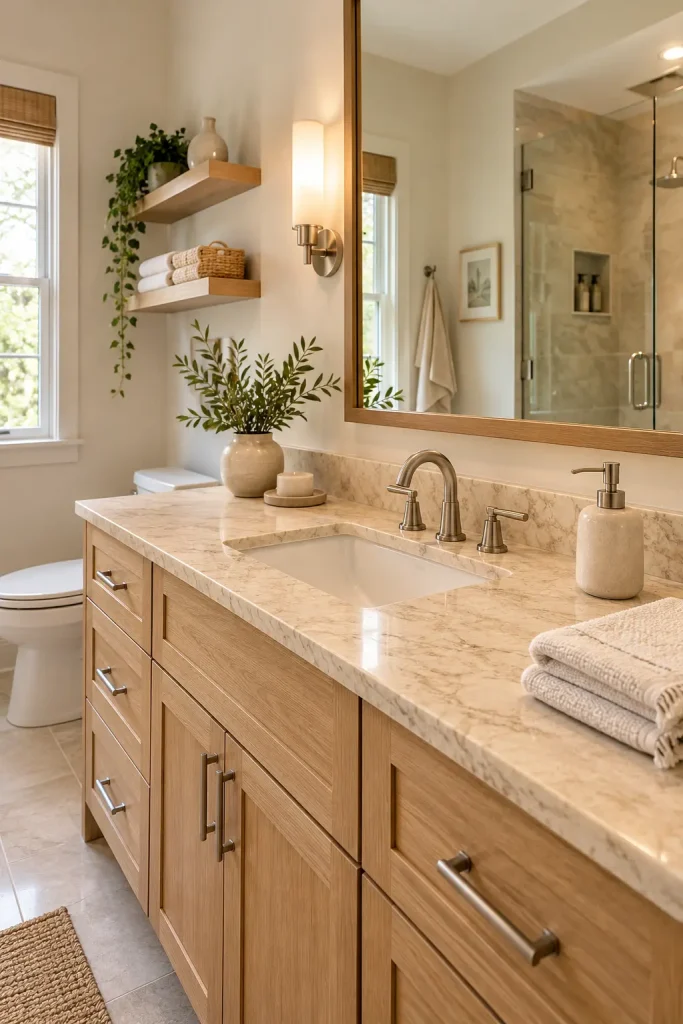
A natural stone countertop adds variation and texture that can make a bathroom feel more thoughtfully designed. Travertine, marble, and other natural stones each have distinctive patterns, tones, and maintenance needs, so the best choice depends on your preferred appearance and daily routine.
A beige or softly veined countertop works particularly well with oak cabinetry and warm-white walls. Keep the backsplash and accessories simple enough to let the stone remain the main feature.
If you’re working with a smaller budget, a stone-look quartz or porcelain surface can introduce a similar tonal effect without pretending to have the same natural character.
22. Introduce Vintage Details for Timeless Character
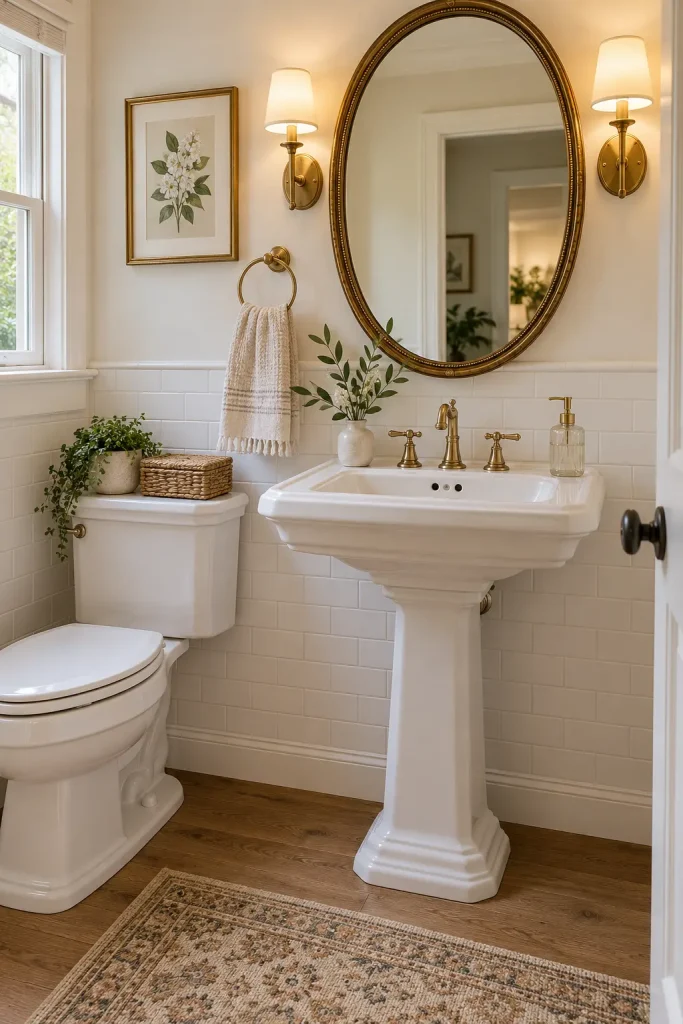
Vintage-inspired details can give a bathroom character without requiring an entire period-style renovation. An oval mirror with a decorative frame, traditional faucets, classic wall tile, or a pedestal sink can introduce an old-fashioned charm that still feels appropriate in a modern home.
For a balanced result, mix one or two traditional elements with simpler contemporary finishes. For example, a vintage-style mirror can sit above a clean-lined vanity, while traditional wall sconces complement straightforward white tile.
In smaller powder rooms, these details can be particularly effective because the limited space makes each finish and fixture more noticeable.
23. Bring in Texture With Towels, Rugs, and Accessories
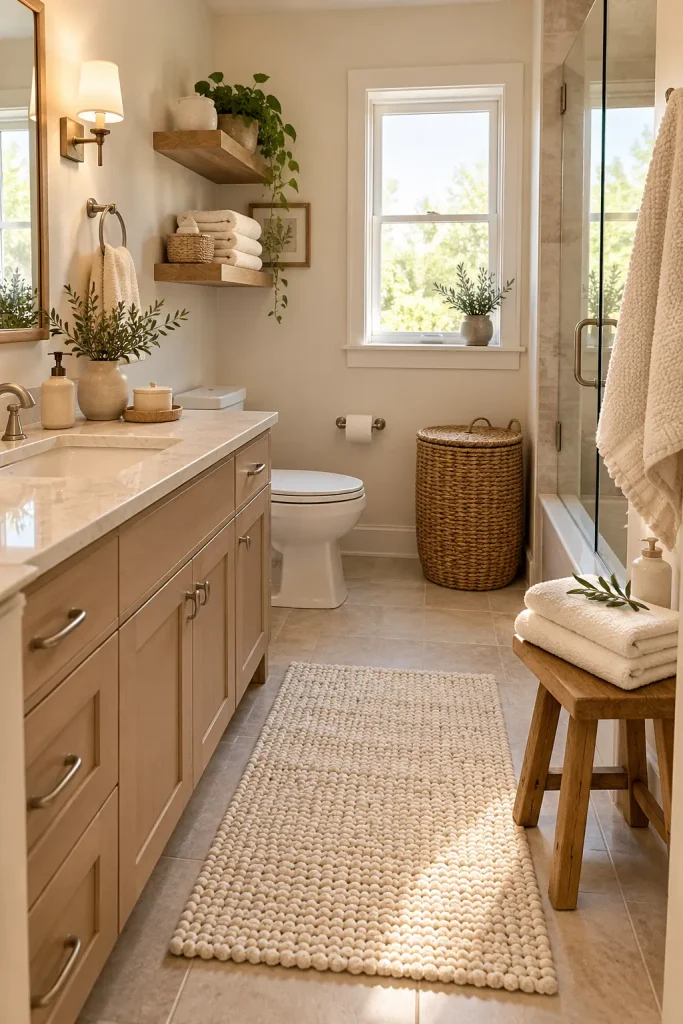
You don’t need to renovate your bathroom to make it feel more inviting. Soft textiles and carefully selected accessories can bring warmth to an otherwise plain space, especially when the main fixtures are already in good condition.
Start with a coordinated set of towels, a comfortable bath mat, and a woven basket for laundry or spare linens. A small wooden stool can provide a convenient place for folded towels or bath essentials.
For a cohesive palette, combine two or three related colors, such as ivory, oatmeal, and muted sage. Introduce texture through cotton, woven fibers, wood, and ceramics rather than adding lots of competing patterns.
An easy weekend refresh:
- Clear the vanity and remove unnecessary accessories.
- Replace worn towels and the bath mat with coordinated textiles.
- Add one practical storage basket and one simple decorative accent.
This is an especially useful approach for renters who want a more polished bathroom without making permanent changes.
24. Design a Compact Powder Room With Bold Color
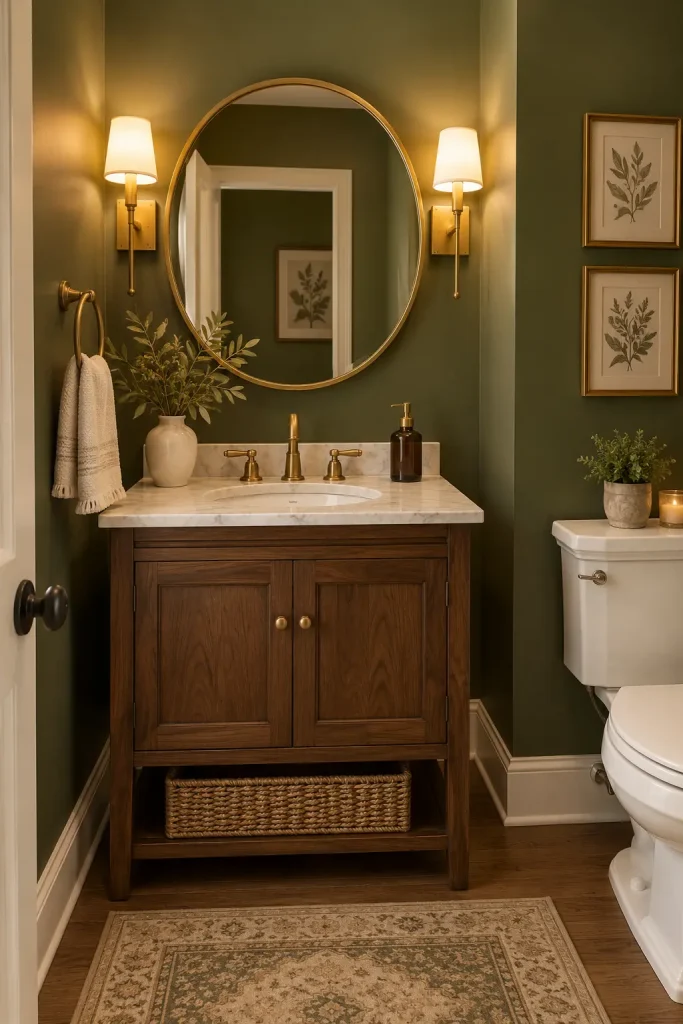
A powder room is a good place to experiment with a stronger color because it doesn’t need to accommodate the same range of activities as a full bathroom. Deep olive, burgundy, navy, and forest green can all create a distinctive atmosphere in a small space.
Pair a saturated wall color with a compact vanity, a well-proportioned mirror, and warm lighting. A little contrast from brass or polished chrome helps the fixtures stand out against the deeper background.
If you’re unsure about painting every wall, start with a single accent wall or use colorful wallpaper above simple wainscoting. Renters can achieve a related effect through removable artwork, towels, and accessories, subject to the limitations of their space.
25. Create a Relaxing Bathroom With Layered Lighting and Natural Materials
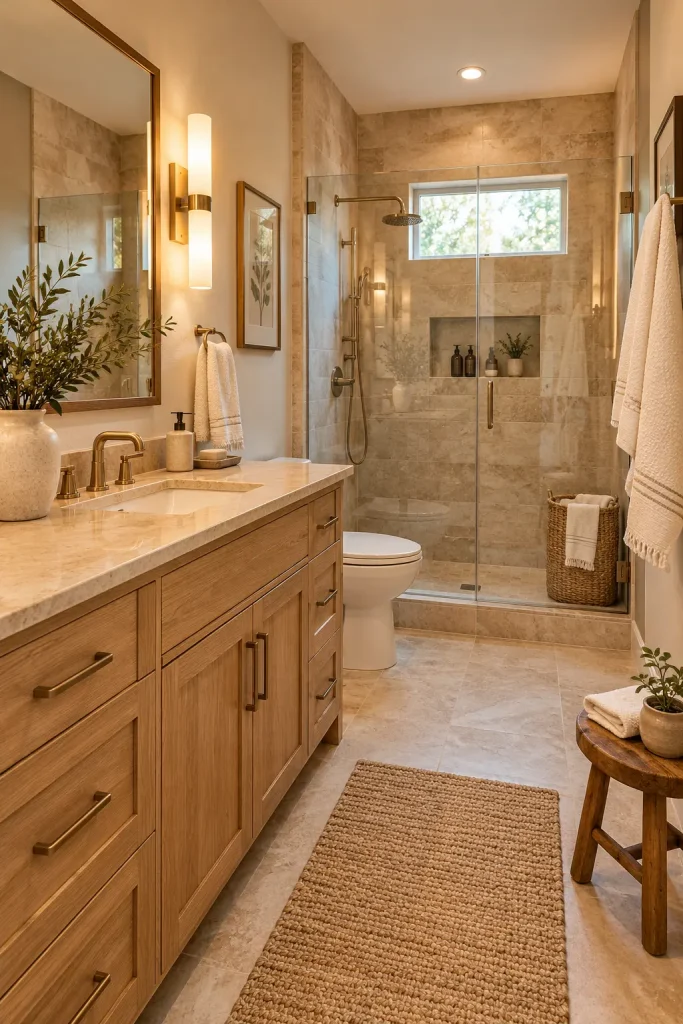
The most inviting bathrooms often combine several small design decisions rather than relying on one dramatic feature. Natural wood, stone-inspired finishes, soft textiles, and thoughtfully layered lighting can work together to create a room that feels calm and comfortable.
Start with the practical foundation: a functional vanity, easy-to-clean surfaces, adequate ventilation, and sufficient light around the mirror. Then introduce softer elements such as warm-toned towels, a wooden stool, and simple ceramic accessories.
For evening relaxation, dimmable ambient lighting can soften the atmosphere, while dedicated task lighting remains useful for grooming. Keep the countertop relatively clear so the room feels restful rather than busy.
You can recreate this approach without replacing every fixture. Coordinating the colors of existing surfaces, improving the lighting, and removing visual clutter may be enough to create a noticeable difference.