

18 Small Bedroom Decorating Ideas That Combine Style and Function
Decorating a small bedroom is all about making thoughtful choices. The right furniture, colors, lighting, and storage solutions can make even a compact room feel comfortable, organized, and full of personality. Instead of filling every corner with furniture or relying entirely on light colors, focus on pieces that serve a purpose while contributing to the overall design.
These small bedroom decorating ideas combine practical space-saving solutions with attractive details, from floating nightstands and under-bed storage to layered bedding, statement lighting, and carefully chosen artwork. Whether you’re furnishing a small apartment, updating a guest room, or refreshing a bedroom in an older home, you can create a polished space without sacrificing everyday comfort.
The key is to work with the room’s proportions, keep essential walking paths clear, and choose decor that makes the space feel intentional rather than crowded.
1. Choose a Low-Profile Bed to Open Up the Room
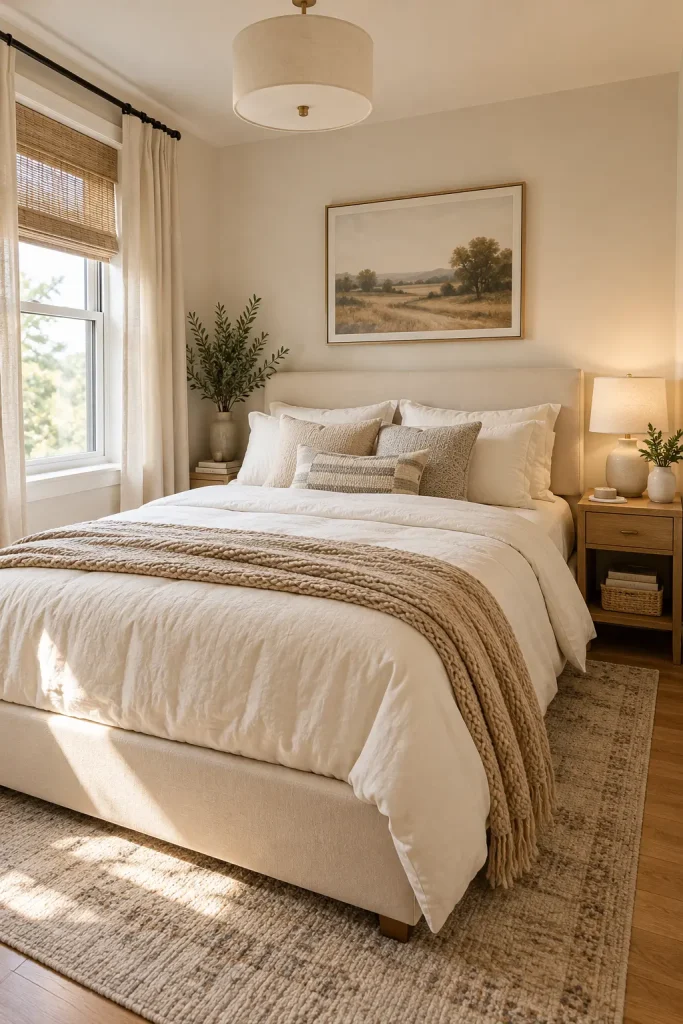
A bed usually occupies the largest area in a small bedroom, so its shape and height have a noticeable effect on the room. A low-profile bed with a simple frame can make the ceiling feel taller and create a more open visual line across the space.
Choose a design with a slim headboard, understated legs, and upholstery or wood that complements your existing finishes. Cream, warm beige, natural oak, and muted taupe work particularly well when you want a calm, flexible foundation.
Keep the surrounding furniture proportionate. A narrow nightstand and a modest bedside lamp will help the bed remain the focal point without making the room feel overloaded.
Practical tip: Before buying a new frame, measure the mattress, headboard, and available walking space. A visually light bed is useful only if you can move comfortably around it.
2. Install Floating Nightstands to Free Up Floor Space
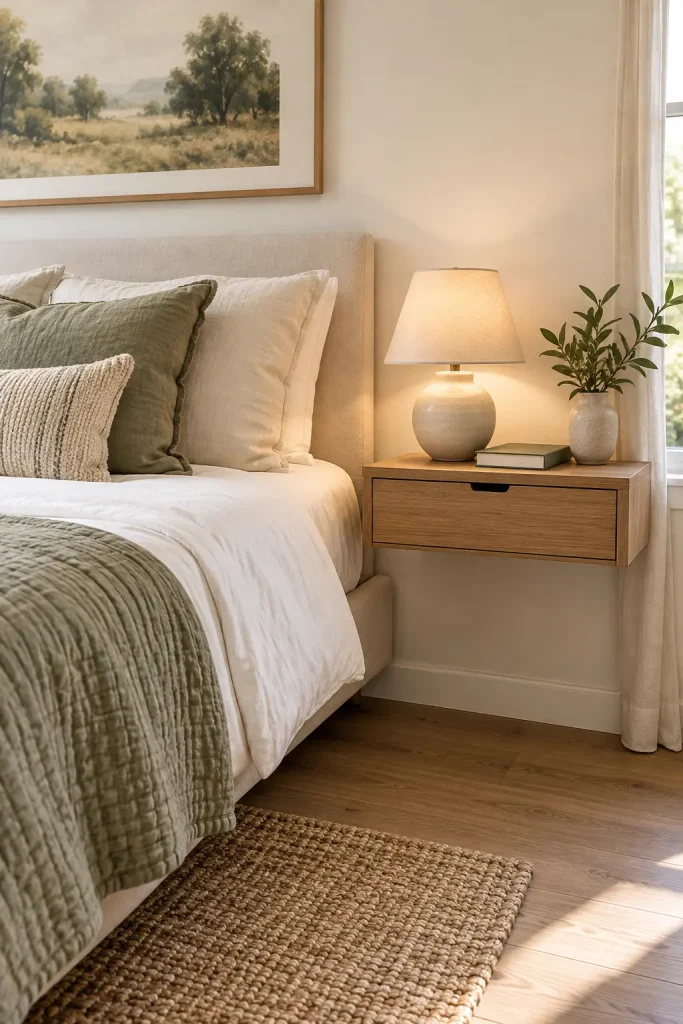
Traditional bedside tables can take up valuable floor space, particularly when a bed sits close to a wall. Floating nightstands offer a cleaner alternative by keeping the floor visible beneath the furniture.
A simple wall-mounted oak shelf can hold a phone, a book, and a small bedside light. If you need more storage, select a floating drawer unit instead of an open shelf. The closed drawer helps conceal everyday essentials without adding a bulky furniture footprint.
For a balanced appearance, position the nightstand at a comfortable height relative to the mattress. If you install matching units on both sides, keep their visual weight similar, even if the available space requires slightly different sizes.
3. Use Under-Bed Storage for Seasonal Items
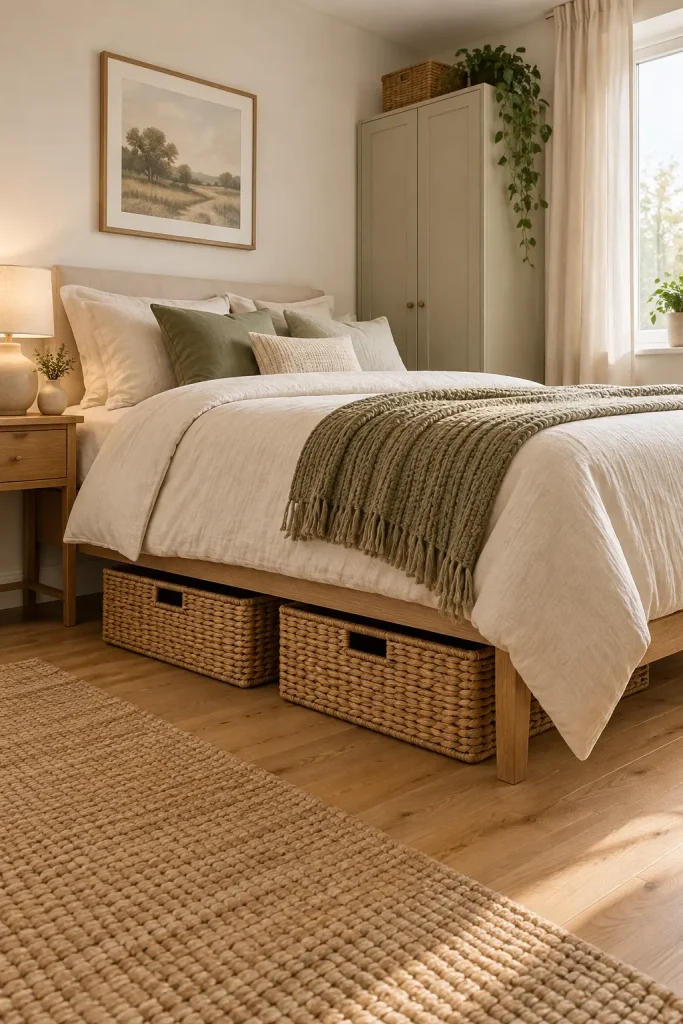
The area beneath the bed is useful storage space that often goes unnoticed. It can hold spare bedding, seasonal clothing, extra pillows, and other items you don’t need every day.
Choose storage containers that fit beneath your particular bed frame. Matching fabric boxes create a softer appearance, while lidded plastic containers can be practical for items that need extra protection from dust. Woven baskets also work well when the storage is visible and you want the room to retain a decorative touch.
- Store frequently used items near the front for easy access.
- Label opaque containers so you can find things quickly.
- Keep a little clearance around the containers to make cleaning easier.
- Avoid overfilling the space until retrieving items becomes difficult.
If you are purchasing a new bed, a frame with built-in drawers may offer a neater solution than several separate containers.
4. Decorate With a Soft, Coordinated Color Palette
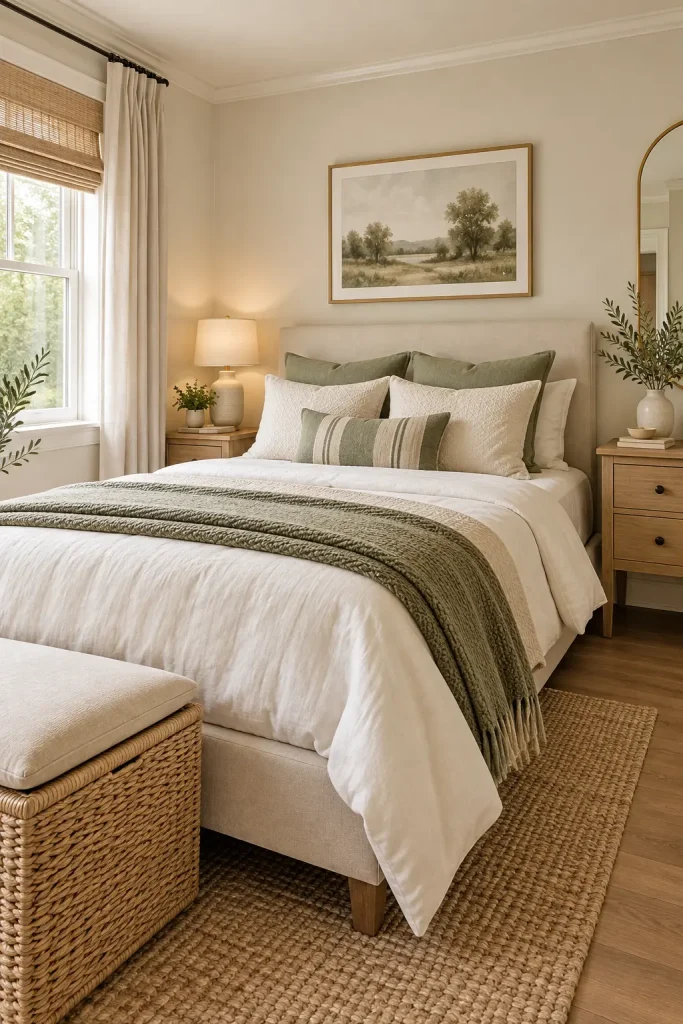
A coordinated palette helps a small bedroom feel visually connected. Instead of introducing a different color on every wall and textile, choose two or three main shades and repeat them throughout the room.
Warm white walls, oatmeal bedding, pale wood, and muted green accents create a relaxed look without feeling stark. If you prefer more contrast, consider dusty blue with warm ivory or soft terracotta with sand-colored textiles.
You don’t have to eliminate dark colors. A deep green cushion, charcoal bedside lamp, or navy throw can give the room depth when balanced with lighter surrounding surfaces.
A simple palette formula:
- Base: Warm white, ivory, or pale greige.
- Supporting color: Natural wood, muted green, or dusty blue.
- Accent: A darker shade used selectively in cushions, artwork, or lighting.
The aim is consistency, not uniformity. Varying textures keeps a coordinated bedroom from looking flat.
5. Add a Full-Length Mirror to Reflect Light
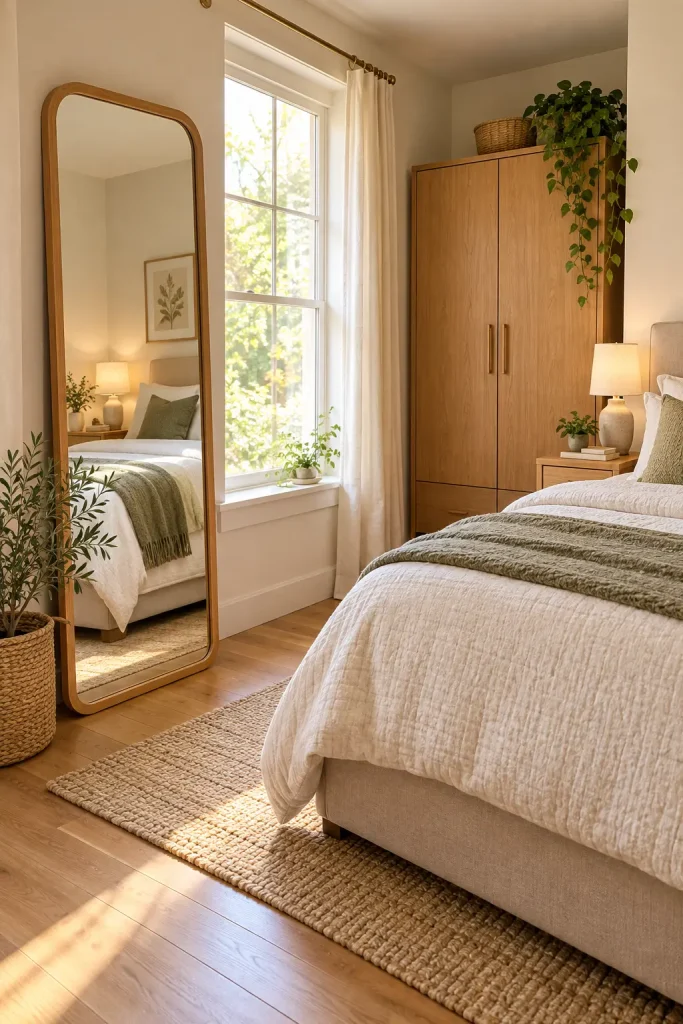
A full-length mirror can make a small bedroom feel brighter by reflecting daylight and giving the eye another view of the room. It also provides a practical place to check an outfit without taking up the wall space needed for a separate dressing area.
A slim floor mirror works well beside a wardrobe or near a window, provided it doesn’t block a walkway. In tighter rooms, a wall-mounted mirror can offer a similar effect without occupying floor space.
Choose a frame that complements the rest of the bedroom. Natural wood adds warmth, a thin black frame creates definition, and a frameless mirror suits a more understated look.
Quick tip: Position the mirror to reflect a window, an attractive wall, or a light-filled part of the room. Reflecting a cluttered corner may make the space feel busier rather than more open.
6. Hang Wall-Mounted Lights Beside the Bed
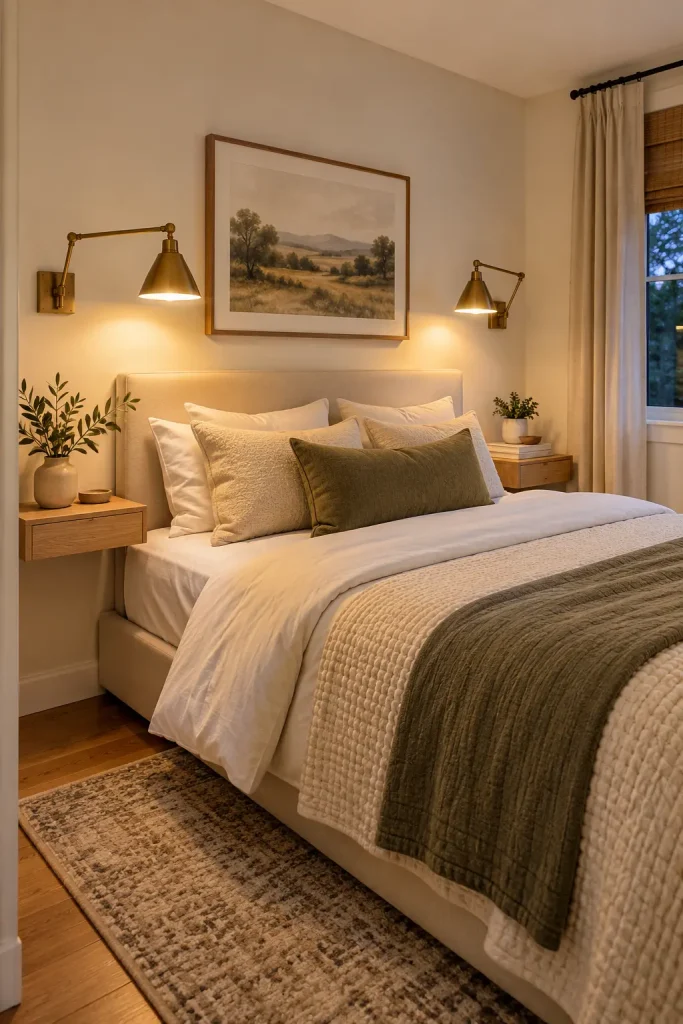
Bedside lamps are useful, but their bases can crowd a narrow nightstand. Wall-mounted sconces or swing-arm lights free up that surface for books, glasses, and other essentials.
For a practical arrangement, place each light where it can illuminate the bed comfortably without shining directly into your eyes. Adjustable fixtures are particularly useful if you enjoy reading before sleep.
Consider finishes that complement your furniture, such as brushed brass, matte black, or understated white. Matching sconces create symmetry, while a single wall light can work well in a bedroom where the bed is positioned against one wall.
If you’re renting, plug-in wall lights may provide a less permanent alternative to hardwired fixtures. Keep cords neatly secured and follow the fixture manufacturer’s installation instructions.
7. Make a Narrow Bedroom Feel Wider With Horizontal Lines
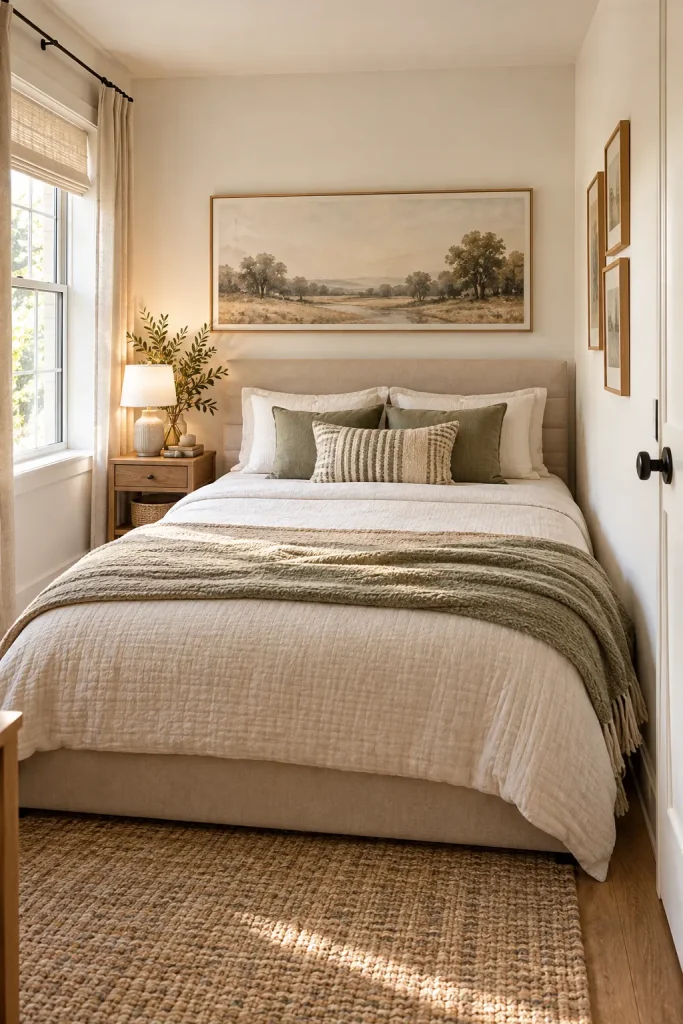
A narrow bedroom can sometimes feel more balanced when the decor emphasizes horizontal lines. A long, low headboard, a wide piece of artwork, or a streamlined floating shelf can draw the eye across the room rather than toward its narrow ends.
Keep the furniture relatively shallow and avoid filling the longest wall with numerous small decorative objects. One well-proportioned focal point usually creates a calmer result than several competing arrangements.
If you use horizontal wall molding or stripes, keep the treatment subtle. Strong, busy patterns may dominate an already compact space.
Do: Repeat one or two horizontal elements, such as a low headboard and a wide framed print.
Don’t: Add multiple bulky shelves or deep cabinets that reduce usable floor space.
8. Use a Storage Headboard for Everyday Essentials
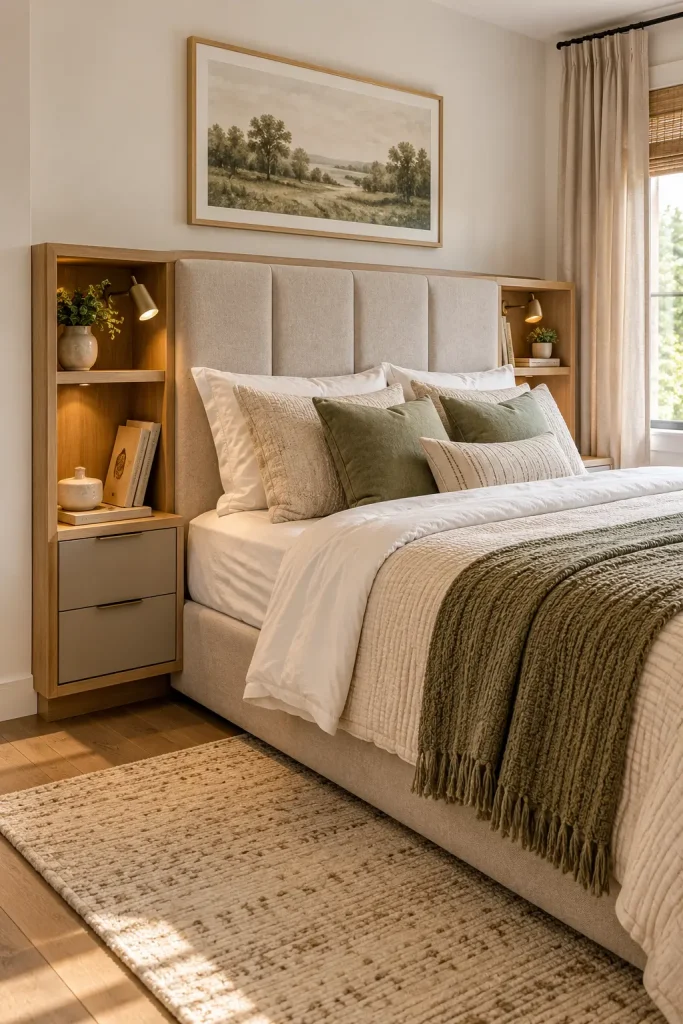
When there’s little room for bedside tables, a storage headboard can combine several functions in one compact piece. Depending on the design, it may include shallow shelves, small cubbies, concealed compartments, or a narrow ledge for everyday essentials.
Choose a model that suits the room’s proportions. Deep shelves can make a tight bed area feel cramped, so shallow compartments are often more practical. Keep frequently used items within easy reach and reserve decorative objects for just one or two sections.
If you already own a suitable headboard, a narrow ledge or a small wall-mounted shelf nearby may deliver similar convenience without replacing your furniture.
For a polished look, coordinate the storage finish with the bed frame or nearby cabinetry.
9. Choose Curtains That Emphasize Ceiling Height
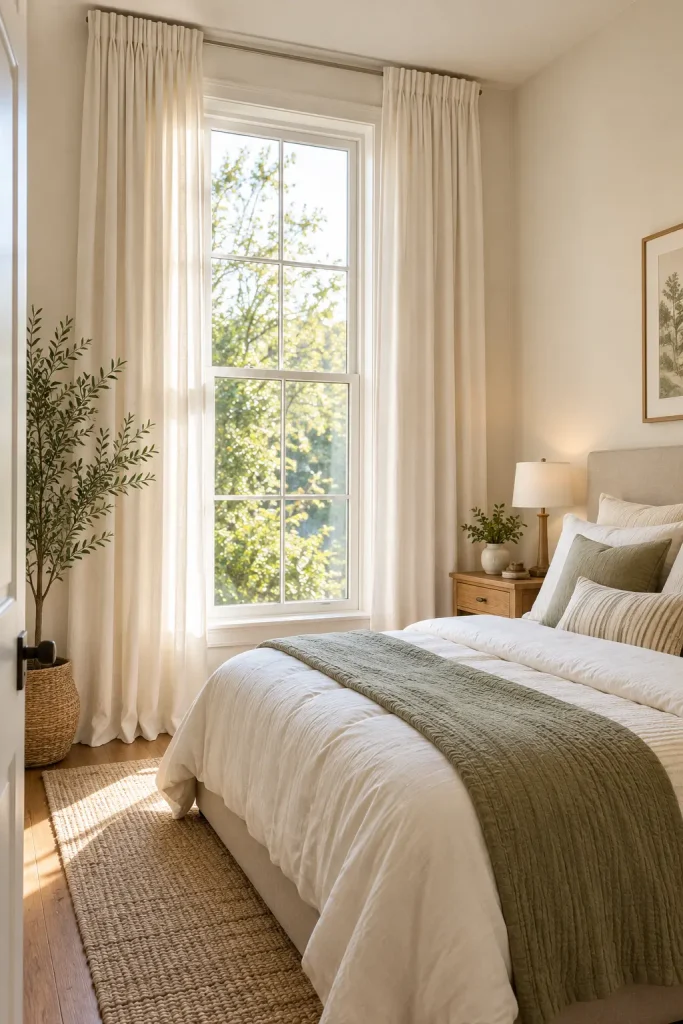
Window treatments can change how the proportions of a small bedroom are perceived. Hanging curtains closer to the ceiling and allowing them to fall toward the floor creates a longer vertical line that draws the eye upward.
Choose lightweight linen or cotton curtains if you want a soft, relaxed appearance. If you need darkness for sleeping, consider lined curtains or a separate blackout shade that fits your window and light-control needs.
The curtain rod should extend far enough beyond the window to allow the fabric to stack mostly beside the glass when open. This helps preserve as much natural light as possible.
For a coordinated finish, choose a curtain color that relates to the walls or bedding instead of introducing an unrelated, high-contrast shade.
10. Add a Compact Desk That Doubles as a Vanity
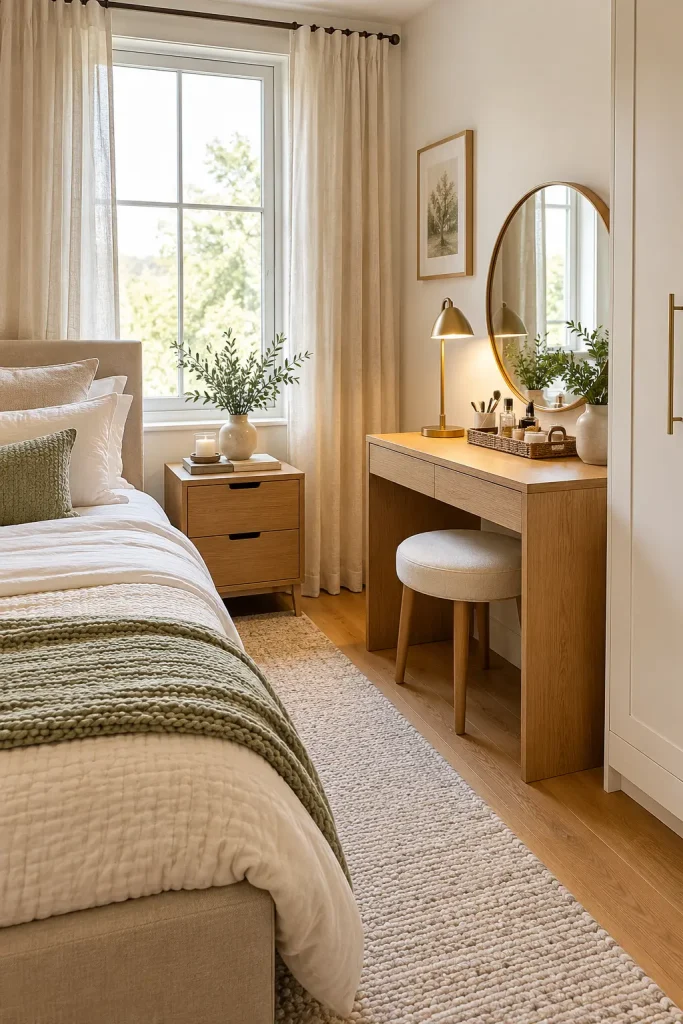
If your bedroom needs to function as both a sleeping area and a workspace, a compact desk can serve two purposes. With a mirror above it and a small stool that tucks underneath, the same surface can become a simple vanity when you’re not working.
Look for a desk with a narrow depth, a drawer for small essentials, and enough knee clearance to sit comfortably. A stool generally occupies less visual space than a bulky upholstered chair, especially when it can be pushed completely underneath the desk.
Keep the desktop flexible rather than dedicating it permanently to decorative items. A small tray can group personal-care products, while a desk organizer keeps stationery accessible during work hours.
Best for: Studio apartments, guest bedrooms, and bedrooms without a separate dressing area.
11. Create a Feature Wall Behind the Bed
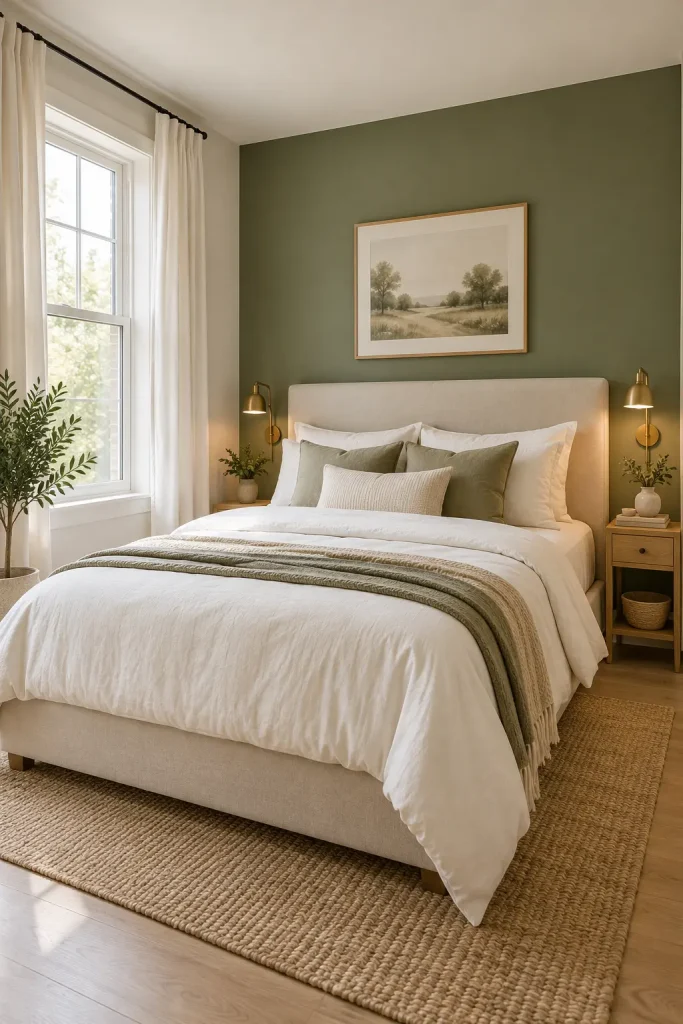
A feature wall gives a small bedroom a clear focal point without requiring extra furniture or decorative accessories. Painting the wall behind the bed is often a straightforward way to introduce color while keeping the remaining walls relatively simple.
Muted olive, dusty blue, warm clay, and deep blue-gray can all work, depending on the room’s natural light and the atmosphere you want. Pair a darker wall with lighter bedding if you prefer contrast, or use a soft tonal variation for a more understated result.
For renters, removable wallpaper or fabric-based wall decor may provide an alternative to permanent paint, depending on the wall finish and product instructions.
The most important consideration is restraint. Let the wall provide the visual interest instead of filling it with numerous competing decorations.
12. Decorate With a Large Piece of Artwork
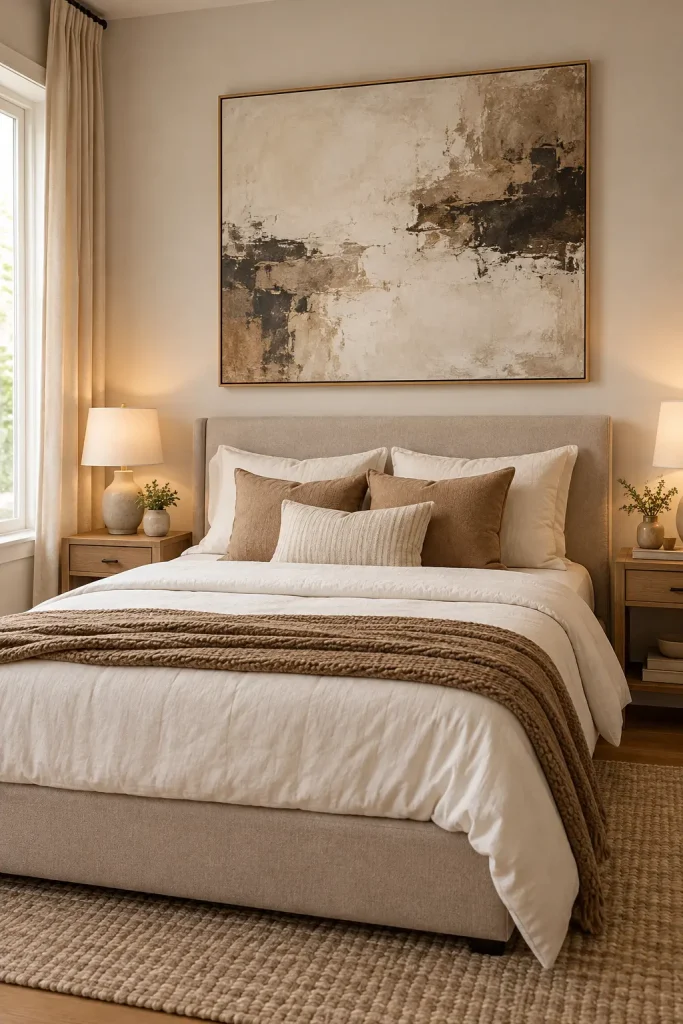
Several small pictures can make a bedroom wall feel busy, particularly when the room already contains patterned bedding, shelving, or visible storage. A single larger artwork creates a defined focal point with fewer visual elements.
Choose a print, abstract painting, landscape, or botanical composition that relates to your existing palette. A wide piece above the headboard can reinforce the bed’s horizontal shape, while a taller work can complement a narrow wall.
Pay attention to scale. Artwork should relate to the width of the bed and headboard without overwhelming them. Hang it securely and leave enough space between the frame and the headboard to keep the arrangement visually comfortable.
If original artwork is outside your budget, an affordable print in a well-chosen frame can achieve a similar sense of intentionality.
13. Layer Bedding With Different Textures
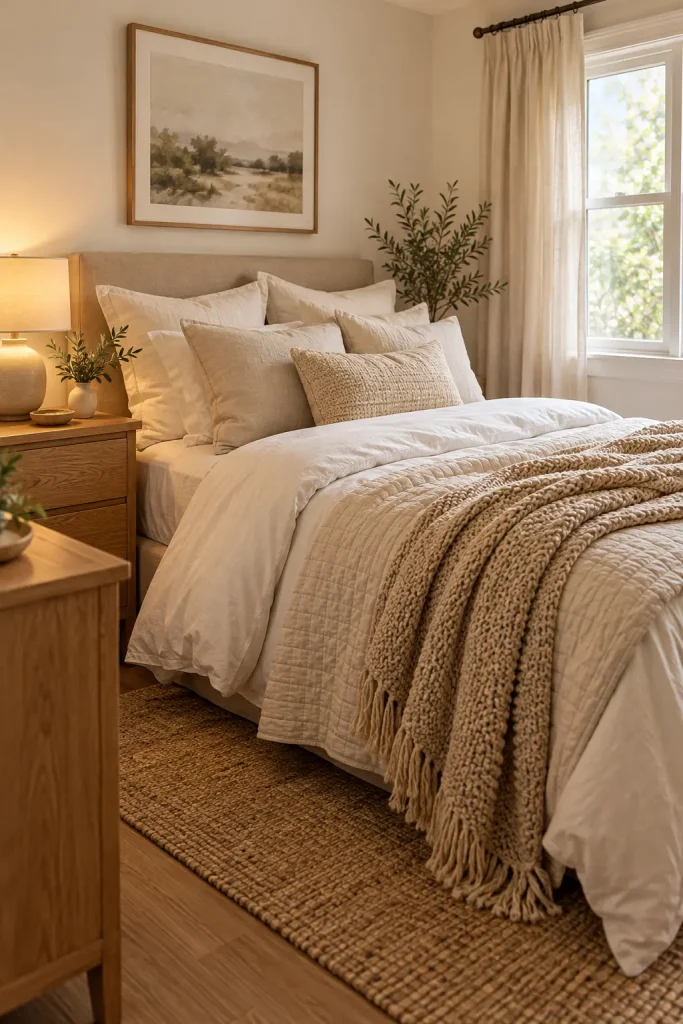
A small bedroom doesn’t need a large collection of decorative accessories to feel inviting. Layered bedding adds depth and personality while keeping the main furniture arrangement simple.
Combine materials with different textures rather than adding numerous colors. Crisp cotton sheets, a lightly quilted coverlet, linen pillowcases, and a soft knitted throw can create visual interest within a restrained palette.
A practical layering approach includes:
- A simple base duvet or comforter.
- Two comfortable sleeping pillows per sleeper, as appropriate.
- One or two decorative cushions, if desired.
- A folded throw at the foot or along one side of the bed.
Avoid excessive pillows if you need to remove them every night or have limited space to store them. The best arrangement looks inviting but remains easy to maintain.
14. Add a Small Upholstered Bench Only If Space Allows
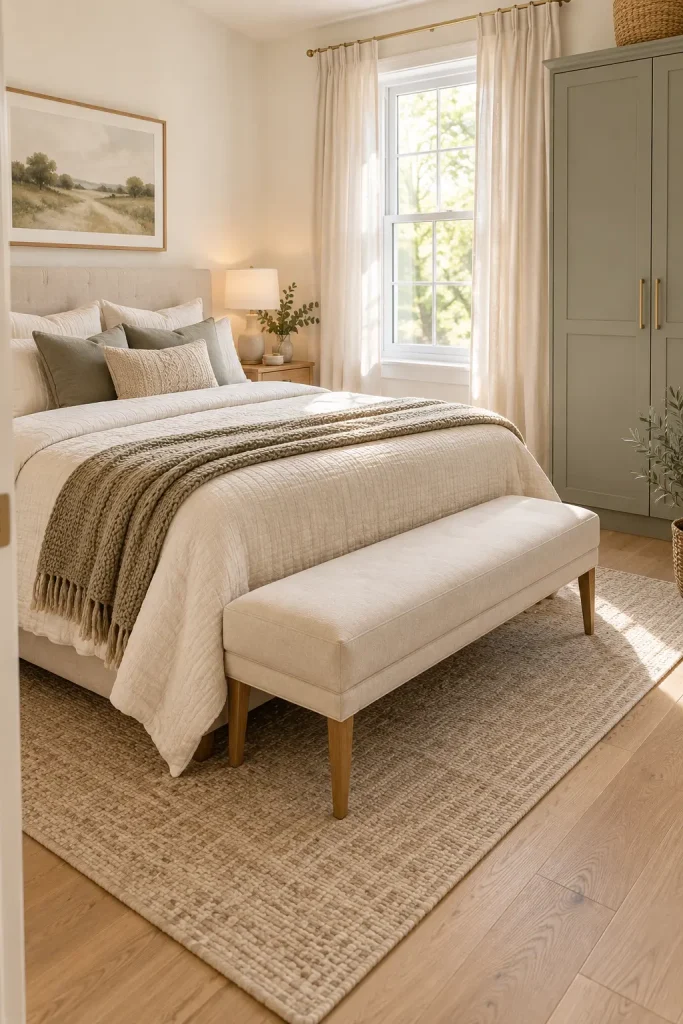
A bench at the foot of the bed can provide a place to sit while getting dressed or temporarily set down a blanket. In a small bedroom, however, its usefulness depends on whether the room can accommodate it without obstructing movement.
Choose a narrow bench with a shallow profile and legs that allow the floor to remain visible. If additional storage is important, a compact upholstered storage bench may hold spare linens or seasonal accessories.
Before purchasing one, measure the distance between the bed and the nearest wall, dresser, or doorway. If the bench leaves too little room to walk comfortably, skip it and use that floor area for circulation instead.
Alternative: A small stool beside a dressing area can provide occasional seating with a smaller footprint.
15. Use Vertical Shelving Instead of Wide Furniture
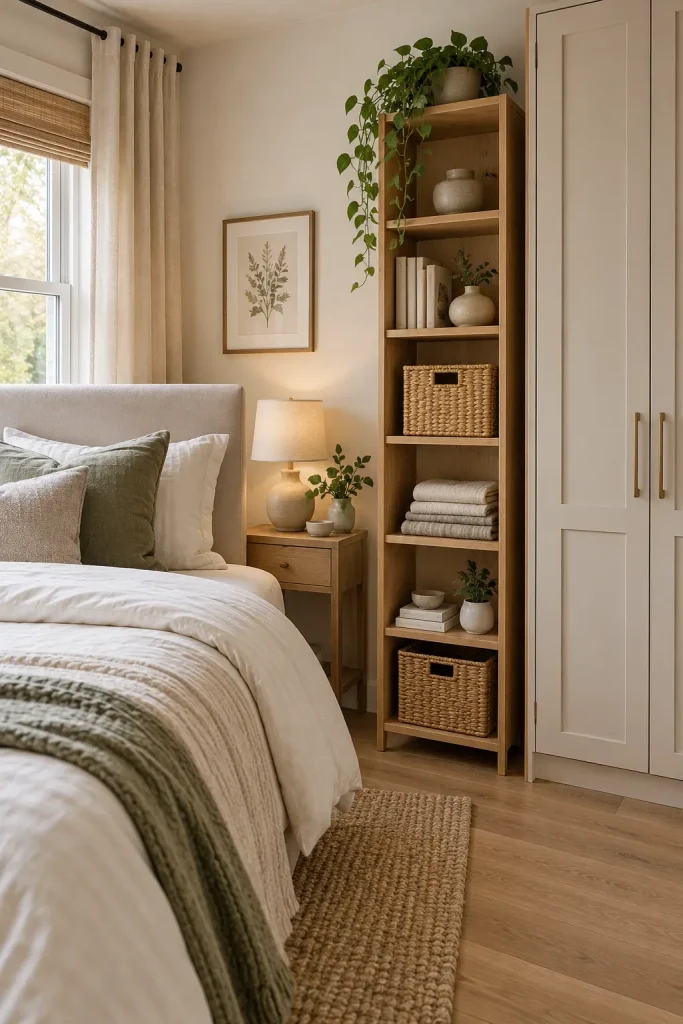
When floor space is limited, using the wall’s vertical space can provide storage without spreading furniture across the room. A tall, narrow bookcase or shelving unit can hold books, baskets, folded accessories, and a few decorative objects.
Keep the heaviest items on lower shelves and reserve upper shelves for lightweight objects you don’t need to access frequently. Matching baskets help contain small belongings and prevent the shelves from looking cluttered.
For a cleaner appearance, avoid filling every shelf. A mix of useful storage and open space creates a more balanced arrangement.
If you’re installing shelves above the bed or near a walking path, use suitable fixings and position them where they won’t create an everyday hazard.
16. Choose a Wardrobe With Sliding Doors
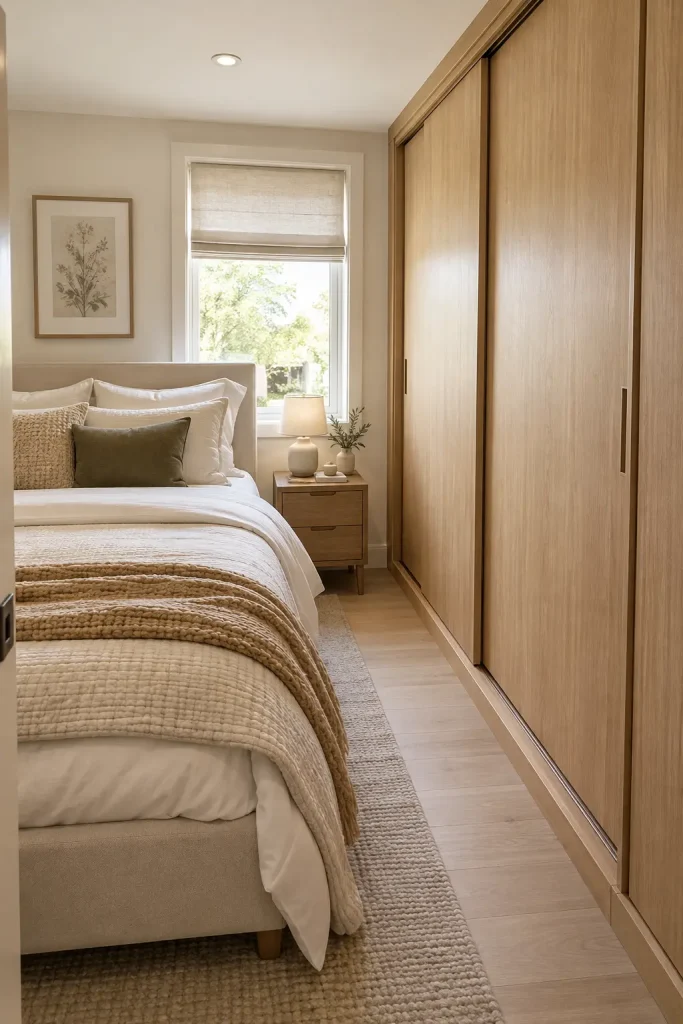
A wardrobe with hinged doors needs room to swing open, which can be inconvenient in a bedroom with a narrow walkway. Sliding doors avoid that outward swing and can make the layout easier to navigate.
Choose a wardrobe that fits the available wall without overwhelming the bed. Light oak, warm white, or a finish that closely matches the walls can help a large storage unit feel more integrated with the room.
Inside, use adjustable shelves, drawer organizers, and hanging sections suited to your clothing. A well-organized wardrobe may reduce the need for extra dressers and freestanding storage bins.
Mirrored sliding doors are another option if you want to combine clothing storage with a full-length reflection. Just consider how the mirrored surface will reflect the rest of the room.
17. Bring in Greenery With One Carefully Chosen Plant
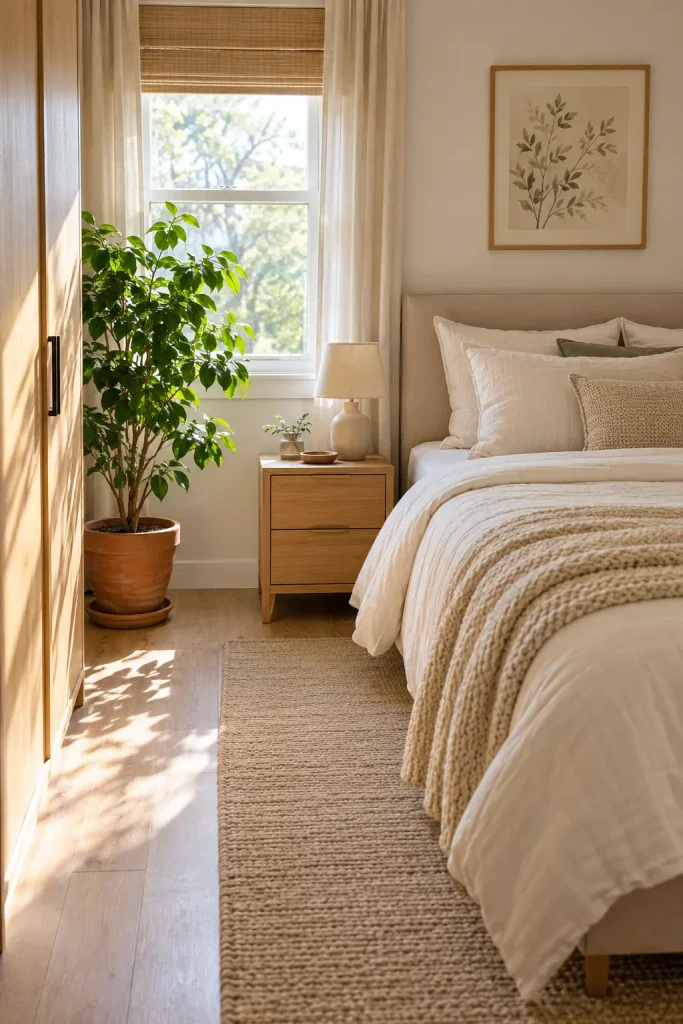
A plant can introduce natural color and soften the straight lines of bedroom furniture without requiring a collection of decorative objects. In a small room, one appropriately sized plant is often easier to accommodate than several pots scattered across shelves and floors.
Place a floor plant near a bright window if its light requirements suit the location. If floor space is limited, consider a small plant on a dresser or windowsill, provided the surface can support the pot and drainage is managed.
Choose greenery based on the light available in your room rather than appearance alone. A plant that needs bright indirect light may struggle in a dim corner, while a suitable lower-light species may be more practical.
Keep the arrangement simple: one attractive pot, healthy foliage, and enough space around the plant to water and maintain it comfortably.
18. Finish With a Simple, Clutter-Free Bedside Arrangement
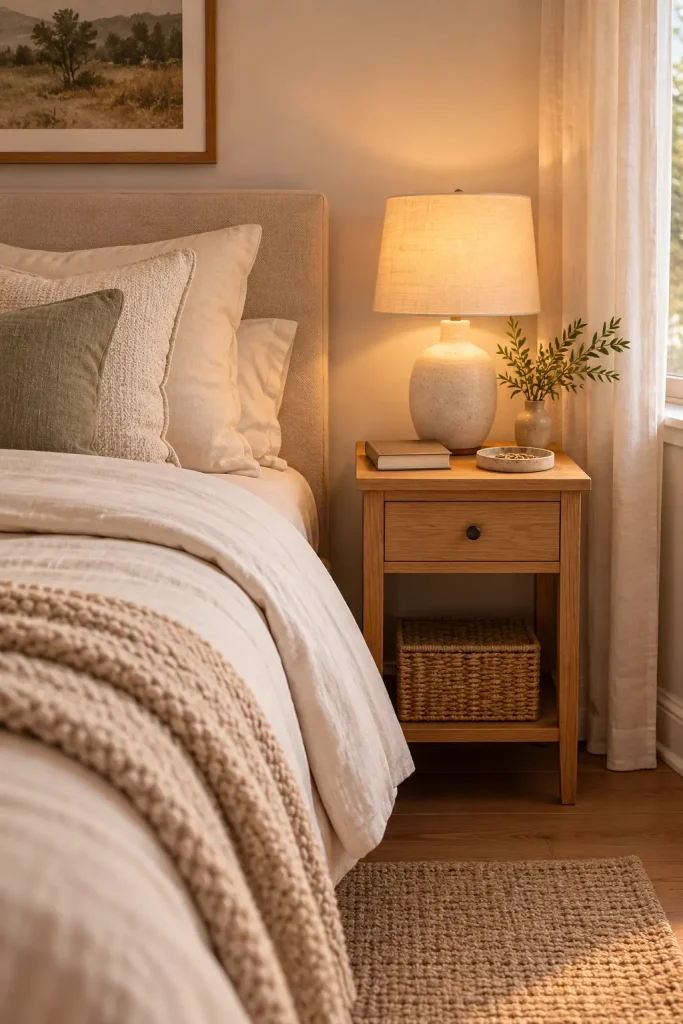
Sometimes the most effective decorating change is removing items rather than adding new ones. A crowded bedside table can make a small bedroom feel disorganized, even when the rest of the room is tidy.
Start by keeping only the things you regularly use. A compact lamp, a book, a small tray for everyday essentials, and perhaps one decorative object may be enough. Move spare chargers, paperwork, and rarely used items into a drawer or another suitable storage area.
Use a consistent material palette to connect the bedside arrangement with the rest of the bedroom. A natural-oak table, ceramic lamp, and soft linen bedding create a cohesive look without requiring matching furniture sets.
A quick bedside refresh:
- Remove everything from the nightstand.
- Return only the items you need regularly.
- Group small essentials on a tray.
- Keep the remaining surface open and easy to clean.
The result is a bedroom that feels more intentional and remains practical for everyday life.