
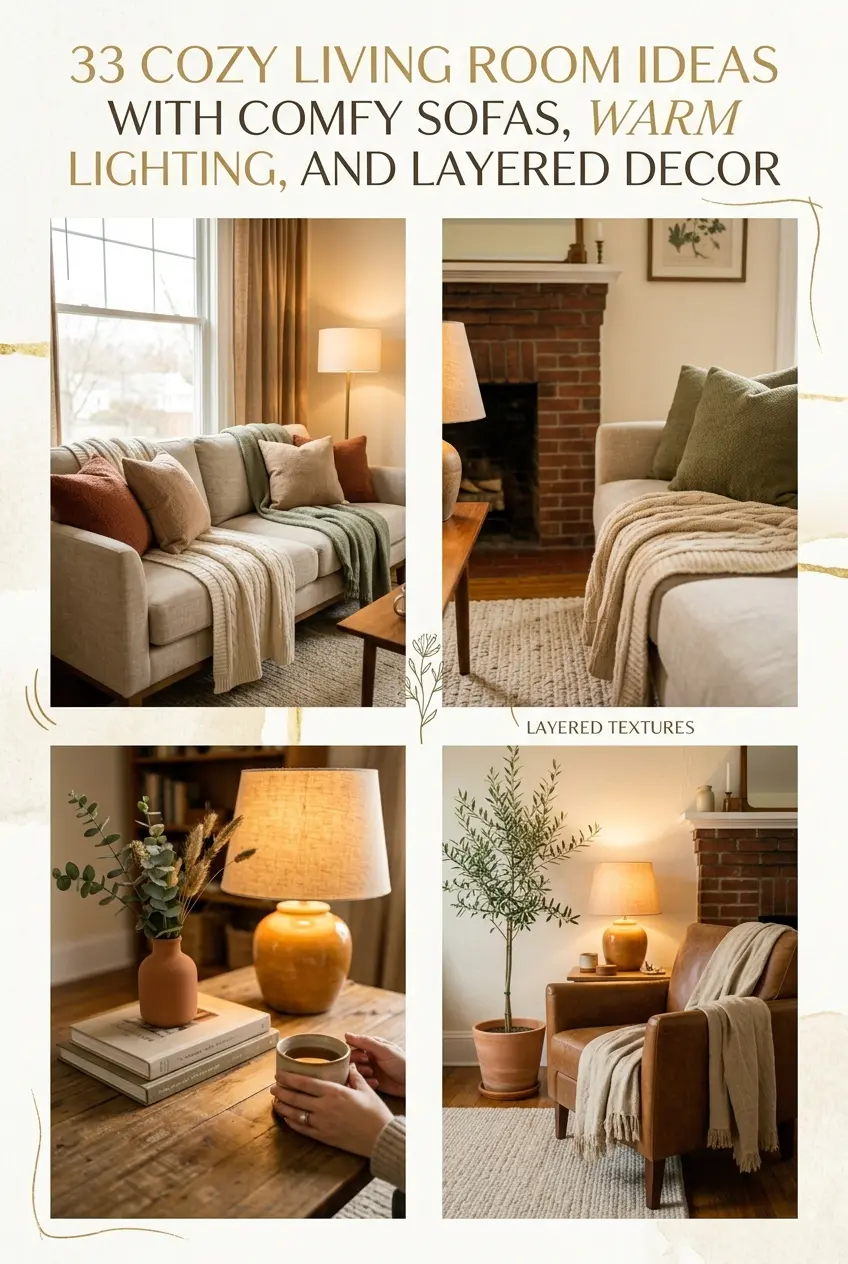
33 Cozy Living Room Ideas with Comfy Sofas, Warm Lighting, and Layered Decor
A cozy living room should feel like the place everyone naturally gravitates toward at the end of the day. Think comfortable sofas, soft lighting, inviting colors, plush throws, and layers of texture that make the room feel warm without looking cluttered. The best cozy living room ideas aren’t necessarily expensive or complicated. Sometimes, rearranging your furniture, adding a table lamp, or introducing a textured rug can make the entire space feel more welcoming.
Whether you’re decorating a small apartment, refreshing a family room, or creating a more relaxed atmosphere in an open-plan home, the key is balancing comfort with thoughtful design. From oversized sectional sofas and warm neutral palettes to moody paint colors and rustic wood accents, these 33 ideas offer practical inspiration for different room sizes, budgets, and decorating styles.
1. Create a Cozy Foundation With an Oversized Sofa
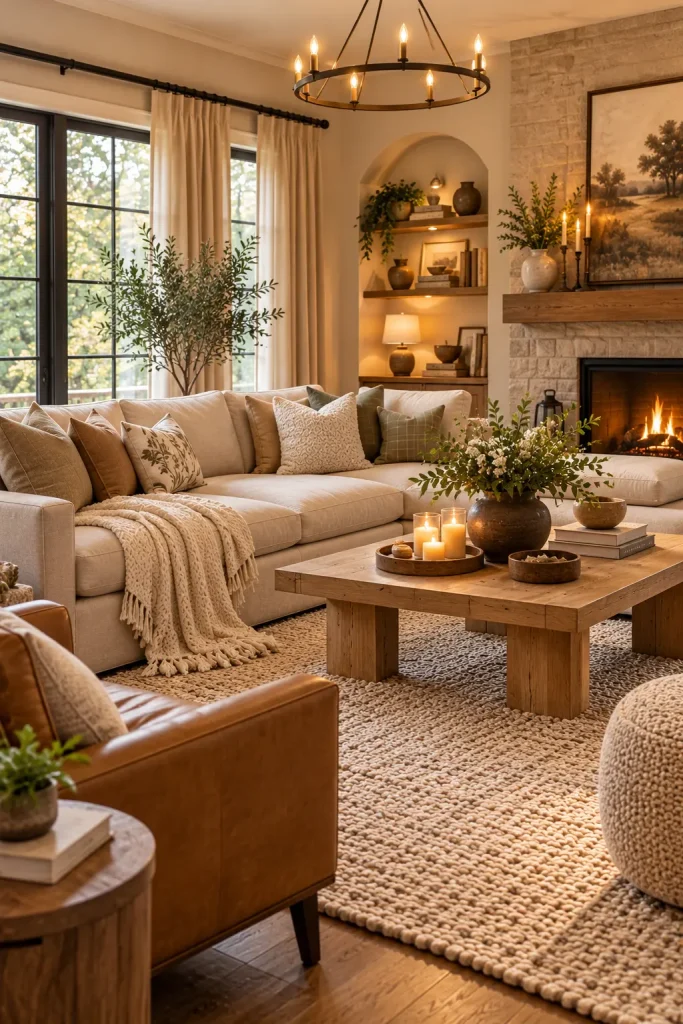
An oversized sofa instantly establishes a relaxed atmosphere, especially when it has deep seats, soft upholstery, and plenty of room to stretch out. Choose a cream, oatmeal, taupe, or warm gray fabric if you want a versatile foundation that works with changing seasonal accessories.
Arrange a few cushions in different sizes rather than matching every pillow exactly. A soft throw draped over one arm adds another layer without making the furniture look overly styled. In a smaller living room, choose a compact deep-seat sofa with slim arms to preserve seating space without sacrificing comfort.
2. Layer Warm Lighting at Different Heights
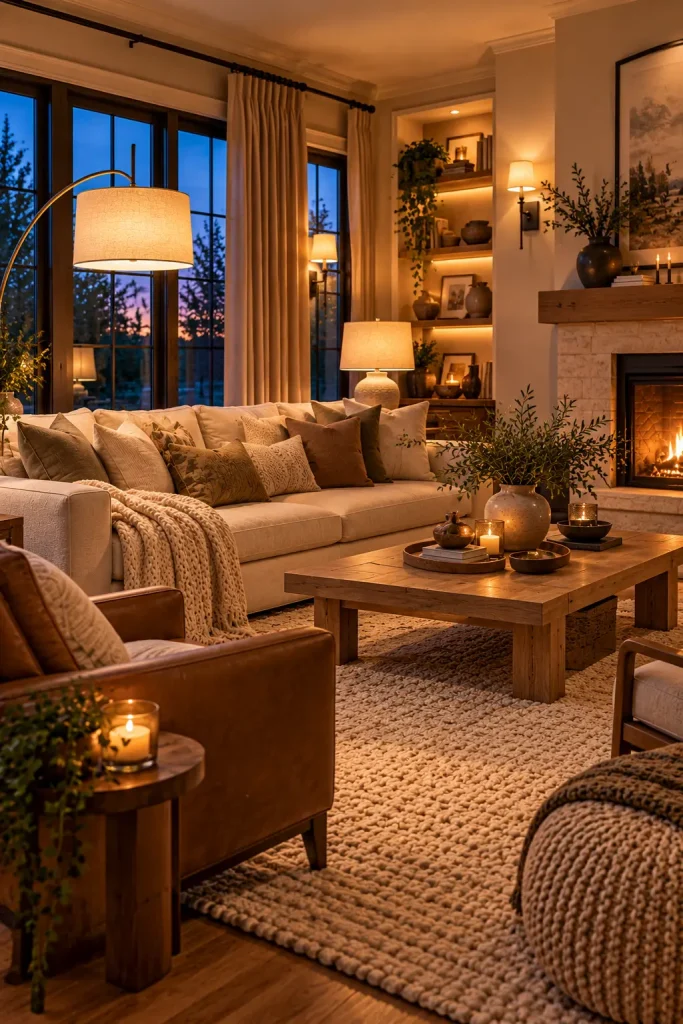
A single ceiling light can make a living room feel flat, even when the furniture is comfortable. Layering several light sources creates a softer atmosphere and lets you adjust the room for reading, entertaining, or winding down.
Combine a floor lamp beside the sofa, a table lamp on a side table, and a ceiling fixture with a dimmer. Wall sconces can add another layer where space is limited. Choose warm-white bulbs and lampshades that diffuse light rather than producing harsh glare.
Lighting combination to try:
- A floor lamp beside the main seating area.
- A shaded table lamp on a console or side table.
- Dimmable overhead lighting for general illumination.
- A small accent light near artwork or shelving.
3. Embrace a Warm Neutral Color Palette
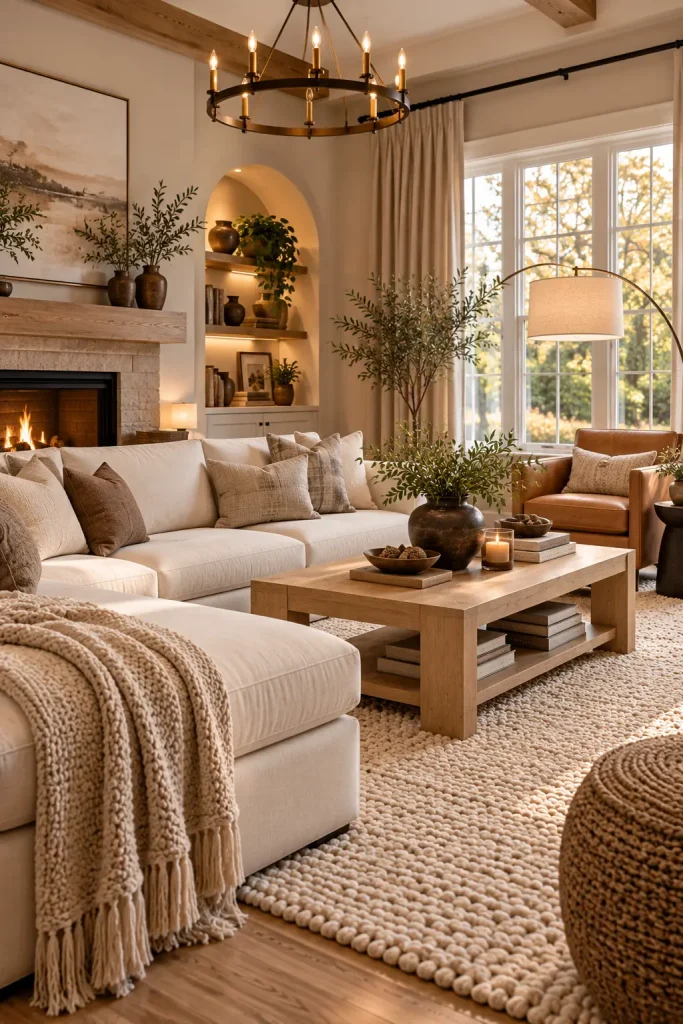
Warm neutrals create a calm backdrop that makes a room feel inviting rather than stark. Instead of relying on one shade of beige, mix ivory, sand, camel, mushroom, and warm taupe. The subtle differences keep the space visually interesting.
The secret is to vary the materials as well as the colors. Pair a smooth ivory sofa with a nubby wool rug, linen curtains, a pale wood coffee table, and a few darker brown accents. These contrasts help a neutral living room feel collected and comfortable.
Quick Tip: Test paint samples at different times of day. A warm neutral can appear considerably different in cool morning light and under warm evening lamps.
4. Add a Chunky Knit Throw for Instant Softness
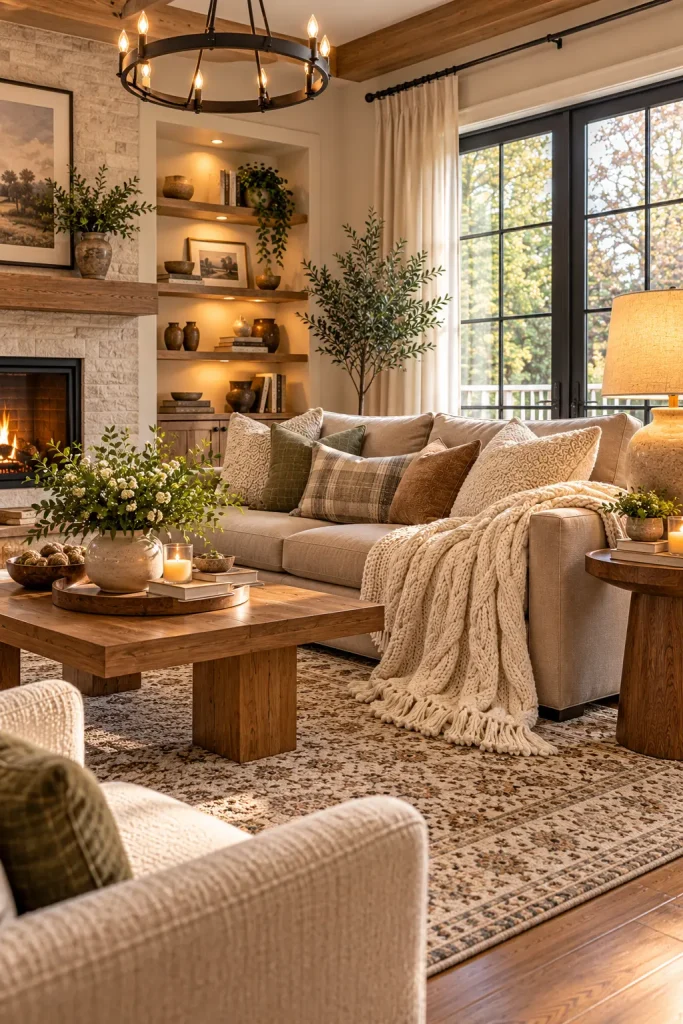
Few accessories communicate comfort as clearly as a thick knit throw. Its raised texture contrasts beautifully with smoother sofa upholstery, adding depth even when the color palette stays simple.
Drape the blanket over one sofa arm or fold it loosely across the back corner of the seat. Keep it within easy reach rather than styling it so precisely that nobody wants to use it. For a more layered appearance, combine one chunky knit with a lighter cotton or linen throw.
Choose a washable fabric if the living room gets heavy everyday use, especially in a household with children or pets.
5. Ground the Room With a Large, Plush Rug
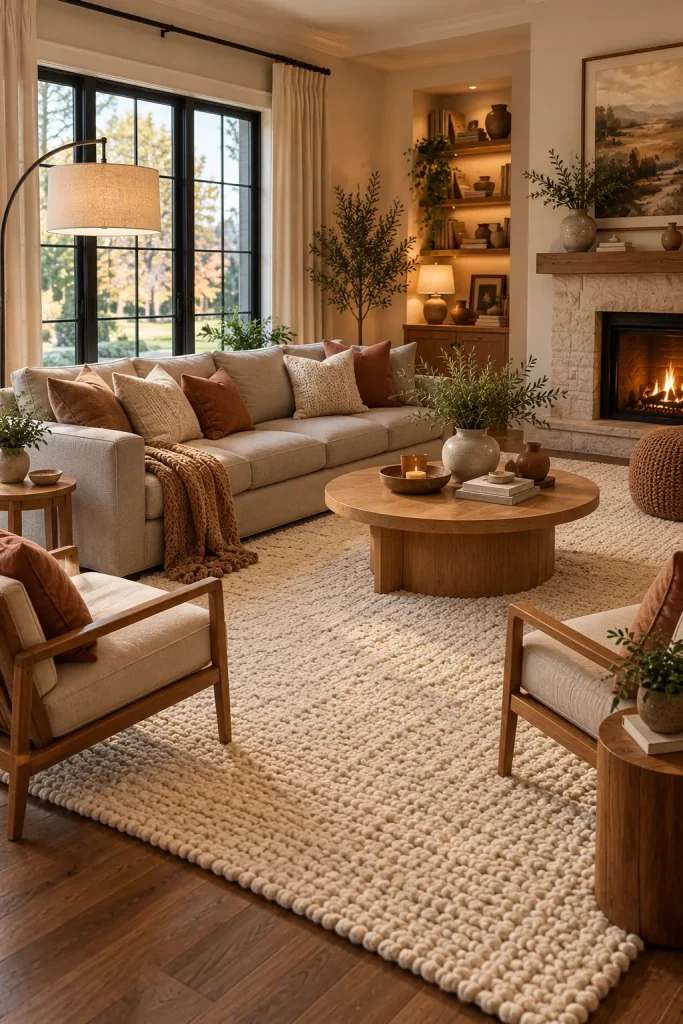
A rug helps connect the sofa, accent chairs, and coffee table into one comfortable seating arrangement. A plush wool rug feels soft underfoot, while a low-pile textured design can be easier to maintain in a busy family room.
Size matters more than many people realize. A rug that’s too small can make even attractive furniture appear disconnected. Whenever possible, place the front legs of the main seating pieces on the rug so the arrangement reads as one cohesive area.
For everyday practicality, consider a subtly patterned rug in oatmeal, warm gray, or muted earth tones. Small variations in color can help disguise minor marks between cleanings.
6. Choose a Deep, Cushioned Sectional
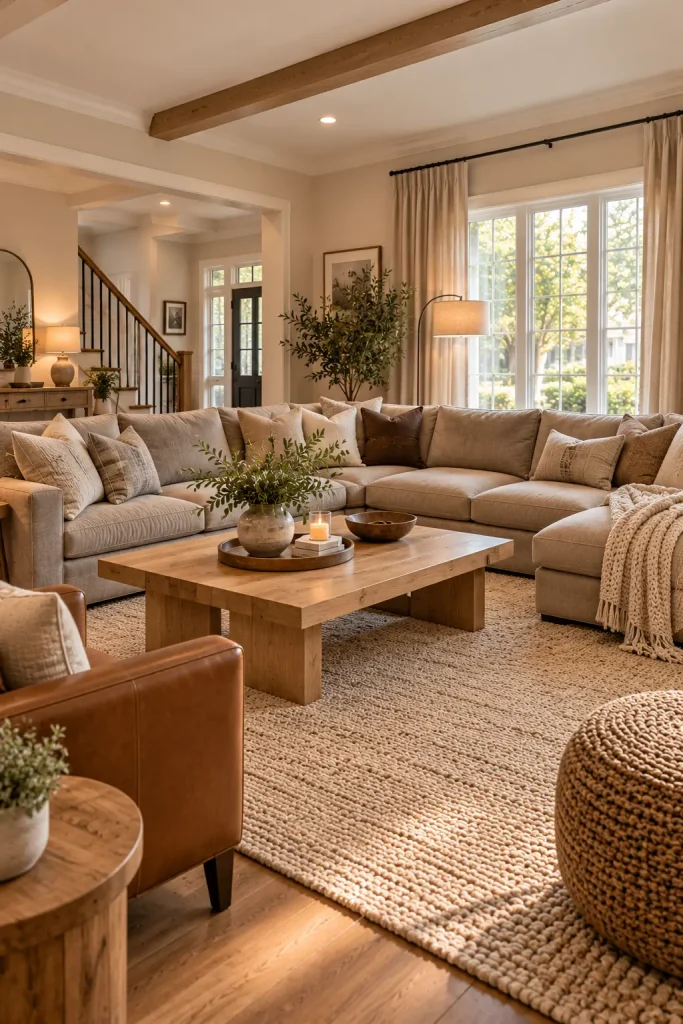
A sectional sofa can turn an open living room into a welcoming gathering place. Its L-shaped configuration creates a natural boundary around the seating area, making the room feel organized without adding partitions.
For a cozy result, look for supportive cushions, comfortable seat depth, and upholstery that suits your household. A low-profile sectional in warm gray, mushroom, or cream works well with wooden tables and soft textiles.
Before buying, measure the complete footprint, including the chaise. Leave enough space to move around the coffee table and reach doorways comfortably. A beautiful sectional isn’t useful if it interrupts the room’s natural traffic flow.
7. Introduce a Rich Forest-Green Sofa
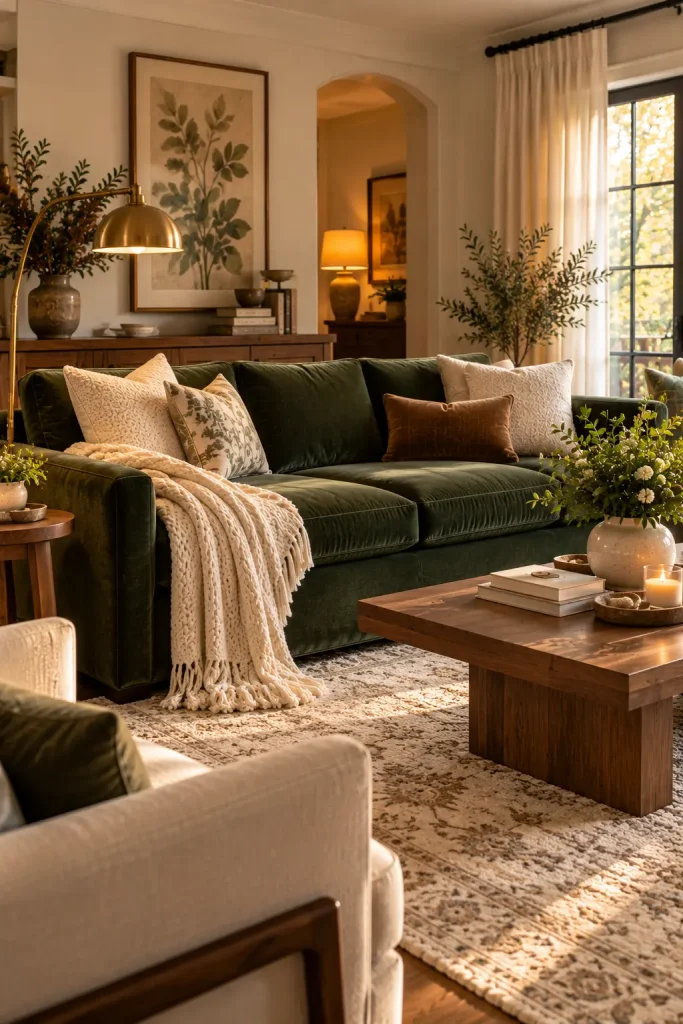
If an all-neutral living room feels too restrained, a forest-green sofa can provide depth without overwhelming the space. Green pairs naturally with walnut, aged brass, cream textiles, and muted botanical patterns.
Velvet creates a rich, softly reflective surface, while a woven green fabric produces a more understated look. Keep the remaining furnishings relatively simple so the sofa remains the focal point.
For a balanced arrangement, repeat the green in one or two smaller accessories, such as artwork, a cushion, or a ceramic vase. Repeating a color selectively makes the design feel intentional rather than overly coordinated.
8. Style a Coffee Table With Natural Materials
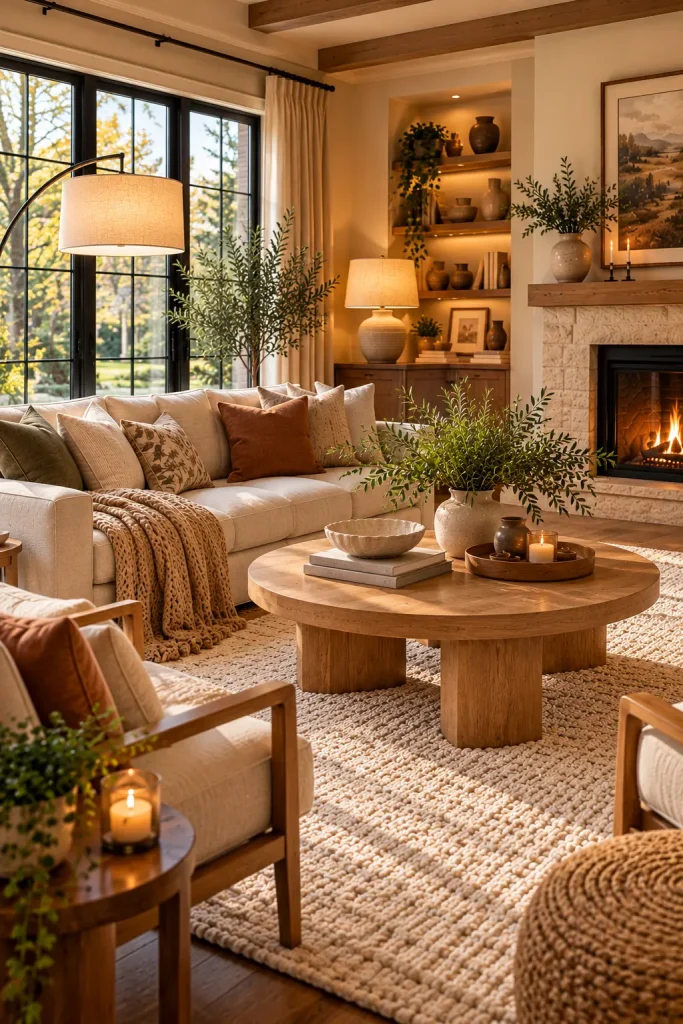
A coffee table often occupies the visual center of a living room, so its styling can influence the atmosphere of the entire space. Natural materials such as oak, walnut, travertine, rattan, and handmade ceramic bring warmth and variation.
Rather than filling the surface with accessories, arrange a few useful objects at different heights:
- A shallow tray to group smaller items.
- Two or three books with attractive covers.
- A handmade ceramic bowl or vase.
- A small arrangement of seasonal branches.
Leave some empty space for drinks, snacks, and everyday use. In a household that uses the coffee table frequently, a rounded design can also make movement around the seating area feel less awkward.
9. Mix Linen, Boucle, Wool, and Velvet
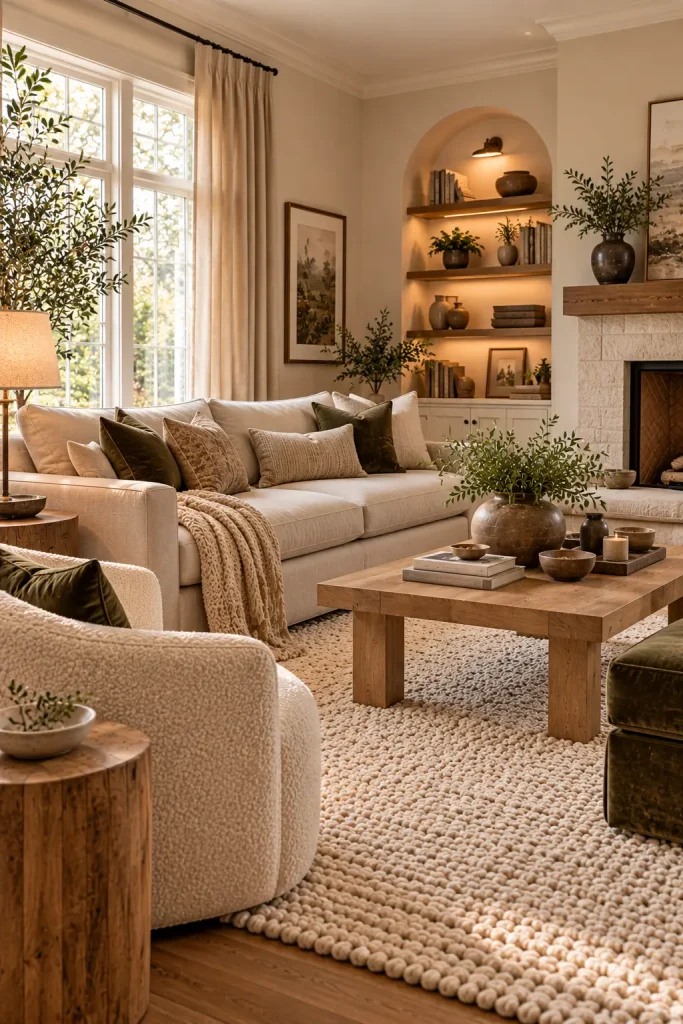
A cozy living room benefits from contrast between materials. When every surface is smooth or every textile has the same finish, the room can feel visually flat. Mixing fabrics adds depth without requiring additional furniture or strong colors.
Try combining these materials:
| Material | Best use | Visual effect |
|---|---|---|
| Linen | Curtains and cushions | Relaxed, breathable texture |
| Boucle | Accent chairs and pillows | Soft, nubby surface |
| Wool | Rugs and throws | Substantial, tactile warmth |
| Velvet | Accent pillows or sofas | Rich color and subtle sheen |
Keep the palette connected, even when the textures differ. Cream, warm gray, caramel, and muted olive can tie a variety of materials together.
10. Create a Reading Corner Beside the Window
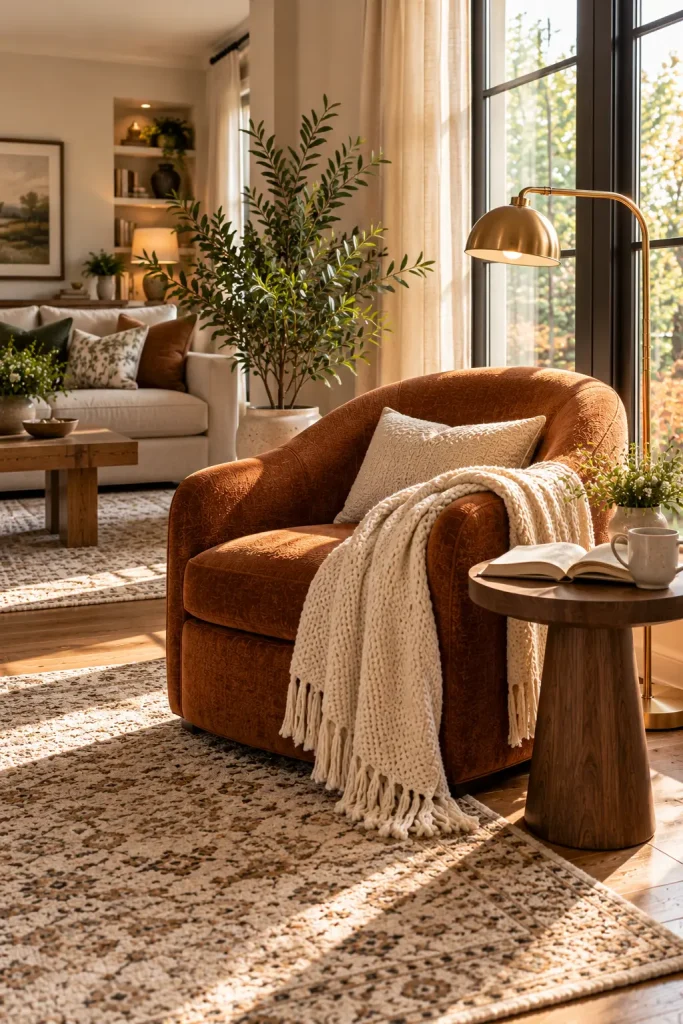
A reading corner gives the living room a second purpose beyond conversation and television. A comfortable armchair near a window creates a quieter place to read, enjoy coffee, or take a break from the main seating area.
Choose a chair with enough depth for relaxed sitting, then add a compact side table and a lamp positioned for reading. A small footstool can make the corner even more comfortable if the room allows it.
Avoid blocking window access or crowding the walkway. Even a modest corner can work when the chair, table, and lamp are scaled appropriately.
11. Use Curtains to Soften the Windows
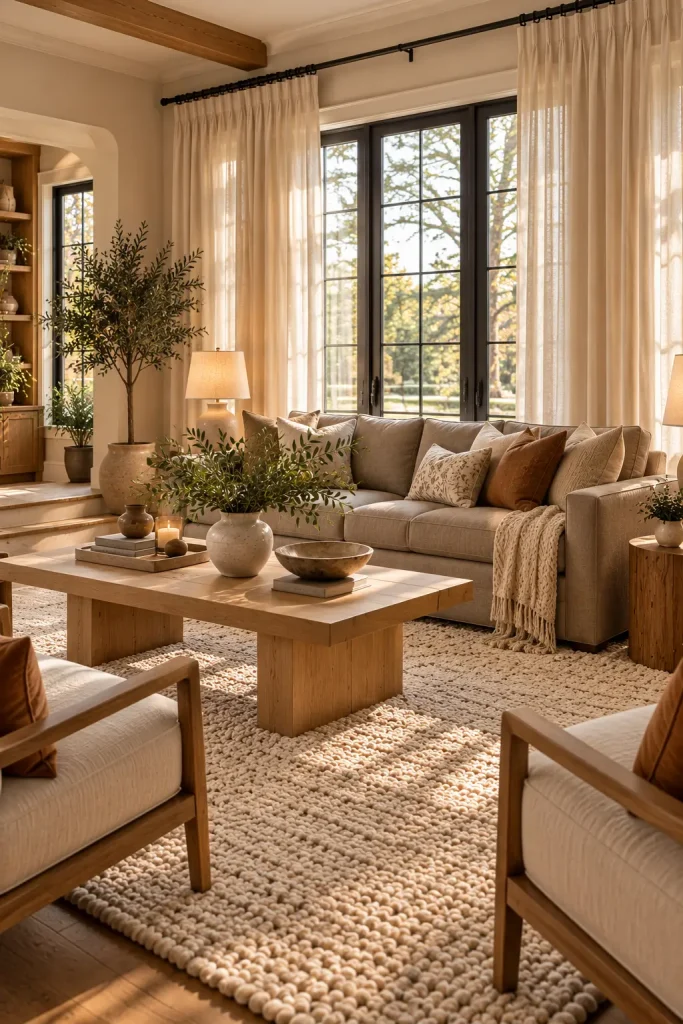
Window treatments can make a room feel finished and comfortable while helping control privacy and daylight. Linen-look curtains in ivory, flax, or warm beige offer a relaxed appearance that works with many decorating styles.
For a taller visual effect, mount the curtain rod above the window frame when the architecture permits, and extend it beyond the sides so the panels don’t unnecessarily cover the glass when open. Let the hems fall neatly near the floor.
If privacy is important, pair decorative curtains with blinds or shades. The layered treatment gives you greater control over light while keeping the room visually soft.
12. Add a Fireplace as the Room’s Focal Point
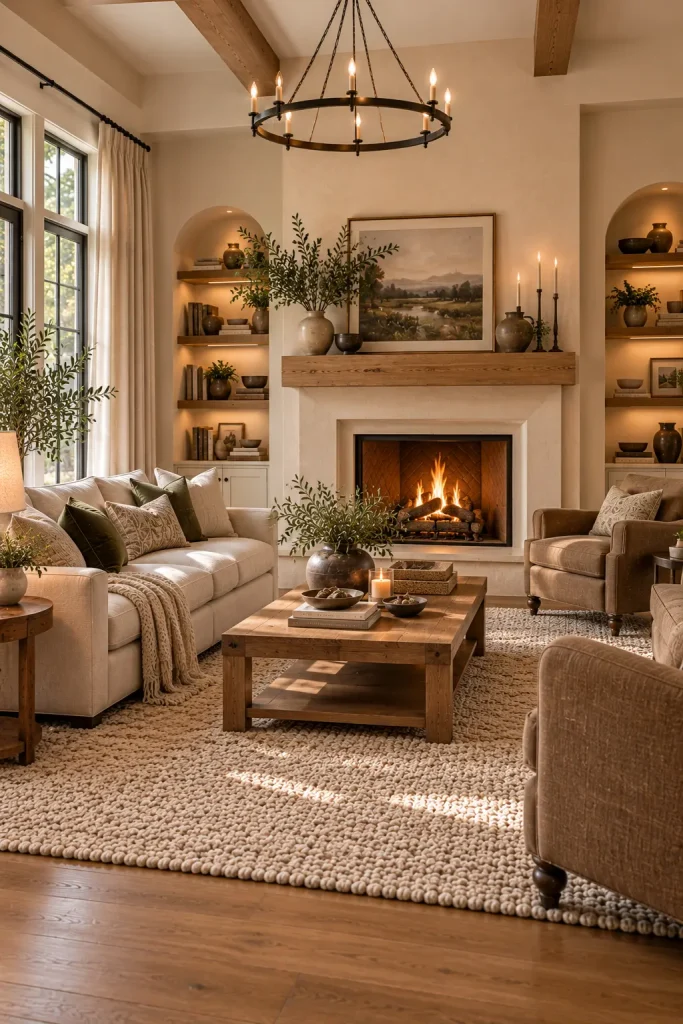
A fireplace naturally attracts attention and provides a strong anchor for furniture placement. Whether you have a traditional brick hearth, a modern gas fireplace, or a simple electric model, surrounding it with comfortable seating can make the room feel more intimate.
Arrange the sofa and chairs to acknowledge the fireplace without blocking pathways or access to other important features. A substantial wood mantel, understated artwork, or a restrained arrangement of ceramics can complete the composition.
If you don’t have a fireplace, you can borrow the same design principle by creating a clear focal point with a large artwork, an architectural media cabinet, or a distinctive piece of furniture.
Safety note: Keep combustible textiles and decorations at the clearances required by your fireplace manufacturer.
13. Bring in Warm Wood Furniture
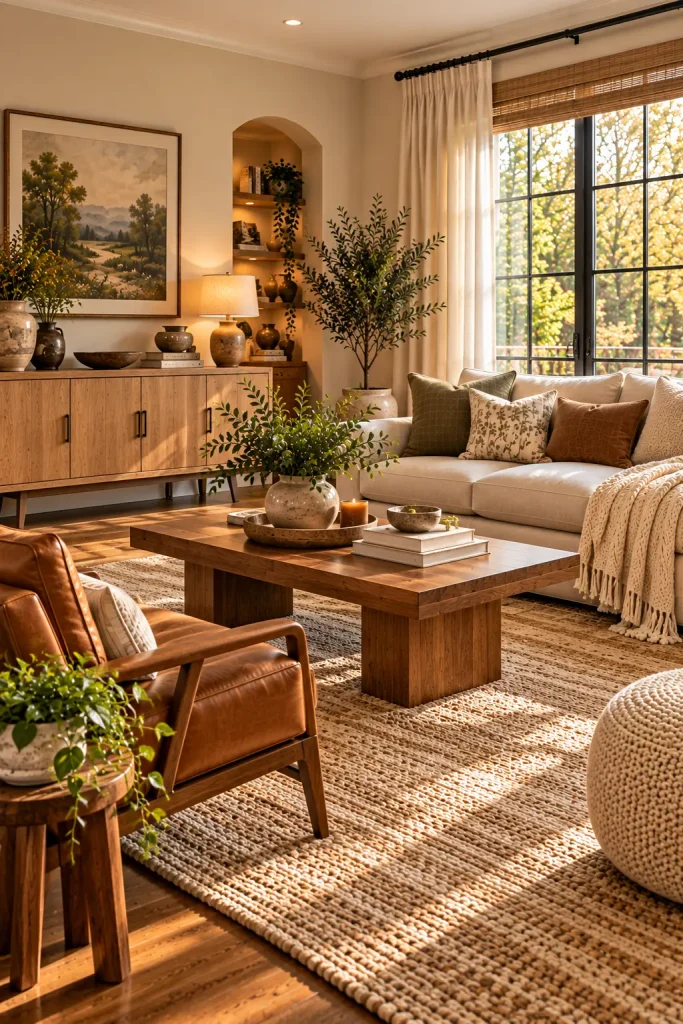
Wood adds natural variation to a living room through grain, color, and finish. A walnut coffee table, oak sideboard, or reclaimed-wood accent table can balance soft upholstery and prevent a room from feeling too pale.
You don’t need to match every wooden item. Mixing finishes can look more collected when the undertones complement one another. For example, pale oak can sit comfortably alongside medium walnut if the rest of the room connects the colors.
For a simple refresh, replace one small accent table or introduce a wooden tray before committing to a larger furniture purchase.
14. Arrange Pillows in Complementary Layers
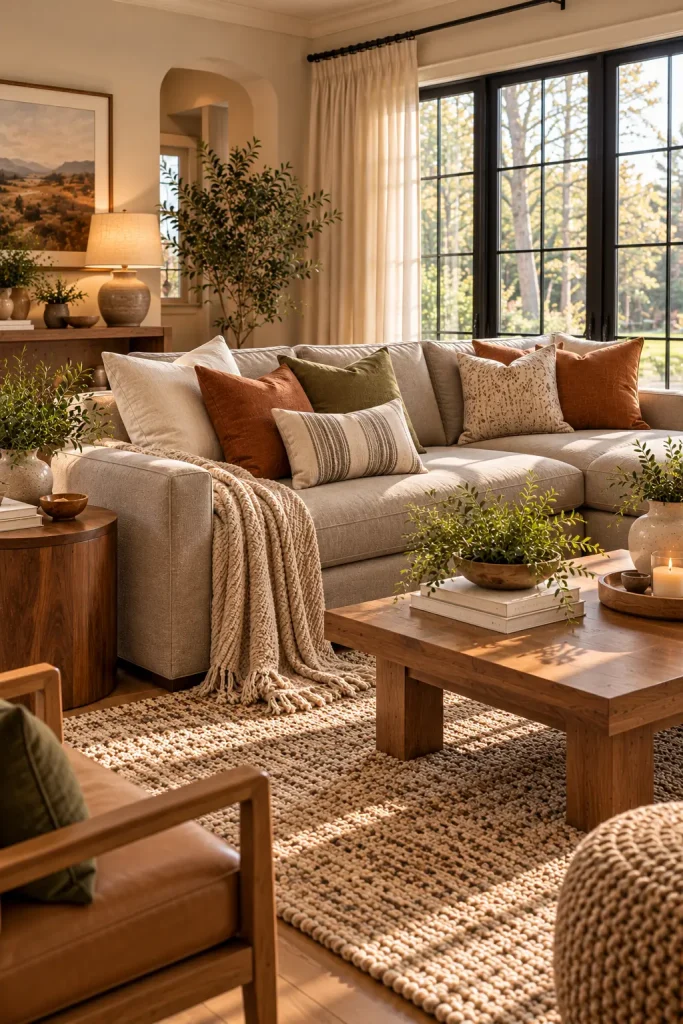
Throw pillows are an accessible way to change the mood of a sofa without replacing the main furniture. The trick is to vary scale, texture, and pattern while maintaining a coordinated palette.
Start with a few larger pillows at the back, then introduce smaller cushions toward the center. Combine a solid linen cover, a subtle stripe, and one tactile fabric such as boucle or velvet. If the sofa is already patterned, use simpler pillows to avoid visual competition.
Do: Keep enough room for people to sit comfortably.
Don’t: Fill every available seat with cushions that need to be moved before anyone can relax.
15. Make a Small Living Room Feel Intimate
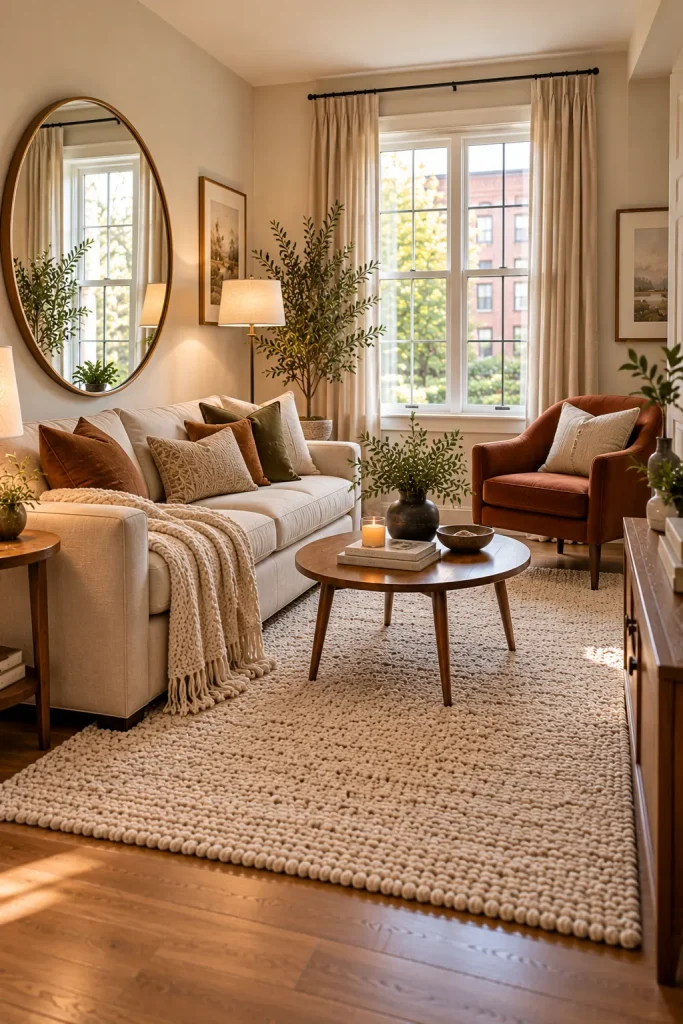
A small living room can be every bit as comfortable as a larger one. The most effective approach is to choose furniture that suits the room’s dimensions rather than filling every corner.
A compact sofa with raised legs, a small round coffee table, and one appropriately scaled accent chair can preserve useful floor space. Mirrors may help reflect available light, while curtains hung high can draw attention upward.
Use lighting in several places instead of relying on one oversized fixture. A floor lamp with a compact base and a wall-mounted reading light can add warmth without occupying too much surface area.
Quick Tip: Measure doorways and walking paths as well as furniture footprints before purchasing anything substantial.
16. Try a Moody Charcoal Living Room
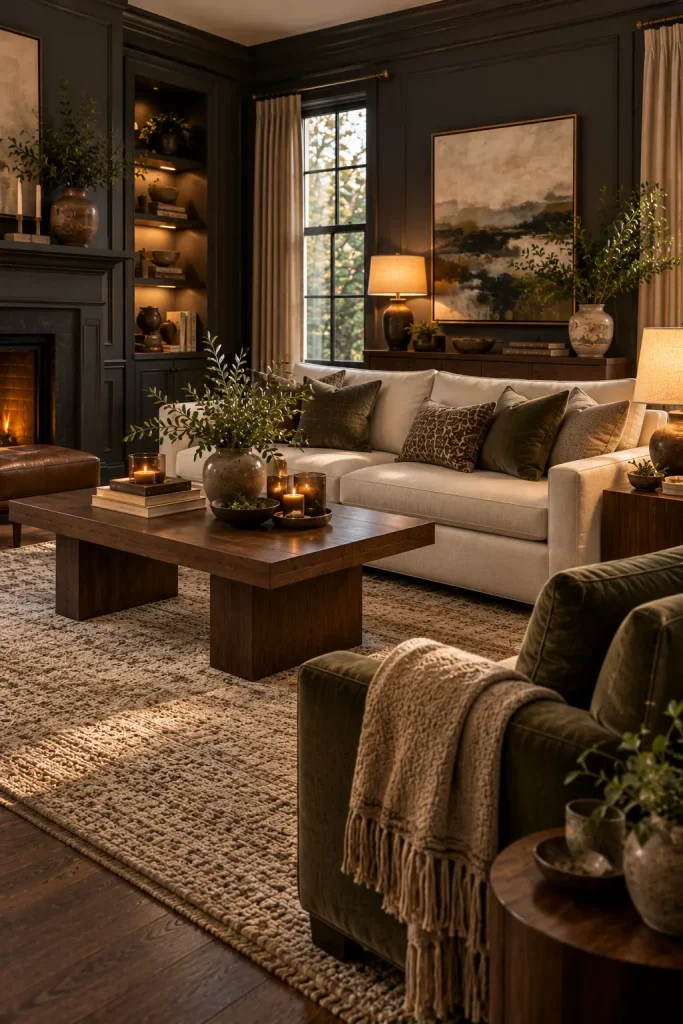
Dark walls can make a living room feel enveloping and intimate, particularly in the evening. Charcoal, deep olive, and smoky brown create a dramatic backdrop for warm lamps, textured upholstery, and natural wood.
To keep the space from feeling heavy, introduce lighter elements through the sofa, rug, curtains, or artwork. Several smaller light sources will also help the room feel welcoming rather than gloomy.
This approach works particularly well in a room used primarily for evening relaxation. In a room with limited natural light, test a sample of the chosen paint before committing to all four walls.
17. Bring Nature Indoors With Greenery
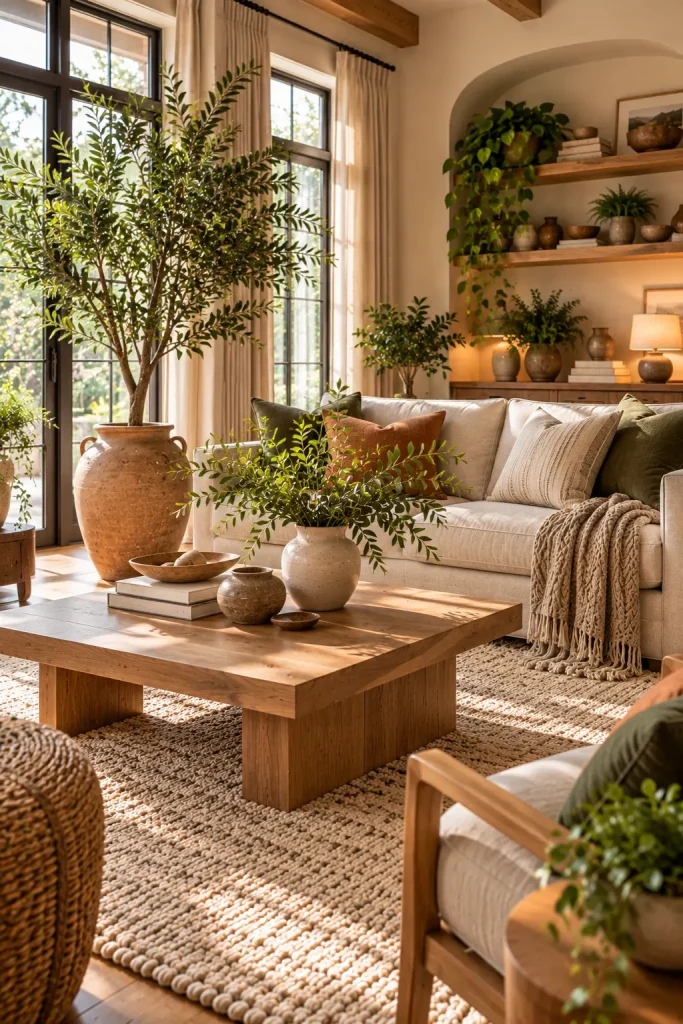
Plants add organic shapes and living color to a room filled with straight furniture lines and structured textiles. A tall indoor tree can fill an empty corner, while smaller plants soften shelves, windowsills, and side tables.
Choose plants according to the light and conditions available rather than selecting them on appearance alone. A bright window may suit different plants than a dim corner several feet away from the glass.
Try a large floor plant beside the sofa, a small plant on a bookshelf, and a simple branch arrangement on the coffee table. Using a few plants in different sizes generally feels more intentional than scattering lots of tiny pots everywhere.
18. Style Open Shelves With Books and Personal Objects
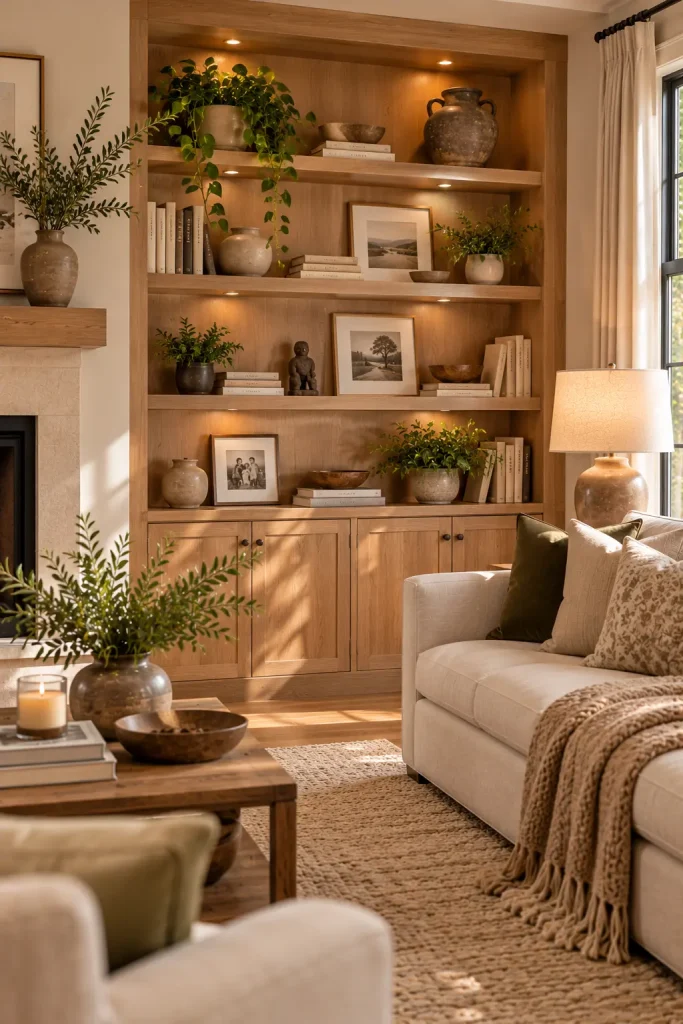
Open shelving can make a living room feel more personal when it displays a thoughtful mix of books, ceramics, framed photographs, and meaningful objects. It also offers an opportunity to introduce colors that connect with the sofa and other furnishings.
Avoid filling every shelf from end to end. Leave some breathing room and vary the arrangement between horizontal book stacks, upright books, and sculptural objects.
For a balanced display, repeat a few materials or colors across different shelves. Wood, ivory ceramics, and muted green accents can create continuity without making everything look identical.
Common Mistake: Arranging every object at exactly the same height can make shelves look rigid.
Better Approach: Mix heights and shapes while keeping the overall arrangement visually balanced.
19. Add a Soft Ottoman Instead of a Hard Coffee Table
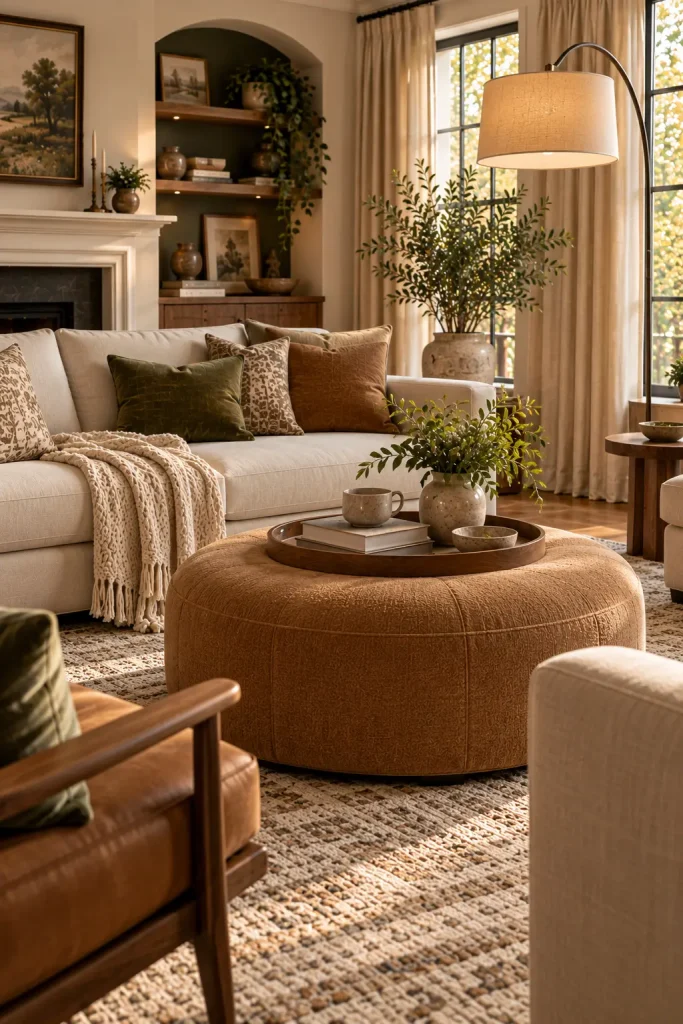
An upholstered ottoman makes a living room feel relaxed and gives you a flexible surface for everyday use. It can serve as a footrest, extra seating, or a soft alternative to a conventional coffee table.
Choose a durable woven fabric, textured neutral upholstery, or warm leather that works with the rest of the room. If you plan to use it for drinks or books, place a sturdy tray on top to create a more stable surface.
A round ottoman can also soften a room dominated by rectangular sofas and square side tables.
20. Create a Rustic Living Room With Natural Textures
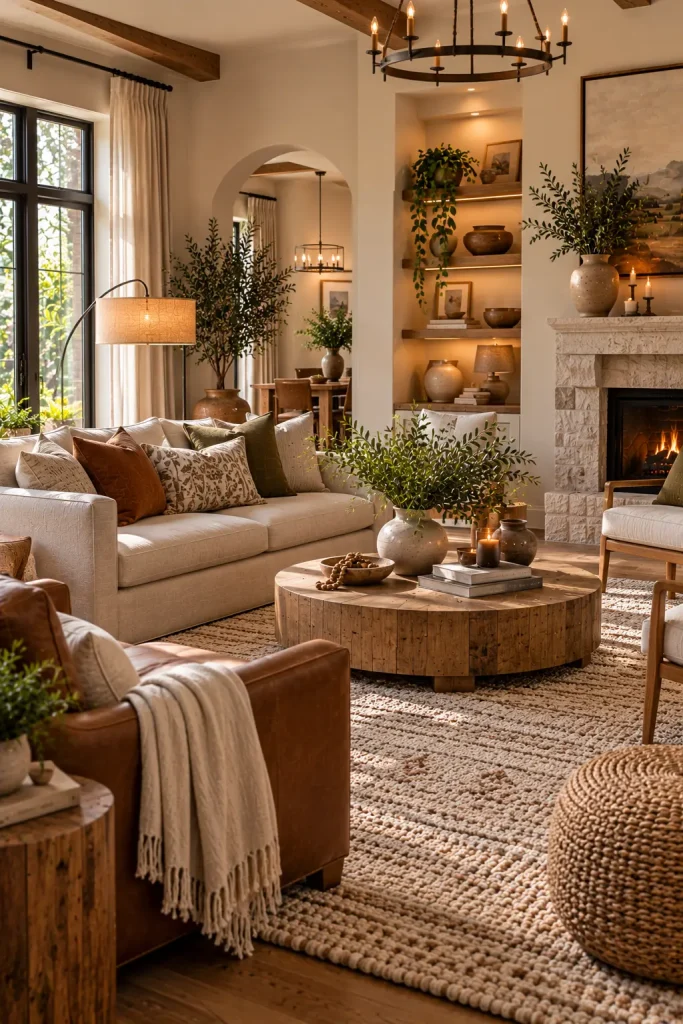
Rustic interiors feel comfortable because they celebrate natural materials, tactile surfaces, and subtle irregularities. Reclaimed wood, stone, woven baskets, linen upholstery, and handmade ceramics all contribute to this atmosphere.
You don’t need exposed beams or a stone fireplace to achieve the look. A reclaimed-wood coffee table, a woven storage basket, and a chunky wool throw can introduce rustic character into an ordinary apartment or suburban home.
Balance rougher materials with softer elements. A weathered table looks more inviting alongside plush seating than when every surface is hard and heavily textured.
21. Layer Soft Lighting With Candles and Lanterns
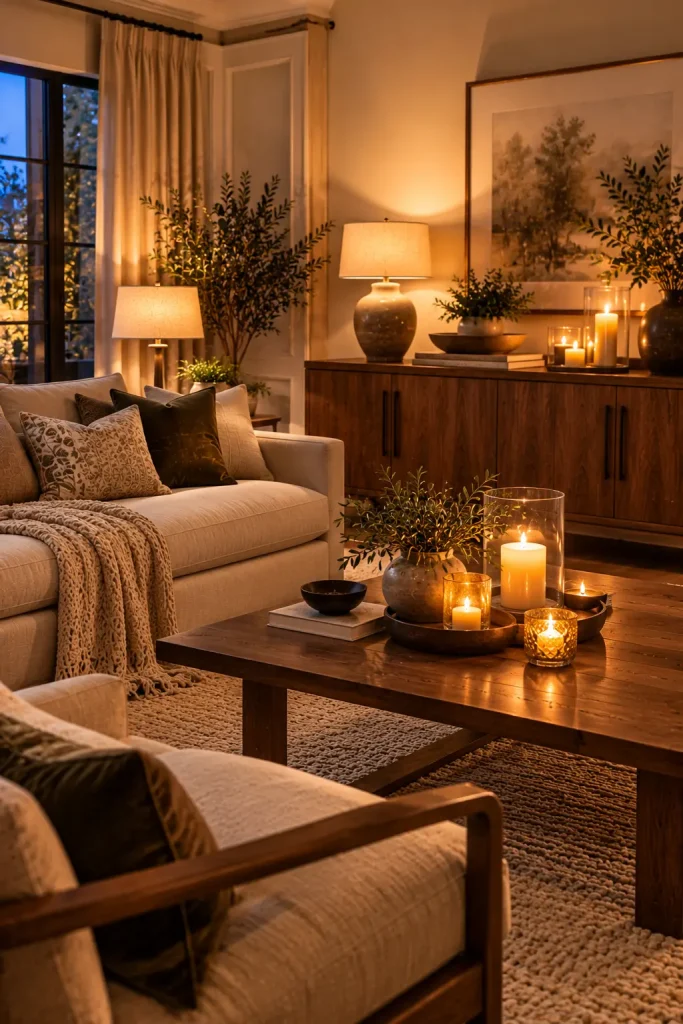
Candles and lanterns introduce a gentle decorative glow that works particularly well for quiet evenings or small gatherings. Place them on a mantel, sideboard, or coffee table where they complement existing lamps rather than replace necessary room lighting.
Choose candleholders in ceramic, glass, or aged metal to suit the room’s style. Grouping two or three pieces at different heights creates a more natural composition than lining up identical holders.
For households with children or pets, or whenever candles might be left unattended, flameless LED candles offer a practical alternative.
22. Choose a Leather Sofa for Warm, Lived-In Character
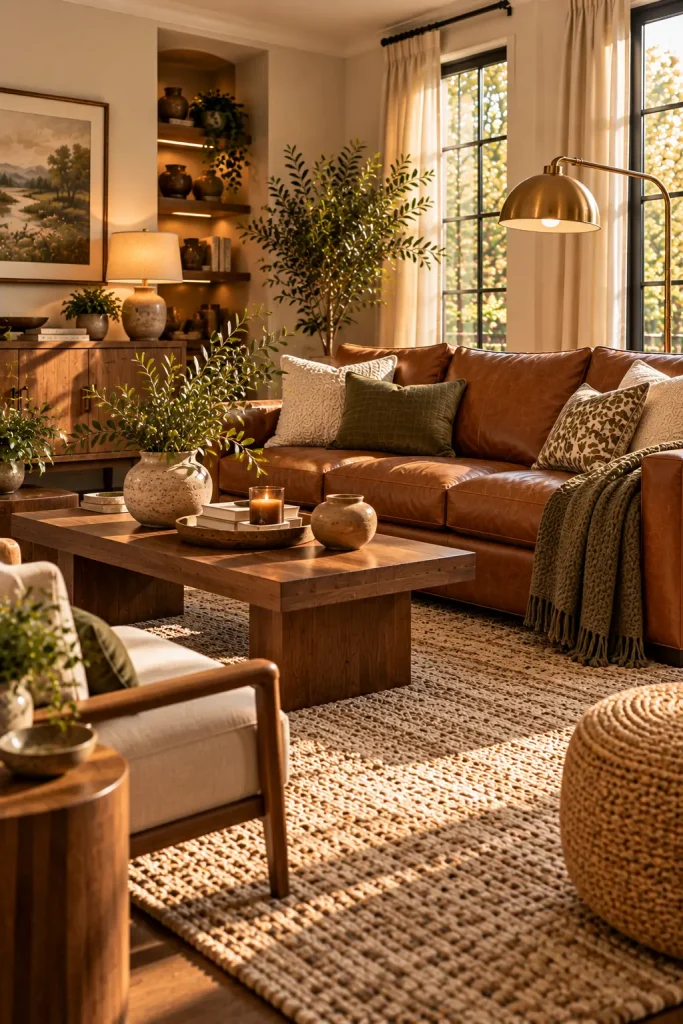
A leather sofa brings a different kind of comfort to a living room. Cognac, saddle brown, and medium tan shades pair beautifully with cream wool rugs, olive cushions, walnut tables, and textured throws.
Leather also changes in appearance with use, although its aging and maintenance depend on the type of leather and its finish. If you prefer a softer look immediately, choose a design with generous cushions and pair it with fabric pillows.
For a balanced arrangement, avoid surrounding the leather with too many other hard surfaces. A plush rug and upholstered accent chair help soften its visual weight.
23. Make the Walls Cozy With Art and Personal Photography
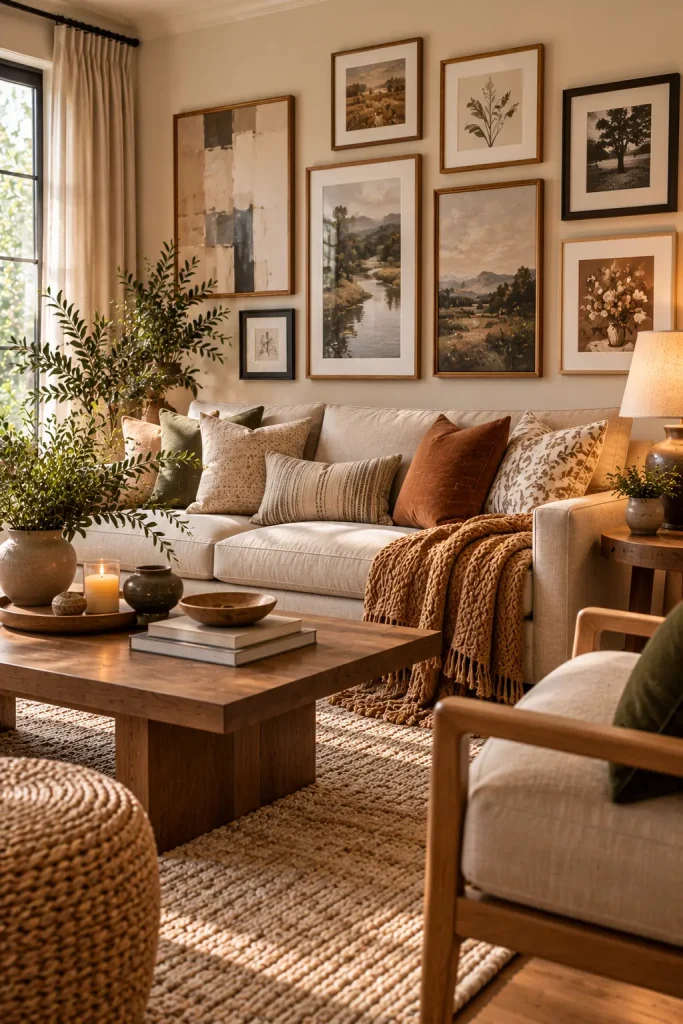
Bare walls can leave a living room feeling unfinished. Artwork, family photographs, travel memories, and collected prints add character while giving the eye something interesting to explore.
A large piece above the sofa can anchor the seating area, while a smaller gallery wall offers room for a more personal mix. Keep frames connected through a common finish or color palette if you want a cohesive appearance.
Hang artwork at a comfortable viewing height and consider the scale of the furniture below it. A tiny frame above a large sofa may feel lost, while a well-proportioned piece can make the whole arrangement feel complete.
24. Use a Round Coffee Table to Soften the Layout
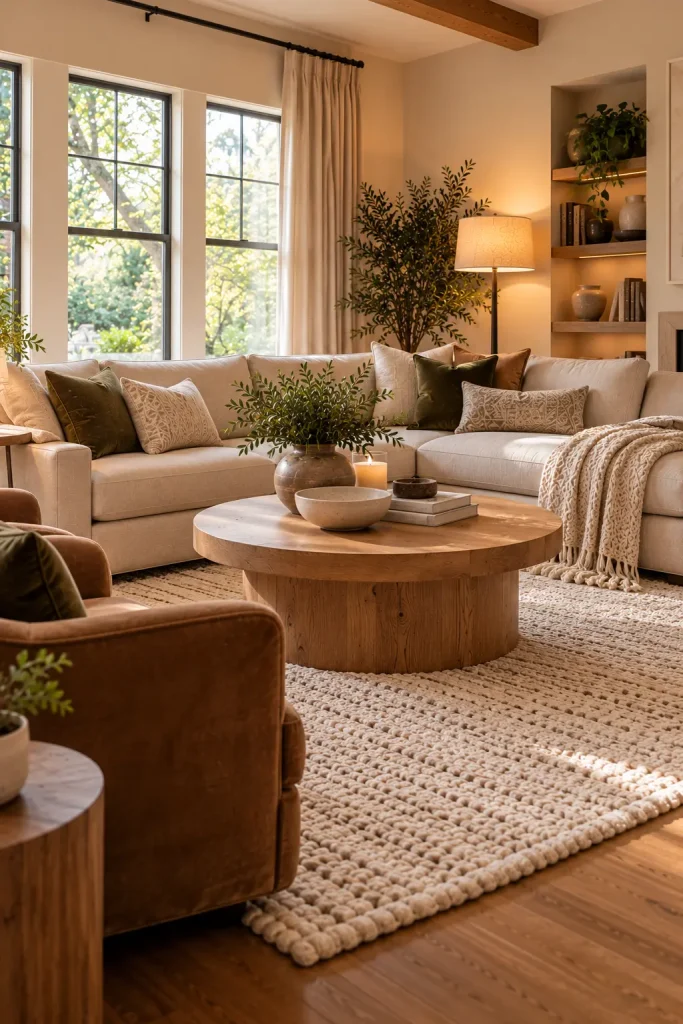
A round coffee table introduces curved lines into a room dominated by rectangular sofas, cabinets, and rugs. It can make the furniture arrangement feel less rigid and provide a smoother route around the seating area.
Choose a diameter that suits the space and leaves enough room for people to move comfortably between the table and sofa. Wood offers a warm, versatile finish, while upholstered or stone designs create a different visual effect.
A round table works especially well with an L-shaped sectional because it breaks up the long horizontal lines of the seating.
25. Give the Room a Warm Earth-Tone Palette
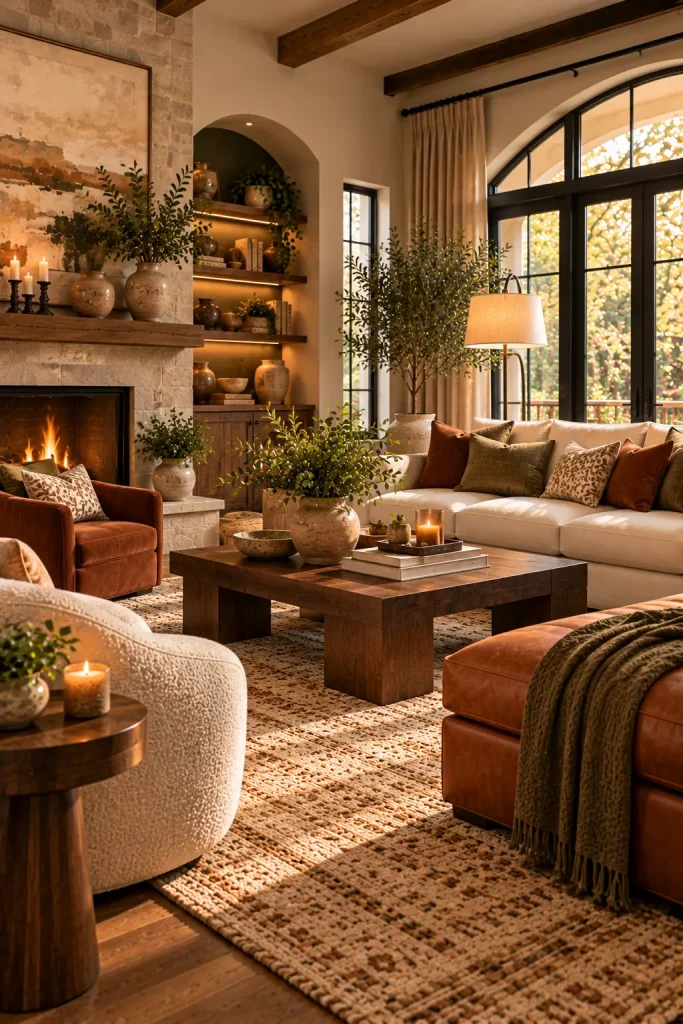
Earth tones create a grounded, relaxed feeling without relying entirely on beige. Terracotta, clay, cinnamon, muted olive, ochre, and chocolate brown work together to produce a richer palette.
If you’re not ready to commit to colorful furniture, introduce these shades through pillows, artwork, ceramics, blankets, or a single accent chair. Keep the larger surfaces relatively neutral if you want the flexibility to change accessories later.
A helpful approach is to choose one dominant earth tone, one supporting shade, and a few neutrals. This creates enough contrast to make the room feel layered without overwhelming the eye.
26. Add Built-In Shelving for a Collected Look
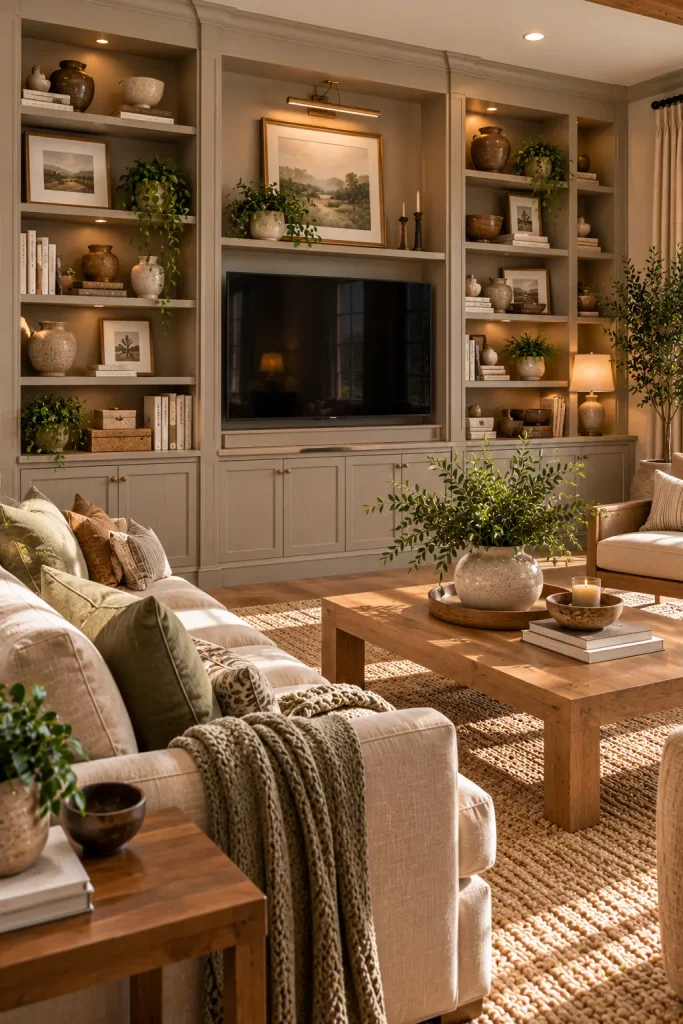
Built-in shelving can make a living room feel tailored while providing space for books, display pieces, and practical storage. When designed around a fireplace or media area, it can also create a strong architectural focal point.
For a custom appearance, coordinate the shelving finish with the surrounding walls or woodwork. Mix open display areas with closed cabinets to keep less attractive everyday items out of sight.
If a permanent renovation isn’t possible, freestanding bookcases or modular shelving can provide a similar visual structure without the same level of commitment.
27. Create a Scandinavian-Inspired Cozy Living Room
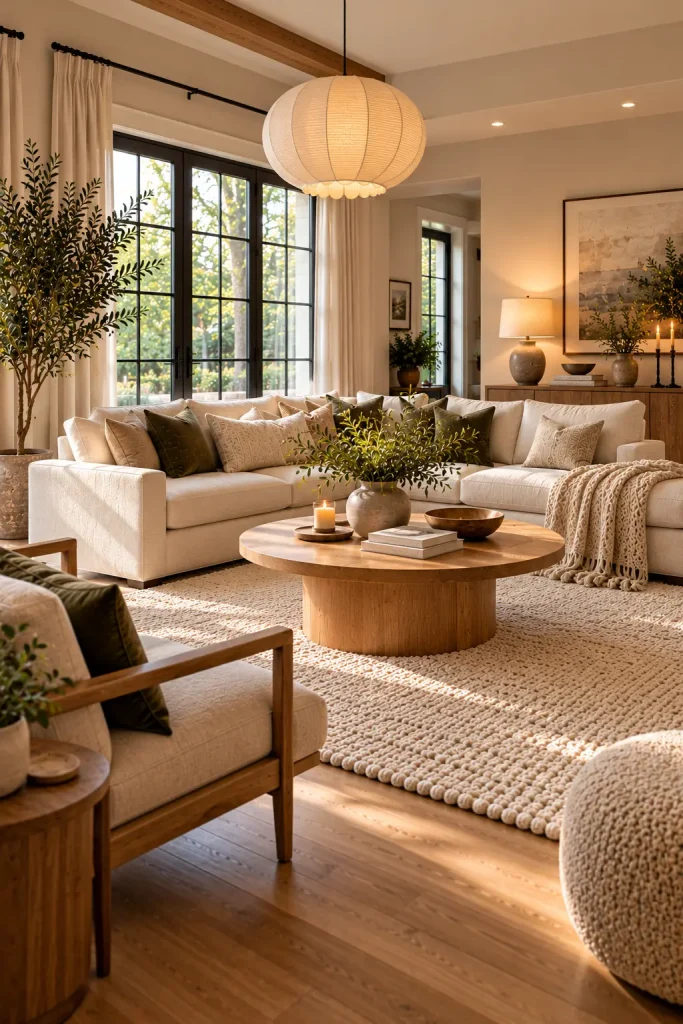
Scandinavian-inspired interiors combine simplicity with practical comfort. Pale wood, soft upholstery, uncluttered surfaces, and a restrained color palette create a room that feels peaceful without looking empty.
Start with a comfortable sofa in cream or light gray, then add a pale oak coffee table, a textured wool rug, and a sculptural floor or ceiling lamp. A few dark accents can provide contrast, while greenery introduces a natural element.
The important distinction is that minimalism doesn’t mean removing everything personal. A favorite book, a handmade vase, and a well-used throw can make the space feel lived in.
28. Decorate With Warm Metallic Accents
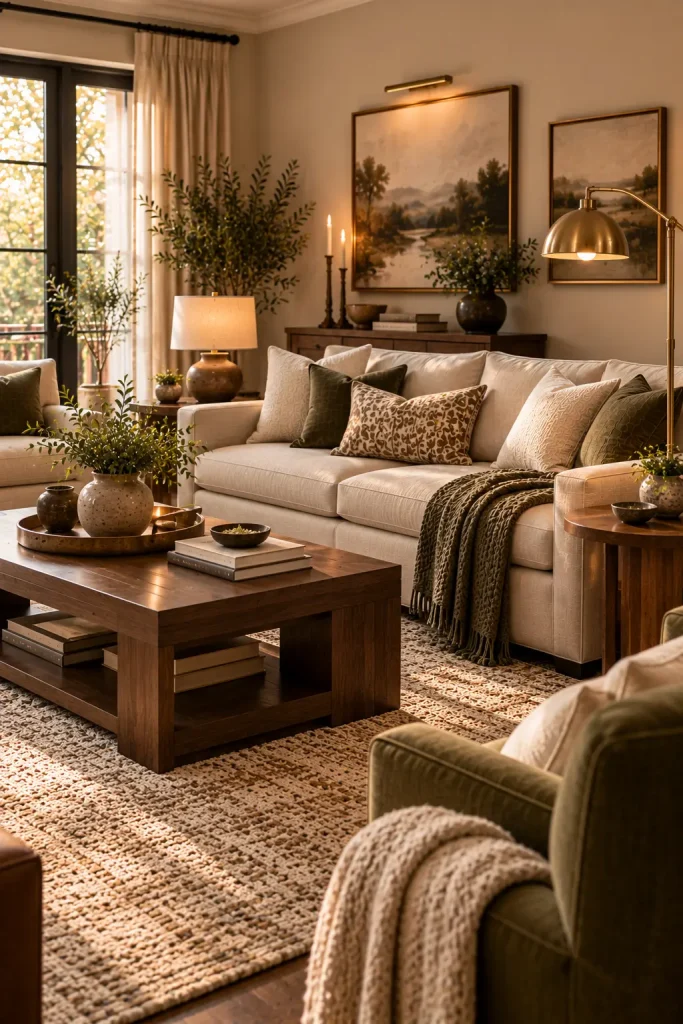
Warm metallic finishes add a subtle glow that complements the softer elements of a cozy living room. Aged brass, brushed bronze, and muted gold can appear in lamp bases, picture frames, cabinet hardware, or small decorative objects.
Use these finishes as accents rather than covering every surface. One brass floor lamp, a bronze-framed mirror, and a small metallic tray may provide enough repetition to connect the room.
Warm metals work especially well with walnut, cream upholstery, deep green, and earthy shades. For a quieter appearance, choose brushed or aged finishes instead of highly polished surfaces.
29. Build a Cozy Family Room With Practical Storage
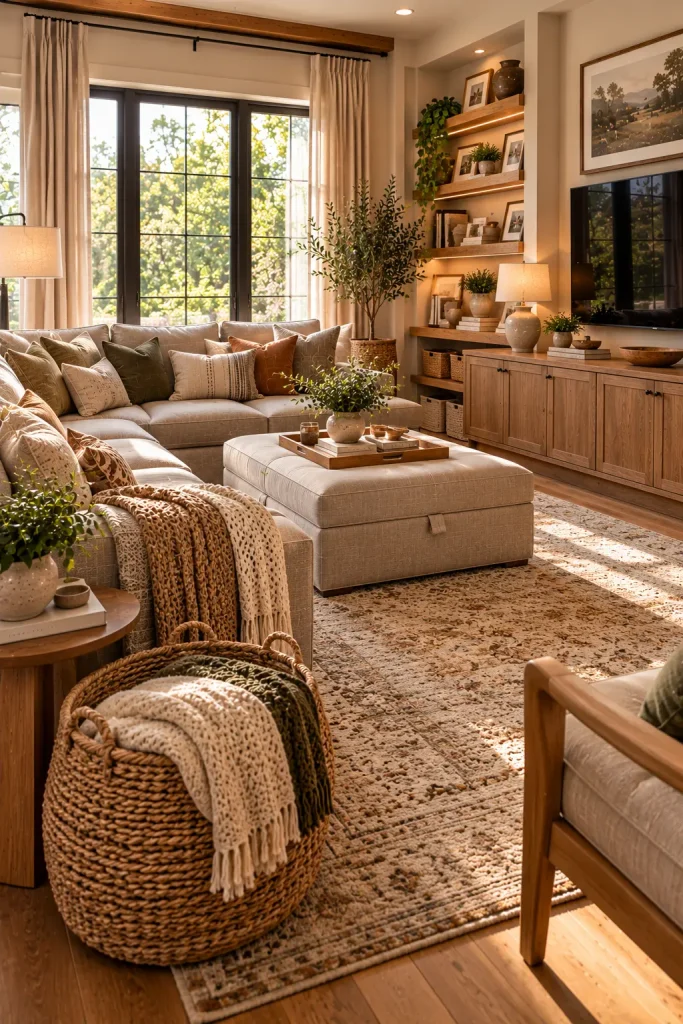
A comfortable family room needs to handle more than good looks. Blankets, board games, remote controls, children’s books, and everyday accessories all need somewhere to go.
Choose furniture that combines comfort with useful storage. A storage ottoman can hide toys or extra throws, while baskets beside the sofa keep frequently used items accessible. A media cabinet with closed doors can conceal electronics and miscellaneous clutter.
Aim to make the room easy to reset at the end of the day. When storage is close to where items are used, keeping the space tidy becomes more manageable.
Practical setup:
- Use lidded baskets for items that don’t need to remain visible.
- Keep everyday blankets within reach of the sofa.
- Store games and books near the seating area.
- Choose durable upholstery suited to the household’s routine.
30. Introduce a Vintage Rug for Character
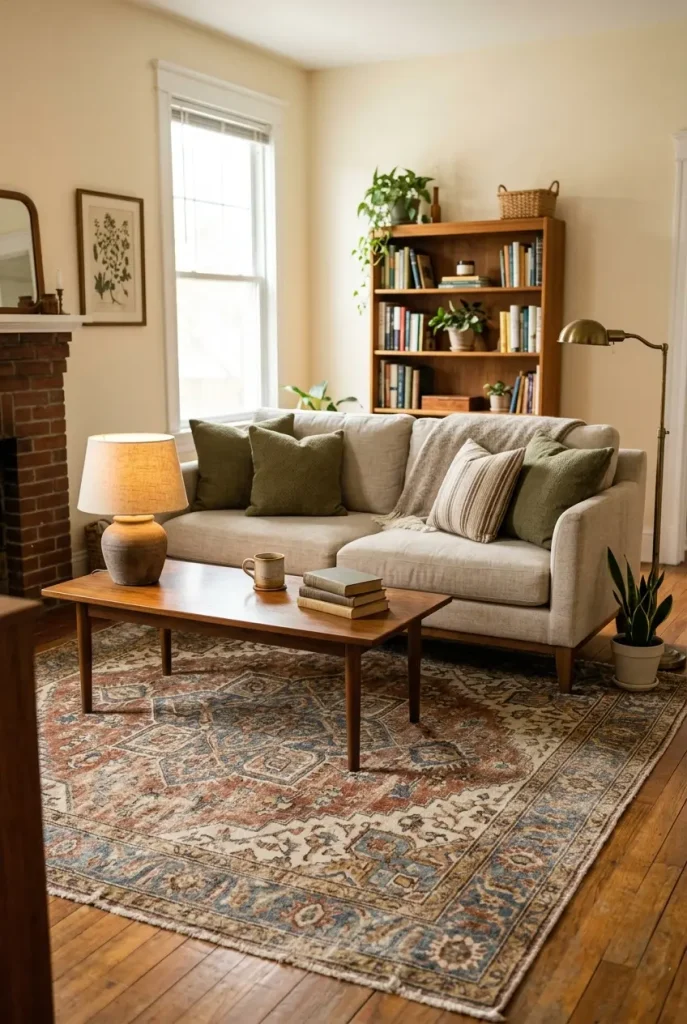
A vintage-style rug brings pattern, visual depth, and a collected feel to a living room. Muted reds, faded blues, warm browns, and soft creams can add color without competing with the main furniture.
An ornate rug often looks particularly appealing beneath a simple sofa because the contrast allows its pattern to stand out. If the sofa already has a strong print, choose a rug with softer colors or a more restrained design.
You can use an authentic vintage rug or a contemporary reproduction, depending on your budget and maintenance preferences. Check the rug’s construction and care requirements before placing it in a high-traffic area.
31. Make the Living Room Cozy With Soft Blue and Cream
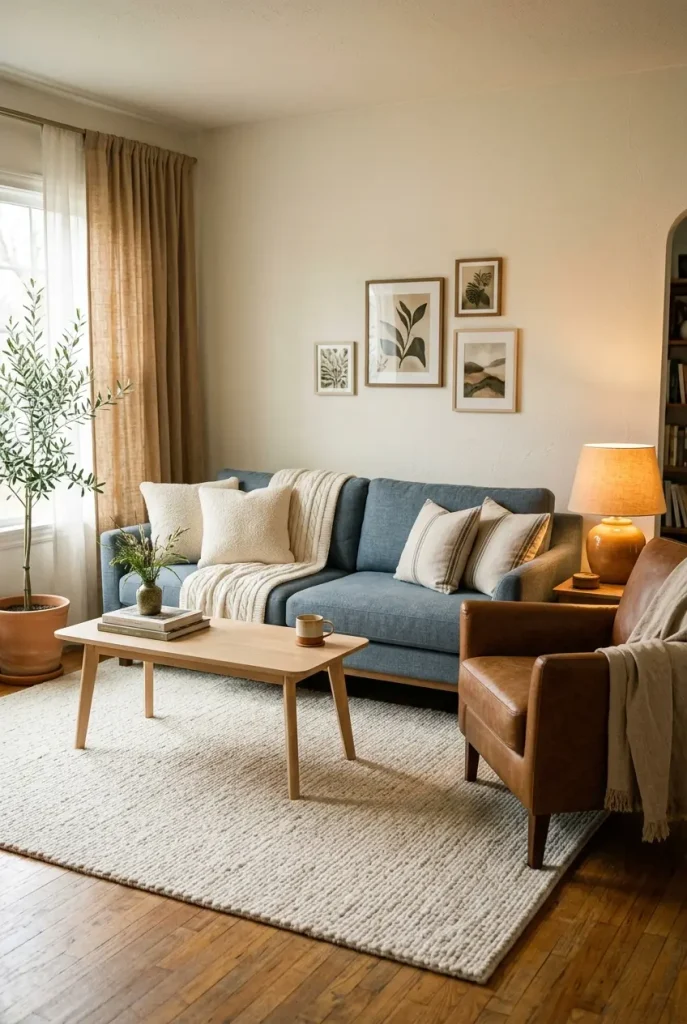
Not every comfortable living room needs a palette of beige and brown. Soft blue paired with cream creates a calmer, lighter atmosphere while still feeling inviting.
Choose dusty blue, slate blue, or a muted denim shade rather than a highly saturated electric blue if you want a relaxed look. Combine it with ivory upholstery, natural oak, warm lamps, and tactile cushions.
This palette works particularly well in rooms with generous daylight. In the evening, warm lighting and a few caramel or walnut accents help prevent the cooler blue tones from feeling too crisp.
32. Add a Statement Floor Lamp Beside the Sofa
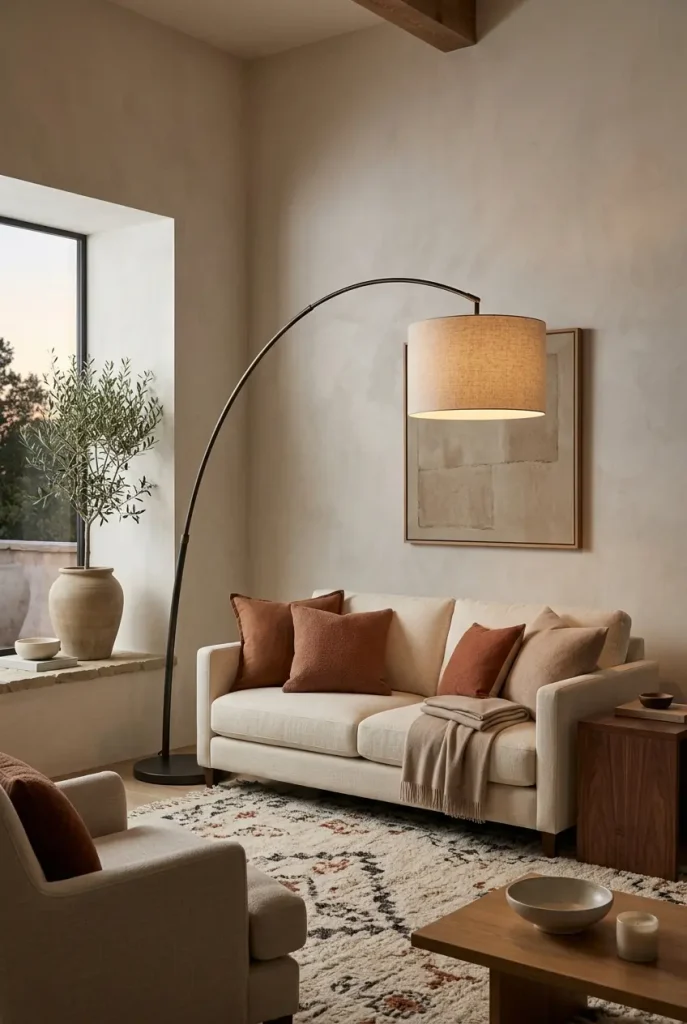
A statement floor lamp provides practical light while acting as a decorative feature in its own right. An arched lamp can extend over a seating area, while a tripod lamp introduces a sculptural shape beside a sofa.
Choose a design that suits the room’s proportions. A tall lamp can look striking beside a substantial sectional, but a smaller space may benefit from a slim silhouette that occupies less visual space.
Think about the light it produces, too. A shaded lamp with a warm bulb is useful for general ambient lighting, while an adjustable task lamp may be better for reading.
33. Finish With a Layered, Lived-In Styling Approach
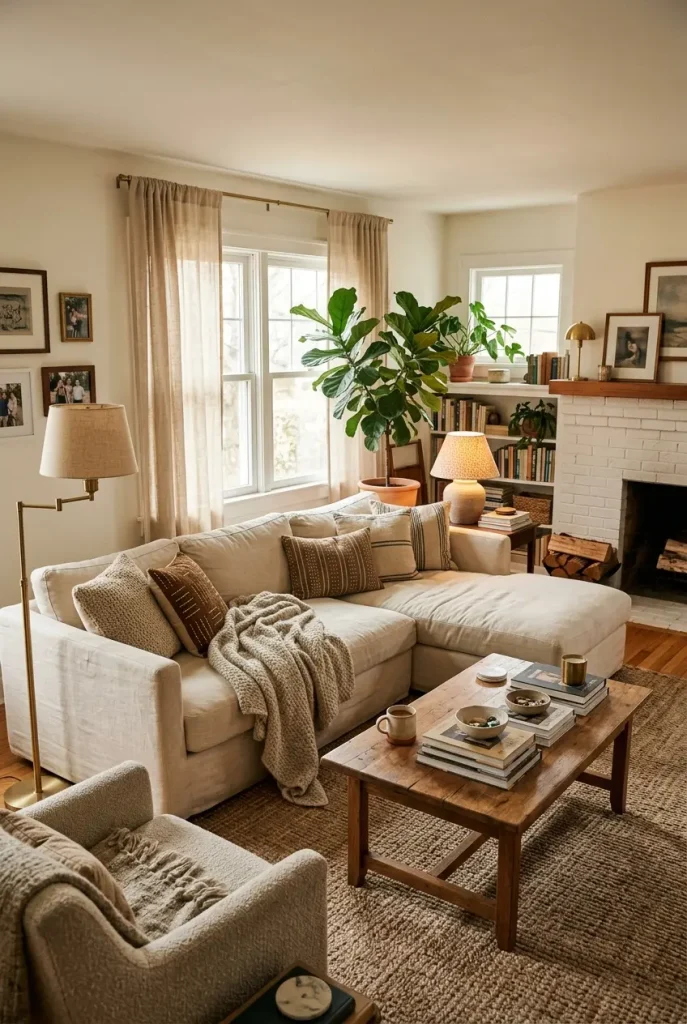
The most inviting living rooms rarely rely on a single decorative trick. They combine comfortable furniture, layered lighting, tactile fabrics, useful surfaces, and personal details in a way that feels natural.
Instead of buying everything at once, build the room gradually. Start with the sofa and rug, add the lighting you need for everyday activities, and then introduce cushions, artwork, plants, books, and meaningful objects.
A little imperfection helps the room feel approachable. A throw draped over an armrest, a book left on the coffee table, or a favorite ceramic piece on the shelf can make the space feel ready to use rather than permanently staged.
A simple finishing checklist:
- Is the main seating comfortable and easy to access?
- Does the room have enough warm, layered lighting?
- Are the major colors and materials connected?
- Is there enough space for everyday activities?
- Do the decorative objects reflect the people who live there?
The goal isn’t to fill every empty corner. It’s to create a living room that looks considered and feels comfortable throughout the day.