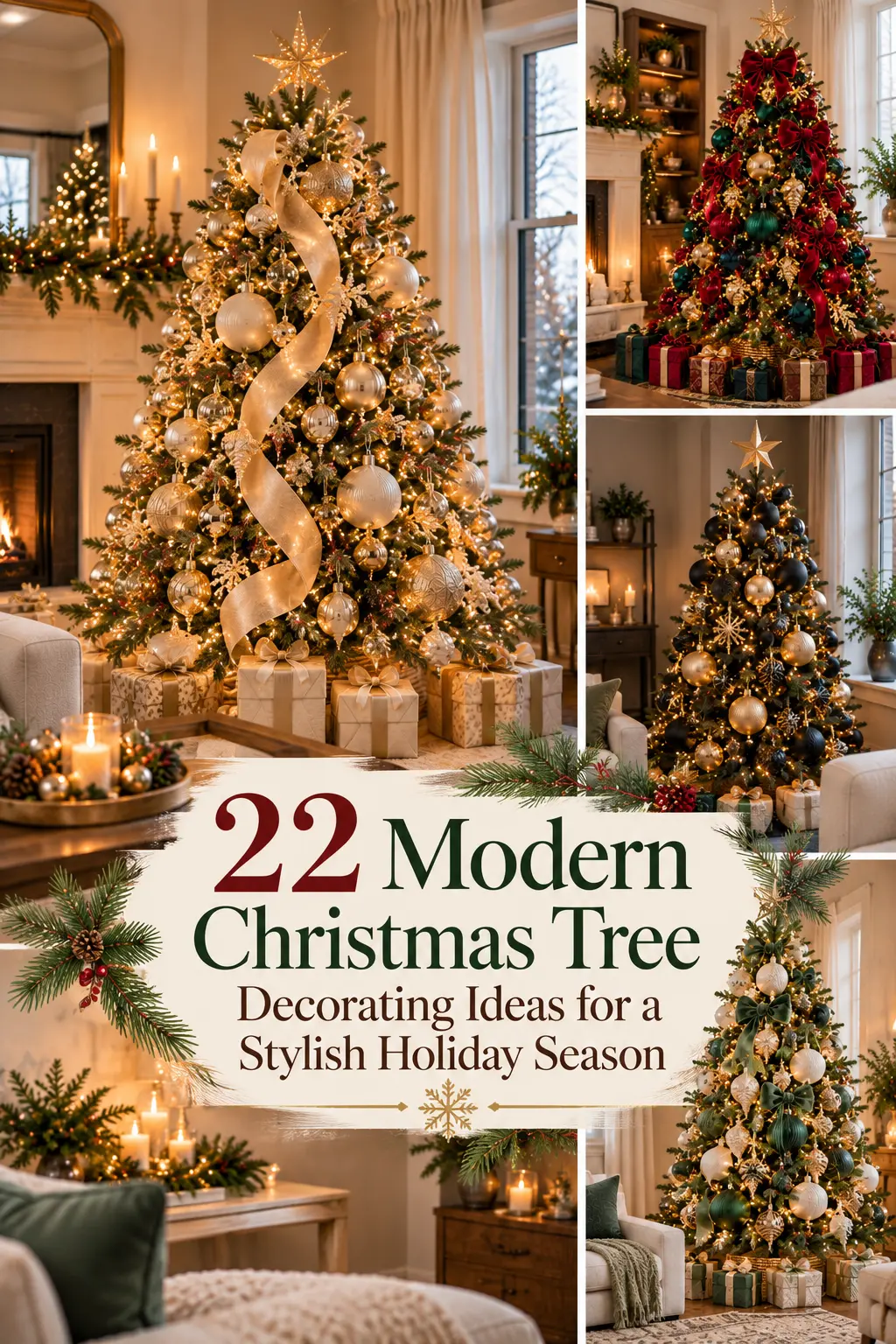
22 Modern Christmas Tree Decorating Ideas for a Stylish Holiday Season
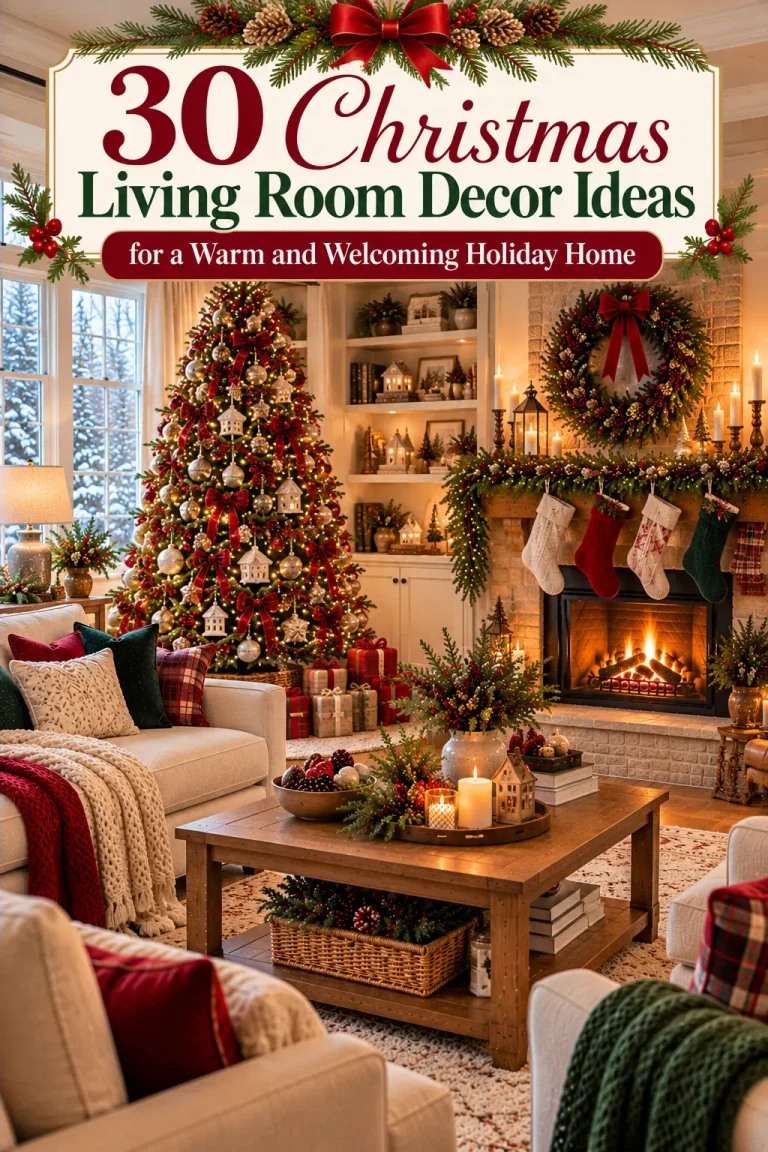
A modern Christmas tree can make your holiday home feel festive without overwhelming the rest of your decor. Instead of covering every branch with ornaments, focus on a thoughtful color palette, a mix of textures, and a few well-chosen details that give the tree a polished appearance.
From understated Scandinavian greenery to dramatic black-and-gold accents, modern Christmas tree decorating ideas offer plenty of ways to personalize your holiday style. Some looks rely on inexpensive ribbon and handmade ornaments, while others feature glass decorations, designer-inspired metallic finishes, or coordinated lighting.
The best approach is to choose a style that complements your existing furniture, wall colors, and room size. Whether you’re decorating a small apartment or a spacious living room, these 22 ideas will help you create a Christmas tree that feels contemporary, inviting, and beautifully considered.
1. Choose an Elegant Champagne and Gold Christmas Tree
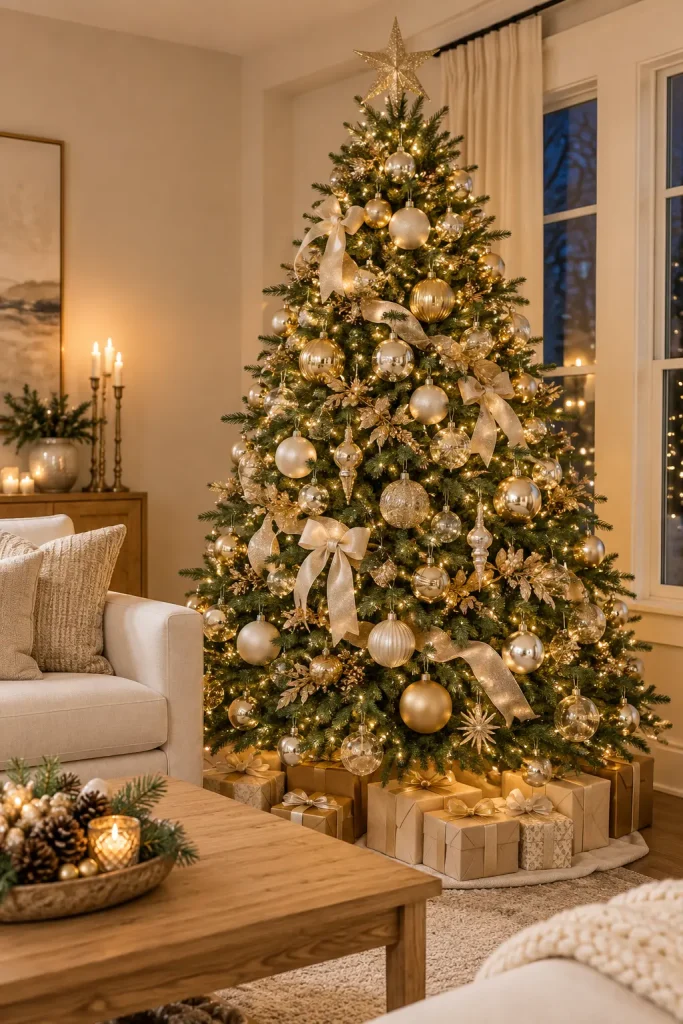
A champagne-and-gold Christmas tree brings a refined, warm glow to a modern holiday interior. Combine matte champagne baubles, brushed-gold ornaments, and a few reflective glass decorations against deep green branches. Warm-white string lights help the metallic finishes sparkle without making the display look overly shiny.
For a cohesive appearance, repeat the gold tones in two or three places around the room, such as a candleholder, a decorative tray, or a picture frame. Cream ribbon and natural wood accents can soften the metallic palette.
Styling tip: Mix large and small ornaments instead of using one size throughout the tree. Larger baubles create visual structure, while smaller decorations fill gaps between the branches.
2. Create a Scandinavian Christmas Tree With Natural Materials
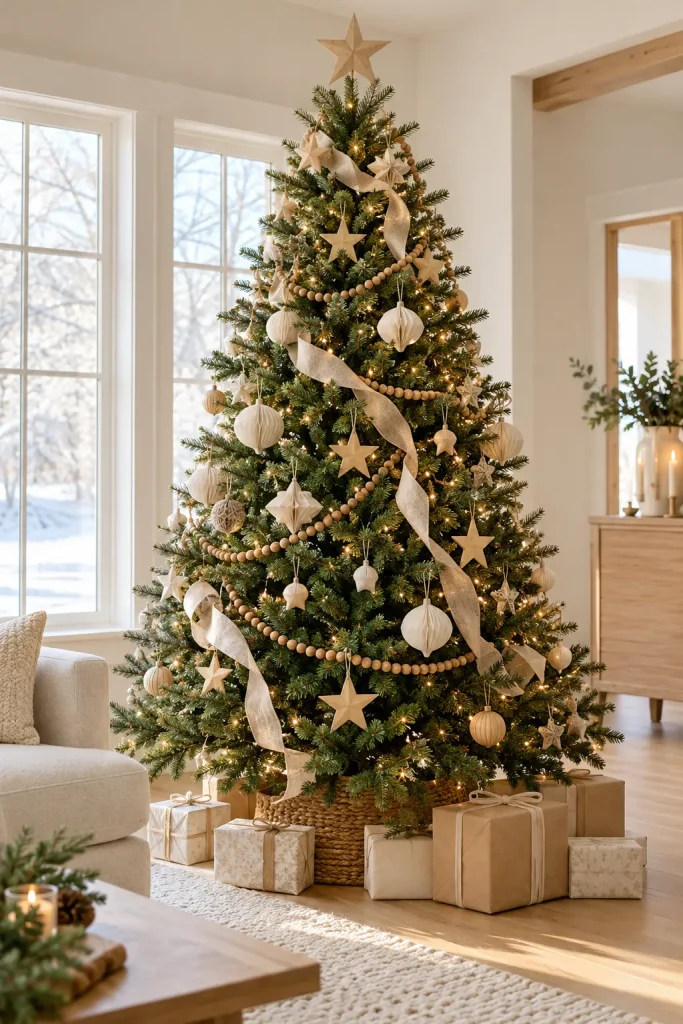
Scandinavian Christmas decor celebrates simplicity, natural materials, and comfortable living. For this look, decorate a fresh-looking green tree with wooden stars, unpainted wooden beads, cream paper ornaments, and a few linen ribbons. Keep the branches visible rather than filling every space with decorations.
A simple woven basket around the tree stand or a plain wooden collar reinforces the natural aesthetic. Use warm-white lights sparingly so the greenery and handmade details remain the focus.
This style is particularly effective in smaller homes because its restrained decoration keeps the room feeling open. It also works well with white walls, pale wood floors, neutral textiles, and simple furniture.
3. Decorate With Oversized Velvet Bows
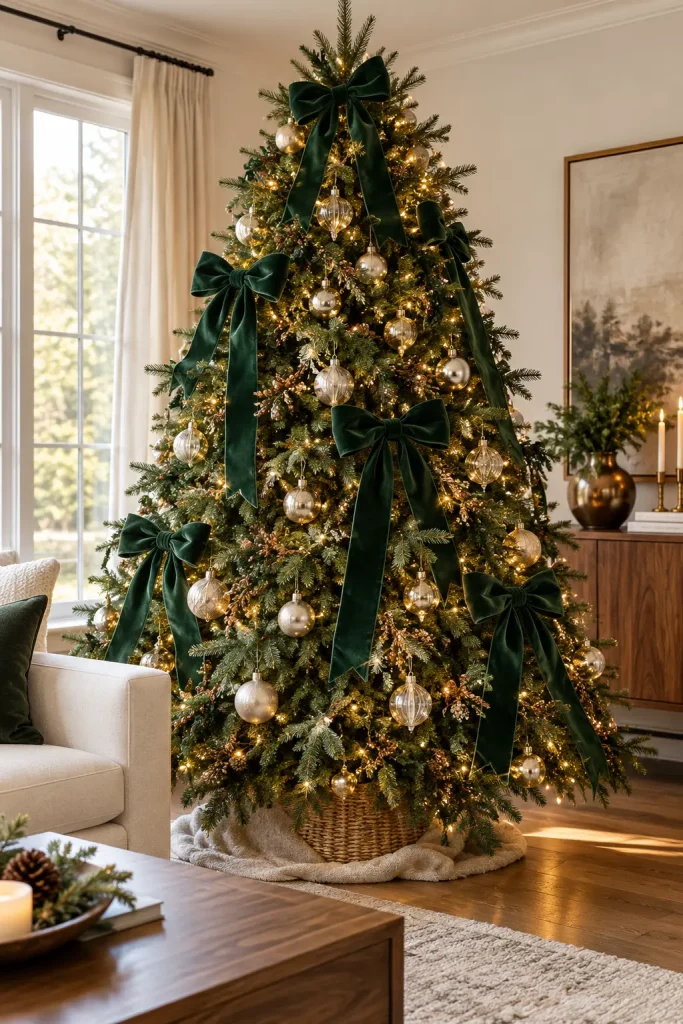
Velvet bows are a simple way to make a Christmas tree look intentionally styled. Choose forest green, burgundy, chocolate brown, or ivory velvet, depending on the colors already present in your home.
Rather than attaching identical bows in perfectly straight rows, distribute them at different heights and angles. Allow the ribbon tails to fall naturally between the branches, and add a few glass or metallic ornaments to create contrast.
For an understated tree, use bows as the primary decoration and leave generous stretches of greenery visible. If you prefer a fuller appearance, combine the bows with coordinating baubles and a matching fabric tree topper.
Quick Tip: Wired velvet ribbon holds its shape well, making it easier to create full loops and graceful tails.
4. Go Bold With a Black and Gold Color Scheme
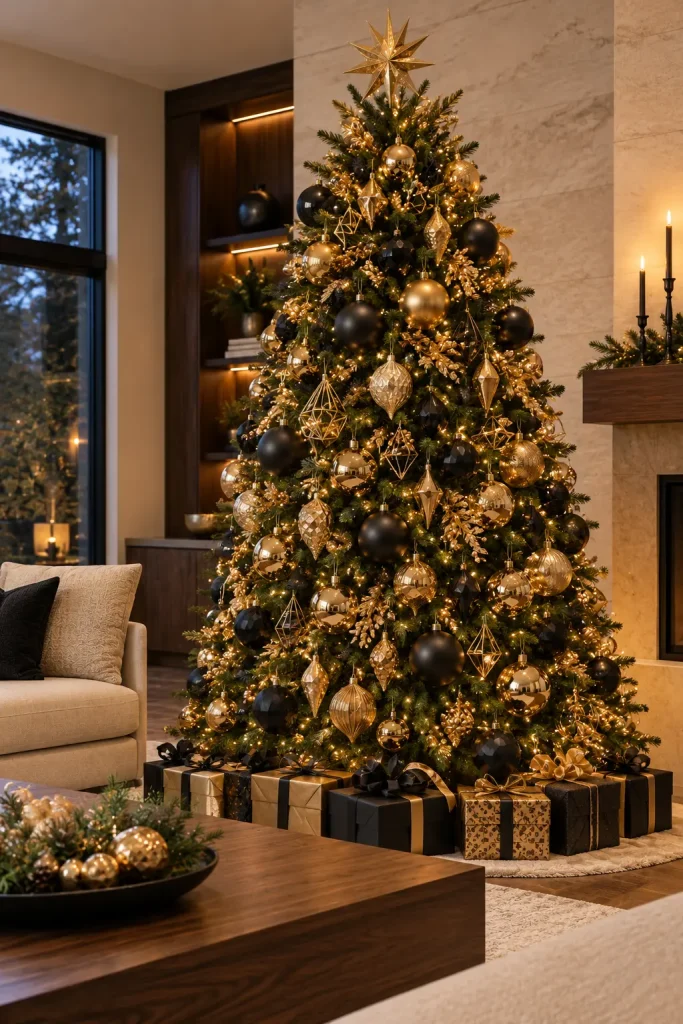
Black and gold create a dramatic Christmas tree that feels modern rather than traditional. Use matte-black ornaments as the foundation, then introduce brushed-gold baubles, geometric decorations, and warm lighting for contrast.
This palette works especially well against white walls, charcoal furniture, or a room with dark wood accents. If the surrounding space already contains several dark finishes, use more gold and glass ornaments to keep the tree from blending into the background.
For a less formal interpretation, incorporate natural wood, cream ribbon, or a neutral tree collar. These details soften the high-contrast palette while preserving its contemporary character.
5. Try a Frosted White Christmas Tree
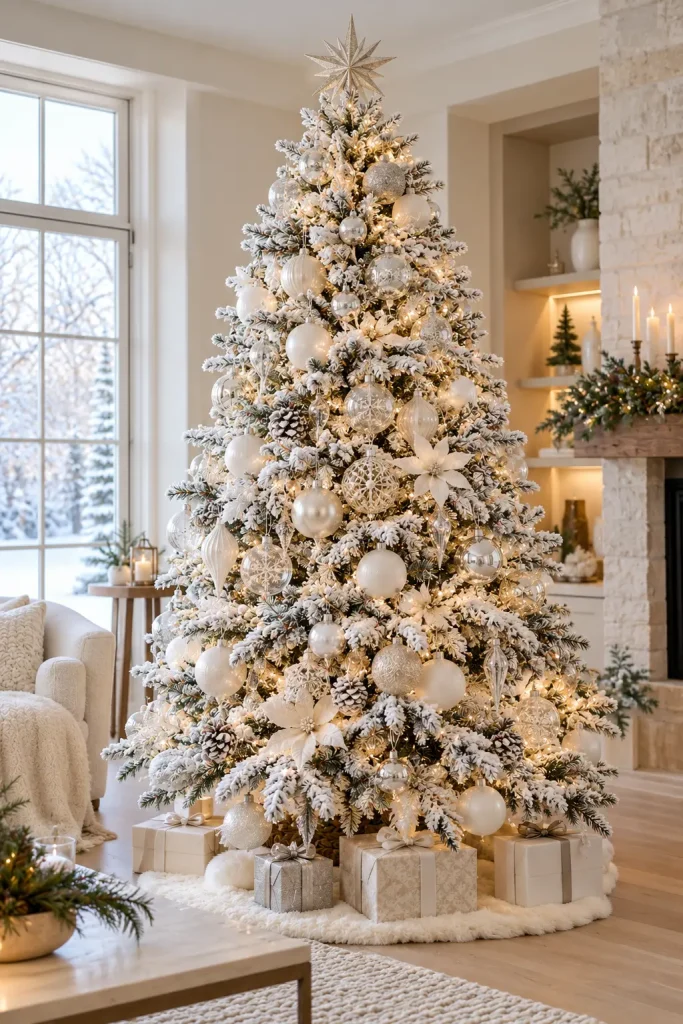
A flocked Christmas tree creates the appearance of freshly fallen snow and gives holiday decorations a softer, winter-inspired finish. Pair white-coated branches with ivory ornaments, silver baubles, clear glass decorations, and subtle warm lighting.
For a more contemporary look, avoid adding too many competing colors. A limited palette of white, silver, and pale wood makes the tree feel calm and cohesive.
Flocked trees can shed artificial snow, so consider where you’ll place the tree if you have dark flooring or want to minimize cleanup. Keep the base neat with a white woven collar or a simple textured tree skirt.
6. Embrace a Minimalist Tree With Sparse Ornaments
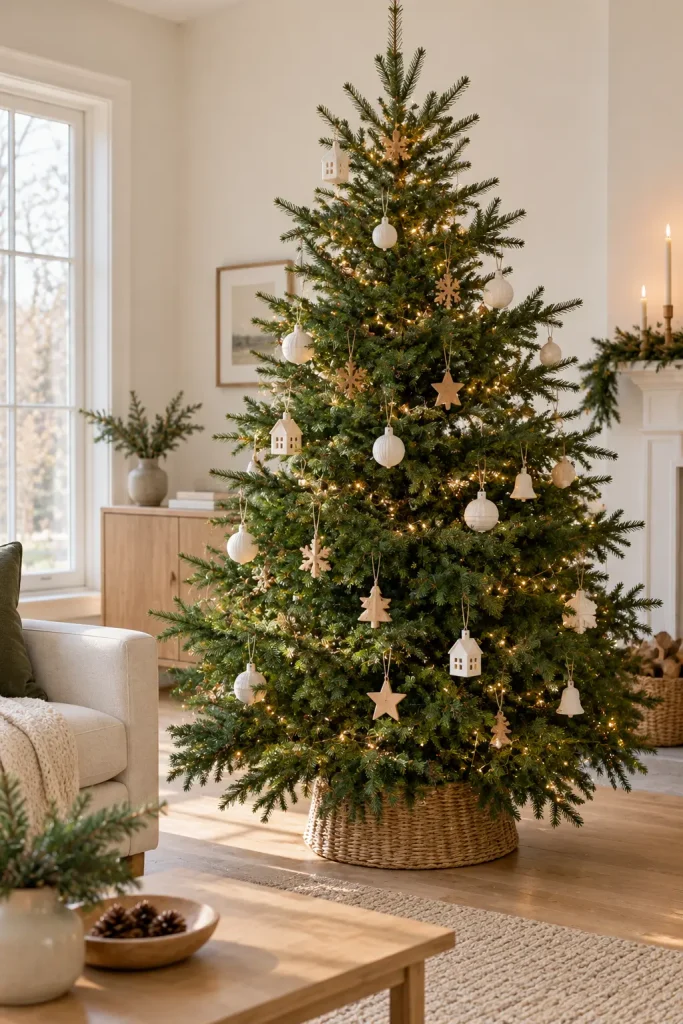
A minimalist Christmas tree is ideal if you prefer clean lines and uncluttered rooms. Start with a naturally shaped tree and choose a small collection of decorations in one or two complementary finishes. Ceramic ornaments, simple wooden shapes, and a few delicate lights can be enough.
The key is to make each ornament count. Space decorations across the tree rather than clustering them in one area, and let the silhouette of the branches remain visible.
This approach can also reduce decorating costs because you don’t need dozens of ornaments to complete the look. Invest in a few pieces with interesting shapes or textures that you can reuse in future holiday seasons.
Do: Consider the tree’s natural shape part of the design.
Don’t: Add extra ornaments simply because some branches remain visible.
7. Make Burgundy and Deep Red Feel Contemporary
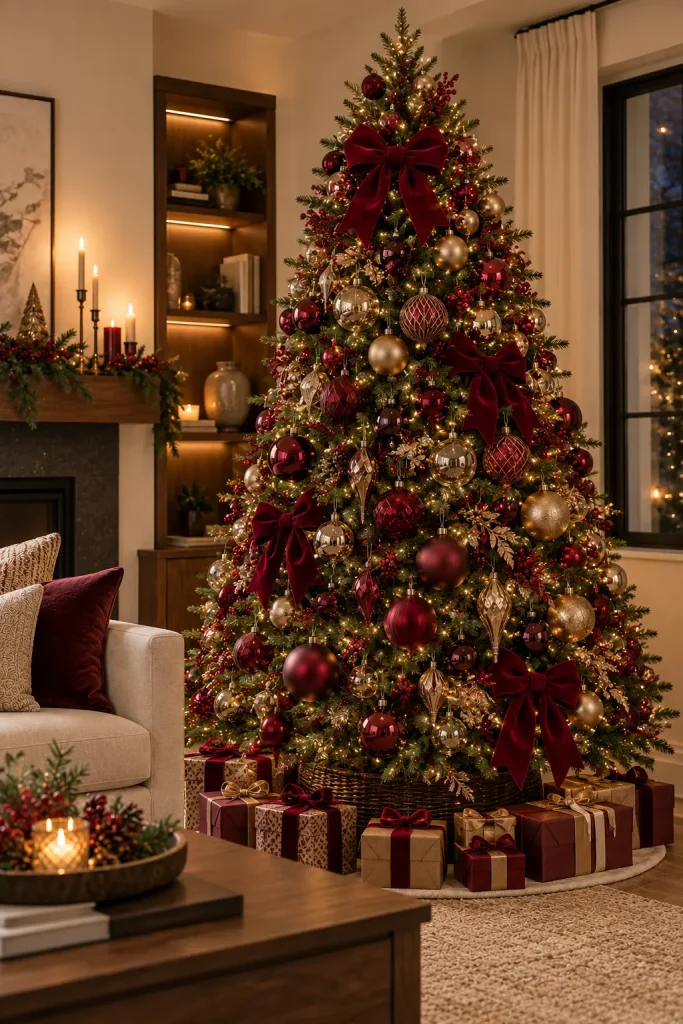
Traditional red Christmas decorations can feel surprisingly modern when you move away from bright primary red. Burgundy, wine, oxblood, and muted cranberry create a richer palette that pairs beautifully with deep green branches.
Mix glossy burgundy baubles with matte red ornaments and velvet ribbon. Add a handful of antique-brass or champagne accents for warmth, keeping the metallic details secondary to the red tones.
This combination suits rooms with walnut furniture, cream walls, leather seating, or darker wood finishes. If you want the tree to feel lighter, incorporate a few ivory ornaments to break up the deeper colors.
8. Style a Silver and Icy Blue Christmas Tree
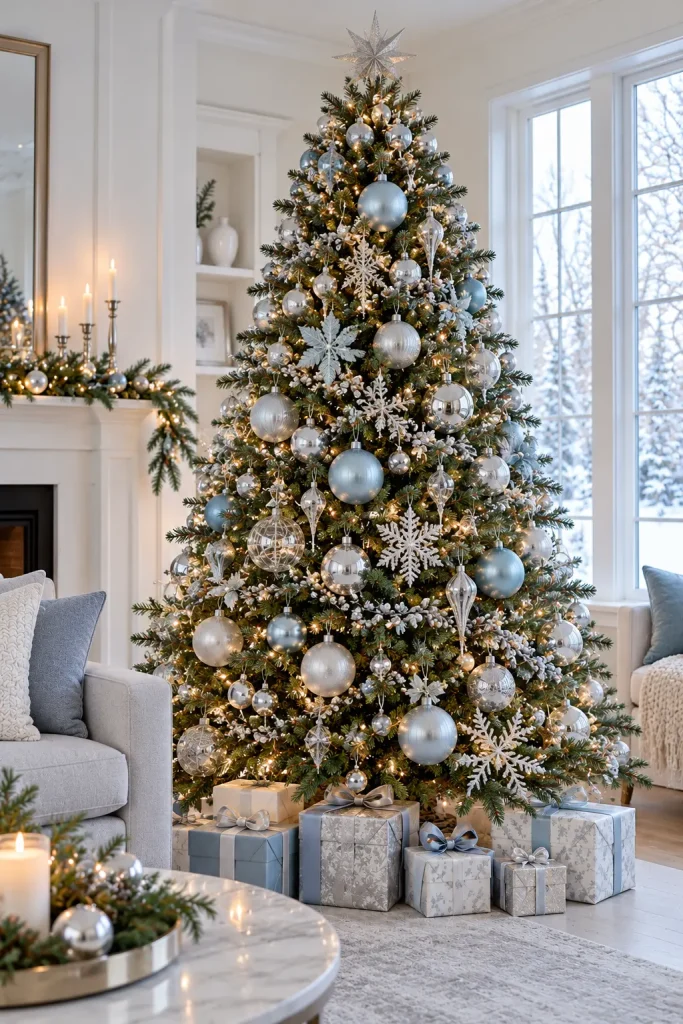
Silver and icy blue give a Christmas tree a crisp, cool-toned appearance. Use pale blue baubles, silver snowflakes, clear glass ornaments, and delicate metallic garlands. A few mirrored decorations can catch the light and add dimension.
This palette looks especially effective in rooms with cool gray upholstery, white walls, or blue accent pieces. To prevent the tree from feeling too cold, add warm-white lights and a soft ivory tree skirt.
A mix of finishes is important here. Matte blue ornaments keep the display grounded, while silver and clear glass provide brightness and sparkle.
9. Use Natural Greenery for a Tonal Green Tree
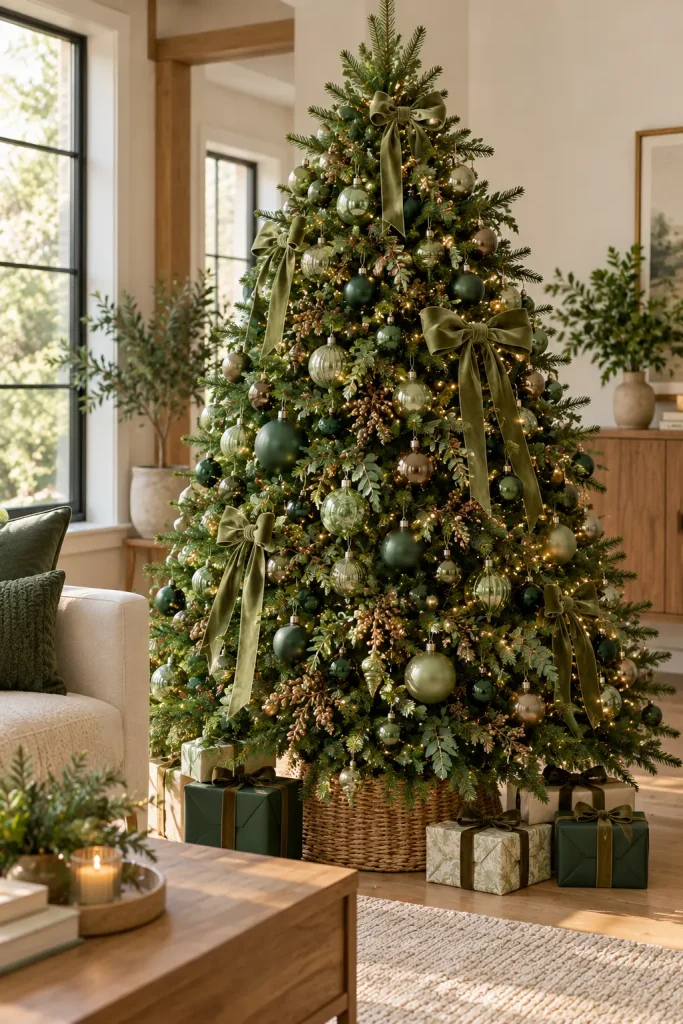
A green-on-green Christmas tree offers a quieter alternative to heavily contrasting holiday palettes. Layer forest-green, sage, olive, and muted eucalyptus-toned decorations across the branches, allowing the tree itself to remain the main feature.
Choose ornaments with different finishes to keep the monochromatic palette interesting. Matte baubles, translucent green glass, velvet ribbon, and subtle bronze details introduce depth without disrupting the color story.
The approach works particularly well in interiors that already use plants, natural wood, or earthy textiles. Repeat a similar shade of green in nearby pillows or a tabletop arrangement to create a connection between the tree and the rest of the room.
10. Wrap the Tree in Wide Satin Ribbon
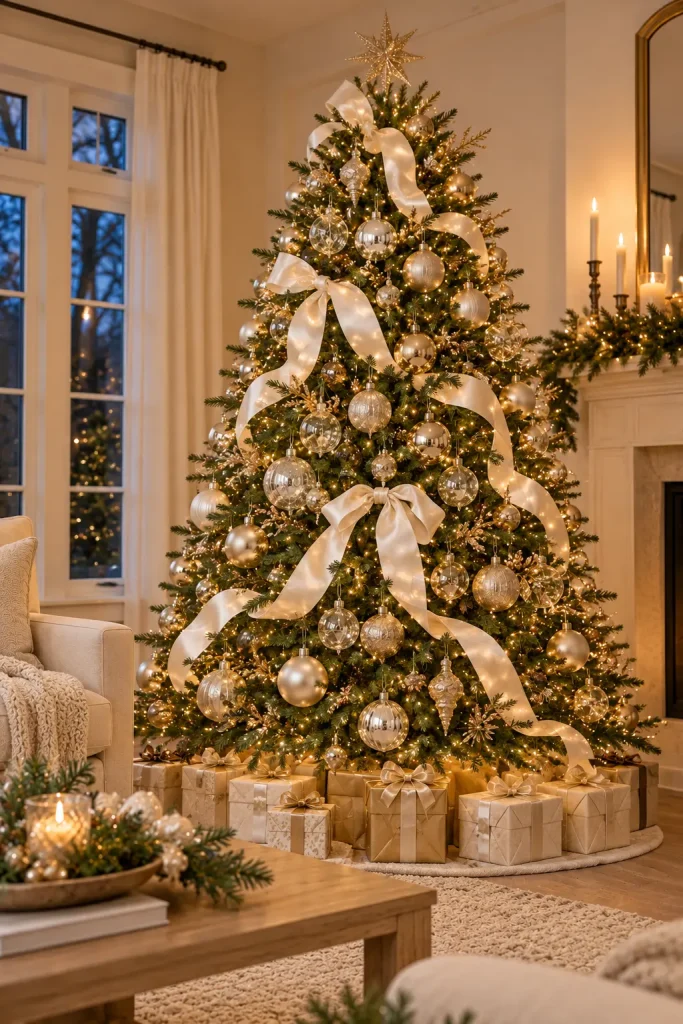
Wide satin ribbon creates flowing lines that guide the eye from the top of the tree toward the base. Ivory, champagne, dusty blue, or muted taupe ribbon can make the display feel coordinated without requiring a large collection of ornaments.
For a graceful result, tuck the ribbon into the branches in loose curves rather than wrapping it tightly around the outside. Let sections disappear behind the greenery before emerging again, creating depth.
Satin reflects light differently from matte ornaments, so it pairs well with simple glass baubles and understated metallic accents. Wired ribbon is useful when you want the folds to stay in place.
Common Mistake: Using ribbon that is too narrow for a large tree can make the decoration look visually insignificant. Choose a width that suits the tree’s overall scale.
11. Decorate With Colorful Retro-Inspired Ornaments
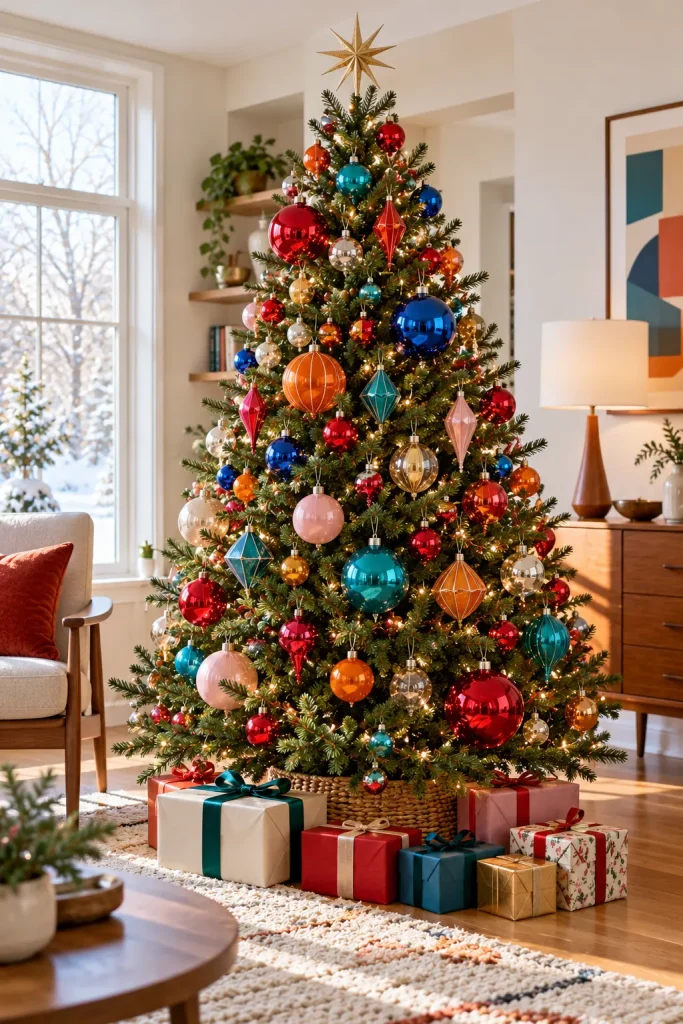
Modern holiday decorating doesn’t have to be neutral. A retro-inspired Christmas tree can feature playful glass ornaments in cherry red, teal, cobalt blue, orange, and pink while still looking intentional.
The trick is to repeat each color several times instead of introducing every ornament shade only once. Combine round baubles with distinctive geometric shapes, then use warm-white lights to unify the overall display.
A colorful tree works especially well in a family room, a creative home, or a space with midcentury furniture. Keep nearby decorations relatively simple so the tree remains the focal point.
12. Add Handmade Paper Ornaments

Handmade paper decorations bring an architectural quality to modern Christmas trees. Folded stars, honeycomb ornaments, geometric paper shapes, and simple cream pendants offer texture without the shine of conventional glass baubles.
Choose heavyweight paper in white, kraft, soft gray, or muted holiday colors. A mixture of sizes creates visual interest, while repeating the same few shapes keeps the design cohesive.
This is also a useful option for anyone who wants to decorate on a budget or create a family craft project. Paper ornaments are lightweight, but they should be kept away from candles, fireplaces, and other heat sources.
13. Create a Modern Tree With Metallic Copper Accents
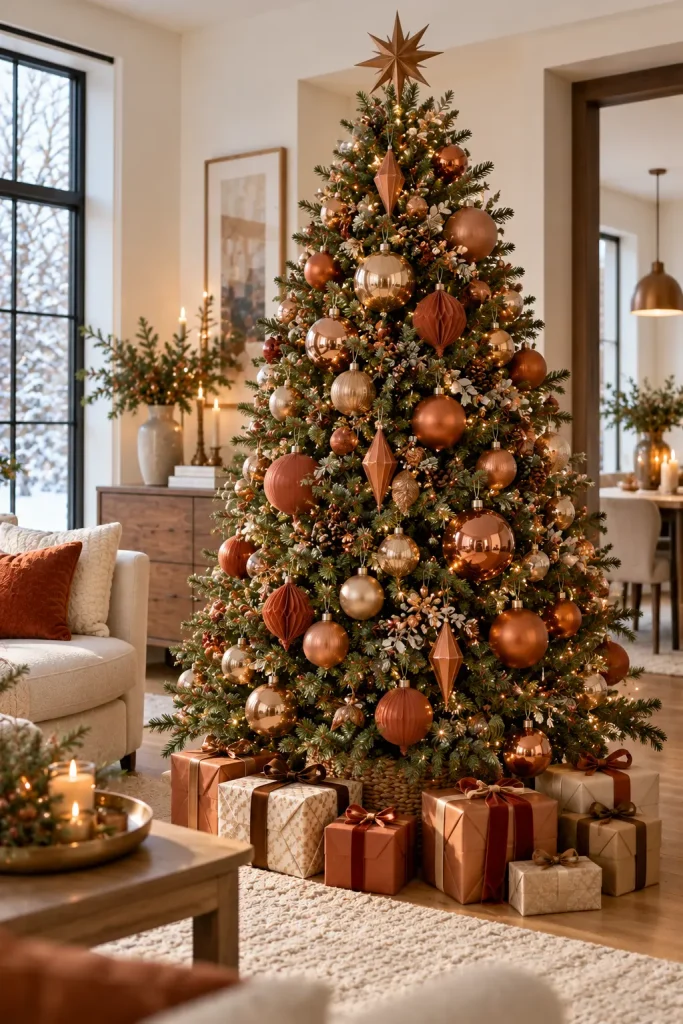
Copper brings warmth to Christmas tree decorations without the traditional brightness of polished gold. Pair copper baubles with terracotta-colored ornaments, muted bronze details, and warm-white lighting for an earthy metallic palette.
This combination complements natural oak, walnut, leather, and warm neutral interiors. If your tree is already decorated with green and brown tones, copper can provide enough contrast to make the branches stand out.
Use a mixture of brushed and lightly reflective finishes. Too many highly polished ornaments can compete with one another, while matte copper and bronze introduce a more subtle, layered appearance.
14. Make a Small Christmas Tree Look Designer-Inspired
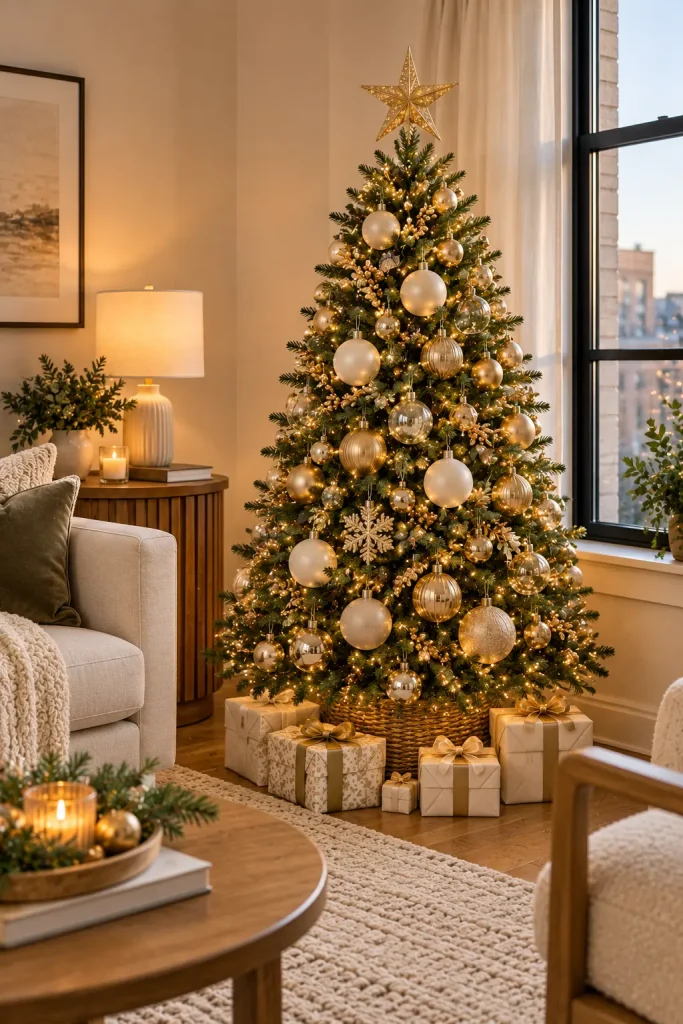
A small Christmas tree can look just as considered as a full-size one. The key is to scale the decorations to the branches rather than simply using smaller versions of everything.
Choose a compact tree with a pleasing silhouette, then use a limited palette such as ivory and gold, silver and blue, or green and wood. A raised planter or decorative collar can give the tree more presence without taking up much floor space.
For apartments, bedrooms, and home offices, tabletop trees or slim floor models are practical alternatives. Leave enough room around the base for comfortable movement, and use a compact lighting strand that doesn’t overwhelm the branches.
Quick Tip: A few medium-sized ornaments often create a clearer design than dozens of tiny decorations on a small tree.
15. Choose a Slim Pencil Tree for a Small Room
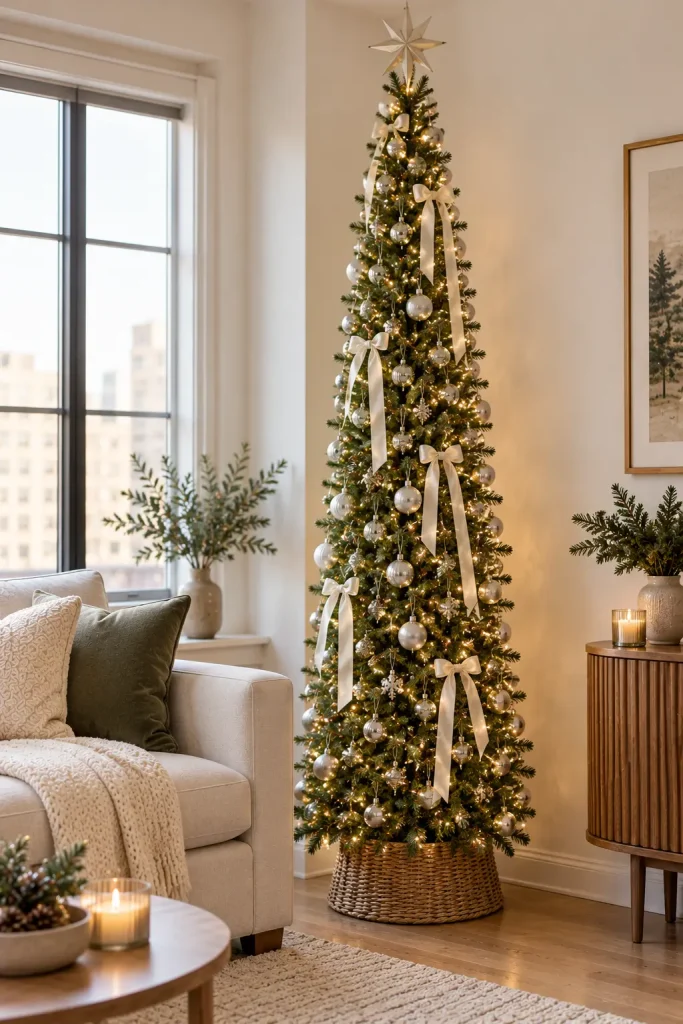
A pencil Christmas tree has a narrow profile that makes it useful for apartments, small living rooms, and spaces where a wide tree would obstruct furniture or walking paths. Its vertical shape can create a festive focal point without requiring a large footprint.
Decorate it with elongated ornaments, narrow ribbon, and evenly distributed lights. A restrained palette of silver and white, burgundy and gold, or green and natural wood helps the narrow silhouette feel deliberate rather than sparse.
Before buying a tree, check both its maximum width and its height, including the topper. Leave enough clearance for doors, windows, and nearby seating.
16. Try a Moody Forest-Inspired Christmas Tree
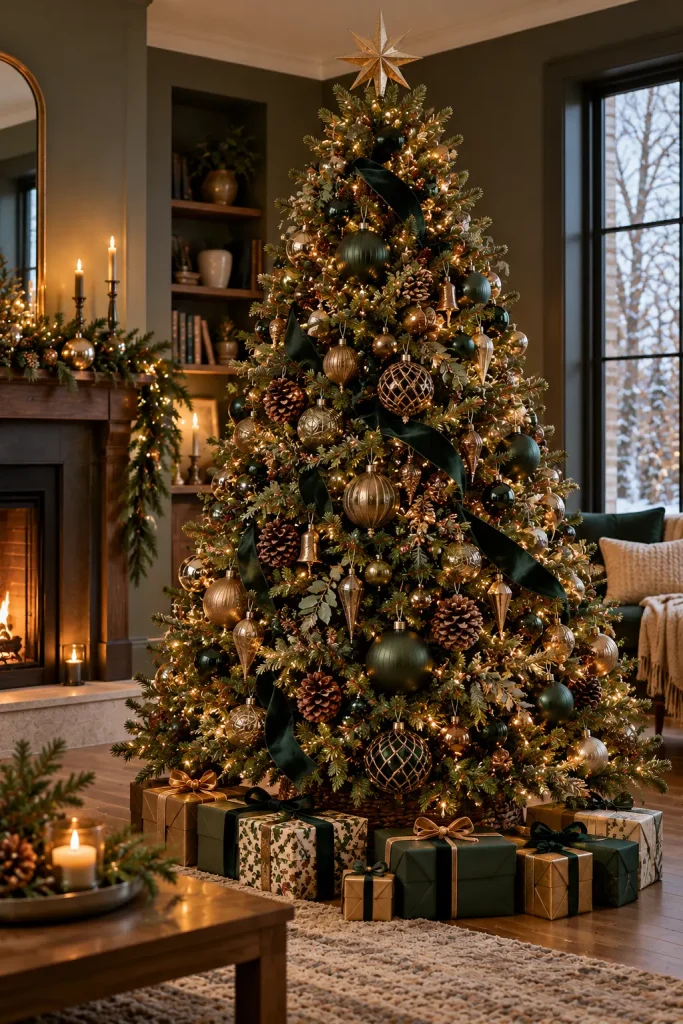
For a more dramatic holiday interior, draw inspiration from a winter forest. Deep green branches, dark green baubles, natural pinecones, and blackened-brass accents create a rich, layered appearance.
Instead of relying on bright metallic decorations, combine natural materials with a few reflective ornaments that catch the warm light. A dark green velvet ribbon can add softness, while a simple linen tree skirt prevents the overall look from becoming too heavy.
This style works well in rooms with dark wood, olive walls, leather furniture, or warm-toned lighting. In a smaller or darker room, introduce a few lighter ornaments to maintain definition between the branches.
17. Coordinate the Tree With Your Living Room Palette
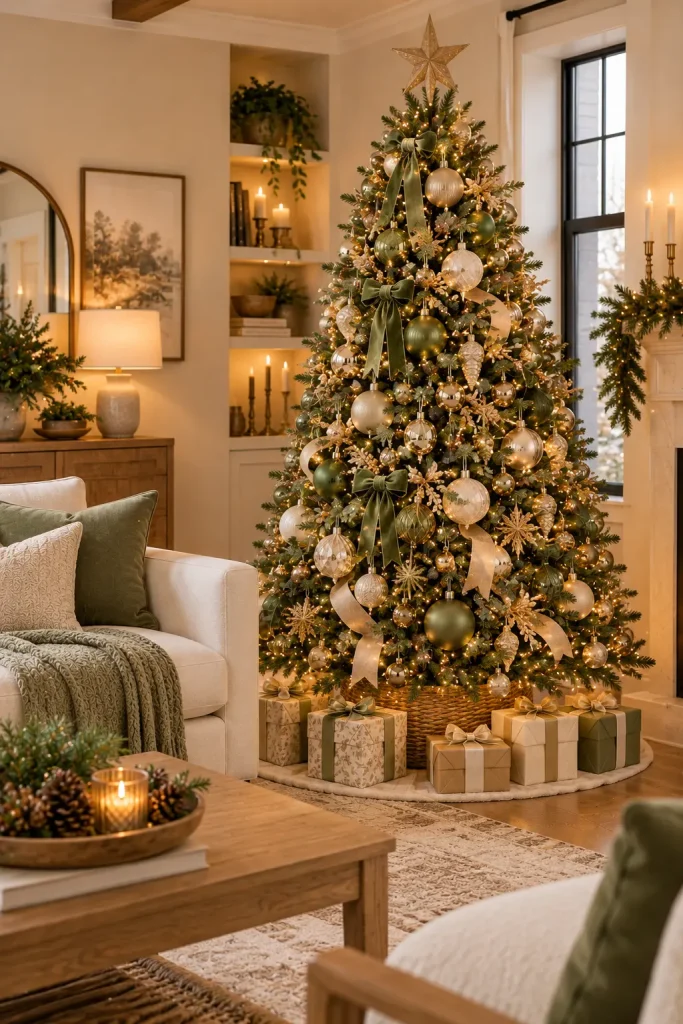
One of the simplest ways to create a polished Christmas tree is to borrow colors from the room itself. If your living room features sage cushions, cream upholstery, and tan wood finishes, carry those tones into the holiday decorations.
This doesn’t mean every ornament needs to match the furniture exactly. Instead, select two or three existing colors and add one complementary accent. For example, a neutral room can accommodate muted green ornaments and brushed-brass details without losing its everyday character.
Try this simple process:
- Identify the two dominant colors in the room.
- Select ornaments in those shades or close variations.
- Add one contrasting material, such as glass, velvet, or brushed metal.
- Repeat one or two colors in the tree skirt and nearby accessories.
The result is a Christmas tree that feels integrated into the home rather than like a separate decorative arrangement.
18. Use Clear Glass Ornaments for an Airy Look
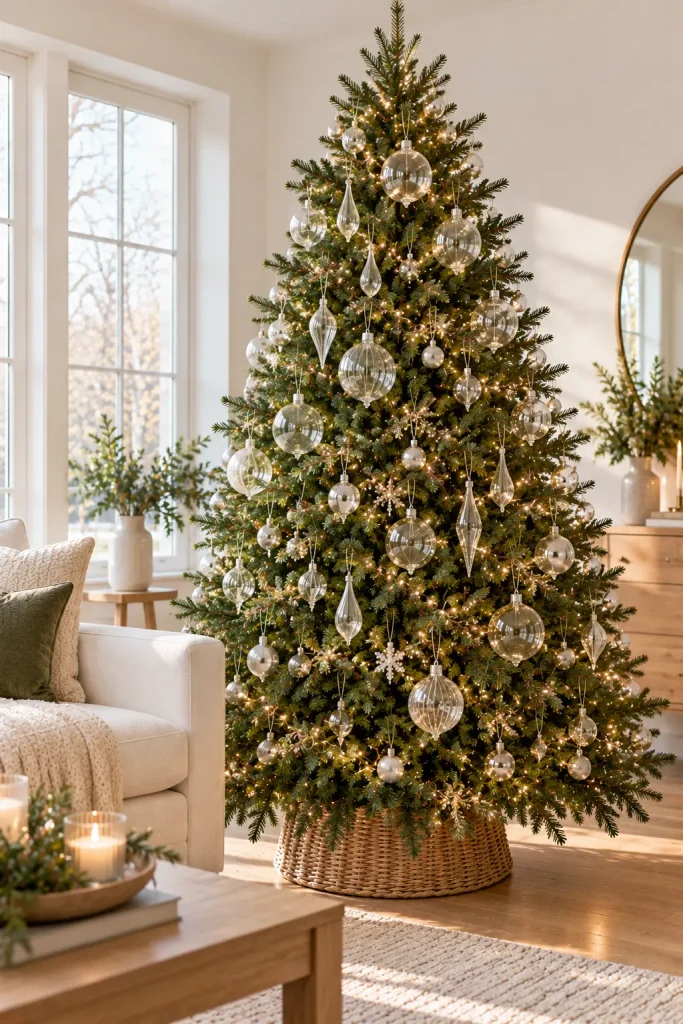
Clear glass ornaments add shine without introducing another strong color. Their transparency allows the green branches to remain visible, creating a lighter appearance than a tree covered in opaque decorations.
Mix smooth glass balls with ribbed ornaments, delicate glass drops, and a few clear shapes with subtle metallic details. Warm-white lights create gentle reflections across the glass, especially in the evening.
This style suits modern, minimalist, and Scandinavian interiors. It can also help a heavily decorated tree feel less visually crowded because the ornaments don’t block the branches as completely.
19. Add Natural Wood and Handmade Ceramic Decorations
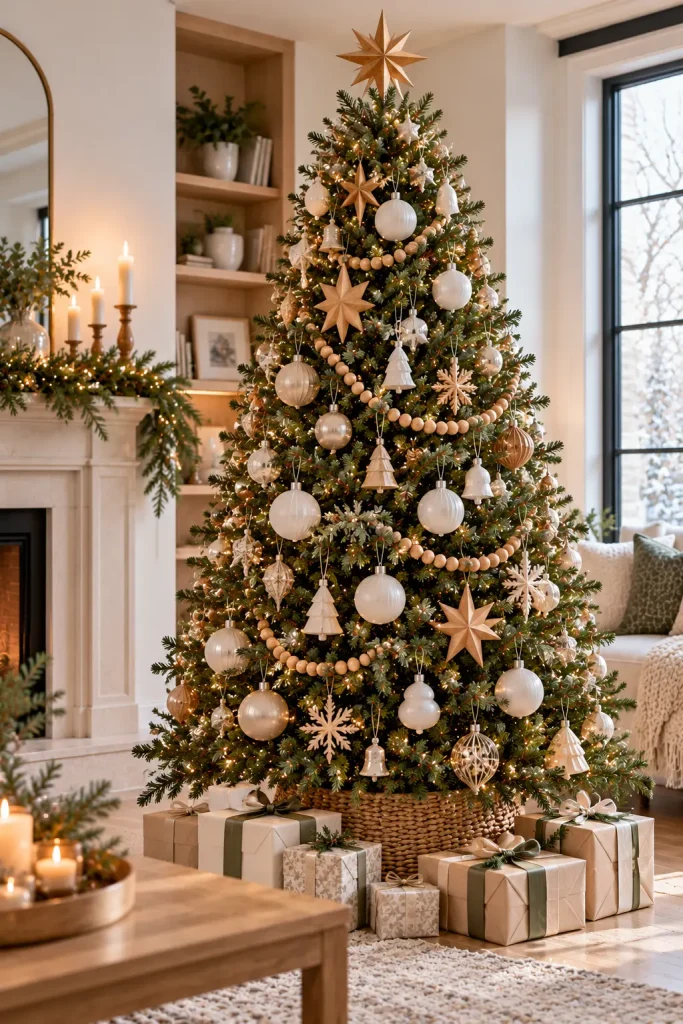
Wooden and ceramic ornaments offer a tactile alternative to glossy glass decorations. Small carved stars, wooden beads, handmade-looking ceramic baubles, and simple sculptural shapes give a tree an understated, handcrafted character.
Choose a consistent color family to prevent the mixture of materials from looking scattered. Natural wood paired with white ceramics creates a light, contemporary effect, while darker wood and cream ceramics offer a warmer, more rustic interpretation.
This approach is also practical if you want to build a collection gradually. Add a few meaningful pieces each year, keeping the shapes and finishes compatible with the ornaments you already own.
20. Create a Luxe Tree With Jewel-Tone Decorations
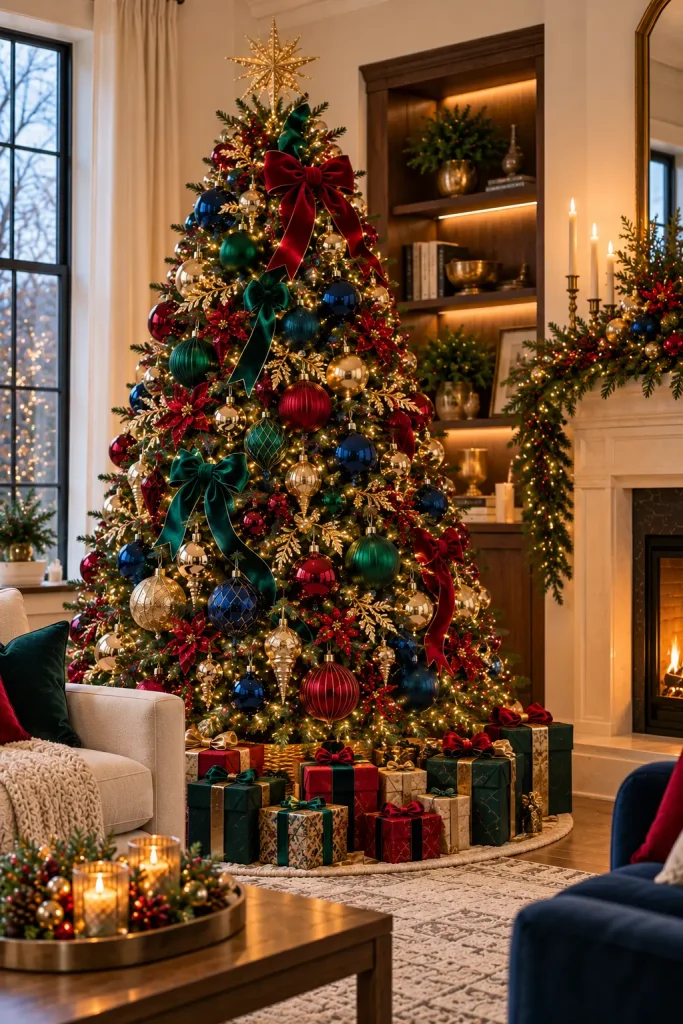
Jewel tones bring richness and color to a modern Christmas tree. Emerald, sapphire, ruby, and amethyst can work together when you balance their intensity with the tree’s natural greenery and a restrained selection of metallic accents.
You don’t need to use every jewel tone. For a more controlled palette, choose two dominant colors, such as emerald and sapphire, and introduce small amounts of gold or burgundy as supporting details.
Glossy glass ornaments add depth, while velvet ribbon and matte baubles soften the shine. This is an especially effective approach in rooms with neutral walls, dark wood furniture, or a classic fireplace.
21. Make Lighting the Main Decorative Feature
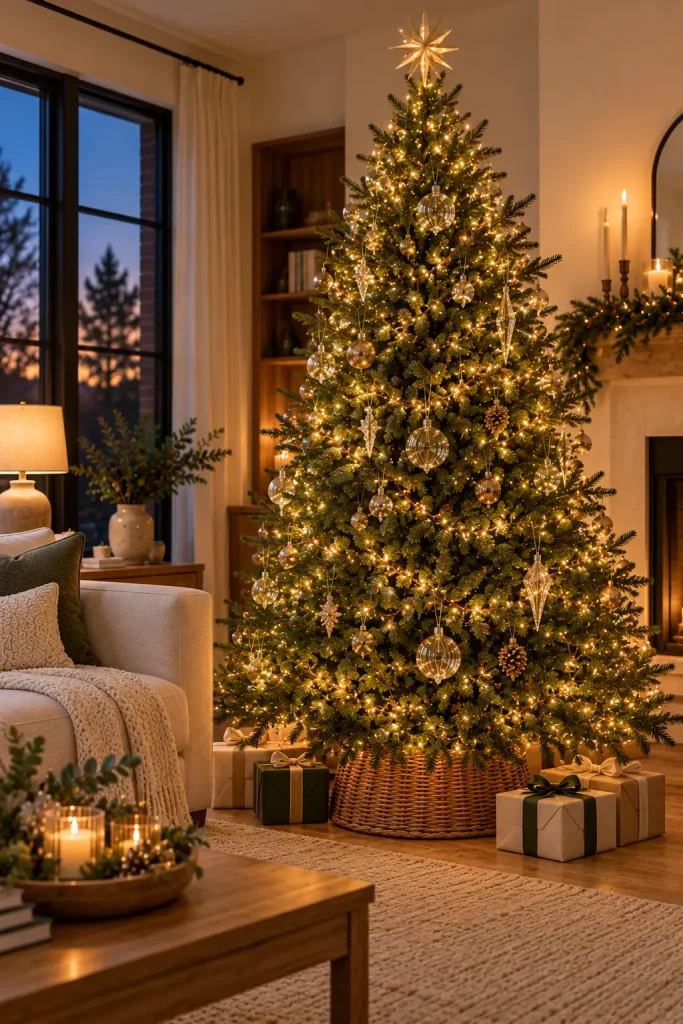
Sometimes the most modern Christmas tree is the one with fewer ornaments and better lighting. Warm-white fairy lights create a gentle glow across the branches, allowing the natural shape of the tree to become the main feature.
Start by placing the lights deeper within the branches, then add another layer closer to the tips for visible sparkle. Work in manageable sections so the distribution remains even from top to bottom.
Keep ornaments to a minimum: a handful of clear glass decorations, a few metallic baubles, or simple white accents can be enough. The surrounding room should have enough ambient lighting for the tree to feel inviting rather than isolated in darkness.
For a realistic holiday setup, use lighting products according to their instructions and choose equipment suitable for your particular tree.
22. Finish With a Sculptural Modern Tree Topper
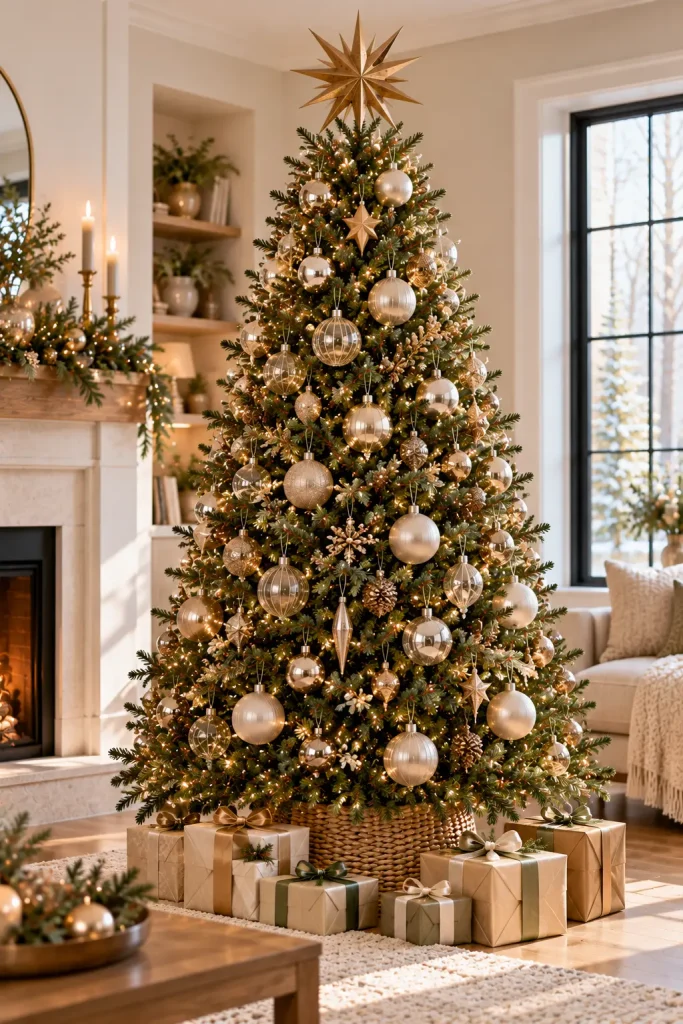
The tree topper is a small detail with a noticeable effect on the overall silhouette. Instead of a traditional oversized star, consider a clean geometric star, a minimalist metal sculpture, a folded-paper design, or an understated abstract shape.
Choose a topper that complements the tree’s decoration rather than introducing an unrelated material or color. A brushed-brass star suits champagne and gold ornaments, while a white sculptural topper works well with Scandinavian or neutral styling.
Pay attention to scale. A very large topper can overwhelm a slim tree, while a tiny ornament may disappear on a broad, full tree. Check that the top branches and support are sturdy enough for the decoration, and secure it according to the product instructions.