
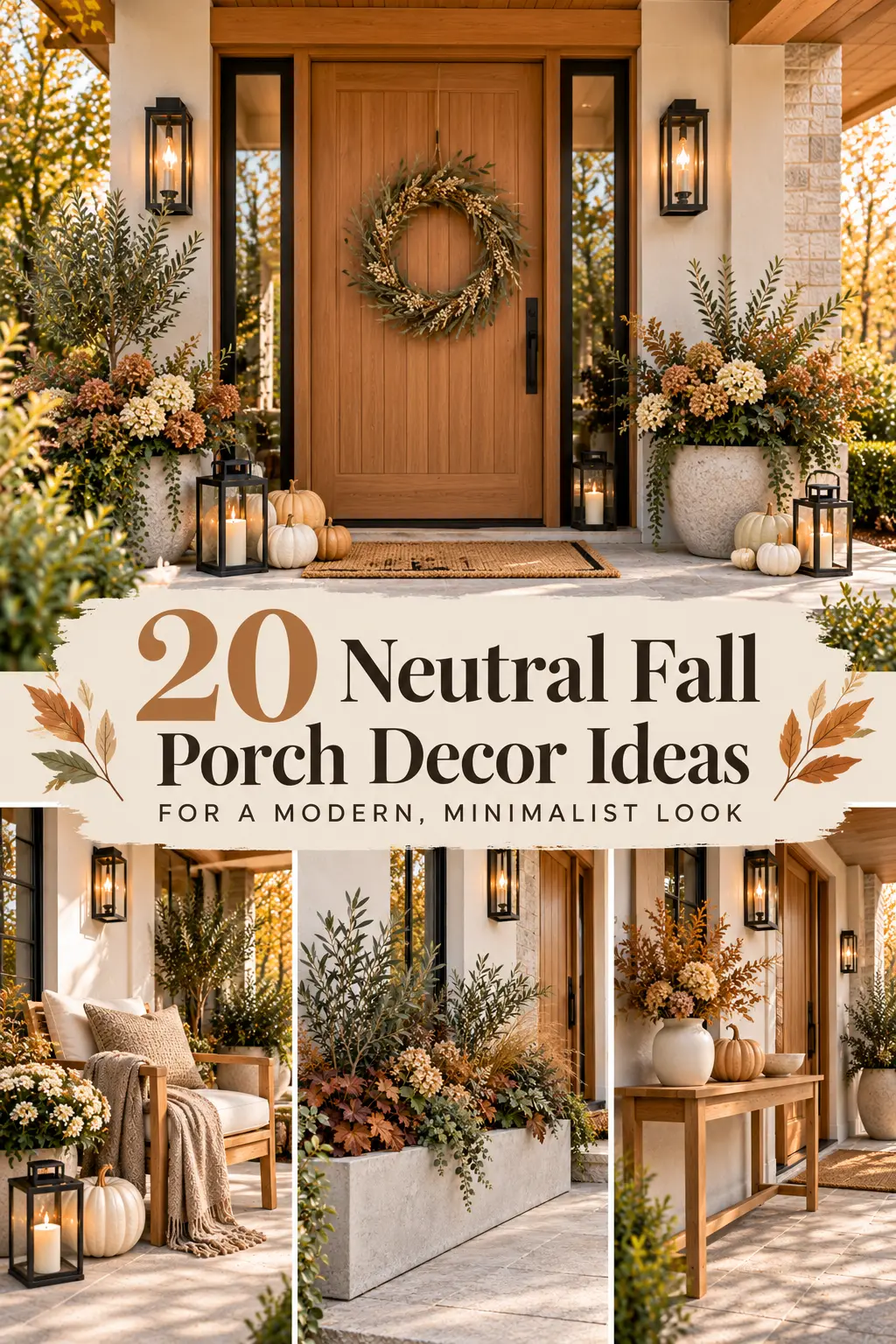
20 Neutral Fall Porch Decor Ideas for a Modern, Minimalist Look
Fall porch decor doesn’t have to rely on bright orange pumpkins, bold plaid patterns, or overflowing seasonal displays. A more restrained approach can feel just as inviting, especially when you combine warm neutrals, natural materials, and a few carefully chosen autumn accents. Think creamy white pumpkins, taupe planters, weathered wood, soft grasses, and muted foliage arranged with plenty of breathing room.
These neutral fall porch decor ideas are designed for modern homes, minimalist entryways, small front steps, and spacious covered porches alike. The key is to create visual interest through texture, shape, and proportion rather than filling every available surface with decorations. Whether you prefer a Scandinavian-inspired entrance, a rustic contemporary look, or a polished black-and-white exterior, you can adapt these ideas to your space and budget.
From understated pumpkin arrangements to sculptural planters and simple seasonal wreaths, each approach offers a practical way to welcome fall while keeping your porch uncluttered.
1. Arrange Cream and White Pumpkins Beside the Front Door
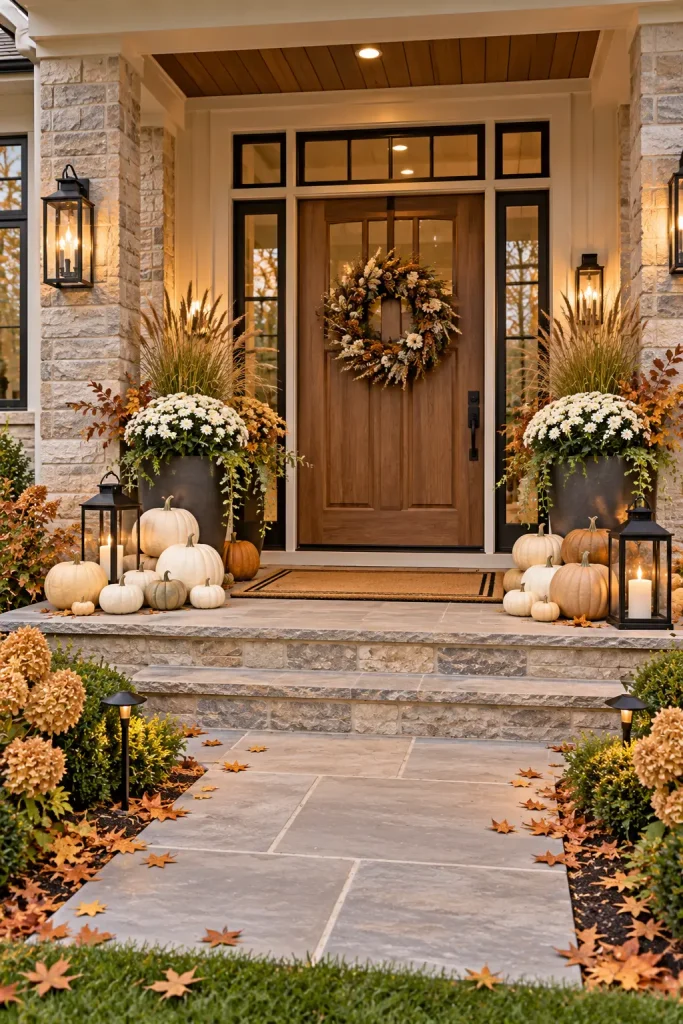
White and cream pumpkins create a soft autumn display without introducing strong seasonal colors. Arrange a small group beside the front door, combining several sizes to make the composition feel intentional rather than scattered.
Choose pumpkins with slightly different finishes, such as smooth ivory varieties, matte cream pumpkins, and a subtly ribbed heirloom style. Place the largest pumpkin toward the back and the smaller ones toward the front, leaving enough space around the arrangement to keep the entryway visually calm.
Styling tip: Use real pumpkins for natural variations in shape or reusable faux pumpkins for a display that lasts throughout the season. A stone step, neutral doormat, or dark door provides a simple backdrop.
2. Style the Porch With Tall Matte-Taupe Planters
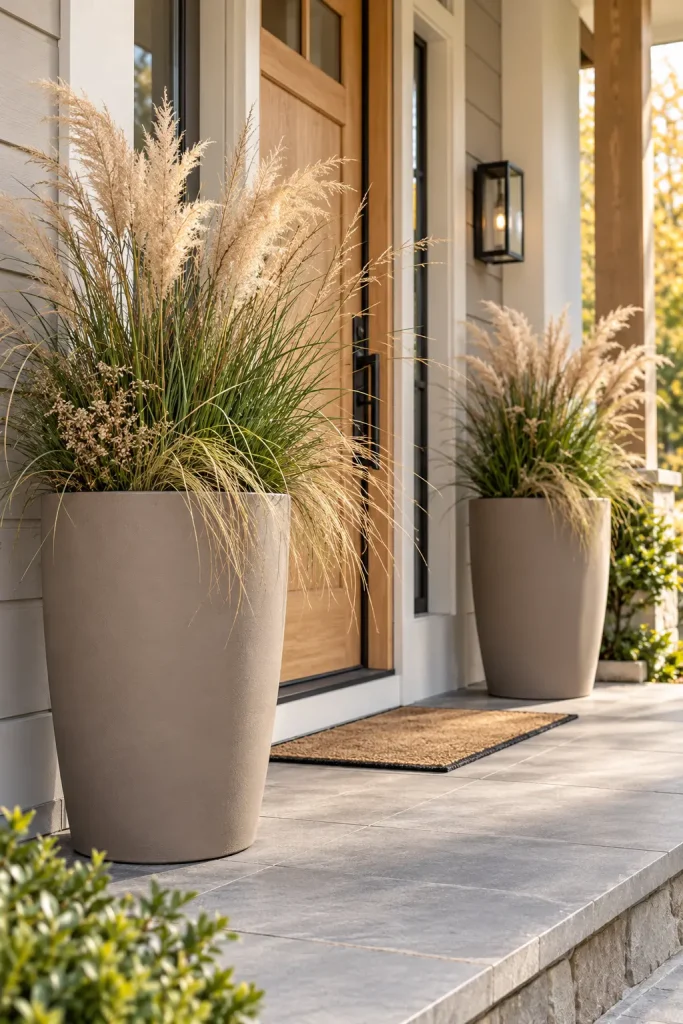
Tall planters add height to a porch without requiring numerous decorative objects. Matte taupe, warm gray, sand, and mushroom-colored containers complement modern siding, natural wood doors, and light-colored brick.
Choose two planters with similar finishes and place one on each side of the entrance if the doorway has enough room. Fill them with ornamental grasses or seasonal foliage that suits your local climate. Their fine leaves introduce movement and texture while maintaining the minimalist aesthetic.
For a narrower porch, a single oversized planter can make a stronger statement than several small pots. Look for simple cylindrical or gently tapered shapes without elaborate patterns.
3. Hang a Simple Dried-Grass Wreath
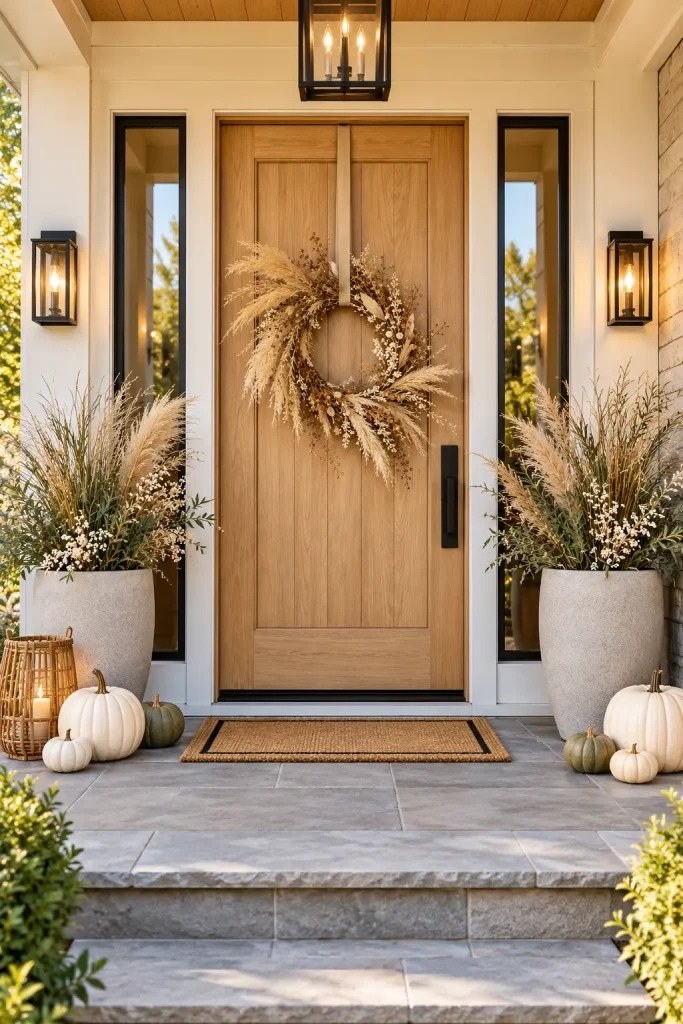
A dried-grass wreath brings seasonal texture to the front door without the fullness of a traditional autumn wreath. Look for a design made with preserved grasses, wheat-colored stems, or small dried seed heads arranged around a thin natural base.
The most modern versions leave some of the base visible, creating an airy silhouette rather than a dense circle. Hang the wreath on a natural wood door or use a simple ribbon in oatmeal, flax, or muted brown.
If the exterior already has strong architectural details, choose a smaller wreath with an open center. On a plain door, a slightly larger design can provide a more noticeable focal point.
Quick Tip: Dried botanicals can become brittle and fade in direct sunlight. A covered porch offers better protection, particularly in windy or rainy weather.
4. Layer a Natural Jute Doormat With a Neutral Outdoor Rug
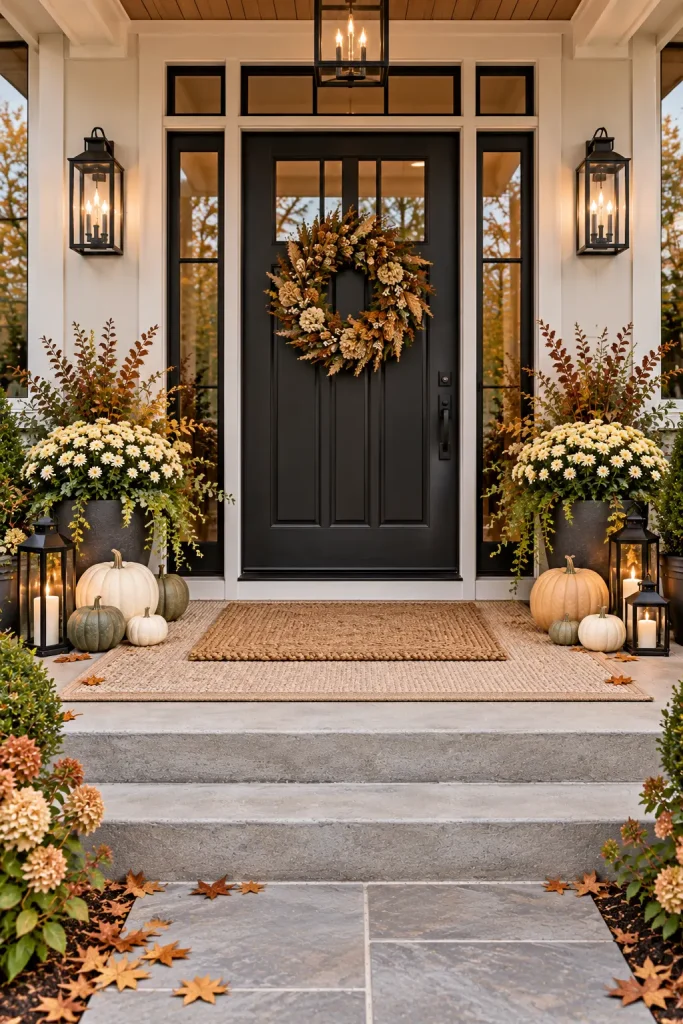
Layering a doormat over a larger outdoor rug adds depth without introducing more decorative objects. A natural jute-look mat paired with a cream, sand, or subtle striped rug creates a welcoming foundation for the rest of the porch.
Keep the pattern understated. Thin charcoal lines, faded geometric motifs, or simple borders can define the doorway while allowing pumpkins and planters to remain the focal points.
For a practical setup, choose materials intended for outdoor use and ensure the layers lie flat. The rug should not interfere with the door swing, create a tripping hazard, or block the natural path to the entrance.
Do: Keep the larger rug broad enough to frame the mat.
Don’t: Use a thick indoor rug in an exposed area where moisture can become trapped.
5. Add a Minimalist Black Lantern With an Ivory Candle
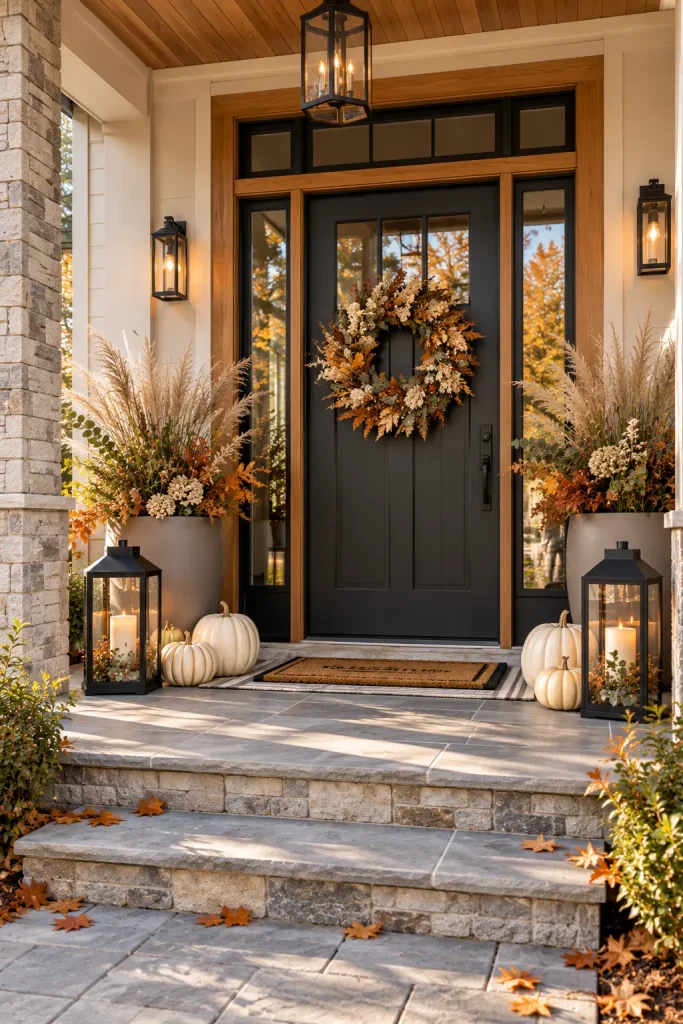
A black metal lantern adds a crisp outline to a neutral porch. Its darker finish contrasts with cream pumpkins, pale concrete, and light wood without disturbing the overall simplicity.
Choose a lantern with clean rectangular lines and clear glass panels. Place it near the door, beside a planter, or at the edge of a low step where it won’t obstruct foot traffic. An ivory flameless candle inside provides a soft focal point without requiring an open flame.
For a coordinated arrangement, pair one lantern with two pumpkins of different sizes rather than repeating lanterns across the entire entrance.
If using a real candle, follow the manufacturer’s safety guidance and never leave it burning unattended.
6. Create a Sculptural Arrangement With Beige Heirloom Pumpkins
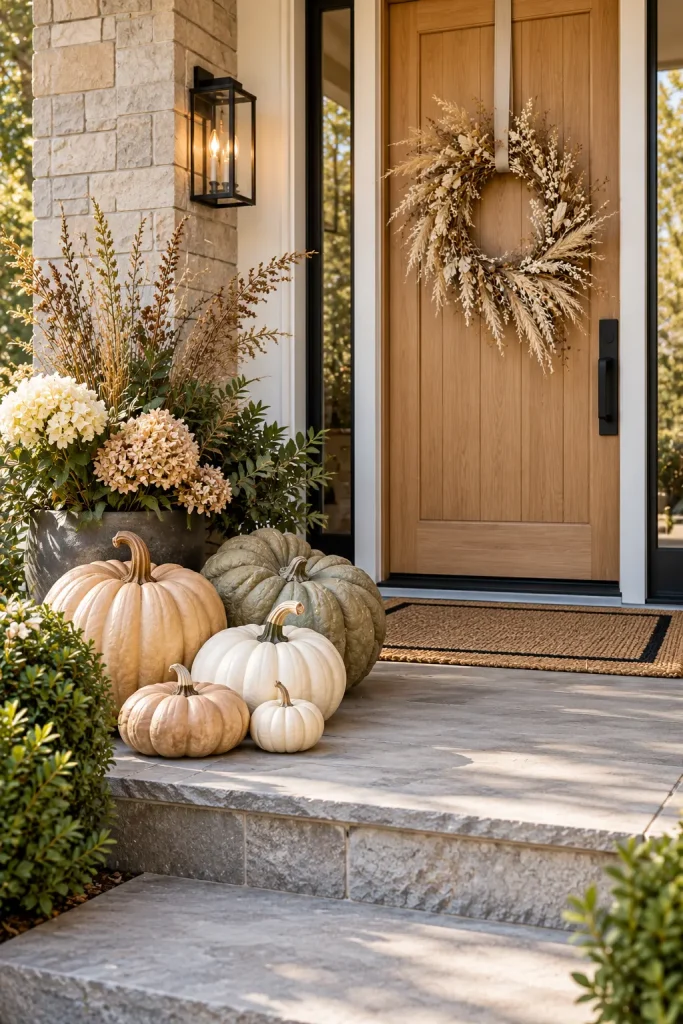
Heirloom pumpkins are ideal for a neutral fall porch because their irregular silhouettes provide visual interest without relying on bright colors. Look for muted tan, dusty sage, pale gray, and creamy white varieties with naturally ribbed surfaces.
Arrange three to five pumpkins in an asymmetrical grouping, allowing the tallest stems and widest shapes to create a natural rhythm. A stone landing or smooth concrete step makes an effective backdrop because it highlights the pumpkins’ organic forms.
The secret is to vary shape as well as size. A squat pumpkin, a tall narrow variety, and a gently flattened specimen look more collected than several nearly identical pieces.
7. Decorate With a Pair of Tall Natural Branches
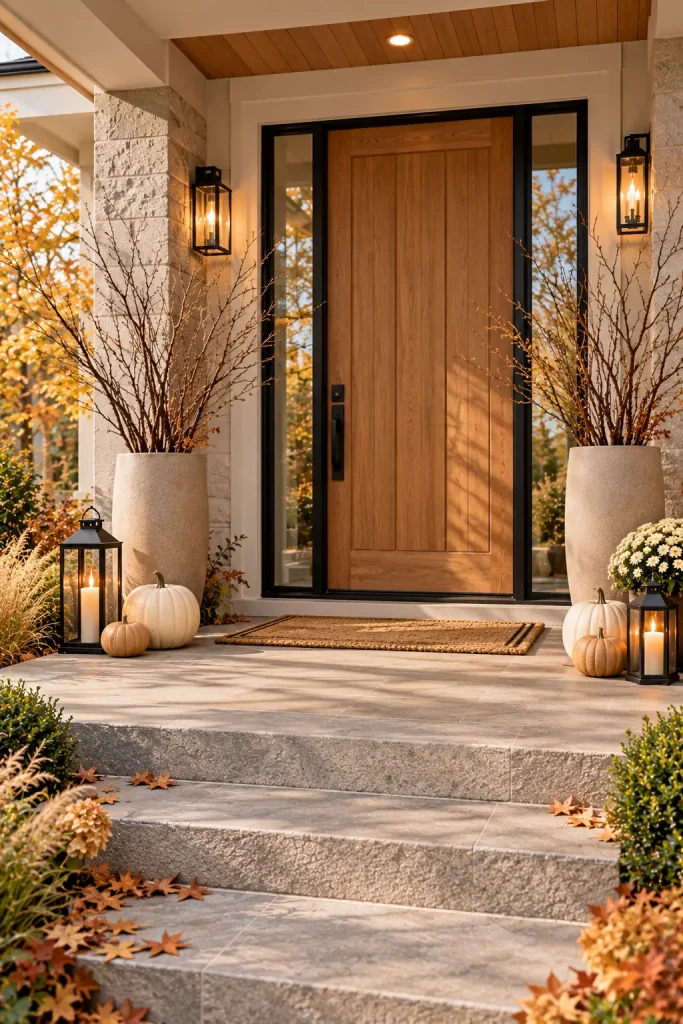
For a more architectural interpretation of fall decor, use bare branches instead of colorful leaves. Their delicate silhouettes introduce height and movement while preserving the understated palette.
Place several naturally shaped branches in a substantial weather-resistant planter or a weighted outdoor container. Choose branches with interesting bends and fine offshoots rather than perfectly uniform stems.
This approach works especially well beside a solid front door or against smooth exterior walls, where the branching pattern becomes a decorative feature in its own right. A few fallen leaves nearby can add seasonal context without making the arrangement feel busy.
Practical consideration: Secure the branches properly if your porch is exposed to strong winds. Avoid collecting branches from protected natural areas or cutting them from trees without permission.
8. Use a Natural Wood Crate as a Pumpkin Display
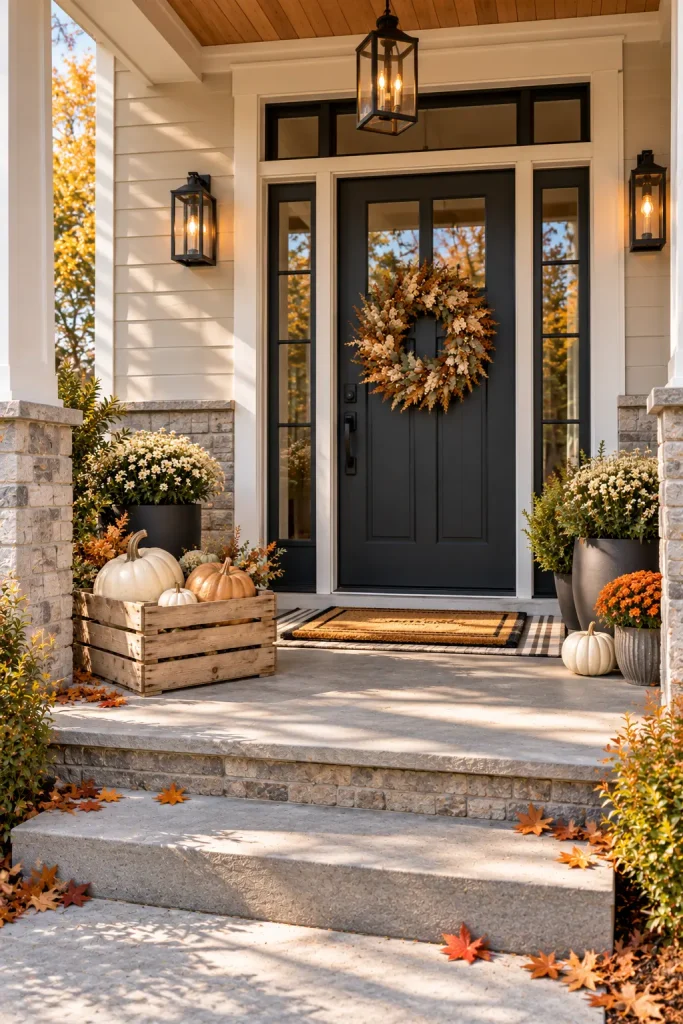
A wooden crate offers a casual, farmhouse-inspired touch that can still work with modern decor when the styling stays restrained. Choose a simple unfinished or lightly weathered crate with visible grain and no brightly painted lettering.
Place a few small white and tan pumpkins inside, leaving some of the wood visible. You can position the crate beside a bench, near a large planter, or on a sheltered landing.
For a cleaner look, avoid filling every opening with foliage. The combination of open space, natural wood, and a limited number of pumpkins is what makes the display feel contemporary rather than cluttered.
Accessible variation: A plain wooden box or a sturdy secondhand crate works just as well as a specially purchased decorative container.
9. Choose a Minimalist Olive-Branch Wreath
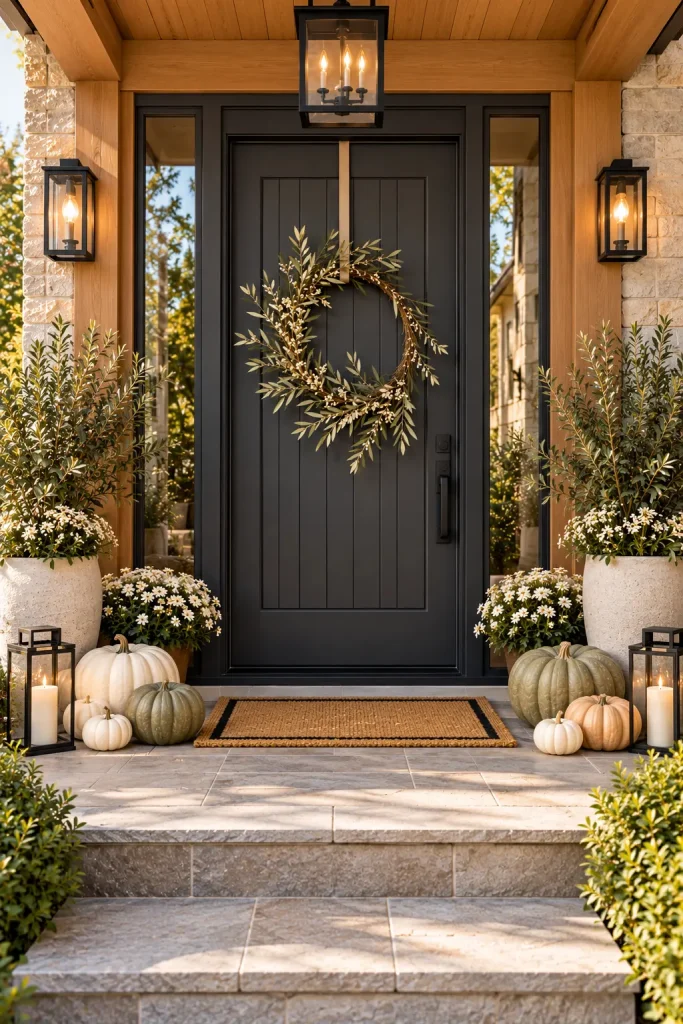
If dried grasses feel too rustic, an olive-branch wreath offers a more refined alternative. Its narrow leaves and open structure provide greenery without the density of a traditional evergreen wreath.
Choose a design with a thin circular base and irregular foliage placement. Muted olive, dusty green, and soft gray-green leaves complement cream pumpkins, limestone, warm wood, and black metal accents.
An olive-style wreath is particularly effective on a charcoal or deep brown door because the foliage stands out without creating a sharp color contrast. For a more tonal arrangement, pair it with natural-fiber accessories and pale planters.
Preserved or artificial foliage can be useful when you want a reusable decoration that maintains its shape throughout the season.
10. Introduce a Compact Wooden Porch Bench
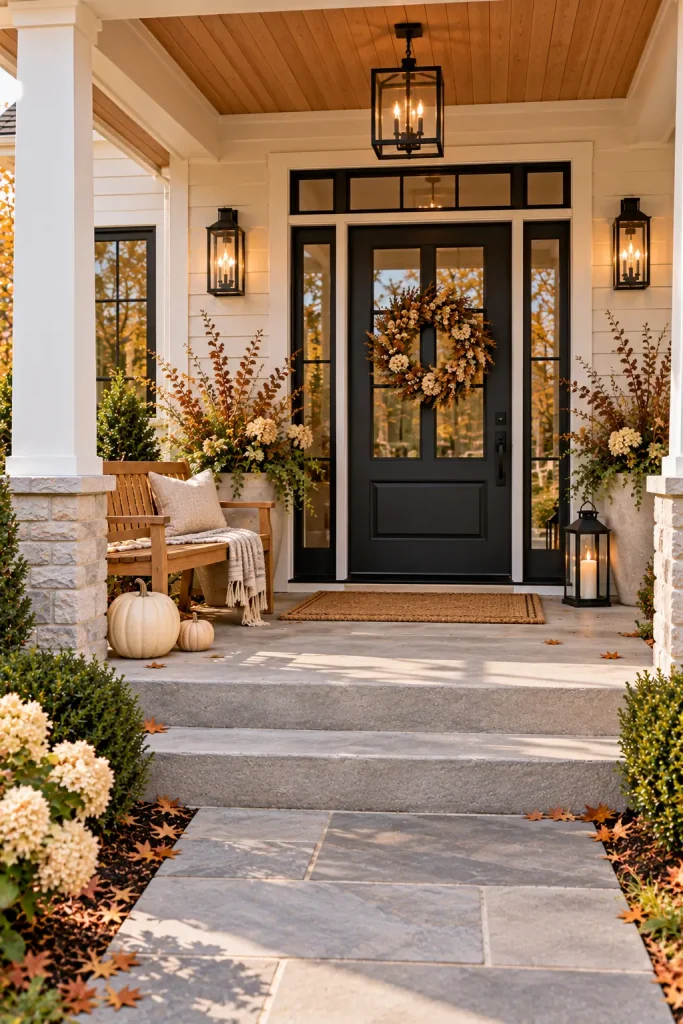
A simple wooden bench gives a porch both function and seasonal character. Choose a streamlined design in natural oak, teak, or another suitable outdoor wood, with straight legs and minimal ornamentation.
On a covered porch, a small cream or oatmeal cushion can soften the hard lines. Place one folded neutral throw on the bench if the fabric can be kept dry, then position a single pumpkin or small planter nearby.
The arrangement should feel usable rather than staged. Leave enough space to sit comfortably and keep the main walking route clear.
For a narrow entry, choose a shallow bench or skip the cushion to preserve space. A well-proportioned piece adds warmth without requiring additional seasonal furniture.
11. Combine Warm White Pumpkins With Charcoal Accents
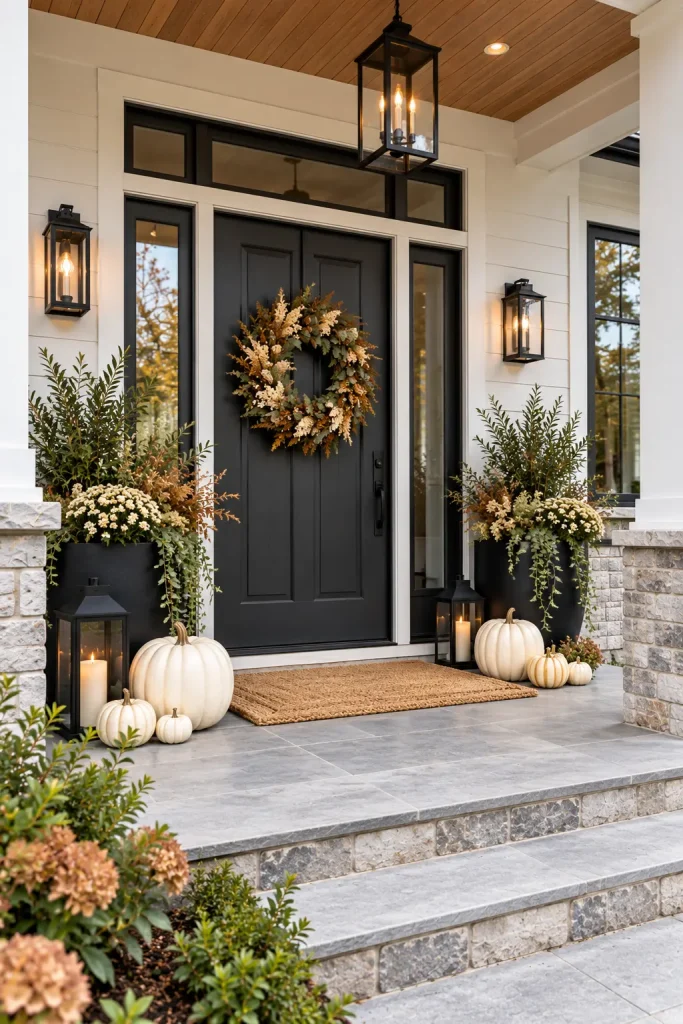
Neutral decor doesn’t have to mean an entirely beige palette. Charcoal and soft black accents introduce definition, helping pale pumpkins and light-colored architecture stand out.
Start with a dark front door, black wall-mounted house numbers, or a pair of matte-black planters. Add warm white pumpkins and a light natural-fiber doormat to soften the contrast.
Keep the dark elements concentrated in a few places. Repeating black across the door, planters, and a lantern creates cohesion, while too many small black accessories can make the porch feel visually fragmented.
Best for: Modern exteriors with white siding, light brick, gray concrete, or natural wood details.
12. Fill a Wide Planter With Muted Seasonal Foliage
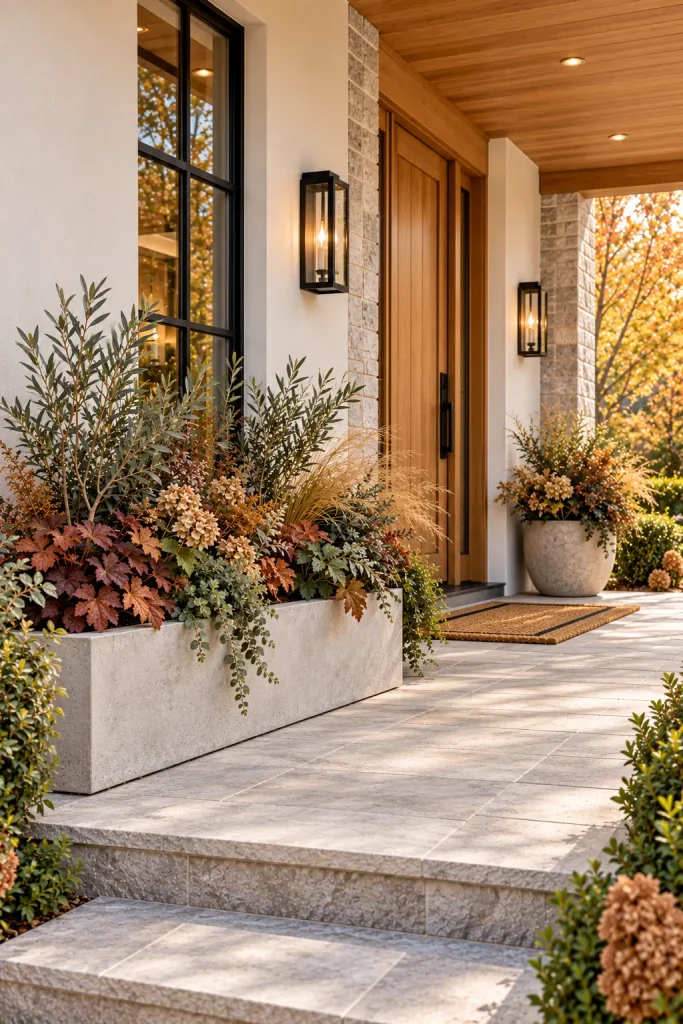
A wide, low planter offers a different silhouette from the tall containers commonly used near front doors. Its horizontal shape works especially well beside a low wall, a porch bench, or a broad flight of steps.
Choose a simple stone-look or concrete container and fill it with foliage in restrained shades of olive, dusty green, muted bronze, and soft burgundy-brown. A mix of leaf sizes gives the arrangement depth without requiring decorative ornaments.
When selecting living plants, consider your local climate, available light, drainage, and the container’s exposure to rain and wind. Seasonal arrangements can also use cut branches or other plant material suited to your conditions.
13. Hang a Simple Linen-Style Door Wreath
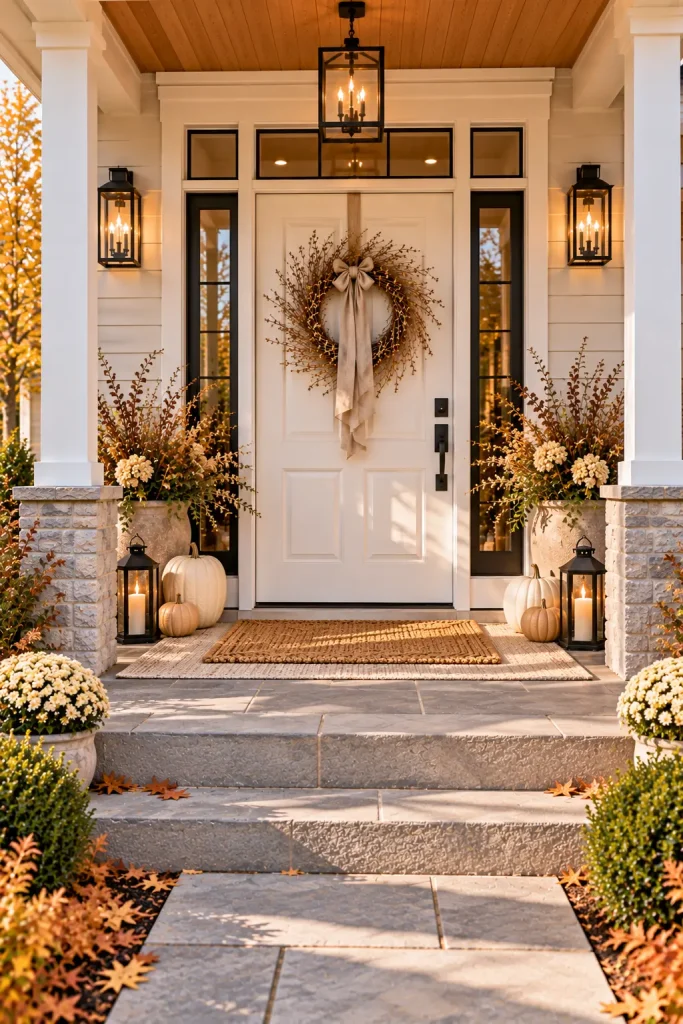
For a softer interpretation of autumn decor, choose a sparse twig wreath finished with a long linen-style ribbon. The combination of natural branches and fabric creates a gentle, understated look that suits Scandinavian and contemporary homes.
Select a ribbon in flax, warm ivory, or muted taupe. Let the tails hang naturally, but keep them short enough to avoid interfering with the door handle or becoming tangled in the doorway.
This approach works particularly well when the porch already contains larger decorative elements, such as pumpkins or planters. The wreath adds seasonal character without competing for attention.
Do: Match the ribbon to another natural material on the porch, such as a woven mat or wooden bench.
Don’t: Add several contrasting bows, metallic ornaments, and colorful berries if the goal is a minimalist finish.
14. Decorate With Oversized Concrete-Look Vases
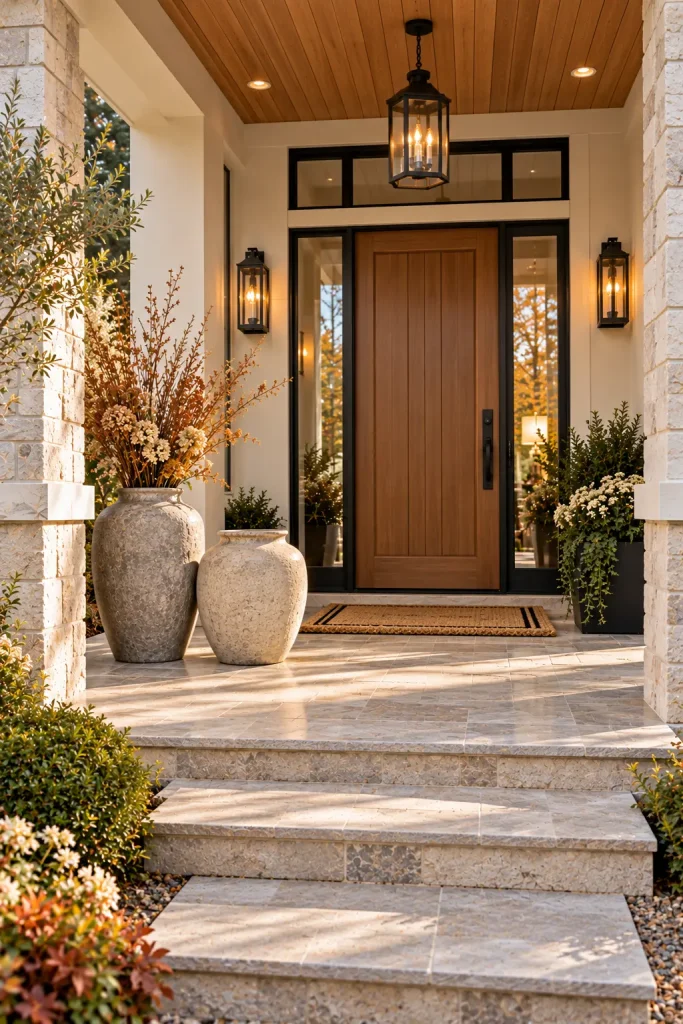
Decorative vessels can make a fall porch feel more architectural. Instead of filling every corner with seasonal accessories, use one or two substantial vases in stone, warm gray, or sandy beige.
Choose sculptural shapes with rounded shoulders, tapered bases, or gently irregular surfaces. Fill them with a few dried stems, bare branches, or muted seasonal foliage. The contrast between the solid vessel and delicate stems creates interest through form rather than color.
For outdoor use, check whether the vessel is suitable for your climate. Lightweight decorative vases may need to be secured or placed in a sheltered area, especially where wind is common.
15. Create a Minimalist Fall Display on a Narrow Console
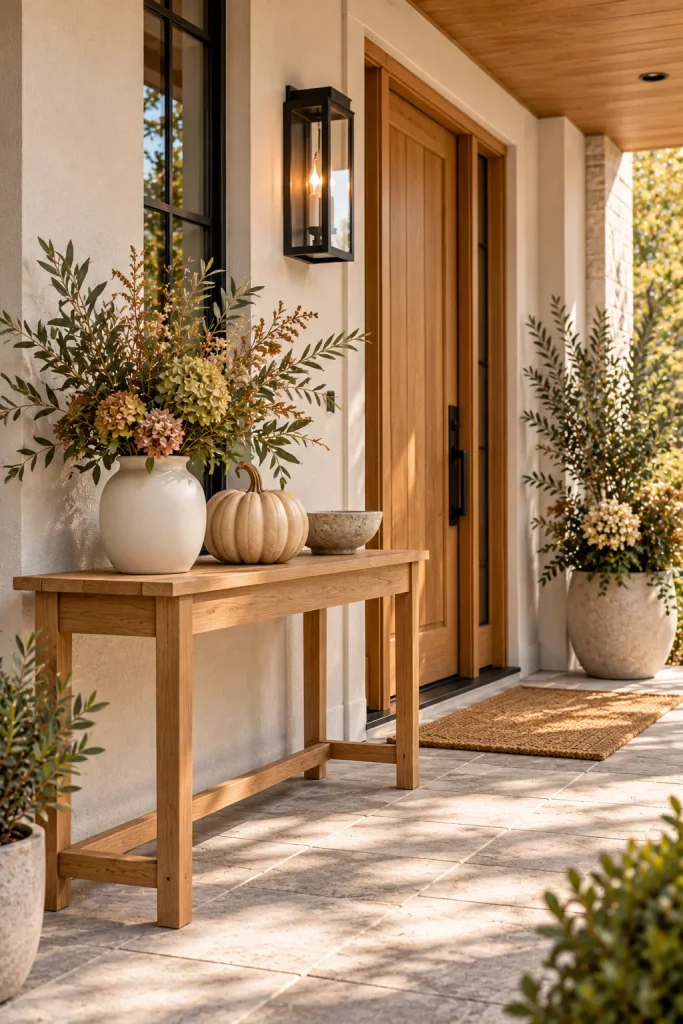
If your covered porch has enough room for a narrow console, it can serve as a dedicated seasonal styling surface. A slim oak or natural-wood table offers warmth while keeping the arrangement off the floor.
Keep the tabletop simple with three elements: a small ceramic vase, a single sculptural pumpkin, and a low bowl in a complementary neutral finish. Vary the heights so the objects don’t form a flat line, but leave most of the surface empty.
A console works best on a sheltered porch where decorative items won’t be exposed to constant rain or wind. On a narrow landing, measure the available depth first and preserve an unobstructed route to the door.
16. Use Pampas Grass for Soft Vertical Texture
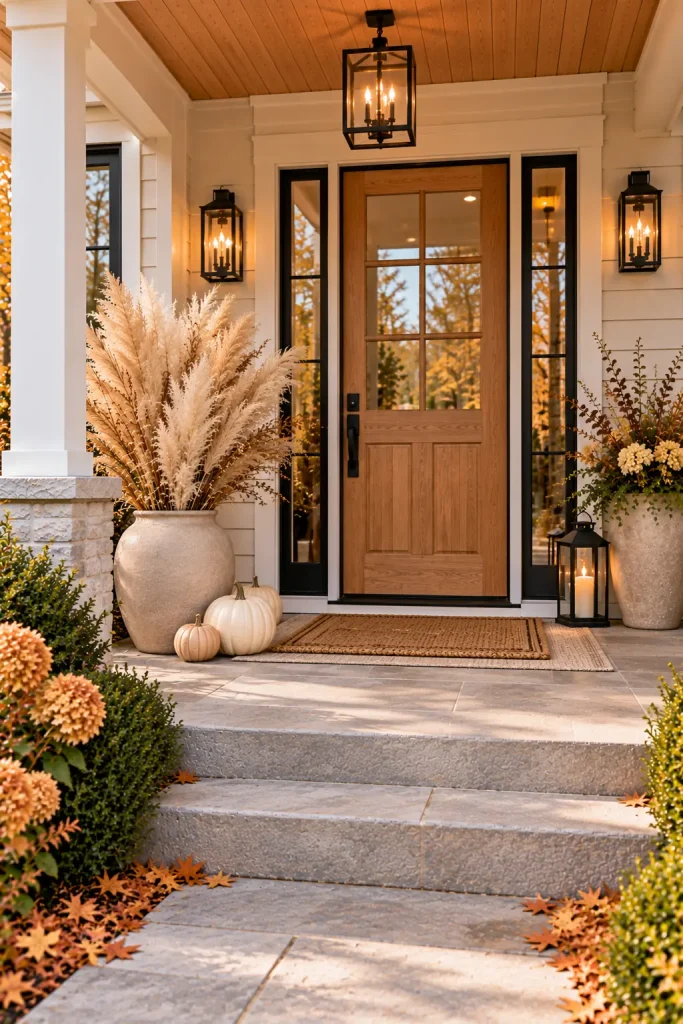
Pampas grass adds a feathery texture that contrasts with the solid forms of pumpkins, planters, and architectural details. Its pale beige plumes fit naturally into a warm-neutral palette.
Place a small arrangement in a stable outdoor-safe container near the door or beside a bench. A few tall stems are often sufficient; an oversized bouquet can overwhelm a compact porch and make the entry feel crowded.
Pampas grass is best suited to a protected area because delicate plumes may shed or become damaged by wind and moisture. If you prefer a more durable seasonal accent, choose artificial stems with a natural-looking finish.
Quick Tip: Keep the grass behind shorter objects so it introduces height without hiding the front door or house numbers.
17. Style a Neutral Porch With Natural Stone Accents
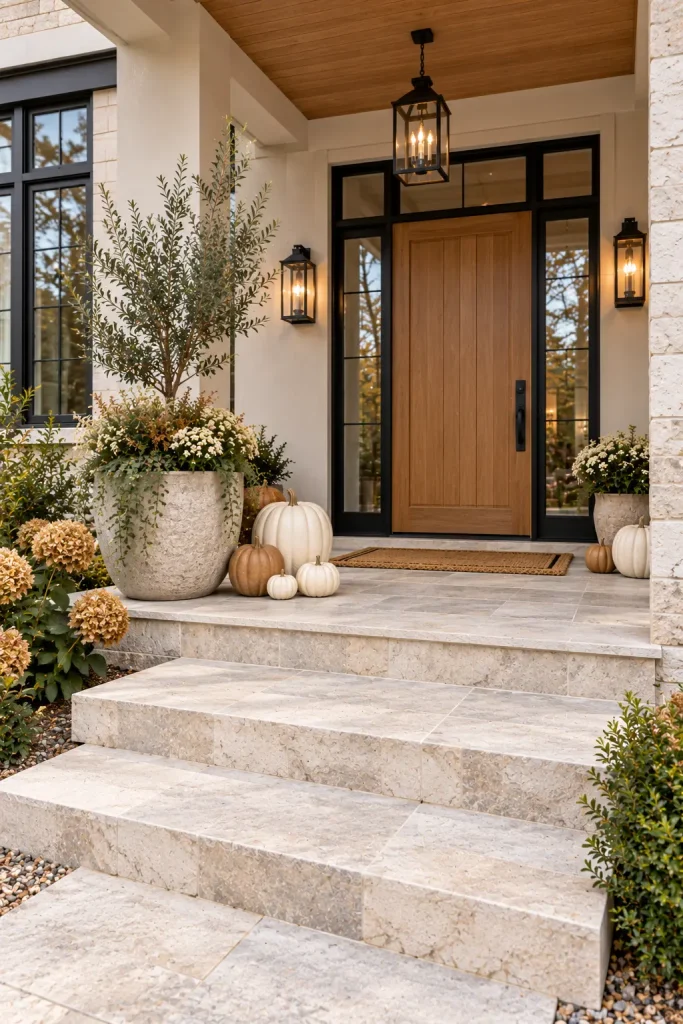
Stone introduces subtle variation through its grain, edges, and natural tonal shifts. On a neutral fall porch, limestone, travertine-inspired finishes, and concrete can provide a visual foundation for softer seasonal accents.
You don’t need to renovate your entrance to achieve this effect. A stone-look planter, a small decorative stone tray, or existing masonry steps can provide the material contrast you’re after.
Pair these elements with ivory pumpkins and warm wood. The combination feels cohesive because each material contributes a different texture while remaining within a restrained color family.
For a polished result, let the stone remain visible. Covering every step with decorations would hide the very surface that gives the arrangement its character.
18. Add a Soft Taupe Outdoor Throw to a Porch Chair
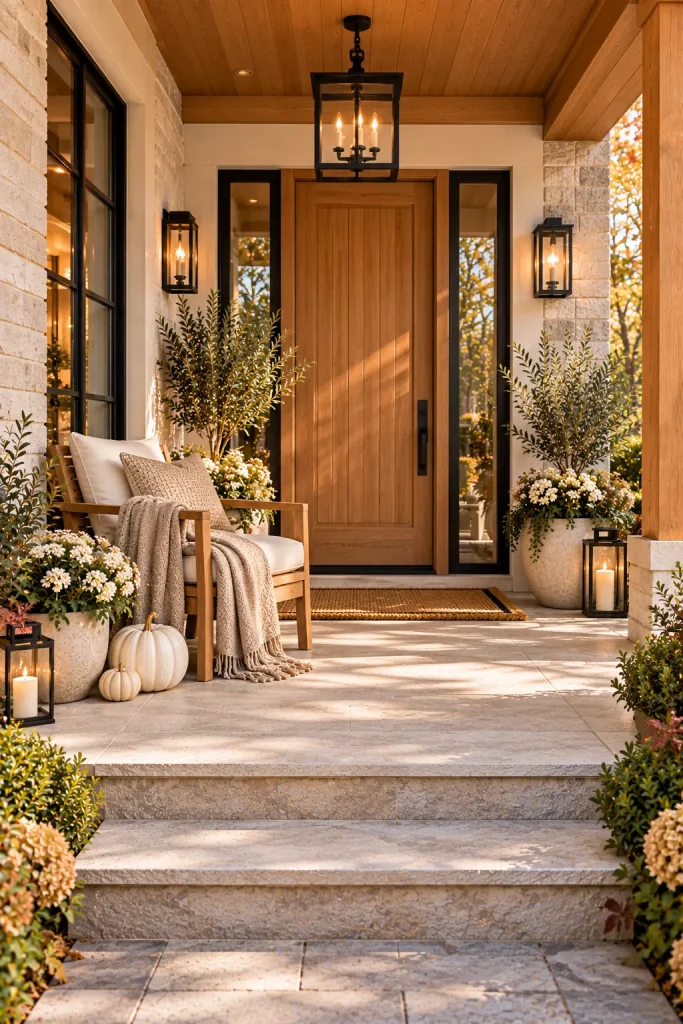
Textiles can make a covered porch feel warmer without adding more decorative objects. A taupe or oatmeal throw draped over a simple outdoor chair introduces softness and a sense of seasonal comfort.
Choose a fabric suitable for your porch conditions and keep the styling relaxed rather than perfectly folded. Pair the chair with a small cream pumpkin or a simple planter, leaving enough room for the furniture to remain usable.
For a modern look, avoid combining several competing patterns. One solid neutral throw with a subtle woven texture usually provides enough visual interest alongside natural wood and stone.
Store the textile indoors when rain or damp weather is expected.
19. Make a Monochromatic Display With Shades of Beige
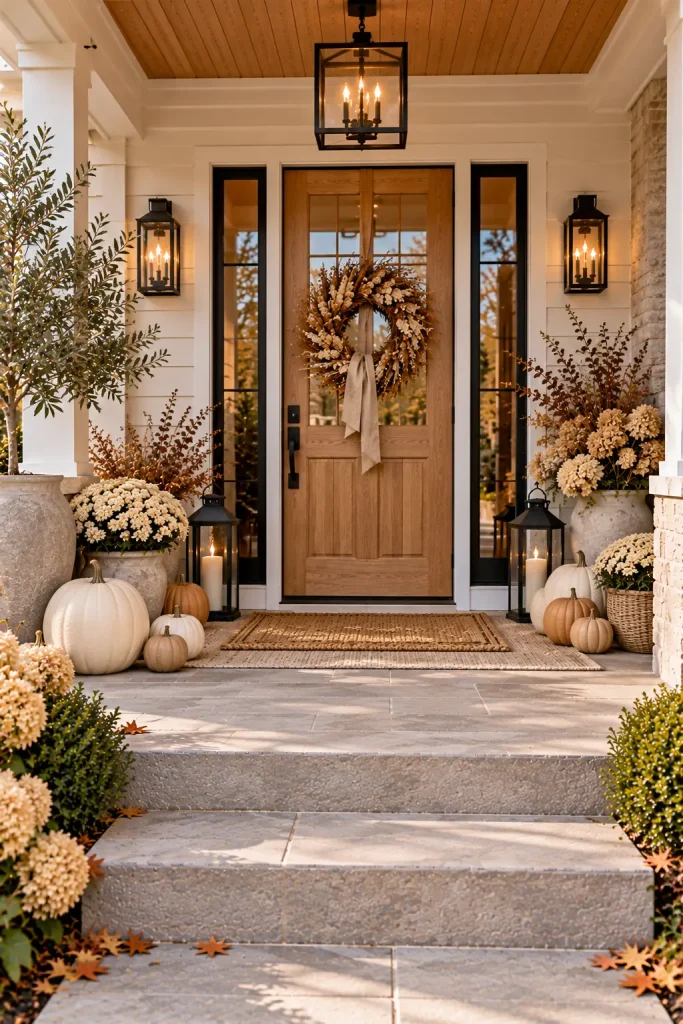
A monochromatic display creates a cohesive look by using several shades of the same color family. Rather than selecting only white pumpkins, combine ivory, oatmeal, sand, camel, and soft taupe.
The key is to vary the materials and shapes. Matte ceramic, natural wood, textured woven fibers, and subtly ribbed pumpkins will look distinct even when their colors are closely related.
A simple way to build the arrangement is to begin with one large neutral object, add two smaller pieces in slightly different shades, and finish with a contrasting natural texture. You can repeat the palette in the doormat, planter, and wreath for a coordinated entrance.
Common mistake: Using exactly the same beige shade and finish for every object can make the display look flat. Small tonal shifts and differences in texture provide the necessary definition.
20. Keep the Porch Nearly Bare With One Seasonal Focal Point
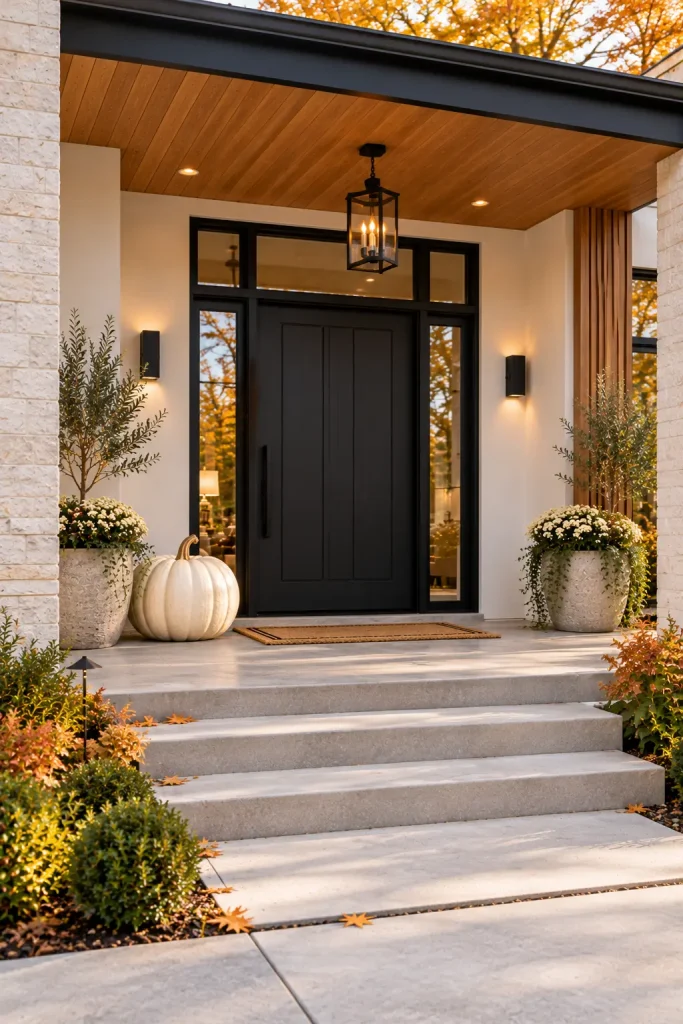
Sometimes the most effective neutral fall porch decor is a single well-chosen object. If your home has strong architecture, attractive masonry, or a distinctive front door, leaving most of the entrance undecorated can make those features stand out.
Place one oversized cream pumpkin beside the doorway, or use a single substantial planter filled with restrained seasonal foliage. The focal point should feel intentional, with enough open space around it to preserve the clean lines of the porch.
This is also one of the easiest approaches for small homes and rental properties. It requires little storage, avoids obstructing the entry, and can be refreshed with minimal effort throughout the season.
The important distinction is between an unfinished-looking porch and a deliberately simple one. Keep the entrance swept, the doormat in good condition, and the surrounding area free of stray items so the restraint feels purposeful.