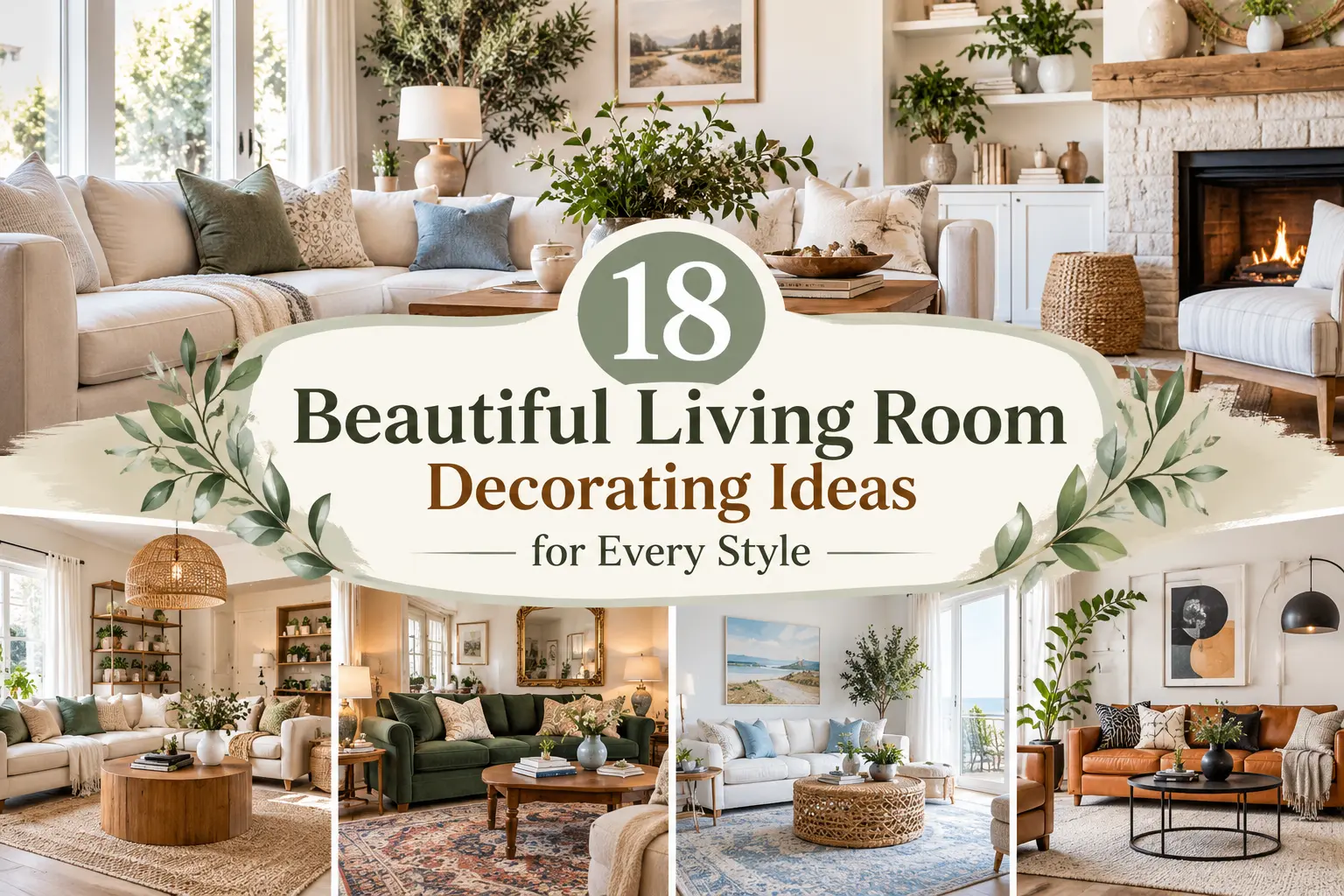
18 Beautiful Living Room Decorating Ideas for Every Style
Your living room should feel comfortable, welcoming, and reflective of your personal style. Whether you’re decorating a small apartment, refreshing a family room, or planning a more polished interior, the right combination of furniture, colors, lighting, and textures can make a meaningful difference.
The best living room decorating ideas aren’t necessarily the most expensive. A carefully chosen area rug, a fresh wall color, thoughtfully arranged artwork, or a new combination of pillows can give a familiar space a completely different character. Larger changes, such as adding built-in shelving or investing in a statement sofa, can also help create a room that feels more intentional.
From relaxed farmhouse interiors to sleek contemporary spaces and colorful eclectic rooms, these 18 ideas offer inspiration for a range of tastes, budgets, and home sizes. Each approach includes practical styling advice to help you adapt the look to your own living room.
1. Create a Cozy Neutral Living Room
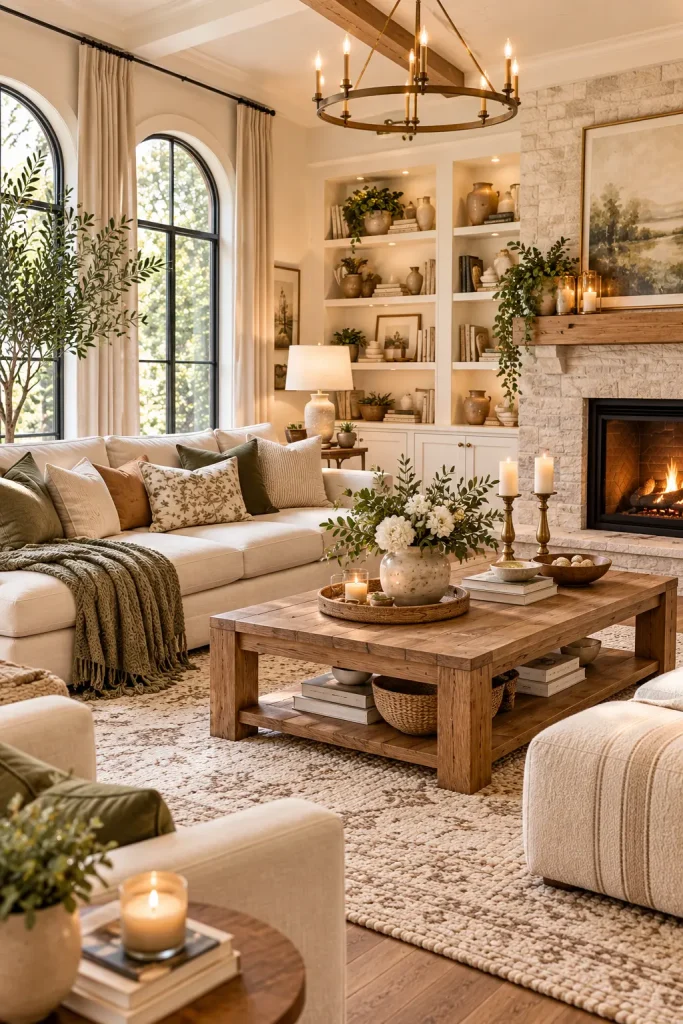
A neutral living room creates a calm foundation that can work with many decorating styles. Combine warm white walls, a beige or oatmeal sofa, a natural wood coffee table, and a textured area rug to create a space that feels layered rather than plain.
The secret is to introduce different textures within a similar color palette. Bouclé upholstery, linen curtains, woven baskets, ceramic vases, and softly knitted throws add visual interest without introducing too many competing colors.
For a more finished appearance, use three complementary tones: a light base, a medium natural shade, and a darker accent. For example, ivory, warm oak, and muted brown create subtle contrast while keeping the overall room cohesive.
2. Embrace Modern Minimalist Decorating
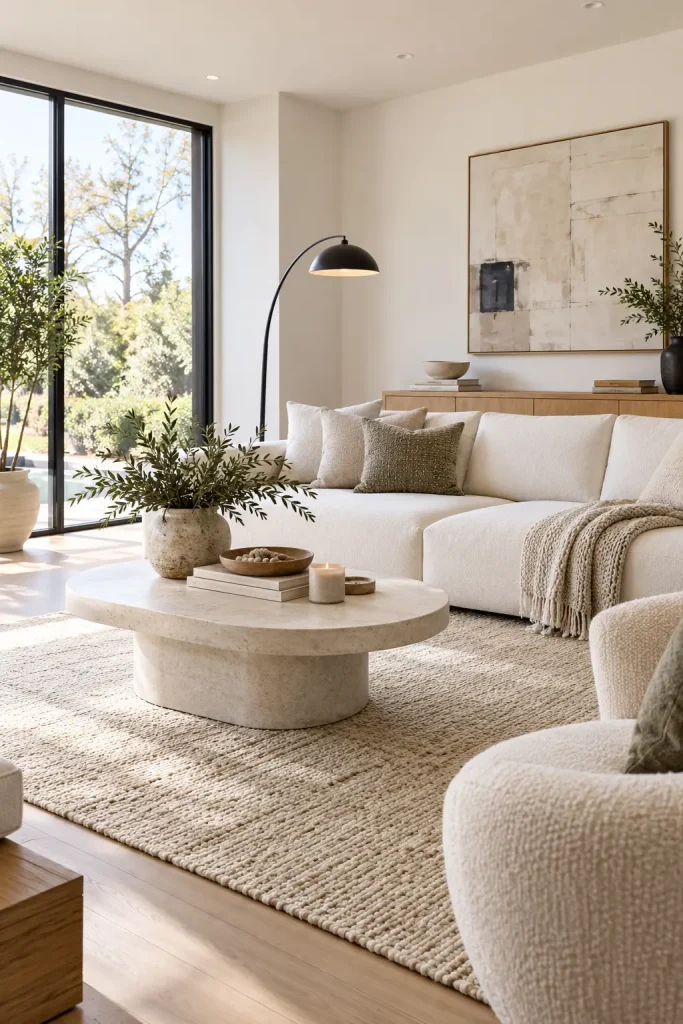
Minimalist living rooms focus on simplicity, useful furniture, and carefully selected details. Instead of filling every corner with accessories, give the sofa, lighting, artwork, and architectural features enough space to stand out.
Choose a low-profile sofa, a streamlined coffee table, and a restrained palette of white, gray, black, or natural wood. One sculptural lamp or a single oversized artwork can provide a focal point without making the room feel busy.
Minimalism doesn’t mean removing everything that makes a home comfortable. Keep the books you enjoy, a favorite throw, and a few meaningful objects. The goal is to make each item feel intentional.
Quick Tip: Before buying new decor, remove a few unnecessary accessories and rearrange the pieces you already own. You may find that the room needs more breathing space rather than more furniture.
3. Add Warmth With Modern Farmhouse Decor
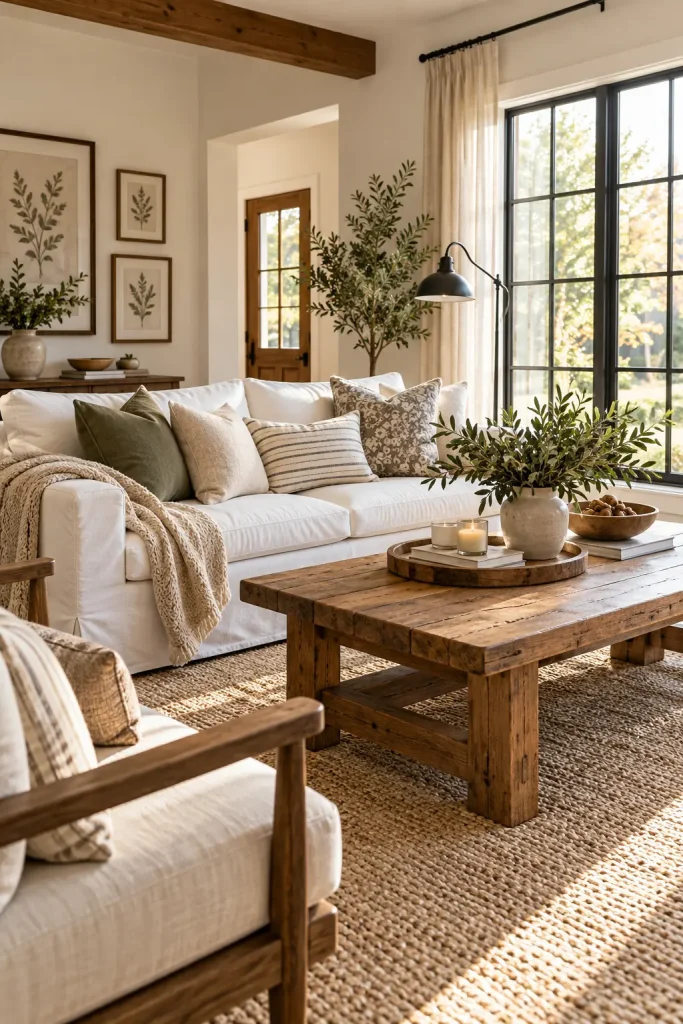
Modern farmhouse decorating combines the relaxed character of country homes with cleaner contemporary lines. White or warm ivory walls, natural wood furniture, comfortable upholstery, and a few dark metal accents create a welcoming balance.
Start with a generously sized sofa in a durable neutral fabric. Add a substantial wooden coffee table, simple framed artwork, and a woven basket for blankets. If the room already has exposed beams or original wood floors, let those features contribute to the design instead of covering them with unnecessary decoration.
To keep the style current, avoid making every surface rustic. Pair weathered wood with smooth ceramics, simple lamps, and tailored curtains.
What works well together:
- White or cream upholstery.
- Natural oak or reclaimed-look wood.
- Black metal hardware or lighting.
- Linen curtains and woven accessories.
4. Bring Nature Indoors With Organic Modern Style
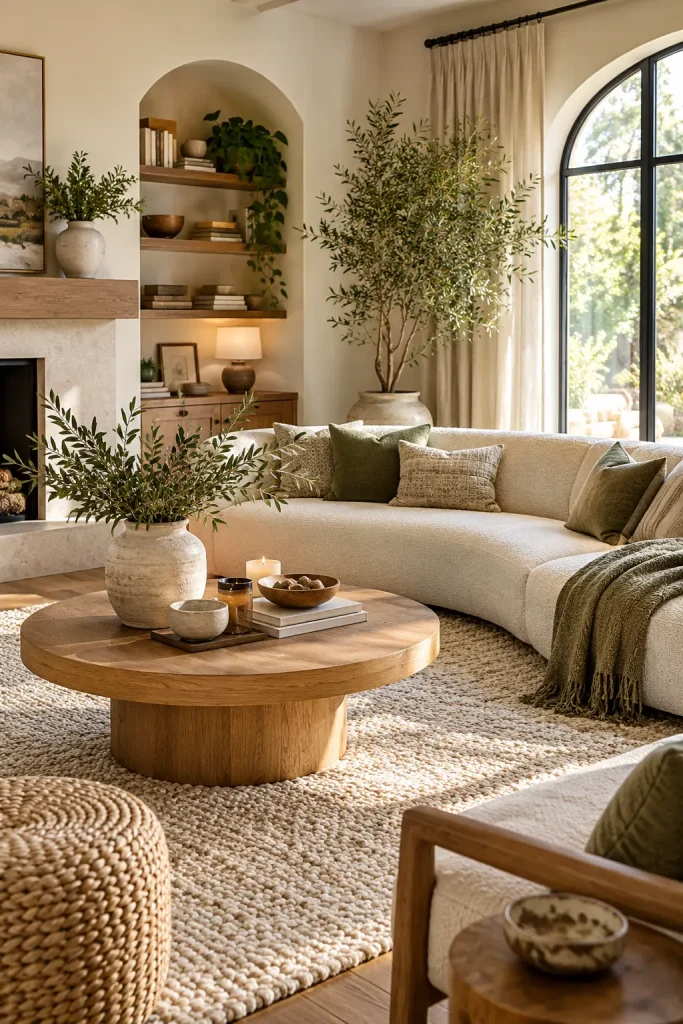
Organic modern interiors combine contemporary furniture with natural materials, rounded shapes, and earthy colors. The result feels refined but still connected to nature.
Build the room around a comfortable sofa, a rounded wood coffee table, and a palette of sand, mushroom, cream, and olive green. Add an indoor tree near a bright window, a handmade ceramic vase, or a textured natural-fiber rug to soften the cleaner lines of modern furniture.
You don’t need to replace every piece to achieve this look. A curved accent chair, a wooden side table, or a few earthy accessories can introduce organic shapes into an existing contemporary room.
Consider the amount of sunlight before choosing plants, and leave enough space around curved furniture so the room remains easy to navigate.
5. Layer Textures for a Cozy Living Room
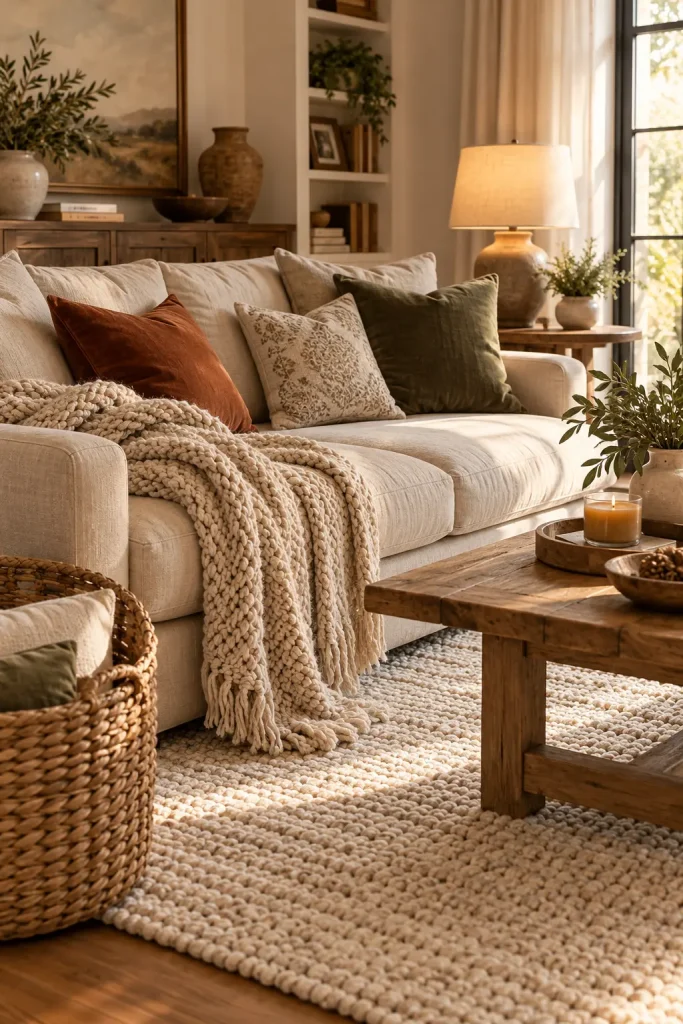
A room can use a restrained color palette and still feel rich and inviting. The difference often comes from texture. Combining smooth, rough, soft, and nubby materials creates depth that flat colors alone cannot provide.
Try pairing a linen sofa with velvet cushions, a knitted throw, a wool-blend rug, and a wooden side table. Ceramic accessories or a woven basket can introduce another material without overwhelming the space.
The trick is to vary the texture while keeping the colors related. A cream sofa, oatmeal throw, and light beige rug can feel interesting when their surfaces are noticeably different.
Tips for layering textures:
- Mix matte finishes with a few subtle reflective details.
- Combine soft upholstery with solid wood or stone.
- Vary cushion sizes without overcrowding the sofa.
- Use a rug large enough to visually connect the seating area.
6. Make a Statement With a Colorful Sofa
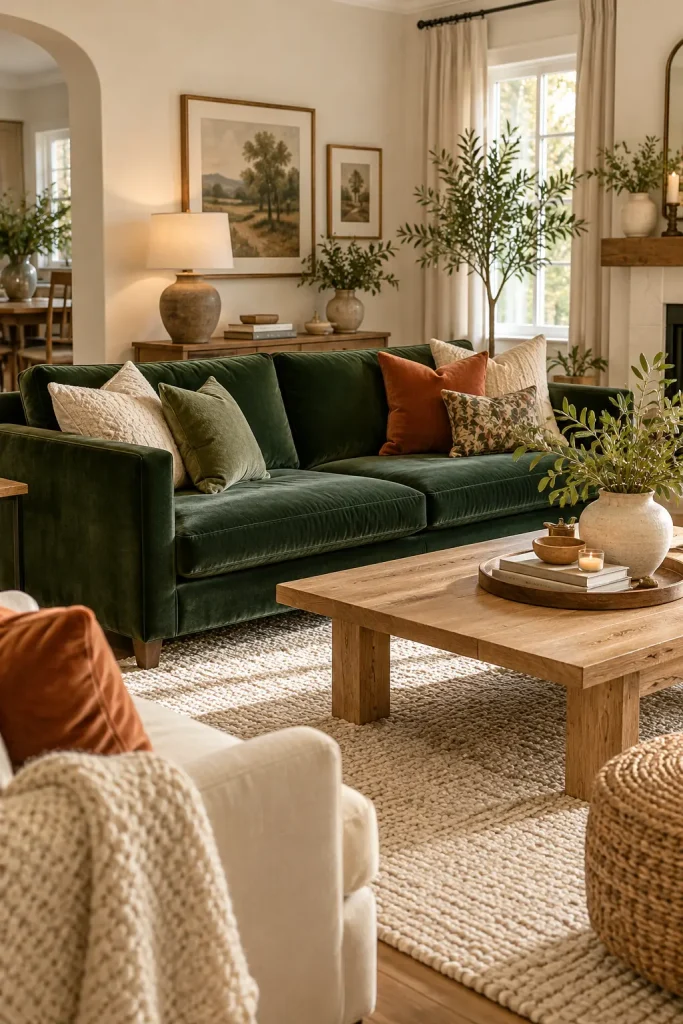
A colorful sofa can become the defining feature of a living room. Forest green, deep blue, rust, muted terracotta, or burgundy can bring personality to an otherwise simple interior.
If you’re investing in a bold sofa, keep the surrounding elements relatively restrained. Cream walls, natural wood, and a neutral rug allow the upholstery to stand out without competing with too many other focal points.
You can repeat the sofa color in smaller details, such as a book cover, cushion, artwork, or ceramic accessory. These small connections make the color feel integrated into the room.
For renters or anyone who prefers flexibility, colorful slipcovers and accent chairs offer a less permanent way to experiment.
7. Create a Timeless Traditional Living Room
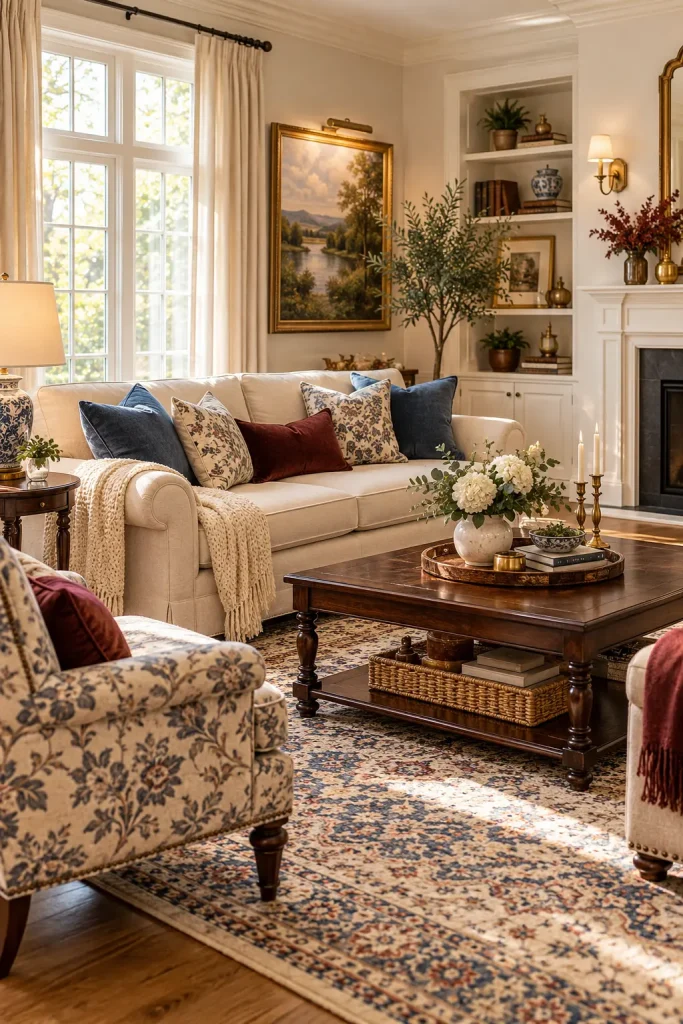
Traditional living rooms feel established and comfortable, with an emphasis on balanced furniture arrangements, classic silhouettes, and decorative details. Rolled-arm sofas, patterned accent chairs, framed art, and wood furniture can create this character without making the room feel formal or dated.
Begin by arranging the main seating around a shared focal point, such as a fireplace or coffee table. Introduce a patterned rug or floral cushions to add interest, then balance the patterns with solid upholstery.
A mix of older and newer pieces can keep the space from looking like a furniture showroom. An antique-style wooden table can sit comfortably beside a simple modern lamp, for example.
Common Mistake: Using too many unrelated patterns at once.
Better Approach: Choose one dominant pattern, one smaller complementary pattern, and solid colors that repeat tones from both.
8. Bring Personality With Boho Living Room Decor
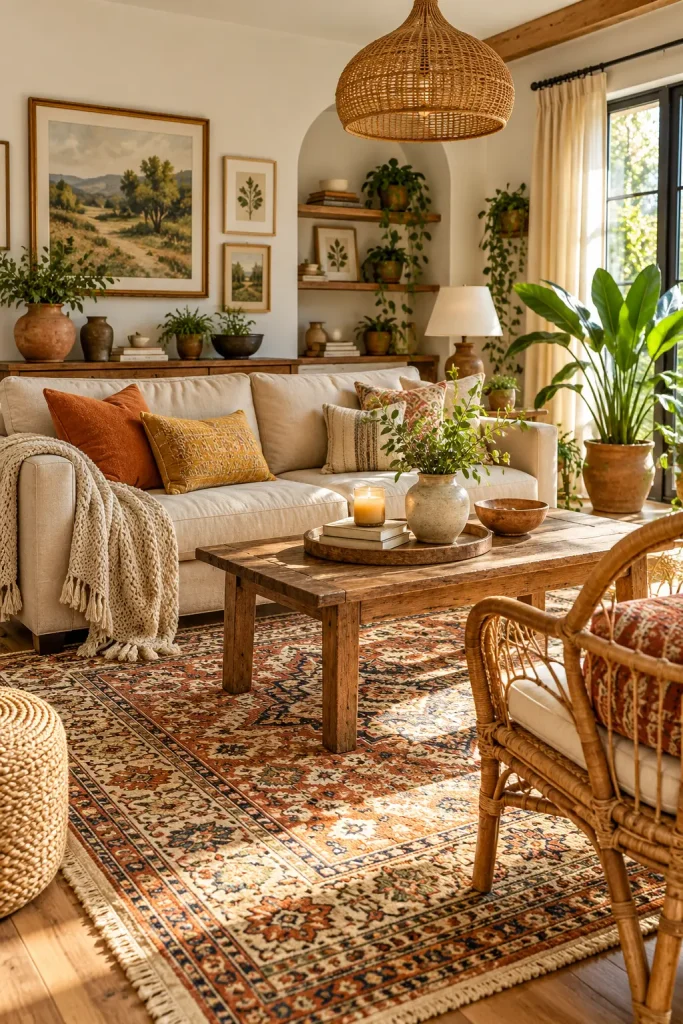
Bohemian living rooms are ideal for combining collected objects, natural materials, layered textiles, and personal artwork. The style can feel colorful and expressive or calm and earthy, depending on the palette you choose.
Start with comfortable seating and a rug that establishes the room’s colors. Add a rattan chair, woven pendant light, patterned cushions, and a few plants to create a relaxed atmosphere. Books, handmade ceramics, and framed prints help the room feel personal rather than overly coordinated.
To keep a small boho living room from feeling cluttered, use open floor space strategically. Let the rug and seating create the main visual arrangement, then group smaller accessories rather than spreading them across every surface.
9. Use a Gallery Wall to Display Your Personality
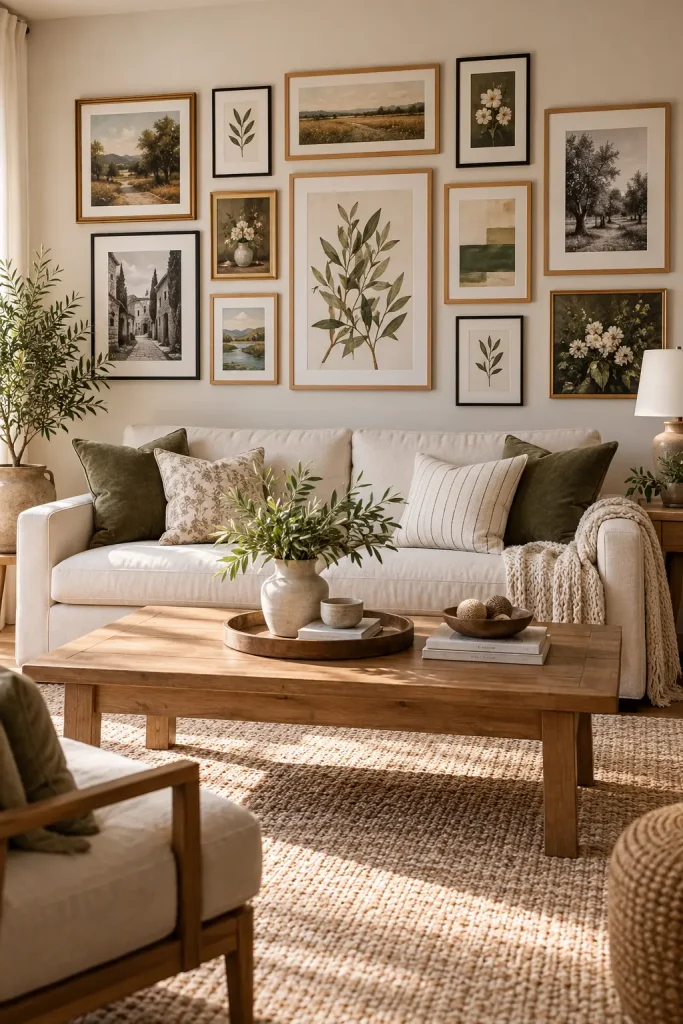
A gallery wall gives a living room a personal focal point and makes a plain wall feel more considered. It can feature family photographs, abstract prints, botanical illustrations, travel memories, or a combination of different artwork.
For a cohesive arrangement, repeat a few colors or frame finishes throughout the display. Matching frames create a structured appearance, while a mix of wood, black, and antique finishes feels more collected.
Before hanging anything, arrange the frames on the floor. Take a photograph of the layout and adjust the spacing until the composition looks balanced. Keep the overall grouping visually connected to the sofa or furniture beneath it.
If you rent, lightweight frames and suitable removable hanging hardware may offer an alternative to extensive drilling. Check the wall finish and product instructions before installation.
10. Make the Fireplace Your Focal Point
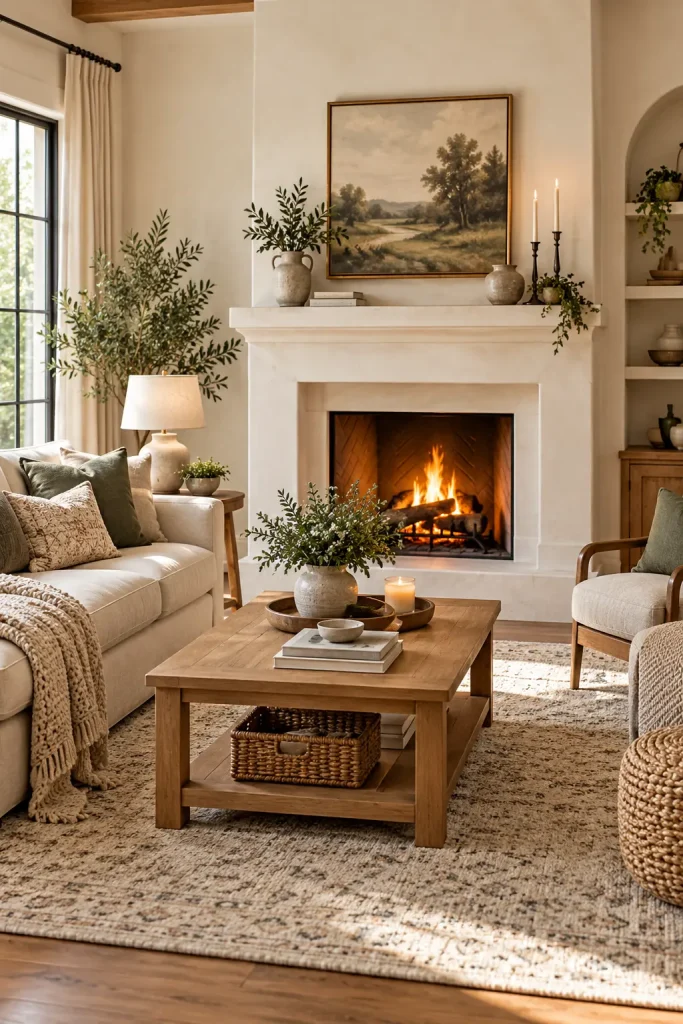
A fireplace naturally attracts attention, making it an effective starting point for arranging a living room. Whether yours is traditional brick, painted masonry, or a simple modern surround, the goal is to make it feel connected to the rest of the room.
Position the main seating so the fireplace remains visible without blocking walkways. A large piece of artwork or a mirror above the mantel can create height, while a pair of lamps or smaller accessories can establish balance.
For an affordable refresh, consider styling the mantel with a few substantial objects rather than many tiny decorations. A ceramic vase, framed art, and a low decorative bowl may be all the display needs.
If the fireplace is functional, keep decorations, textiles, and combustible objects clear of the heat and opening according to the manufacturer’s instructions and applicable safety guidance.
11. Add Character With Dark and Moody Colors
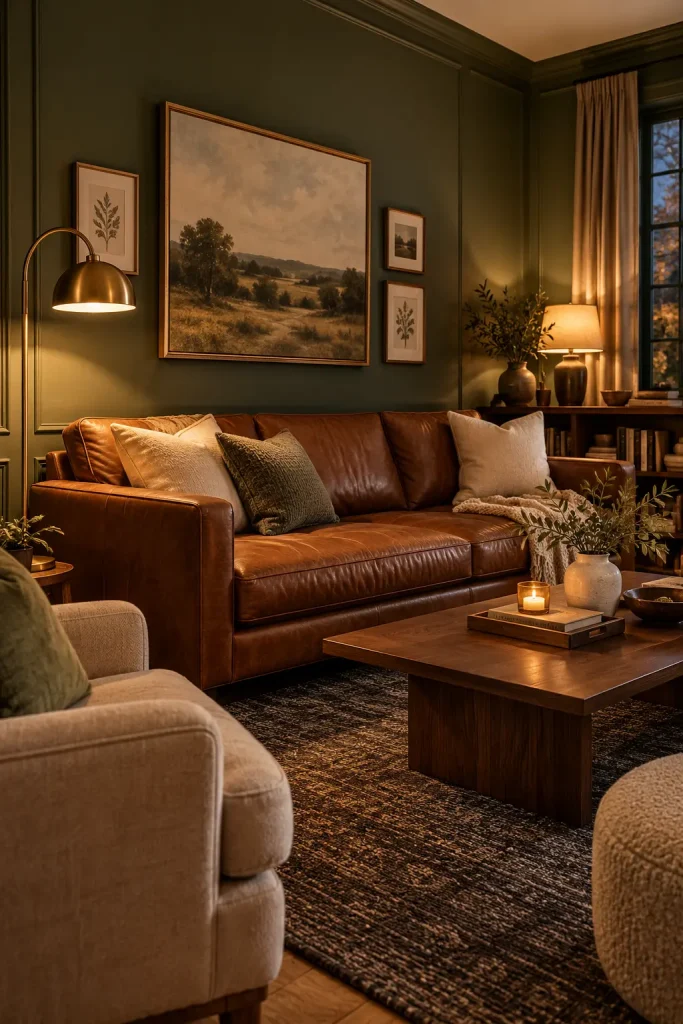
Dark walls can give a living room depth and a more intimate atmosphere. Deep olive, charcoal, navy, and forest green work particularly well when paired with warm wood, tactile upholstery, and thoughtfully placed lighting.
A cognac leather sofa against a deep green wall creates a rich contrast, while walnut furniture and warm ivory accessories soften the overall effect. You can also introduce darker colors through curtains, an accent wall, or a substantial piece of furniture instead of painting the entire room.
Lighting deserves extra attention in a moody interior. Combine ambient ceiling lighting with table lamps or floor lamps to make the space useful in the evening.
Quick Tip: Test paint samples on more than one wall and observe them in daylight and after dark. The same shade can look quite different as the lighting changes.
12. Decorate With a Large Area Rug
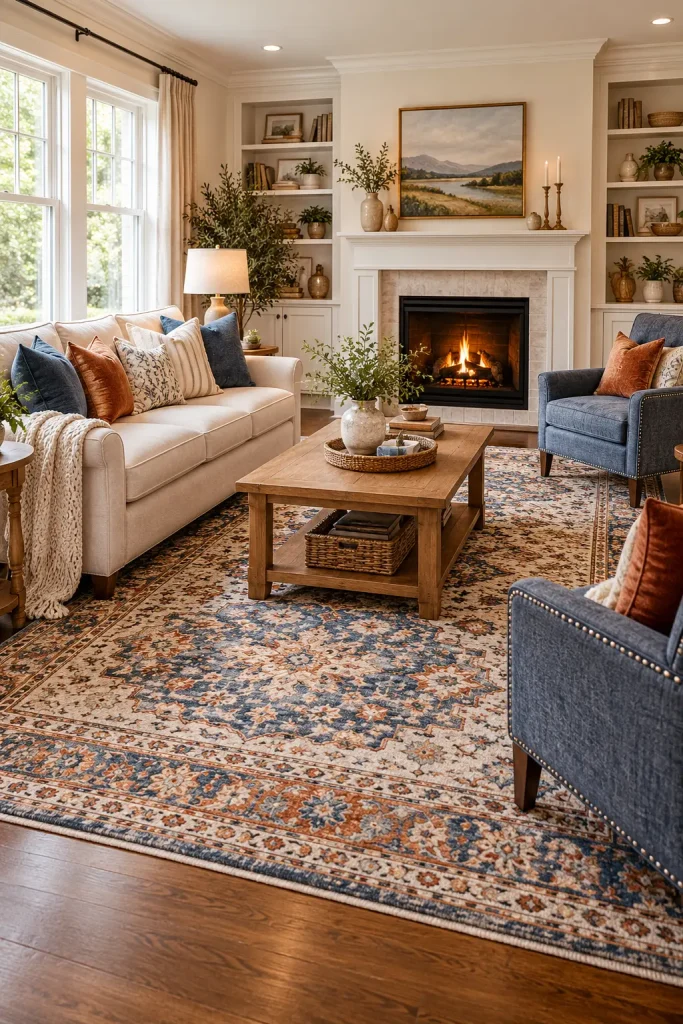
An area rug can visually connect the furniture in a living room and help define the seating zone, especially in an open-plan home. It also introduces color, pattern, and texture without requiring a permanent change to the walls or flooring.
One of the most important decisions is size. A rug that’s too small can make a seating arrangement feel disconnected. Whenever possible, choose a rug large enough for the front legs of the sofa and chairs to rest on it.
The pattern should complement the rest of the room. A subtle textured rug suits a colorful interior, while a patterned rug can bring energy to a space with plain upholstery.
| Rug style | Decorating effect | Works well with |
|---|---|---|
| Solid textured | Calm and understated | Layered neutral rooms |
| Vintage-inspired pattern | Collected and characterful | Traditional or eclectic spaces |
| Geometric design | Clean and contemporary | Modern furniture |
| Natural-fiber texture | Relaxed and organic | Farmhouse or coastal decor |
13. Style Open Shelving With Books and Decor
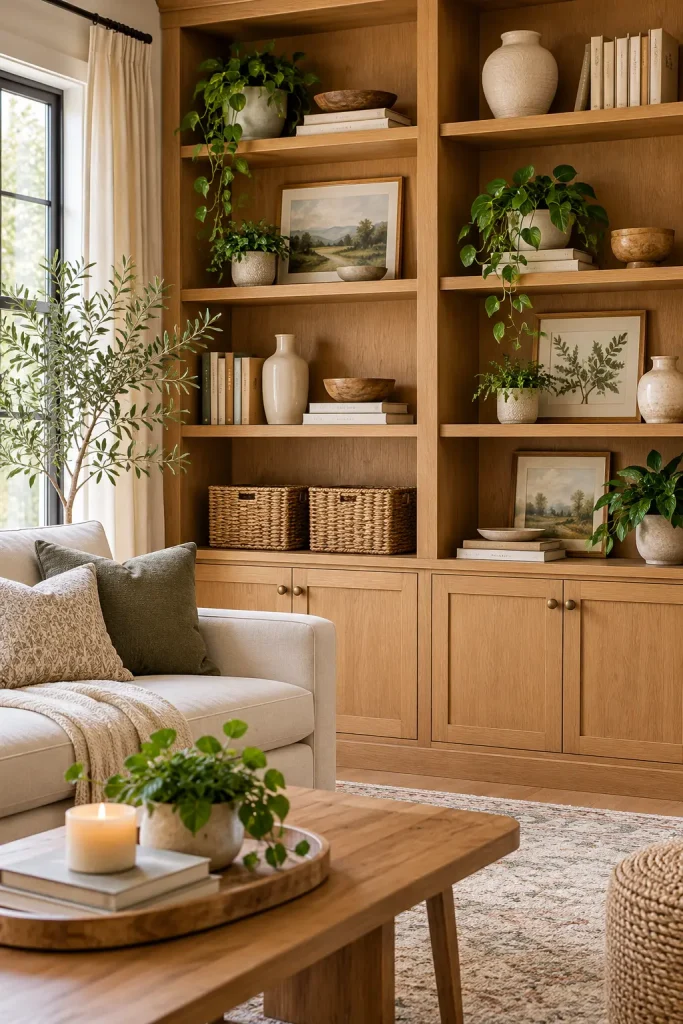
Open shelving provides a place to display books, artwork, plants, and objects that tell a story about the people who live in the home. It can also make use of vertical wall space without adding another bulky piece of furniture.
The most appealing shelves usually mix practical storage with decorative pieces. Stack some books horizontally, stand others vertically, and leave small areas of open space between groups. Ceramic vases, framed photographs, and small plants introduce different shapes and textures.
For a calmer appearance, repeat a few colors across the shelves instead of using every available shade. Natural wood, cream ceramics, muted green, and a few dark accents create an easy-to-coordinate palette.
Common Mistake: Filling every shelf from edge to edge.
Better Approach: Group related objects, vary their heights, and leave some empty space so the eye has somewhere to rest.
14. Choose Statement Lighting
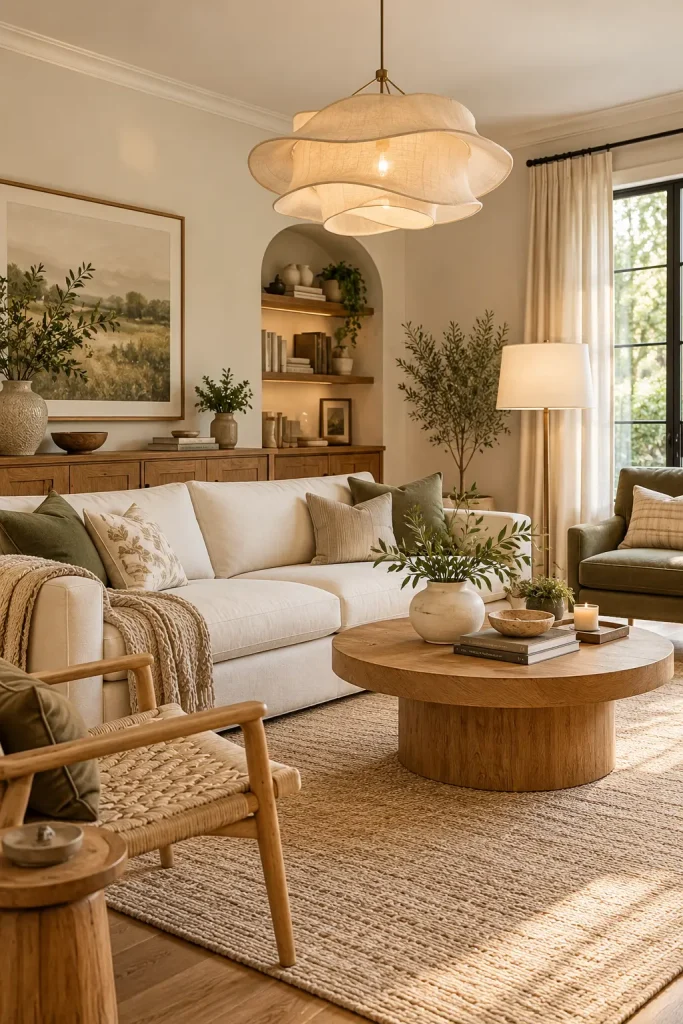
Lighting can function as both a practical necessity and a major decorative feature. An oversized pendant, sculptural floor lamp, or distinctive table lamp can give a living room a focal point even when the furniture is simple.
Start by considering what the room needs. Ceiling fixtures provide general illumination, floor lamps can brighten reading corners, and table lamps create smaller pools of light for relaxing in the evening.
Choose a statement fixture that suits the room’s scale. A very small pendant may disappear above a large seating area, while an oversized fixture can overwhelm a compact room or interfere with sightlines.
Warm-toned lamps and fabric shades can create a softer atmosphere, while metal or glass fixtures often introduce a more contemporary character.
15. Make a Small Living Room Feel More Open
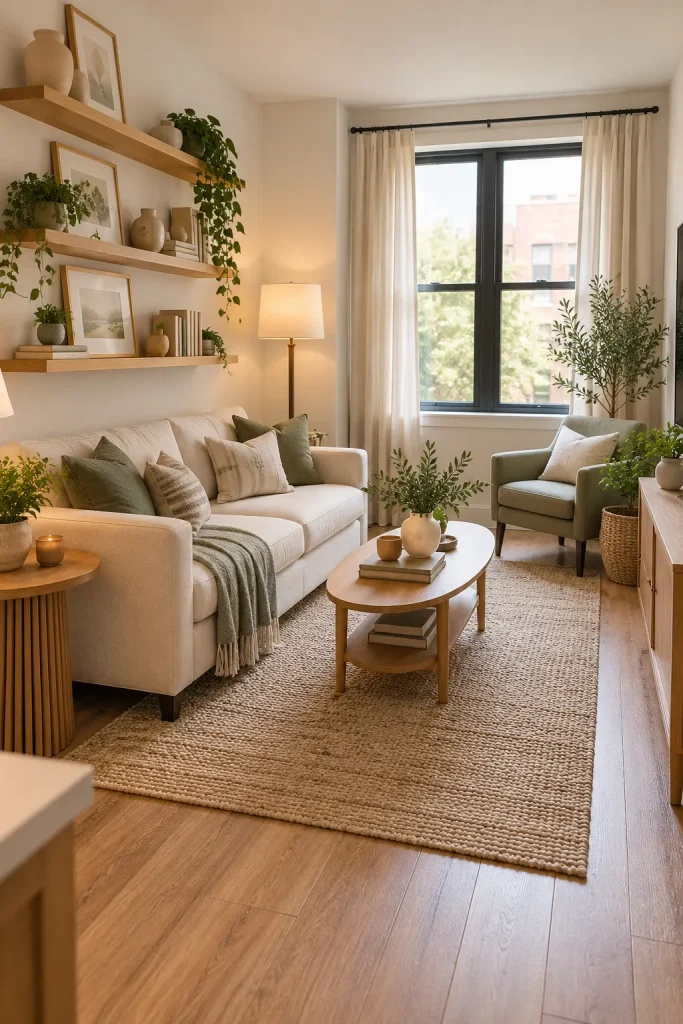
Small living rooms benefit from thoughtful furniture proportions and clear walking paths. Instead of trying to fit every piece of furniture you like into the room, prioritize seating, lighting, and surfaces that serve a genuine purpose.
A compact sofa, slim coffee table, and small side table can provide everyday comfort without overwhelming the floor plan. Wall-mounted lighting or shelves may free up some floor space, while a mirror positioned to reflect natural light can make the room feel brighter.
Choose curtains that hang neatly and avoid placing tall, heavy furniture directly in front of the brightest window. If the room doubles as a home office or guest area, look for pieces that serve more than one function.
Small-space decorating checklist:
- Measure the room and furniture before purchasing.
- Preserve a comfortable route between doors and seating.
- Choose storage that hides everyday clutter.
- Use a consistent color palette to create visual continuity.
- Leave some floor space visible rather than filling every corner.
16. Mix Vintage Finds With Modern Furniture
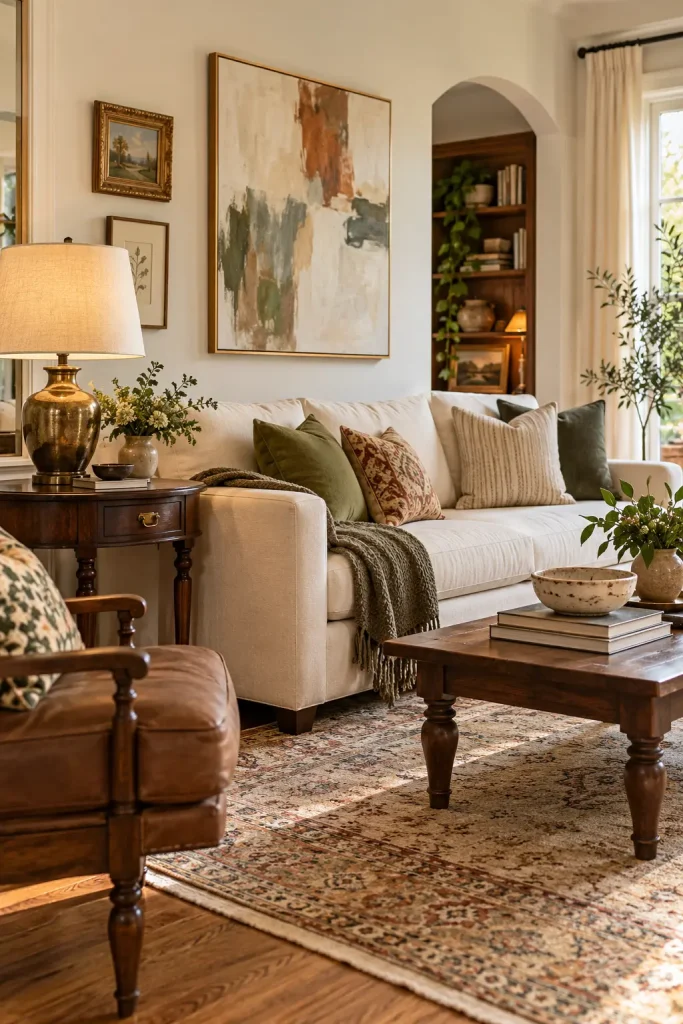
Mixing vintage and contemporary pieces can make a living room feel collected over time instead of purchased all at once. An older wooden cabinet, vintage side table, or traditional lamp can add character to a room with a clean-lined modern sofa.
The key is to create a connection between the pieces. Repeat a wood tone, echo a color from an older artwork in a cushion, or combine different furniture eras through a consistent palette.
Vintage furniture doesn’t have to match perfectly with the rest of the room. Its appeal often comes from distinctive materials, interesting proportions, and details that newer pieces may not have.
When shopping secondhand, inspect furniture for stability, odors, damage, and signs of pests. Upholstered pieces may need additional assessment before being brought indoors.
17. Use Built-In Shelving for a Polished Look
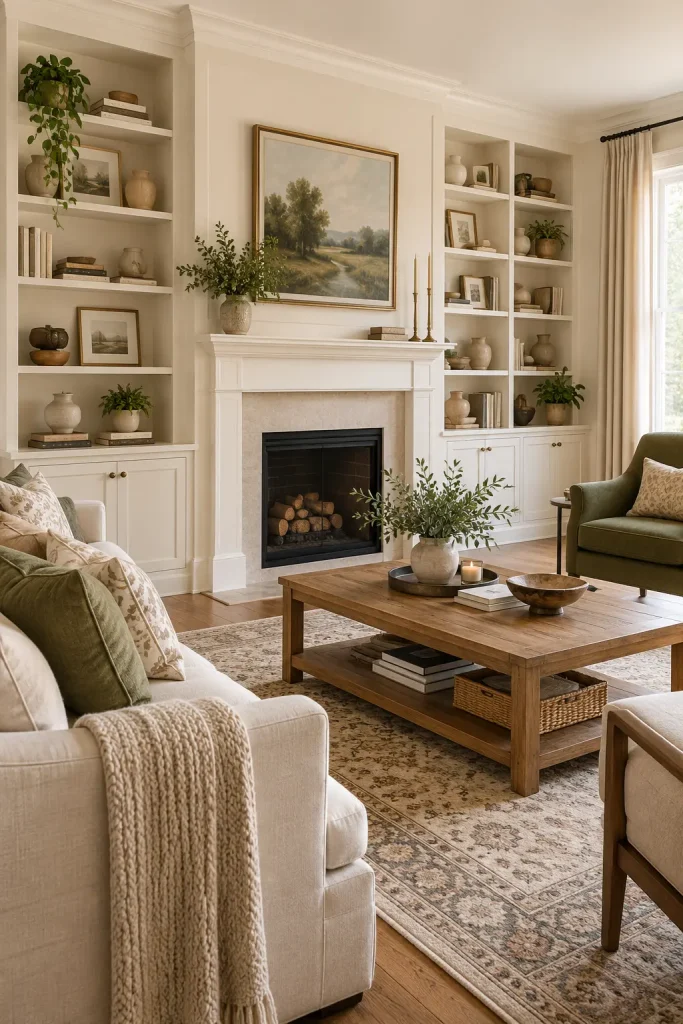
Built-in shelving creates a cohesive architectural feature while providing space for books, decorative objects, and concealed storage. It works particularly well around a fireplace or along a long living room wall.
For a traditional interior, painted shelves with lower cabinet doors create a balanced, finished appearance. In a contemporary space, natural wood shelving and simpler cabinet fronts may feel more appropriate.
If custom cabinetry isn’t practical, freestanding bookcases can achieve a related visual effect. Choose units with compatible heights and finishes, align them carefully, and use baskets or matching storage boxes to keep small items organized.
Think about what you’ll store before deciding how to divide the shelves. Books may require different spacing from tall vases or framed artwork, and everyday items are often easier to manage in lower cabinets.
18. Create a Relaxed Coastal Living Room
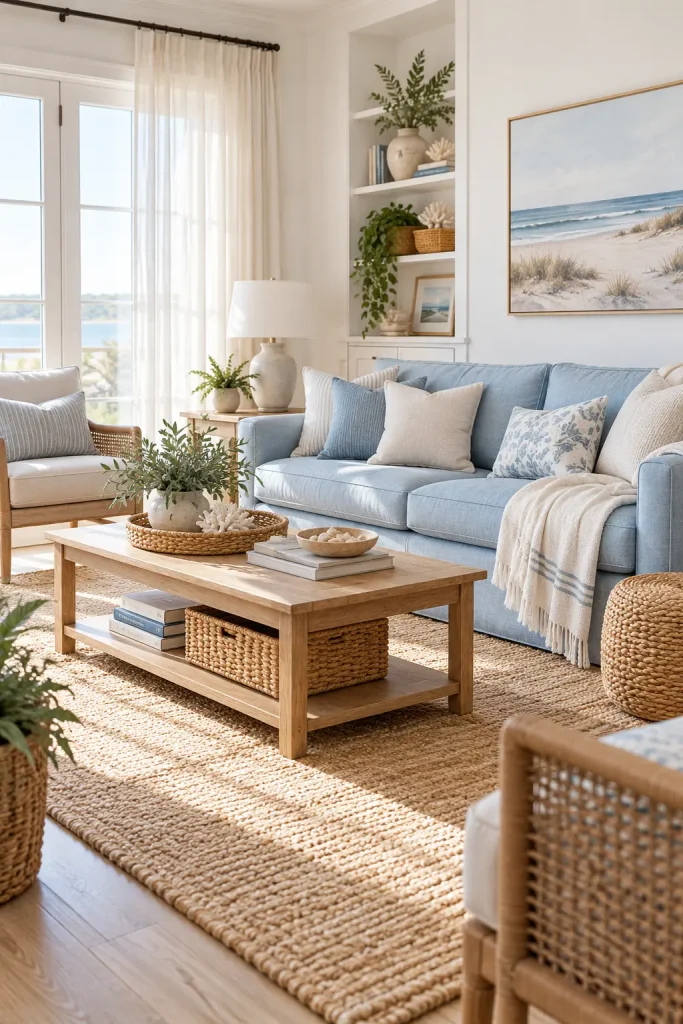
Coastal living rooms borrow their colors and textures from the seaside without relying on obvious nautical decorations. Pale blue, soft white, sandy beige, and weathered-looking wood create a light and relaxed atmosphere.
Choose comfortable linen upholstery, a natural-fiber rug, and a simple oak coffee table. Woven baskets and lightweight curtains add texture while keeping the room visually open. A few blue accents can suggest the colors of the water without making the entire space feel themed.
For a modern coastal look, skip excessive seashells and novelty decorations. Focus instead on natural light, breathable fabrics, and a balance of cool and warm tones.
If the room receives strong direct sunlight, consider window treatments that help manage glare while preserving the bright feeling.