

27 Cozy Bedroom Ideas for a Relaxing and Stylish Home
A cozy bedroom should feel like a quiet retreat at the end of a busy day. Soft bedding, warm lighting, natural materials, and a thoughtful color palette can make the room feel more inviting without requiring a complete makeover. Whether you have a small apartment bedroom, a spacious primary suite, or a simple guest room, the right decorating choices can create a comfortable space that still looks polished.
The best cozy bedroom ideas balance comfort with visual simplicity. Layered textiles add softness, bedside lamps create a gentle evening glow, and carefully chosen furniture helps the room feel organized rather than crowded. You can also introduce personality through wood accents, botanical details, upholstered headboards, and subtle colors.
These 27 cozy bedroom ideas offer inspiration for different room sizes, budgets, and decorating styles, making it easier to create a bedroom that feels restful, personal, and beautifully put together.
1. Layer Soft Neutral Bedding for Everyday Comfort
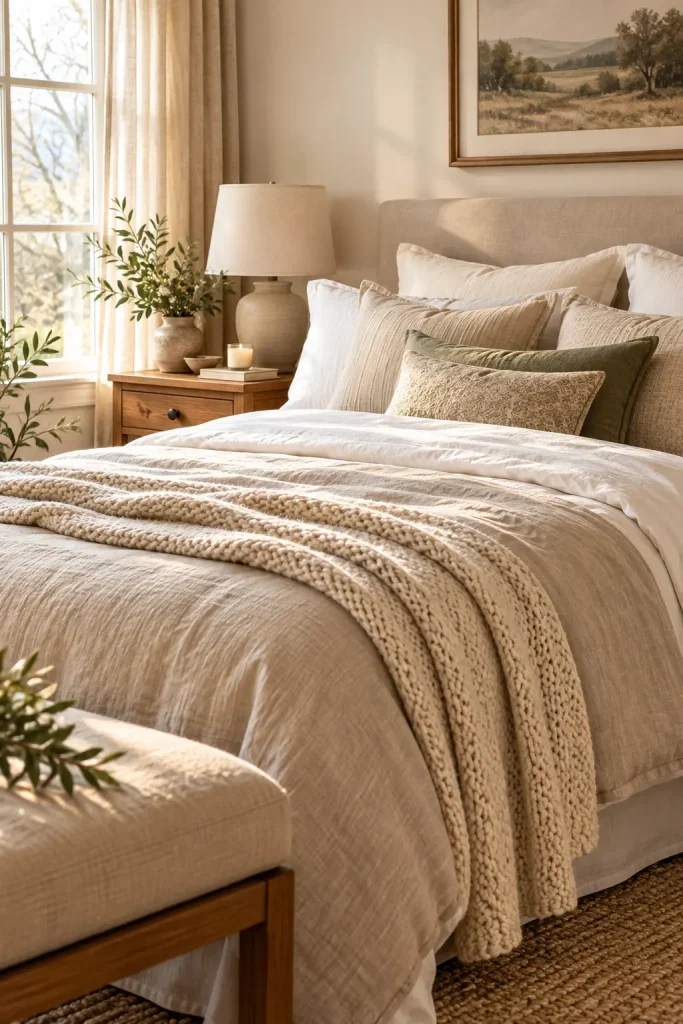
Neutral bedding is one of the easiest ways to make a bedroom feel calm and inviting. Combine crisp ivory sheets, a soft beige duvet, and pillows in slightly different shades of cream, sand, and oatmeal. The subtle variation keeps the bed from looking flat while maintaining a cohesive appearance.
Choose fabrics with different textures, such as washed cotton, linen, and a lightweight knitted throw. Fold the throw loosely across the foot of the bed instead of arranging everything too perfectly.
Styling tip: Use two or three complementary neutrals rather than introducing too many colors. This creates a restful foundation that works with both modern and traditional furniture.
2. Create a Warm Glow With Bedside Lamps
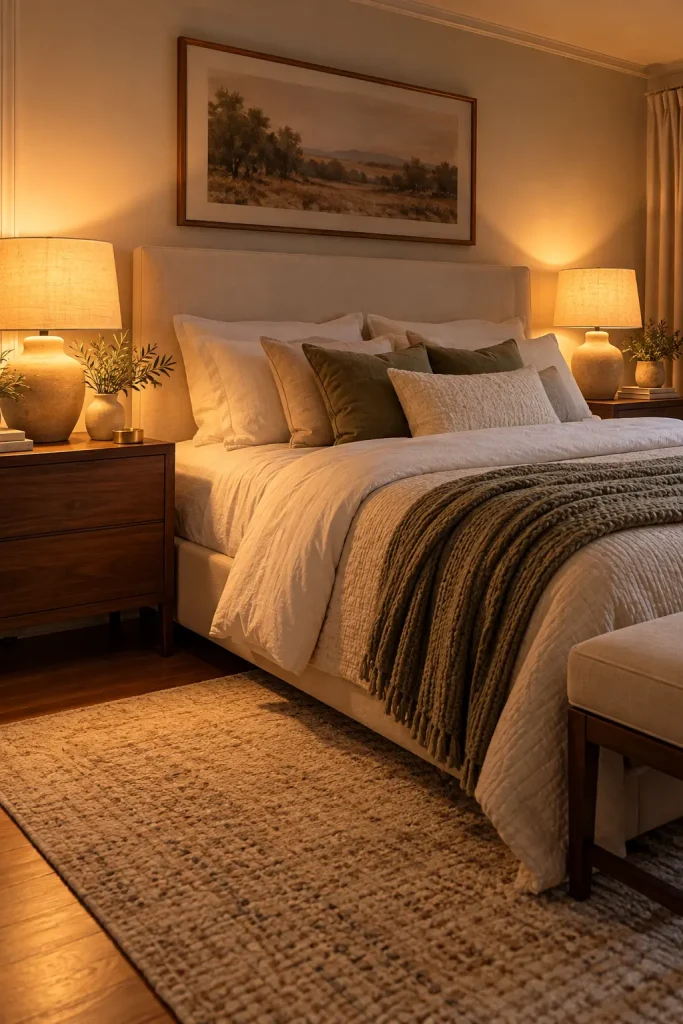
Lighting has a significant influence on how a bedroom feels after sunset. Instead of relying entirely on a bright ceiling fixture, introduce bedside lamps with fabric shades that soften the light and create a more intimate atmosphere.
Matching lamps can give the room a balanced, traditional appearance, while two different lamps can add personality to an eclectic interior. Look for warm-toned bulbs and position the lamps where they provide enough light for reading without shining directly into your eyes.
For a smaller bedroom, choose compact lamps or wall-mounted reading lights to keep the nightstands available for books, glasses, and other essentials.
3. Add a Chunky Knit Throw
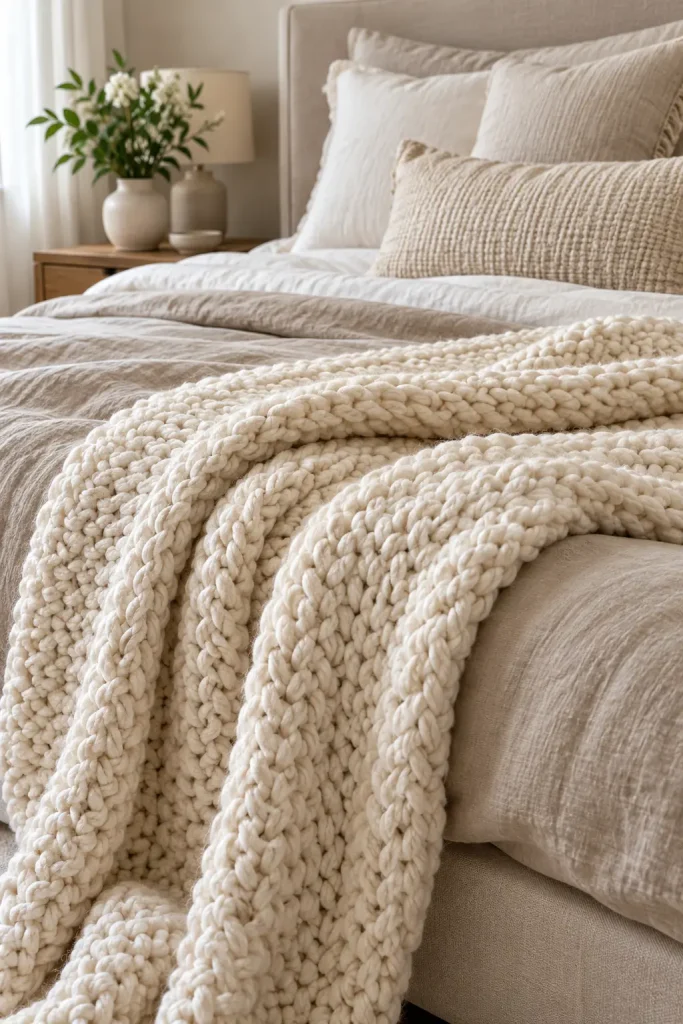
A chunky knit throw introduces the tactile softness that makes a bedroom feel especially welcoming. Drape one across the lower third of the bed, allowing a few natural folds to fall over the side. This creates visual movement and makes the bedding feel less formal.
Cream and oatmeal throws work beautifully with neutral interiors, while forest green, rust, or muted burgundy can add depth to a more colorful bedroom.
Consider the scale of the knit, too. A thick, oversized blanket creates a relaxed look, whereas a finer knit feels lighter and more refined.
Quick Tip: Keep the rest of the bedding relatively simple so the chunky texture remains the focal point.
4. Choose an Upholstered Headboard for a Softer Look
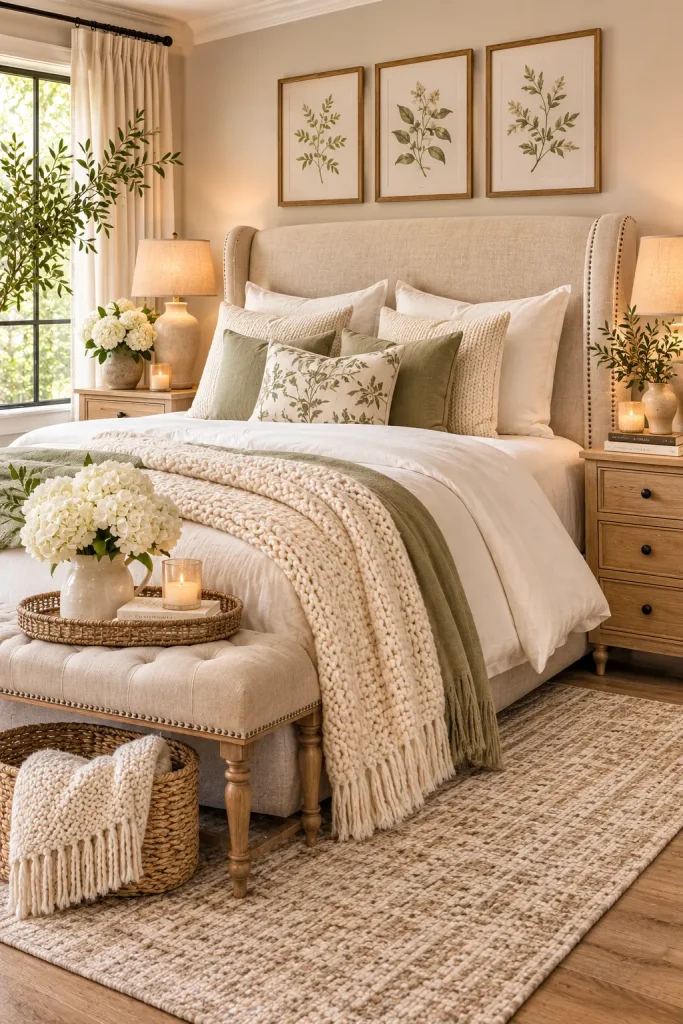
An upholstered headboard adds softness behind the bed and can make the entire room feel more finished. Linen, cotton, and textured woven fabrics are especially useful when you want a relaxed bedroom rather than a highly formal one.
A tall, gently curved headboard creates a more traditional silhouette, while a simple rectangular design suits contemporary spaces. Beige and ivory are versatile choices, but muted sage or warm taupe can introduce subtle color.
If you’re decorating a rental, a freestanding upholstered headboard may be a practical alternative to built-in wall treatments.
5. Bring Nature Indoors With Wooden Furniture
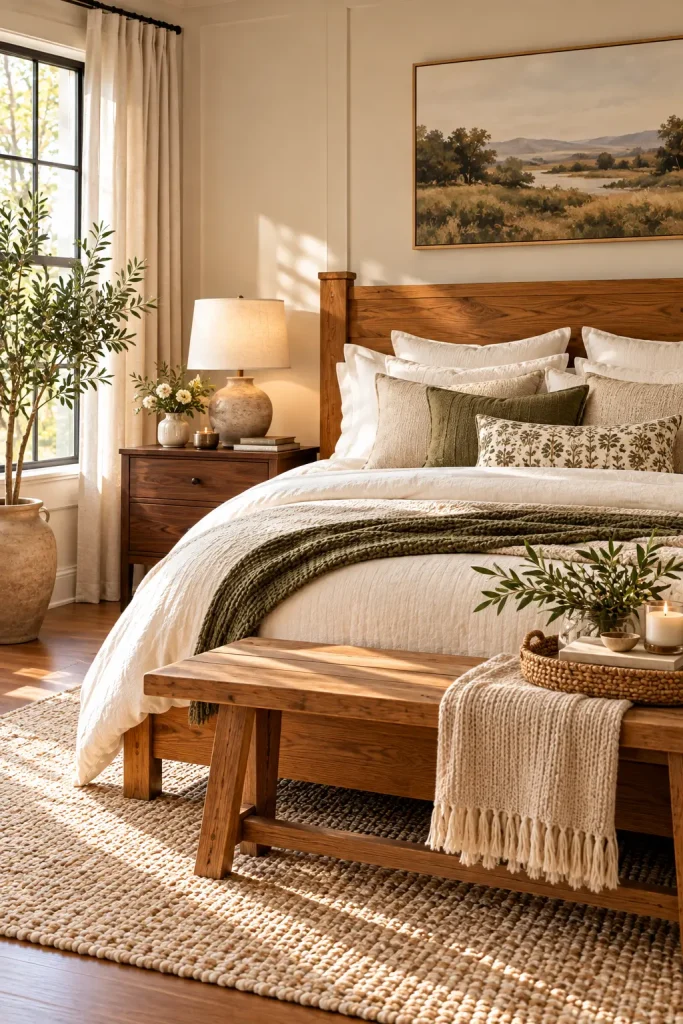
Wood introduces natural variation and warmth that can balance the softness of bedding and curtains. An oak bed frame, walnut nightstand, or simple wooden bench can give a bedroom a grounded, comfortable appearance.
You don’t need every wooden piece to match exactly. Combining similar undertones usually creates a more collected look than purchasing a perfectly coordinated furniture set. For example, warm oak can work with medium walnut when the remaining colors and finishes connect the pieces.
In a small room, use wood selectively so the furniture doesn’t overwhelm the space.
6. Paint the Walls a Calming Sage Green
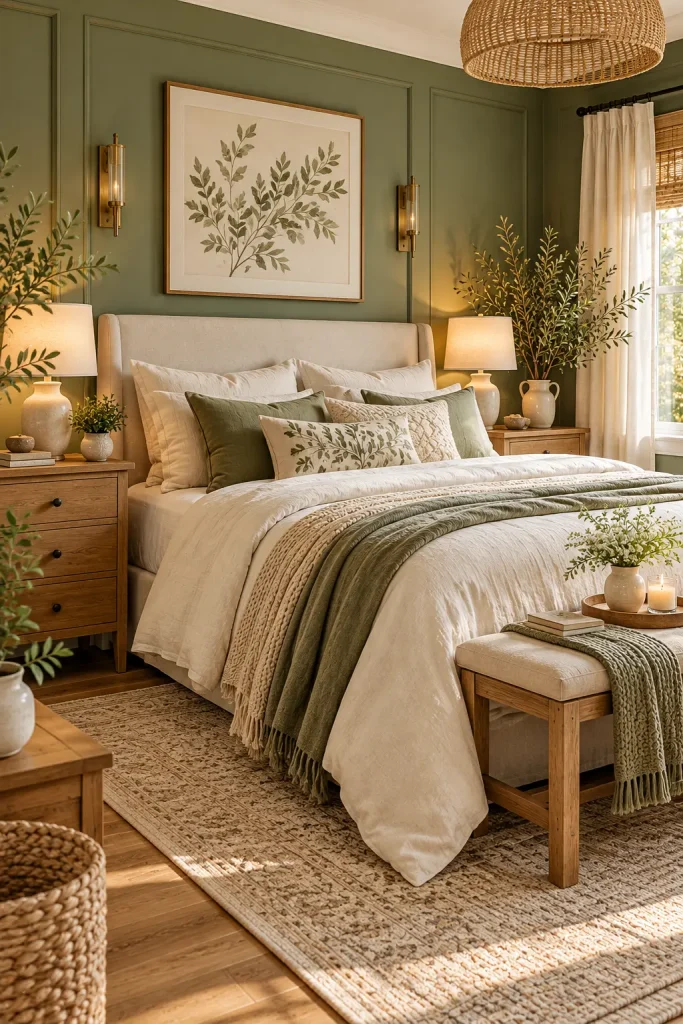
Sage green offers a gentle alternative to white and beige. Its muted character pairs well with natural wood, warm ivory bedding, linen curtains, and botanical artwork. Depending on the light and surrounding finishes, sage can feel earthy, soft, or slightly gray.
Use it on all four walls for a cohesive look, or apply it to the wall behind the bed when you prefer a more subtle change. Test paint samples at different times of day because daylight and artificial lighting can affect how green appears.
Pair it with:
- Warm white bedding.
- Natural oak or walnut furniture.
- Cream lampshades.
- Botanical prints with restrained colors.
7. Make a Small Bedroom Feel Cozy With Smart Furniture
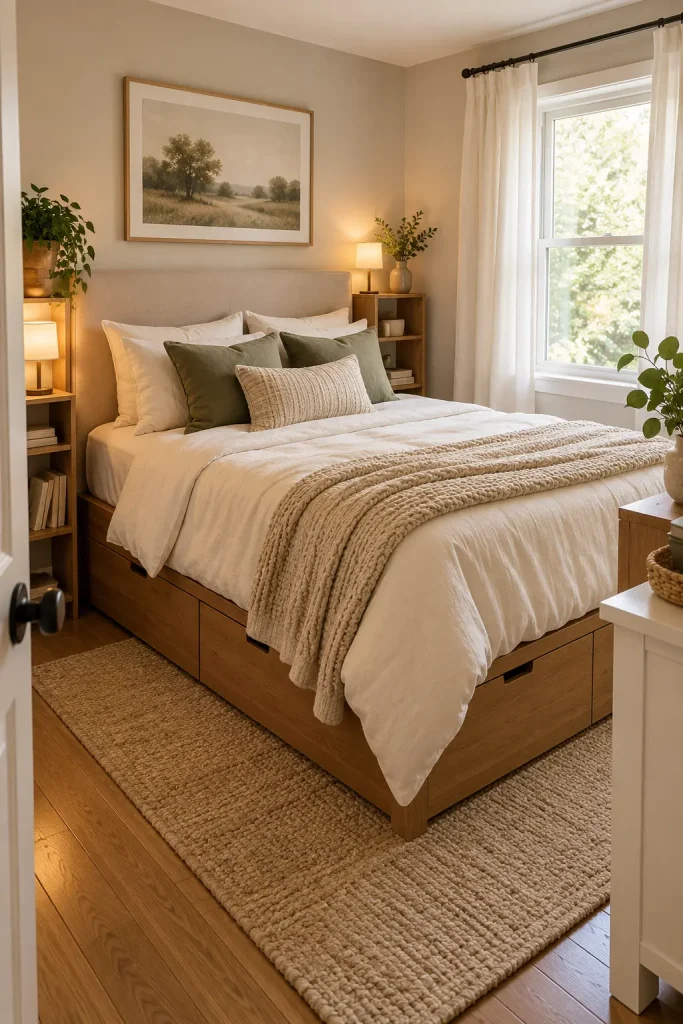
A small bedroom can feel inviting without sacrificing useful floor space. The key is selecting furniture that suits the room rather than filling every available corner.
Choose narrow nightstands, a bed frame with integrated drawers, or wall-mounted shelves when traditional furniture feels too bulky. Keep the walking paths around the bed clear and avoid adding oversized accent chairs that rarely get used.
A limited color palette can help the room feel visually connected, while layered bedding and a soft rug provide the warmth you want from a cozy bedroom.
Small-space checklist:
- Measure the bed and nightstands before buying.
- Use vertical storage where practical.
- Choose furniture with more than one purpose.
- Keep decorative accessories selective.
8. Layer Bedroom Rugs for Extra Softness
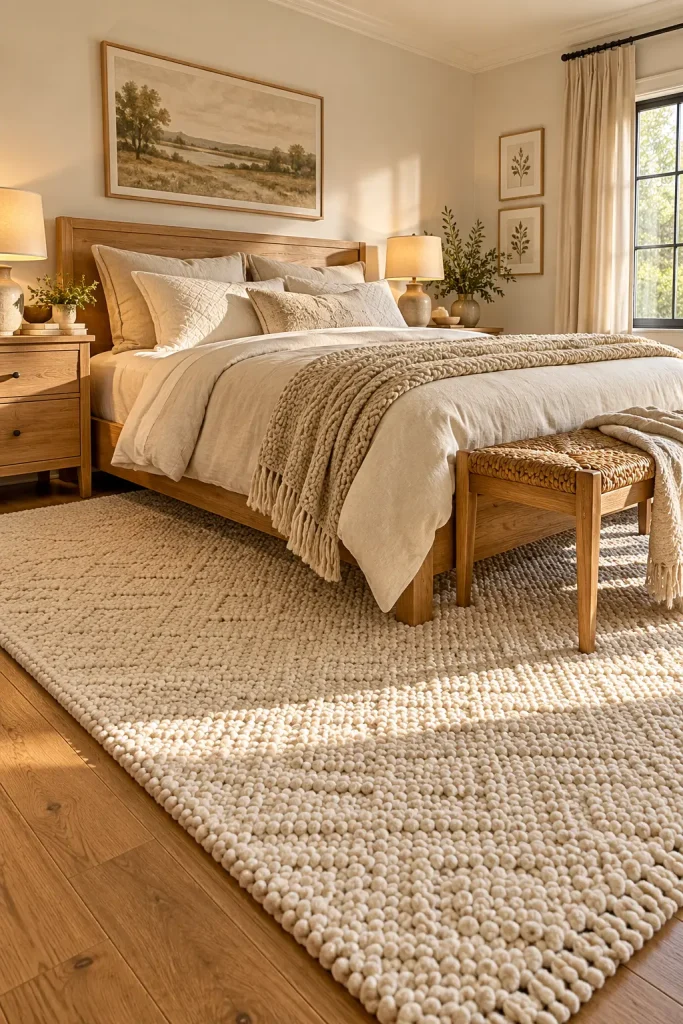
A rug can make the bed area feel more comfortable and visually complete. A generously sized rug that extends beyond the sides and foot of the bed creates a grounded arrangement and provides a softer surface underfoot.
For a relaxed look, consider a low-pile wool rug, a textured neutral design, or a subtle vintage-inspired pattern. The rug doesn’t need to match the bedding exactly; it should simply complement the room’s overall color palette.
Layering a smaller accent rug over a larger neutral rug can work in spacious rooms, but avoid creating raised edges in walking paths.
9. Hang Floor-Length Curtains for a Relaxed Finish
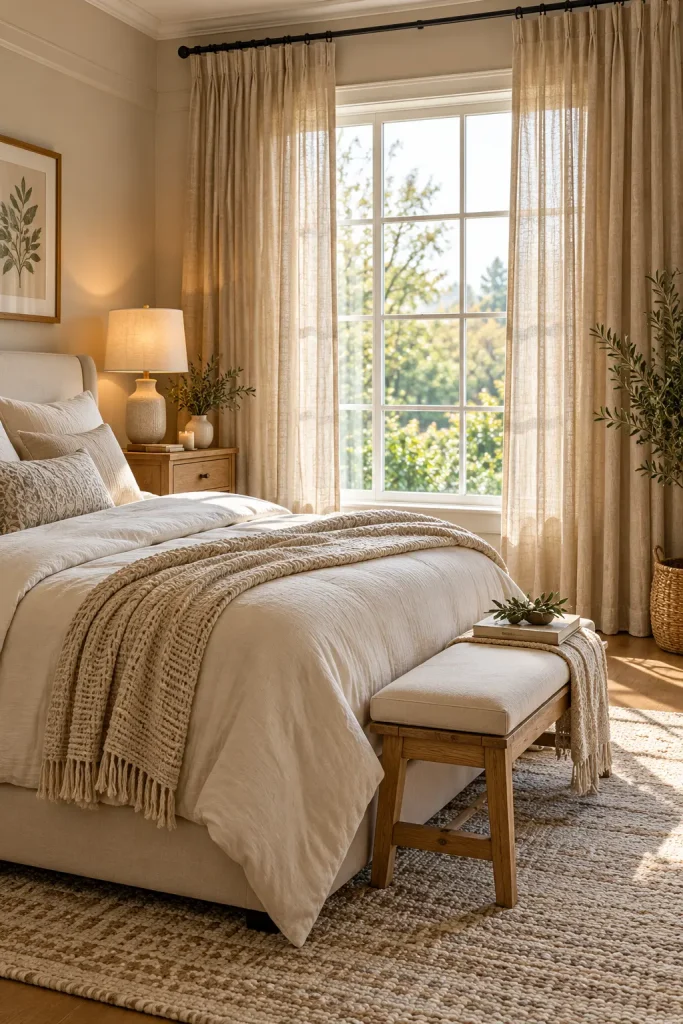
Curtains soften the transition between the bed, walls, and windows. Floor-length linen or cotton panels can make the room feel more complete while filtering daylight into a gentle glow.
For a light and airy bedroom, choose warm white or natural flax curtains. If you want more contrast, try muted olive, taupe, or a deeper earthy shade that connects with the bedding.
Hang the curtain rod high enough to create a sense of height, while ensuring the panels reach the floor without becoming an obstacle. In rental homes, tension rods or approved removable hardware may offer a practical alternative to permanent installation.
10. Style a Bed With Earthy Accent Colors
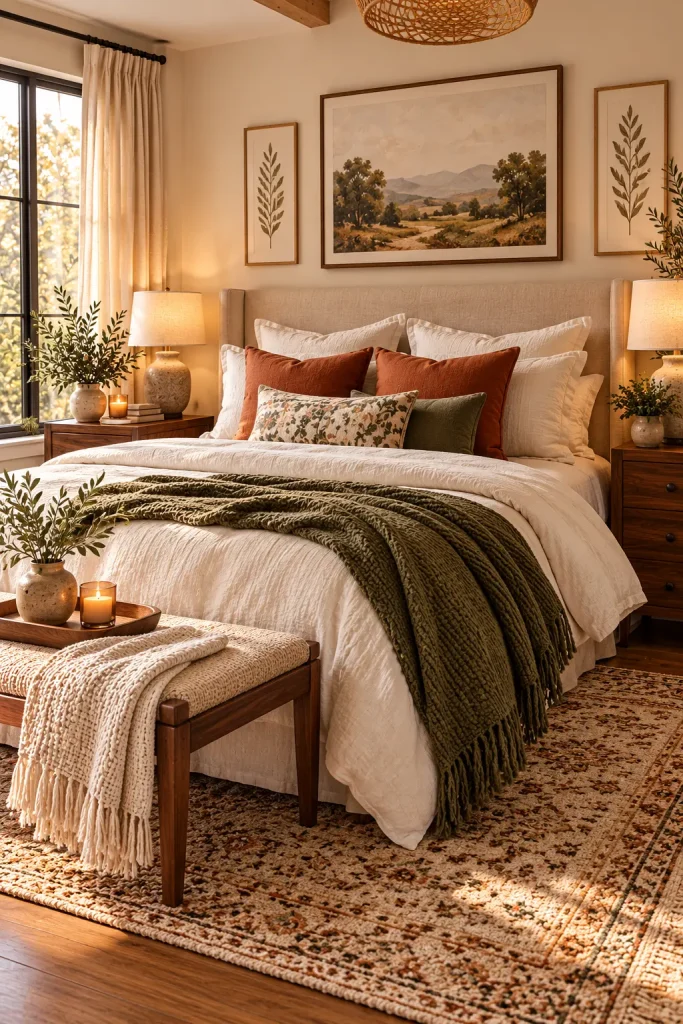
Neutral bedrooms become more personal when you introduce a few richer colors. Earthy shades such as terracotta, rust, olive green, and muted clay complement cream bedding and natural wood without making the room feel overly busy.
Start with two accent colors and repeat them in small ways. Rust-colored pillows might connect with a piece of artwork, while olive-green bedding details can echo a potted plant or ceramic vase.
The goal is not to distribute every color equally. Let one shade take the lead and use the second as a supporting detail.
11. Create a Cozy Reading Nook in the Bedroom
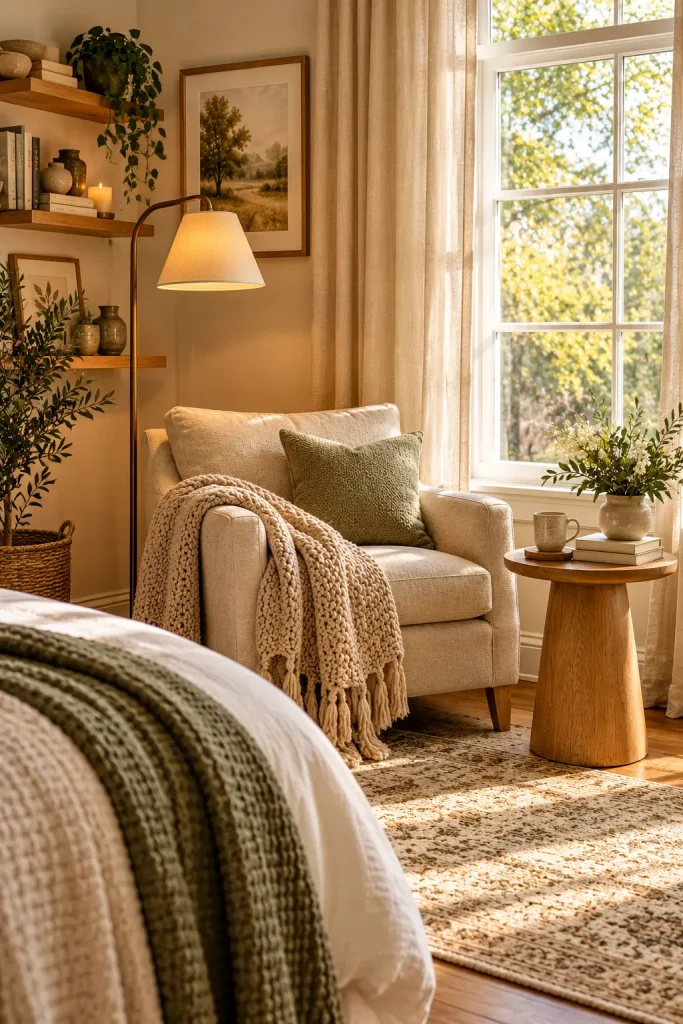
If you have an unused corner, turn it into a small reading nook. A comfortable armchair, a floor lamp, and a compact side table are often enough to establish a separate place for reading or winding down.
Position the chair near a window when possible, but don’t let it obstruct a door or the main path through the room. In a particularly small bedroom, a cushioned bench or a single compact chair can serve the same purpose.
A soft throw and a small stack of books make the arrangement feel personal rather than staged.
12. Decorate With Soft, Textured Pillows
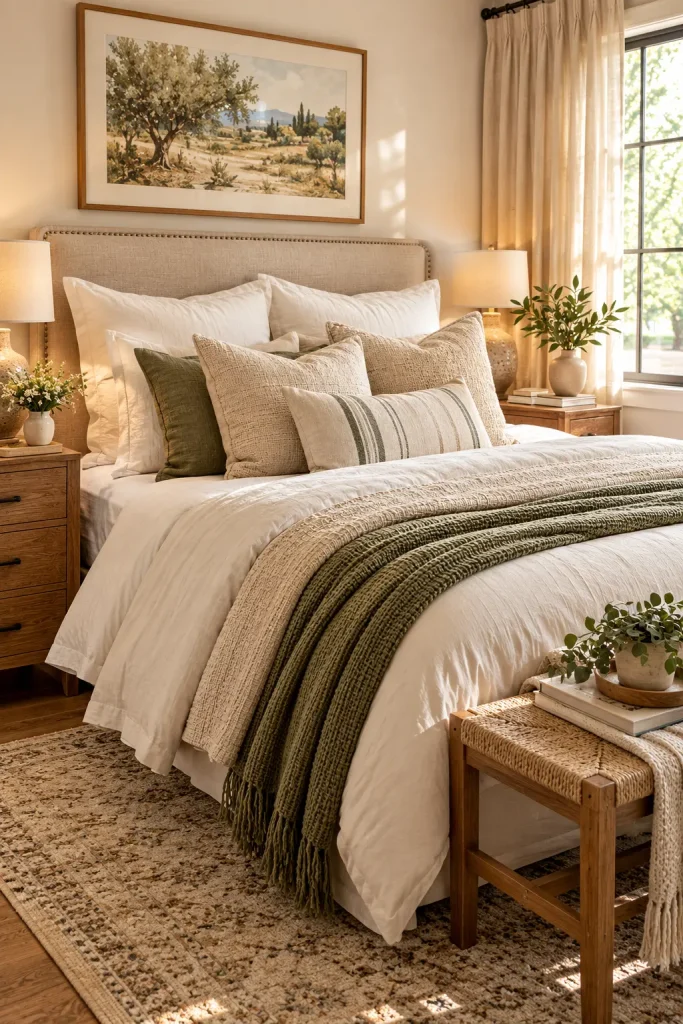
Pillows are an accessible way to change the appearance of a bedroom without replacing the main bedding. Combine smooth cotton, nubby woven fabric, and subtle linen textures for depth.
A practical arrangement might include sleeping pillows, two decorative pillows, and one smaller accent cushion. Larger beds can accommodate more layers, but smaller beds often look better with fewer pillows that can be removed easily at night.
Avoid mixing too many bold patterns. One understated stripe or botanical print can provide enough contrast against solid-colored bedding.
13. Use a Canopy Bed for an Enveloping Feel
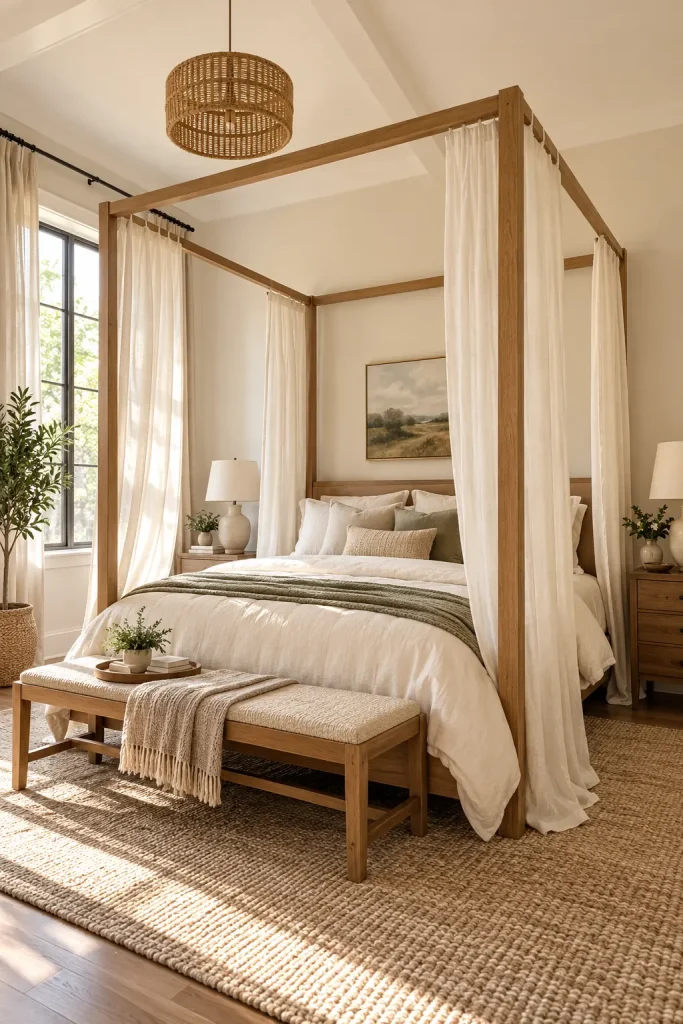
A canopy bed gives the sleeping area a defined architectural presence. A simple wood or metal frame can look elegant without requiring a large room or elaborate drapery.
For a soft, romantic effect, add lightweight neutral curtains that frame the bed. If you prefer a cleaner contemporary look, leave the frame bare and let its lines create the focal point.
Make sure the frame suits the ceiling height and leaves adequate clearance for movement. In compact bedrooms, a slim canopy structure generally feels less imposing than a heavy, oversized design.
14. Add a Bench at the Foot of the Bed
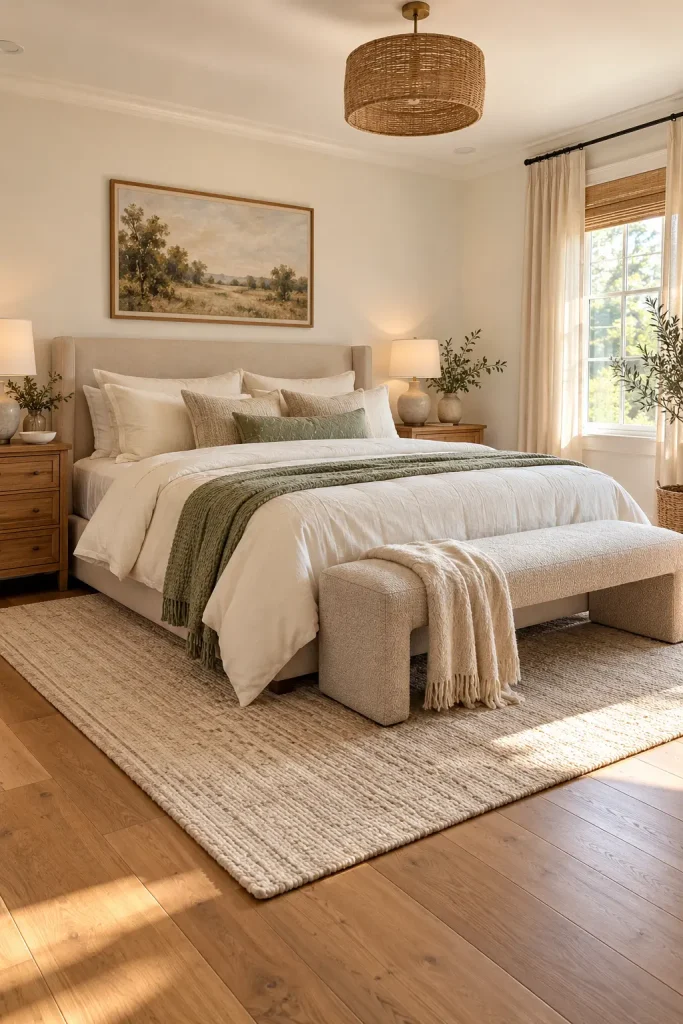
A bench at the foot of the bed introduces another layer of texture and can provide a useful place to sit while getting dressed. It also gives the bed arrangement a more complete appearance.
Choose an upholstered bench for softness, a wooden bench for a natural look, or a woven design for a relaxed, casual interior. If storage is limited, an upholstered storage bench can hold extra blankets and seasonal bedding.
Leave enough room to walk comfortably around the bench. A smaller bedroom may benefit from a narrow design or no bench at all.
15. Introduce Wallpaper Behind the Bed
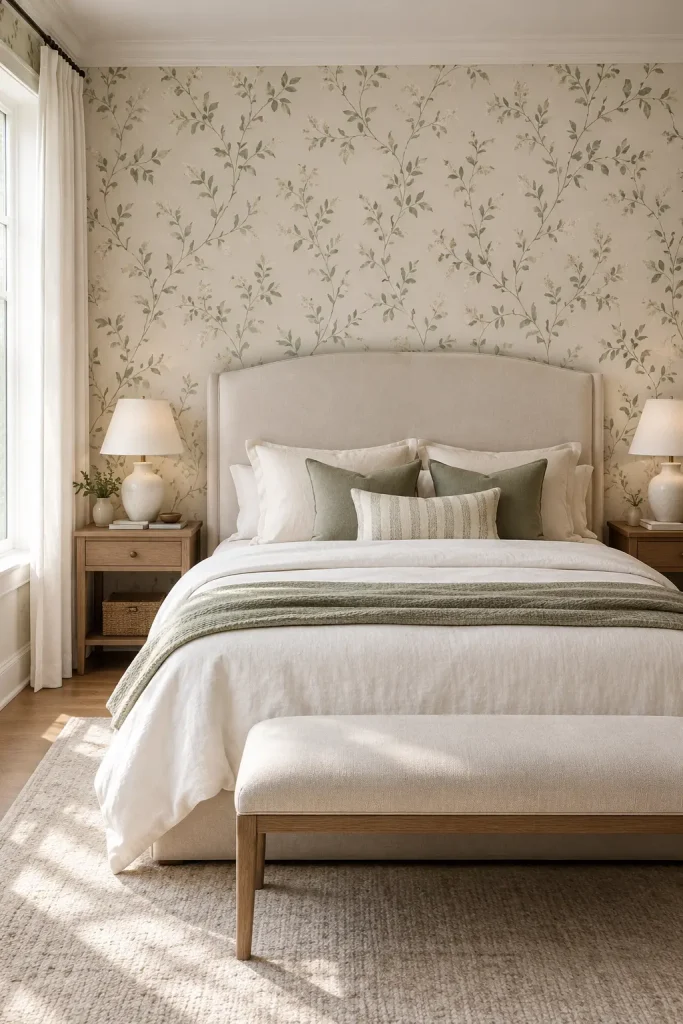
Wallpaper can give a bedroom personality without requiring numerous decorative accessories. A subtle botanical pattern, a small-scale stripe, or a muted organic design can create a backdrop that feels interesting but not overwhelming.
For a restful result, choose wallpaper colors that connect with the bedding and furniture. If the pattern is prominent, keep the rest of the walls and textiles relatively simple.
Removable wallpaper may be suitable for some rental spaces, provided the product and wall finish are compatible. Always follow the manufacturer’s installation and removal instructions.
16. Create a Moody Bedroom With Deep Colors
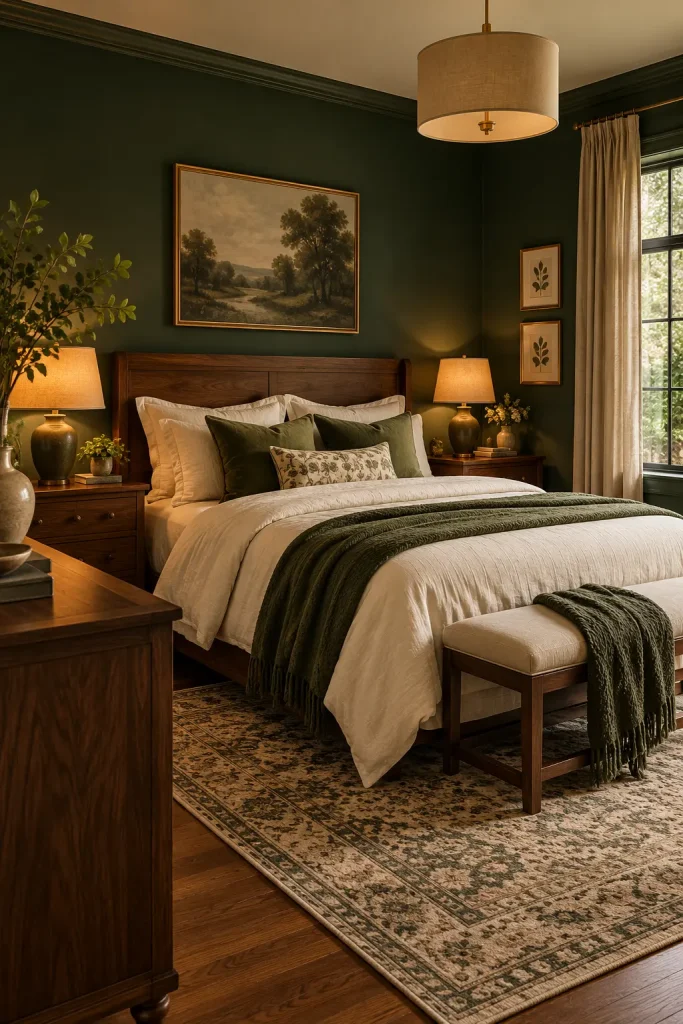
A cozy bedroom doesn’t have to be pale. Deep forest green, charcoal, navy, and warm chocolate brown can create a rich, intimate atmosphere when balanced with comfortable textiles and thoughtful lighting.
Try a darker wall color behind the bed, then introduce lighter bedding to provide contrast. Walnut furniture, brass-toned accents, and warm lamps can complement the deeper palette without making the room feel overly dramatic.
Consider the room’s natural light before committing to a dark paint color. Sample the shade on different walls and view it during both daylight and evening hours.
17. Bring in Botanical Prints and Natural Artwork
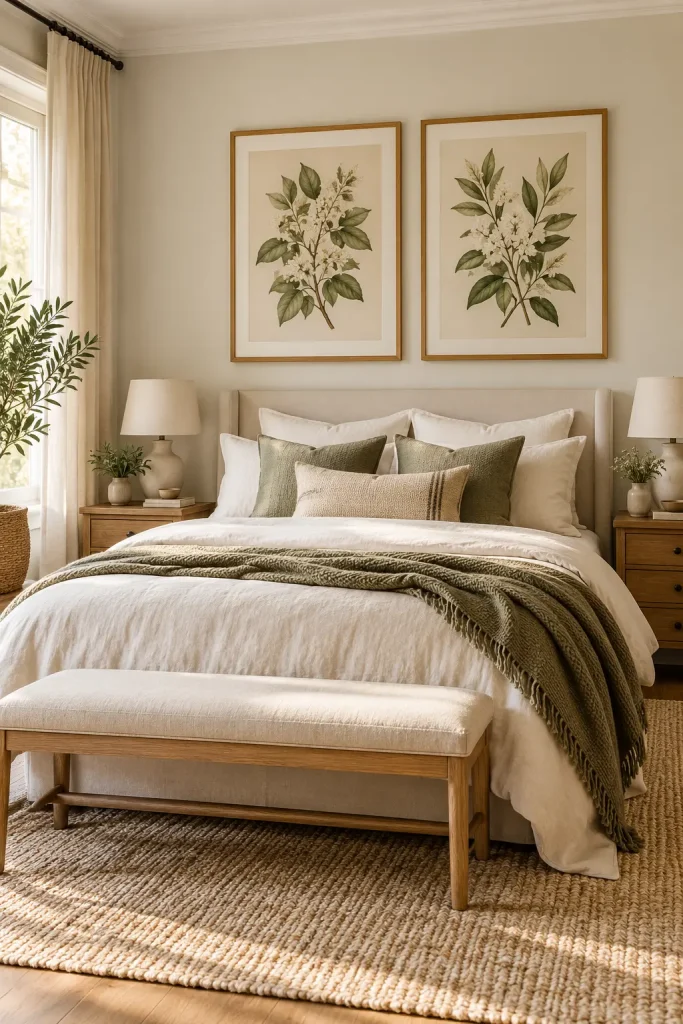
Artwork can help connect a bedroom’s colors and make plain walls feel more personal. Botanical prints, abstract landscapes, and understated nature-inspired paintings work particularly well in relaxed interiors.
Hang a larger piece above the headboard when you want a clear focal point, or arrange a small pair of prints above a bedside table. Choose frames that complement the room, such as natural oak, walnut, or simple black finishes.
Avoid hanging artwork too high above the bed. It should feel visually connected to the furniture below rather than floating near the ceiling.
18. Use Woven Baskets for Attractive Storage
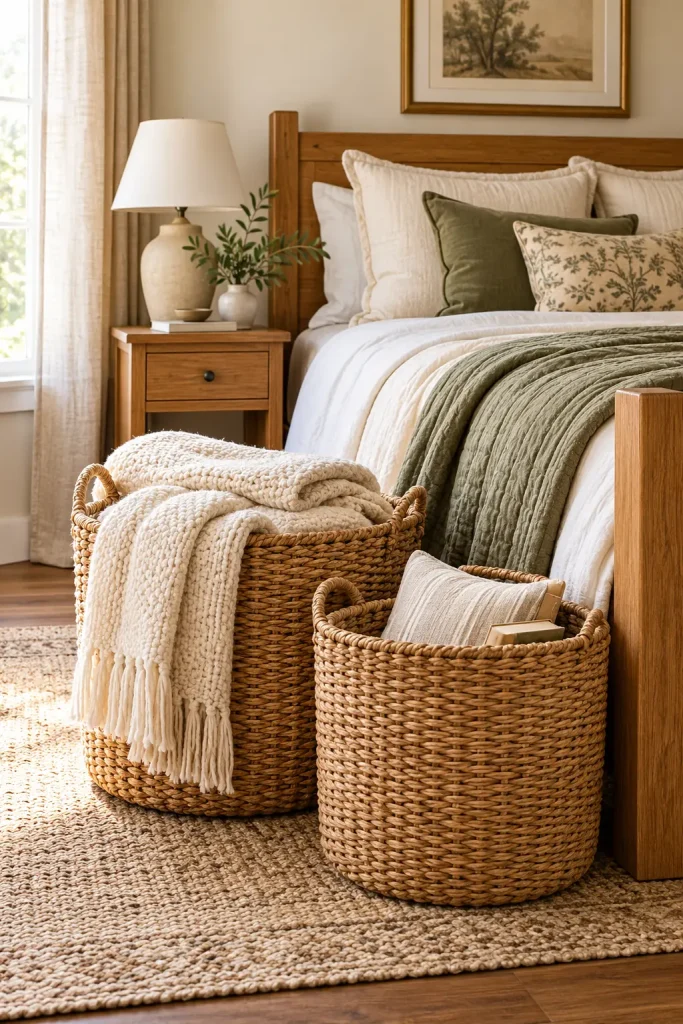
Storage can contribute to a bedroom’s design rather than simply hide clutter. Woven baskets made from natural fibers bring texture while holding spare blankets, pillows, laundry, or everyday accessories.
Place a larger basket beside a wardrobe or at the foot of a bed if space allows. Smaller baskets can sit on open shelves to keep accessories grouped together.
For a cohesive appearance, repeat natural materials elsewhere in the room through a woven pendant, textured rug, or small decorative tray. Keep frequently used baskets easy to reach so the storage system remains practical.
19. Install Wall Sconces to Free Up Nightstand Space
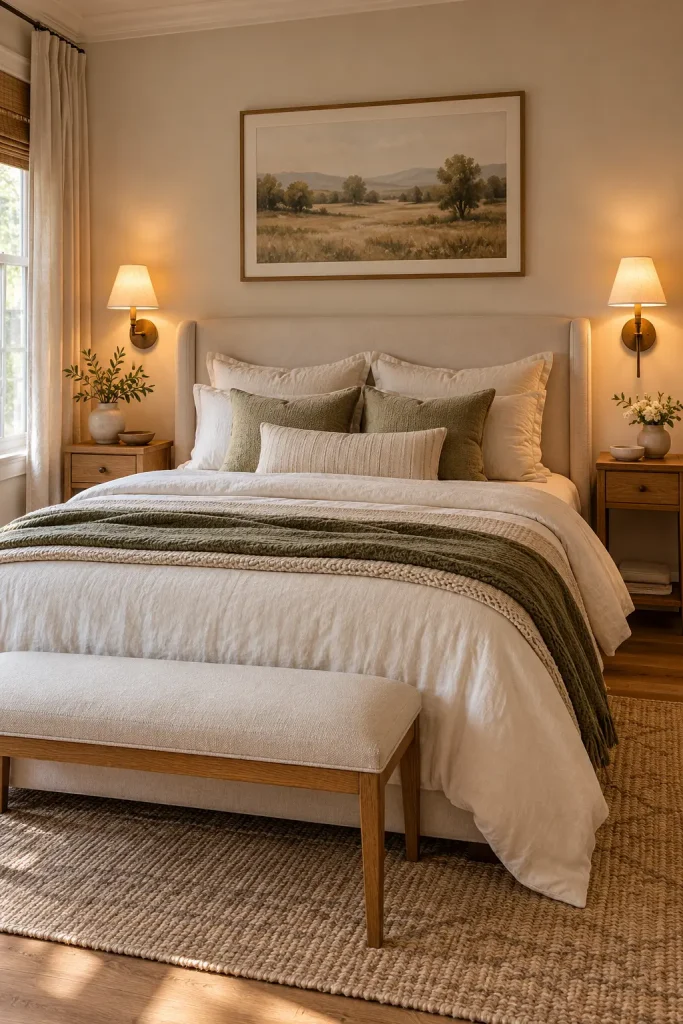
Wall sconces provide useful bedside lighting while keeping the nightstands free for books and personal items. They can also make the bed feel like a deliberate focal point.
Choose adjustable reading sconces for functionality or fabric-shaded wall lights for a softer decorative effect. Plug-in models may be useful if you want to avoid permanent electrical work, although mounting requirements and cable management still need consideration.
Position the lights so they’re comfortable to use while sitting up in bed. Check the manufacturer’s installation guidance before drilling or modifying walls.
20. Add a Touch of Rustic Charm With Natural Materials
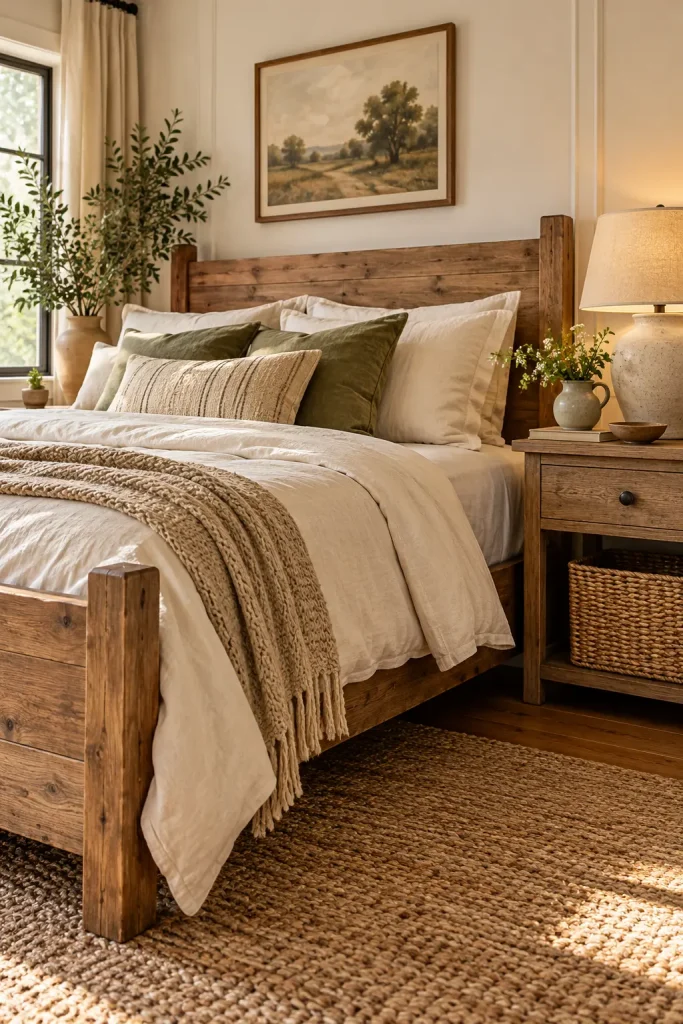
Rustic bedroom decor feels inviting when it emphasizes natural materials rather than excessive ornamentation. Reclaimed-looking wood, woven baskets, linen bedding, and handmade ceramics can create an easygoing atmosphere.
You can keep the overall design contemporary by using clean furniture lines and limiting distressed finishes. A single weathered wood accent or an aged ceramic vase often provides enough character without making the room feel themed.
For a balanced look, combine rustic textures with soft, modern bedding and restrained accessories.
21. Make the Bed the Main Focal Point With a Statement Headboard
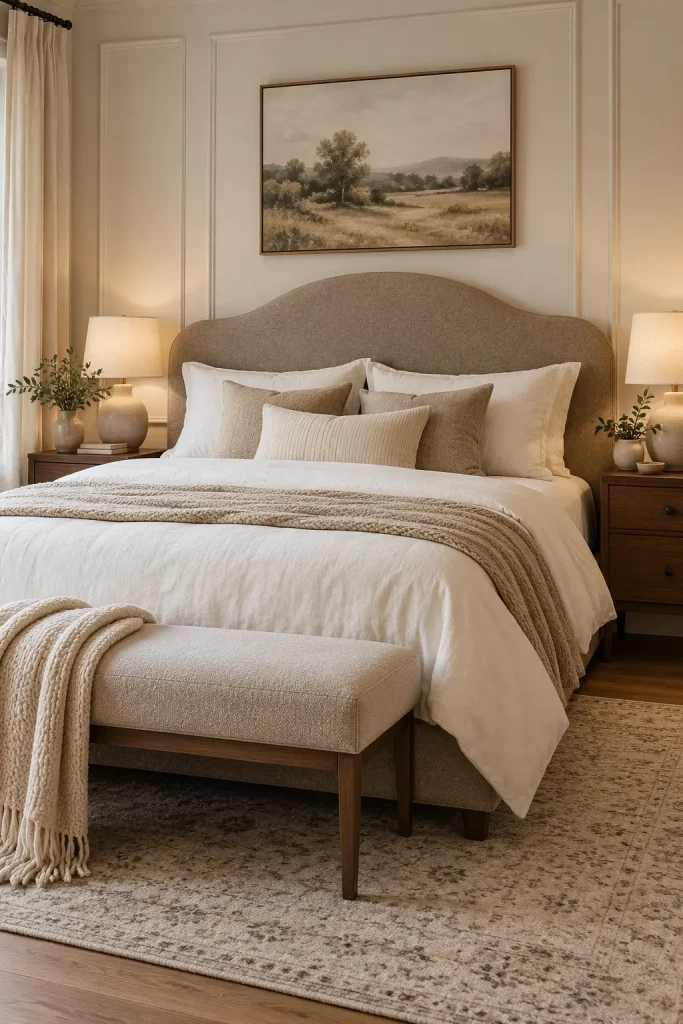
A statement headboard can provide visual interest without requiring much additional decor. Consider a gently arched silhouette, a textured fabric design, or a wall-spanning upholstered panel that creates a strong backdrop.
If you choose an oversized headboard, keep the bedside furniture and bedding relatively restrained. The goal is to let the headboard establish the room’s character rather than compete with several equally prominent elements.
In rooms with limited floor space, a wall-mounted upholstered panel may create the desired effect without adding bulky furniture.
22. Decorate With Soft Blue and Cream
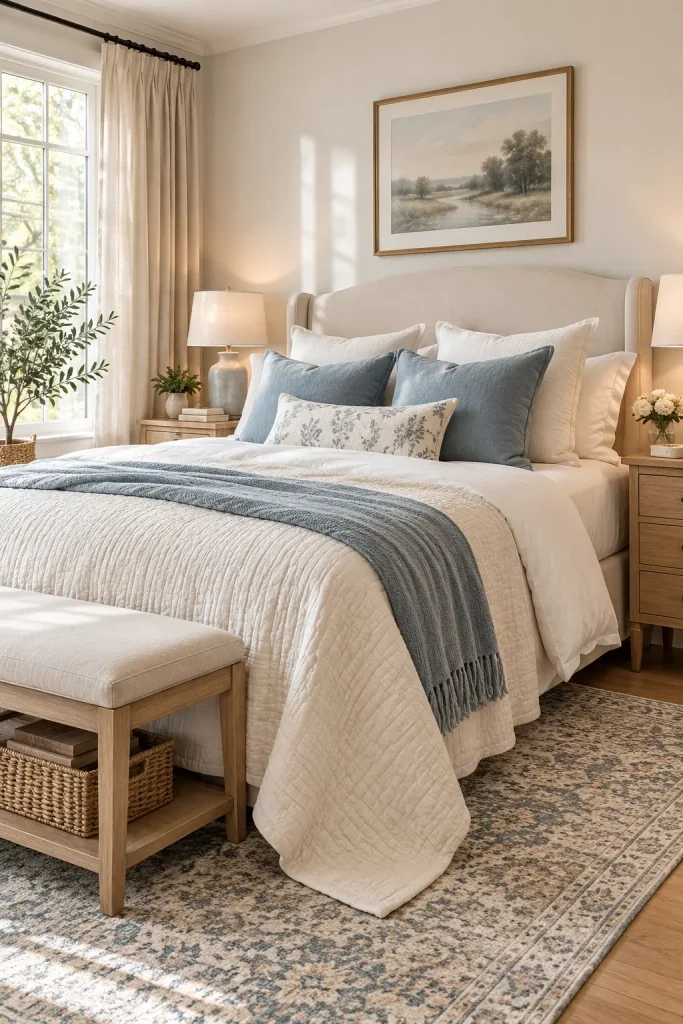
Soft blue and cream create a bedroom palette that feels fresh yet comfortable. Muted powder blue, dusty blue, or blue-gray can bring color into the room without the intensity of brighter shades.
Use cream for the larger surfaces, such as the duvet and curtains, then introduce blue through pillows, a quilt, or a painted accent wall. Natural wood furniture helps connect the cooler color to the rest of the room.
If you want a traditional look, add a subtle stripe or classic patterned fabric. For a more contemporary space, keep the textiles mostly solid.
23. Create a Minimalist Bedroom With Warm Textures
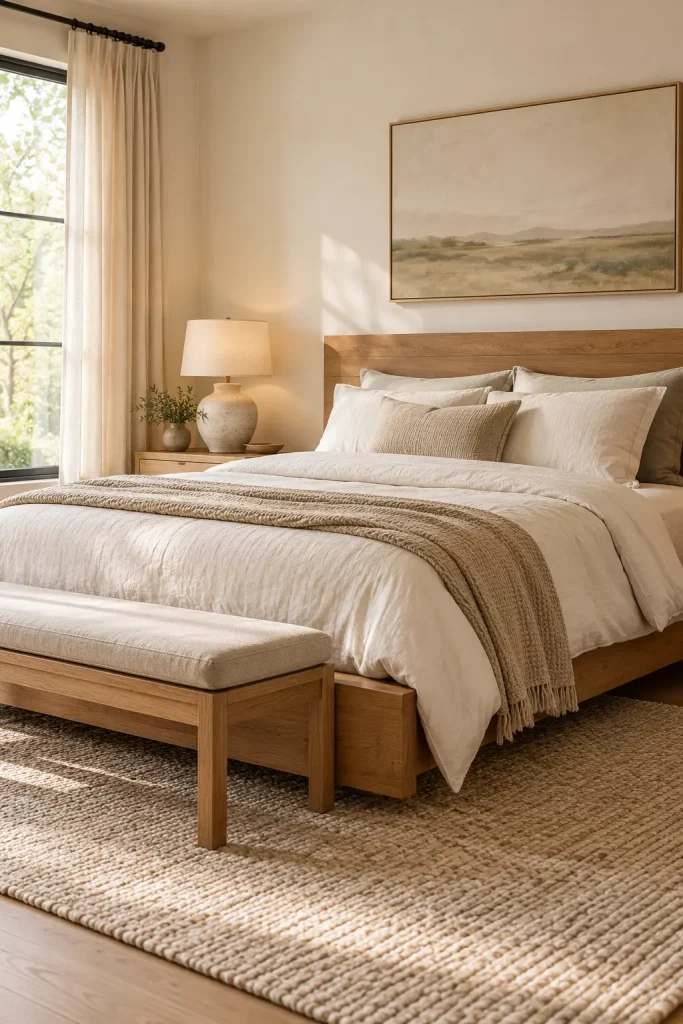
Minimalist bedrooms can still feel cozy when the design focuses on tactile materials and thoughtful proportions. Instead of filling the room with accessories, choose a few substantial elements: comfortable bedding, a warm wood bed frame, a textured rug, and soft lighting.
A restrained palette of ivory, beige, and natural oak keeps the space visually connected. Introduce depth through woven fabrics, linen curtains, or a handmade ceramic piece rather than adding more decorative objects.
Do: Prioritize comfort and useful furniture.
Don’t: Remove so much that the bedroom feels unfinished or lacks practical storage.
24. Style a Window Seat for a Quiet Retreat
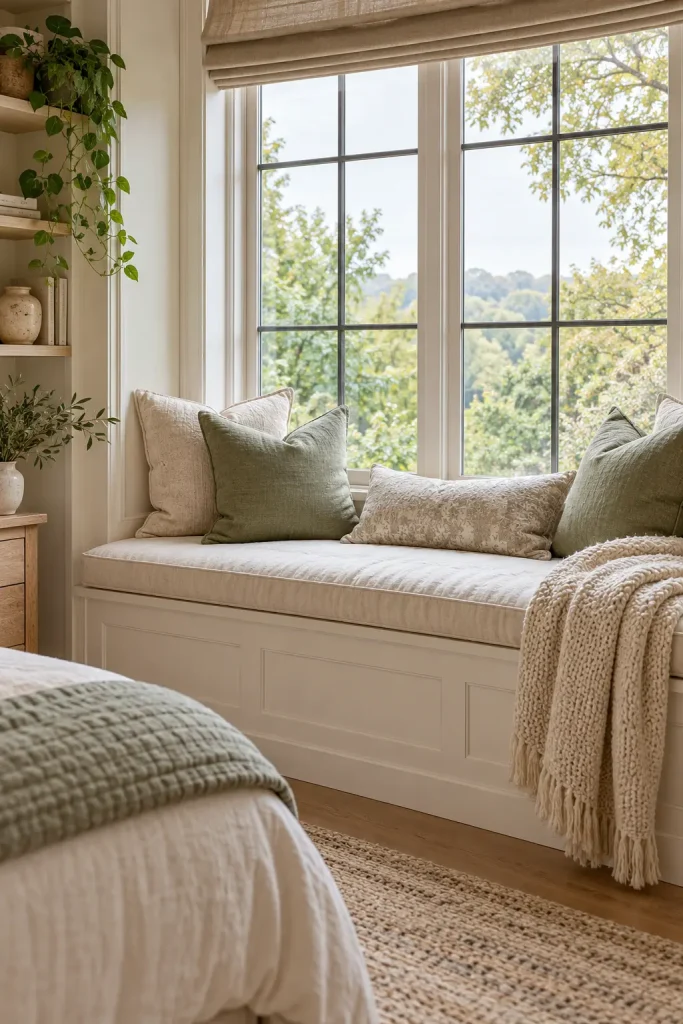
A bedroom window seat creates a separate place to read, rest, or enjoy the view. If your room has a deep window ledge or an existing built-in seat, add a fitted cushion and a few pillows in complementary fabrics.
Oatmeal, cream, and muted green work well in a nature-inspired room, while soft blue can complement a bright window overlooking a garden or street.
If a built-in seat isn’t practical, place a narrow upholstered bench near the window instead. Keep the window accessible and avoid piling on too many cushions if the seat is intended for everyday use.
25. Introduce Vintage Furniture for Character
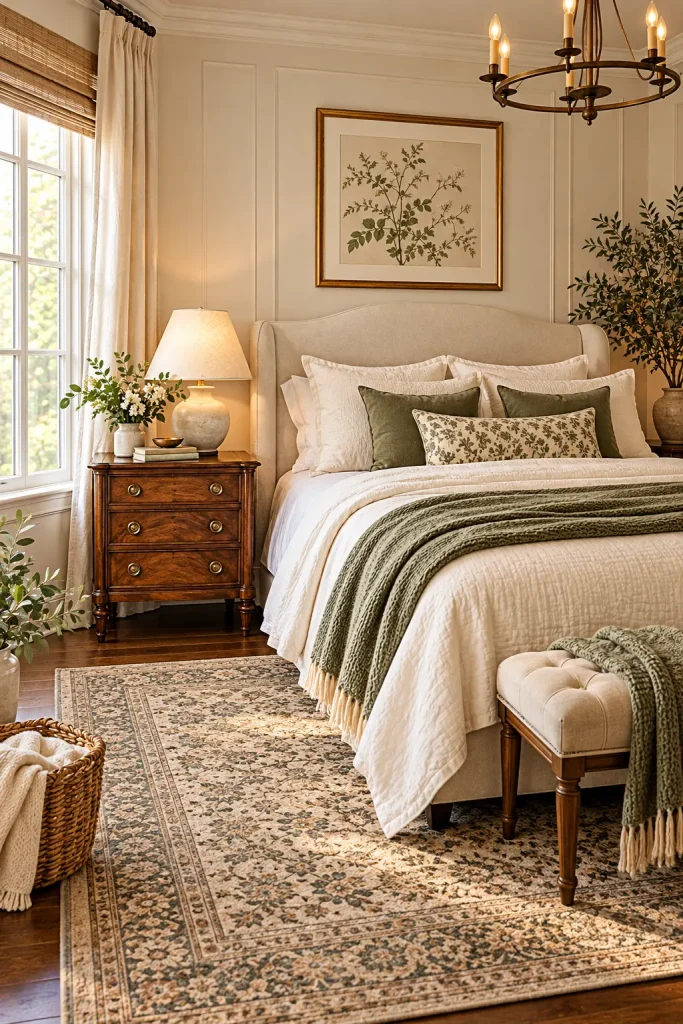
Vintage furniture adds individuality and can keep a bedroom from looking like a matching showroom. A small antique nightstand, a gently aged wooden dresser, or a vintage bedside chest can provide character alongside simpler contemporary pieces.
The most cohesive arrangements share a common thread, such as warm wood tones, similar proportions, or complementary hardware. You don’t need every piece to come from the same period.
Before bringing a secondhand piece home, check its dimensions, stability, condition, and storage functionality. A beautiful piece should still work for everyday life.
26. Add a Soft Glow With String Lights or Accent Lighting
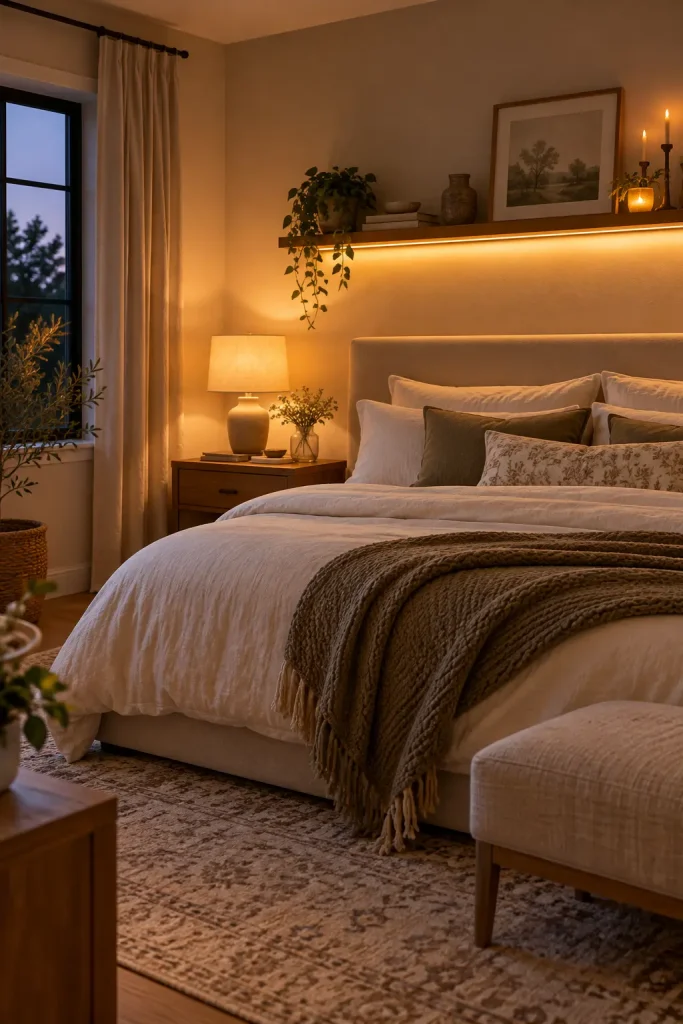
Accent lighting can give a bedroom a gentle evening atmosphere when used thoughtfully. Small decorative lights may work well around a headboard, along a shelf, or near a reading corner, especially in relaxed guest rooms and informal interiors.
For a more polished everyday bedroom, consider a small table lamp, a dimmable floor lamp, or concealed LED lighting instead. These options can provide a similar sense of warmth without making the room feel overly decorative.
Keep cables tidy and use lighting products according to their instructions. Avoid placing lights where they interfere with curtains, bedding, or safe movement.
27. Finish the Room With a Thoughtful Bedside Styling Arrangement
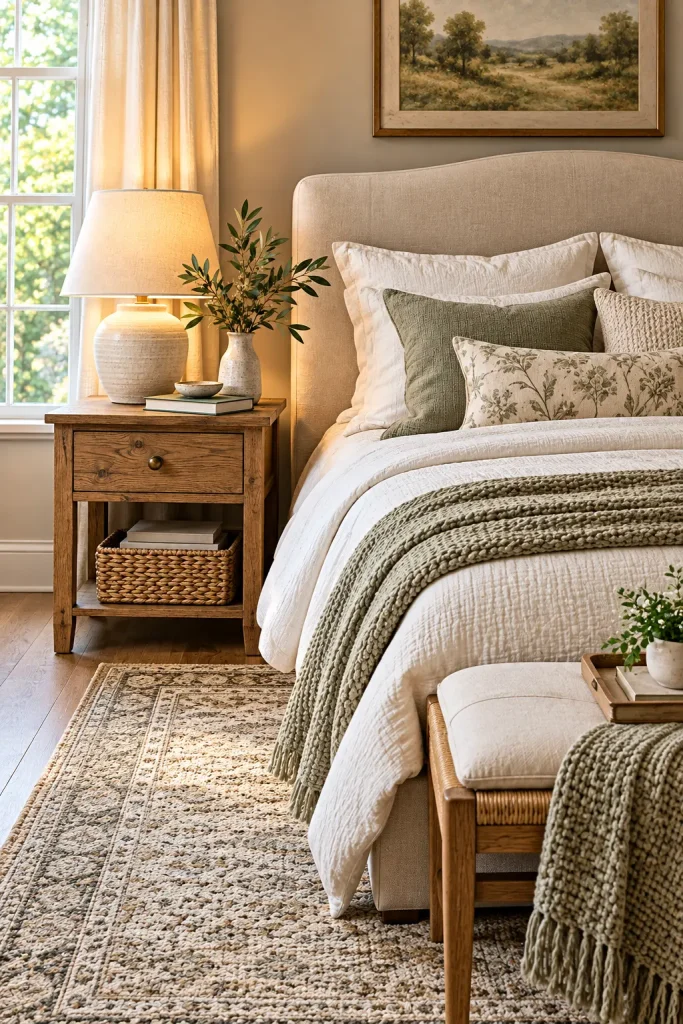
The smallest details can make a bedroom feel personal and complete. A bedside table styled with a ceramic lamp, a favorite book, a small dish, and a simple vase provides everyday function while adding visual interest.
Start with one useful anchor, such as a lamp, and arrange just a few supporting objects around it. Leave enough open space for items you actually use before bed. The arrangement should feel natural rather than crowded.
You can refresh the look seasonally by changing the flowers, book, or small decorative object without replacing the main furniture.