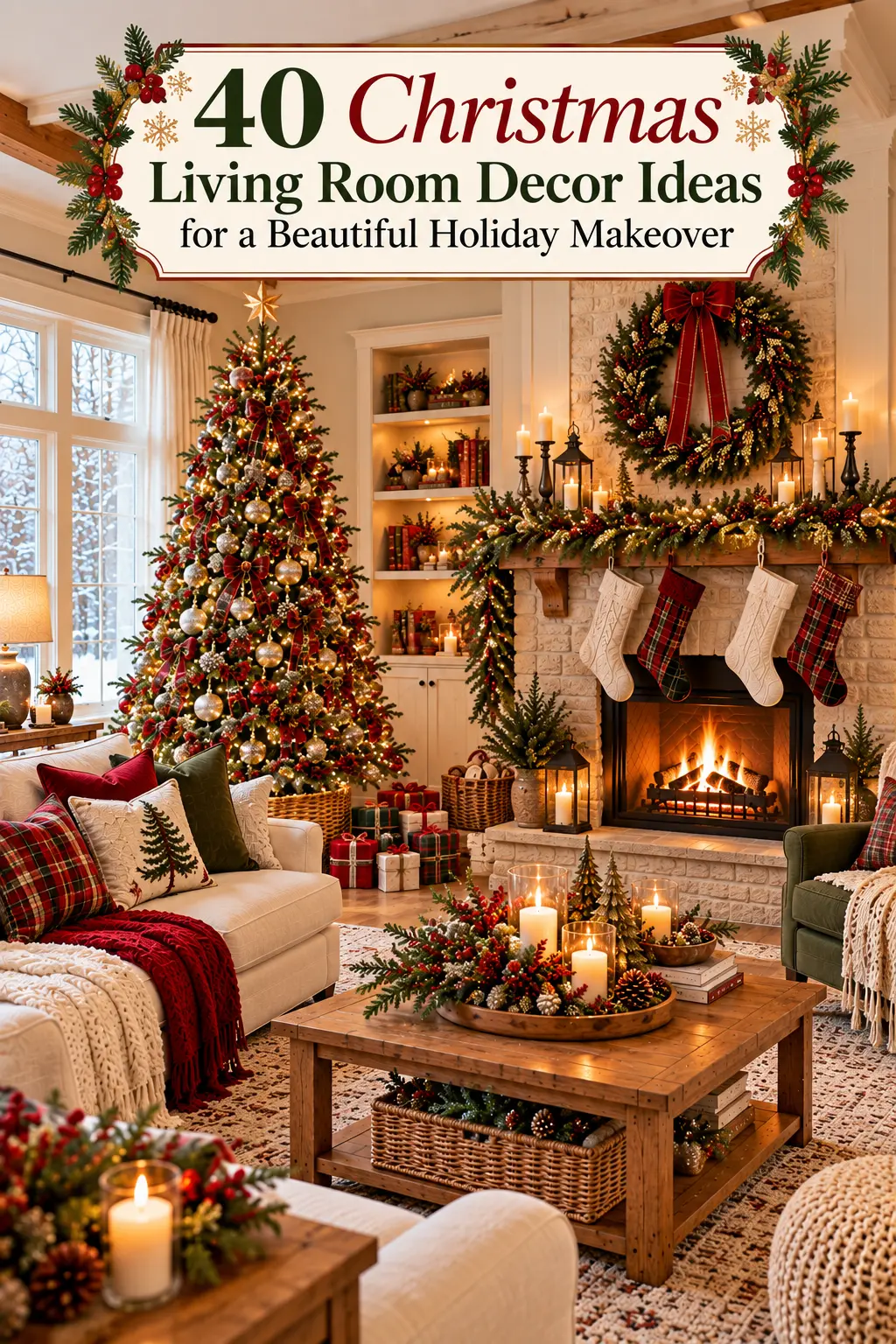
40 Christmas Living Room Decor Ideas for a Beautiful Holiday Makeover
A Christmas living room can feel festive without becoming crowded or overly themed. The most inviting holiday spaces usually build on what is already there, adding layers of greenery, warm lighting, seasonal textiles, natural materials, and a few carefully chosen decorations. Whether your room is a compact apartment, a traditional family home, or a spacious open-concept interior, small changes can create a noticeable seasonal shift.
These Christmas living room decor ideas range from classic red-and-green styling to neutral winter palettes, natural woodland details, elegant metallic accents, and cozy fireplace arrangements. Some focus on a single statement feature, while others show how several smaller details can work together. The goal is to create a room that feels distinctly Christmas-ready while remaining comfortable and practical for everyday living.
1. Create a Classic Red and Green Christmas Tree
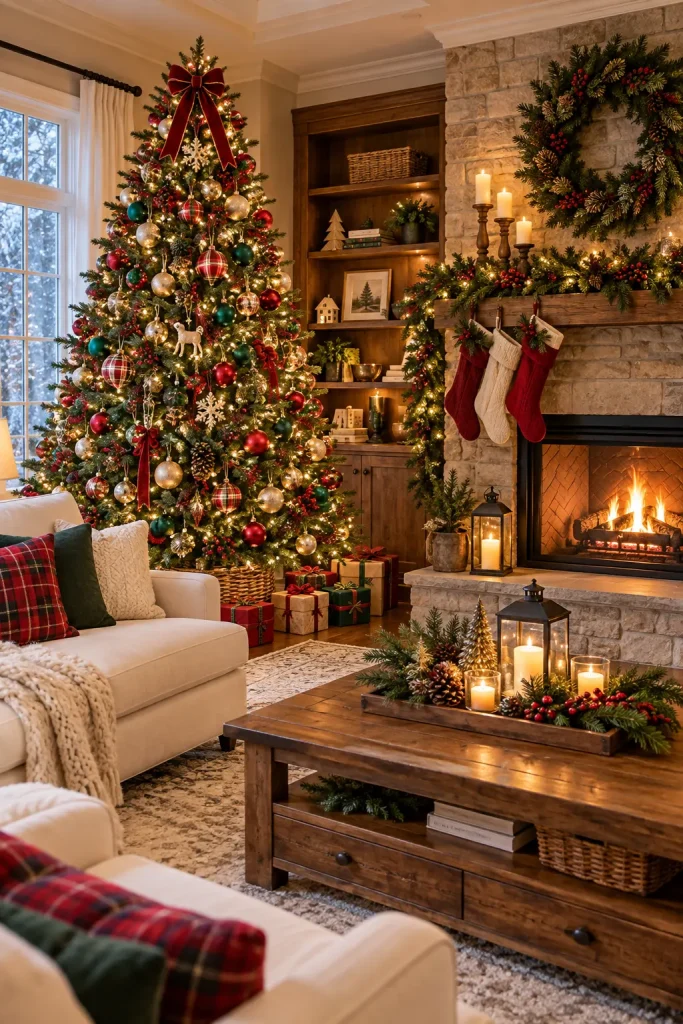
A traditional red-and-green tree remains one of the easiest ways to establish a familiar Christmas atmosphere. Combine deep red ornaments with evergreen branches, warm-white lights, and a few gold or brass accents for added depth. Instead of covering every branch, allow some greenery to remain visible so the tree feels layered rather than overloaded.
Use a simple tree skirt in woven fabric, plaid, or neutral linen to connect the tree with the rest of the living room. If your furniture is mostly neutral, the traditional colors become a cheerful focal point without requiring major changes elsewhere.
Quick Tip: Repeat one or two tree colors in nearby pillows or tabletop accessories so the Christmas palette feels intentional.
2. Layer Evergreen Garlands Around the Fireplace
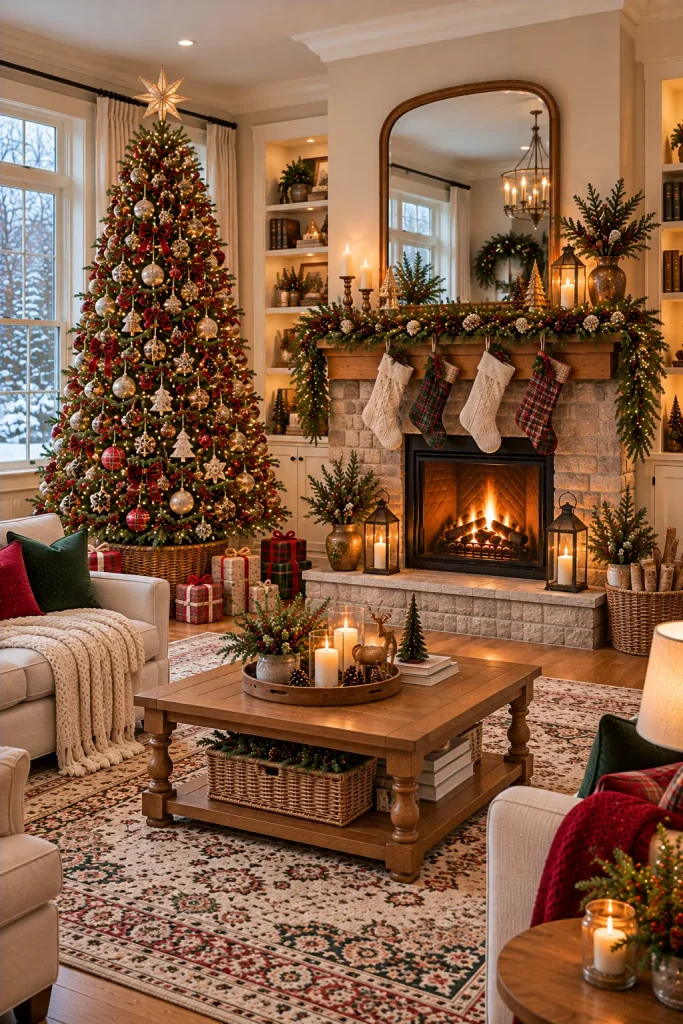
The fireplace naturally becomes a holiday focal point, making it an ideal place for a full evergreen garland. Drape the greenery across the mantel and allow the ends to fall slightly for a relaxed, natural shape. Add pinecones, small warm lights, and restrained ornaments rather than filling every inch.
A garland also works well when paired with a simple mirror or artwork above the mantel. Keep the objects underneath relatively quiet so the greenery remains the main seasonal feature.
3. Choose a Soft Neutral Christmas Palette
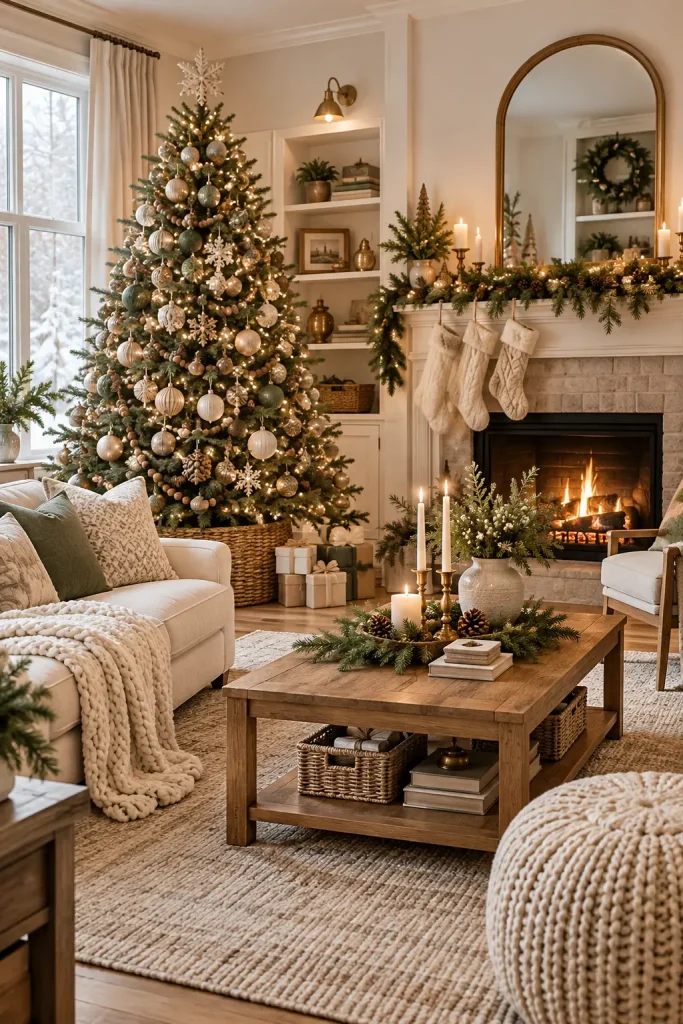
Christmas decor does not have to rely on bright colors. A palette of ivory, cream, taupe, warm wood, muted green, and champagne can create a quieter holiday atmosphere while still feeling unmistakably seasonal.
Use neutral ornaments on the tree, creamy knit throws on the sofa, and natural greenery throughout the room. Small metallic details can catch the light without overpowering the softer palette. This approach is especially useful when the existing living room already contains warm neutral furniture.
Best Pairings:
- Ivory and natural evergreen
- Champagne and warm wood
- Cream textiles and woven accessories
- Soft brass with aged finishes
4. Add Plaid Christmas Pillows
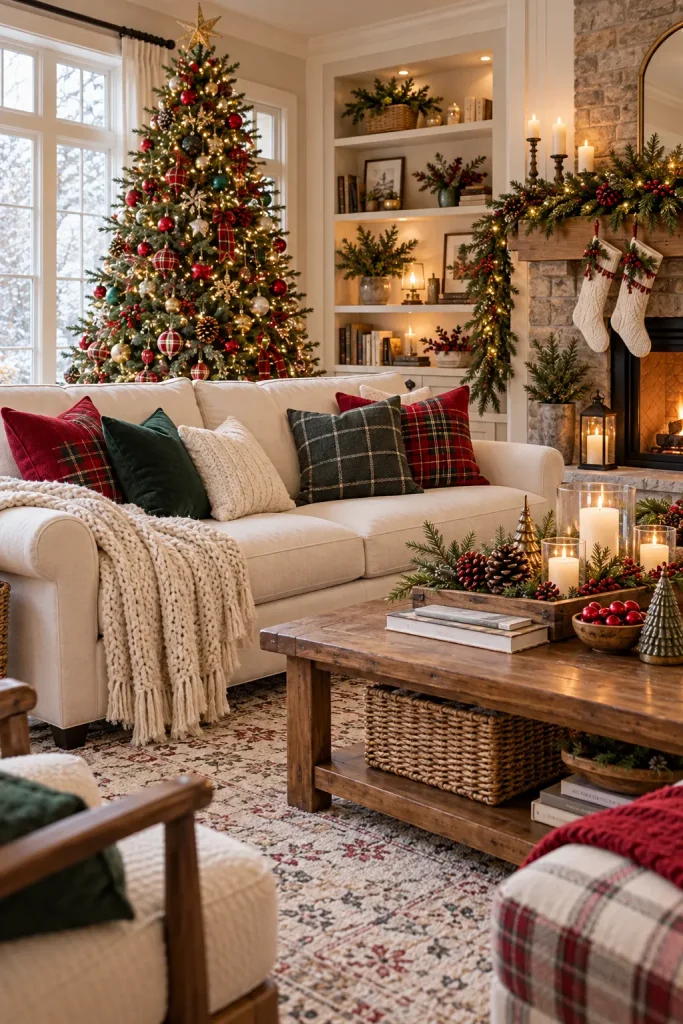
Plaid pillows can change the mood of a living room without requiring a major decorating project. Choose one pattern in traditional red, forest green, cream, or charcoal, then combine it with solid-colored cushions to prevent visual overload.
Plaid works especially well with leather, linen, wool, and natural wood. If the room already has patterned upholstery, use plaid sparingly on just one or two cushions.
Do: Repeat a plaid color elsewhere in the room.
Don’t: Mix several unrelated plaid patterns across every surface.
5. Hang Stockings in a Balanced Mantel Arrangement
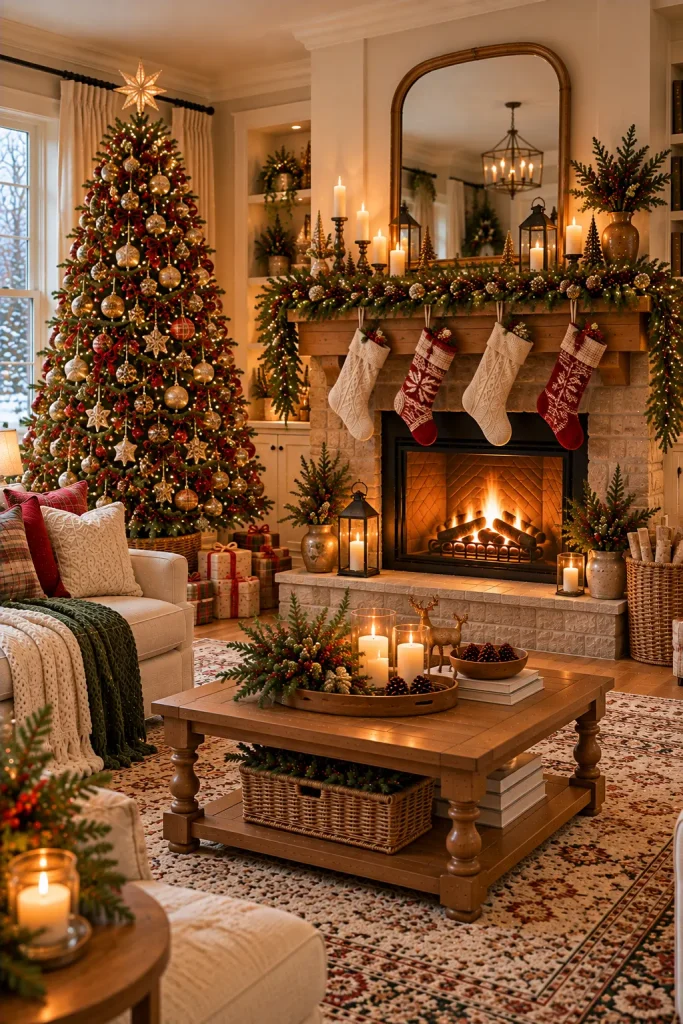
Stockings can make the fireplace feel personal and welcoming. Hang them at consistent heights or create a gentle stagger that follows the mantel’s proportions. Choose fabrics that relate to the room, such as wool, linen, velvet, or simple knitted textures.
For a family room, personalized-looking stockings can add warmth without requiring visible names or text. Complete the arrangement with greenery above and a few candles below.
6. Decorate the Coffee Table With Natural Greenery
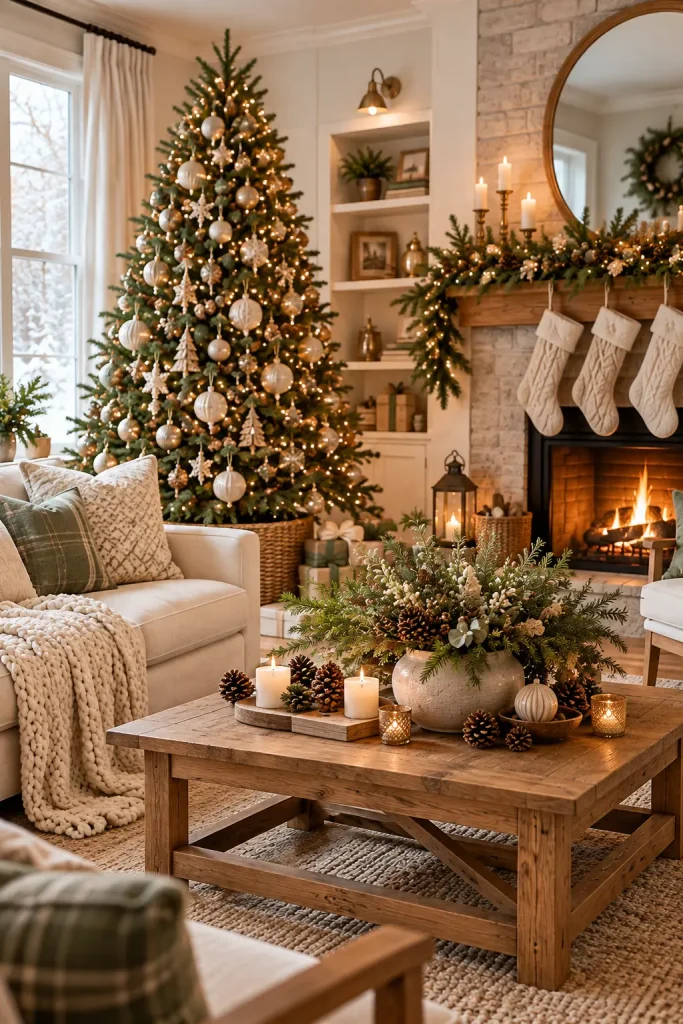
A coffee table is an easy place to add Christmas character without making the entire room feel decorated at once. Try a low arrangement of evergreen branches in a ceramic bowl or simple vessel, then surround it with pinecones, candles, or a few wooden ornaments.
Keep the centerpiece low enough that people can comfortably see across the table. Natural greenery also pairs beautifully with wood, stone, ceramic, and woven textures.
7. Style the Coffee Table With Evergreen Branches
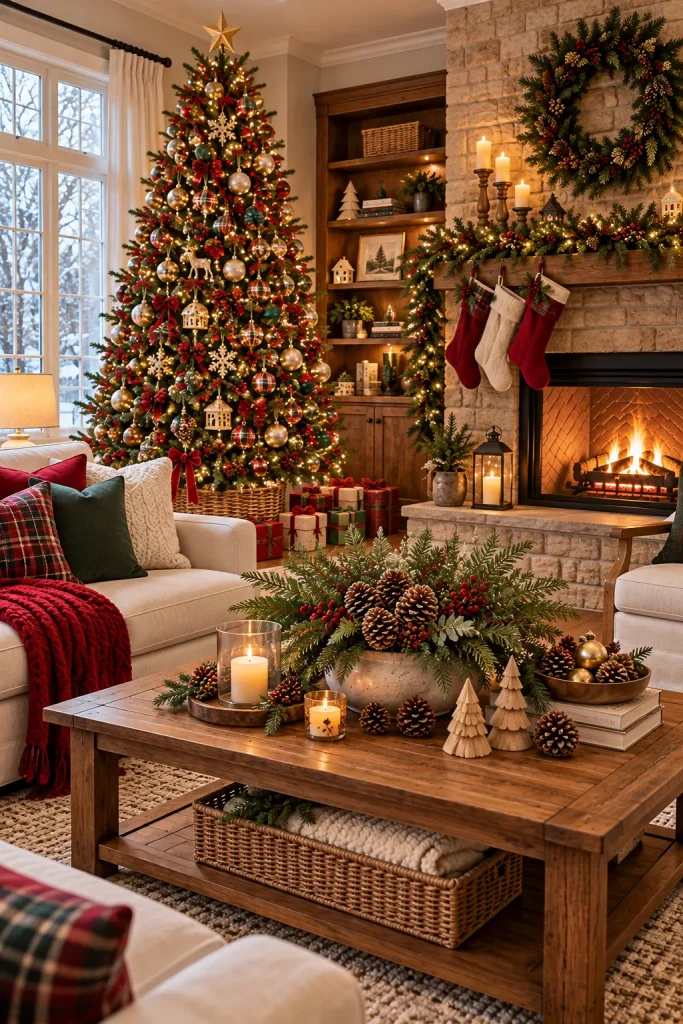
The coffee table is an easy place to introduce Christmas greenery without changing the overall layout of the living room. A low arrangement of evergreen branches in a ceramic vessel can become a natural centerpiece while still leaving the table practical for everyday use. Add a few pinecones, small candles, or wooden ornaments around the vessel to create a layered but uncluttered arrangement. Keeping the centerpiece low is important because people should still be able to see across the table when sitting on the sofa. A neutral ceramic bowl or tray can help contain the smaller seasonal objects. If your living room already has several decorative colors, choose a vessel that blends with the existing palette rather than introducing another strong shade. The result should feel like a natural extension of the room rather than a separate Christmas display.
8. Hang Four Coordinated Stockings
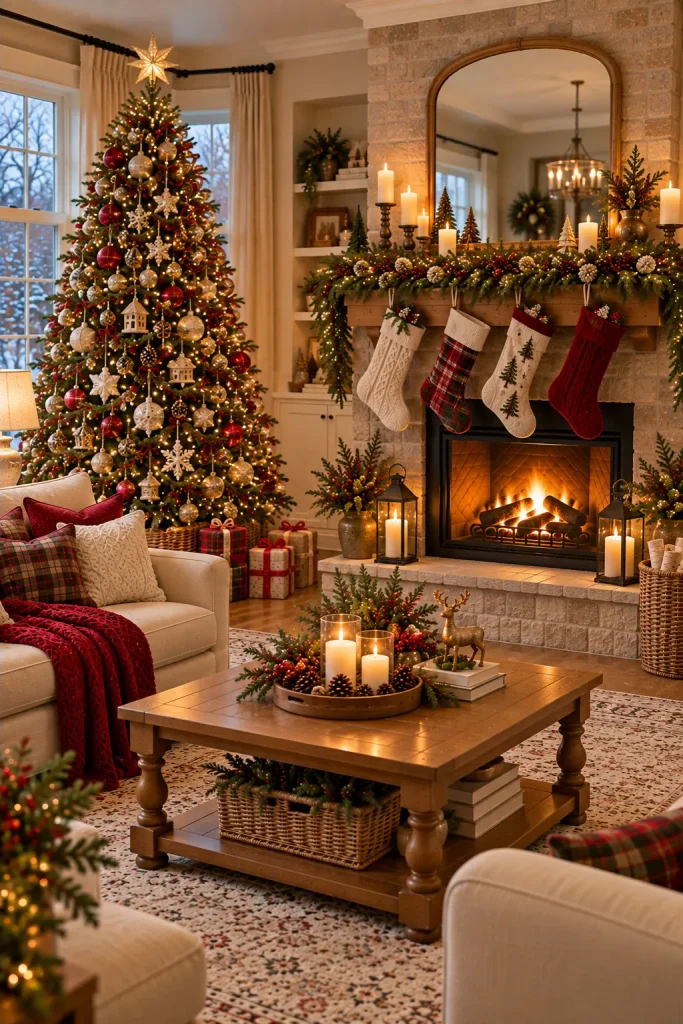
Stockings can instantly make a fireplace feel ready for Christmas, but they don’t all have to be identical. Choose a common detail that ties them together, such as cream fabric, red stitching, plaid cuffs, natural fibers, or matching ribbon. Hang them at relatively even intervals so the mantel remains visually balanced. If the fireplace is wide, an evergreen garland can provide a natural line connecting the stockings. For a smaller mantel, reduce the amount of greenery and allow the stockings to become the main decorative feature. You can also mix subtle textures while keeping the colors consistent. This makes the arrangement feel collected and personal rather than overly coordinated.
9. Create a Woodland Christmas Theme
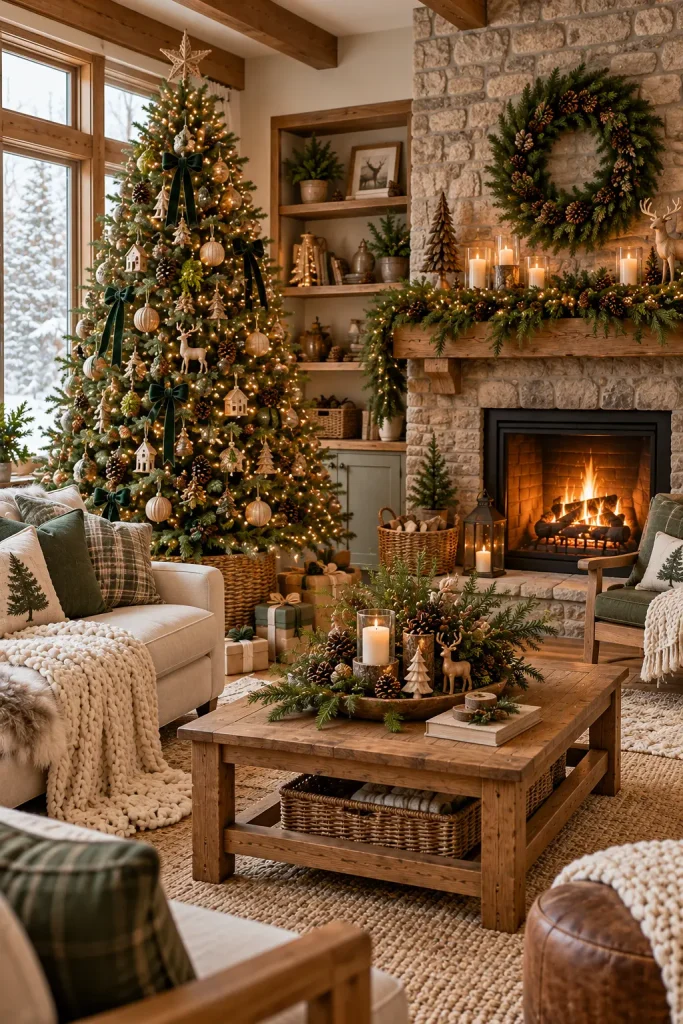
A woodland Christmas theme brings natural textures and forest-inspired colors into the living room. Start with evergreen branches, pinecones, wood ornaments, and earthy textiles, then add subtle accents such as small woodland figures or natural twig details. Forest green, warm brown, cream, and muted red create a grounded palette that works particularly well with wood furniture. A woven basket filled with blankets can reinforce the cozy feeling without making the room look overly themed. If you have a stone or brick fireplace, allow its natural texture to become part of the overall design. Keep the accessories edited so the room still feels like a comfortable living space rather than a holiday display. The combination is especially appealing for homes that already use rustic, farmhouse, cabin, or nature-inspired materials.
10. Add Velvet Ribbon to the Tree
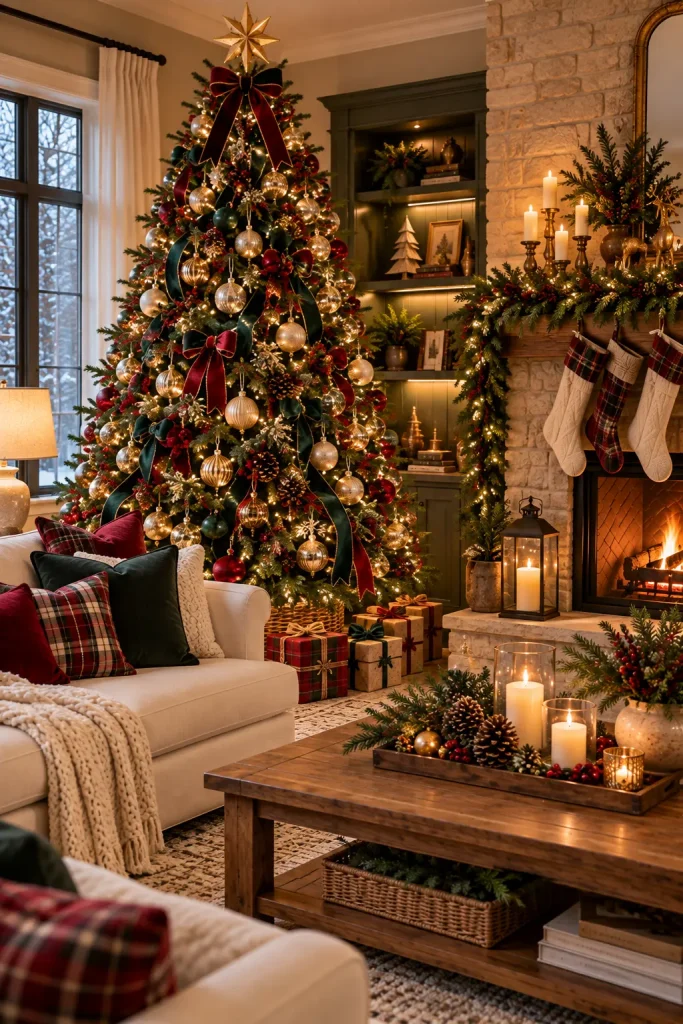
Velvet ribbon adds softness and depth to a Christmas tree because its texture looks different from shiny ornaments and natural evergreen needles. Choose a color that already appears somewhere in the room, such as burgundy, forest green, cream, champagne, or muted plaid. Instead of wrapping the ribbon tightly around every branch, allow sections to fold and drape naturally through the tree. This creates movement while leaving enough greenery visible to maintain the tree’s natural shape. Pairing velvet ribbon with simple ornaments usually produces a more balanced result than combining it with many competing patterns. The same ribbon can also be used in a small bow on the mantel or around a wreath for continuity. A little velvet can therefore connect several Christmas decorating areas without making the room look overly matched.
Common Mistake: Using so much ribbon that the natural shape of the tree disappears.
Better Approach: Use ribbon selectively and let sections fall naturally between the branches.
11. Decorate With Dried Orange Slices
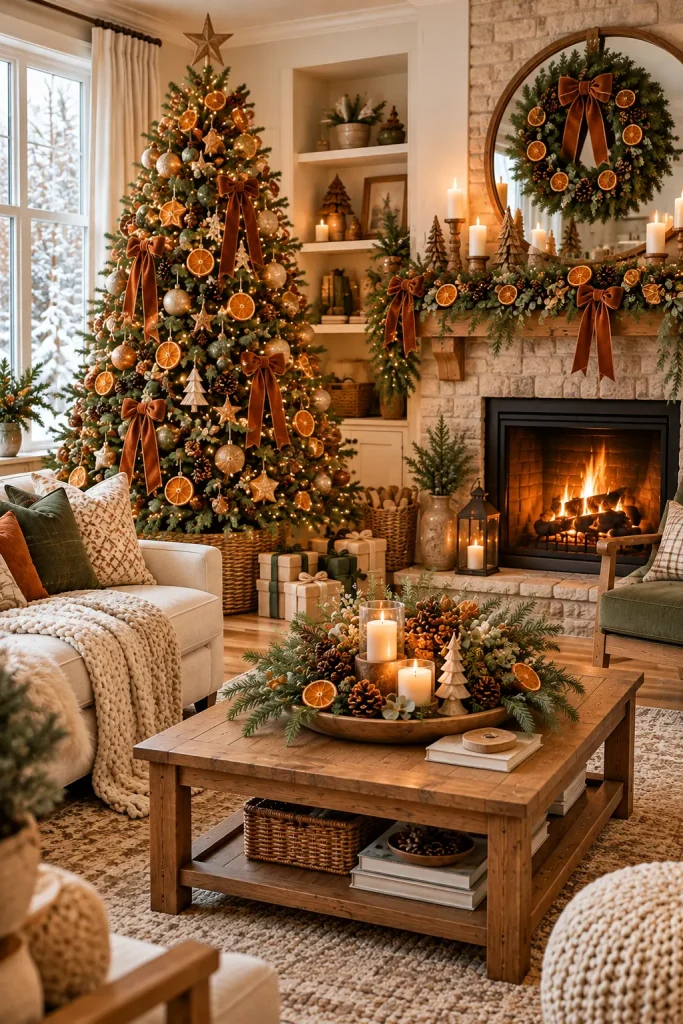
Dried orange slices add a warm amber color and natural texture to Christmas decorating. They can be threaded onto a garland, tucked into tree branches, or combined with pinecones and simple ribbon. Their warm color works particularly well with evergreen, cream, natural wood, and brass. Because the slices already have an interesting shape and texture, you don’t need many additional decorations around them. They can also support a handmade or traditional Christmas style without making the room feel overly colorful. Pairing them with cinnamon-toned textiles can create a subtle connection to familiar winter scents and colors. For a more understated look, use just a few slices throughout the tree instead of covering every section.
12. Make the Tree the Main Focal Point
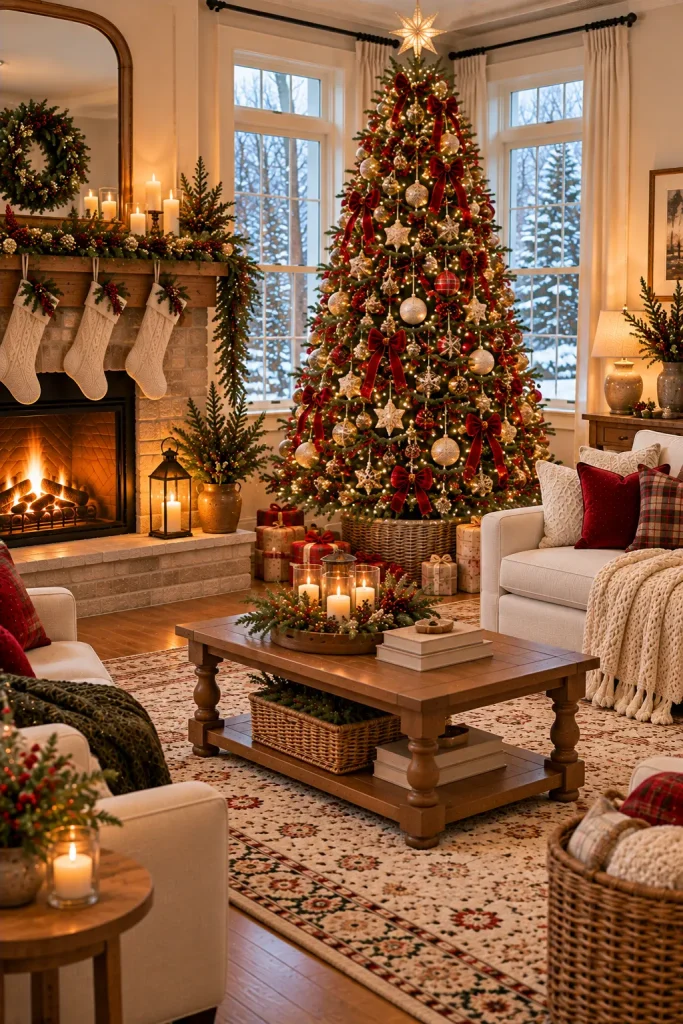
A Christmas tree doesn’t always need a large collection of decorations around it to become the centerpiece of the living room. Give the tree enough visual space so its shape and lighting remain easy to appreciate from the main seating area. Repeat one or two of its colors in nearby pillows, throws, or stockings to connect it with the rest of the room. A woven tree skirt or natural basket collar can make the base feel finished without adding another strong pattern. Keep the coffee table and nearby furniture relatively restrained so they don’t compete with the tree. This approach works particularly well when the tree is tall or beautifully decorated. The overall effect is festive but organized because one clear focal point guides the eye through the room.
13. Layer Christmas Pillows on the Sofa
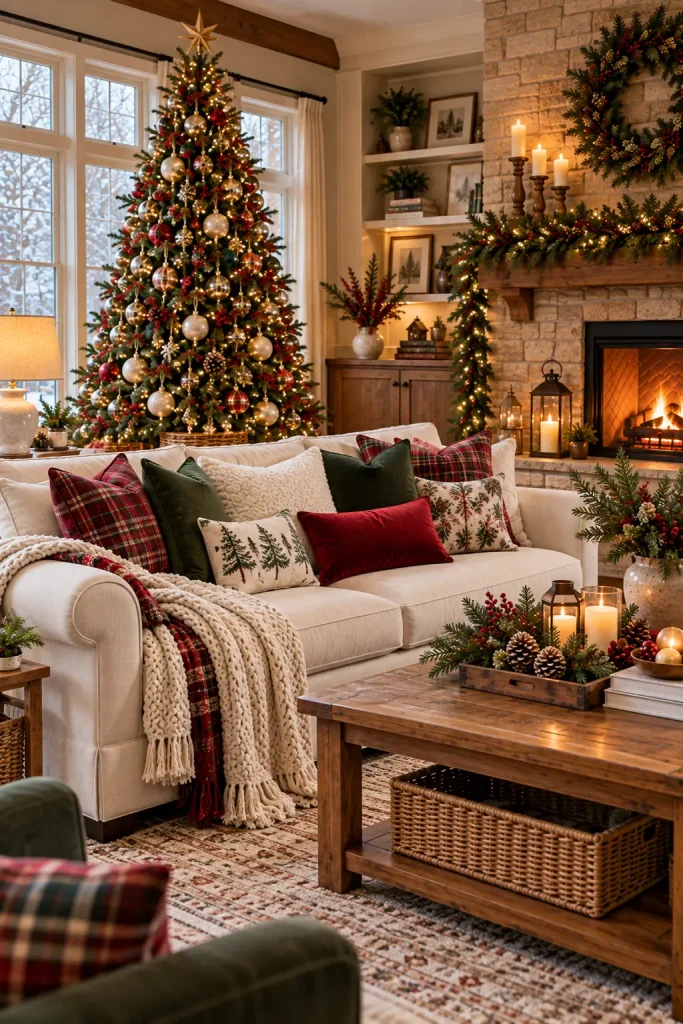
Seasonal pillow covers are an easy way to change the personality of a living room without buying new furniture. Combine a couple of Christmas patterns with solid textured covers so the arrangement feels layered rather than overly coordinated. Plaid, velvet, boucle, knitted fabric, subtle evergreen motifs, and simple stripes can all work together when their colors are related. Keep some of your everyday neutral pillows in the arrangement so the sofa still looks comfortable and natural. If possible, use removable seasonal covers rather than purchasing entirely new pillows, making the decorating change easier to store after the holidays. Repeat one pillow color somewhere else in the room, such as the tree ribbon or mantel stockings. This small connection can make the whole living room feel more intentionally styled.
14. Create a Soft Scandinavian-Inspired Christmas Look
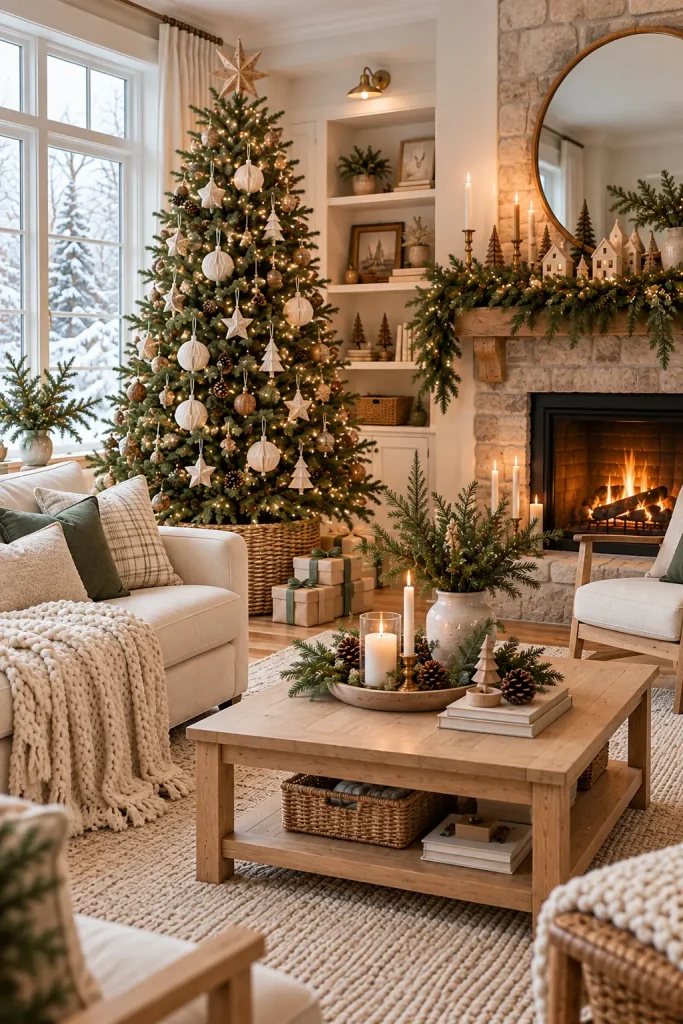
A Scandinavian-inspired Christmas living room focuses on simplicity, natural materials, and a warm sense of comfort. Pale wood, cream textiles, evergreen branches, candles, and warm-white lights provide enough seasonal detail without filling the room with decorations. Simple paper-style ornaments and natural wood pieces can make the Christmas tree feel lighter and less formal. Instead of using several strong colors, allow texture to create most of the visual interest. A chunky knitted throw, woven basket, and soft wool pillow can add warmth without adding clutter. This approach is particularly useful in apartments and smaller living rooms where too many decorations can quickly make the space feel crowded. The finished room should feel festive but still open and peaceful.
15. Add Brass and Champagne-Gold Accents
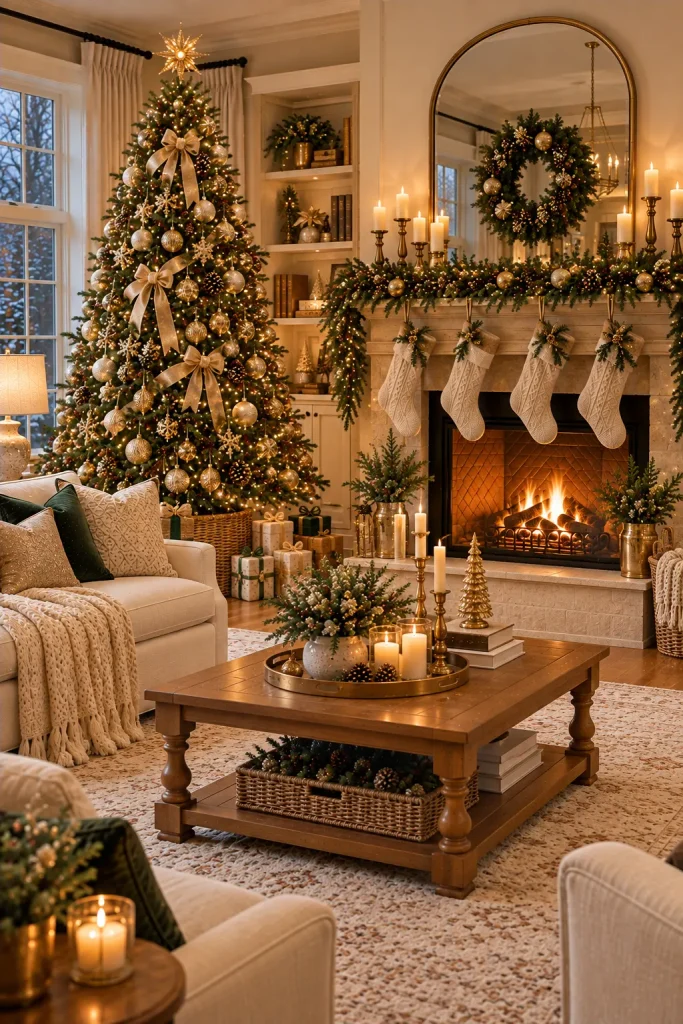
Brass and champagne-gold accents can introduce a little sparkle while keeping Christmas decor warm and sophisticated. Use these finishes selectively on ornaments, candleholders, small bowls, picture frames, or decorative accessories. The metallic pieces look especially attractive against evergreen branches and cream textiles because their warm undertones complement both colors. Rather than placing all of the metallic pieces together, repeat them throughout the room in small amounts. This creates a visual thread connecting the tree, fireplace, and seating area. Natural wood can help soften the shine and keep the room feeling residential. If your existing room already contains brass hardware or lighting, Christmas decorations in a similar finish can blend particularly naturally.
16. Style a Christmas Reading Corner
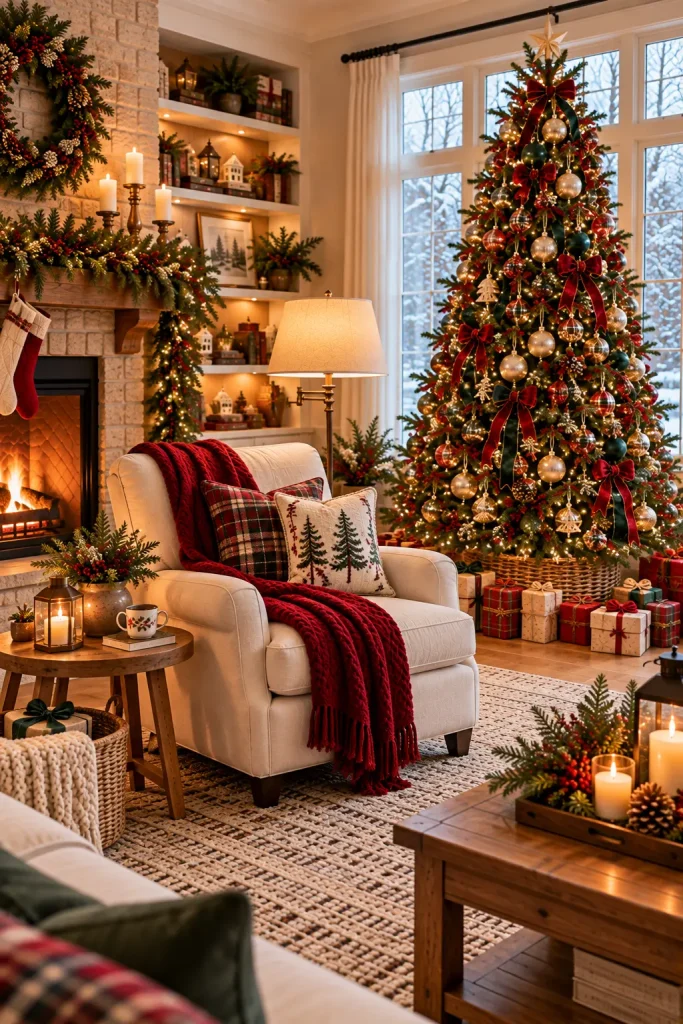
A reading corner can become a subtle part of your Christmas decorating without needing a large collection of seasonal accessories. Start with a comfortable armchair positioned beside a floor lamp or near a window. Add a plaid or knitted throw, one seasonal pillow, and a woven basket filled with extra blankets. A small side table can hold a candle, a mug, a book, or a tiny evergreen arrangement. If the chair sits near the Christmas tree, repeat one color from the tree in the textile to make the corner feel connected. The space should remain comfortable enough for everyday use rather than looking like a staged display. This idea works particularly well in larger living rooms where an unused corner can be turned into a cozy seasonal retreat.
17. Use a Woven Basket as a Tree Collar
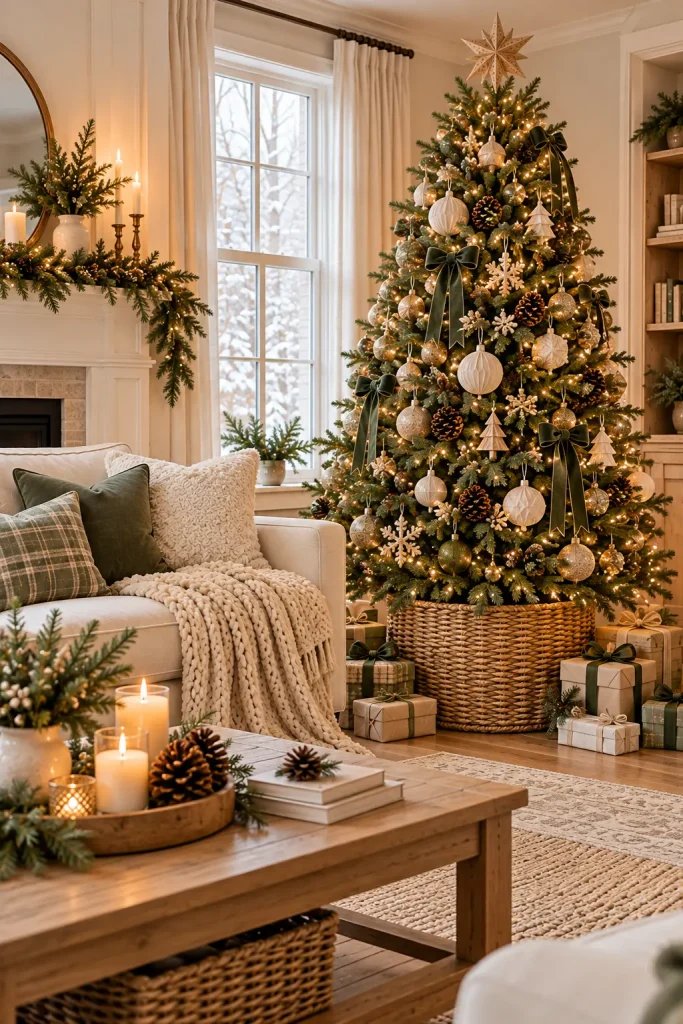
A woven basket-style tree collar is a practical way to make the bottom of a Christmas tree feel finished while adding natural texture. Choose a basket that is appropriately sized for the tree and large enough to conceal the stand without crowding the surrounding floor. Natural wicker, seagrass, or similar woven materials pair beautifully with wood furniture and neutral upholstery. You can repeat the basket texture elsewhere through a blanket basket or woven tray. Keep the tree decorations relatively balanced so the textured base doesn’t become the only visual focal point. A few wrapped gifts or a folded throw nearby can complete the arrangement. This idea works especially well for relaxed farmhouse, Scandinavian, woodland, and neutral Christmas interiors.
18. Decorate the Built-In Shelves for Christmas
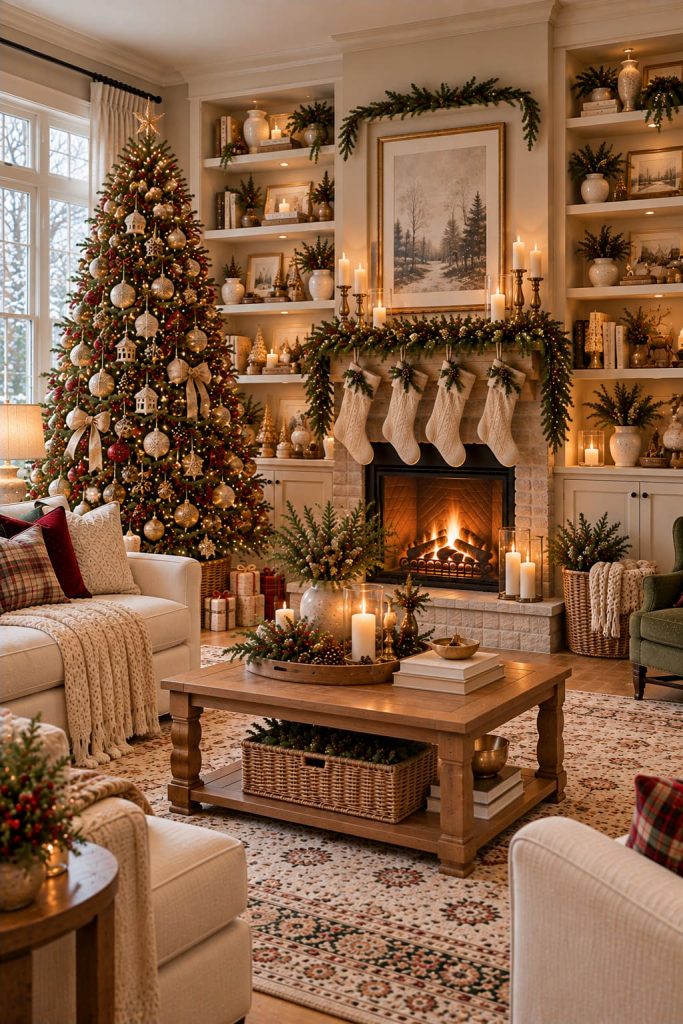
Built-in shelves can carry the Christmas theme through the living room without requiring additional floor space. Instead of placing a seasonal object on every shelf, create several small groupings using evergreen stems, books, ceramics, framed artwork, candles, and ornaments. Vary the height of the objects so the eye moves naturally from one shelf to another. Leave some open space because empty areas help the decorated pieces stand out. Everyday objects can remain in the arrangement, which often makes the shelves feel more personal and less like a temporary holiday display. Use a consistent palette, such as cream, green, wood, and muted red, to connect the different groupings. This approach is especially useful when the room already has built-in storage that forms a major architectural feature.
19. Add a Simple Christmas Village Display
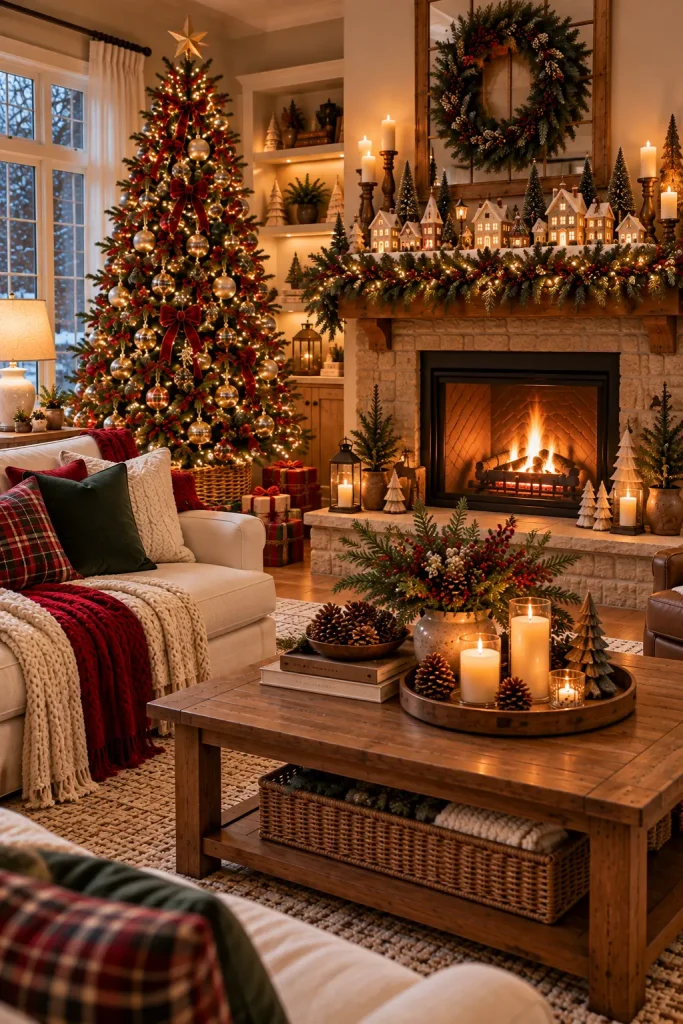
A Christmas village can introduce a nostalgic detail to the living room while becoming a small decorative focal point. Choose a limited number of houses rather than filling an entire mantel or shelf. Place some pieces on simple risers so the village has different levels, then add miniature trees, evergreen sprigs, and a few warm lights around the base. Neutral white or cream houses work well in sophisticated rooms, while traditional colored pieces create a more playful atmosphere. Keep the display compact enough that it doesn’t interfere with other decorations or everyday activities. A small village can also work beautifully on a console table beneath a mirror. The key is to treat it as one cohesive vignette instead of scattering tiny pieces throughout the entire room.
20. Introduce Cream and Burgundy Together
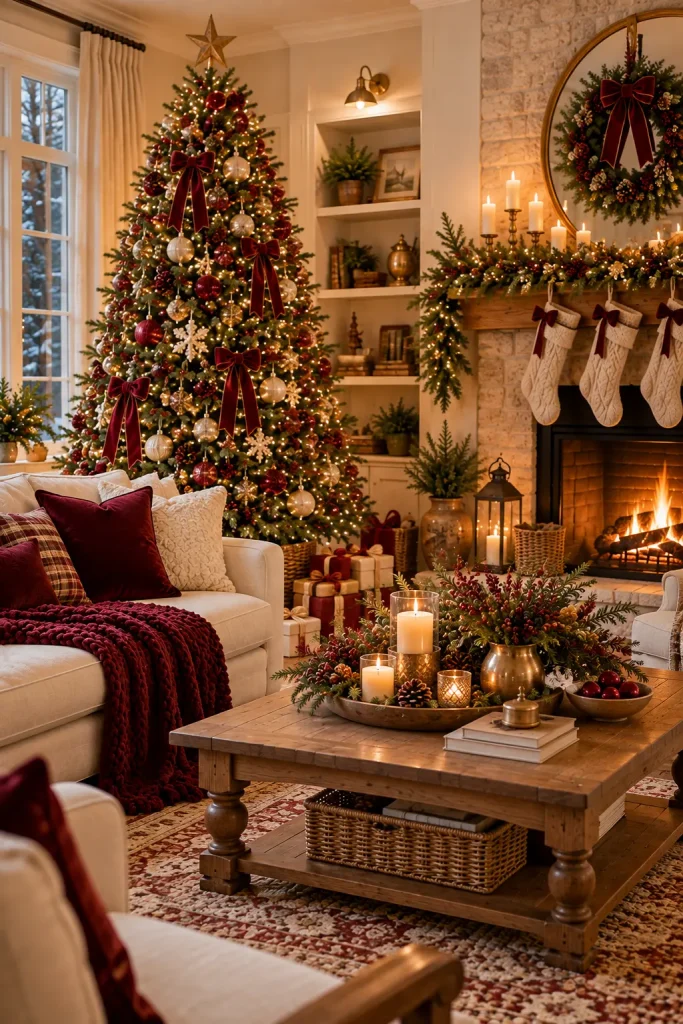
Cream and burgundy create a rich Christmas palette that feels warmer and slightly more dramatic than traditional bright red and white. Use cream as the main foundation through the sofa, curtains, rug, or walls, then introduce burgundy through velvet pillows, ribbon, ornaments, or stockings. The deeper color becomes particularly attractive under warm evening lighting because it creates depth without needing many additional decorations. Forest green evergreen branches provide a natural bridge between the two colors. Brass or antique-gold accents can be used sparingly to add warmth and reflection. Because burgundy is visually strong, repeating it in a few carefully selected locations is usually more effective than using it everywhere.
21. Decorate With Oversized Ornaments
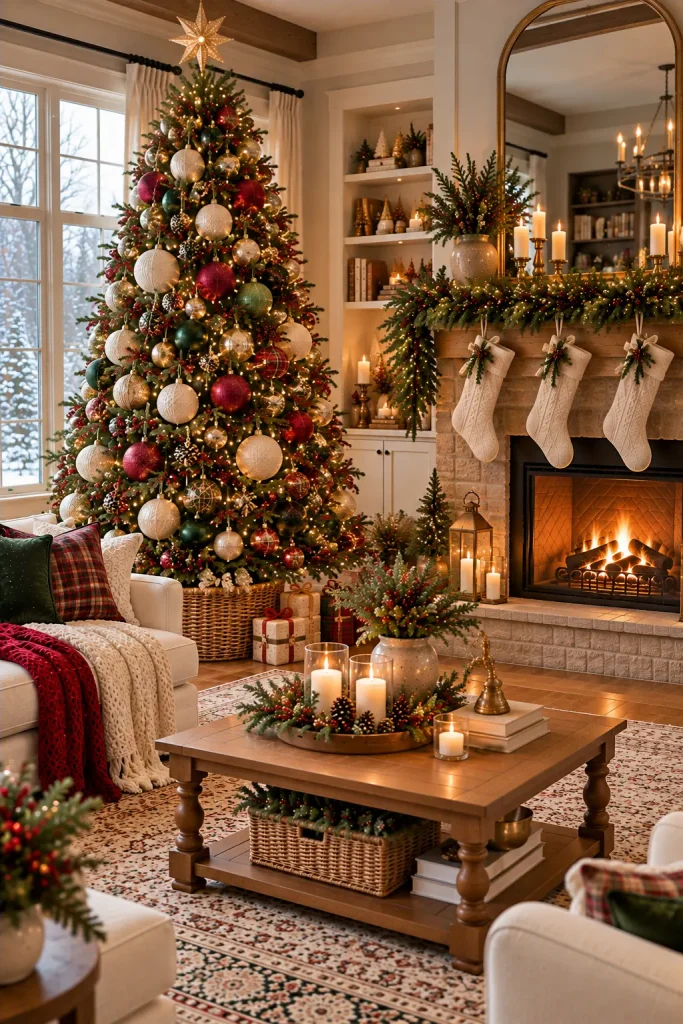
Oversized ornaments can give a Christmas tree more visual impact without requiring hundreds of small decorations. Use larger ornaments toward the middle and lower portions of the tree, then balance them with smaller pieces near the outer branches. Keeping the color palette limited is important because the larger scale already creates visual emphasis. Cream, muted red, forest green, and champagne are versatile combinations for a traditional but updated look. Oversized ornaments can also be displayed in a decorative bowl or basket on a coffee table when you want to extend the theme beyond the tree. In a smaller room, use fewer large ornaments so the tree remains proportional to the space. The result should feel intentional rather than oversized simply for the sake of making a statement.
22. Add Candlelight for a Warmer Atmosphere
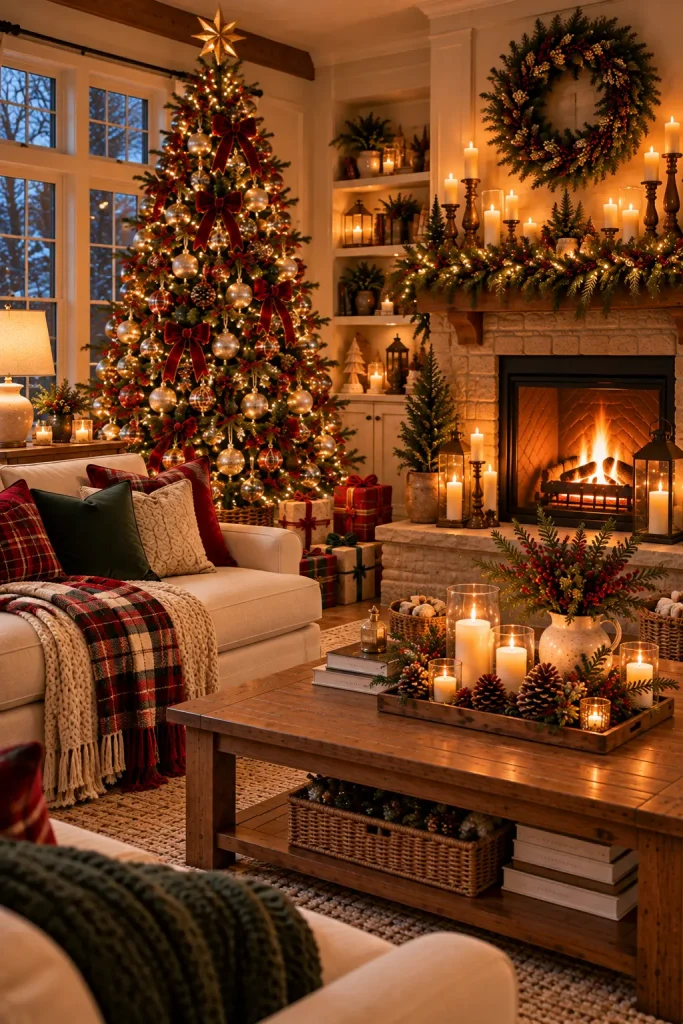
Candlelight can make Christmas decorations feel warmer and more intimate, particularly during evening gatherings. Place candles in small groups on the mantel, coffee table, side tables, or shelves rather than spreading them randomly around the room. Different heights can add dimension, while cream or neutral candleholders keep the arrangement connected to the rest of the decor. Candles can also work alongside warm-white Christmas lights and fireplace glow to create several layers of light. Keep them away from fabric, greenery, wrapping paper, and busy walkways, and use secure holders on stable surfaces. If you prefer a lower-maintenance option, flameless candles can provide a similar visual effect. The goal is a gentle glow that supports the room rather than becoming its only source of light.
23. Create a Minimalist Green-and-White Christmas
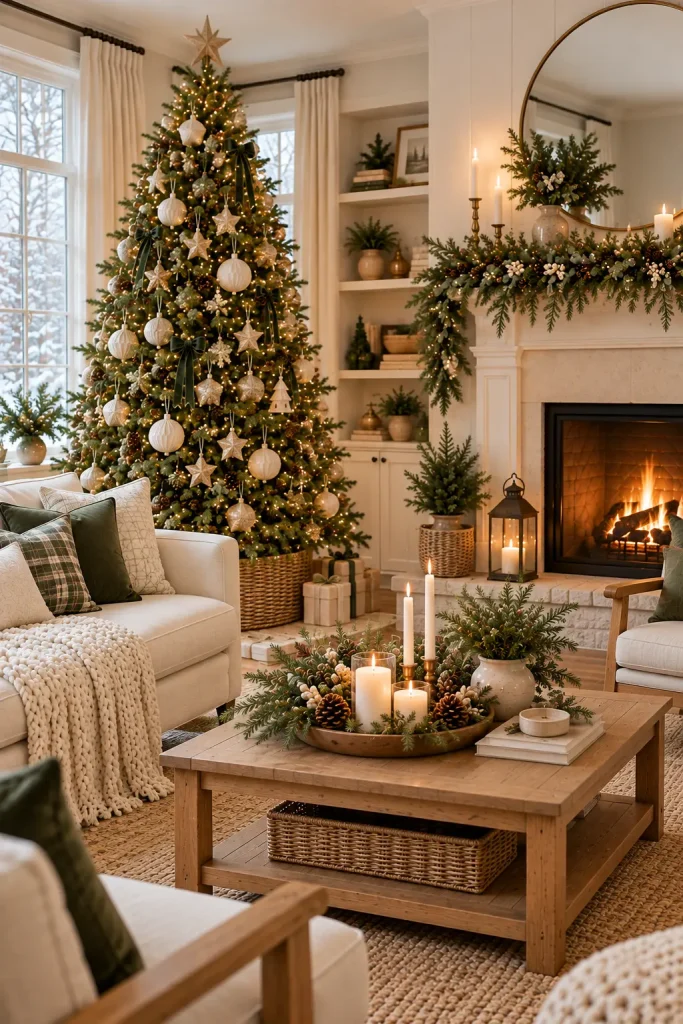
A green-and-white Christmas palette keeps the decorating scheme fresh, simple, and visually cohesive. Let natural evergreen branches provide the main color, then use white or cream ornaments, candles, stockings, and textiles for contrast. Natural wood can add warmth without introducing another strong color. Because the palette is limited, texture becomes especially important, so combine knitted fabrics, ceramic pieces, woven baskets, and natural greenery. Avoid decorating every surface because the minimalist character depends on a little visual breathing room. Warm-white lights can provide a soft glow without disrupting the calm color scheme. This approach is particularly effective in modern, Scandinavian, neutral, and light-filled living rooms.
24. Add a Festive Accent Rug
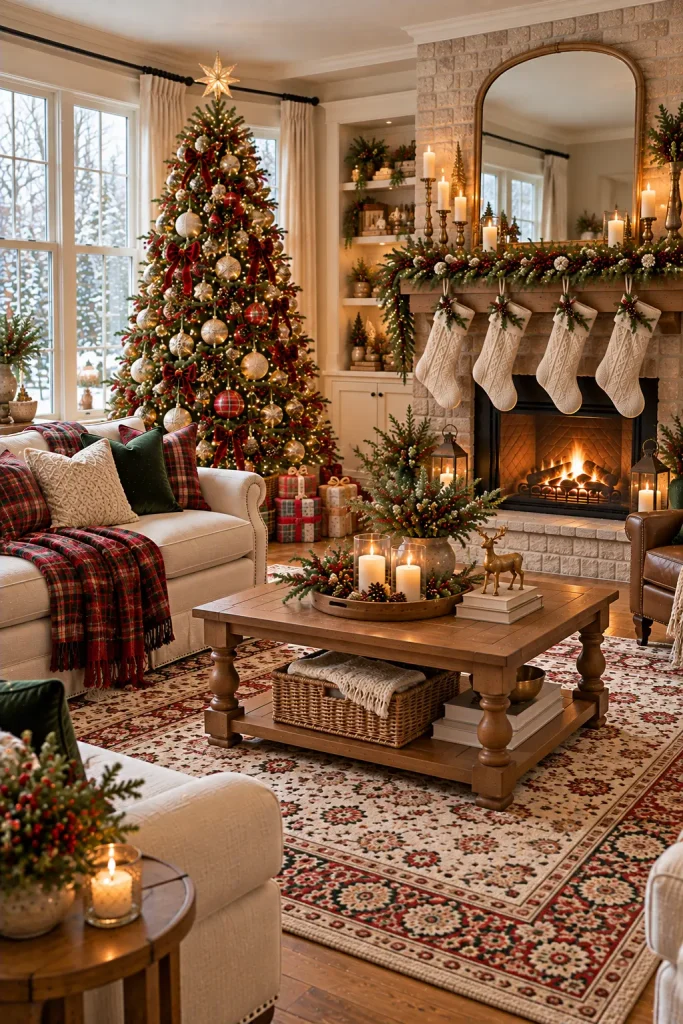
A seasonal accent rug can visually anchor the Christmas seating area and make the room feel more complete. Choose a pattern that supports the existing decor rather than competing with the Christmas tree and pillows. Muted plaid, subtle stripes, traditional motifs, or simple neutral patterns can introduce seasonal character without overwhelming the room. If you already have a large everyday rug, consider layering a smaller washable rug instead of replacing the main one. Make sure furniture legs sit naturally on the rug so the seating arrangement feels connected. In open-plan homes, a rug can also help visually separate the living room from nearby dining or kitchen areas. Choose colors that appear elsewhere in the room so the rug becomes part of the overall palette.
25. Use a Statement Christmas Mantel
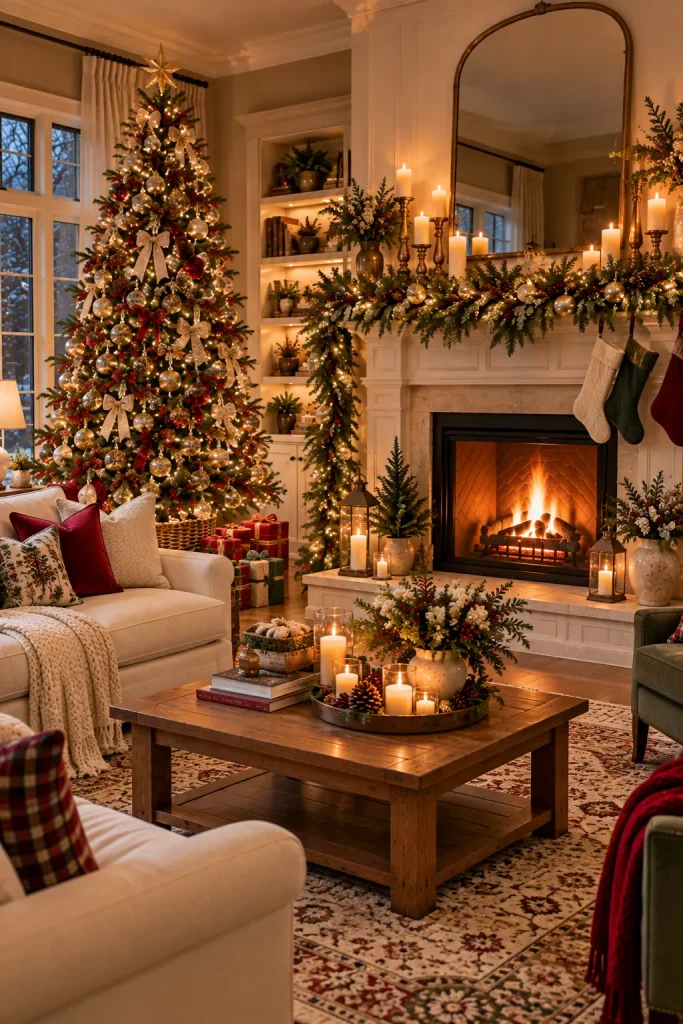
A statement mantel works best when the fireplace itself is already an important architectural feature of the room. Instead of covering the surface with many small decorations, choose one substantial evergreen garland and a few supporting elements. A large mirror or simple artwork can remain the main vertical focal point while candles, pinecones, and ornaments provide smaller layers. Allow parts of the mantel surface to remain visible so the arrangement doesn’t become visually heavy. If the fireplace is wide, let the garland extend slightly beyond the edges for a more relaxed appearance. The goal is to emphasize the fireplace rather than hide it beneath Christmas decorations. This approach can make a room feel festive while still maintaining a polished, organized appearance.
26. Add Wrapped Gifts as Decorative Layers
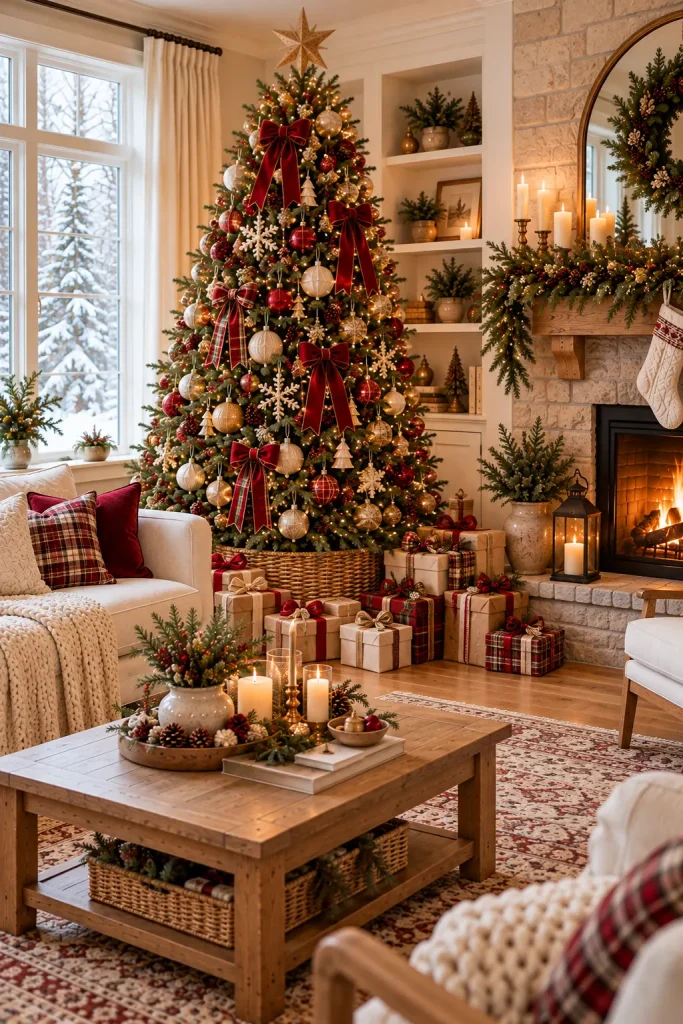
Wrapped gifts can become part of the Christmas decor before the actual holiday arrives. Choose two or three wrapping papers that coordinate with the room, then use simple ribbons or natural twine to keep the collection visually consistent. Cream paper, kraft paper, muted red, plaid ribbon, and forest-green accents are easy combinations to work with. Arrange a few packages beneath the tree rather than creating a large pile that blocks the lower branches. A small group beside the fireplace can also help balance the opposite side of the room. Choose different package sizes to create a more natural arrangement. Once the presents are opened, the same area can easily be restyled with a basket, blanket, or another seasonal accent.
27. Style the Windows With Evergreen Garlands
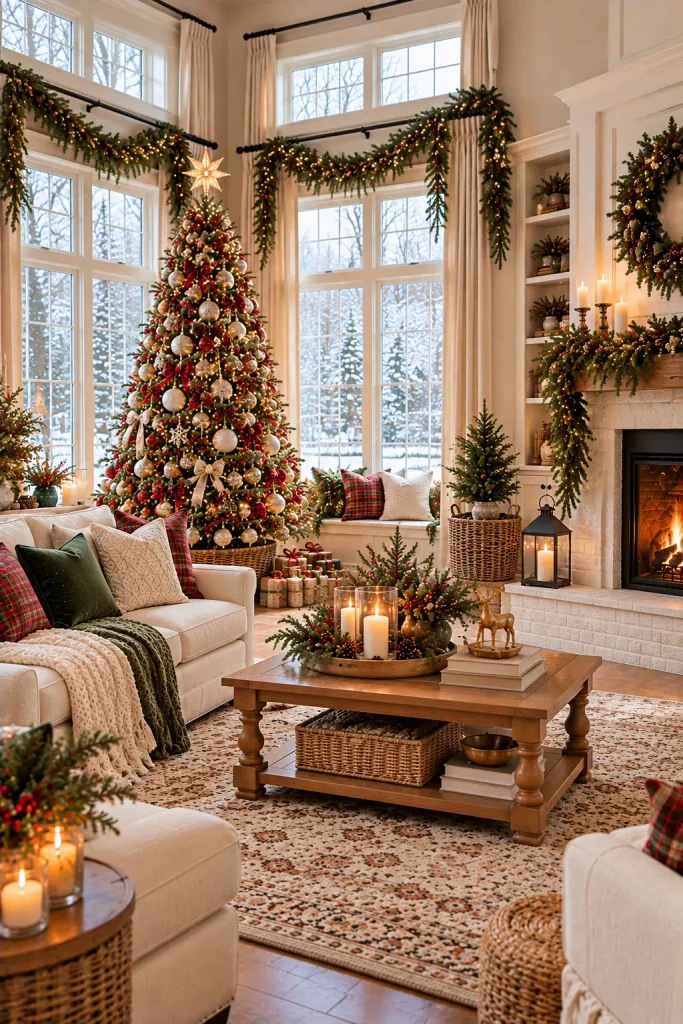
Windows are often overlooked when decorating a living room for Christmas, yet they can provide a beautiful connection between the interior and the winter landscape outside. A simple evergreen garland across the top of a window can frame the view without blocking natural light. If there is a wide sill, add a few small candles, pinecones, or simple ceramic houses. Keep the greenery light enough that curtains can still open and close normally. Warm-white lights can make the arrangement visible after dark, particularly around large windows or bay windows. The treatment should complement the tree and fireplace rather than compete with them. This is especially effective in rooms where the windows are already a major architectural feature.
28. Combine Plaid With Natural Linen
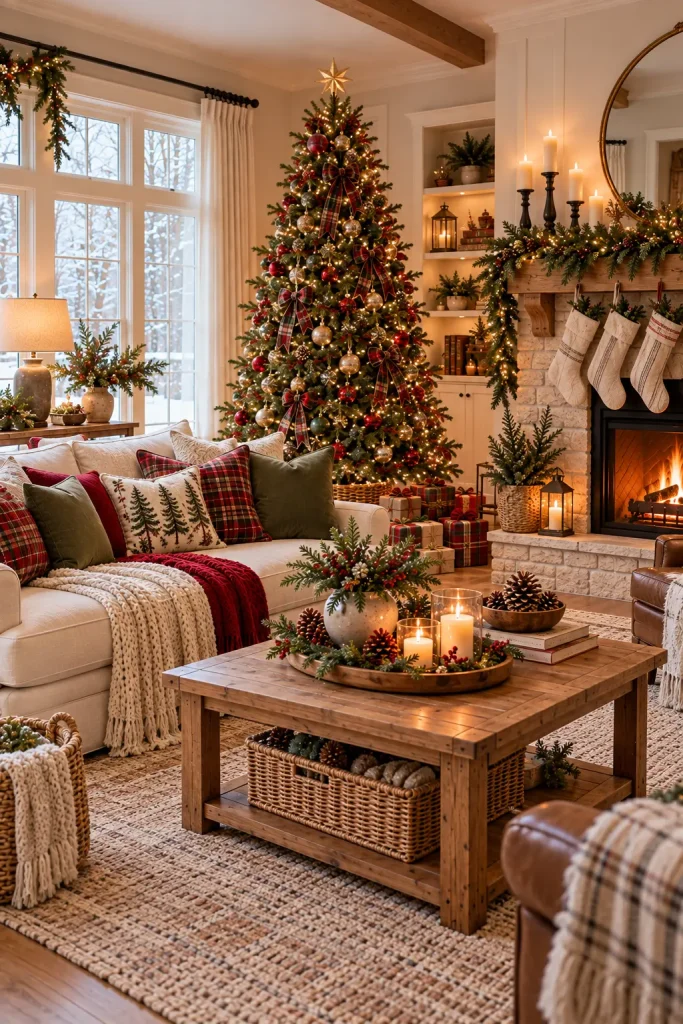
Plaid and natural linen create a relaxed Christmas combination that feels comfortable rather than overly formal. Use plaid on one or two pillows or a single throw, then balance the pattern with linen cushions, curtains, stockings, or neutral upholstery. Cream, muted red, olive green, and charcoal are particularly easy colors to combine. The contrast between the structured plaid pattern and softer linen texture creates visual interest without requiring many decorations. Natural wood furniture and evergreen greenery can reinforce the relaxed character of the room. Avoid using too many competing patterns because the plaid should remain an accent rather than becoming the entire visual story. This approach works especially well in family rooms where comfort and practicality are important.
29. Create a Cozy Corner With a Floor Basket
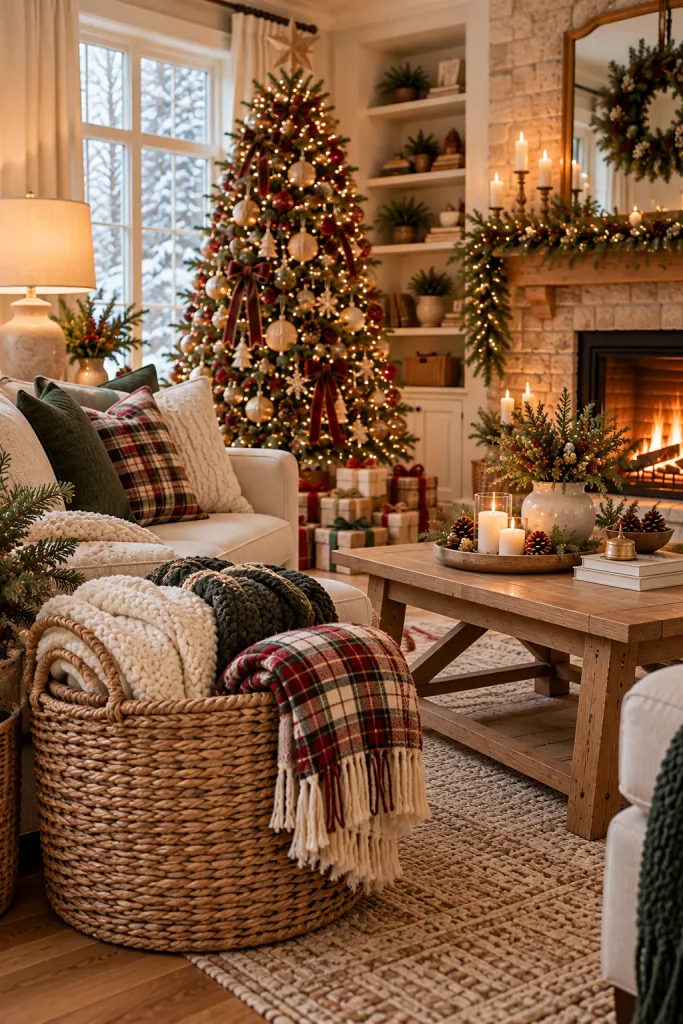
A large floor basket filled with blankets adds both seasonal warmth and practical storage to a living room. Choose thick throws in cream, charcoal, plaid, forest green, or another color already present in the room. Fold them loosely so the arrangement looks inviting rather than overly organized. Position the basket close enough to the sofa or chair that the blankets can actually be used. A small evergreen sprig, ribbon, or pinecone can provide a subtle Christmas detail without turning the basket into a decorative centerpiece. Woven baskets also introduce texture that works naturally with wood furniture and soft upholstery. Because the basket remains useful after Christmas, this idea is an easy way to combine holiday styling with everyday function.
30. Use Paper and Fabric Ornaments
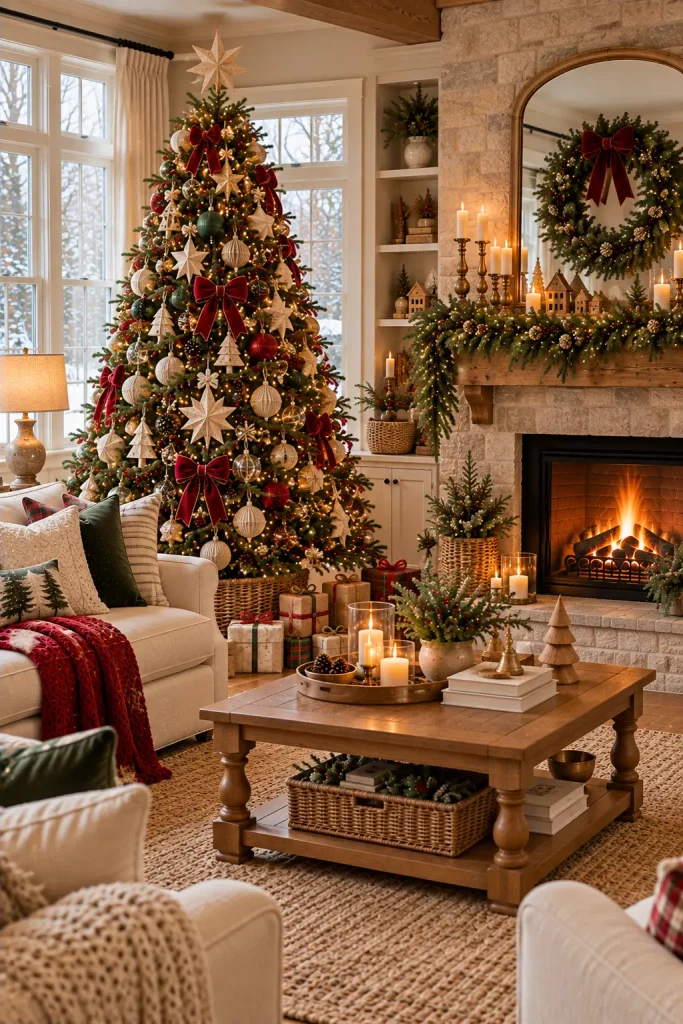
Paper and fabric ornaments can give a Christmas tree a softer, more handmade appearance. Folded paper stars, felt shapes, fabric bows, and textile ornaments introduce texture that contrasts with glass and metallic decorations. Choose colors that connect with the rest of the room, such as cream, forest green, muted red, or natural tan. Mix these softer materials with a smaller number of traditional ornaments so the tree still has some reflective highlights. The combination can feel especially charming in Scandinavian, cottage, farmhouse, or relaxed traditional interiors. You don’t need to make every ornament handmade; a carefully edited mixture can create the same visual effect. Keep the shapes and colors relatively consistent so the tree feels cohesive rather than random.
31. Add a Soft Faux-Fur Throw
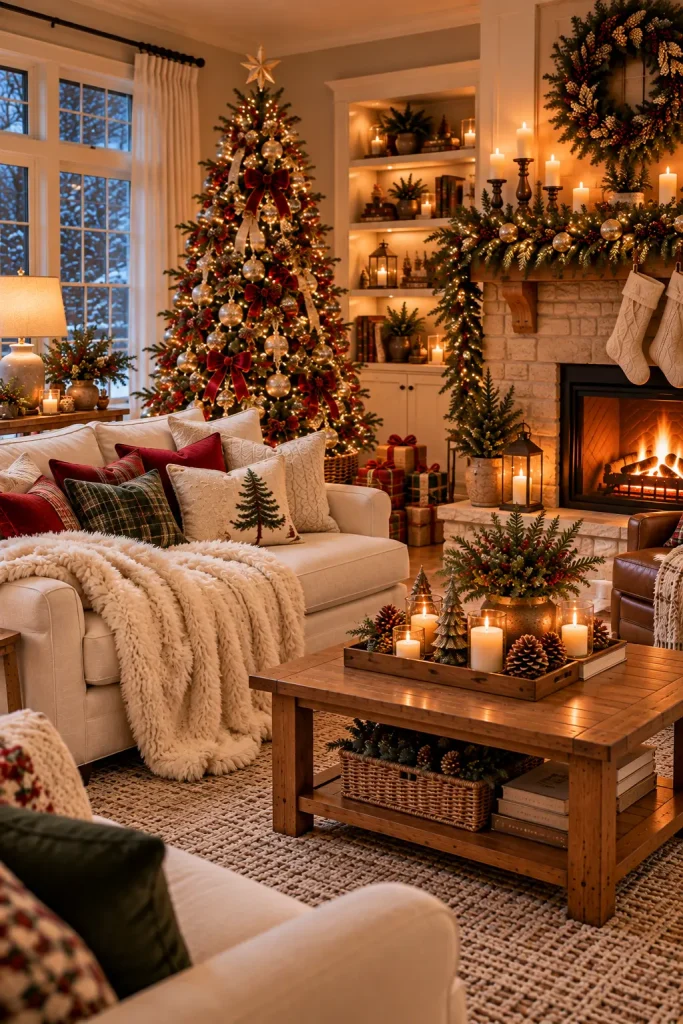
A faux-fur throw can introduce a soft winter texture to the living room without requiring a major seasonal change. Drape it casually over the back or arm of a sofa or accent chair rather than covering the entire seating area. Ivory, cream, taupe, and soft gray are flexible choices that can work with both traditional and neutral Christmas palettes. Pair the plush texture with smoother materials such as linen, cotton, or wood so the room maintains visual balance. Warm lighting can make the texture look especially inviting in the evening. Keep the rest of the seasonal decorations relatively edited if the throw is particularly substantial. The result should feel cozy and comfortable rather than overly heavy.
32. Bring Christmas Greenery Into Small Vignettes
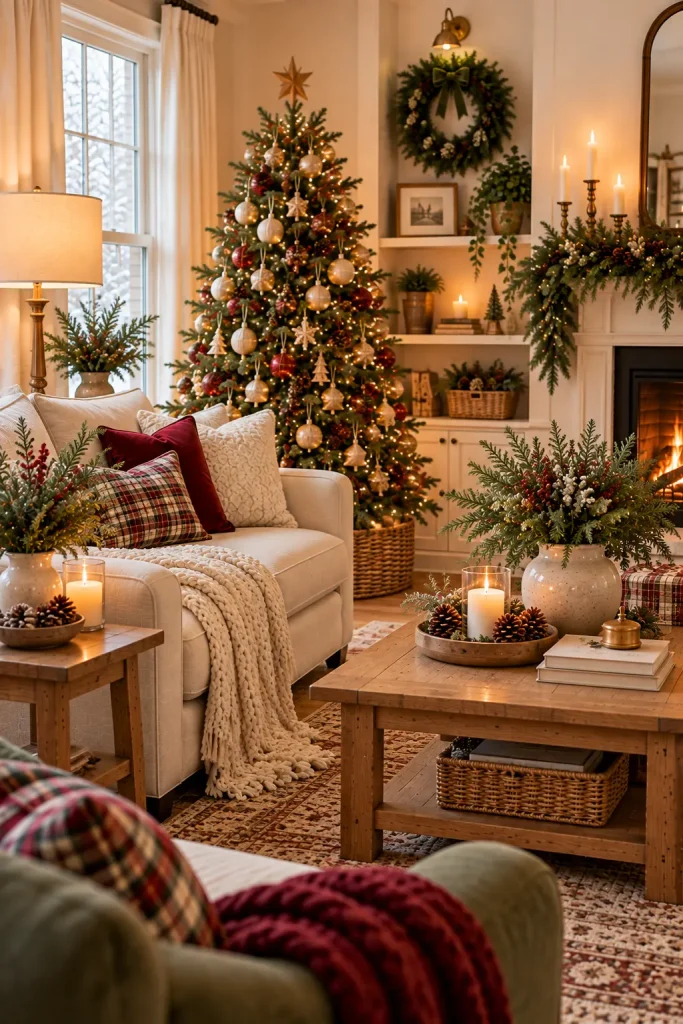
Small greenery arrangements can make a living room feel festive without covering every surface with Christmas decorations. Place a cedar sprig in a neutral ceramic vase on a side table, add a small wreath near a shelf, or use evergreen stems in a simple tabletop arrangement. Repeat the greenery in several areas so the room feels connected without becoming visually crowded. Natural containers such as wood, ceramic, glass, and woven materials work especially well. This approach is useful for apartments and small living rooms because it creates seasonal impact without consuming much floor or storage space. Keep the vignettes compact and practical, particularly around seating and frequently used surfaces. A few intentional greenery moments can often have more impact than dozens of scattered decorations.
33. Try a Moody Evergreen and Charcoal Palette
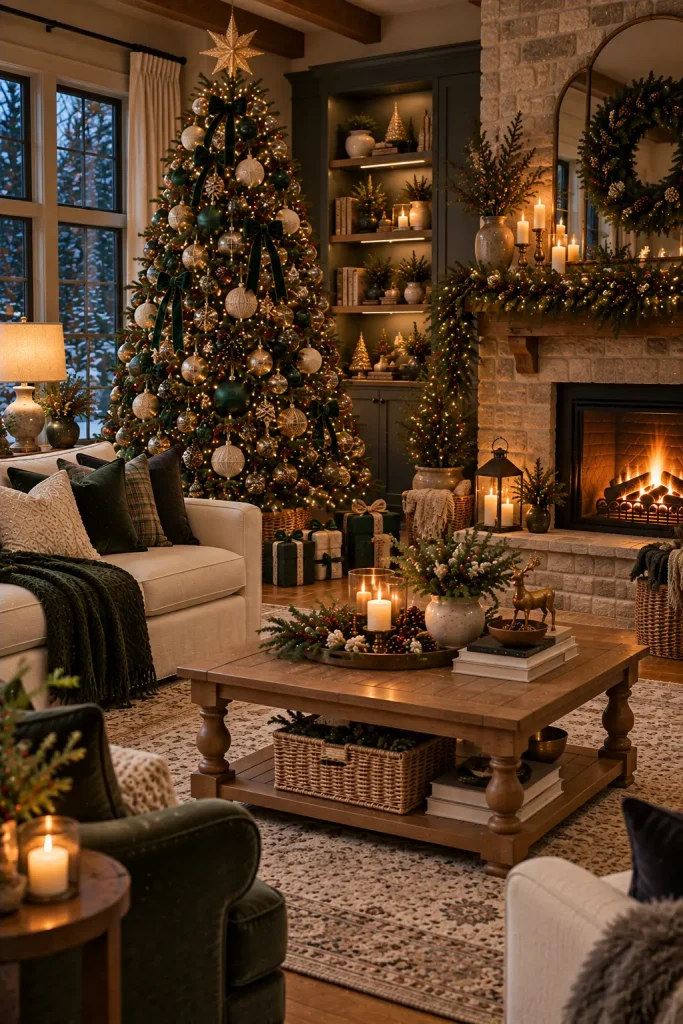
A moody Christmas palette can make a living room feel intimate and especially comfortable during winter evenings. Combine deep evergreen, charcoal, cream, and natural wood rather than relying on bright red and white. Use darker pillows or throws against lighter furniture, then repeat the evergreen shade through the tree and mantel garland. Warm-white lights and candles are important because they provide contrast against the darker colors. Natural wood can keep the palette from feeling too cold, while a stone or brick fireplace can add another layer of texture. This style works especially well in rooms with evening-oriented lighting and substantial architectural details. Keep some lighter surfaces visible so the darker colors have room to stand out.
34. Add a Small Wreath to an Interior Door
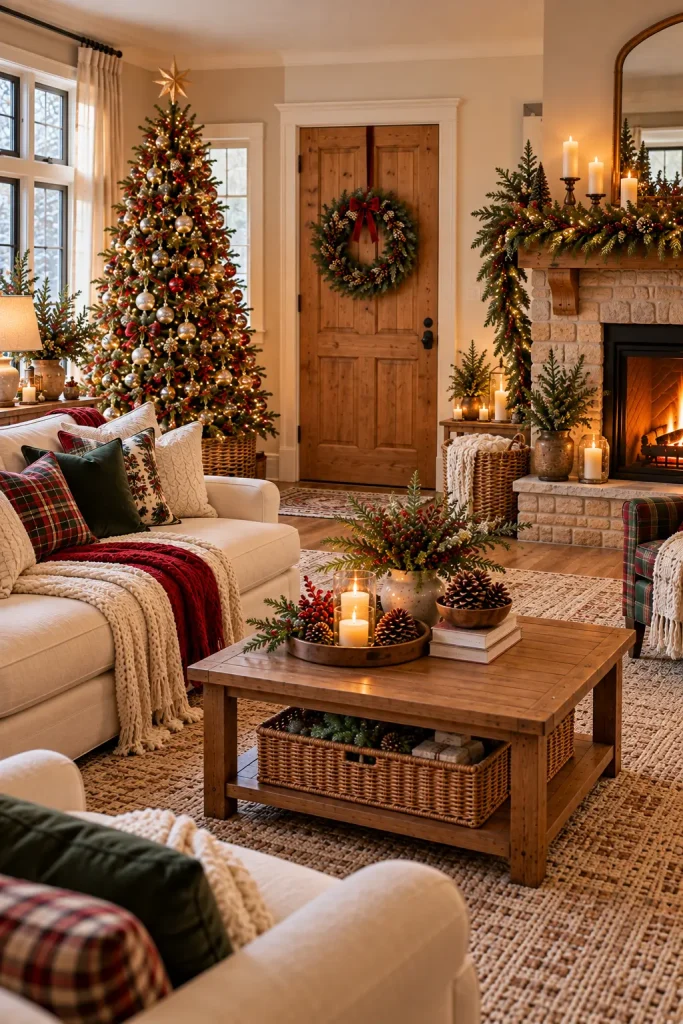
An interior door or cabinet door can become a subtle Christmas feature with the addition of a small wreath. Choose a wreath that is proportional to the door so it looks intentional rather than oversized. Natural evergreen, eucalyptus-style greenery, dried elements, or a simple ribbon can all work depending on the room’s style. If the surrounding area already contains several decorations, keep the wreath relatively simple. A small wreath can visually connect the living room to an adjoining hallway, entry, or dining space. For rental homes, use a removable hanging solution instead of permanent hardware. This idea is especially effective when you want to extend Christmas decorating beyond the tree and fireplace without adding more tabletop clutter.
35. Use a Large Mirror to Reflect Christmas Lights
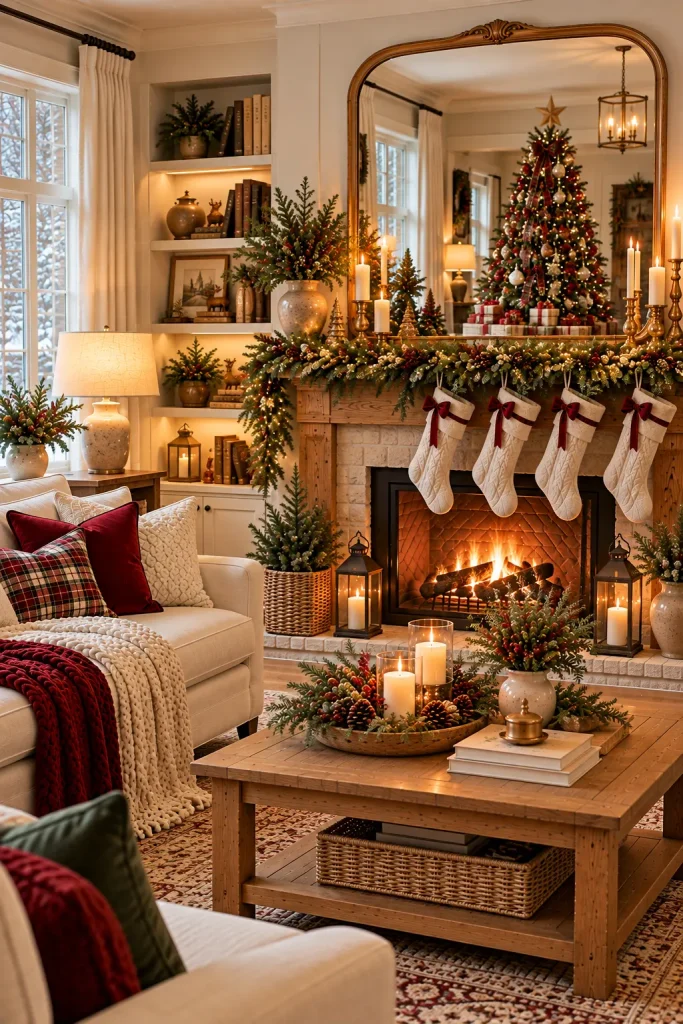
A large mirror can help distribute the visual glow of Christmas lights while also making the living room feel more layered. Position it where it reflects an attractive feature, such as the decorated tree, fireplace, or a warm lamp. Avoid placing it where it simply reflects a cluttered corner or busy walkway. Natural wood, aged brass, black, or simple neutral frames can all work depending on the room’s existing finishes. A mirror above the fireplace is particularly effective because it creates a strong vertical focal point while reflecting the seasonal arrangement nearby. The mirror doesn’t need additional Christmas decorations if the reflected tree and lights already provide enough visual interest. Think of it as a way to make existing decorations work harder.
Quick Tip: Check the mirror from the main seating area to make sure it reflects something attractive and useful.
36. Create a Traditional Christmas Tree With Ribbon and Plaid
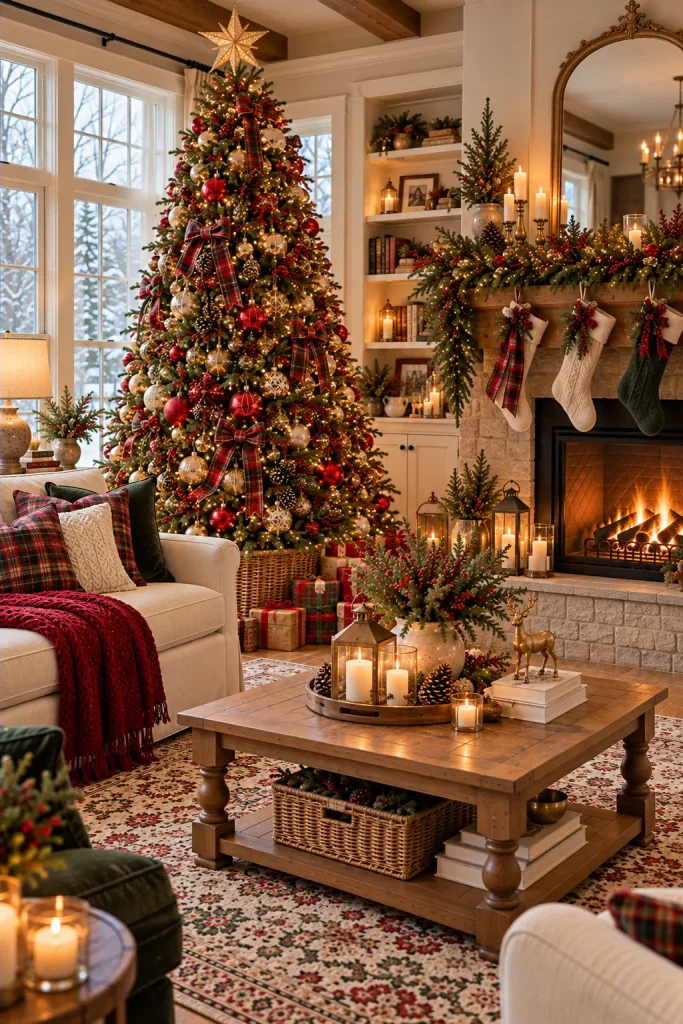
A traditional Christmas tree can combine familiar seasonal elements while still looking thoughtfully styled. Begin with warm-white lights and then add red and green plaid ribbon, classic ornaments, pinecones, and simple bows. Keep the strongest pattern concentrated in the ribbon and a few selected ornaments so the tree doesn’t become visually overwhelming. A woven tree skirt or natural basket collar can soften the base and connect the tree with wood furniture. Repeat one or two tree colors in the sofa pillows, stockings, or mantel garland to create continuity throughout the room. Traditional doesn’t have to mean excessive; the most successful version usually has a clear palette and a controlled mixture of patterns. The result should feel festive, nostalgic, and comfortable.
37. Keep a Small Living Room Light and Airy
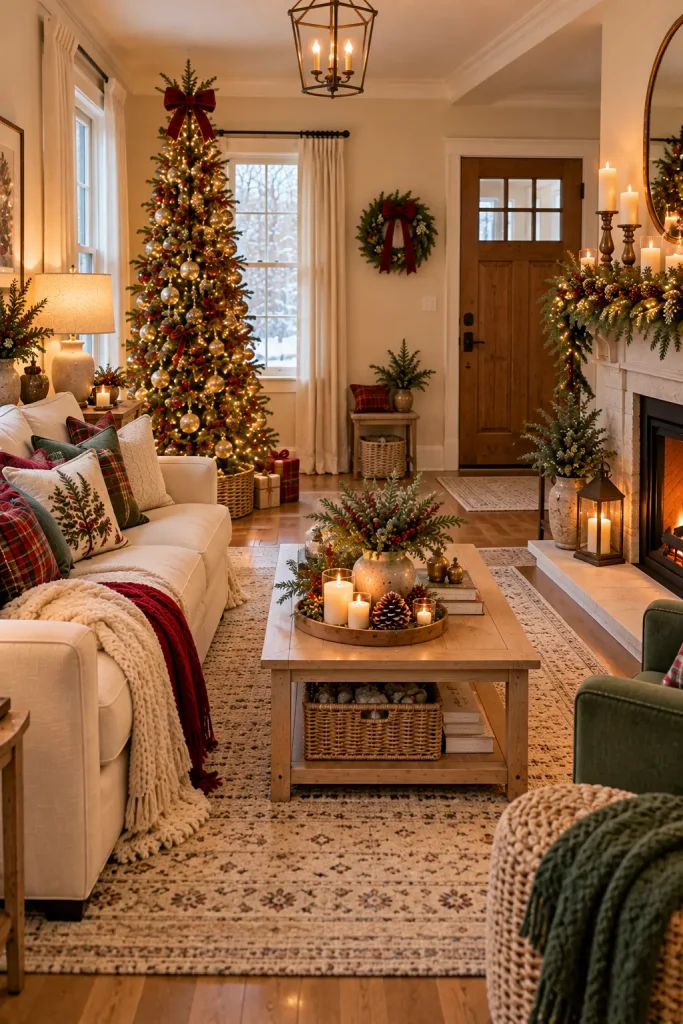
A small living room can still look beautifully decorated for Christmas when every seasonal piece is chosen with the room’s scale in mind. Start with a slim tree instead of an oversized one, then use a compact garland, small wreath, and a limited number of tabletop decorations. Light-colored textiles can help maintain an open feeling while warm greenery provides seasonal contrast. Keep walking paths clear and avoid placing decorations where they interfere with doors, windows, or frequently used seating. Rather than adding more objects, repeat a small palette of cream, green, and muted red throughout the room. Mirrors and warm lighting can also help the space feel brighter and more inviting. The goal is not to make the room look empty but to make every decoration feel intentional.
38. Create a Cozy Christmas Cabin Feel
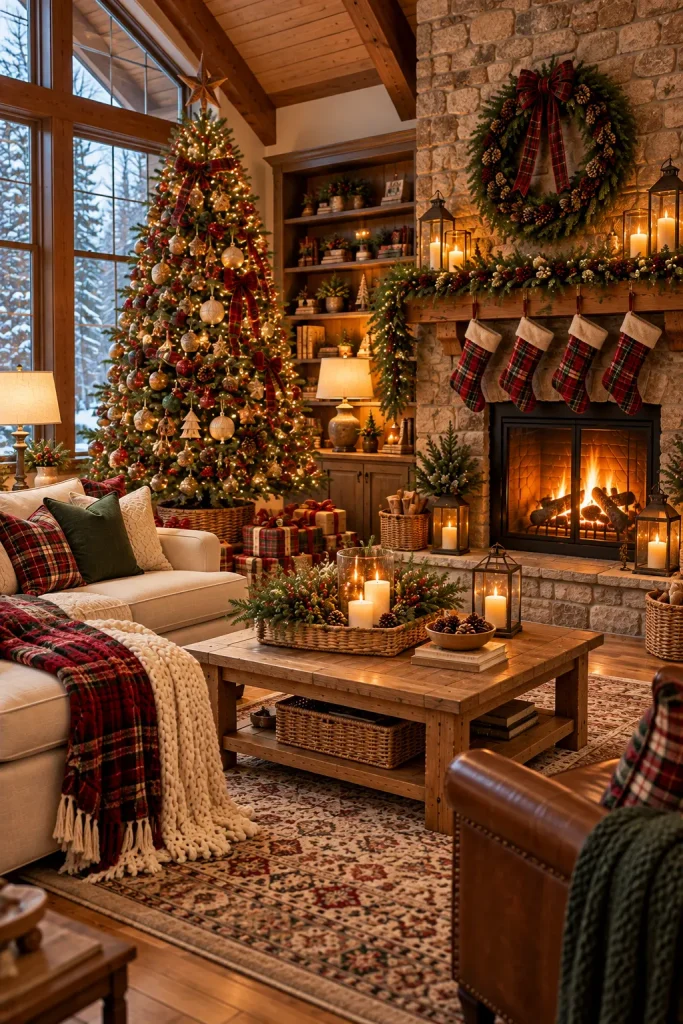
A cabin-inspired Christmas living room is all about natural materials, warm textures, and a comfortable atmosphere. Use wood, wool, evergreen branches, plaid textiles, and a fireplace as the main ingredients. Forest green and warm red usually work better than very bright colors because they complement natural materials. A chunky knitted throw, leather chair, woven basket, and wooden ornaments can reinforce the cozy feeling without turning the room into a themed lodge. If the room has a stone or brick fireplace, let its texture remain visible rather than covering it completely. Warm-white lights and firelight can provide the final layer of warmth. The finished room should feel like a real, comfortable home rather than a staged rustic set.
39. Mix Traditional and Modern Christmas Decor
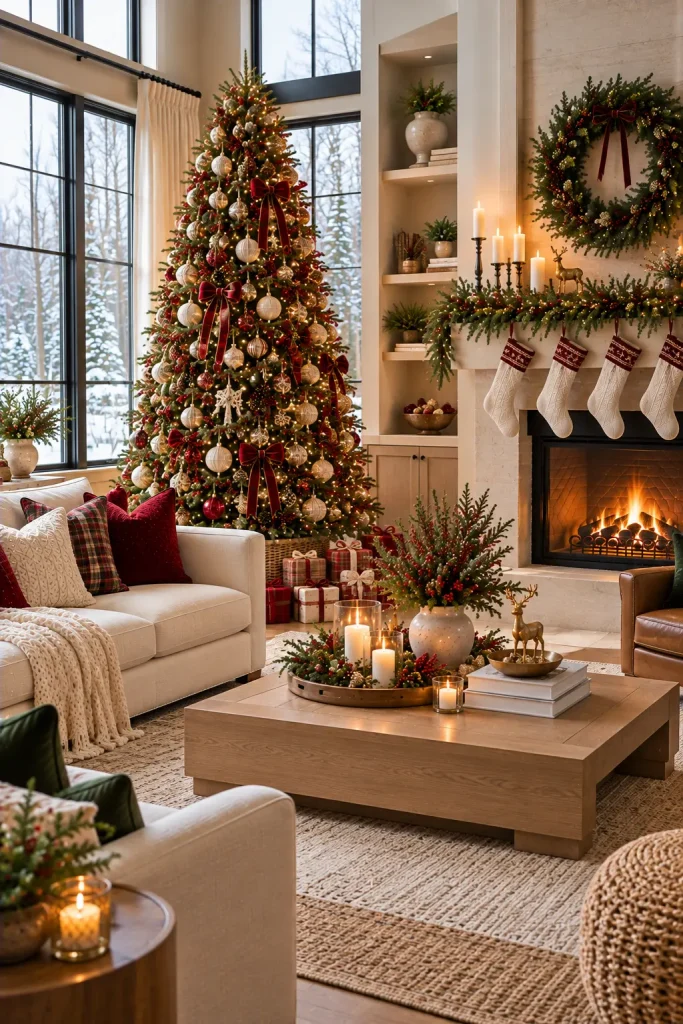
Traditional and modern Christmas elements can work together when they share a clear color palette and a few repeated materials. For example, a classic evergreen tree with red ornaments can sit comfortably beside a streamlined cream sofa and contemporary coffee table. Simple ceramic accessories or clean-lined lighting can keep traditional decorations from feeling too heavy. At the same time, stockings, garland, and classic ornaments can add warmth to a modern room that might otherwise feel minimal. Choose one style as the dominant foundation and let the second style provide contrast. Avoid mixing too many unrelated finishes or patterns because that can make the room feel visually disconnected. The best combination feels intentional, with old and new elements supporting each other.
40. Finish With a Layered, Collected Holiday Look
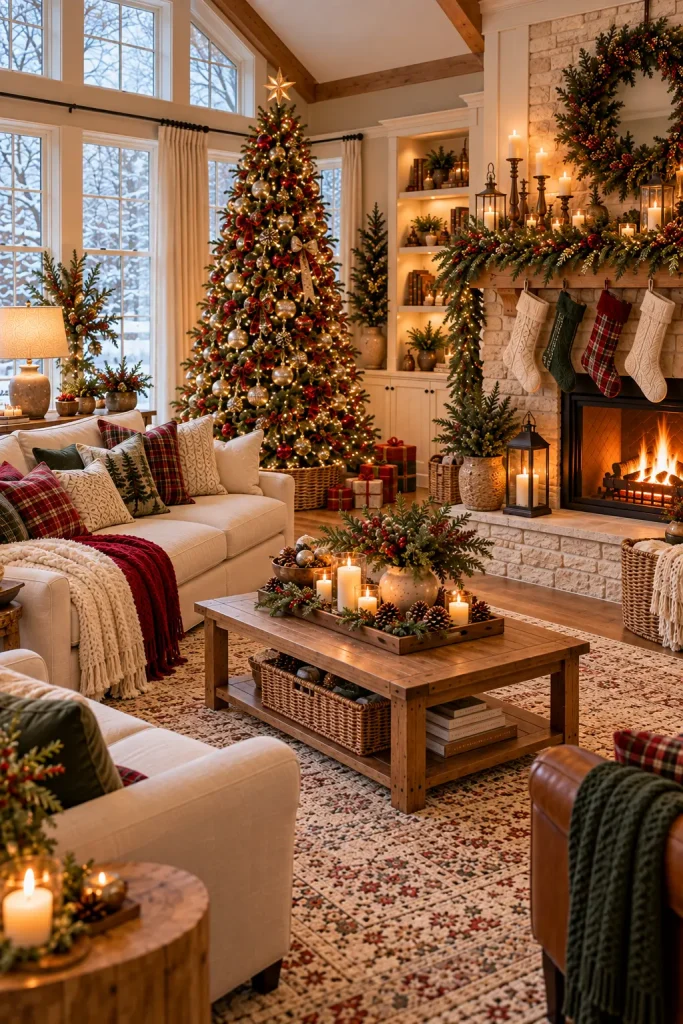
The most welcoming Christmas living rooms usually feel collected rather than decorated all at once. Begin with the major elements, such as the tree, fireplace, and sofa, then gradually introduce greenery, pillows, throws, candles, ornaments, and natural accents. Repeat a few colors throughout the room so each area feels connected without requiring everything to match. Leave some empty space around the main decorations because visual breathing room helps the important pieces stand out. Think about everyday function as well, particularly around seating, coffee tables, doors, and walking paths. A few meaningful decorations can often create more atmosphere than a room packed with seasonal objects. Finish by looking at the room from the main entrance and seating areas to make sure the Christmas details feel balanced from different viewpoints.