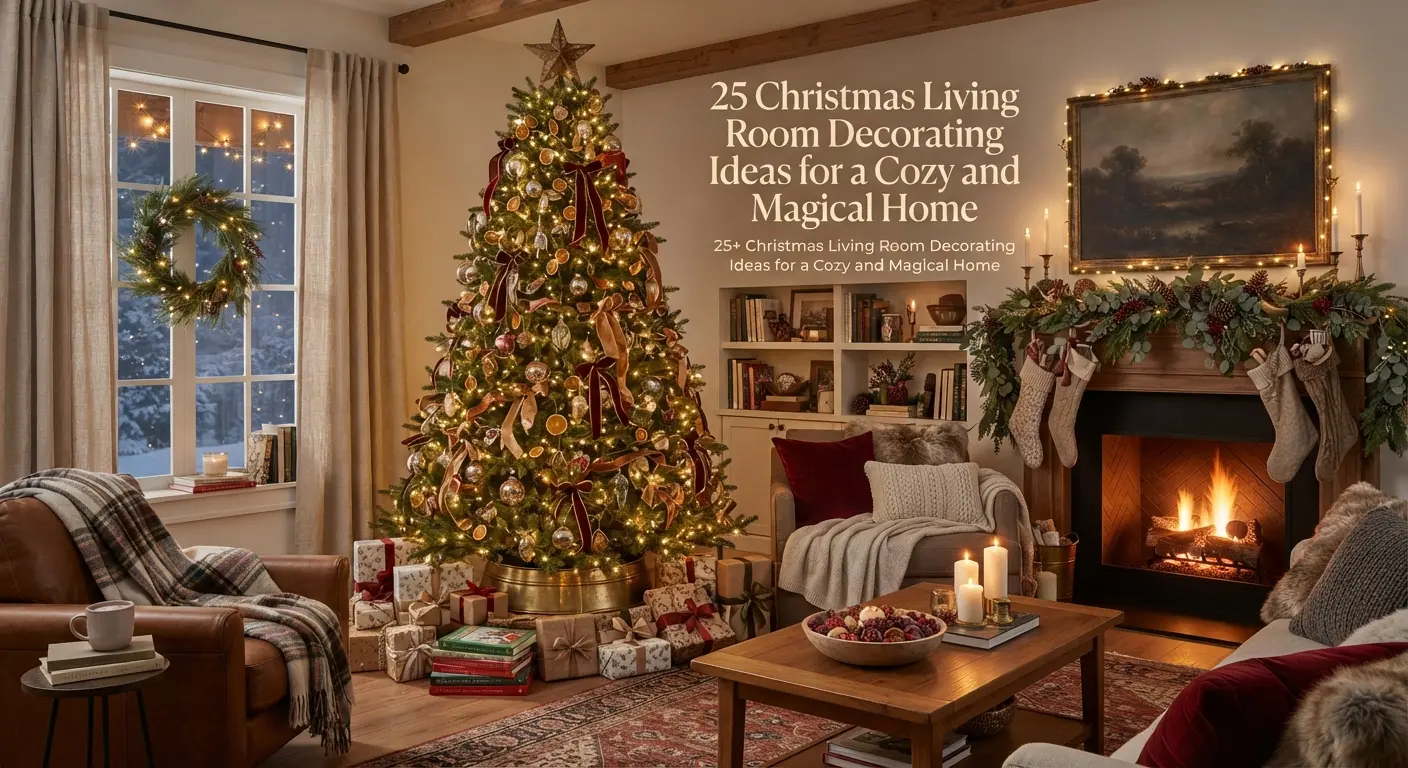
25 Christmas Living Room Decorating Ideas for a Cozy and Magical Home
Christmas has a way of making the living room feel like the heart of the home. A few warm lights, fresh greenery, soft throws, and carefully chosen ornaments can completely change the atmosphere without requiring a full room makeover. The key is layering holiday details into the furniture, lighting, fireplace, windows, and everyday surfaces you already use.
These Christmas living room decorating ideas range from simple and budget-conscious touches to more polished arrangements with layered greenery, coordinated ornaments, and statement lighting. Some work beautifully in a compact apartment, while others suit a larger family room with a fireplace and generous floor space. The goal isn’t to cover every surface with decorations; it’s to create a room that feels warm, inviting, festive, and genuinely comfortable throughout the holiday season.
1. Create a Classic Evergreen Christmas Tree
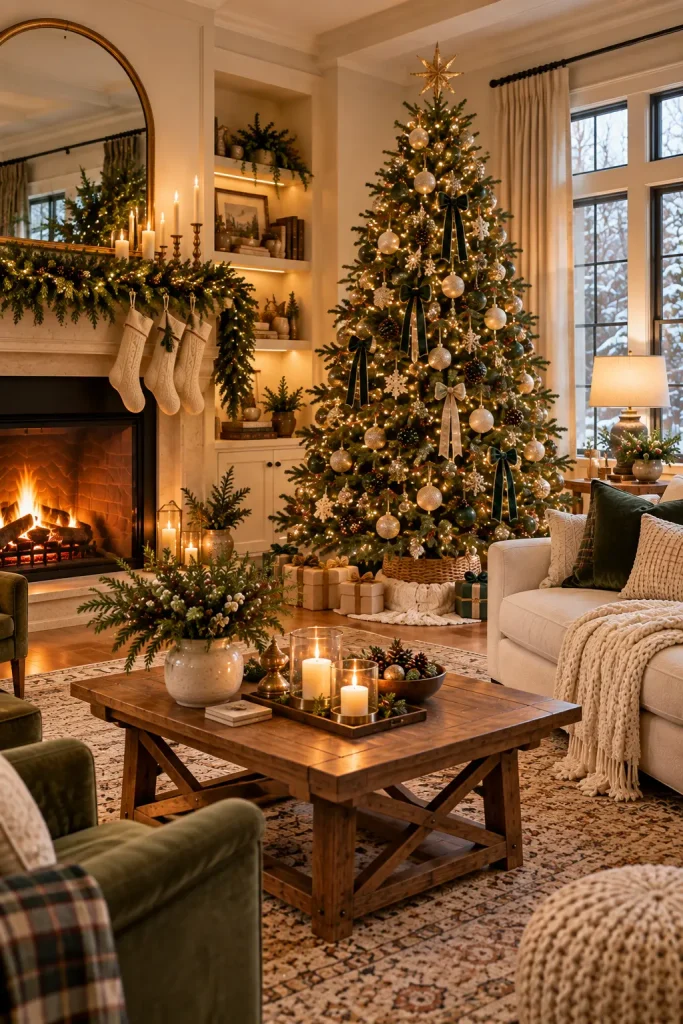
A full evergreen Christmas tree can become the natural focal point of the living room. Choose a balanced mix of warm-white lights, classic ornaments, and understated ribbon rather than filling every branch with decorations. Deep green, cream, warm wood, and small touches of brass create a traditional palette that feels festive without becoming overly busy.
Position the tree where it can be enjoyed from the main seating area while leaving enough clearance for comfortable movement. For smaller rooms, a slimmer tree can provide the same vertical impact without overwhelming the furniture.
Quick Tip: Keep the bottom third of the tree slightly simpler if it sits close to a walkway so the room remains easy to navigate.
2. Layer the Fireplace With Evergreen Garland
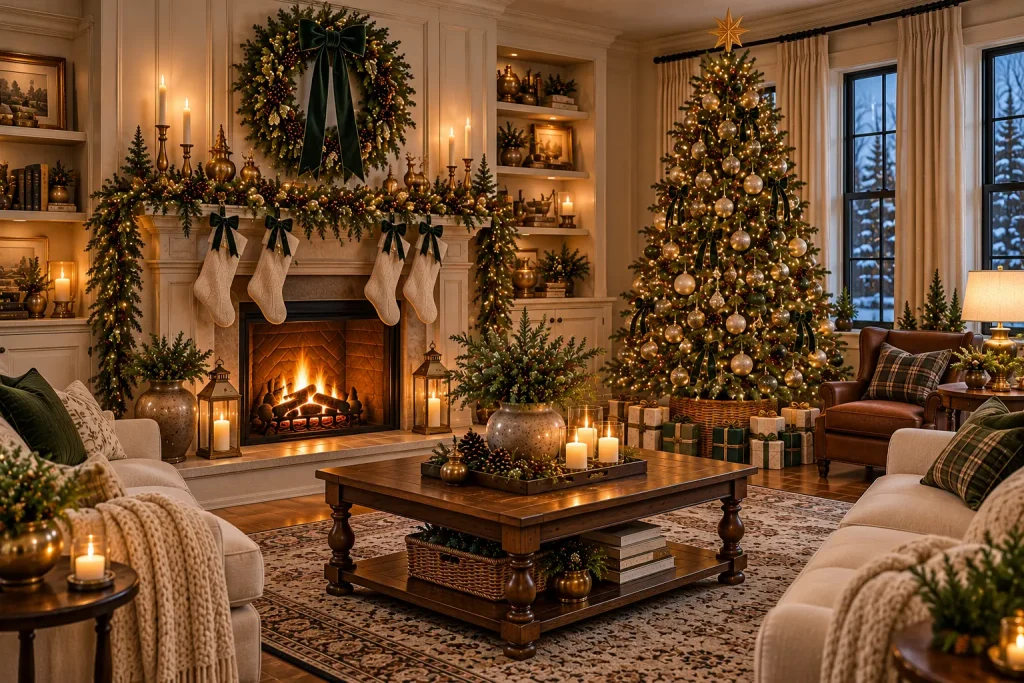
A fireplace immediately gives Christmas decorating a natural focal point. Drape a loose evergreen garland across the mantel and allow portions of it to fall naturally rather than arranging it in a perfectly symmetrical line. Add a few cream stockings, understated brass candleholders, and small natural accents such as pinecones.
Keep the mantel composition relatively low so it doesn’t compete with artwork or a mirror above the fireplace. The combination of greenery and warm materials works especially well with traditional, transitional, and farmhouse-inspired interiors.
Do: Let the greenery have some natural variation in shape.
Don’t: Pack the entire mantel with small decorations that compete for attention.
3. Warm Up the Sofa With Christmas Textiles
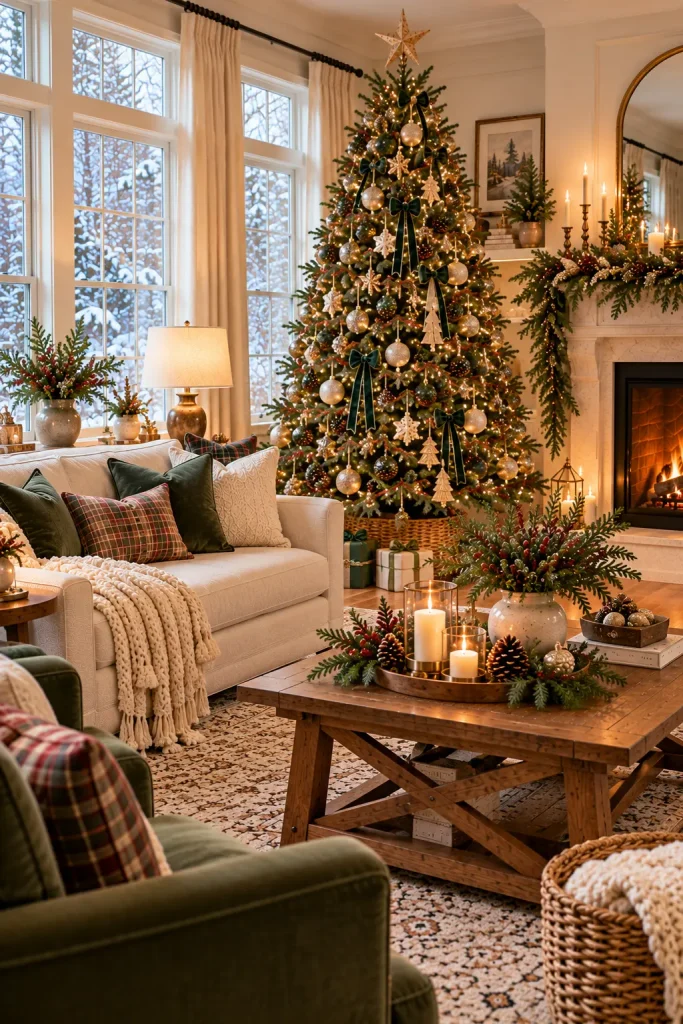
Holiday decorating doesn’t have to mean adding more objects. Swapping everyday pillows and throws for seasonal textiles can create a noticeable change while keeping the room uncluttered. Look for textures such as chunky knits, brushed cotton, velvet, linen, or wool-inspired fabrics in cream, deep green, muted red, or warm plaid.
A simple combination of one patterned pillow, one textured solid pillow, and a soft throw is often enough. The best result usually comes from coordinating the textiles with colors already present in the room.
4. Build a Cozy Christmas Coffee Table
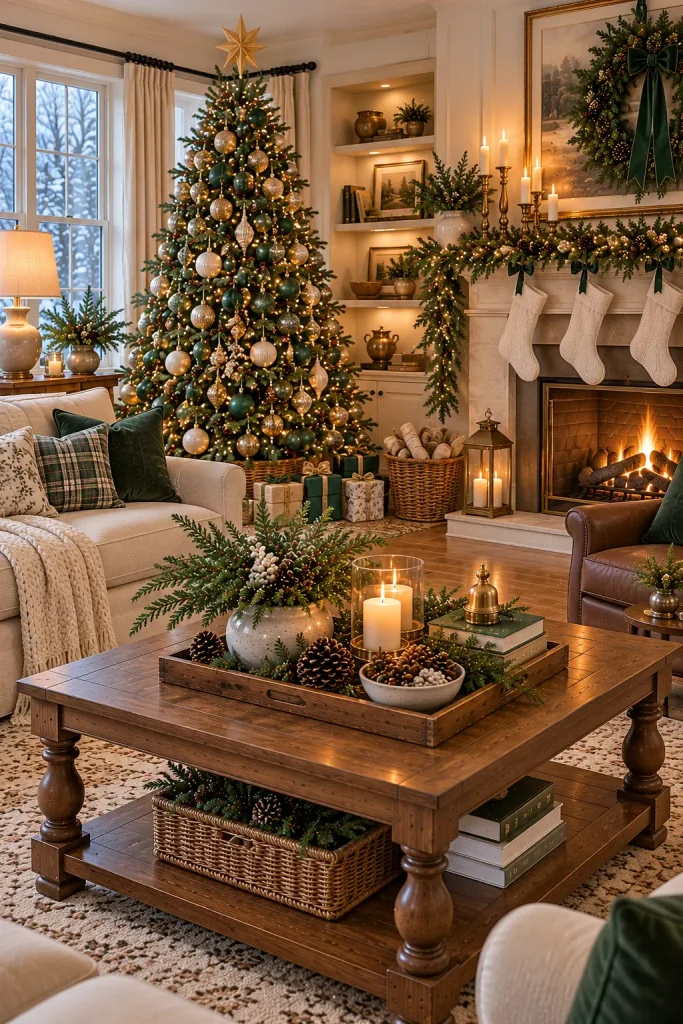
The coffee table can become a small seasonal vignette without taking away valuable surface space. Start with a wooden tray or shallow basket, then add pinecones, evergreen clippings, a neutral ceramic bowl, and one or two understated candles.
Keep the arrangement low enough that people can see across the table and comfortably place a mug or book nearby. Mixing natural textures helps the display feel collected rather than overly coordinated.
5. Frame the Windows With Simple Greenery
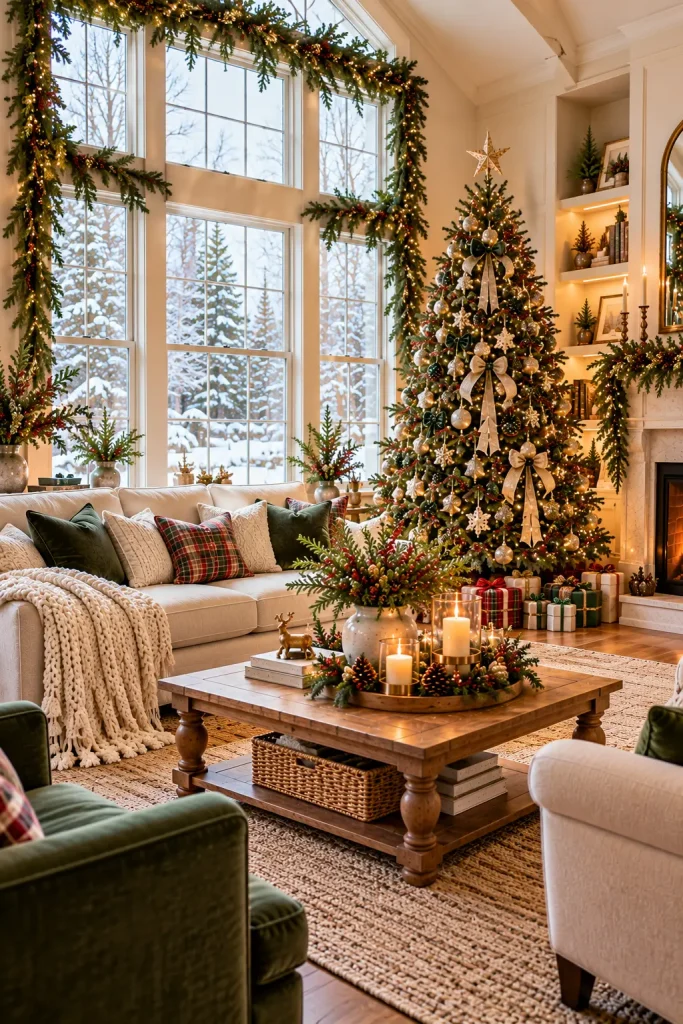
Windows can become part of the holiday composition with a restrained treatment of evergreen branches. Instead of covering the entire frame, place greenery along the upper edge or one side to create a natural asymmetrical effect.
This approach is particularly useful when the room already receives plenty of natural light. Leave most of the glass unobstructed so daylight remains an important part of the space.
6. Add Candlelight Around the Room
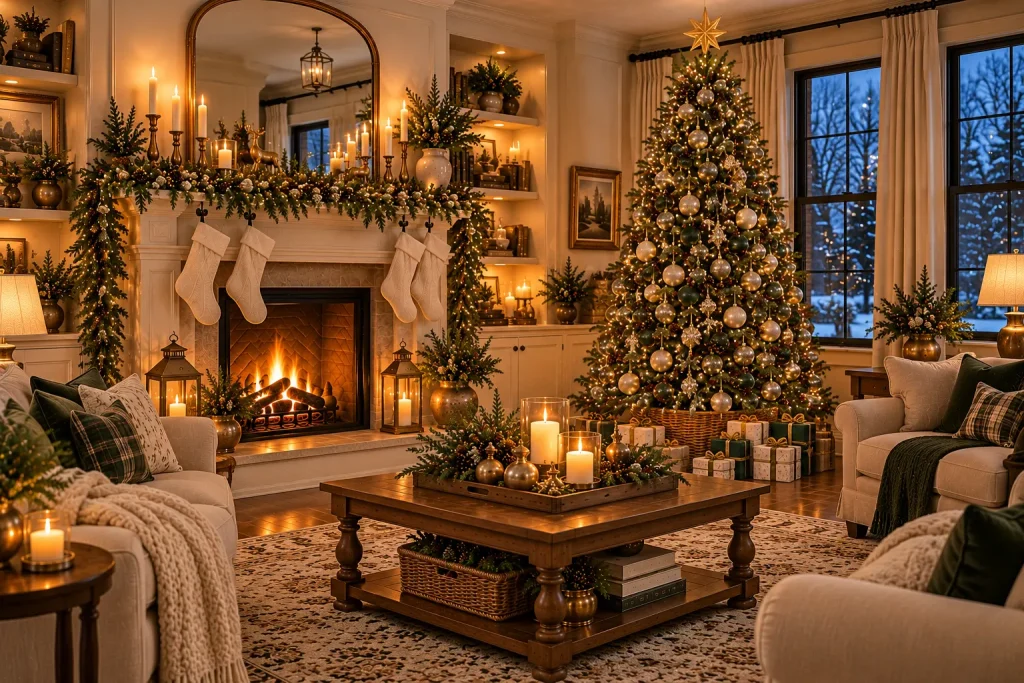
Candles introduce a softer layer of illumination that complements Christmas tree lights beautifully. Group a few candles on the mantel, coffee table, or a sideboard, keeping the arrangements visually simple and safely positioned.
For households with children or pets, flameless candles can create a similar glow without an open flame. Mixing candle heights can add depth while keeping the color palette restrained.
7. Hang Oversized Stockings on the Mantel
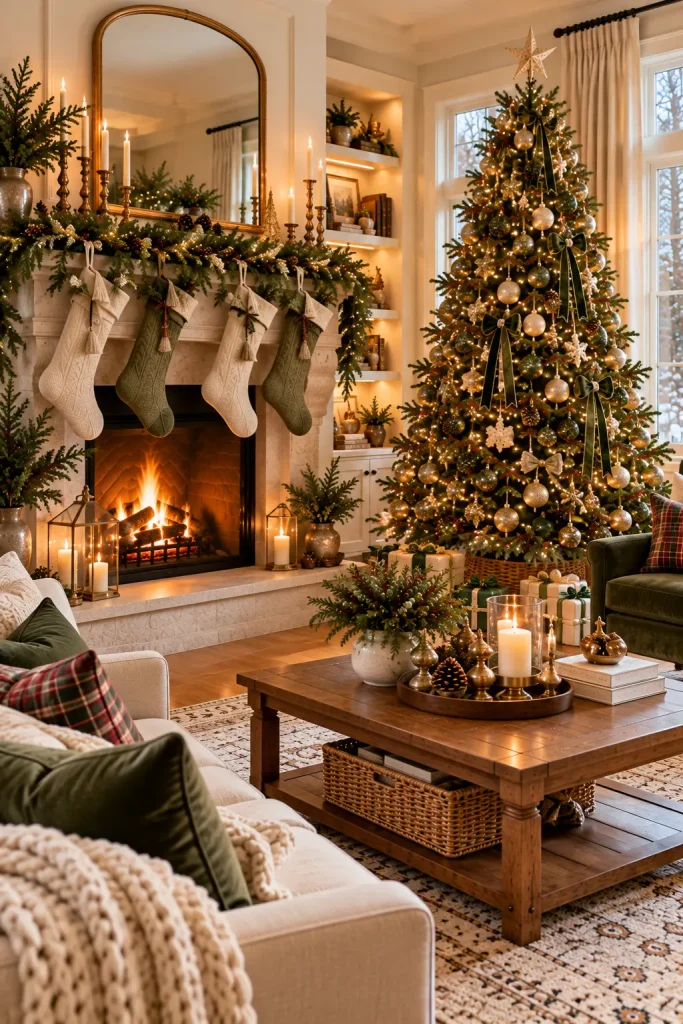
Large stockings can make a fireplace feel immediately more festive. Choose a coordinated set in materials such as wool, linen, knit fabric, or cotton, then vary their textures slightly so the arrangement doesn’t look overly uniform.
If the mantel is narrow, fewer stockings can look more intentional than squeezing one for every household member into the available space. Add small greenery between them rather than filling every gap with decorations.
8. Use a Red-and-Green Traditional Palette
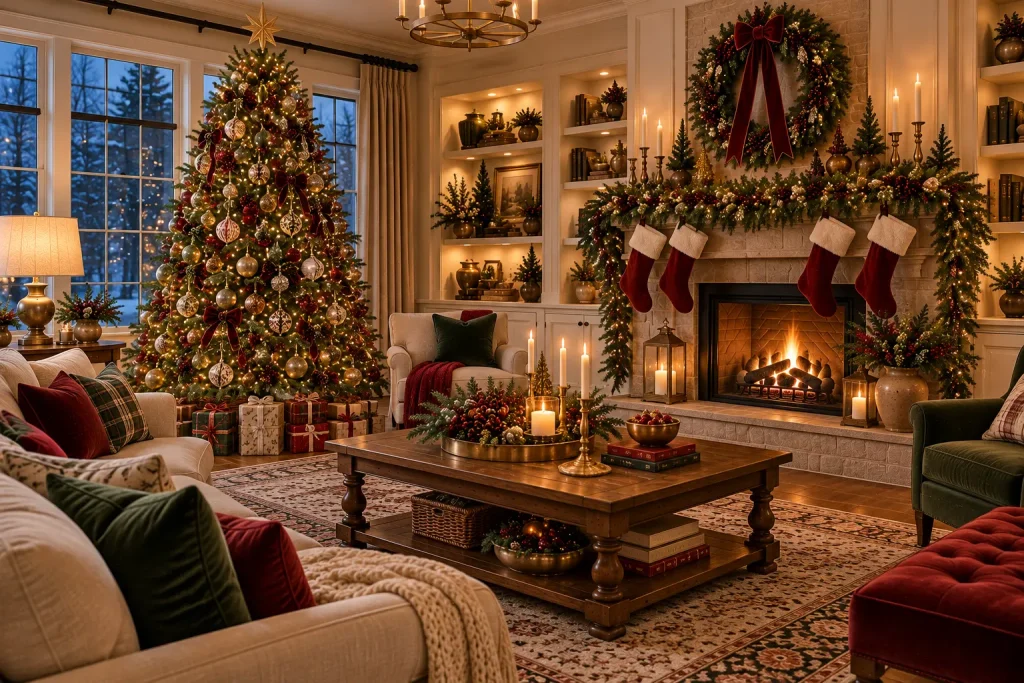
For a classic Christmas living room, traditional red and green remain an effective combination. The trick is controlling the intensity of those colors. Deep cranberry, muted evergreen, warm cream, and natural wood can feel more sophisticated than bright primary shades.
Repeat the colors in several locations rather than concentrating them in one corner. A red pillow, green tree ornaments, and a small cranberry accent on the coffee table can create visual continuity.
9. Style a Christmas Tree With Neutral Ornaments
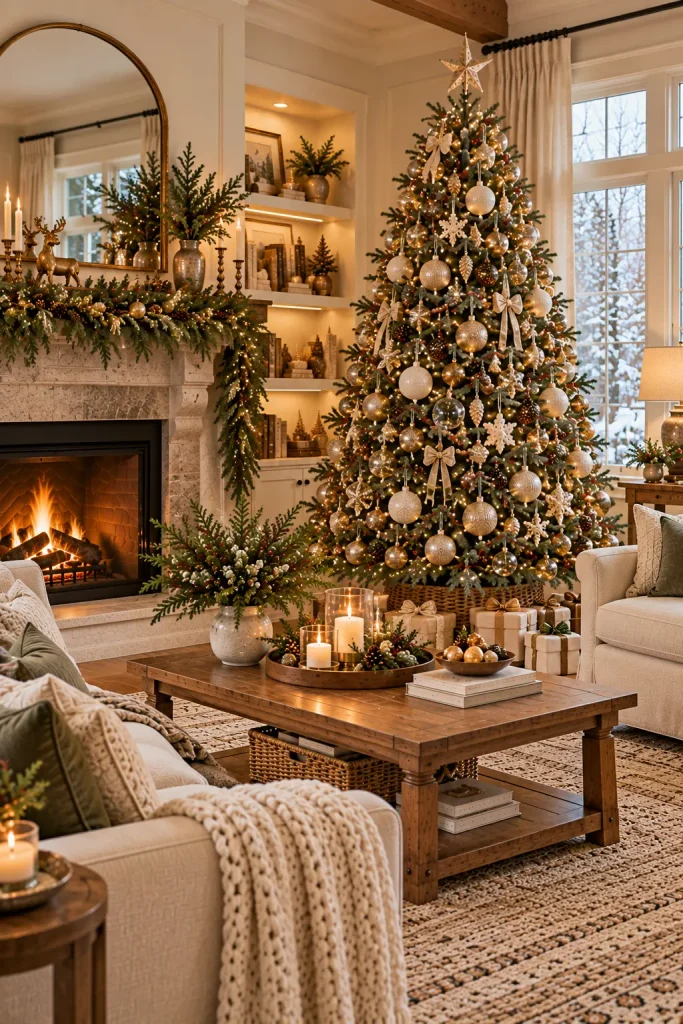
Neutral Christmas decorating can feel festive without relying heavily on bright colors. Combine cream, champagne, soft taupe, warm brass, natural wood, and subtle glass ornaments on the tree.
Vary the finishes rather than using one ornament style throughout. Matte, satin, lightly reflective, and textured pieces can create visual depth while keeping the overall palette calm.
10. Create a Small-Space Christmas Corner
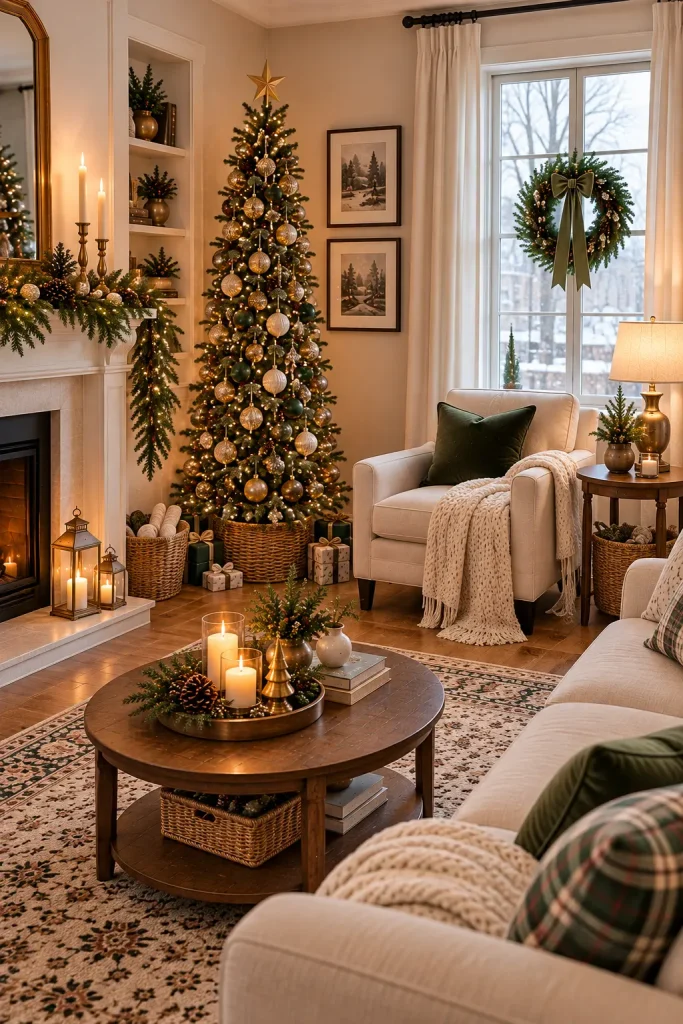
A small living room doesn’t need a full-size Christmas tree and extensive decorations to feel festive. Create a dedicated holiday corner using a slim tree, compact side table, small wreath, and one comfortable chair or section of the sofa.
Keep the surrounding floor area open. Vertical decorating is especially useful in compact rooms because it adds seasonal character without taking much additional floor space.
11. Decorate With Natural Pinecones and Branches
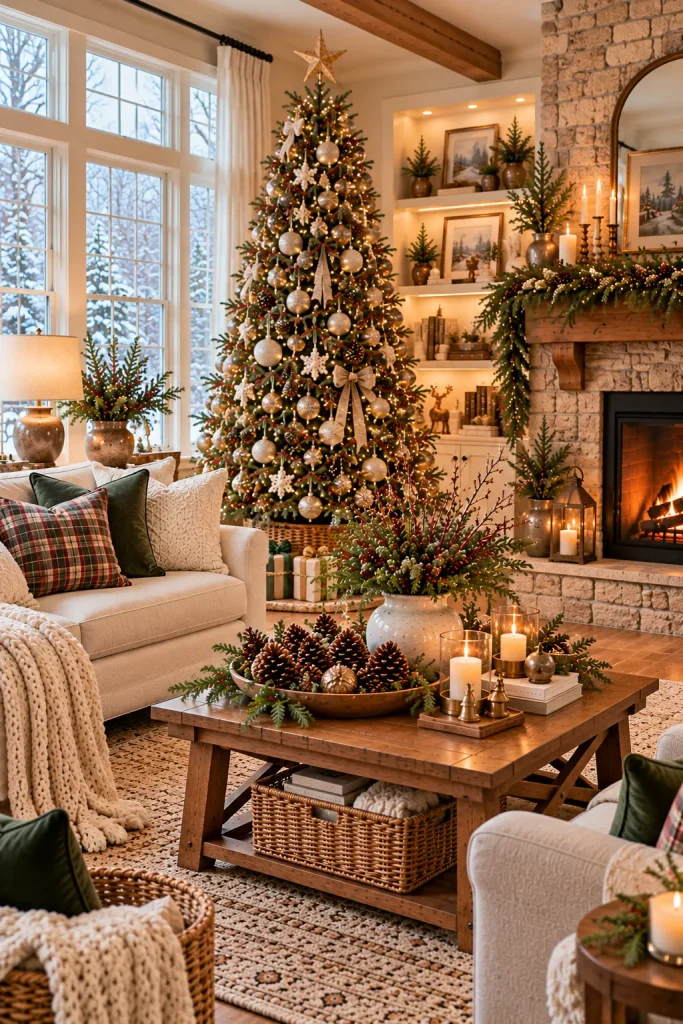
Natural elements can make Christmas decorating feel grounded and less dependent on shiny ornaments. Arrange pinecones in a shallow bowl, place evergreen branches along a mantel, or add a few bare winter branches to a tall ceramic vessel.
These materials pair naturally with wood furniture, woven baskets, linen upholstery, and neutral ceramics.
Quick Tip: Use several small groupings around the room instead of one oversized collection on a single surface.
12. Add a Layered Christmas Lighting Scheme
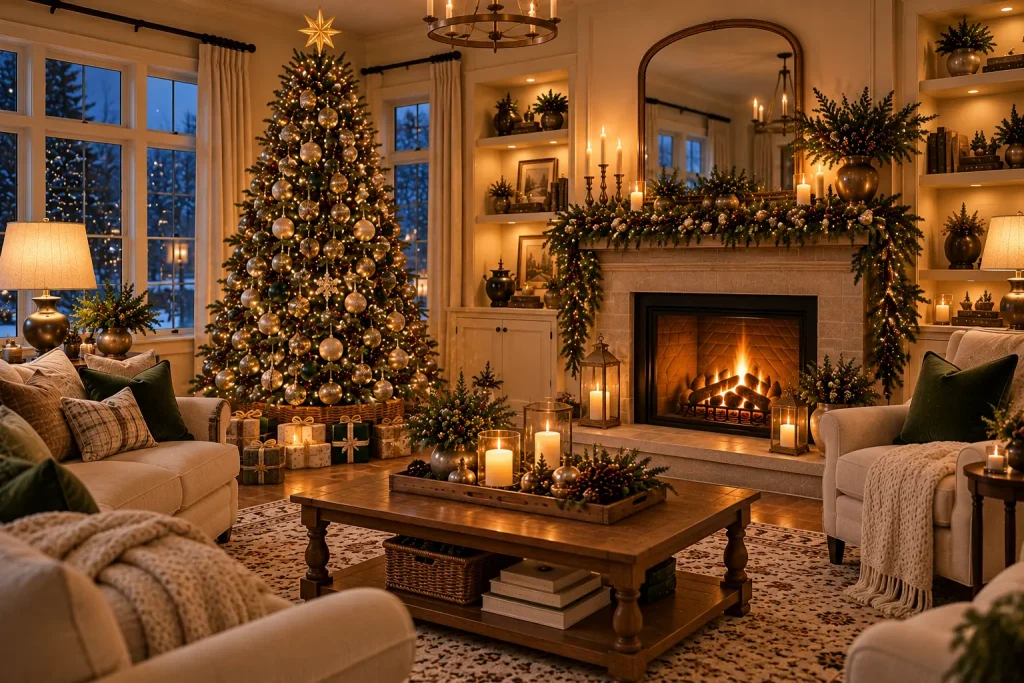
One of the easiest ways to make a living room feel magical is to combine several light sources instead of relying on a single ceiling fixture. Use tree lights, table lamps, floor lamps, fireplace lighting, and small decorative lights at different heights.
A simple three-layer approach
- Start with the main ambient lighting.
- Add warm Christmas tree lights as a decorative focal point.
- Finish with lower-level lamps or candles for a softer glow.
The different heights create a more comfortable evening atmosphere while keeping the room functional.
13. Place a Wreath Above the Fireplace
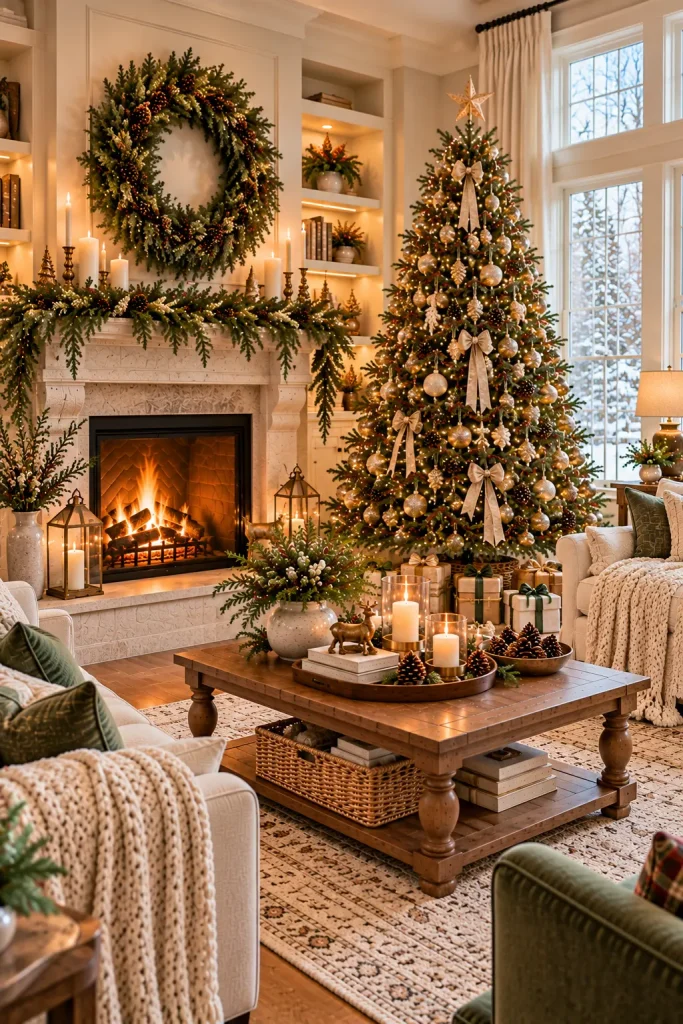
A large natural evergreen wreath can create a strong focal point above the fireplace without requiring an elaborate mantel arrangement. Choose a wreath proportionate to the fireplace and leave enough visual breathing room around it.
A few cream candles or small brass objects on the mantel can support the wreath without competing with its shape.
14. Mix Velvet Christmas Accents With Linen
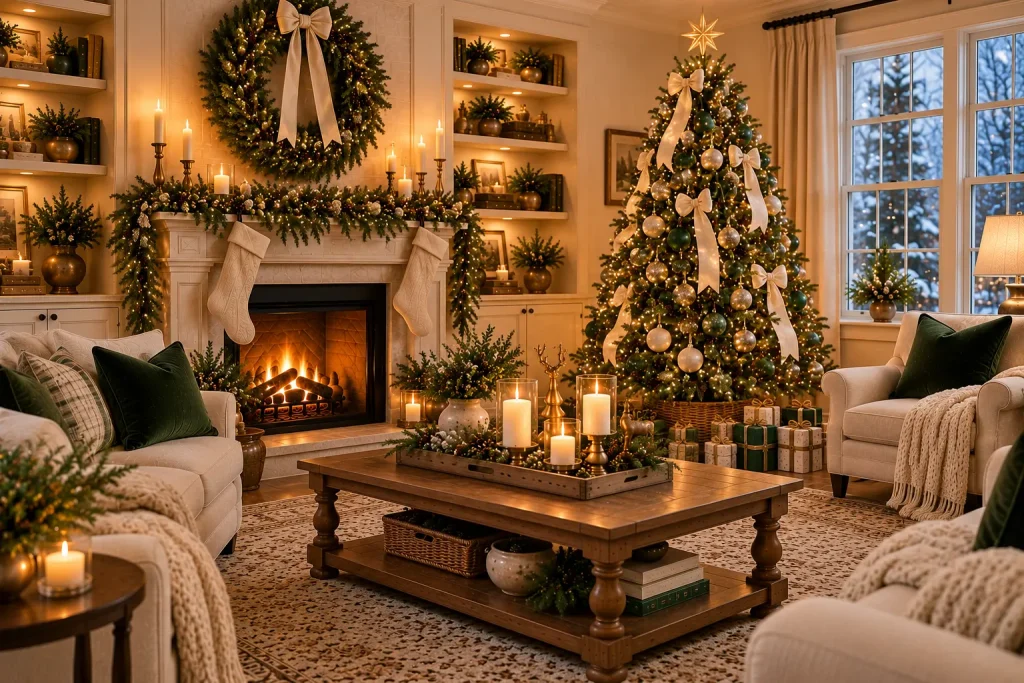
Contrasting textures can make a neutral living room feel richer during the holidays. Pair soft linen upholstery with a few velvet pillows or a velvet ribbon on the tree. Deep green, burgundy, navy, or warm ivory velvet can provide visual depth without requiring many additional decorations.
The contrast works because linen tends to read casual and relaxed, while velvet introduces a denser, more decorative texture.
Best pairing: Use velvet as an accent rather than covering every surface with it.
15. Bring Christmas Decor Into the Bookshelves
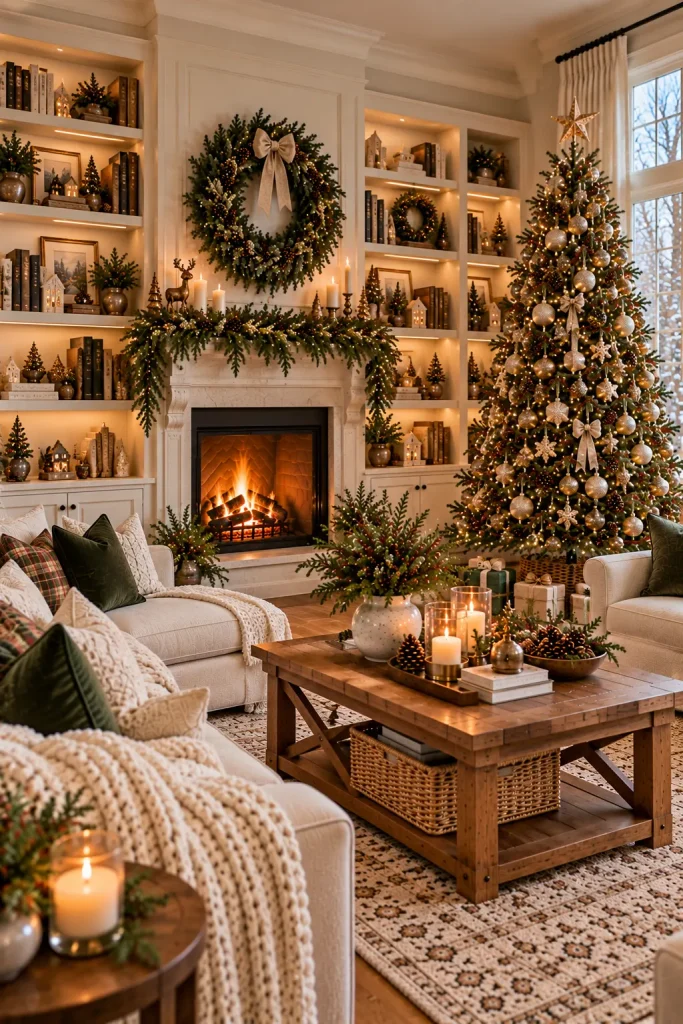
Bookshelves offer useful vertical space for seasonal styling. Replace only a few everyday objects with small wreaths, miniature trees, ceramic houses, pinecones, or warm brass accents while leaving plenty of books and regular belongings in place.
A bookshelf tends to look more natural when holiday pieces are distributed rather than grouped into one dense cluster.
Common Mistake: Filling every shelf with Christmas decorations.
Better Approach: Keep most of the everyday structure and introduce small seasonal moments throughout the bookcase.
16. Add a Soft Faux-Fur or Chunky Knit Throw
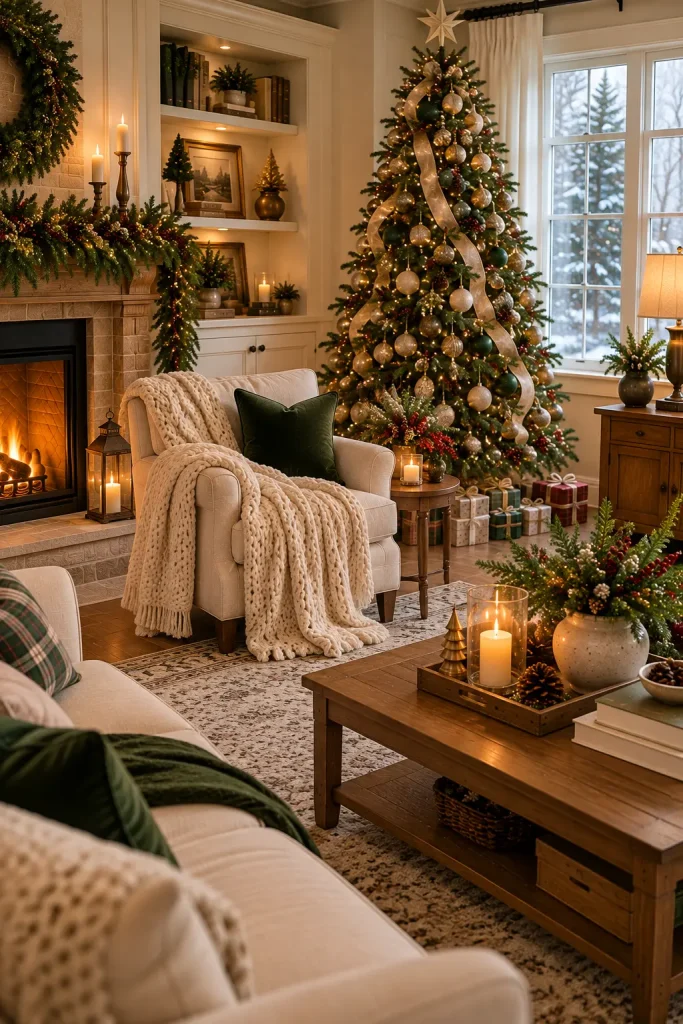
A tactile throw can make the living room look warmer even when the rest of the Christmas decor is restrained. Drape a chunky knit or soft faux-fur-inspired throw over the arm of a sofa or accent chair rather than folding it perfectly.
Choose a color that connects with the existing room—cream, oatmeal, soft gray, or muted brown are easy choices for neutral interiors.
17. Use a Christmas Ribbon as a Repeating Detail
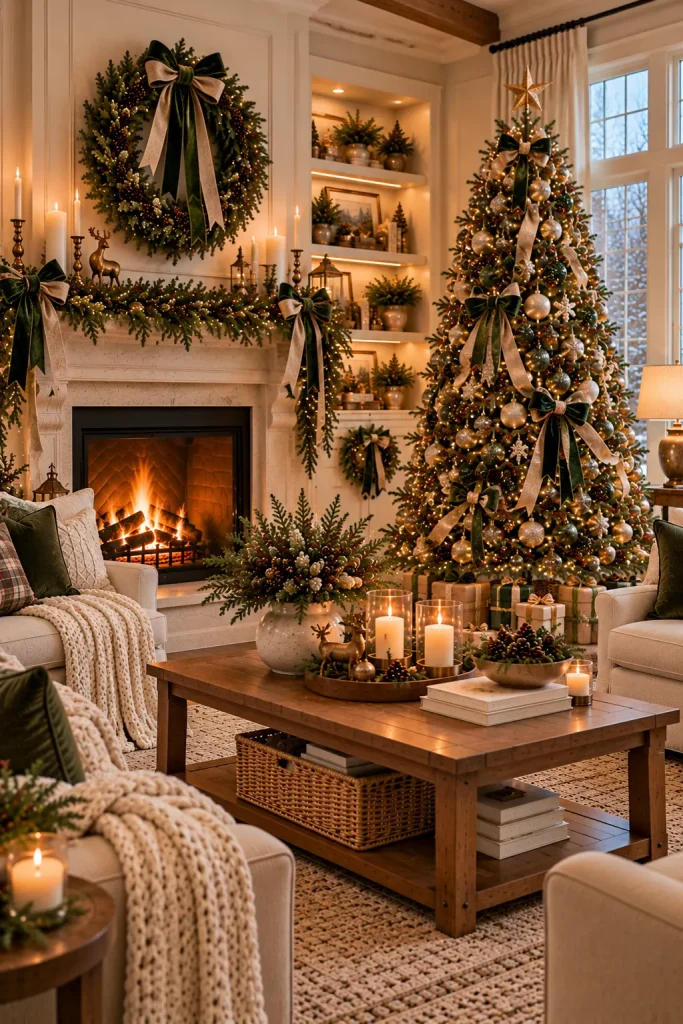
Ribbon can connect different parts of the room without adding many separate objects. Use the same or complementary ribbon on the tree, around a wreath, or as a small accent on a mantel arrangement.
For a sophisticated result, choose ribbon with natural texture and restrained patterning. Velvet, linen-look, cotton, or understated plaid can all work depending on the room’s existing style.
18. Create a Cozy Reading Nook for Christmas
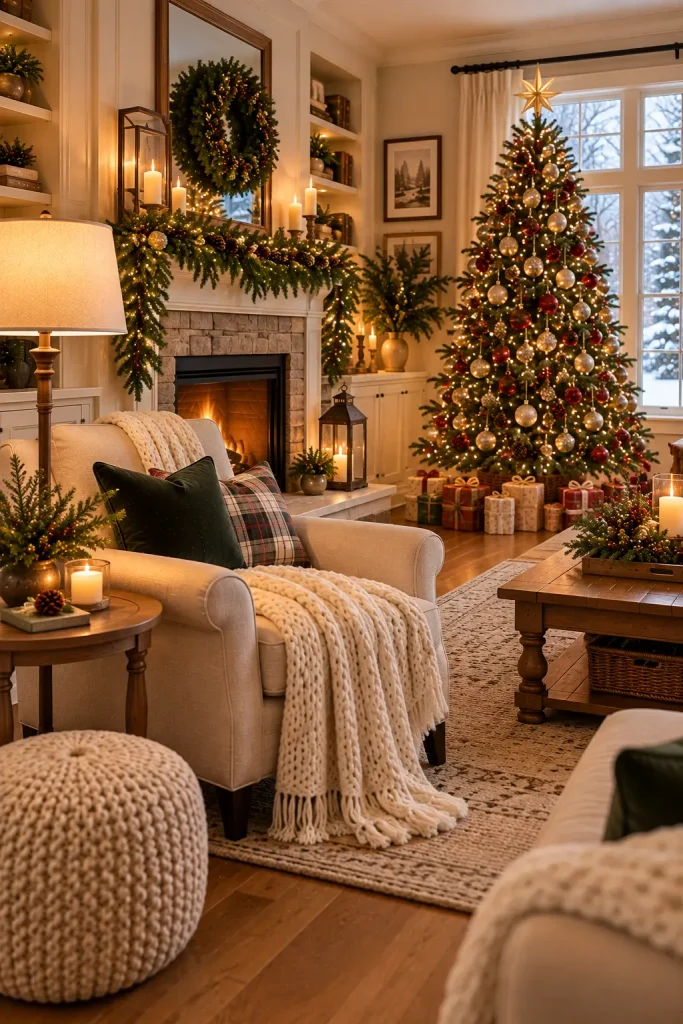
A Christmas living room can include a quiet corner designed specifically for relaxing. Place an upholstered chair near a floor lamp, add a soft throw, and position a small side table nearby for a mug or book. A small tabletop tree or evergreen branch can bring the holiday theme into the corner without competing with the main tree.
The result feels seasonal while remaining useful long after the holiday decorations are removed.
19. Decorate With Warm Brass Accents
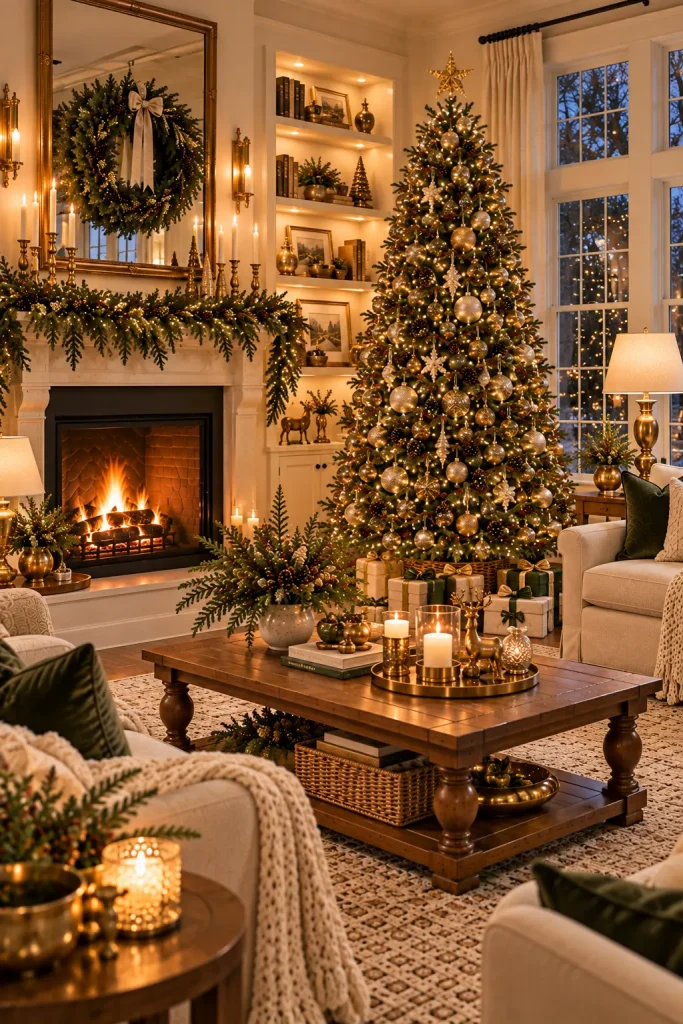
Warm brass can add a subtle festive glow without making the room feel overly formal. Use it in small doses through candleholders, picture frames, ornament finishes, lamp bases, or decorative trays.
Because brass catches both daylight and Christmas lights, even a few pieces can create visual warmth. Pair it with natural wood and cream rather than surrounding it with too many reflective finishes.
20. Style a Christmas Mantel With Asymmetry
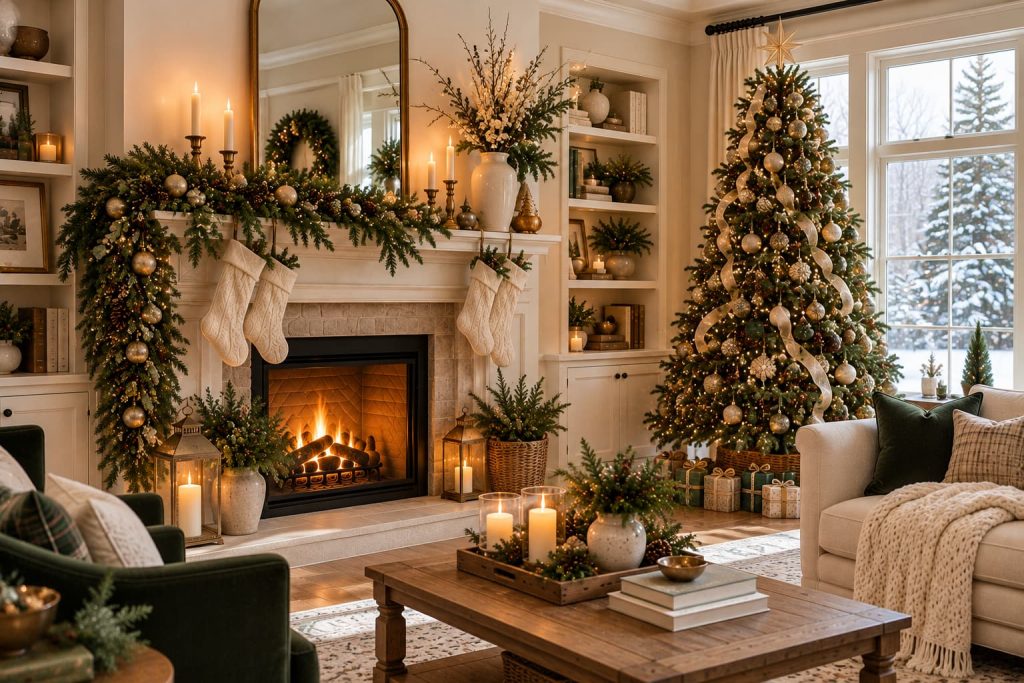
A perfectly symmetrical mantel can feel formal, but an asymmetrical arrangement often creates a more relaxed residential look. Place fuller greenery toward one side, then balance it visually with a taller candleholder, vase, or small decorative tree on the opposite side.
The goal isn’t equal weight on both sides; it’s visual balance.
21. Make the Fireplace Glow With Warm Wood
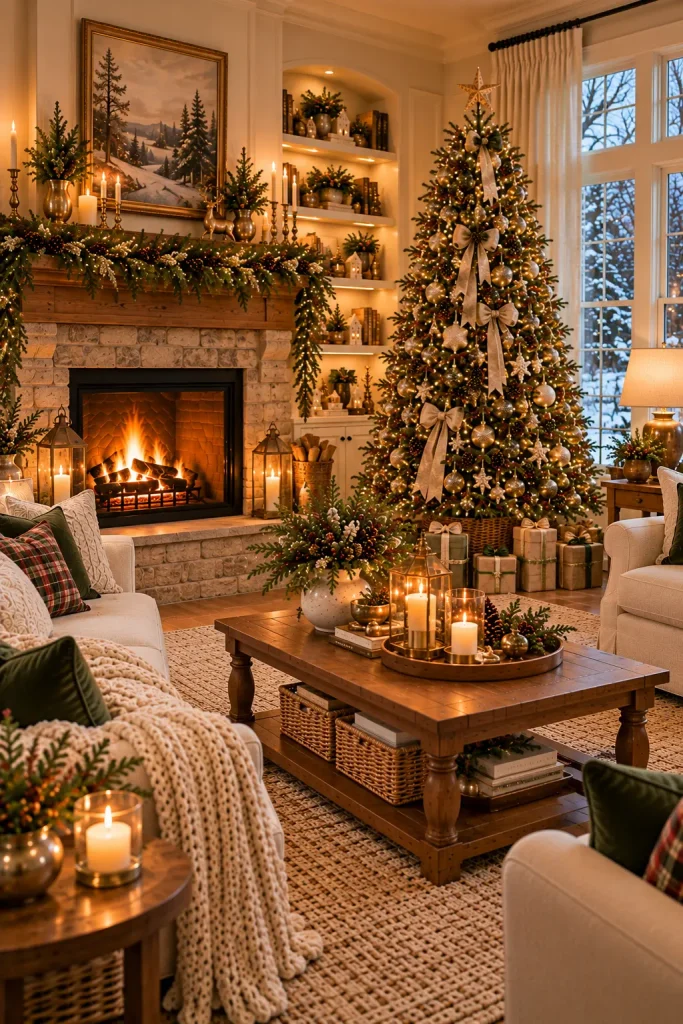
If the living room has a wood-burning or gas fireplace, the warm tones of the fire can become part of the Christmas palette. Combine the fireplace with natural wood furniture, evergreen branches, cream textiles, and warm-white tree lights.
For rooms without a usable fireplace, a carefully styled mantel with candles or flameless lighting can create a related visual effect without pretending to reproduce the actual fire.
22. Add a Small Christmas Tree to a Side Table
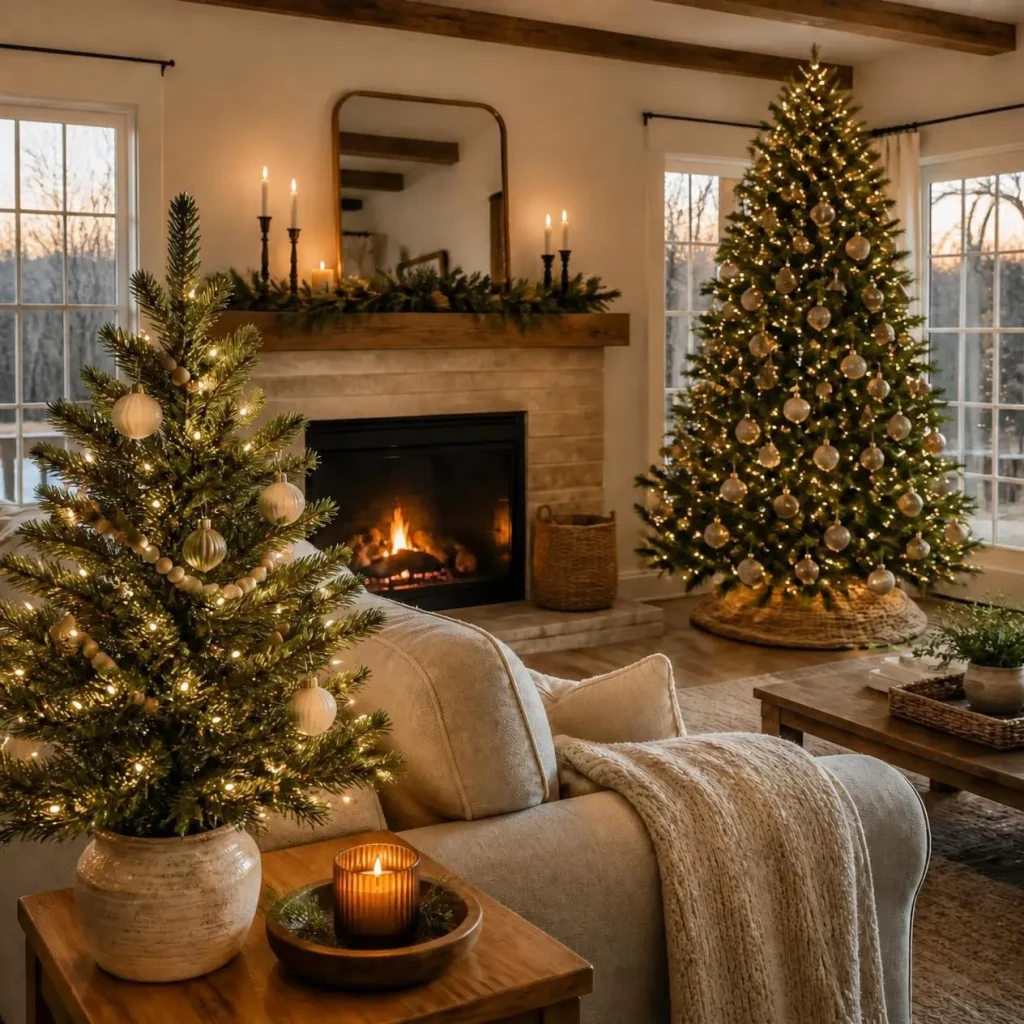
A miniature tabletop tree can repeat the Christmas theme in another part of the living room without requiring more floor space. Place it on a sturdy side table, console, or low cabinet where it can be seen from the main seating area.
Keep the small tree’s decorations related to the main tree but not necessarily identical. A simpler version with warm lights and a few ornaments often looks more intentional than a miniature copy of the larger tree.
23. Create a Neutral Scandinavian-Inspired Christmas Look
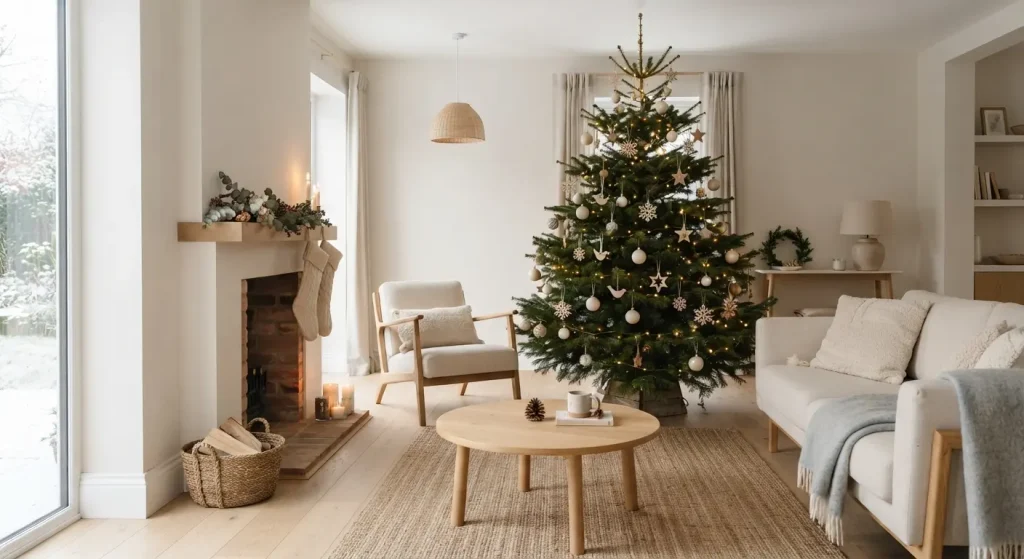
For a calmer holiday interior, combine pale wood, cream, soft gray, simple greenery, and minimal ornaments. Choose decorations with natural materials such as wood, paper, woven fibers, or matte ceramics.
The room should still feel unmistakably festive, but the decoration can remain restrained. This approach is especially useful when the everyday living room already has a light, minimal aesthetic.
24. Turn the Living Room Into a Candlelit Christmas Evening Scene
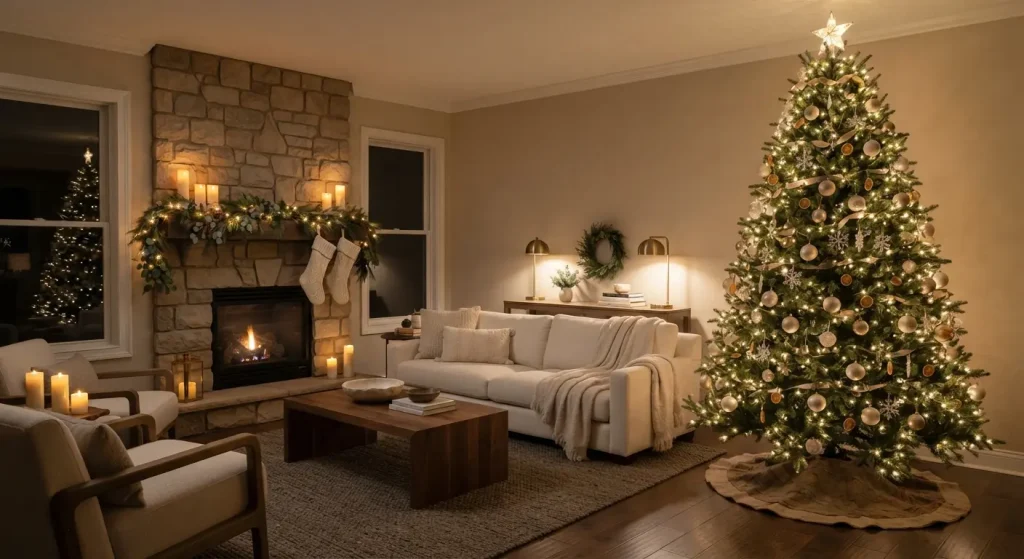
For an especially magical nighttime atmosphere, let warm lighting become the central decorating element. Keep overhead lighting low and rely on the glow of the tree, table lamps, fireplace, and carefully placed flameless candles.
The room doesn’t need dozens of decorations when the lighting is doing much of the visual work. Darker corners can actually make the illuminated areas feel warmer and more intimate.
25. Finish the Room With a Coordinated Holiday Palette
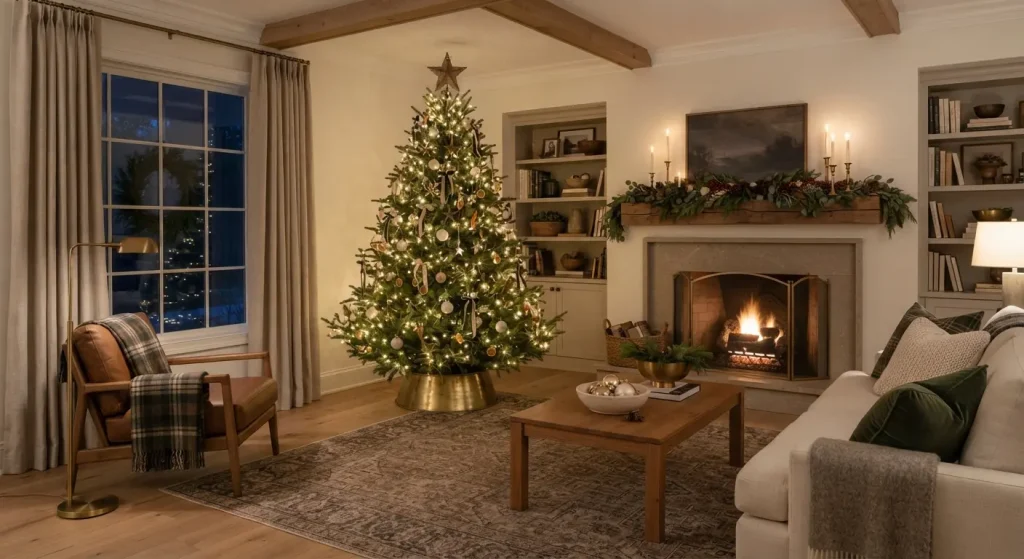
The final step is to look at the living room as one composition rather than as separate decorating projects. Choose three or four main colors and repeat them subtly through the tree, textiles, mantel, coffee table, and smaller accents.
A useful palette might combine forest green, warm cream, natural wood, and antique brass. Another could use cranberry, evergreen, ivory, and walnut. The exact colors matter less than creating relationships between them.
A simple finishing checklist:
- Repeat at least one accent color in several areas.
- Mix textures rather than relying only on color.
- Leave some surfaces intentionally quiet.
- Keep walking paths open.
- Make the Christmas tree a clear focal point.
- Check the room from the main seating position before adding more decorations.