30 Christmas Living Room Decor Ideas for a Warm and Welcoming Holiday Home
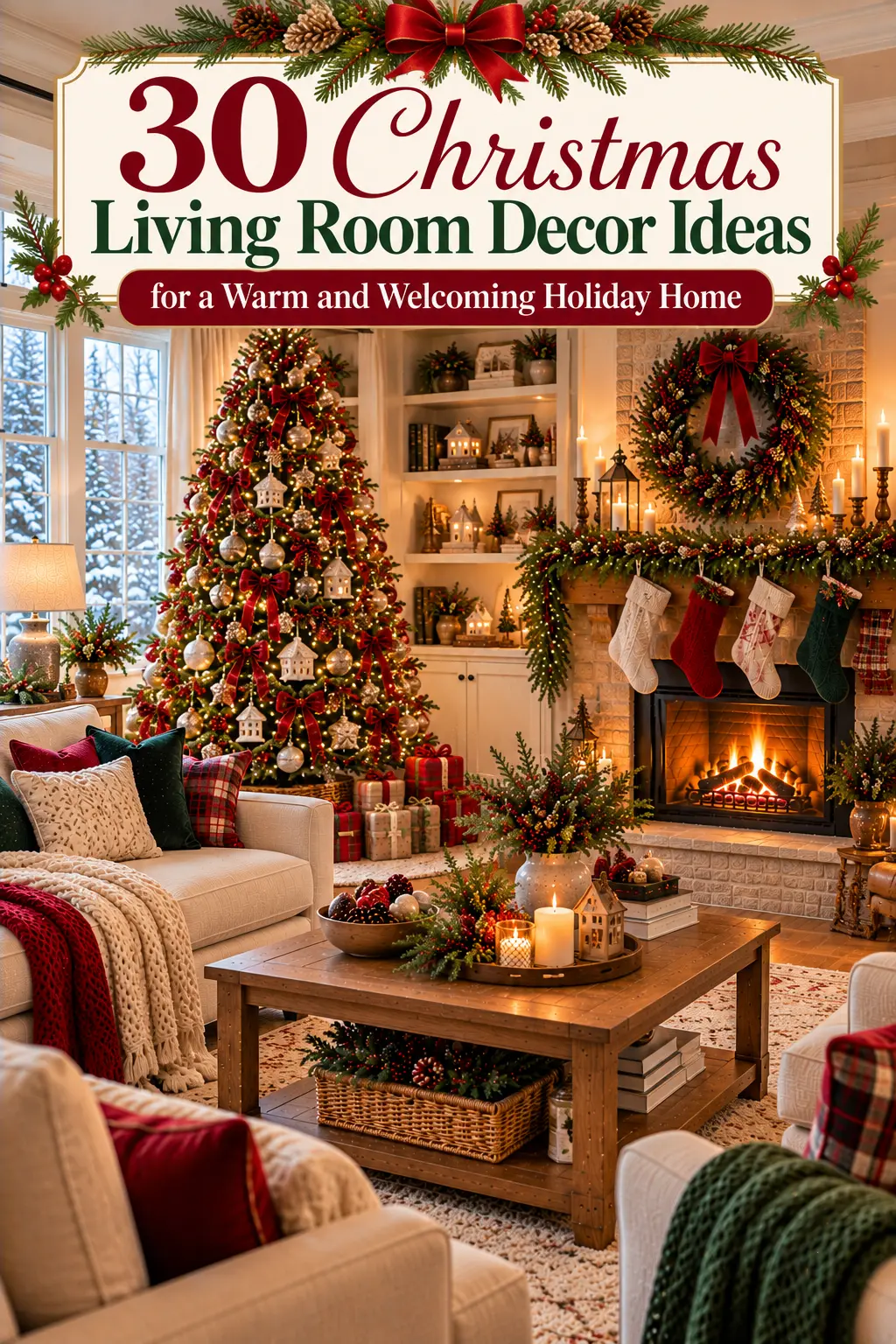
Christmas decorating can make an everyday living room feel noticeably warmer without requiring a complete seasonal makeover. The most inviting spaces usually combine a few thoughtful layers—soft lighting, natural greenery, comfortable textiles, festive ornaments, and personal details—rather than filling every surface with decorations. That makes it easier to create a holiday room that still feels like your home.
These Christmas living room decor ideas cover a range of styles, from classic red-and-green arrangements and traditional mantel displays to neutral Scandinavian-inspired spaces, small-apartment solutions, and more refined holiday interiors. You can use one idea as a focal point or combine several throughout the room. The key is to keep the arrangement balanced, preserve comfortable walking space, and let a few meaningful Christmas details do most of the visual work.
1. Anchor the Room With a Full Christmas Tree
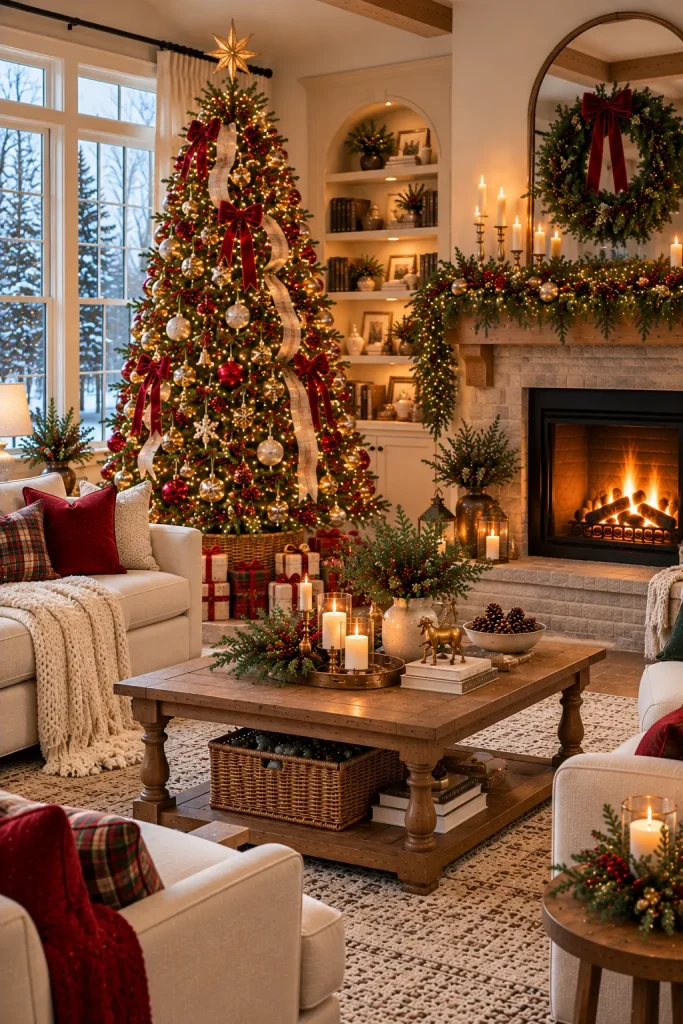
A full evergreen tree can become the natural focal point of the living room, especially when it is positioned where its shape can be appreciated from several angles. Use warm white lights as the foundation, then add ornaments in two or three related colors rather than trying to cover every branch with unrelated decorations. Red velvet ribbons, brass ornaments, wood details, or vintage-inspired glass pieces can each create a different personality.
Keep the tree visually connected to the rest of the room by repeating one or two of its colors in nearby pillows, throws, or mantel decorations. If the living room is compact, choose a narrower tree rather than squeezing a wide one into a busy traffic path.
2. Layer the Sofa With Plaid Christmas Pillows
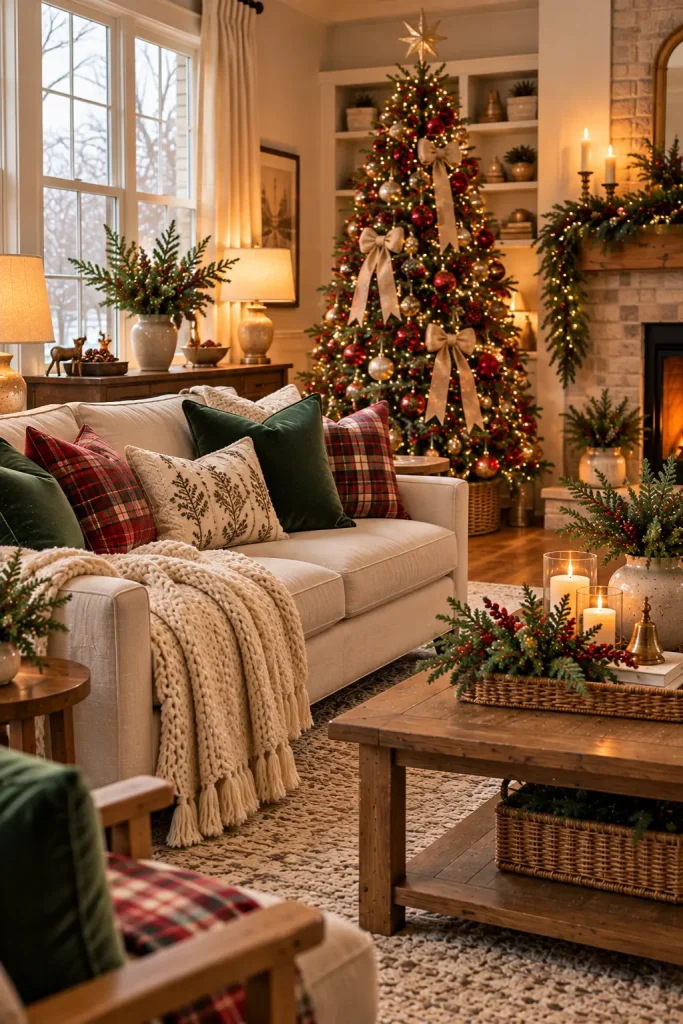
A few seasonal pillows can change the character of a neutral sofa without making the room feel overly decorated. Try combining one classic plaid pillow with solid velvet or woven cushions in complementary shades such as cream, forest green, burgundy, or warm brown. Varying texture is often more effective than adding many different patterns.
For a polished arrangement, keep the largest pillows toward the back and use smaller seasonal designs toward the front. This also makes it easy to remove the Christmas-specific pieces after the holiday while keeping the underlying arrangement intact.
Quick Tip: Repeat one pillow color somewhere else in the room so the sofa doesn’t look visually disconnected from the tree.
3. Dress the Mantel With Evergreen Garland
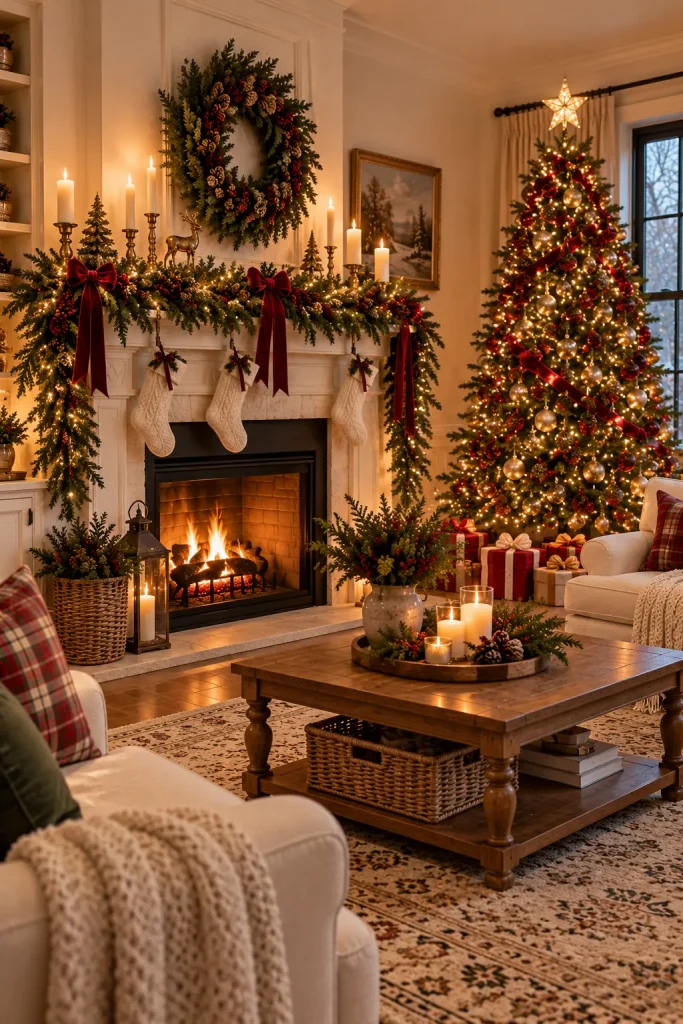
A fireplace mantel offers a natural horizontal line for seasonal greenery. Drape an evergreen garland loosely across the mantel rather than arranging it in a perfectly straight line. Add a few pinecones, small brass candleholders, or simple ribbon accents to give the arrangement depth without hiding the architectural details of the fireplace.
If the mantel is narrow, keep the greenery relatively shallow and let one end fall slightly lower than the other. For a fuller traditional look, combine several types of greenery; for a simpler room, one restrained evergreen variety can be enough.
4. Create a Cozy Reading Corner
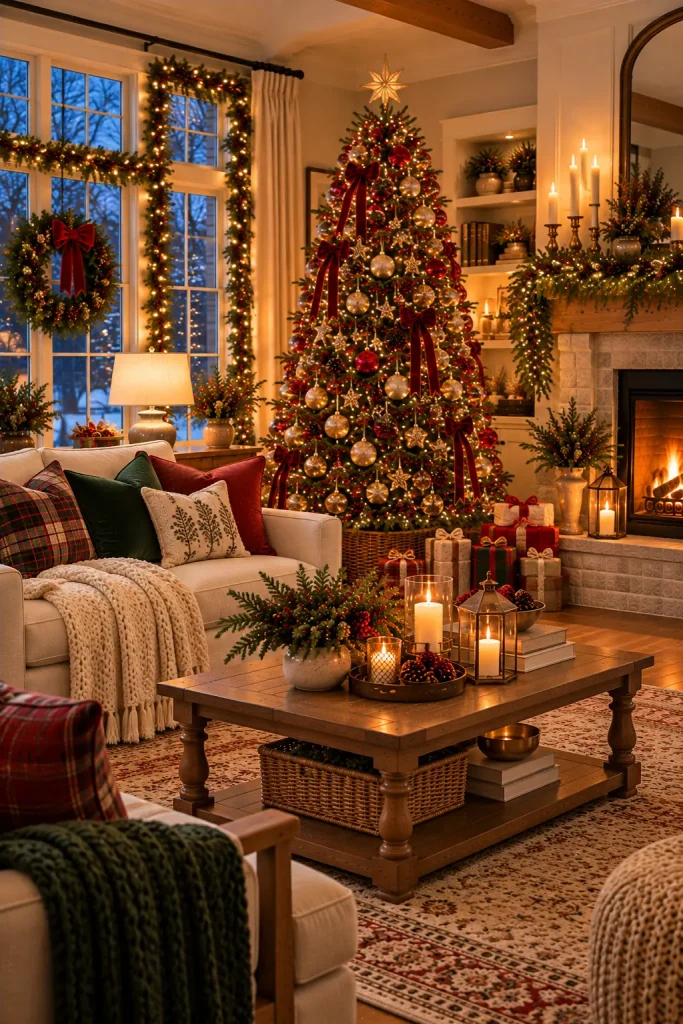
A Christmas living room doesn’t need every decoration to surround the tree. A comfortable reading chair can become a quiet seasonal vignette with a chunky knit throw, small side table, warm lamp, and miniature evergreen arrangement. This works especially well in larger living rooms where an empty corner might otherwise feel disconnected.
Choose seasonal accents that coordinate with the main room instead of creating a completely separate color scheme. A plaid blanket or small red pillow can provide enough Christmas character while keeping the corner useful throughout the winter.
5. Add Warm White String Lights Beyond the Tree
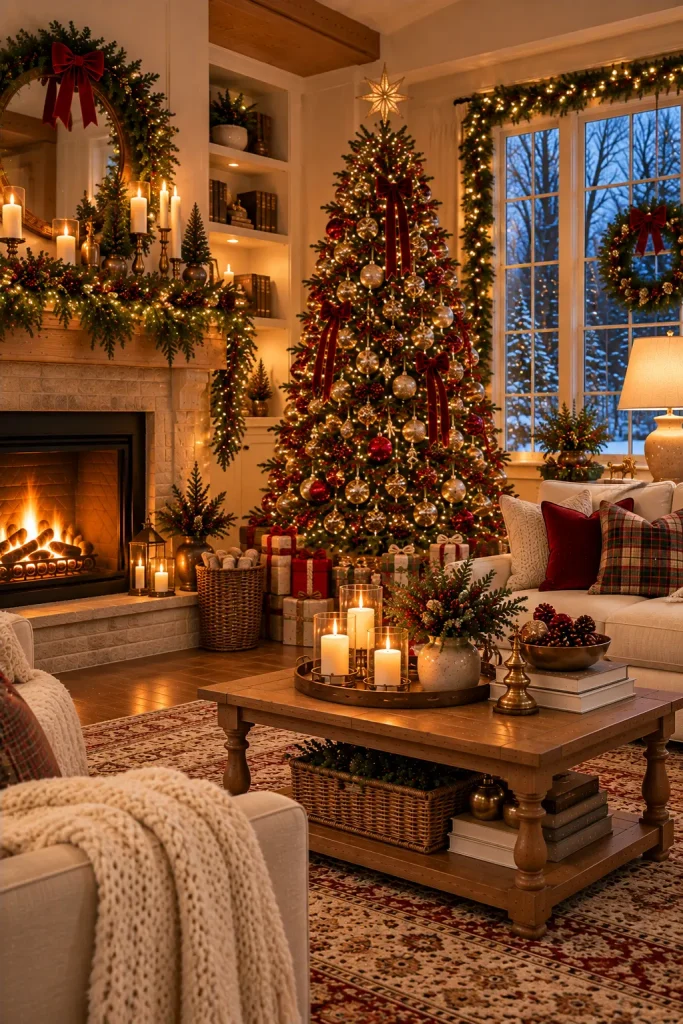
Christmas lights can create atmosphere throughout the room when they’re used selectively beyond the tree. A delicate strand along a mantel, inside a glass vase, around a window frame, or across a substantial greenery arrangement can introduce small points of warm light.
The goal is to supplement the main tree lighting rather than compete with it. Warm white bulbs generally work particularly well with natural wood, cream textiles, greenery, and brass accents because they reinforce the room’s cozy palette.
6. Use a Red-and-Green Traditional Palette
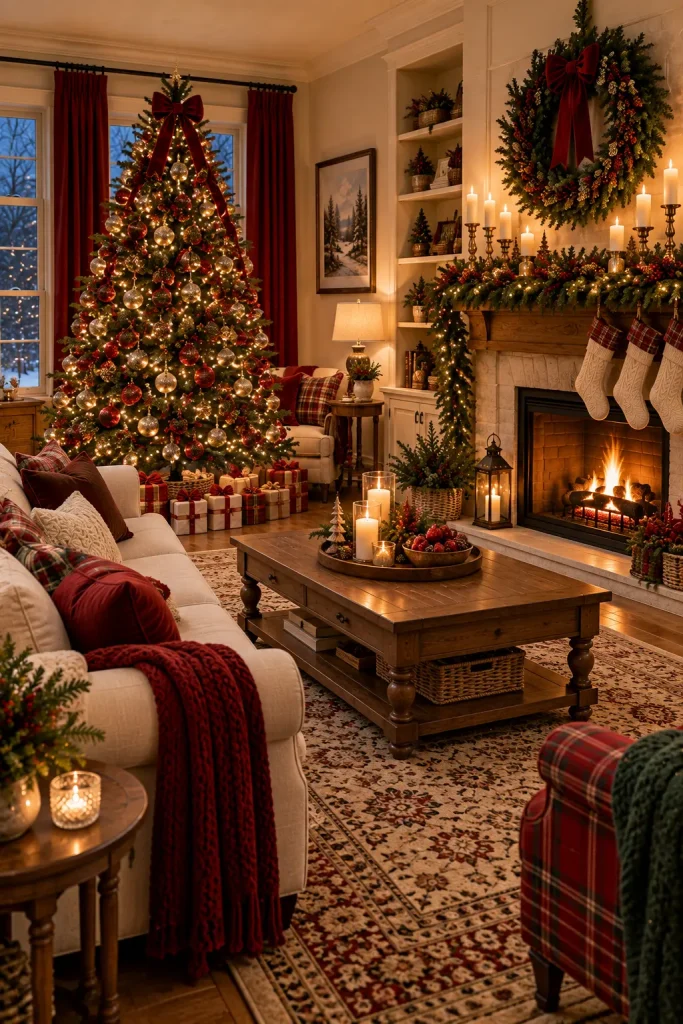
Classic red and green remains a dependable Christmas combination because the colors immediately establish a traditional holiday mood. Instead of using bright versions of both colors everywhere, create a more comfortable look with deep evergreen, muted cranberry, warm cream, and natural wood.
Carry the palette across several layers: ornaments on the tree, ribbon on the mantel, a plaid throw on the sofa, and perhaps a small bowl of seasonal greenery on the coffee table. Repeating the palette in small amounts makes the room feel coordinated rather than themed.
7. Keep the Christmas Decor Neutral and Natural
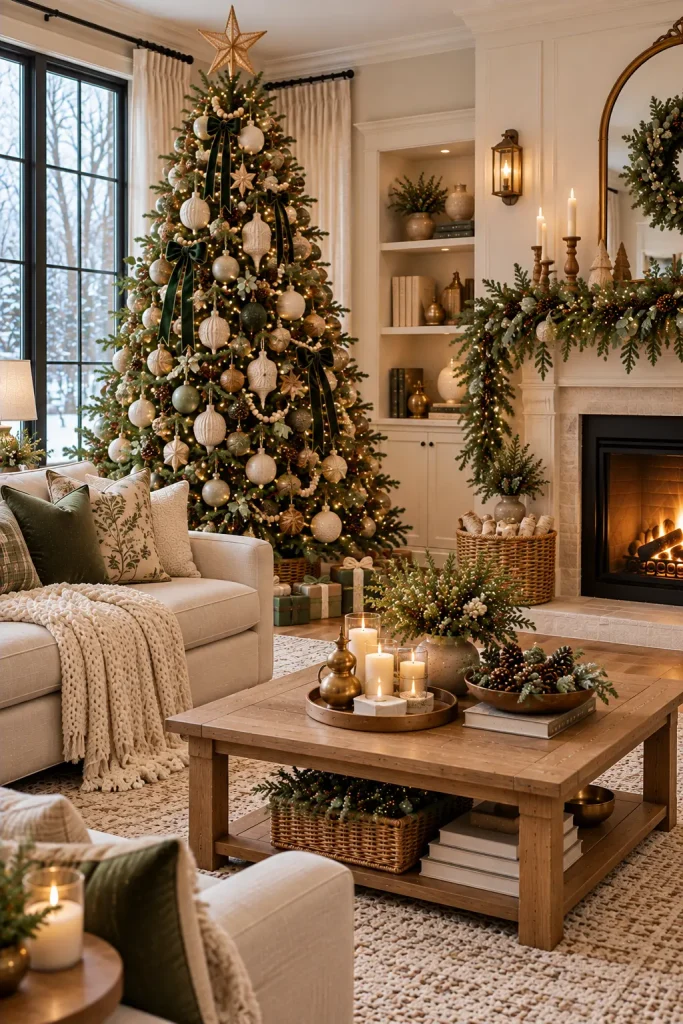
For a calmer holiday interior, build the room around cream, taupe, soft brown, muted green, and natural wood. Use simple ornaments made from wood, woven materials, matte ceramic, or softly colored glass. The result feels festive without relying on strong red or metallic colors.
This approach is particularly useful when the existing living room already has a neutral foundation. Rather than replacing your everyday decor, add seasonal greenery, soft lights, and a handful of understated ornaments.
8. Hang Stockings in a Simple Row
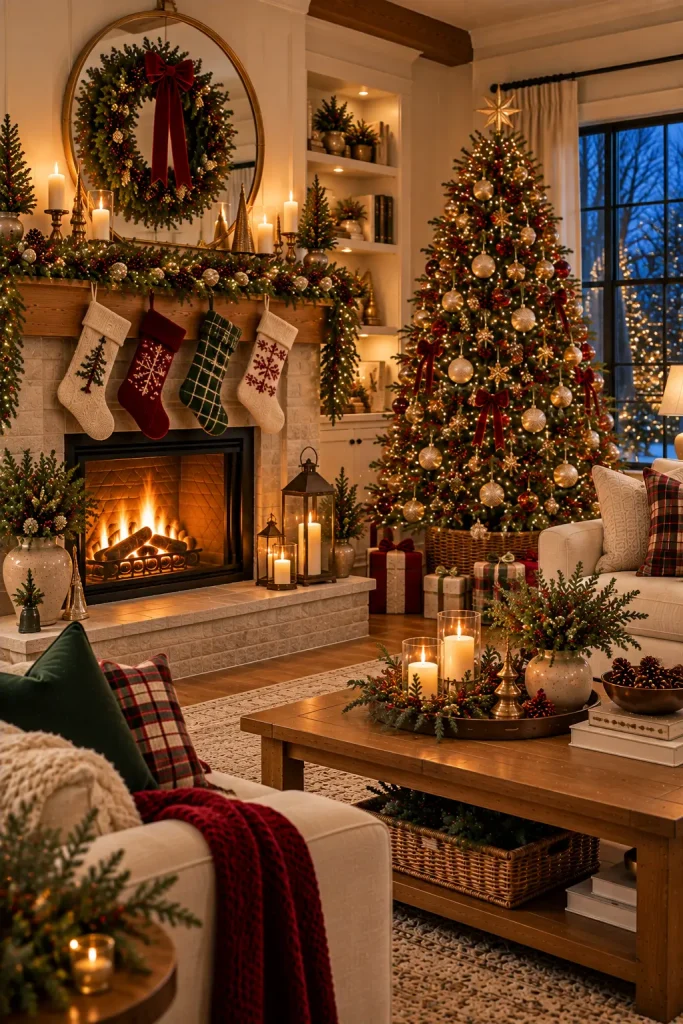
Stockings can make a fireplace feel personal without requiring a complicated mantel arrangement. Hang matching or coordinated stockings in a clean row, leaving enough space between them to keep the display visually readable. Linen, wool, cable-knit, velvet, and traditional woven stockings can all work depending on the room’s character.
For a family living room, personalize stockings with subtle initials or different textures while maintaining a common color palette. If you don’t have a fireplace, a sturdy console, media cabinet, or wall-mounted rail can provide an alternative location.
9. Bring in Natural Pinecones and Greenery
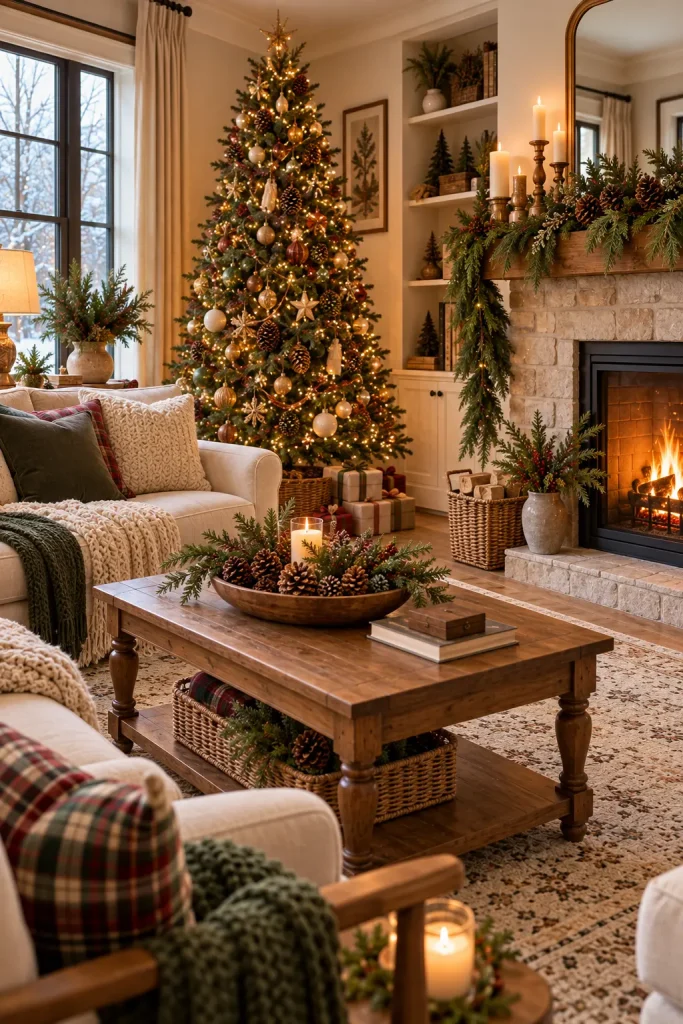
Natural elements can make holiday decorating feel less manufactured. Pinecones, cedar branches, fir sprigs, eucalyptus, and small pieces of natural wood can be incorporated into bowls, trays, garlands, or tabletop arrangements.
Use these materials sparingly around the room so they repeat without becoming visually dominant. A wooden bowl filled with pinecones on the coffee table can echo the natural details in the tree and mantel while adding texture at a lower level.
10. Style the Coffee Table With a Festive Tray
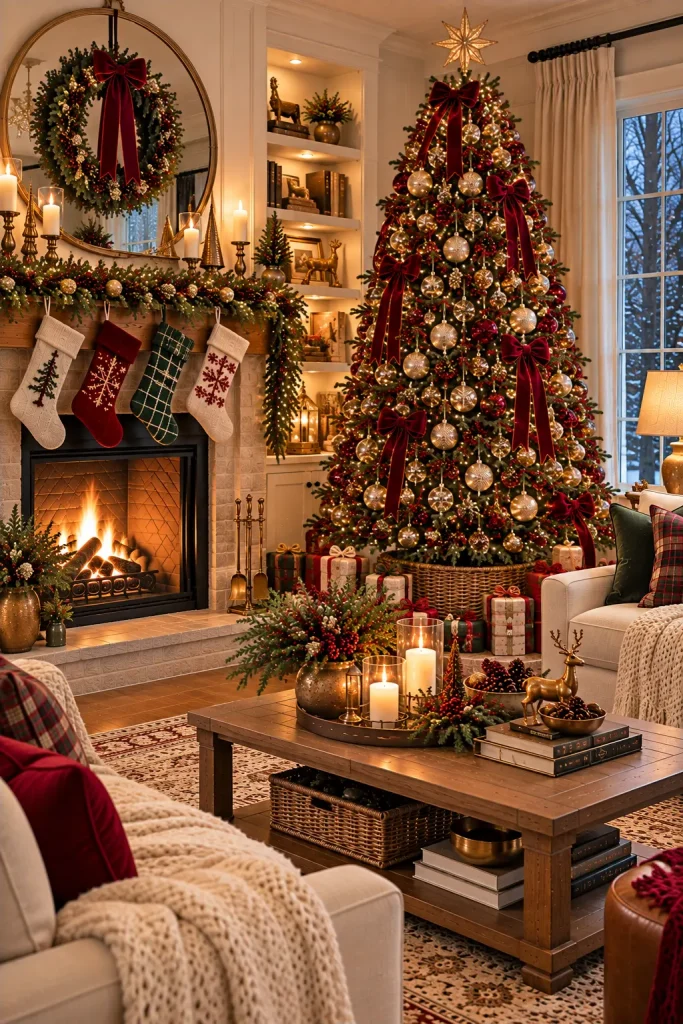
A tray makes coffee-table decorating easier to organize and move when the surface is needed. Start with a low tray, then add a candle, small evergreen arrangement, ceramic bowl, and a few pinecones or ornaments. Keep the arrangement low enough that it doesn’t block conversation across the room.
For everyday practicality, leave a clear section of the table available for drinks, books, and remote controls. A seasonal centerpiece should support the room rather than make the furniture difficult to use.
11. Add Velvet Ribbon to the Tree
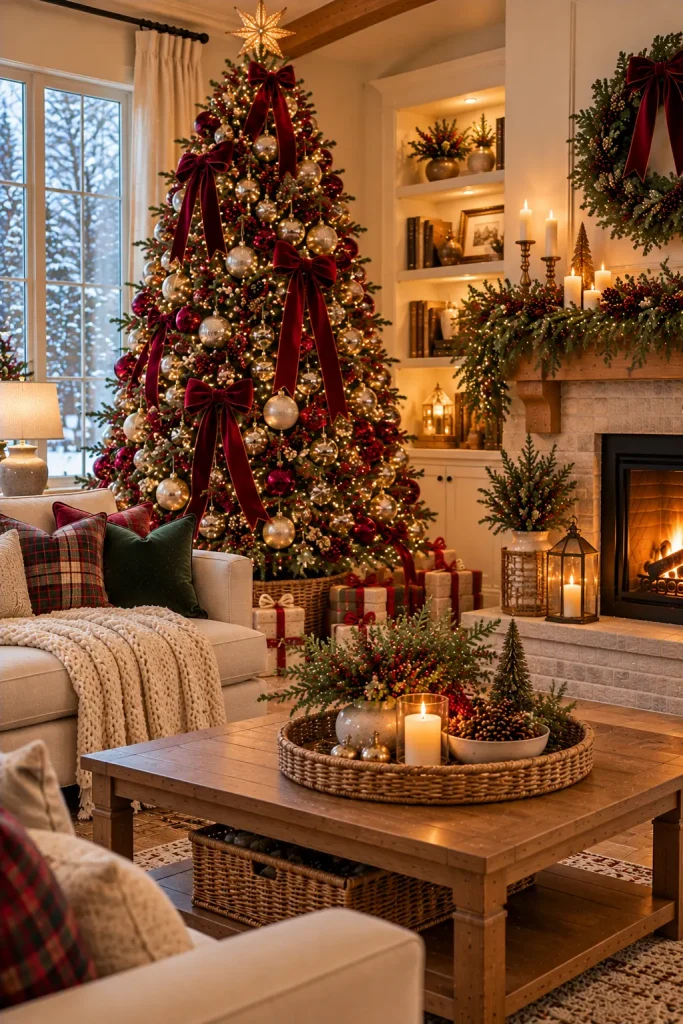
Velvet ribbon introduces softness and visual depth to a Christmas tree, particularly when the rest of the room includes upholstered furniture or plush textiles. Instead of wrapping the ribbon tightly around every branch, allow broad sections to fold naturally through the tree.
Deep burgundy, forest green, cream, or muted gold can each work with different palettes. For a traditional room, use ribbon alongside classic ornaments; for a more refined space, choose one substantial ribbon color and let its texture provide most of the drama.
12. Create a Scandinavian-Inspired Christmas Corner
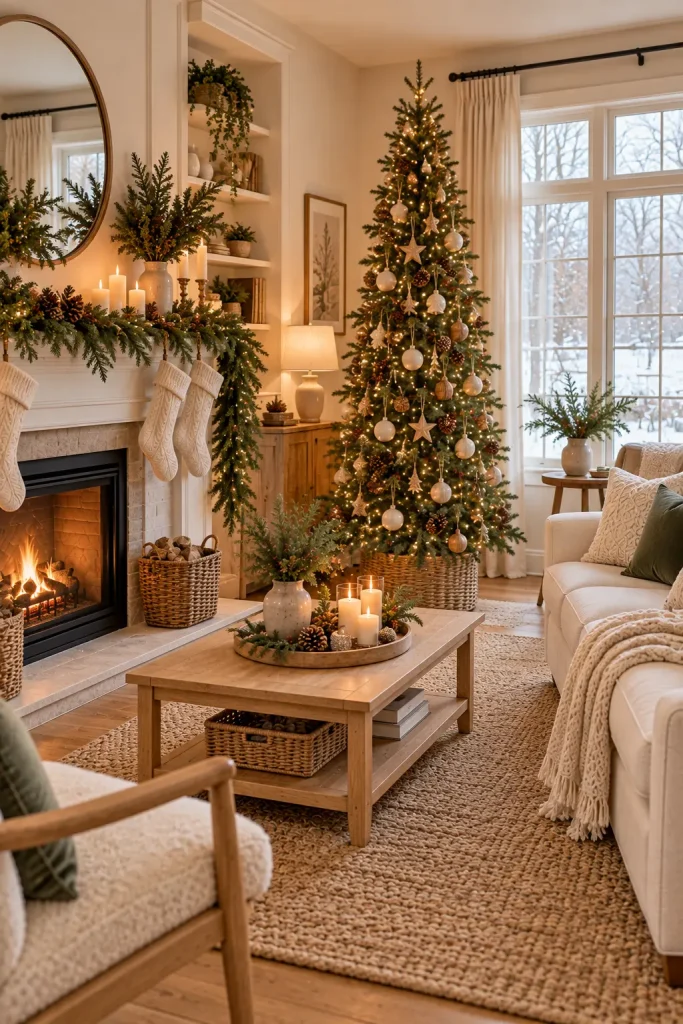
A Scandinavian-inspired holiday look works through restraint: pale wood, cream textiles, simple greenery, warm lights, and a limited number of decorations. Instead of covering every surface, choose a few well-spaced seasonal elements that allow the architecture and furniture to remain visible.
This approach can be especially effective in small living rooms because visual simplicity helps preserve a sense of openness. Choose a compact tree, simple paper or wood ornaments, and a soft neutral throw for a cozy result without excessive visual weight.
13. Decorate the Windows With Simple Greenery
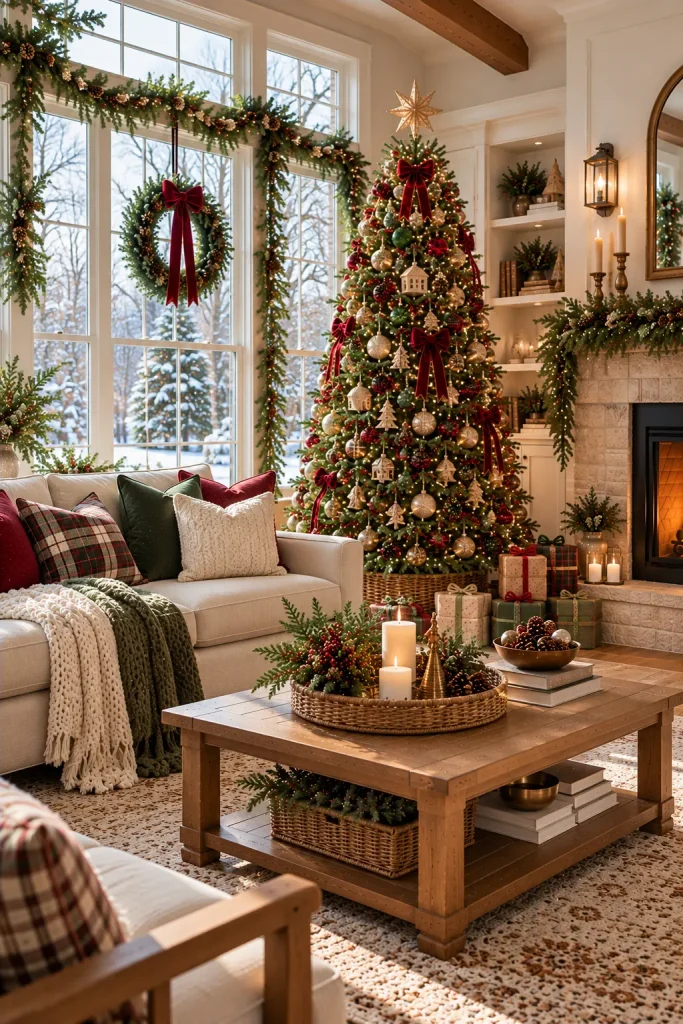
Windows can become part of the holiday composition without being covered in elaborate decorations. A small evergreen garland across the top, a wreath centered on the glass, or two simple hanging branches can frame the view and bring greenery into an otherwise overlooked area.
Keep window treatments functional. If the curtains need to open daily, use lightweight decorations that won’t interfere with movement. The best placement usually complements the window’s proportions instead of hiding too much natural light.
14. Build a Cozy Christmas Fireplace Scene
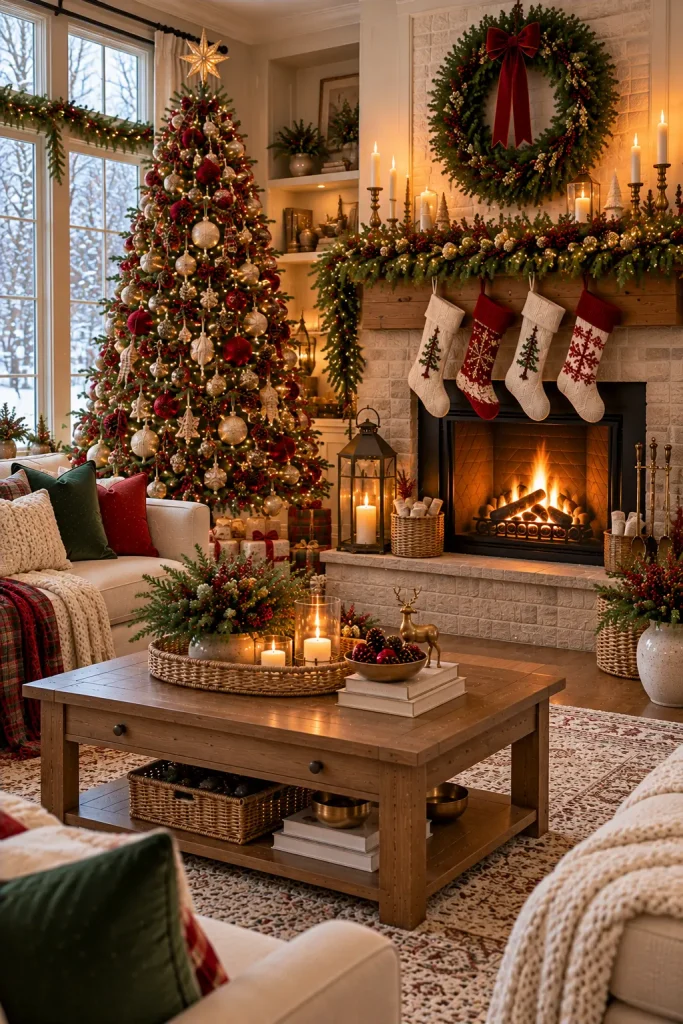
Make the fireplace feel like the heart of the room by combining several warm layers: evergreen garland, stockings, candles, a few ornaments, and a comfortable seating arrangement facing the hearth. If the fireplace is functional, keep decorative materials safely clear of heat sources and follow the manufacturer’s guidance.
For a more relaxed look, don’t make every mantel item symmetrical. One taller element on one side and a lower cluster on the other can create balance while still feeling natural.
15. Mix Vintage-Inspired Ornaments With Modern Furniture
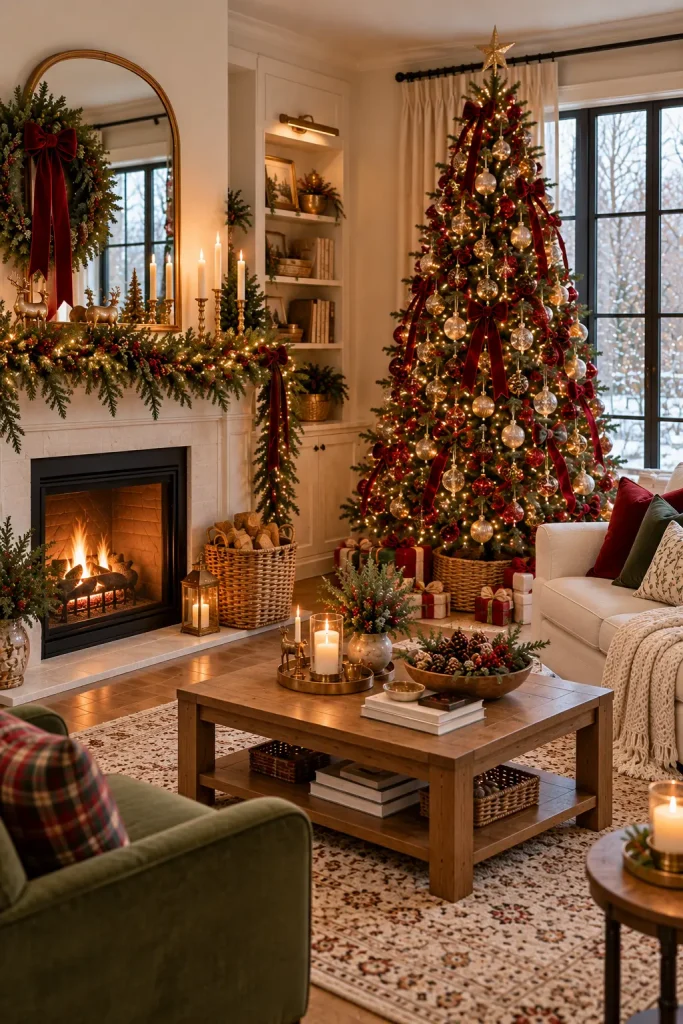
Christmas decorations don’t have to match the style of the furniture exactly. Vintage-inspired glass ornaments, antique-looking brass details, and classic ribbon can add character to a contemporary sofa and clean-lined coffee table.
The trick is repetition. Pick one vintage-inspired finish or color and repeat it in a few places so it feels intentional. Keep the furniture relatively simple, allowing the ornaments to provide the nostalgic layer without turning the entire room into a period display.
16. Use a Mini Christmas Tree on a Side Table
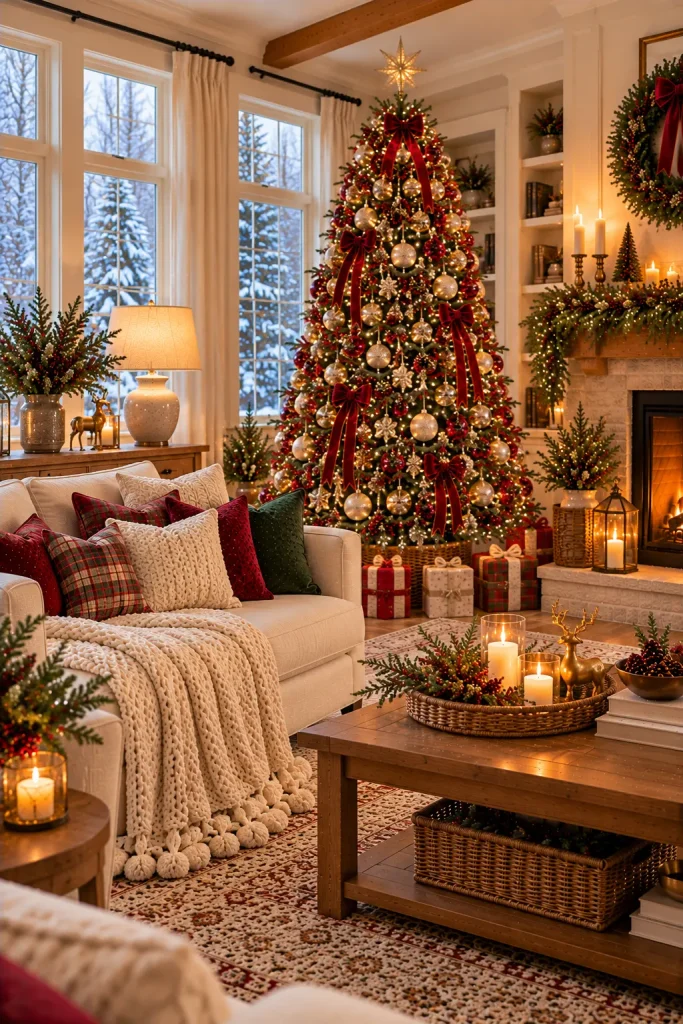
A small tree can bring Christmas character into a living room without requiring the space or commitment of a full-size tree. Place a tabletop evergreen on a side table, cabinet, or sturdy stool and decorate it with a few lightweight ornaments and warm lights.
This is useful for apartments, compact living rooms, or homes where a large tree would interfere with circulation. Keep the base stable and choose a container that complements the existing furniture.
Best For: Small living rooms, apartments, reading corners, and secondary seating areas.
17. Add a Chunky Knit Throw to the Sofa
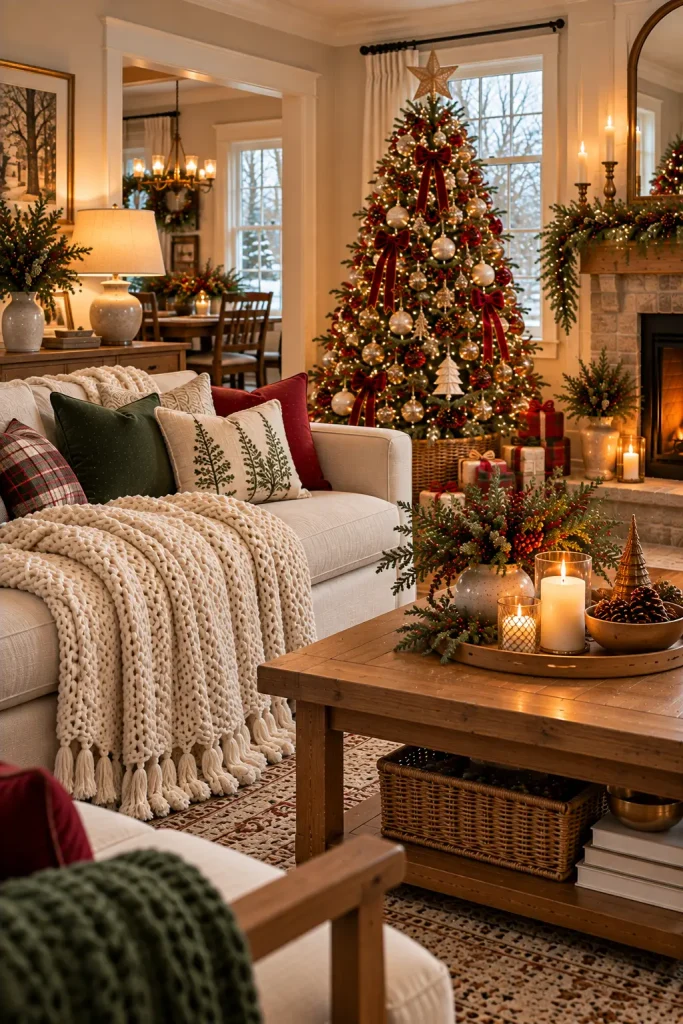
One substantial knit throw can make a living room feel noticeably warmer during the holiday season. Drape it casually over the arm or corner of the sofa rather than folding it too precisely. Cream, oatmeal, muted green, or warm red can all work depending on the existing palette.
Pair the blanket with one or two textured pillows to create a layered winter look. Because the throw remains useful after Christmas, it is also an easy way to make seasonal decorating feel practical.
18. Create a Moody Christmas Living Room
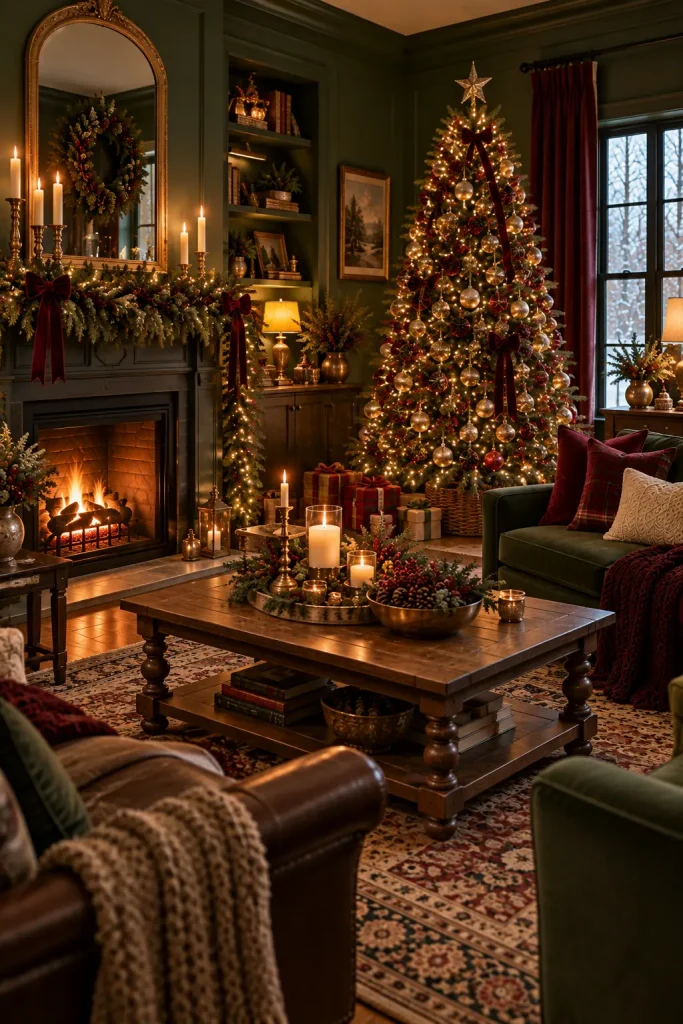
Not every holiday room needs to be bright and pale. Deep green walls, dark wood, burgundy textiles, aged brass, and warm low lighting can create a more intimate Christmas atmosphere.
The important part is balancing darker finishes with enough illumination. Use warm tree lights, table lamps, candles, and fireplace light rather than relying on one overhead fixture. Reflective ornaments can also add small points of brightness against deeper colors.
19. Hang a Large Wreath Above the Fireplace
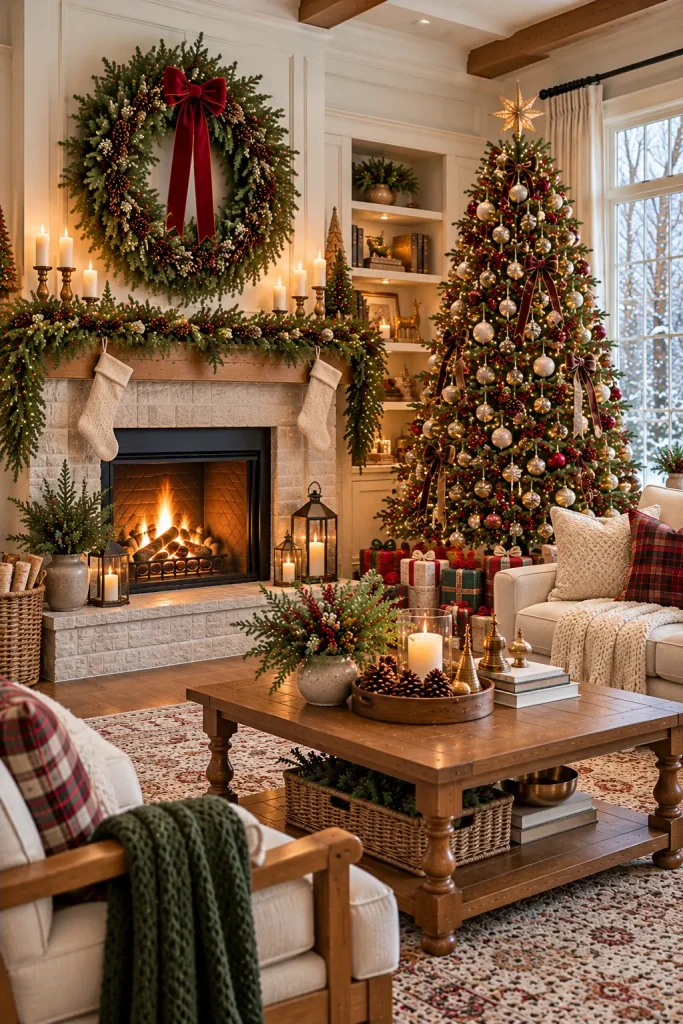
A large natural wreath can provide a strong focal point above a fireplace without requiring an elaborate mantel arrangement. Choose a wreath sized appropriately to the fireplace and surrounding wall, then keep the mantel below relatively restrained.
A simple wreath can also work in a more contemporary room. Look for natural asymmetry, varied evergreen textures, and a restrained ribbon rather than an oversized bow if you want a less traditional appearance.
20. Style Built-In Shelves With Small Holiday Details
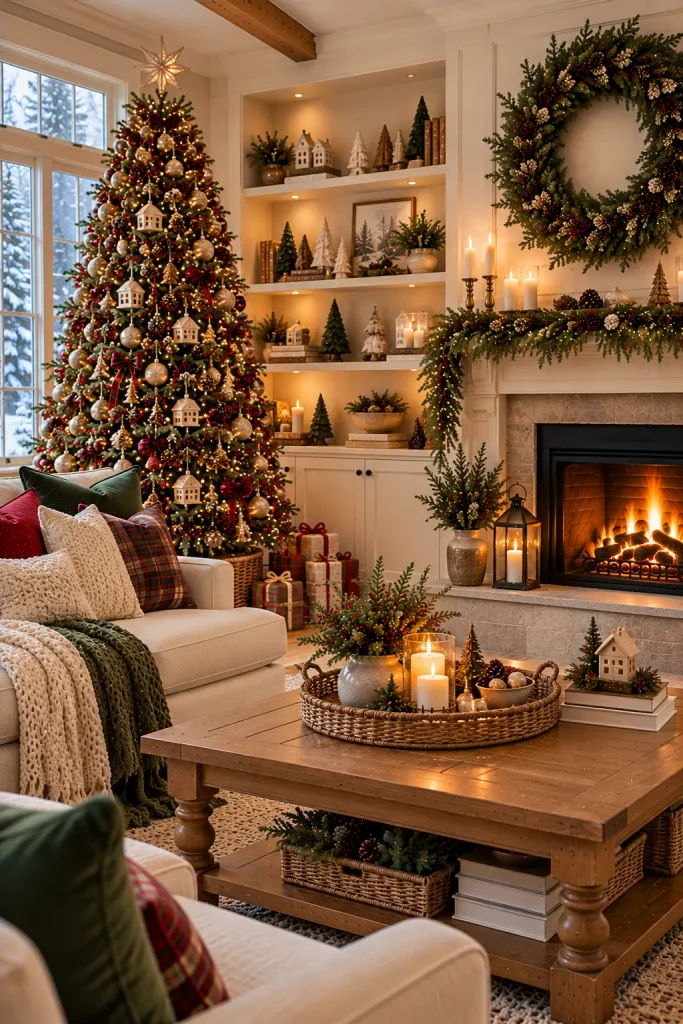
Built-in shelves offer multiple levels for distributing Christmas decorations. Instead of filling every shelf, select a few meaningful objects: a small ceramic tree, framed seasonal artwork, evergreen sprigs, wooden houses, candles, or a few ornaments displayed in a bowl.
Leave some negative space around the objects. The empty areas help the seasonal pieces stand out and prevent the shelving from becoming visually heavy.
21. Use Brass and Gold Accents Sparingly
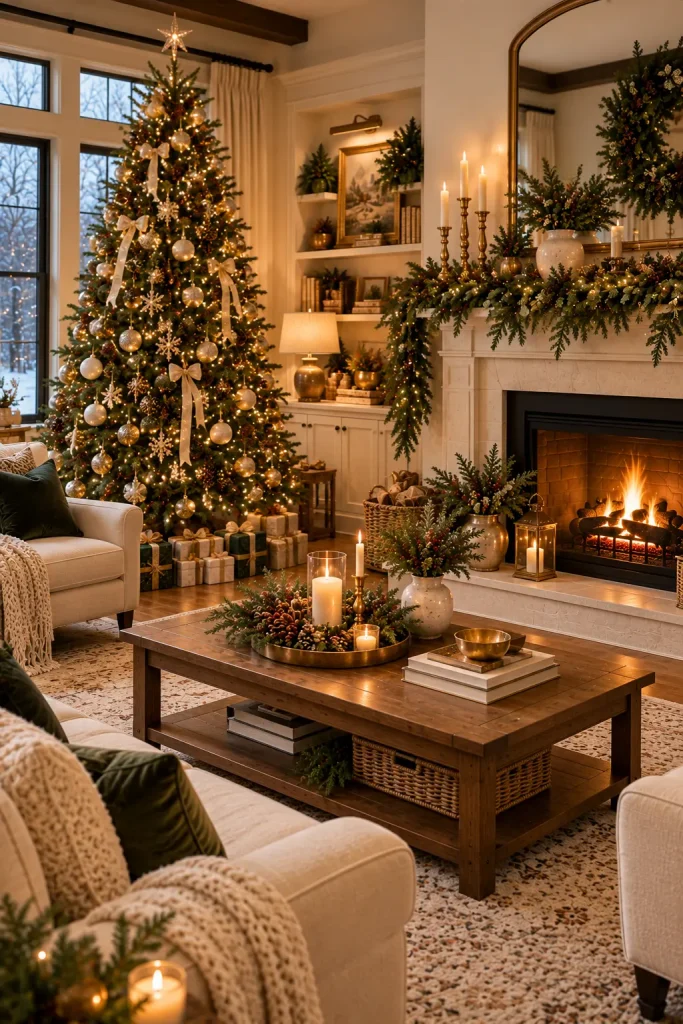
A few warm metallic details can catch Christmas lights and add visual sparkle without making the room feel overly formal. Brass candleholders, gold-toned ornaments, a small decorative bowl, or metallic ribbon can be enough.
Keep the finish consistent across a few areas rather than scattering unrelated metallic colors throughout the room. Warm brass tends to work especially well with evergreen, cream, walnut, oak, and deep red.
Do: Repeat the metallic finish in two or three small areas.
Don’t: Cover every surface with shiny decorations.
22. Create a Christmas Village Display
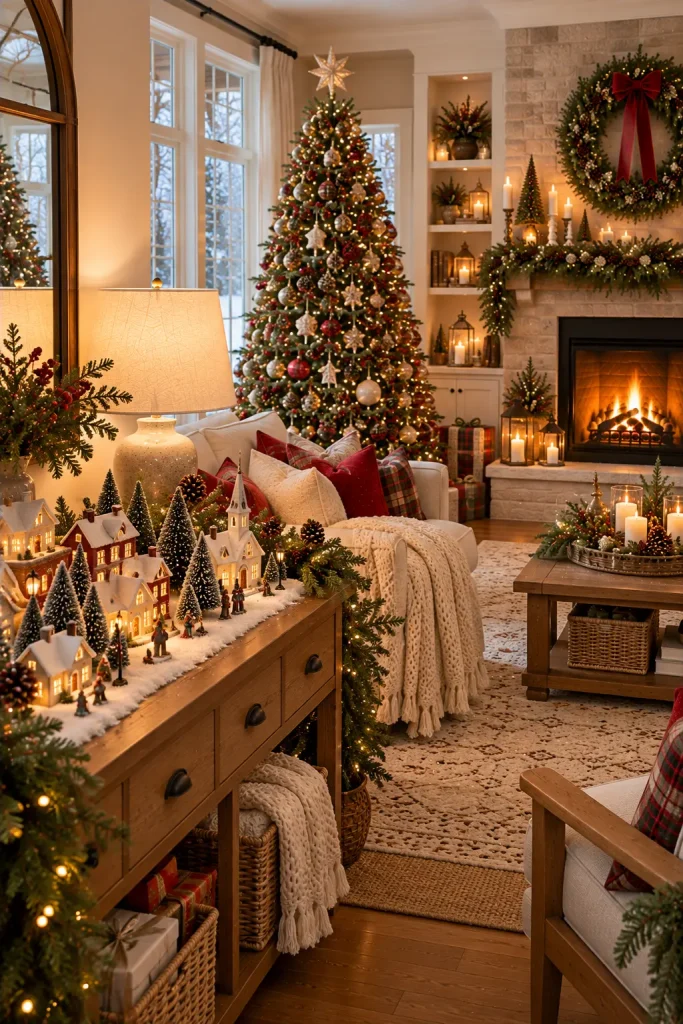
A small Christmas village can become a nostalgic focal point when arranged on a mantel, console, or low shelf. Keep the buildings within a consistent visual scale and add a restrained layer of faux snow, miniature evergreens, or warm micro-lights.
For a more modern room, choose simple neutral-colored village pieces rather than brightly painted designs. This allows the display to feel seasonal while still coordinating with contemporary furniture.
23. Add a Soft Holiday Rug Layer
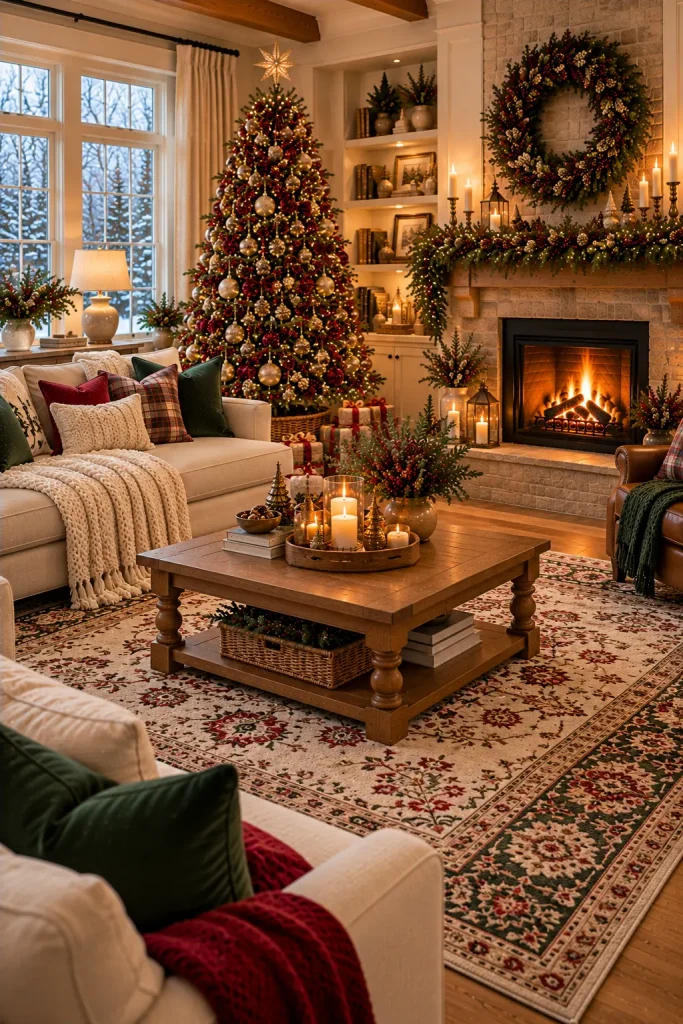
A rug can help visually anchor the seating area while adding warmth underfoot during winter. For Christmas, consider a subtle plaid, traditional pattern, muted red design, or textured neutral rug rather than a highly themed seasonal print.
If you already have a large everyday rug, a smaller seasonal layer can sometimes work in front of the fireplace or beneath a coffee table. Make sure the edges remain secure and don’t interfere with doors or walking paths.
24. Decorate With Dried Orange Slices and Cinnamon
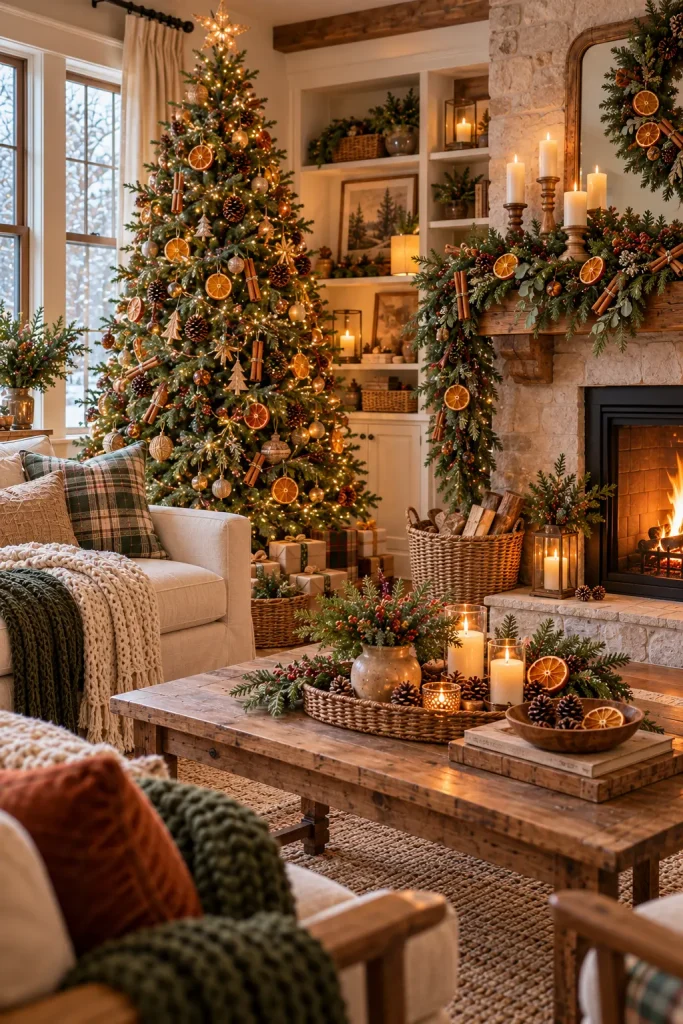
Dried citrus and cinnamon can introduce a warm, handmade character to Christmas decorating. String dried orange slices into garlands, place them in a decorative bowl, or use a few pieces as accents around greenery. Cinnamon sticks can add another natural texture and reinforce the cozy seasonal mood.
Combine these details with wood, linen, pinecones, and warm lights for a rustic arrangement. Keep edible ingredients away from heat sources and replace decorative pieces if they become damp or damaged.
25. Make a Small Apartment Christmas Feel Special
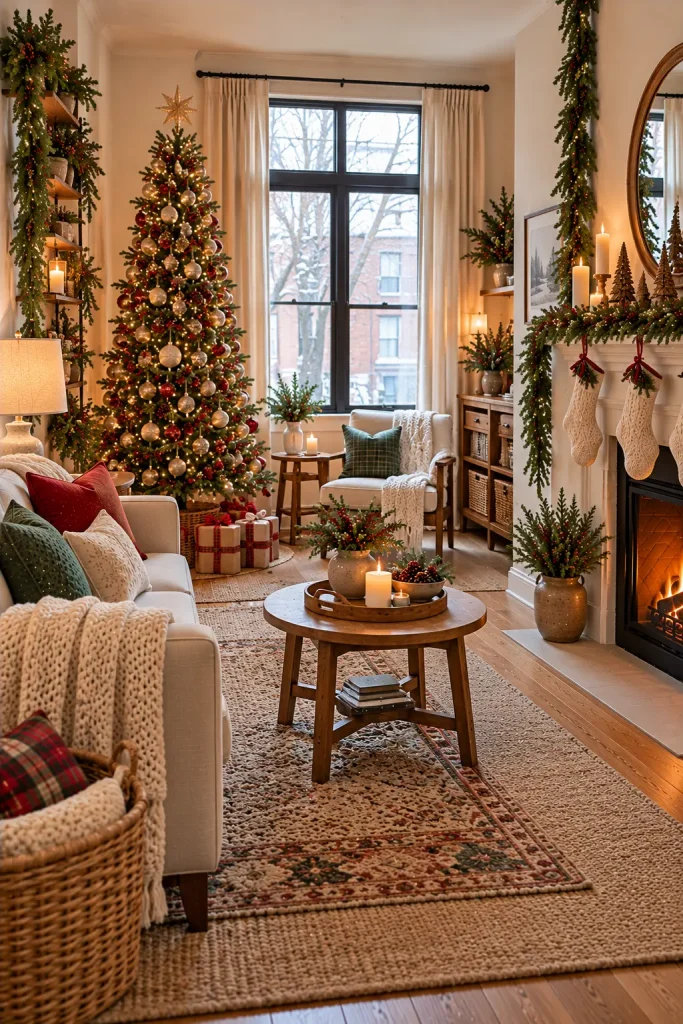
A small apartment doesn’t need a full-size tree and multiple large displays to feel festive. Use a slim tree, wall-mounted wreath, tabletop greenery, compact stockings, and warm lighting to distribute decoration vertically without consuming too much floor space.
Keep the center of the room open and choose furniture with clear visual lines. A few coordinated decorations will often feel more intentional than trying to recreate the layered look of a much larger home.
26. Create a Family-Friendly Christmas Setup
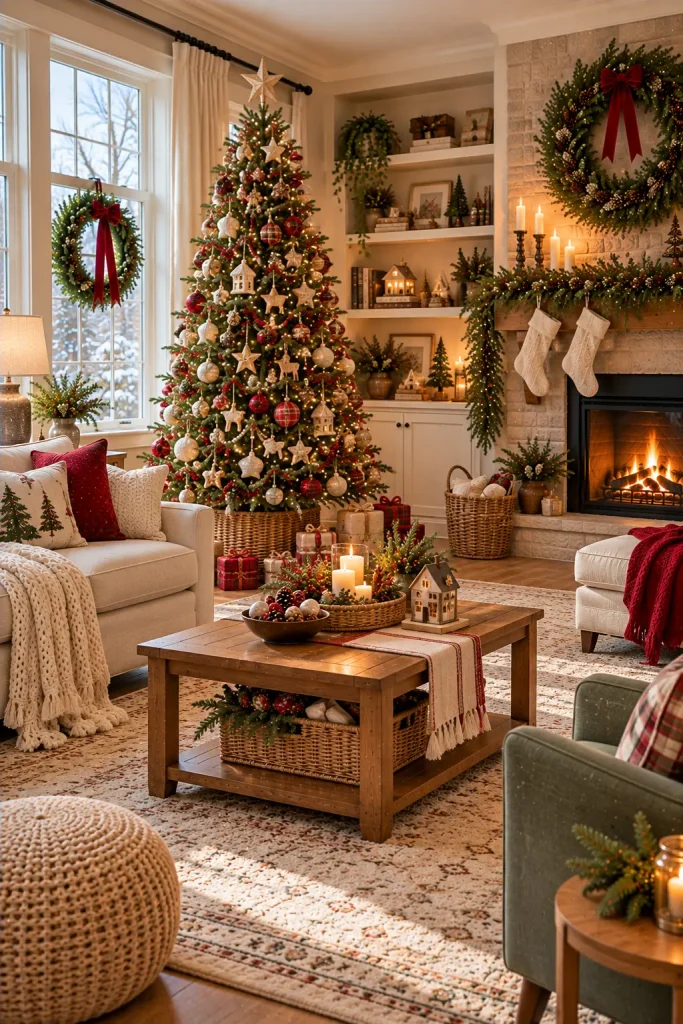
A family living room needs decorations that look festive while still allowing people to use the space comfortably. Place fragile ornaments higher on the tree, keep delicate tabletop pieces away from busy areas, and leave clear paths between seating, the tree, and the main entrance.
Soft washable throws, sturdy baskets, wooden ornaments, and durable textiles can make the room feel warm without requiring constant rearrangement. The best family setup supports everyday activity rather than turning the living room into a display that nobody can touch.
27. Use Candlelight for a Softer Evening Atmosphere
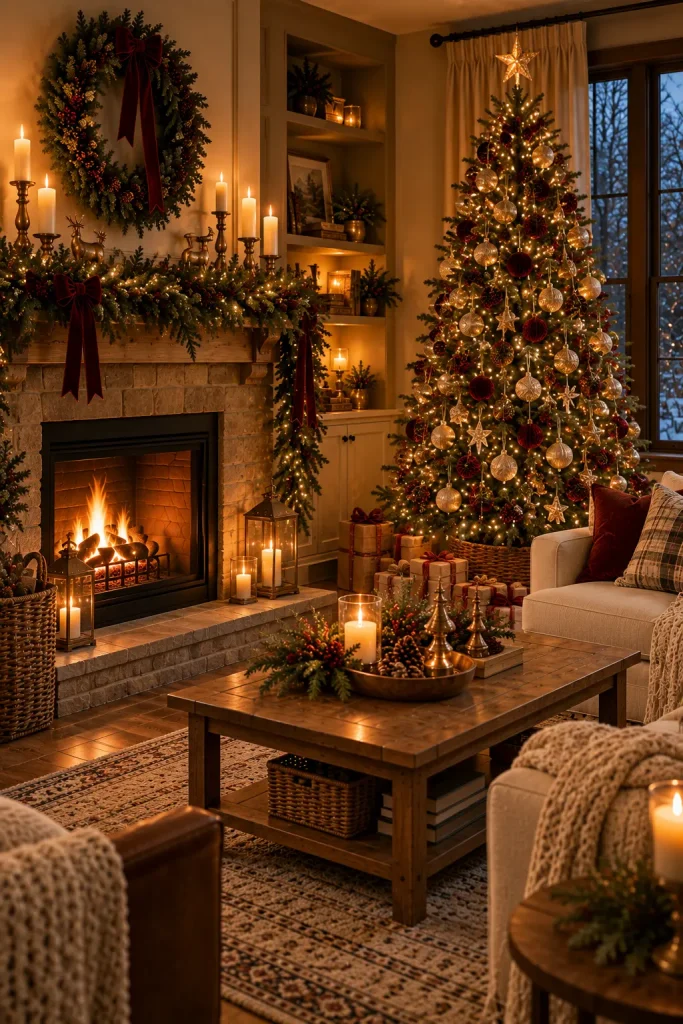
Candles can add a quieter layer of warmth after sunset. Arrange a few flameless candles on the mantel, coffee table, or sideboard, or use traditional candles only where they can be safely supervised and positioned away from flammable decorations.
Choose holders that repeat the room’s existing materials, such as brass, ceramic, glass, or wood. A few different heights can create a more natural arrangement without filling the entire surface.
28. Decorate With Personalized Family Ornaments
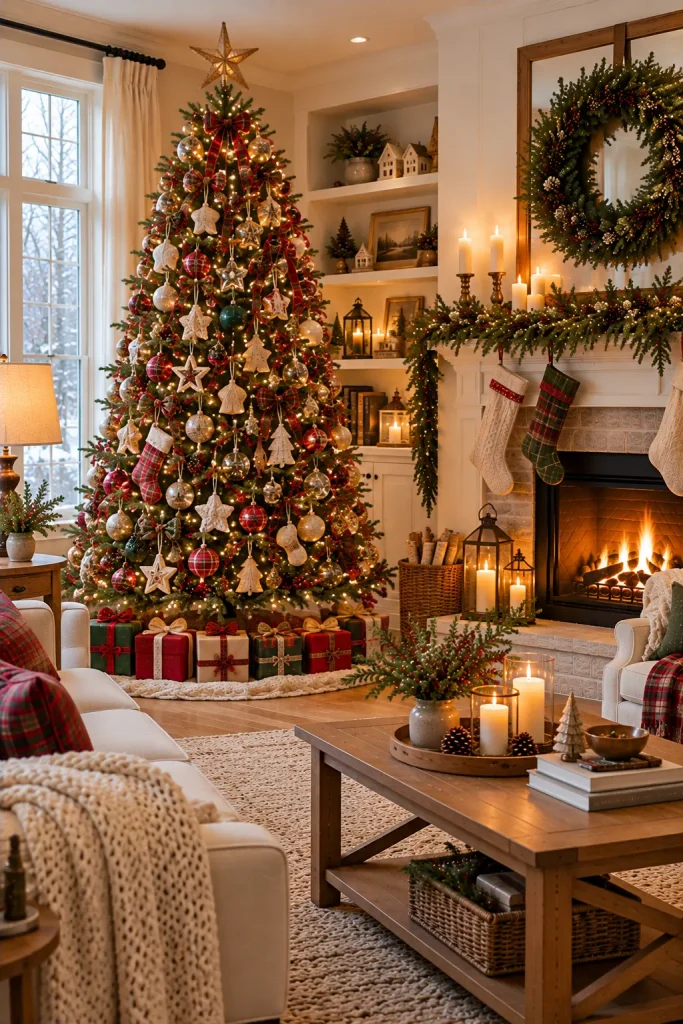
Personal ornaments can give a Christmas tree more meaning than a perfectly coordinated collection of decorations. Mix treasured pieces with newer ornaments while maintaining a loose color or material connection so the tree still feels visually cohesive.
Display a few especially meaningful ornaments in places where they can be easily noticed. The combination of handmade, inherited, and contemporary pieces often gives a living room more character than a tree decorated entirely from a single matching set.
29. Bring Christmas Greenery Into the Seating Area
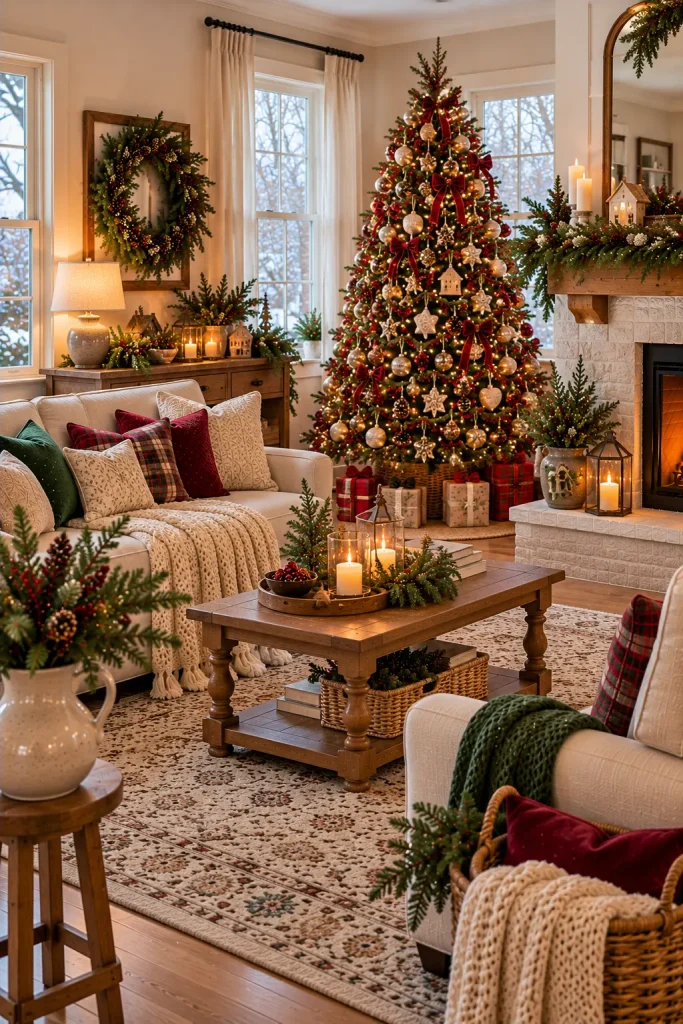
Instead of concentrating every seasonal element around the tree, repeat greenery around the seating area. A small branch in a ceramic vase, an evergreen wreath on a nearby wall, or a simple garland across a console can visually connect the different parts of the room.
Keep the greenery slightly varied rather than using identical arrangements everywhere. One area might feature fuller branches while another uses a delicate sprig, creating repetition without making the room feel staged.
30. Finish With a Warm, Collected Christmas Look
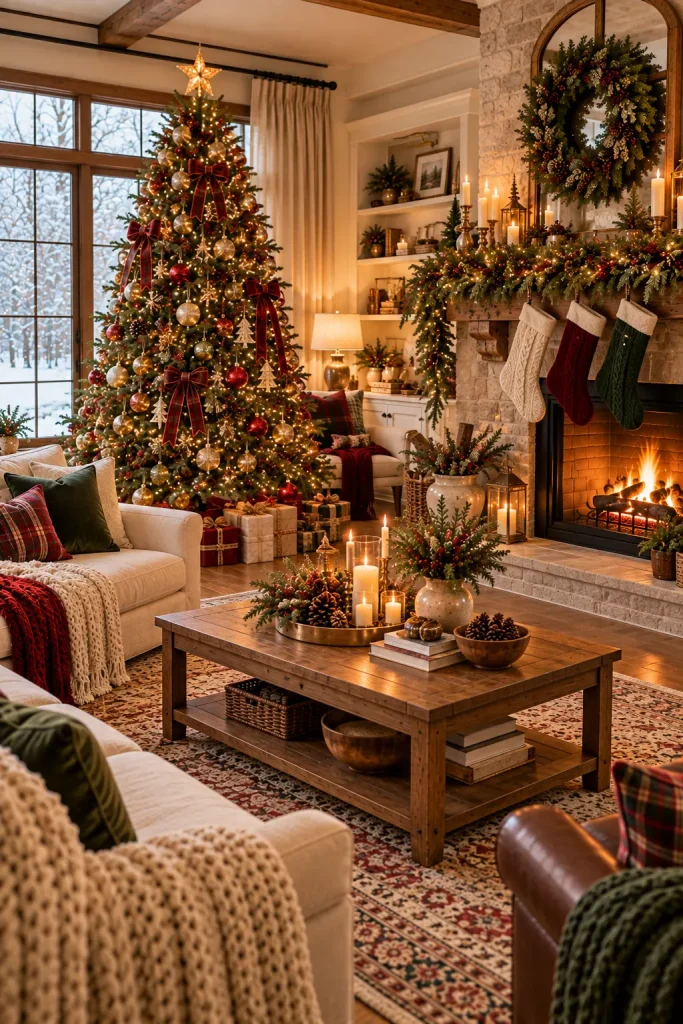
The most welcoming Christmas living rooms usually combine several layers rather than relying on one decoration. Start with the room’s existing furniture, then introduce a tree or greenery, warm lighting, seasonal textiles, a few meaningful ornaments, and one or two focal displays.
Before adding anything else, step back and look at the room as a whole. If one corner feels overloaded, remove a few pieces rather than automatically adding more. Christmas decor should make the living room feel inviting and comfortable first, festive second.