
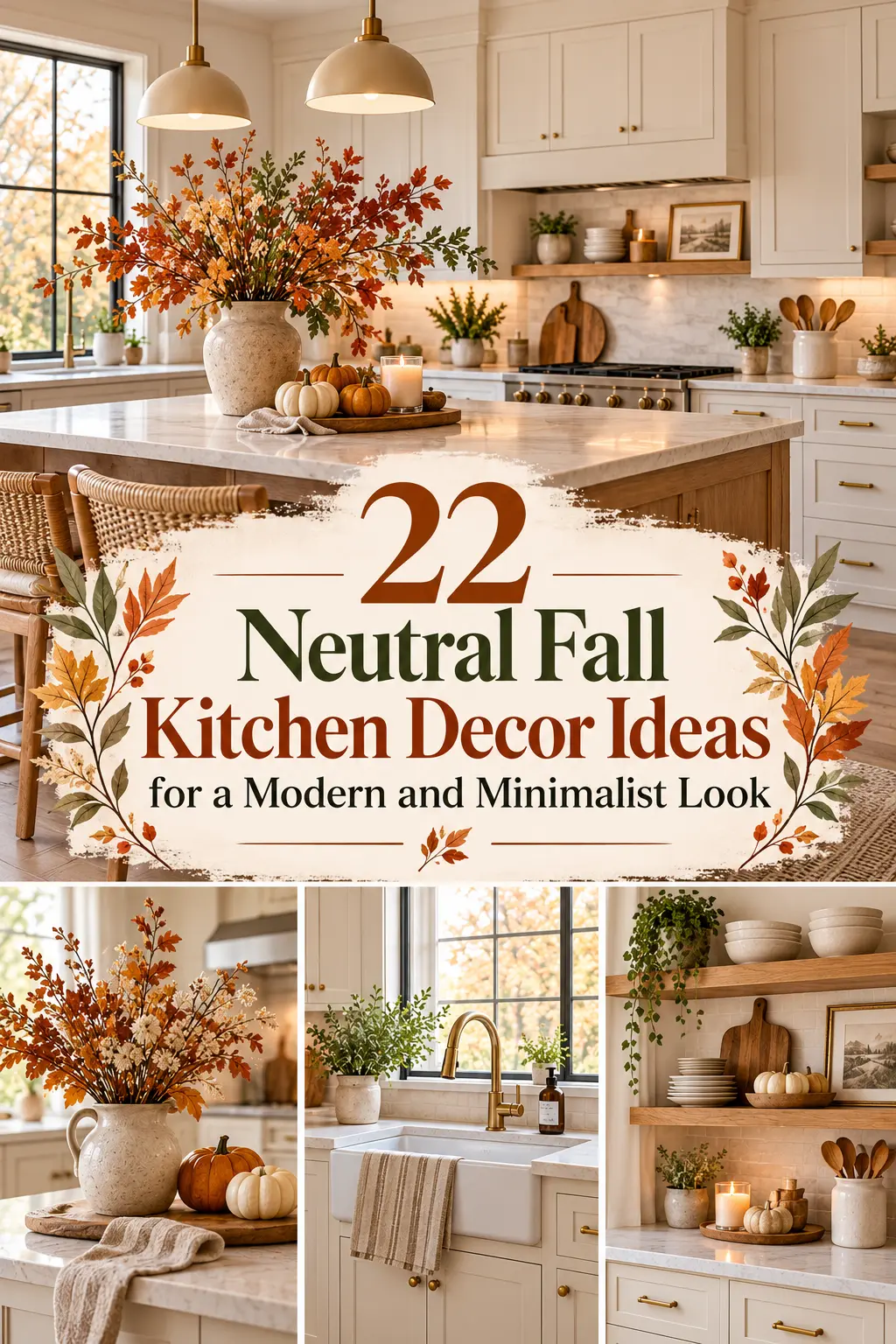
22 Neutral Fall Kitchen Decor Ideas for a Modern and Minimalist Look
Fall kitchen decorating doesn’t have to mean filling every counter with pumpkins, adding bright orange accessories, or changing your entire color scheme. A neutral autumn kitchen can feel just as seasonal with a few thoughtful details, including warm wood, creamy ceramics, soft linen, muted greenery, and natural textures.
The beauty of neutral fall kitchen decor is its versatility. These understated accents complement modern kitchens, farmhouse interiors, small apartments, and traditional homes without making the space feel crowded. You can keep your existing white cabinets, marble countertops, or light oak finishes and introduce autumn warmth through simple styling changes.
From a minimalist coffee station to a natural centerpiece on the kitchen island, these 22 ideas offer practical ways to create a calm, inviting kitchen for the season. Each approach balances seasonal character with everyday functionality, so your kitchen remains beautiful and comfortable to use.
1. Style White Cabinets With Warm Wooden Accents
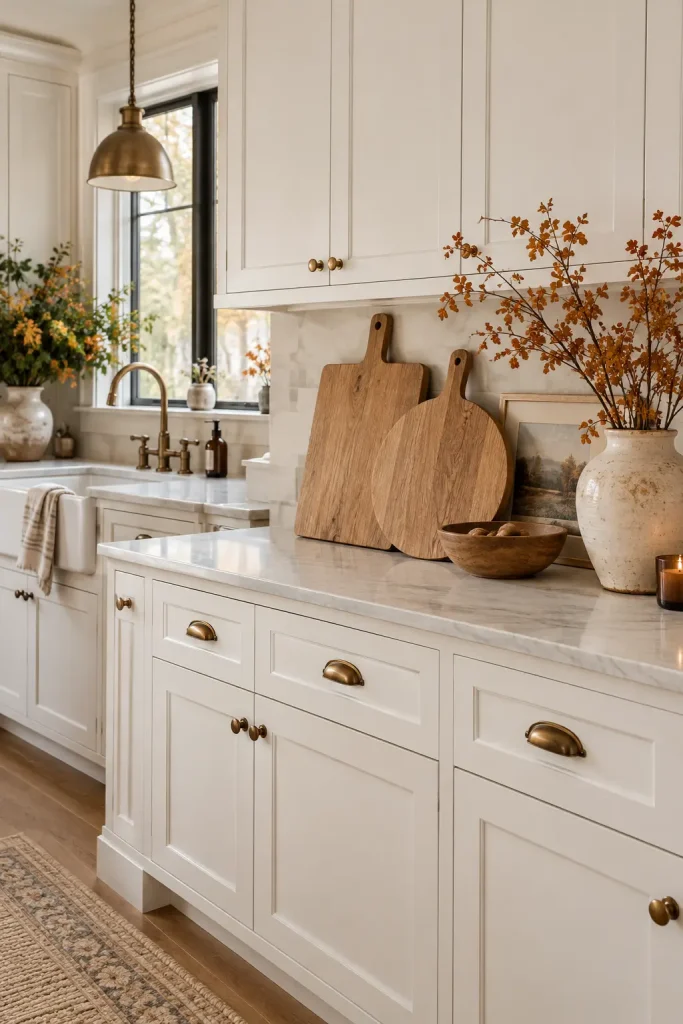
White cabinets provide an ideal backdrop for understated fall decorating. Introduce warmth with leaning oak cutting boards, a small wooden bowl, and a cream ceramic vase filled with a few dried branches. The contrast between crisp white cabinetry and natural wood makes the kitchen feel warmer without disrupting its clean appearance.
Keep the arrangement focused on one section of the counter rather than spreading accessories throughout the room. If your kitchen already has wooden floors or oak cabinet hardware, repeat that finish in just one or two decorative pieces for a cohesive look.
Styling tip: Choose cutting boards in different shapes but similar wood tones. This creates subtle visual interest without introducing unnecessary color.
2. Create a Cream and Beige Pumpkin Display
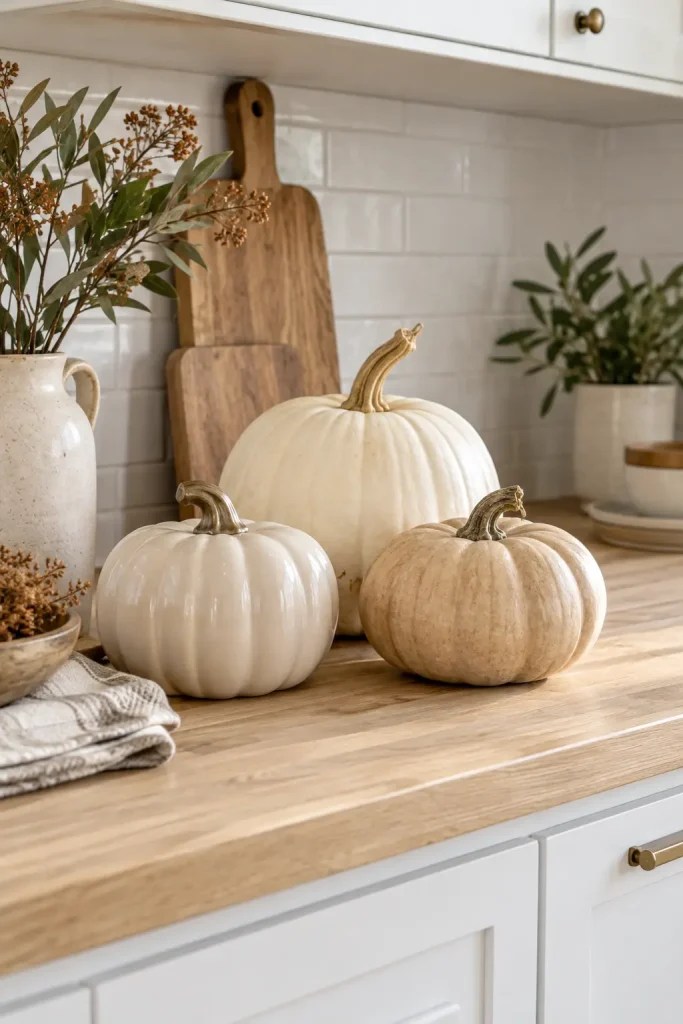
Pumpkins are a familiar fall decoration, but choosing them in ivory, cream, and soft beige gives them a more modern appearance. Arrange two or three pumpkins of different sizes on a wooden tray or directly on an open stretch of countertop.
Look for natural-looking finishes rather than glitter, metallic paint, or highly polished surfaces. Ceramic pumpkins work well in contemporary kitchens, while real miniature pumpkins add organic variation.
Keep the display away from the sink and main food-preparation area. A small grouping near a backsplash corner or on a side counter creates a seasonal focal point without taking over the workspace.
3. Add a Natural Oak Tray to the Kitchen Island
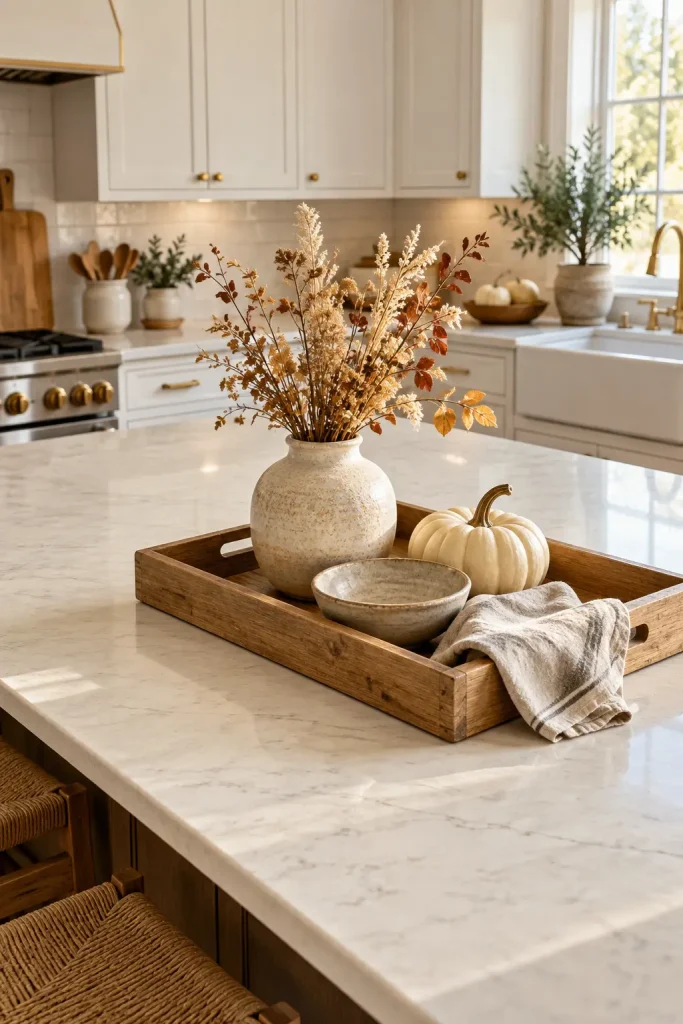
A wooden tray makes seasonal decorating easier to manage, especially when your kitchen island doubles as a dining or preparation area. Choose a low-profile tray in natural oak or lightly weathered wood, then arrange a few complementary objects inside it.
Consider including:
- A small cream ceramic vase with dried stems.
- A folded oatmeal linen napkin.
- One miniature ivory pumpkin.
- A shallow stoneware bowl.
The tray visually groups the pieces, making the arrangement look intentional rather than scattered. It also allows you to move the decorations quickly when you need the full island for cooking or serving.
4. Style Open Shelves With Neutral Stoneware
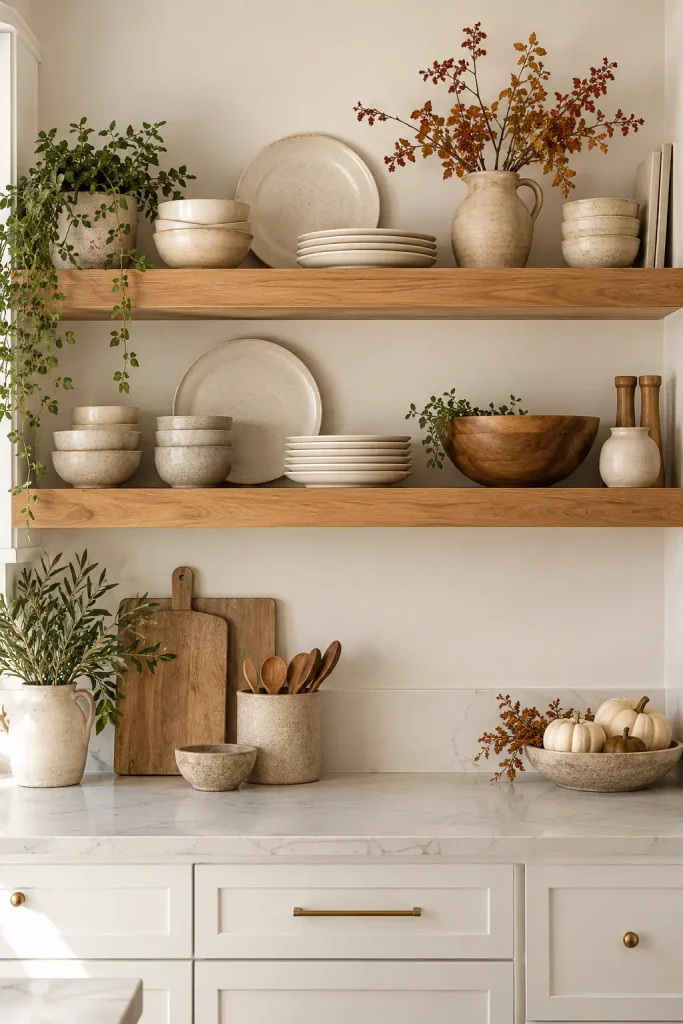
Open shelves can become a subtle seasonal feature without requiring a collection of autumn-themed decorations. Group everyday dishes in cream, warm white, mushroom, and sand tones. Add a small handmade-looking vase or a wooden bowl to introduce natural texture.
Rather than filling every shelf, leave visible gaps between groups of objects. The open space allows individual shapes and finishes to stand out.
For a balanced arrangement, combine different heights and forms:
- Stacked everyday plates.
- A few upright bowls.
- One sculptural ceramic vessel.
- A small wooden serving piece.
Keep frequently used dishes within easy reach and reserve the highest shelf for lightweight decorative objects.
5. Build a Minimalist Fall Coffee Station
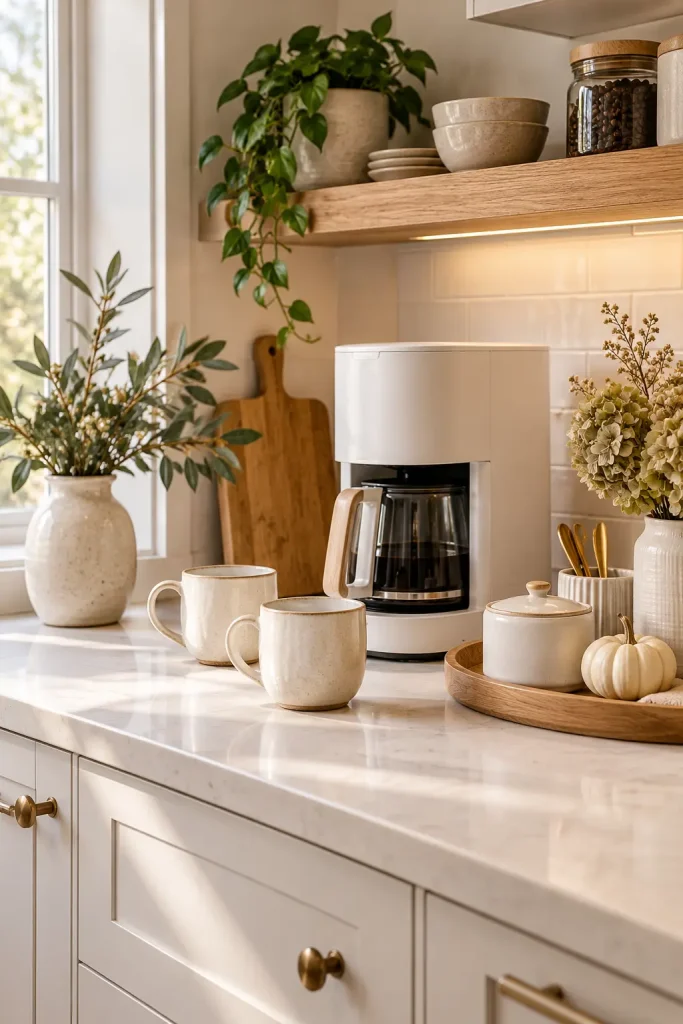
A coffee station is a useful place to introduce autumn decor because it already has a natural visual purpose. Start with your coffee maker, a few everyday mugs, and a small tray to contain loose accessories. Add one seasonal detail, such as a miniature cream pumpkin or a tiny vase of dried foliage.
Keep the palette consistent with the rest of your kitchen. Warm white mugs, an oak tray, and a beige linen cloth provide seasonal warmth without making the coffee corner look themed.
If the station is small, use vertical space with a narrow shelf for mugs rather than adding several containers to the counter.
Quick tip: Choose decorations that can be moved easily before wiping down the counter or making coffee.
6. Use Linen for Soft Autumn Texture
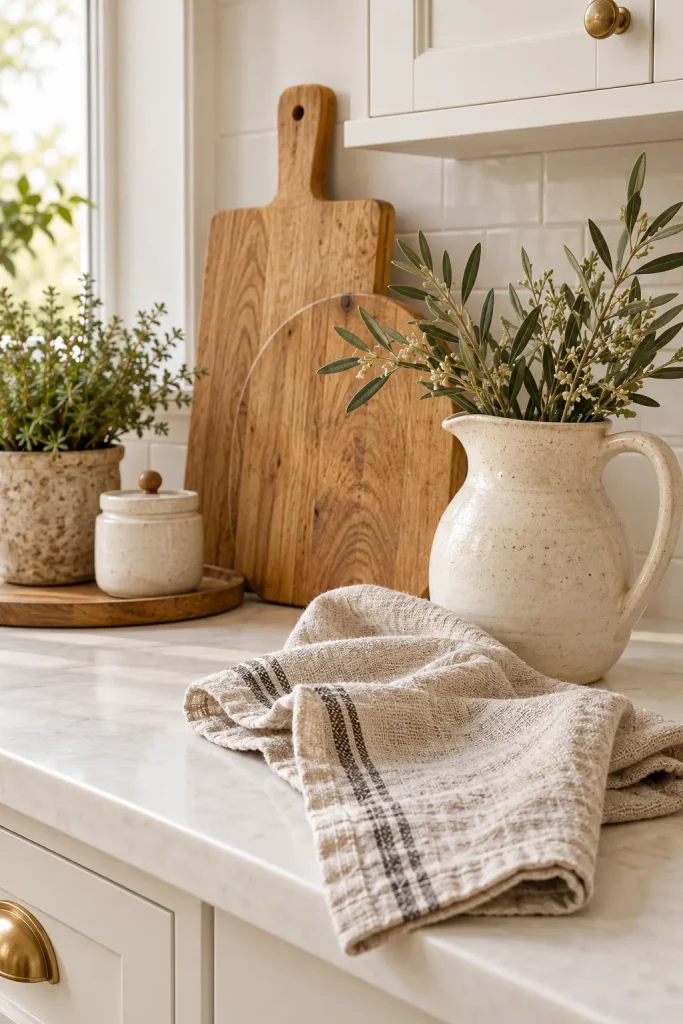
Hard kitchen surfaces can make a minimalist space feel cool, particularly when white cabinetry and stone countertops dominate. Linen introduces a softer element without requiring a significant change in color.
Try a natural flax-colored runner on a breakfast table, a folded linen tea towel near the sink, or a neutral cloth napkin beside a serving bowl. These simple textiles create a layered look while keeping the overall palette restrained.
For a modern finish, look for oatmeal, warm white, mushroom, or muted taupe. Slight wrinkles and natural fabric texture help the styling feel relaxed rather than overly arranged.
Do: Keep fabric away from open flames, hot burners, and other heat sources. Use machine-washable textiles where practical for everyday kitchen tasks.
7. Decorate With Muted Sage Green
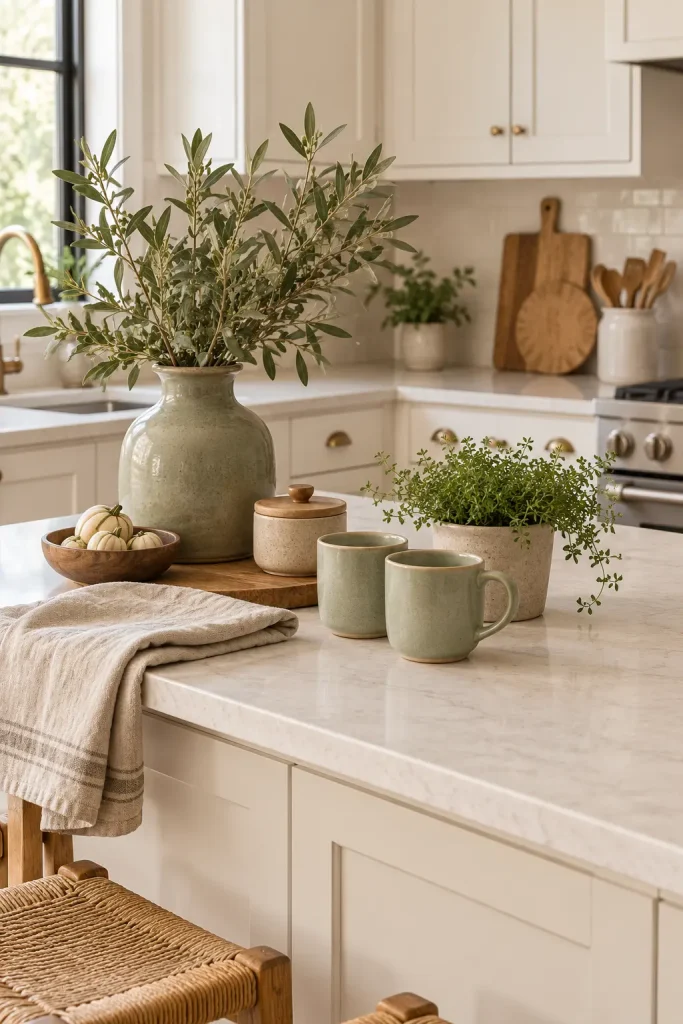
Neutral fall kitchens don’t have to be entirely beige. Muted sage introduces a gentle hint of color while remaining calm and compatible with natural materials.
You can incorporate sage through a small ceramic vase, a pair of everyday mugs, a potted herb, or a few leafy branches. Pair it with cream cabinetry, pale oak, and warm white pottery for a balanced seasonal palette.
If your kitchen already has green cabinets, use a lighter or deeper version of the same color in a small accessory rather than introducing another competing shade.
The goal is to create a quiet connection with the natural colors of fall, not to turn the room into a strongly themed display.
8. Arrange a Bowl of Pears on the Counter
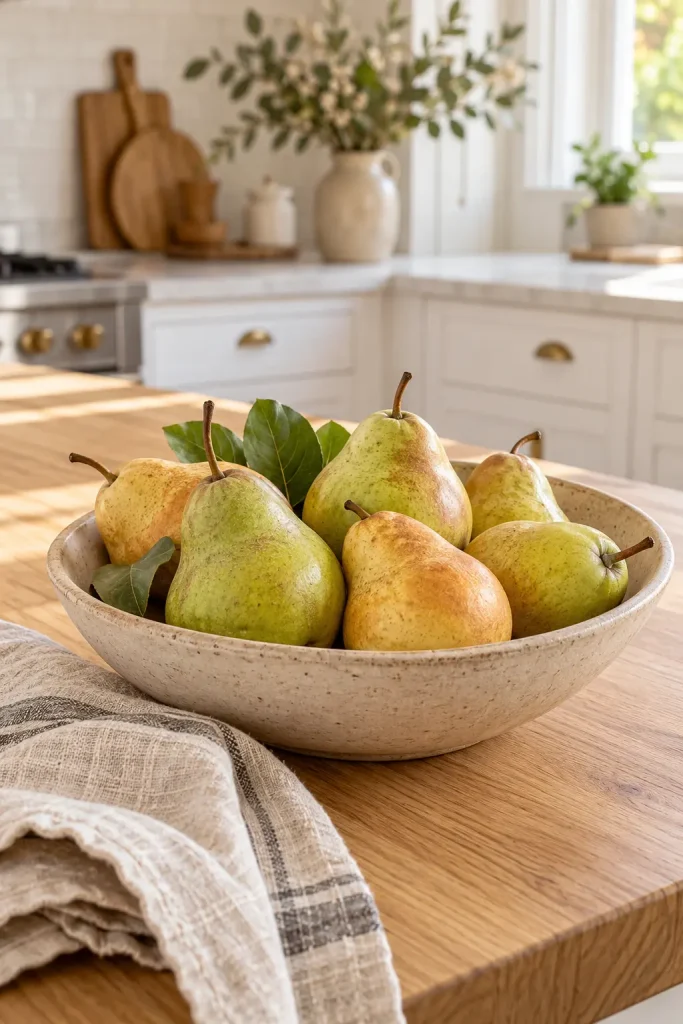
Seasonal food can be decorative without being purchased specifically for decoration. A shallow wooden or ceramic bowl filled with pears creates a natural centerpiece that feels appropriate for fall.
Choose fruit in muted green, golden beige, or soft yellow tones. Place the bowl on a clear stretch of counter or at one end of the kitchen island, where it remains accessible for everyday use.
The irregular shapes and subtle differences in the fruit provide visual texture against straight cabinet lines and smooth countertops. A simple bowl also avoids the clutter that can come from using multiple decorative objects.
Practical consideration: Keep the fruit away from areas where it could be exposed to splashes or interfere with food preparation, and replace pieces as they ripen.
9. Create a Warm Neutral Backsplash Display
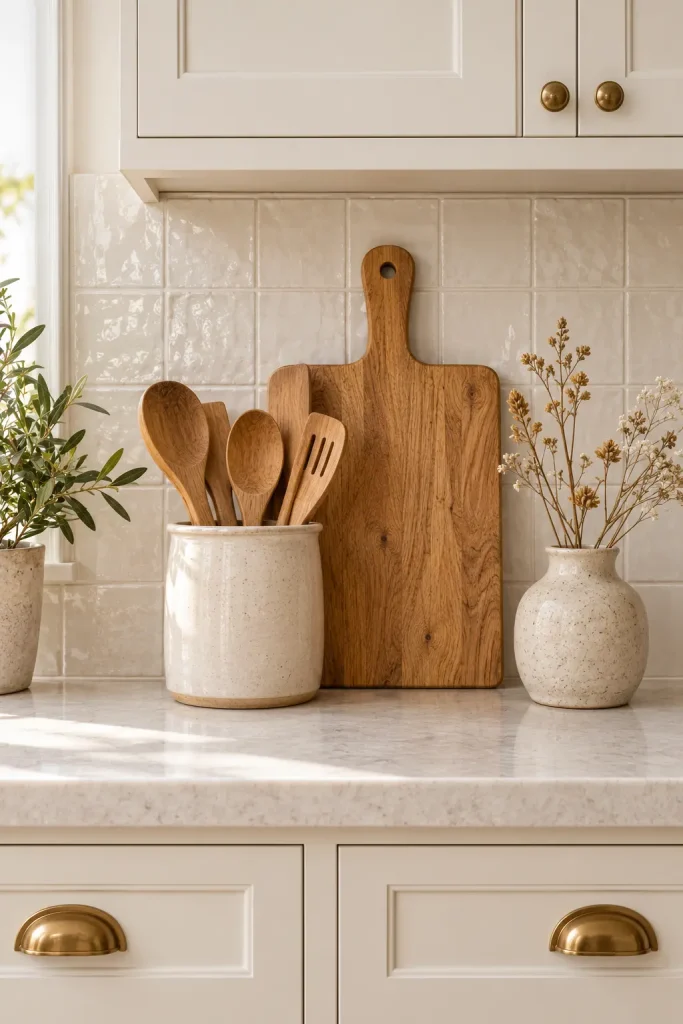
A backsplash display can add seasonal character to a kitchen with limited counter space. Instead of using a large collection of decorations, arrange two or three practical objects against an open section of backsplash.
A cream utensil crock, a wooden cutting board, and a small neutral vase can create a layered look without crowding the counter. This approach works especially well in compact kitchens where the available wall and countertop space must serve several purposes.
Keep the objects low enough to avoid obstructing outlets, appliances, or frequently used work areas. If you cook often, leave the area near the range easy to clean and free of unnecessary decor.
10. Introduce Dark Wood for Gentle Contrast
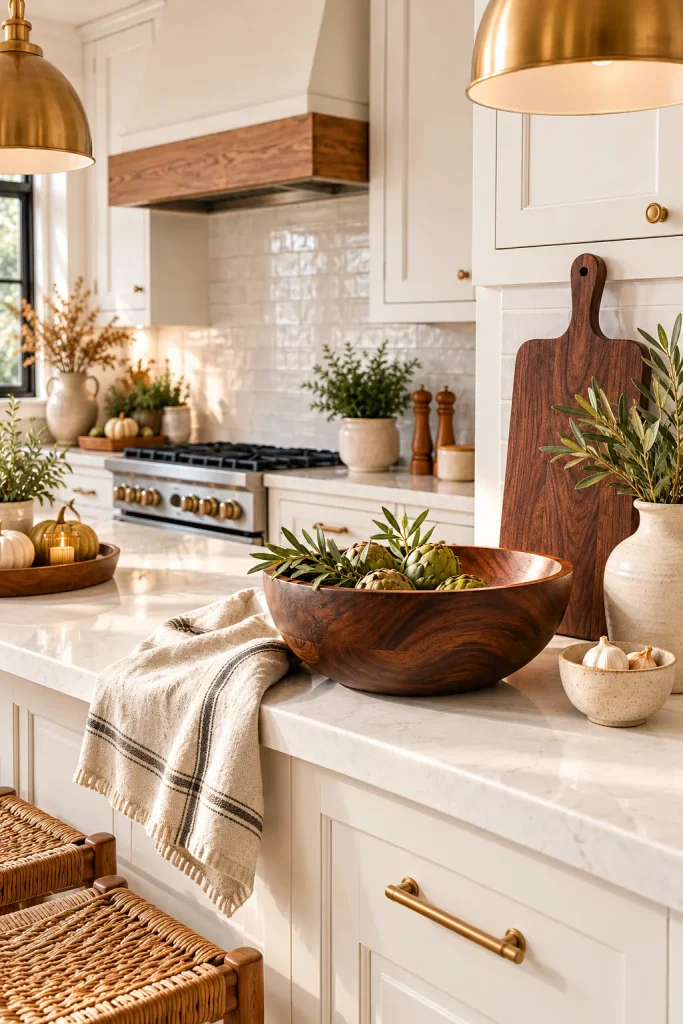
An all-white kitchen can benefit from a darker natural accent. Walnut, smoked oak, or another deep brown wood introduces depth while preserving a neutral color scheme.
Start with a dark wooden serving bowl, a walnut cutting board, or a compact stool beside a kitchen island. Pair the darker finish with ivory pottery, pale countertops, and soft beige textiles to prevent the overall look from becoming heavy.
This approach is particularly useful when your kitchen already has light cabinets and flooring. The darker object creates a focal point that makes the surrounding pale finishes feel more intentional.
Common mistake: Introducing several unrelated wood tones can make a small kitchen feel visually busy. Choose one dominant wood family and repeat it selectively.
11. Add Dried Branches in a Sculptural Vase
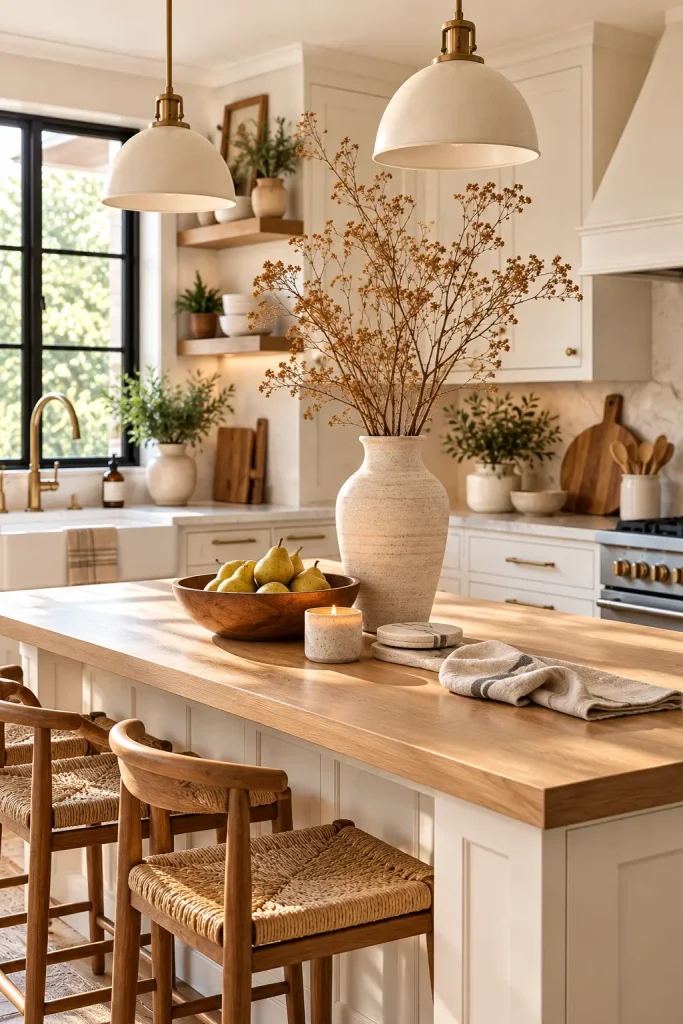
Dried branches offer height and an organic shape without the fullness of a traditional autumn floral arrangement. Place a few stems in a tall ceramic vase on a wide island, a side counter, or a dining table adjoining the kitchen.
Choose branches with fine, airy shapes rather than dense bunches. Natural brown, faded olive, and soft tan tones work especially well with cream pottery and light wood.
Scale matters here. A taller vase can balance a spacious island, while a smaller vessel is better suited to a narrow counter. Make sure the arrangement doesn’t block sightlines or interfere with overhead cabinets.
12. Style the Sink Area With Simple Ceramic Accessories
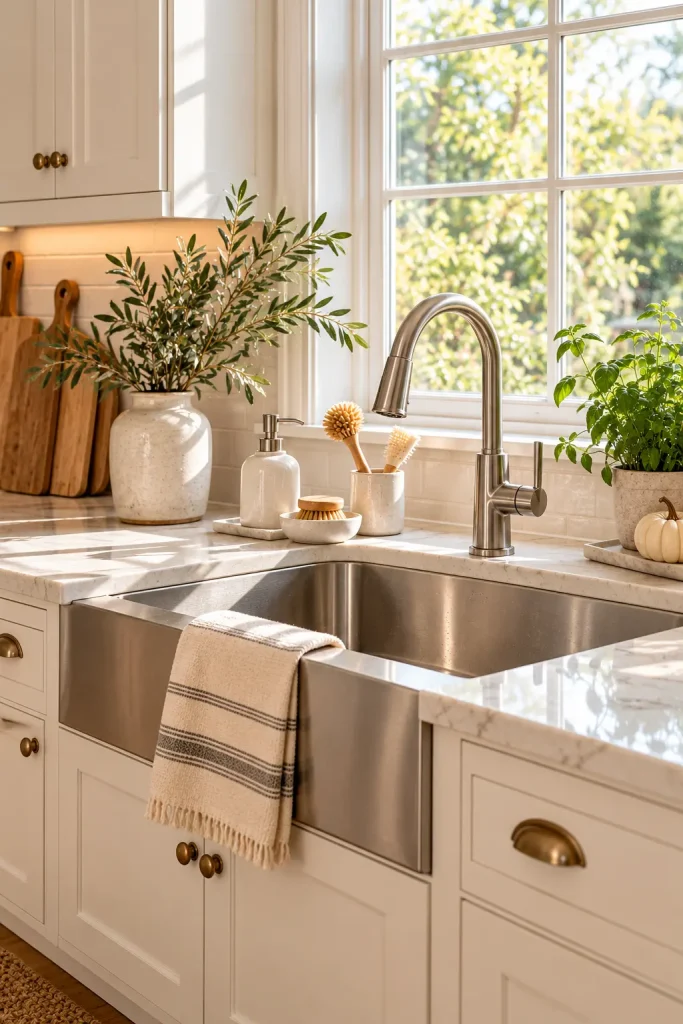
The sink is one of the most frequently used areas in a kitchen, so its decor should remain practical. Matching or coordinated ceramic soap dispensers, a small neutral dish, and a tidy brush holder can make this everyday corner feel more considered.
Choose matte white, warm ivory, or pale stone finishes that blend with your sink and countertop. A small wooden detail can introduce warmth, but keep wood accessories positioned where they can dry properly.
Avoid filling the windowsill or sink ledge with multiple decorative pieces. Water splashes and cleaning routines are easier to manage when the arrangement stays compact.
Quick tip: Repeat the finish of your existing faucet or cabinet hardware where possible, rather than adding a completely unrelated metal accent.
13. Use a Neutral Runner to Warm Up the Kitchen Floor
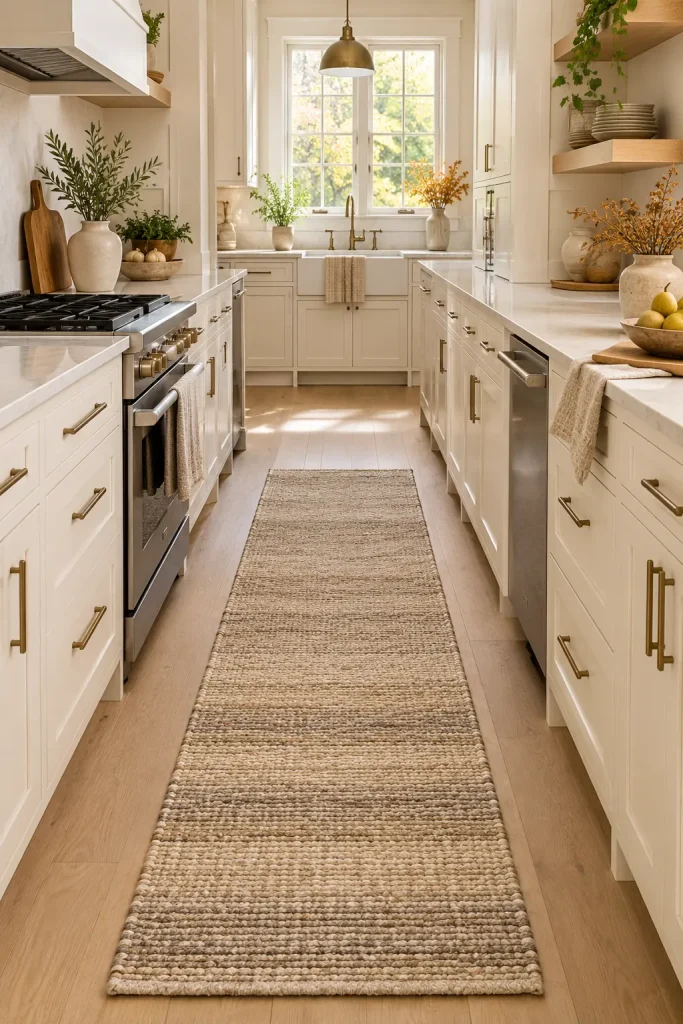
A carefully chosen runner can introduce texture and soften the long lines of a galley kitchen. Look for a low-profile design in oatmeal, warm gray, taupe, or a restrained faded pattern.
The most important consideration is function. Select a runner that fits the walkway without catching on cabinet doors or creating a tripping hazard. A washable design can be particularly useful in a kitchen where spills are common.
If the cabinets and countertops are already visually detailed, choose a simpler rug. In a plain white kitchen, a subtle woven or vintage-inspired pattern can provide more character.
14. Create a Minimalist Fall Table Centerpiece
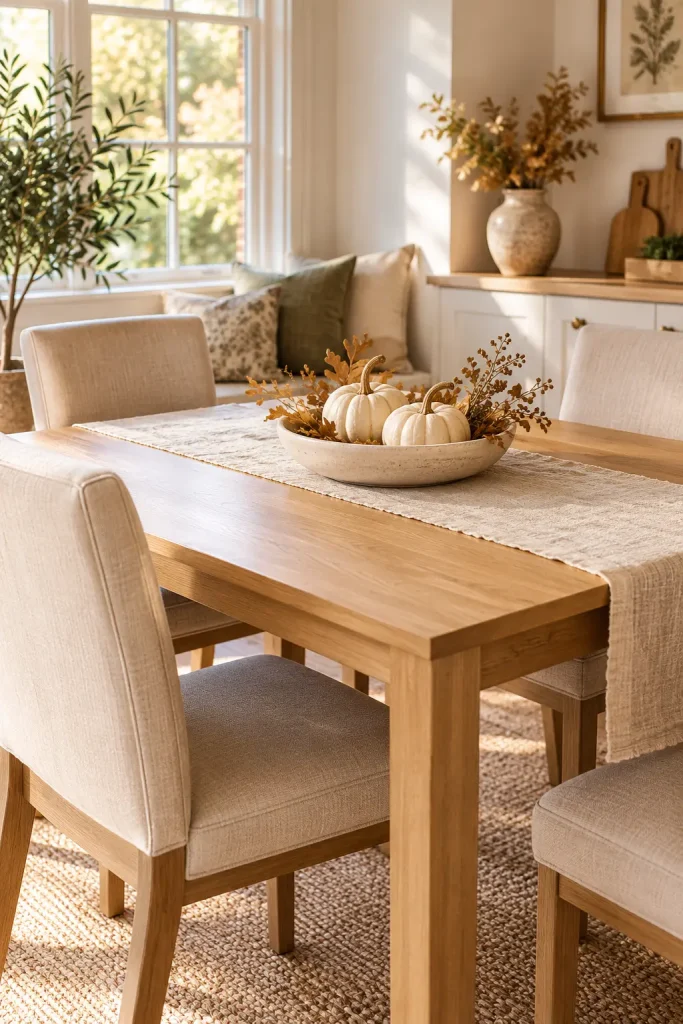
If your kitchen includes a breakfast nook or dining table, a simple centerpiece can carry the autumn theme without adding more objects to your counters.
Use a low ceramic bowl, a few small cream pumpkins, and one or two natural elements such as dried leaves or seed pods. Keep the arrangement low enough that people can comfortably see one another across the table.
For a modern setting, choose a pale wood table and neutral upholstered chairs. A folded linen runner can provide a soft foundation without competing with the centerpiece.
The advantage of this approach is that the rest of the kitchen can remain almost undecorated.
15. Display Wooden Cutting Boards as Functional Decor
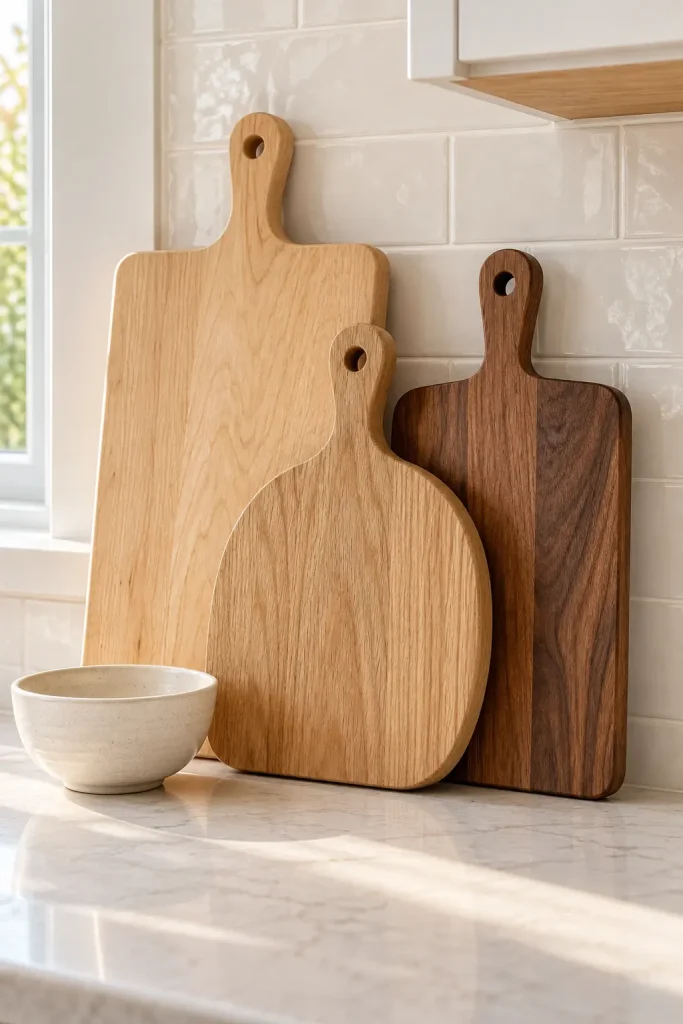
Wooden cutting boards are useful kitchen tools that can also provide a warm visual accent. Leaning two or three boards against a backsplash adds height and breaks up the uniformity of a long countertop.
Mix a rounded board with a rectangular one, but keep the wood finishes related. Oak and maple provide a lighter appearance, while walnut adds a richer contrast.
The boards should be positioned securely and away from burners. Move them when necessary to clean behind them, and allow them to dry properly after washing.
16. Add Subtle Warmth With Brass Hardware
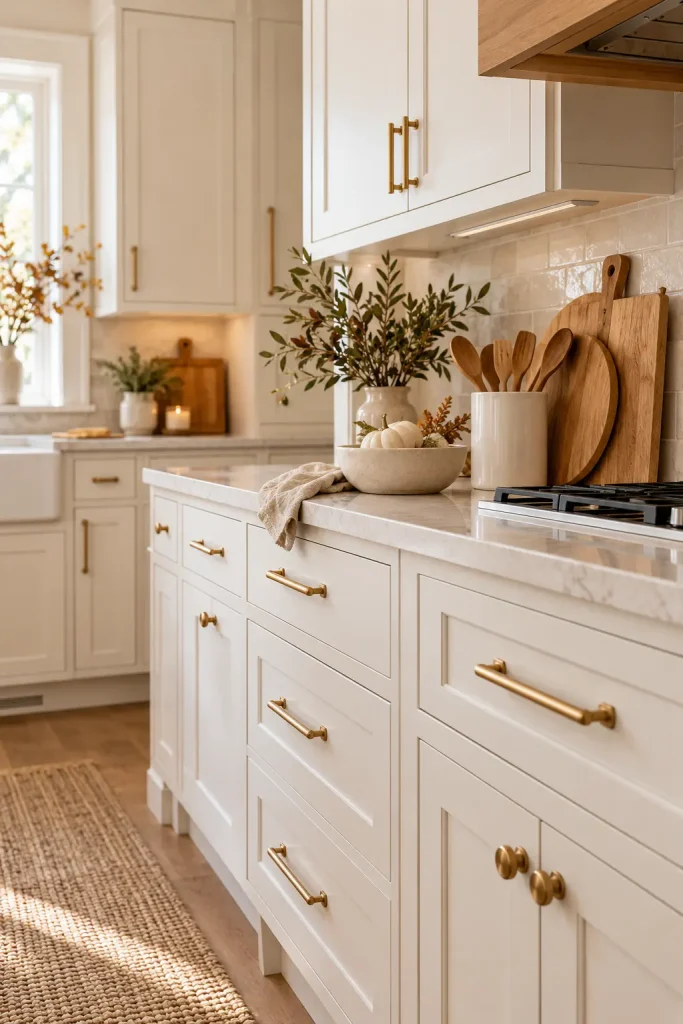
For a kitchen that feels too cool or stark, warm-toned hardware can provide a small but noticeable change. Brass or brushed champagne-toned cabinet pulls work particularly well with warm white cabinets, cream walls, and pale oak.
You don’t need to replace every fitting to introduce the look. If your existing cabinet hardware is already coordinated, consider a single complementary accessory, such as a brass-toned utensil holder or a small metal detail on a neutral serving tray.
Hardware changes are more involved than simply placing a seasonal accessory, so check dimensions and mounting requirements before purchasing replacements. Renters should also consider whether the original fittings can be stored and reinstalled.
17. Layer Warm Lighting for Cozy Autumn Evenings
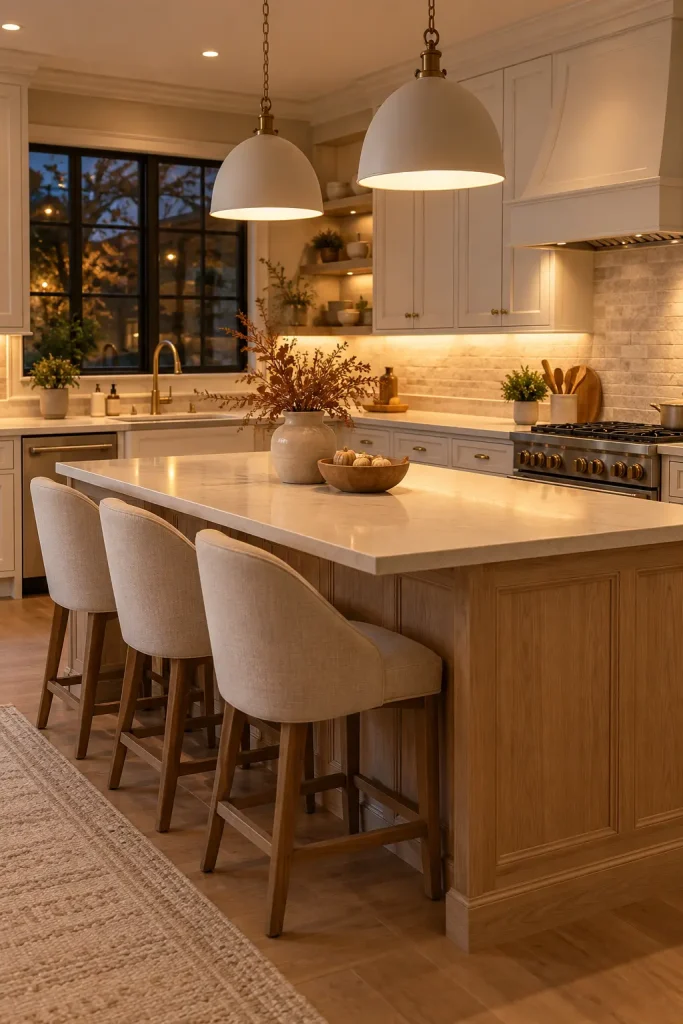
Lighting influences how neutral finishes look after sunset. A kitchen with cool overhead lighting may feel stark, while softer, appropriately placed lighting can make cream cabinetry and natural wood appear warmer.
If your kitchen has pendant lights above the island, consider bulbs with a warm-white color temperature that is suitable for the fixture and provides enough light for the task. Under-cabinet lighting can also illuminate countertops and create a softer background glow.
Use task lighting where you chop, cook, or read recipes. Ambient lighting should complement those functional sources rather than replace them.
Do: Check fixture ratings, bulb compatibility, and local electrical requirements before making changes.
18. Decorate a Kitchen Window With a Small Herb Garden
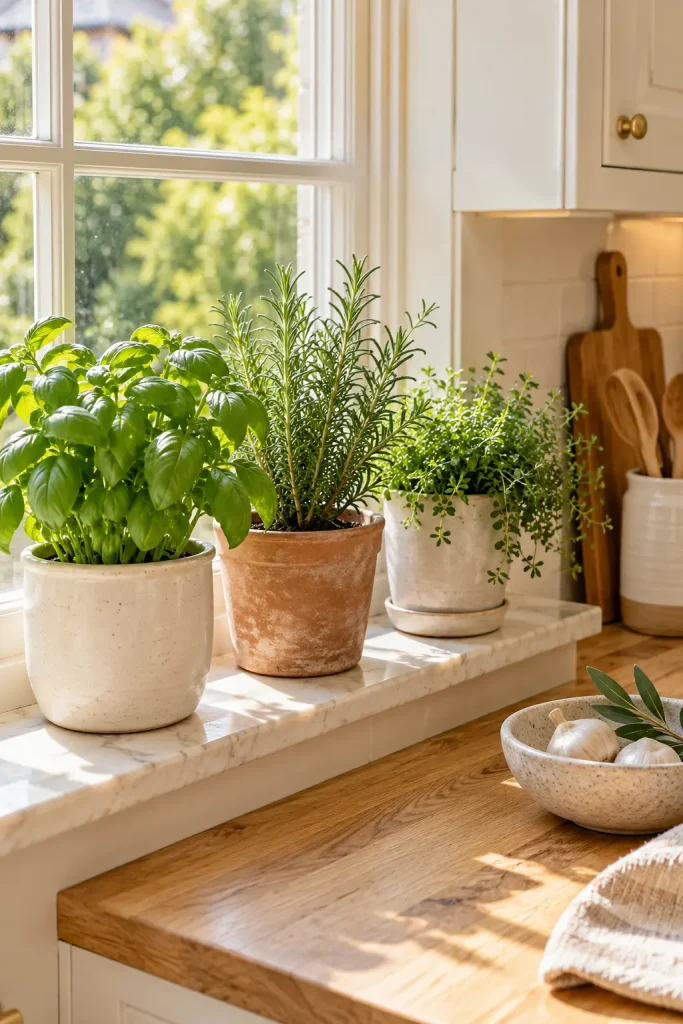
A few fresh herbs can add natural color to a minimalist fall kitchen without introducing decorative clutter. Place two or three small planters on a bright windowsill, choosing containers in terracotta, warm white, or pale stone.
Basil, parsley, and thyme are familiar kitchen herbs, but the right choice depends on available light and growing conditions. Keep the containers practical, with drainage managed so water doesn’t damage the sill.
This idea works especially well in kitchens with simple white cabinets because the greenery creates a restrained contrast. It also gives the window area a useful purpose.
19. Choose a Neutral Vintage-Inspired Runner and Ceramics
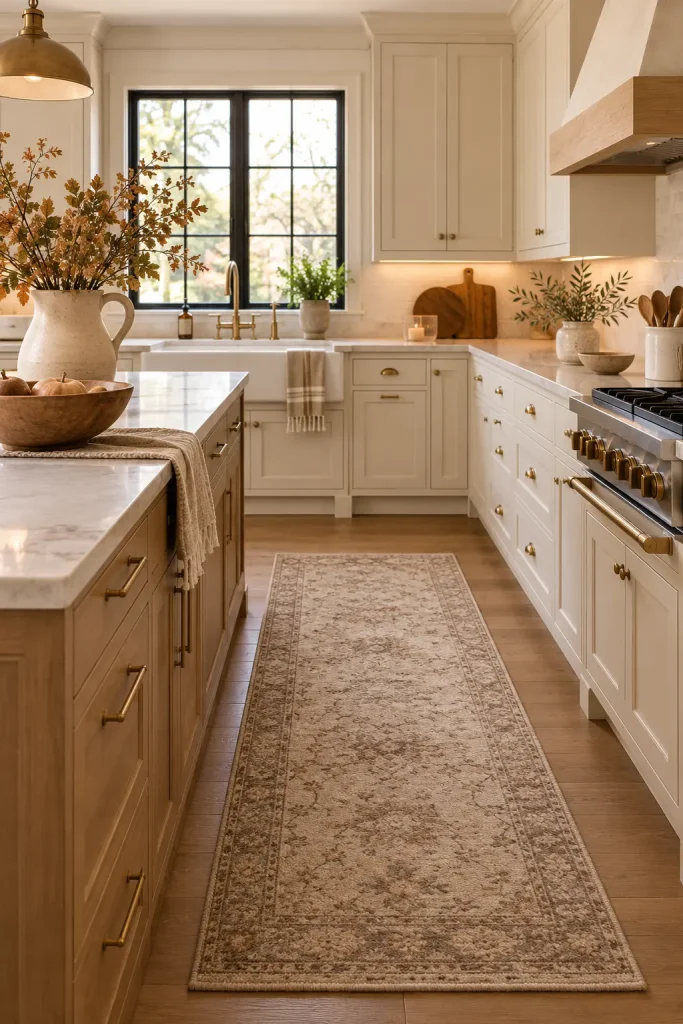
Modern minimalism doesn’t have to mean every object looks new. A softly faded runner, slightly irregular stoneware, or a vintage wooden bowl can introduce character while preserving a restrained palette.
The key is to limit the number of decorative styles competing for attention. Pair one vintage-inspired element with simple cabinetry and contemporary lighting. Cream, taupe, faded brown, and warm gray keep the combination cohesive.
If you prefer a cleaner modern look, select a runner with a subtle pattern rather than a bold motif. The result will feel layered without making the kitchen visually busy.
20. Style a Minimalist Pantry Counter
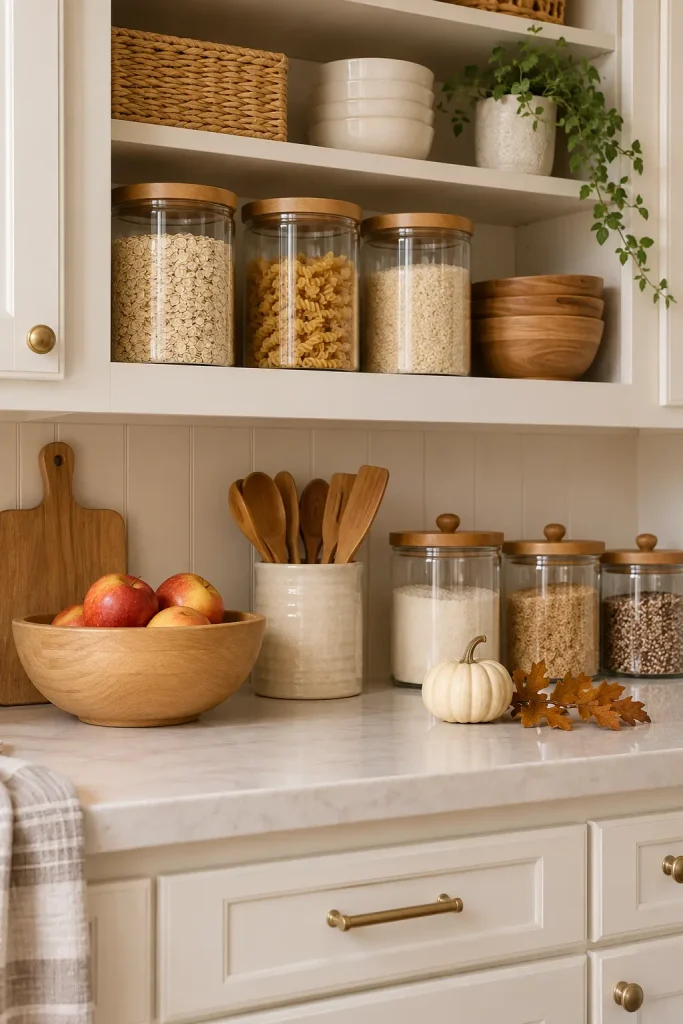
A pantry counter or a small section near the refrigerator can become an organized fall display when everyday supplies are stored neatly. Use a few matching canisters, a wooden bowl, and one restrained seasonal accent to create a coordinated appearance.
Glass jars are useful when you want to see pantry ingredients, while opaque ceramic or stoneware containers offer a quieter look. Choose the approach that suits your storage needs rather than decanting every item solely for appearance.
Leave frequently used appliances accessible and keep food storage away from heat, moisture, and direct sunlight when appropriate.
A simple arrangement:
- Group related pantry containers together.
- Add one wooden or ceramic object for texture.
- Introduce a small seasonal accent only if the counter still feels spacious.
21. Combine Warm Gray With Natural Oak
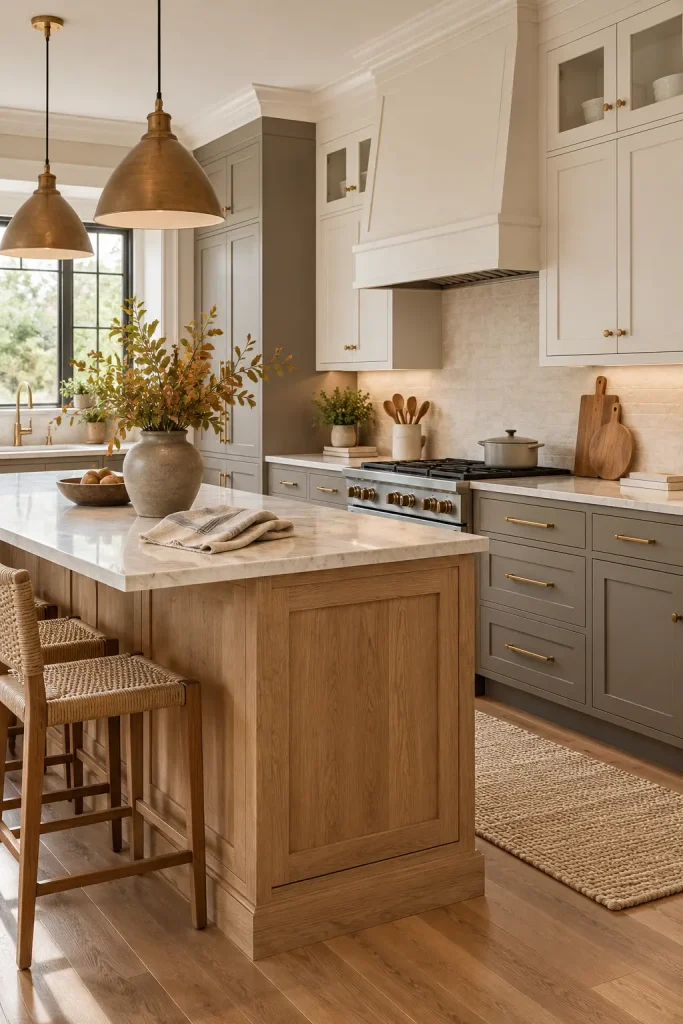
Warm gray offers an alternative to an all-cream palette. It introduces a little depth while keeping the kitchen calm and modern, particularly when paired with natural oak and warm white accents.
You can bring this combination into an existing kitchen through gray stoneware, a taupe-gray runner, or a simple fabric shade. If you’re planning a more permanent update, warm gray cabinet paint can complement oak flooring and pale countertops.
Pay attention to undertones. A gray with a strong cool-blue cast may look different beside warm wood than a gray with beige or brown undertones. Compare samples in both daylight and evening lighting before committing to a larger change.
22. Keep the Entire Kitchen Minimal With One Seasonal Focal Point
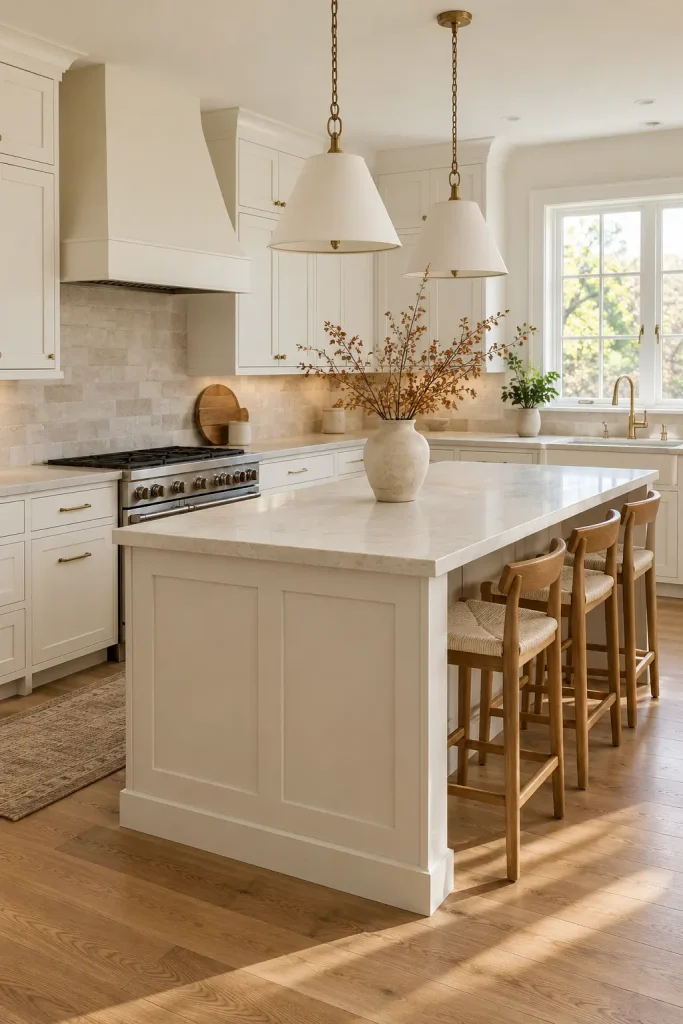
Sometimes the most effective fall kitchen decor is a single carefully chosen arrangement. If your kitchen already has attractive cabinetry, interesting stone surfaces, or beautiful wood details, you may not need much else.
Choose one focal point, such as a cream pumpkin display on the island, a sculptural vase on the counter, or a bowl of seasonal pears on a dining table. Let the rest of the kitchen remain uncluttered.
This approach is particularly useful for small kitchens, rental properties, and households that prefer easy cleaning. You can change the focal point throughout autumn without purchasing a large collection of seasonal decorations.
The visual principle is simple: give one arrangement enough space to be noticed, and allow the existing architecture to do the rest.