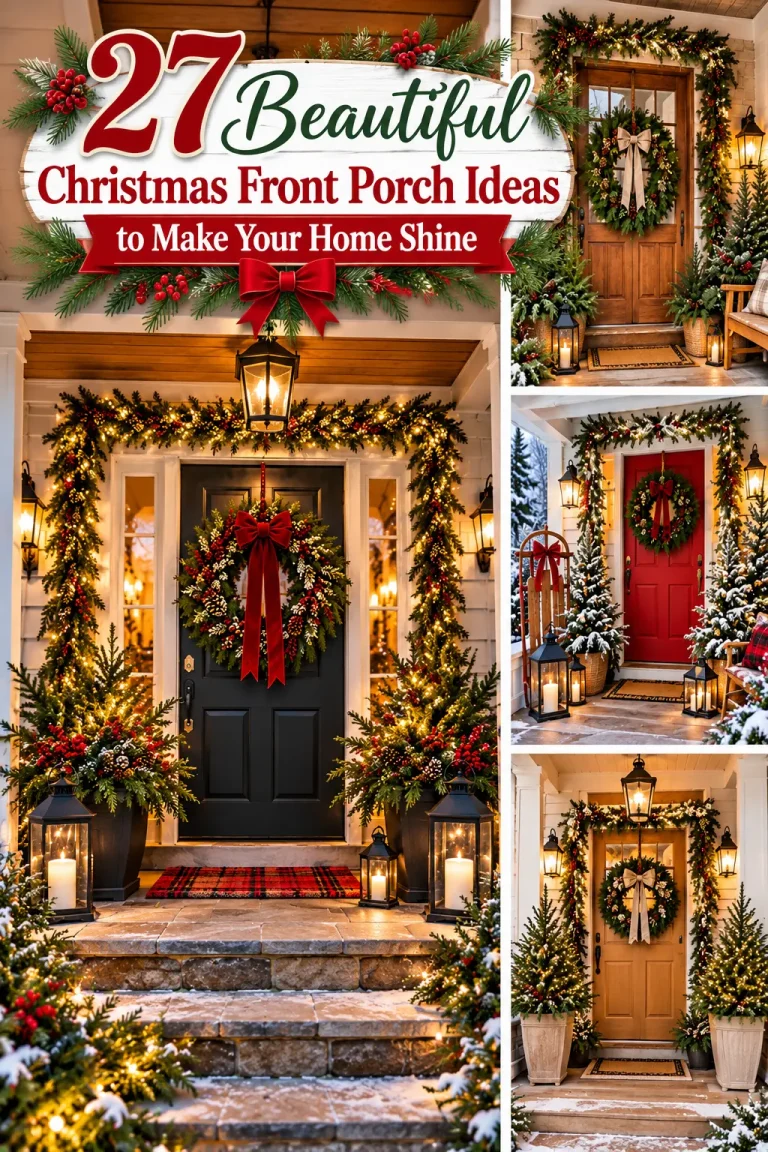

27 Beautiful Winter Porch Decorating Ideas for a Charming Seasonal Look
A welcoming winter porch can make your home feel warm and inviting even when the weather outside is cold and gray. With a few thoughtful details, you can turn an ordinary front entrance into a charming seasonal space filled with natural greenery, soft textures, warm lighting, and beautiful winter colors. The best winter porch decorating ideas don’t have to rely on Christmas decorations, either. Many styles look lovely throughout January and February, long after the holiday season has passed.
From rustic wooden benches and evergreen wreaths to elegant lanterns and frosty container gardens, these 27 winter porch ideas offer inspiration for small entryways, spacious front porches, apartments, and suburban homes. You’ll find simple decorating updates alongside more elaborate arrangements, making it easy to create a look that suits your home’s architecture, available space, and budget.
1. Layer Evergreen Garlands Around the Front Door
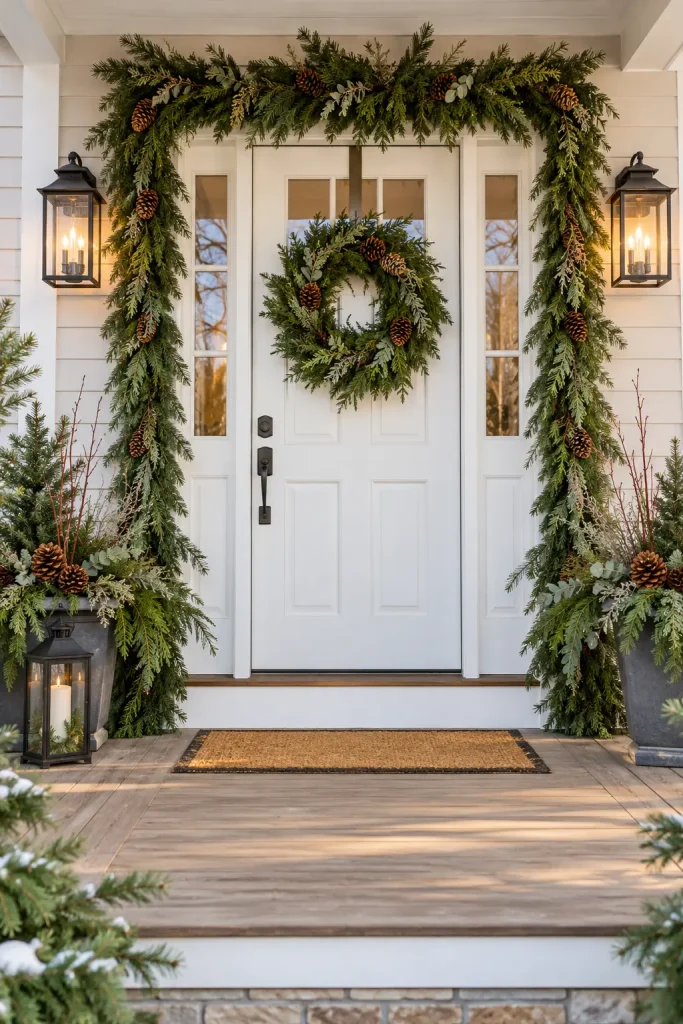
Fresh-looking evergreen garlands bring natural color and texture to a winter entrance. Drape a garland around the front door or along the porch railing, allowing the branches to fall naturally rather than forcing them into a perfectly symmetrical shape.
For a classic look, combine pine, cedar, and fir-style foliage. Leave the greenery unadorned for a simple winter aesthetic, or add a few pinecones and muted ribbons for extra character. If you prefer decorations that last all season, choose a quality artificial garland designed for outdoor use.
Styling tip: Secure greenery firmly and keep it clear of door hinges, handles, and walking paths. In freezing or windy conditions, use suitable outdoor-rated fasteners.
2. Style Oversized Lanterns Beside the Entry
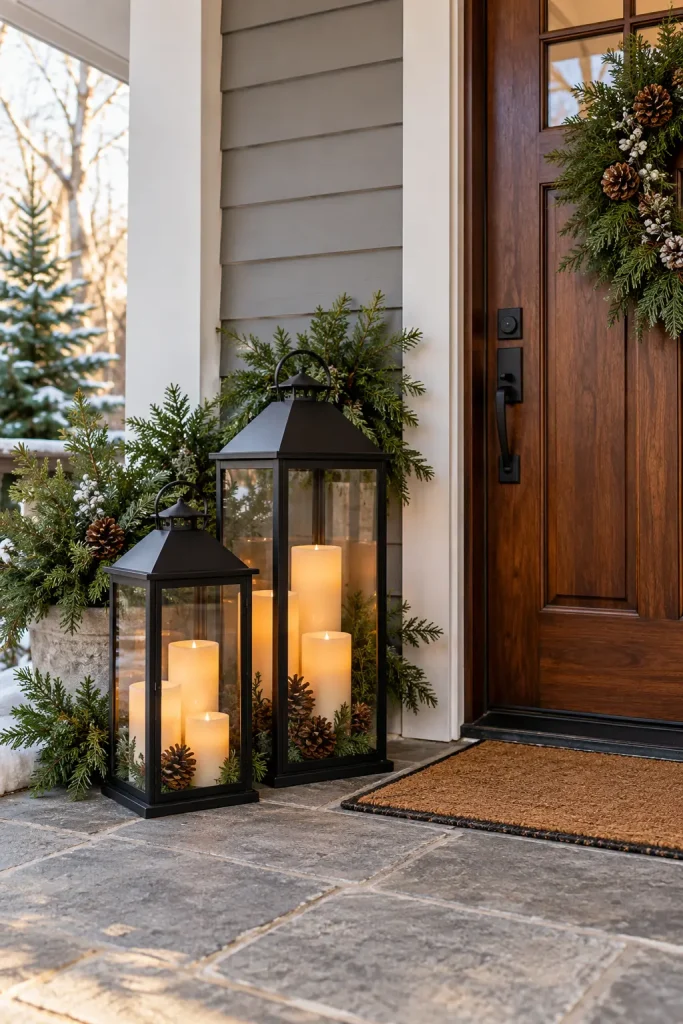
Oversized lanterns add structure to a porch and create an inviting focal point near the entrance. Choose black metal for a farmhouse look, antique brass for a traditional home, or natural wood for a softer rustic style.
Arrange two lanterns of different heights beside the door, leaving enough open space around them for easy entry. Battery-operated flameless candles provide a candlelit appearance without an exposed flame, which is especially useful near dried foliage or other decorations.
Quick Tip: Choose outdoor-suitable lanterns and lighting, and secure lightweight decorations against strong winds.
3. Create a Cozy Wooden Bench Display
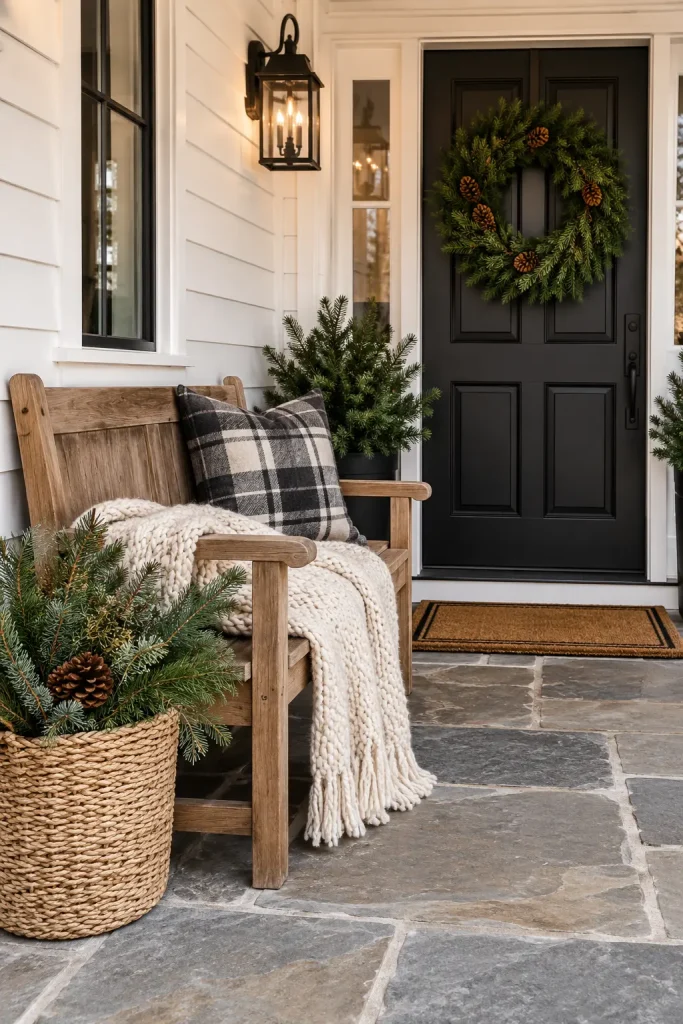
A wooden bench gives a porch both practical seating and a place to display seasonal accents. A weathered oak or cedar bench looks especially inviting when paired with a cream knitted throw, a restrained plaid cushion, and a basket filled with evergreen branches.
Keep the arrangement simple enough that the bench remains usable. For exposed porches, select outdoor-suitable cushions and blankets, or bring the textiles inside when rain, snow, or damp conditions are expected.
For a smaller entrance, a narrow bench against the wall can create the same welcoming effect without overwhelming the space.
4. Decorate With Winter Evergreen Planters
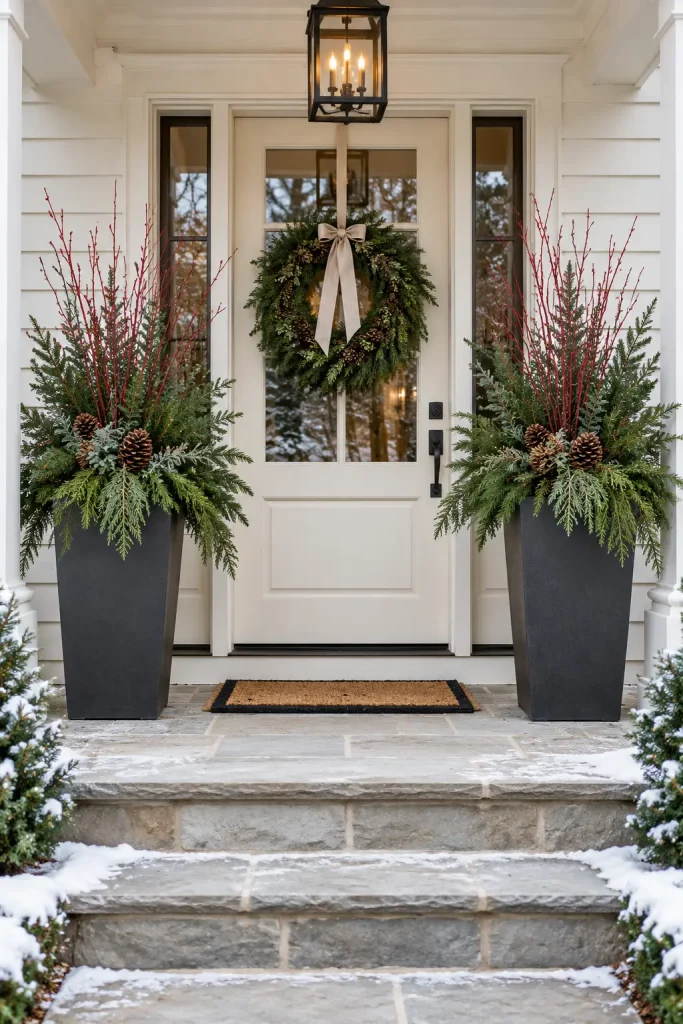
Winter planters add height and greenery to a porch where flowers may no longer be in season. Start with substantial containers in charcoal, black, stone, or weathered terracotta, then fill them with evergreen branches and a few contrasting stems.
A balanced arrangement might include:
- Pine or fir branches for a full green foundation.
- Cedar foliage for a softer, cascading shape.
- Red-twig dogwood stems for a bright seasonal accent.
- Pinecones for natural texture.
Use branches suited to your local climate, and make sure the containers can tolerate outdoor winter conditions. If you use soil or floral foam to hold the arrangement, keep the container stable and protected from tipping.
5. Hang a Simple Winter Wreath
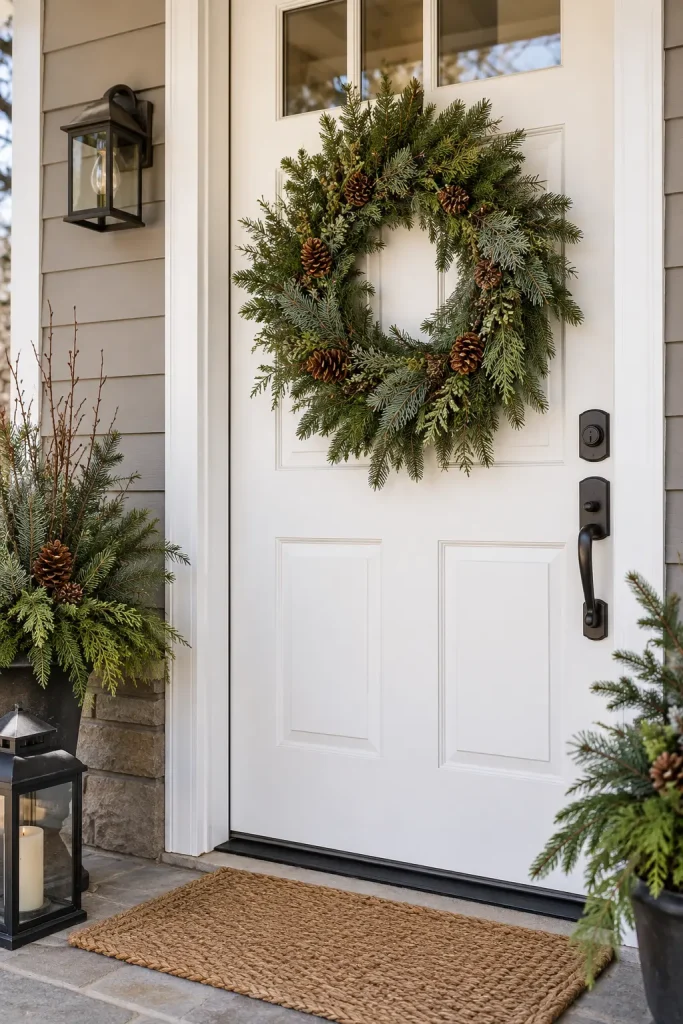
A wreath is one of the easiest ways to give a front entrance a seasonal update. Instead of a brightly decorated holiday wreath, choose a design made from evergreen foliage, eucalyptus-style leaves, pinecones, or bare branches.
For a traditional home, a full green wreath looks beautiful against a white or dark-painted door. A sparse twig wreath suits a modern or Scandinavian-inspired exterior.
The scale matters: a tiny wreath can disappear on a large door, while an oversized one may compete with surrounding architectural details. Measure your door before choosing a size, and use a secure hanger that won’t damage the finish.
6. Add a Pair of Evergreen Trees in Decorative Pots
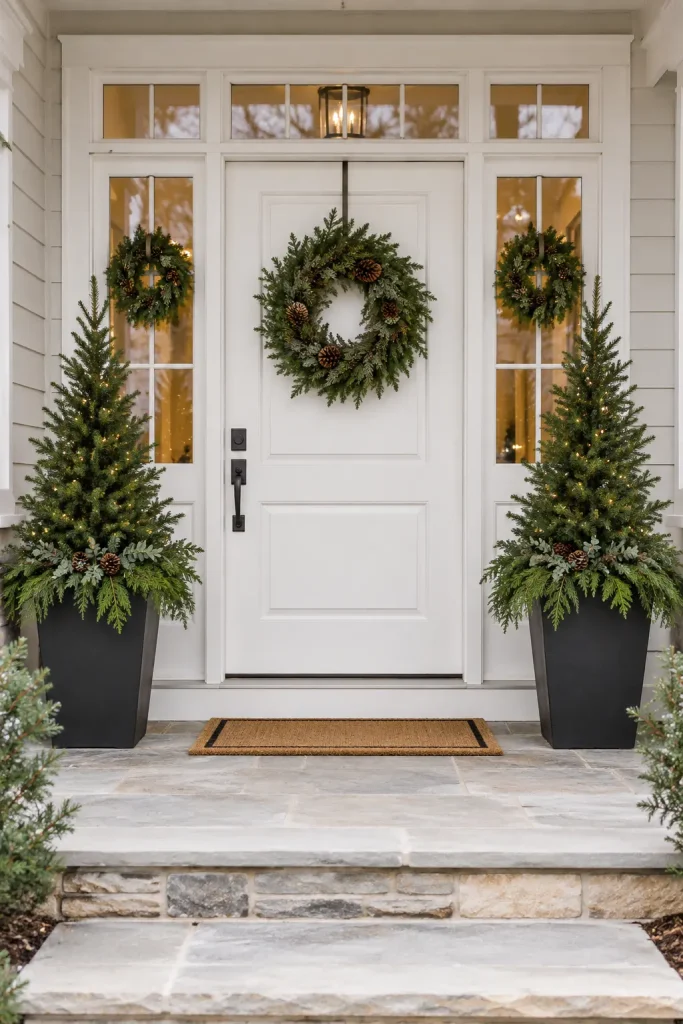
Small evergreen trees create a graceful, symmetrical entrance without requiring elaborate decorations. Place one tree on each side of the front door, using matching pots to create a coordinated appearance.
Dwarf conifers or other locally suitable evergreen varieties can work well, provided the plant and container can tolerate your winter temperatures. If you prefer a temporary display, artificial outdoor trees are another option.
Choose trees that fit the scale of the porch. A narrow entrance usually looks better with slender upright trees than with wide, spreading varieties.
7. Use Warm White String Lights for a Soft Glow
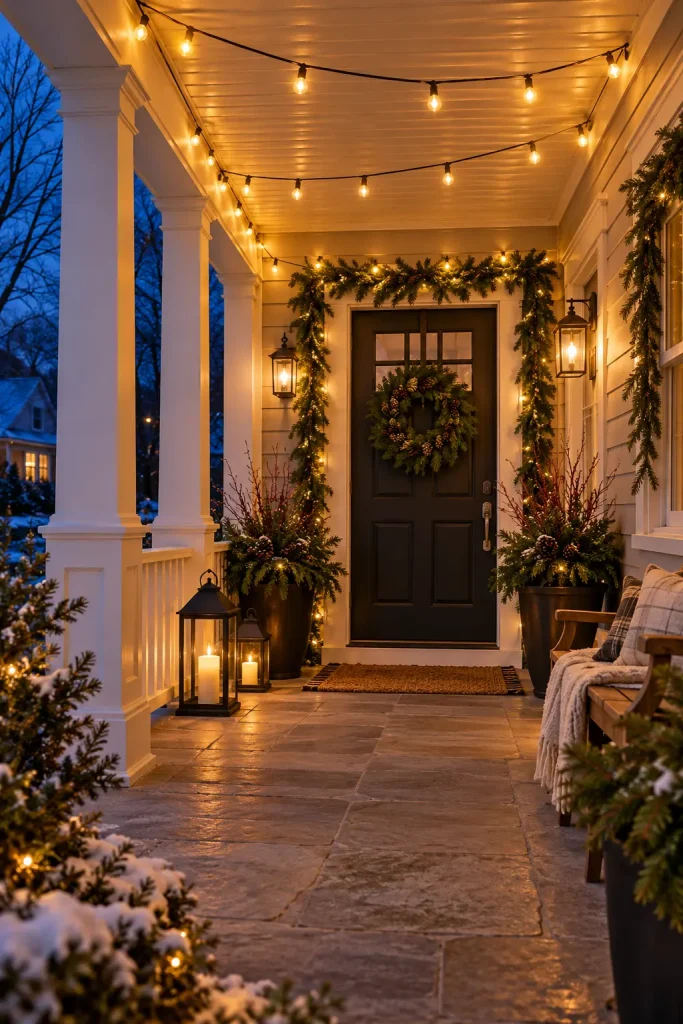
Warm white lights make a winter porch feel welcoming after sunset. String lights along the porch ceiling, wrap them around suitable railing sections, or weave them through evergreen garlands for a subtle glow.
Keep the lighting restrained so it complements the architecture rather than competing with it. On a covered porch, a few evenly spaced strands can define the ceiling and make the entrance feel more intimate.
Choose lights and extension cords rated for their intended outdoor conditions, and follow the manufacturer’s installation and electrical safety instructions. Avoid overloading outlets or allowing cords to cross walking paths.
8. Layer a Winter Doormat With a Larger Outdoor Rug
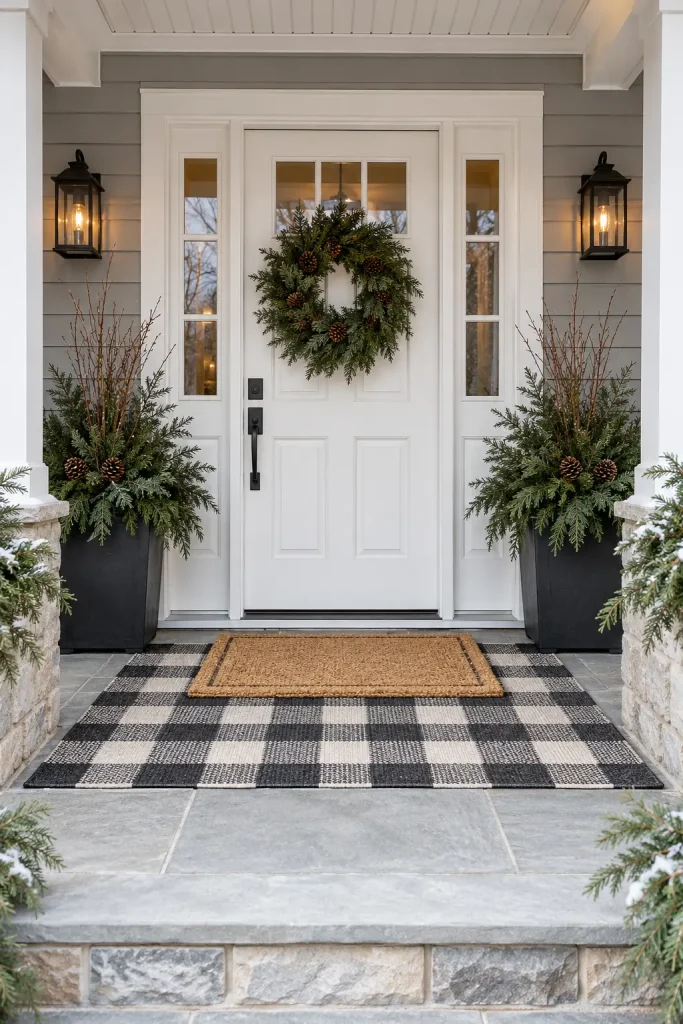
Layering a doormat over a larger outdoor rug adds pattern and definition to the entrance without taking up valuable floor space. A charcoal plaid rug paired with a simple natural-fiber mat creates a classic winter look, while a black-and-ivory geometric pattern feels more contemporary.
The key is choosing pieces that differ in scale. A larger rug establishes the foundation, and the smaller doormat provides a practical surface for wiping shoes.
Do: Select weather-resistant materials with a suitable nonslip backing.
Don’t: Place loose rugs on icy, uneven, or slippery steps. Keep the entrance stable and safe, especially during freezing weather.
9. Style a Rustic Porch With Wooden Crates
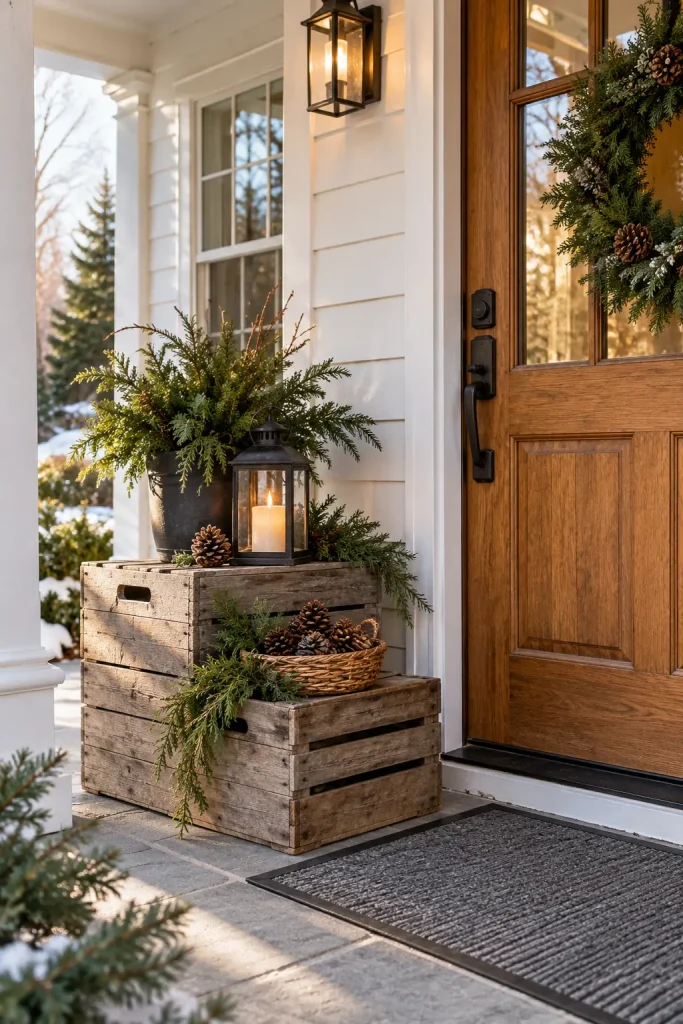
Weathered wooden crates add height, rustic character, and a useful surface for seasonal accessories. Arrange two or three sturdy crates near a porch wall, then use them to display a small lantern, a basket of pinecones, or a bundle of evergreen branches.
Vary the height of the objects rather than filling every available surface. A taller branch arrangement, a medium-sized lantern, and a low basket create a pleasing visual rhythm.
Choose stable crates that can withstand outdoor conditions. Avoid stacking them where they could tip into the walkway or obstruct access to the door.
10. Decorate With Birch Logs and Natural Branches
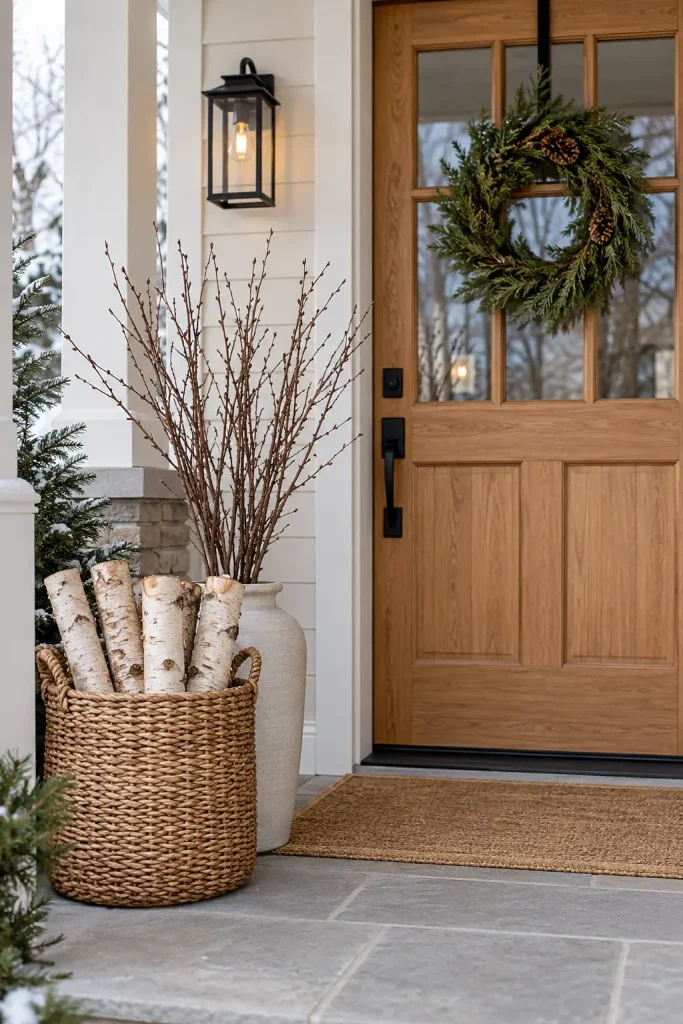
Birch logs and bare branches bring a woodland-inspired quality to winter porch decor. Their pale bark contrasts beautifully with dark doors, green foliage, and black metal accessories.
Stand a small bundle of clean birch logs in a sturdy basket or decorative holder, then place a tall arrangement of branches nearby. This works particularly well with Scandinavian, rustic, and minimalist exteriors.
If the porch is exposed to rain or snow, select weather-appropriate containers and expect natural wood to change in appearance over time. Keep decorative logs away from heat sources and out of the main walking route.
11. Bring in Deep Forest Green Accents
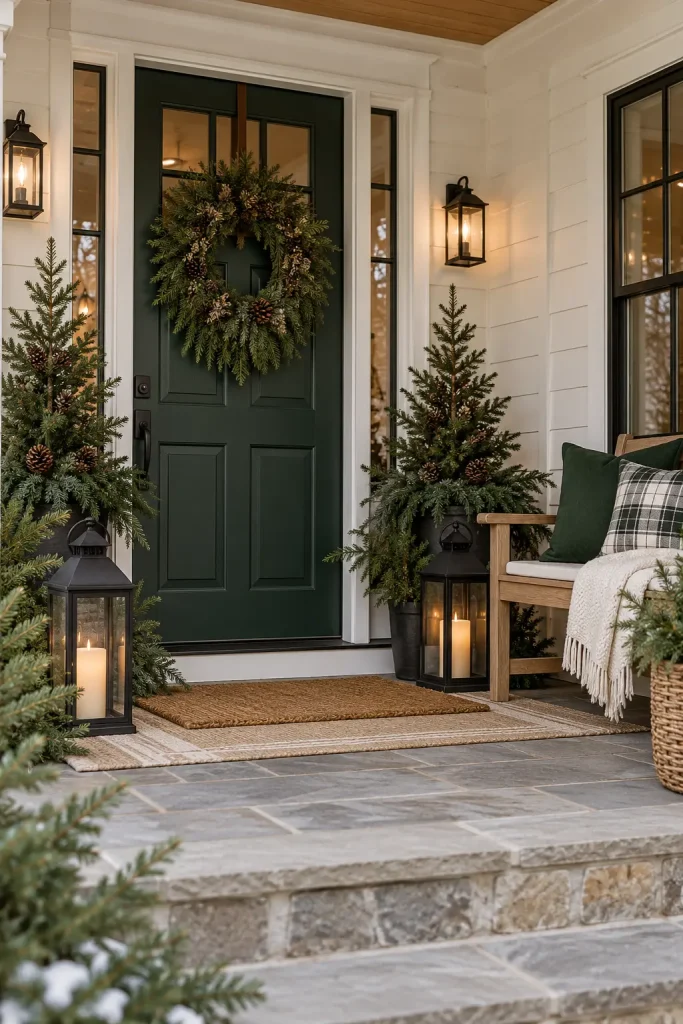
Forest green gives a porch a rich seasonal palette without relying on traditional red holiday decorations. Use the color on the front door, outdoor cushions, a planter, or a wreath ribbon.
For a cohesive look, combine deep green with warm ivory, natural wood, and a small amount of black. These contrasting tones create depth while allowing the greenery to remain the main decorative feature.
If repainting the door isn’t practical, introduce the color through removable or replaceable accessories instead.
12. Make a Snowy White and Silver Display
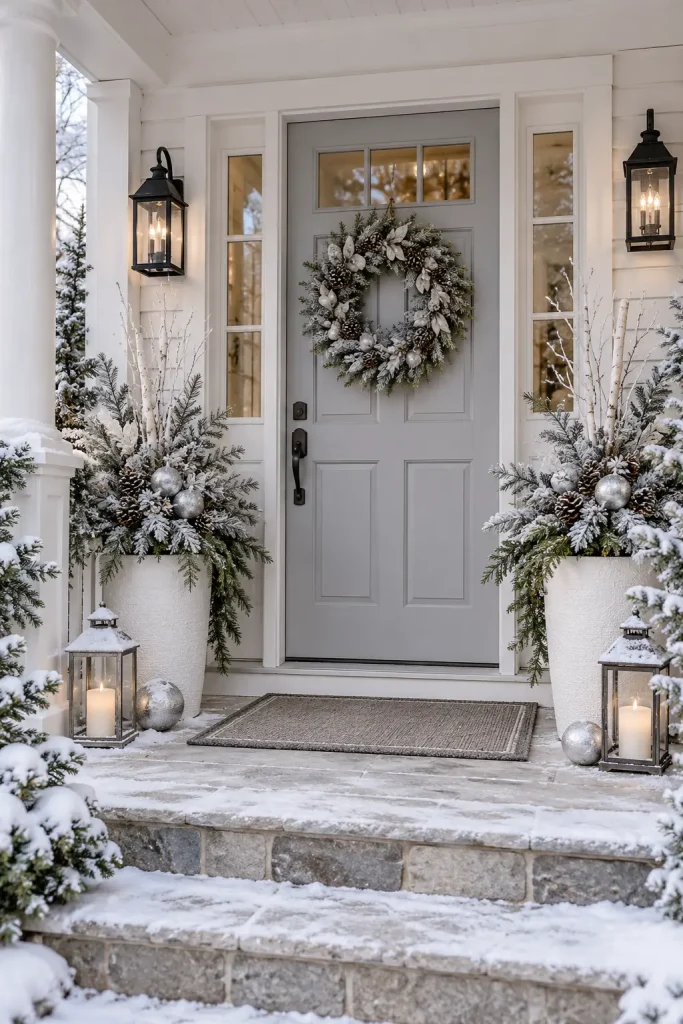
A white-and-silver palette creates a quiet winter look that feels crisp and refined. Combine frosted artificial branches, white ceramic planters, silver-toned ornaments, and soft gray textiles for a coordinated arrangement.
The secret is balancing cool finishes with a few natural elements. A wooden bench or woven basket can prevent the display from looking too stark, while subtle differences in texture add depth without introducing additional colors.
This style is especially effective against charcoal, slate-gray, or white exterior walls.
13. Add a Pop of Burgundy or Muted Red
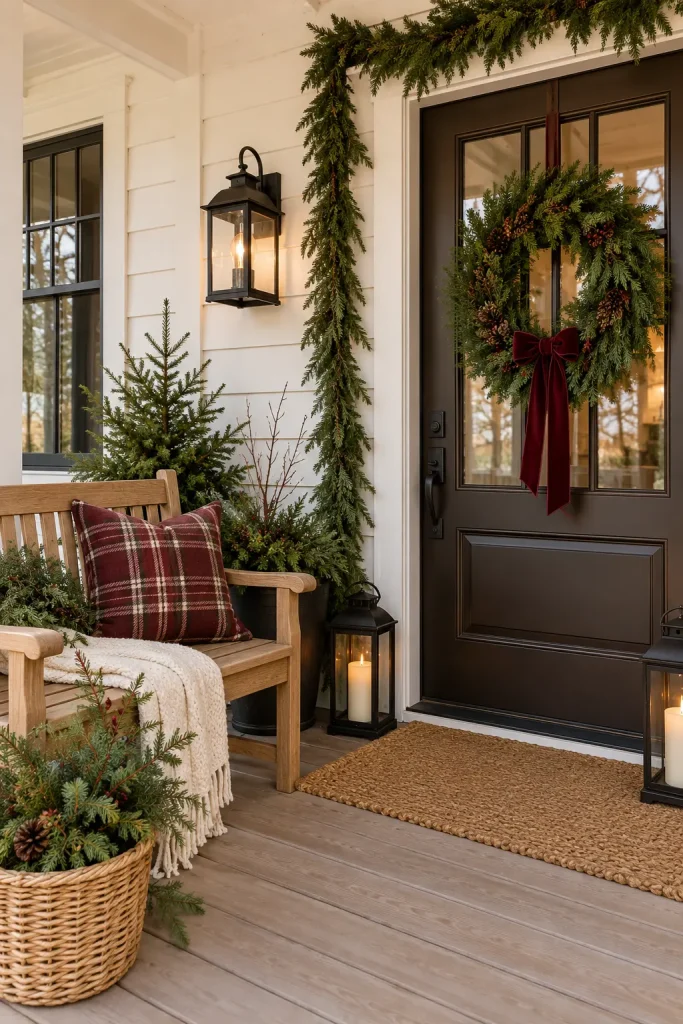
A small amount of burgundy or muted red brings warmth to a winter porch while keeping the overall design understated. Instead of covering the entrance in bright red decorations, introduce the shade through a plaid cushion, a velvet ribbon, or a few red winter berries in a planter.
Pair these accents with natural evergreen foliage, cream textiles, and medium-toned wood. The result feels seasonal but can remain in place after Christmas.
Use red sparingly if your exterior already has strong colors, such as a brick facade or a brightly painted door.
14. Use Tall Branches for Architectural Height
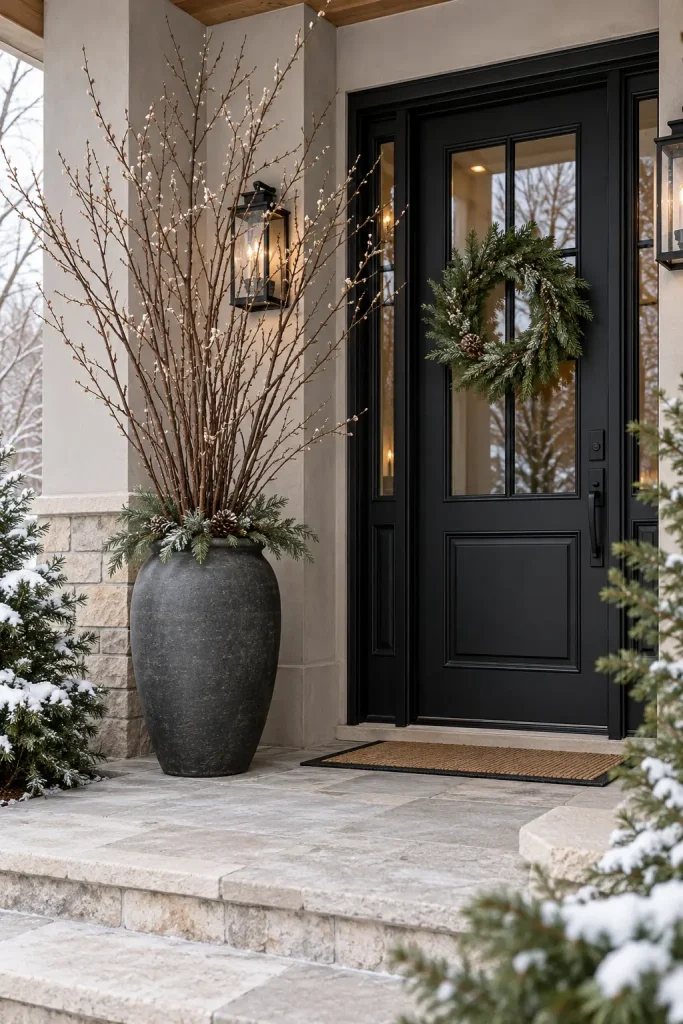
Tall branches create a sculptural focal point without requiring many small decorations. Place them in a substantial urn or weighted container beside the entrance, allowing the branches to extend upward and form an open silhouette.
This approach works particularly well on modern porches, where clean lines and fewer decorative objects create a more deliberate appearance. Bare branches suit a minimalist aesthetic, while branches with evergreen foliage create a fuller woodland look.
Choose a container with a wide, stable base, particularly if the porch is windy. Keep the arrangement clear of overhead obstructions and the door’s swing.
15. Arrange a Basket of Pinecones and Greenery
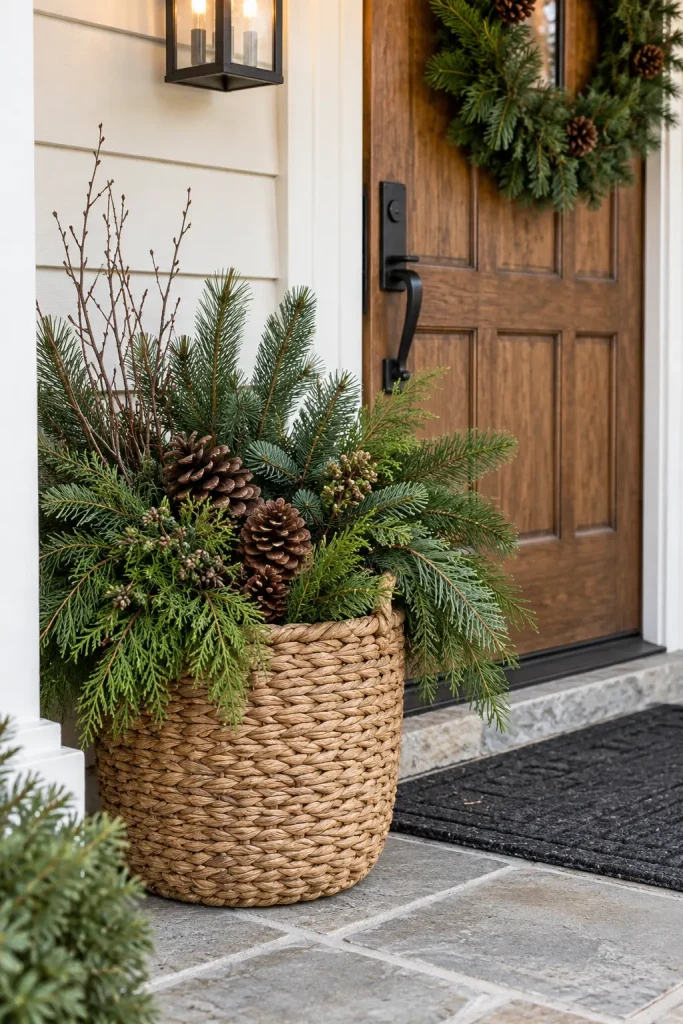
A large woven basket filled with pinecones and greenery is an easy way to add natural texture to your porch. The combination feels relaxed rather than overly decorated, making it suitable for a farmhouse entrance, cottage-style home, or simple suburban porch.
Use a weather-resistant basket or a container designed for outdoor display. Fill it loosely so the branches retain their natural shape, then add pinecones at different heights for visual interest.
For a smaller entrance, use one medium-sized basket rather than several containers. A single well-proportioned arrangement often looks more intentional than a collection of small accessories.
16. Create a Charming Cottage-Style Entrance
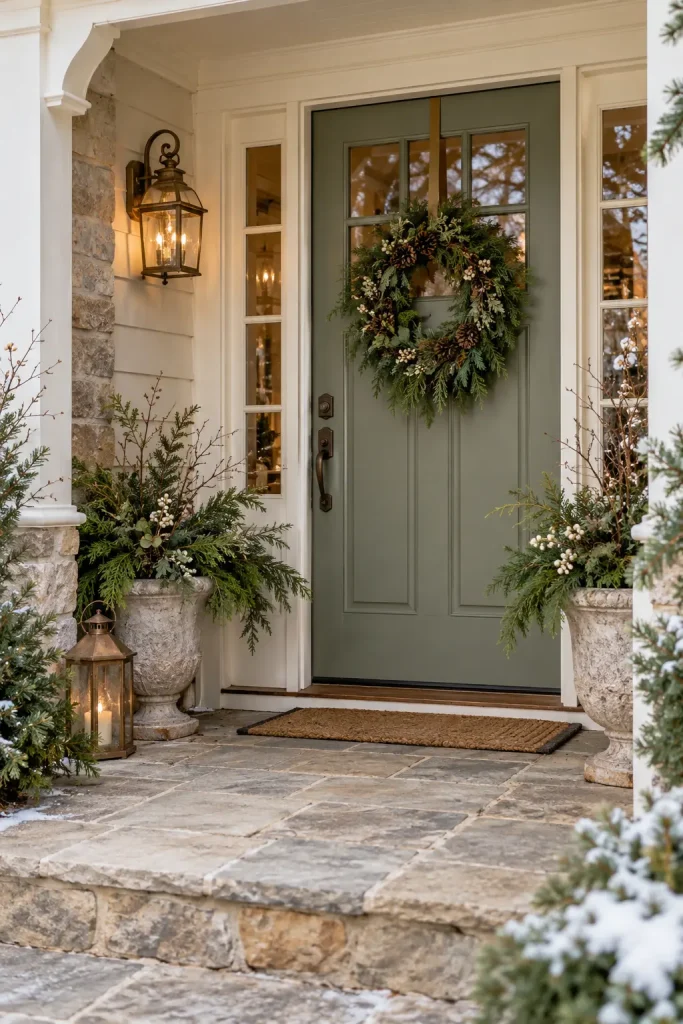
Cottage-style winter decor combines soft colors, natural materials, and a slightly informal arrangement. A pale sage or muted blue door, a simple evergreen wreath, and vintage-inspired lanterns can make the entrance feel welcoming without looking overly polished.
Add a small wooden stool or weathered bench, then finish with a couple of containers holding winter-suitable greenery. Let the textures do most of the decorating rather than filling the porch with accessories.
Styling tip: If your home has brick, stone, or painted clapboard siding, choose accents that complement the existing exterior instead of introducing an entirely new color scheme.
17. Decorate a Small Porch With a Vertical Arrangement
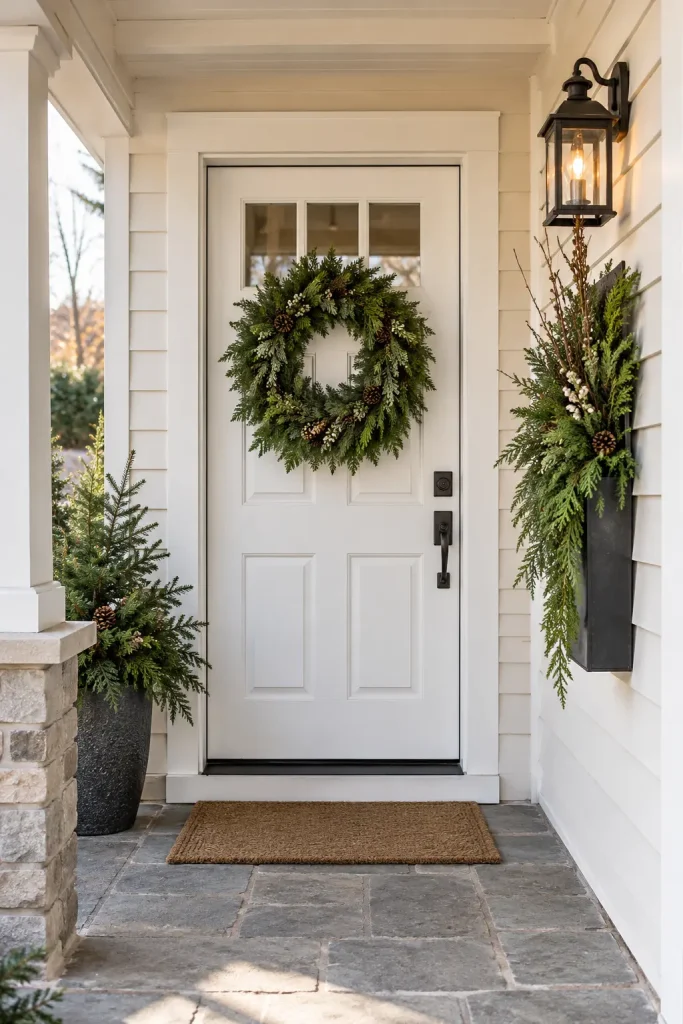
A small porch doesn’t need an elaborate display to look seasonal. Use vertical space to create interest while keeping the floor clear. A wreath on the door, a narrow wall-mounted planter, and a slim lantern can establish a complete winter look without crowding the entrance.
For apartments, townhouses, and compact front steps, this approach also makes everyday access easier.
Try this simple combination:
- Hang a medium-sized evergreen wreath on the door.
- Add one narrow planter or a small wall-mounted greenery arrangement.
- Place a compact lantern beside the door, away from the walking path.
Keep decorations proportionate to the doorway so the entrance remains the main focal point.
18. Style the Porch With Warm Wood and Cream
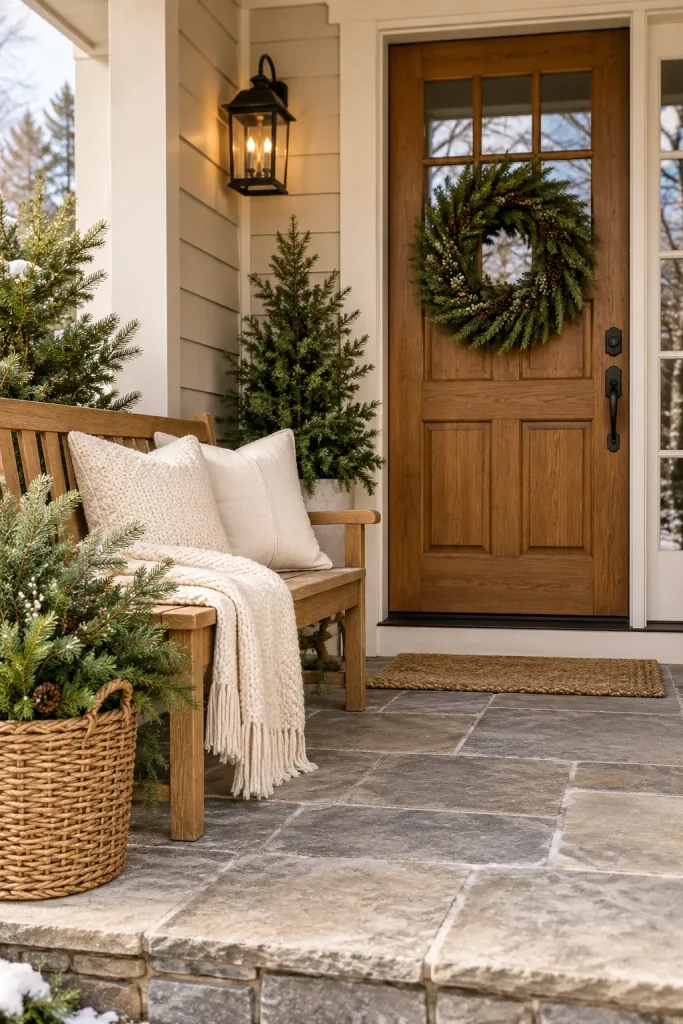
Warm wood and cream create a calm winter palette that works across many exterior styles. A natural oak bench, ivory cushions, and a woven basket bring softness to a porch without relying on bright seasonal colors.
To keep the arrangement from feeling flat, mix materials rather than introducing too many shades. Wood grain, knitted fabric, woven fibers, and evergreen foliage provide enough contrast to make the display interesting.
This is a particularly useful approach if your home already features warm timber doors, beige siding, or natural stone.
19. Add a Vintage Sled for Rustic Seasonal Character
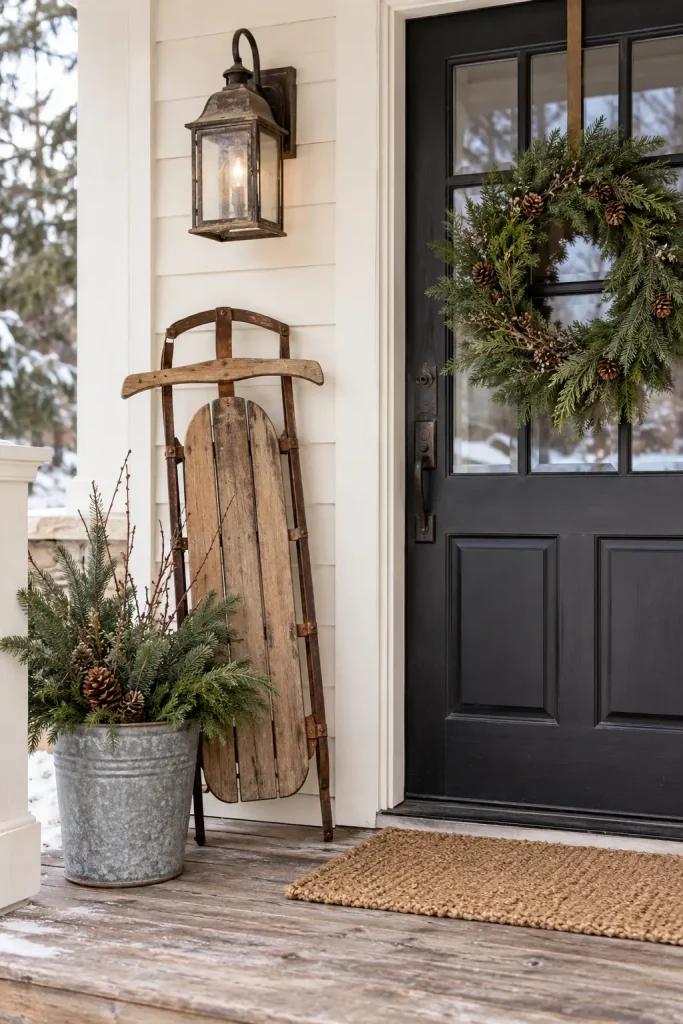
A vintage wooden sled gives a winter porch a nostalgic, outdoors-inspired feel. Lean one against a wall beside the entrance and pair it with a galvanized bucket of evergreen branches or a small pinecone arrangement.
The sled should be the main decorative feature, so avoid surrounding it with too many competing objects. Weathered wood and aged metal already provide plenty of texture.
If you don’t own a vintage sled, a simple wooden toboggan-style decorative piece can create a similar visual effect. Choose one in good condition and secure it against the wall so it cannot slide or fall.
20. Incorporate Black and Natural Wood for Modern Contrast
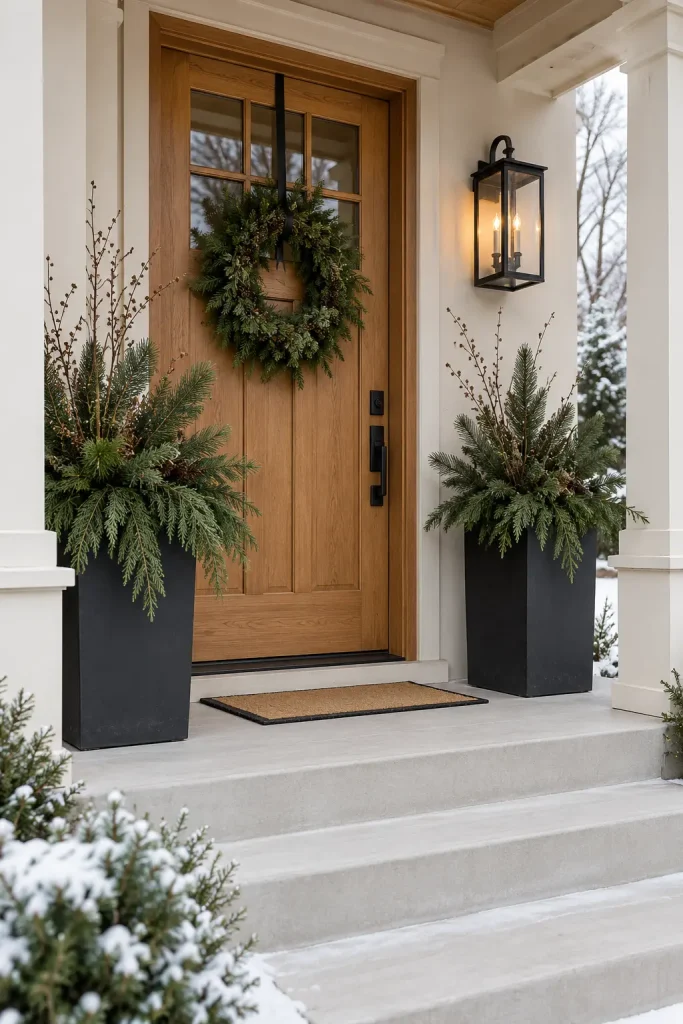
Black accents create definition, while natural wood prevents a winter porch from feeling too stark. This combination is particularly effective on contemporary homes with simple lines, neutral walls, and minimal architectural ornament.
Start with a natural wood door or wooden bench, then add matte-black planters, a dark lantern, and fresh-looking evergreen foliage. Leave some open space around each element so the contrast remains clear.
For a budget-conscious update, changing a few accessories can establish the look without repainting the exterior or buying new furniture.
21. Add Cozy Plaid Textiles to a Covered Porch
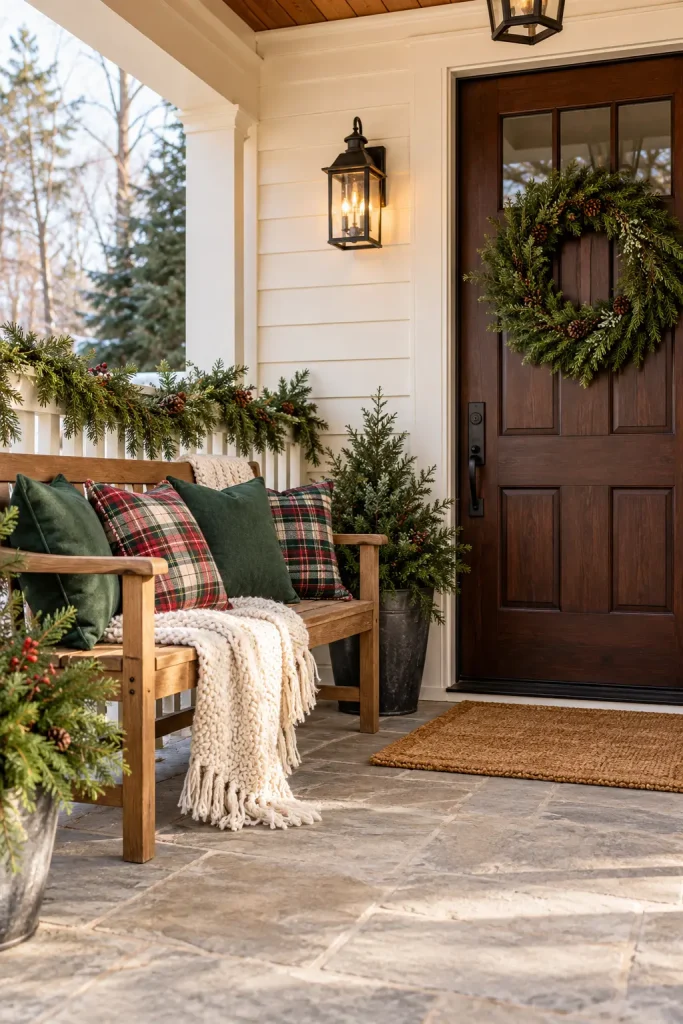
Plaid textiles introduce the familiar warmth of winter without requiring a complete seasonal makeover. A red-and-green plaid cushion feels traditional, while charcoal, cream, and muted green checks suit a more understated exterior.
Place one or two cushions on a covered porch bench and add a folded throw for texture. Keep patterns coordinated by repeating one or two colors elsewhere, such as in a wreath ribbon or planter.
Choose outdoor-suitable fabrics for exposed areas, and bring cushions and blankets inside when they could become wet. Damp textiles can develop unpleasant odors and may deteriorate more quickly.
22. Create a Welcoming Winter Porch With Candlelight
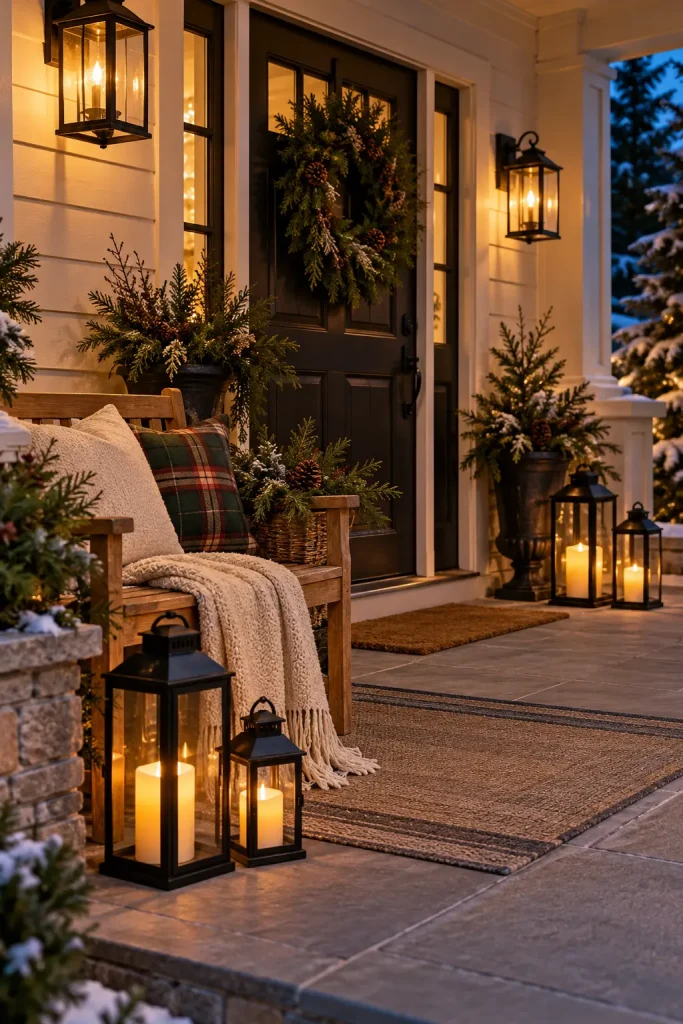
A few points of warm light can make a winter porch feel especially welcoming on dark evenings. Arrange flameless candles inside lanterns near the door or on a stable, sheltered bench, and let the warm glow complement the porch’s existing lighting.
Rather than illuminating every corner, concentrate the light around the entrance. This creates a focal point and keeps the arrangement visually simple.
For exposed porches, choose products suitable for outdoor use. Avoid real flames near garlands, dry branches, textiles, and other combustible decorations.
23. Use Galvanized Metal Containers for Farmhouse Charm
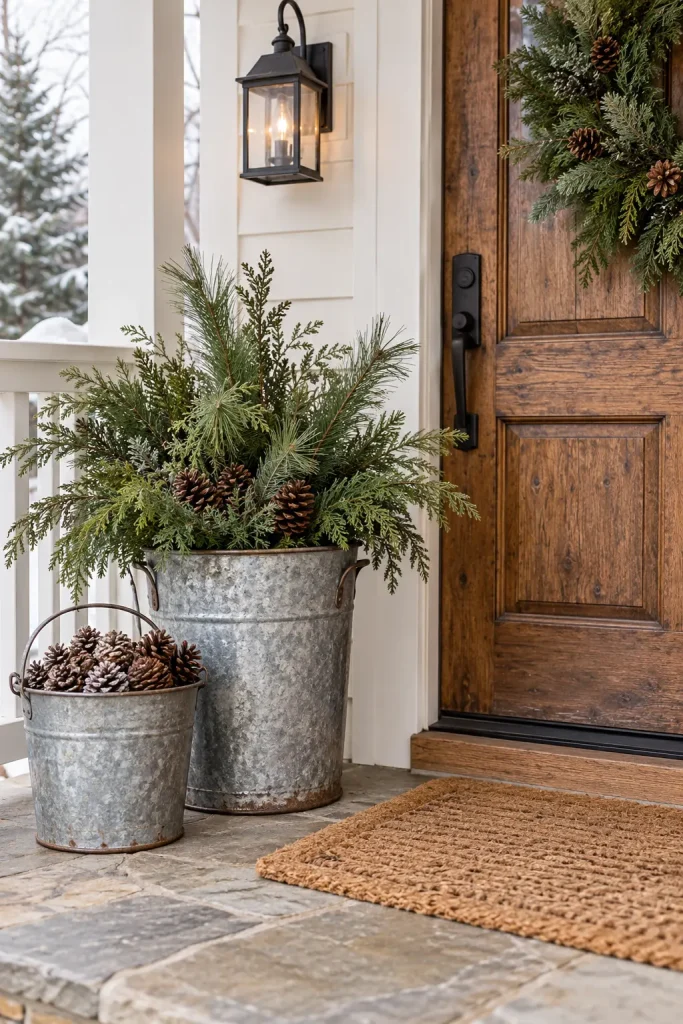
Galvanized metal containers introduce a practical, rustic texture that pairs well with wood and greenery. Use a large metal bucket for evergreen branches or a smaller tub for pinecones and natural accents.
The silvery finish contrasts with deep green foliage without adding a strong new color to the palette. It also complements brick, white siding, and weathered wood.
Choose containers with a stable base, and consider placing them under a covered area if you want to preserve their finish. Make sure water can drain appropriately so it doesn’t collect and freeze inside the container.
24. Decorate With Natural Stone and Evergreen Greenery
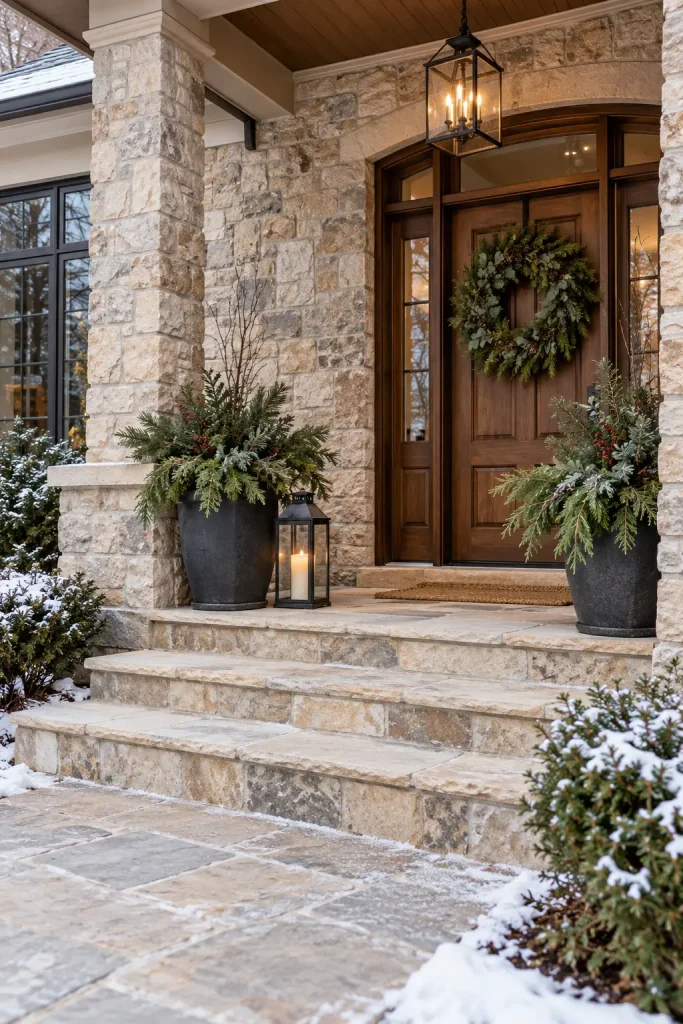
If your home features a stone facade or stone steps, let those materials become part of the winter design. Their natural color variation provides a textured background for evergreen foliage, understated lanterns, and simple wooden accessories.
Choose greenery that contrasts with the stone rather than blending into it. Deep green branches stand out against pale limestone, while silvery foliage can complement darker gray stone.
Keep the decorative elements relatively restrained. A pair of planters and one wreath may be all the entrance needs when the architecture already provides plenty of visual interest.
25. Bring in a Touch of Blue for a Frosty Winter Look
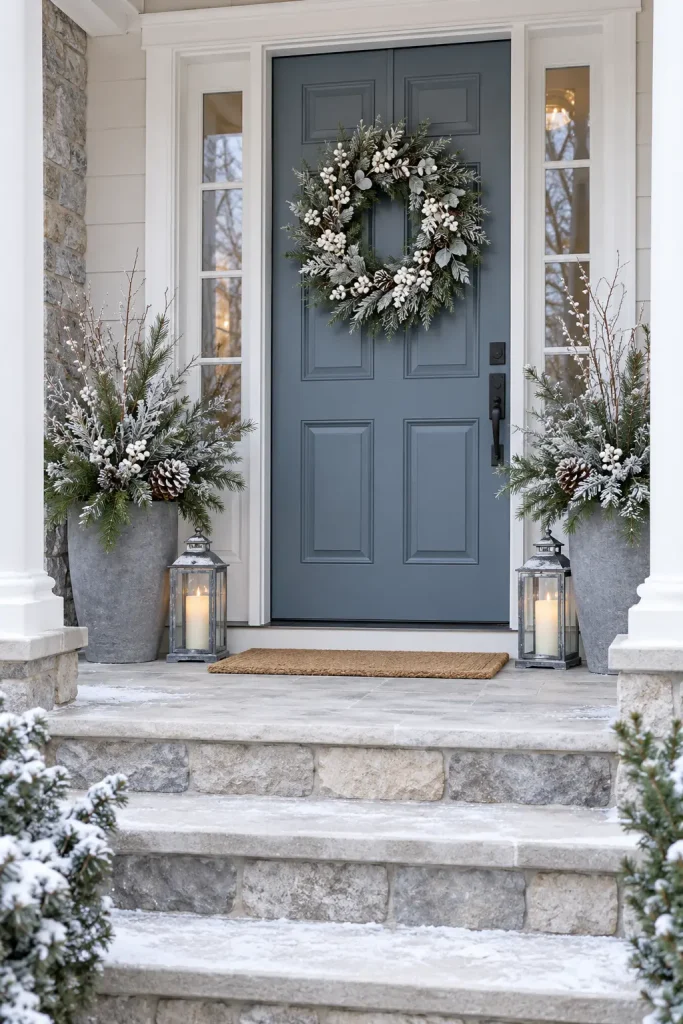
Dusty blue, slate, and icy blue-gray accents create a fresh alternative to traditional winter red and green. These shades work especially well with white trim, gray siding, and natural stone.
You can introduce blue through the front door, a weather-resistant cushion, a ceramic planter, or a muted ribbon on a wreath. Pair the color with ivory and evergreen foliage to keep the arrangement from feeling too cold.
For an easy seasonal update, leave the architecture unchanged and use just one or two blue accessories. This gives the porch a distinct winter palette without requiring a major decorating project.
26. Design a Natural Woodland-Inspired Porch
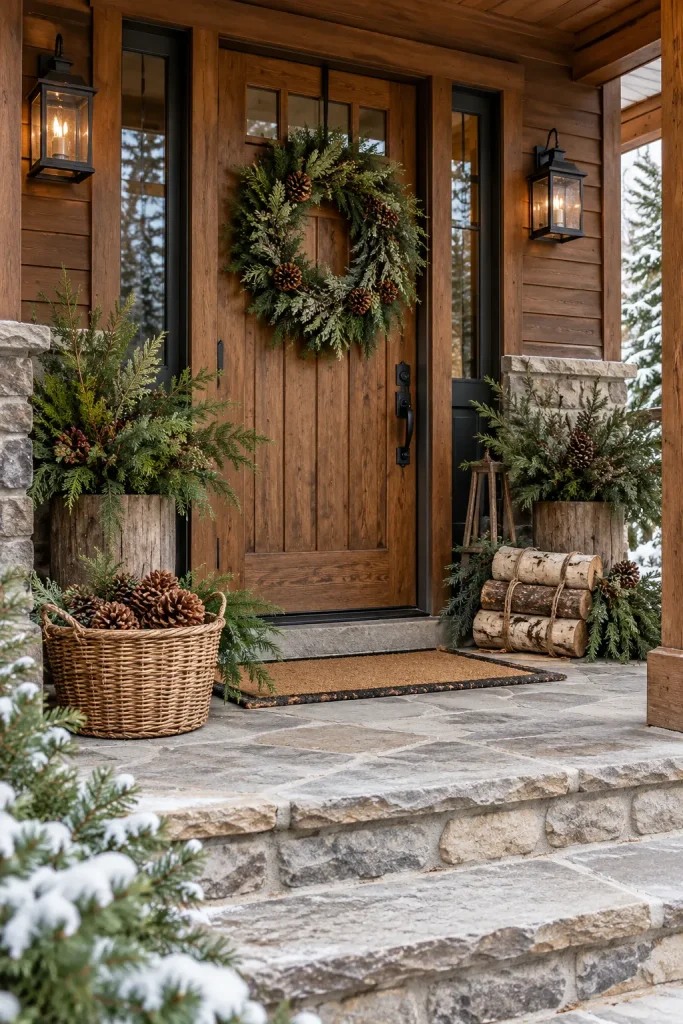
A woodland-inspired porch celebrates the natural materials associated with winter. Combine cedar branches, pinecones, bare twigs, woven baskets, and weathered wood to create an arrangement that feels connected to the outdoors.
The most successful woodland displays mix different shapes and textures without becoming cluttered. Use a full evergreen wreath as the focal point, then place a basket of pinecones or a small bundle of decorative logs nearby.
This style works particularly well on cabins, cottages, and homes with natural wood siding. It can also soften a more conventional suburban entrance through a few carefully chosen accents.
27. Keep It Simple With a Minimalist Winter Porch
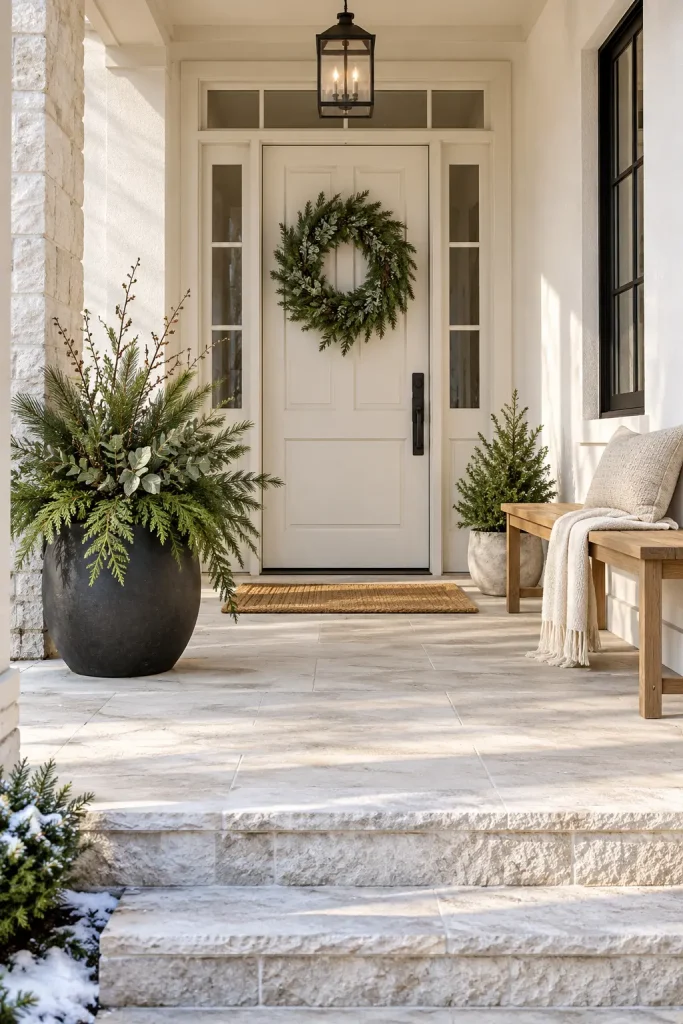
Sometimes the most charming winter porch is the one with the fewest decorations. A simple wreath, one substantial planter, and a clean doormat can create a finished entrance without filling every corner.
Minimalist decorating works especially well on small porches, modern homes, and entrances with attractive architectural details. Instead of adding more accessories, pay attention to scale, spacing, and the condition of the existing surfaces.
For a balanced arrangement, choose one main focal point and one supporting element. For example, hang an evergreen wreath on the door and place a charcoal planter beside it. If the porch has enough room, a slim wooden bench can complete the scene.
Why it works: Leaving negative space allows each decorative piece to stand out. It also makes the porch easier to clean, maintain, and use throughout winter.