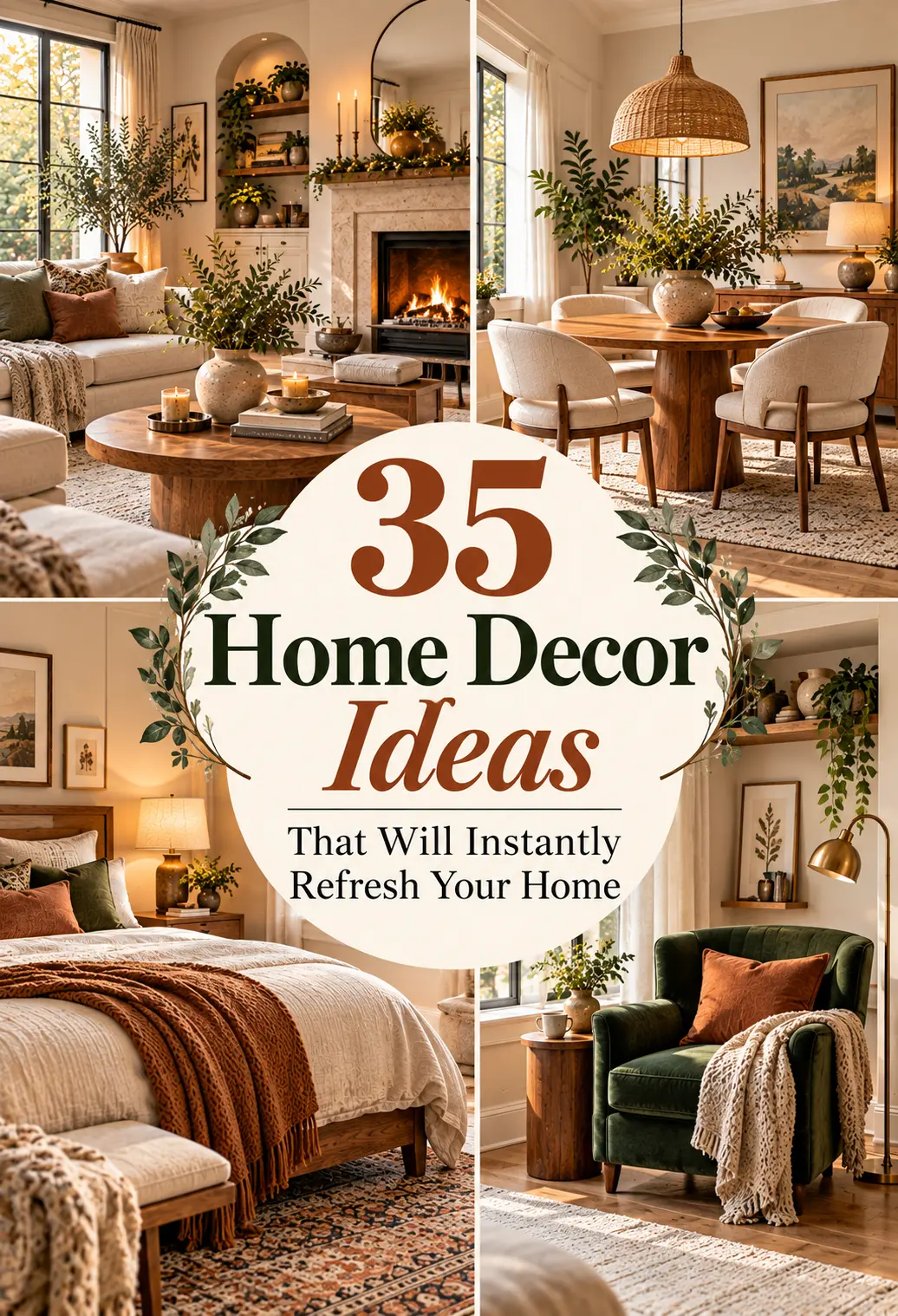
35 Home Decor Ideas That Will Instantly Refresh Your Home
A home doesn’t need a complete renovation to feel fresh again. Sometimes the biggest difference comes from small changes: moving furniture, introducing a new color, changing the lighting, layering texture, or giving an overlooked wall a stronger purpose. These home decor ideas are designed for real homes, from apartments and condos to suburban houses and larger spaces, with a mix of accessible updates and more substantial upgrades. The goal isn’t to make every room look expensive or overly styled. Instead, focus on creating rooms that feel intentional, comfortable, and connected to the way you actually live. From statement lighting and oversized art to natural materials, refreshed entryways, and better furniture arrangements, these ideas can help you see familiar spaces differently.
1. Rearrange Your Furniture for Better Flow
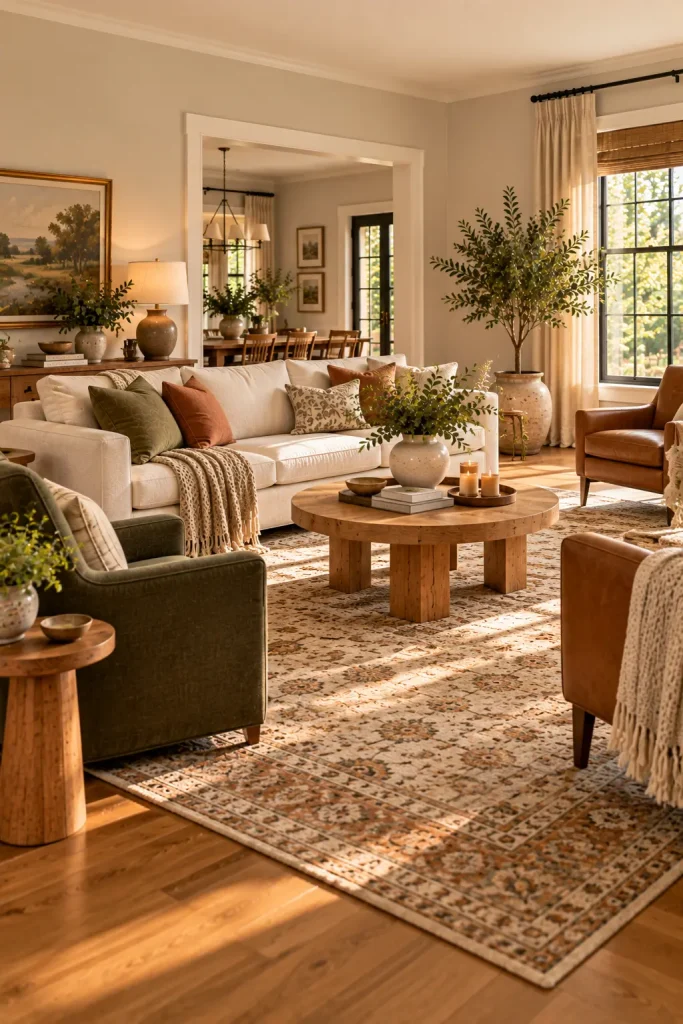
Before buying anything new, reconsider where your existing furniture sits. Pulling a sofa slightly away from the wall, angling a chair toward the conversation area, or repositioning a coffee table can make a room feel more balanced. Leave enough space for comfortable movement between major pieces rather than filling every available corner. In a living room, try creating a defined conversation zone instead of pushing all the furniture toward the perimeter. This simple change can reveal unused floor space and make familiar pieces feel new.
Quick Tip: Take a photo of the room before rearranging it. Seeing the space as a photograph can make proportion and balance issues much easier to notice.
2. Add an Oversized Piece of Artwork
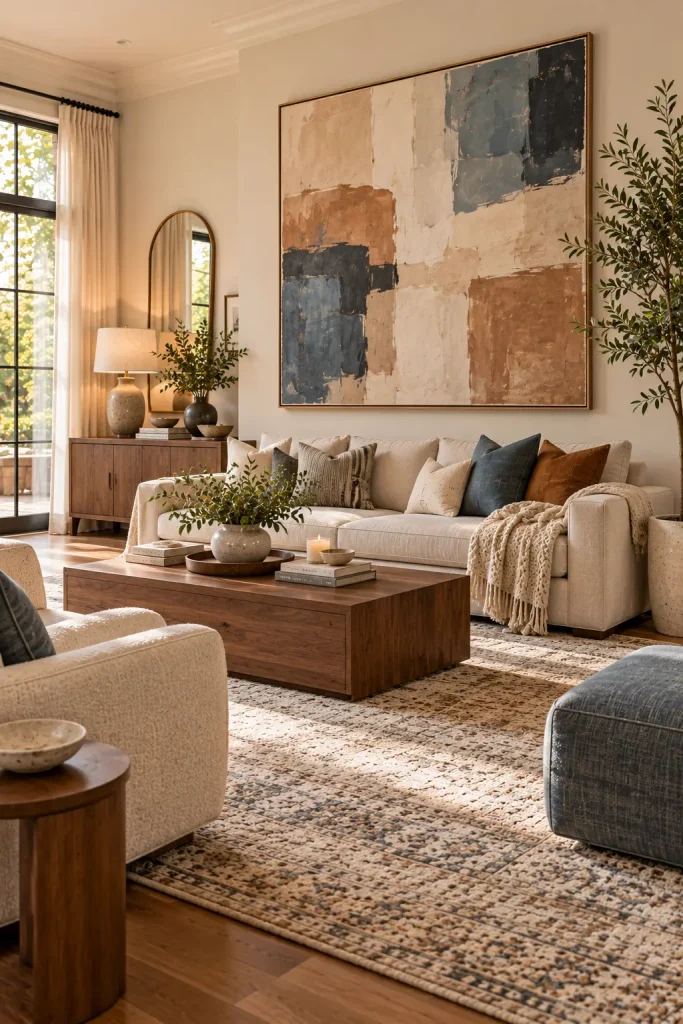
A large piece of artwork can give an otherwise ordinary wall a clear focal point. Instead of filling a wall with many small frames, consider one substantial canvas, photograph, abstract composition, or textile artwork. The scale should relate to the furniture beneath it; artwork above a sofa, for example, generally looks more intentional when it has enough visual presence to anchor the seating area. Choose colors that connect with existing upholstery or accessories rather than introducing a completely unrelated palette. Even a simple room can feel much more finished when one wall has a deliberate focal point.
For a budget-conscious version, look for large-format prints or create a simple abstract piece yourself. The impact comes largely from scale and placement rather than the price of the artwork.
3. Bring in a Large Statement Mirror
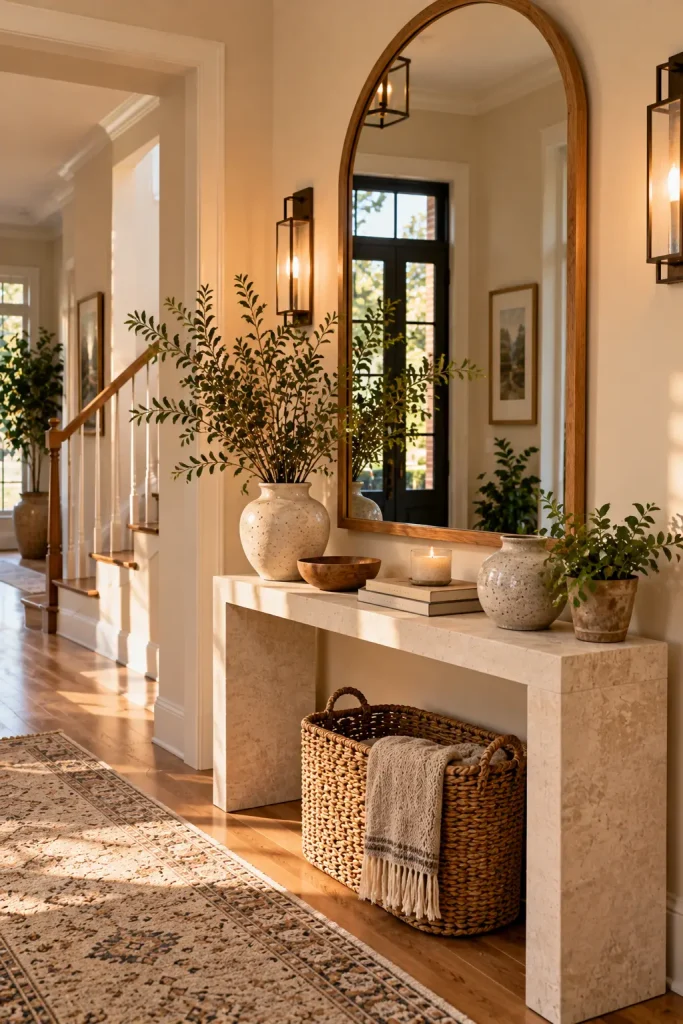
A generously sized mirror can brighten a room while adding architectural presence without requiring major construction. Place one opposite or near a window when possible so it can reflect natural light and visually extend the space. In an entryway, a tall mirror can make the area feel more useful while giving you a practical place for a final glance before leaving. Choose the frame according to the room’s character: warm wood suits relaxed interiors, while metal can add a cleaner modern note. Avoid squeezing an oversized mirror into a narrow passage where it could interfere with movement.
4. Refresh the Room With a New Area Rug
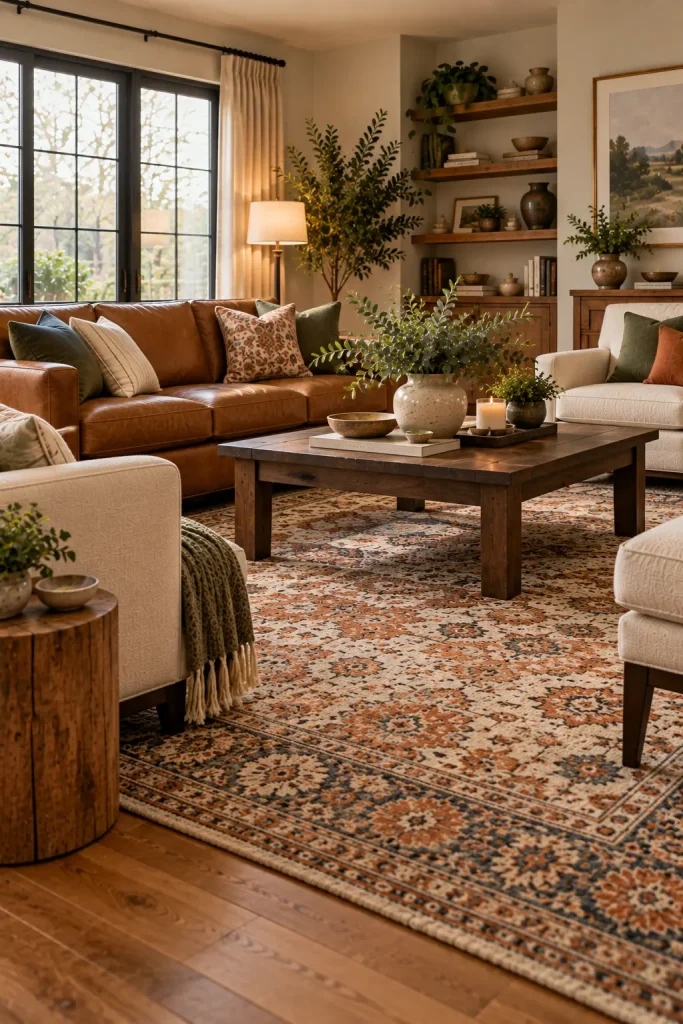
Changing the rug can alter the entire visual foundation of a room. A rug introduces color, pattern, softness, and a sense of scale, while also helping separate one functional zone from another in an open floor plan. When choosing a size, think about how much of the furniture should sit on or around it rather than selecting a rug based only on its pattern. For busy households, consider durable textures and patterns that are forgiving of everyday use. A restrained rug can also be useful when the room already contains colorful furniture or artwork.
Do / Don’t
- Do: Match the rug’s scale to the furniture grouping.
- Do: Use its colors to connect existing accents.
- Don’t: Choose a tiny rug simply because it is easier to fit.
- Don’t: Let a bold pattern compete with several other major focal points.
5. Layer Several Sources of Lighting
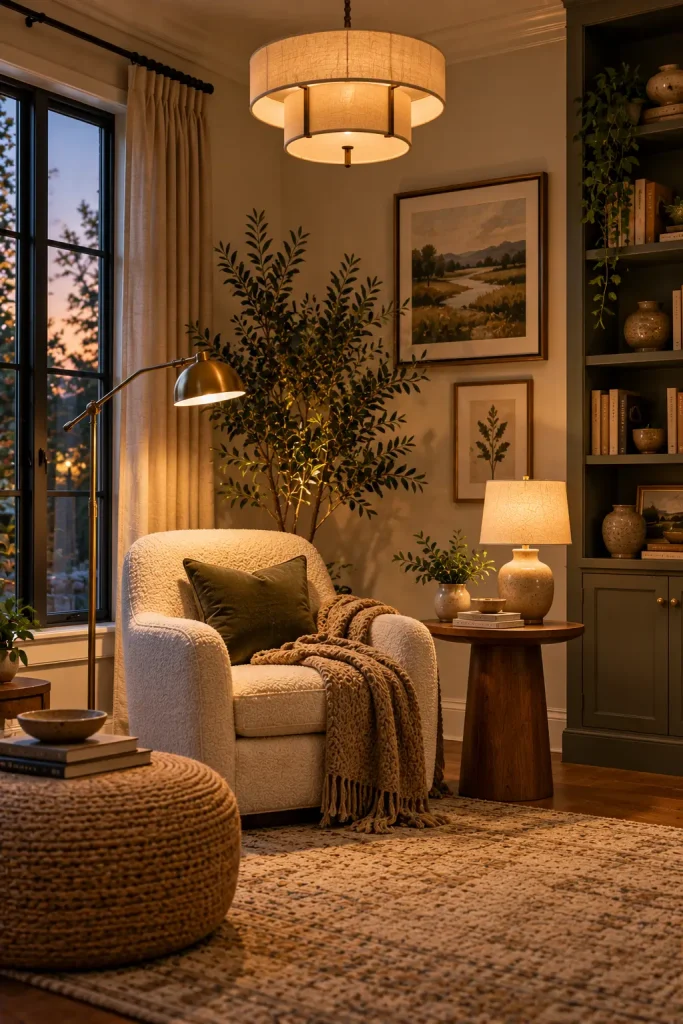
One ceiling fixture rarely creates the most comfortable atmosphere. A more considered lighting plan combines overhead illumination with table lamps, floor lamps, sconces, or small accent lights. The result is a room that can shift from bright and functional during the day to warm and relaxed in the evening. Place lamps where people actually use the room rather than treating them as decorative objects alone. A reading chair needs useful light, while a dark corner may benefit from a softly glowing floor lamp.
Think in layers:
- Ambient: General room illumination.
- Task: Focused light for reading, working, or specific activities.
- Accent: Softer light that highlights artwork, shelving, plants, or architecture.
6. Style an Empty Corner With a Tall Plant
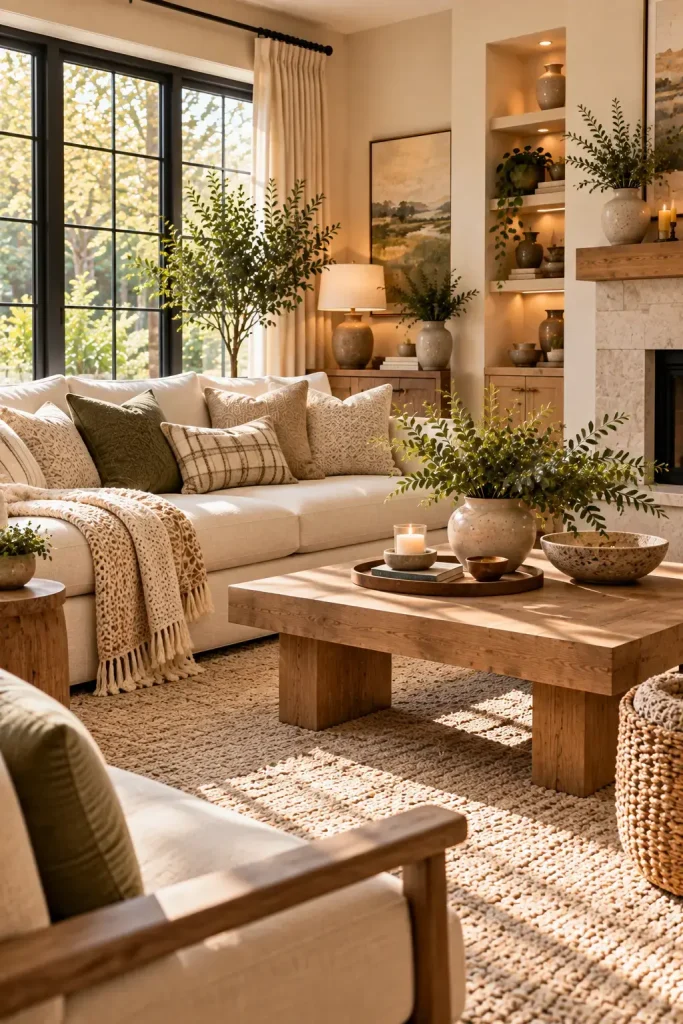
An empty corner doesn’t always need another piece of furniture. A substantial indoor plant can fill vertical space while bringing organic texture into a room. Choose a plant whose mature size suits the area instead of selecting something that will quickly overwhelm the corner. A simple ceramic, woven, or stone planter can reinforce the room’s existing materials. If natural light is limited, choose a plant appropriate for the available conditions rather than placing a sun-loving variety in a dark corner simply for appearance.
The visual effect works particularly well when the rest of the room has clean lines and hard surfaces.
7. Paint One Wall in a Deeper Color
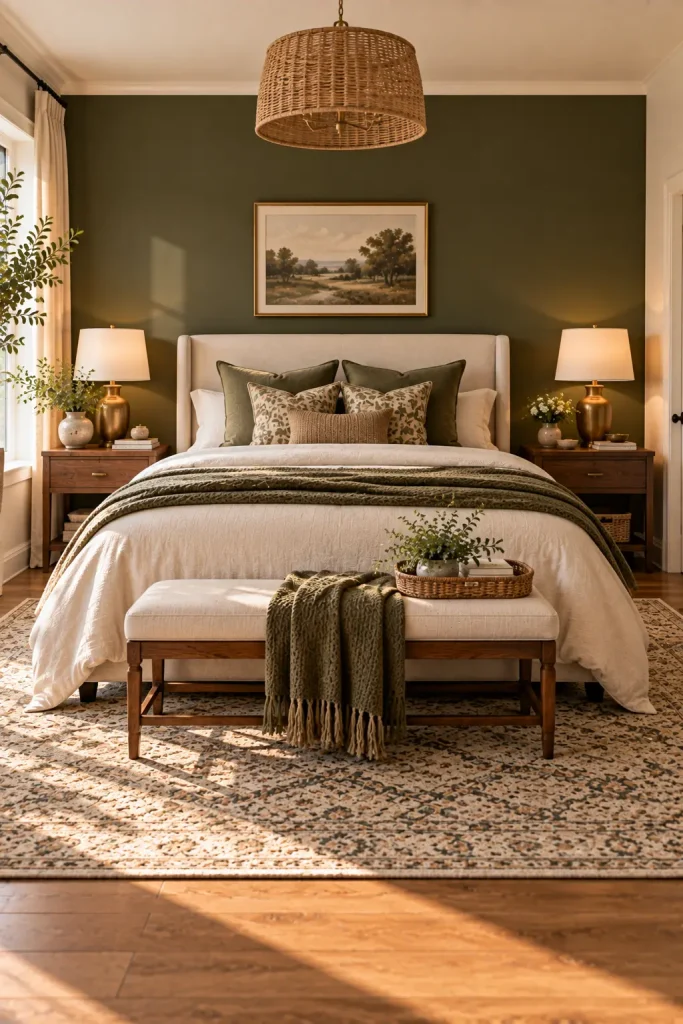
A single deeper wall can give a room more architectural definition without committing to a fully dark interior. Consider the wall behind a bed, sofa, desk, or dining table so the color naturally emphasizes an existing focal point. Deep olive, muted navy, warm clay, charcoal, and earthy brown can all work differently depending on natural light and surrounding finishes. Test paint samples at different times of day because colors can shift noticeably between morning and evening. Keep adjacent furnishings relatively calm if the wall itself is meant to provide the strongest contrast.
8. Swap Out Small Hardware
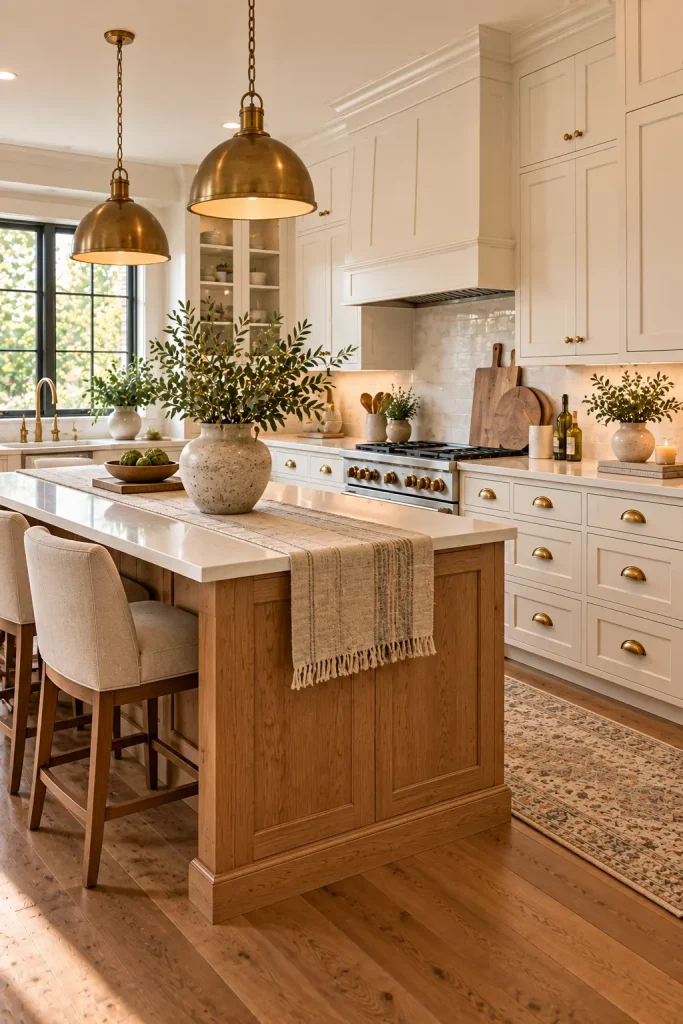
Cabinet knobs and pulls are easy to overlook, yet they occupy a surprisingly visible position in kitchens, bathrooms, mudrooms, and built-ins. Replacing mismatched or dated hardware with a consistent finish can make cabinetry feel more intentional without replacing the cabinets themselves. Warm brass can soften a traditional or transitional space, while matte black creates stronger contrast in contemporary rooms. Before ordering, check the existing hole spacing for pulls so the new hardware will fit without unnecessary drilling.
9. Create a More Intentional Entryway
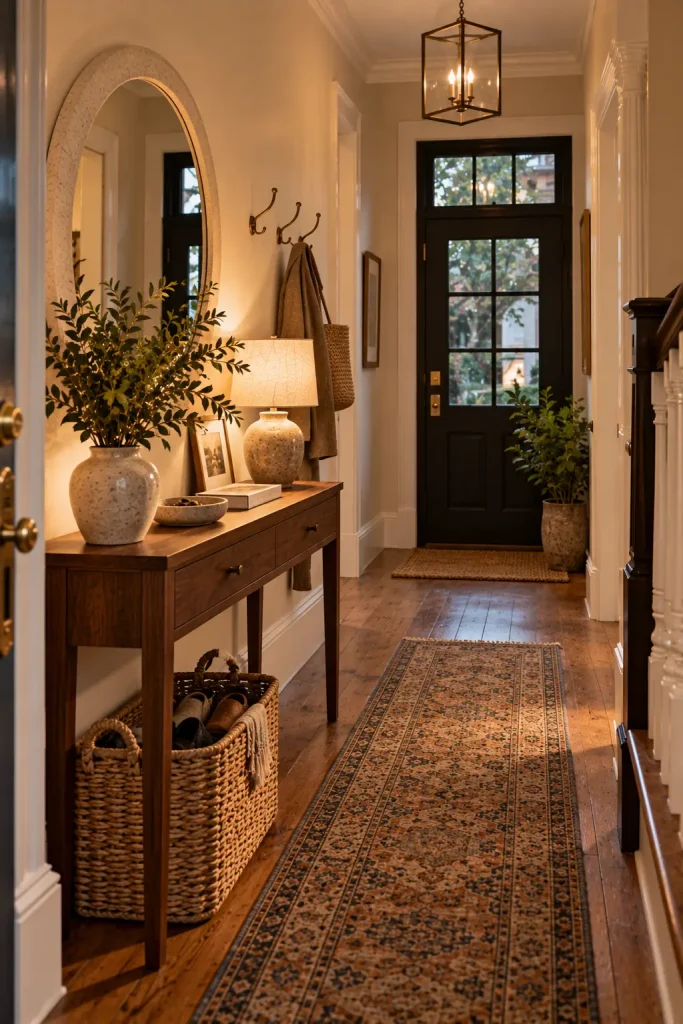
The entry is the first transition into your home, so it deserves more than a place to drop keys. A narrow console, wall hooks, mirror, basket, and small tray can establish a useful landing zone without taking much floor space. Keep everyday items contained so the area still feels calm when you’re coming and going. If the entry is especially narrow, choose shallow furniture and use vertical storage rather than adding bulky pieces. A small lamp or wall light can make the area feel finished in the evening.
10. Add Texture Through Throw Pillows and Blankets
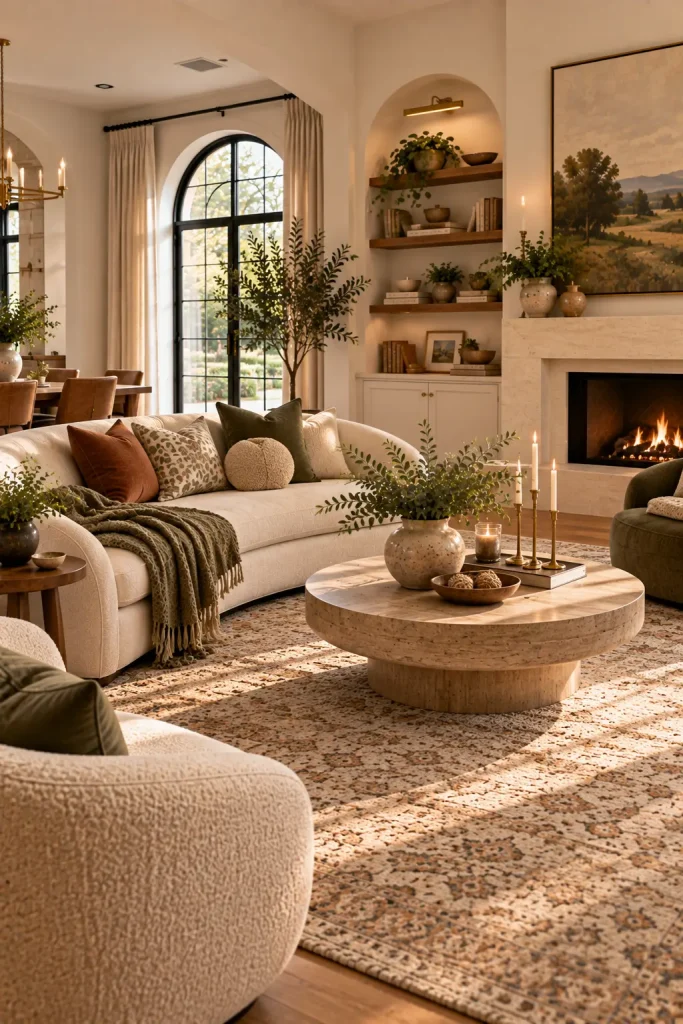
Textiles can make a room feel more layered without changing its major furniture. Mix materials rather than simply adding more cushions: linen, cotton, boucle, velvet, wool, or woven fibers can create subtle contrast. Keep the color family connected so the room doesn’t become visually noisy. A large throw casually placed over the arm of a sofa can add softness while also making the seating feel more inviting. For a more polished result, vary pillow sizes and shapes rather than using identical cushions throughout.
11. Use Curtains to Soften Hard Lines
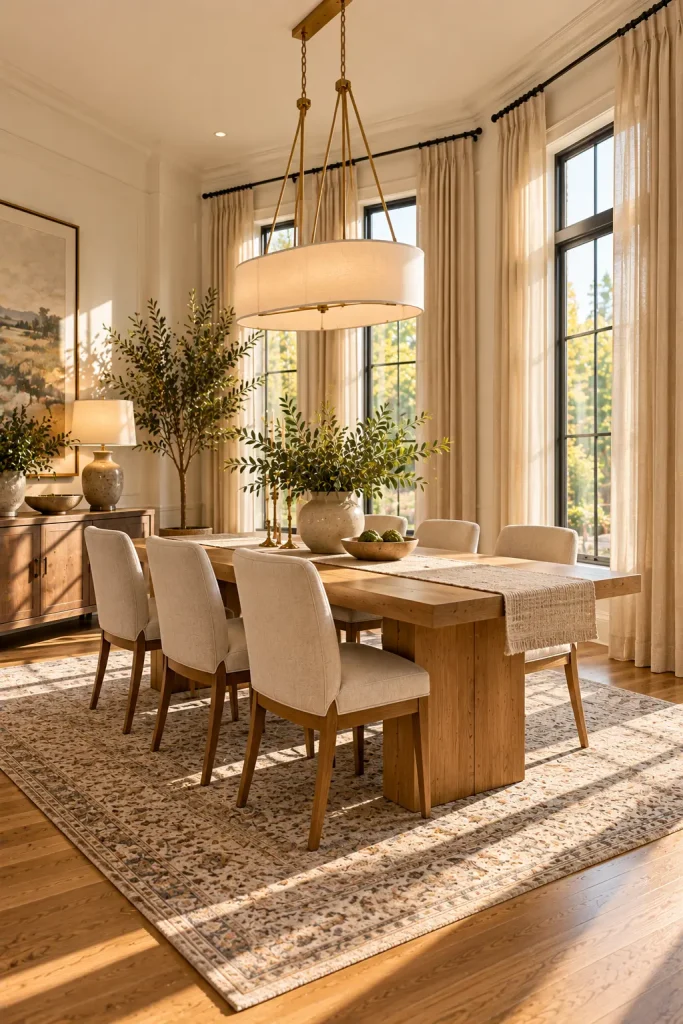
Window treatments can dramatically change the feeling of a room because they occupy a large vertical area. Hanging curtains higher and allowing them to extend beyond the window frame can create a more substantial visual effect when the architecture permits. Choose a fabric that works with the room’s light and privacy needs rather than selecting solely by appearance. Linen and linen-look fabrics create an airy effect, while heavier materials add more warmth and visual weight. Keep the panels long enough to create a deliberate relationship with the floor.
12. Give Shelves a Curated Reset
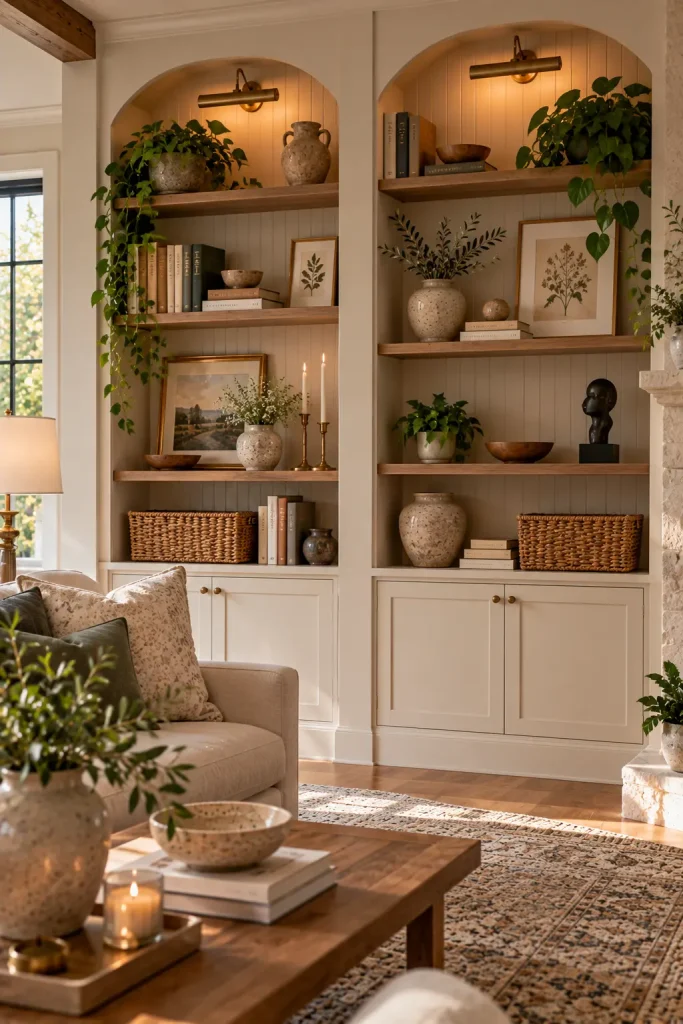
Open shelving can quickly become crowded because every available surface invites another object. Remove everything first, then return only the pieces that contribute to the room’s function or visual character. Mix books with ceramics, framed artwork, small sculptures, baskets, and one or two natural elements. Leave intentional negative space so individual pieces have room to breathe. Vary heights rather than arranging everything along one level.
A useful shelf usually feels collected rather than perfectly symmetrical.
13. Introduce Warm Wood Accents
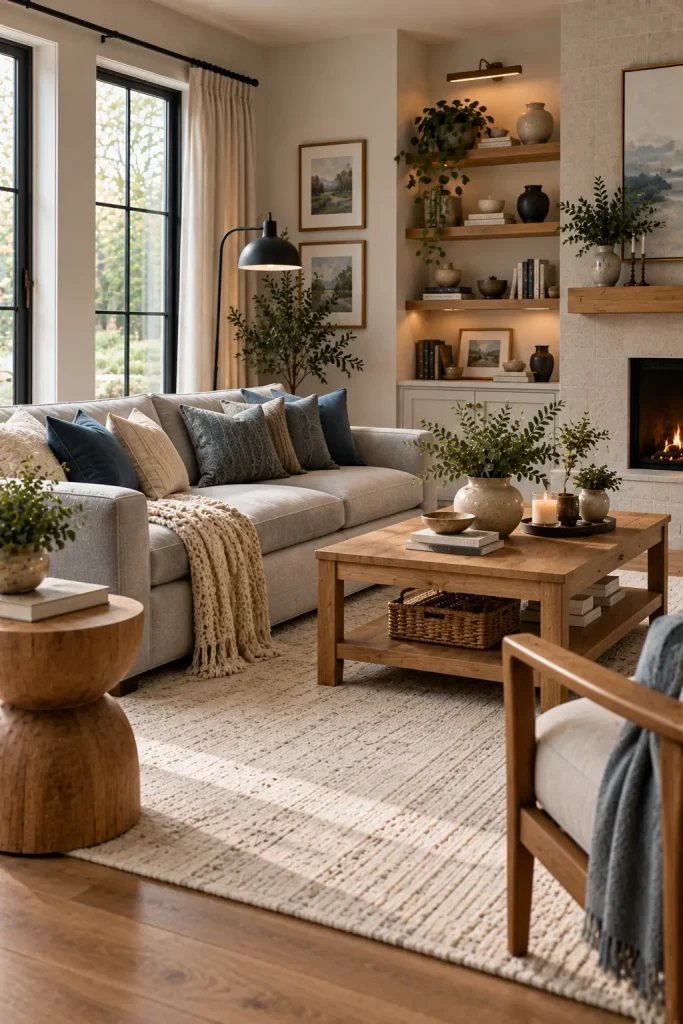
If a room feels overly cool, warm wood can provide an immediate visual counterpoint. You don’t necessarily need to replace major furniture; a wooden stool, side table, picture frame, bowl, lamp base, or small cabinet can introduce the material gradually. Oak, walnut, ash, and other woods each create a different effect depending on their tone and grain. Try repeating the wood in two or three locations so it feels connected rather than accidental.
Quick Tip: Mix wood tones thoughtfully instead of trying to make every wooden object exactly match.
14. Hang a More Interesting Pendant Light
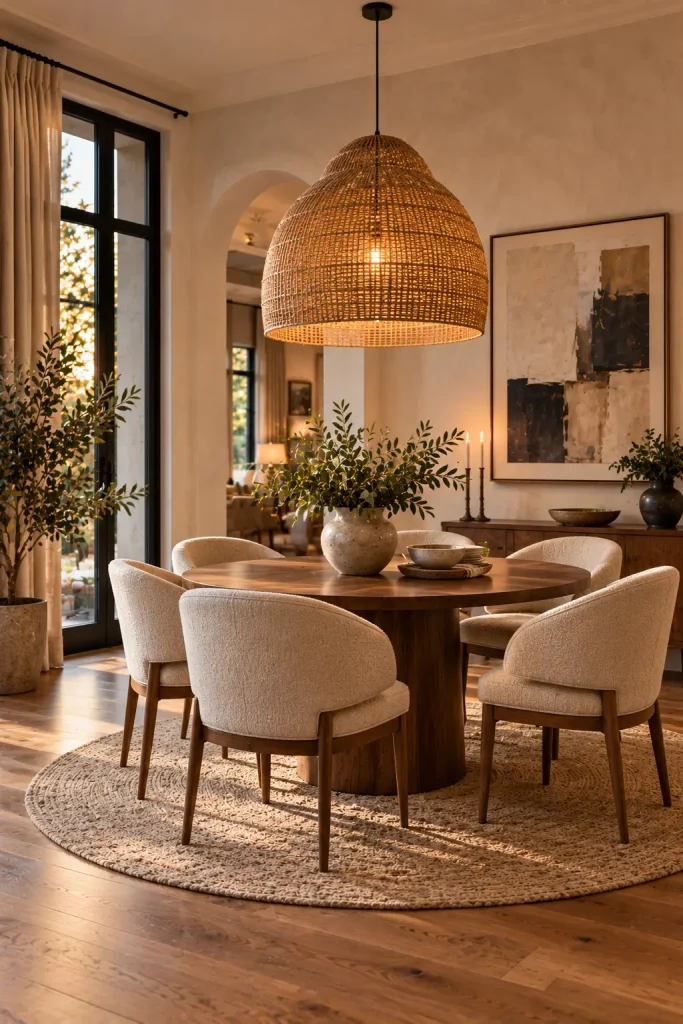
A light fixture can function almost like sculpture when the room allows it. Consider replacing a basic fixture above a dining table, kitchen island, bedroom, or entry with something that has a stronger shape or material presence. A woven pendant adds warmth, ribbed glass feels softer and more decorative, and a sculptural metal fixture can sharpen a minimalist room. Pay attention to scale: a statement light should feel substantial without obstructing sightlines or overwhelming the furniture beneath it.
15. Build a Cozy Reading Nook
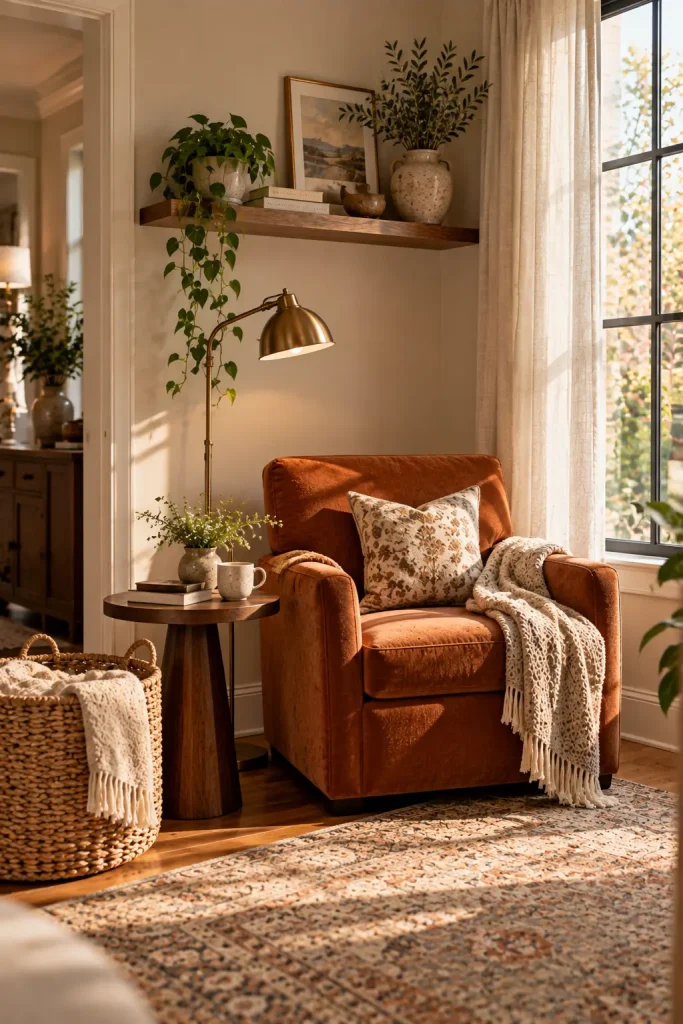
A reading nook can turn an unused section of a bedroom, living room, landing, or home office into a purposeful destination. Start with a comfortable chair and add a small table or stool within easy reach. A floor lamp provides practical light, while a throw and a small stack of books establish the intended use. If space allows, position the chair near a window, but avoid blocking a major circulation route. The nook doesn’t need to be large; its success comes from clearly defining a small activity zone.
16. Create a Gallery Wall With One Strong Theme
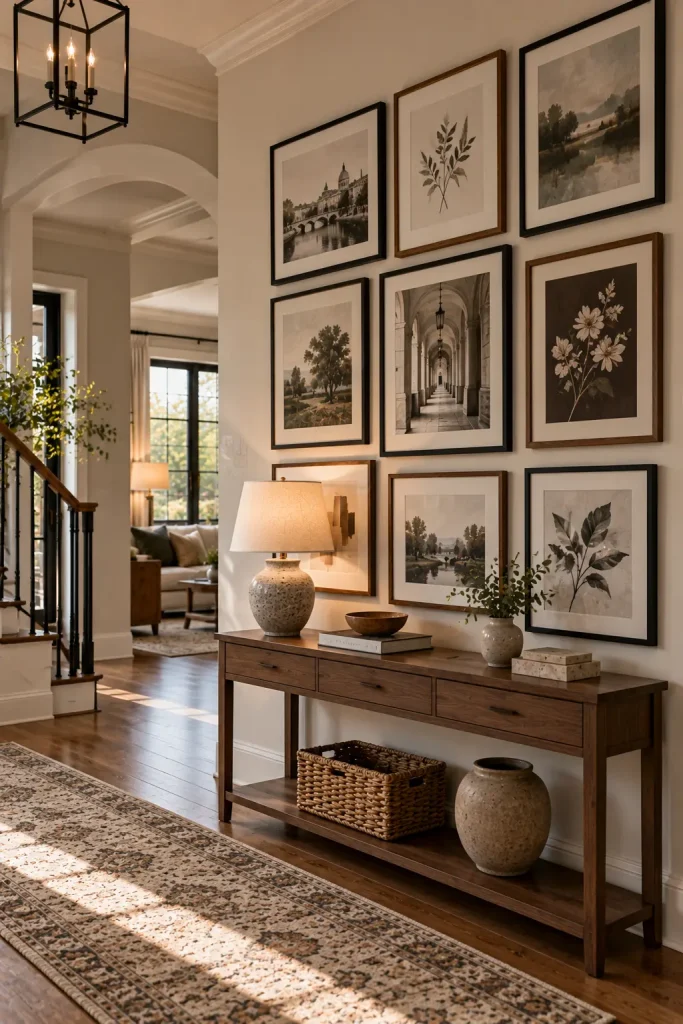
A gallery wall becomes more cohesive when the artwork shares something in common. That connection might be a color palette, subject matter, frame finish, photography style, or a mixture of several related elements. You don’t need every frame to match perfectly. Before hanging anything, lay the pieces on the floor and experiment with spacing. Consider the furniture below the arrangement and keep the overall composition visually connected to it rather than spreading frames randomly across the wall.
17. Add a Small Upholstered Bench
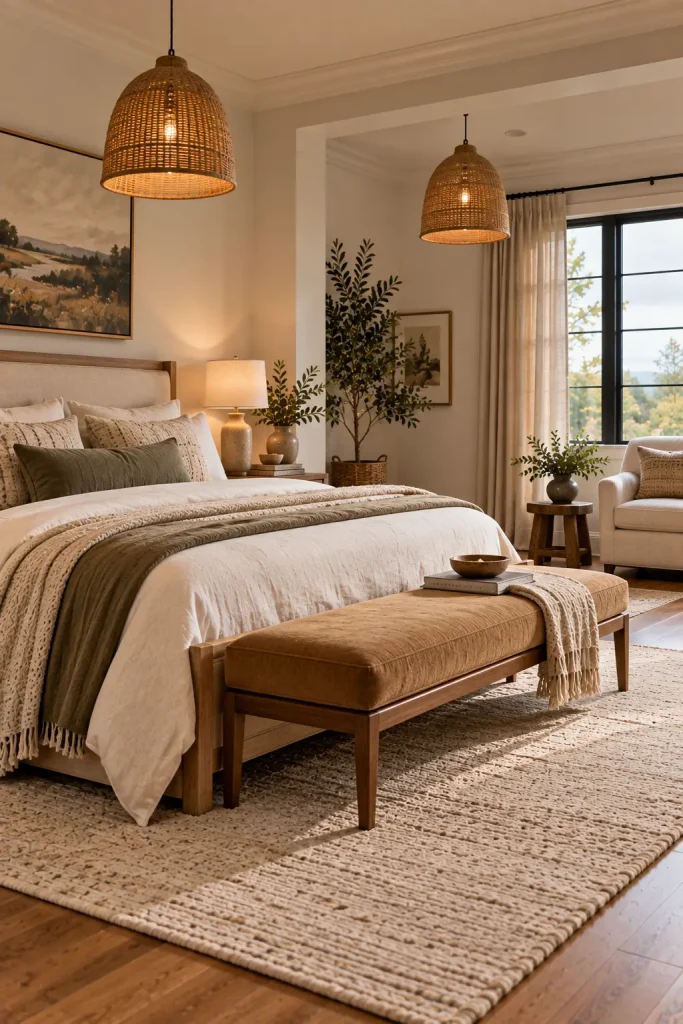
A bench can add both seating and visual structure to an otherwise underused wall. Place one at the end of a bed, beneath a window, in an entryway, or along a wide hallway. Upholstery introduces softness while a wooden or metal frame can connect the piece to existing furniture. In busy households, choose a durable fabric and avoid making the bench so deep that it interrupts circulation. A small bench is particularly useful when you want more function without adding a full-size chair.
18. Use Baskets as Decorative Storage
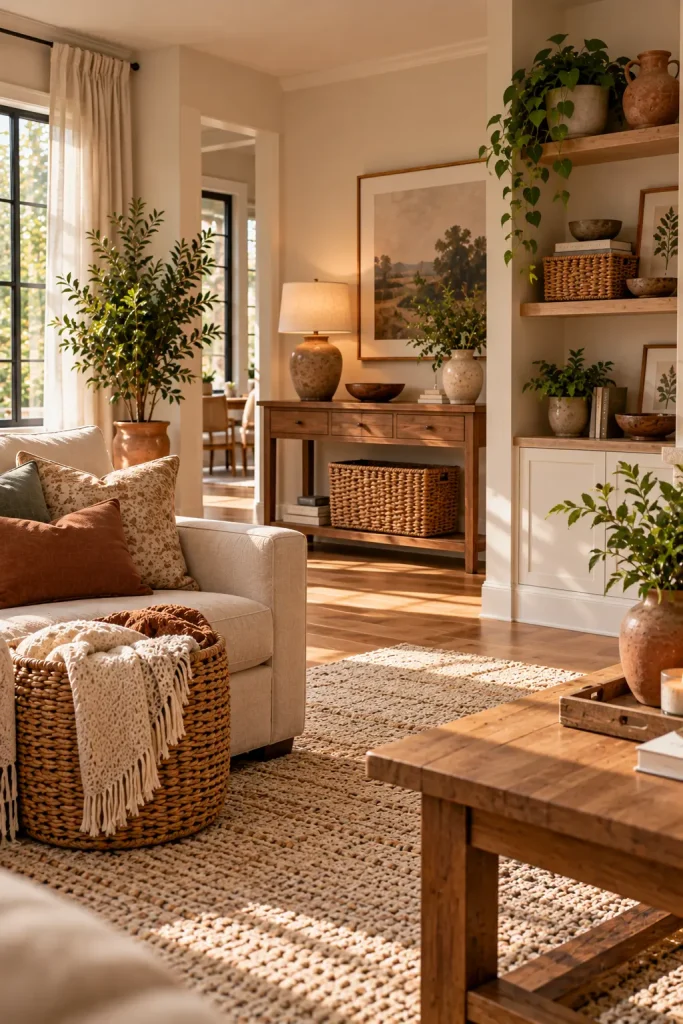
Storage can contribute to the decor rather than disappear behind closed doors. Woven baskets are especially useful for blankets, toys, magazines, shoes, and everyday objects that need to be contained quickly. Group baskets by material or tone so they look intentional instead of like unrelated storage containers. Large baskets work well beside sofas and consoles, while smaller versions can organize shelves or bathroom counters.
Best For: Living rooms, bedrooms, entryways, bathrooms, and family spaces.
Visual Effect: Adds warmth and texture while reducing visible clutter.
19. Try a Tonal Color Scheme
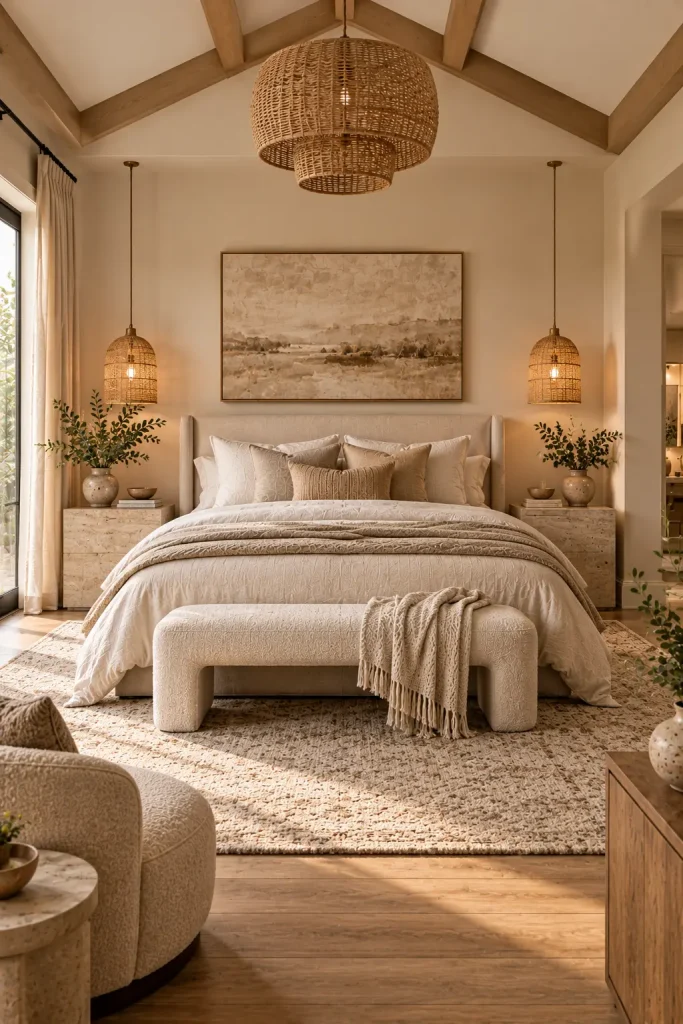
A tonal room uses several variations of one color family rather than relying on strong contrast. Think cream with sand and warm beige, blue with slate and pale denim, or green with sage and deeper olive. The result can feel calm without becoming flat because texture and subtle changes in value create visual separation. Use different materials to reinforce the palette: painted walls, woven textiles, ceramic pieces, wood, and upholstery can all interpret the same color differently.
The key is variation. A room made entirely from one identical shade can look less dimensional than a tonal palette with several related tones.
20. Replace One Piece of Dated Furniture
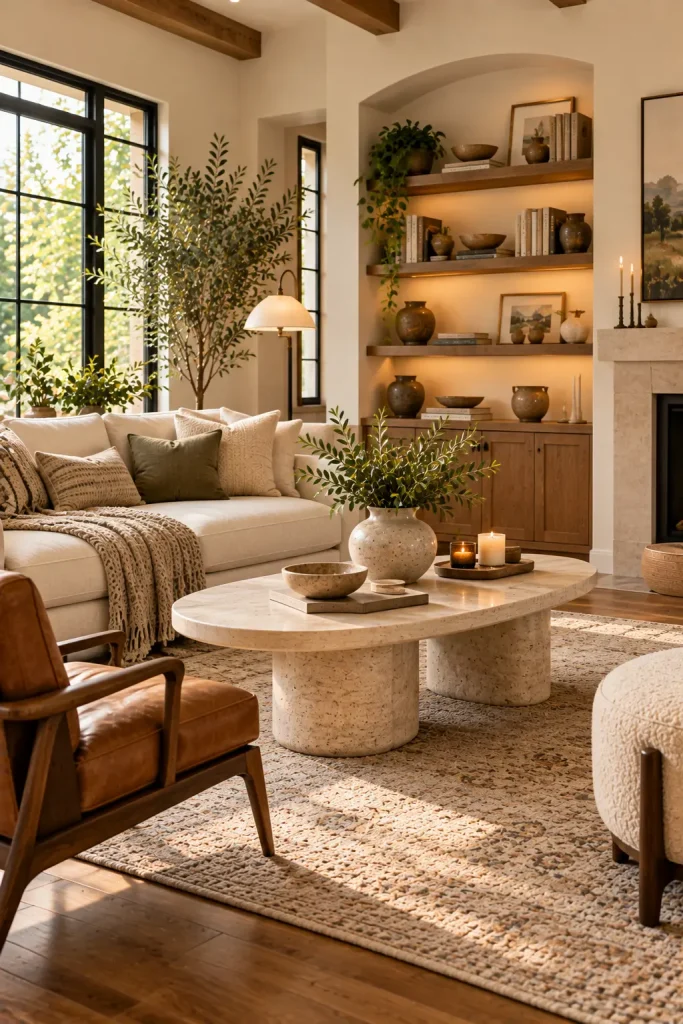
You don’t have to redesign an entire room to change its character. Identify the piece that looks most disconnected from the rest of the space and consider replacing only that item. A dated coffee table, bulky media cabinet, mismatched nightstand, or worn accent chair can sometimes dominate the visual impression of an otherwise attractive room. Choose the replacement according to the room’s existing scale and function, not just its appearance.
21. Add a Decorative Tray to Corral Everyday Items
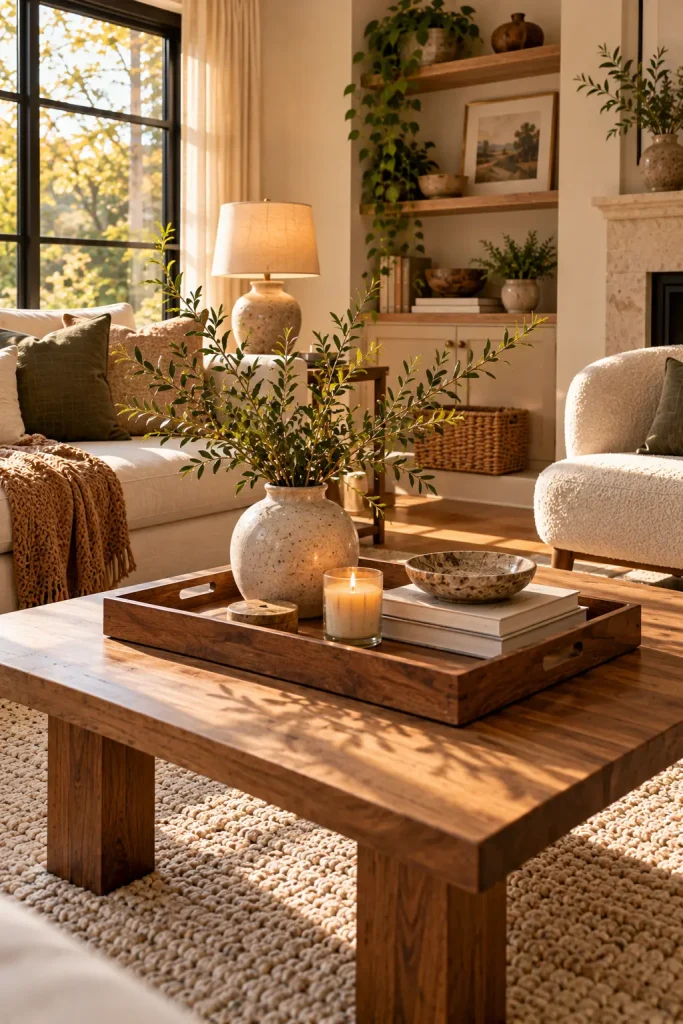
Small objects often make a room feel untidy because they are scattered rather than grouped. A decorative tray creates a visual boundary for candles, remotes, books, small vases, or other frequently used objects. On a coffee table, use one tray large enough to hold several items without occupying the entire surface. On a kitchen island, a tray can gather a bowl, cutting board, and small plant into one deliberate arrangement. This is an inexpensive change, but it can make everyday surfaces look considerably more organized.
22. Frame the Bed With Statement Lighting
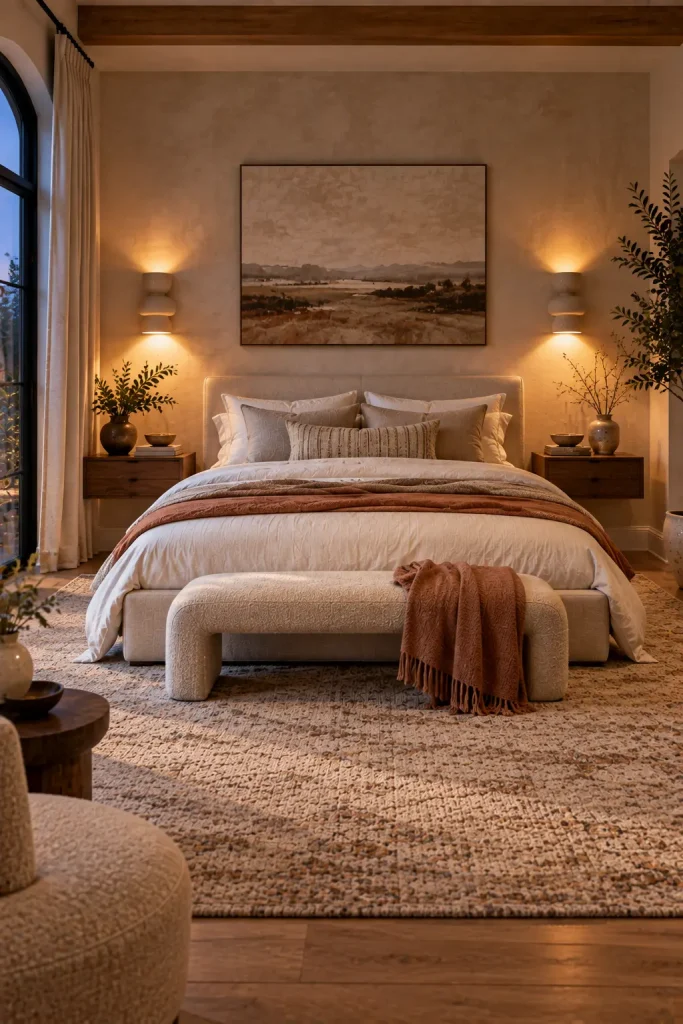
Instead of relying on ordinary bedside lamps, consider using pendant lights or wall-mounted sconces to create a stronger composition around the bed. This can free up nightstand space and give the sleeping area more architectural definition. Keep the fixtures appropriately scaled to the bed and nightstands, and make sure the lighting remains practical for reading or nighttime use. Matching fixtures aren’t mandatory, but symmetry can be useful when the bed is the central focal point.
23. Create a Dedicated Coffee Station
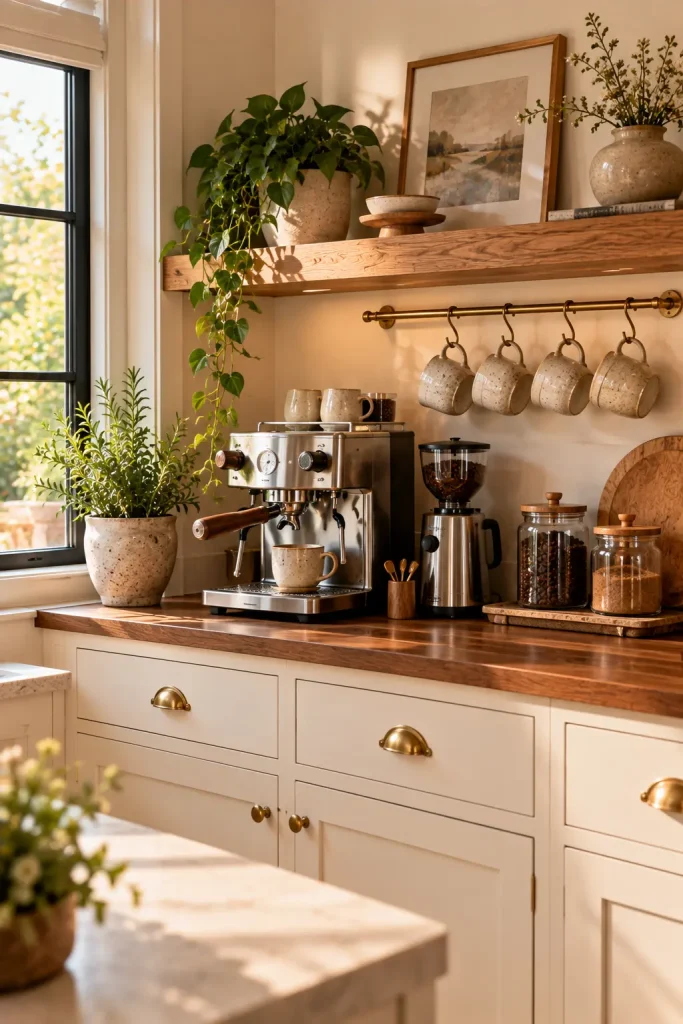
A small coffee station can turn an ordinary kitchen corner into a useful and visually organized feature. Use a tray or narrow shelf to group the coffee maker, mugs, jars, and accessories instead of spreading everything across the counter. Add one decorative element, such as a small artwork or plant, to keep the area from looking purely functional. If counter space is limited, a rolling cart or compact cabinet can create the same idea elsewhere.
24. Mix Vintage Pieces With Modern Furniture
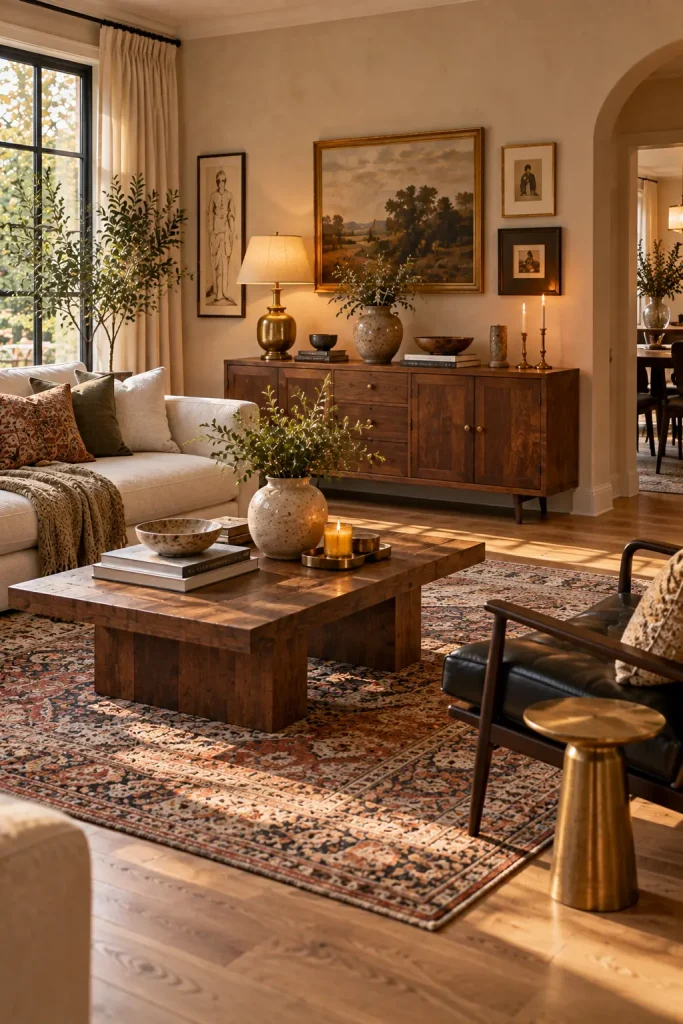
A room can feel more personal when everything doesn’t come from the same design era. Pair a clean-lined modern sofa with a vintage side table, an older mirror, a traditional rug, or an antique-style cabinet. The contrast creates visual history without requiring the entire room to follow a traditional style. Keep one or two connecting elements—such as color, wood tone, or shape—to prevent the combination from feeling random.
Common Mistake: Adding too many unrelated vintage objects can make a room feel like a collection rather than a cohesive interior.
Better Approach: Choose one or two distinctive older pieces and let them act as accents against simpler contemporary furnishings.
25. Make the Bathroom Feel More Residential
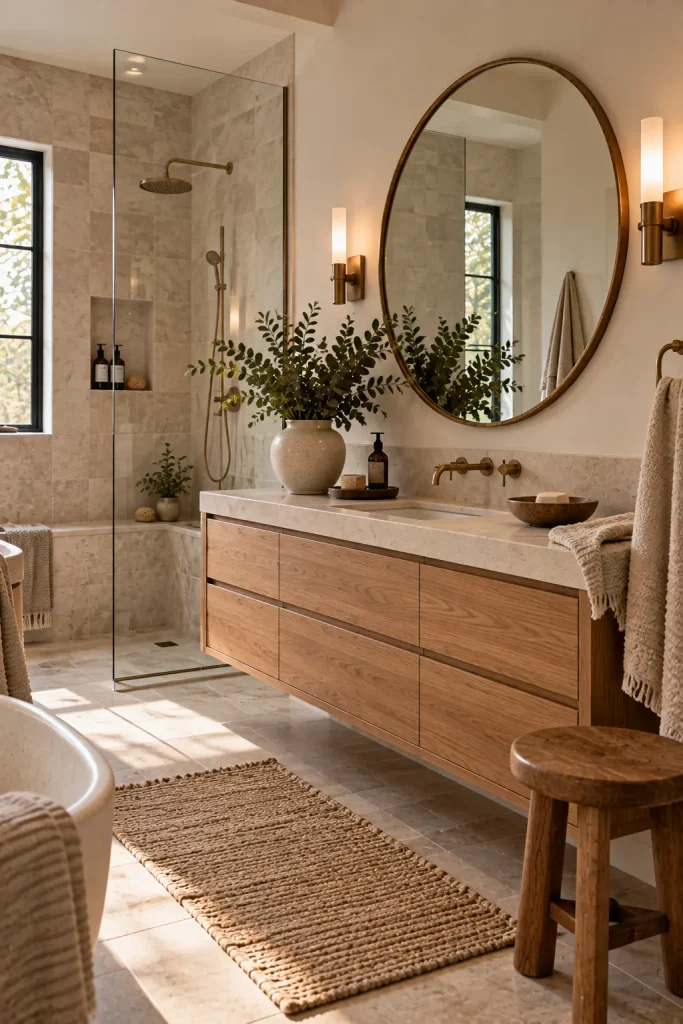
Bathrooms often become overly functional because every object is chosen for utility. Introduce a small piece of artwork, a wooden stool, a woven basket, a better-looking bath mat, or a ceramic vessel to soften the space. Keep anything decorative away from areas where water exposure could damage it. A warm wood accent can be particularly effective against tile and stone because it adds a natural material that the bathroom may otherwise lack.
26. Give the Dining Table a Permanent Centerpiece
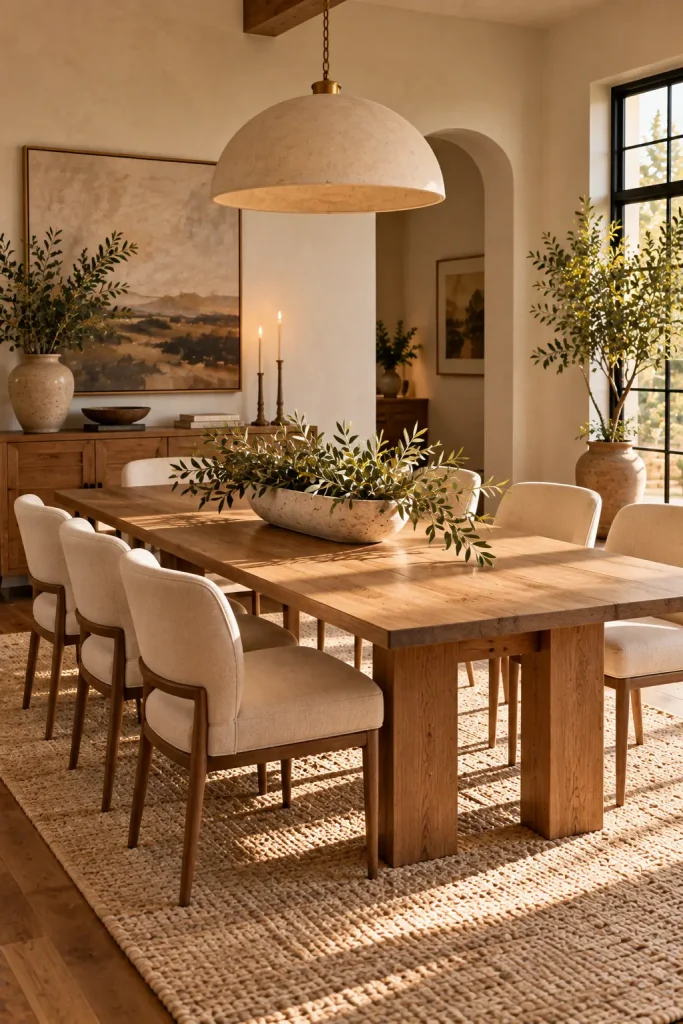
A dining table doesn’t need to be formally set every day to look considered. A simple centerpiece can provide a visual anchor while remaining practical enough for everyday life. Try a long ceramic vessel, low bowl, branch arrangement, or cluster of candles depending on the table’s shape. Keep the centerpiece low enough that people can see across the table if the surface is used for meals. On rectangular tables, a longer arrangement often relates more naturally to the furniture’s proportions.
27. Turn a Plain Wall Into a Decorative Feature
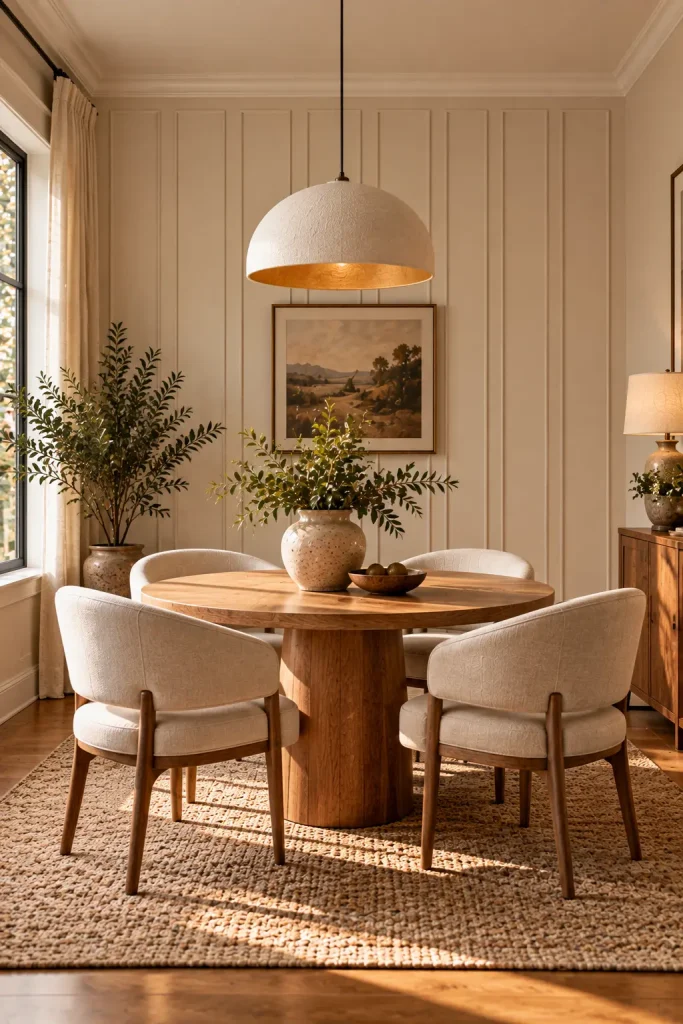
A blank wall doesn’t always need artwork. Consider painted molding, narrow wood slats, removable wallpaper, limewash-inspired color, or a simple built-in shelf. The best treatment depends on the room’s architecture and the amount of visual activity already present. In a small room, a subtle treatment may be more effective than a highly patterned feature wall. Renters can explore removable options that don’t require permanent construction.
28. Add a Layer of Natural Stone
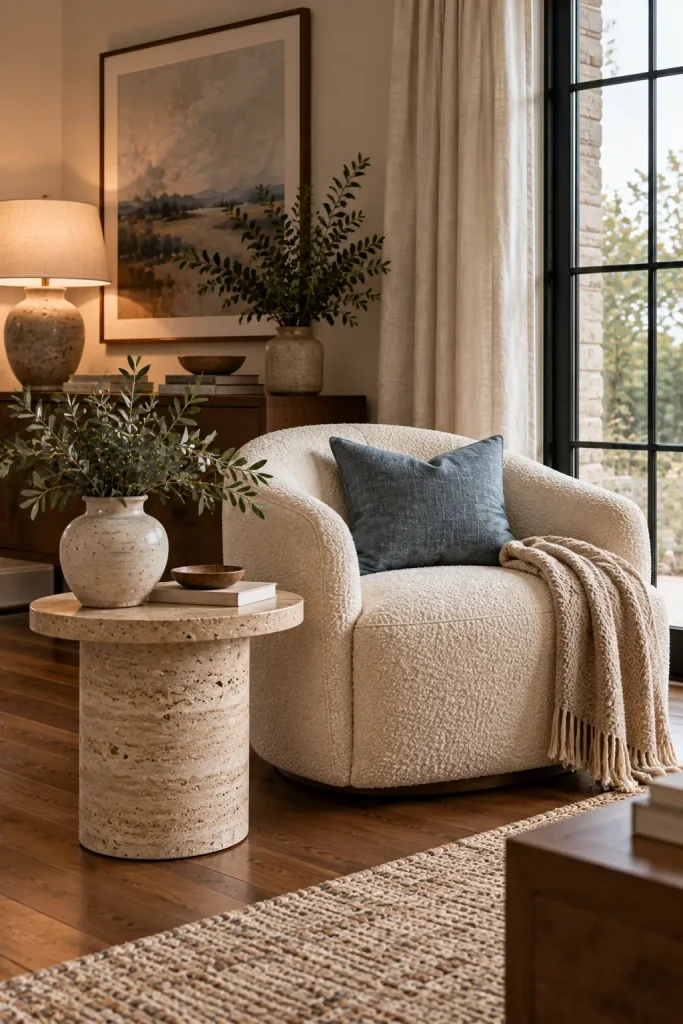
Stone can introduce visual weight and organic variation to a room. You don’t need to install an entire stone wall or replace a countertop; smaller pieces such as a travertine side table, marble tray, limestone lamp base, or stone bowl can bring the material into an existing interior. Look for natural variation rather than expecting every surface to be perfectly uniform. Pair stone with softer textiles and warm wood so the room remains residential and comfortable.
29. Refresh the Bedroom With Layered Bedding
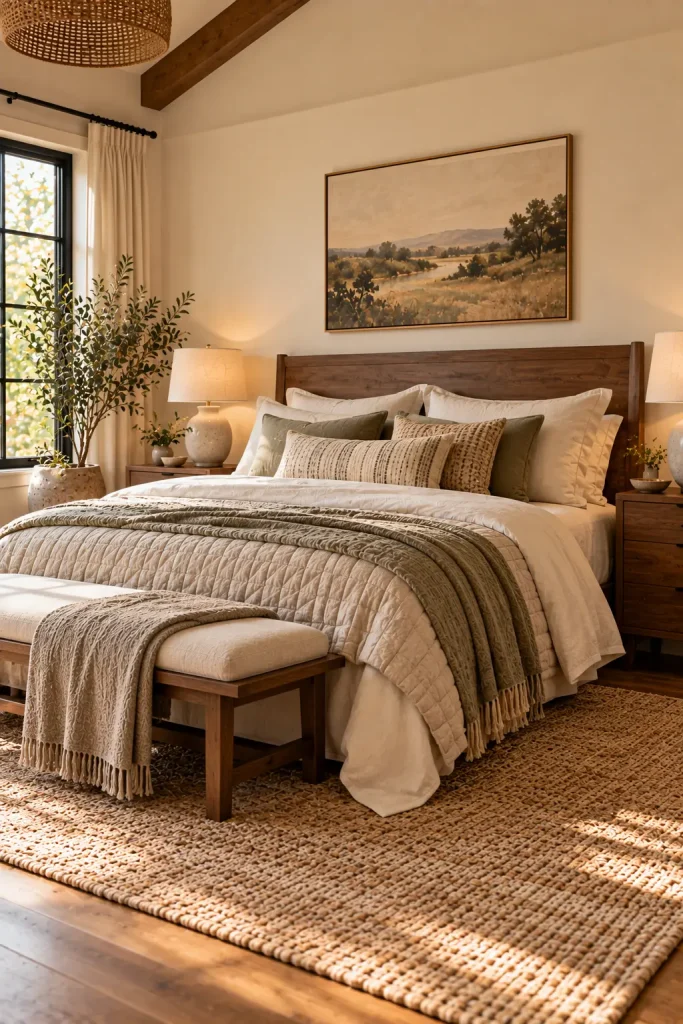
The bed occupies a large visual area, making bedding one of the easiest ways to change a bedroom’s character. Start with a calm base, then add texture through a quilt, coverlet, folded blanket, and a small selection of pillows. Mixing materials often creates more interest than adding many patterns. Keep the palette connected to the room’s walls and furniture so the bed feels integrated rather than visually separate.
Tips & Tricks
- Use two or three closely related colors.
- Mix smooth and textured fabrics.
- Fold a blanket across the lower third of the bed.
- Avoid filling the bed with more pillows than you realistically want to move every night.
30. Use a Statement Chair as a Color Accent
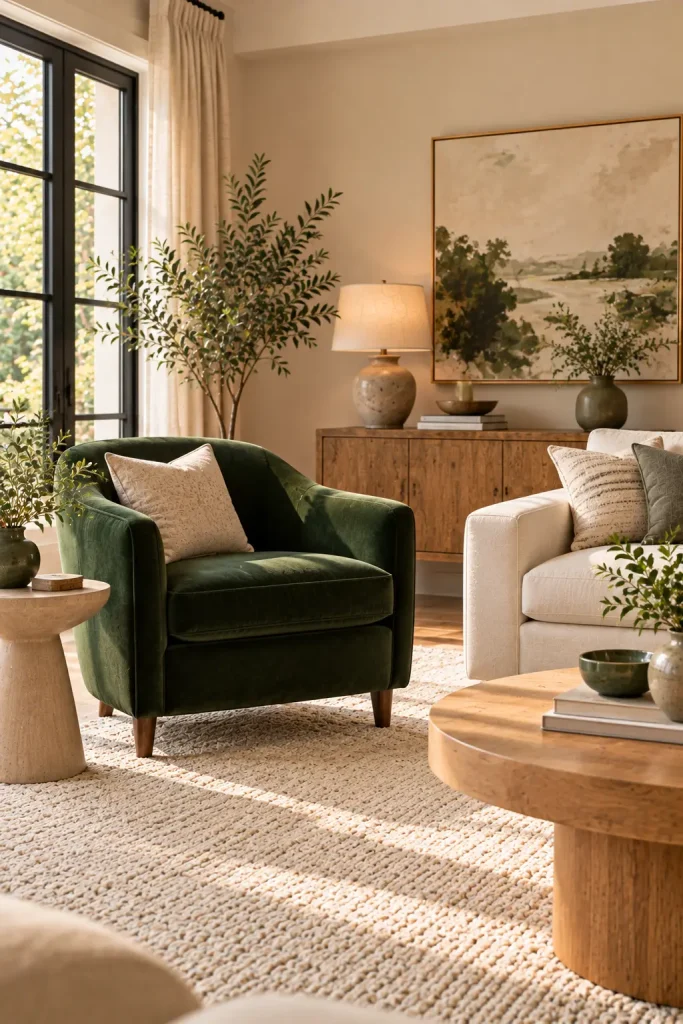
One distinctive chair can introduce a new color without forcing you to repaint or replace an entire furniture set. Try placing a rust, forest green, ochre, deep blue, or patterned chair in a mostly neutral room. The chair should connect visually to something else nearby, such as a cushion, artwork, rug, or ceramic object. This creates repetition without requiring exact matching.
31. Add a Narrow Console Behind the Sofa
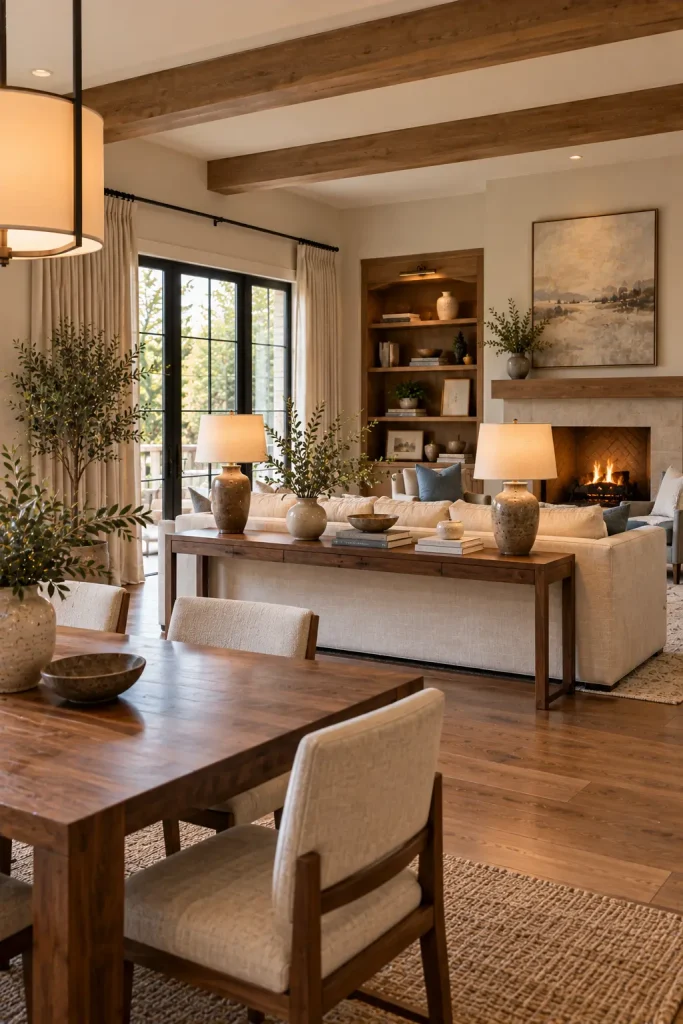
The wall behind a sofa can become useful space when a slim console fits without compromising circulation. Use it to hold a lamp, artwork, books, or a small arrangement of decorative objects. The console should remain shallow enough that people can still move comfortably around the sofa. In open-plan rooms, it can also visually define the seating area and create a transition between functions.
32. Introduce Black Accents for Definition
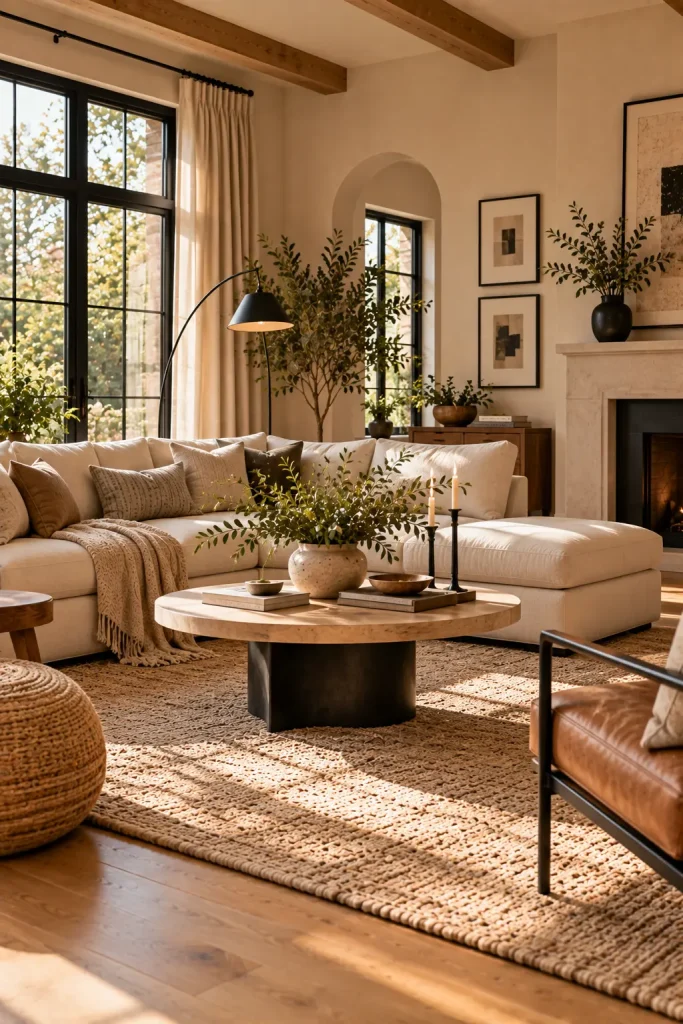
A few carefully placed black elements can give a pale or neutral room more visual structure. Consider black picture frames, a lamp, curtain rod, coffee table base, hardware, or small sculptural accessory. The goal is not to turn the room into a black-and-white scheme but to create points of contrast that help the lighter materials stand out. Repeating the darker tone in several locations usually feels more intentional than using it in only one isolated spot.
33. Create a Small Gallery Moment on a Shelf or Ledge
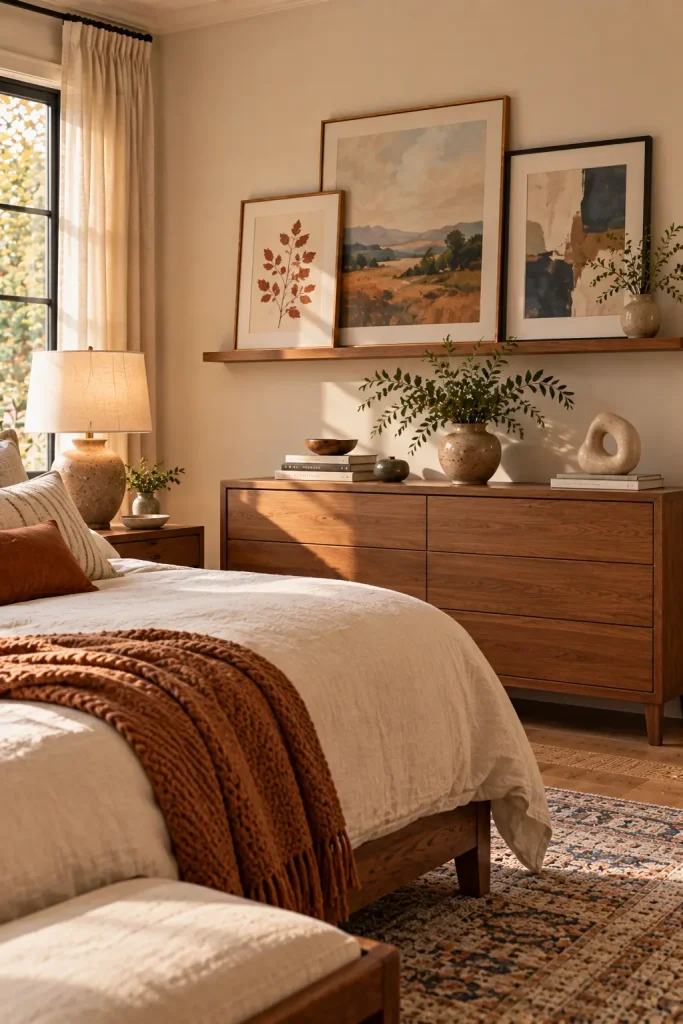
Not every artwork arrangement needs an entire wall. A picture ledge or shallow shelf allows you to layer framed pieces without committing to permanent placement. Lean two or three artworks against the wall, overlap their edges slightly, and add one small object such as a vase or sculpture. This approach works particularly well for renters or anyone who likes to change decor seasonally. Keep the number of pieces controlled so the ledge doesn’t become visually crowded.
34. Bring in One Handmade or Artisan-Looking Piece
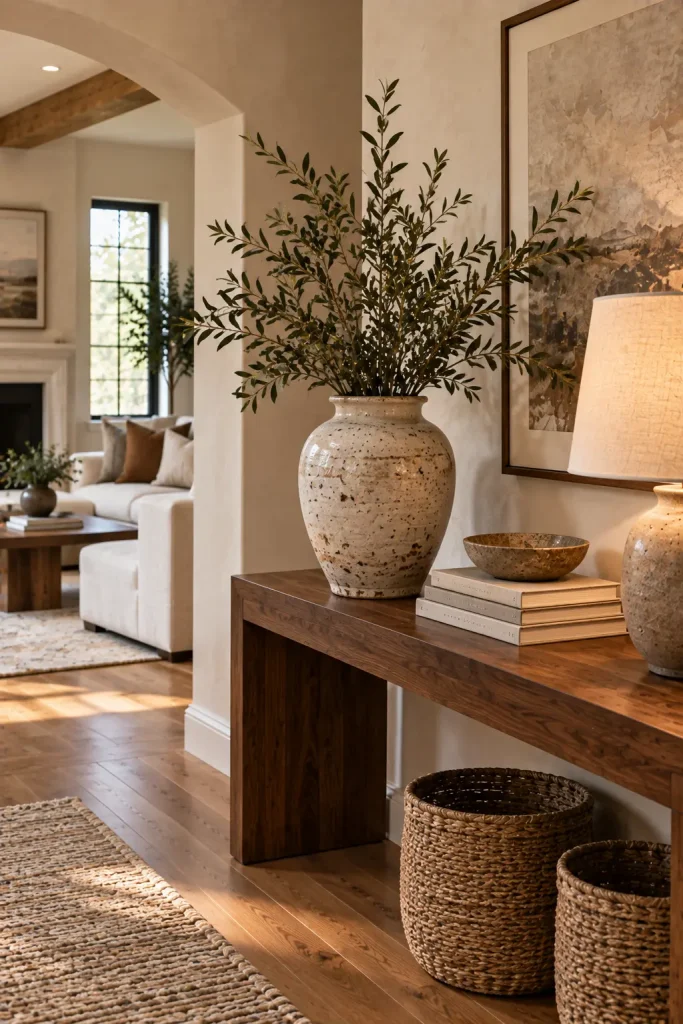
A handmade object can add irregularity and character to a room filled with manufactured surfaces. Look for a hand-thrown ceramic vase, woven basket, carved wooden bowl, textured textile, or locally made decorative object. It doesn’t need to be expensive or rare. What matters is that its material and shape introduce something less uniform than the surrounding furniture. Place it somewhere visible but useful rather than filling every surface with decorative objects.
35. Create a More Intentional Layered Room
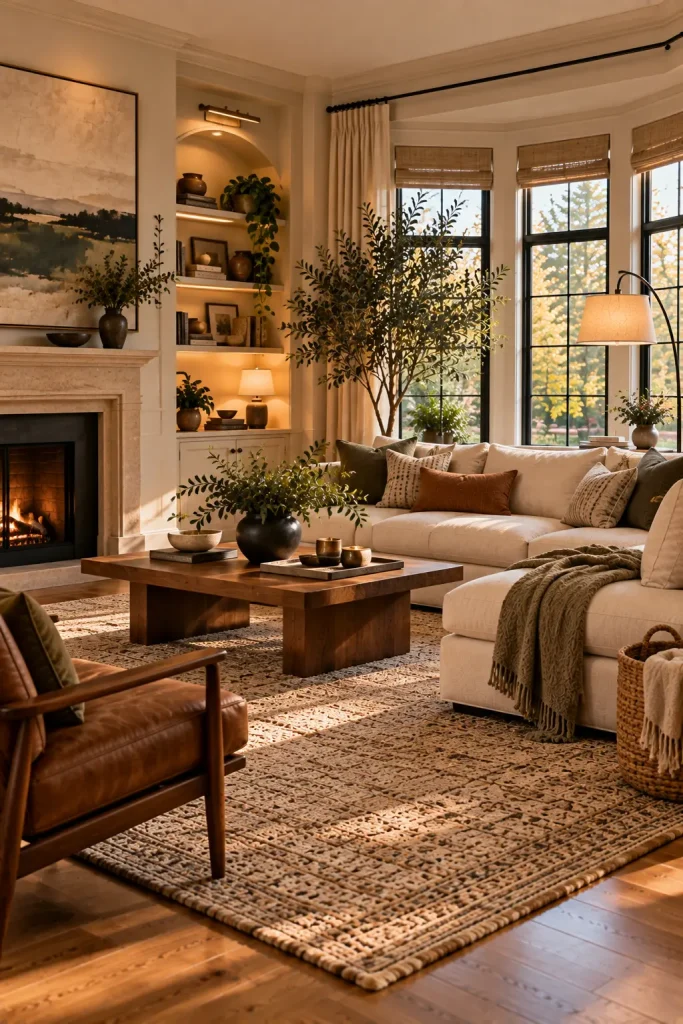
The strongest refresh may come from combining several smaller changes rather than relying on one dramatic statement. Start with the room’s foundation, furniture placement, rug, and lighting, then introduce artwork, plants, textiles, and a few personal objects. Keep some surfaces intentionally quiet so the eye has places to rest. Repeat a handful of colors or materials throughout the room to create visual connections. The goal is a space that feels collected over time rather than decorated all at once.