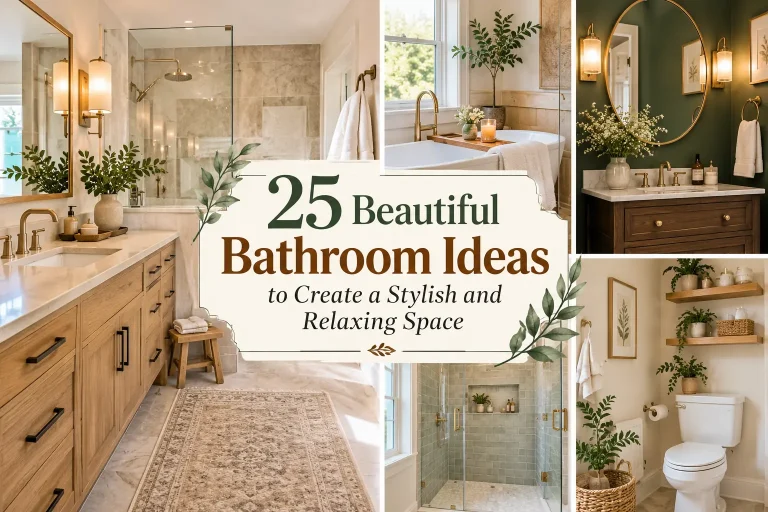
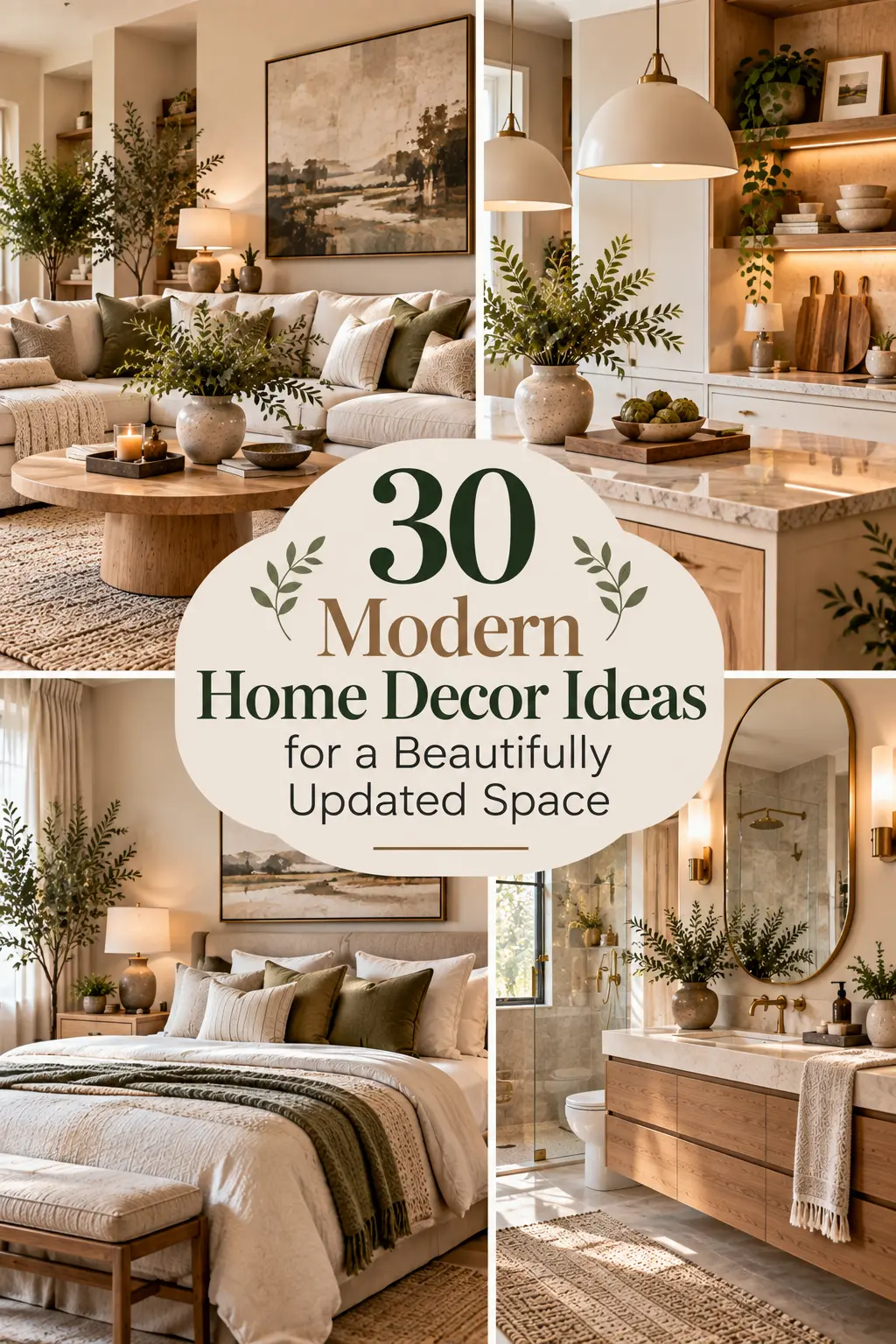
30 Modern Home Decor Ideas for a Beautifully Updated Space
A modern home doesn’t have to feel cold, sparse, or overly polished. The most inviting contemporary spaces combine clean lines with warm materials, thoughtful lighting, comfortable furniture, and a few carefully chosen details that make the room feel personal. If your home feels dated, you don’t necessarily need a major renovation to give it a fresher appearance. Small changes in color, texture, lighting, layout, and furniture can have a surprisingly strong effect.
These modern home decor ideas range from simple styling updates to more substantial design investments, making it easier to find an approach that suits your space and budget. Think of them as building blocks rather than strict rules. You can combine warm woods with contemporary pieces, soften streamlined furniture with textiles, or introduce architectural details without making the room feel formal.
1. Layer Warm Neutrals Instead of Using One Flat Color
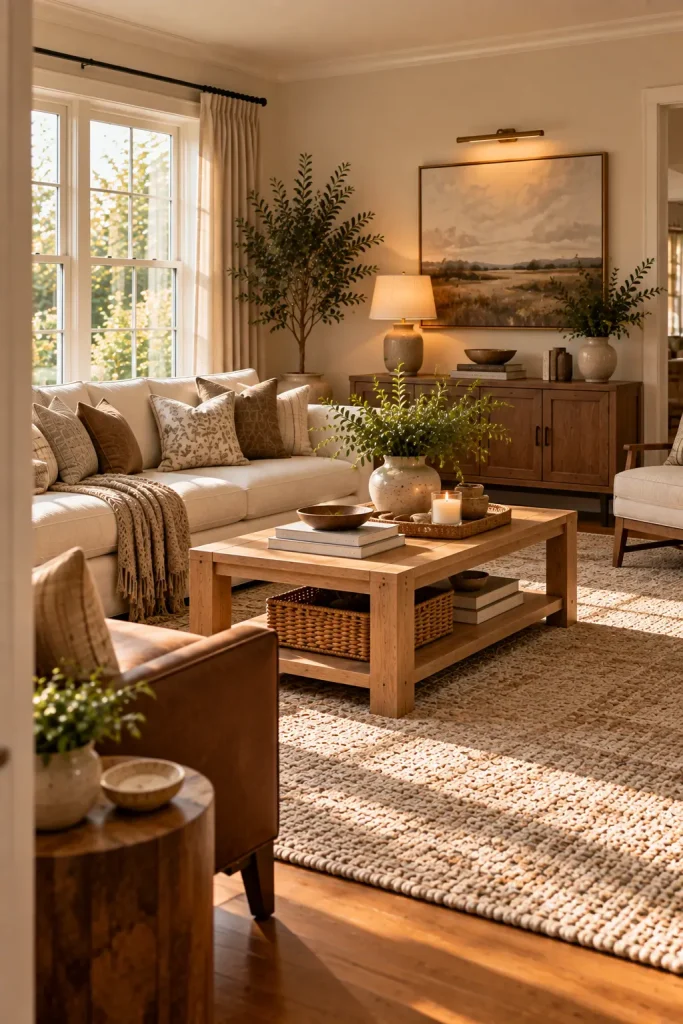
Modern interiors often look more sophisticated when several related neutral shades work together rather than relying on one dominant beige, white, or gray. Try combining warm ivory walls with taupe upholstery, light oak, sandy textiles, and slightly deeper brown accents.
The key is variation in tone and texture. A linen sofa, wool rug, ceramic lamp, and wood coffee table can all sit within a restrained palette while still giving the room visual depth. This approach works particularly well when you want a modern space that feels calm rather than stark.
Quick Tip: Choose one light base, one medium neutral, and one deeper accent. Repeating those tones around the room helps everything feel connected.
2. Replace Bulky Furniture With Cleaner Silhouettes
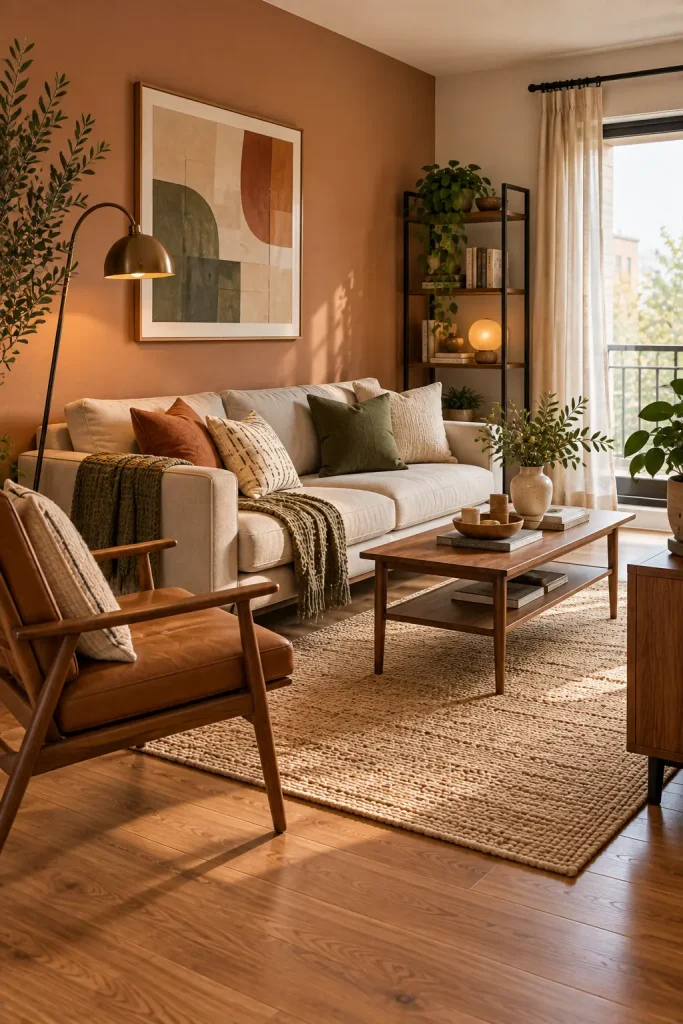
One of the fastest ways to update a room is to reconsider the visual weight of its furniture. Oversized arms, heavy bases, ornate legs, and excessively deep pieces can make a room feel older or more crowded than it actually is.
Look for sofas with simple profiles, tables with streamlined legs, and chairs that leave some visible floor around them. This doesn’t mean everything needs to be tiny. A well-proportioned substantial sofa can still feel contemporary when its shape is clean.
For smaller rooms, furniture with raised legs can also create more visible floor area, helping the room feel lighter.
3. Add One Strong Architectural Wall Treatment
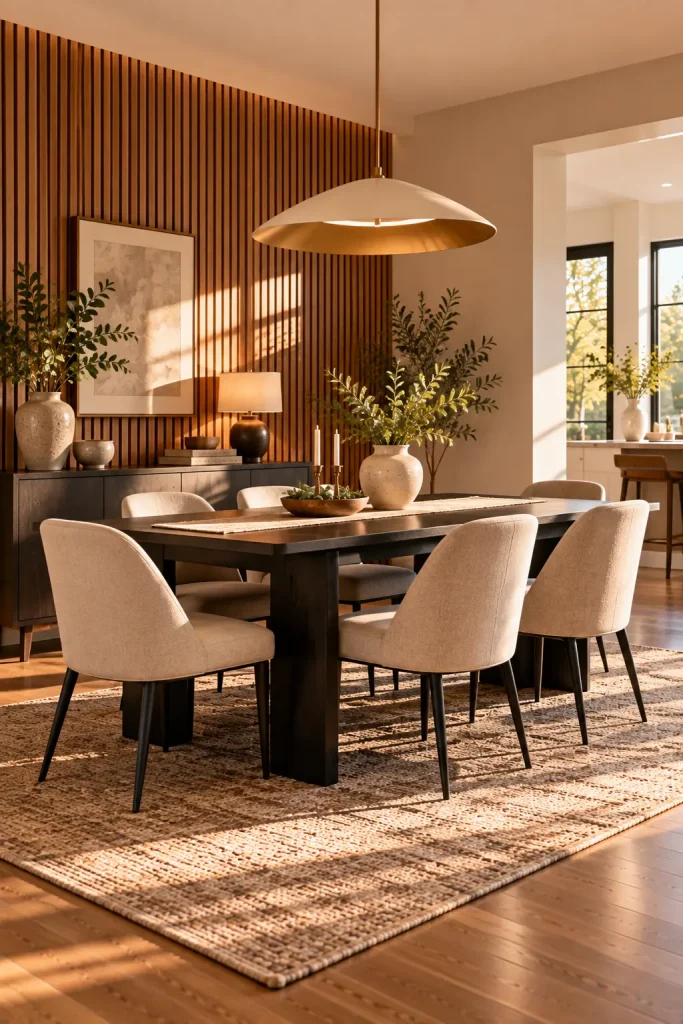
A modern room doesn’t need decorative details on every wall. Sometimes one carefully selected architectural feature creates more impact than a collection of small decorations.
Consider vertical wood slats, simple applied molding, limewashed texture, microcement-inspired finishes, or a restrained panel treatment. The design should complement the architecture rather than compete with it.
For an accessible update, applied molding or painted trim can create architectural interest without requiring a complete renovation.
Common Mistake: Covering every wall with a feature treatment can make the room feel visually busy.
Better Approach: Give one wall a clear role and keep the surrounding surfaces quieter.
4. Mix Light Wood With Darker Accents
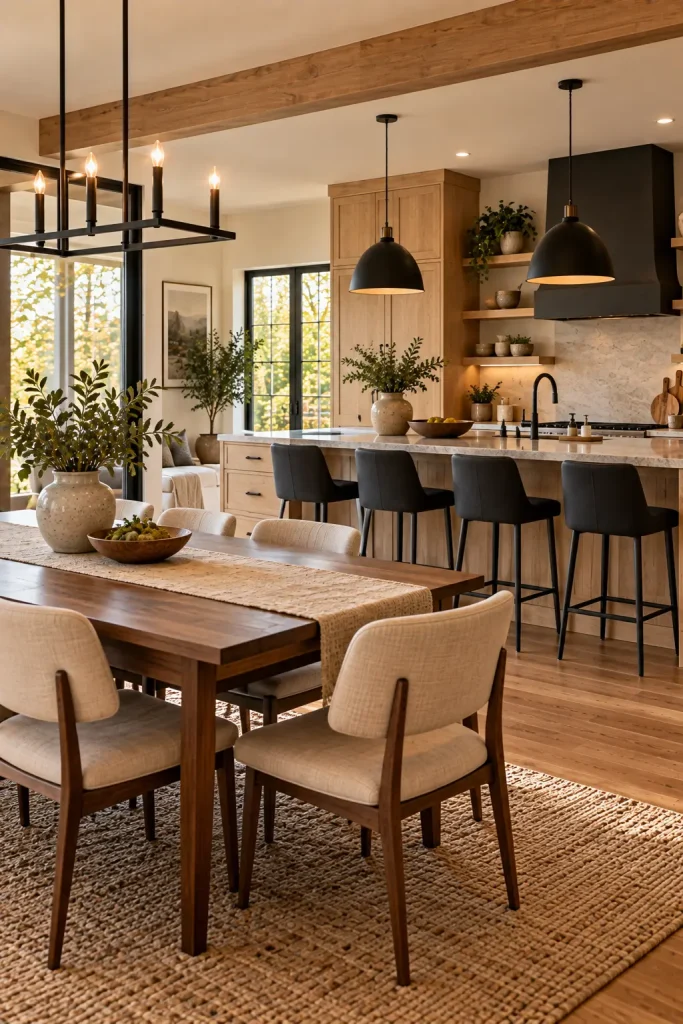
Modern interiors benefit from contrast, and wood is one of the easiest ways to introduce it without making a room feel harsh. Pair pale oak or ash with charcoal, espresso, blackened metal, or deep walnut accents.
The contrast works especially well when the darker elements appear in several small places rather than one oversized block. A black floor lamp, dark-framed artwork, and charcoal vase can visually connect with a darker dining chair or side table.
The result feels deliberate without becoming monochromatic.
5. Upgrade the Lighting Before Buying More Decor
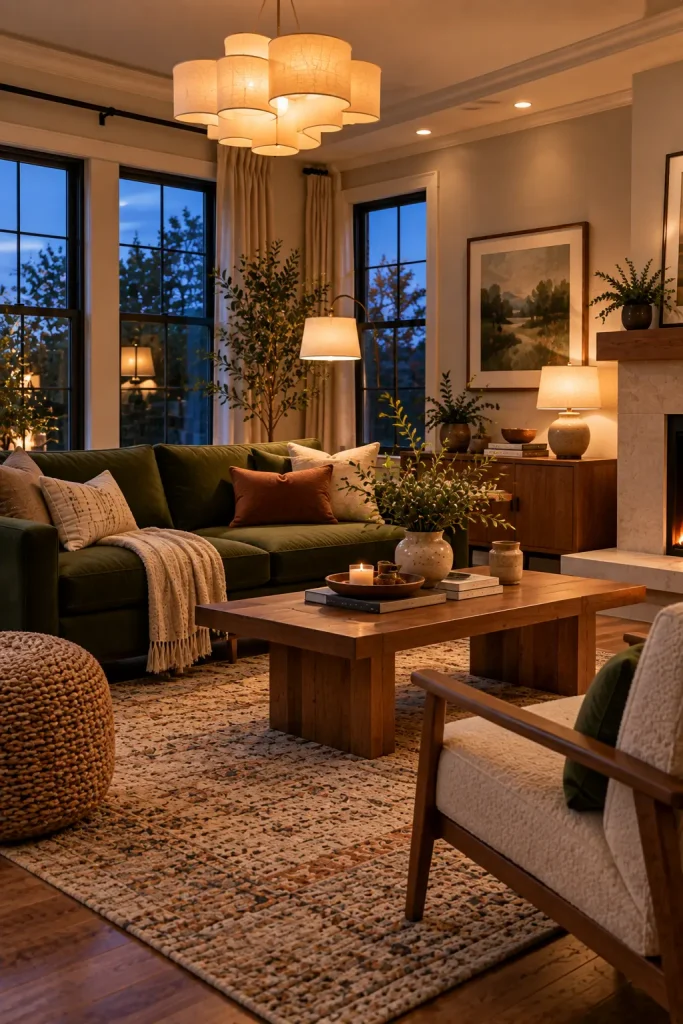
Lighting can change the perceived quality of an entire room. Instead of filling shelves with accessories, consider whether the room needs better ambient, task, or accent lighting.
A contemporary pendant can define a dining area, a sculptural floor lamp can anchor a reading corner, and small table lamps can make a living room feel warmer at night. Whenever possible, use several light sources at different heights rather than depending entirely on one ceiling fixture.
6. Use a Large Rug to Define the Seating Area
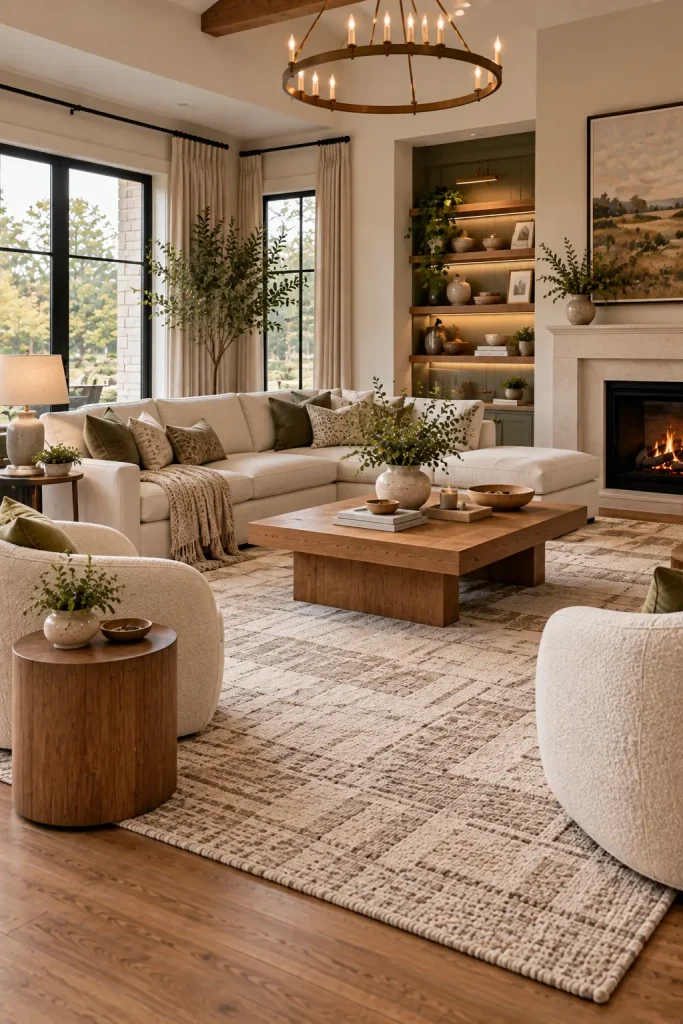
A rug can do much more than add softness underfoot. In an open room, it visually gathers furniture into a coherent zone and gives the seating arrangement a stronger sense of purpose.
For a modern look, consider subtle geometric patterns, tonal stripes, natural wool, or low-contrast abstract designs. Size matters more than many people realize. A rug that is too small can make otherwise well-chosen furniture appear disconnected.
Whenever possible, allow at least the front legs of major seating pieces to sit comfortably on the rug.
7. Bring in Sculptural Furniture
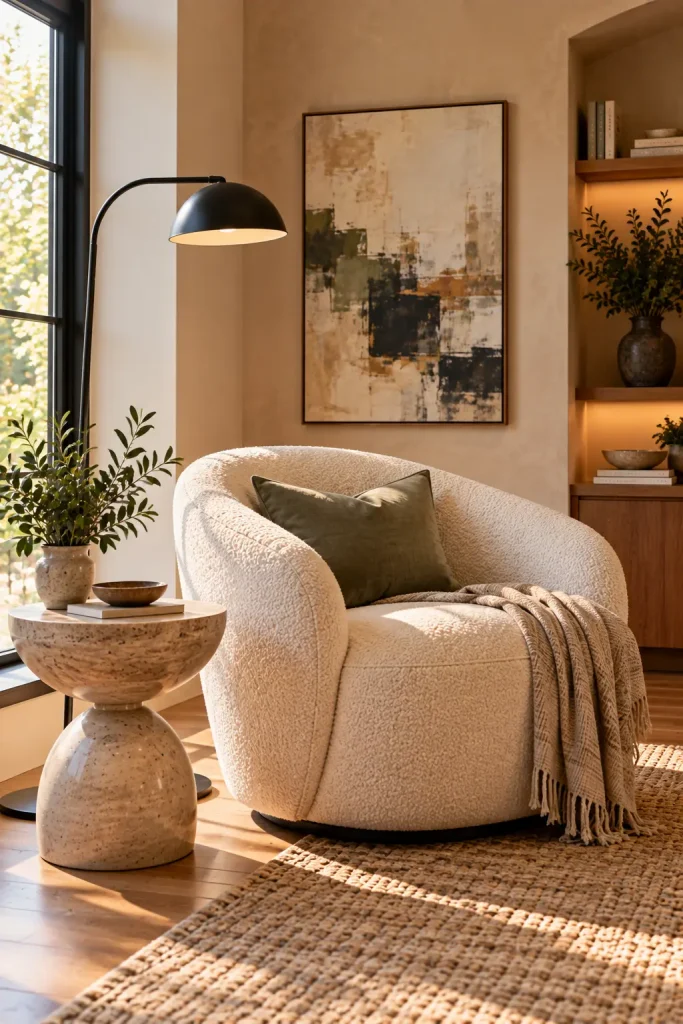
Modern furniture doesn’t have to be complicated to become a focal point. A rounded accent chair, pedestal table, curved bench, or organically shaped side table can provide visual interest while keeping the overall room restrained.
Use one or two sculptural pieces rather than turning the entire room into a collection of unusual shapes. The contrast between a simple room and one memorable silhouette often feels more sophisticated.
8. Create a Calm, Clutter-Free Entryway
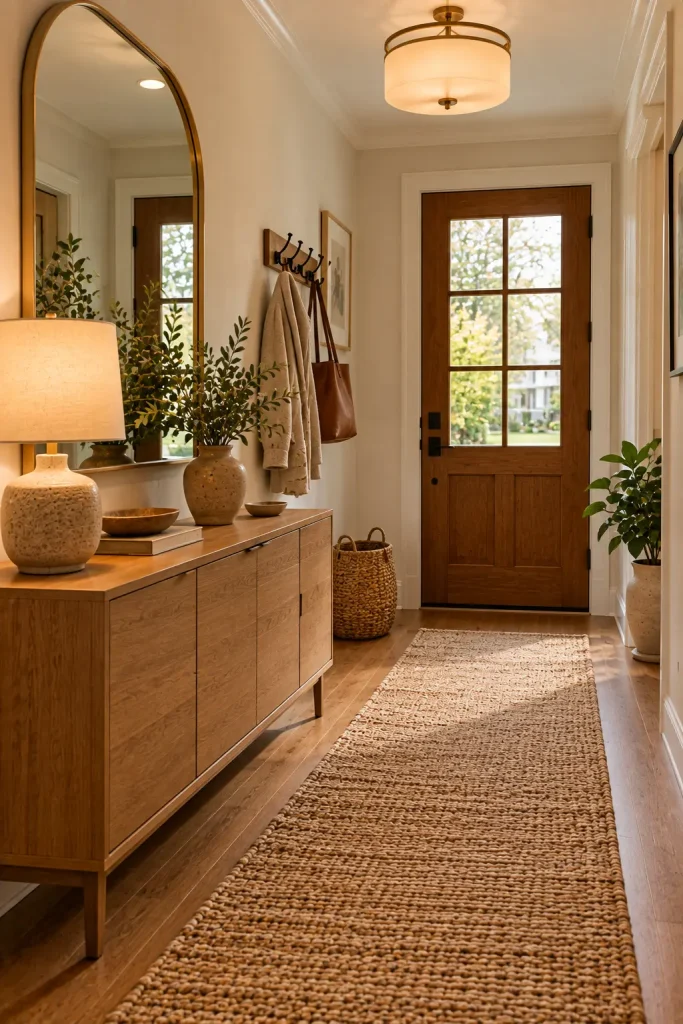
The entryway establishes the visual tone of the home, so even a small one deserves intentional styling. A narrow console, simple mirror, closed storage, and one decorative object can be enough.
For everyday practicality, make sure the design has somewhere to contain keys, shoes, bags, and other items that tend to accumulate. Closed storage is particularly useful because it keeps visual clutter out of sight.
9. Install Full-Length Curtains
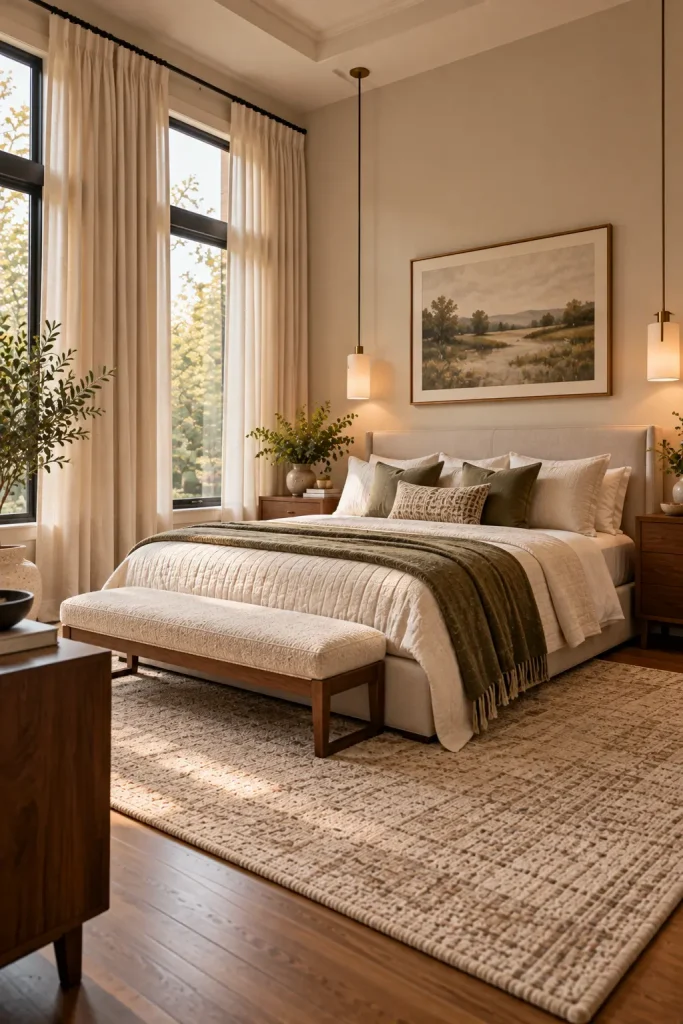
Floor-to-ceiling curtains can make a room feel more finished by emphasizing vertical height. Instead of stopping the fabric directly at the window frame, mount the rod higher and wider when the architecture allows.
Choose linen-look, cotton, or softly textured fabrics in a color close to the wall for a quiet modern effect. If the room needs more contrast, use a slightly deeper neutral.
10. Choose One Oversized Piece of Artwork
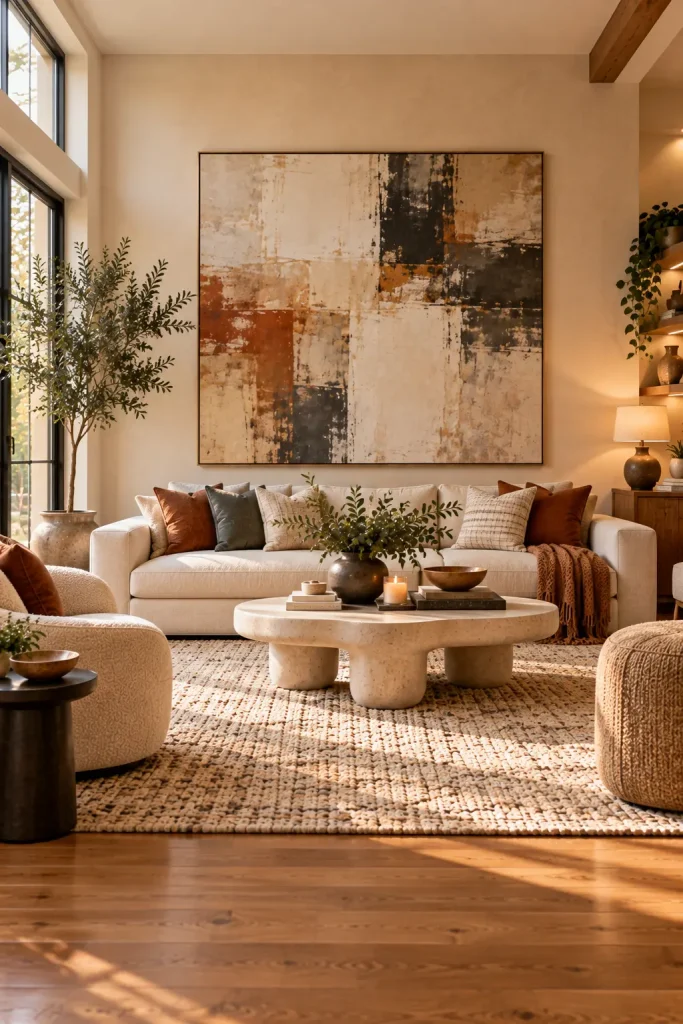
Instead of filling a wall with many small frames, consider using one large artwork as the visual anchor. A generously scaled abstract painting, photographic print, or textural artwork can give a room a more collected contemporary appearance.
Keep the surrounding styling relatively quiet so the artwork has room to breathe. The colors don’t need to match the furniture exactly; repeating one subtle tone elsewhere is usually enough.
11. Introduce Organic Shapes
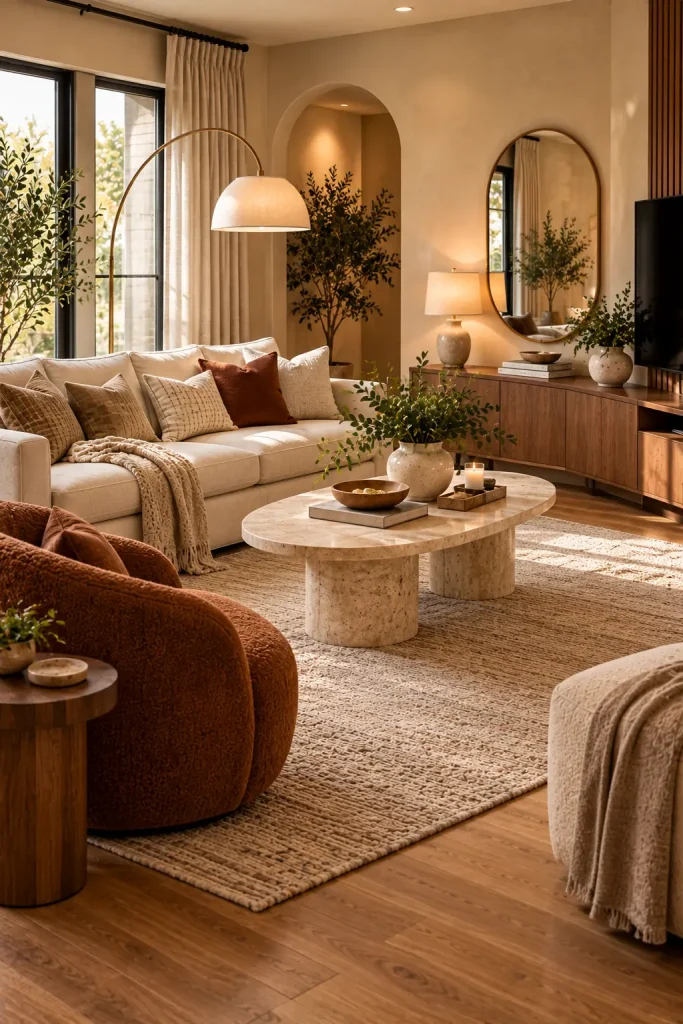
Rooms filled with rectangles can sometimes feel overly rigid. Rounded mirrors, oval tables, curved lamps, arched cabinets, and irregular ceramics can interrupt those straight lines.
You don’t need to replace all your furniture. Start with one substantial rounded form and perhaps two smaller accessories that echo it. The repetition creates cohesion without making the design feel themed.
Quick Tip: If your architecture is very angular, an oval coffee table or rounded mirror can make a noticeable difference.
12. Give the Fireplace a Modern Makeover
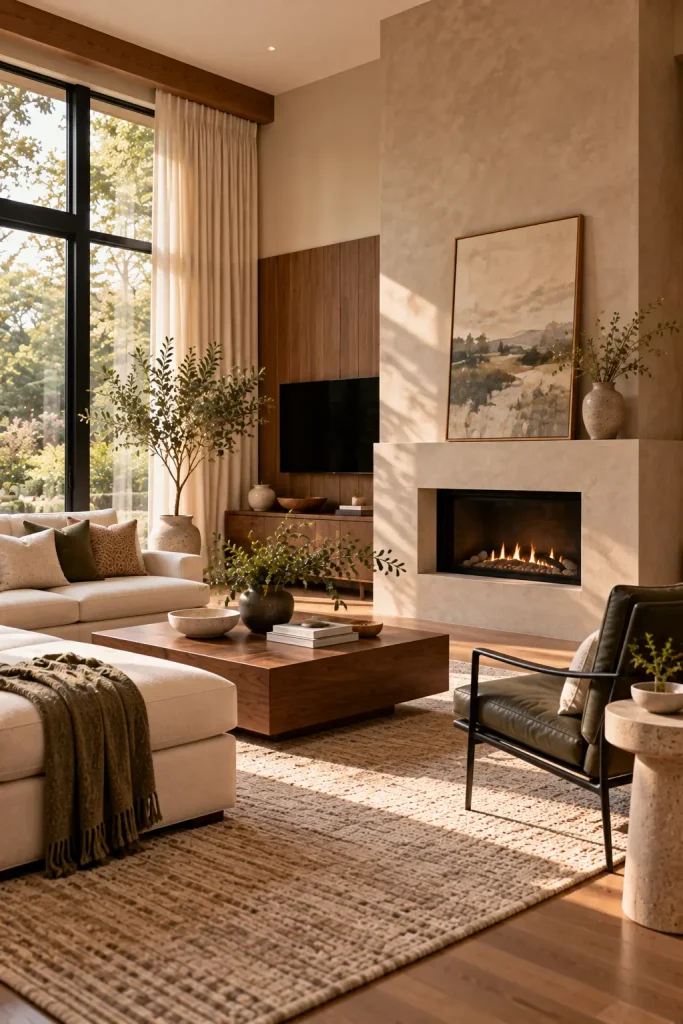
A fireplace can become the strongest architectural feature in a room, especially when its surround is updated thoughtfully. Depending on the existing structure, possibilities include simple plaster, large-format tile, natural stone, or a streamlined painted surround.
Keep the mantel styling restrained. A single artwork, sculptural object, or low arrangement can look more current than a crowded collection of accessories.
Do / Don’t
- Do: Let the fireplace remain the visual anchor.
- Do: Repeat its materials elsewhere subtly.
- Don’t: Cover the mantel with unrelated decorative objects.
- Don’t: Choose finishes only because they’re trendy if they conflict with the architecture.
13. Style Open Shelves With More Negative Space
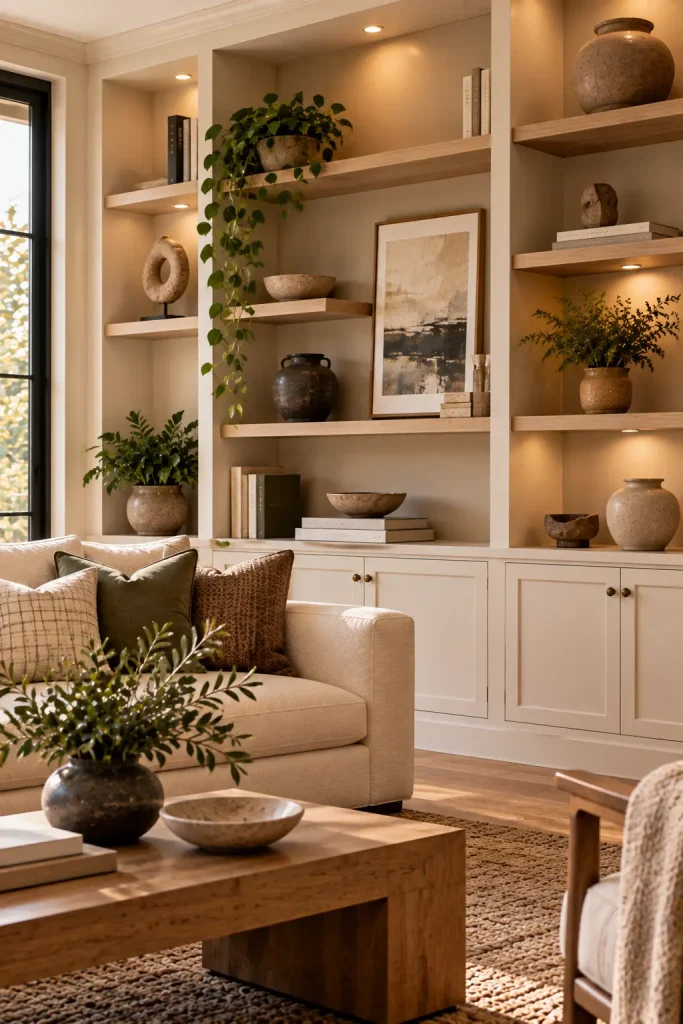
Open shelving can make a room feel lighter, but overcrowded shelves quickly become distracting. Modern styling works best when books, ceramics, artwork, plants, and objects are grouped intentionally with empty space between them.
A useful arrangement often combines objects of different heights and textures rather than filling every shelf equally.
14. Add a Statement Mirror Where It Can Reflect Light
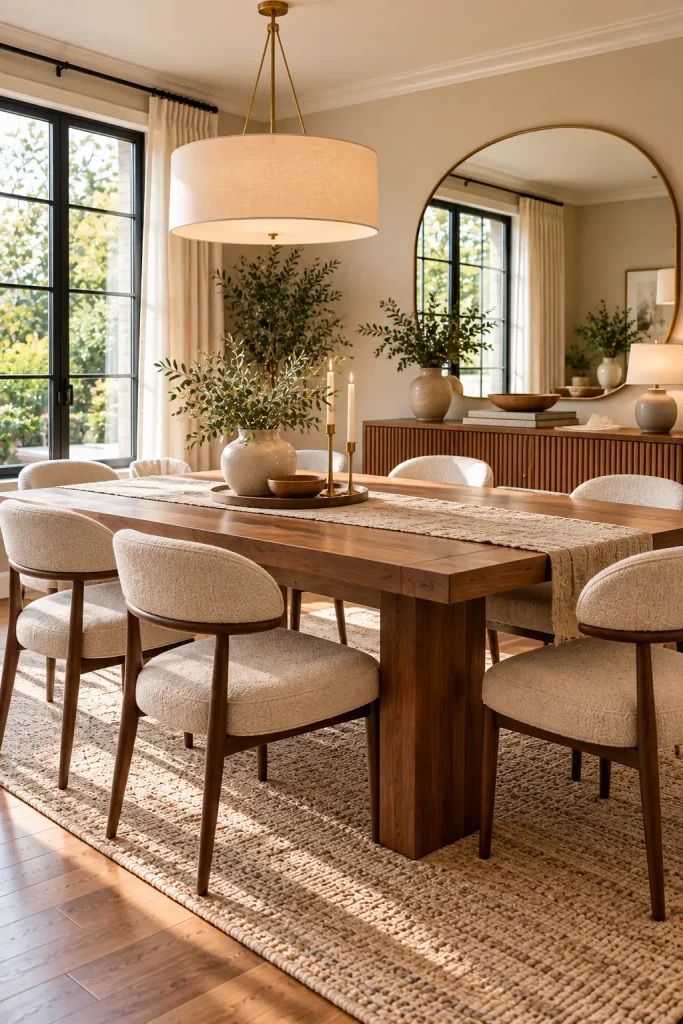
A well-placed mirror can make a room feel brighter while adding another decorative layer. Instead of automatically hanging one above a console, look for a position where it can reflect a window, doorway, artwork, or attractive architectural feature.
Modern mirrors can have slim metal frames, rounded silhouettes, oversized proportions, or softly irregular shapes.
15. Use Natural Textures to Keep Modern Rooms Warm
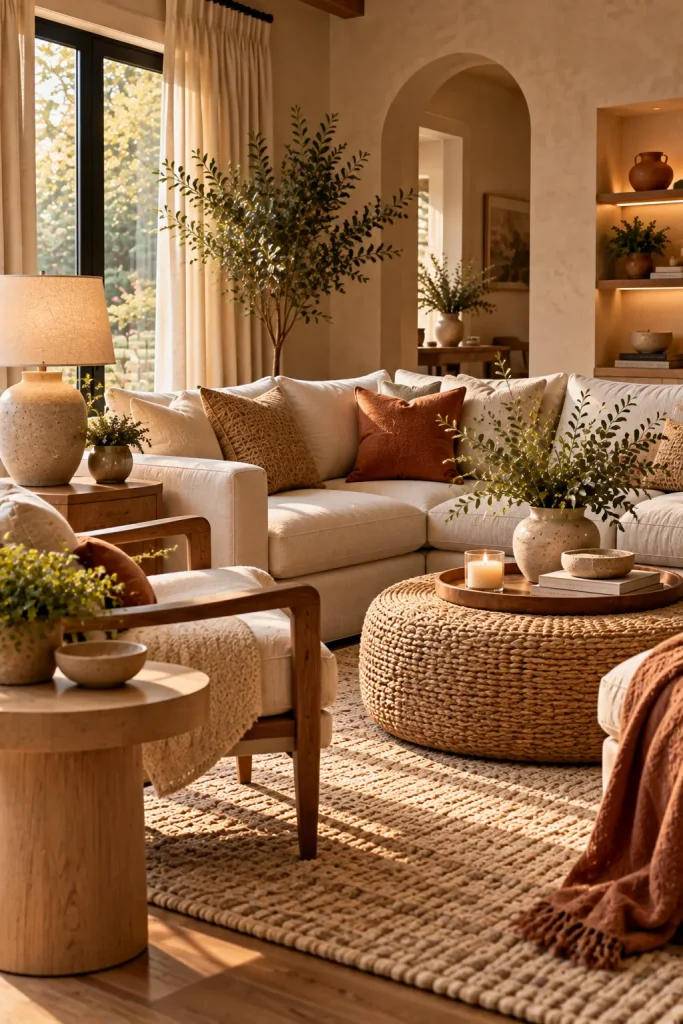
Modern doesn’t have to mean glossy. Natural textures such as linen, wool, rattan, oak, stone, terracotta, and handmade ceramics can make a streamlined interior feel much more welcoming.
Try combining three or four materials with visibly different surfaces. A smooth stone table beside a woven basket and nubby upholstery creates contrast without requiring bright colors.
16. Create a Dedicated Coffee Station
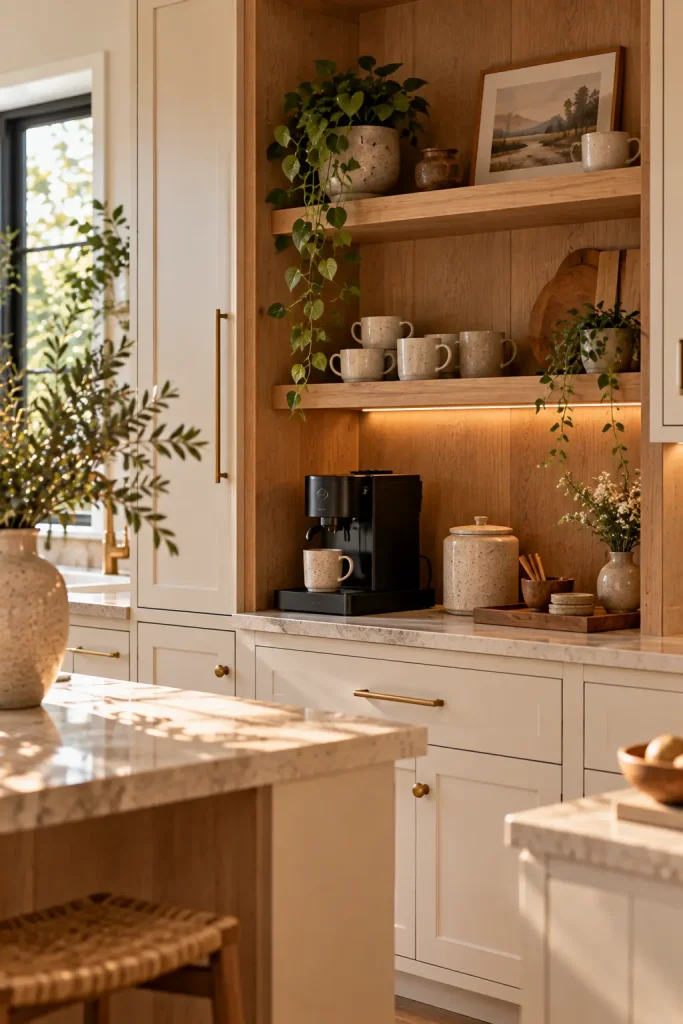
A small coffee station can make a kitchen or dining area feel more intentional while also solving a practical storage problem. Use a section of counter or a compact cabinet for the coffee maker, mugs, beans, and a few accessories.
Keep the visible items edited. One tray can visually gather the essentials, while closed drawers or cabinets hide less attractive supplies.
17. Paint Interior Doors for a Subtle Contrast
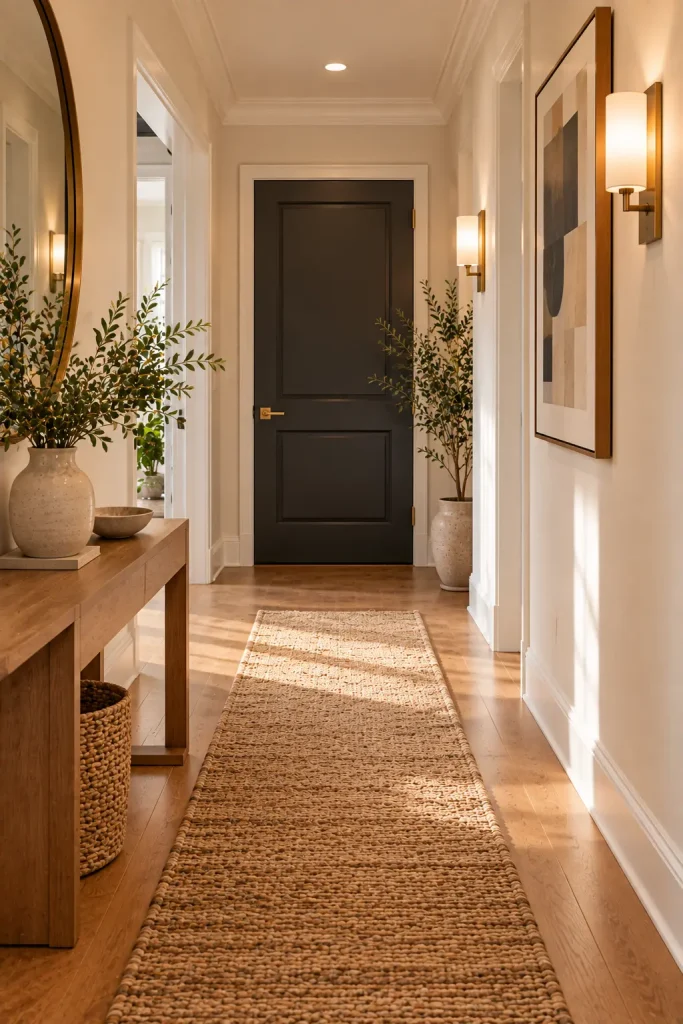
Painting an interior door can create a surprisingly strong design moment without changing the entire room. Deep charcoal, muted olive, warm brown, or even a soft black can work beautifully against lighter walls.
Use the color selectively. One door or a coordinated set of doors can feel architectural; painting every door in a different accent color may become visually distracting.
18. Build a More Intentional Bedroom Layer
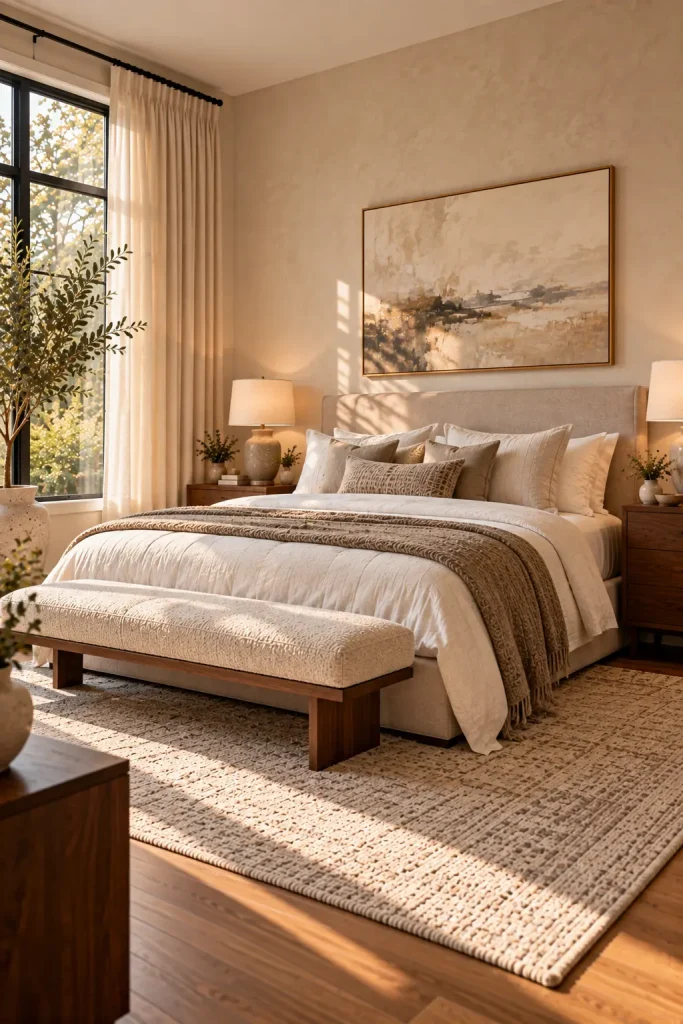
A modern bedroom benefits from restraint, but restraint shouldn’t mean bare. Layer the bed with a substantial duvet, a textured throw, two or three pillow sizes, and a restrained color palette.
Keep nightstands relatively uncluttered. Matching bedside lamps can create symmetry, while a slightly asymmetrical artwork or bench can keep the room from feeling overly formal.
19. Use a Monochromatic Bathroom Palette
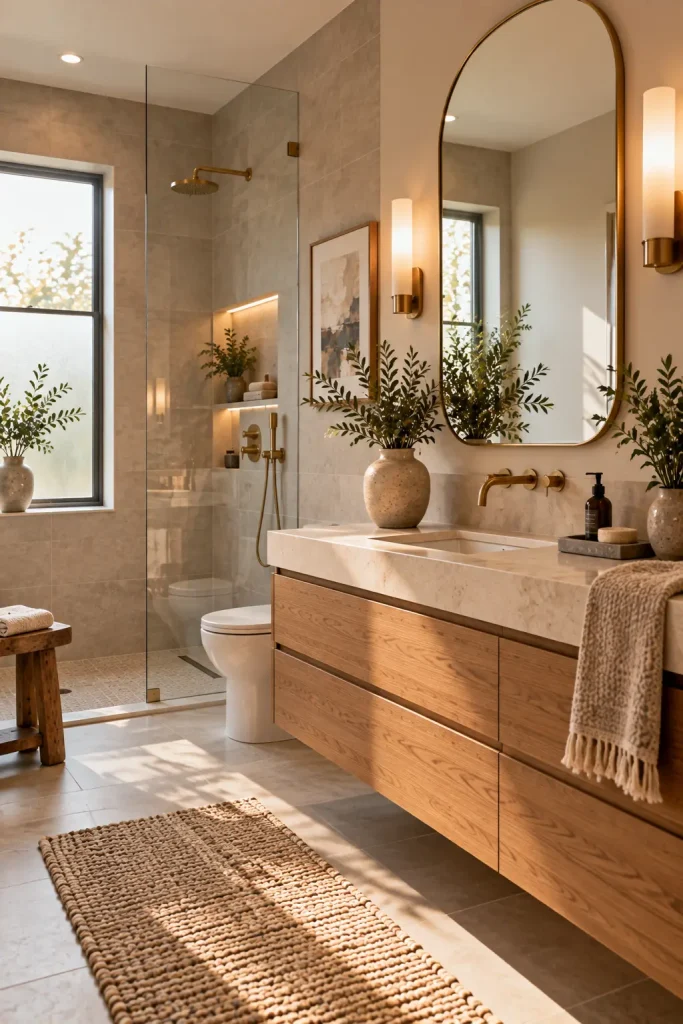
A bathroom can feel substantially more contemporary when the palette is limited. Try warm white tile with beige stone, soft taupe cabinetry, brushed metal, and one darker accent.
The goal isn’t to eliminate contrast but to control it. Repeating one finish across the vanity hardware, mirror frame, and lighting can make the room feel more cohesive.
20. Add Greenery in Oversized Planters
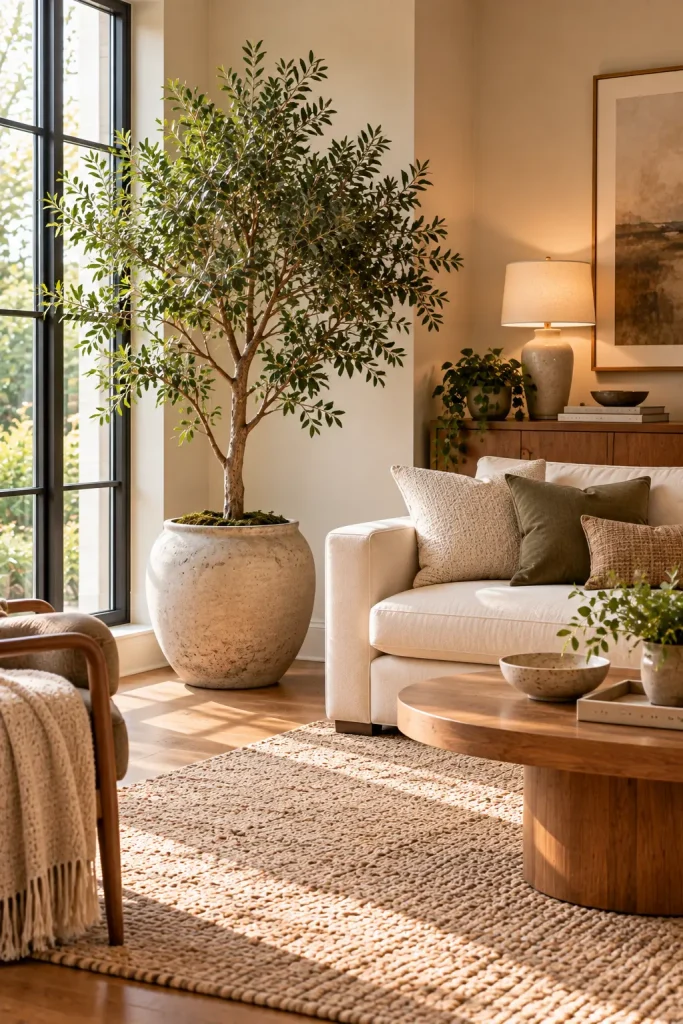
Plants can soften a modern room and bring a natural vertical element into the design. Instead of scattering many tiny plants around the house, consider one substantial plant in an appropriately scaled planter.
Choose the plant according to the actual light conditions of the location rather than selecting it purely for appearance. A large planter can also fill an awkward corner without adding visual clutter.
21. Replace Small Decor With One Statement Object
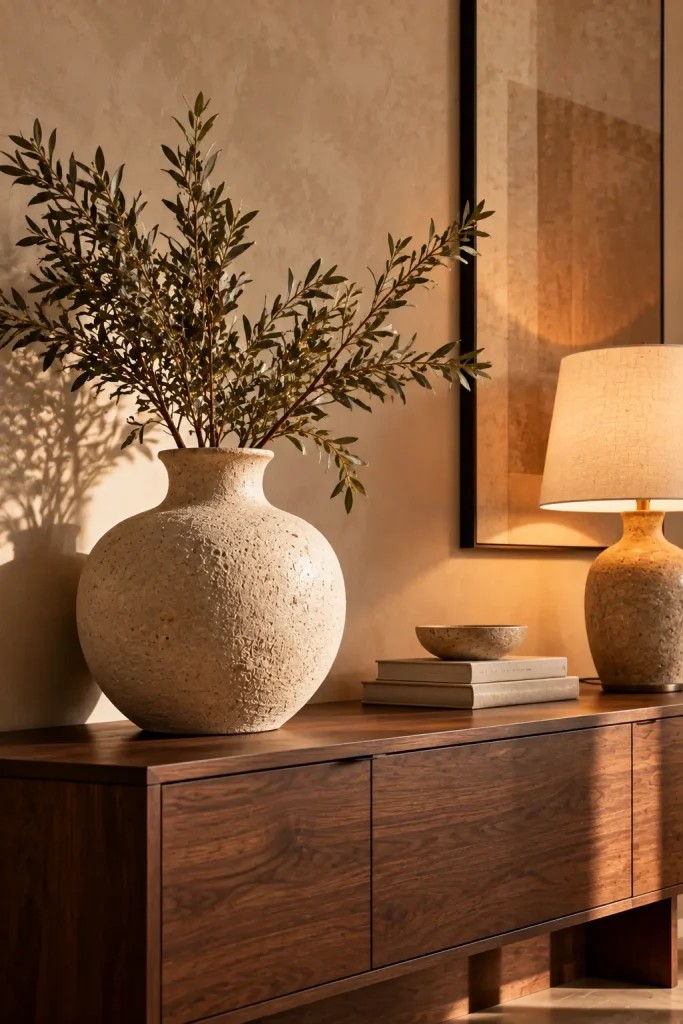
Instead of adding several small decorative pieces, choose one object with enough scale to carry the composition. It could be a large ceramic vessel, sculptural lamp, stone bowl, oversized planter, or substantial piece of handmade art.
This approach reduces visual noise and makes styling easier. Give the statement piece enough surrounding space so its shape can actually be appreciated.
22. Introduce a Soft Accent Color
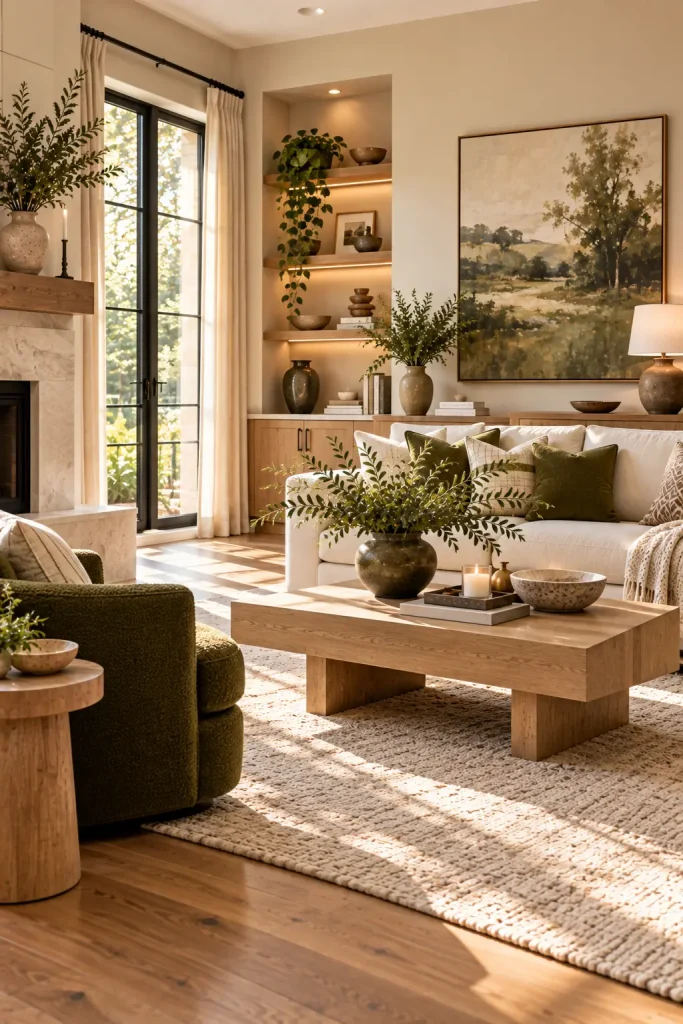
Modern rooms don’t have to remain entirely neutral. A controlled accent color can give the space personality without disrupting its calm appearance.
Muted terracotta, dusty blue, olive green, ochre, or deep burgundy can work particularly well when repeated in two or three locations. Use the accent through cushions, artwork, ceramics, a chair, or a small rug rather than covering every surface.
Before: Neutral room with unrelated accent colors scattered throughout.
After: Neutral foundation with one carefully repeated accent tone.
The second approach creates stronger visual continuity.
23. Create a Modern Gallery Wall With Consistent Framing
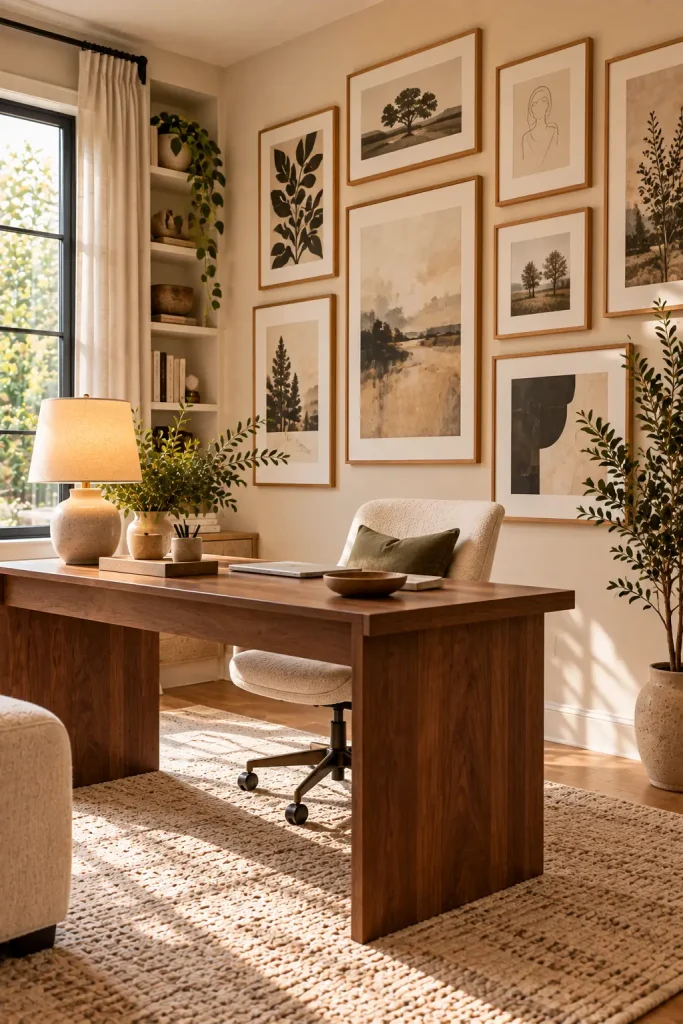
A gallery wall can still feel contemporary when the frames share a consistent visual language. Rather than matching every artwork, match the framing.
Black, natural oak, or slim brushed-metal frames can provide structure while allowing the artwork itself to vary. Leave enough space between pieces to prevent the arrangement from becoming crowded.
24. Upgrade Cabinet Hardware
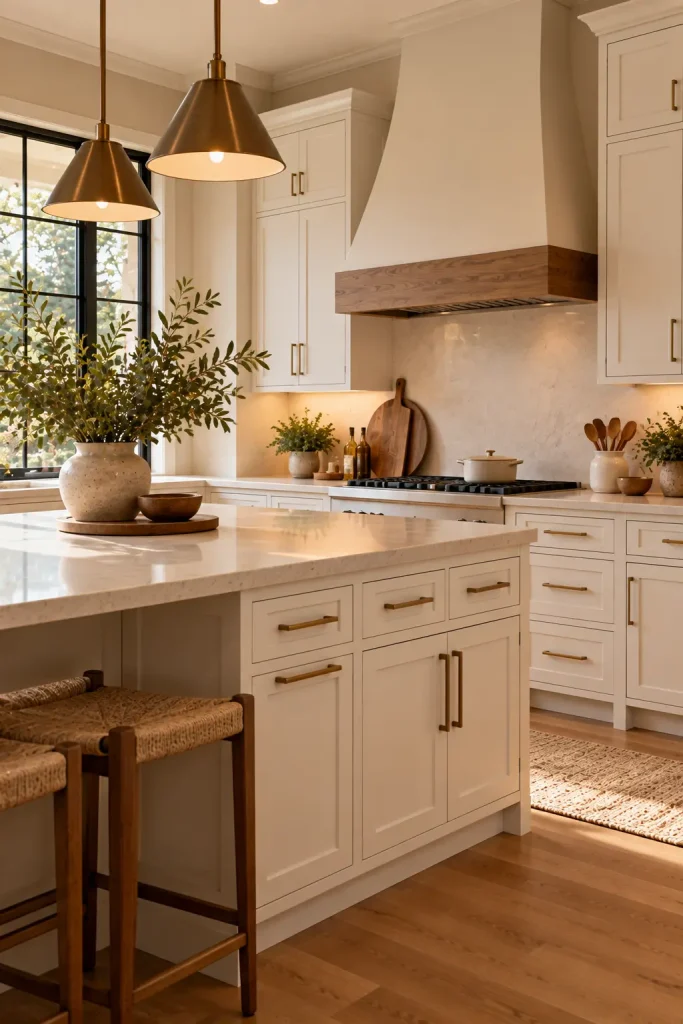
Changing cabinet pulls and knobs is a relatively small update that can make existing cabinetry feel considerably fresher. Choose hardware that relates to the overall room rather than treating it as an isolated purchase.
Long bar pulls suit many contemporary kitchens and bathrooms, while small knobs or integrated pulls can create a quieter appearance.
Tips & Tricks
- Measure existing holes before ordering replacements.
- Consider the cabinet’s scale when choosing hardware length.
- Repeat the finish elsewhere when practical.
- Sample the finish in the actual room’s lighting before replacing everything.
25. Add a Built-In Bench to an Awkward Wall
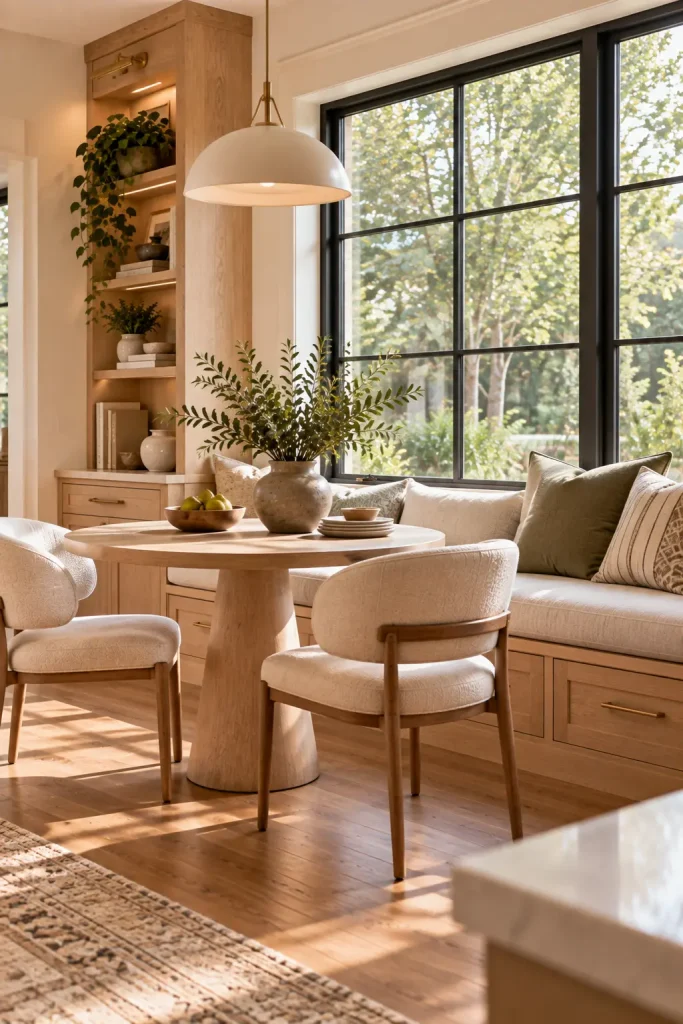
An underused wall can become one of the most useful parts of a home with a built-in or semi-built-in bench. In an entryway, it provides seating and shoe storage; beneath a window, it can become a quiet reading spot.
Use drawers, baskets, or lift-up storage beneath the seat depending on the room. Cushions and a few pillows can make the bench comfortable without adding bulk.
26. Use a Console Behind the Sofa
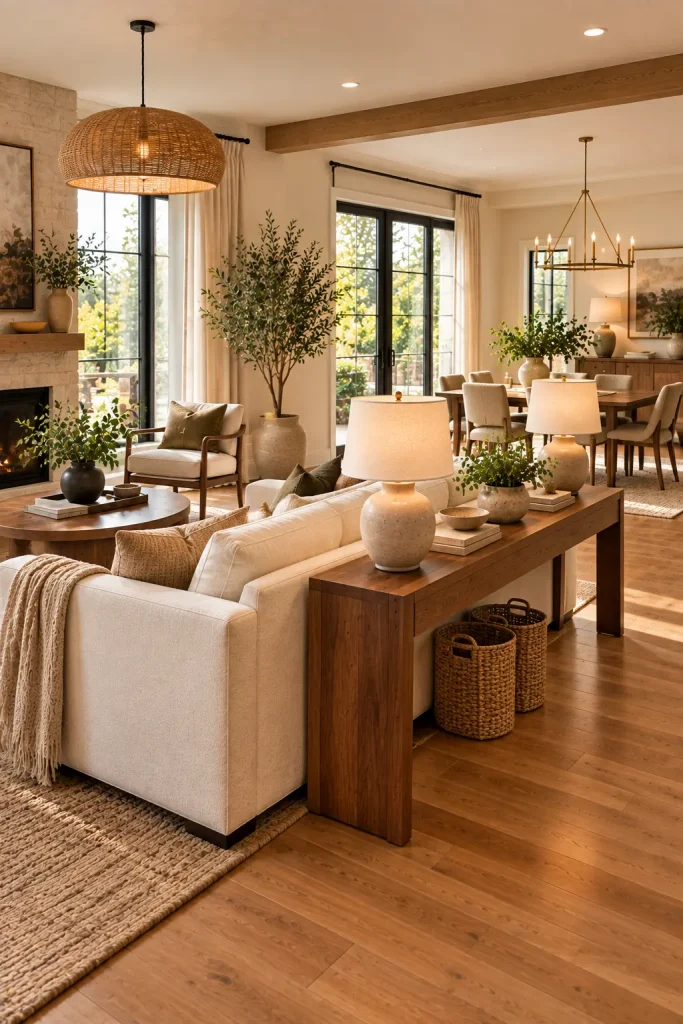
If the back of a sofa faces an open area, a slim console can make the arrangement feel intentional rather than unfinished. Use the surface for a lamp, books, ceramics, or a small plant while keeping enough clearance for comfortable movement.
This is particularly useful in open-plan homes where furniture needs to define separate zones without adding walls.
27. Combine Matte and Reflective Finishes
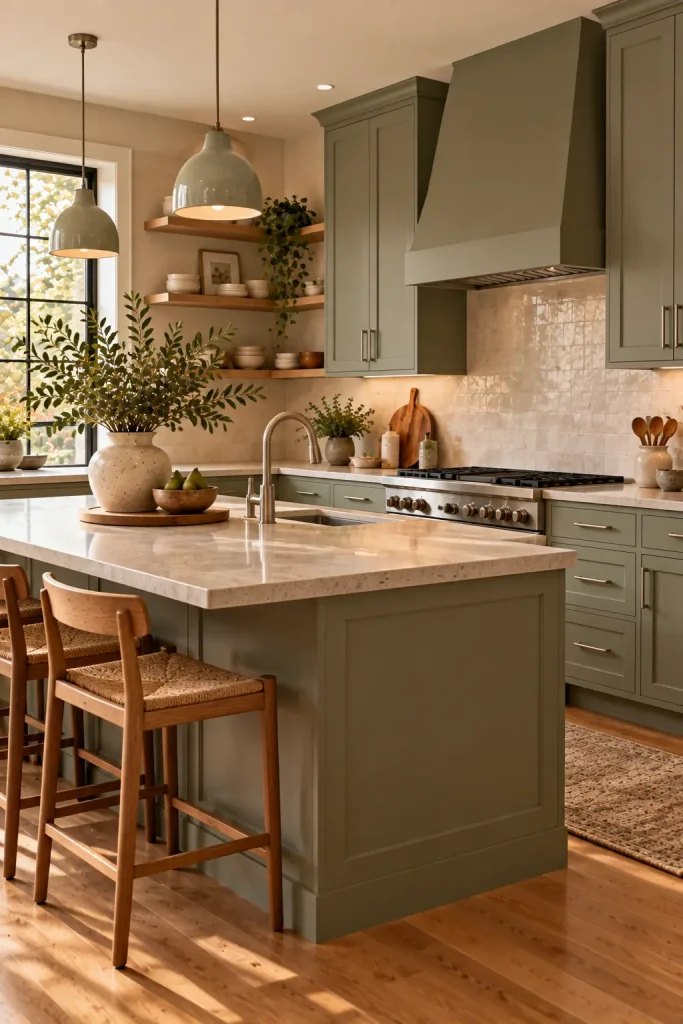
A modern room becomes more interesting when every surface doesn’t have the same finish. Pair matte plaster or painted walls with polished stone, brushed metal, lightly reflective glass, or glazed ceramics.
The contrast can be subtle. Even a matte cabinet beside a softly reflective backsplash creates a useful change in surface quality.
28. Make the Dining Area Feel More Intentional
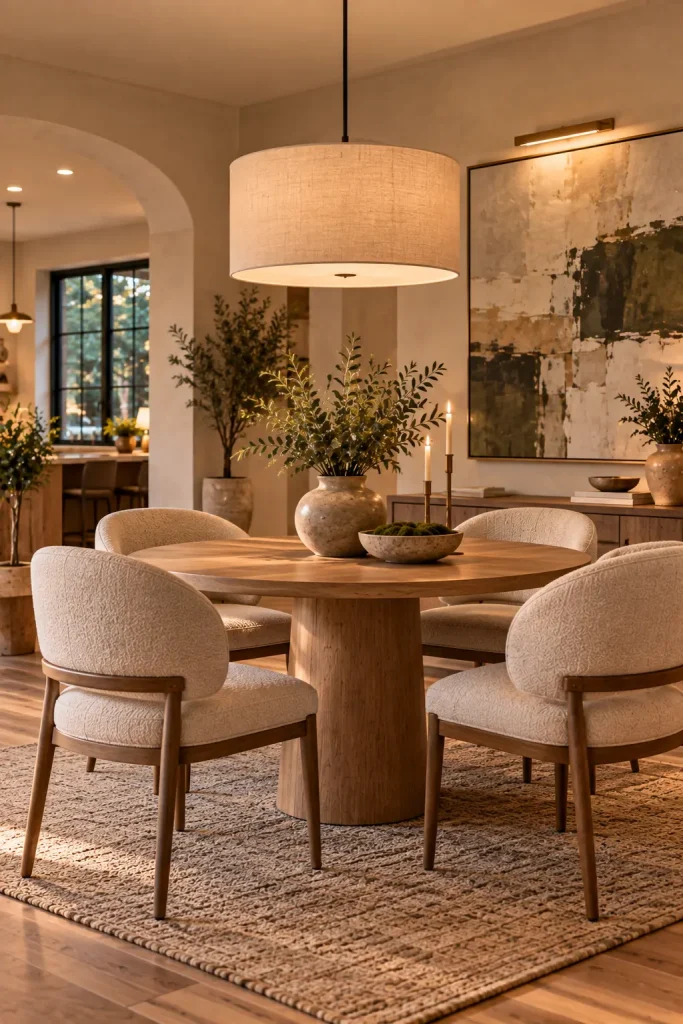
A dining table doesn’t need an elaborate centerpiece to feel finished. Focus on scale, lighting, and the relationship between the table and chairs.
A large pendant centered over the table can create a visual anchor, while a simple low arrangement keeps sightlines open. If the dining room is small, a round table can sometimes improve circulation by eliminating sharp corners.
29. Create a Quiet Modern Work-From-Home Zone
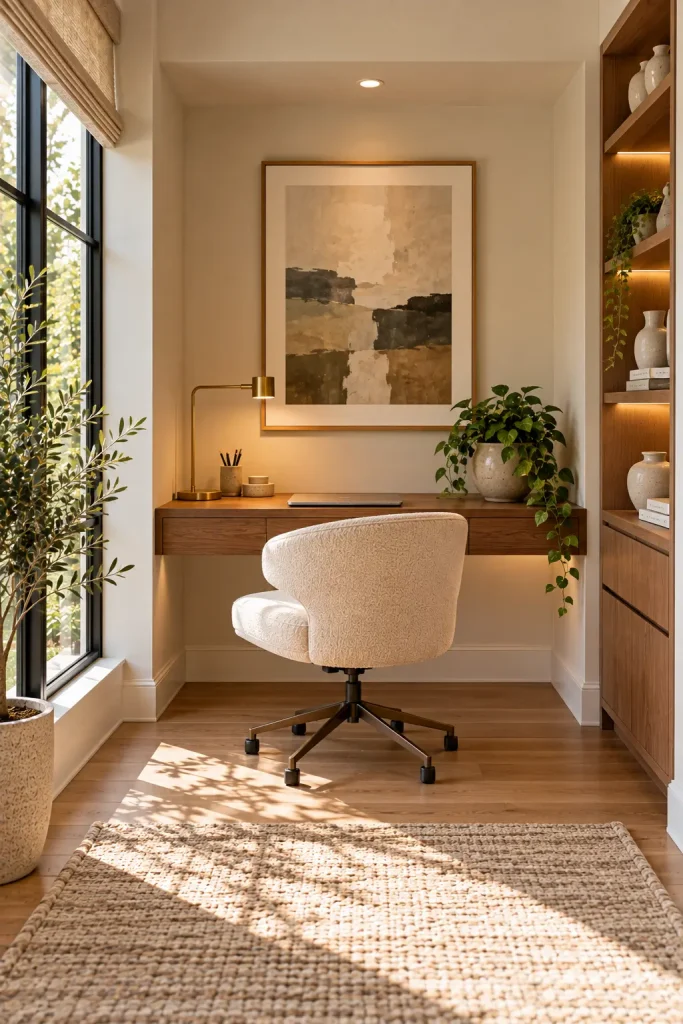
A home office doesn’t have to resemble a corporate workspace. A simple desk, comfortable chair, concealed cable management, focused lighting, and a few personal objects can create a productive but residential environment.
If space is limited, consider a floating desk or shallow console-style workstation. Keep visual distractions controlled, especially if the workspace shares a living room or bedroom.
30. Finish With a Personal Layer
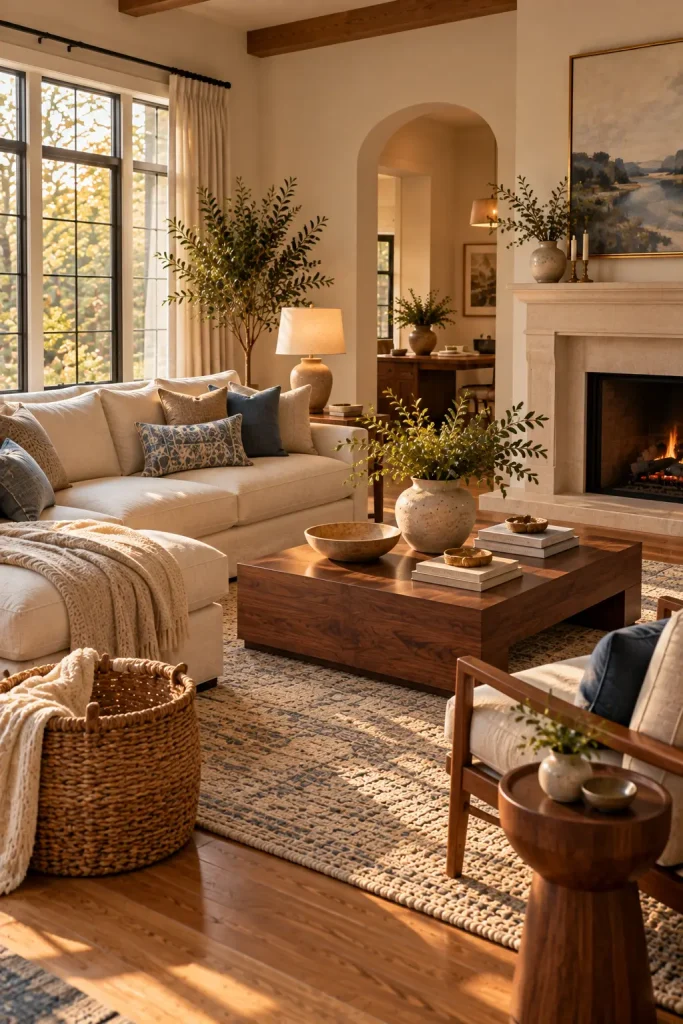
The final step in updating a modern home is making sure it doesn’t look like a showroom. Add a few objects that actually reflect the people who live there: collected ceramics, meaningful artwork, favorite books, travel finds, family photographs, or handmade pieces.
The trick is editing rather than eliminating personality. A modern room usually benefits from a smaller number of meaningful objects displayed with enough space around them.
A beautifully updated home should feel current while still feeling lived in. That’s the balance that keeps modern decor from becoming cold or interchangeable.