
22 Easy Home Decor Ideas for a Beautiful Home on a Budget
A beautiful home doesn’t have to come with a large decorating budget. Often, the biggest difference comes from thoughtful choices such as rearranging furniture, improving lighting, adding texture, displaying meaningful pieces, or giving a tired surface a fresh finish. The key is to make small changes that have a noticeable visual effect while keeping the room comfortable and practical.
These easy home decor ideas work across apartments, rentals, starter homes, townhouses, and established houses. Some rely on things you may already own, while others involve modest purchases that can be introduced gradually. Instead of trying to decorate everything at once, choose a few ideas that solve a specific problem in your space. A more intentional arrangement can make an ordinary room feel considerably more finished.
1. Rearrange Your Furniture for a Fresh Layout
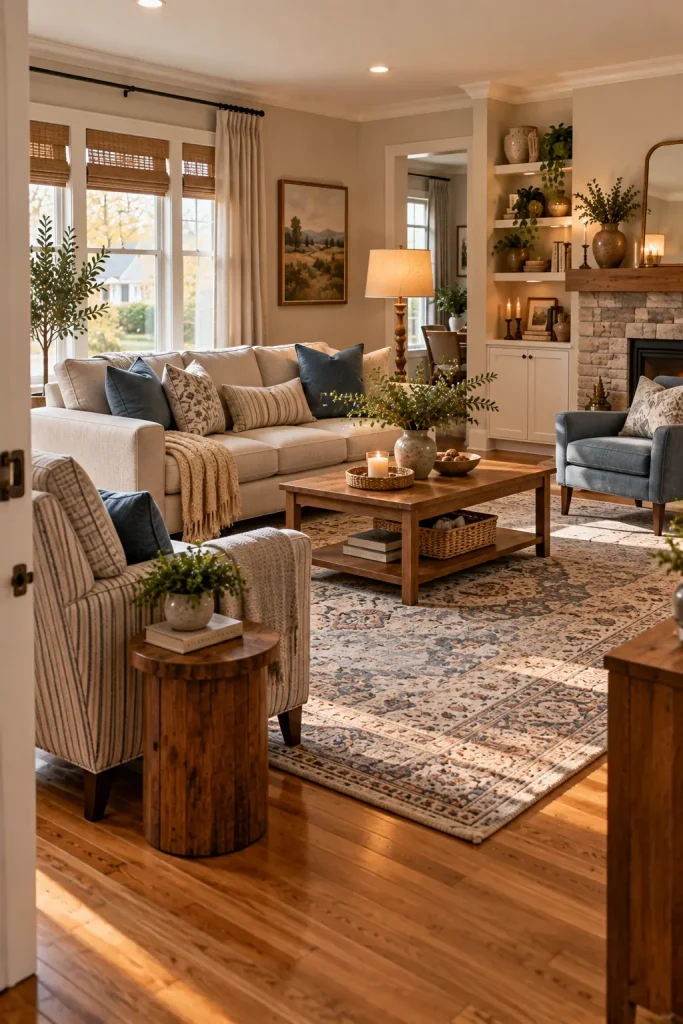
Before buying anything new, reconsider the way your furniture is positioned. Moving a sofa away from the wall, angling two chairs toward one another, or creating a clearer conversation area can completely change the character of a room without costing anything. Pay attention to walking paths and make sure the arrangement feels natural rather than simply filling empty corners.
For smaller rooms, avoid pushing every piece against the perimeter just because it seems to create more floor space. A little breathing room around furniture can actually make the room feel more deliberate. Try several layouts before settling on one, and photograph each arrangement from the main doorway to see which composition feels most balanced.
Quick Tip: Start with the largest piece, such as the sofa or bed, then build the rest of the arrangement around it.
2. Create a Gallery Wall With Thrifted Frames
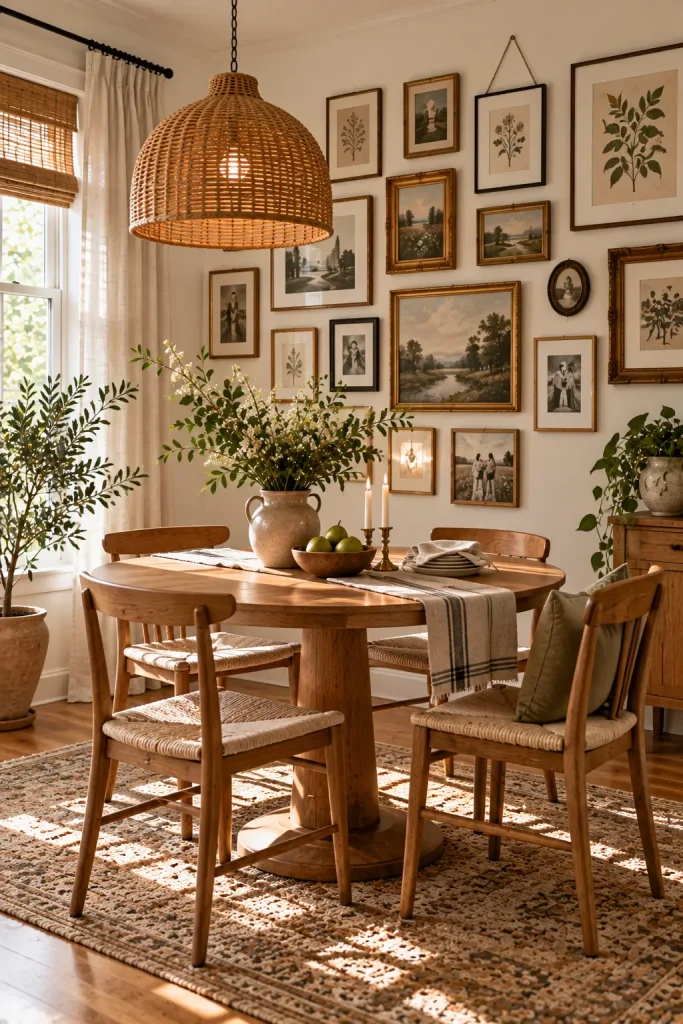
A gallery wall can add personality without requiring expensive artwork. Search thrift stores, flea markets, estate sales, or your own storage for frames in different shapes and finishes. The artwork itself can be simple: botanical prints, vintage illustrations, family photographs, postcards, or inexpensive downloadable art printed at home or through a local print service.
For a cohesive appearance, repeat one visual element across the collection. Similar frame tones, a consistent mat color, or a shared color palette can make inexpensive pieces feel connected. Lay everything on the floor first and experiment with spacing before putting holes in the wall.
Common Mistake: Making every frame exactly the same size can make the arrangement feel more like a grid than a collected display.
3. Layer Affordable Textures
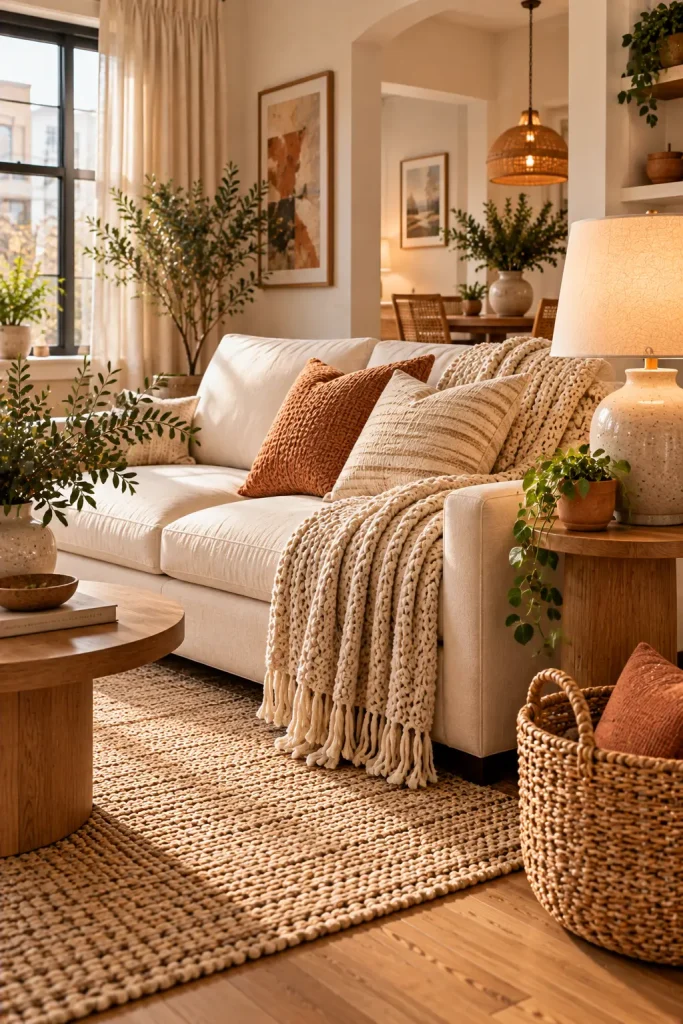
Texture is one of the easiest ways to make a room feel richer without filling it with more objects. Combine a cotton throw with a woven basket, a nubby cushion with smooth ceramic, or linen-look curtains with a wood side table. The contrast gives the room depth even when the color palette remains simple.
Focus on a few different tactile surfaces instead of buying many decorative accessories. A basket beside the sofa, a soft throw across a chair, and one textured cushion may be enough to make a plain living room feel more comfortable. Natural-looking materials also tend to work well with many existing furniture styles.
4. Paint One Small Architectural Feature
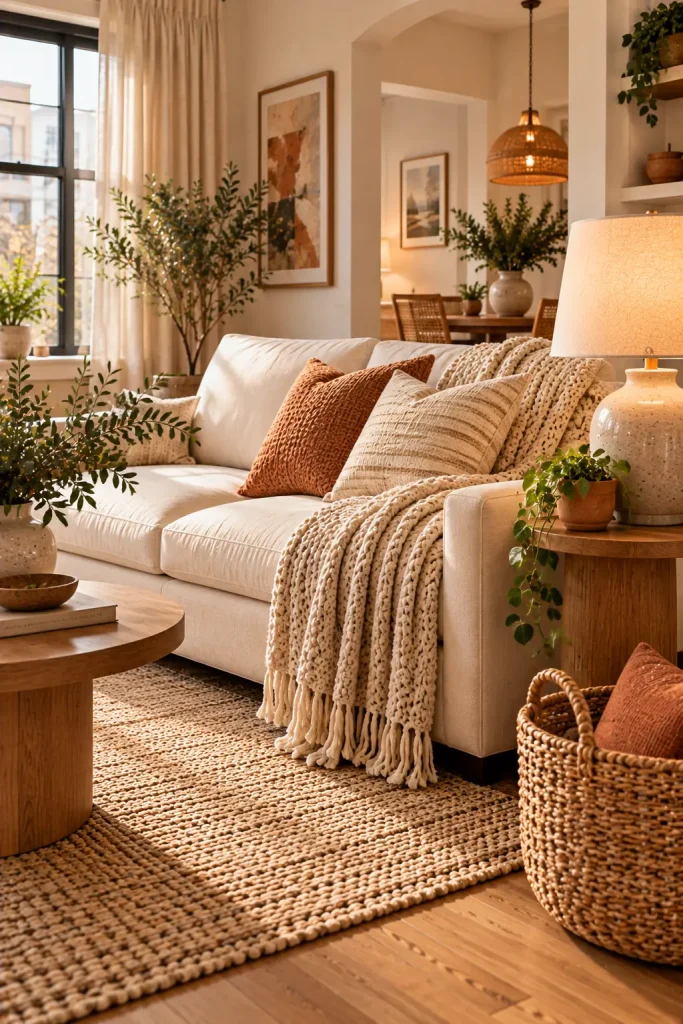
You don’t always need to paint an entire room to make a meaningful difference. A small accent wall, fireplace surround, built-in back panel, or interior door can provide enough contrast to give the space a new focal point. Choose a color that relates to furniture or textiles already in the room so the update feels intentional.
Deep olive, muted blue, warm clay, soft charcoal, or earthy brown can work particularly well when used selectively. If you’re renting, consider removable wallpaper or a temporary color-block treatment where appropriate. The goal is not simply to add a bold color but to give an overlooked architectural area more visual importance.
Quick Tip: Test the color in the actual room because natural and artificial light can change how it appears throughout the day.
5. Upgrade Cabinet Hardware
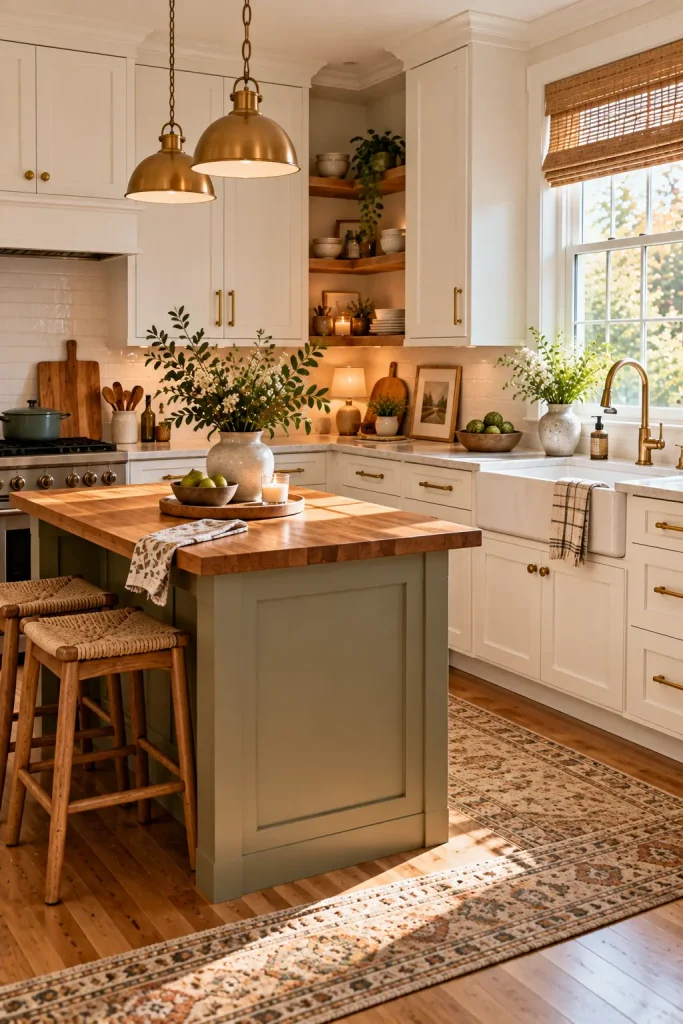
Changing knobs and pulls is a small project that can make dated cabinetry look considerably more intentional. This works in kitchens, bathrooms, laundry rooms, and even built-in storage. Look for hardware with a finish that complements existing fixtures rather than trying to introduce several competing metals.
Simple black pulls can sharpen light cabinetry, while aged brass can add warmth to white, cream, or wood-toned doors. Measure existing hardware carefully before purchasing replacements, especially for drawer pulls that use two mounting holes.
Do / Don’t
- Do: Check the existing hole spacing before ordering.
- Do: Repeat the new finish elsewhere in the room.
- Don’t: Mix too many unrelated hardware styles.
- Don’t: Choose oversized pulls simply because they are visually dramatic.
6. Style a Console Table With Three Simple Layers
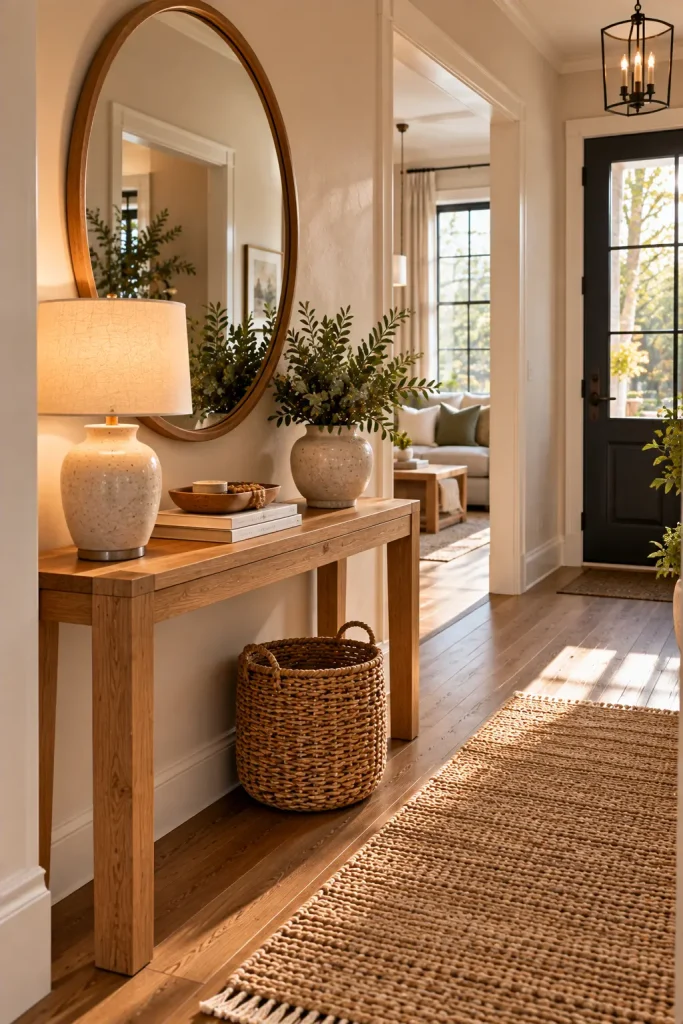
A console table can become a focal point when styled with a simple visual hierarchy. Begin with one larger piece such as a mirror or artwork, add a medium-height lamp or vase, and finish with a low object such as a tray or stack of books. This creates height variation without requiring a large collection of accessories.
Keep enough empty surface area for the arrangement to breathe. In a narrow entryway, choose shallow objects so the display doesn’t interfere with circulation. The same approach can work on a dining-room sideboard, bedroom dresser, or living-room media console.
7. Use Mirrors to Bounce Light
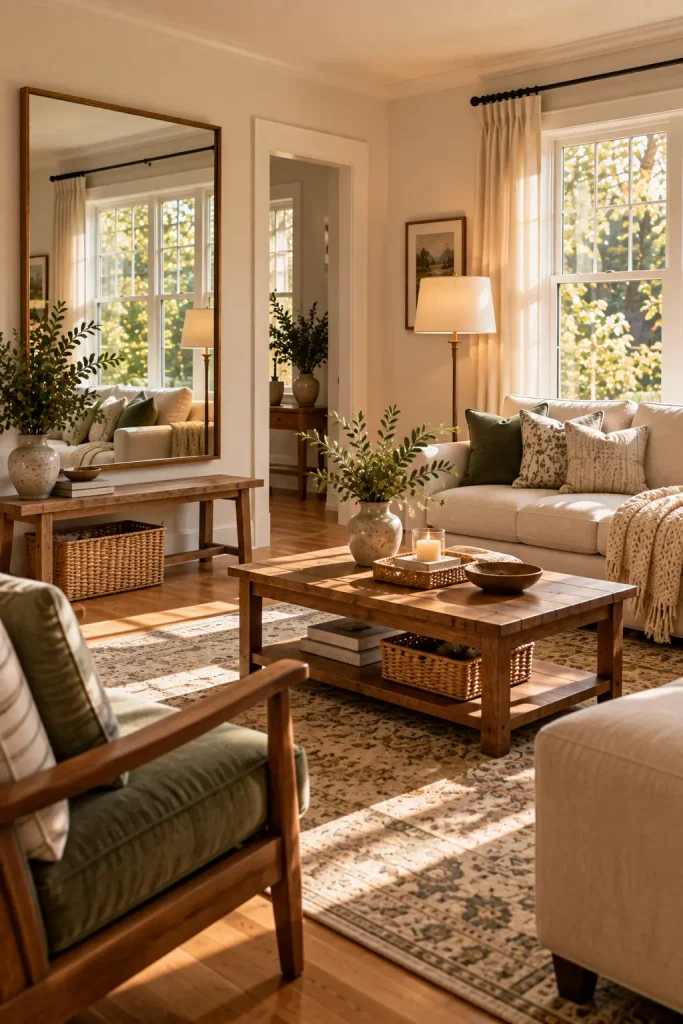
A strategically placed mirror can make a room feel brighter and more open while also functioning as wall decor. Instead of automatically placing one above a console, consider positioning a mirror where it reflects a window, doorway, artwork, or attractive architectural feature.
Large mirrors can be expensive, so look for simple secondhand frames or affordable versions with uncomplicated silhouettes. A collection of smaller mirrors can also create an interesting wall display. Avoid positioning a mirror where it reflects clutter or an unappealing view, because the reflected image becomes part of the room’s visual composition.
8. Bring in One Large Houseplant
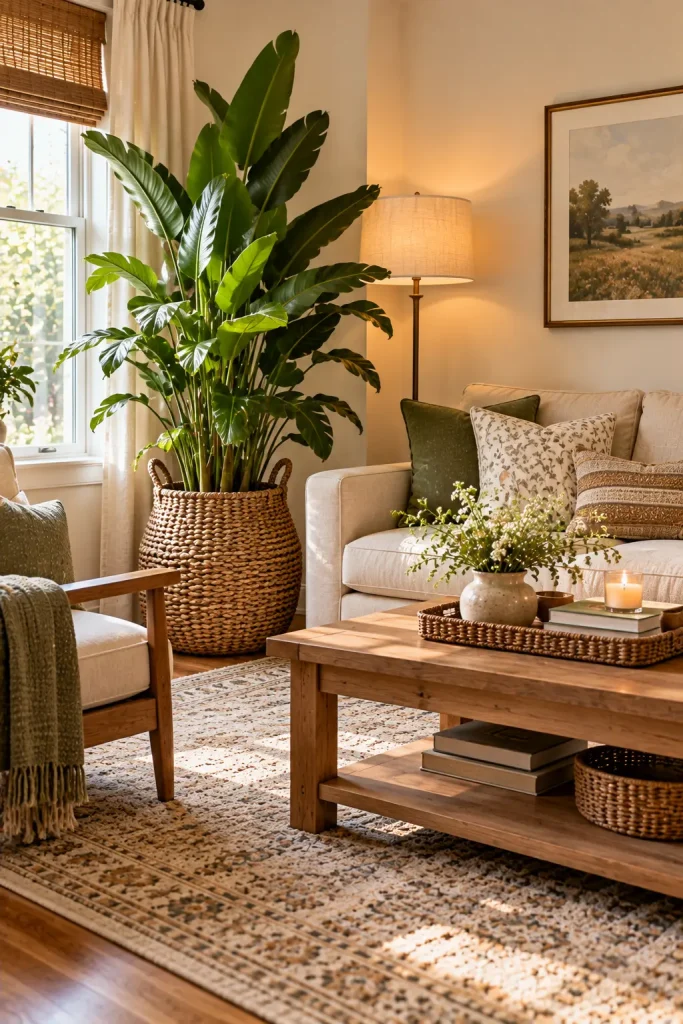
Instead of scattering many tiny plants around the room, consider making one healthy-looking plant a clear focal point. A larger floor plant can fill an empty corner, soften hard furniture lines, and introduce natural color without requiring a collection of accessories.
Choose a container that works with the room’s existing materials. A woven basket can create a relaxed look, while a simple ceramic planter feels cleaner and more modern. Place the plant where its actual light needs can reasonably be met rather than choosing a location purely for appearance.
9. Refresh a Room With New Curtains
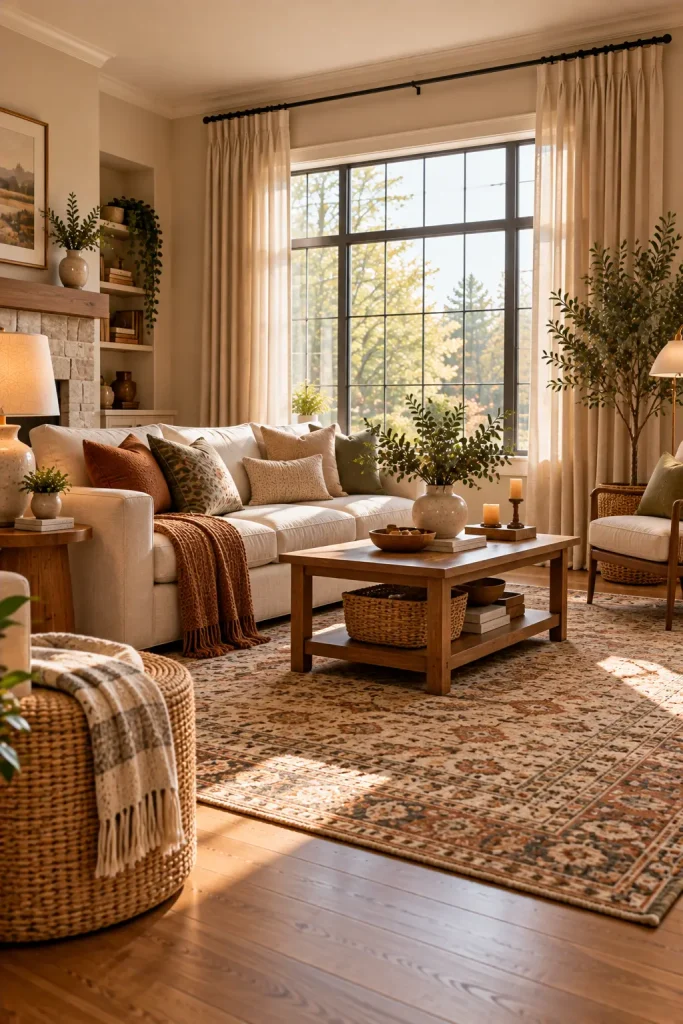
Window treatments can occupy a surprisingly large visual area, so replacing heavy or tired curtains can change the mood of a room without replacing its furniture. Light-filtering linen-look panels can make a space feel softer, while simple cotton curtains can suit a more casual home.
Hang curtains high enough to visually connect the window with the ceiling, while ensuring the length works with the room and floor. If the existing rods are still useful, simply changing the panels can reduce the cost. Neutral curtains are especially versatile when you want future decor changes to remain easy.
10. Make a Coffee Table Tray
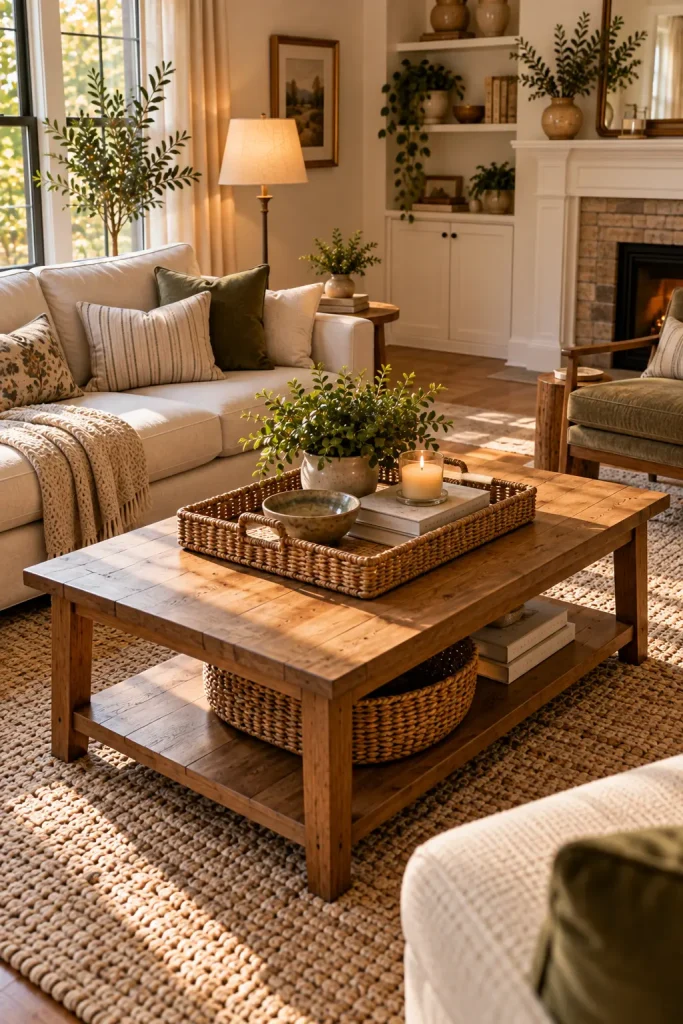
A tray gives small decorative objects a visual boundary, which can make a coffee table feel organized rather than scattered. Use one large tray in wood, rattan, metal, or ceramic and group a few useful objects inside it. A candle, small plant, decorative bowl, and remote controls can coexist without making the surface look cluttered.
The best arrangement balances attractive objects with everyday function. Leave some open space around the tray so the coffee table remains usable for drinks, books, or family activities.
11. Shop Your Own Home
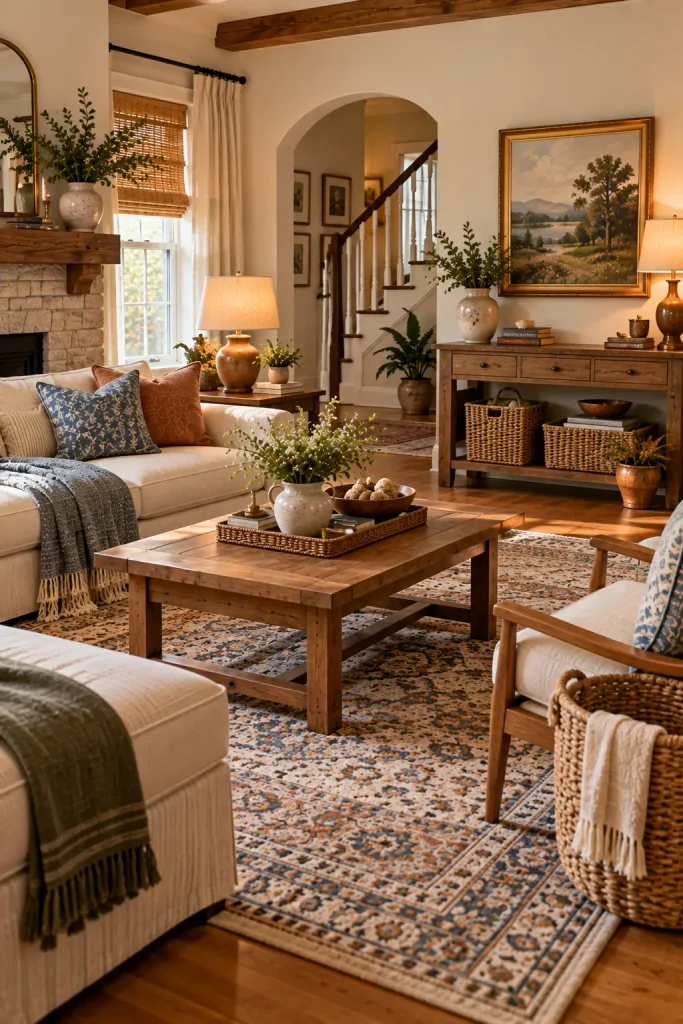
One of the most affordable decorating strategies is to stop thinking of every room as a fixed collection of belongings. A lamp from the bedroom might work better in the living room, while a framed print from a hallway could become the focal point above a desk. Even moving baskets, vases, stools, and cushions between rooms can create a sense of renewal.
Gather similar accessories in one place and then redistribute them deliberately. This also helps reveal which pieces you actually use and which ones are simply occupying space. A smaller number of meaningful objects often makes a room look more intentional than a larger collection.
12. Add a Small Reading Corner
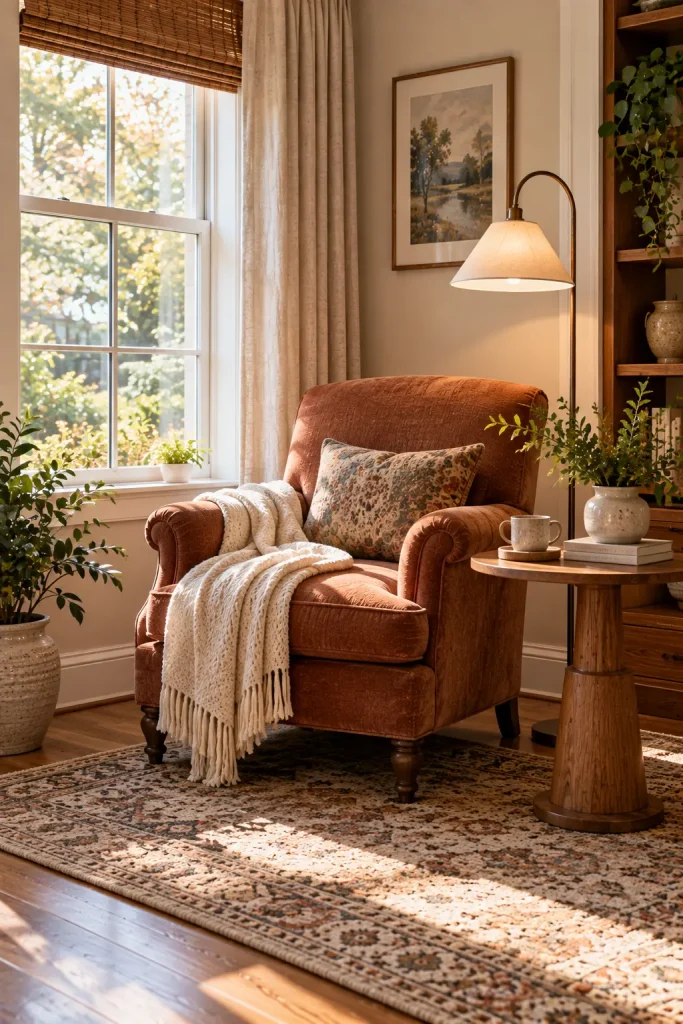
An unused corner doesn’t need a complete furniture set to become useful. A comfortable chair, small side table, floor lamp, and soft throw can establish a simple reading spot. Look for secondhand chairs or use an existing accent chair that is currently underused elsewhere.
Keep the footprint compact so the corner remains easy to move around. A small reading area also gives a larger room another functional zone, making the space feel more thoughtfully planned without requiring major renovation.
Best For: Empty corners, bedrooms, living rooms, home offices, and larger hallways.
13. Swap in Warm, Layered Lighting
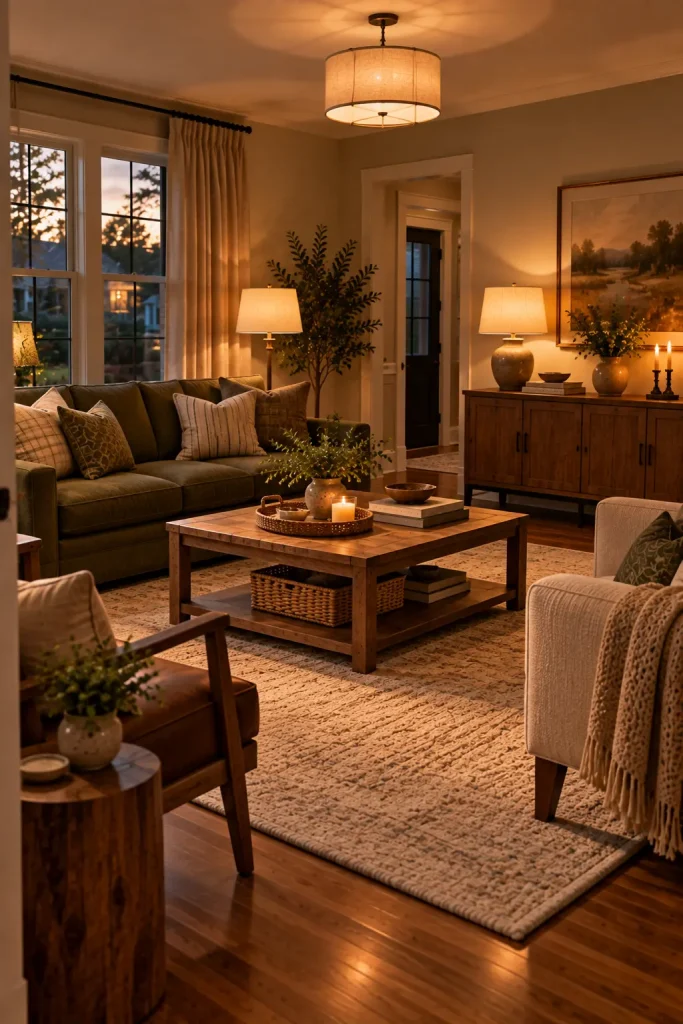
Lighting can change the atmosphere of a room more dramatically than many decorative purchases. Instead of relying entirely on one ceiling fixture, combine a table lamp, floor lamp, wall light, or small accent light to create different levels of illumination.
Warm bulbs can make evening spaces feel more comfortable, while daylight should remain the main source whenever possible. The goal is to create pools of light rather than illuminate every surface equally. Even replacing one outdated lamp with a simple, well-scaled fixture can make a room feel more considered.
14. Use Books as Decorative Color
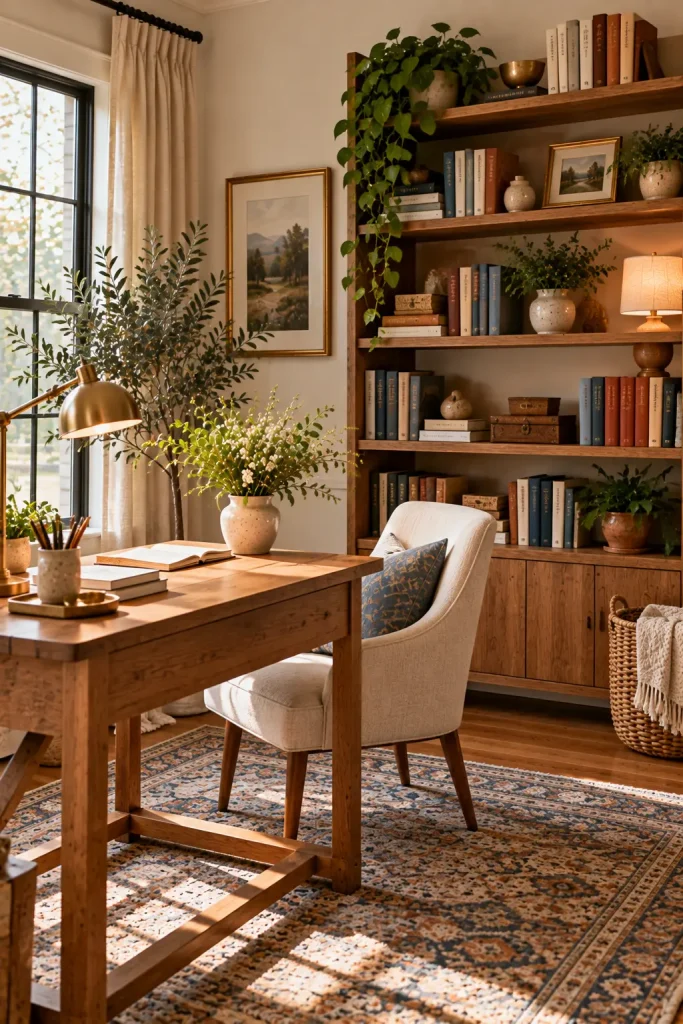
Books can add height, color, and personality while remaining useful objects. Stack a few horizontally on a coffee table or place selected books vertically on a shelf with small objects between groups. Choose covers that complement the room rather than trying to match every color exactly.
If you already own a large collection, rotate the books on display instead of buying decorative editions. A small stack of well-loved books can feel more personal than generic accessories, particularly when combined with a ceramic object or small plant.
15. Add a Removable Wallpaper Accent
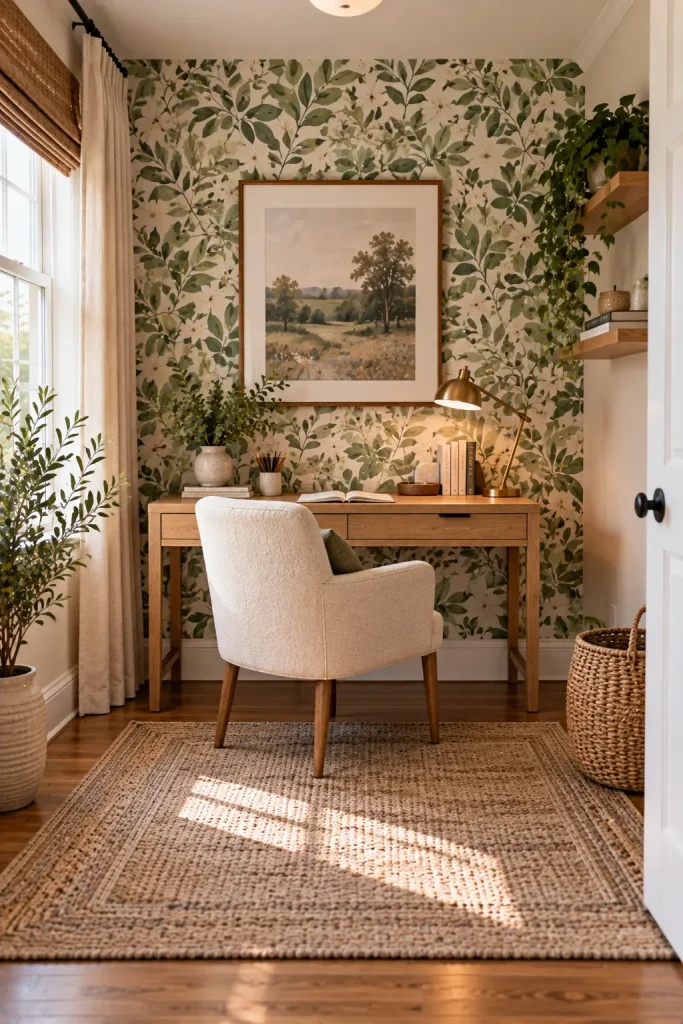
Removable wallpaper can introduce pattern without committing to a permanent renovation, making it particularly useful for renters and cautious decorators. Instead of covering an entire room, use it on the back wall of a bookshelf, inside a small powder room, behind a desk, or on one compact accent wall.
A small pattern can be enough to establish a clear design direction. Pair busy wallpaper with simpler furniture and accessories so the room doesn’t become visually crowded. Always follow the manufacturer’s installation and removal guidance for the particular surface.
16. Style Open Shelves With Negative Space
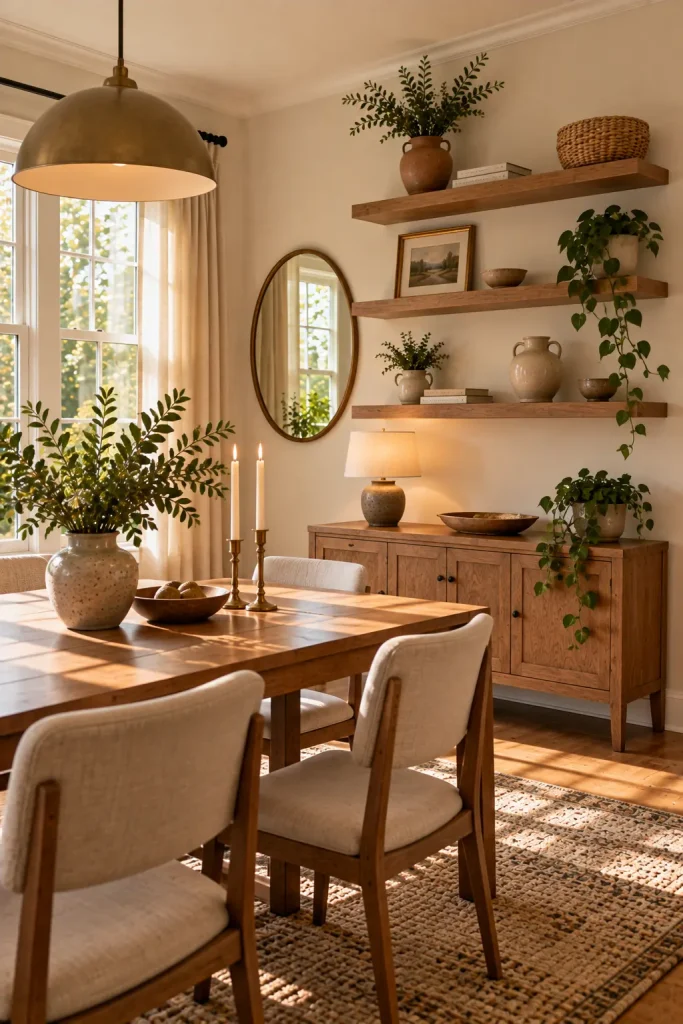
Open shelves look more polished when they aren’t filled from edge to edge. Leave deliberate gaps between books, ceramics, baskets, framed pieces, and plants. Vary the height of objects so the eye moves naturally across the shelves instead of seeing one continuous line.
If your shelves currently feel cluttered, remove everything and return only the pieces you genuinely like. Grouping similar objects can make inexpensive items feel more intentional, while a few empty areas provide visual breathing room.
Common Mistake: Treating every shelf as a storage zone can make the wall feel crowded.
17. Refresh a Dresser With New Drawer Pulls and Styling
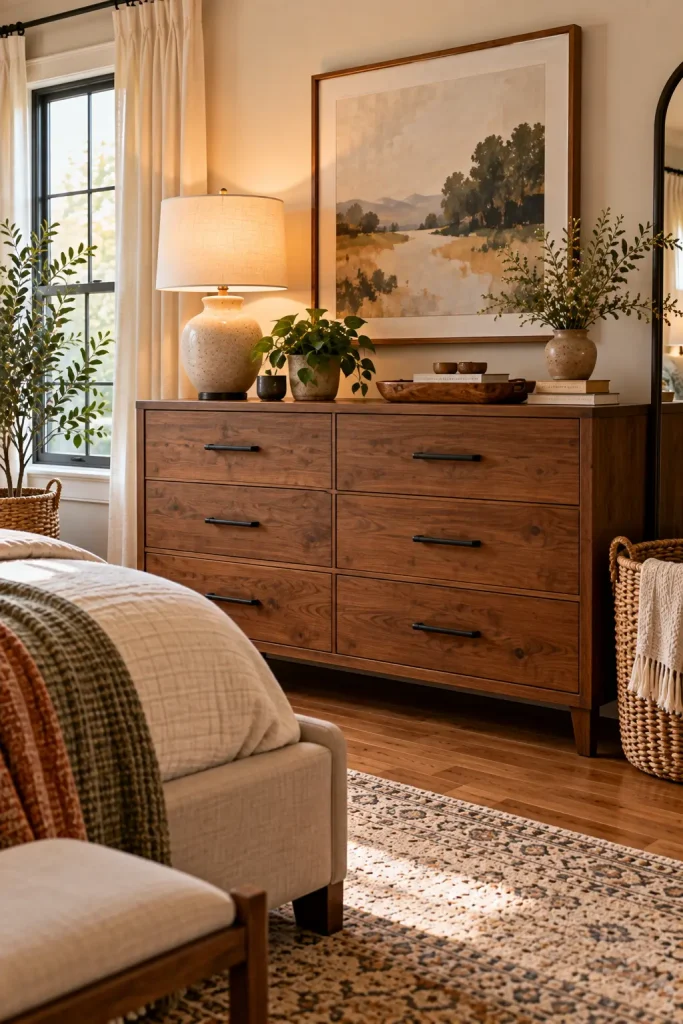
A bedroom dresser can look completely different with simple hardware and a cleaner top arrangement. Replace dated pulls if the existing piece allows it, then keep the surface limited to a lamp, small tray, framed artwork, and one decorative object or plant.
The styling should support everyday use rather than turning the dresser into a display that has to be cleared constantly. If the dresser is secondhand, small cosmetic changes can help it feel more connected to the rest of the bedroom.
18. Create a Cozy Entryway Drop Zone
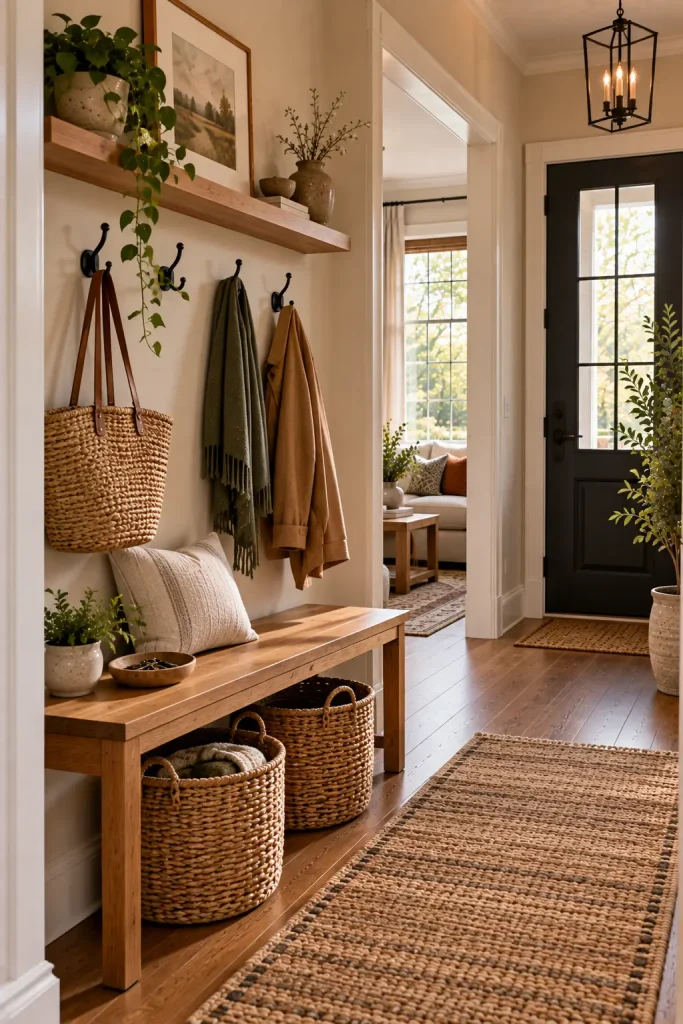
A well-designed entryway can make the entire home feel more organized. You don’t need a custom mudroom; a narrow bench, wall hooks, a basket, and a small tray can create a practical landing zone for shoes, bags, keys, and everyday accessories.
Choose pieces that match the available wall and floor space. In a small apartment, wall-mounted hooks and a slim shelf may be more useful than a bulky cabinet. Keep frequently used items accessible while storing less attractive clutter in baskets or closed containers.
19. Frame Everyday Memories
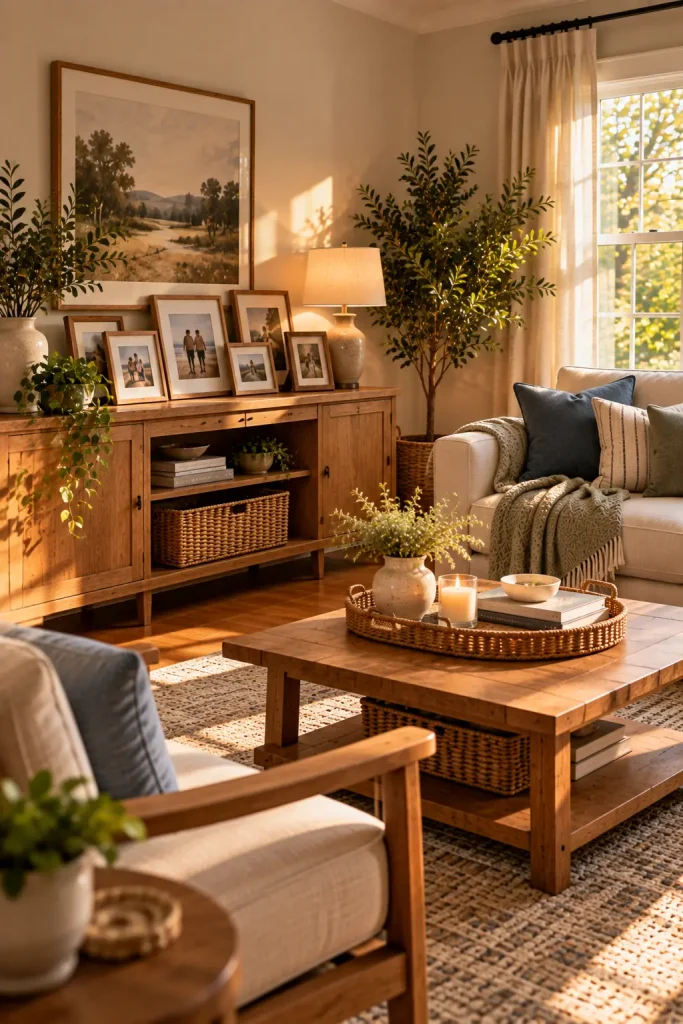
Personal photographs can make a home feel warmer than a room filled entirely with decorative objects. Select a few meaningful images and display them in simple frames on a shelf, dresser, staircase wall, or bedside table.
For a cohesive look, use frames in one or two related finishes. Black, natural wood, or white frames can each create a different effect. Rather than displaying dozens of photographs at once, rotate a small selection so the room remains visually calm while still feeling personal.
20. Give a Small Bathroom a Spa-Like Refresh
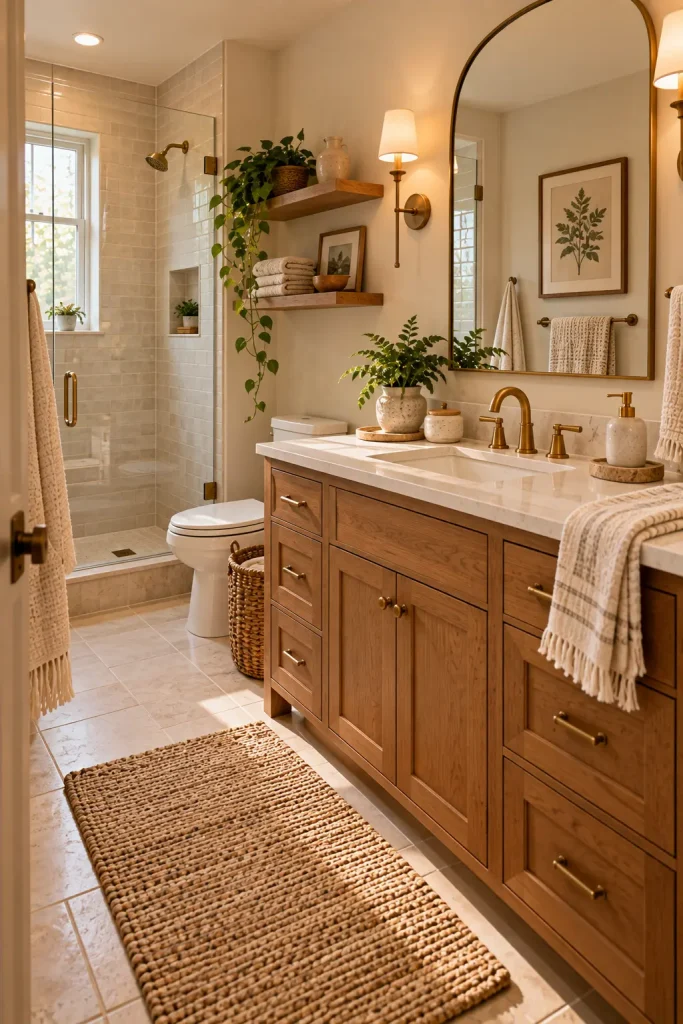
A bathroom can feel more polished with a few low-cost changes rather than a full renovation. Replace worn textiles, add a simple bath mat, organize toiletries into attractive containers, and introduce one small plant that suits the available light. Matching or coordinated towels can also reduce visual noise.
Keep counters relatively clear because bathrooms can look cluttered quickly. If the mirror and lighting are functional but dated, changing one of these elements may provide more visual impact than adding several decorative accessories.
21. Add a Statement Rug to Define the Room
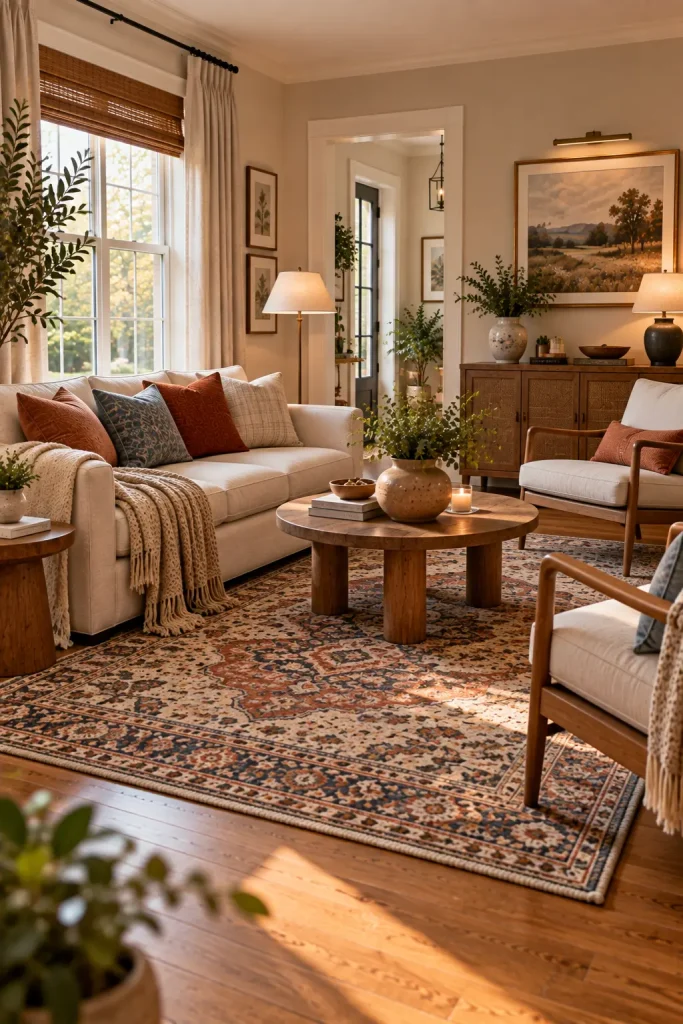
A rug can visually anchor furniture and make a room feel more complete. If the budget doesn’t allow for a large premium rug, look for an affordable pattern that introduces several colors already present in the space. That makes it easier to connect existing furniture without replacing it.
Size matters more than many people expect. A rug that is too small can make furniture appear disconnected, while a correctly scaled rug helps establish one cohesive seating or dining zone. If you’re unsure, map the intended rug footprint on the floor with painter’s tape before purchasing.
Quick Tip: Let at least some of the major furniture sit on or visually connect to the rug rather than placing every piece completely outside it.
22. Finish the Room With One Personal Focal Point
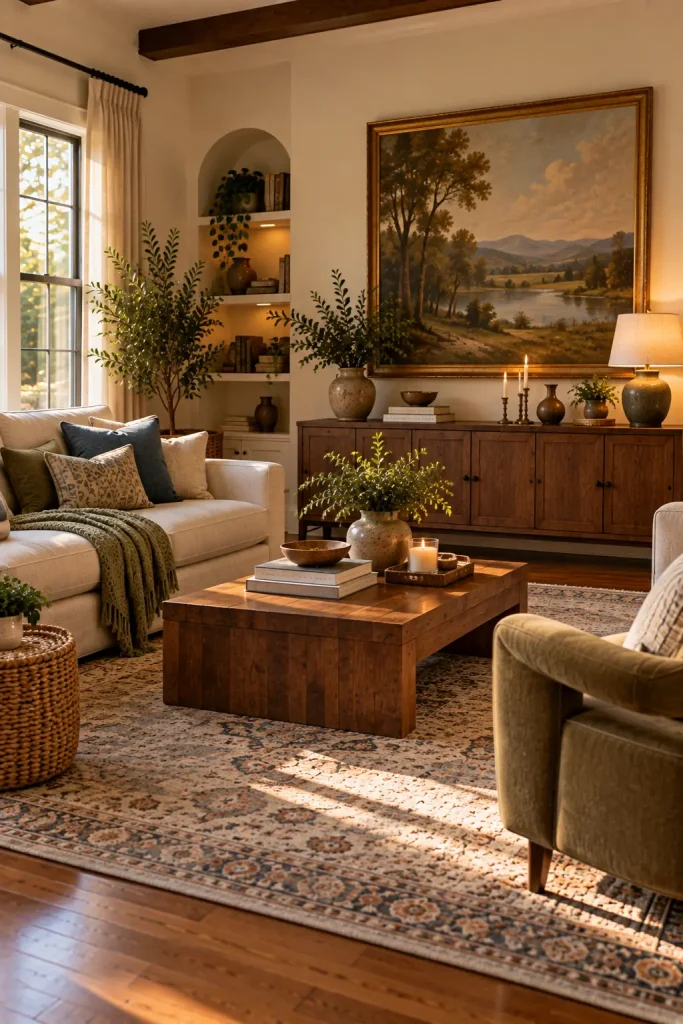
A room doesn’t need dozens of accessories to feel finished. Choose one object or display that says something about the people who live there: a vintage painting, handmade ceramic piece, collected sculpture, travel find, heirloom, or favorite photograph. Let that item receive enough visual space to stand out.
The surrounding decor should support rather than compete with it. This approach is particularly effective on a budget because the focal point doesn’t have to be expensive. Meaning, scale, and placement can make a simple object feel much more important than its price suggests.