

21 Beautiful Bedroom Ideas to Create a Cozy and Stylish Retreat
A beautiful bedroom should feel like more than a place to sleep. It should be a comfortable retreat where soft textures, thoughtful colors, and inviting lighting come together to make everyday life feel a little calmer. Whether you’re decorating a small apartment bedroom, refreshing a guest room, or updating your primary bedroom, a few well-chosen details can make a noticeable difference.
The best bedroom ideas balance style with comfort. You don’t need a complete renovation or expensive furniture to create a room that feels polished. Layered bedding, natural wood, carefully placed lamps, attractive wall decor, and practical storage can all help your space feel more intentional.
From warm neutral interiors to moody accent walls and charming vintage touches, these 21 bedroom decorating ideas offer inspiration for different tastes, room sizes, and budgets. Each approach can be adapted to suit your existing furniture and the way you use your bedroom.
1. Create a Cozy Neutral Bedroom With Layered Textures
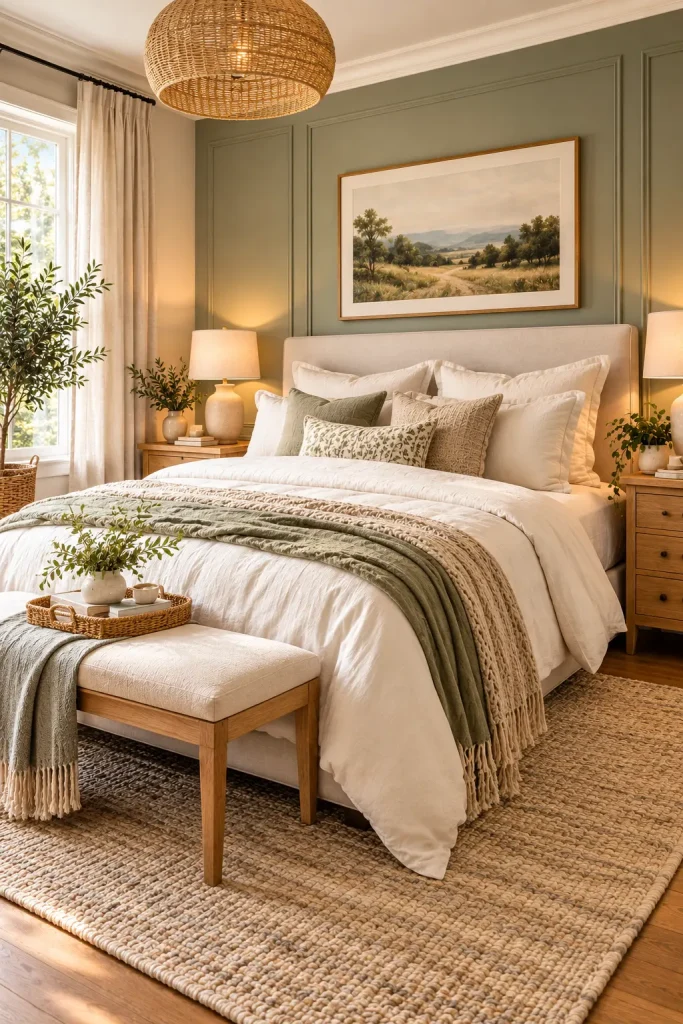
A neutral bedroom can feel warm and inviting when you combine different textures instead of relying on a single shade of beige. Start with ivory or warm-white bedding, then add an oatmeal-colored blanket, a chunky knit throw, and pillows in linen, cotton, or subtle woven fabrics.
Natural oak nightstands and a textured rug bring depth to the palette. For contrast, introduce small accents in taupe, muted brown, or soft charcoal. A ceramic table lamp and simple framed artwork complete the arrangement without making the room feel crowded.
How to recreate the look:
- Choose two or three related neutral shades rather than matching every item exactly.
- Mix smooth cotton with linen, wool, or woven materials.
- Keep bedside accessories simple and useful.
- Add one darker accent to prevent the room from looking flat.
This style works particularly well in bedrooms where you want a calm backdrop that won’t feel tied to a particular season.
2. Add a Sage Green Accent Wall
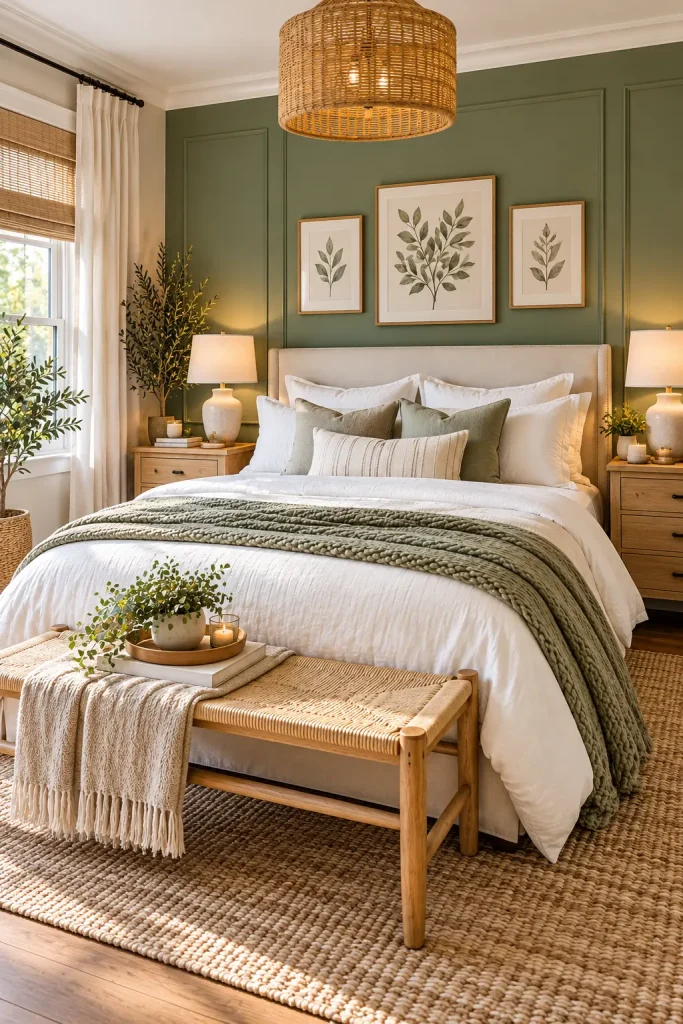
Sage green offers a gentle alternative to traditional white bedroom walls. Its muted, earthy character pairs naturally with cream bedding, light wood, and warm white curtains. Painting the wall behind the bed creates a clear focal point without overwhelming the room.
Keep the remaining walls a soft white or pale warm neutral to maintain brightness. A pair of simple oak nightstands and understated botanical prints reinforce the natural palette.
For renters, removable wallpaper in a similar green tone may provide a practical alternative where wall treatments are permitted. Always check the product instructions and your lease before applying it.
Quick Tip: Test paint samples on different parts of the wall. Daylight and warm bedside bulbs can make the same green appear noticeably different.
3. Style the Bed With a Statement Upholstered Headboard
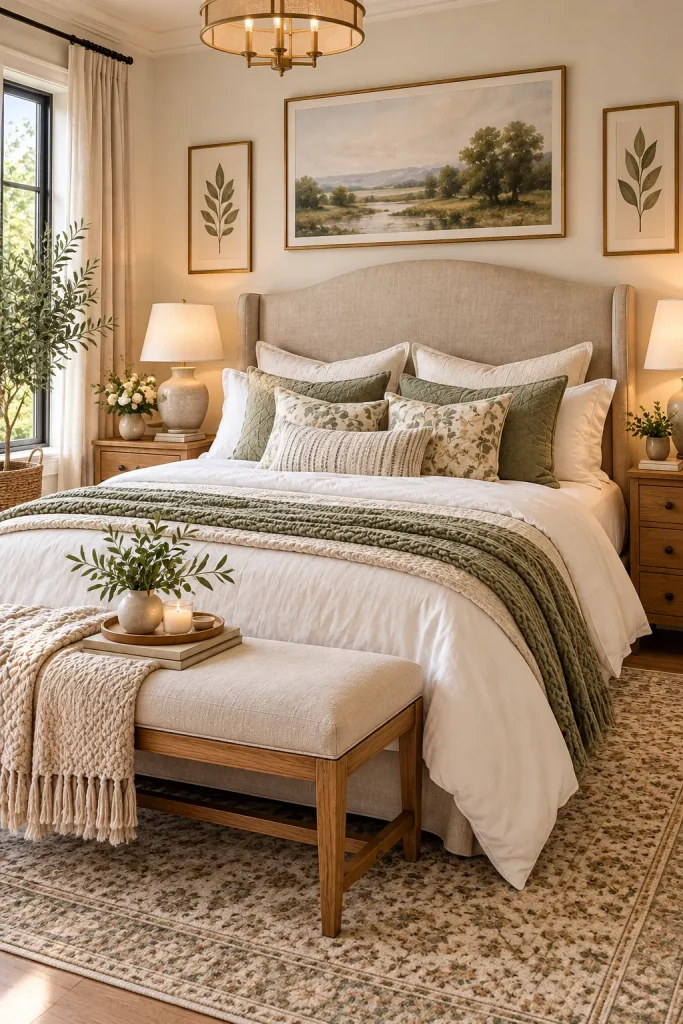
A statement headboard can give the bedroom a finished appearance without requiring changes to the entire room. An upholstered design in oatmeal, soft beige, or warm ivory creates a comfortable backdrop for layered pillows and simple bedding.
Consider a gently curved headboard for a softer silhouette, or choose a tall rectangular design for a more tailored look. Bouclé-like textures add visual interest, while linen-style upholstery creates a relaxed, understated effect.
Before choosing a headboard, check the available wall width and the height of nearby windows or artwork. A piece that’s too large can crowd a small room, while one that’s too low may disappear behind oversized pillows.
Pair the headboard with restrained bedside decor so the bed remains the main feature.
4. Bring Warmth Into the Room With Natural Wood
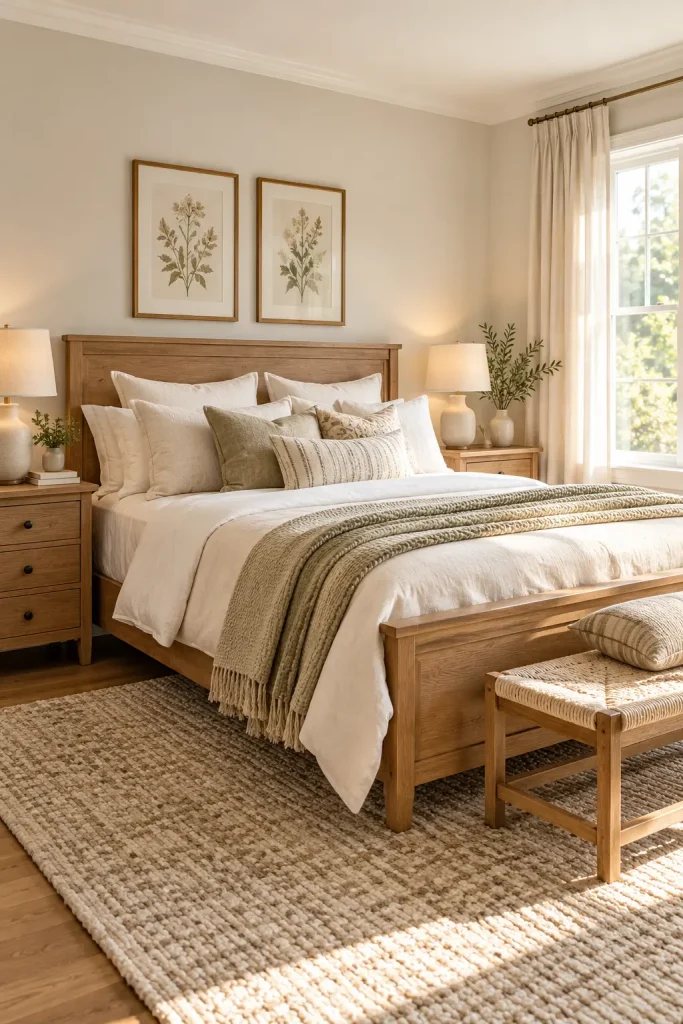
Natural wood introduces warmth and visual structure, particularly in bedrooms with white walls or pale bedding. An oak bed frame can become the foundation of the room, while matching or complementary nightstands make the furniture arrangement feel cohesive.
You don’t have to replace everything at once. If your bed frame is already in good condition, try adding a wooden bedside table, a small stool, or a framed print with a natural wood finish.
Different wood tones can work together, but give them a shared element, such as a similar warmth or grain character. Too many unrelated finishes may make a small bedroom feel visually busy.
A practical combination:
- Light oak furniture for an airy appearance.
- Cream or white bedding to balance the wood.
- Linen curtains for softness.
- A wool or jute-blend rug to introduce another natural texture.
The result is relaxed, grounded, and easy to update with seasonal bedding.
5. Make the Bedroom Feel Luxurious With Hotel-Inspired Bedding
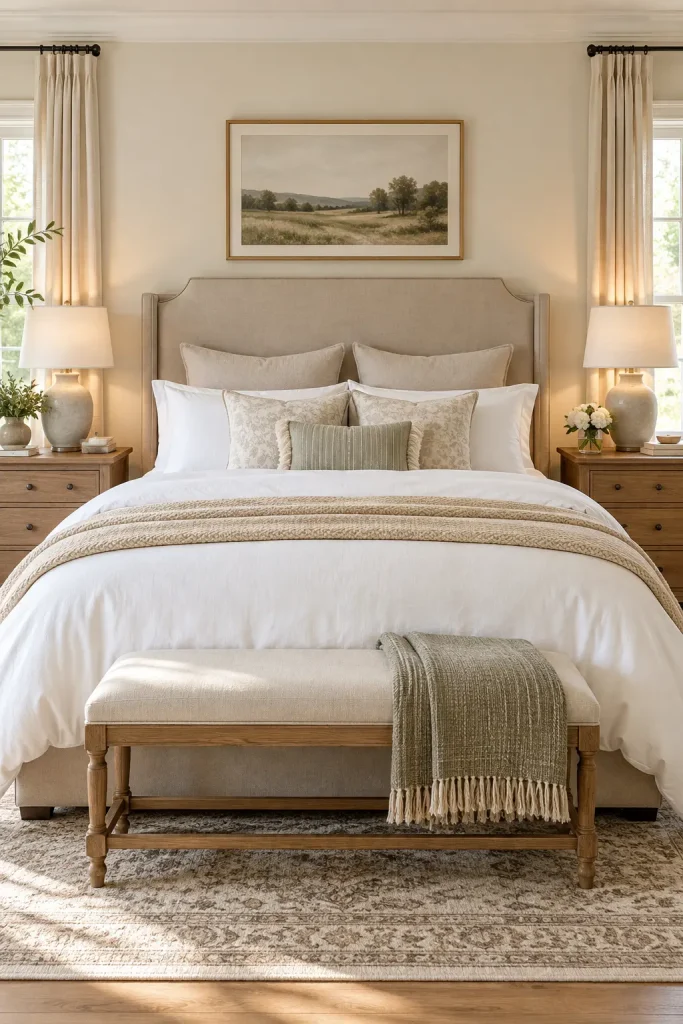
Hotel-inspired bedding creates a clean, restful look through generous layers, coordinated colors, and a neatly made bed. Start with a duvet in white or soft ivory, add two sleeping pillows per side where space allows, and finish with a smaller pair of decorative cushions.
A folded coverlet at the foot of the bed adds another layer without hiding the bedding. Matching bedside lamps create symmetry, while a simple upholstered headboard keeps the arrangement comfortable rather than overly formal.
For everyday practicality, choose washable fabrics and avoid adding more decorative pillows than you want to move each night.
6. Decorate With Warm Ambient Lighting
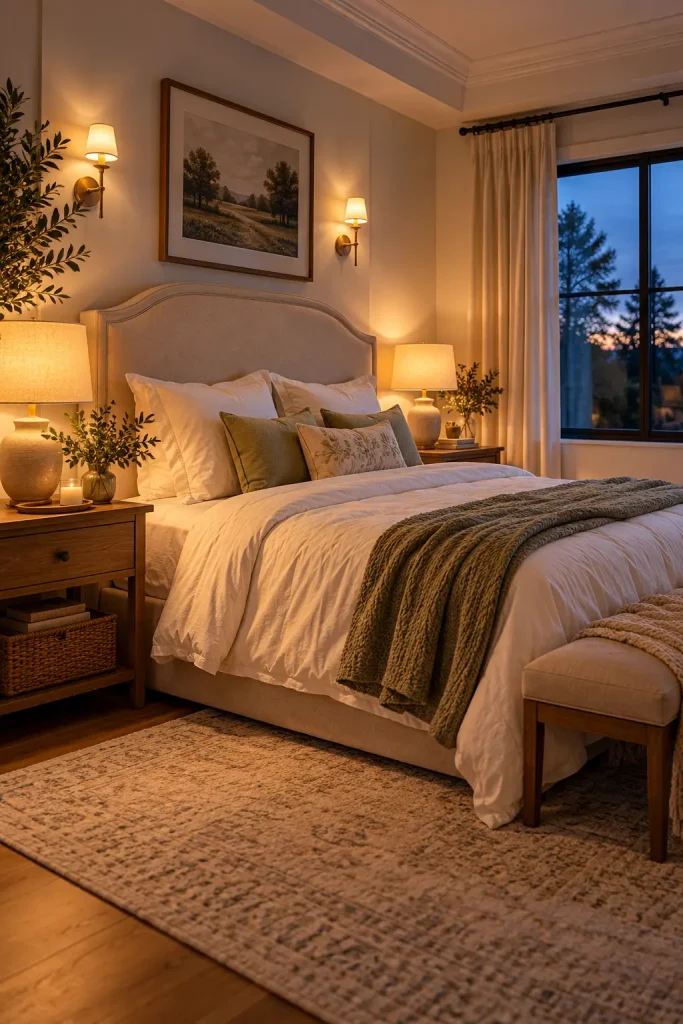
Lighting influences how a bedroom feels throughout the day. A bright ceiling fixture is useful for getting dressed and cleaning, but it rarely creates the most relaxing atmosphere on its own.
Combine general lighting with bedside lamps, wall sconces, or a floor lamp in a reading corner. Warm-white bulbs can create a softer evening appearance, while dimmable fixtures let you adjust brightness for different activities.
Consider wall-mounted sconces if your nightstands are small. They free up tabletop space for books, a glass of water, or other everyday essentials.
Quick Tip: Position bedside lighting so you can read comfortably without shining light directly into your eyes or your partner’s.
7. Choose a Moody Bedroom Color Palette
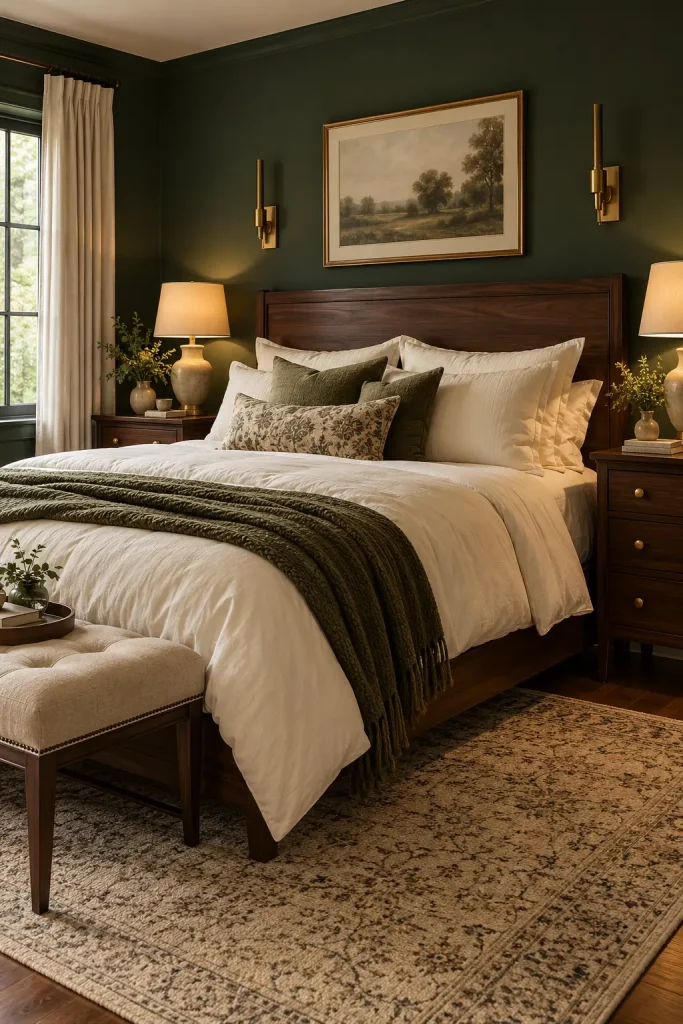
Dark bedroom colors can create an intimate, cocoon-like atmosphere. Forest green, deep navy, charcoal, and muted aubergine are all worth considering if you prefer a richer palette over pale neutrals.
For a balanced result, use a dark wall color behind the bed and introduce lighter bedding to provide contrast. Walnut furniture, aged brass accents, and warm lamps help prevent the room from feeling stark.
In a compact bedroom, you can limit the deeper color to one wall or use it in textiles instead of painting the entire space. The amount of daylight, ceiling height, and existing finishes will affect how dramatic the color feels.
Do: Repeat the dark shade in one or two small accessories.
Don’t: Add several competing accent colors that distract from the main palette.
8. Create a Small Bedroom That Feels More Open
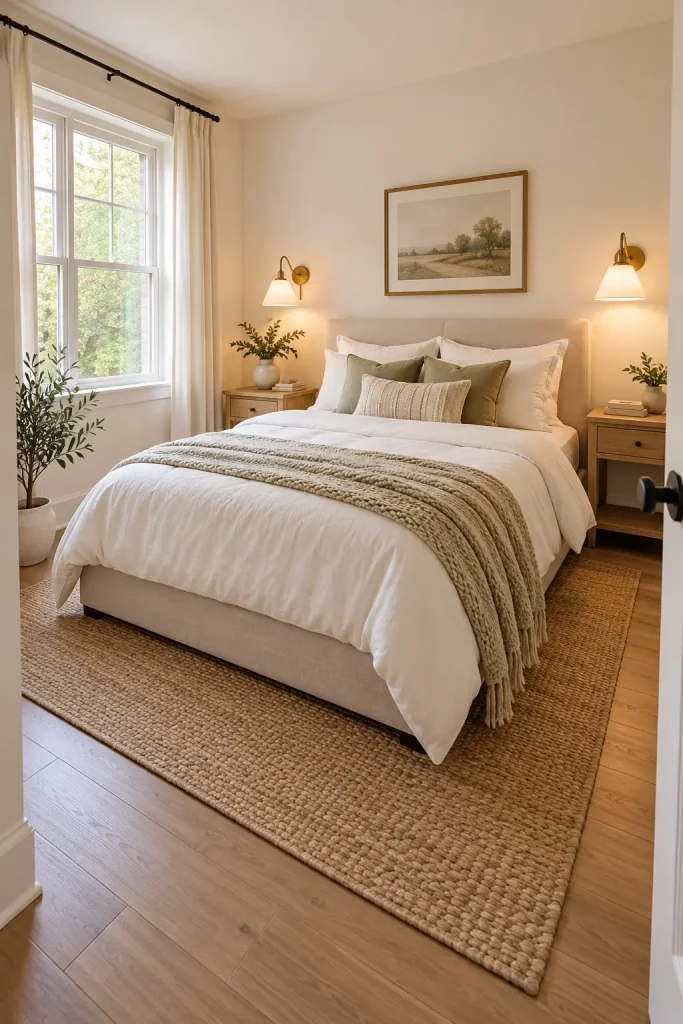
Small bedrooms benefit from furniture that fits the available floor area. A low-profile bed, slim nightstands, and a wall-mounted light can help preserve useful space without sacrificing comfort.
Choose a restrained color palette and use curtains hung close to the ceiling where practical to draw the eye upward. Mirrors can reflect daylight, while a rug placed correctly beneath the bed helps define the sleeping area.
Before buying anything, measure the room, bed, door swing, and walking paths. A smaller nightstand that holds the essentials may be more useful than a large matching set.
A few changes make a practical difference:
- Replace bulky bedside tables with narrow alternatives.
- Use under-bed storage for seasonal items.
- Keep the path to the closet and door clear.
- Choose wall decor that suits the scale of the room.
9. Layer Curtains for a Soft, Finished Look
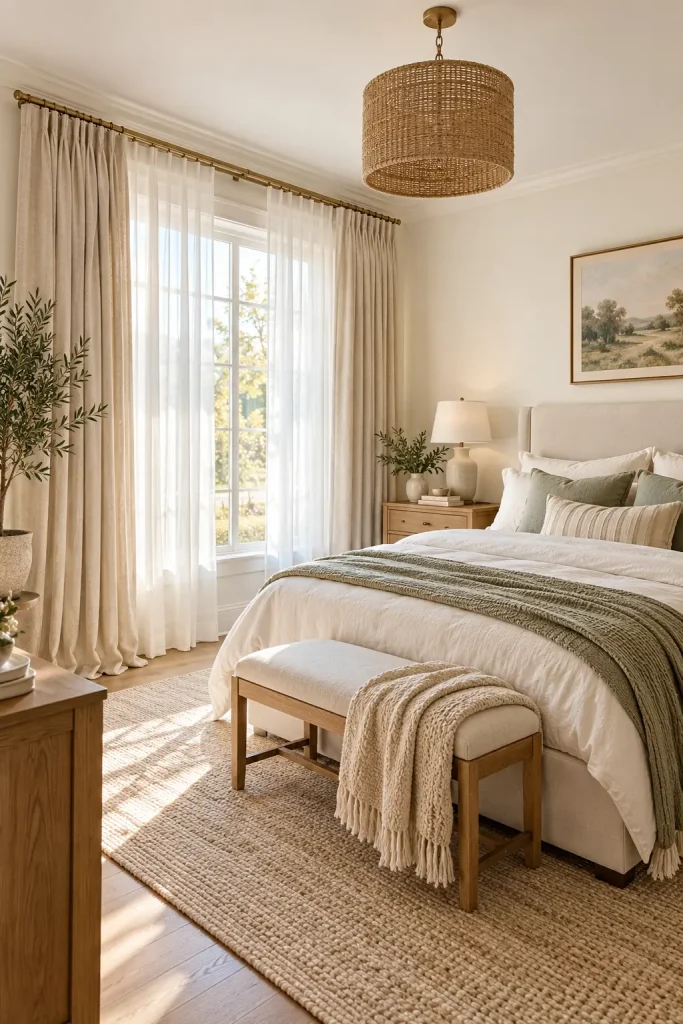
Window treatments can soften the room’s architecture and make the bed area feel more complete. Layering sheer panels with heavier linen or linen-look curtains gives you flexibility throughout the day while adding visual depth.
Sheers filter daylight, while the outer curtains can provide additional privacy and light control when their fabric and lining are suitable. Choose a warm white for a subtle look, or try muted taupe for a little more contrast.
Hang the curtain rod high enough to create a sense of height, provided the window and wall layout allow it. Let the panels reach the floor without pooling excessively, which can collect dust and interfere with cleaning.
Common Mistake: Choosing curtains that stop awkwardly above the floor can make the entire window treatment appear undersized.
10. Add a Reading Nook Beside the Bed
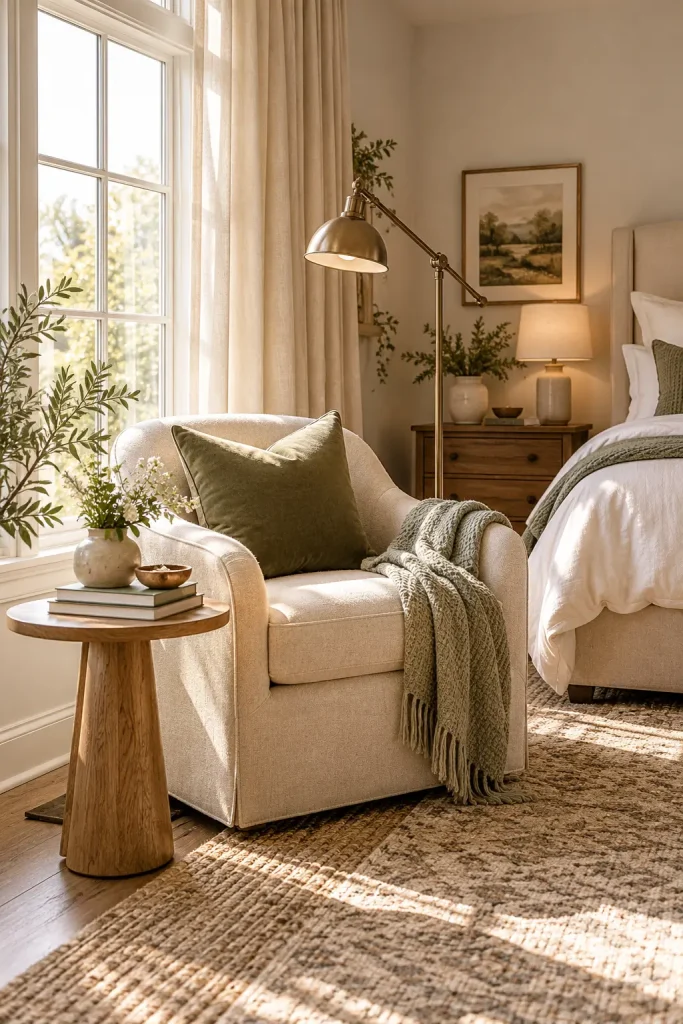
If your bedroom has an unused corner, turn it into a comfortable place to read, journal, or enjoy a quiet morning. A compact upholstered chair, small side table, and adjustable floor lamp can create a useful second zone without requiring a separate room.
Choose a chair with enough support for the way you like to sit. Add a small cushion or throw, but keep the surrounding floor clear so the corner doesn’t become a storage area.
In a smaller bedroom, a narrow accent chair or a built-in window seat may work better than a bulky armchair. Place the reading light where it illuminates your book without creating uncomfortable glare.
11. Introduce Floral Wallpaper Behind the Bed
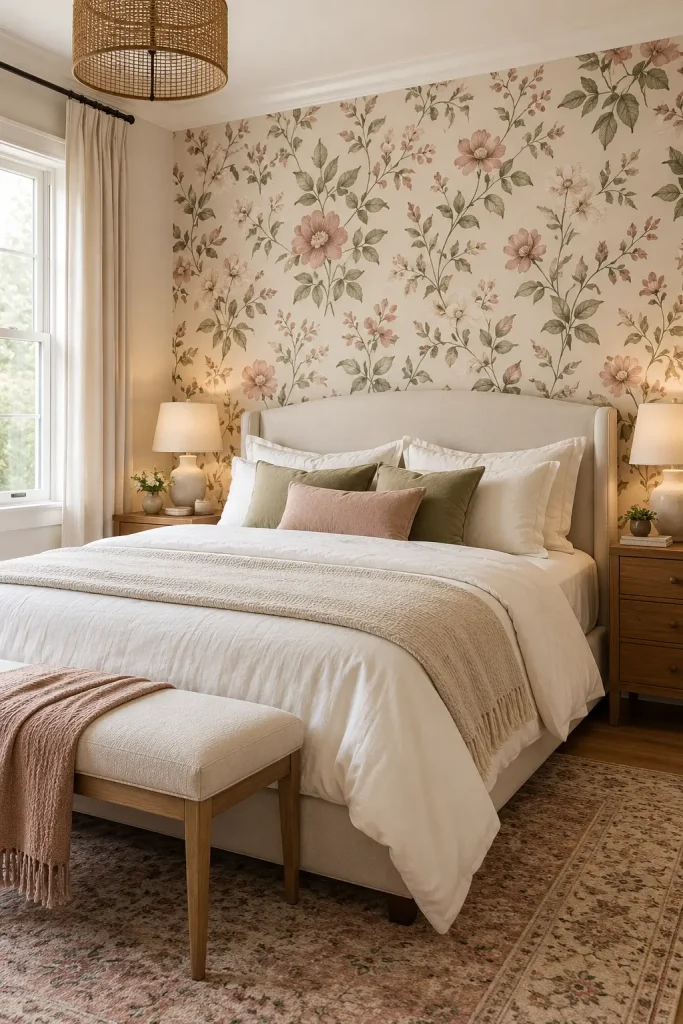
Floral wallpaper adds pattern and personality without requiring a collection of decorative accessories. For a calm bedroom, look for delicate botanical illustrations, faded garden-inspired prints, or small-scale florals in dusty rose, sage, cream, and soft brown.
Keep the bedding relatively simple so the wallpaper remains the focal point. A solid-colored upholstered headboard can provide a visual break between the pattern and the bed.
If you rent, removable wallpaper may be an option, depending on the surface and product instructions. Order samples first to see how the pattern looks under your bedroom’s lighting.
12. Bring Nature Indoors With Bedroom Plants
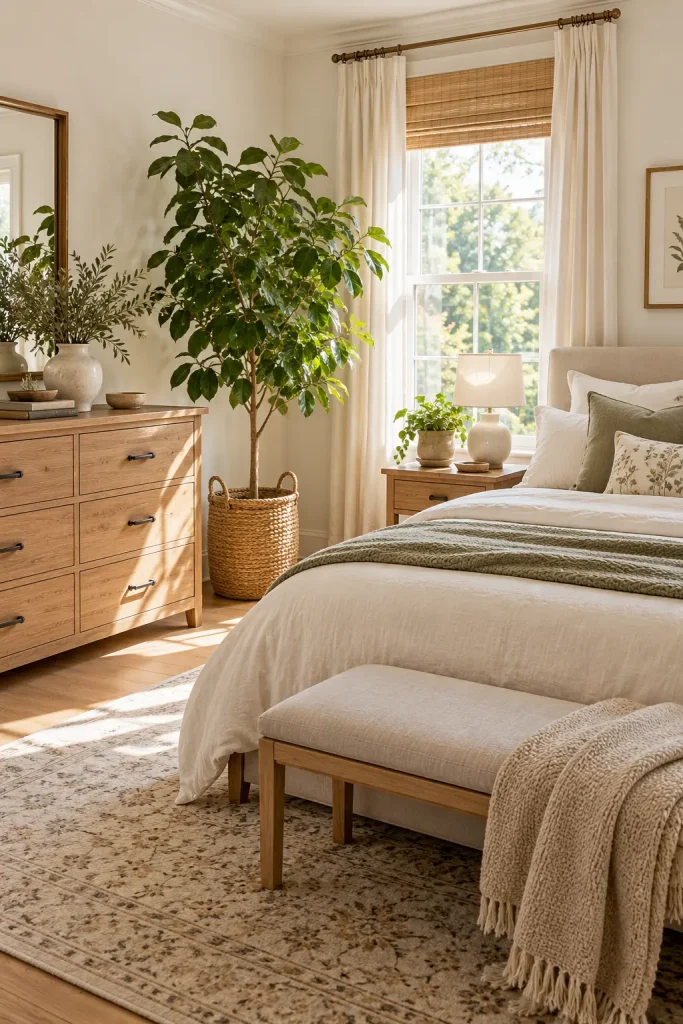
A few indoor plants can bring life and organic shapes into a bedroom. A taller plant beside a dresser or near a bright window creates a vertical accent, while a smaller plant on a shelf adds a subtle touch of green.
Choose plants according to the light available in your actual room rather than selecting them only for appearance. Keep pots proportionate to the furniture, and use saucers or waterproof trays to protect wooden surfaces.
If you have pets, check whether a plant is safe for the animals in your household before bringing it indoors. You can also use a botanical print or a branch arrangement if live plants aren’t practical.
Styling idea: Combine one larger plant with one or two smaller accents rather than filling every available surface with greenery.
13. Use Wall-Mounted Bedside Shelves
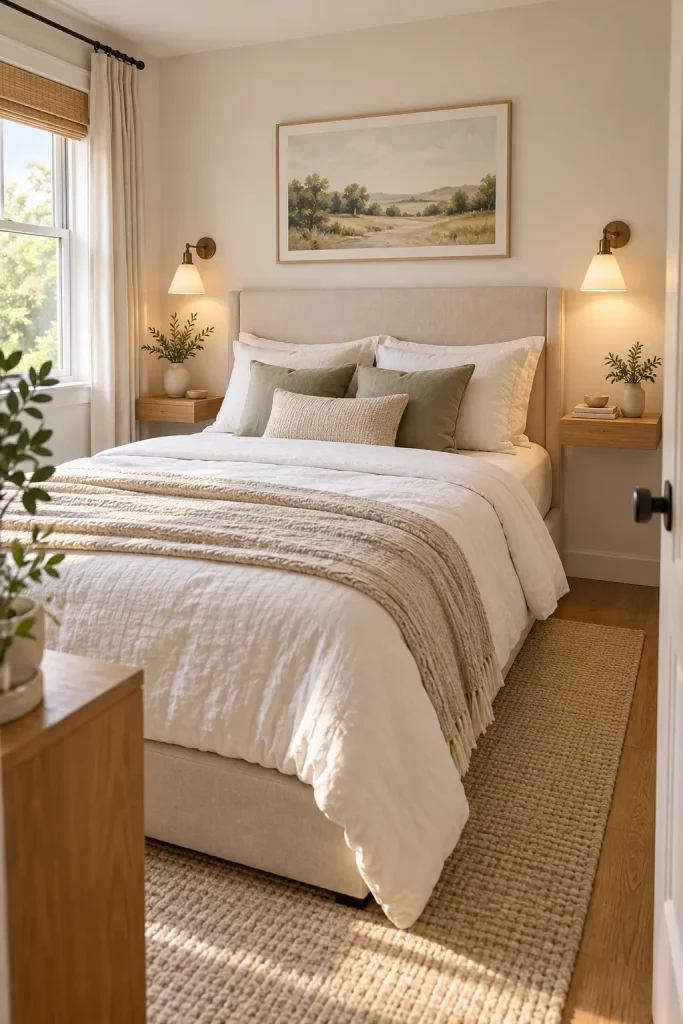
Floating bedside shelves offer a streamlined alternative to traditional nightstands. They’re particularly useful in narrow bedrooms where the bed sits close to a wall or where bulky furniture interrupts the walking path.
Choose shelves wide enough for your everyday essentials, such as a phone, a book, and a small lamp if the installation permits. Wall-mounted sconces can leave even more room available.
The practical details matter here. Confirm that the wall can support the shelf and its intended load, use suitable fixings, and keep electrical cables neatly managed. Renters should check their lease before drilling.
Pair the shelves with simple bedding and restrained wall decor to emphasize the clean lines.
14. Add Character With Vintage Bedroom Furniture
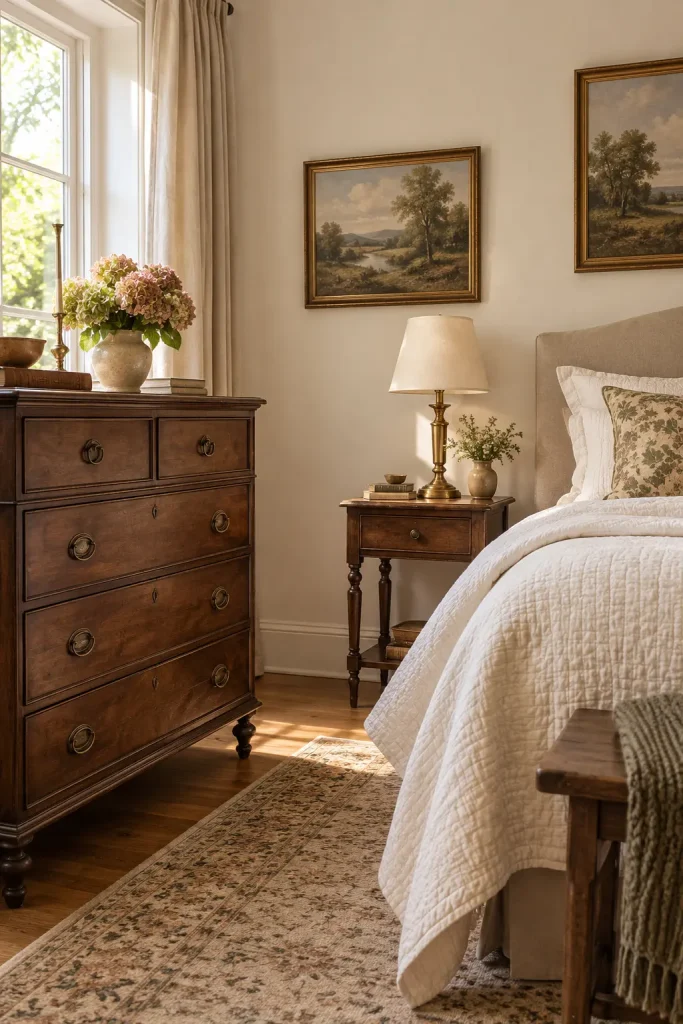
Vintage furniture can give a bedroom a sense of history and individuality. An antique dresser, a carved wooden bedside table, or a small vintage bench introduces craftsmanship and character that can contrast beautifully with modern bedding.
The key is balance. Combine one or two distinctive older pieces with simpler contemporary elements, such as plain linen curtains and a neutral duvet. This keeps the room from feeling like a furniture showroom.
Look for sturdy construction, functional drawers, and finishes that suit your maintenance preferences when shopping secondhand. A vintage piece doesn’t need to match every other wood finish to work well in the room.
Quick Tip: Repeat one detail, such as aged brass, warm wood, or a muted floral pattern, to connect the vintage pieces to the rest of the bedroom.
15. Design a Bedroom With a Black-and-White Palette
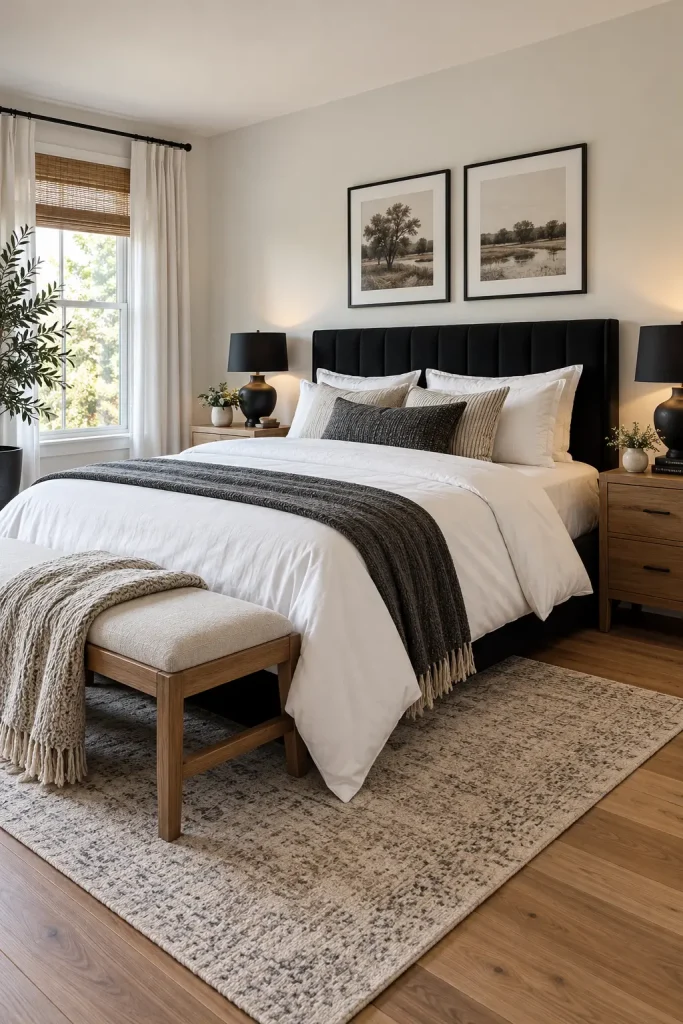
Black and white is a versatile bedroom palette that can feel modern, classic, or slightly dramatic depending on the furniture and accessories. A white duvet, black headboard, and restrained monochrome artwork create a strong visual contrast without relying on multiple colors.
For a softer interpretation, bring in natural oak, warm gray, or textured ivory. These additions prevent the room from feeling too stark while preserving the clean palette.
Use black selectively if the room is small or receives limited daylight. Dark bedside lamps, picture frames, or hardware may provide enough contrast without requiring dark walls or oversized furniture.
16. Make a Canopy Bed the Main Feature
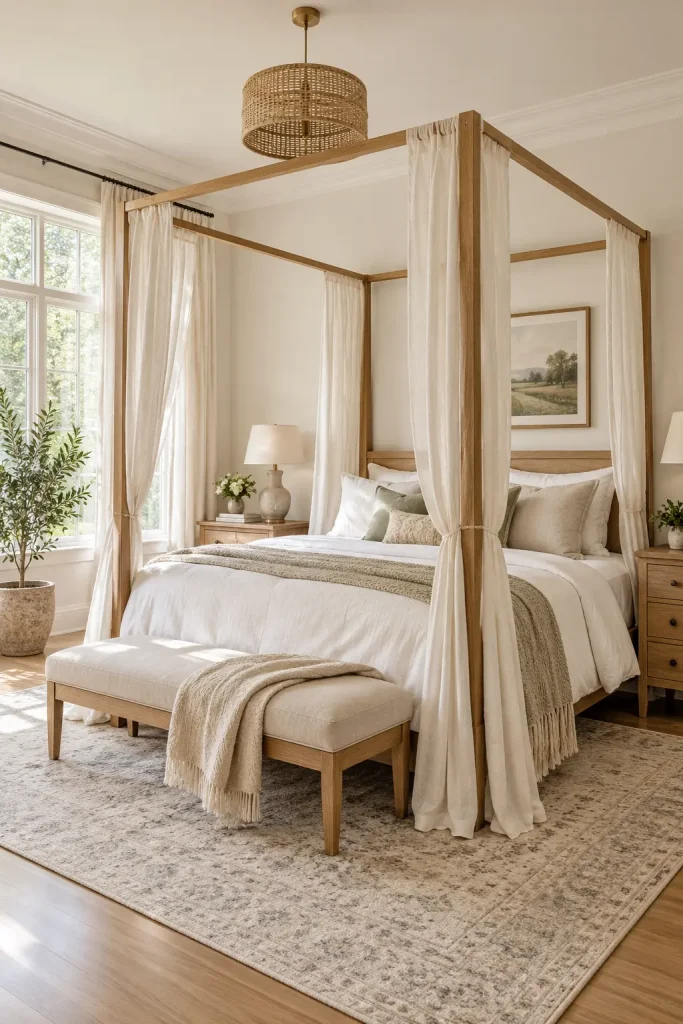
A canopy bed creates a defined focal point and gives the sleeping area a sense of enclosure. The look doesn’t have to be traditional or heavy: a slim wooden frame with light linen drapes can feel relaxed and contemporary.
Choose a canopy proportionate to the room, especially if the ceiling is low. A simple frame with open sides often feels less imposing than thick posts and elaborate curtains.
If replacing the bed isn’t practical, a fabric treatment attached to a suitable ceiling-mounted system may create a similar soft effect, provided the ceiling and fixings can support it safely.
Keep other furniture relatively understated so the canopy remains the dominant architectural feature.
17. Add Architectural Interest With Wall Molding
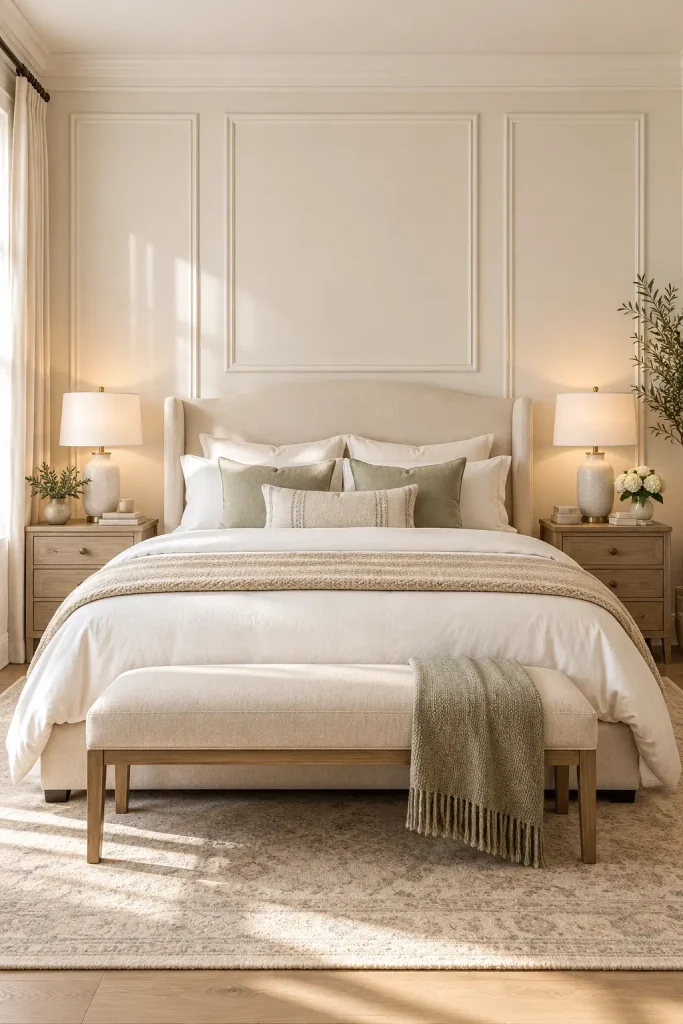
Wall molding can make a bedroom feel more tailored by adding dimension to otherwise plain walls. Applied rectangular panels behind the bed are a particularly effective way to establish a focal wall without using a strong paint color or busy wallpaper.
For a subtle look, paint the molding the same shade as the wall. The resulting shadows provide detail while keeping the palette calm. A contrasting color makes the architectural pattern more noticeable.
Measure the bed and surrounding wall carefully before planning the panel layout. Even spacing and appropriately sized rectangles matter more than the number of panels.
For an accessible alternative, consider simplified applied trim rather than elaborate custom millwork. If you’re renting, removable decorative solutions may be more suitable.
18. Style a Bedroom With Soft Blue and White
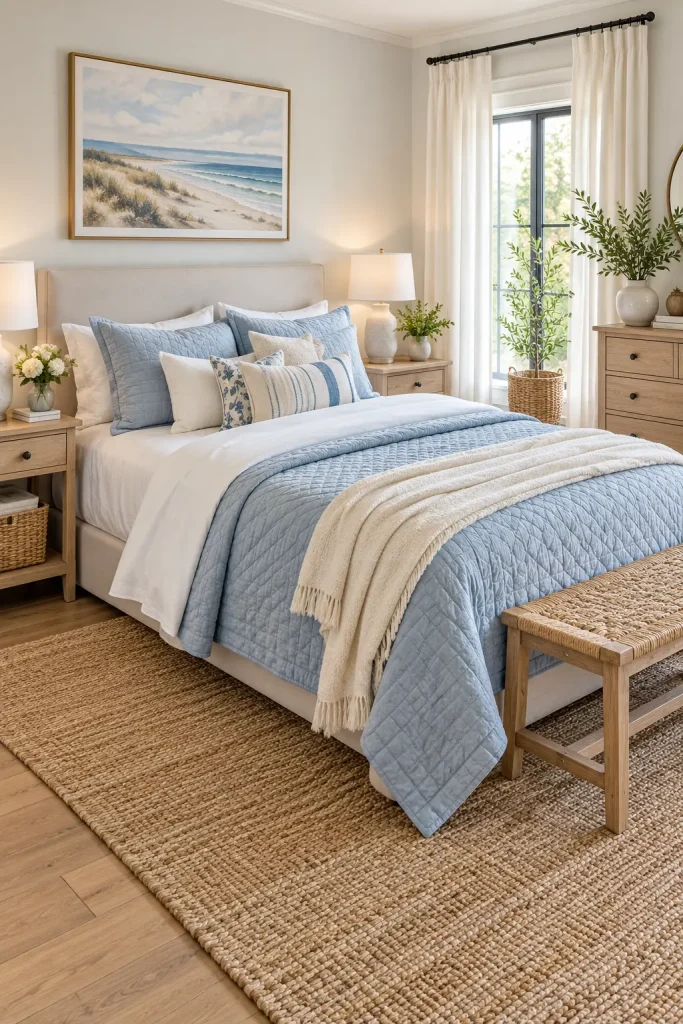
Soft blue and white create a fresh bedroom palette that feels relaxed without being overly decorative. Try a pale blue quilt with white sheets, or use blue-striped pillowcases against a simple white duvet.
Light oak furniture and woven accessories introduce warmth, preventing the cool colors from feeling clinical. You can also incorporate a muted blue-gray in the curtains or a framed landscape print.
The beauty of this palette is its flexibility. A few blue textiles can refresh an existing white bedroom without requiring new furniture or paint.
Styling combinations to try:
- Powder blue with warm ivory for a softer appearance.
- Navy and white for stronger contrast.
- Blue-gray with natural oak for a contemporary feel.
19. Use a Storage Bed to Reduce Clutter
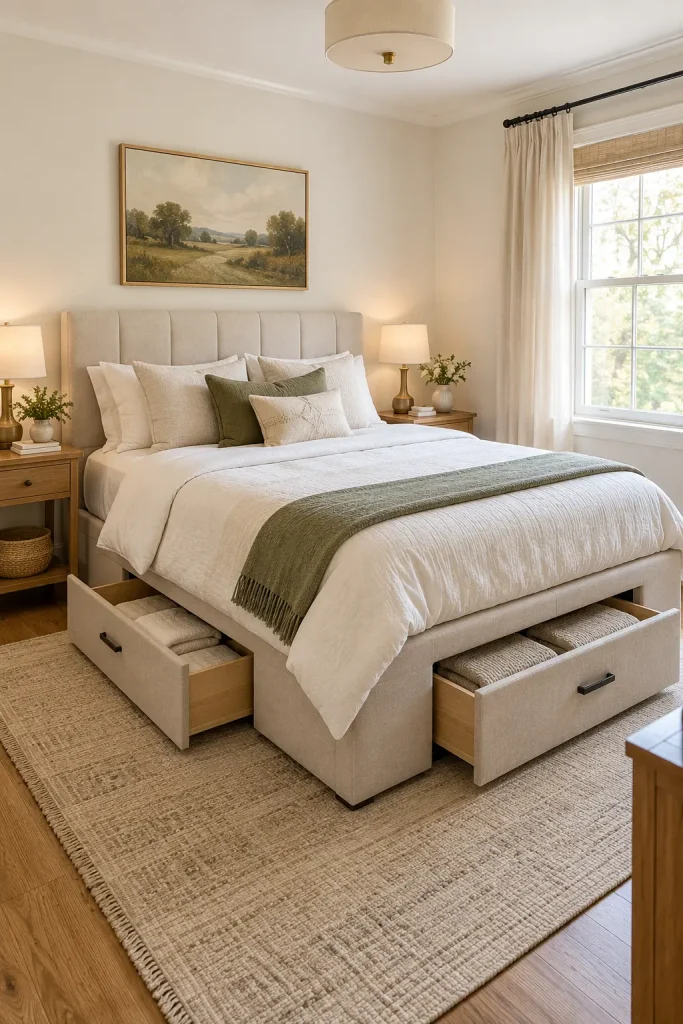
A storage bed is a practical choice when closets are limited or a bedroom needs to accommodate extra linens, blankets, and seasonal clothing. Depending on the design, built-in drawers or a lift-up mattress platform can make use of space that would otherwise remain empty.
Choose the mechanism that suits your room. Drawers need enough clearance to open fully, while lift-up designs require sufficient space and a mattress compatible with the bed’s construction.
Keep the rest of the furniture relatively simple so the storage system does most of the work. Under-bed organizers can provide a similar benefit if you’re keeping your existing bed frame.
Common Mistake: Buying a storage bed without checking the drawer clearance. Measure nearby walls, nightstands, and walking paths before ordering.
20. Create a Relaxed Boho Bedroom With Natural Materials
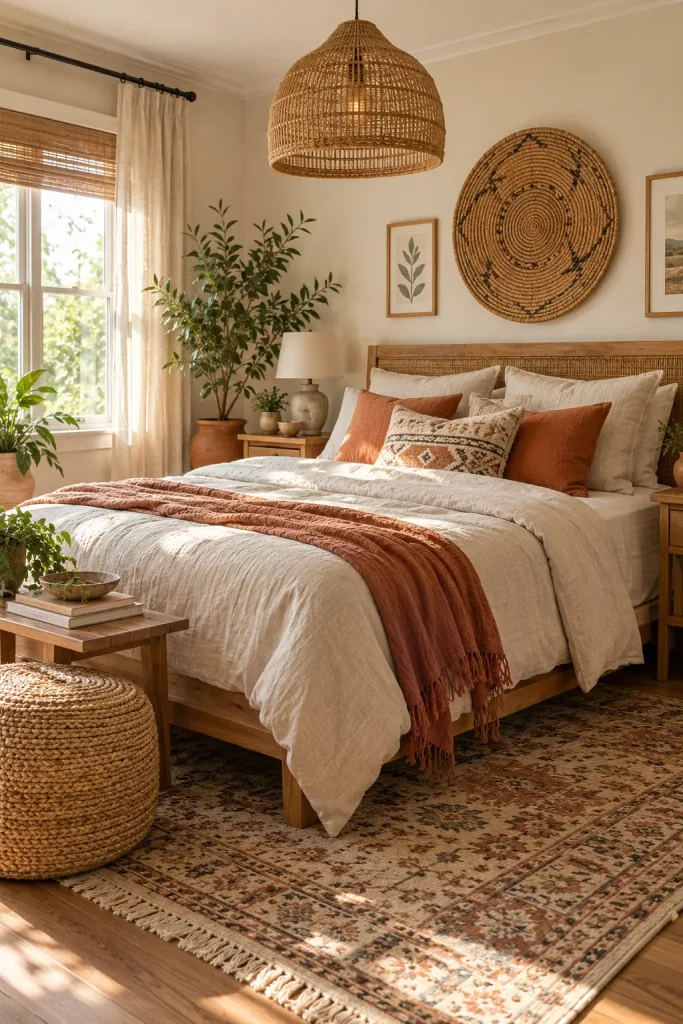
A bohemian-inspired bedroom combines natural materials, layered textiles, and personal decorative details. Rather than filling every surface with accessories, focus on a few distinctive elements: a woven pendant light, a patterned rug, handmade ceramics, or a rattan accent chair.
Use a foundation of cream or natural linen, then introduce earthy colors such as terracotta, rust, ochre, and olive green. These shades complement the texture of wood, jute, and woven baskets.
The style works in both small apartments and larger bedrooms. In a compact space, keep the furniture simple and choose one or two patterned textiles instead of layering several competing prints.
21. Finish the Bedroom With a Carefully Styled Nightstand
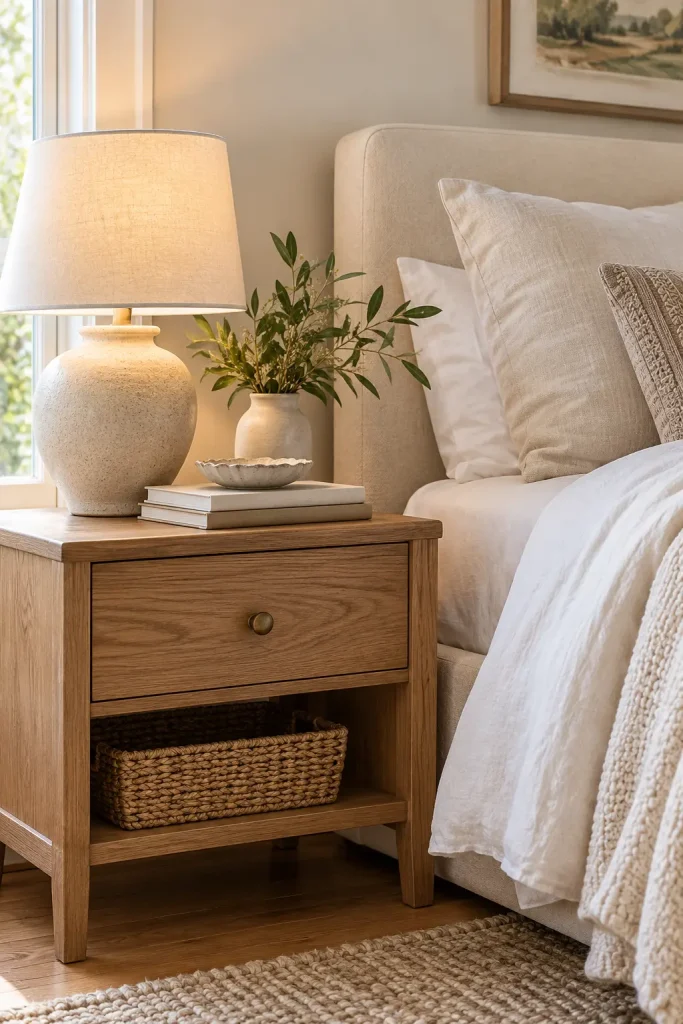
Sometimes the smallest bedroom update makes the biggest difference to the overall arrangement. A thoughtfully styled nightstand can connect the bed, lighting, and decorative details without changing any of the larger furniture.
Start with a functional lamp, then add one or two smaller objects. A short stack of books, a ceramic dish, or a small vase with leafy branches can provide personality while leaving room for everyday essentials.
Keep scale in mind. A tall lamp may work well on a wider nightstand, while a compact surface benefits from a smaller fixture or wall-mounted light.
Three Simple Steps for Styling a Nightstand
- Start with function. Make space for the items you reach for each evening or morning.
- Add height. Use a lamp or a small vase to create a vertical element.
- Finish with texture. Introduce a ceramic object, a book, or a natural material for visual interest.
The goal isn’t to create a perfectly staged display. It’s to make the bedside area feel considered while remaining easy to use.