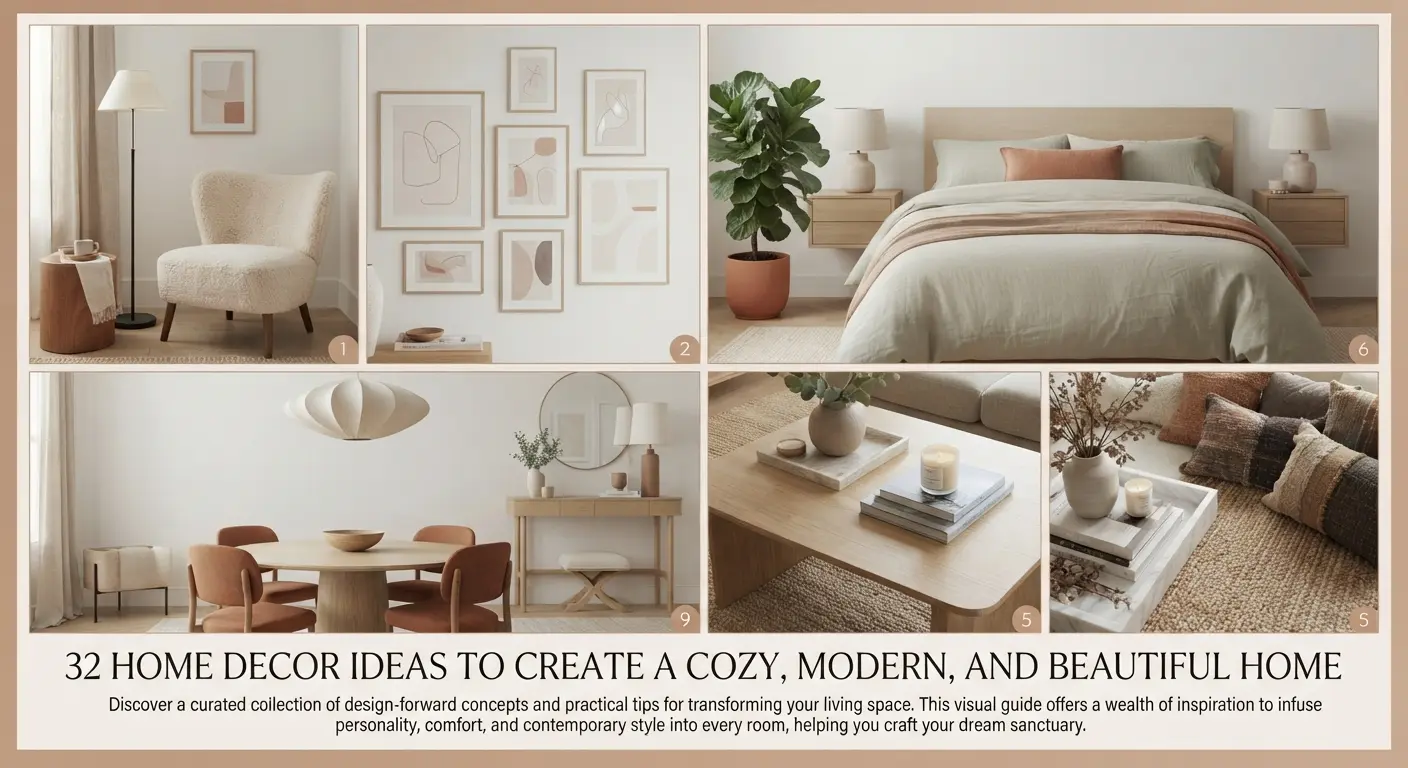
32 Home Decor Ideas to Create a Cozy, Modern, and Beautiful Home
A beautiful home doesn’t have to look overly decorated or perfectly coordinated. The most inviting spaces usually combine comfortable furniture, thoughtful lighting, natural materials, personal details, and enough visual breathing room to keep everything feeling relaxed. Modern home decor can be especially warm when clean lines are balanced with soft textiles, wood tones, plants, artwork, and lived-in accents. The key is to choose updates that improve both the appearance and everyday function of your rooms. These 32 home decor ideas range from simple styling changes to more substantial upgrades, so you can choose what fits your home, budget, and personal taste. Whether you’re refreshing one corner or rethinking an entire room, each idea offers a practical way to make your space feel more comfortable, current, and distinctly yours.
1. Layer Warm Neutral Textures
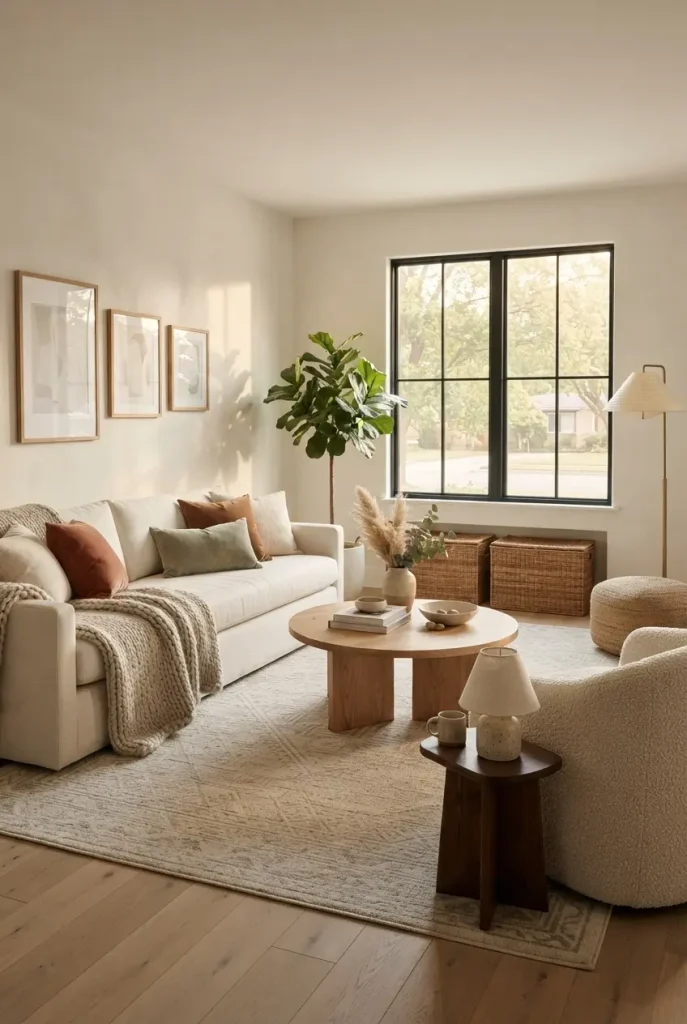
A neutral room becomes much more inviting when several textures are layered instead of relying on one color to create interest. Start with a simple foundation of cream, warm white, taupe, beige, or soft gray, then introduce linen, boucle, cotton, wool, woven fibers, and natural wood. A textured throw over the arm of a sofa can soften clean furniture, while a woven basket adds both storage and visual warmth. The goal isn’t to make everything match; it’s to create subtle differences that the eye can discover. Keep the palette restrained so the materials remain the main source of character. This approach works particularly well in living rooms and bedrooms where comfort matters as much as appearance.
Quick Tip: Mix at least three noticeably different textures while keeping the color family cohesive.
2. Choose One Oversized Piece of Artwork
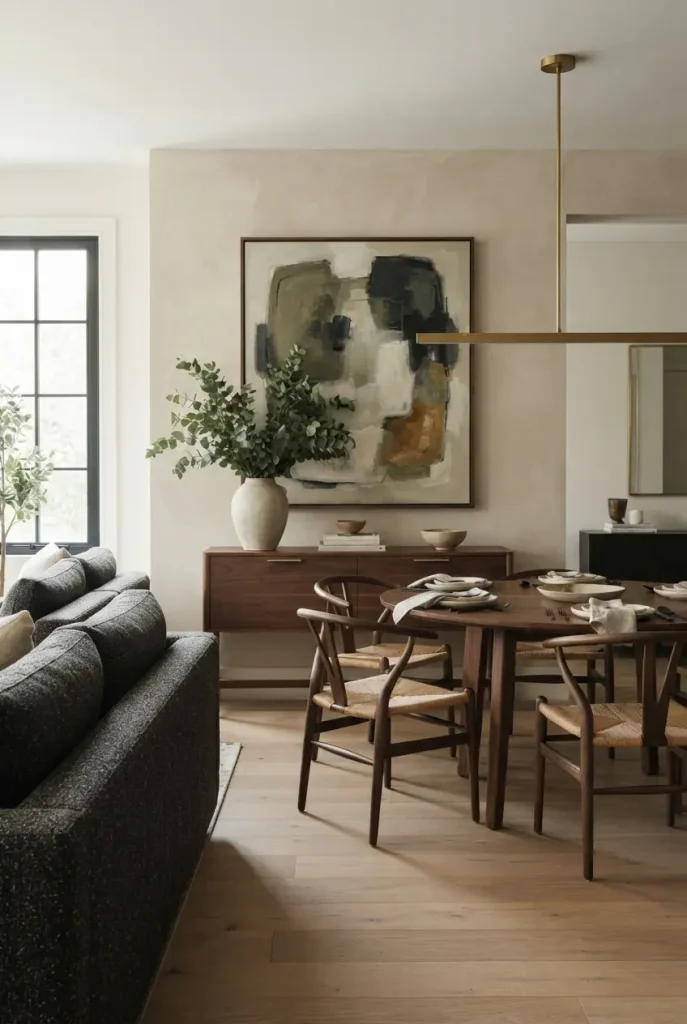
Large-scale artwork can give a room a strong focal point without requiring a collection of small decorative objects. Choose one substantial abstract painting, landscape, botanical composition, or restrained graphic artwork and give it enough wall space to breathe. The frame should relate to the room’s materials, such as natural oak for a softer interior or slim black metal for a sharper modern look. Hang the piece where it visually connects with the furniture below it rather than leaving an awkward gap. If the room already contains several patterns, choose artwork with a quieter palette. In a simpler room, artwork can provide the stronger color or visual movement. One carefully selected piece often feels more intentional than many small pieces competing for attention.
Do: Let the artwork become the focal point.
Don’t: Surround an oversized piece with too many competing accessories.
3. Bring in Natural Wood Accents
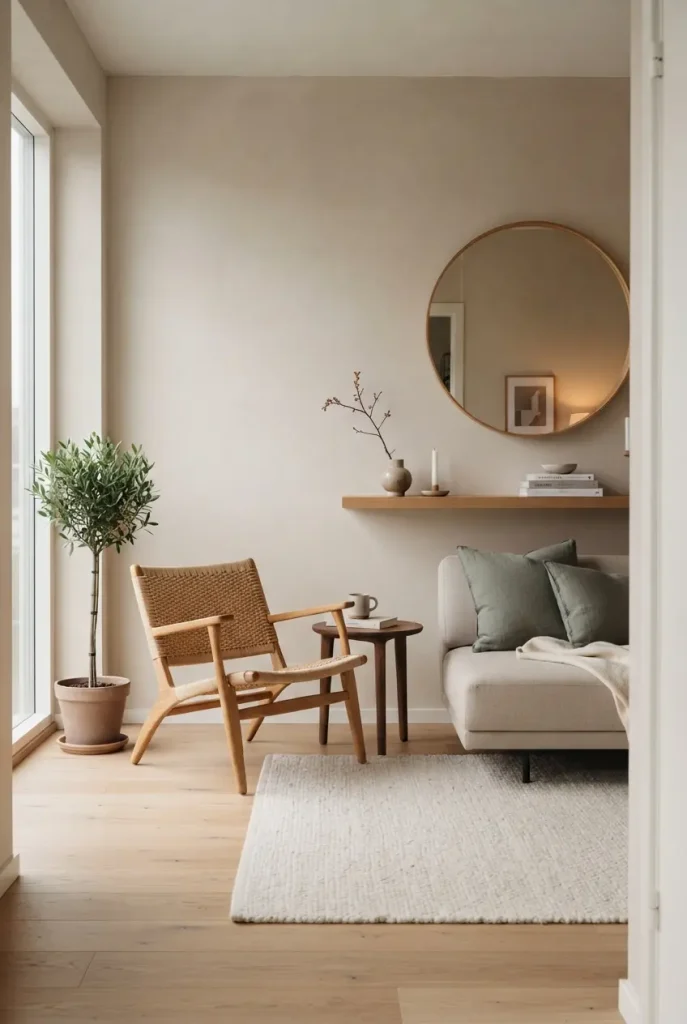
Natural wood adds warmth to modern interiors because its grain and organic variation soften harder architectural surfaces. You don’t need to replace major furniture pieces to use it effectively. A small oak stool, walnut tray, wood-framed mirror, floating shelf, or carved accent table can introduce enough warmth to change the feeling of a room. Try combining different wood tones carefully rather than forcing everything to match exactly. The key is to repeat a wood tone at least once or twice so it feels intentional. Matte or lightly finished surfaces generally work well when you want a relaxed, contemporary appearance. Wood also pairs naturally with stone, linen, ceramics, and greenery.
4. Use Soft Lighting at Multiple Levels
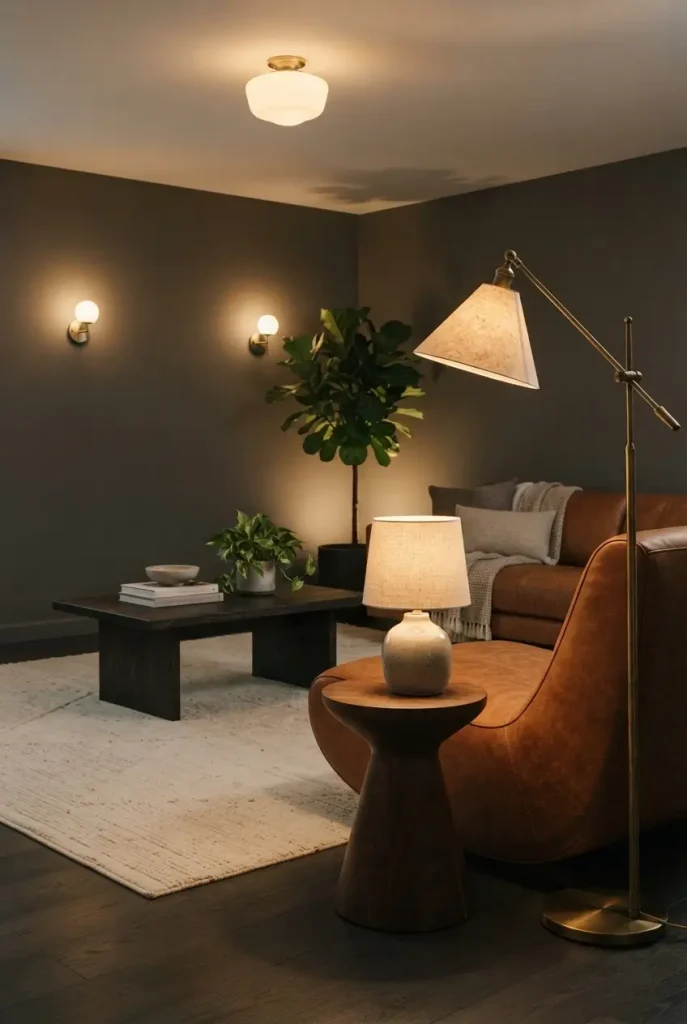
Lighting can completely change how a room feels after sunset, and relying only on a ceiling fixture often makes an interior feel flat. Create layers by combining overhead lighting with table lamps, floor lamps, sconces, or small accent lights. Place illumination at different heights so the room has both functional brightness and softer pockets of light. Warm-white bulbs can help living areas and bedrooms feel more relaxed, while brighter task lighting is useful where reading or detailed work happens. Lampshades also matter because they diffuse the light and contribute to the overall style. Instead of treating lighting as an afterthought, consider it part of the room’s decorative composition.
5. Add a Large Area Rug to Define the Room
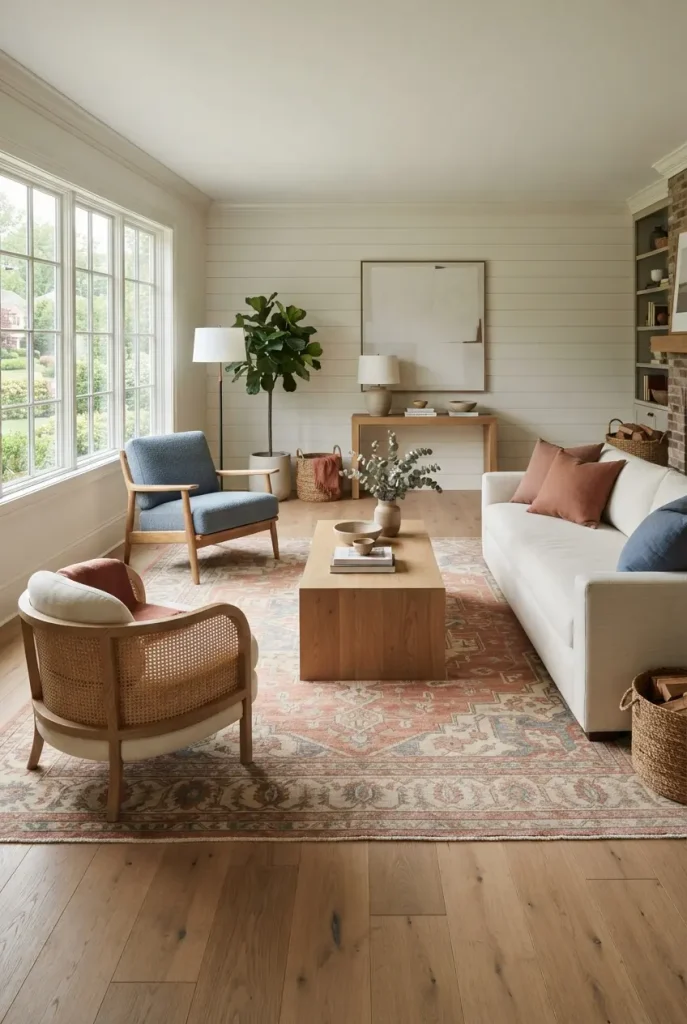
An area rug can visually anchor furniture and make an open room feel more organized. In a living room, the rug should generally connect the main seating pieces rather than appearing like a small island underneath only the coffee table. Choose a subtle pattern if the room already has strong furniture shapes, or use a bolder design when the rest of the palette is restrained. Wool, cotton, jute, and low-pile synthetic options each create different textures and maintenance considerations. In homes with children or pets, practicality should be considered alongside appearance. A properly scaled rug can make even inexpensive furniture feel more intentional because it visually connects the arrangement.
6. Create a Cozy Reading Corner
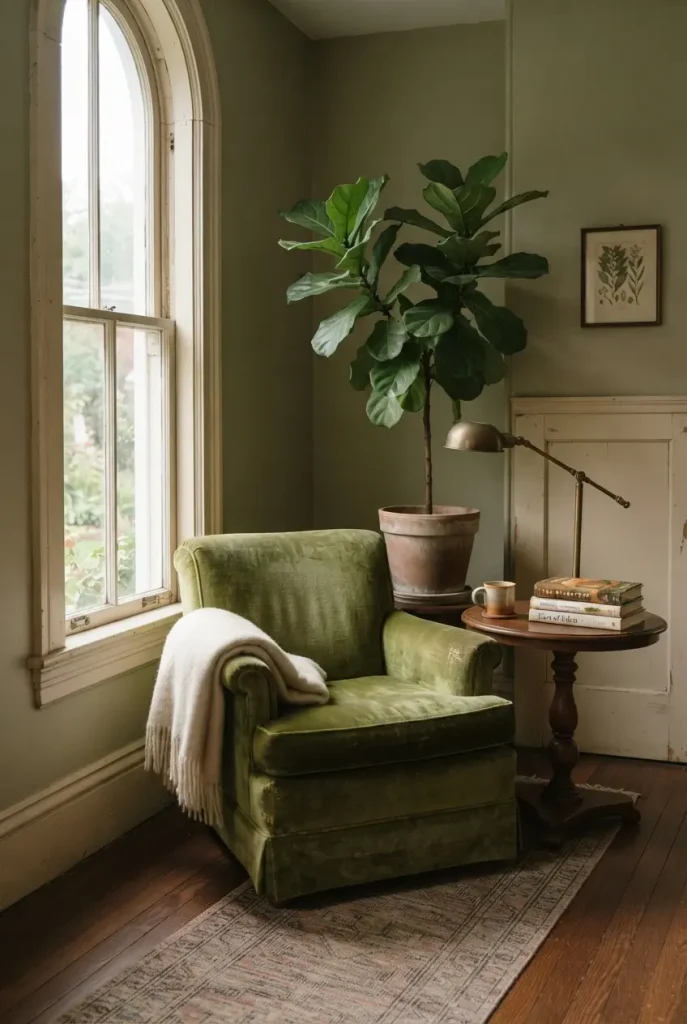
An unused corner can become one of the most charming parts of a home when it is given a clear purpose. Place a comfortable chair near natural light, then add a small side table, reading lamp, and a soft throw. A nearby book stack or compact bookshelf can reinforce the purpose without making the area feel overly staged. Choose a chair with enough visual weight to balance the surrounding furniture, but don’t overcrowd a narrow corner. Plants work particularly well here because they soften the transition between furniture and empty wall space. The result is a functional nook that makes the room feel more personal.
7. Style Open Shelves With Breathing Room
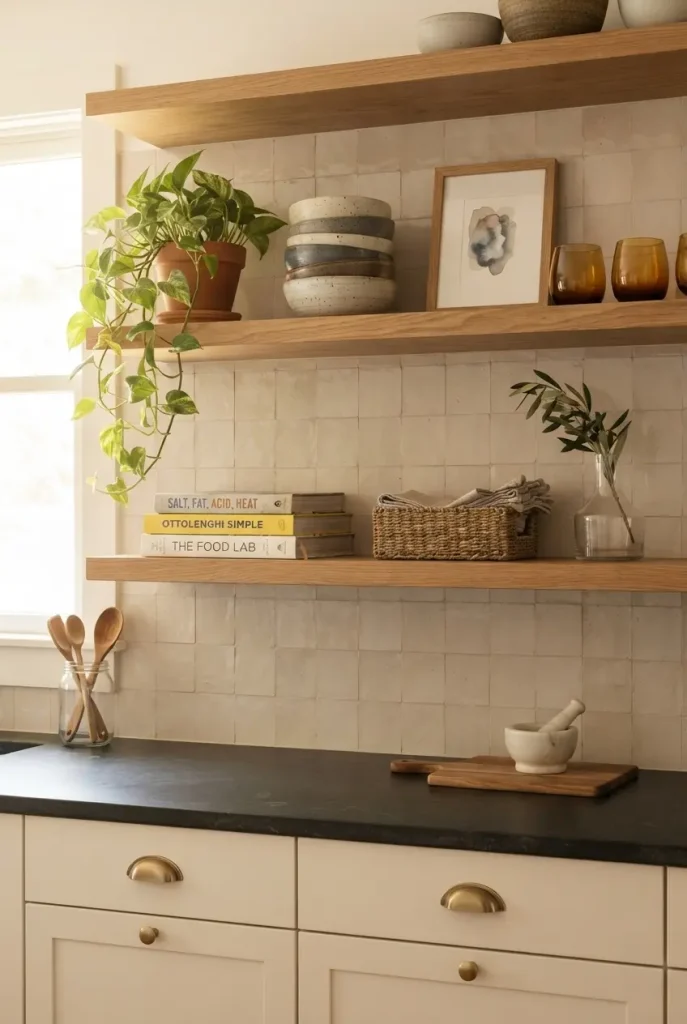
Open shelving looks best when it contains a controlled mix of useful and decorative objects rather than every item you own. Start by placing larger pieces such as baskets, ceramics, framed artwork, or books, then fill smaller gaps selectively. Leave some empty shelf space so the arrangement doesn’t become visually heavy. Repeating one or two materials, such as wood and ceramic, helps create cohesion without making the display feel overly coordinated. Vary the height of objects to create a more natural rhythm. If the shelves are in a kitchen, mix attractive everyday items with decorative pieces so the storage remains practical.
8. Add Greenery in Sculptural Planters
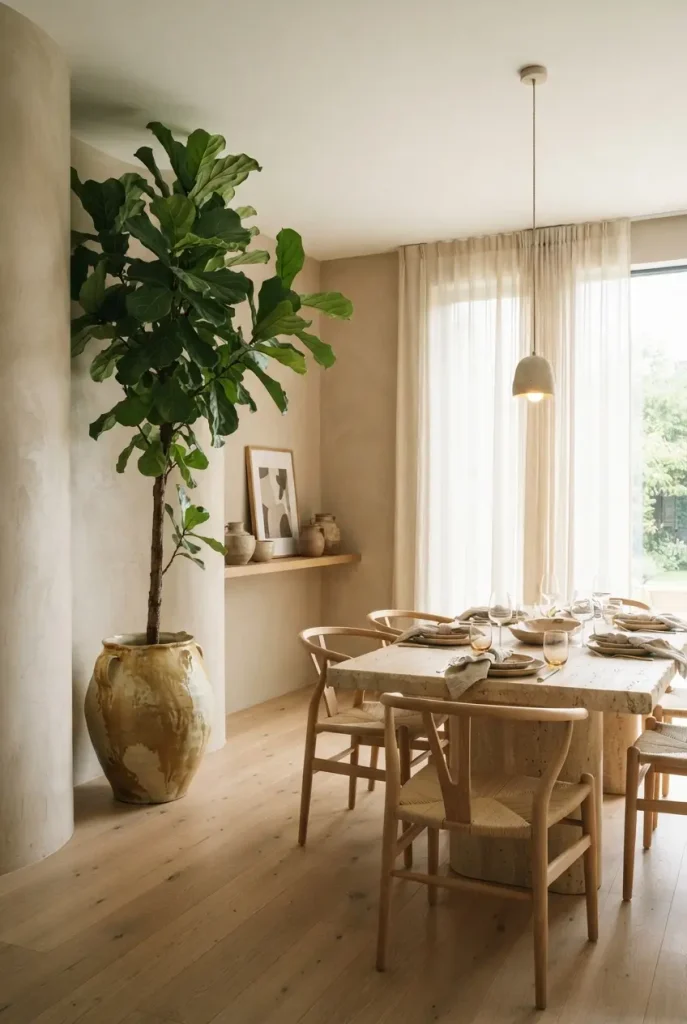
Plants bring softness, color, and vertical movement to rooms dominated by furniture and architectural lines. Instead of placing small plants everywhere, consider one or two larger specimens in sculptural planters. A tall olive-style tree, rubber plant, fiddle-leaf fig, or another suitable indoor plant can fill an empty corner while creating a strong visual anchor. Choose planters that complement the room’s materials rather than competing with the plant itself. Terracotta, textured stoneware, concrete, and matte ceramic can each create a different mood. Always consider the plant’s actual light and care requirements before choosing a location.
9. Paint an Accent Wall in a Muted Color
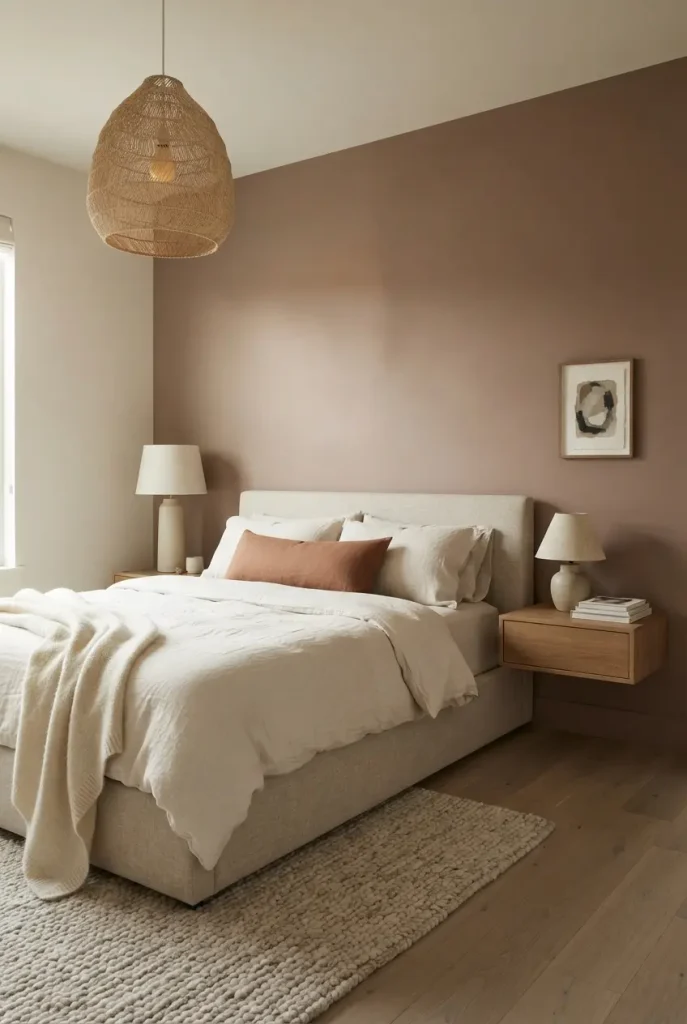
An accent wall can change the mood of a room without requiring a full repaint. Modern spaces often benefit from muted shades such as dusty green, clay, warm charcoal, soft blue, or deep taupe because they add depth without feeling overly saturated. Choose a wall with a clear architectural purpose, such as the wall behind a bed, sofa, or dining table. The surrounding walls can remain lighter so the accent color has room to work visually. Before painting, consider how the color looks throughout the day because natural and artificial light can shift its appearance. For renters, removable wallpaper can provide a similar visual effect without a permanent change.
10. Mix Old and New Furniture
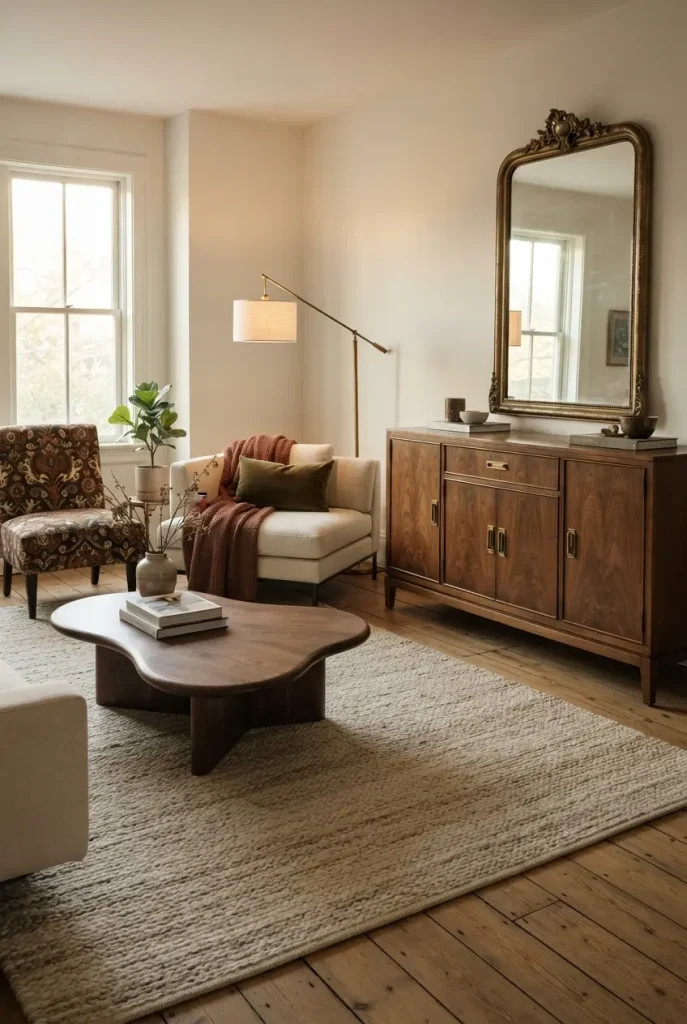
A room often feels more interesting when contemporary pieces are balanced with something that has history or visual character. Pair a clean-lined modern sofa with a vintage side table, antique mirror, older wooden cabinet, or secondhand chair. The contrast prevents the room from looking like everything was purchased from the same collection. When mixing styles, look for a connecting element such as color, material, shape, or scale. A vintage piece doesn’t need to be perfectly restored; small signs of age can contribute warmth. Keep the overall arrangement functional so the room feels collected rather than cluttered.
Common Mistake: Adding unrelated vintage pieces simply because they are old.
Better Approach: Choose older pieces that connect visually to the room’s existing palette or materials.
11. Use Curved Furniture to Soften Hard Lines
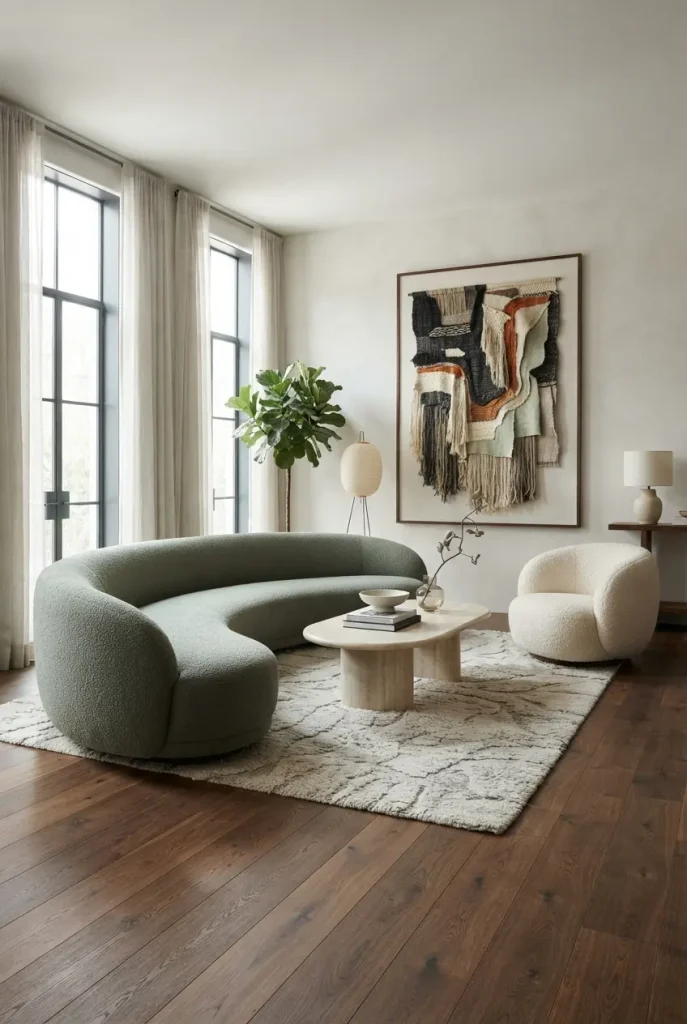
Curved furniture can introduce movement into rooms dominated by rectangular walls, cabinets, windows, and tables. A rounded sofa, barrel chair, oval coffee table, or curved console can make a modern interior feel softer without sacrificing a contemporary look. You don’t need several curved pieces; one substantial shape can be enough to break up a room filled with straight lines. Leave enough surrounding space for the curve to remain visually noticeable. Pair rounded furniture with simple accessories so the silhouette remains the star. This idea works particularly well in living rooms, bedrooms, and entry areas.
12. Install Simple Wall Molding
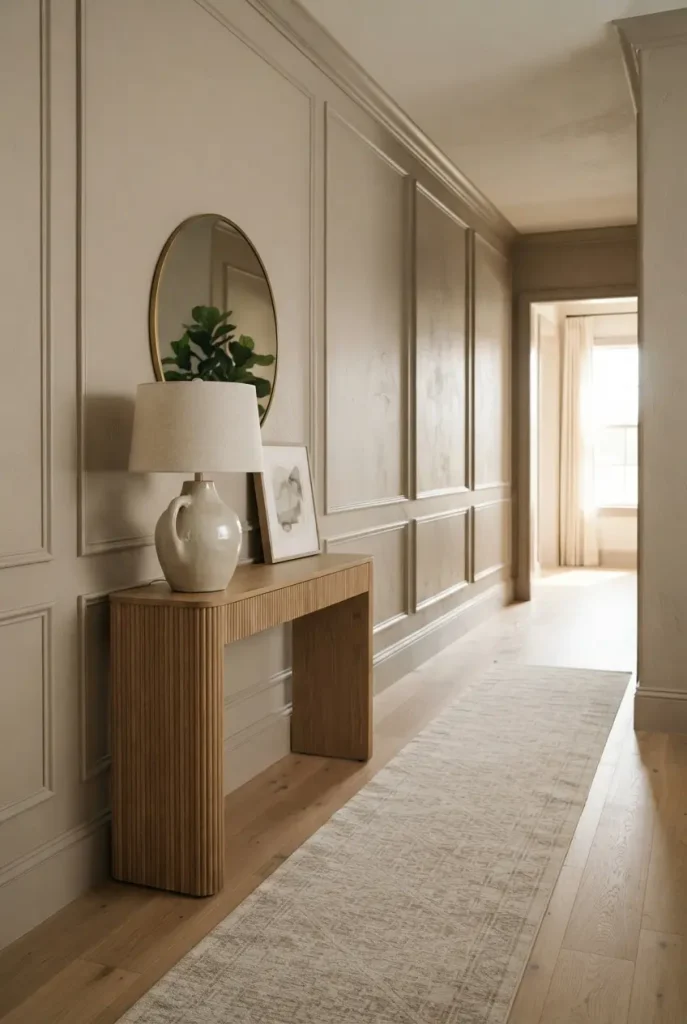
Wall molding can add architectural character to an otherwise plain room, and it doesn’t have to look formal or traditional. Simple rectangular panels, narrow vertical battens, or understated applied molding can create subtle dimension while maintaining a modern appearance. Paint the molding and wall the same color for a quiet, architectural effect, or use a slight tonal contrast for more definition. Keep the spacing consistent so the treatment looks intentional. Before installing anything, consider outlets, switches, furniture placement, and door trim. A well-planned wall treatment can make a basic room feel much more finished.
13. Choose Linen Curtains for a Softer Window
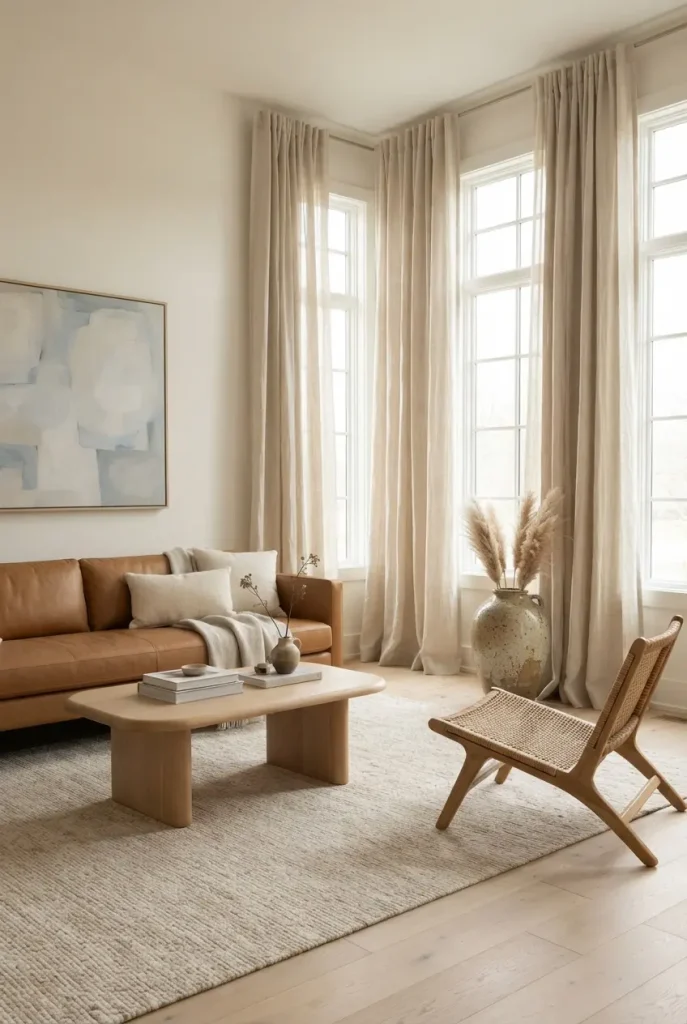
Window treatments can make a room feel finished while also changing how light enters the space. Linen or linen-look curtains are particularly useful when you want softness without heavy visual weight. Hang panels high and wide enough to frame the window rather than stopping directly at the window’s edges. A warm ivory, oatmeal, pale gray, or soft taupe can blend easily with many modern interiors. For bedrooms, consider layering decorative linen panels with a practical shade when privacy or light control matters. The gentle folds of fabric can soften modern architectural lines and make the entire room feel more comfortable.
14. Create a Calm Bedroom With Layered Bedding
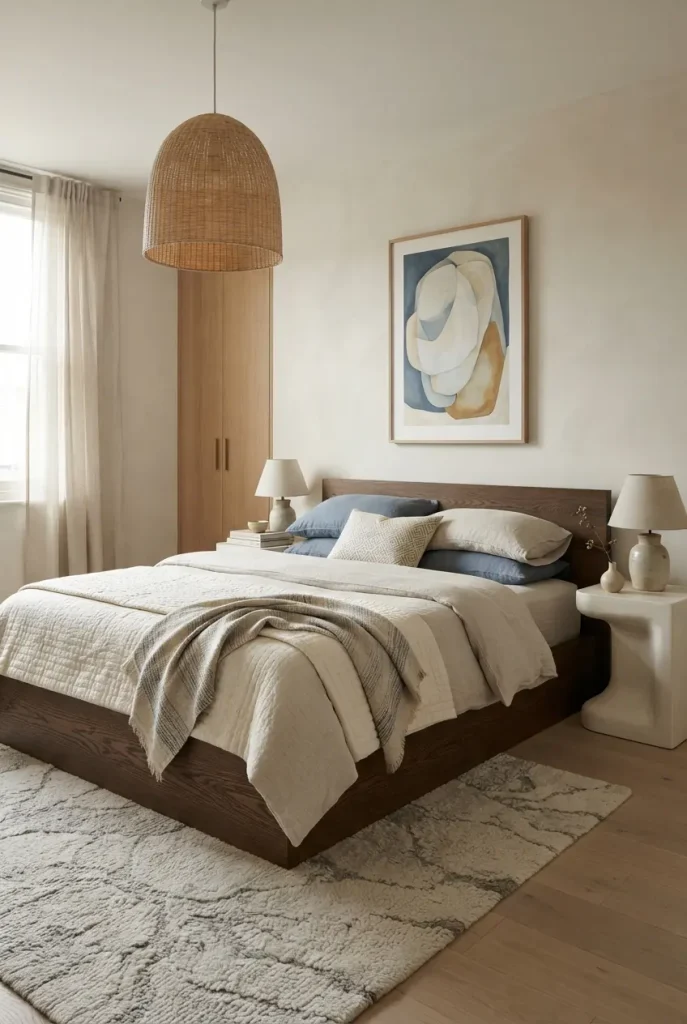
A comfortable bedroom depends as much on texture and layering as it does on furniture. Start with simple sheets, add a duvet or quilt, then layer a folded blanket and a few pillows in complementary textures. Keep the colors related rather than matching every piece exactly. Linen, cotton, washed percale, wool, and lightweight quilts can create visual depth while maintaining a relaxed appearance. A restrained palette makes it easier to change accent colors seasonally without replacing the entire bedding collection. Keep decorative pillows practical enough that they don’t turn bedtime into a daily rearranging project.
15. Add a Statement Mirror
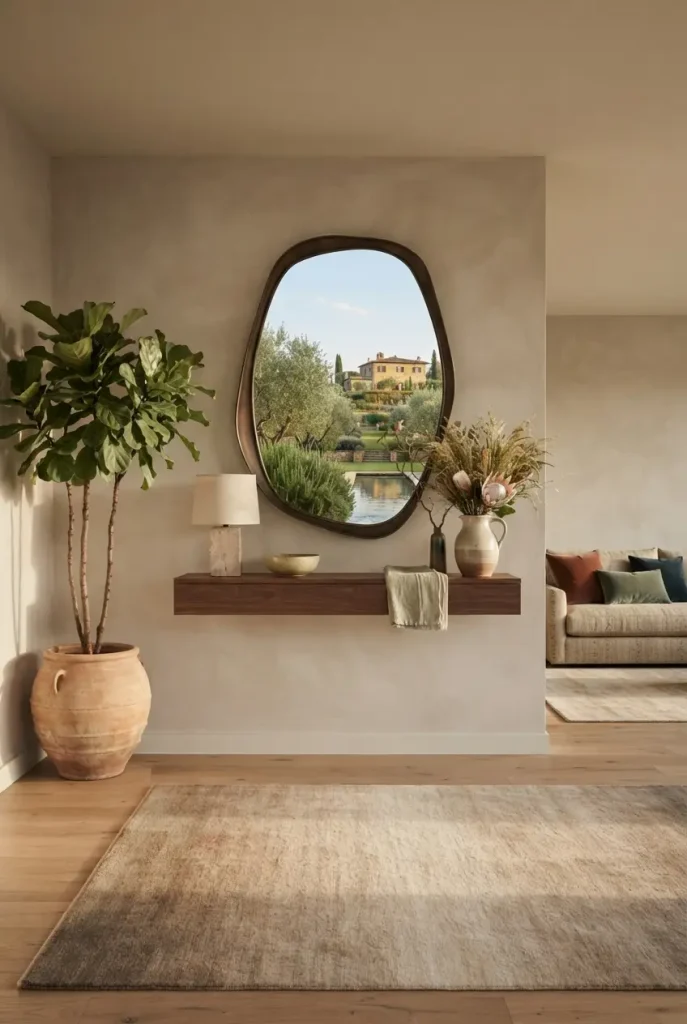
A statement mirror can perform several jobs at once: decoration, light reflection, and visual expansion. Instead of using a basic rectangular mirror, consider a large arched, irregular, oval, or sculptural frame that contributes to the room’s personality. Place it where it reflects something attractive, such as a window, artwork, pendant light, or architectural feature. Avoid positioning it where it simply reflects clutter or a blank wall. In small rooms, a substantial mirror can help create a stronger sense of depth. Choose the frame according to the room’s existing materials so the mirror feels integrated rather than randomly added.
16. Use Baskets for Attractive Storage
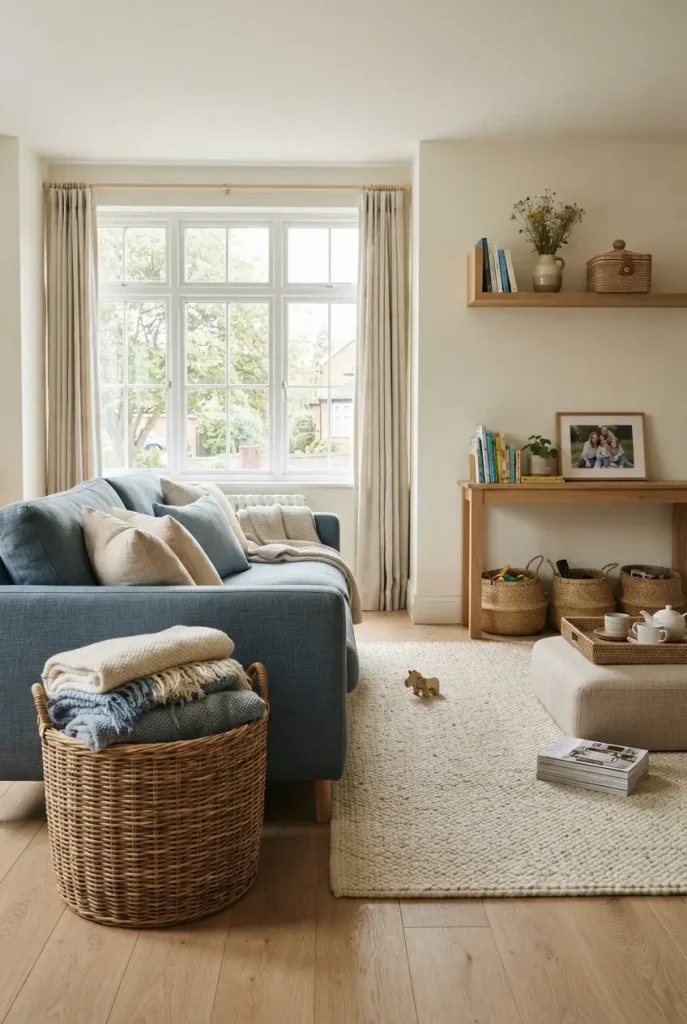
Storage can contribute to the room’s style when containers are chosen intentionally. Woven baskets work especially well for blankets, toys, magazines, shoes, or everyday items that need to disappear quickly. Place larger baskets beneath consoles, beside sofas, on lower shelving, or in open cubbies. Keep the shapes simple if the room already contains several patterns. Natural seagrass, rattan, cane, and woven cotton can introduce texture without adding strong color. The best storage solutions are the ones that make tidying easier without making the room look like a storage area.
Best For: Living rooms, bedrooms, entryways, nurseries, and family spaces.
Visual Effect: Adds texture while reducing visible clutter.
17. Hang a Gallery Wall With a Consistent Thread
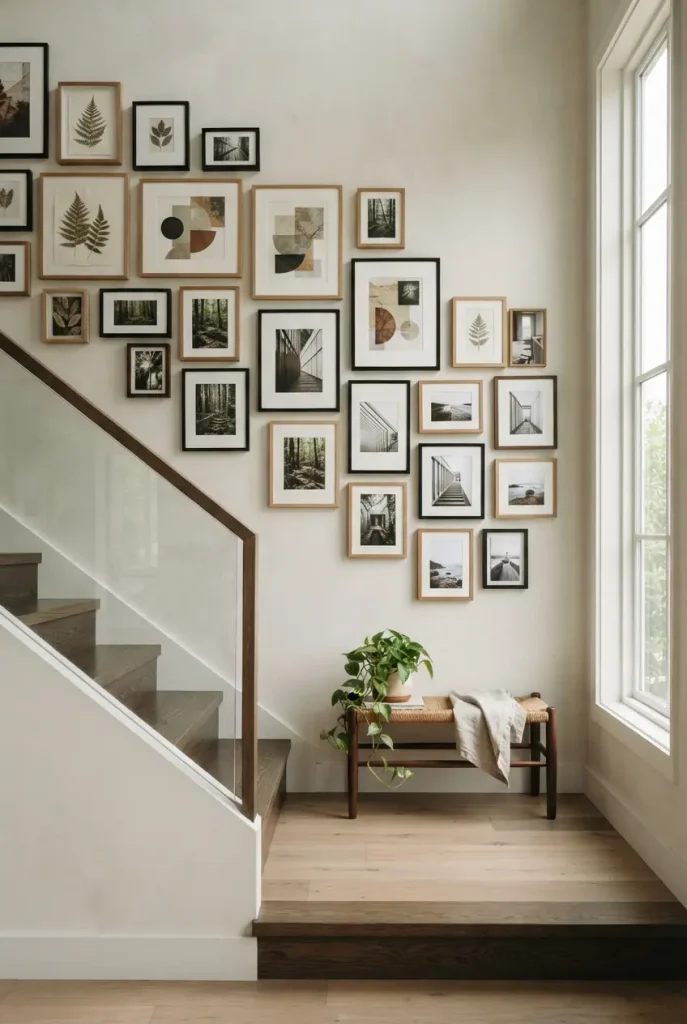
A gallery wall doesn’t have to contain identical frames or perfectly symmetrical spacing. The arrangement can feel collected when the artwork shares a visual thread, such as a restrained color palette, botanical subject, black-and-white photography, or similar frame finish. Lay the pieces out on the floor before hanging them so you can adjust the composition without creating unnecessary wall holes. Include a mixture of sizes to avoid a rigid grid unless a more formal look is intentional. Keep the outer edges visually balanced even when the individual pieces differ. This approach gives a room personality while still feeling organized.
18. Give the Coffee Table a Simple Three-Part Arrangement
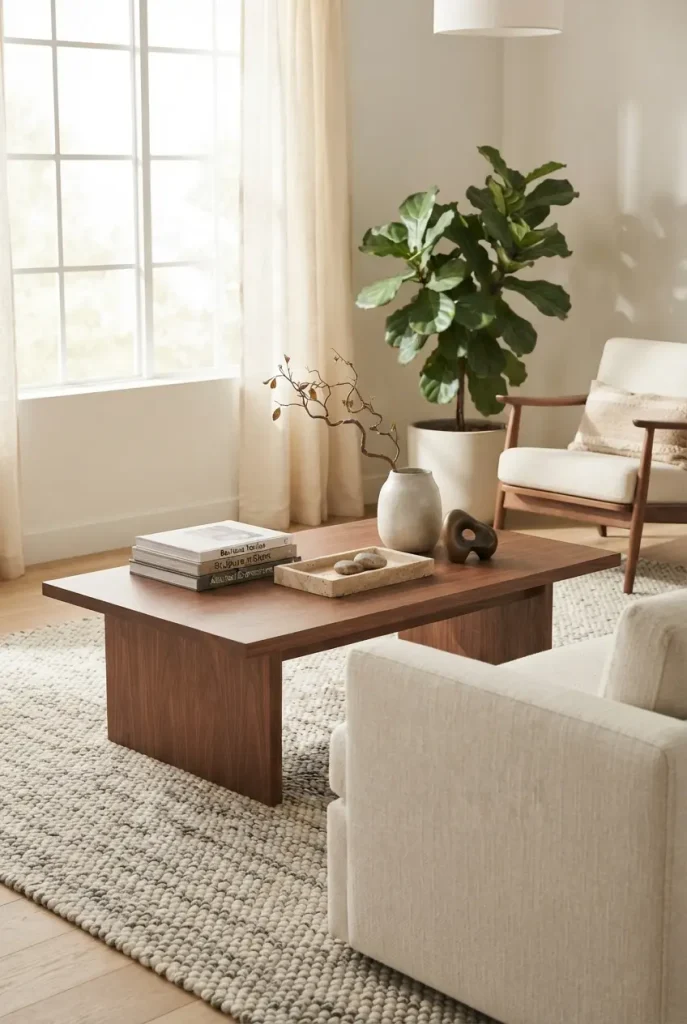
A coffee table looks more intentional when the objects are grouped instead of scattered across the entire surface. One easy approach is to combine a low tray or book stack, a medium-height decorative object, and one organic element such as a small plant or branch. Vary the height without creating an obstacle for people using the table. Keep enough empty surface available for drinks, books, or everyday use. If the table is already visually strong, choose quieter accessories. The arrangement should feel composed but easy enough to move when the room is being used.
19. Introduce One Deep Accent Color
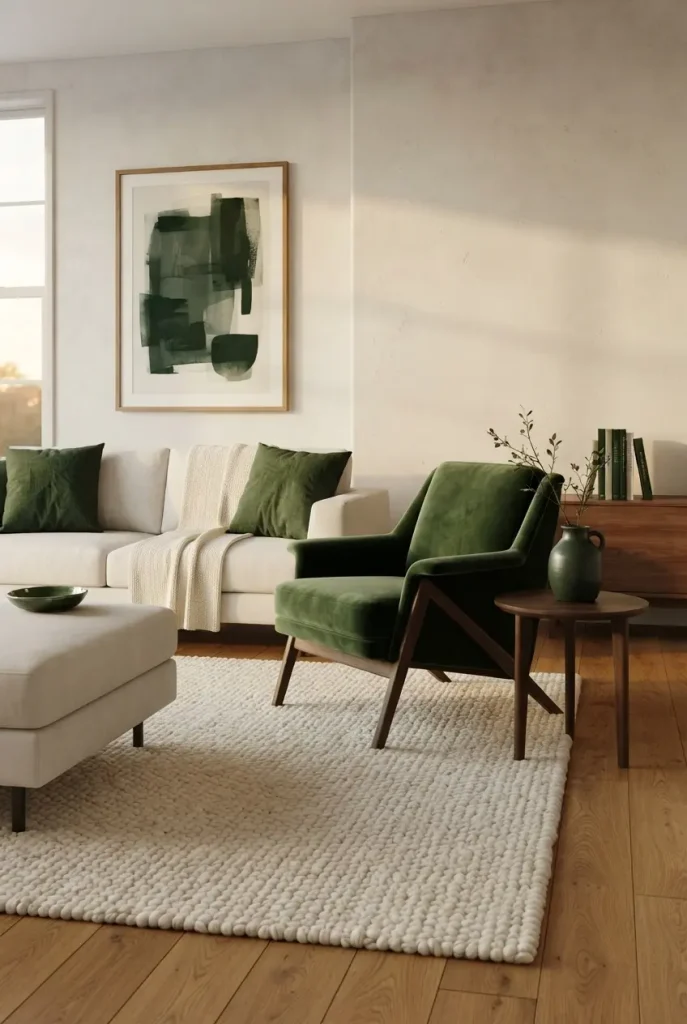
A mostly neutral room can gain personality from one carefully repeated deeper color. Think forest green, navy, chocolate brown, charcoal, rust, or deep burgundy depending on the overall palette. Use the color in two or three places rather than scattering it across every surface. A dark accent chair, cushion, vase, artwork detail, or lamp base can be enough. Repetition helps the color feel intentional while allowing the rest of the room to remain calm. The strongest results usually come from using the deeper shade against lighter walls, natural wood, or warm textiles.
20. Add a Small Sculptural Side Table
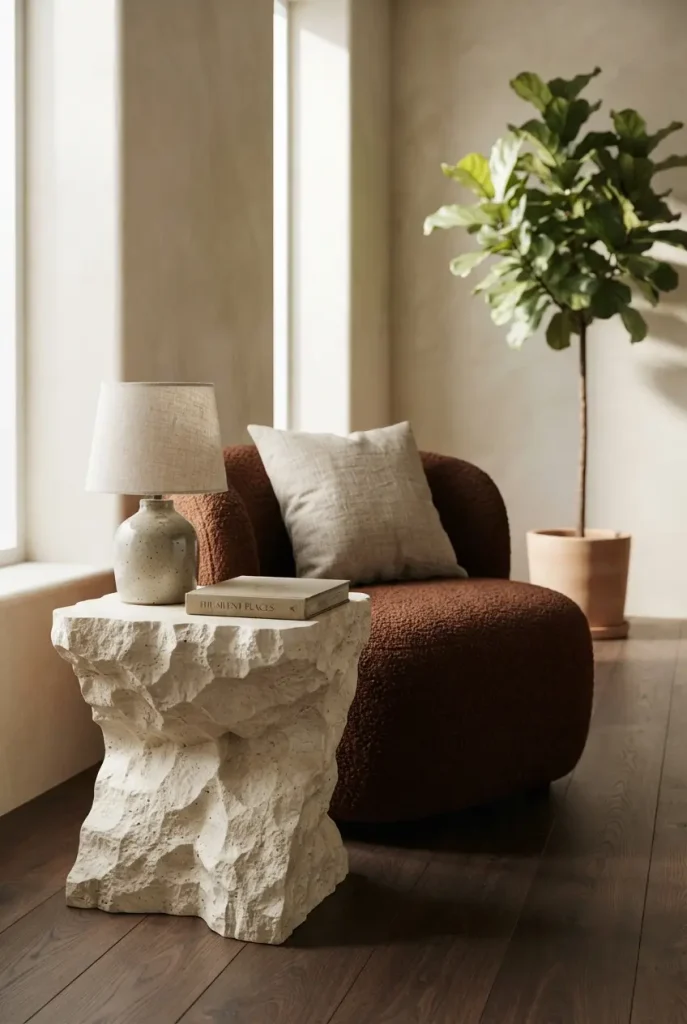
Small furniture pieces can have a surprisingly large visual impact when their shapes are distinctive. A sculptural side table beside a sofa or chair provides a useful surface while introducing another form into the room. Look for rounded stone, fluted wood, painted plaster, metal, or carved designs depending on the existing palette. Keep the table appropriately scaled to the seat so it remains comfortable to reach. If the furniture arrangement is already visually busy, choose a quieter material with an interesting silhouette. One sculptural piece can provide the artistic quality of a larger decorative object without taking up much floor space.
21. Create a Functional Entryway Drop Zone
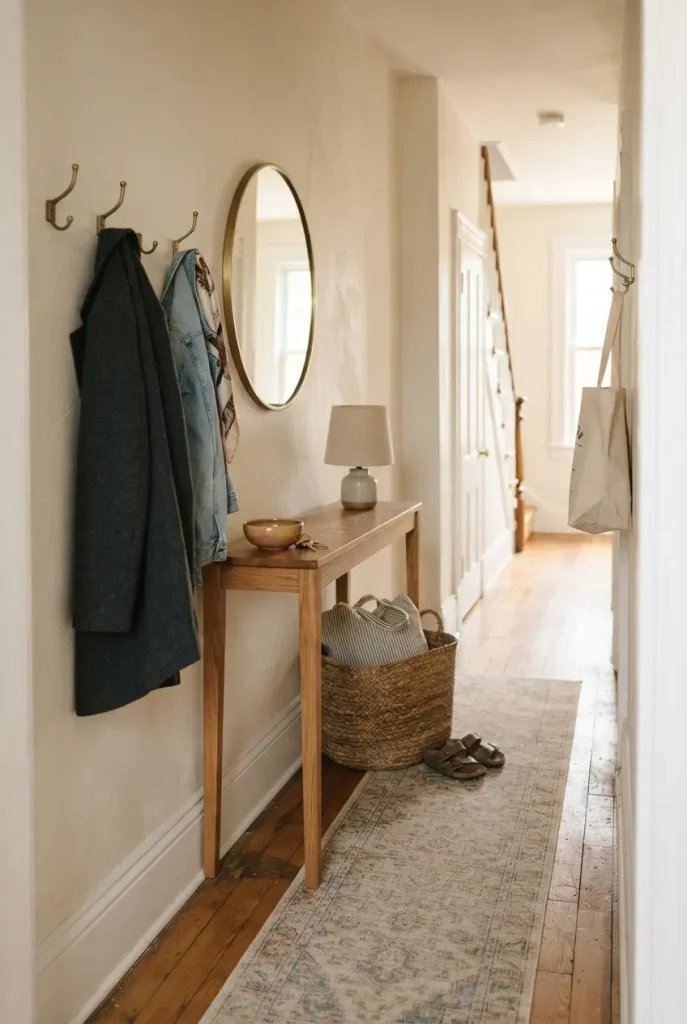
An attractive entryway becomes much easier to maintain when every everyday item has a designated place. Add a slim console, wall hooks, a small bowl for keys, a tray for mail, and a basket for shoes or accessories. In a narrow entry, prioritize shallow furniture so the walking path remains clear. A mirror can provide a final visual check before leaving while also reflecting light into the space. Keep the visible surface relatively restrained and move less attractive necessities into drawers or baskets. This combination of function and styling makes the entry feel organized without becoming overly formal.
22. Use a Statement Pendant Light
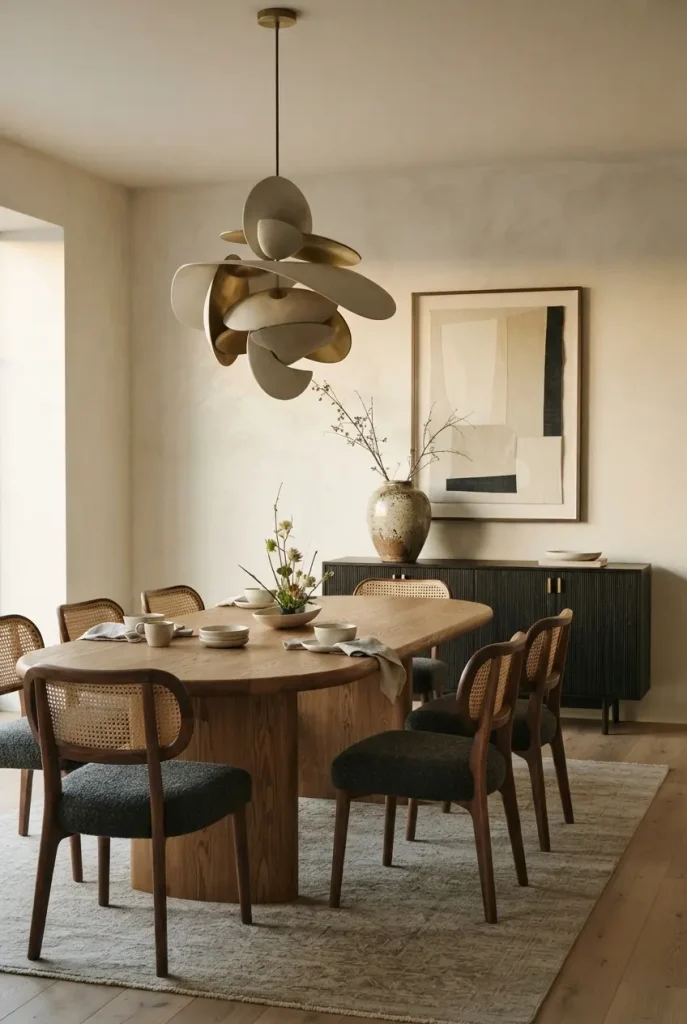
A statement pendant can become the visual centerpiece of a dining room, bedroom, kitchen, or entry without requiring additional decoration. Choose the shape according to the room’s architecture: a sculptural globe can soften a space, while a linear fixture can reinforce a long table or island. Scale matters because an undersized fixture tends to disappear while an oversized one can dominate the room. Consider the height carefully so the light provides atmosphere without interfering with sightlines. A distinctive fixture is especially useful in otherwise restrained interiors where there are fewer decorative elements competing for attention.
23. Layer a Bench at the Foot of the Bed
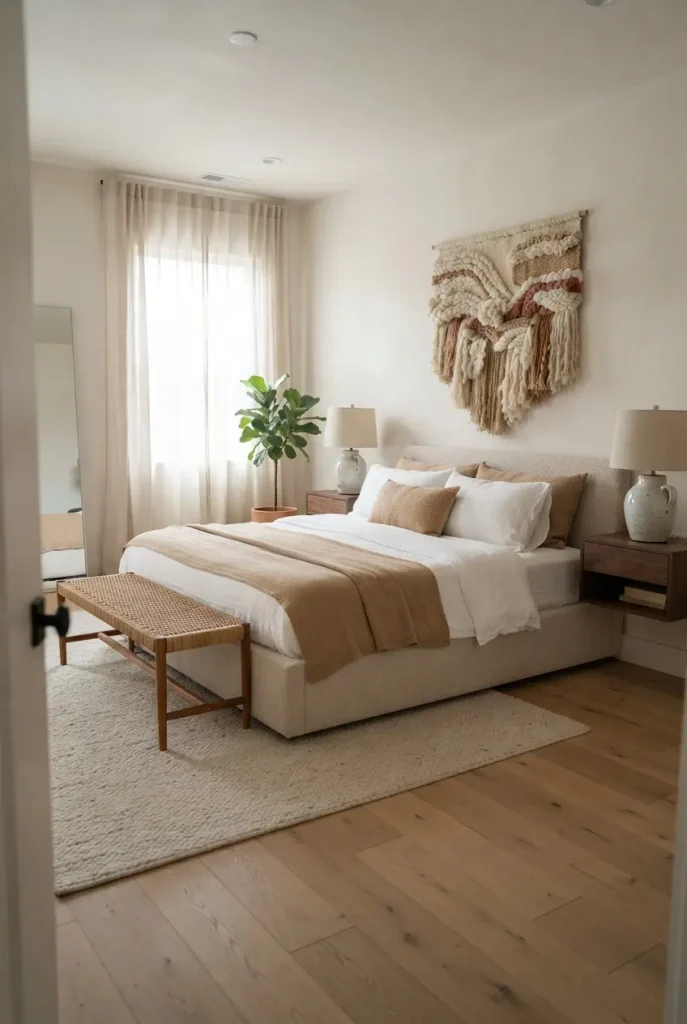
A bench at the foot of a bed can add seating, texture, and a sense of completeness without taking much visual effort. Choose a style that complements the bed rather than exactly matching it. Upholstered benches soften bedrooms, while wood or woven benches can introduce natural texture. Keep the bench narrow enough that there is still comfortable circulation around the bed. It can also provide a convenient place to fold blankets, put on shoes, or temporarily set clothing. In smaller bedrooms, a visually light bench with open legs can preserve a greater sense of floor space.
24. Decorate With Handmade Ceramics
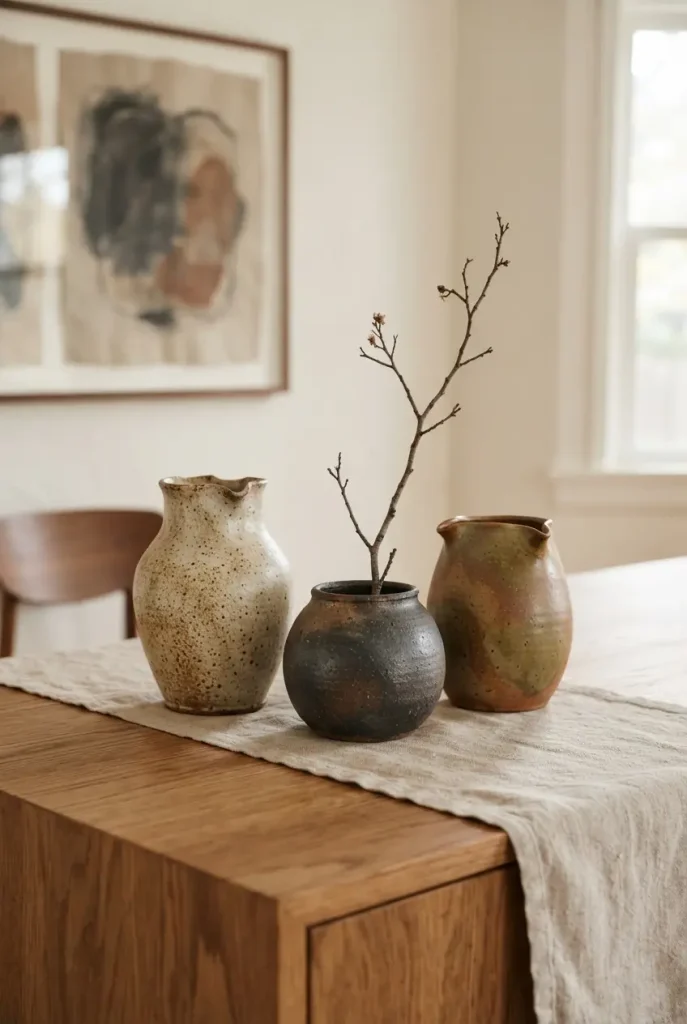
Handmade ceramics add subtle irregularity that can keep modern interiors from feeling overly polished. A collection doesn’t need to be large; one distinctive vase, bowl, pitcher, or sculptural vessel can provide enough character. Look for natural glazes, matte finishes, visible throwing marks, or gently uneven silhouettes. Place ceramics on shelves, consoles, dining tables, nightstands, or open kitchen shelving. Grouping pieces by material while varying their shapes creates interest without creating clutter. Because ceramics are available across many price levels, this is also an easy way to introduce artisanal character without redesigning a room.
25. Create a Dedicated Home Office Nook
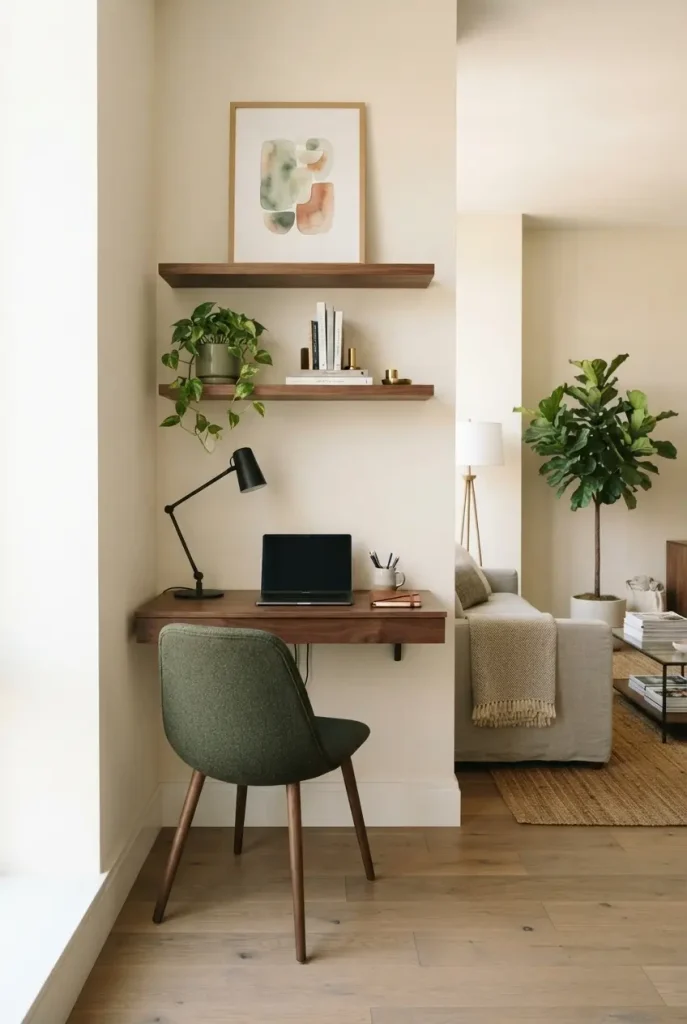
A home office doesn’t always require a separate room. A carefully planned nook can provide a functional workspace while blending naturally into a bedroom, living room, hallway, or spare room. Choose a desk that fits the available wall width and add vertical storage when floor space is limited. Keep cords managed and everyday office supplies contained so the area doesn’t visually overwhelm the rest of the room. A comfortable chair, focused task light, and a small piece of artwork can make the workspace feel intentional. When possible, position the desk near natural light without placing the screen directly in front of a bright window.
26. Use a Tonal Monochromatic Palette
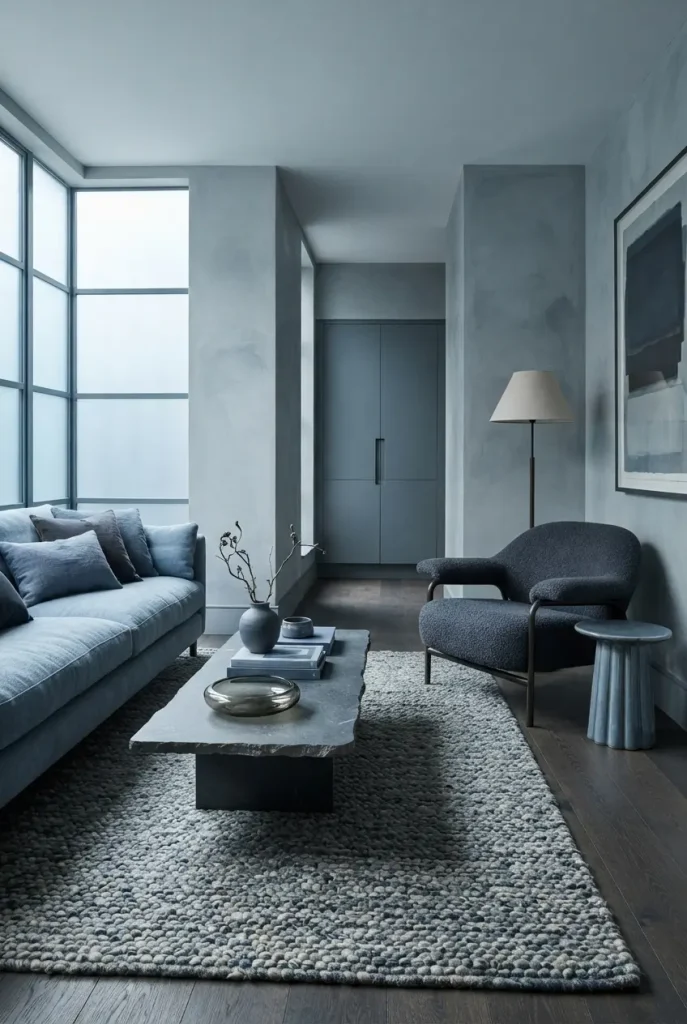
A monochromatic room can feel sophisticated without becoming visually flat when different shades and materials are layered carefully. Instead of choosing one exact color, work within a family such as warm white, taupe, blue-gray, olive, or earthy brown. Use lighter shades on larger surfaces and deeper tones through smaller furniture or accessories. Texture becomes especially important because there are fewer color changes to create contrast. Wood, woven materials, stone, linen, and ceramics can prevent the room from feeling sterile. The result is calm and cohesive while still containing enough variation to remain interesting.
27. Add a Built-In or Floating Storage Wall
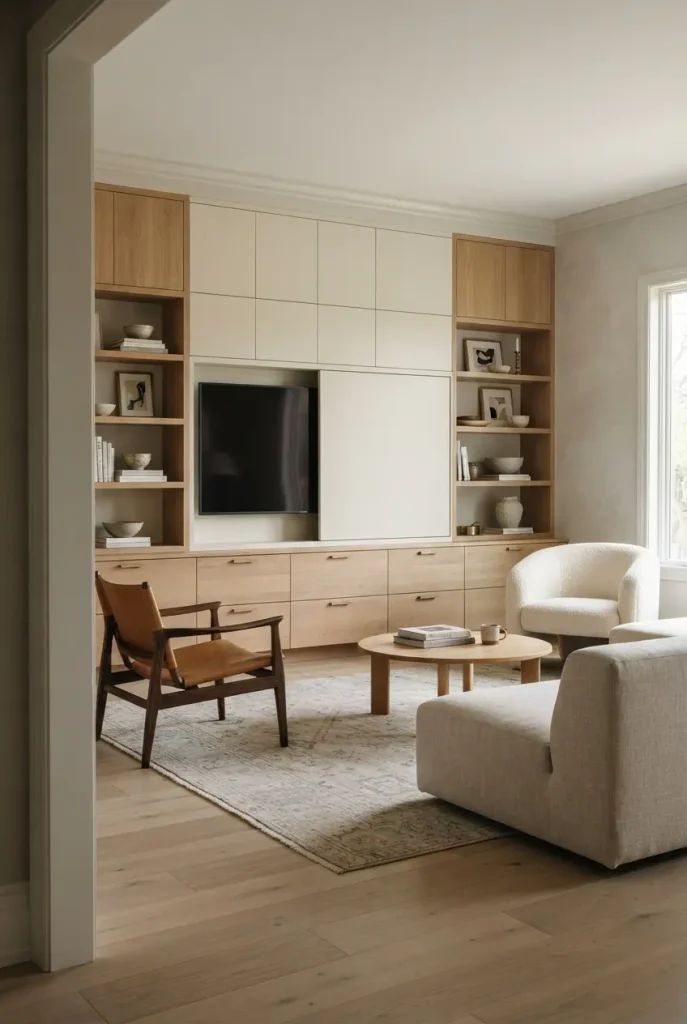
A storage wall can solve practical problems while giving a room a stronger architectural identity. In a living room, cabinetry can conceal electronics, books, games, and everyday clutter. Floating shelves can provide lighter display space above closed storage, while full-height cabinetry makes better use of vertical space. If custom millwork isn’t practical, modular units can sometimes provide a similar design principle when carefully arranged. Use consistent hardware and a restrained finish so the wall feels like part of the architecture. The most successful storage walls balance closed compartments with a few intentionally styled open areas.
Quick Tip: Plan the items that need storage before choosing cabinet dimensions so the design serves real household needs.
28. Add a Natural Stone Accent
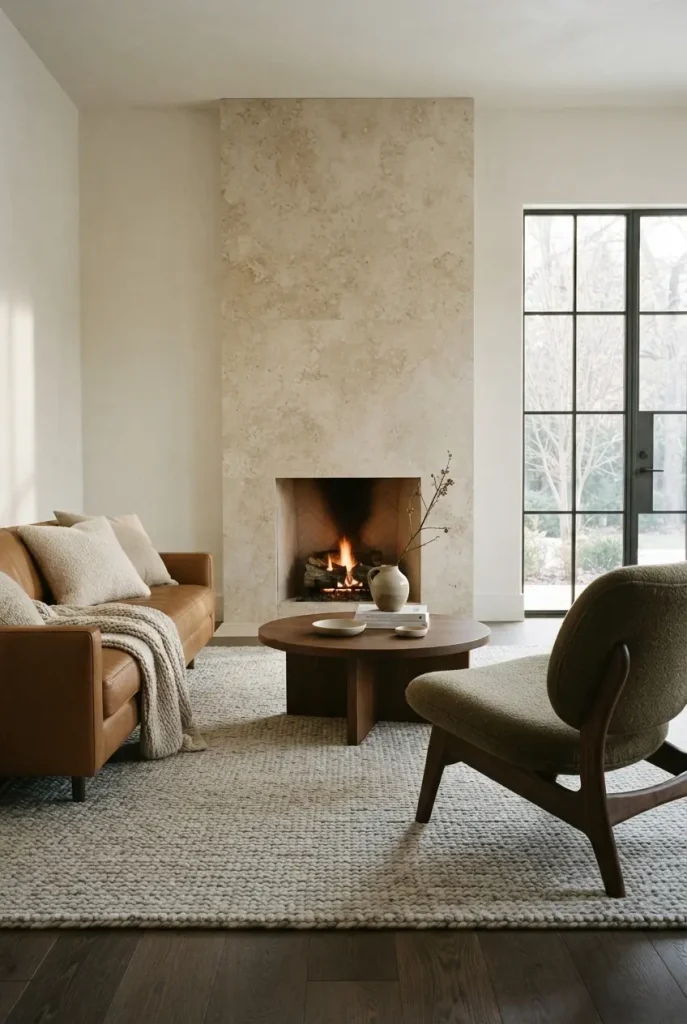
Natural stone can introduce visual depth through its texture, variation, and subtle movement. You don’t need to use it throughout an entire room. A stone side table, fireplace surround, backsplash, lamp base, tray, or small console can create a premium feeling without overwhelming the design. Choose the stone according to the room’s existing palette rather than selecting the most dramatic slab available. Honed or matte finishes often create a quieter appearance than highly polished surfaces. Remember that natural stone varies in color and pattern, which is part of its character rather than a flaw.
29. Style a Small Console Behind the Sofa
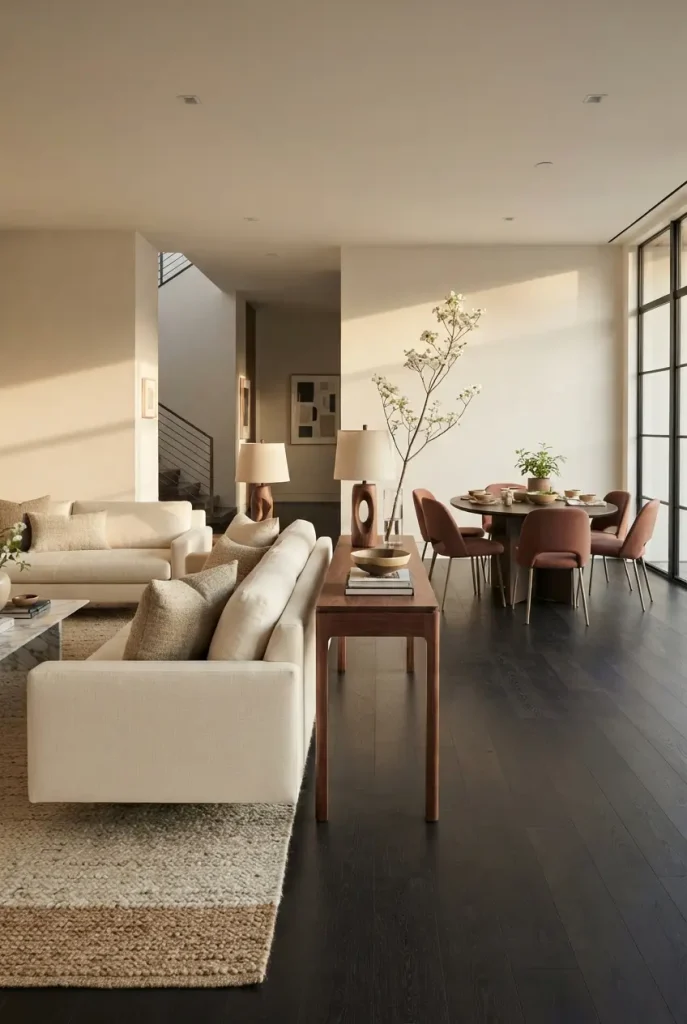
The space behind a sofa is often overlooked, but a narrow console can make the furniture arrangement feel more complete. Choose a console that is shallow enough to preserve walking space and tall enough to relate comfortably to the sofa. Add a lamp, a few books, a ceramic object, or a simple branch rather than filling every inch. If the sofa floats in an open-plan room, the console can also help visually divide the living zone from dining or circulation areas. Keep the styling low enough that it doesn’t interfere with sightlines across the room. This is a particularly useful solution for large open spaces that lack clear zones.
30. Create a Layered Bathroom Look
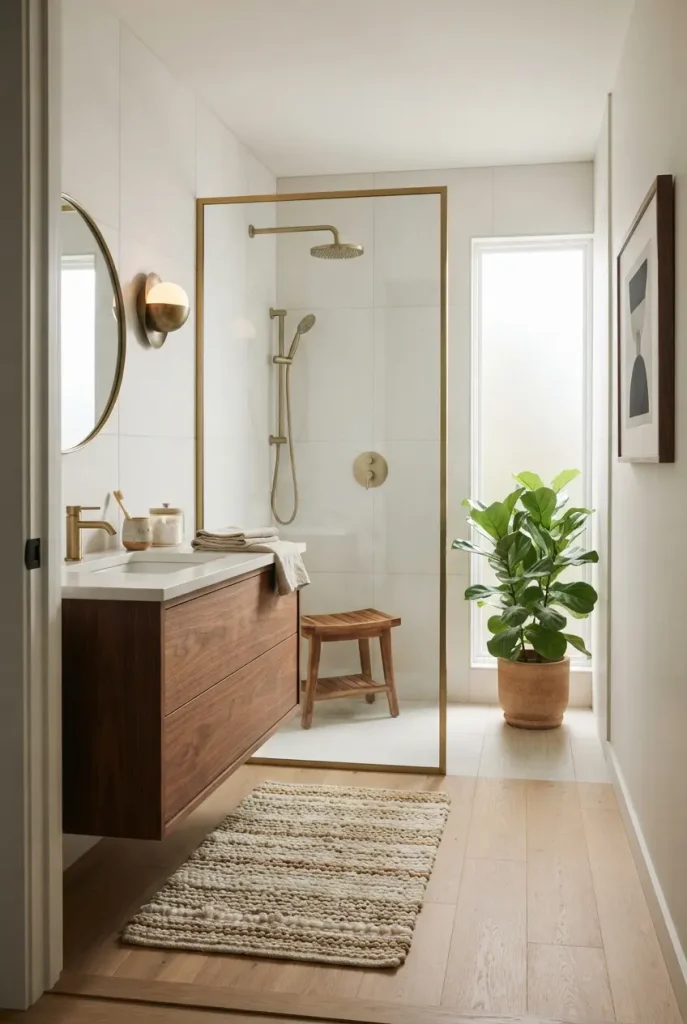
Bathrooms can feel cold when every surface is hard and reflective, so introduce softer materials wherever practical. A woven bath mat, wood stool, linen hand towel, framed artwork, ceramic vessel, or small plant can make the space feel more residential. Keep accessories away from areas where water exposure or cleaning requirements make them impractical. Warm metal hardware can also soften a bathroom dominated by white tile or stone. For a larger renovation, natural-looking tile and wood-toned cabinetry can provide the same warmth at the architectural level. The goal is a bathroom that feels connected to the rest of the home rather than completely separate from it.
31. Make One Corner Deliberately Minimal
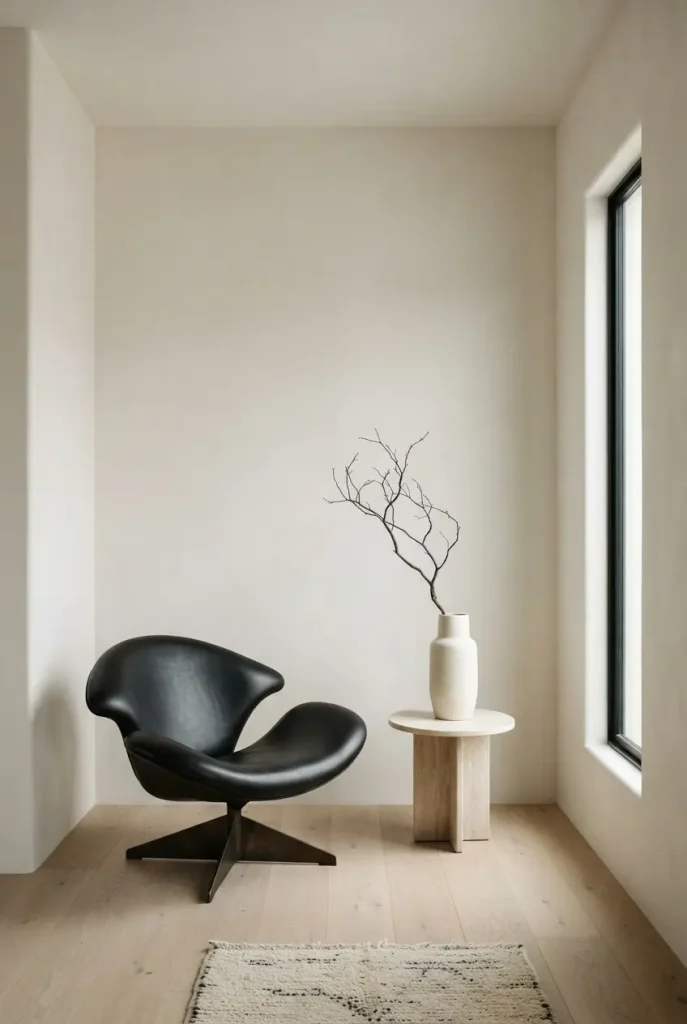
Not every part of a home needs to be filled with decoration. A deliberately minimal corner can create visual breathing room and make surrounding details feel more meaningful. Choose one strong element such as a sculptural chair, tall vase, large artwork, plant, or small pedestal table, then leave the surrounding area relatively open. This works especially well in modern homes where clean architecture is part of the design. Empty space can also improve circulation and keep rooms from feeling crowded. Think of the blank area as part of the composition rather than as a space waiting to be filled.
Do / Don’t
- Do: Give one object enough space to become a focal point.
- Don’t: Add several small accessories simply because the corner feels empty.
32. Personalize the Room With Meaningful Objects
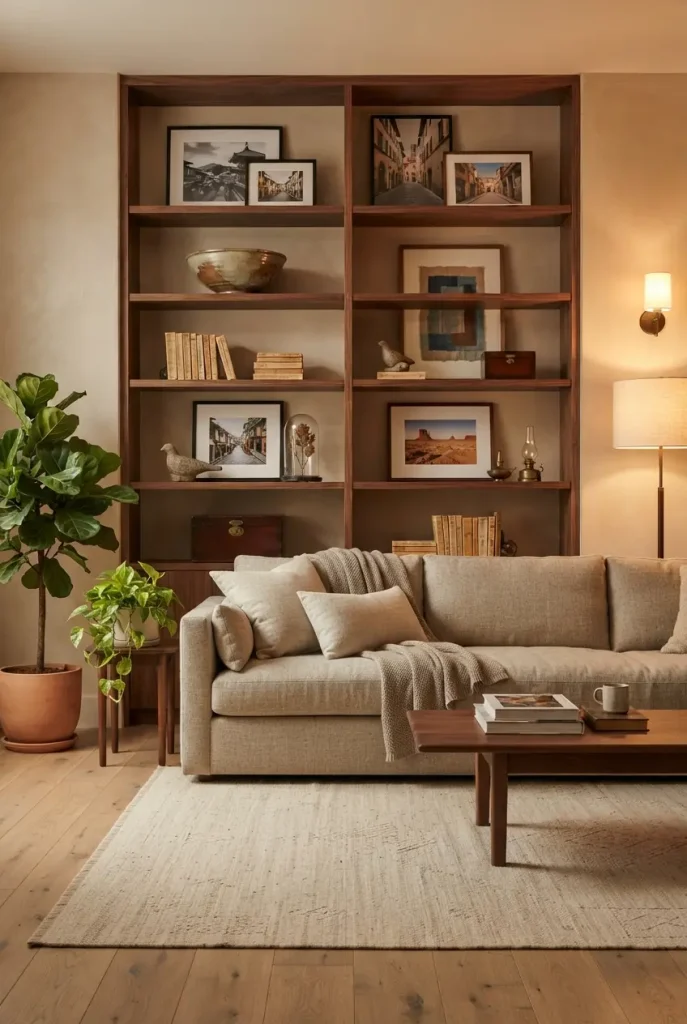
The most beautiful homes usually contain something that couldn’t have come from a generic showroom. Display travel finds, inherited pieces, handmade objects, framed photographs, favorite books, artwork from local creators, or small collections that genuinely mean something to you. These details make a room feel connected to the people who live there. The key is editing: choose a few meaningful pieces rather than displaying everything at once. Group related objects together and give special items enough space to be appreciated. Modern decor becomes much warmer when clean furniture and architecture are balanced with evidence of real life.