
27 Cozy Home Decor Ideas for a Warm and Welcoming Space
The most inviting homes are rarely created by filling every corner with decorations. Instead, coziness comes from the way textures, lighting, furniture, colors, natural materials, and personal details work together. A linen curtain can soften a bright window, a vintage chair can add character to a modern room, and warm wood can make a neutral interior feel more grounded. Even a small apartment can feel welcoming when furniture is properly scaled and clutter is kept under control. These 27 cozy home decor ideas explore different ways to make everyday spaces feel warmer, softer, and more personal. Some ideas involve simple styling changes, while others focus on architectural details, furniture arrangements, lighting, or larger design investments. The goal is not to make every room look identical, but to help you create a home that feels comfortable, visually interesting, and genuinely enjoyable to live in.
1. Create a Layered Neutral Sanctuary
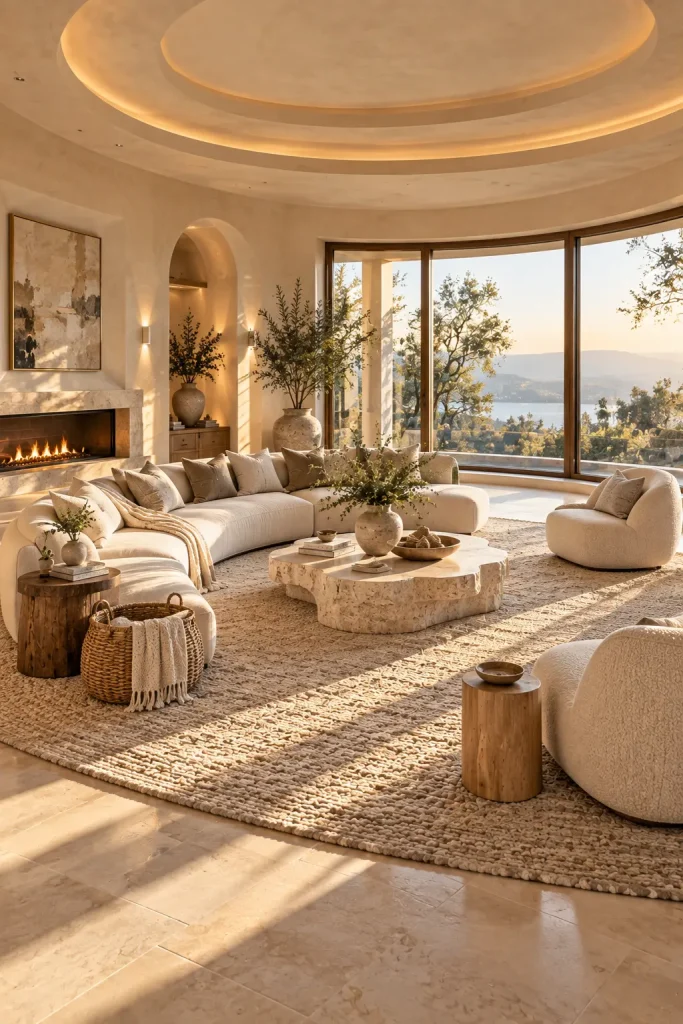
Neutral decorating becomes much more attractive when the room has plenty of material variation. Instead of relying on strong colors, combine ivory linen, boucle, wool, natural wood, stone, and handmade ceramics. A soft sofa can become the main foundation while textured pillows and a casually draped throw create additional softness. A large rug should visually connect the furniture and provide warmth underfoot. Add a few organic objects such as branches, woven baskets, or sculptural pottery to keep the space from feeling overly polished. Different shades of cream, beige, oatmeal, and taupe can create subtle depth. The result should feel calm and sophisticated while still being comfortable enough for everyday living.
2. Make Natural Wood the Hero
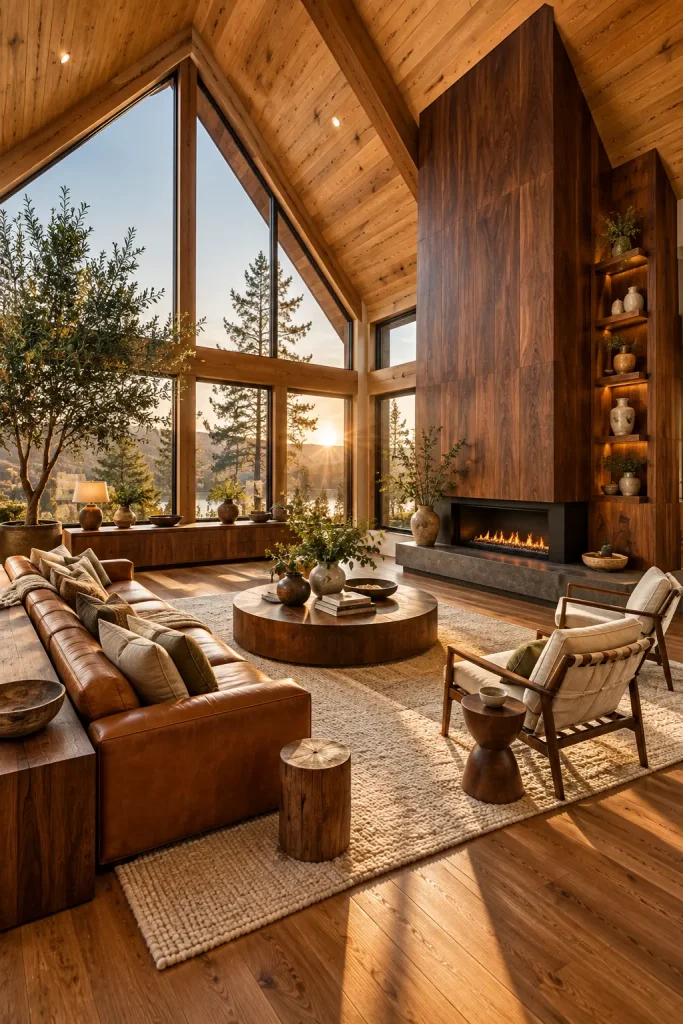
Natural wood can become much more than a supporting material when it is used as a major visual feature. A dramatic wood wall, ceiling detail, built-in cabinet, or sculptural table can give a room warmth and architectural character. Choose one primary wood tone and repeat it thoughtfully throughout the space. Walnut creates a deeper atmosphere, while oak feels lighter and more casual. Pair wood with stone, linen, leather, and woven materials to prevent the room from feeling too heavy. Avoid using too many unrelated wood colors. The most attractive result comes from allowing the grain and craftsmanship of the wood to become part of the room’s visual identity.
3. Design a Dreamy Reading Retreat
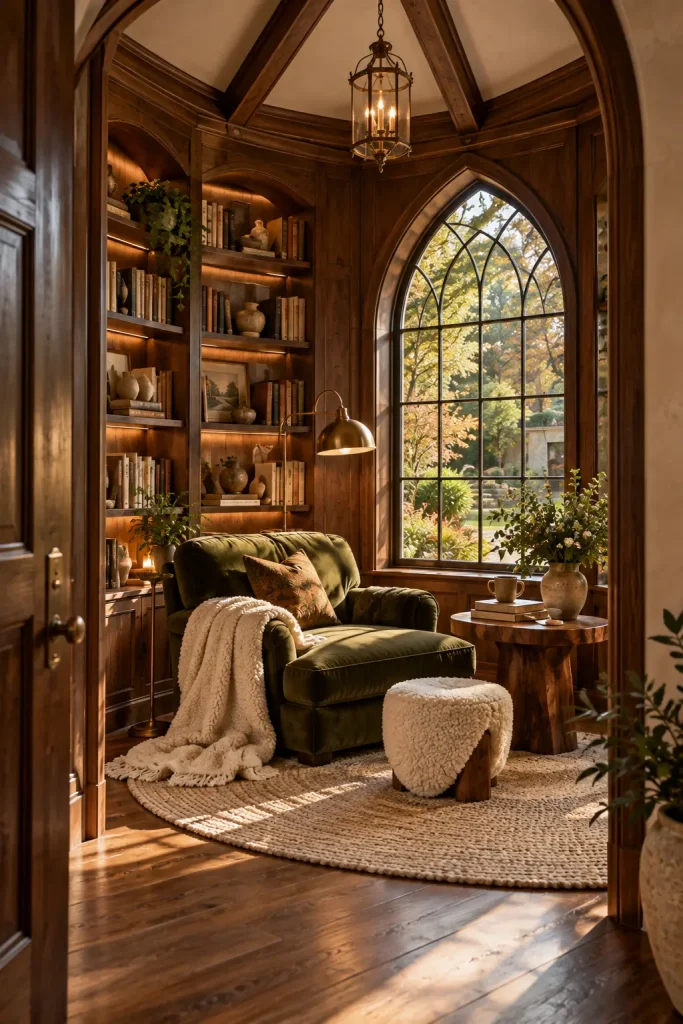
A reading corner can feel almost magical when it has its own architectural identity. Instead of simply placing a chair in an empty corner, create a small retreat with its own lighting, texture, and storage. A curved wall, arched window, built-in shelf, or ceiling detail can make the space feel intentional. Choose a chair that looks inviting enough to sit in for hours. Add a small table for books and a warm lamp for evening use. Soft textiles and natural wood can make the corner feel particularly comfortable. Keep the styling restrained so the reading area remains peaceful rather than cluttered.
4. Create a Warm Evening Lighting Scene
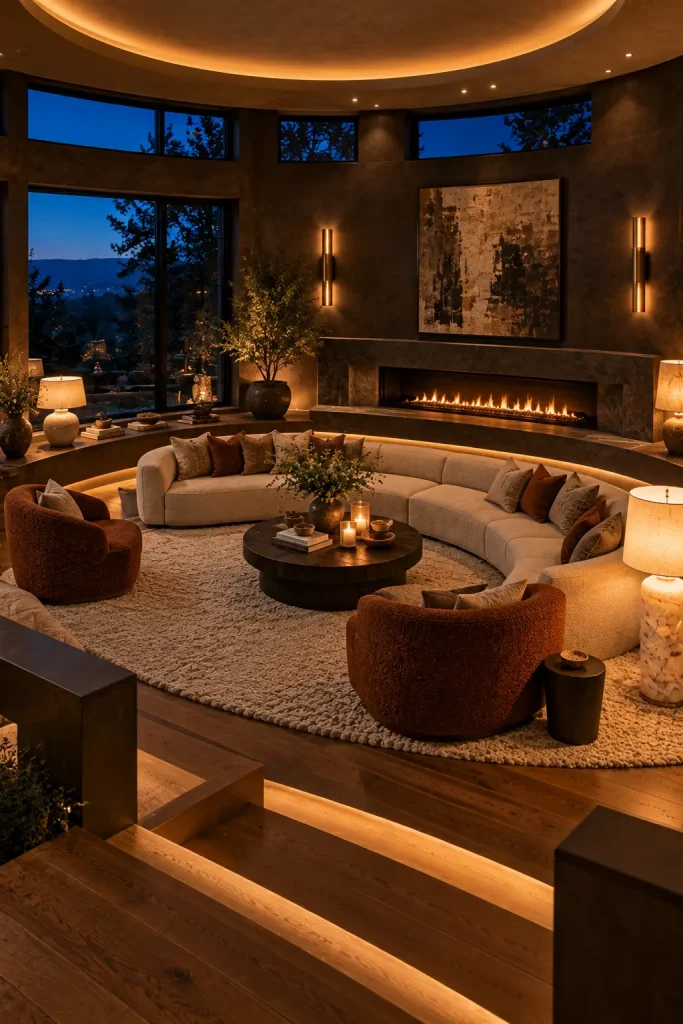
Warm lighting is one of the fastest ways to make a home feel inviting after sunset. Use several smaller lights instead of depending entirely on a ceiling fixture. Table lamps, floor lamps, wall sconces, fireplace light, and concealed architectural lighting can create different levels of illumination. Warm bulbs make wood and textiles appear richer and softer. Position lighting around seating areas and architectural features that deserve attention. Lamps with fabric or opaque shades usually create a softer effect than exposed bulbs. A beautiful evening lighting scheme should make the room feel atmospheric without appearing artificially bright.
5. Use an Oversized Statement Rug
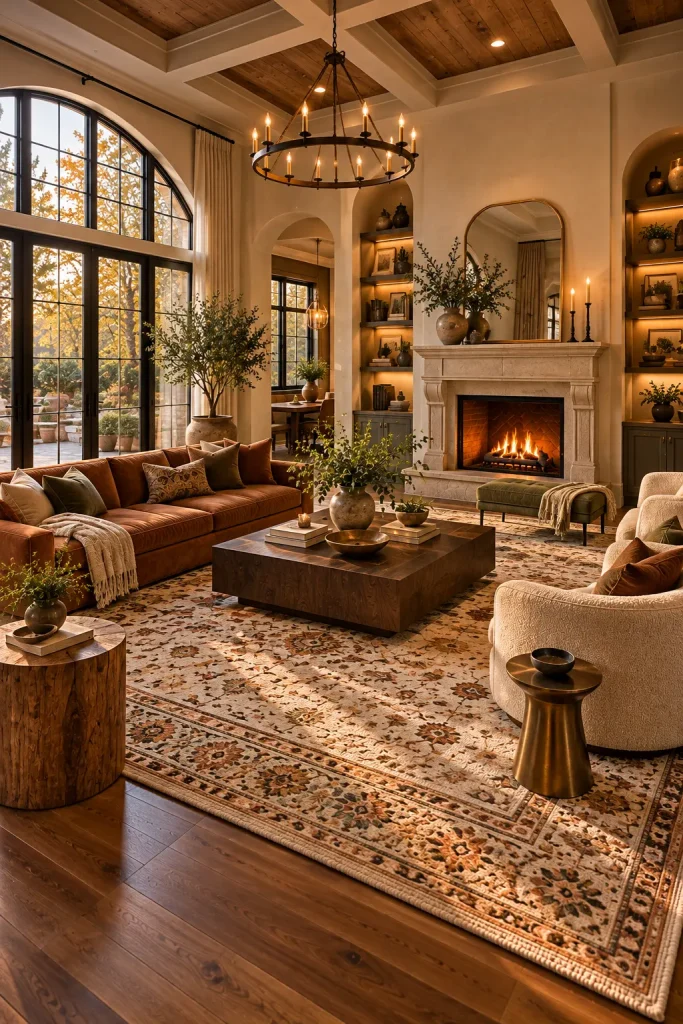
A large rug can do more than soften the floor, it can establish the visual identity of the room. Choose a rug large enough to connect the major seating pieces rather than placing a tiny rug in the center. A handwoven wool rug can add tactile richness, while a subtle pattern can introduce visual interest. Neutral colors work well when furniture already has strong shapes or colors. In a larger room, a patterned rug can help create a more intimate seating zone. Consider durability and maintenance when choosing materials. The right rug should feel like part of the architecture rather than an accessory placed on top of it.
6. Build a Relaxed Conversation Room
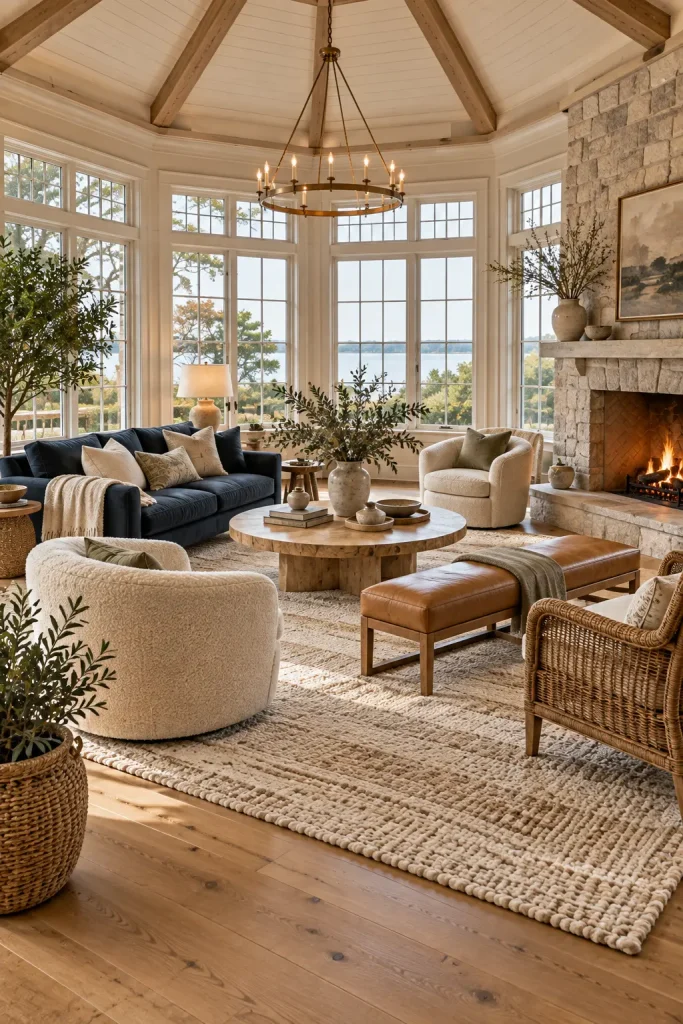
A cozy room should encourage conversation rather than simply direct everyone’s attention toward one screen. Mix seating with different silhouettes and materials so the room feels collected and comfortable. A sofa can provide the main anchor while lounge chairs, benches, and occasional chairs create flexibility. Arrange pieces close enough for conversation without making the room feel cramped. Use a coffee table that everyone can easily reach. Rounded shapes can soften a room with strong architectural lines. Finish the arrangement with textiles and a few personal objects rather than excessive decoration.
7. Create an Architectural Window Seat
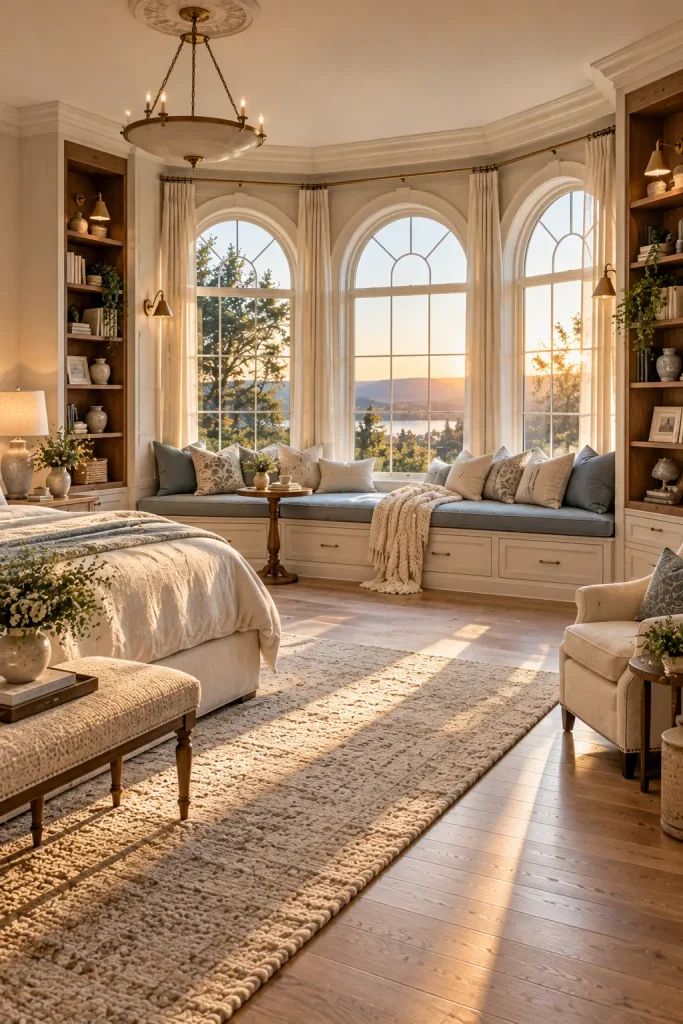
A window seat can become a beautiful focal point when it is treated as part of the architecture rather than simply a bench. Use a substantial custom cushion and layer it with soft pillows. Built-in drawers beneath the seat can provide useful storage. Shelves on either side can hold books, ceramics, and personal objects. Curtains or shades can soften the window without hiding the natural light. A small reading lamp makes the space useful in the evening. The area should remain comfortable and practical enough to use every day.
8. Use Rich Earthy Colors
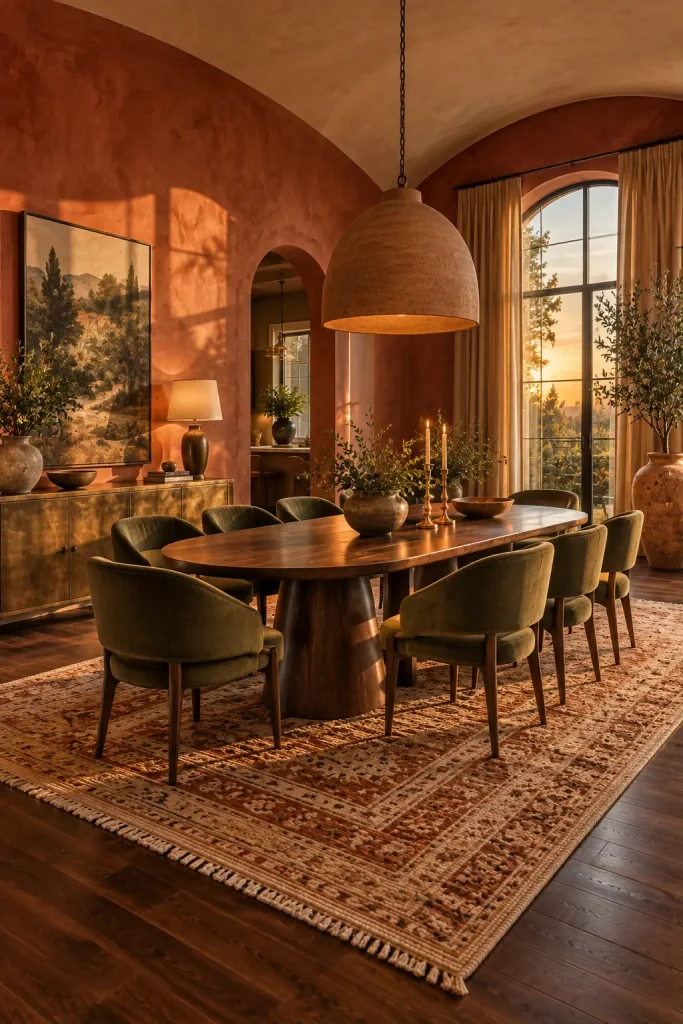
Earthy color palettes can make interiors feel warm and grounded without becoming visually overwhelming. Terracotta, olive, camel, clay, rust, cream, and warm brown work especially well with natural materials. Choose one dominant color and several supporting shades rather than treating every color equally. Earthy colors can be introduced through furniture, rugs, artwork, ceramics, curtains, and accessories. Natural wood and stone reinforce the organic quality of the palette. Muted versions of these colors generally feel more sophisticated than extremely saturated tones. The final room should feel warm and layered while still allowing the architecture and furniture to breathe.
9. Install Warm Built-In Shelving
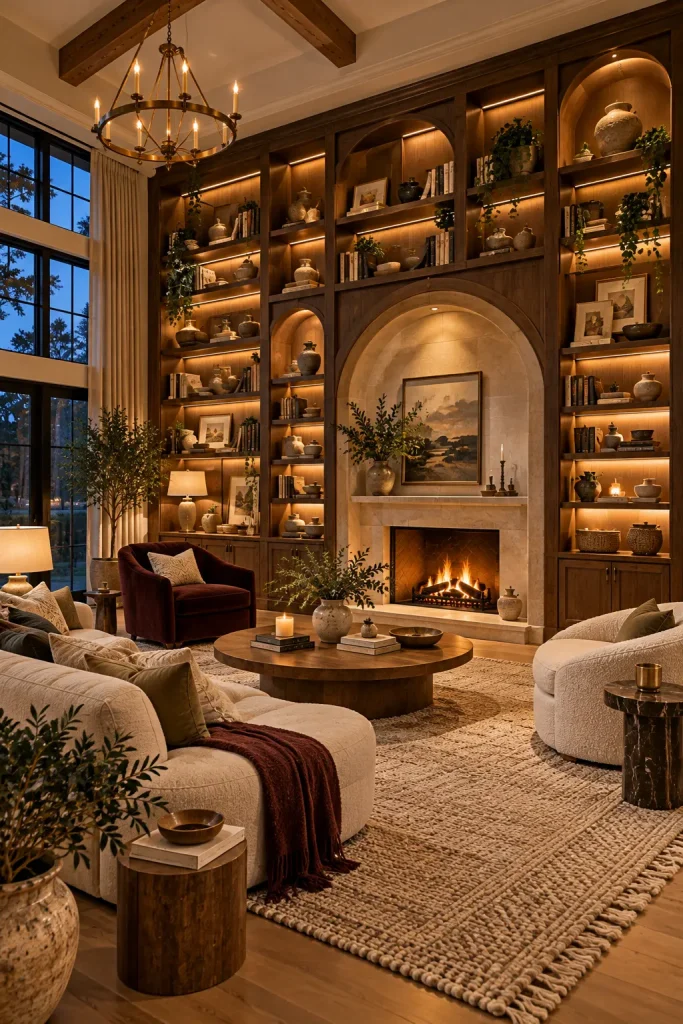
Built-in shelving can make a room feel custom and architectural while providing space for books and decorative objects. Use a combination of open shelving, cabinets, and niches to create visual variety. Leave intentional empty areas so the shelves do not look crowded. Mix books, ceramics, artwork, baskets, plants, and personal objects. Warm integrated lighting can make the shelving especially beautiful at night. If custom cabinetry is not possible, use modular shelving and apply the same principles of spacing, material repetition, and editing.
10. Add a Statement Indoor Tree
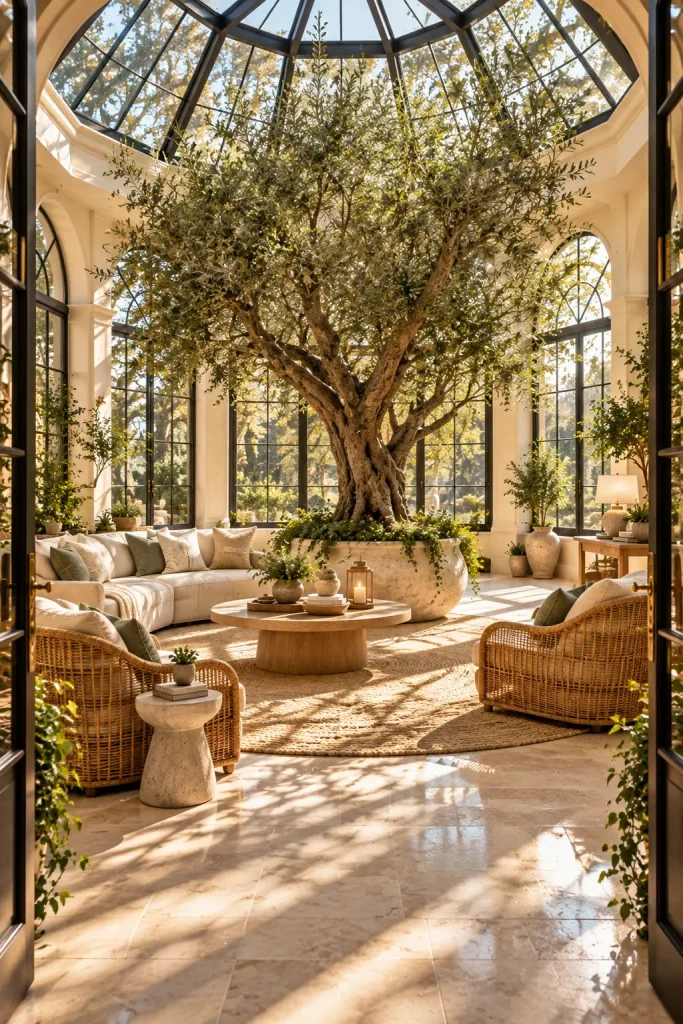
One large indoor tree can create more visual impact than many small plants. Choose a mature plant with a natural branching shape and place it where it has enough room to grow. A sculptural planter can become part of the decor. Tall greenery works especially well beside sofas, near windows, or in unused corners. Smaller plants can be used sparingly around it to create layers. Make sure the plant suits the room’s actual light conditions. The goal is to make greenery feel architectural and intentional rather than simply decorative.
11. Turn the Fireplace Into a Design Moment
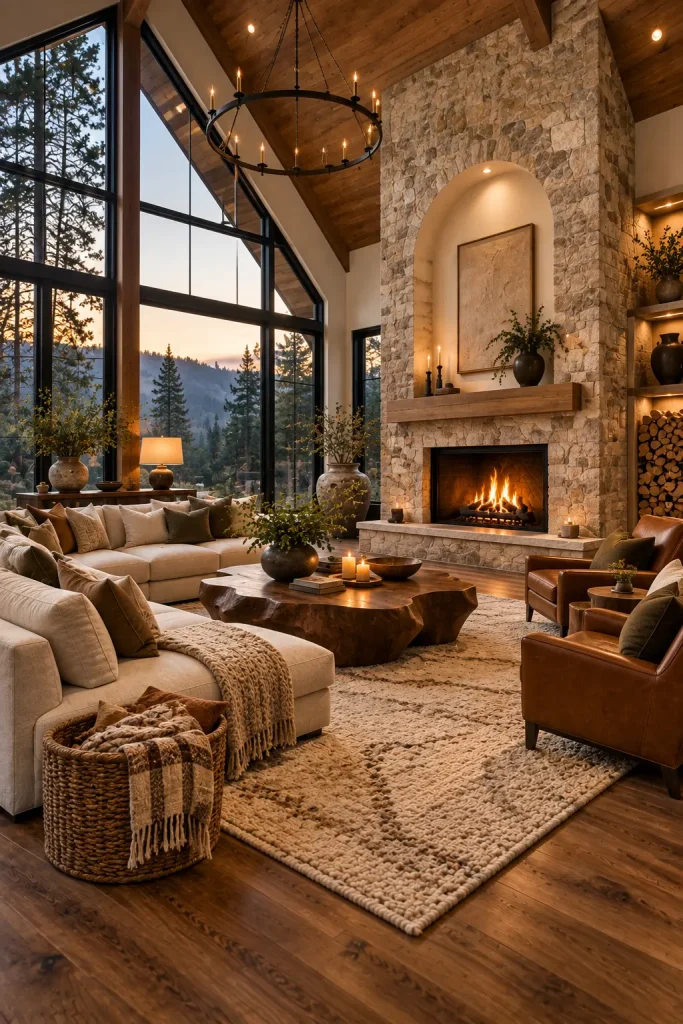
A fireplace can become much more than a heat source. Treat the entire wall as a composition by choosing a beautiful surround, mantel, artwork, lighting, and furniture arrangement. Stone, plaster, brick, and wood each create different atmospheres. Keep mantel styling restrained so the architecture remains visible. Comfortable seating should face the fireplace while maintaining clear circulation. A nearby basket of blankets or firewood can add useful texture. The best fireplace rooms feel warm even before the fire is lit.
12. Add an Oversized Throw for Instant Comfort
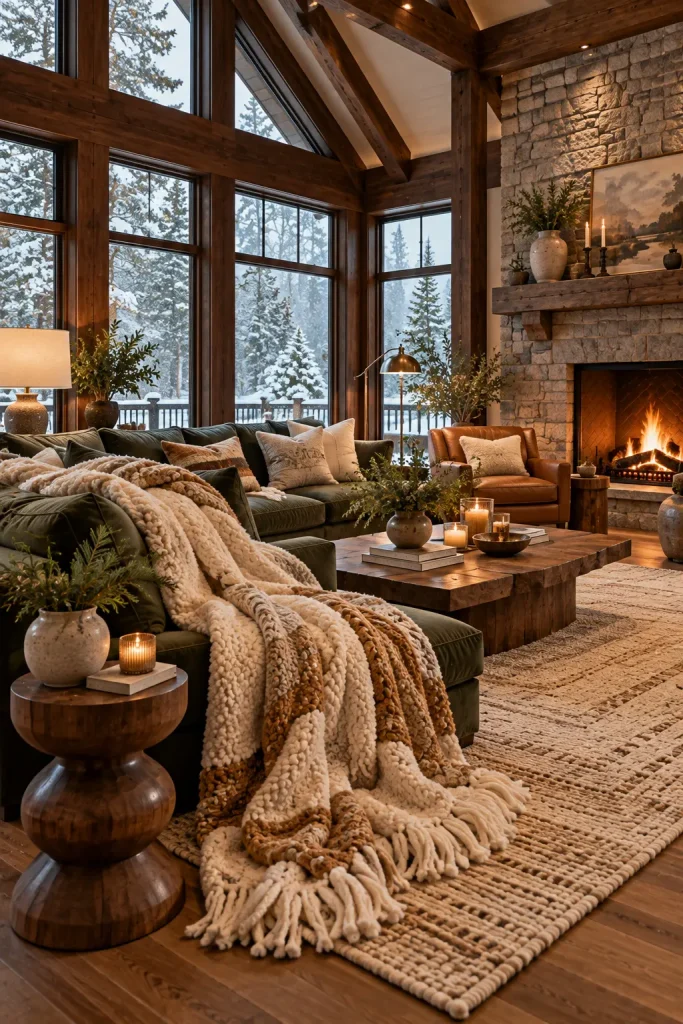
A large throw can make furniture look softer and more relaxed. Choose a substantial material such as wool, chunky knit, cotton, or brushed fabric. Allow it to fall naturally rather than folding it perfectly. A neutral throw blends quietly into the room, while camel, rust, olive, or brown can create a gentle contrast. The throw should be large enough to look substantial. Keep surrounding surfaces relatively organized so the casual textile reads as intentional styling. Seasonal throws also offer an easy way to change the atmosphere without replacing furniture.
13. Use Beautiful Woven Storage
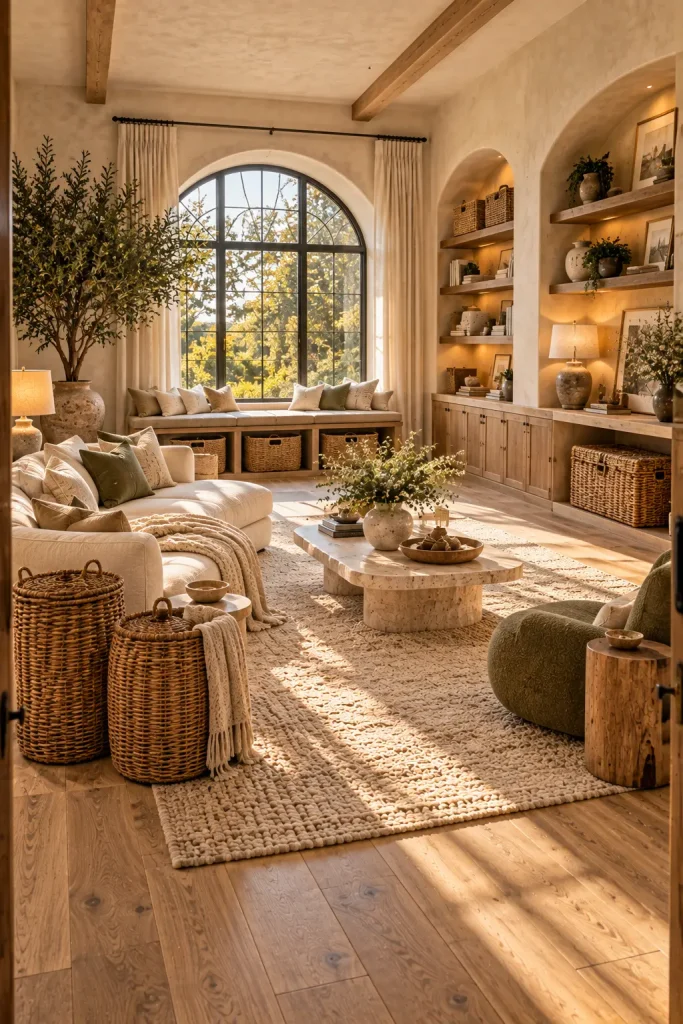
Storage does not need to look purely practical. Woven baskets can introduce natural texture while hiding blankets, toys, magazines, and everyday items. Large baskets can fill empty corners while smaller ones can organize shelves. Use similar natural fibers throughout the room to create cohesion. Place baskets where things naturally accumulate so they remain useful. A beautifully woven basket can also soften furniture with hard edges. Good storage contributes to coziness because an organized room feels calmer and easier to enjoy.
14. Create a Personal Gallery Wall
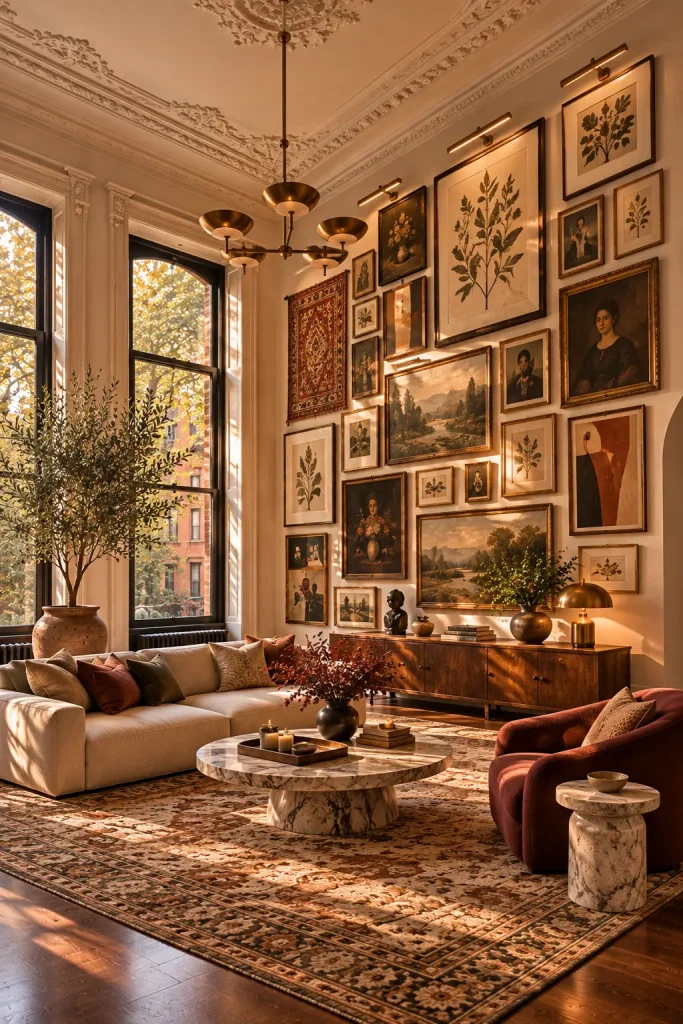
A gallery wall can make a home feel collected over time. Combine different artwork styles while maintaining a relationship through color or framing. Landscapes, botanical art, abstract pieces, vintage photographs, and textile art can work together. Vary the sizes and shapes to create rhythm. Plan the arrangement before putting holes in the wall. Leave some breathing room around the collection. A gallery wall should feel personal and relaxed rather than like a perfectly matched showroom display.
15. Make the Entryway Feel Like a Welcome
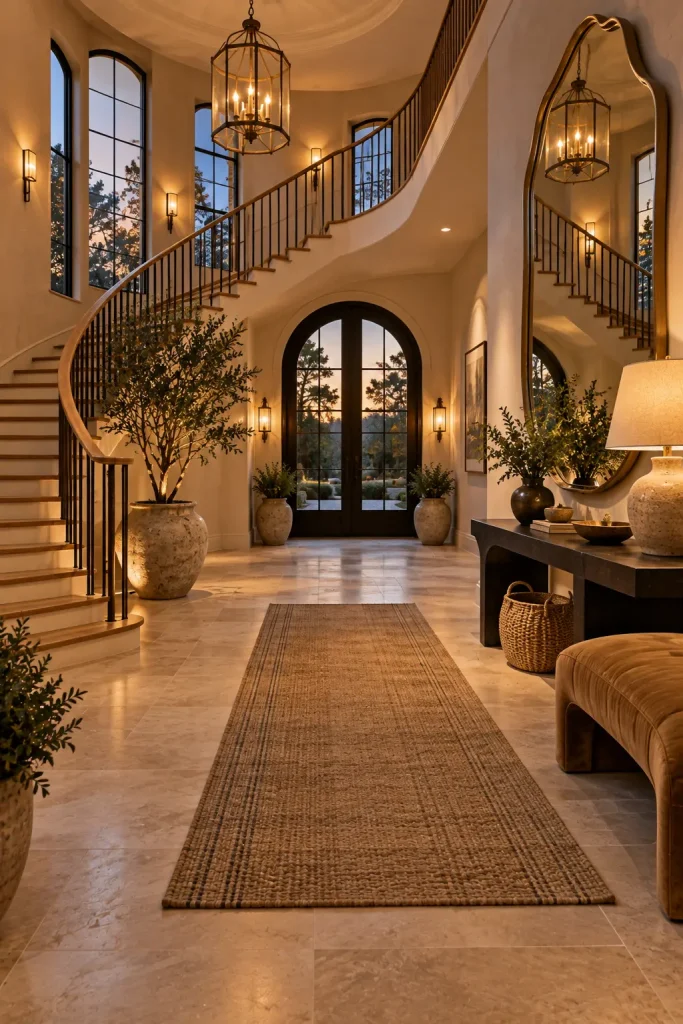
A beautiful entryway can establish the atmosphere of the entire home. Use a console or narrow cabinet for practical storage, then add a mirror or artwork above it. A bench can provide seating, while baskets keep everyday items organized. A runner creates softness and visual direction. Warm lighting makes the entry feel welcoming after dark. Add one plant or sculptural object rather than filling every surface. The space should remain open enough for comfortable movement.
16. Build a Soft Layered Bedroom
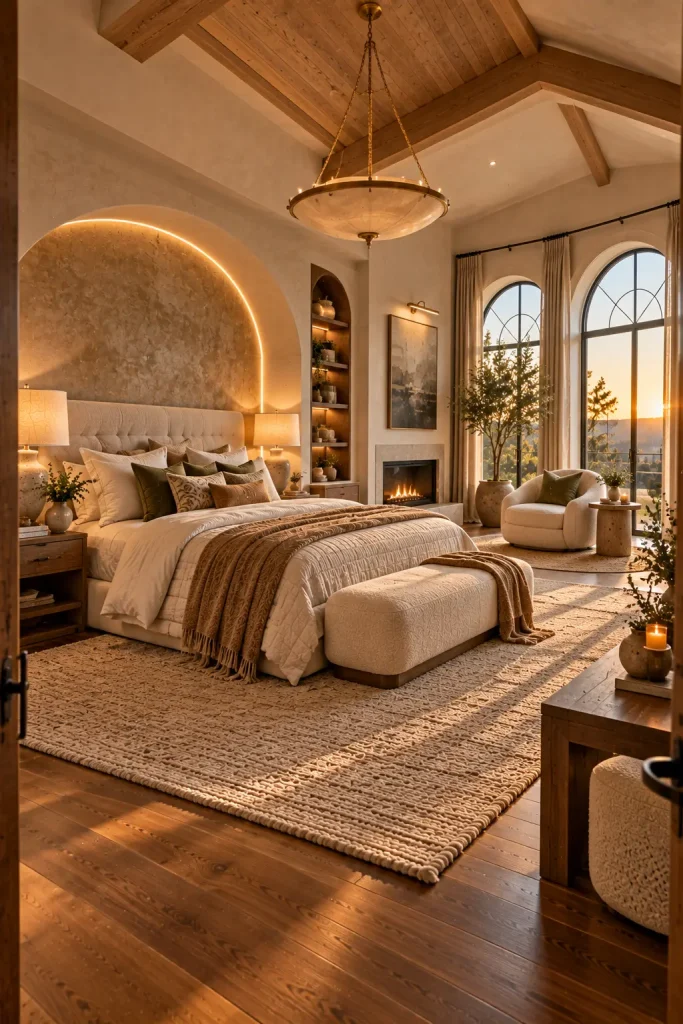
A cozy bedroom should feel restful rather than overly decorated. Layer sheets, duvet, quilt, blanket, and pillows using different fabrics. Linen and cotton provide breathable softness, while wool or quilted layers can add warmth. Keep the palette calm with cream, ivory, beige, taupe, and muted earthy shades. An upholstered headboard adds another soft surface. A bench at the foot of the bed provides useful seating. Keep nightstands edited so the bedroom remains peaceful rather than cluttered.
17. Create a Cozy Dining Nook
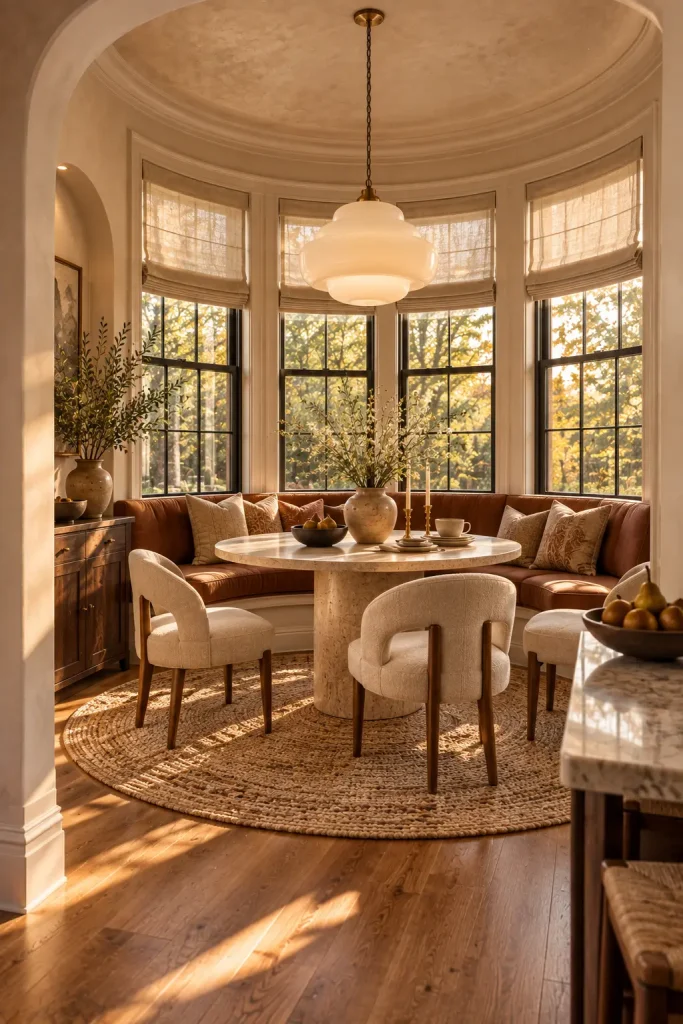
A dining nook can feel intimate and welcoming when furniture is properly scaled. A round or oval table encourages conversation and uses space efficiently. A built-in banquette can provide comfortable seating without requiring several separate chairs. Soft upholstery, linen curtains, and warm lighting can make the area feel connected to the rest of the home. Keep the centerpiece low so people can see across the table. Natural wood and handmade ceramics add character. The result should feel like a place where people want to linger over meals and conversation.
18. Warm Up the Kitchen With Natural Materials
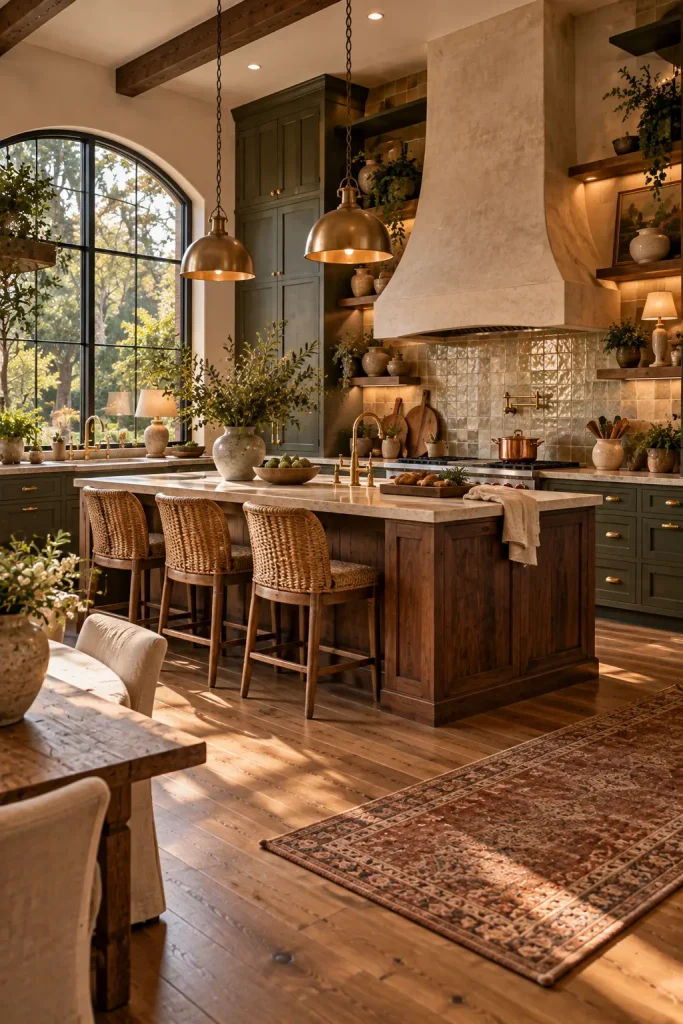
A kitchen can feel cozy even when it contains modern appliances and practical surfaces. Add warmth through natural oak, stone, woven stools, handmade ceramics, linen towels, herbs, and wood accessories. A runner can soften the floor. Open shelving can display beautiful everyday objects without becoming cluttered. Warm lighting under cabinets or on shelves can make the kitchen more inviting at night. Keep work surfaces functional by limiting decorative objects. The strongest kitchen designs balance beauty with everyday practicality.
19. Frame Windows With Soft Linen
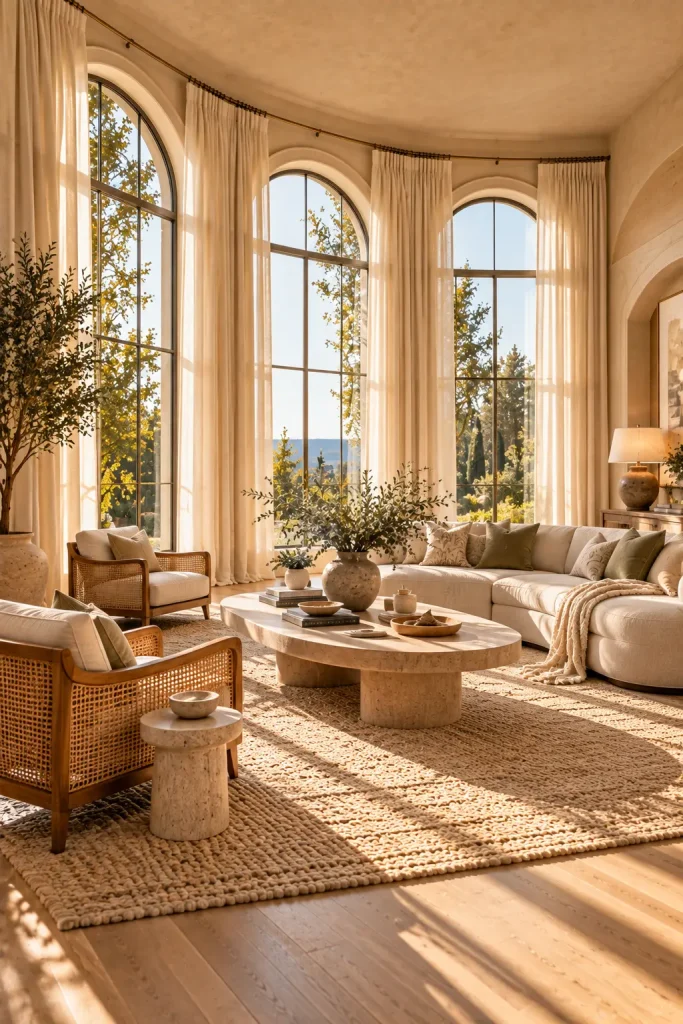
Full-length curtains can make windows feel taller, softer, and more architectural. Linen is particularly useful because its natural folds add texture even when the color is simple. Warm white, ivory, oatmeal, and soft beige work with many interior styles. Hang curtains close to the ceiling and allow them to extend beyond the window width when possible. This makes the window appear larger and creates a more generous composition. Linen can also diffuse sunlight without making the room dark. The fabric should complement the room’s other textiles.
20. Make the Coffee Table a Styling Moment
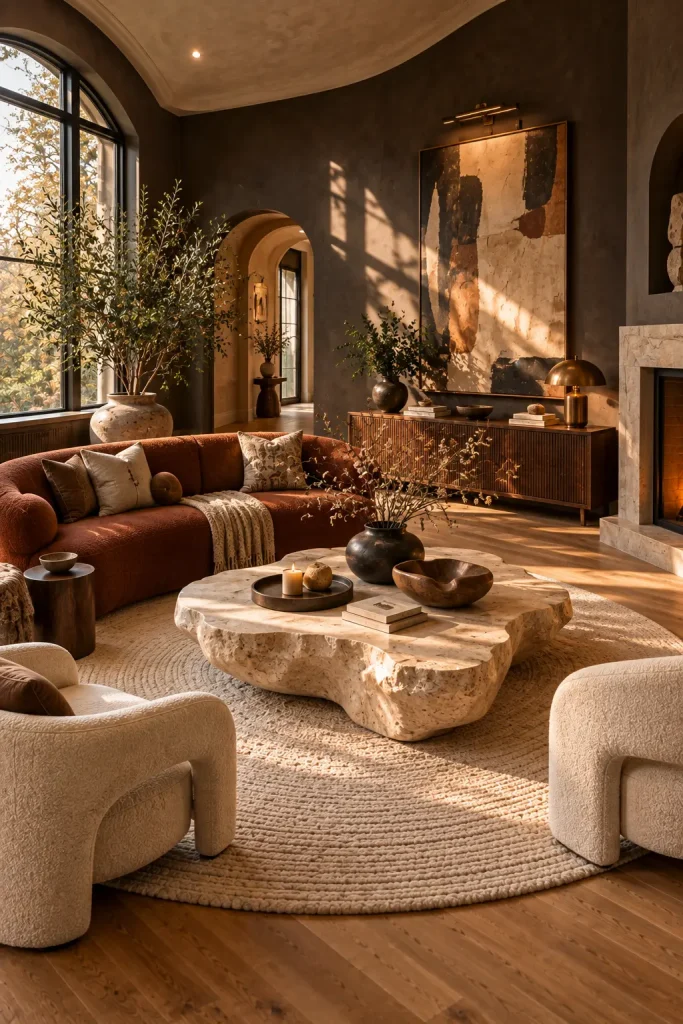
A coffee table can become a small focal point when styled with a restrained collection of objects. Use a tray or bowl to organize smaller pieces. Add books, ceramics, branches, wood, stone, or a candle. Keep the arrangement low enough for comfortable conversation. Mix organic and geometric forms to create contrast. Avoid covering the entire surface because negative space makes the composition feel more sophisticated. Everything should still be easy to move when the table is needed.
21. Add a Hand-Troweled Textured Wall
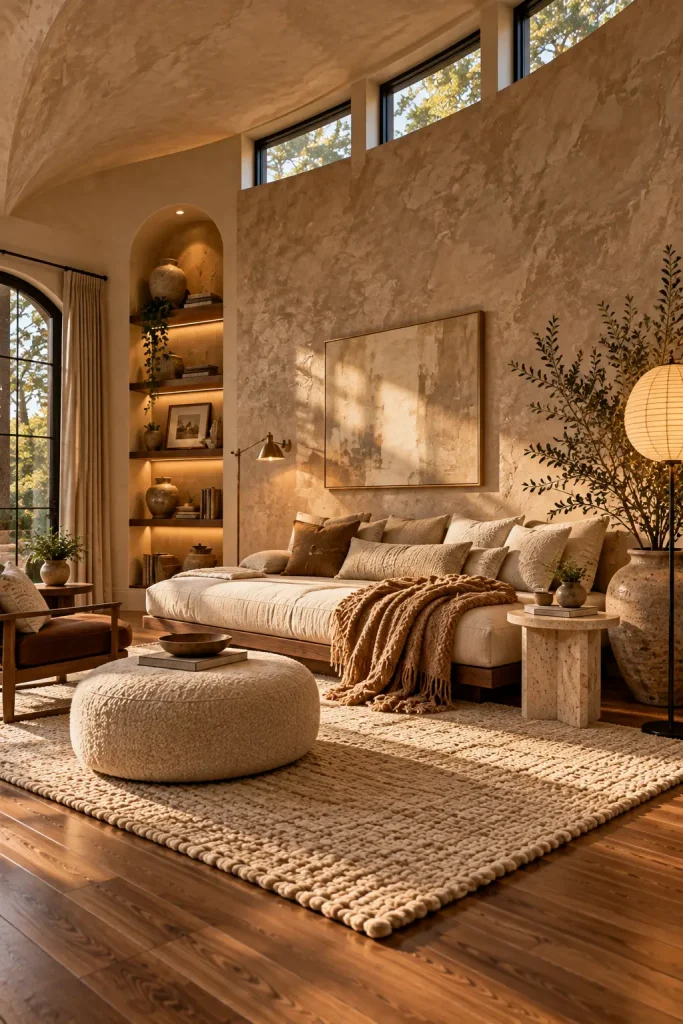
A softly textured wall can provide depth without requiring much decoration. Limewash and hand-troweled plaster are especially effective because their subtle variation changes with natural light. Warm mushroom, ivory, beige, taupe, and muted clay create calm backgrounds. Use texture behind a sofa, bed, dining table, or fireplace to establish a focal point. Keep the furniture simple enough for the wall to remain visible. Authentic imperfections are part of the appeal. The result should feel handcrafted and architectural rather than artificially distressed.
22. Mix Vintage and Contemporary Pieces
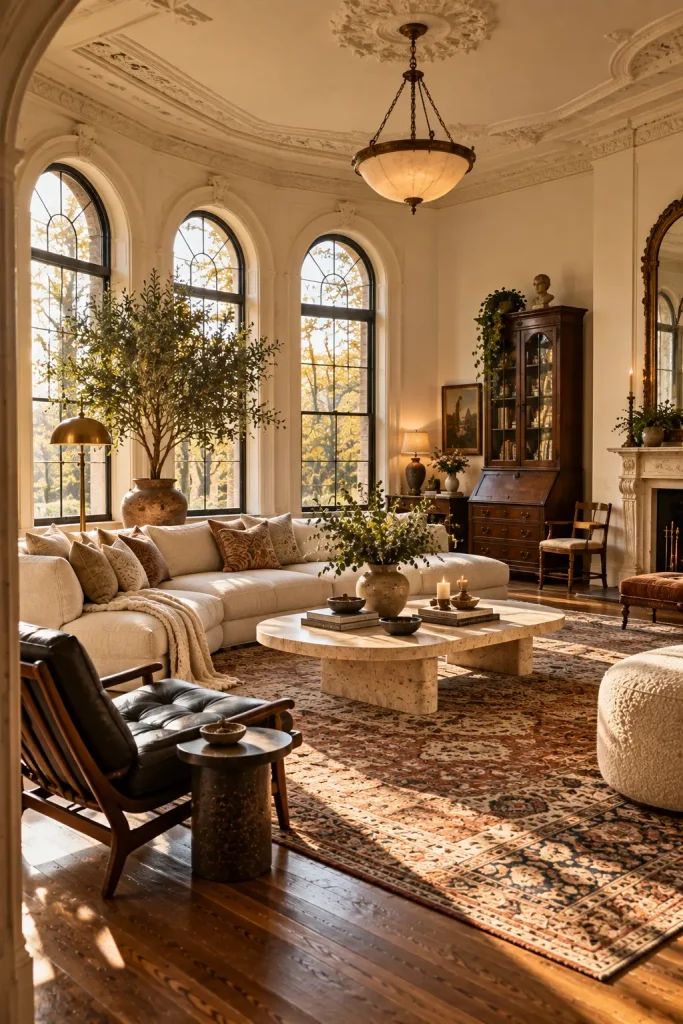
A combination of old and new furniture gives a room more depth and personality. Modern pieces provide clean silhouettes while vintage furniture adds patina and history. Look for relationships in color, material, and proportion. An antique cabinet can look beautiful beside a contemporary sofa, while a modern lamp can freshen up an older table. Avoid using too many faux-vintage accessories. A few strong pieces usually create a more convincing collected look. The room should feel as though it evolved over time.
23. Make a Small Apartment Feel Expansive and Cozy
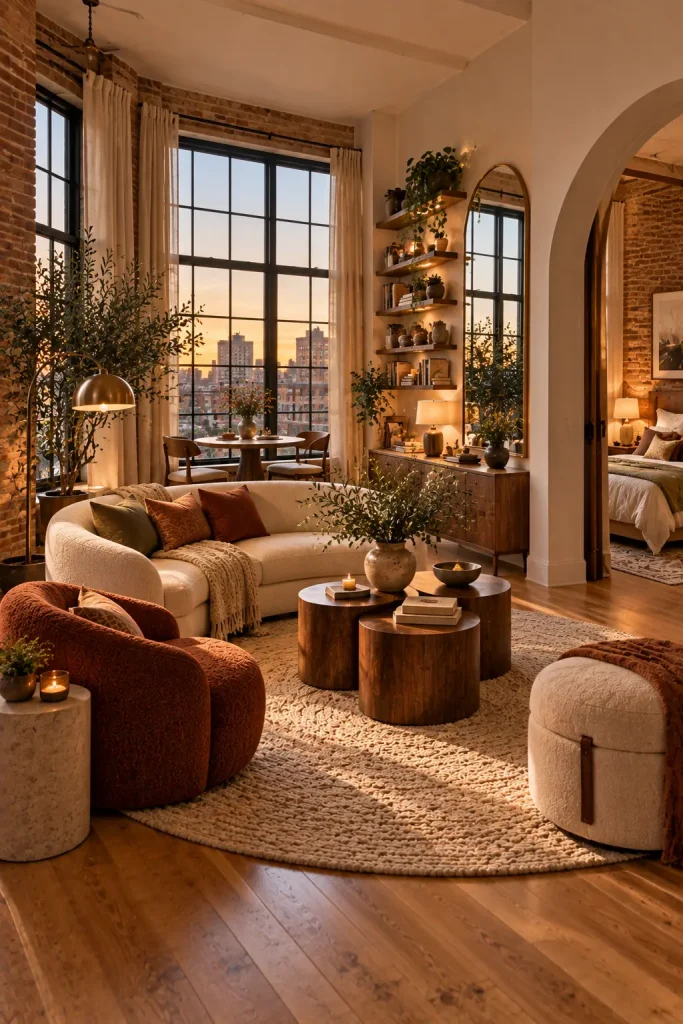
Small spaces need furniture that respects their proportions. Choose compact pieces with multiple functions and maintain clear walking paths. A storage ottoman can provide seating and hidden storage, while nesting tables can be separated when needed. Wall-mounted shelves reduce the need for bulky cabinets. A consistent palette can make the apartment feel visually larger. Texture keeps the neutral room from becoming bland. Mirrors and carefully positioned lighting can increase the feeling of depth.
24. Create a Beautiful Home Office Nook
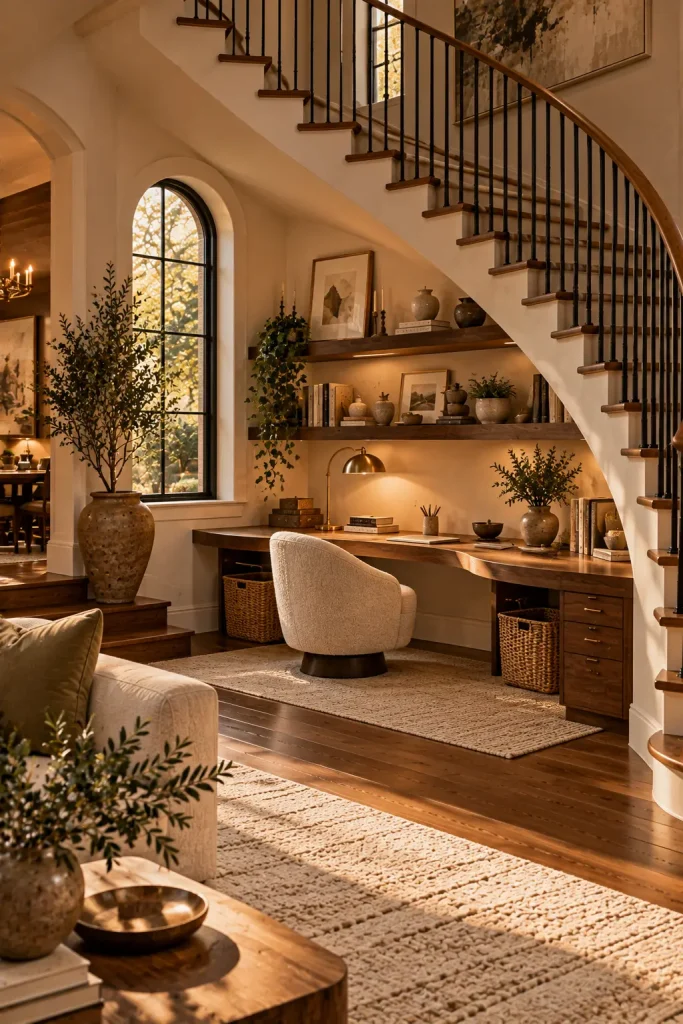
A home office nook can become an attractive part of the interior instead of something that looks temporary. Use warm wood, an upholstered chair, a beautiful task lamp, and a small amount of shelving. Place the desk where natural light can reach it without creating screen glare. Add one plant and a few personal objects for character. Keep papers and cables organized so the workspace remains visually clean. Built-in or floating storage can make a small nook much more practical. The design should feel productive but still connected to the rest of the home.
25. Layer Bedroom Lighting
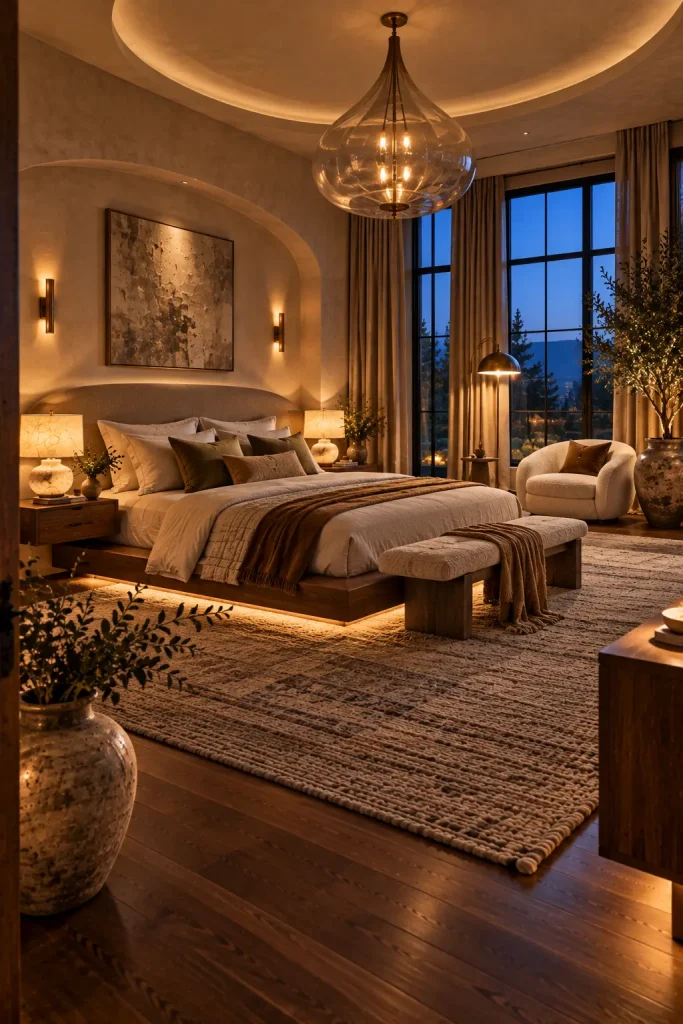
Bedroom lighting works best when several sources serve different purposes. Bedside lamps provide soft reading light, while ceiling fixtures illuminate the entire room. A floor lamp can brighten a corner and accent lighting can highlight artwork or architecture. Warm bulbs create a calmer atmosphere than cool white lighting. Dimmers are useful because the room can transition from bright morning to soft evening. Choose lighting fixtures that complement the materials and proportions of the bedroom. The final effect should feel layered rather than overly illuminated.
26. Turn the Porch Into an Outdoor Living Room
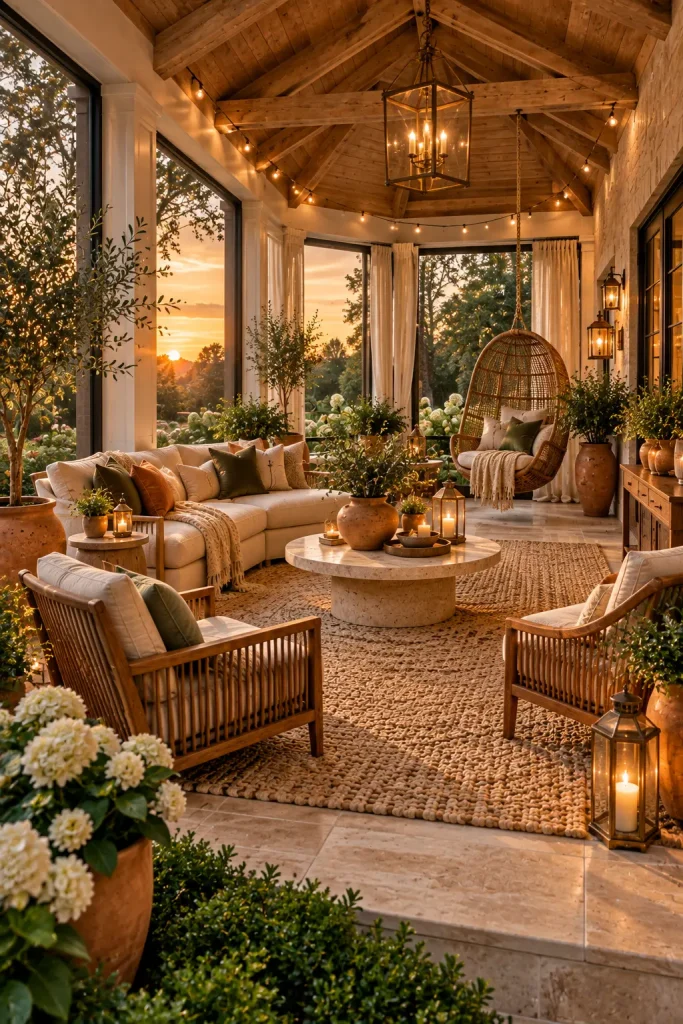
A porch can function as another room when it has comfortable furniture, layered lighting, rugs, and greenery. Choose weather-resistant materials and washable textiles. A rug can define the seating area and make the space feel more finished. Lanterns and warm string lights create atmosphere after sunset. Large planters can add greenery while keeping the central walkway open. A small outdoor table provides a useful surface for drinks and books. The best porch designs feel comfortable enough for everyday use.
27. Combine Cozy Elements Into One Signature Room
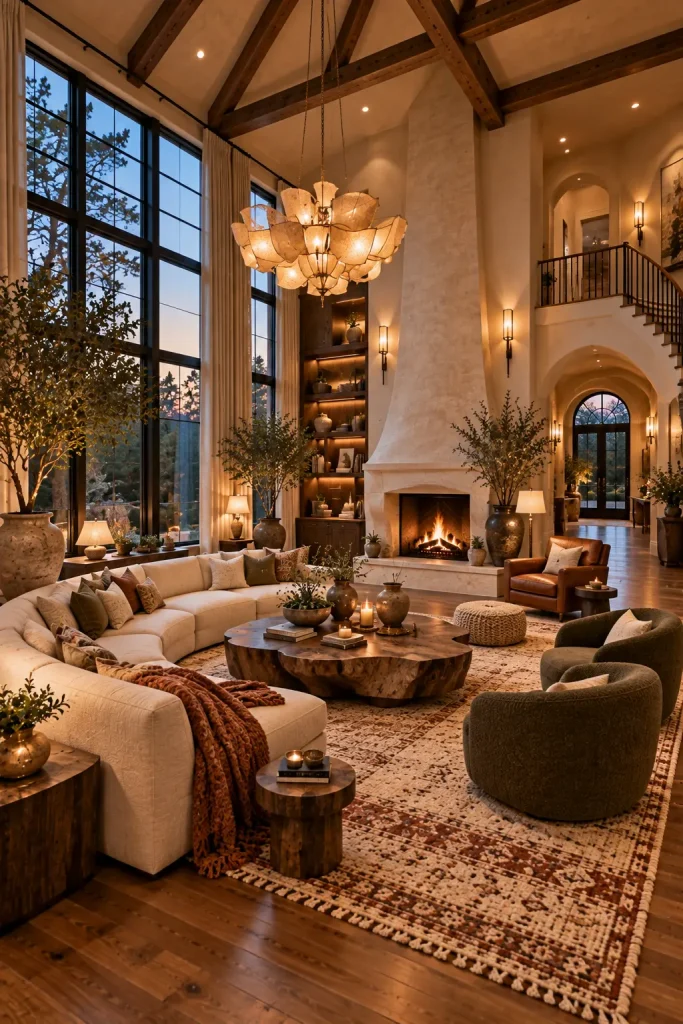
The final approach is to combine several cozy principles without making the room feel overloaded. Comfortable seating, natural wood, soft rugs, layered textiles, greenery, warm lighting, and personal objects can work together when each element has enough breathing room. Start with the room’s architecture and furniture scale, then add texture and lighting. Use natural materials to connect different areas visually. Storage should keep everyday clutter under control. Finally, remove anything that does not contribute to comfort, function, or personality. The result should feel collected, warm, sophisticated, and genuinely livable.