

30 Beautiful Winter Living Room Ideas for a Cozy Seasonal Refresh
Winter is the perfect time to make your living room feel warmer, softer, and more inviting. As temperatures drop, a few thoughtful changes can turn an everyday seating area into a comfortable retreat for slow mornings, quiet evenings, and relaxed weekends at home. You don’t need to replace your furniture or decorate every corner to create a seasonal refresh. Layered blankets, warm lighting, natural greenery, rich accent colors, and tactile materials can make a noticeable difference.
These winter living room ideas cover a range of decorating styles, from minimalist neutrals and rustic farmhouse details to classic plaid patterns and elegant, moody interiors. You’ll find inspiration for small apartments, family living rooms, and spacious homes, along with practical ways to recreate each look using furniture, textiles, lighting, and accessories you can mix into your existing decor.
The goal is to create a room that feels cozy throughout the season without making it look cluttered or overly holiday-themed.
1. Layer Cream Throws and Chunky Knit Blankets
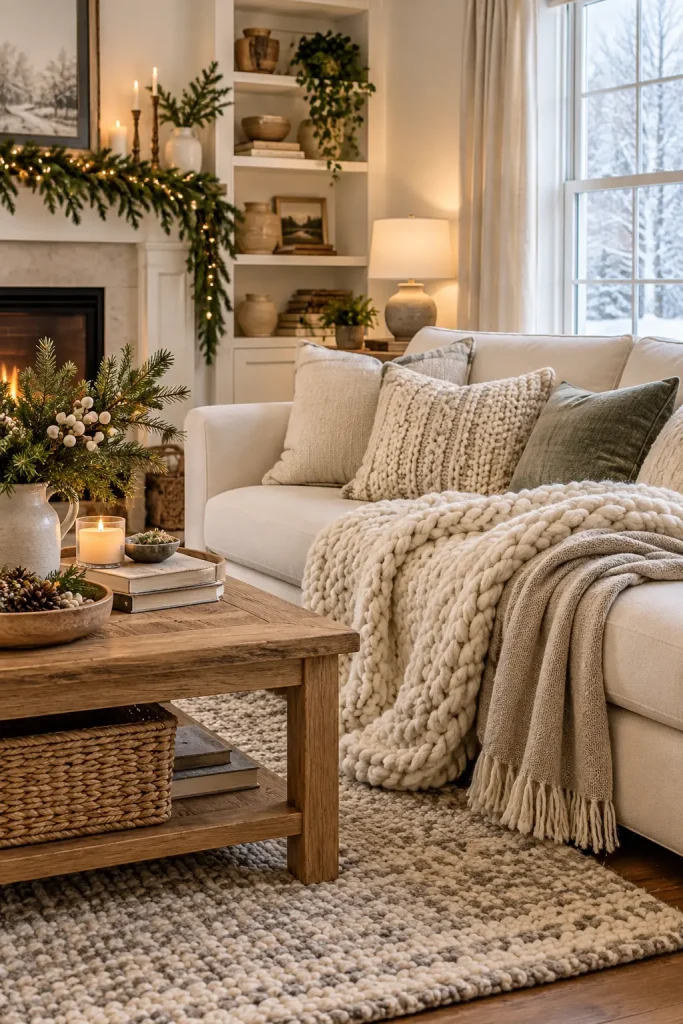
Few changes make a living room feel as inviting as adding soft, layered textiles. Start with an ivory or oatmeal sofa, then drape a chunky knit blanket over one arm and fold a lighter woven throw across the opposite side. Add two or three cushions in complementary shades of cream, warm beige, and soft taupe.
The key is to combine different textures rather than simply adding more fabric. A thick cable-knit blanket, a brushed cotton cushion, and a linen pillow create subtle contrast without introducing too many colors. This approach also works beautifully with an existing gray, brown, or neutral sofa.
Styling tip: Keep one blanket within easy reach of the main seating area. Cozy decor should look beautiful while remaining comfortable enough for everyday use.
2. Create a Warm Neutral Winter Palette
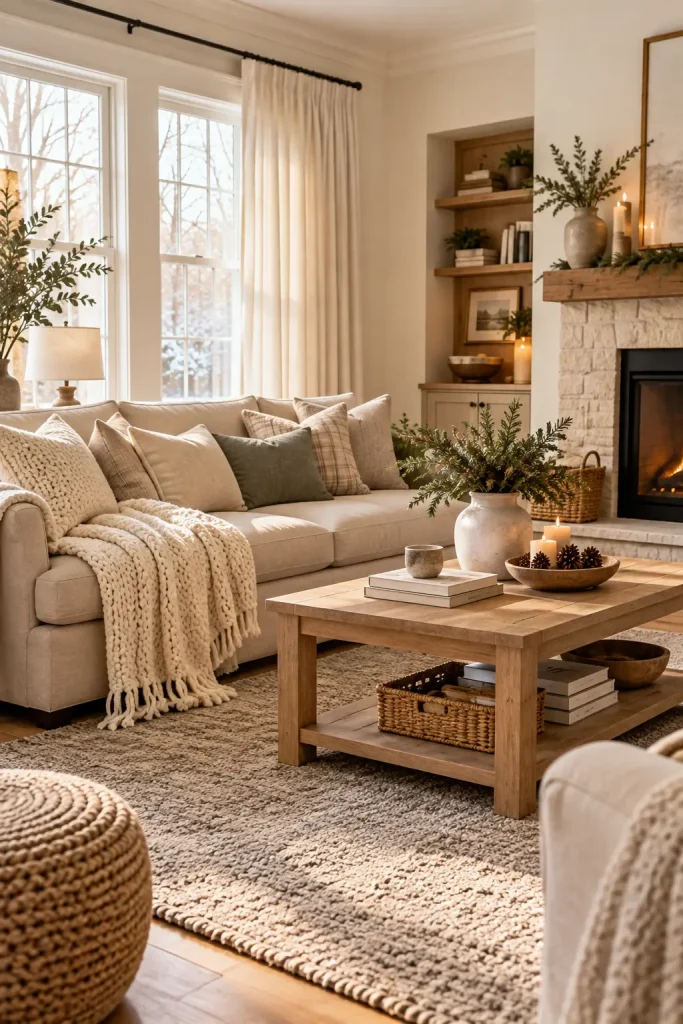
A warm neutral palette is ideal if you prefer seasonal decorating that doesn’t feel tied to a particular holiday. Combine creamy white, sand, camel, warm gray, and natural wood to create a calm foundation that works from early winter through the first days of spring.
Instead of changing everything, focus on the most visible elements. Swap bright summer cushions for softer tones, introduce a textured throw, and place a ceramic vase on the coffee table. Natural oak or walnut furniture adds depth, preventing the room from feeling flat.
For contrast, incorporate one darker detail, such as a charcoal cushion, a bronze lamp, or a dark wood picture frame.
3. Add Forest Green for a Rich Seasonal Accent
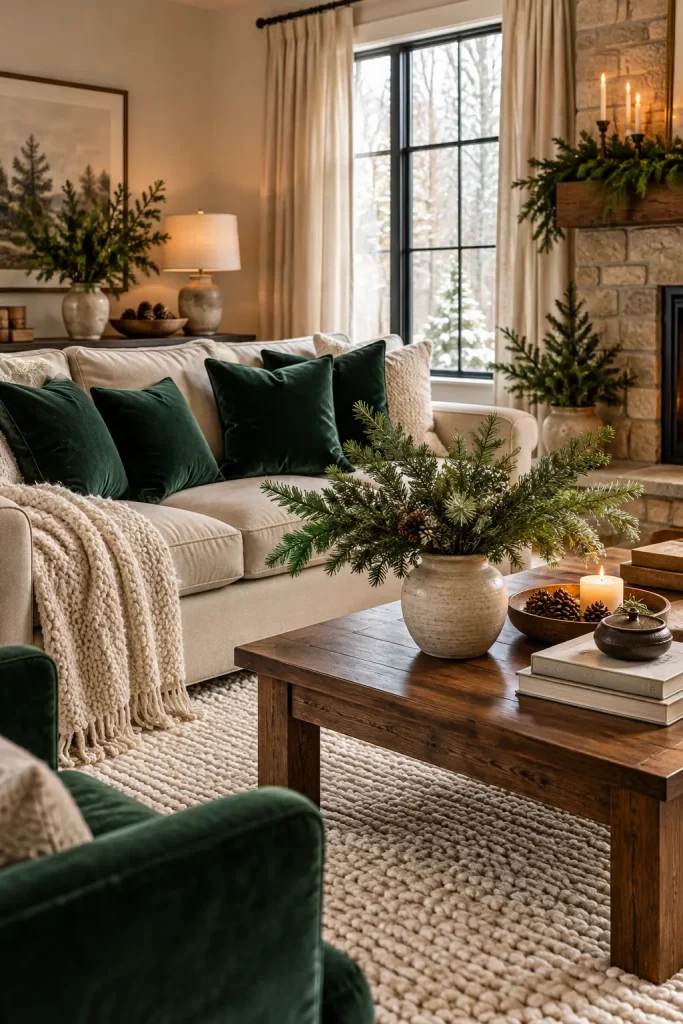
Forest green brings the color of winter evergreens indoors while working particularly well with cream upholstery, warm wood, brass accents, and natural woven materials. It offers a richer seasonal look than an entirely neutral room without requiring bright holiday decorations.
Introduce the shade through velvet cushions, a small upholstered accent chair, or a deep green ceramic vase. If your living room already has a neutral foundation, even two green cushions and a leafy arrangement can establish the look.
For a more traditional interior, pair forest green with walnut furniture and muted burgundy. For a lighter contemporary space, keep the surrounding colors ivory, pale oak, and warm beige.
Quick tip: Repeat the green in at least two places so it feels intentional rather than like an isolated accent.
4. Style a Coffee Table With Natural Winter Elements
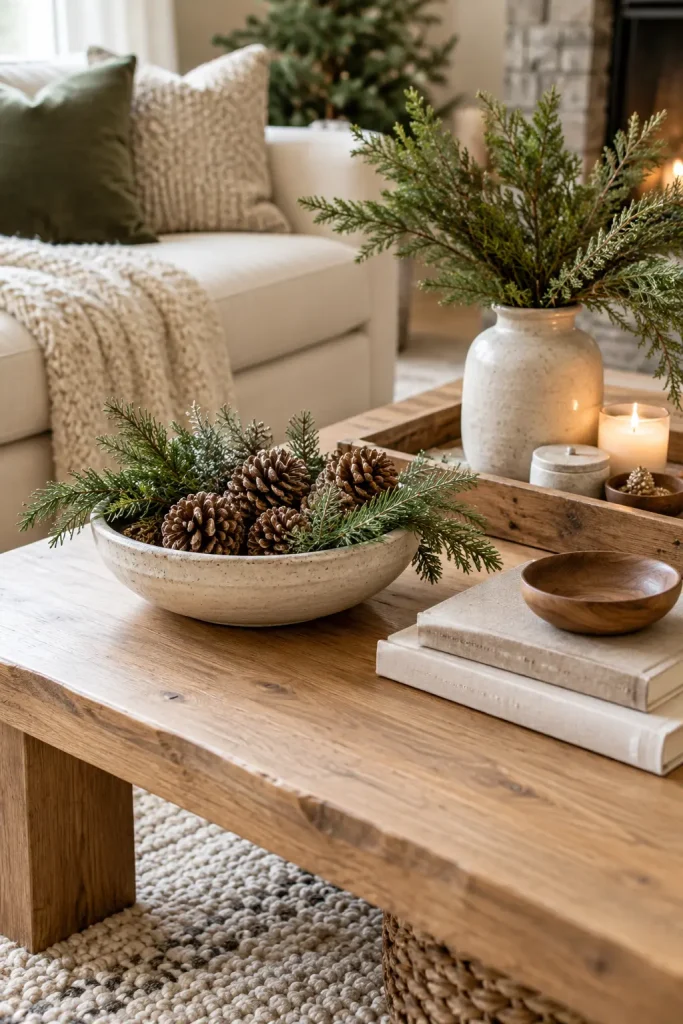
The coffee table is an easy place to introduce winter character without rearranging the entire room. A small grouping of natural elements can look thoughtful and seasonal while leaving plenty of space for drinks, books, and everyday activities.
Try combining:
- A low ceramic bowl filled with pinecones.
- A small vase of evergreen branches.
- Two or three design or photography books.
- A wooden tray to keep smaller accessories together.
Vary the height of the objects, but keep the overall arrangement low enough to preserve conversation across the seating area. On a small table, use just a bowl and a single greenery arrangement instead of filling the entire surface.
Natural materials work especially well because their subtle differences in shape and texture provide visual interest without requiring strong colors.
5. Bring in a Soft Wool Area Rug
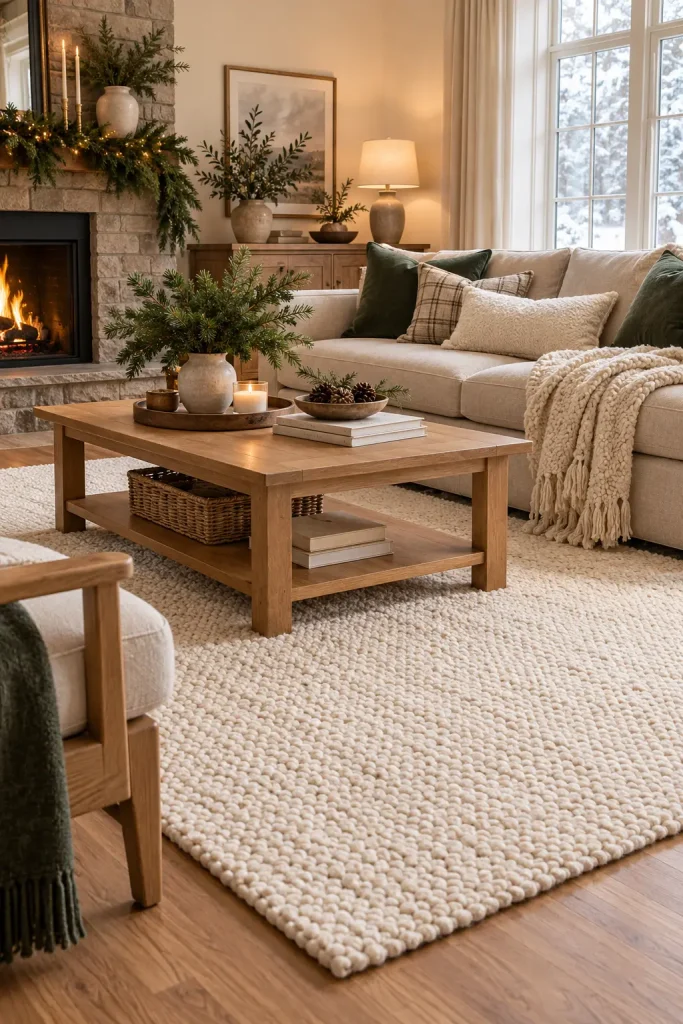
A substantial area rug can make a living room feel more grounded during winter. Wool, wool blends, and other soft rug materials introduce texture beneath the furniture while helping define the seating zone in an open-plan home.
Choose a warm ivory rug for a light, airy interior or a muted taupe and gray pattern if you want something more forgiving for daily use. In a family living room, consider a pattern that disguises ordinary marks rather than choosing a completely solid, pale surface.
The rug should relate to the size of the furniture. Ideally, the front legs of the main sofa and accent chairs can sit on it, creating a connected arrangement rather than a collection of furniture pieces floating around a small rug.
6. Use Warm Table Lamps for Evening Comfort
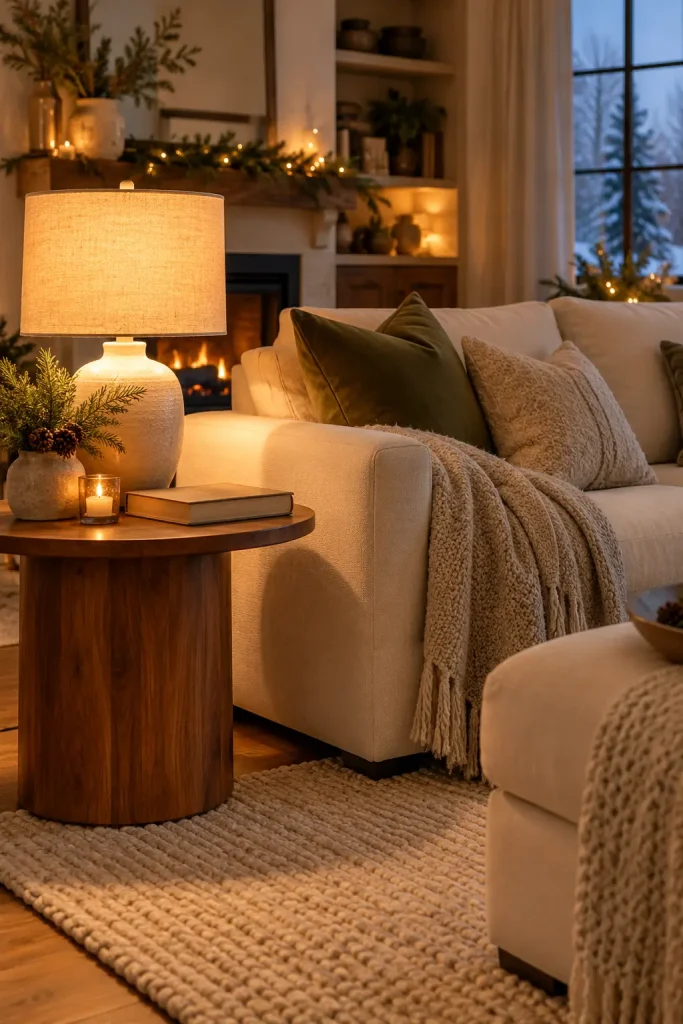
Lighting has a major influence on how a living room feels after sunset. Instead of relying entirely on a bright ceiling fixture, create several smaller pools of light around the room.
Place a table lamp on a side table near the sofa, add another near a reading chair if space allows, and use warm-toned bulbs suitable for the fixtures. Linen or parchment-style shades soften the appearance of the light, while ceramic, wood, and aged-metal bases contribute to the room’s overall style.
The most effective arrangement balances practical illumination with atmosphere. Keep enough light for reading and everyday tasks, and avoid placing all the lamps along one wall.
7. Decorate With Natural Evergreen Branches
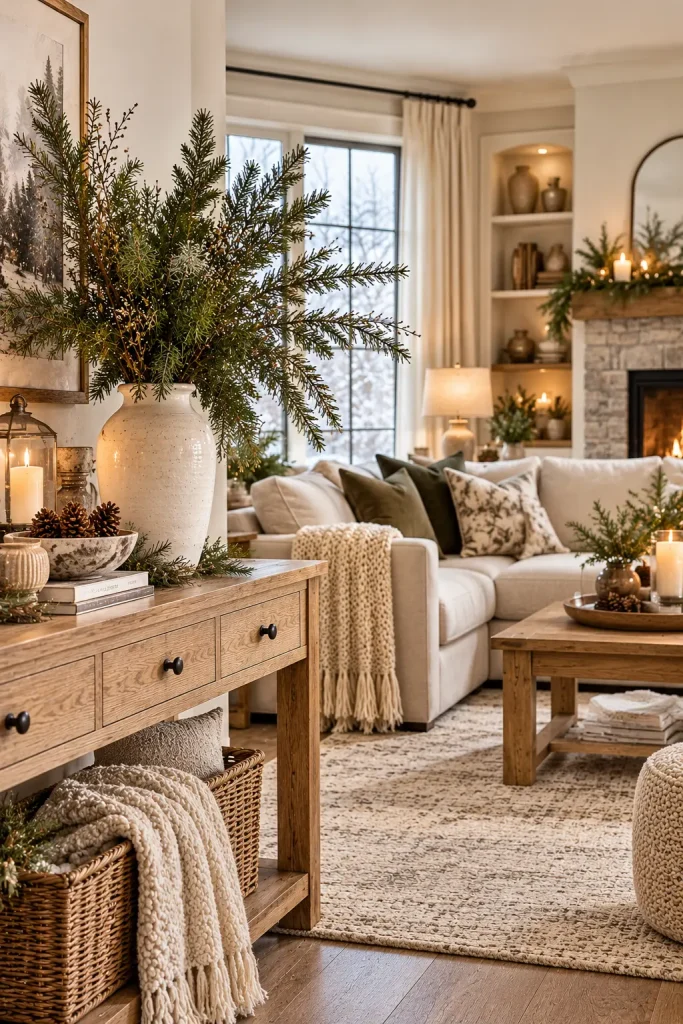
Fresh-looking evergreen branches add seasonal color without making the living room look like a holiday display. Arrange a few branches in a tall glass vase, a matte ceramic vessel, or a simple stoneware pitcher and place them on a console table or sideboard.
The silhouette matters more than the size of the arrangement. A few branching stems with varied heights often look more natural than a tightly packed bundle. Keep the vase proportionate to the furniture and allow the greenery to extend upward without blocking artwork or television screens.
If you prefer reusable decor, choose realistic artificial branches that can be stored and brought out each winter. For fresh cuttings, use a clean container and replace the water as needed.
8. Make the Fireplace a Cozy Focal Point
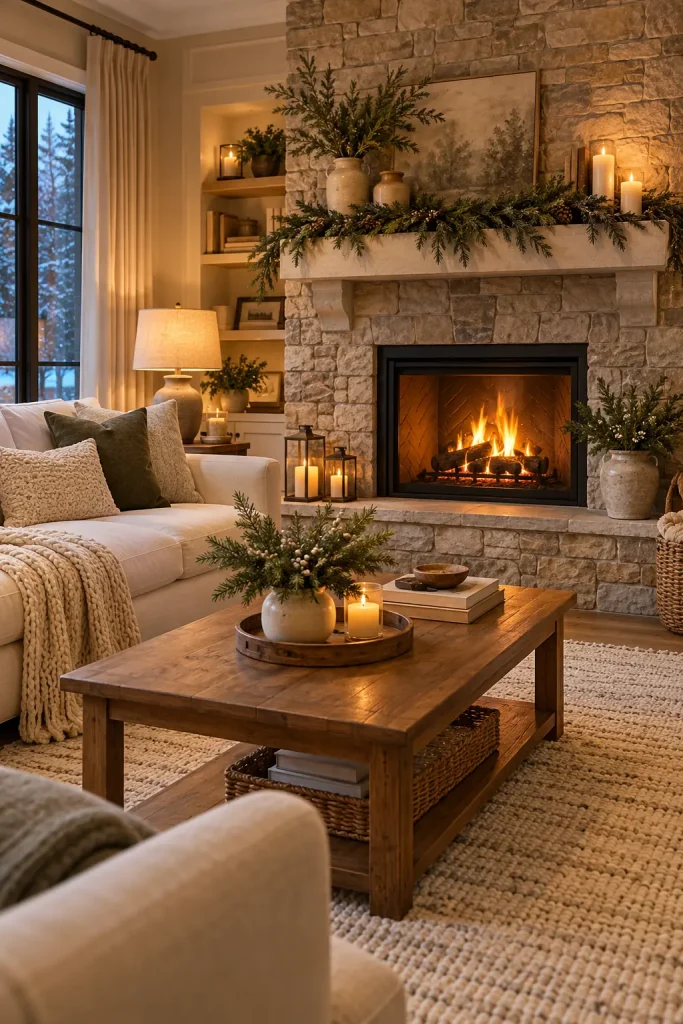
A fireplace naturally draws attention, making it a useful starting point for a winter living room refresh. Keep the mantel relatively simple and let the materials around it create the seasonal atmosphere.
For a traditional fireplace, combine a few framed prints, a ceramic vessel, and a restrained evergreen arrangement. A stone surround pairs well with warm wood, while a painted mantel can look especially inviting against cream walls and textured upholstery.
Arrange the seating so the fireplace feels connected to the room rather than isolated against one wall. In a larger living room, a pair of accent chairs can help balance the sofa and establish a comfortable conversation area.
If you have a working fireplace, follow its operating and clearance instructions when positioning blankets, greenery, and other combustible decorations.
9. Layer Plaid Cushions for a Classic Winter Look
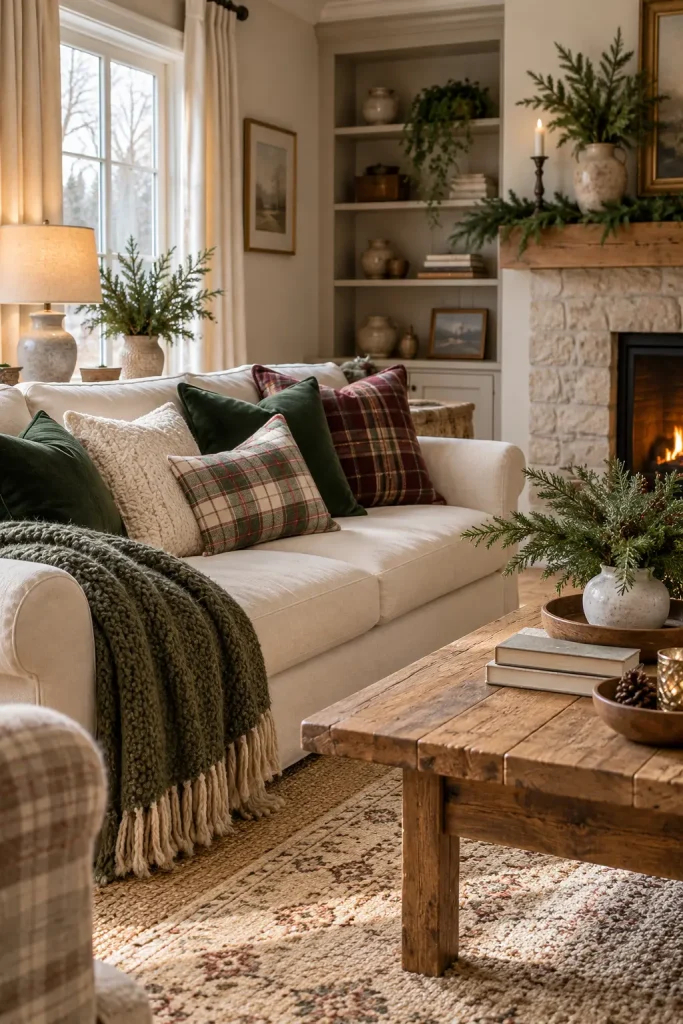
Plaid adds pattern and a familiar winter feeling, particularly when paired with solid-colored upholstery and natural textures. The look doesn’t need to be bright red and green. Muted charcoal, forest green, camel, burgundy, and cream plaids can feel understated and work well beyond the holidays.
Choose one plaid pattern as the main accent, then support it with plain cushions in related colors. If you introduce several different checks, vary their scale and keep their colors coordinated so the sofa doesn’t appear too busy.
A wool throw, dark wood side table, and simple ceramic accessories help reinforce the cozy character without competing with the fabric pattern.
10. Build a Reading Corner With an Accent Chair
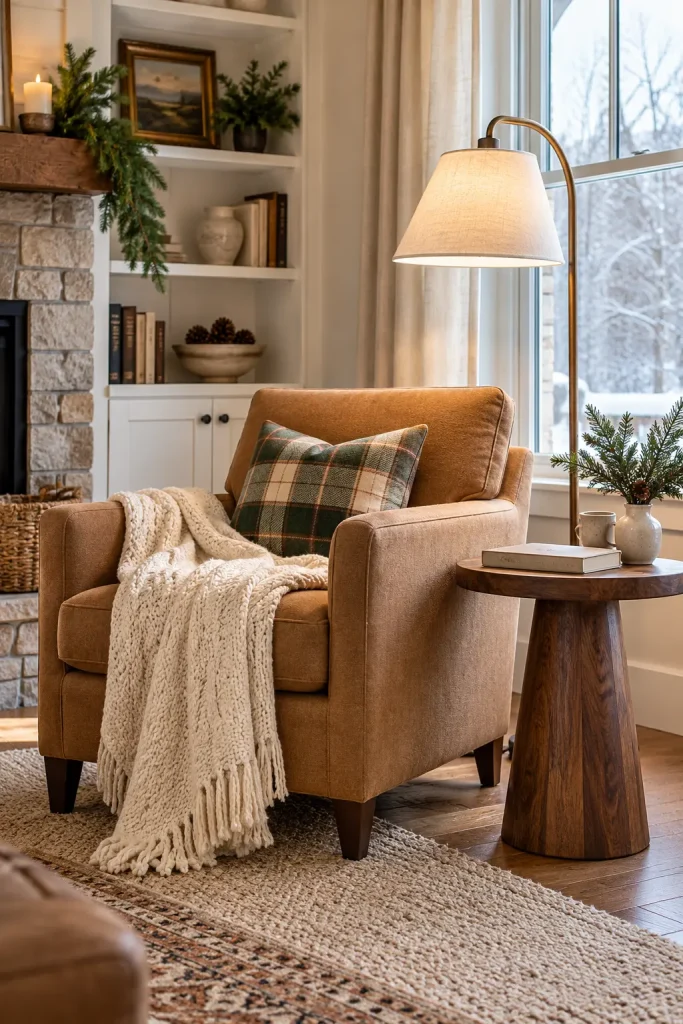
A dedicated reading corner gives your living room another purpose during the colder months. You don’t need a separate room or an oversized chair; a comfortable armchair, a small side table, and good task lighting can be enough.
Place the chair near a window when natural light is available, or position it beside a floor lamp for evening reading. Add a small basket for books and blankets, keeping the surrounding floor clear so the corner feels peaceful rather than crowded.
For a coordinated look, choose an accent chair in camel, olive, rust, or textured cream. It can complement the sofa without matching it exactly.
Best for: Living rooms with an unused corner, a window recess, or extra space beside the fireplace.
11. Introduce Rich Cognac and Camel Accents
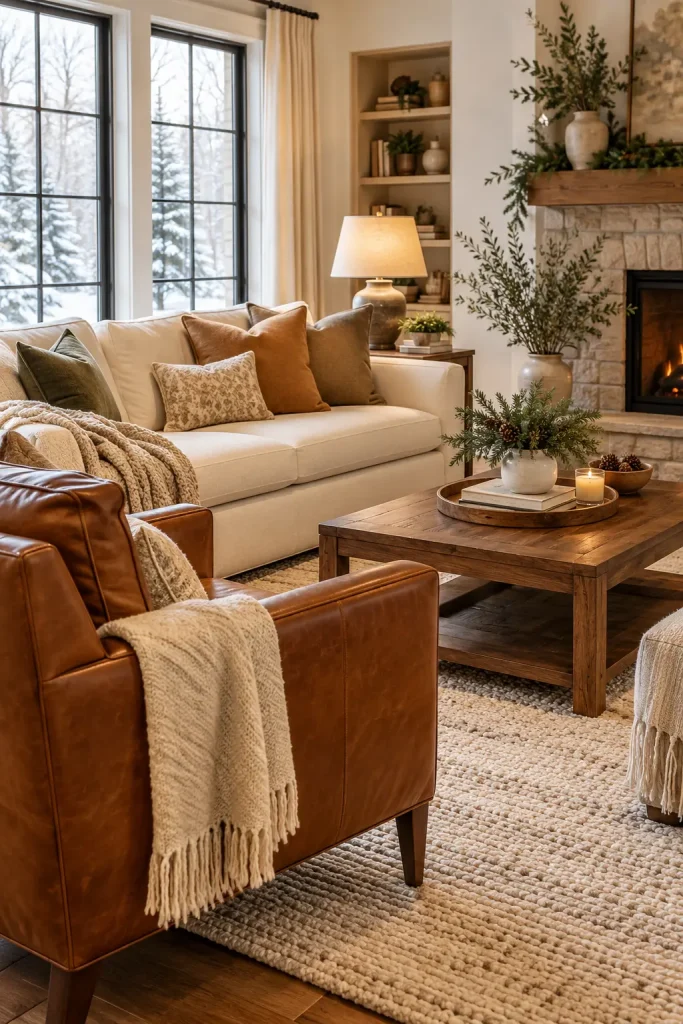
Cognac leather and camel-colored fabrics bring warmth to a room dominated by white, gray, or cream. These earthy shades look particularly good alongside walnut furniture, textured wool, and muted green accents.
You can introduce the palette without purchasing a new sofa. Try a cognac leather accent chair, a camel-colored cushion, or a warm brown throw folded over the arm of an existing seat. Repeat the shade in a smaller detail, such as a tray or picture frame, to connect the arrangement.
The result is especially appealing in rooms with pale walls, where the deeper brown tones add contrast without making the space feel dark.
12. Add a Dark, Moody Winter Accent Wall
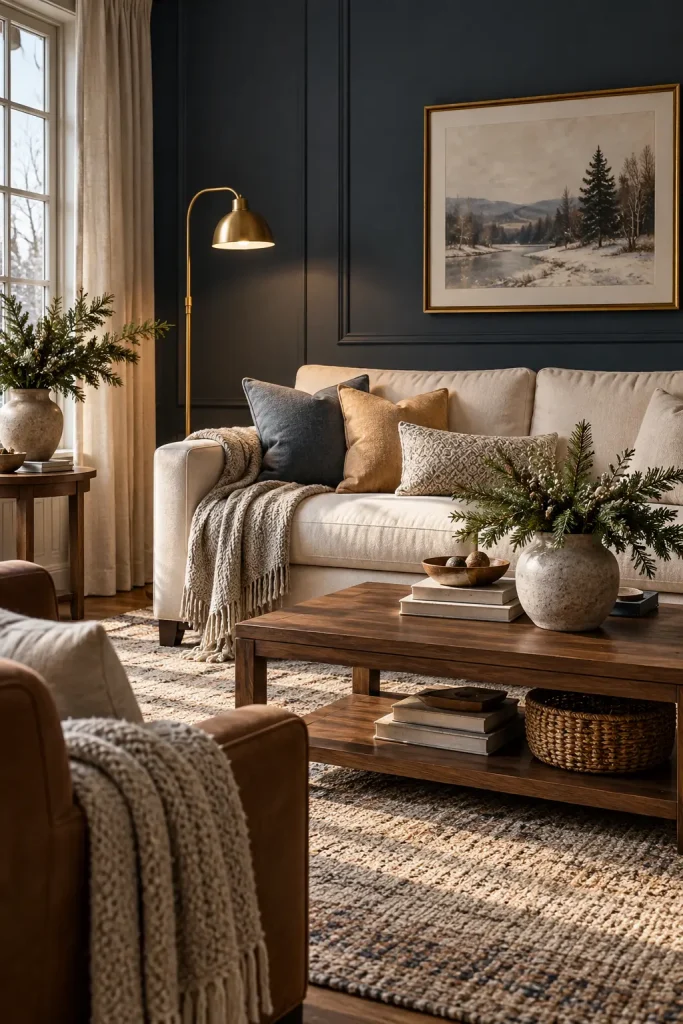
Winter decorating doesn’t always have to mean lighter colors. A deep charcoal, midnight blue, or muted olive accent wall can create an intimate backdrop for cream upholstery, warm wood, and softly glowing lamps.
If repainting is an option, test samples in the room at different times of day before committing. Dark colors can appear quite different under morning sunlight and evening artificial lighting. For renters, a similar effect can come from dark framed artwork, a deep-colored curtain, or a large textile wall hanging.
Balance the darker surface with lighter upholstery and enough layered lighting to keep the seating area comfortable. A dark wall works best when it looks intentional rather than like a small patch of color surrounded by unrelated accents.
13. Style the Mantel With Winter Greenery and Candles
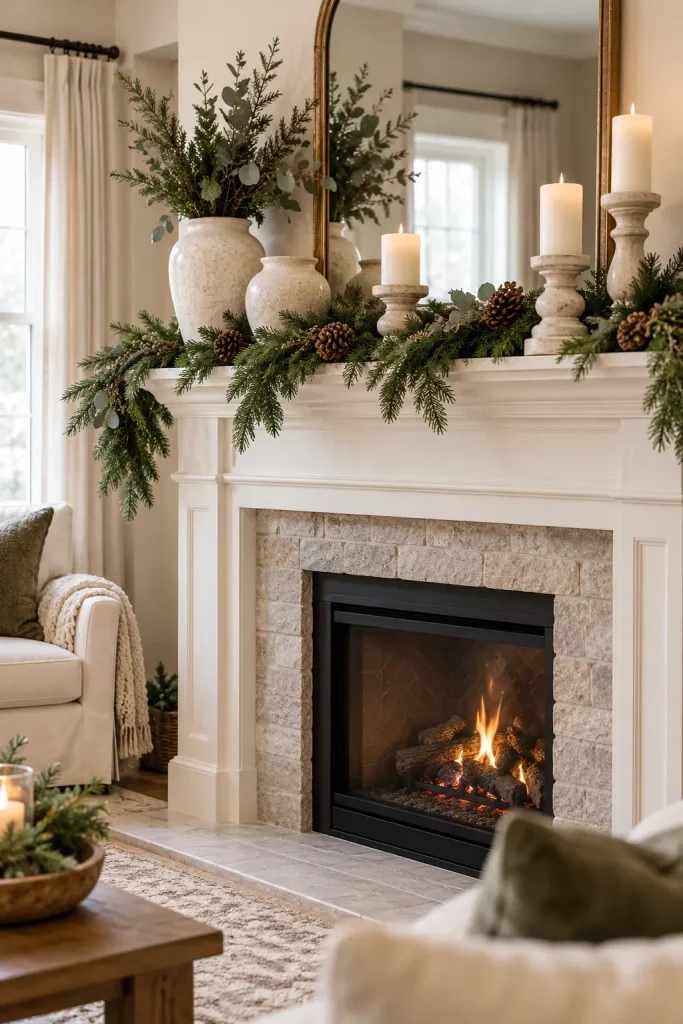
A mantel offers a natural place to display seasonal details, especially if you prefer decorating the fireplace instead of adding accessories throughout the entire room.
Drape a modest evergreen garland along one side of the mantel, then balance it with a few ivory candleholders and a small ceramic vase. An asymmetrical arrangement can feel relaxed and natural, while a more symmetrical display suits formal interiors.
If your mantel is narrow, avoid crowding it with large objects. A small grouping with varied heights will usually have more impact than a long line of unrelated decorations.
Use flameless candles where appropriate, and keep all decorative materials at safe distances from an active fireplace.
14. Bring in Natural Wood and Rustic Textures
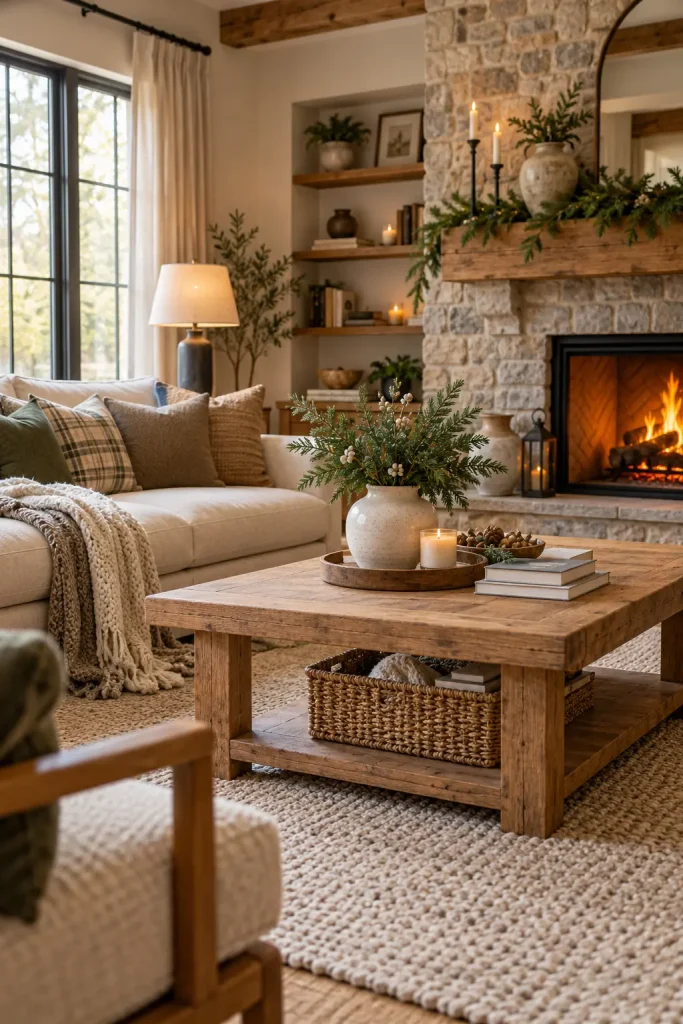
Natural wood gives a winter living room an earthy quality that feels especially comfortable alongside soft upholstery. The finish doesn’t need to be rough or distressed. Smooth oak, walnut, and gently weathered wood can all add warmth, depending on the style of your home.
Start with one noticeable wooden element, such as a substantial coffee table, a side table, or a decorative stool. Support it with woven baskets, linen cushions, and a wool rug. In a more rustic home, exposed beams or a stone fireplace may already provide enough texture, so smaller accessories can remain simple.
Try to coordinate the undertones of your wood finishes. Different woods can work together, but repeating a related warm or cool undertone helps the room feel cohesive.
15. Create a Soft Winter Look With Sheer Curtains
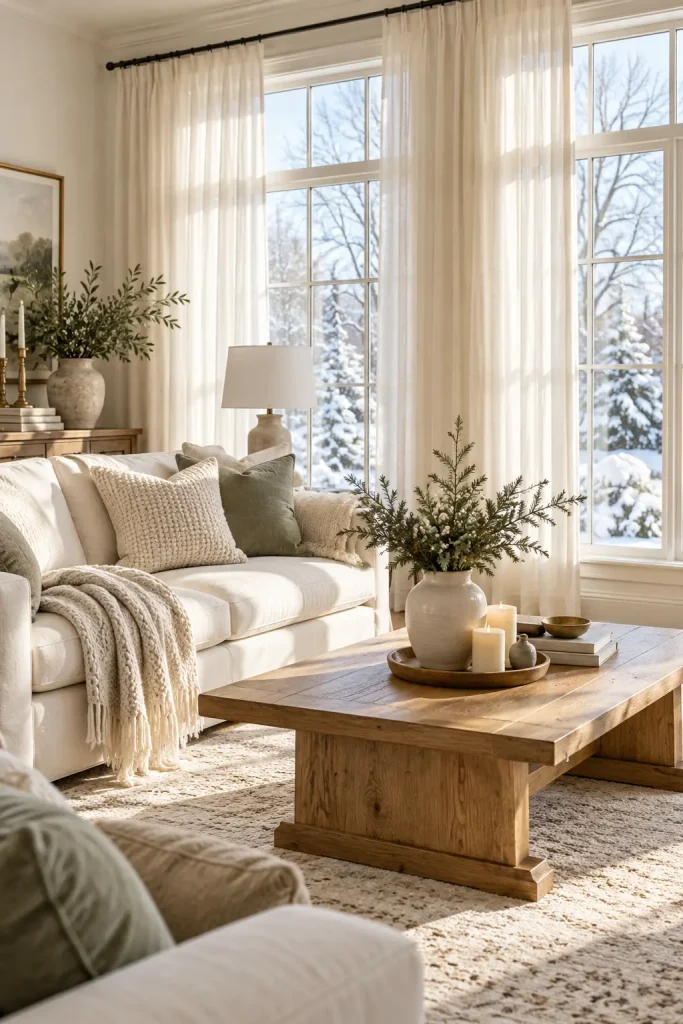
Sheer curtains can soften a living room while allowing natural light to filter through the windows. This is useful in winter, when daylight may be limited and heavier window treatments can make a room feel darker.
Choose warm white or ivory panels for a gentle, layered effect. Hang them high enough to create a sense of height, and allow the fabric to fall naturally toward the floor. If you need more privacy or insulation, pair sheers with a separate lined curtain or suitable window treatment rather than expecting thin fabric to do everything.
This approach works especially well in small living rooms, where pale fabrics and a light visual frame can keep the window wall from feeling heavy.
16. Use Oversized Cushions for a Relaxed Sofa
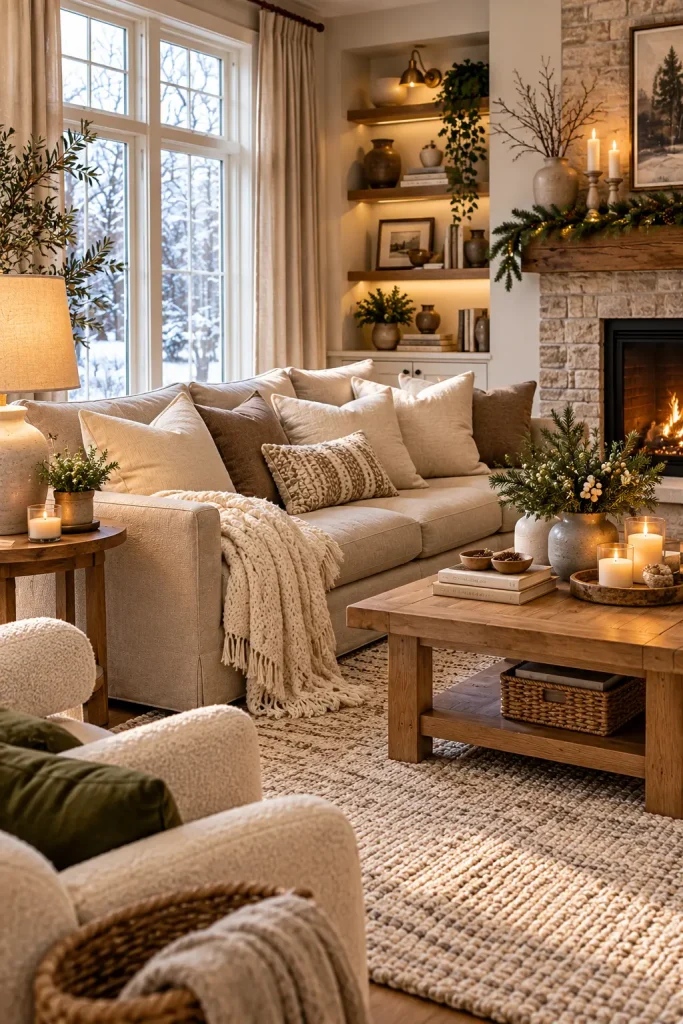
Oversized cushions create a relaxed, lounge-friendly appearance, especially on a deep sofa. Instead of filling every available space with small decorative pillows, choose a few larger cushions that support the back and corners of the seating area.
A combination of square cushions and one rectangular lumbar pillow can add variety without making the sofa difficult to use. Mix a boucle-style texture, a smooth cotton cover, and a woven fabric in a restrained palette.
Check the actual size of your sofa before buying oversized pillows. On a compact apartment sofa, very large cushions may take up too much usable seating space, so medium-sized versions can achieve the same layered effect more practically.
17. Add Burgundy for a Traditional Winter Mood
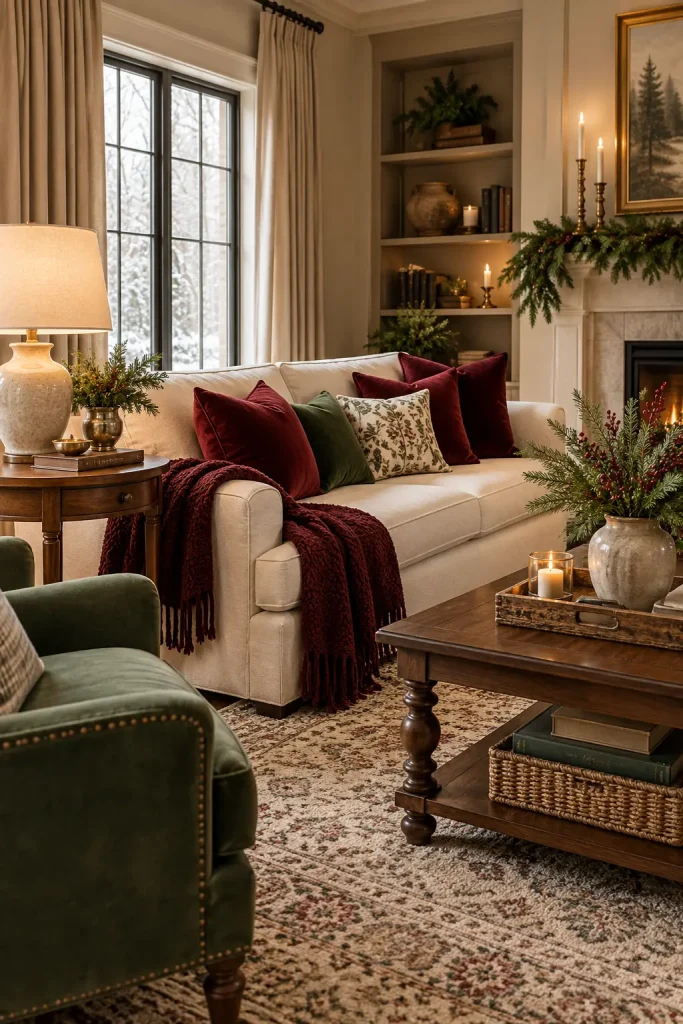
Burgundy and muted wine tones bring depth to winter interiors without the brightness of classic holiday red. They pair well with cream, taupe, walnut, charcoal, and forest green, making them suitable for both traditional and contemporary rooms.
Try burgundy velvet cushions against a pale sofa, or introduce the shade through a patterned throw, a small piece of artwork, or a ceramic accessory. Keep the rest of the room relatively restrained so the rich color remains the focal point.
For a modern interpretation, choose a single burgundy accent against warm white walls and pale wood. For a more traditional room, combine it with dark furniture, patterned textiles, and soft amber lighting.
18. Make a Small Living Room Feel Cozy, Not Crowded
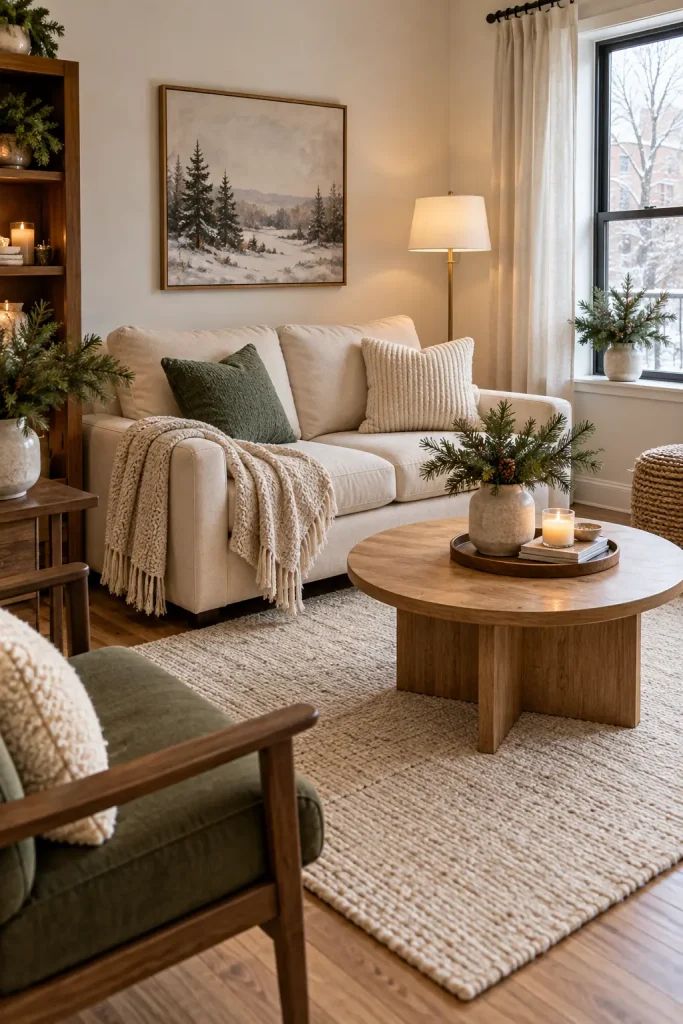
A smaller living room benefits from selective layering rather than lots of additional furniture. Choose a compact sofa, a round or oval coffee table, and one or two soft textiles that provide warmth without occupying too much space.
A round table can make circulation easier around tight corners, while a slim floor lamp provides lighting without requiring a bulky side table. Use a basket for blankets and keep the number of visible accessories limited to a few meaningful pieces.
In a rental, seasonal changes can be as simple as swapping cushion covers, adding a rug, and introducing a small vase of greenery. The furniture layout matters just as much as the decor: maintain a comfortable walking path between the entrance, sofa, and other frequently used areas.
19. Create a Layered Lighting Plan
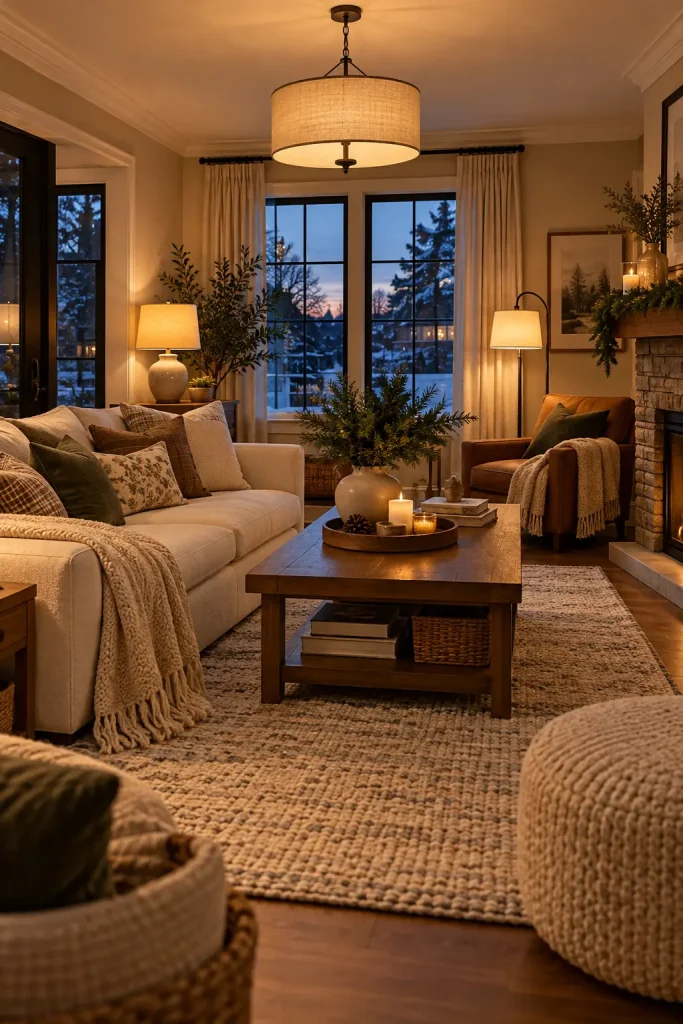
Instead of treating lighting as a single overhead fixture, think of it as several layers serving different purposes. Ambient lighting illuminates the room generally, task lighting helps with reading or other activities, and accent lighting draws attention to artwork, architectural details, or decorative objects.
A practical combination might include a ceiling fixture, a table lamp beside the sofa, and a floor lamp near an accent chair. You don’t necessarily need all three in a small space; use the combination that suits your room’s size and electrical setup.
For a comfortable winter atmosphere, choose coordinated warm-toned lighting and avoid creating isolated bright spots with dark areas between them. Dimmable fixtures can be useful when compatible with the bulbs and controls.
20. Decorate With Winter Botanical Artwork
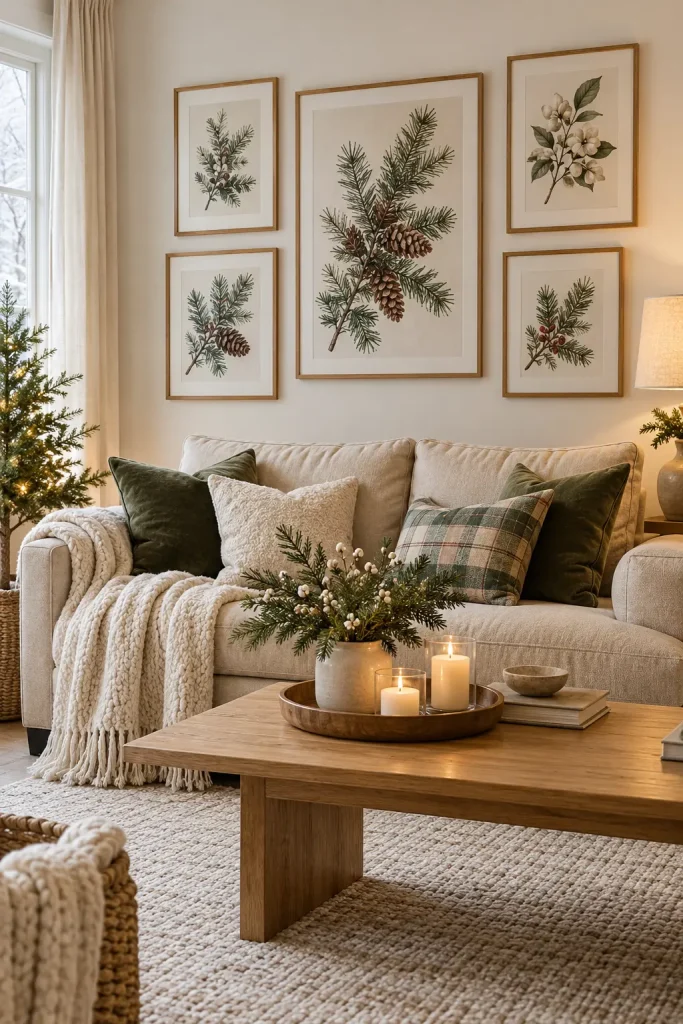
Artwork is a useful way to bring winter themes into a room without adding seasonal objects to every surface. Botanical prints featuring evergreen branches, bare trees, seed heads, or muted landscape scenes can establish a quiet connection to the outdoors.
Arrange two or three related prints above the sofa, or lean a larger framed piece against the wall on a console. Natural wood frames suit rustic and Scandinavian-inspired interiors, while slim black frames create a sharper contemporary look.
Choose artwork in colors that relate to the rest of the room. If your sofa and rug are neutral, a muted green botanical print can introduce a little color without requiring more cushions or accessories.
21. Bring in Bouclé for a Soft, Tactile Finish
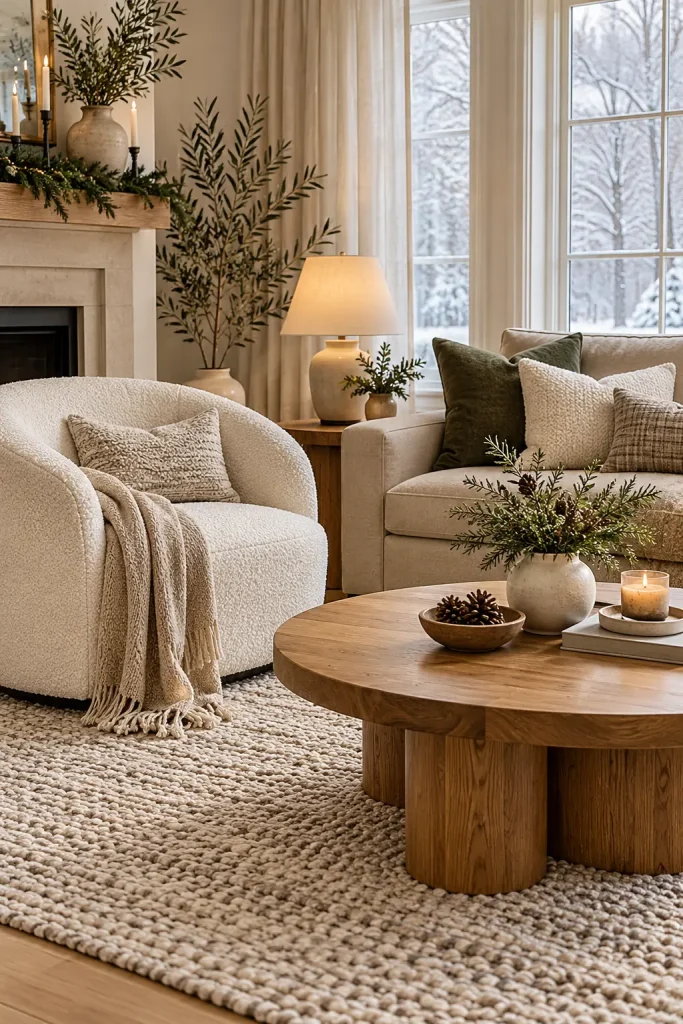
Bouclé upholstery adds a nubby, dimensional texture that suits winter decorating particularly well. Its surface creates visual interest even when the color is neutral, making it a useful choice for rooms that rely on subtle differences in material rather than bold patterns.
A bouclé accent chair can stand out against a smooth linen sofa, or a smaller upholstered stool can introduce the texture without requiring a major furniture purchase. Pair it with a wool rug, smooth wood, and a simple ceramic accessory to avoid making every surface feel equally textured.
Consider the intended use before choosing a pale bouclé piece for a busy household. Fabric construction and cleaning requirements vary, so check the manufacturer’s care guidance, especially if pets or children use the room.
22. Style a Console Table With Winter Layers
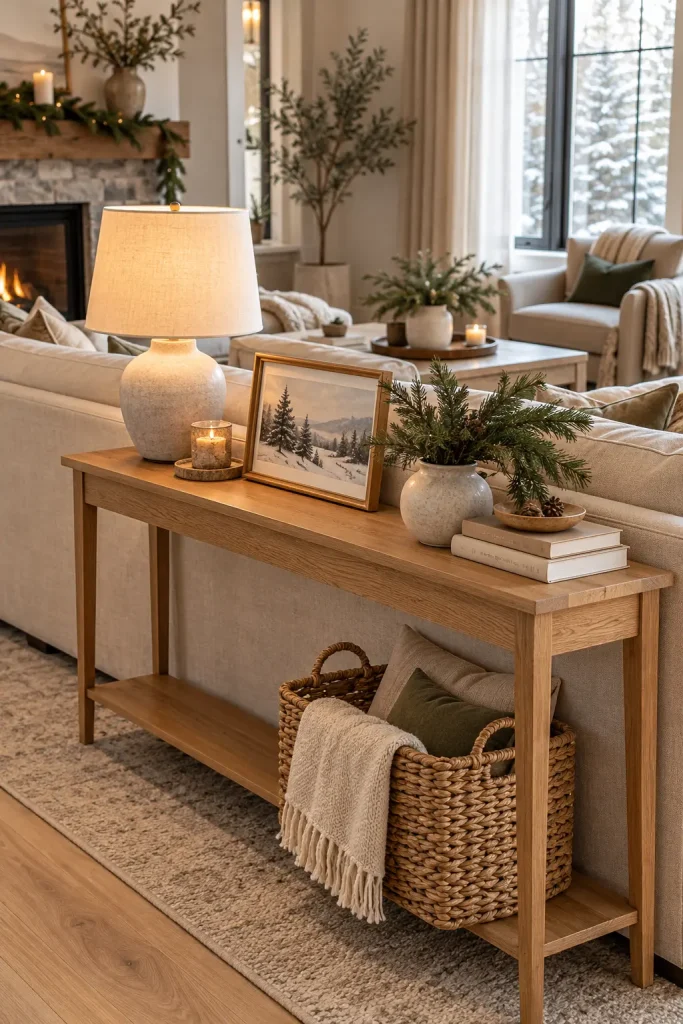
A console table behind the sofa or along an empty wall creates an additional styling surface without needing another large piece of furniture. For winter, combine a lamp, a framed landscape print, and a small arrangement of branches.
Vary the height of the objects so the display has a natural rhythm. A taller lamp can anchor one side, while a lower bowl or stack of books balances the other. Keep enough empty surface visible to prevent the arrangement from looking overcrowded.
In a narrow living room, choose a shallow console and make sure it doesn’t interfere with the walking path. If you already have a console, simply changing its accessories can refresh the room at little cost.
23. Use a Round Coffee Table to Soften the Layout
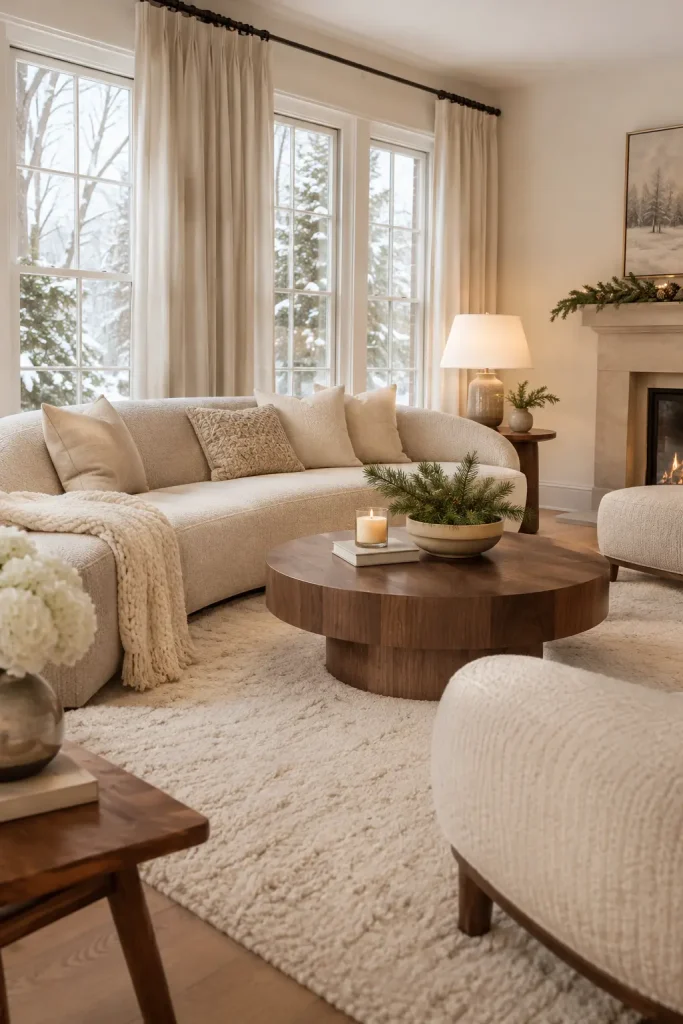
Curved furniture can soften a room filled with rectangular sofas, square cushions, and straight architectural lines. A round coffee table creates a different silhouette while making the central seating arrangement feel less rigid.
A walnut or natural oak table works well in a warm neutral room, while a painted dark table can provide contrast against pale upholstery. Style the surface with one low tray, a small ceramic vessel, or a modest stack of books, leaving plenty of room for everyday use.
In compact living rooms, consider the clearance around the table before choosing its size. A smaller round table may provide a better walking route than a large rectangular one, but it still needs enough surface area for the household’s needs.
24. Create a Scandinavian-Inspired Winter Living Room
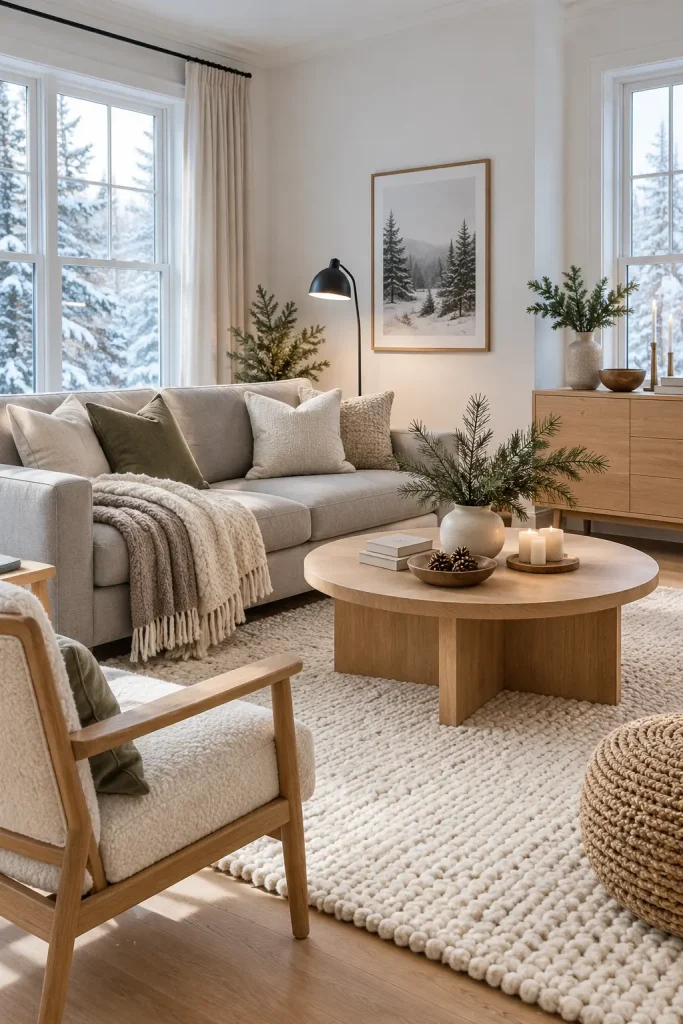
Scandinavian-inspired interiors combine simplicity, natural materials, and comfortable everyday furnishings. For winter, build the look around pale wood, soft gray or cream upholstery, and a small number of well-chosen accessories.
A practical starting point is a neutral sofa, a pale oak coffee table, and a textured wool rug. Add a simple black floor lamp or dark picture frame for definition. A folded blanket and one leafy branch can supply the seasonal detail without disrupting the uncluttered arrangement.
This style works particularly well in small apartments because the restrained palette and careful furniture selection leave the room feeling open. The goal isn’t to remove every personal object; it’s to give useful pieces enough space to be appreciated.
25. Make a Rustic Farmhouse Living Room Feel Warmer
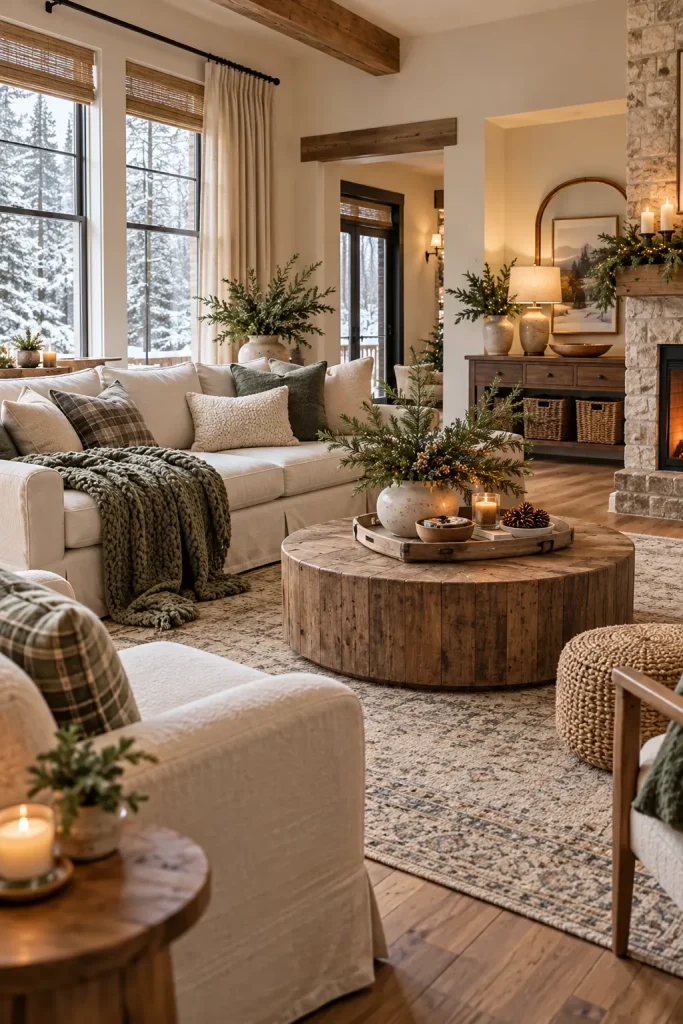
Farmhouse interiors already feature many materials that work naturally with winter decor, including wood, woven baskets, linen, and simple ceramics. The seasonal refresh comes from layering these elements thoughtfully rather than adding more rustic accessories to every corner.
Start with a slipcovered sofa or neutral upholstered seating, then introduce a chunky throw and cushions in muted plaid or earthy tones. A reclaimed-wood coffee table and a woven basket for blankets add texture while remaining useful.
For a more modern farmhouse appearance, limit distressed finishes and avoid filling every surface with signs, small ornaments, or decorative objects. A few substantial pieces usually create a calmer, more current look.
26. Add a Touch of Brass for Subtle Elegance
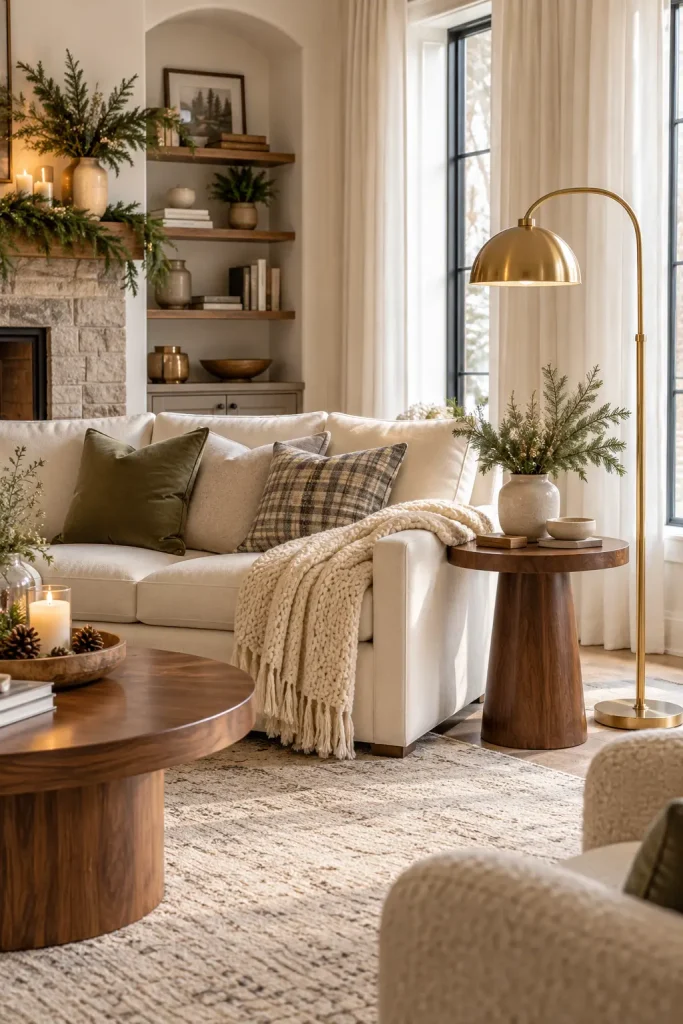
Brass introduces a gentle warmth that can make a neutral living room feel more finished. Rather than scattering metallic accessories across every surface, choose one or two useful pieces, such as a brass floor lamp, a side table with a brass base, or a simple picture frame.
Brushed and aged finishes tend to sit comfortably beside natural wood and textured fabrics. If your room already includes black metal or chrome, you don’t necessarily need to replace it all. Repeat the new finish selectively and let the materials coexist where they look intentional.
The most successful version of this idea feels understated. Metallic details should support the lighting, furniture, and palette rather than become the main attraction.
27. Create a Family-Friendly Cozy Seating Area
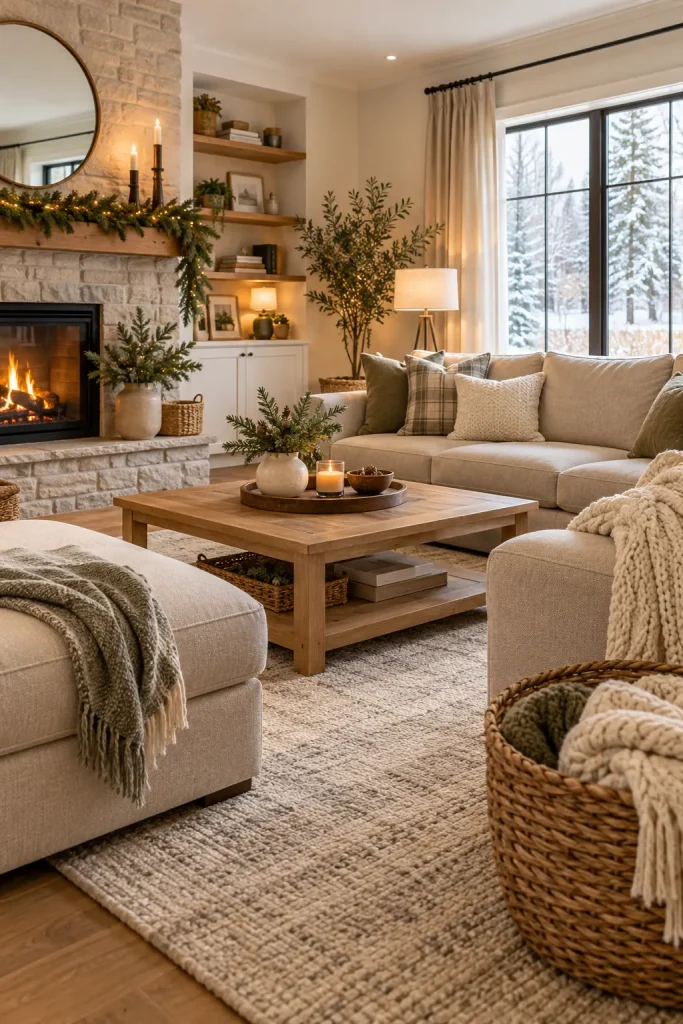
A winter living room should be comfortable for everyone who uses it, including children, pets, and guests. Choose seasonal accessories that look inviting but don’t make the room difficult to maintain.
A large upholstered ottoman can provide a flexible surface for resting feet, while a basket keeps blankets within reach. Washable cushion covers and a practical rug may be more useful than delicate textiles that need frequent special care.
For a family space, leave a clear route through the seating area and avoid placing fragile accessories on the edges of low tables. Keep decorative objects, candles, and breakable vessels out of busy pathways and beyond the reach of small children or pets where necessary.
Better approach: Focus on comfortable seating, easy-to-clean materials, and storage that makes it simple to tidy the room at the end of the day.
28. Decorate With Winter Candles and Lanterns
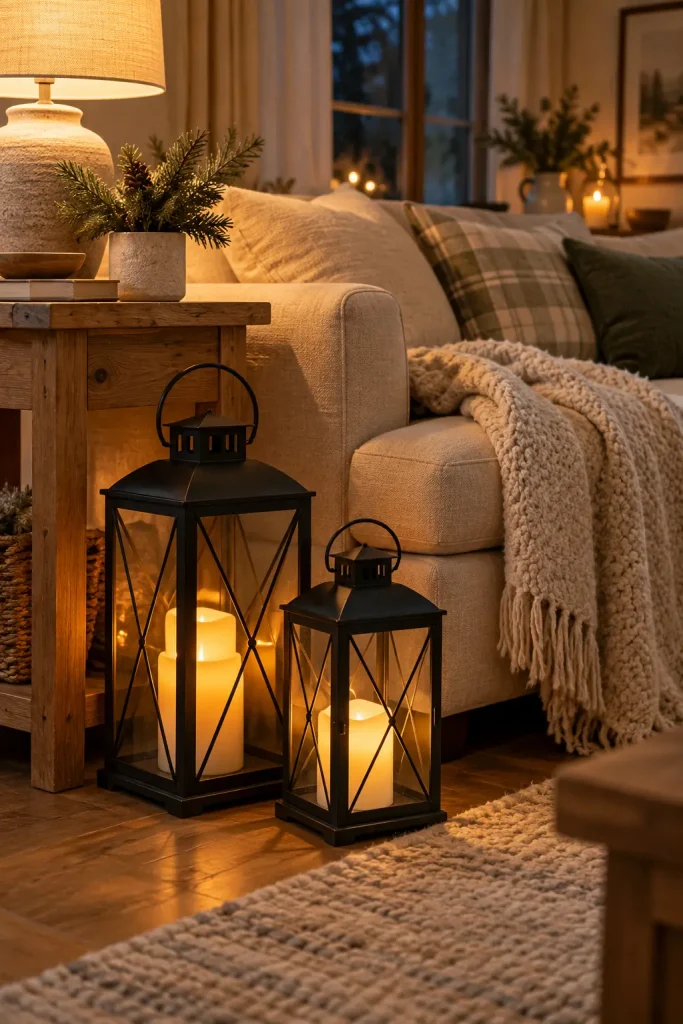
Candlelight creates a softer evening atmosphere, particularly when paired with warm lamps and natural materials. For a winter living room, group a few candles of different heights on a stable tray or use lantern-style holders as decorative accents.
Ivory candles work well in neutral rooms, while dark metal lanterns provide contrast in farmhouse and contemporary interiors. Flameless candles are a practical option for homes where open flames aren’t appropriate.
Keep the display simple and consider where people walk, where children play, and whether pets could knock anything over. Follow the manufacturer’s safety instructions for both traditional and battery-operated products.
29. Bring the Outdoors In With Winter Nature Decor
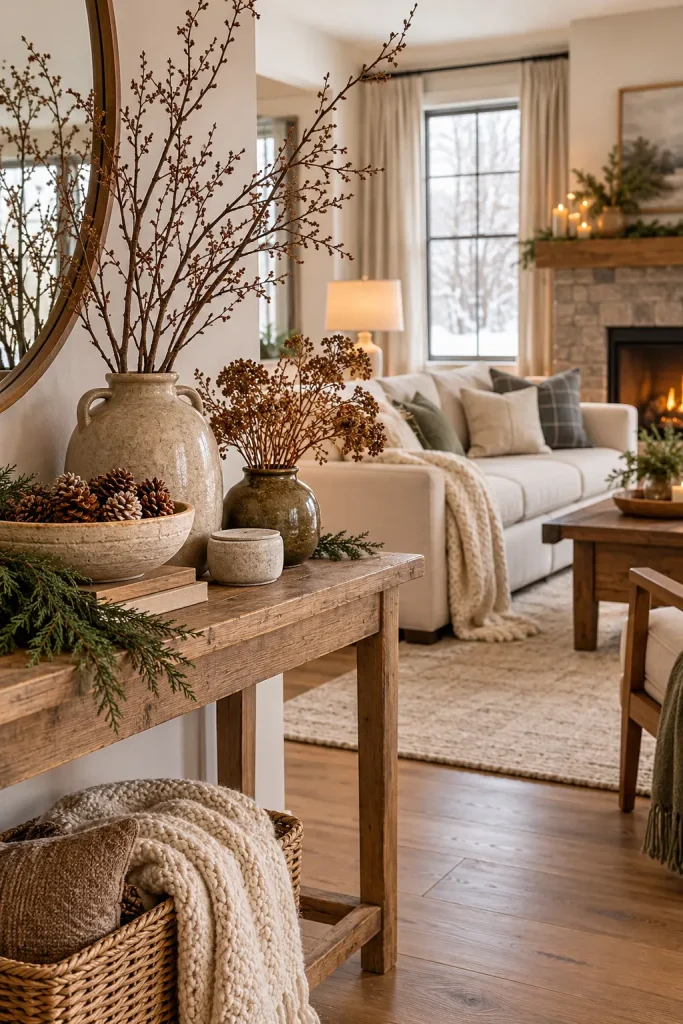
Winter nature decor goes beyond evergreen branches. Pinecones, sculptural bare branches, dried seed heads, and muted grasses can create a seasonal arrangement that feels quieter and more organic.
Choose a few materials with different shapes. For example, upright branches can provide height, while pinecones or a shallow wooden bowl add weight near the base of the display. Use handmade ceramics or a stone-colored vessel to keep the arrangement grounded.
This idea works well on a console, sideboard, or wide windowsill. Keep the display away from heat sources and choose clean, dry materials suitable for indoor use. If you prefer not to collect natural objects, decorative versions can provide a similar visual effect.
30. Refresh the Room With a Cozy Winter Reading and Lounge Setup
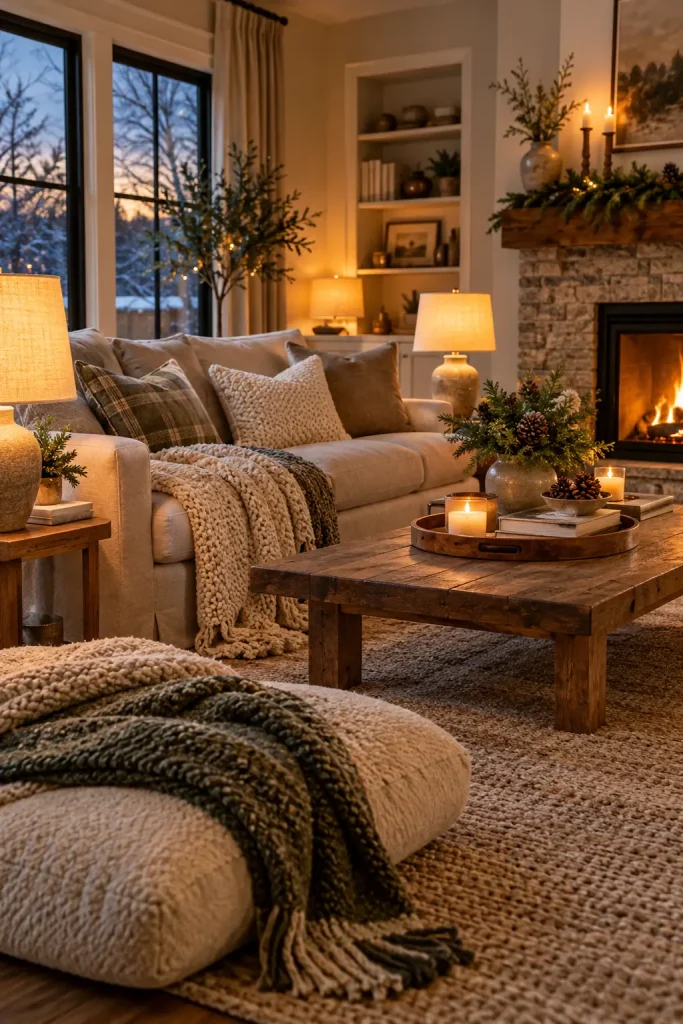
For a final seasonal refresh, bring the elements together around how you want to use the room. If winter evenings mean reading, watching films, or spending time with family, arrange the seating to support those activities first and decorate around that plan.
Place the main sofa where it offers comfortable access to the television, fireplace, or conversation area. Keep a blanket nearby, add a useful side table, and use layered lighting to make the space comfortable after dark. If there is room, a floor cushion or small upholstered footstool can create an extra relaxed seat.
The difference between a merely decorated living room and a genuinely cozy one often comes down to usability. Make the things you reach for regularly easy to access, and keep decorative surfaces from becoming obstacles.