
35 Christmas Living Room Decor Ideas for a Festive, Stylish Space
Christmas decorating can make an ordinary living room feel warmer, more inviting, and ready for holiday gatherings without requiring a complete makeover. The best Christmas living room decor combines seasonal details with the furniture, colors, and materials you already enjoy throughout the year. Evergreen branches, warm lights, cozy textiles, natural wood, candles, and carefully selected ornaments can create a festive atmosphere without making the room feel crowded. Whether you live in a compact apartment, a traditional family home, or a spacious suburban house, there are plenty of ways to adapt these ideas to your space. From classic red-and-green decorating to calm neutral arrangements, the following Christmas living room ideas offer different styles, budgets, and levels of decorating effort. Choose a few focal points rather than decorating every surface, and your living room can feel festive while remaining comfortable and practical throughout the holiday season.
1. Style a Classic Evergreen Christmas Tree
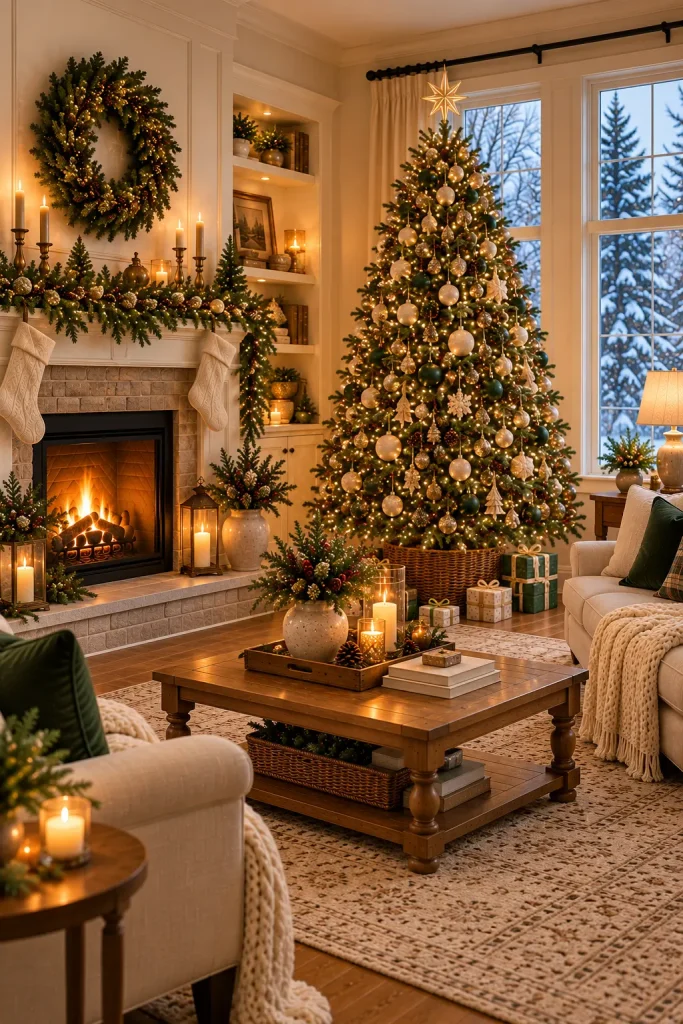
A full evergreen Christmas tree is one of the easiest ways to establish a festive focal point in the living room. Choose warm-white lights first, then build the decoration around two or three complementary colors such as cream, green, burgundy, brass, or traditional red. Mixing ornaments of different sizes gives the tree more depth and keeps the branches from looking too uniform. Leave some greenery visible instead of covering every branch, especially if you prefer a natural appearance. A woven basket or simple tree collar can conceal the stand while introducing another layer of texture. Position the tree where it can be seen from the sofa without blocking a doorway or major walking path. If the room is small, a slimmer tree can provide the same vertical impact while preserving valuable floor space. The finished tree should feel like part of the room rather than an isolated holiday display.
2. Drape an Evergreen Garland Across the Fireplace
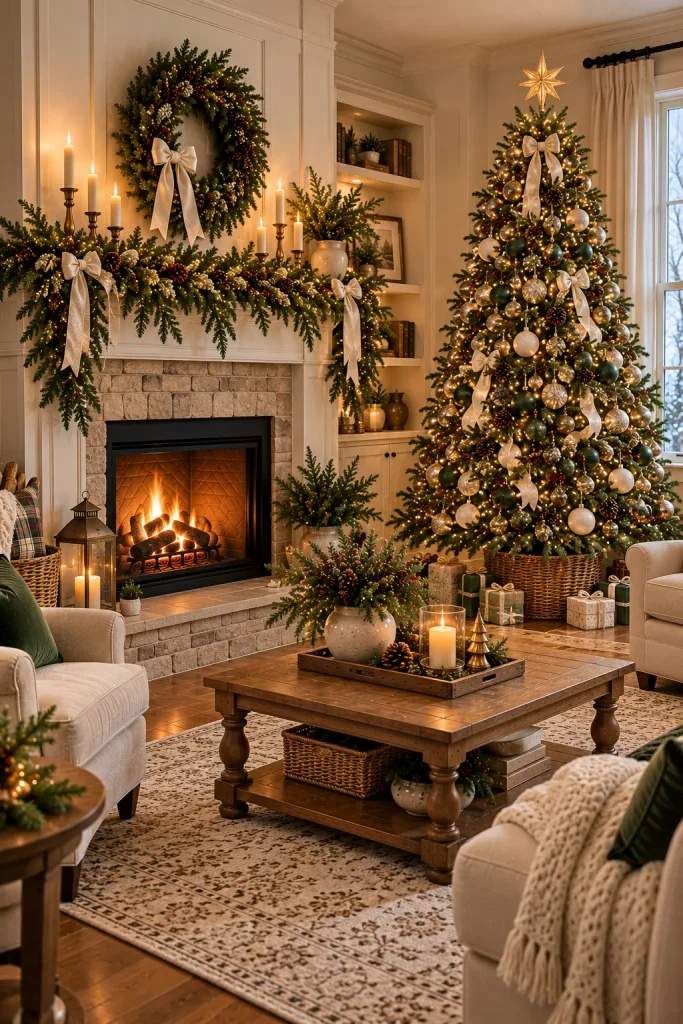
A fireplace mantel provides a natural horizontal focal point for Christmas greenery. Start with a realistic evergreen garland and allow parts of it to gently extend toward the sides of the mantel for a relaxed, organic appearance. Add a few pinecones, subtle ribbon, or small brass accents rather than covering the greenery with too many decorations. The texture of the branches can provide enough seasonal interest on its own. If your fireplace is wide, allow the garland to follow its proportions instead of concentrating everything in the middle. Keep candles, stockings, or decorative objects at different heights so the mantel doesn’t look like a single flat row. A natural garland also pairs beautifully with a Christmas tree placed beside the fireplace. If you have a small mantel, use a thinner garland to maintain visual balance. The goal is to make the fireplace feel festive while keeping its architectural character visible.
3. Layer Christmas Pillows on the Sofa
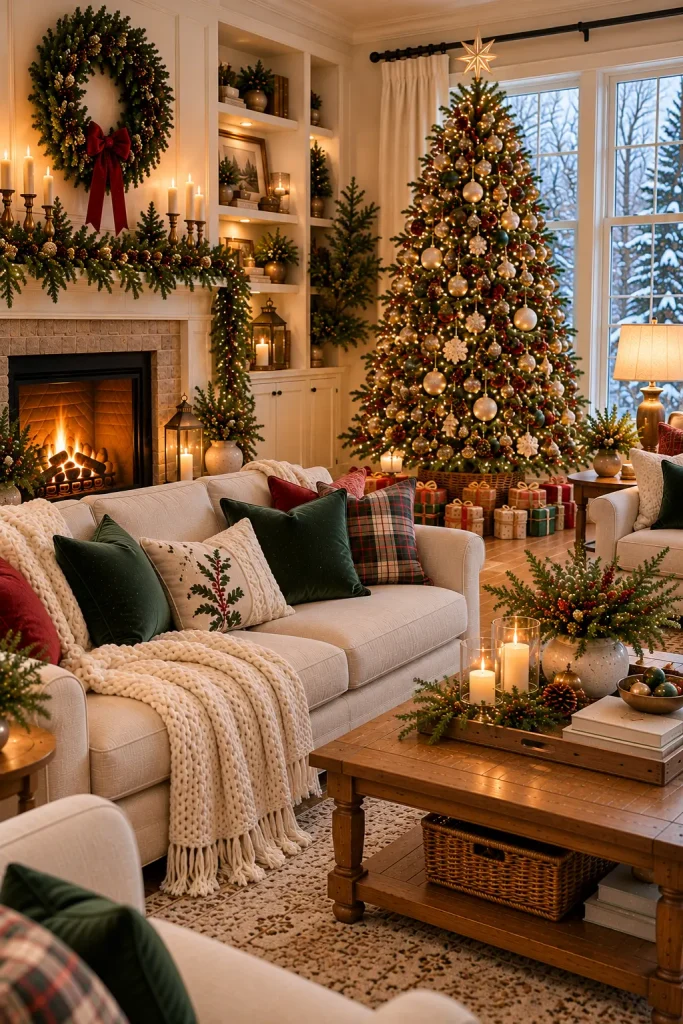
Seasonal pillows are one of the simplest ways to change the character of a living room for Christmas. Instead of replacing all of your existing cushions, keep several neutral pillows and add a few holiday-inspired pieces among them. Plaid, velvet, cable-knit, winter botanical, and subtle embroidered designs can introduce Christmas character without making the sofa look overly themed. Choose colors that already appear somewhere else in the room so the pillows feel connected to the overall decorating scheme. For example, forest green cushions can echo the Christmas tree while burgundy accents can connect with ribbon or ornaments. Varying the pillow sizes creates a more layered and comfortable arrangement. If the sofa is already patterned, choose simpler solid-colored seasonal cushions. This approach also makes post-holiday decorating easier because only a few covers need to be replaced. The result should feel cozy enough for everyday lounging while still clearly reflecting the season.
4. Add a Cozy Christmas Throw to the Seating Area
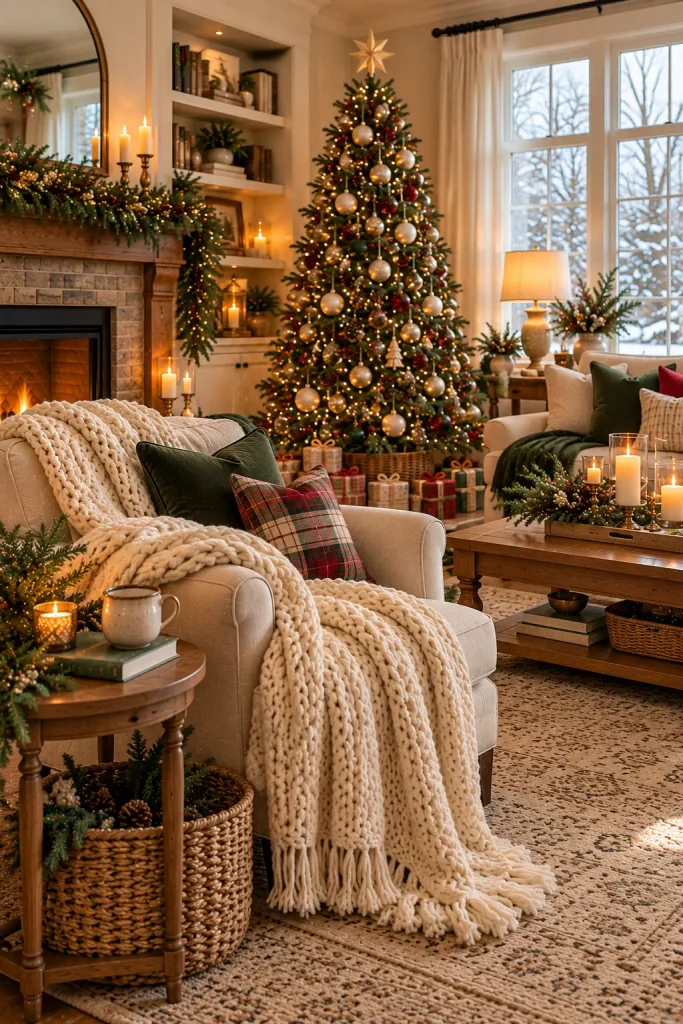
A soft throw can make a living room feel more comfortable and winter-ready without adding much visual clutter. Choose a chunky knit, brushed cotton, wool-look, or plush neutral blanket and casually drape it over an armchair or the corner of a sofa. Warm ivory, cream, camel, forest green, and muted burgundy can all work beautifully with Christmas decorations. If the rest of the room is already heavily decorated, a simple neutral throw can balance the look. For a stronger holiday statement, choose a subtle plaid or seasonal pattern that coordinates with the tree. Fold another blanket inside a woven basket so guests can easily reach it during colder evenings. Pay attention to the scale of the throw because an oversized blanket can overwhelm a smaller chair. Natural folds and relaxed placement generally look more inviting than perfectly arranged fabric. This small addition can make the entire seating area feel warmer and more welcoming.
5. Create a Natural Wood and Greenery Christmas Look
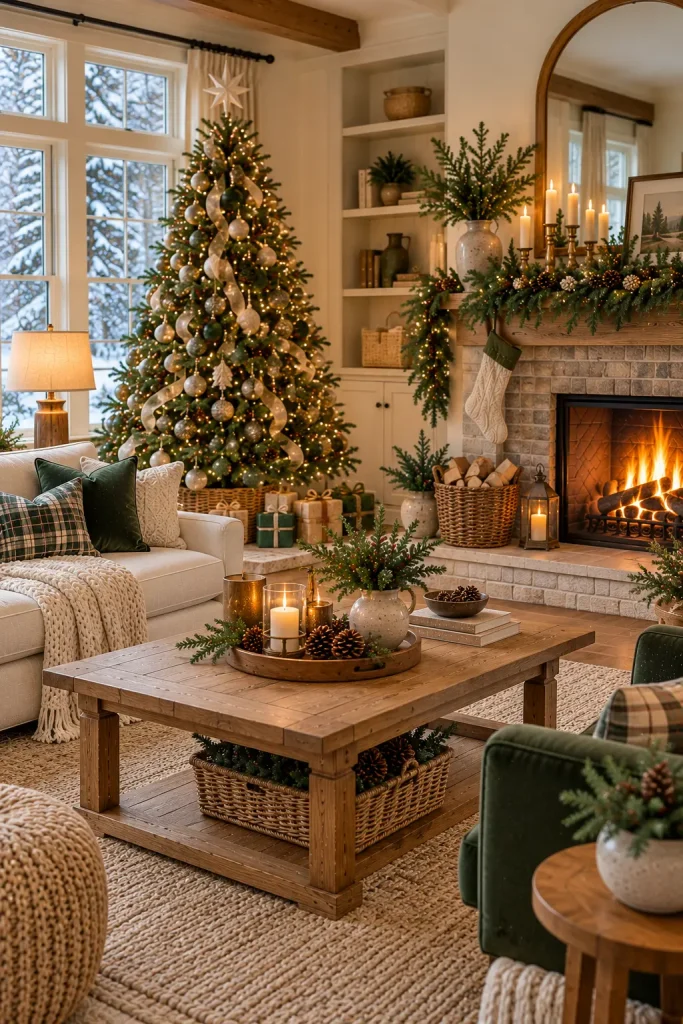
Natural materials can make Christmas decorating feel relaxed and connected to the rest of the home. Pair evergreen branches with oak, walnut, rattan, woven baskets, wood trays, and other organic finishes already present in the living room. This approach works especially well when your everyday decor uses neutral upholstery and warm natural tones. Instead of relying on numerous colorful ornaments, allow the greenery to provide most of the seasonal color. Pinecones and wooden ornaments can add smaller decorative details without introducing too many competing finishes. A natural wood coffee table can become the foundation for a simple holiday tray filled with greenery and candles. Keep the textures varied so smooth wood, soft textiles, rough pinecones, and delicate branches don’t visually blend together. The result can feel festive without looking overly decorated. It is also easy to adapt this style to both modern and traditional American homes.
6. Hang Simple Stockings Along the Mantel
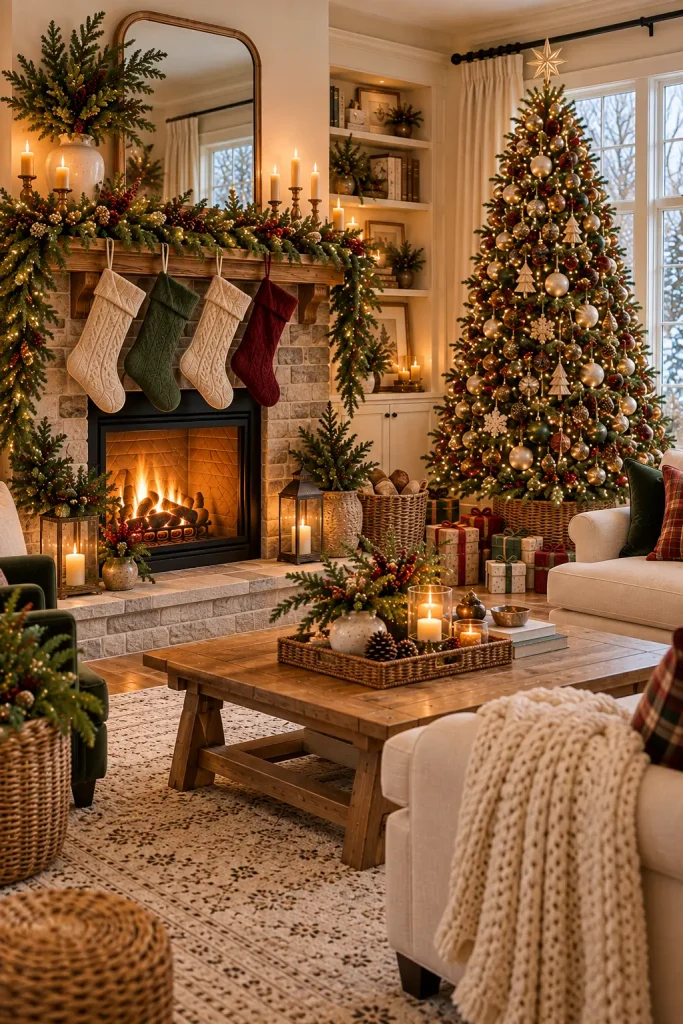
Christmas stockings can add a traditional holiday detail without requiring a complicated decorating scheme. Choose stockings that share a common color palette or material so they look intentional when displayed together. Knit, linen, velvet, wool-look, and simple cotton stockings can all work depending on the room’s existing style. Hang them evenly across the mantel while leaving enough space between each one for the individual shapes to remain visible. If your fireplace is narrow, use fewer stockings rather than squeezing too many together. A small evergreen garland can connect the stockings visually with the rest of the mantel. Homes without fireplaces can use a sturdy console, shelf, staircase railing, or dedicated stocking holder instead. Consider the practical weight of each stocking before attaching it to a decorative surface. A coordinated stocking arrangement can become one of the most recognizable Christmas details in a family living room.
7. Use Warm White Lights Throughout the Room
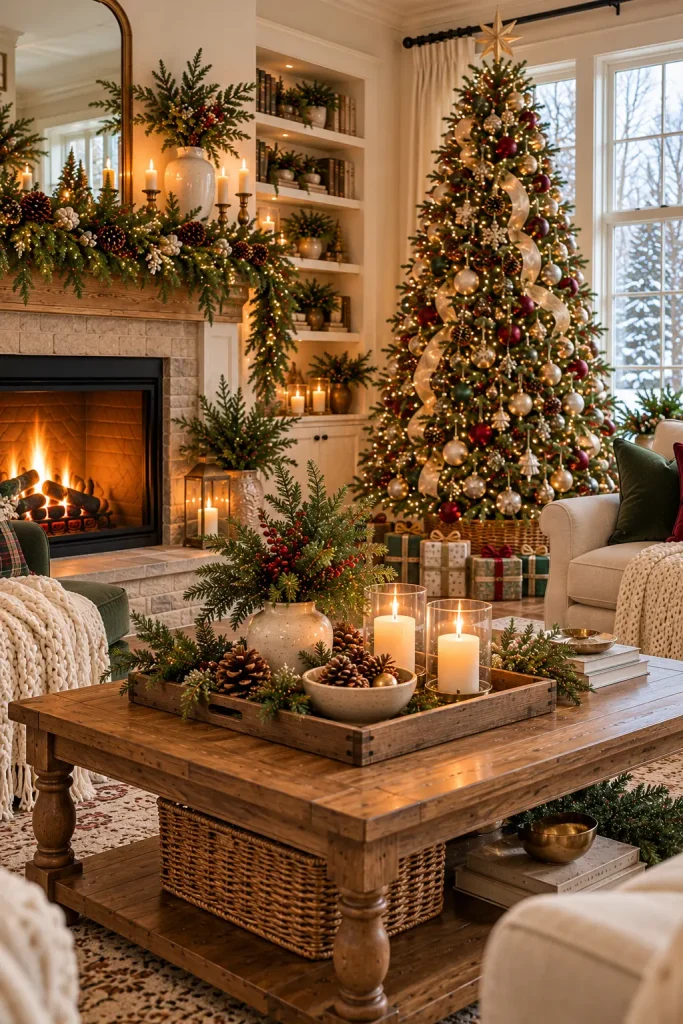
Lighting can dramatically change the atmosphere of Christmas living room decor once the sun goes down. Warm-white lights on the tree provide the main seasonal glow, while a smaller amount of lighting can be repeated around the mantel, console, or another appropriate feature. Try to keep the color temperature visually consistent so the room doesn’t develop noticeably different shades of white. Existing table lamps and floor lamps can remain part of the composition and provide useful ambient illumination. Avoid relying on decorative string lights alone because the room still needs practical lighting for reading and conversation. Place cords safely and keep them away from walkways where possible. The combination of soft lamps, tree lights, and a glowing fireplace can create depth without making the room excessively bright. During the daytime, allow natural winter light to remain the main source of illumination. The finished room should feel warm rather than overly illuminated.
8. Decorate the Coffee Table With a Seasonal Tray
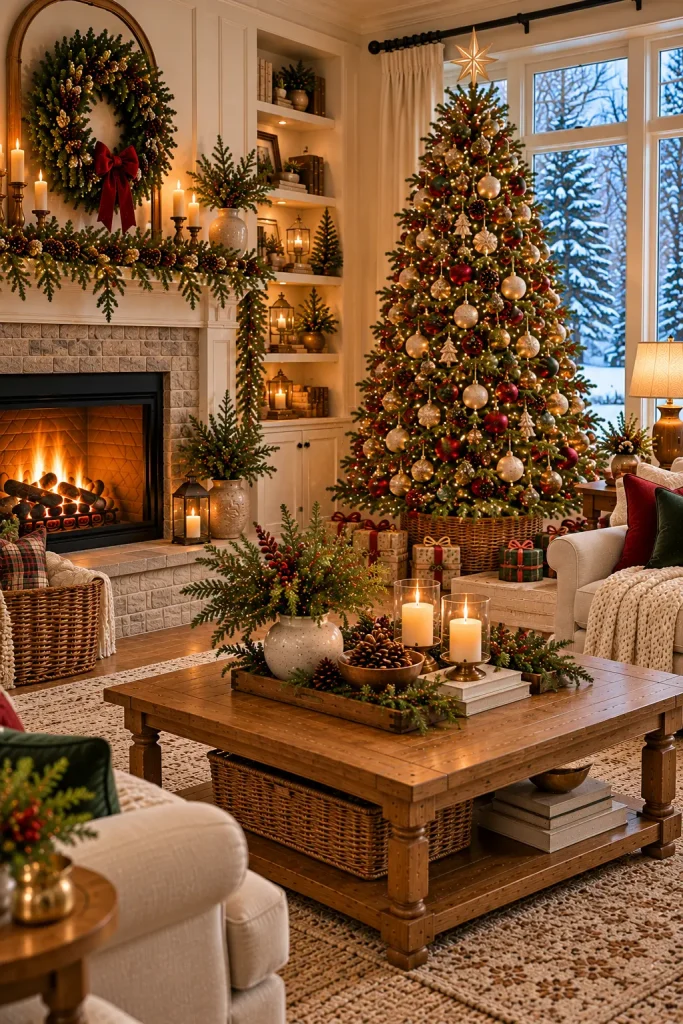
The coffee table is a useful place to add Christmas character without filling the entire surface with decorations. Start with a wooden, metal, or woven tray that visually relates to the table and surrounding furniture. Add a small collection of seasonal elements such as pinecones, evergreen clippings, a neutral ceramic bowl, and one or two candles. Keeping everything inside a tray makes the arrangement easier to move when the table needs to be used for drinks or entertaining. Vary the heights of the objects so the display doesn’t look completely flat. Leave enough empty tabletop around the tray to maintain practical space for everyday use. Natural materials generally work well because they connect the coffee table with the greenery elsewhere in the room. If the living room already has many decorations, keep the tray especially simple. A well-edited arrangement can feel festive without becoming another cluttered surface.
9. Add Velvet Accents for a Richer Holiday Feel
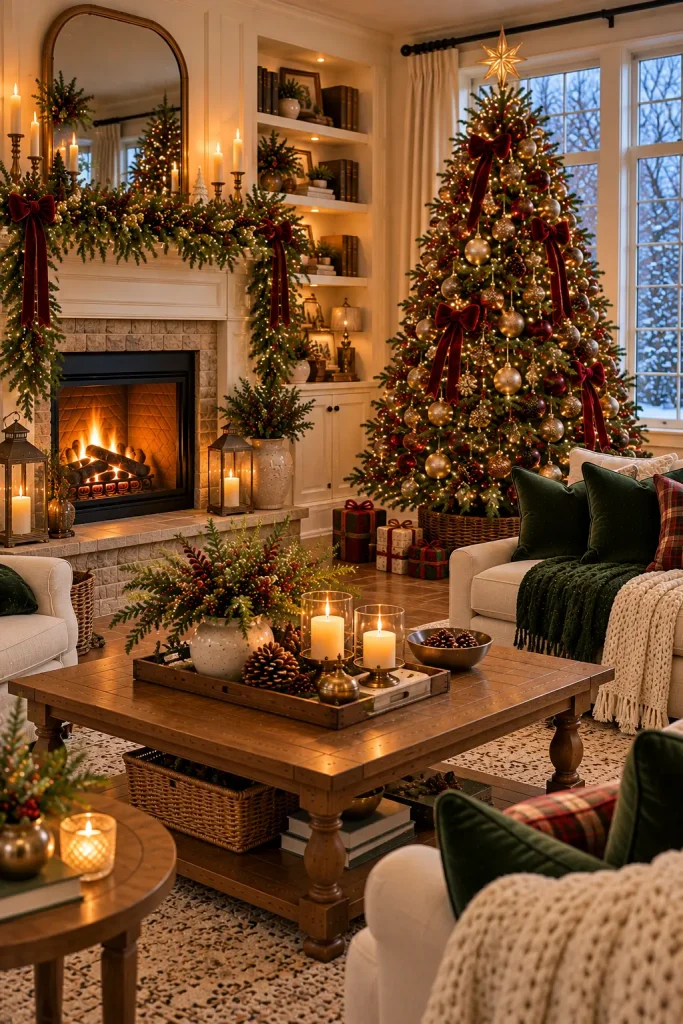
Velvet can introduce a richer seasonal texture without requiring a major decorating change. A pair of deep green velvet pillows can make a neutral sofa feel more winter-oriented, while burgundy velvet ribbon can bring a traditional Christmas note to the tree. Brass and warm wood pair especially well with the slightly reflective surface of velvet. Because velvet has a strong visual texture, a little can go a long way in a smaller living room. Balance it with linen, cotton, wool, or other matte fabrics so the room doesn’t feel overly formal. You can also use a small velvet ottoman or accent chair if the furniture already suits the space. Choose colors that complement rather than compete with your existing palette. Deep green, muted burgundy, navy, and warm cream are versatile seasonal choices. The finished look should feel layered and comfortable rather than overly ornate.
10. Create a Mini Christmas Tree Display
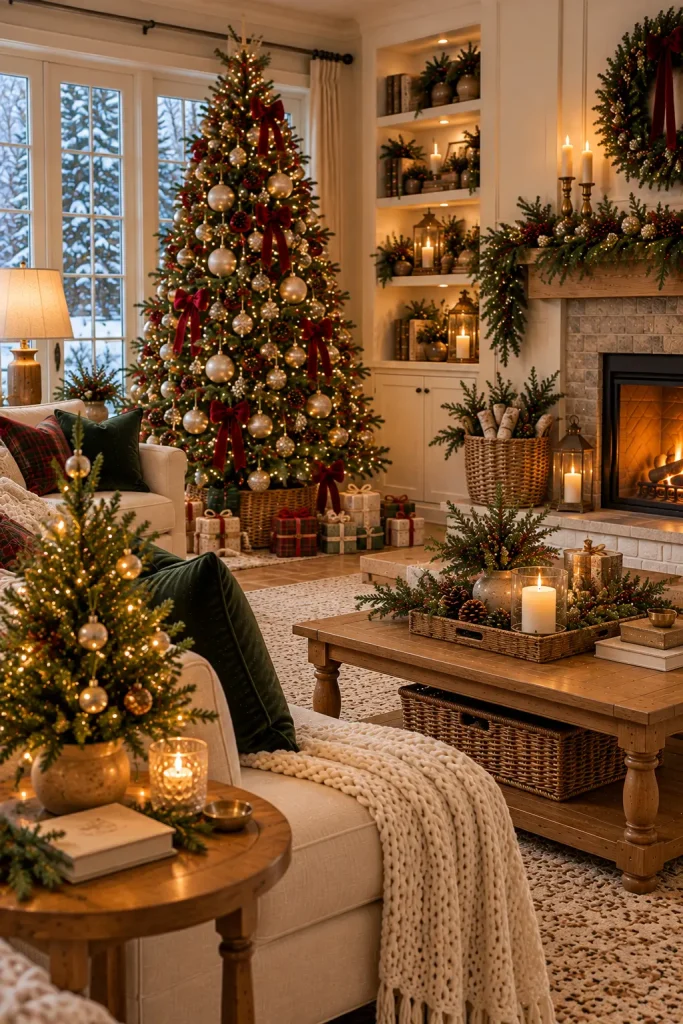
A tabletop Christmas tree is a practical alternative when there isn’t enough floor space for a large tree. Place a small evergreen on a console, side table, cabinet, or another sturdy surface that doesn’t interfere with daily activities. Keep its ornaments visually connected to the larger room through similar colors or materials. Small warm-white lights can provide enough illumination without making the tree look oversized for its setting. A miniature tree also gives you an opportunity to experiment with a different decorating style, such as wood ornaments or tiny neutral bows. Make sure the surface underneath is large and stable enough to support the tree securely. Keep it away from areas where it could easily be knocked over. A small tree can also be grouped with a few ceramic houses or evergreen branches to create a compact seasonal vignette. This is particularly useful for apartments, offices, and smaller living rooms.
11. Frame the Fireplace With Tall Evergreen Arrangements
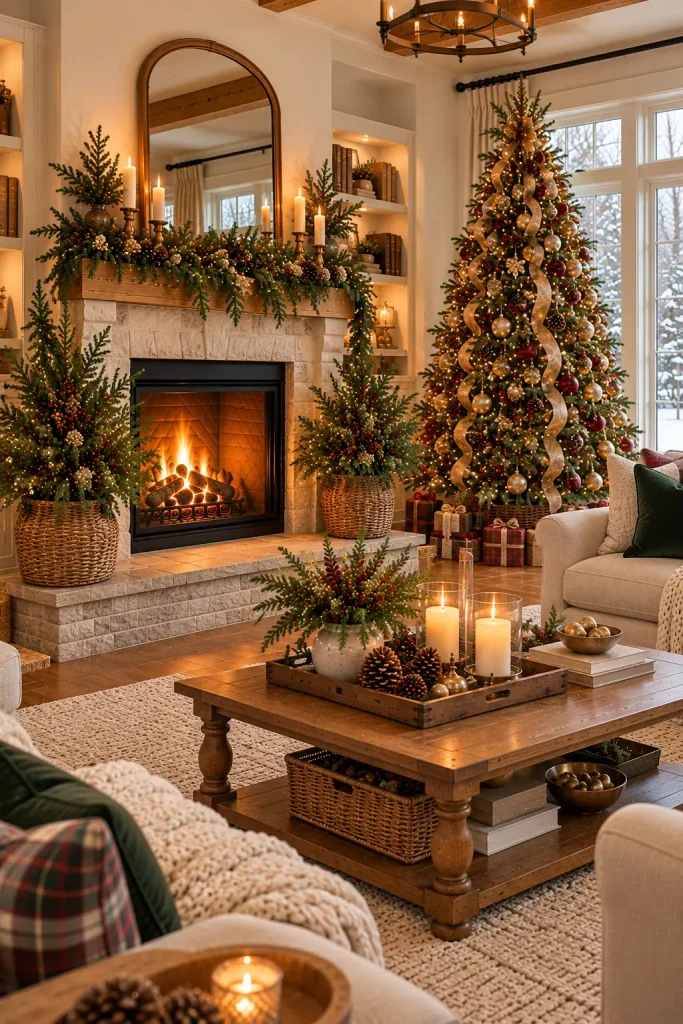
Floor-level greenery can make the fireplace feel more substantial and visually connected to the rest of the room. Place one tall evergreen arrangement on either side of the hearth if there is enough space to maintain a clear walking path. Woven baskets, ceramic planters, or simple natural containers can hold the branches while adding another material to the composition. Let the branches grow slightly unevenly so the arrangement feels natural rather than perfectly symmetrical. Keep the height appropriate for the room so the greenery doesn’t compete with a nearby Christmas tree. If the fireplace is already heavily decorated, simplify the mantel and allow the floor arrangements to become the primary accent. In a smaller room, one tall arrangement may work better than two. Check that the greenery and container don’t interfere with fireplace operation or nearby traffic. Used thoughtfully, tall branches can create a strong vertical frame around the hearth.
12. Introduce a Soft Plaid Christmas Pattern
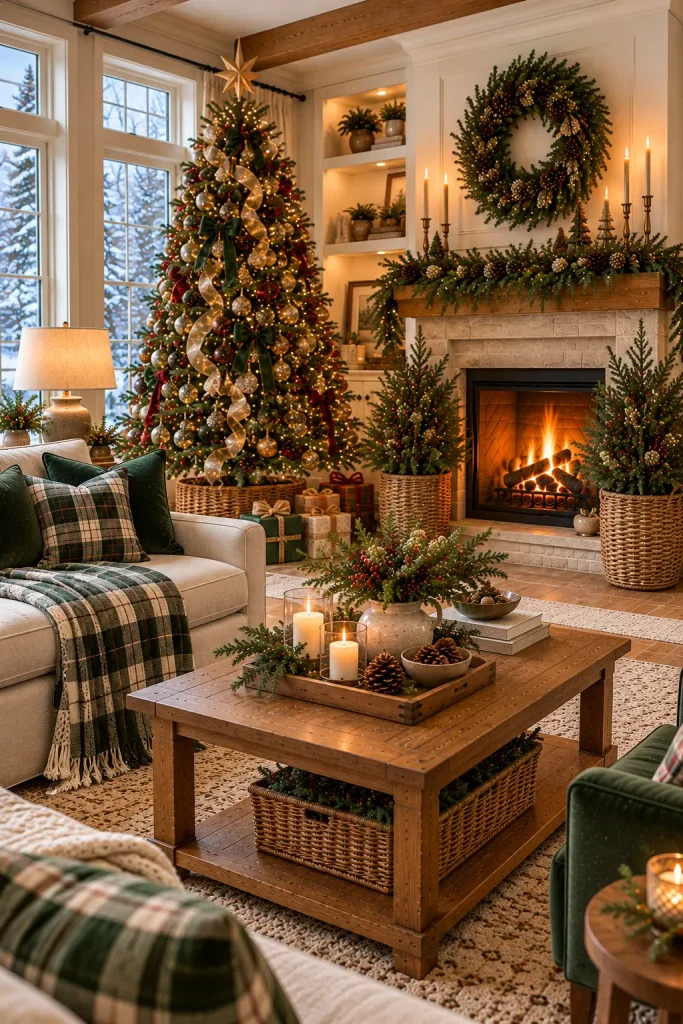
Plaid is an easy way to bring traditional Christmas character into a living room. Instead of repeating it across every textile, select one or two places where the pattern can become a clear accent. A plaid throw, pair of pillows, tree ribbon, or small upholstered chair can provide enough visual interest. Red-and-black buffalo check creates a rustic atmosphere, while green-and-cream tartan can feel softer and more refined. If the room already contains other patterns, use a quieter plaid with fewer contrasting colors. Repeat one color from the plaid somewhere nearby so the pattern feels connected to the overall room. Natural wood and evergreen branches can help soften a stronger plaid. Avoid mixing several unrelated plaid patterns because they can quickly make the room feel busy. With controlled placement, plaid can make a living room feel familiar, warm, and distinctly seasonal.
13. Decorate With Oversized Christmas Bows
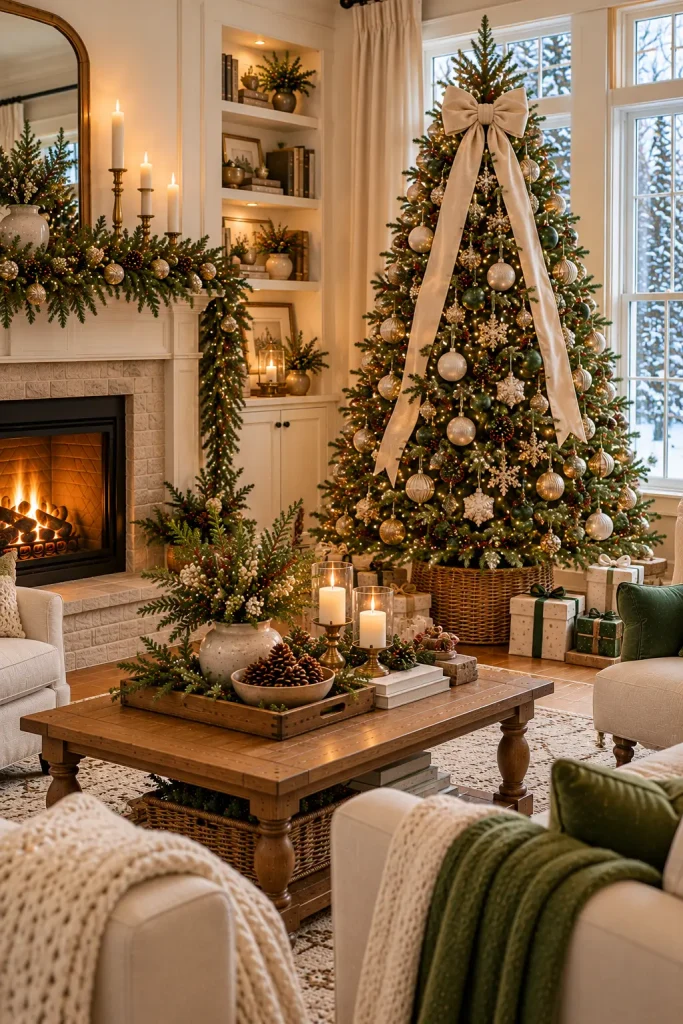
A large Christmas bow can create a strong focal point with very little additional decoration. Place one on the upper portion of the tree, center it on a wreath, or use it as an accent on a mantel or cabinet. Velvet, linen, cotton, and wired ribbon each create a different effect, so choose a material that complements the room. Allow the ribbon tails to fall naturally instead of making every edge perfectly symmetrical. A large bow can replace several smaller decorations, which may actually make the overall room feel more edited. Choose a color that already appears elsewhere, such as cream, green, burgundy, or muted red. If the room is small, use one oversized bow rather than several large ones. Make sure the ribbon is securely attached and positioned away from heat sources. The idea works particularly well when you want a recognizable Christmas detail without adding lots of ornaments.
14. Layer a Christmas Wreath Above the Fireplace
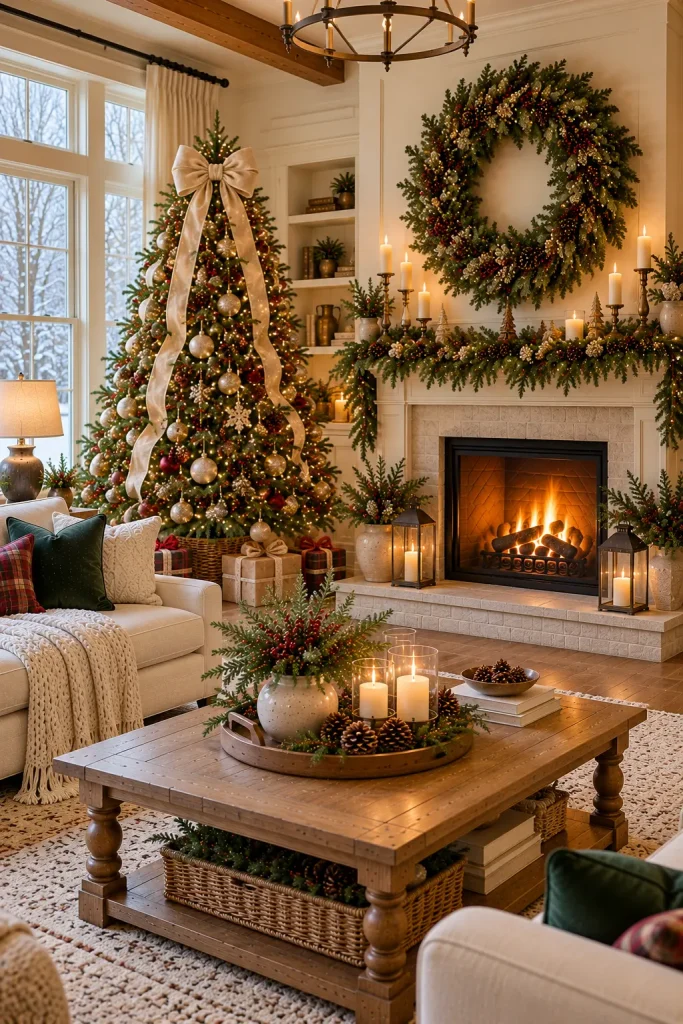
A large wreath can give the fireplace a strong seasonal focal point without requiring numerous decorations on the mantel itself. Choose an evergreen wreath with pinecones, eucalyptus-style foliage, berries, or subtle ribbon depending on the style of your room. Position it carefully so the center aligns with the fireplace or another architectural feature. The wreath should be large enough to remain visible from the seating area but not so large that it overwhelms the wall. Keep the mantel underneath relatively simple with a few candles or small seasonal objects. If your fireplace is already visually strong, a natural wreath can provide just enough holiday character. A wreath also works beautifully above a wood-burning or electric fireplace when paired with warm lighting. Make sure it is safely positioned away from excessive heat. This arrangement is especially effective for traditional, cottage, farmhouse, and transitional interiors.
15. Use Cream and White for a Scandinavian-Inspired Christmas
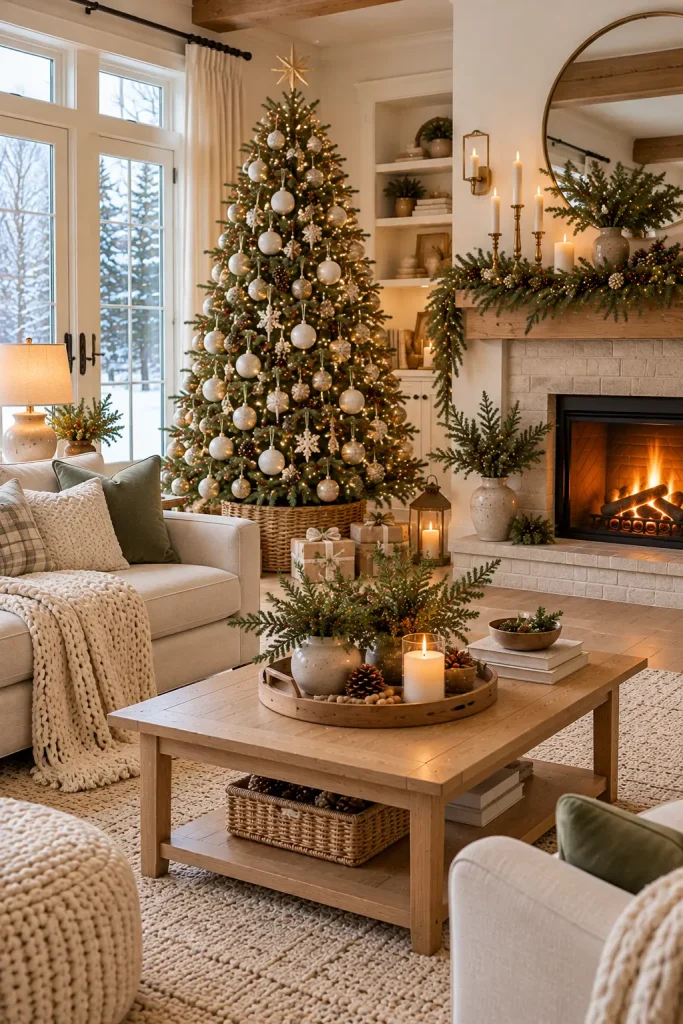
A cream-and-white Christmas palette can create a calm, understated holiday atmosphere. Combine ivory ornaments, warm-white lights, pale wood, soft knits, and natural evergreen branches for a simple Scandinavian-inspired direction. Because the colors are restrained, texture becomes particularly important. Mix smooth ceramic ornaments with knitted throws, natural wood, woven baskets, and realistic evergreen foliage. A small amount of deeper green can provide enough contrast to keep the room from appearing flat. Avoid filling the tree with highly reflective decorations if you want a softer appearance. Pale furnishings can make this approach particularly effective in smaller rooms where too many strong colors might feel visually heavy. Keep the shapes simple and allow some negative space around the decorations. The result can feel festive while still working with minimalist everyday interiors.
16. Create a Cozy Reading Corner With Christmas Accents
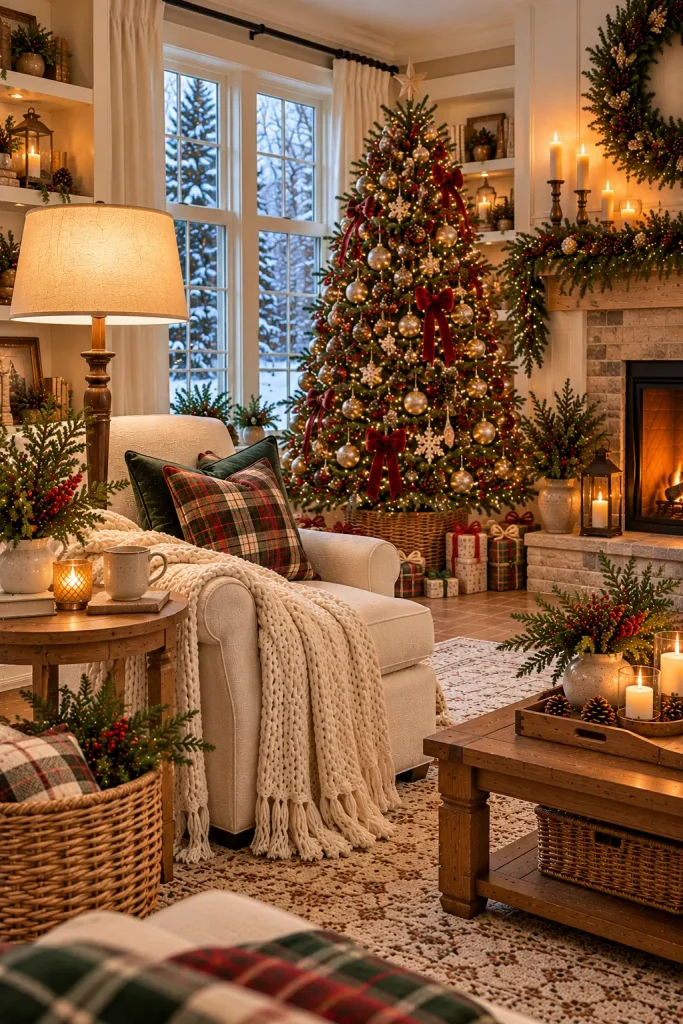
A reading corner can become part of the holiday atmosphere without needing as much decoration as the main seating area. Start with a comfortable chair and add a small side table, warm floor lamp, and soft seasonal throw. A small evergreen arrangement or a few pinecones can provide a Christmas connection without overcrowding the area. Position the chair where it receives comfortable natural light during the day and useful task lighting at night. If the main tree is visible from the chair, repeat one of its colors in the throw or cushion. A nearby basket can hold blankets and make the arrangement more functional. Avoid placing decorations where they interfere with the chair’s movement or foot space. This approach is particularly useful in larger living rooms with an unused corner. It creates a secondary seasonal vignette while keeping the main room comfortable for everyday use.
17. Style a Console Table With Seasonal Layers
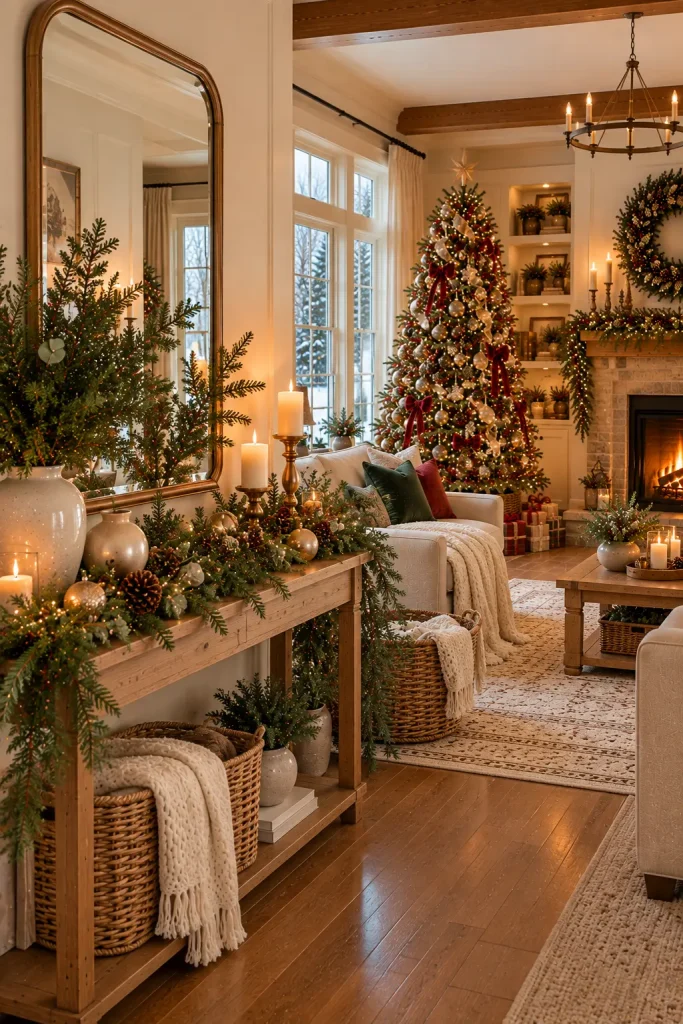
A console table offers a useful secondary surface for Christmas decorating, especially when the fireplace or coffee table already has a strong arrangement. Begin with a mirror, framed artwork, or another large anchor behind the console. Add evergreen branches, ceramic vessels, candles, pinecones, and a few small ornaments to create layers without filling every inch. Place taller objects toward the back and shorter pieces toward the front so the display has visual depth. Leave some empty surface visible because negative space helps the arrangement feel intentional. If the console sits behind the sofa, keep decorations low enough that they don’t interfere with sightlines or conversation. Repeat one material from the rest of the living room, such as brass, wood, or ceramic. The arrangement can be changed easily after Christmas without requiring any permanent modifications. This makes it especially useful for renters and anyone who prefers flexible seasonal decorating.
18. Add Natural Pinecones to Holiday Decor
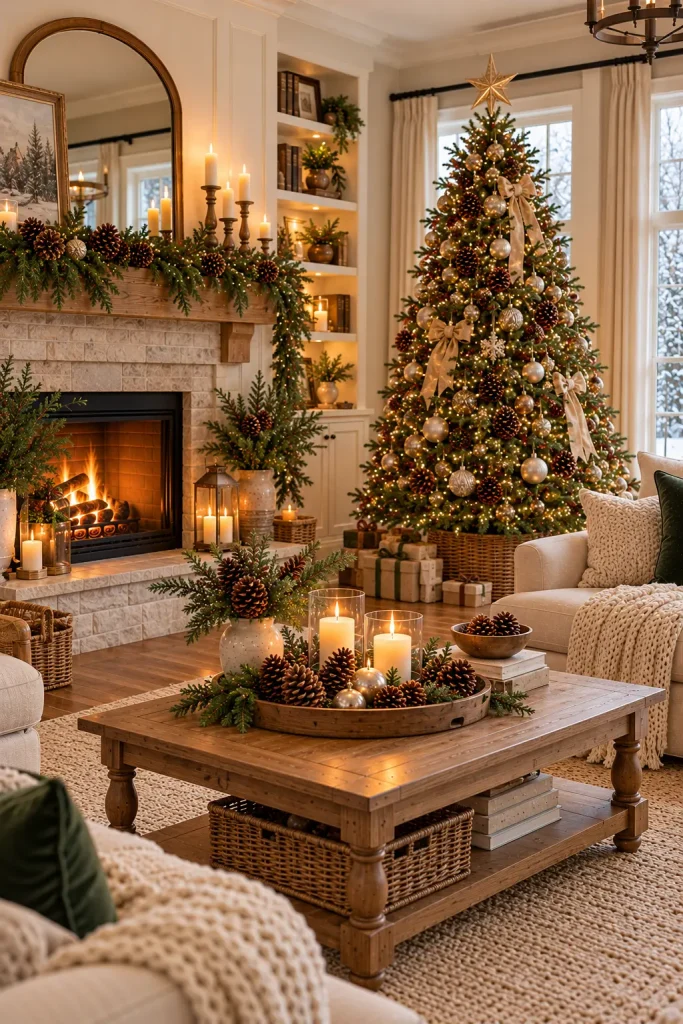
Pinecones are a simple way to introduce natural Christmas texture without relying on highly decorative ornaments. Place them inside a wooden bowl, scatter a few across a mantel, or tuck them into an evergreen garland. Larger pinecones can become visual anchors while smaller ones can fill spaces between branches. Their warm brown color works especially well with cream, green, brass, and natural wood. Instead of arranging them in a perfectly symmetrical pattern, vary their orientation to create a more natural appearance. You can also combine pinecones with dried citrus, cinnamon-toned accents, or small wooden ornaments for an organic holiday arrangement. Keep the quantity restrained if the room already contains several strong decorative elements. Natural materials can make even a polished living room feel more relaxed and seasonal. Pinecones also work well with traditional, rustic, Scandinavian, farmhouse, and organic modern Christmas styles.
19. Hang Greenery Around the Windows
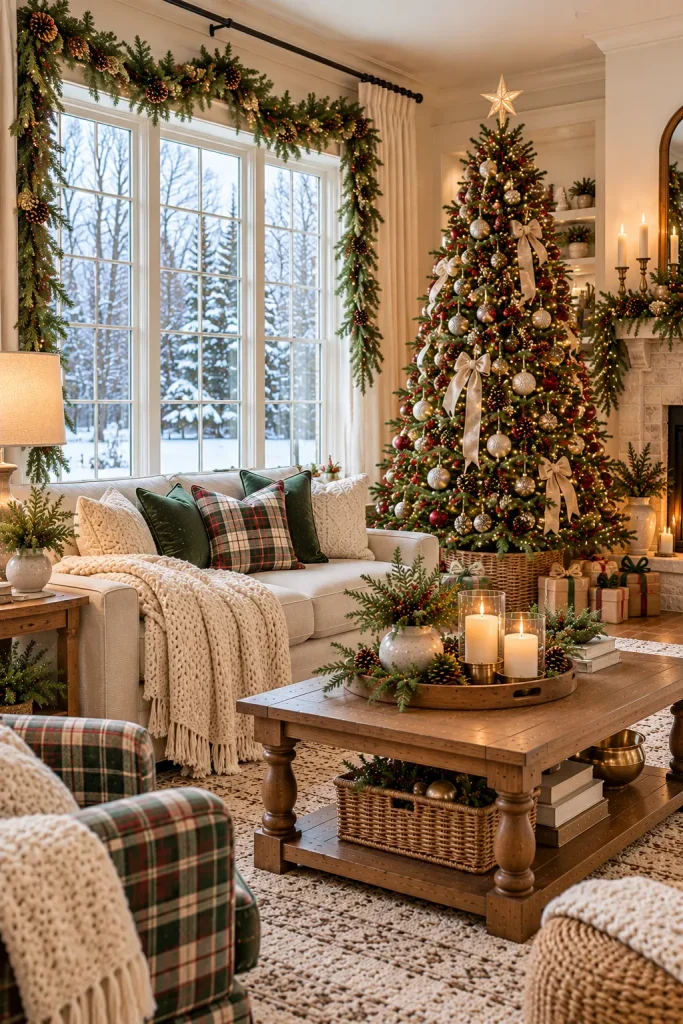
Windows can become part of the holiday decorating scheme while still providing plenty of natural daylight. Use a lightweight evergreen garland or a few individual branches along the upper frame or sides of the window. Keep the greenery proportional to the window so the treatment doesn’t visually shrink the opening. Leaving some glass and trim visible will make the arrangement feel lighter and less crowded. If your window is small, a single strand along the top may be enough. Larger windows can support more substantial greenery, especially in rooms with high ceilings. Avoid attaching heavy decorations to surfaces that aren’t designed to hold them. The greenery can connect visually with a nearby Christmas tree or fireplace garland. This is a useful way to add holiday character to an area that might otherwise remain undecorated. The result feels seasonal without sacrificing the brightness of the living room.
20. Bring in Brass Christmas Accents
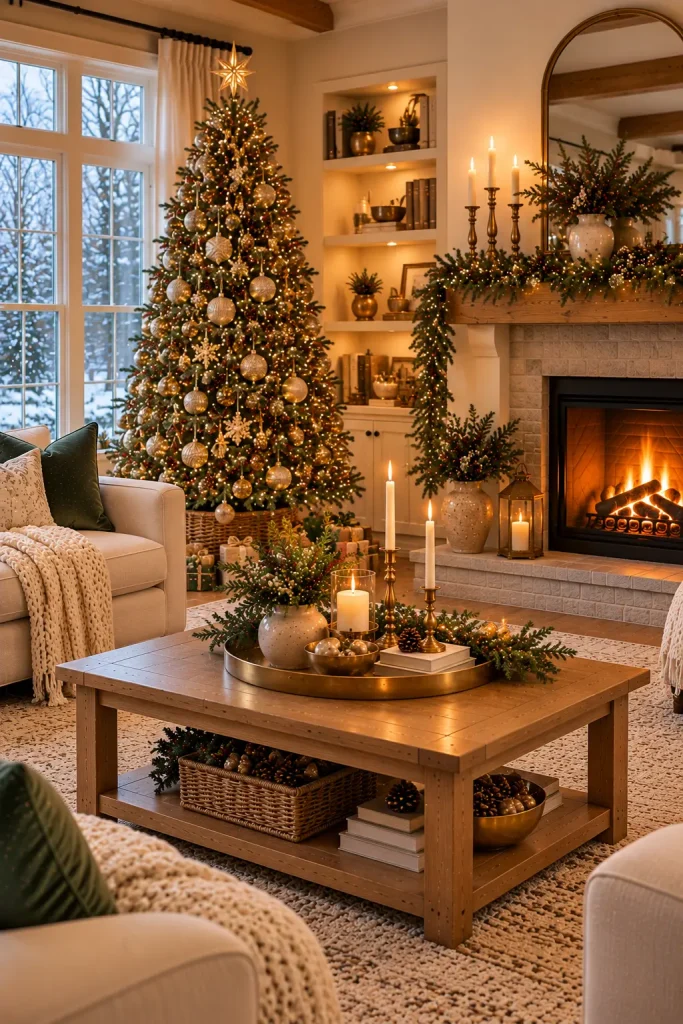
Brass can add warmth and a gentle reflective quality to Christmas living room decor. Use it in small doses through candleholders, ornaments, decorative bowls, picture frames, or simple tree accents. The warm metallic finish works especially well alongside evergreen branches and natural wood. Rather than scattering brass pieces randomly throughout the room, repeat the finish in two or three locations. This creates a subtle visual connection between different parts of the living room. Matte textiles can balance the reflective quality of brass and prevent the room from looking overly formal. If your existing furniture already contains brass hardware or lighting, seasonal brass accents will feel especially natural. Choose a few pieces with simple shapes if your room has modern furnishings. Used thoughtfully, brass can make Christmas decorating feel warm and polished without relying on excessive metallic decoration.
21. Use a Neutral Christmas Tree With Natural Ornaments
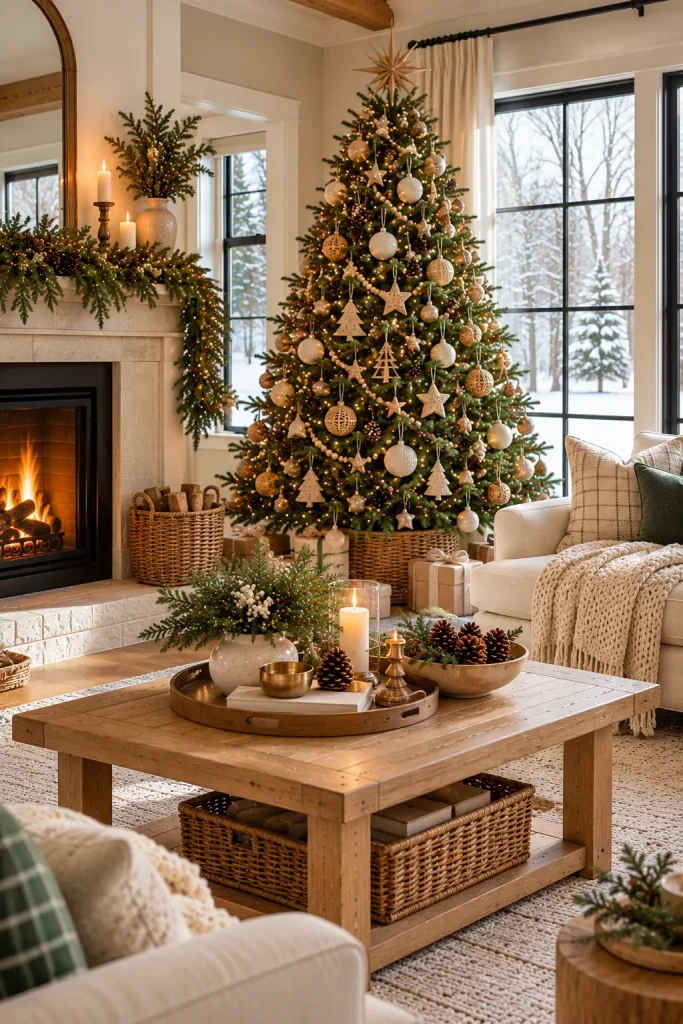
A neutral Christmas tree can create a relaxed holiday look without relying on bright colors. Decorate it with cream ornaments, small wooden shapes, woven decorations, natural-looking materials, and warm-white lights. Because the color palette is restrained, use different textures and ornament sizes to prevent the tree from appearing flat. A few darker green elements can provide contrast while maintaining the calm aesthetic. This approach works particularly well in organic modern, Scandinavian, modern farmhouse, and minimalist interiors. A woven tree basket can reinforce the natural theme at the base. Avoid adding too many metallic ornaments if you want the tree to remain soft and understated. Repeat the tree’s natural materials elsewhere in the room through baskets, wood, ceramics, or textiles. The finished result can feel festive without competing with the home’s everyday design.
22. Create a Traditional Red-and-Green Christmas Palette
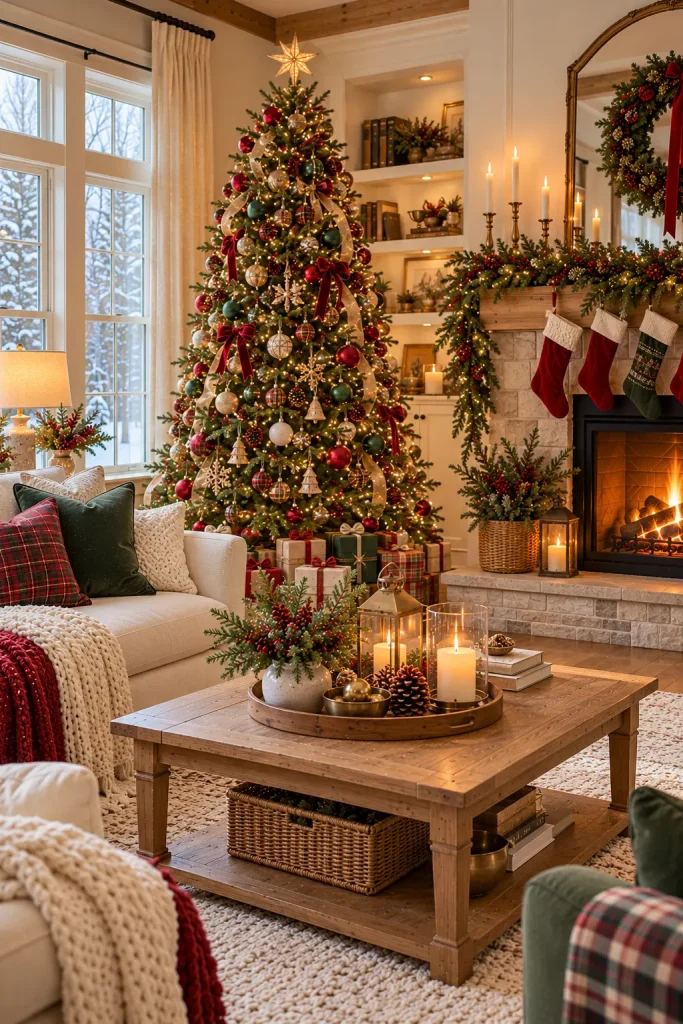
Red and green remain classic Christmas colors for a reason: they immediately communicate the season and can create a warm, nostalgic atmosphere. The key to keeping the palette stylish is to control the number of shades and repeat them intentionally. Choose one dominant green and one main red, then balance them with cream, natural wood, or brass. Red berries, plaid ribbon, traditional ornaments, and evergreen branches can reinforce the theme without requiring every decoration to be bright red. Neutral upholstery provides a useful background for stronger seasonal colors. If the room already has colorful furniture, consider using muted versions of red and green instead. Repeat the palette across the tree, mantel, and one or two textiles so the room feels cohesive. This decorating direction works particularly well for traditional family homes and holiday gatherings. It can also incorporate sentimental ornaments without feeling visually disconnected.
23. Add a Small Christmas Village Display
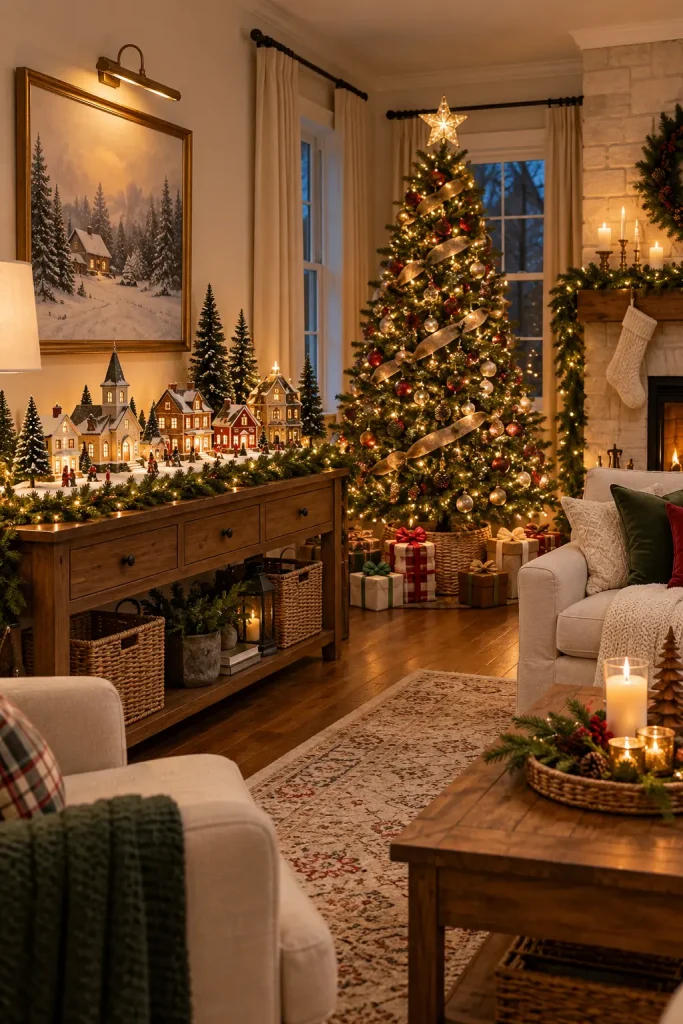
A Christmas village can bring a nostalgic detail to the living room without requiring an entire display cabinet. Select a small group of miniature houses, evergreen trees, and other simple pieces and arrange them on a console, shelf, or sideboard. Leave enough space between the buildings so each one remains visible. Warm miniature lighting can make the display especially inviting after dark. A simple snowy-looking base can help visually connect the pieces if it suits your decorating style. Keep the village at a comfortable viewing height rather than placing it somewhere guests cannot easily see. If the rest of the room is heavily decorated, use fewer village pieces to avoid visual competition. The display can also become a family tradition by incorporating meaningful or collected pieces over time. Pairing it with greenery or warm wood keeps the miniature scene connected to the larger living room.
24. Decorate With Dried Citrus and Natural Elements
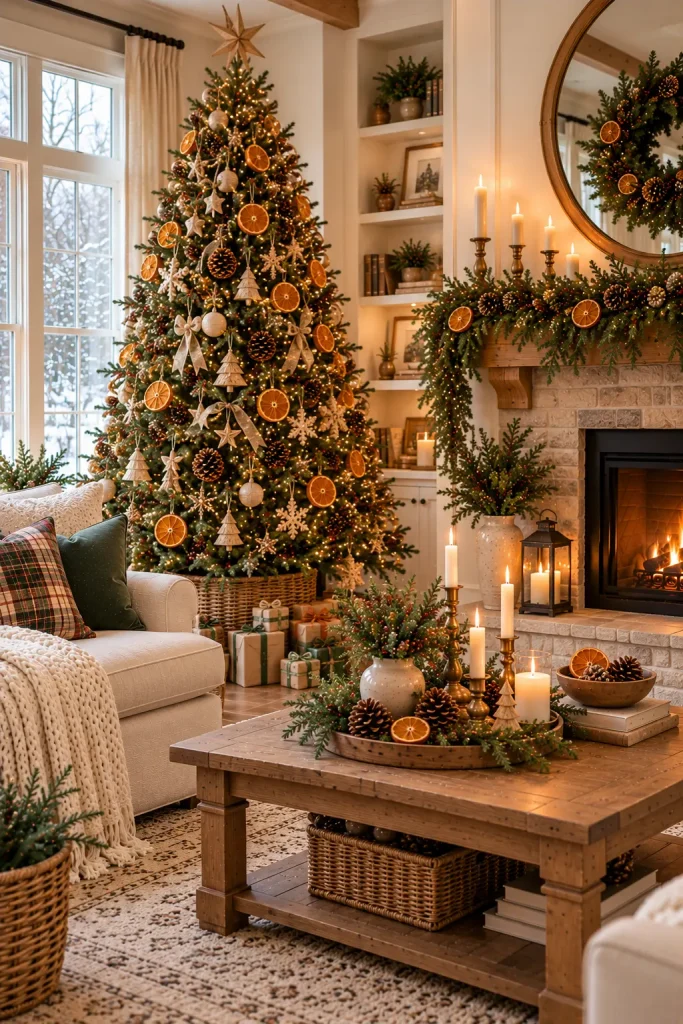
Dried citrus can introduce a warm amber color while keeping the Christmas palette natural. Orange slices can be threaded onto a garland, hung on the tree, or combined with pinecones and evergreen branches in a tabletop arrangement. Their translucent texture catches warm light beautifully and provides contrast against dark green foliage. Pair them with wood ornaments, cream ribbon, and neutral ceramics for an organic look. The color can also connect naturally with warm wood furniture already in the room. Use the citrus sparingly so it remains a decorative accent rather than becoming the dominant theme. A few slices on a tree can provide enough visual interest when combined with simple ornaments. This approach is particularly suitable for rustic, farmhouse, Scandinavian, and natural Christmas interiors. The overall effect feels seasonal while remaining grounded in natural materials and warm earthy tones.
25. Make the Fireplace the Evening Focal Point
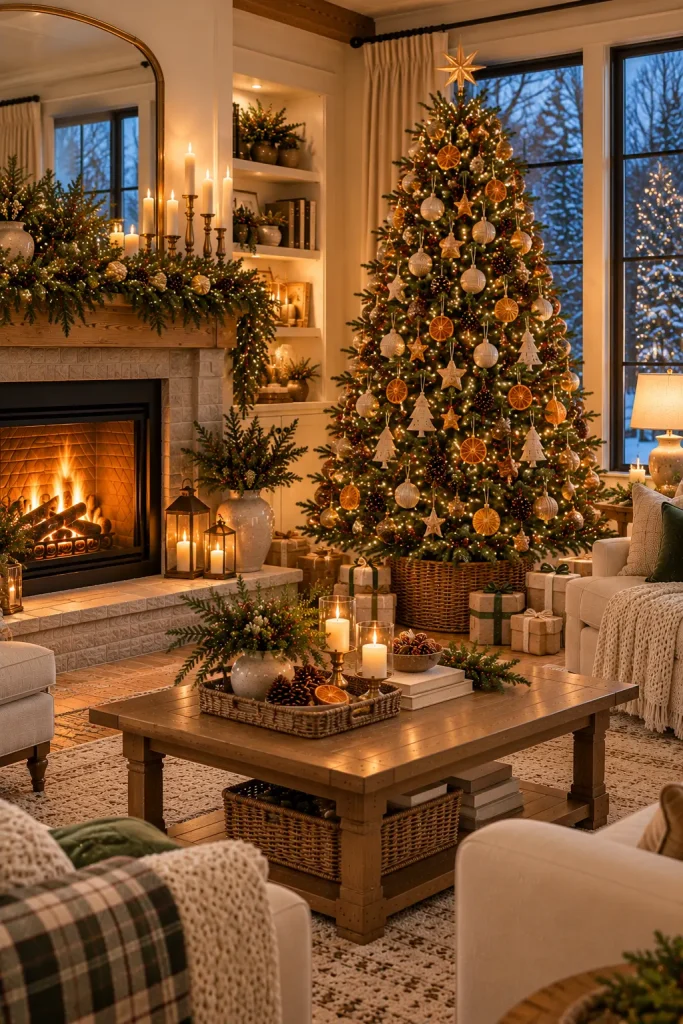
If your living room has a fireplace, it can become the central gathering point during Christmas evenings. Keep the surrounding decorations intentional so the fire remains visible rather than competing with an overloaded mantel. A complete Christmas tree placed nearby can provide a second source of warm light and balance the fireplace visually. Arrange seating so the hearth can be enjoyed from the main sofa or chairs. Cream textiles, natural wood, and restrained greenery can soften the architectural structure of the fireplace. During the evening, combine firelight with warm tree lights and table lamps instead of using harsh overhead lighting. This creates several layers of illumination throughout the room. Keep combustible decorations at a safe distance from active fireplaces and follow the requirements of the fireplace itself. A simple arrangement can make the living room feel especially welcoming for family conversations and holiday gatherings.
26. Add a Large Mirror to Reflect Christmas Lights
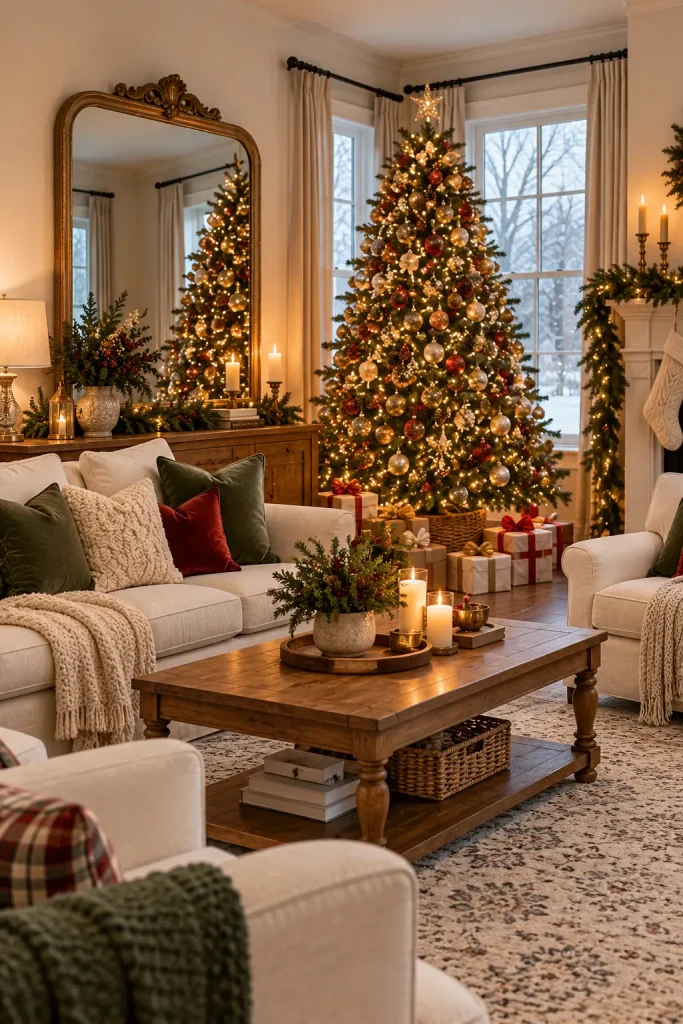
A large mirror can make Christmas lighting feel more visually expansive by reflecting the glow of a nearby tree or fireplace. Position the mirror where it captures something attractive rather than an area of clutter or an awkward angle. A simple wood frame works well in natural interiors, while dark metal or brass can suit more refined rooms. Keep the reflected tree visible enough that the mirror clearly contributes to the holiday atmosphere. Make sure the mirror is securely mounted, especially if it is large or positioned above furniture. Avoid placing it where strong light creates an uncomfortable glare. A mirror can also reflect natural winter daylight during the day, helping the room feel brighter. This idea works especially well in smaller living rooms where visual depth is useful. The result is a decorative feature that remains useful even after the Christmas decorations are removed.
27. Style a Christmas Bar Cart or Beverage Station
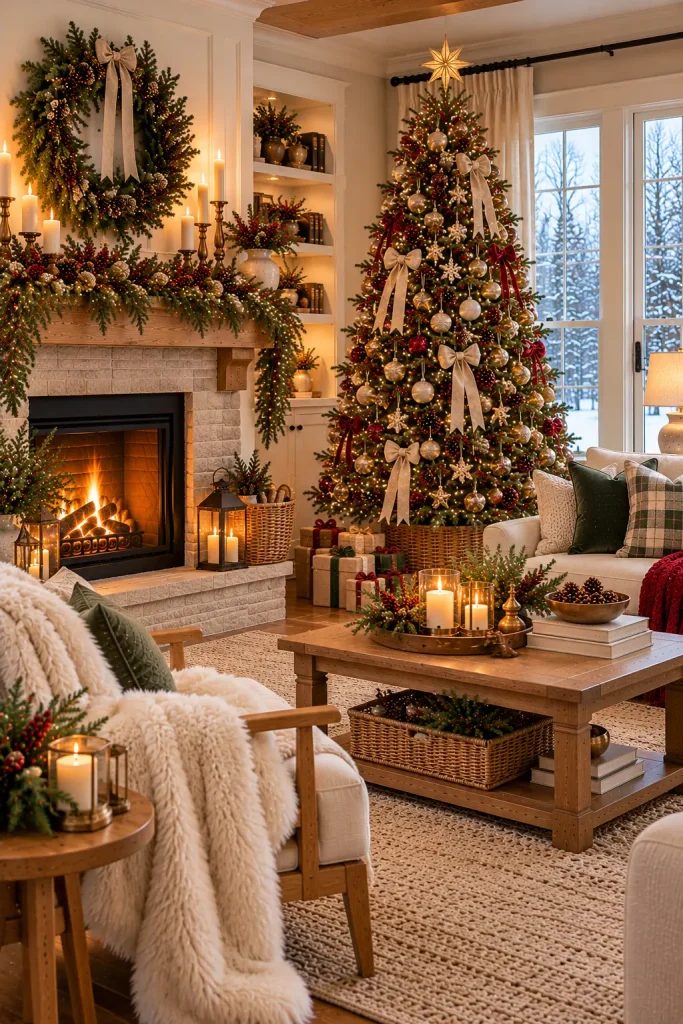
A bar cart can become a practical holiday entertaining station while also contributing to the room’s seasonal styling. Add a small evergreen branch, attractive glassware, neutral serving pieces, and a few festive napkins. A bowl of pinecones or a small ornament can provide a Christmas detail without taking up valuable functional space. Keep the arrangement organized so guests can easily reach the items they need. If the cart already contains metallic finishes, repeat those finishes through brass or gold-toned seasonal accents. Place the cart near the seating area but outside the main walking path. A wood-and-metal cart can work particularly well in traditional or transitional living rooms. Avoid overcrowding the shelves because the cart should remain practical throughout a gathering. With a few carefully chosen details, the beverage station can feel like a natural part of the Christmas room rather than a separate display.
28. Add a Cozy Layer of Sheepskin or Faux Fur Texture
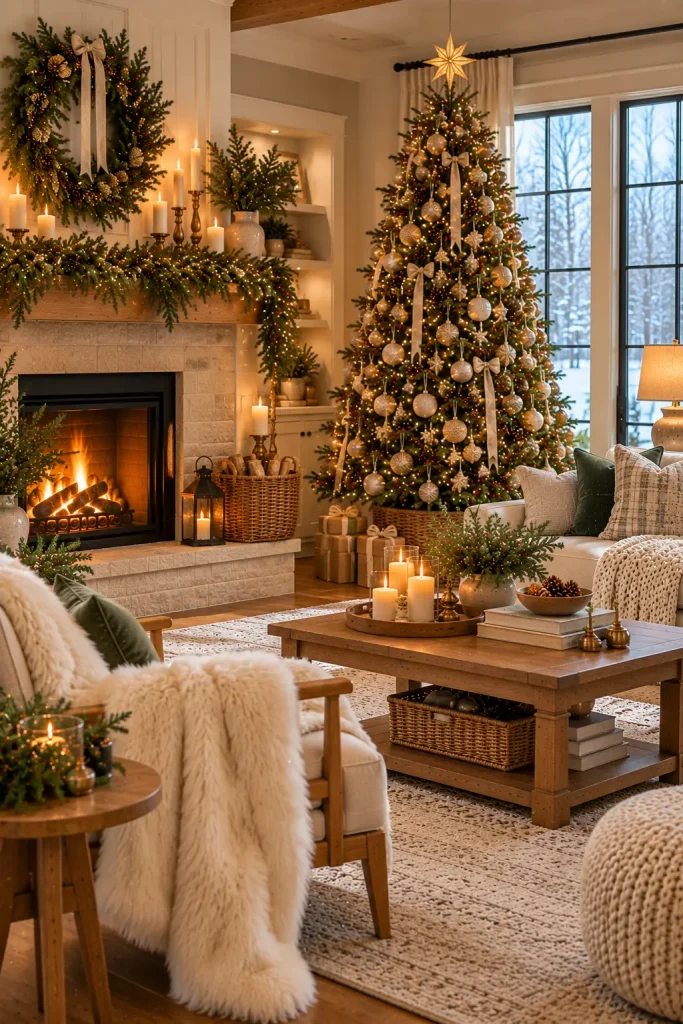
Winter textures can make a living room feel particularly inviting during the holiday season. A small faux-fur or sheepskin-style throw can be draped over an armchair, bench, ottoman, or one corner of a sofa. Cream and ivory versions work beautifully with evergreen branches and warm wood. Because the texture is visually substantial, you don’t need to use it in several places. Pair it with smoother materials such as wood, ceramic, or metal to create contrast. A woven basket beside the chair can reinforce the cozy winter atmosphere. Avoid covering every piece of furniture because too much plush texture can make a room feel visually heavy. This is a simple seasonal addition that can remain useful throughout the entire winter. It also works particularly well in neutral and Scandinavian-inspired Christmas living rooms.
29. Create a Simple Christmas Candle Arrangement
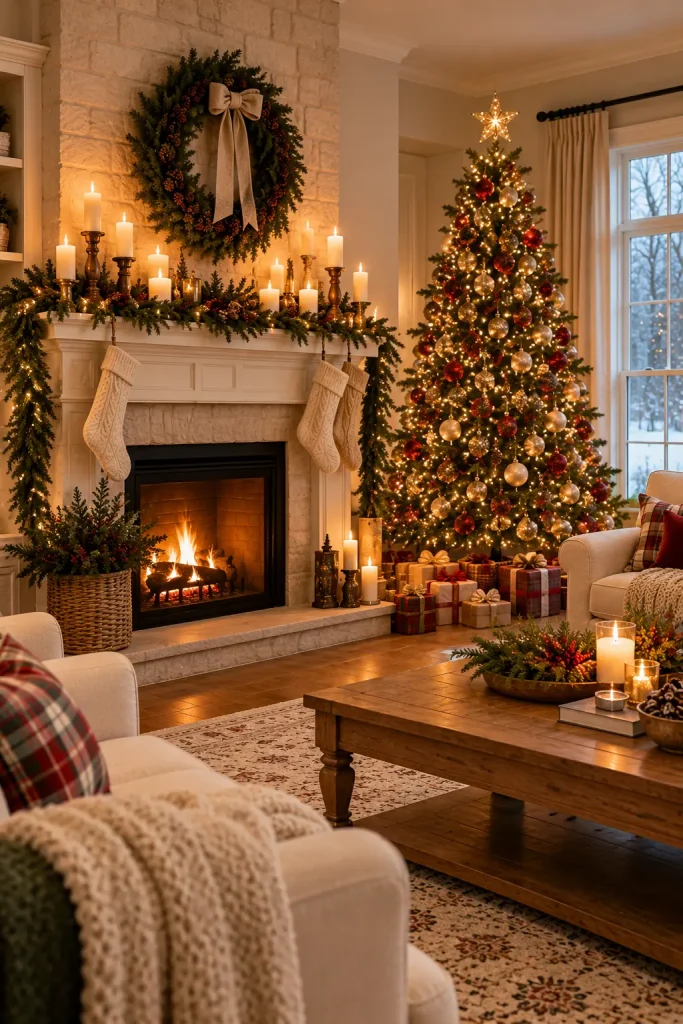
Candles can bring a gentle sense of warmth to Christmas decorating, especially when the living room is illuminated in the evening. Group candles of different heights on a fireplace mantel, console, or suitable tray to create visual variation. Cream or neutral candles can blend naturally with both traditional and modern Christmas palettes. Simple holders in brass, ceramic, glass, or wood can introduce additional texture without competing with the flames. Keep candles away from evergreen branches, curtains, paper decorations, and other materials that could catch fire. Flameless candles can be a practical alternative for homes with children, pets, or areas where an open flame isn’t appropriate. Avoid placing too many candles together because the arrangement can quickly become visually busy. The warm glow works especially well alongside Christmas tree lights and fireplace illumination. Keep the surrounding decor restrained so the candlelight remains part of the overall atmosphere.
30. Use Ribbon as a Repeating Design Element
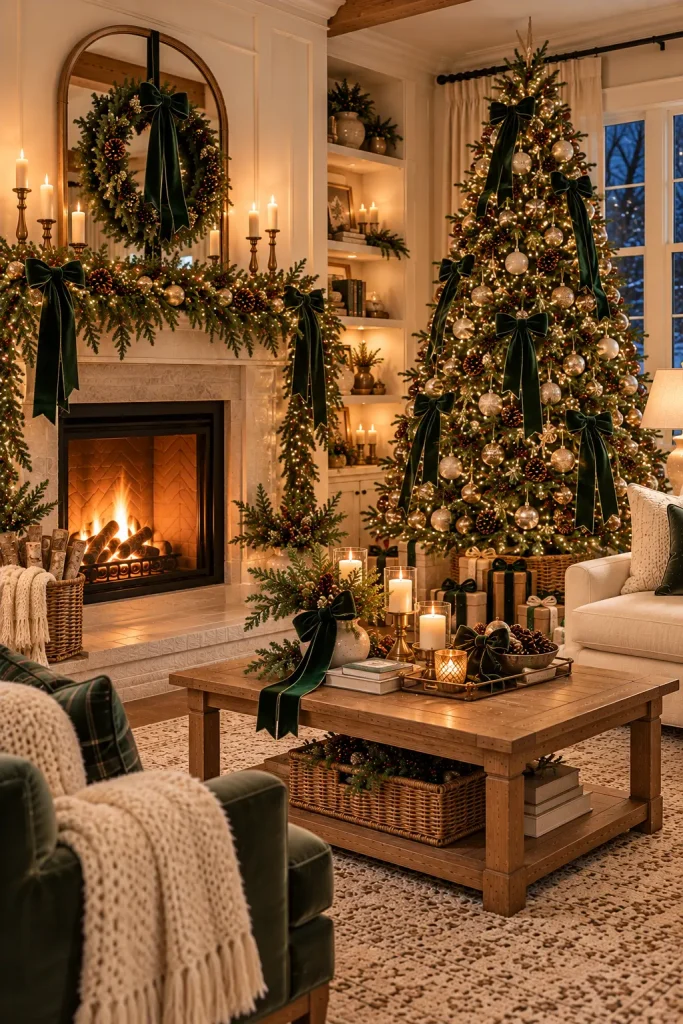
Ribbon can visually connect several Christmas decorating areas without requiring identical ornaments throughout the room. Use the same ribbon on the Christmas tree, wreath, mantel garland, or a small decorative arrangement. Linen ribbon creates a relaxed natural look, while velvet can make the room feel richer and more formal. Wired ribbon is useful when you want structured bows or defined loops. Choose a color that already appears in the room so the ribbon becomes part of the existing palette. Repeating one material in several locations can make a large living room feel more cohesive. Avoid using ribbon on every possible surface because the effect becomes less special when it is everywhere. Let some ribbon tails hang naturally for a softer appearance. This technique is particularly useful when you want to coordinate separate Christmas decorations without buying an entire matching collection.
31. Create a Moody Christmas Living Room
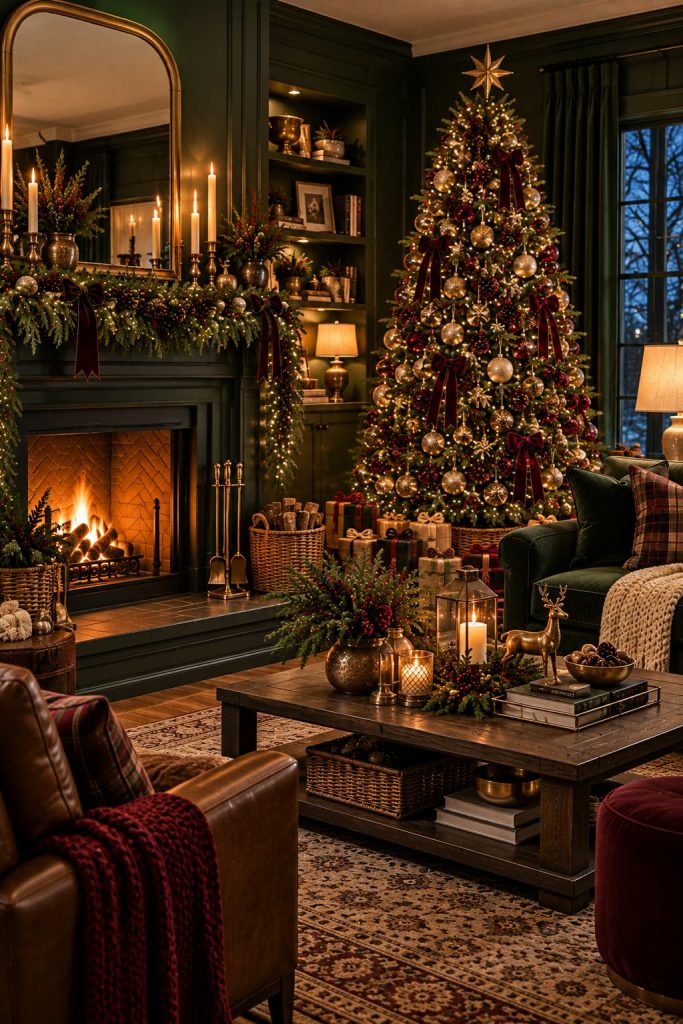
Christmas decorating doesn’t have to rely on bright colors or a very light palette. Deep forest green, walnut, charcoal, burgundy, and warm brass can create a cozy evening atmosphere with plenty of depth. Use warm-white tree lights and a fireplace to introduce brighter points within the darker room. Cream pillows or throws can provide enough contrast to keep the seating area from appearing too heavy. Natural wood can soften darker wall colors and furniture while maintaining the winter character. Keep metallic accents restrained so they provide small points of reflection rather than dominating the room. The darker palette works particularly well in rooms with generous evening lighting and comfortable upholstered furniture. Use several small light sources rather than one harsh overhead fixture. The result can feel intimate and seasonal while still remaining sophisticated and residential.
32. Decorate a Small Living Room With Vertical Elements
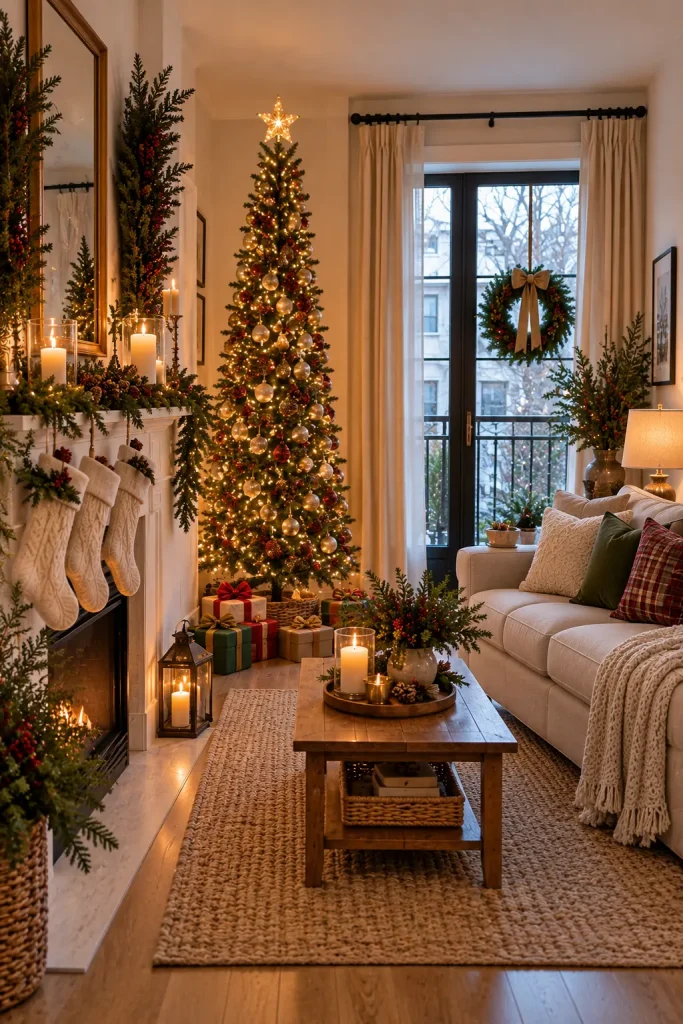
Small living rooms benefit from Christmas decorating that uses vertical space rather than filling every available surface. A slim but tall Christmas tree can create a strong focal point without taking up as much floor area as a wide tree. Tall branches, vertical stockings, narrow garlands, and wall-mounted seasonal accents can add additional height. Keep furniture pathways open so the room remains comfortable for everyday movement. Choose a limited palette to prevent the space from appearing visually crowded. A narrow tree collar or simple basket can finish the tree without adding excessive width. Use the wall and ceiling height to create impact while keeping tabletops relatively clear. This strategy works particularly well in apartments, condos, and smaller family rooms. The goal is not to make the room look larger through decoration alone, but to preserve its existing functionality while adding holiday atmosphere.
33. Mix Vintage Christmas Decorations With Modern Furniture
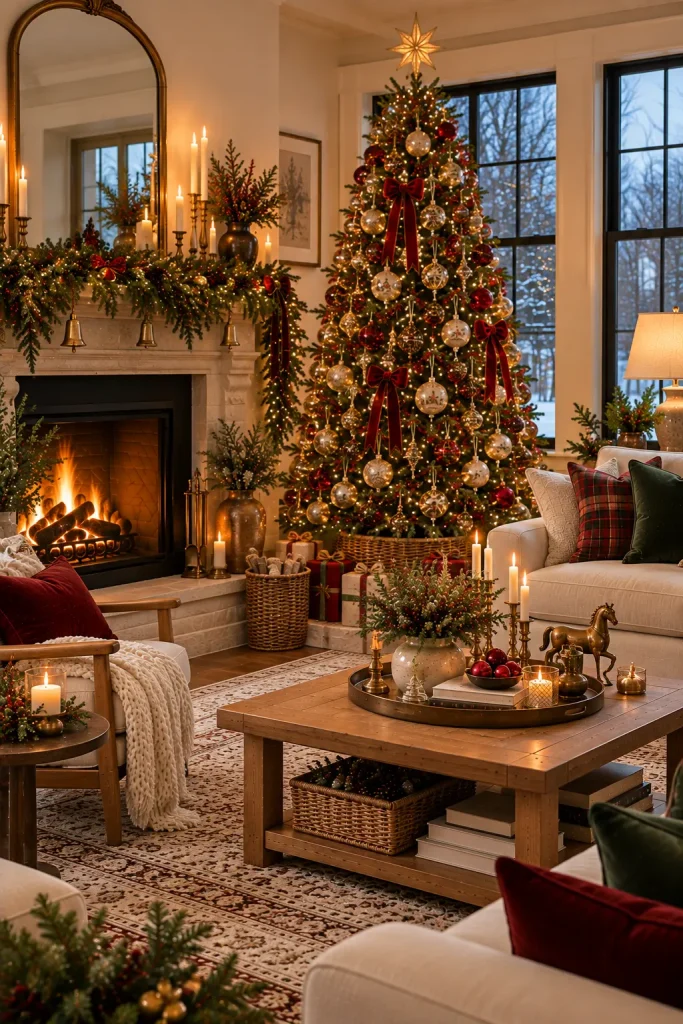
Combining vintage-inspired Christmas decorations with modern furniture can give the living room more personality and visual history. Classic glass ornaments, traditional figurines, old-fashioned ribbon, or nostalgic stockings can bring warmth to a clean-lined contemporary room. Choose several meaningful-looking pieces rather than filling every surface with vintage objects. Modern neutral upholstery provides a calm background for more detailed holiday decorations. Natural wood can help bridge the difference between older-looking ornaments and newer furniture. Consider using vintage-style decorations primarily on the tree so they form one clear focal point. A few traditional red accents can reinforce the nostalgic feeling without turning the entire room into a themed display. This combination works particularly well when you want Christmas decor to feel personal rather than perfectly coordinated. The contrast between old and new can make the room feel collected over time.