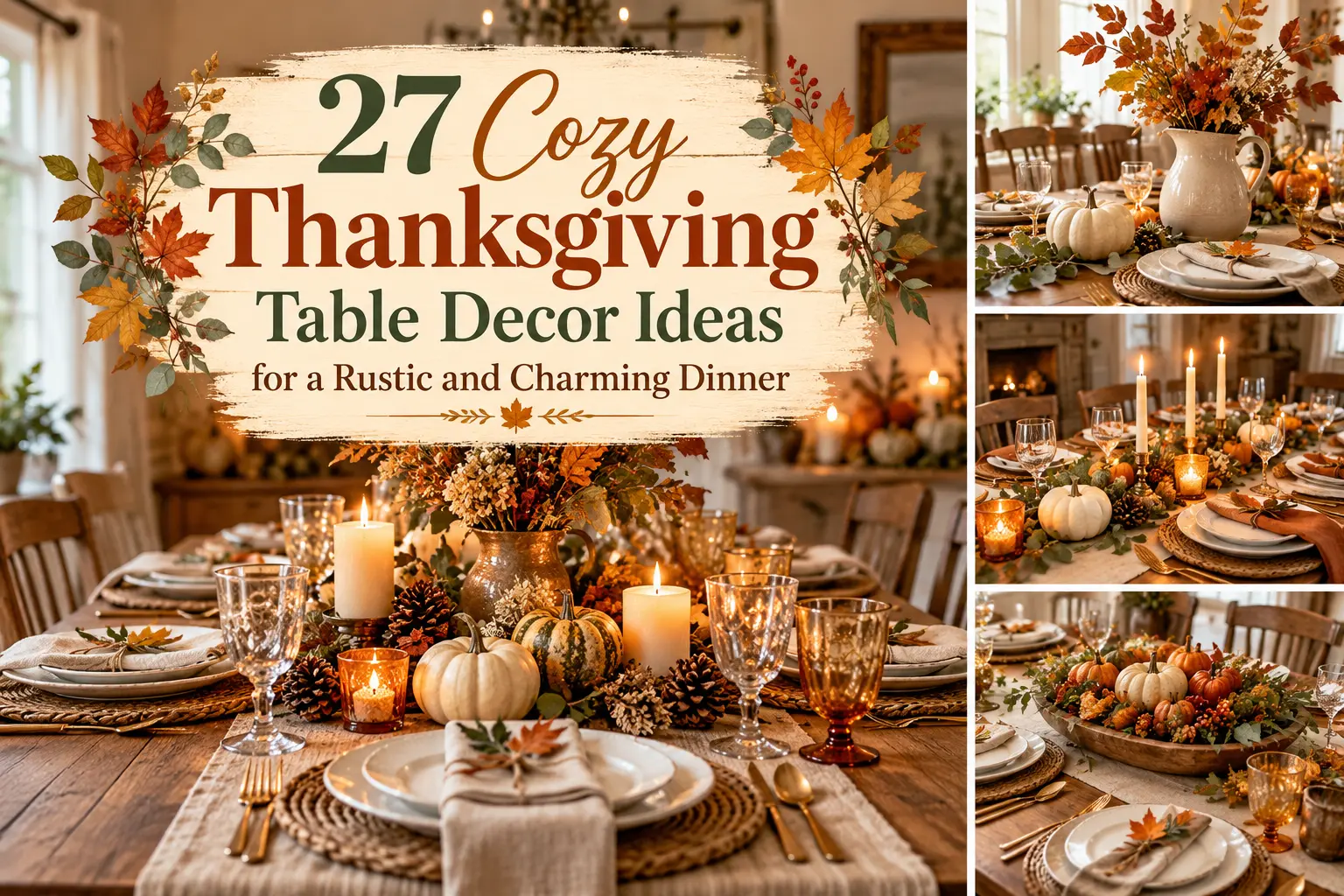
27 Cozy Thanksgiving Table Decor Ideas for a Rustic and Charming Dinner
A welcoming Thanksgiving table doesn’t need expensive decorations or perfectly matched dinnerware. The most charming tables often combine natural textures, warm autumn colors, simple seasonal accents, and thoughtful details that make guests feel at home. From rustic wooden tables and soft linen runners to miniature pumpkins, glowing candles, and fresh autumn flowers, there are countless ways to create a cozy setting for your holiday dinner.
These Thanksgiving table decor ideas bring together farmhouse charm, understated elegance, and practical styling for real homes. Whether you’re hosting a large family gathering, planning an intimate dinner, or decorating a small dining table, you’ll find inspiration that suits your space and budget. The key is to create a beautiful centerpiece without crowding the table, choose colors that work with your existing dishes, and leave enough room for serving platters and comfortable conversation.
1. Style a Rustic Oak Table With a Natural Linen Runner
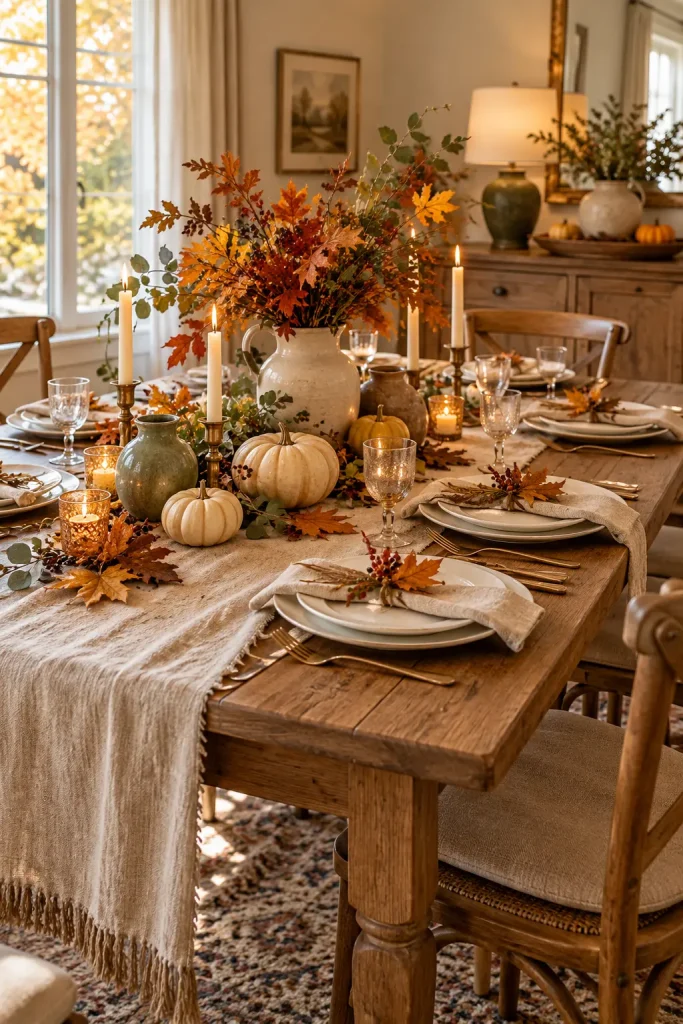
A natural wood table makes an inviting foundation for rustic Thanksgiving decor. Instead of covering the entire surface with a tablecloth, let the oak grain remain visible and add a soft oatmeal or ivory linen runner through the center. The contrast between textured fabric and warm wood gives the setting a relaxed, collected appearance.
Arrange a few cream pumpkins, muted autumn leaves, and small ceramic vases along the runner. White stoneware plates and simple cloth napkins keep the table from looking too busy.
How to recreate the look:
- Choose a runner that leaves some bare wood visible on both sides.
- Use three to five decorative elements in different heights.
- Repeat ivory, warm brown, and muted sage green throughout the setting.
2. Create a Centerpiece With White and Cream Pumpkins
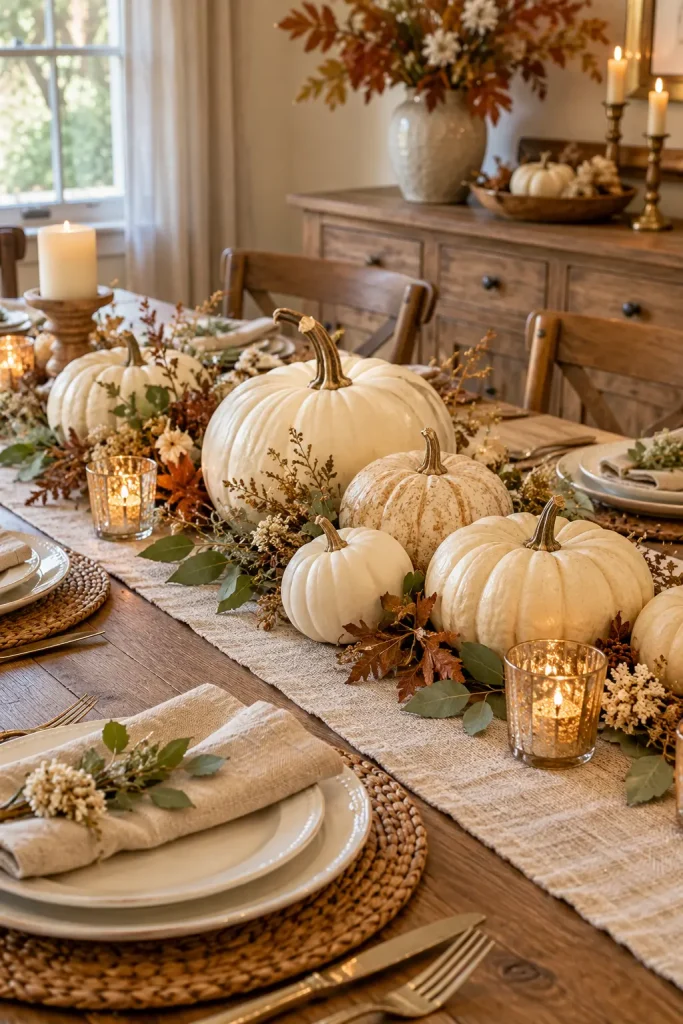
White and cream pumpkins offer a softer alternative to the traditional orange-and-black autumn palette. Their understated color works especially well with rustic farmhouse interiors, natural wood furniture, and neutral dinnerware.
Group pumpkins of different sizes down the middle of the table, using miniature varieties to fill gaps between larger pieces. Add a few dried leaves or sprigs of greenery for texture, but leave enough space around each pumpkin to keep the arrangement from becoming crowded.
Quick Tip: Mix smooth pumpkins with a few ribbed or subtly textured varieties. The difference in shape creates visual interest even when the colors remain similar.
3. Layer Plaid Napkins for Farmhouse Charm
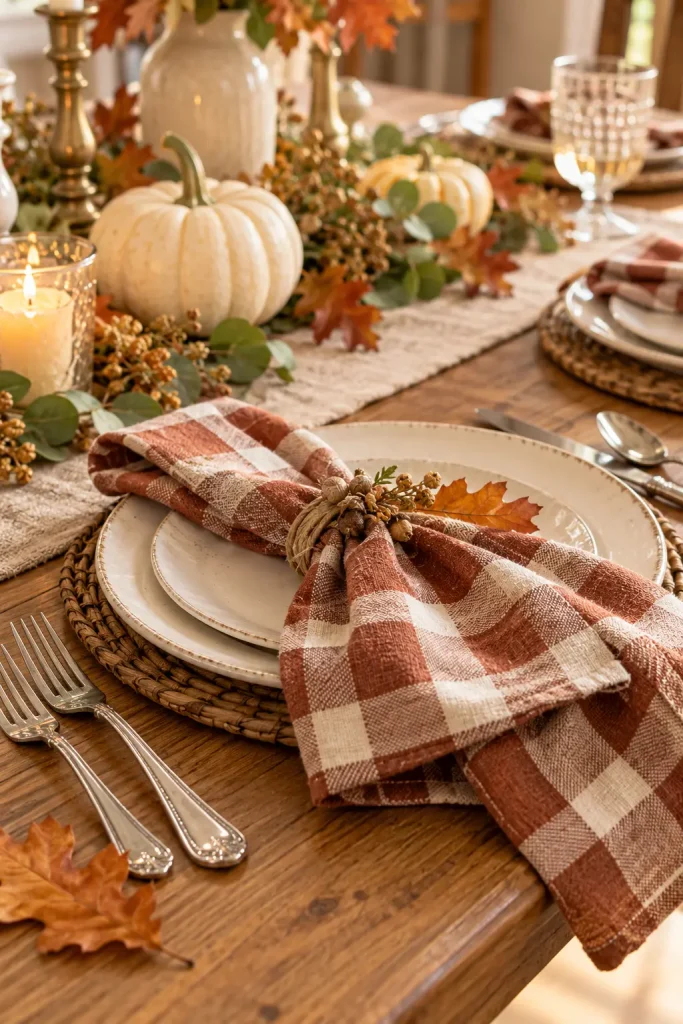
Plaid introduces the familiar comfort of fall without requiring a complete table makeover. Choose napkins in rust, caramel, brown, or cream and layer them over white or stone-colored plates. A subtle check pattern feels traditional, while a larger plaid creates a more relaxed country-house look.
For a coordinated table, repeat one color from the napkins in the centerpiece or surrounding decor. For example, rust plaid pairs naturally with dried orange leaves and warm wood, while brown-and-cream checks complement ivory pumpkins.
Keep the remaining table accessories relatively simple so the pattern remains the focal point.
4. Add a Long Garland of Autumn Greenery
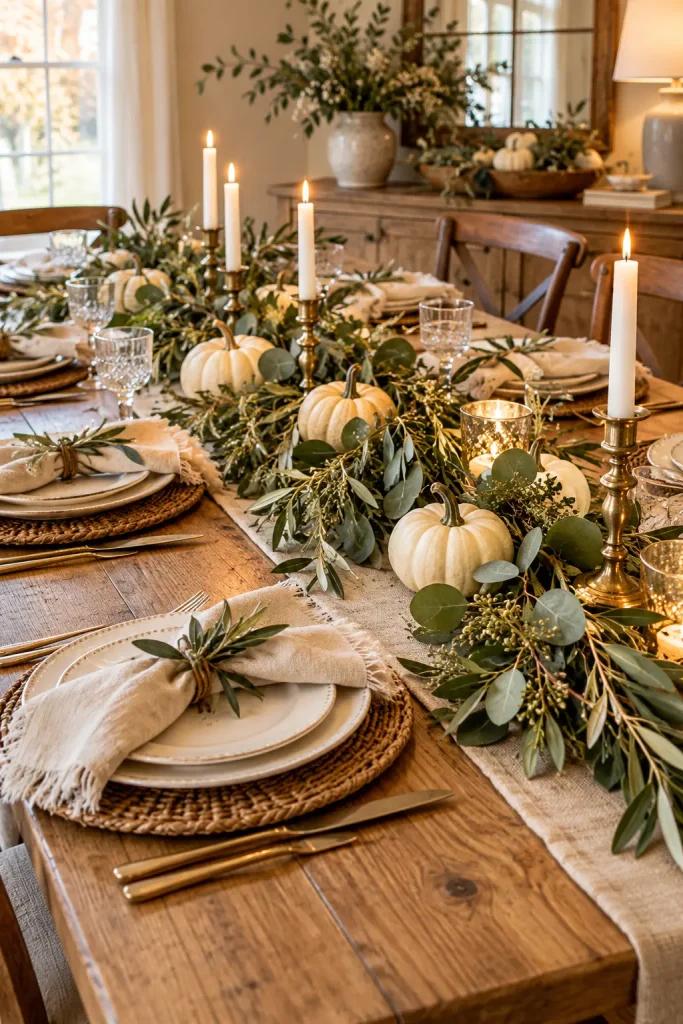
A greenery garland creates a natural centerpiece that feels abundant without relying on lots of individual decorations. Lay eucalyptus, olive branches, or suitable seasonal foliage loosely along the center of the table, allowing a few stems to curve naturally rather than arranging everything in a perfectly straight line.
For a rustic look, combine the greenery with a handful of small pumpkins and understated candleholders. Keep the garland low enough that guests can see one another across the table.
If you’re using fresh foliage, prepare it close to the gathering and keep it away from candle flames, hot serving dishes, and food-contact surfaces.
5. Use Amber Glass Candles for a Golden Autumn Glow
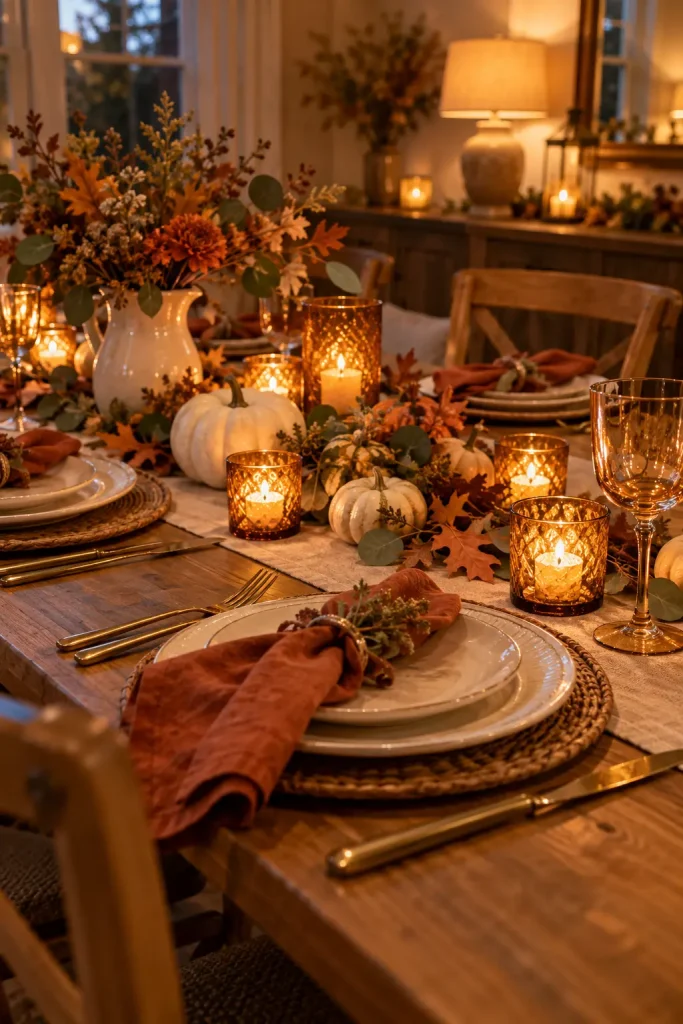
Amber glass adds warmth even before the candles are lit. Its honey-colored finish works beautifully with dark wood, cream dinnerware, rust-colored napkins, and muted fall foliage.
Scatter several amber votive holders along the center of the table rather than clustering them all in one spot. This spreads the light more evenly and creates a comfortable atmosphere as the afternoon turns into evening.
Choose holders with stable bases, and keep open flames away from dried leaves, fabric, and hanging greenery. If your table is crowded or children will be reaching across it, battery-operated candles offer a practical alternative.
6. Choose a Sage Green and Ivory Color Palette
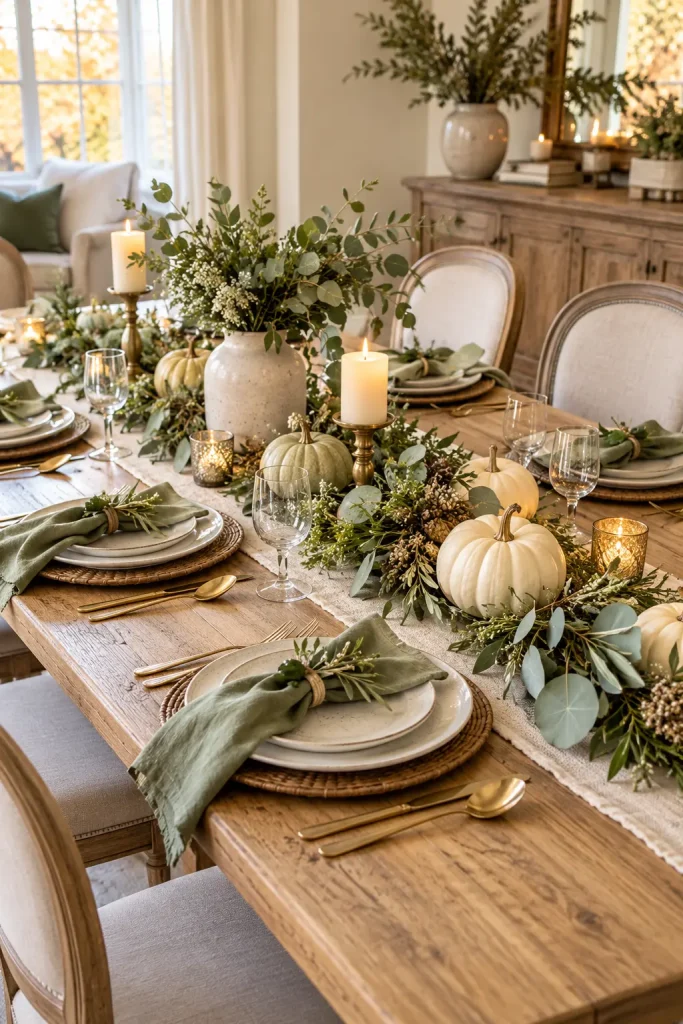
Sage green and ivory create a quieter take on traditional Thanksgiving colors. Instead of relying on bright orange and deep red, use muted green napkins, cream plates, pale pumpkins, and a natural linen runner.
The palette feels especially cohesive when the materials vary. Smooth ceramic dishes balance soft linen, while leafy branches introduce a more organic texture. Natural wood adds enough warmth to prevent the arrangement from feeling cold.
A simple color formula:
- Ivory for the plates, runner, and pumpkins.
- Sage green for napkins and foliage.
- Natural oak or warm brown for the table and accessories.
A few brass details can add contrast without taking attention away from the natural colors.
7. Make Each Place Setting Feel Personal With Leaf Name Cards
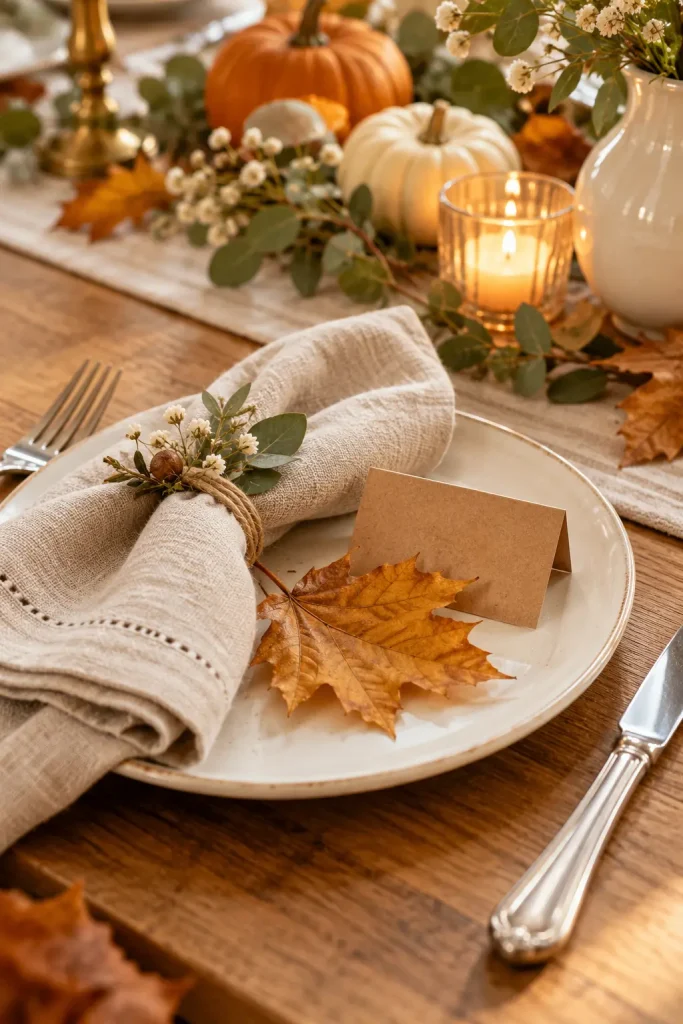
Small place cards make a Thanksgiving dinner feel thoughtfully prepared. For a rustic approach, use kraft paper tags, simple folded cards, or sturdy dried leaves with guests’ names written in an elegant, readable hand.
Place each card on the plate, tuck it into a napkin fold, or attach it to a simple natural-fiber napkin ring. The materials should complement the rest of the table rather than introduce a completely new color scheme.
If you’re hosting a large gathering, assign seats before guests arrive. This also helps you plan the placement of children, older guests, and anyone who needs extra space.
8. Bring in Dried Wheat and Natural Grasses
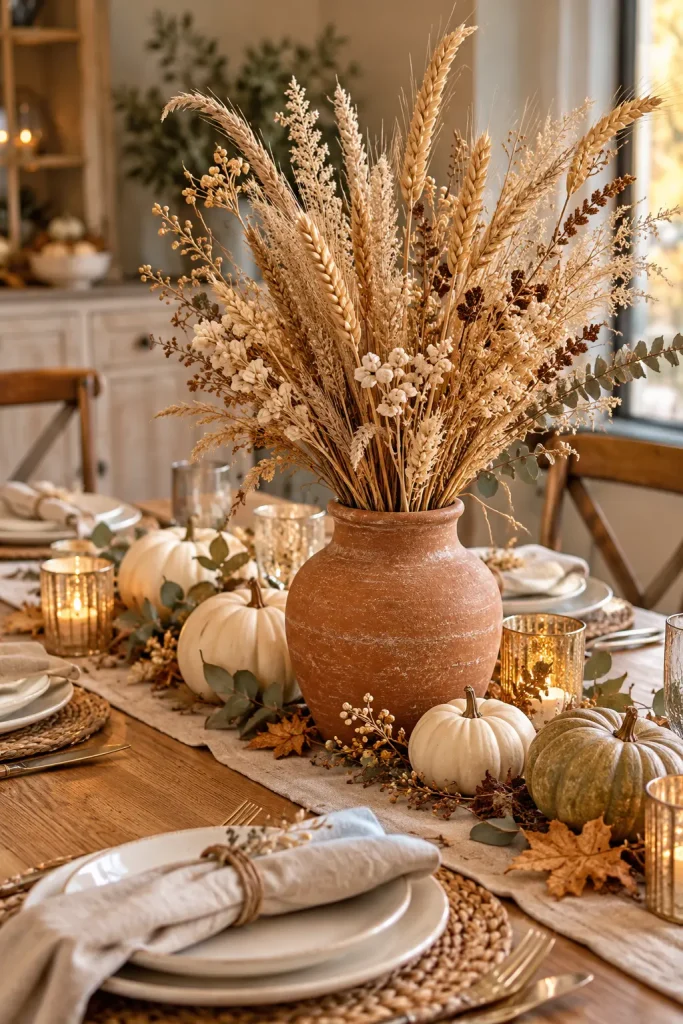
Dried wheat and ornamental grasses introduce height and texture without the bright colors associated with some traditional fall arrangements. Place the stems in a substantial ceramic or terracotta vase, then keep the surrounding decorations low.
This works particularly well on a farmhouse table with a natural finish or in a dining room with warm white walls. The pale wheat tones echo linen, unfinished wood, and cream ceramics.
Common Mistake: Choosing an arrangement so tall and wide that guests struggle to see across the table.
Better Approach: Keep the vase narrow and choose a shape that doesn’t spread too far into the dining area. For a seated dinner, a lower arrangement may be more practical.
9. Mix Vintage Plates for a Collected Look
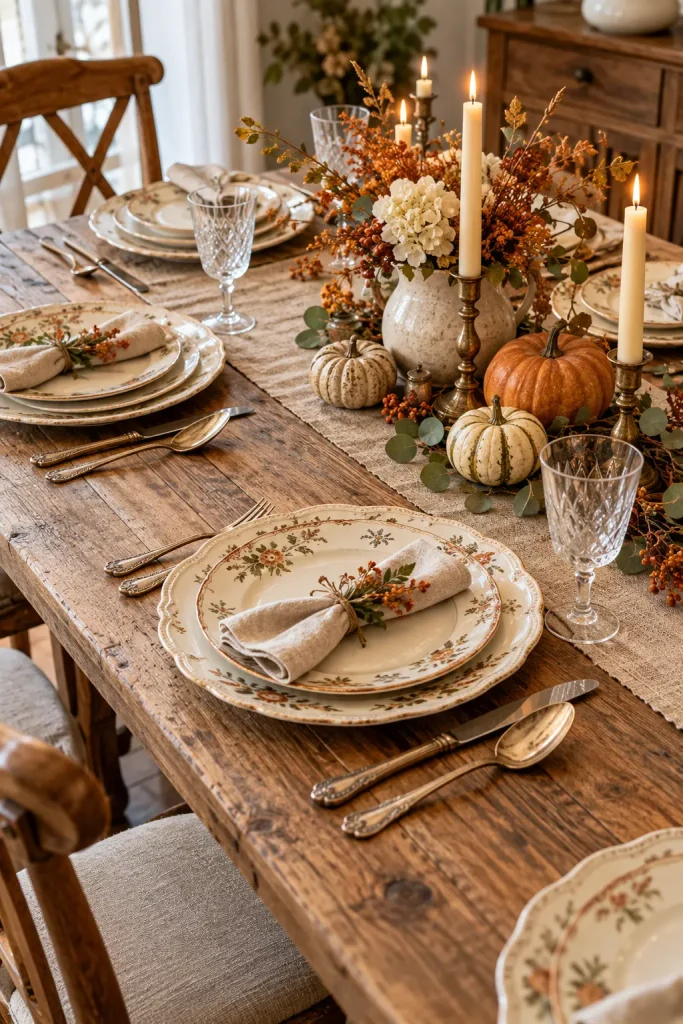
A mix of vintage plates gives the table character without making every place setting identical. Look for compatible pieces in ivory, faded floral patterns, muted green, or delicate brown detailing. The designs can vary as long as the overall palette remains connected.
If you already own family china or secondhand plates, use those as the starting point. Pair more decorative dishes with plain linen napkins and understated glassware to keep the table balanced.
For an easy arrangement, repeat the same dinner plate at every seat and vary only the smaller accent plates. This preserves the collected appearance while making the table feel intentional.
10. Decorate With Mini Pumpkins and Pears
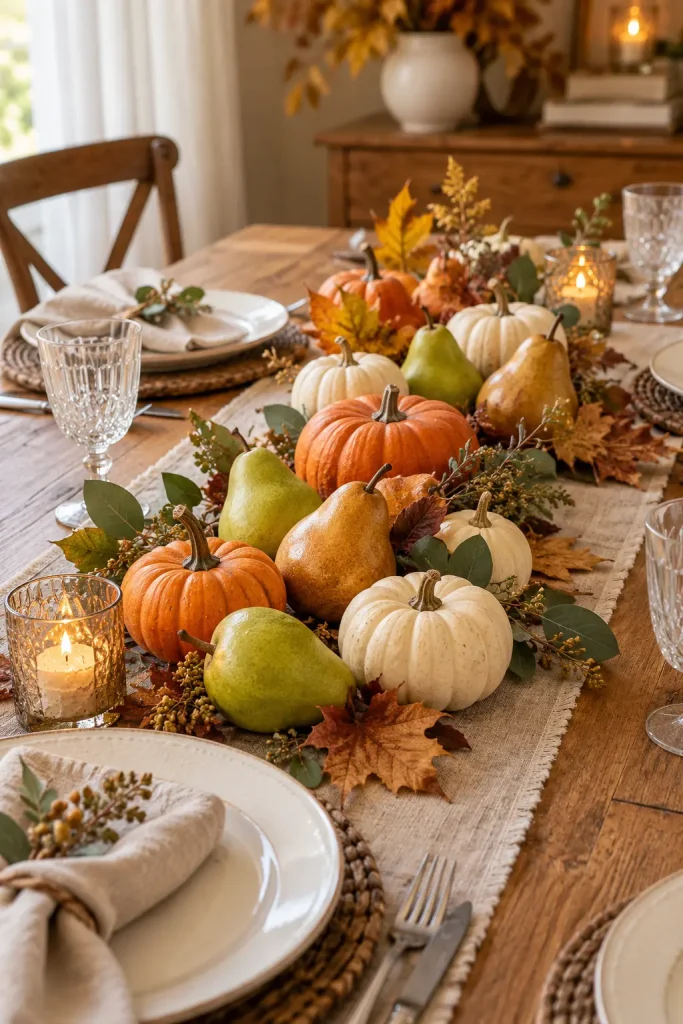
Pumpkins and pears bring together two of autumn’s most appealing shapes: rounded pumpkins and softly tapered fruit. Their natural colors look beautiful against a linen runner, particularly when you mix cream, muted orange, green, and golden yellow.
Arrange the pieces loosely rather than creating a perfectly symmetrical line. Add a small bowl of seasonal fruit at one end of the table if you want the display to feel abundant without using a large floral arrangement.
Keep decorative fruit separate from food that will be served, and wash any edible fruit before bringing it into your meal preparation area.
11. Layer a Burlap Runner Over a Soft Cotton Tablecloth
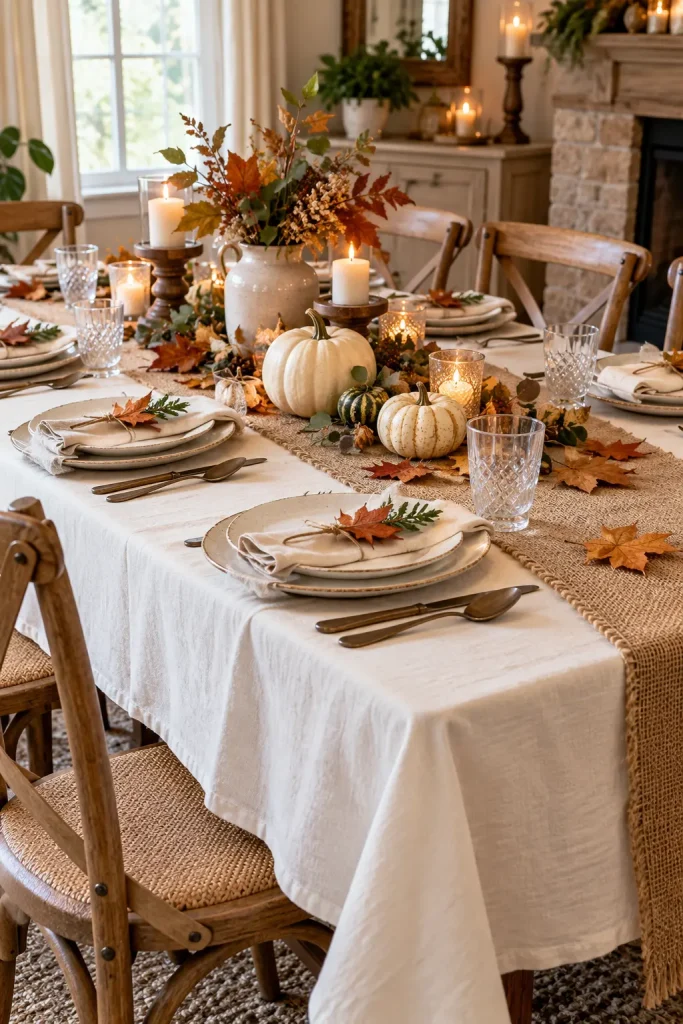
A burlap runner introduces the rough, natural texture associated with rustic farmhouse decor. Layer it over a smooth ivory cotton tablecloth to create contrast between the coarse weave and softer fabric.
Because burlap has a strong visual texture, keep the centerpiece restrained. A few cream pumpkins, plain ceramic dishes, and simple glassware are enough to complete the setting.
For a more refined result, choose a runner with finished edges and avoid placing loose fibers near food. If you prefer a softer surface, a woven cotton runner in a burlap-inspired shade can provide a similar color effect.
12. Use Copper and Brass for Warm Metallic Details
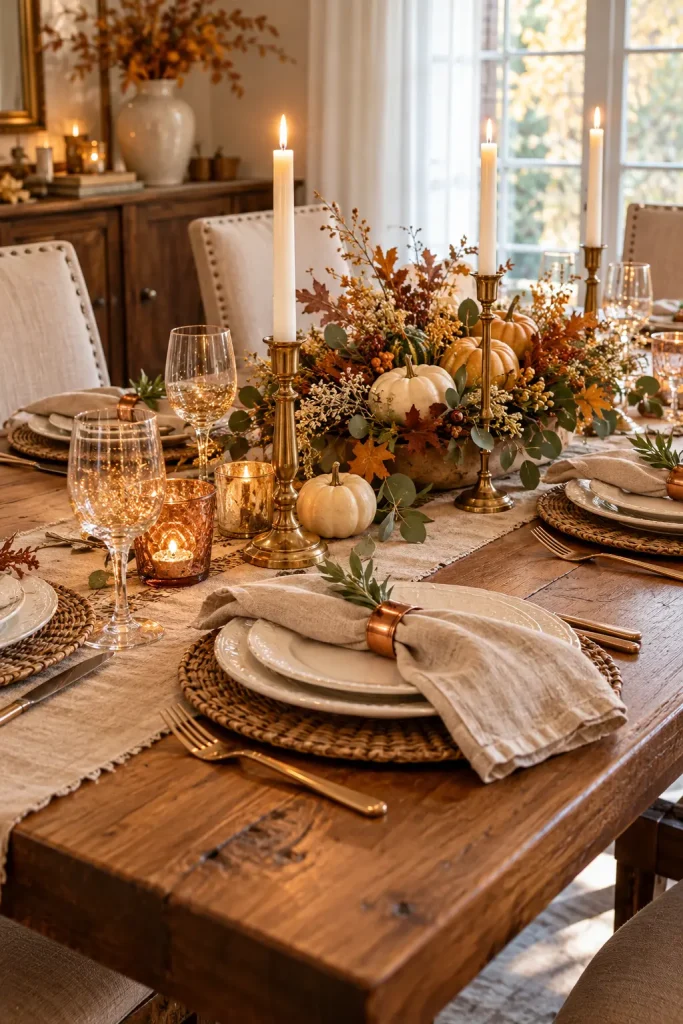
Warm metallic accents add a subtle glow to rustic Thanksgiving decor. Brass candlesticks, copper-colored napkin rings, or small antique-finish serving accessories work especially well alongside cream dishes and dark autumn foliage.
The trick is to repeat the metal finish a few times without turning the table into a display of shiny objects. Two or three related accents often look more cohesive than mixing several competing finishes.
| Finish | Visual effect | Pairs well with |
|---|---|---|
| Brushed brass | Soft golden warmth | Ivory, sage, oak |
| Aged copper | Rich autumn character | Rust, brown, cream |
| Antique bronze | Deeper, traditional tone | Dark wood, burgundy, olive |
13. Arrange a Low Bowl of Seasonal Flowers
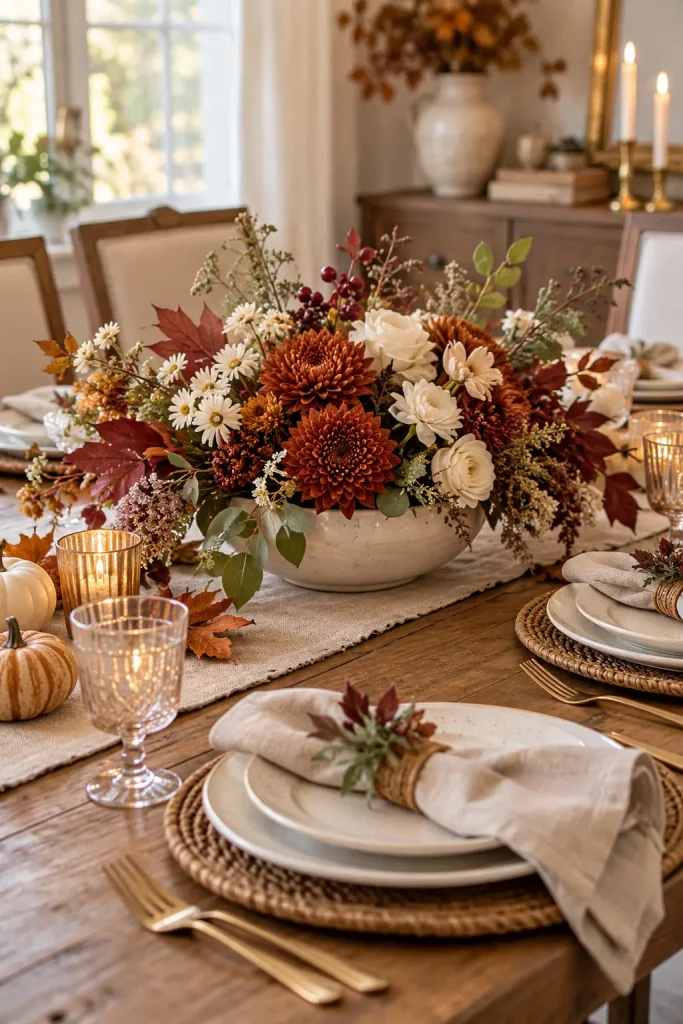
Fresh flowers bring color and softness to a Thanksgiving table, but the arrangement doesn’t need to be tall or elaborate. Choose a low ceramic bowl and combine seasonal flowers in rust, cream, muted burgundy, or soft gold with a modest amount of greenery.
A low arrangement makes conversation easier and leaves more room for serving dishes. It also works on smaller dining tables where a tall vase might feel overwhelming.
For a rustic look, let the flowers sit at slightly different heights rather than trimming every stem to exactly the same level. Keep the arrangement away from food and avoid placing it where water could spill onto linens.
14. Create a Moody Table With Burgundy and Dark Wood
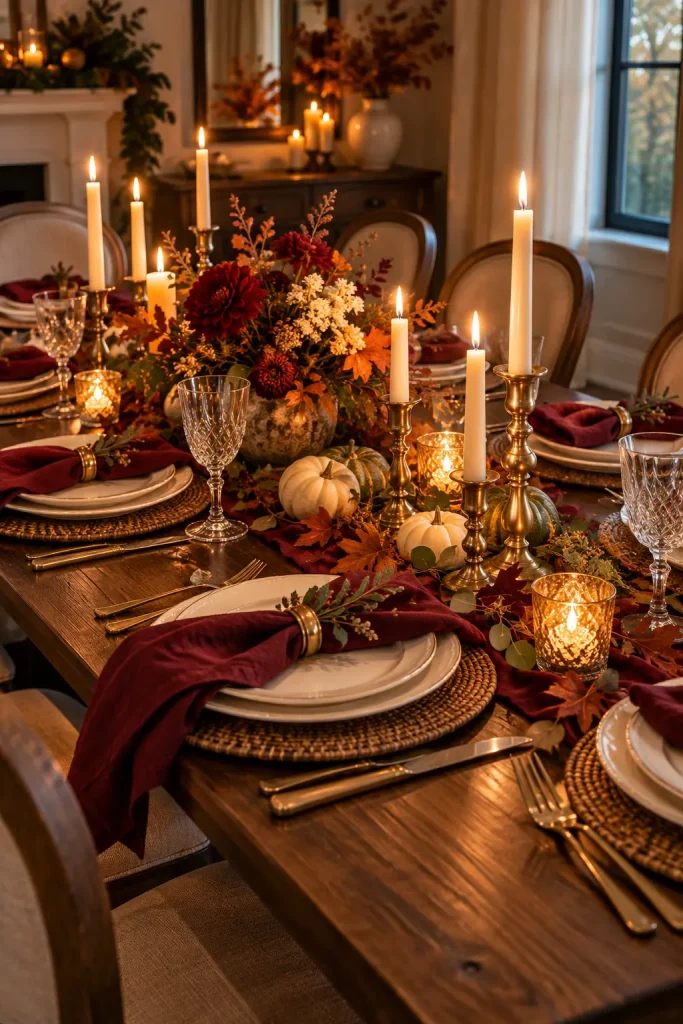
If pale neutrals aren’t your style, burgundy and dark wood offer a richer interpretation of Thanksgiving decor. Deep red napkins, walnut furniture, dark foliage, and warm candlelight create an intimate setting that feels particularly inviting for an evening dinner.
Keep some elements light so the table doesn’t become visually heavy. Ivory plates, clear glassware, and a few pale pumpkins provide contrast against darker fabrics.
Styling tip: Use burgundy in two or three places, such as napkins, flowers, and a small accent in the centerpiece. Repeating the color helps the arrangement feel coordinated without making every object match.
15. Fold Linen Napkins Into Simple Knots
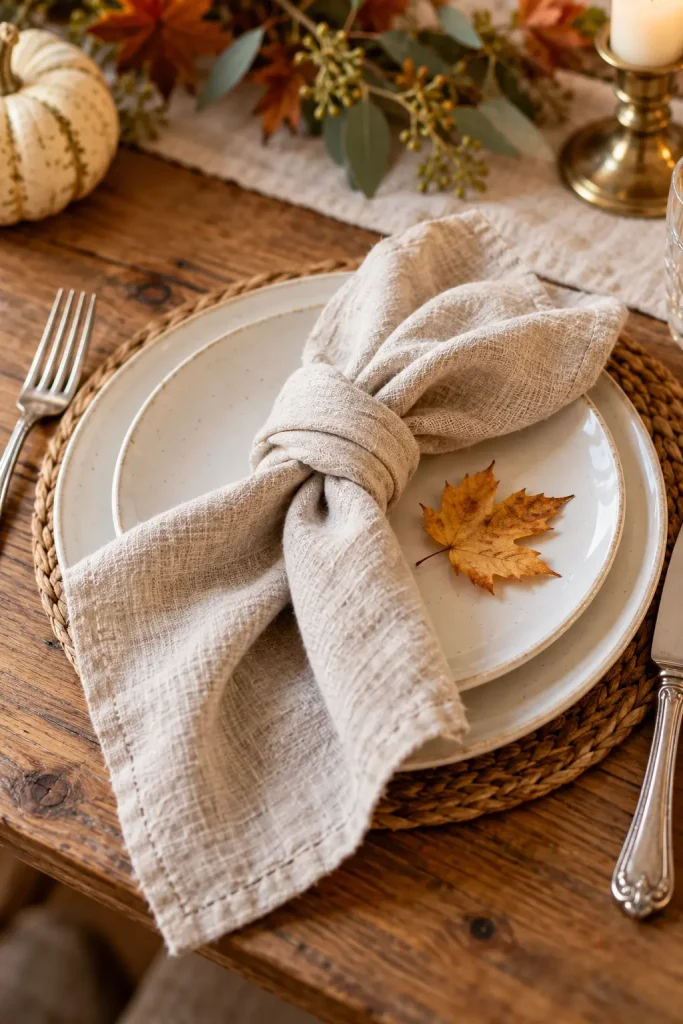
Napkin styling is a simple way to make each place setting look considered without purchasing additional decorations. A loose knot in a soft linen napkin creates an informal shape that suits rustic and farmhouse tables.
Choose oatmeal, ivory, sage, or rust linen, depending on your palette. Place the knotted napkin directly on the dinner plate, then add a small leaf or plain wooden accent if the setting needs another detail.
How to create the look
- Spread the napkin flat and smooth out any bulky folds.
- Bring the fabric loosely into a single knot near the center.
- Adjust the ends so they fall naturally without covering the entire plate.
Avoid pulling the knot too tightly. Linen looks best here when its natural folds remain visible.
16. Use Woven Placemats for Everyday Rustic Charm
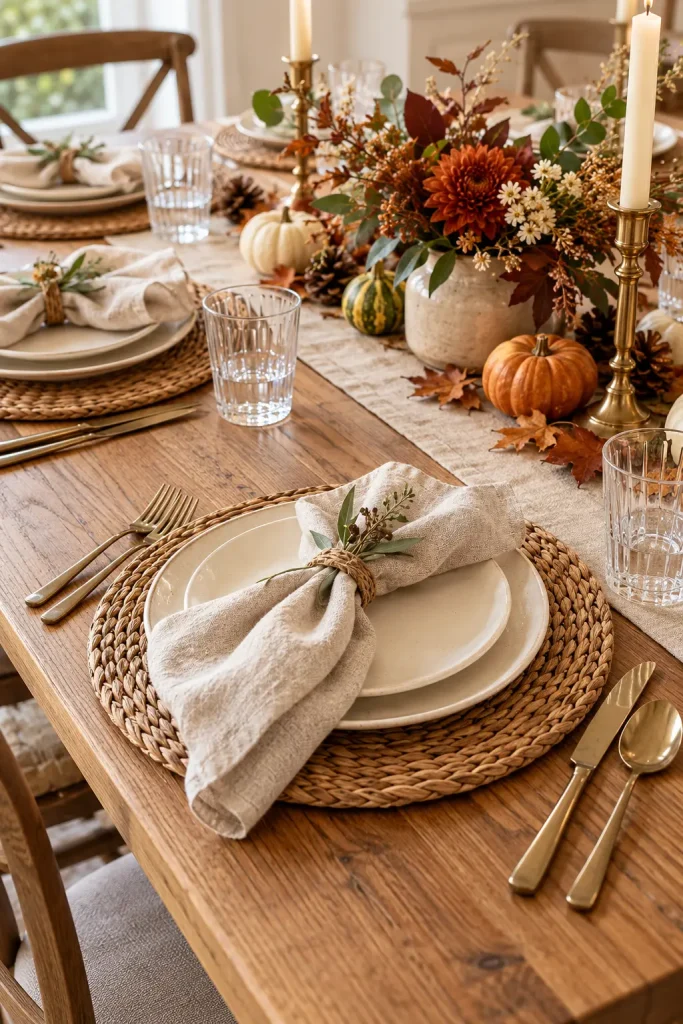
Woven placemats create texture at each seat without requiring a full table runner. Natural fibers work particularly well with plain stoneware, linen napkins, and clear glassware.
Round placemats can soften a table filled with square plates or straight architectural lines, while rectangular versions suit longer place settings. Choose a weave that is comfortable to use and easy to maintain.
This is also a flexible option for smaller tables, where a large centerpiece could take up valuable serving space.
17. Display Mini Pumpkins in a Ceramic Trough
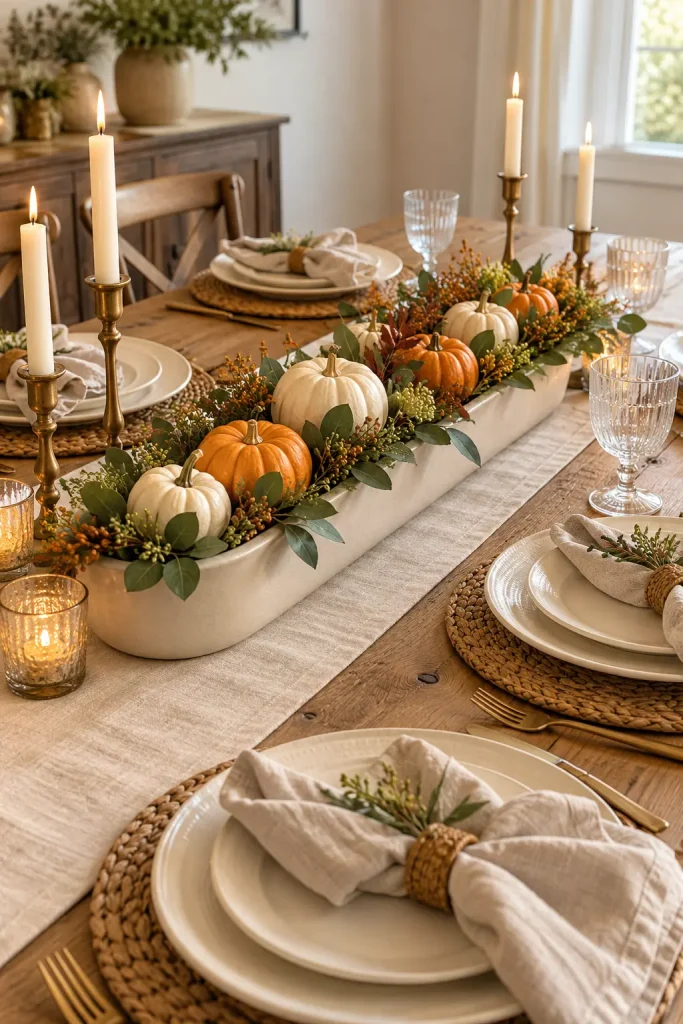
A long ceramic trough offers a cleaner, more contemporary take on the traditional pumpkin centerpiece. The vessel keeps the arrangement contained, while the pumpkins add seasonal color and texture.
Choose a matte cream or warm white trough for a neutral table, or a muted earthy glaze if you want a stronger focal point. Mix small pumpkins with a few sprigs of greenery, leaving some open space between the objects.
18. Layer Neutral Dinnerware for a Refined Look
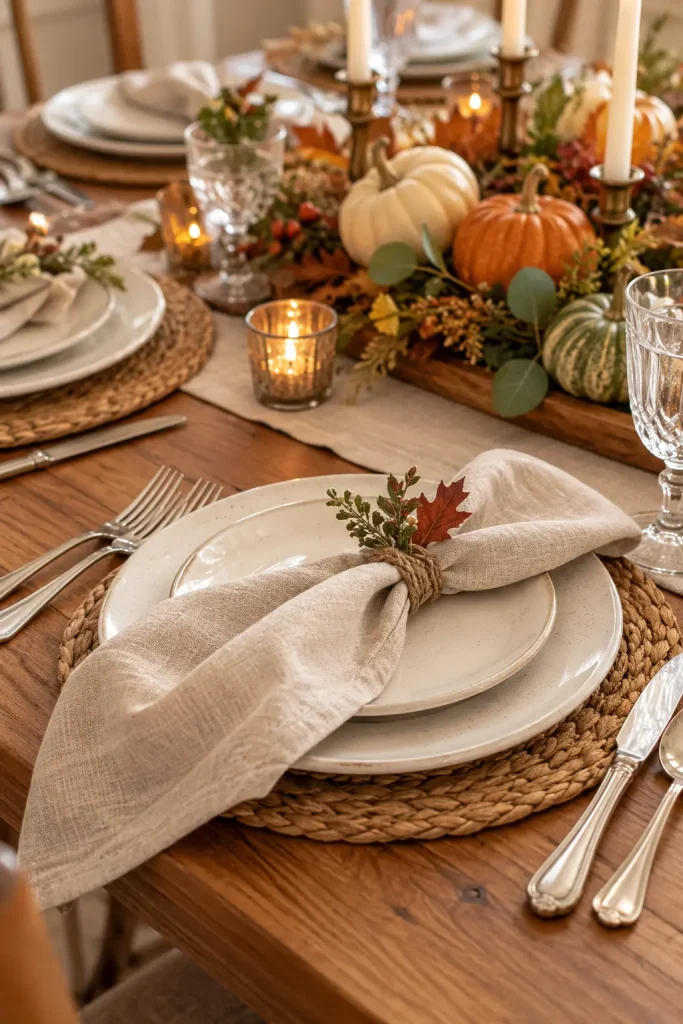
Layering dinner plates creates a more finished place setting without introducing extra colors. Combine a larger ivory dinner plate with a smaller cream salad plate, then add a folded linen napkin and simple cutlery.
The plates can differ slightly in glaze or shape as long as they look harmonious together. This subtle variation gives the setting character while preserving a calm, cohesive palette.
For a more formal dinner, add a restrained charger beneath the larger plate. For a casual gathering, the two plates alone are often enough.
19. Decorate With Dried Wheat and Seed Stems
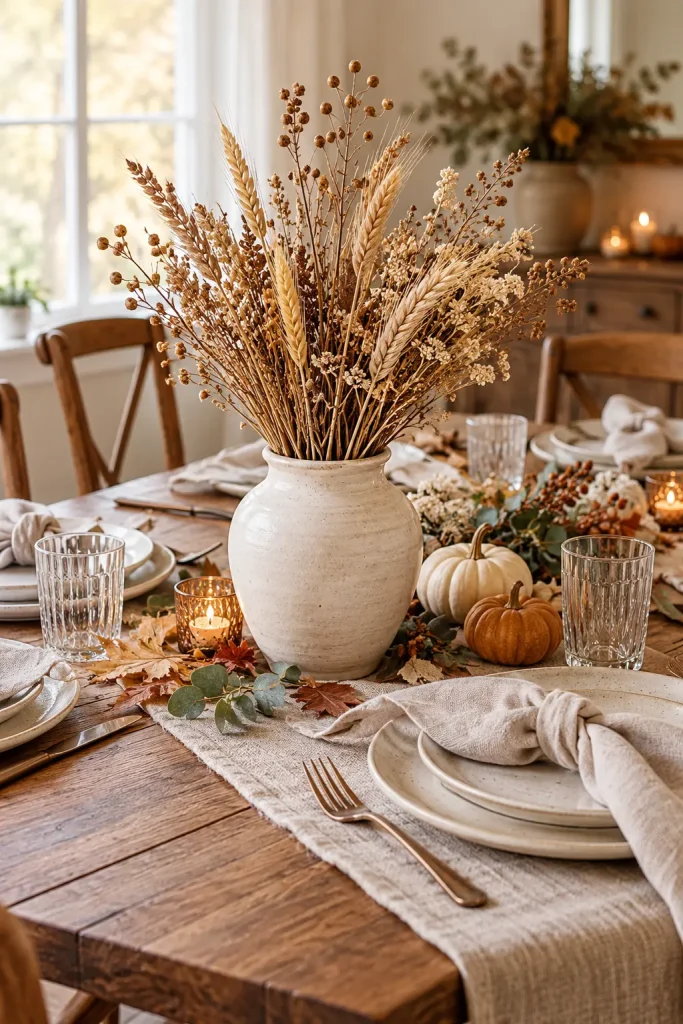
Dried wheat and seed stems bring height and a natural, harvest-inspired quality to Thanksgiving table decor. Their soft golden tones pair beautifully with cream ceramics, linen, and warm wood.
Arrange a small bundle in a handmade ceramic vase, keeping the silhouette loose rather than tightly symmetrical. On a long table, use a few small vessels instead of one oversized arrangement.
Dried botanicals are combustible, so position them well away from candles and other heat sources. If you plan to light tapers, keep the flames and stems in separate areas.
20. Create a Farmhouse Table With Plaid Napkins
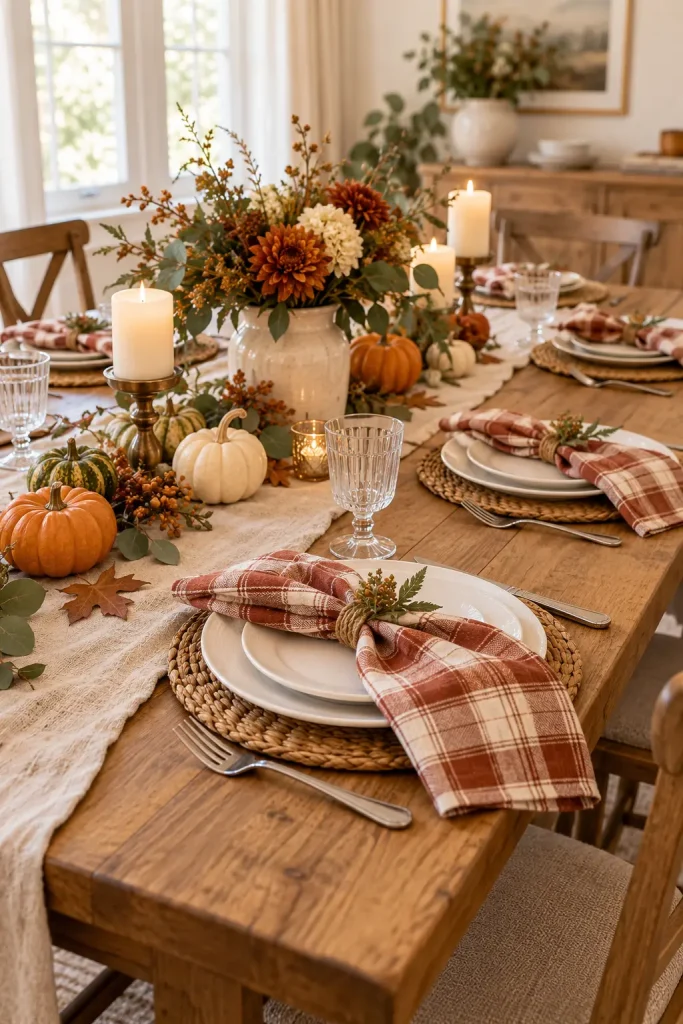
Plaid napkins add a traditional farmhouse touch without requiring a patterned tablecloth. Look for a small-scale check in muted rust, brown, cream, or olive so it feels seasonal rather than overly busy.
Pair the napkins with plain stoneware and an undecorated wooden table. Because the fabric already introduces a pattern, keep the centerpiece simple with a few pumpkins and restrained greenery.
Do: Repeat one or two colors from the plaid in the centerpiece.
Don’t: Combine several competing patterns unless you deliberately want a more eclectic look.
21. Choose a Rustic Table With a Natural Live Edge
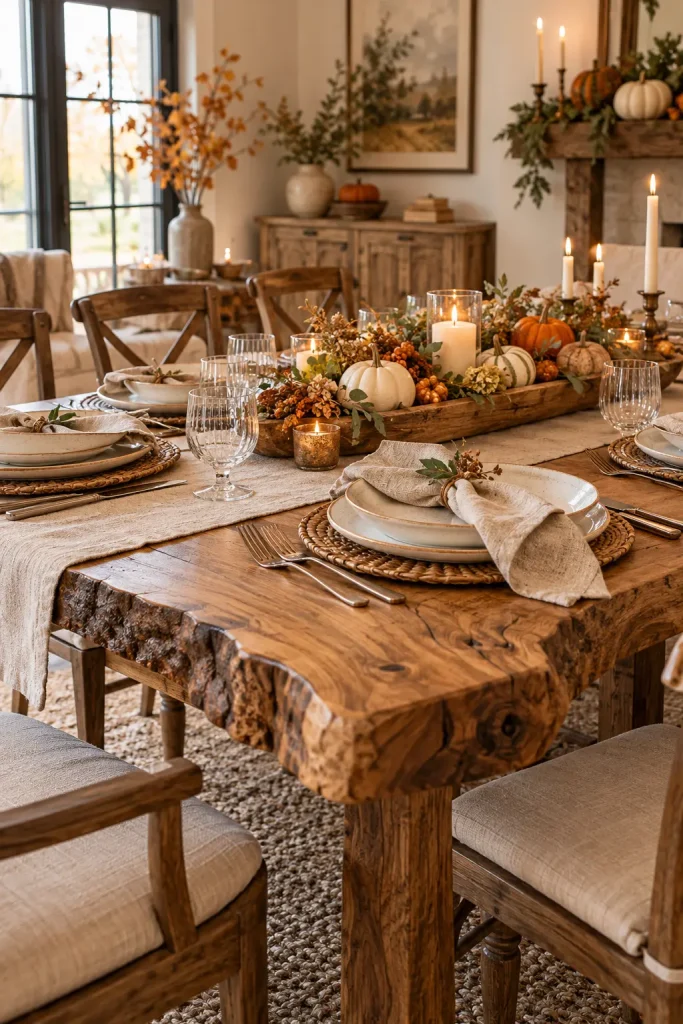
A live-edge wood table makes a strong focal point because the natural outline of the timber adds character before any decorations are introduced. Keep the tabletop visible by choosing a narrow linen runner rather than a full tablecloth.
Ivory dinnerware, simple napkins, and a restrained arrangement of seasonal foliage complement the grain without competing with it. This look suits homes where natural materials are already part of the interior.
If you’re decorating an ordinary dining table, you can borrow the same principle by leaving some wood exposed around the runner.
22. Bring in Vintage Glassware for Subtle Color
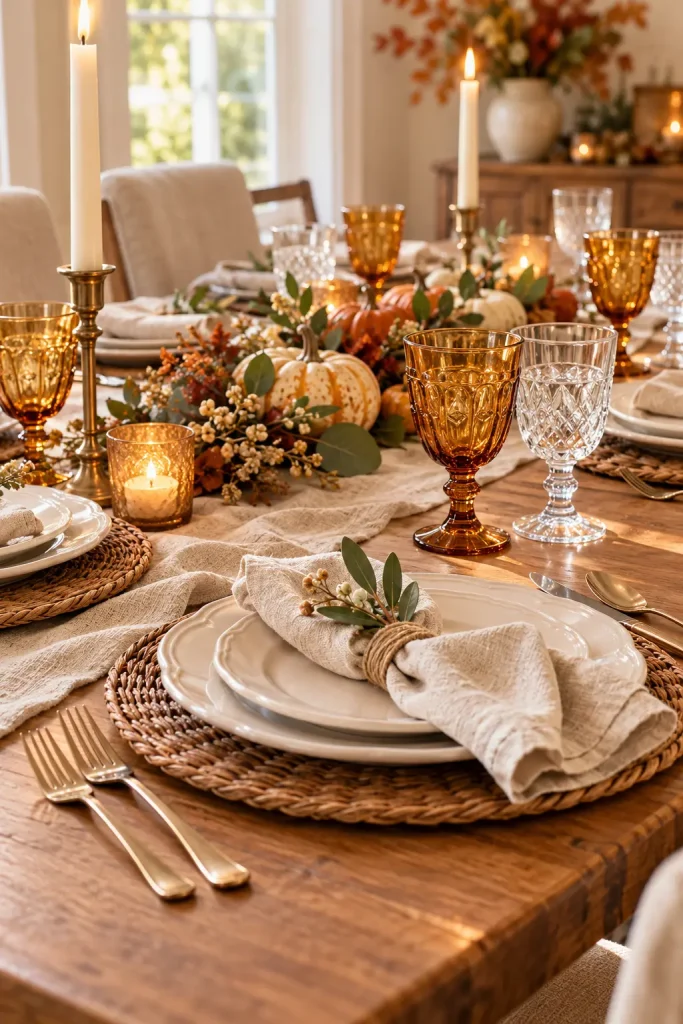
Vintage-style glassware introduces color and character without taking up additional table space. Amber glasses feel especially appropriate for autumn, while clear glass keeps the setting lighter.
Pair amber goblets with cream plates, natural linen, and warm wood. If you prefer a softer look, use mostly clear glassware and add just one or two amber pieces as accents.
Check vintage glassware for chips or cracks before using it for drinks, and choose sturdy pieces if children will be at the table.
23. Style a Minimalist Thanksgiving Table With Cream Pumpkins
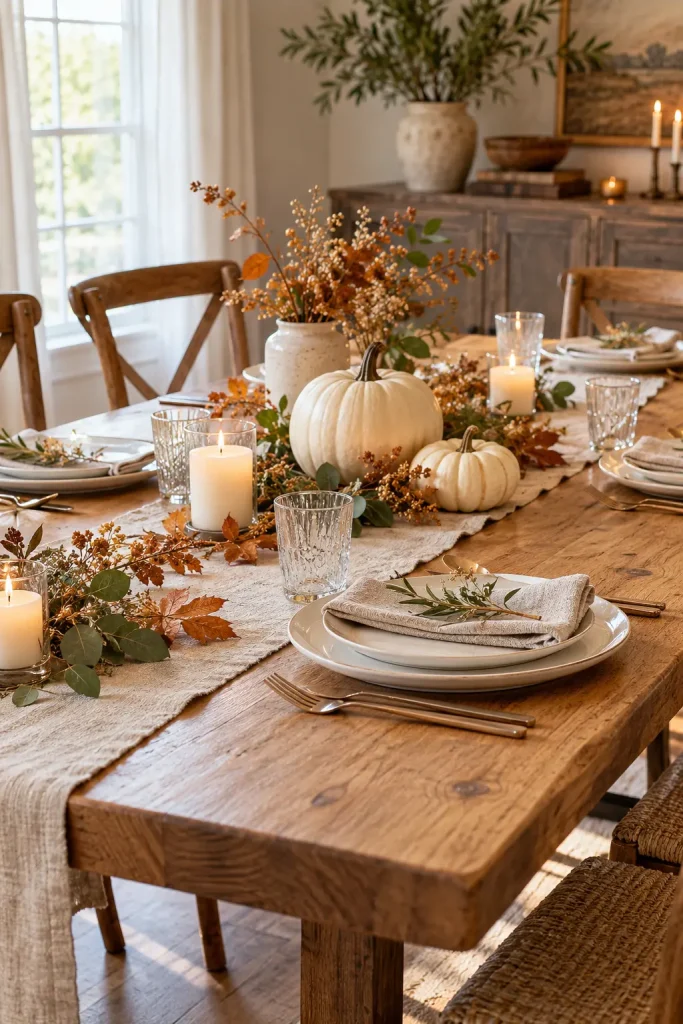
If you prefer a calm, uncluttered table, focus on a few well-chosen pieces rather than filling the entire surface with seasonal decorations. Cream pumpkins, white plates, oatmeal linen, and natural wood create a subtle autumn atmosphere.
Use negative space intentionally. Leave the center of the table open between a few decorative objects, and keep place settings simple enough that serving dishes can be added later.
This approach is particularly practical for smaller dining areas, where too many accessories can make mealtime feel cramped.
24. Add a Handmade Ceramic Pitcher With Autumn Branches
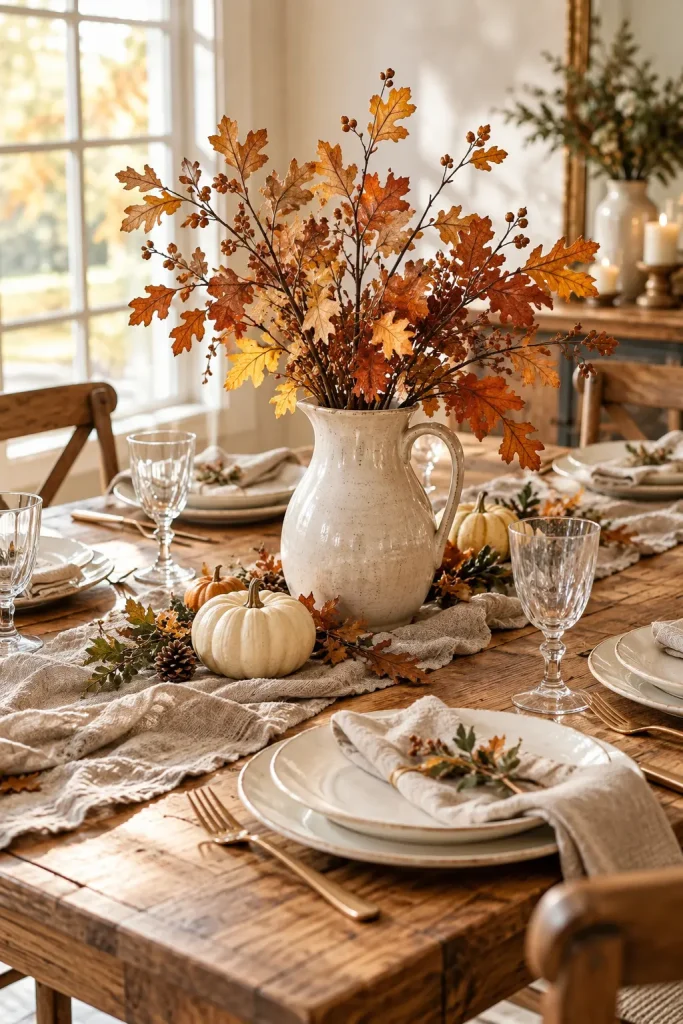
A handmade ceramic pitcher filled with autumn branches gives the table an informal, collected look. The vessel feels familiar and useful, while the branches introduce height and seasonal color.
Choose a pitcher with a stable base and keep the branches loose enough to create an airy silhouette. For a smaller dining table, trim the arrangement so it doesn’t overwhelm the place settings.
You can also use the pitcher for serving when it is clean and suitable for food contact, keeping decorative branches separate from serving pieces.
25. Create a Cozy Candlelit Tablescape With Natural Linen
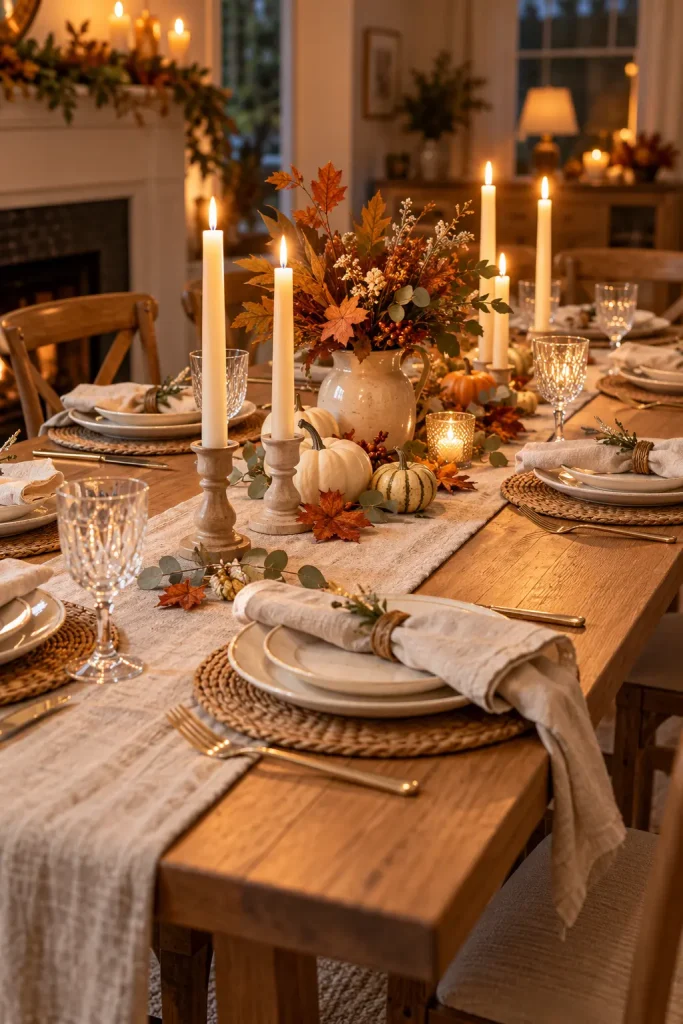
For an intimate Thanksgiving dinner, soft lighting and natural fabrics can create more atmosphere than a large collection of decorations. Start with an oatmeal runner, cream plates, and simple linen napkins, then add a small group of ivory taper candles.
A mixture of warm overhead lighting and gentle candlelight keeps the room inviting without making it difficult to see the food. Choose a low centerpiece and leave enough clear space for serving dishes.
Always keep open flames away from fabric and foliage, and extinguish candles before leaving the room.
26. Mix Rust, Olive, and Warm Ivory
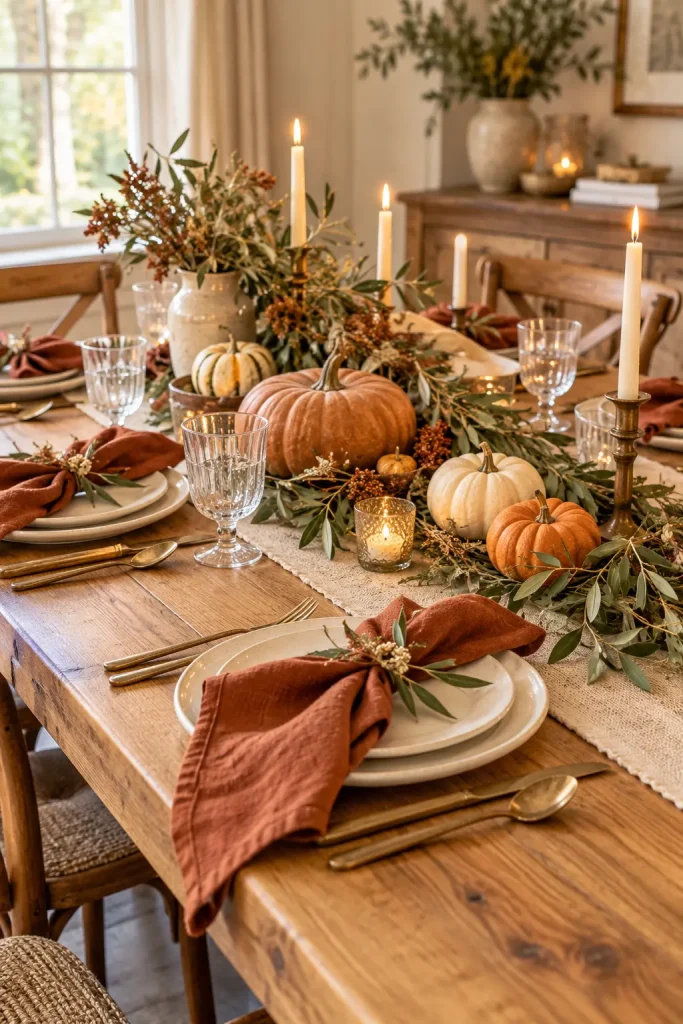
Rust, olive, and warm ivory create a grounded autumn palette that feels both traditional and relaxed. Each color serves a different purpose: rust adds warmth, olive introduces a botanical note, and ivory keeps the overall arrangement light.
Try rust napkins with ivory plates and a small olive-green foliage arrangement. A few natural pumpkins can tie the palette together without requiring every accessory to match.
This combination also works well with existing wooden furniture, so you can update the table using textiles and greenery rather than buying a new set of decorations.
27. Set a Charming Rustic Table With Simple Everyday Pieces
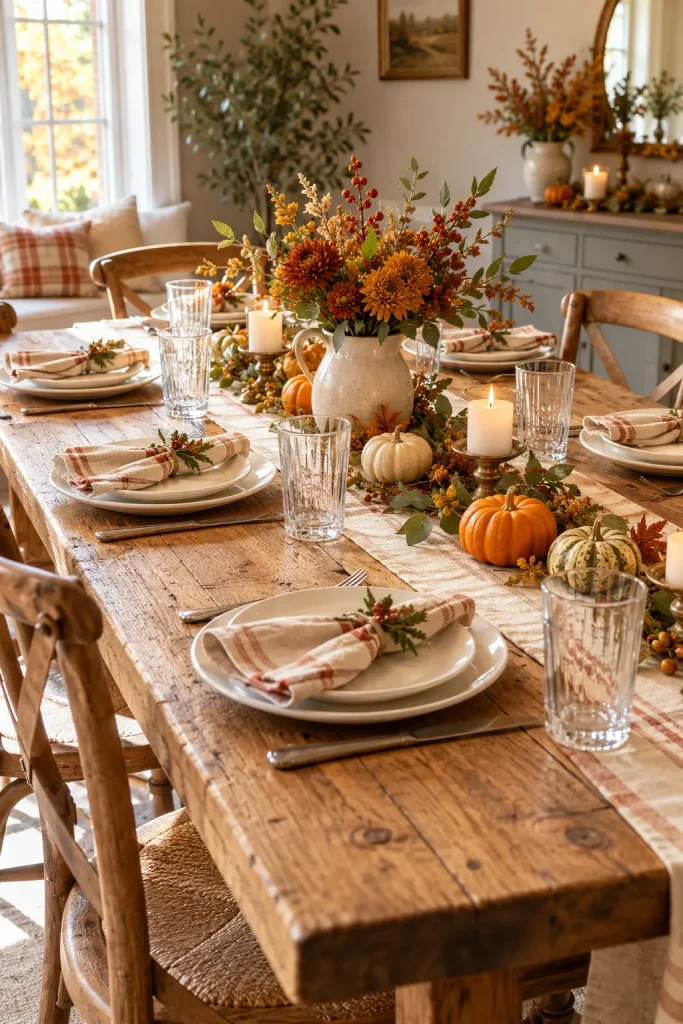
A charming Thanksgiving table can be made with pieces you already own. Plain white plates, cotton napkins, clear glasses, and a wooden dining table create a comfortable foundation for the holiday.
Add seasonal character with a small cluster of pumpkins, a few autumn leaves, and one low centerpiece. If you’re hosting a large group, prioritize usable space over elaborate styling so guests have room for serving dishes and drinks.
The goal isn’t to make every setting look identical. It’s to create a warm, coordinated table that feels comfortable enough for everyone to settle in and enjoy the meal.